By Alex McPherson

Playful and excoriating in equal measure, director Igor Bezinović’s documentary “Fiume o Morte!” (Fiume or Death!) examines the absurdity, horror, and sobering legacy of fascism, presenting an irreverent reframing of place and history that gives power back to the people.

Bezinović’s film takes place in his hometown of Rijeka, Croatia, a port on the Adriatic about 50 miles from Italy, with a tumultuous history. The city, once known as Fiume, was ruled by the Hapsburgs during World War I. After the War ended, it was left under the control of Yugoslavia, not Italy. This surprised many, including the vainglorious Italian aristocrat, poet, drug addict, womanizer, and army officer Gabriele D’Annunzio (a friend and inspiration for the young Benito Mussolini). 

In 1919, fueled by vanity and nationalism, D’Annunzio led an insurgency with 186 unemployed and hate-filled “legionaries” to occupy the city and claim it as an independent, pro-Italy city-state with himself as its supreme ruler. D’Annunzio’s leadership didn’t last long; he was forced out of power by none other than Italy itself in 1920. 

Bezinović aims to reckon with D’Annunzio’s complicated legacy on both sides of the Italo-Croatian border with “Fiume o Morte!” He also, just as importantly, cuts the failed despot down to size. 

Walking through a vibrant farmer’s market in present-day Rijeka, Bezinović asks passers-by whether they know who the man was — some have no idea, others are quick to label D’Annunzio a fascist, and others aren’t willing to make such sweeping statements, noting that he was also a “great poet and lover.” 

Bezinović reveals that he’s making a film about D’Annunzio’s coup, and he hires non-actor residents of Rijeka (including plumbers, musicians, and professors, some recruited directly from that farmers market, and at least one pet dog) to play every role and provide the film’s dry-humored narration, with several bald men recruited to play the (in)famously hairless D’Annunzio.

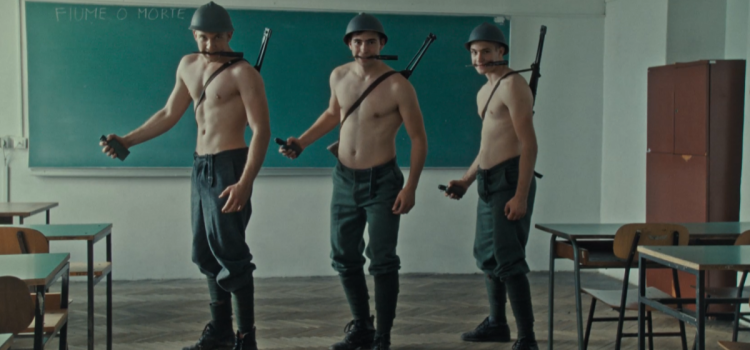
The historical reenactments themselves (which take up the bulk of “Fiume o Morte!”) treat D’Annunzio with the respect he deserves – that is, none at all. Performed with period-accurate costumes, keen attention to framing (Gregor Božič’s cinematography is beautiful), and a limited budget encouraging bucketloads of mocking comedy, Bezinović replicates scenes and tableaus from thousands of photographs and video footage documenting D’Annunzio’s “heroic” coup with a winking, anachronistic twist.

“Fiume o Morte!” jumps back-and-forth between these “grandiose” historical documents and a considerably less impressive present. The goofy yet faithful reenactments (in the same locations) seem out of place within the colorful hustle and bustle of modern-day Rijeka.

A photo of D’Annunzio speechifying before hundreds of onlookers turns into an aged non-actor revealed (via a slow zoom-out) to be speaking to an audience of two family members. A high-stakes meeting between generals concludes with D’Annunzio walking uphill to play rock music with his band as trucks leisurely drive by on their way to storm the city.

Some photos and videos — like a sword-wielding D’Annunzio posing naked draped with the Fiume flag, or homoerotic revelry on the beach with his unemployed legionaries — barely need exaggeration at all in the present-day. Sometimes onlookers stop to take pictures, others essentially ask “What the Hell are you doing?”

The reenactments are absurd and satisfyingly savage, emphasizing the ridiculousness of D’Annunzio’s occupation and putting his story in the hands of the community he attempted to suppress; a violent past juxtaposed by a resilient present that has endured and, as Bezinović keenly points out, is still grappling with D’Annunzio’s legacy and broader society’s continued cozying up to his fascist ideals.
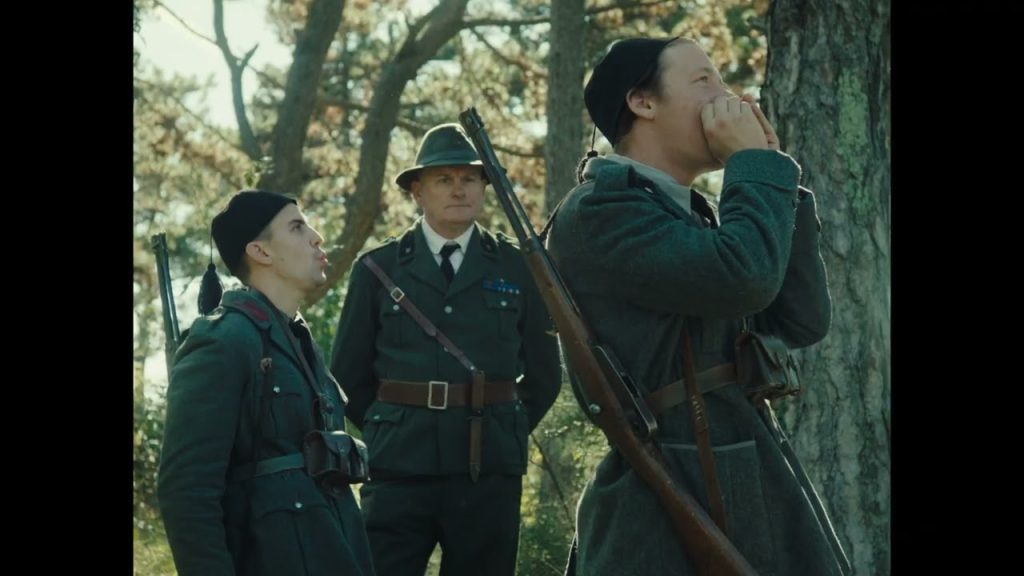
Indeed, although “Fiume o Morte!” is often a breezy, immensely enjoyable viewing experience (particularly charming when narration highlights the backgrounds of each featured member of the ensemble), Bezinović never loses sight of the barbarity of D’Annunzio’s self-imposed mission, and the consequences of his violently prejudiced enterprise that helped pave the way for Kristallnacht. 

Bezinović is selective about what he chooses to recreate, in certain moments relying entirely on historical artifacts instead of reenactments to drive home the oppressiveness of D’Annunzio’s rule and the tragic consequences for the (especially non-Italian) citizenry, as well as painting clear parallels between then and now.

Not only do we get a clear picture of D’Annunzio’s hubris and failures, but also a spirited portrait of Rijeka and its diversity, and caustic reminders of how his memory lives (and, in terms of younger generations, dies) among the populace. Just nearby in the Italian city of Trieste, for example, statues are continuing to be erected of the bald buffoon to this day, more celebratory than critical.

“Fiume o Morte!,” then, works as an irreverent history lesson, a reclamation of storytelling by the community he claimed he conquered, and an example of how nationalism and pride distort the truth. And that art, liberating in its creative freedom, has the ability to both entertain and educate, empowering those whose stories were brushed over by forces of evil. 

This is a masterful documentary that’s enlightening and downright ingenious – an absolute must-watch that stands tall among the year’s best films thus far.

“Fiume o Morte!” Is a 2025 documentary directed by Igor Bezinovic. It was the official submission of Croatia for the ‘Best International Feature Film’ category of the 98th Academy Awards in 2026. It is 1 hour and 52 minutes run time. It can be seen at the Webster Film Series on March 8. Alex’s Grade: A+

By Alex McPherson

Far less lively than its premise promises, director John Patton Ford’s “How to Make a Killing” has a sturdy dramatic framework but forgets to have much fun along the way — it’s an Eat-the-Rich satire that commits the unfortunate sin of being dull.

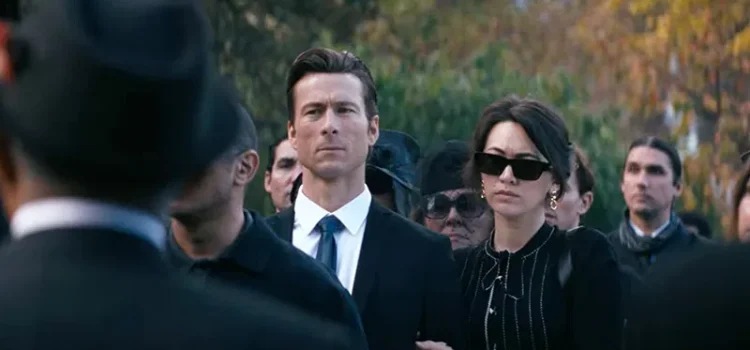
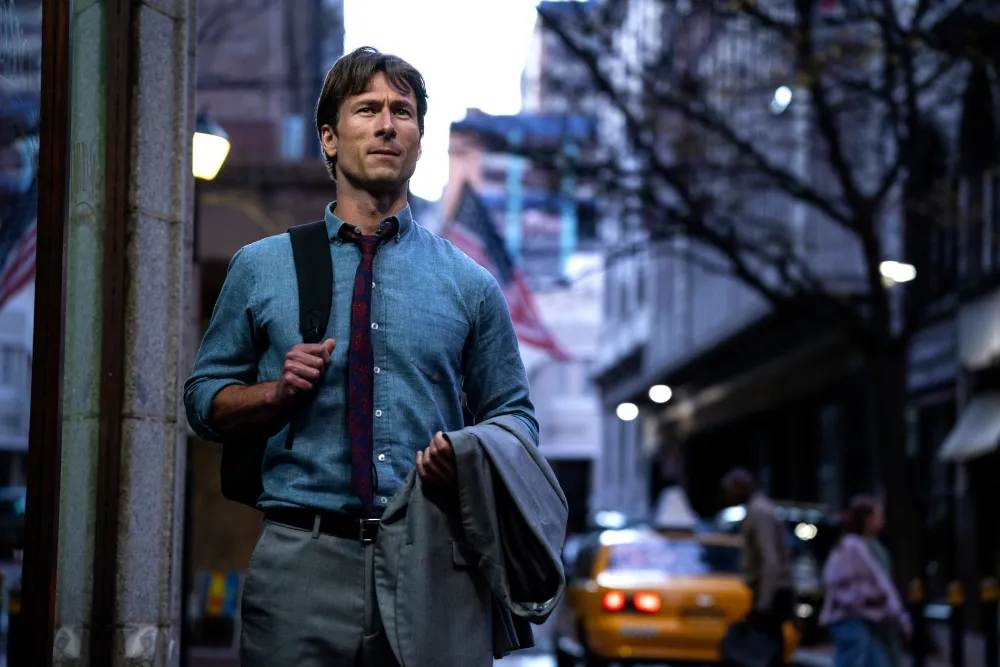
Inspired by the 1949 film “Kind Hearts and Coronets,” “How to Make a Killing” centers around Becket Redfellow (Glen Powell), a man on death row with four hours until execution who relays his life story to a priest (Sean C. Michael). The film, guided, er, dictated, by Becket’s narration, jumps back and forth in time.

Becket, with a wry smile, insists that his story is a “tragedy,” as he reveals that his family has a 28 billion dollar fortune that he was willing to kill his seven other relatives to acquire. For Becket, it’s personal.

His mother was banished from the family by the mysterious patriarch Whitelaw (Ed Harris) after becoming pregnant with Becket as a teenager with a man of “lower class,” who quickly disappeared from the scene.

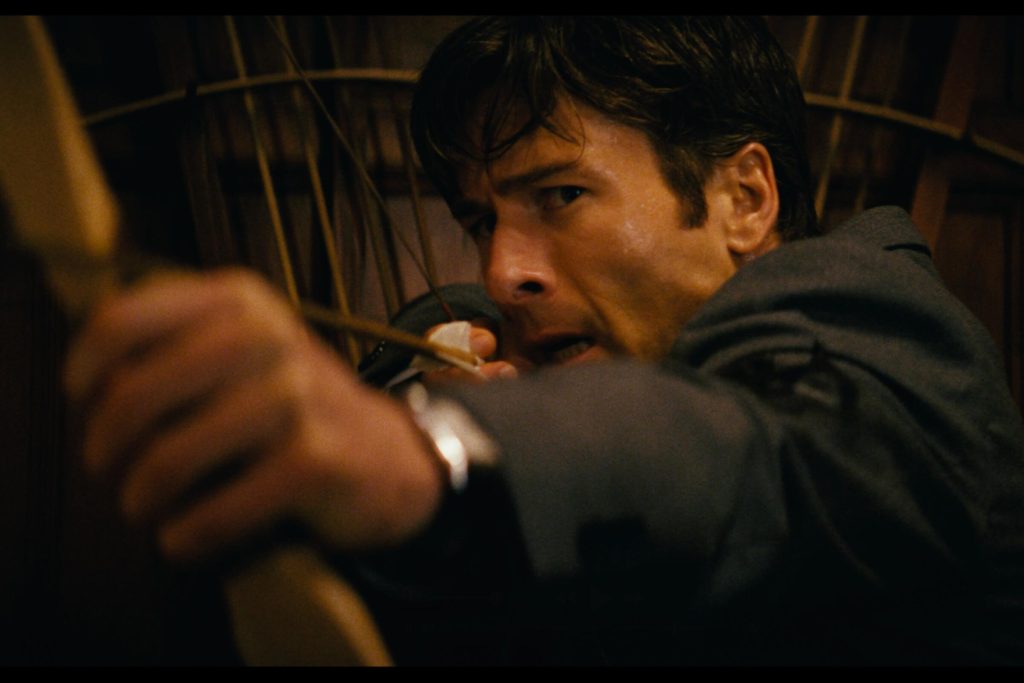
She raised Becket in a working class New Jersey neighborhood, occasionally immersing him in rich-adjacent activities like archery (featuring Chekhov’s bow and arrow), and, until her dying day, insisting that Becket has a legal claim to the Redfellow fortune and that he “deserves” it. 

It’s at one of these functions that a young Becket meets the uber-wealthy Julia Steinway (later played by Margaret Qualley). The two are drawn to each other, although they drift apart as they grow up in different social spheres.

In present-day New York City (before his arrest), Becket works at a men’s suit store and runs into Julia, who strikes up a flirtation (even though she’s engaged), and reminds him that he is a Redfellow.

After being abruptly demoted, and recognizing the sad unfairness of his current non-uber-wealthy living situation, Becket decides to take action, setting out to eliminate his relatives and do away with most of his morality. 

The group includes party boy Taylor (Raff Law), smug goofball artist Noah (Zach Woods), “philanthropist” Cassandra (Bianca Amato), Richard-Branson-esque McArthur (Alexander Hanson), rock star megachurch pastor Stephen (Topher Grace), and Becket’s surprisingly kind uncle Warren (Bill Camp) who hires Becket to work at his brokerage firm, plus the intimidatingly shady Whitelaw (Harris).

Quite a few folks to get through, but Becket’s greed and hunger for retribution motivate him, to the detriment of his personal relationships and sanity.

There’s a recipe for a crackling, twisted little thriller here, but Ford’s film is frustratingly milquetoast, possessing the skeleton of a strong narrative without putting in the work to give its story poignancy, momentum, or memorably crazy set pieces.

“How to Make a Killing” feels restrained as Becket flies further off the deep end, taking the easy way out instead of leaning into the lunacy, with derivative social commentary and subplots clunkily smashed together. It’s a shame, because the foundation is there. Powell remains an appealing leading man who brings charisma in spades.

Still, he feels underutilized, as Ford’s screenplay jumps through time erratically and often resorts to blatant exposition dumps (via Becket’s prison-set narration) that attempt to streamline the film while robbing it of textural detail.

Powell’s performance is sturdy enough on its own merits, particularly when the film slows down to briefly highlight his twisted satisfaction at his various killing schemes (which occur, puzzlingly, mostly off-screen) and to develop his relationship with the beautiful Ruth (Jessica Henwick), who is first attached to Noah.

Henwick and Powell have great chemistry, yet Ford treats their dynamic as more of a plot device than anything else — the tension between happiness/comfort and the pesky pull of greed and revenge.

It’s a conflict rendered too schematic to pack much emotional punch, worsened by dialogue that spells out Becket’s “choice” in eye-rollingly obvious fashion.

Qualley, to her credit, understands the assignment more than most of the ensemble, leaning into her character’s femme-fatale cartoonishness, periodically appearing to encourage Becket to continue his murderous mission and attempt to seduce him (for love or for the money?).

f only the rest of “How to Make a Killing” was as committed to the bit as Qualley who, regardless of whether you love or hate her performance, is definitely making choices and helping to momentarily excavate the film from generic territory.

Perhaps the biggest issues with Ford’s film revolve around its “tell, don’t show” philosophy. We don’t really feel Becket’s inner turmoil, nor do we fully buy why he feels compelled to push forward even when his life seems pretty damn good, all things considered. Nor do we get any flashy moments of R-rated violence, odd considering that the film is indeed called “How to Make a Killing.”

 Ford’s film does have eye-catching production design and stylistic use of light and shadow. But its conclusions are largely standard, a morality tale with a clearly telegraphed destination, and a laissez-faire approach to distinctive storytelling.

“How to Make a Killing” is a 2026 dark comedy-psychological thriller directed by John Patton Ford and starring Glen Powell, Margaret Qualley, Ed Harris, Bill Camp, Jessica Henwick, Zaff Law, Zach Woods, Bianca Amato, Topher Grace, and Alexander Hanson. It’s run time is 1 hour, 45 minutes, and it is rated R for language and some violence/bloody images. It opened in theatres on Feb. 20. Alex’s rating: C.

By Alex McPherson

Furious and scattershot, director Gore Verbinski’s madcap sci-fi parable “Good Luck, Have Fun, Don’t Die” has numerous incisive ideas about humanity’s dependence on technology but muddles them with a heavy dosage of smug humor.

One cannot accuse Verbinski of not being ambitious, though, with his latest effort bringing to mind a range of films including “Groundhog Day,” “The Terminator,” and “Everything Everywhere All At Once.” The film takes place in a near-future in which humanity’s addiction to technology has created a society of apathetic, homogenous-seeming beings doing nothing to stop society’s descent into tech company servitude. 

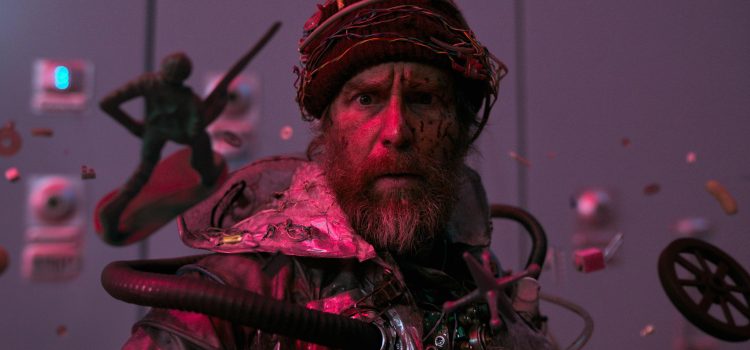
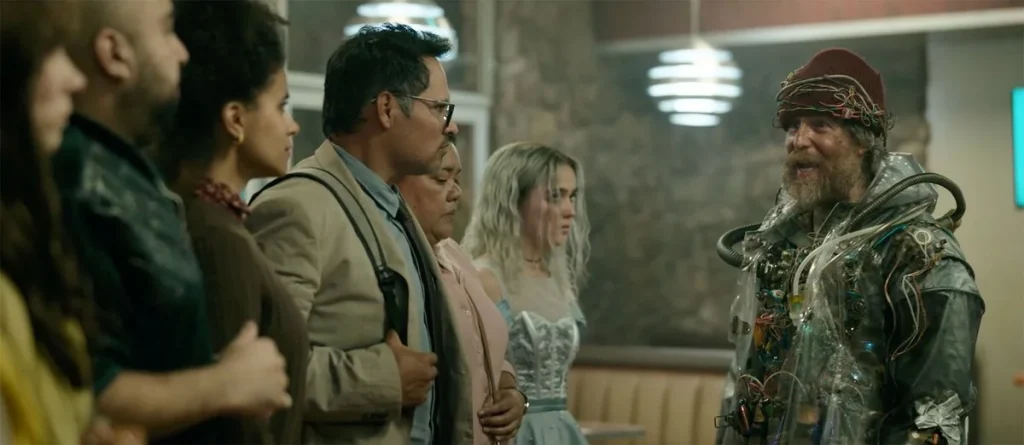
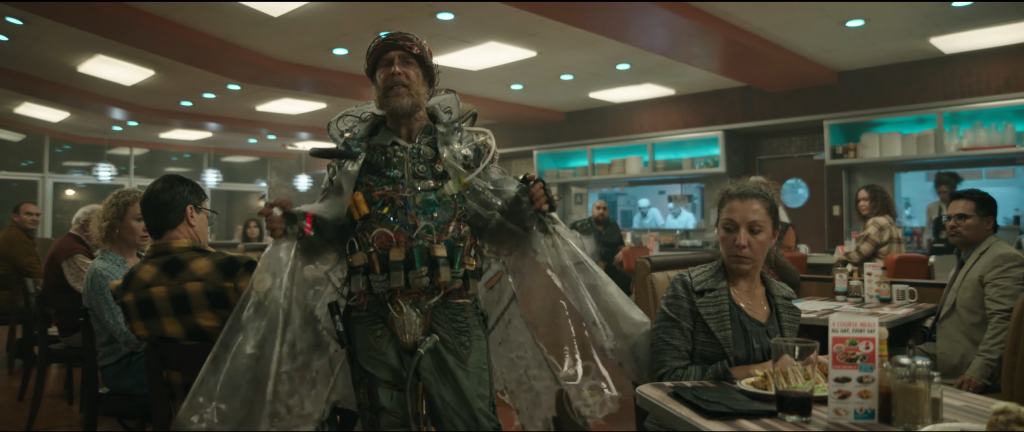
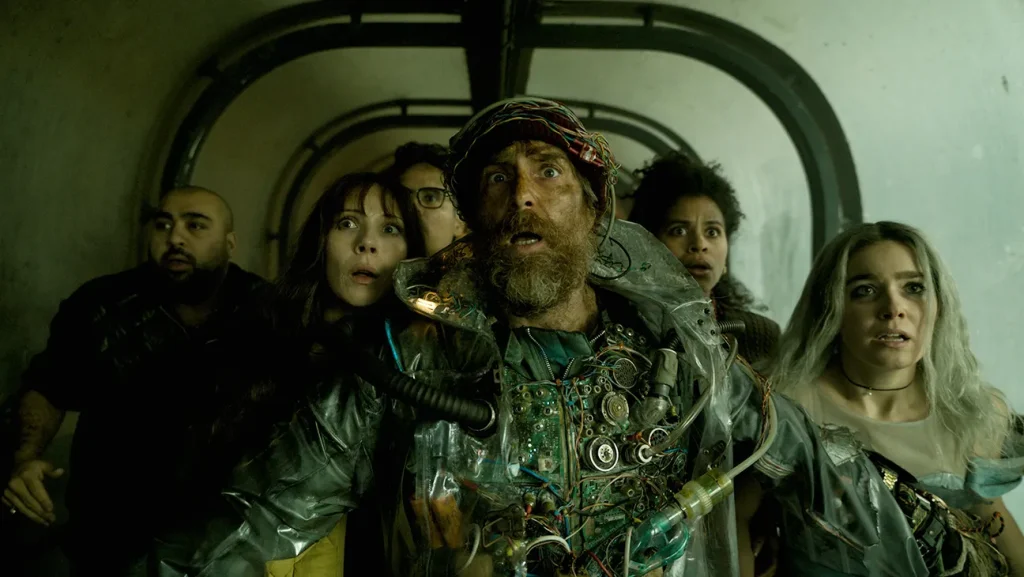
We open with an extended sequence featuring a disheveled, sardonic Man From the Future (Sam Rockwell) bursting into Norm’s Diner in Los Angeles in search of people to join him on an epic quest to prevent the AI apocalypse. He claims to have a bomb strapped beneath his transparent raincoat and launches into a speech about how technology has ruined modern life, insisting that time is of the absolute essence. 

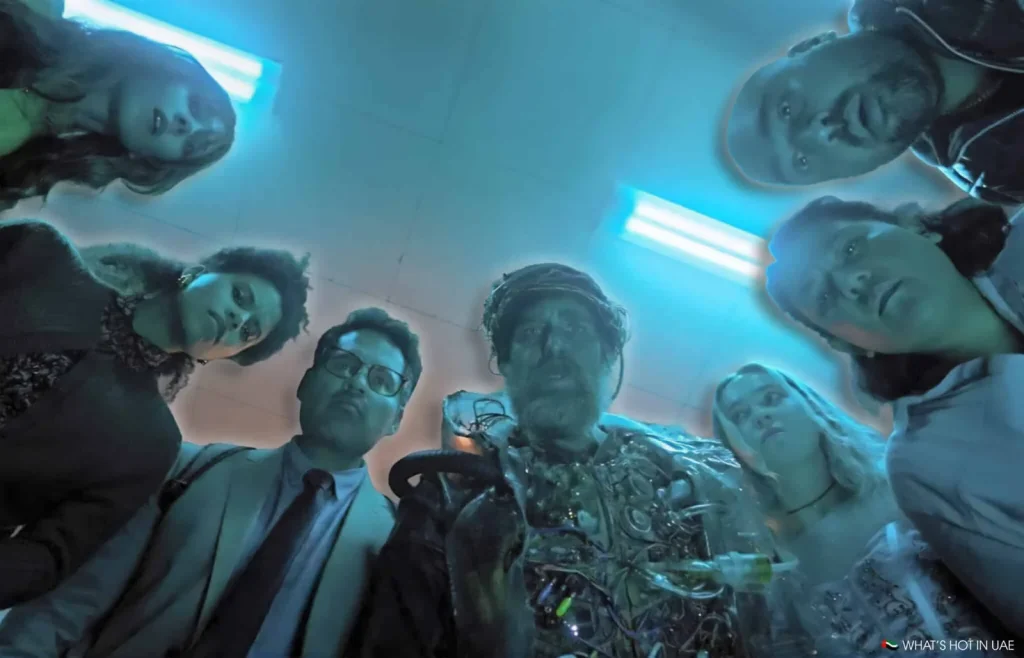
This isn’t the Man’s first rodeo, though; it’s actually his 117th attempt with this same batch of disbelieving patrons. All of his previous 116 attempts have ended in death for everyone involved (except him), with the Man “resetting” and trying to find the right combination of people necessary to complete his mission. This time could be different, though. 

The group the Man pseudo-forces to participate includes Mark (Michael Peña) and Janet (Zazie Beetz), a couple going through a rough patch who recently started new jobs as high school teachers. They are increasingly disturbed by their students’ obsession with their smartphones and cynical detachment from the outside world, even during a school shooting, which is treated like “just another day.”

There’s also Susan (Juno Temple), a mother who lost her son in that same shooting and whose grief is brushed away — there is, as a squad of local mothers tells her, a company that specializes in creating clones of children who died in school shootings. Yikes. 

There’s Ingrid (Haley Lu Richardson), a severely depressed woman wearing an off-brand Disney princess costume who is literally allergic to Wi-Fi and smartphones. Along with a few other people who aren’t given much meaningful character development, the Man and his team embark on an increasingly loony journey.

Mixing madcap sci-fi action with a decidedly nihilistic streak, “Good Luck, Have Fun, Don’t Die” is alternately amusing and exhausting over its 135-minute runtime. For all of Verbinski and screenwriter Matthew Robinson’s sharp thoughts on our technological hellscape (did you see how many SuperBowl ads were about AI?), there’s a shakiness to the film that draws you in and subsequently pushes you away. 

The film mines plentiful deadpan humor from the populace’s matter-of-fact reactions, whether it be judgy, entitled high schoolers glued to their phones, or Susan’s newly-cloned kid who is “ad-supported,” all while nobody is taking action to turn things around.

Even so, the film can’t decide between championing these idiosyncratic, reluctant heroes and reveling in the tech-addicted nastiness that surrounds them. Poignant moments are offset by edgelord, shock-value humor that is deeply proud of itself and leaves a cold aftertaste.

Rockwell is the perfect choice to play this snarky antihero. He’s goofy and sometimes callous but strong in his convictions, with an increasing desperation creeping in as he nears closer to finally stopping the horrors of an AI-controlled future.

The rest of the cast aren’t anywhere near as dynamic to watch as Rockwell, but they get the job done, effectively emphasizing their feelings of displacement with an environment that refuses to recognize their empathy and, indeed, their humanity.

Verbinski and Robinson take ample time to provide backstory for the “core group,” structured in “Black Mirror” -esque flashbacks that periodically break up the immediate action of the Man and co. escaping from Norm’s and venturing to their next objectives.

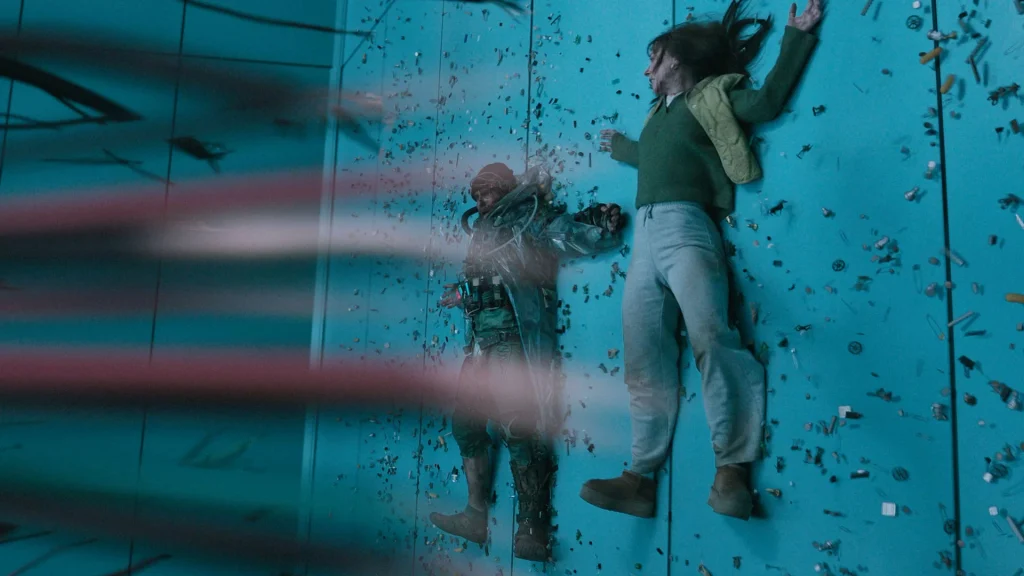
This vignette structure works well enough (albeit padding the runtime to an excessive degree), and helps illuminate the personal costs of living in this reality that’s not all that dissimilar from our own. Less impactful are the labyrinthine multiversal shenanigans that arise in the finale, difficult to follow and messy in a decidedly hand-made way.

“Good Luck, Have Fun, Don’t Die,” then, is a rickety experience that’s still impossible to discount. Verbinski and Robinson take rightful aim at the devices and companies that are hijacking our attention and transforming us into passive, homogenous consumers rather than informed people with agency over our own lives.

The crafts, too, are noteworthy, especially James Whitaker’s energetic cinematography and a techno score by Geoff Zanelli that pulses with rambunctious life.

Verbinski and Robinson are clearly interested in sounding a 5-alarm fire about doing something now rather than waiting until all hope is lost. The messiness of living in the real world, the film says, is worth fighting for, even when the digital one offers an illusion of safety and happiness.

There’s definitely merit to that message in 2026, although “Good Luck, Have Fun, Don’t Die” is ultimately a mildly entertaining, pitch-black yell at the Cloud.

“Good Luck, Don’t Die, Have Fun” is a 2025 sci-fi action-adventure horror comedy directed by Gore Verbinski and starring Sam Rockwell, Juno Temple, Haley Lu Richardson, Michael Pena, Zazie Beetz, Georgia Goodman, and Asim Chaudhry. It is rated R for pervasive language, violence, some grisly images and brief sexual content and runs 2 hours, 14 minutes. Opens in theatres Feb. 13. Alex’s Grade: B-.

By Alex McPherson

At its best when fully leaning into uninhibited mayhem, director Sam Raimi’s “Send Help” is a knowingly loony, if broad, satire elevated by Dylan O’Brien and a deviously crazed Rachel McAdams.

We follow Linda Liddle (McAdams), a nerdy, socially awkward, yet skilled longtime employee at a consulting firm who — despite being far more knowledgeable at her job than the slick-haired men that surround her — is underappreciated. She doesn’t have many friends and most of her meaningful conversations are with her pet cockatoo.

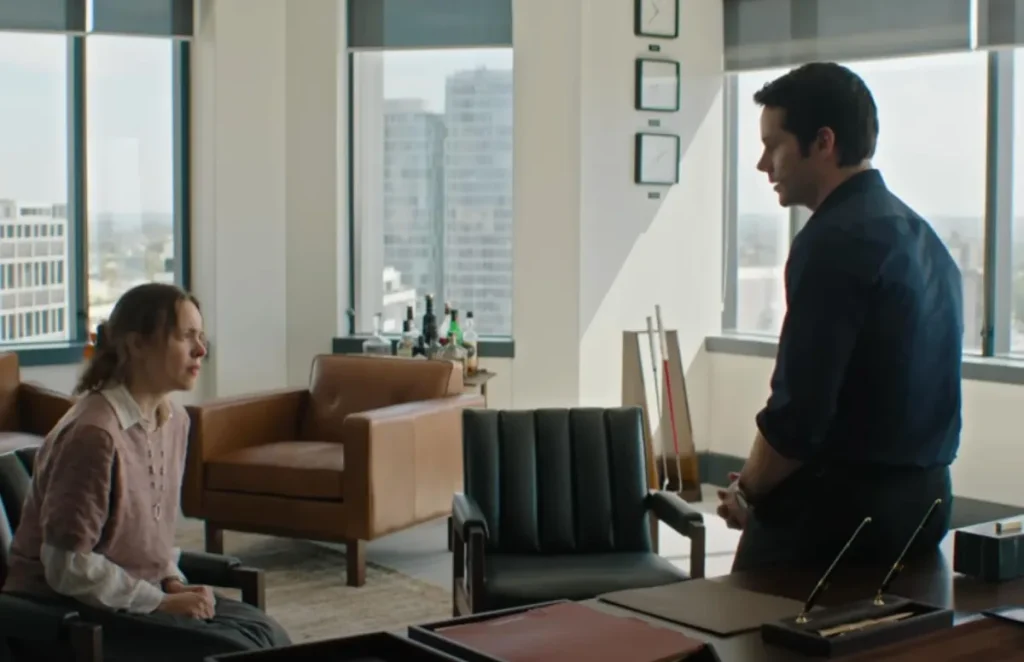
She’s also a trained survivalist and has recently applied to be a contestant on the reality show “Survivor.” Linda hungers for more recognition, and the company’s CEO Franklin Preston (Bruce Campbell) recently promised her that she’d be Vice President one day. Preston has suddenly passed away, though, and the reins of the company fall to his son Bradley (Dylan O’Brien), who has zero interest in following through on his father’s promise. 

Bradley, pompous and sexist, is repulsed by Linda’s appearance and efforts to assert herself. Instead of promoting her, he installs fellow frat brother and golfing buddy Donovan (Xavier Samuel) as VP. As consolation before firing her for good, Bradley gives Linda one last assignment to “prove herself” by traveling with his boys club to Bangkok to close a major merger — she is an expert number-cruncher, after all. 

While aboard the private plane en route, Linda toils away on a work document. Bradley and his bros are not working; instead they are watching Linda’s “Survivor” audition tape and loudly snickering.

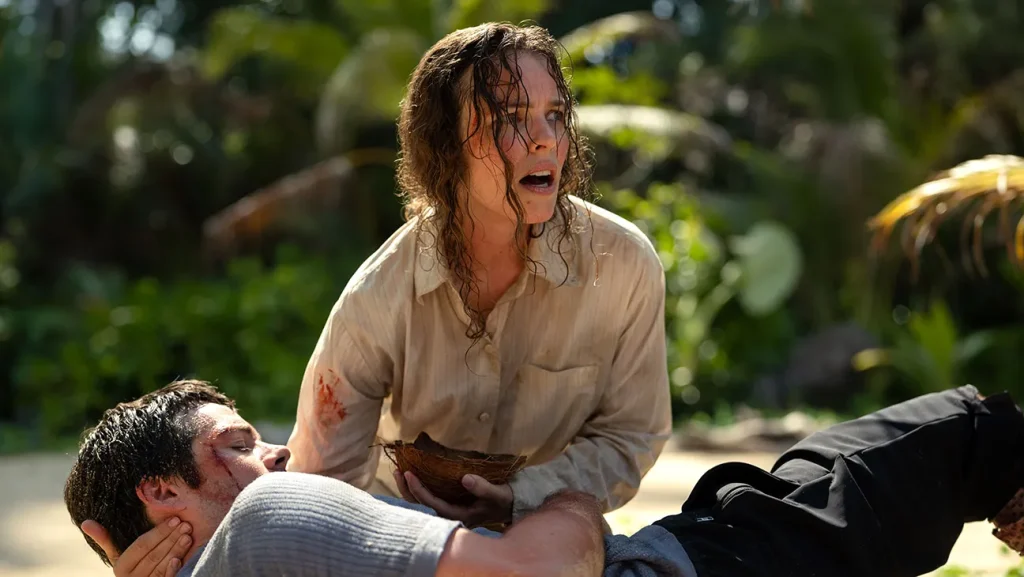
Before Linda finally snaps, a violent thunderstorm sends the plane spiraling into the ocean, killing everyone onboard in gratuitously violent (and, admittedly, quite funny) fashion. Linda barely survives and washes ashore on a nearby deserted island — a prime place to make use of her survivalist skills.

Bradley also survives and washes ashore (with a messed-up leg). Despite continuing to treat Linda terribly, he realizes that he needs her to live. Linda takes almost too much pleasure in this new power dynamic and lifestyle; it’s unclear whether she wants to be rescued at all.

Both Linda and Bradley harbor persistent hatred towards each other despite their burgeoning friendship. As the days pass, tensions escalate, as both of these damaged souls vie for dominance over each other through bloody one-upmanship. 

What begins as a rather tame dramedy evolves into something much gnarlier and more cynical. “Send Help” isn’t a revolutionary film, and it doesn’t have anything particularly incisive to say, but it’s a nasty and enjoyably twisted return to form for Raimi. It wouldn’t work anywhere near as well without O’Brien and McAdams’ sheer devotion to every twist and turn. 

McAdams in particular really sells this heightened premise. Mark Swift and Damian Shannon’s screenplay sends her on quite the journey from meek nerd to resourceful leader to someone who has fully lost her marbles. It’s great fun watching McAdams lean into Linda’s quirks and neuroses, bringing a happy-go-lucky energy that’s just as quick to stab you in the back (or anywhere on the body).

We want Linda to succeed and get her revenge against Bradley, but part of the twisted fun of “Send Help” is exploring just how far she will go, and how long we’re willing to support her along the way.

O’Brien is pitch-perfect as the smug man-child Bradley, who couches nearly every “dialogue” with a patronizing, better-than-thou tone. Swift and Shannon’s script does an excellent job portrayinging the ways that power-hungry bosses treat their employees, making even Bradley’s most callous moments ring true.

Of course, watching Bradley become wholly dependent on Linda for his survival is satisfying; yet, as “Send Help” reiterates repeatedly, there’s no easy way to resolve their deep-seated mutual hatred.

Raimi’s film is difficult to pigeonhole within a single genre. “Send Help” is a playful, tonally-all-over-the-place experience, with elements of classic adventure films (Danny Elfman’s score feels like something from Hollywood’s Golden Age), strange forays into romcom territory, and Raimi’s signature horror flourishes.

It’s an odd amalgamation that doesn’t always work — the beginning, in particular, is far less tightly edited and stylistically engaging than the island shenanigans, and the will-they-won’t-romance that comes into play heads down predictable paths. So, too, does the big “twist,” which waters down some of the film’s more pointed ideas on gender power dynamics for a far more schematic, underwhelming framework.

With Raimi at the helm, you know he won’t hold back on the over-the-top carnage, editing, and camerawork. Bob Murawski’s editing and Bill Pope’s cinematography perfectly complement Raimi’s sensibilities — match cuts, crazy zooms, POV shots of feral boars, it’s all there, along with buckets of goopy gore and a couple of genuinely squirm-inducing moments that are difficult to unsee (literally).

The film just takes a while to get to those “Holy Shit!” moments, spinning its wheels at times repeating the push-pull dynamic between Linda and Bradley, as defenses are lowered and, soon after, raised again. 

But pacing and plotting issues aside, “Send Help” is still a perfect film to watch in a crowded theater, seeing these characters regress as the outside world crumbles around us.

“Send Help” is a 2026 horror film directed by Sam Raimi and starring Rachel McAdams, Dylan O’Brien, Bruce Campbell, and Xavier Samuel. It’s run time is 1 hour, 53 minutes, and it is rated R for strong/bloody violence and language. It opened in theatres Jan. 30. Alex’s grade: B.

By Alex McPherson

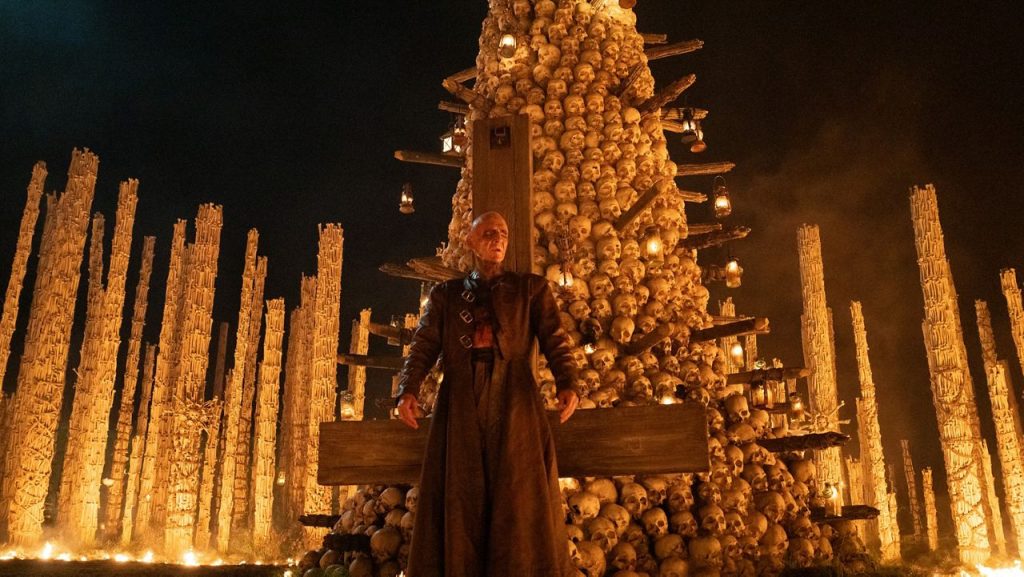
Savage, heartfelt, and memorable, director Nia DaCosta’s “28 Years Later: The Bone Temple” carves its own gory yet defiantly hopeful path through the apocalypse.

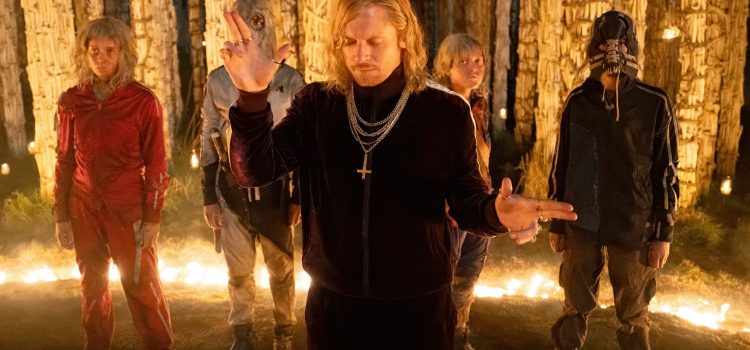
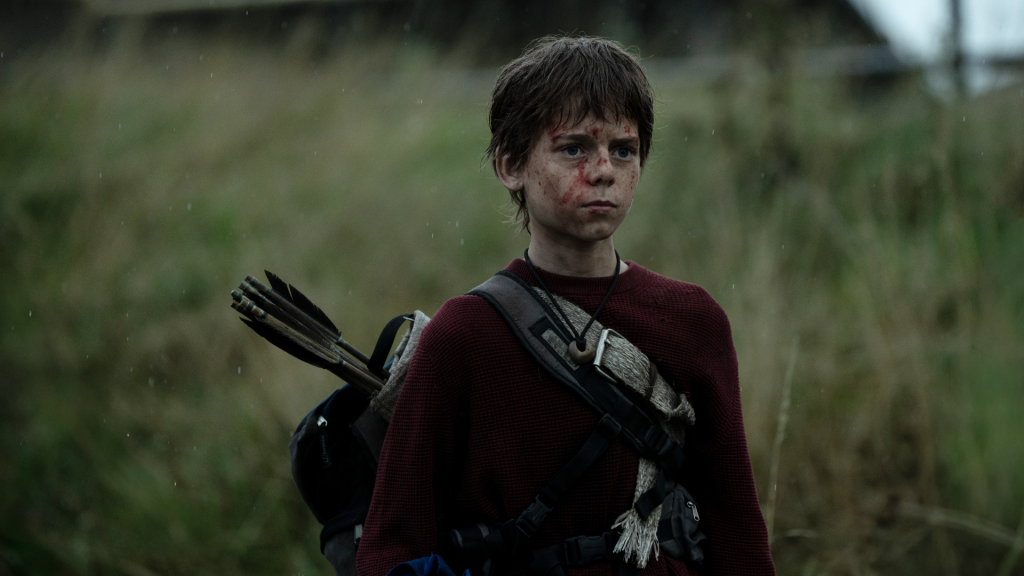
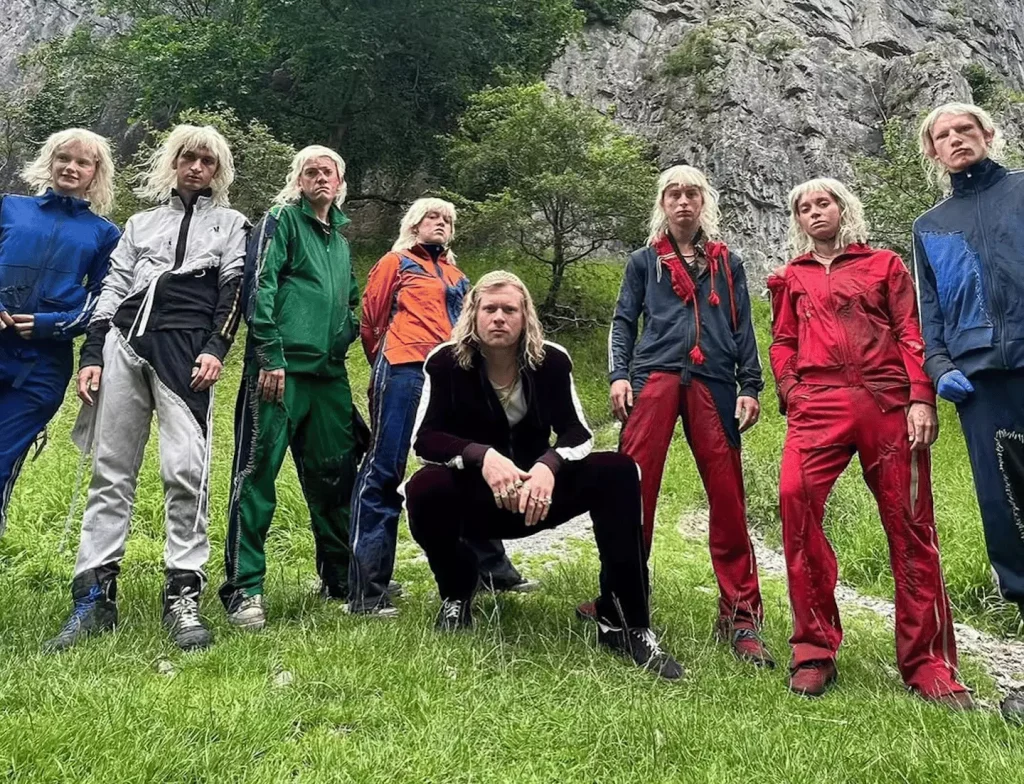
Taking place shortly after the events of Danny Boyle’s “28 Years Later,” DaCosta’s “The Bone Temple” follows young Spike (Alfie Williams) shortly after being saved from the zombielike Infected by the tracksuit-wearing and Satan-loving Sir Jimmy Crystal (Jack O’Connell) and his gang of seven “Fingers,” who are all forced to call themselves Jimmy.

Spike might have come-of-age amid the apocalypse, but instead of thriving on his own, he’s stuck in a barbaric cult of suspended development. He is forced to take part in a murderous initiation ritual and accompany the Jimmies as they cause death and destruction throughout the mainland, somewhat akin to the Droogs in “A Clockwork Orange.” Sir Jimmy is profoundly screwed up (to put it mildly), and asserts that he is Satan’s son.

Meanwhile, the benevolent Dr. Kelson (Ralph Fiennes), who constructed the titular Bone Temple as a memorial to those lost to the virus, is maintaining some semblance of peace. Strict in his routines and rituals, there’s a sense of heaviness to how he moves through the world, with the weight of history and his own grief bubbling to the surface.

Dr. Kelson maintains a strange connection with an “Alpha” Infected he named Samson (Chi Lewis-Parry), who might retain some humanity, and possibly a key to altering the future as they know it. 

Of course, it’s only a matter of time before Sir Jimmy and Dr. Kelson encounter each other. It’s ultimately a battle between hope and cynicism, fatalism and personal agency. Dr. Kelson and Spike grapple with their identities amid fascist forces and the continuing Infected threat.

Indeed, “The Bone Temple” has much on its mind despite being a clear middle chapter in this revamped franchise. DaCosta, a highly versatile filmmaker, doesn’t try to recreate Boyle’s brilliantly kinetic style or experimental pizazz. She nevertheless brings both an unflinching brutality and surprising sentimentality to the forefront, striking a mostly successful tonal balance that thrills, disgusts, and rocks its way into the soul.

DaCosta’s film isn’t a “full meal” like “28 Years Later,” but on its own, less ambitious merits, it succeeds, and brings along a resonant message for staying true to your values while the world crumbles.

“The Bone Temple” explores familiar genre ideas, zeroing in on how, yes, humans can be even more monstrous than the Infected, and some aspects of DaCosta’s film feel rushed just for the sake of bridging to the next chapter of Spike’s arc. DaCosta and returning screenwriter Alex Garland make Spike a less central character this time around, assembling pieces for the next installment. Instead, DaCosta focuses on the Jimmies, while spending considerable time with Dr. Kelson, who essentially becomes the de facto protagonist.

Jumping back and forth between these two groups definitely causes whiplash from time to time; this film also lacks much of the kinetic momentum and messy energy of its predecessor (Anthony Dod Mantle’s cinematography and Young Fathers’ music are missed).

It’s jarring to go from squirm-inducing horror one moment to kooky-yet-earnest meditations of life and periodic dance sessions. Still, DaCosta’s grounded, unflinching approach to violence hammers home the stakes (sometimes literally), setting the stage for eventual reckoning.

“The Bone Temple” also preserves much of the weirdness that pervades this franchise (in a good way), and it isn’t afraid to veer in unexpected directions regardless of familiar setups. 

Fiennes in particular understands the assignment. Dr. Kelson is a weathered soul doing what he can to survive and honor the dead, quietly fighting back against the fear and cynicism bubbling within his own thoughts. At the same time Samson (brought to life with bittersweet pathos by the intimidating but vulnerable Chi Lewis-Parry) represents a thread that Dr. Kelson can latch onto, possibly the dawn of a new age and another reminder to not give up on the future entirely.

Fiennes is alternately hilarious and heartbreaking here, expanding  his unexpectedly profound role in “28 Years Later” in emotionally resonant ways that give him opportunities to let his freak flag fly, especially during a finale that I won’t dare spoil. 

O’Connell — coming off his villainous portrayal in Ryan Coogler’s “Sinners” — is absolutely frightening as Sir Jimmy (a character apparently modeled after Jimmy Savile, the late British DJ who was fond of wearing track suits), a man haunted by his past with a desire for control and utter disregard for human life. Like most of “The Bone Temple,” Sir Jimmy is both cutthroat and oddly funny at times, with O’Connell walking that tightrope far more elegantly than the film overall.

“The Bone Temple” isn’t up to par with “28 Years Later,” but when the two opposing forces finally come together, DaCosta synthesizes the film’s disparate tones to present a set piece that ranks among the best in the franchise. She and Garland emphasize that it’s noble to fight back against evil and not capitulate, even when all seems lost. It also ends in a place that makes the wait for Part 3 almost unbearable.

“28 Years Later: The Bone Temple” is a 2026 horror film that is directed by Nia DaCosta and stars Ralph Fiennes, Jack O’Connell, Alfie Williams and Chi Lewis-Parry. It is rated R for strong bloody violence, gore, graphic nudity, language throughout, and brief drug use, and runs 1 hour, 49 minutes. It opened in theatres Jan. 16. Alex’s grade: B+,

By Alex McPherson

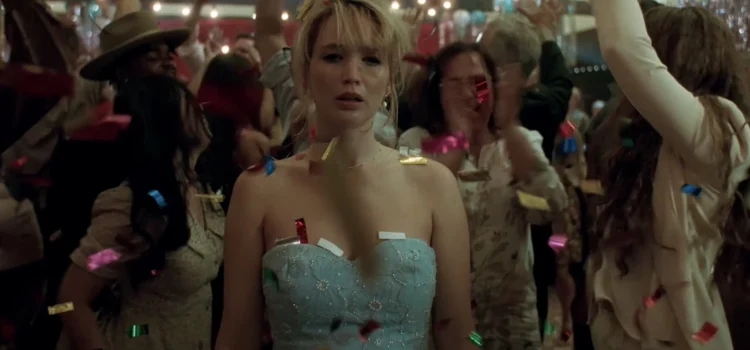
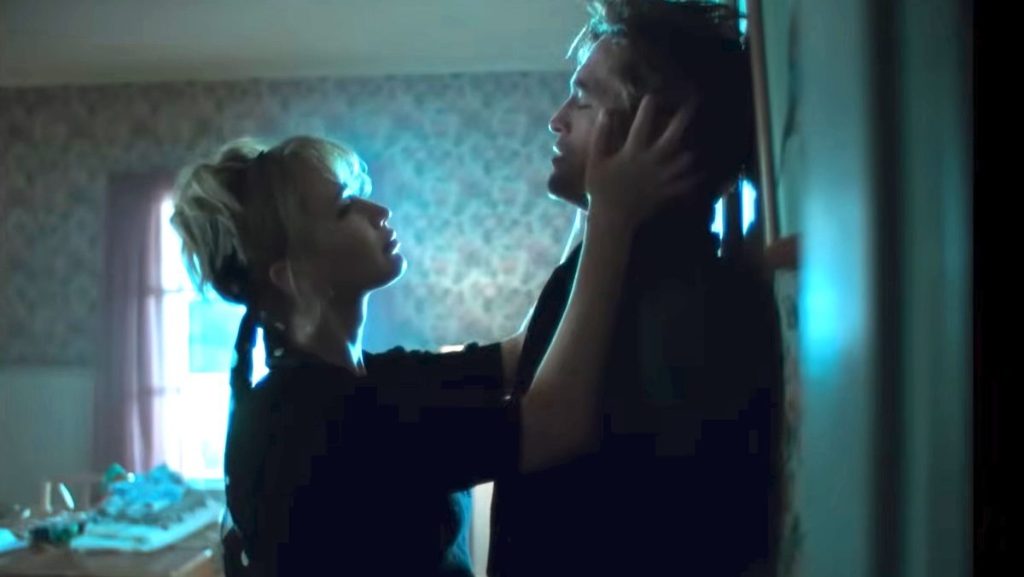
An intensely gripping acting showcase for Jennifer Lawrence, director Lynne Ramsay’s “Die My Love” paints an existentially nightmarish picture of motherhood, conformity, and relationships in fateful disarray.

Based on the novel Matate, Amor by Ariana Harwicz, the film follows Grace (Lawrence), a free-spirited and frustrated writer who moves into an old house in rural Montana with her ruggedly handsome but insecure boyfriend, Jackson (Robert Pattinson). The house, nestled within tall grasses and fairy-tale woods, was left to Jackson by his uncle who committed suicide.

It’s seemingly a prime location for Grace and Jackson’s antics; they drink nonstop and have wild sex, fully embracing their physical passions. Before long, Grace is pregnant and gives birth to a baby boy (whom they choose not to name), forever altering the paradigms they exist within.

Grace and Jackson’s relationship begins to crumble. Jackson is away at work for suspiciously long periods, and Grace suspects him of infidelity. Loneliness, emotional detachment, and sexual frustration grow exponentially day by day, with Grace feeling abandoned even when Jackson is at home.

She crawls on all fours like a prowling dog and masterbates in the nearby woods, at one point walking through the plain’s wispy grass, knife in hand, while their son sits unattended on the porch. 

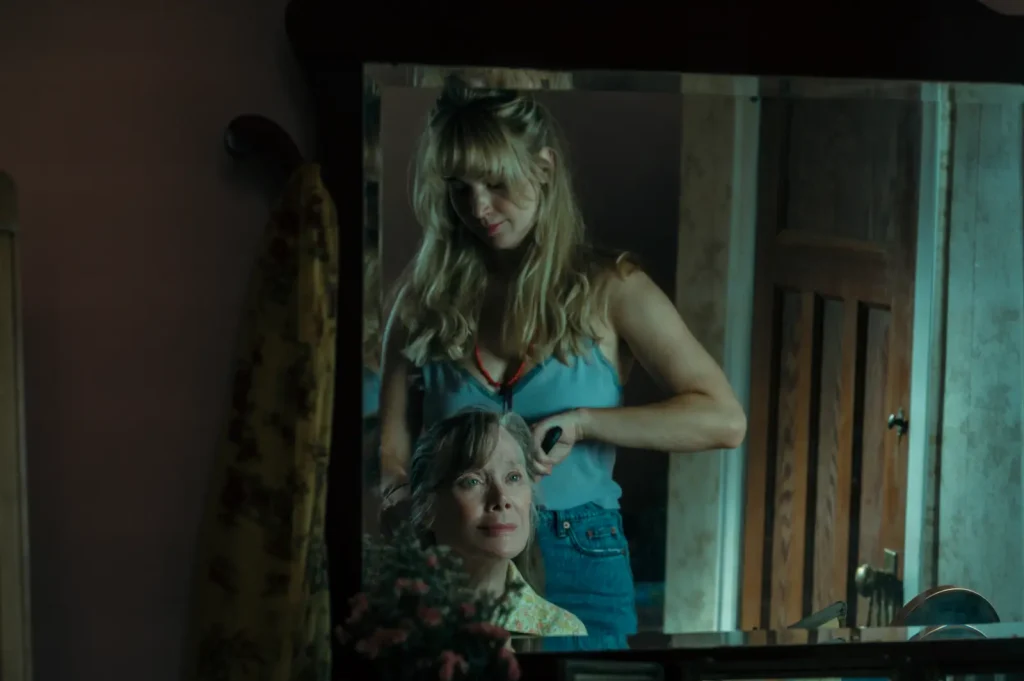
Grace’s new responsibilities and social expectations untether her present self from her former self, with troublingly extreme results. Jackson’s unstable mother, Pam (Sissy Spacek), lives nearby and is grieving her recently-deceased husband (Nick Nolte). She offers Grace some support, but Grace stubbornly refuses to accept help during her postpartum spiral. 

Jackson is also largely clueless and unwilling to change his ways. He and Grace are still drawn to each other, but they’re unable to let go of a toxic cycle of fighting and reconciliation. A mysterious biker (LaKeith Stanfield) living in the area offers the possibility for Grace to indulge her needs.
Melding sheer brutality with sequences of dreamy, sensual beauty, “Die My Love” thrives on its ethereal atmosphere and a show-stopping performance from Lawrence. She inhabits Grace with a wild-eyed intensity and crushing pathos, a woman fallen out of touch with both herself and with “civilized” society writ large. 

Ramsay, known for disquieting character studies, is a prime fit for this portrait of mental decline. “Die My Love” prizes tone over traditional narrative —we’re watching a hypnotizing trainwreck as Grace destroys both herself and her relationships.

Neither Grace nor the people in her orbit have the power to shift her trajectory; she’s as much a byproduct of postpartum depression as she is from the ways that Jackson and the world treat her in her new role as a mother. 

Seamus McGarvey’s cinematography frames the expansive yet confining landscape as foreign and disorienting. The environment often distorts as characters move through space, as if each step renders Grace further divorced from desires she feels forbidden from embracing, with other characters also struggling to find their own paths forward.

There’s a haunting, symbolic quality to the 4:3 aspect ratio and the wide-open surroundings the characters reside within: expansive and limiting, even isolating.

“Die My Love,” not completely unlike Mary Bronstein’s “If I Had Legs I’d Kick You,” does a fantastic job at submerging us into its protagonist’s mind. Ramsay’s filmmaking is at times dreamlike and other times startling in its blunt depiction of Grace’s self-destructive behaviors (animal lovers beware).

Music plays a critical role here, featuring one of the year’s best soundtracks, expressing dread as well as mournful reflection on the idealized life Grace once envisioned she’d have.

Lawrence gives a highly physical performance, from manifesting Grace’s desires through animalistic, “interpretive dance” sequences (that the film plays completely straight), to the peace she feels within the nearby woods away from civilization, and the violent self-hatred that flares unexpectedly.

There’s some bone dry humor in Lawrence’s matter-of-fact delivery. This is especially apparent during a scene where she has a “conversation” with a friendly gas station cashier, although Grace’s wit always reflects her deep-seated malaise.

The screenplay by Ramsay, Alice Birch, and Enda Walsh doesn’t provide much backstory, which puts more emphasis on the intricacies of Lawrence’s performance. Luckily, she is fully up to the task of conveying Grace’s emotional limbo.

Pattinson, not given as much to do as Lawrence, brings a shaggy insecurity that underlines Jackson’s volatility and half-hearted attempts at making amends. Like most other characters in “Die My Love,” Jackson remains unable to truly listen to Grace and understand where she’s coming from, every conversation seemingly creating more distance.

Spacek, too, does a lot with limited screen time; on some level, Pam identifies with Grace’s decline, and supports her efforts for independence even as they threaten Grace’s life.

The problem is that “Die My Love” eventually starts to wear out its welcome in Grace’s perpetual perils. Grace’s “journey” is a downhill slide that won’t stop until it’s all burned down. Ramsay’s film is disconcertingly harsh, alienating viewers through a story about alienation. And, well, isn’t that part of the point? It’s a dark, twisted vision of Hell still worth experiencing.
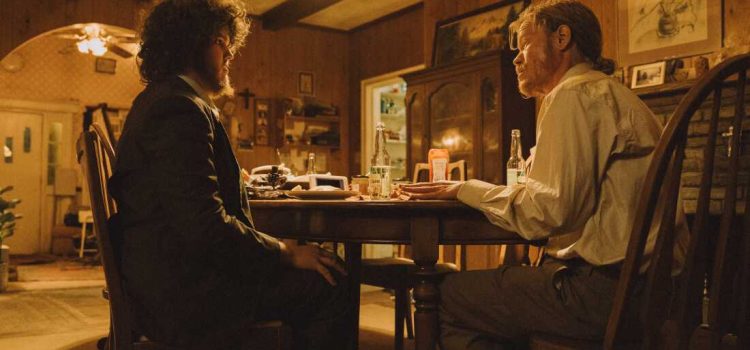
“Die My Love” is a 2025 psychological thriller directed by Lynne Ramsay and starring Jennifer Lawrence, Robert Pattinson, Sissy Spacek and LaKeith Stanfield. It is rated R for sexual content, graphic nudity, language, and some violent content, and the run time is 1 hour, 59 minutes. It opened in theatres Nov. 7. Alex’s Grade: B+.

By Alex McPherson

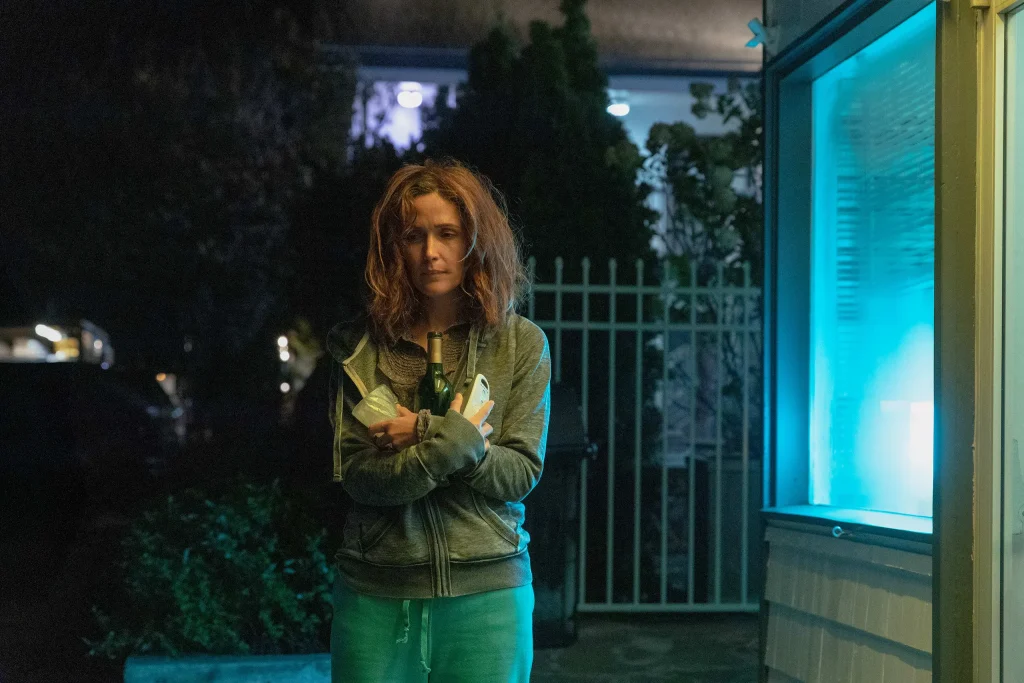
An aggressively unpleasant experience that traps viewers within its protagonist’s tortured psyche, director Mary Bronstein’s “If I Had Legs I’d Kick You” throws us into the void and leaves us to flail. A feverishly commanding performance from Rose Byrne guides us through the pressures of parenthood and a largely uncaring world.

The film focuses on Linda (Byrne), a therapist in Montauk, New York, who is stretched beyond her limits. Her daughter (Delaney Quinn) has a mysterious illness that causes a severe aversion to food and requires a feeding tube apparatus that Linda maintains and monitors every night. Linda’s ungrateful husband, Charles (Christian Slater), who’s in the Navy, is away on a two-month assignment.

It is of course during this time that a leak causes their bedroom ceiling to collapse and flood the house. This gaping hole makes the house unlivable, requiring Linda and her daughter to stay in a seedy motel. It also becomes a metaphorical window into Linda’s traumatic memories

Linda desperately wants doctors to remove her daughter’s feeding tube, but a nurse informs her that her daughter is not meeting her weight requirements, and threatens to “re-evaluate the level of care” that Linda can give her. She’s scolded every day when she double-parks at the daughter’s facility.

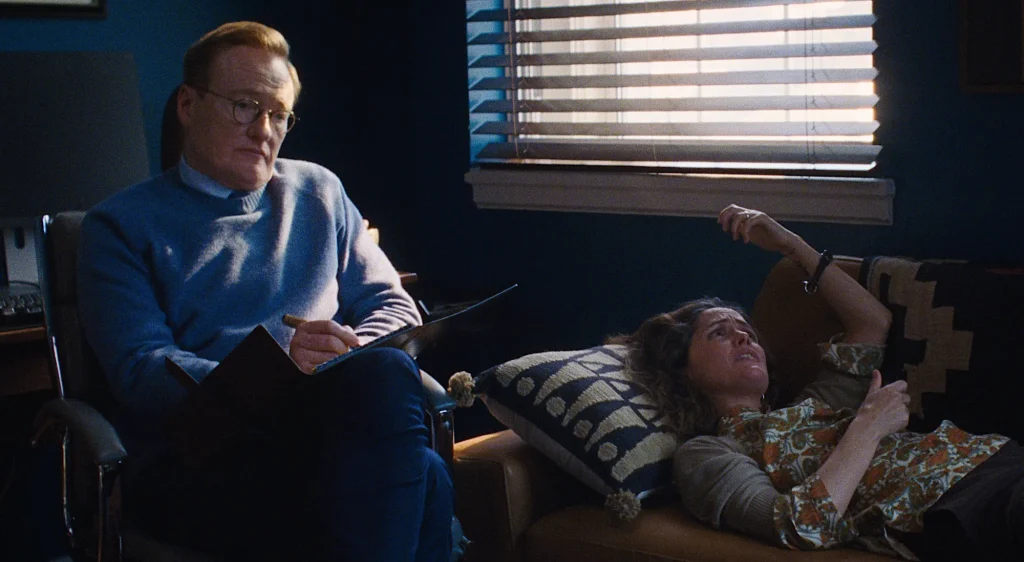
Her own patients take a toll (one of them, concerned about motherhood, is clearly on a dark path), and Linda’s own therapist down the hall (a surprisingly intense Conan O’Brien) refuses to take her swirling thoughts seriously. 

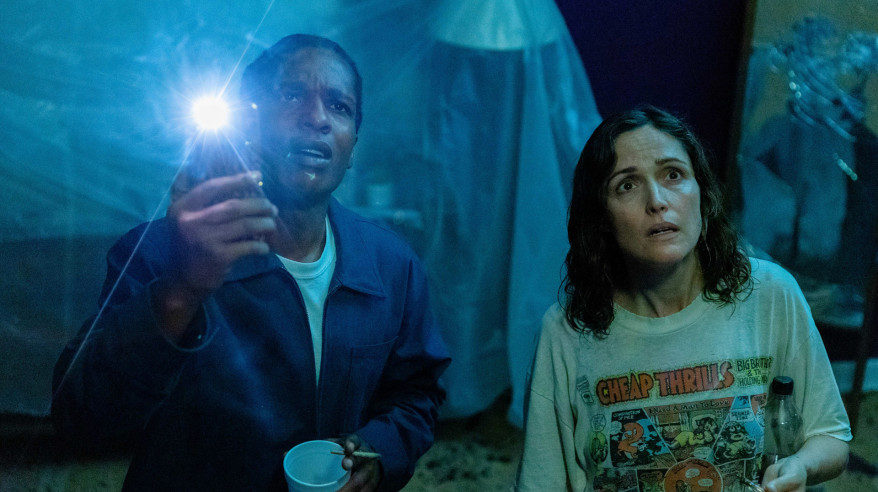
The snarky motel clerk (Ivy Wolk) refuses to sell Linda wine late at night, and the curious superintendent (A$AP Rocky) takes a liking to her and wants to strike up a friendship (which Linda immediately refuses). Everything is happening to Linda and she cannot catch a break, as barely-repressed psychological wounds resurface and send her already tenuous illusion of control veering drastically off course.

Catastrophe is around the corner, and Linda — lacking any clear support system — is headed right towards it.

Definitely not all sunshine and rainbows. Through Linda’s perpetually escalating crises, Bronstein explores the crushing psychological weight that Linda faces in every avenue of her life, trapping Linda in a version of Hell that she feels guilty for existing within. Bronstein’s film firmly roots us in Linda’s world, forcing us to view it through her eyes and never providing a sense of catharsis or release. I

t’s an exhausting watch (with an overlong runtime), but its maximalist stylings are viscerally, hauntingly tangible. Byrne’s performance is so strong, and heartbreaking, too, that no matter how intentionally off-putting “If I Had Legs I’d Kick You” gets, it’s difficult to look away.

Byrne  inhabits her  character, who makes impulsive, often questionable decisions that leave her paralyzed despite being constantly in motion. Linda is a complicated, emotionally fractured presence who’s on edge from frame one, barely holding on to her sanity as proceedings grow further frenzied.

Byrne’s comedic chops are put to use through Linda’s acerbic wit, yet we can see the damage being wrought upon Linda’s mind as she code-switches from role to role, trying, unsuccessfully, to keep her mounting dread at bay.

Bronstein keeps the chaos level high from start to finish, with cinematographer Christopher Messina (also the DP on Josh and Benny Safdie’s “Good Time”) remaining uncomfortably closed-in on Linda. This lends a palpable, subjective sense of peril to her actions; we’re seeing her struggles through her eyes.

Sound design plays just as big a role here — we never actually see Linda’s daughter’s face. Instead, we hear her nagging demands and meltdowns off-screen like a burdensome creature that requires Linda’s constant attention.
Sequences within Linda’s house have a horror-esque feel, complete with impressively effective jump-scares, disorienting visual effects, and the mocking, ironic jingle that plays whenever Linda’s office door opens. 

Indeed, “If I Had Legs I’d Kick You” is an alarming cacophony of noise and stress punctuated with bursts of pitch-black humor and sobering poignancy. Parenthood, depression, skewed gender dynamics, isolation, and the pressure that therapists feel are all under Bronstein’s magnifying glass — confronting aspects of motherhood, especially, that aren’t typically portrayed in media, and that people are often too nervous to address. 

The main issue with “If I Had Legs I’d Kick You” is that it starts at such a high key that there’s little crescendo throughout the 113-minute runtime. The domino effect of issues grows almost comical at times (poor hamster), and, after a while, the film starts to spin its gears and become repetitive — complete with a grueling finale that’s both inevitable and deeply distressing.

Still, Bronstein’s film shines as an acting showcase and a manifestation of pure, no-holds-barred cinematic panic. You might just feel completely drained afterwards.

“If I Had Legs I’d Kick You” is a 2025 psychological drama written and directed by Mary Bronstein and starring Rose Byrne, A$AP Rocky, Christian Slater, Delaney Quinn and Conan O’Brien. It’s runtime is 1 hour 53 minutes and it is rated R for for language, some drug use and bloody images. It opened in theatres Oct. 31. Alex’s Grade: B+

By Alex McPherson

A nail-biting exploration of the selfishness and deep-seated class enmity afflicting our doomed species, director Yorgos Lanthimos’ “Bugonia” grips from its opening frames and never lets go, even as it grows increasingly, thoroughly unhinged.

Based on the 2003 South Korean film “Save the Green Planet!,” “Bugonia” follows Teddy (Jesse Plemons), a disheveled and emotionally scarred beekeeper working a low-level warehouse job for the pharmaceutical company Auxolith.

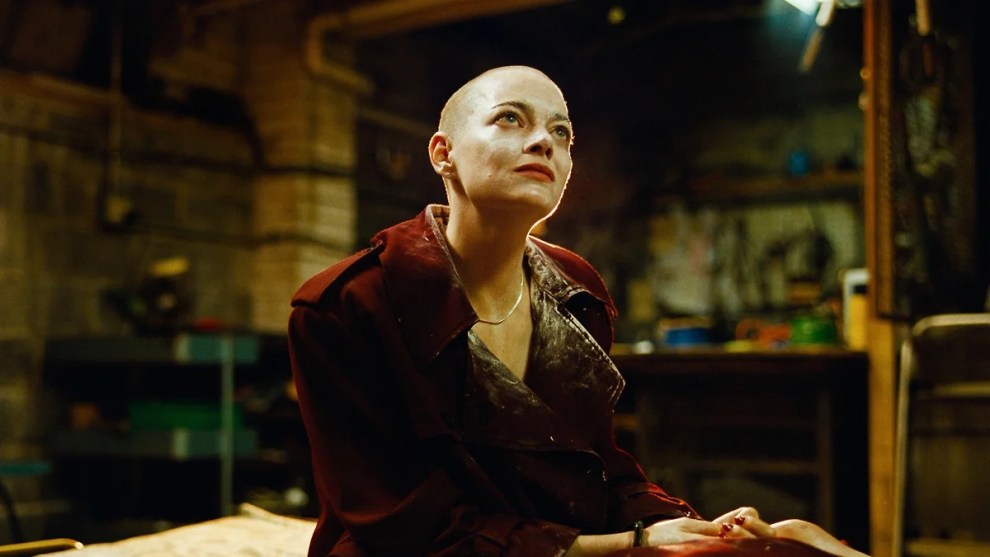
The company is managed by the performative, media savvy CEO Michelle Fuller (Emma Stone), whose face appears on magazine covers and who claims to support her employees while stripping them of work-life balance. 

Teddy, who has done his own research, believes that wealthy elites are destroying humanity and the planet. Reasonable, right? Well, not so much. He asserts that they are “Andromedan” aliens, and that he must stop them from wiping us out. Michelle might provide an opportunity to enact his master plan.

With help from his neurodivergent cousin Don (Aidan Delbis), Teddy hatches a plan to kidnap Michelle. If Michelle is an alien, they will force her to beam them into her mothership before the next lunar eclipse so that Teddy can negotiate with her leaders to let humanity be. 

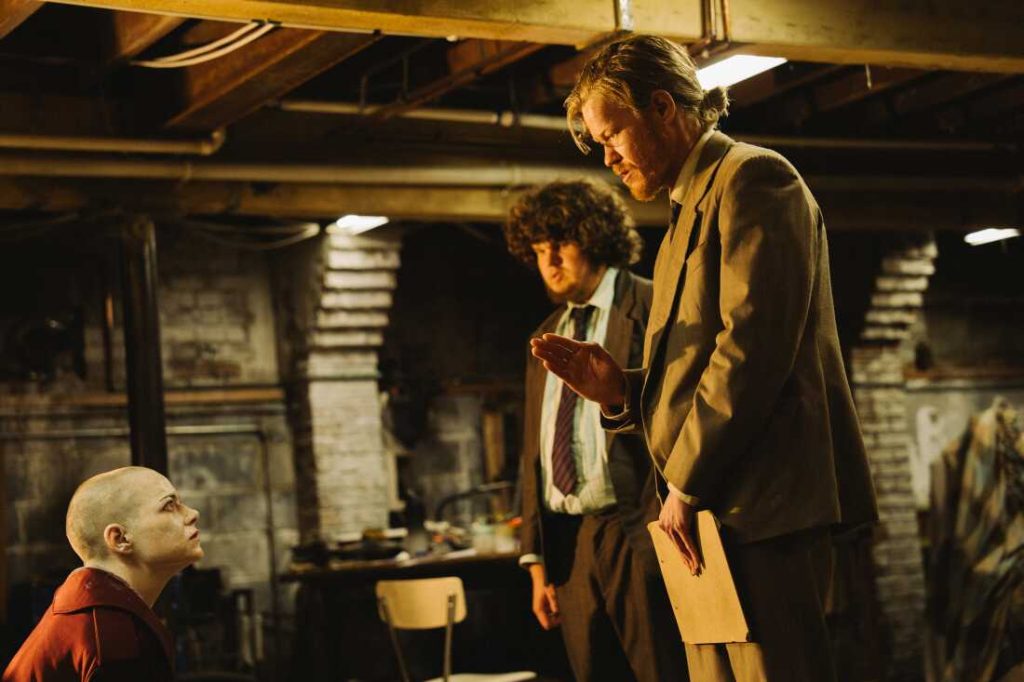
Donning cheap Jennifer Aniston masks and syringes, the pair nab Michelle and lug her to their dingy basement for interrogation, shaving her head and slathering her with anti-itch cream for good measure.

Michelle is, understandably, quite shaken, and confused about what exactly Teddy and Don are ranting about. The clock is ticking for both her and her paranoid kidnappers as the eclipse draws near.

It’s not a particularly rosy view of humanity, and one that Lanthimos — ever the provocateur — packs full of his signature twisted sensibilities that dare viewers to follow along or get the hell out.

Lanthimos and screenwriter Will Tracy present a disquieting allegory for the ways our (very American) communication has broken down amongst each other.

Indeed, “Bugonia” is a relentless but, ultimately, cathartic experience as proceedings swiftly descend into all-out madness, with lead performances that stagger in their intensity and commitment to the plot’s every twist and turn. 

Plemons is startlingly compelling as Teddy, who has gone so far down the rabbit hole of conspiracies and personal vendettas that he’s a ticking time bomb, driven by rage, fear, and a search for purpose.

He believes he’s the savior of Earth while he succumbs to his neuroses, every hitch in his plan emboldening him to act more violently and rashly.

Plemons is frightening and unpredictably cruel in his portrayal, yet Teddy never becomes an outright monster. 

Lanthimos and Tracy paint Teddy as someone wronged by corporations and the lies they spew. He is consumed with grief, self-loathing, and hatred of the “elites” he feels have set the planet on a spiral towards doom.

He acts out on beliefs that are both absurdist and based in emotional truth, rendering his decisions darkly funny and deadly serious, even tragic. 

Stone, too, brings layers to Michelle that complicate our feelings towards her scene to scene. She’s an almost comically condescending character thrust into a situation seemingly beyond her control–that is, until she learns how to manipulate her captors.

She plays into their frayed headspaces in an attempt to regain agency, save herself, and deliver her own cutthroat retribution for the wrongs they committed against her and her “kind” at large. It’s a performance on par with her Oscar-winning turn in “Poor Things”: she maintains a calculated, sometimes vicious edge even in Michelle’s most powerless moments.

Equally strong is Delbis in his feature film debut. Don is trapped within Teddy’s conspiracy-driven world and sees Teddy as his only support and someone who can potentially free him from the hardships of his reality. Don feels that he has no choice but to follow along, although Teddy’s reckless and cruel treatment of Michelle makes him increasingly guilty and frightened.

Shreds of compassion break through, along with a gradual realization of the monstrous actions that he and Teddy have taken. Through Delbis’ superb performance, that bubbling inner turmoil is palpable.

“Bugonia” presents little hope for these characters. Nearly every bizarre conversation (including with a creepy, bumbling cop played by Stavros Halkias) is based in manipulation and misdirection over understanding, the constant sense of ulterior motives and trying to gain the upper hand without meeting the other party on their level.

(L to R) Emma Stone as Michelle, Aidan Delbis as Don and Jesse Plemons as Teddy in director Yorgos Lanthimos’ BUGONIA, a Focus Features release. Credit: Atsushi Nishijima/Focus Features

There’s little common ground, and what common ground exists is paved over with different terrain, which reflects America’s condition in 2025. Through this, Lanthimos shrewdly, and effectively, observes the end of “truth” as we know it. 

The film is stylistically crisp yet abrasive, with Robbie Ryan’s wide-lensed cinematography opting for extreme close-ups and angling to reflect ever-shifting power dynamics. A memorably jarring score by Jerskin Fendrix, plus creative use of Chappell Roan and Marlene Dietrich, enhances the film’s gonzo atmosphere

Add to this an ending that ranks among the most twisted (and horrifically beautiful) in recent memory, and “Bugonia” is a wild viewing experience — making up for broad-strokes commentary with exceptionally tense filmmaking, gasp-worthy set-pieces, and outstanding performances.

It’s an understatement to say that the film is not for everyone, but, in its pessimistic glory, it stands among Lanthimos’ most engagingly disturbed efforts yet.

“Bugonia’ is a 2025 dark comedy-sci-fi film directed by Yorgos Lanthimos and starring Emma Stone, Jesse Plemons, Aidan Delbis and Brad Carvalho. It’s run time is 2 hours, 15 min., and it is rated R for bloody violent content including a suicide, grisly images and language. It opened Oct. 31 in theatres. Alex’s Grade: A-

By Alex McPherson

A bleak and palm-sweating look at just how profoundly screwed we all are, director Kathryn Bigelow’s “A House of Dynamite” refuses to answer its impossible questions about nuclear war, and urges reflection on the chaos and fatalism of our current fractured reality.

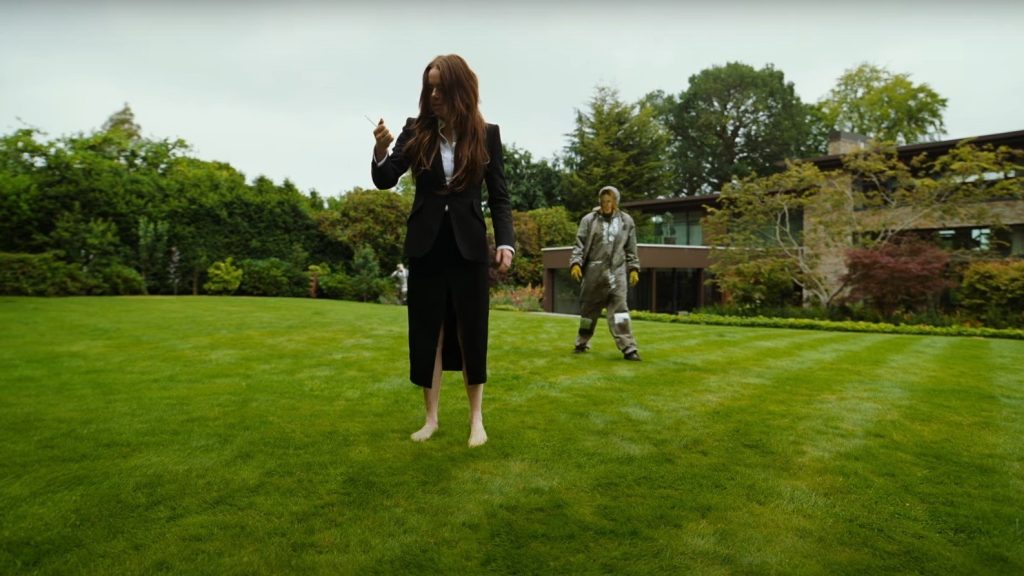
The film, a work of fiction that remains chillingly plausible, zeroes in on the question: What if a nuclear warhead launches from an unknown location in the Pacific for an unknown reason, and is en-route to Chicago with only 18 minutes until impact?

It’s an eventuality that many personnel in the windowless facilities of the government have been trained to deal with, but can they put theory into practice when the beginning of the end is at hand? Is anyone prepared to endure the fallout? 

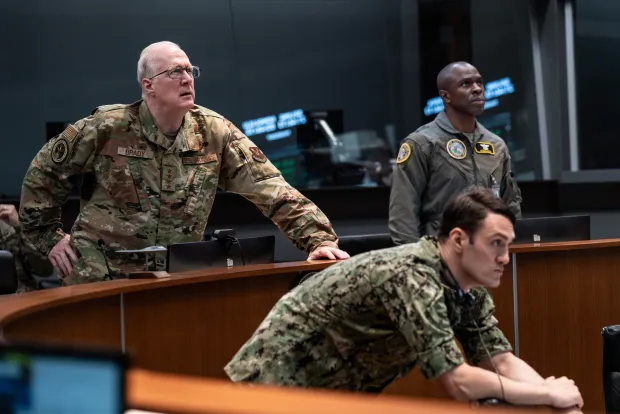
Bigelow’s film repeats those 18 minutes three times from different perspectives within a series of situation rooms and command-and-control suites from Alaska to Washington, D.C., going up the chain of command until we reach the President (Idris Elba).

Military and civilian personnel — portrayed by an impressive ensemble including Anthony Ramos, Rebecca Ferguson, Moses Ingram, Tracy Letts, Jared Harris, Greta Lee, and Gabriel Basso, among others —  scramble to make sense of and neutralize the threat before it’s too late. The President struggles to decide what to do next should that missile actually hit Chicago. 

Time is of the essence, and these trained staff are susceptible to buckling under the weight of what’s headed their way. They are ultimately powerless no matter their rank, and an uncertain future is in the trembling hands of the Commander in Chief. As one flummoxed NSA advisor puts it, the options are either surrender or suicide.

The stakes are dreadfully high, and, despite some unnecessary flourishes, Bigelow refuses to reassure us. Indeed, “A House of Dynamite” is a warning about our (and the world’s in general) precarious situation involving nuclear weapons, as well as a high-strung look at the ways procedures and moral clarity can crumple when theory is put into practice.

Not exactly a “jovial” viewing experience, and one ripe for debate. Still, it’s compulsively entertaining— bringing the scenario to life with a vigorous attention to detail and layered structure that builds toward an integral choice. Bigelow is firmly in her wheelhouse here, supported by acting and production value wholly up to the task.

Bigelow and screenwriter Noah Oppenheim aren’t aiming to make a “satire” here à la Stanley Kubrick’s “Dr. Strangelove.” Rather, the officials depicted in “A House of Dynamite” are skilled at their jobs, many with families at home dealing with familiar, relatable challenges. 

The meaningful, albeit brief, insight into their personal lives before the ICBM is detected furthers the idea of these officials being people at the end of day — that no matter their rank, they are capable of fault just like the rest of us.

Their success in this situation, as depicted in this film, is also ultimately as much dependent on luck as their competence; the advanced technology they have at their disposal can only help them so much, too, as unknowns about the missile’s origins and what they should do if it strikes Chicago are left frustratingly opaque.

Bigelow, having consulted with several ex-Pentagon officials, brings a fly-on-the-wall verisimilitude to her direction, with cinematography by the legendary Barry Ackroyd (a frequent Paul Greengrass collaborator) that adds an effectively shaky, almost documentary-esque realism to the proceedings from start to finish.

“A House of Dynamite” is primarily composed of conversations, but fraught ones, backed by a rattling, slightly overused score by Volker Bertelmann (similar to his work in “Conclave”) that lends extra tautness. 

The film’s triptych structure adds additional context to what we’ve heard and seen before. Bigelow and Oppenheim visualize the series of checks of balances at play, and the reality that those systems cannot save us.

It’s all effectively nerve-jangling, stressful, and draining through the film’s insistence on going through those 18 minutes three different times — ending on a note that encourages conversation, or, perhaps more likely, shocked silence. Less impressive are the occasional “Hollywood” lines of dialogue that break the illusion of real-life that Bigelow works hard to maintain.

But with such an outstanding cast — Ferguson, Letts, and Elba are particular standouts — it’s difficult to become too distracted by the script’s intermittent clunkiness.

“A House of Dynamite” has additional resonance when thinking about what our current governmental administration would do in the same position. Even with experts at the helm in this film, though, doom is possible if we continue down the same path, alongside procedures that are far from foolproof. Bigelow presents a dire message, and it’s extremely hard to take your eyes off the screen.
“A House of Dynamite” is a 2025 political thriller directed by Kathryn Bigelow and starring Idris Elba, Rebecca Ferguson, Jared Harris, Anthony Ramos, Jason Clarke, Tracy Letts, and Gabriel Basso. The film is rated R for language and run time is 1 hour, 52 minutes. It opened in theatres Oct. 10 and streams on Netflix Oct. 24. Alex’s Grade: B+.
By Alex McPherson

Plenty of punches are thrown but few connect in Benny Safdie’s solo directorial debut “The Smashing Machine,” an awards-hungry drama that sacrifices depth for dress up.

Safdie’s film focuses on Mark Kerr, one of the original American Ultimate Fighting Championship fighters, from 1997 to 2000. When we first meet Mark, he’s the hulking yet surprisingly vulnerable undefeated champ who cannot fathom the concept of losing. He appears almost gentle in his public interactions, yet he remains a force of nature in the ring with a messy life behind the scenes.

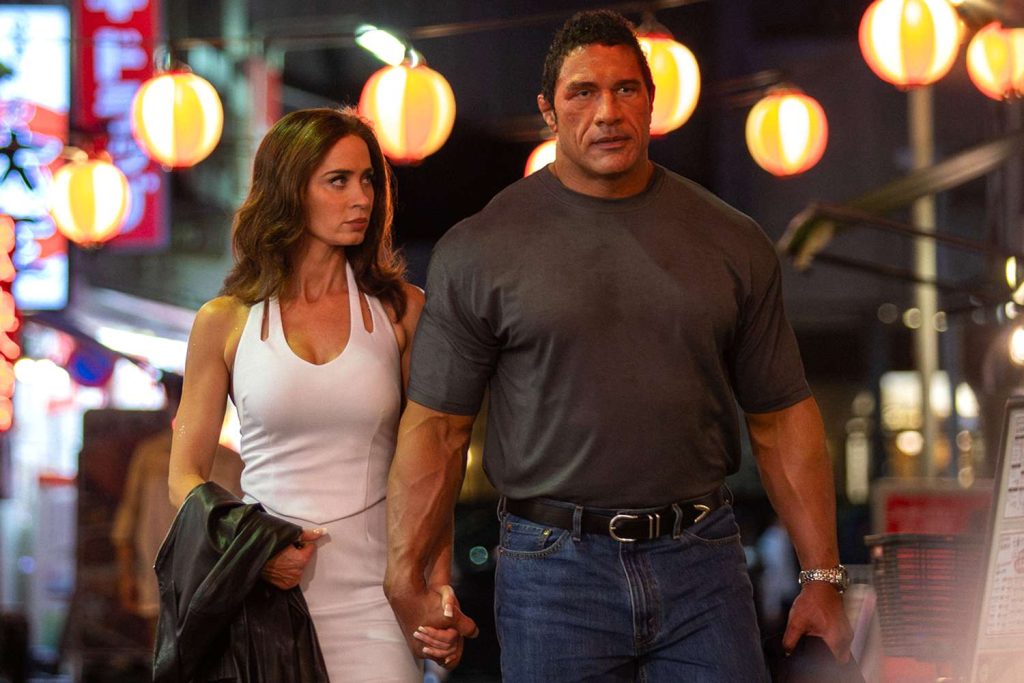
He’s accompanied by his girlfriend, Dawn Staples (Emily Blunt), with whom he shares a decidedly unstable relationship. They struggle to navigate the effects of Mark’s celebrity status, Dawn’s attempts to support him, and Mark’s addiction to painkillers.

Mark decides to take part in PRIDE to make more money, the rival UFC league in Japan, with his wrestling BFF Mark Coleman (real-life MMA fighter Ryan Bader). But Mark’s addiction takes its toll, and he loses focus, leading to his first major loss — well, a “No Contest” ruling by the judges.

This sends Mark into a tailspin. His public image is being chipped away, and his already rocky personal life veers down new chaotic avenues. Mark finally goes into rehab and emerges 21 days later (a time jump that the film abruptly cuts to) ready to redeem himself at PRIDE. But can Mark win the championship once and for all, and potentially beat up-and-coming Coleman?

Familiar and slightly-less-familiar beats follow, leading up to, ahem, not all that much to think about. Safdie, one-half of the team that brought us high-throttle stress fests “Good Time,” “Heaven Knows What,” and “Uncut Gems,” takes an unusually surface-level look at Mark’s life in “The Smashing Machine.”

It’s an ostensibly “raw” approach that comes off as curated and sanitized. At least Johnson and Blunt give impassioned performances that are perfect for Oscars highlight reels.

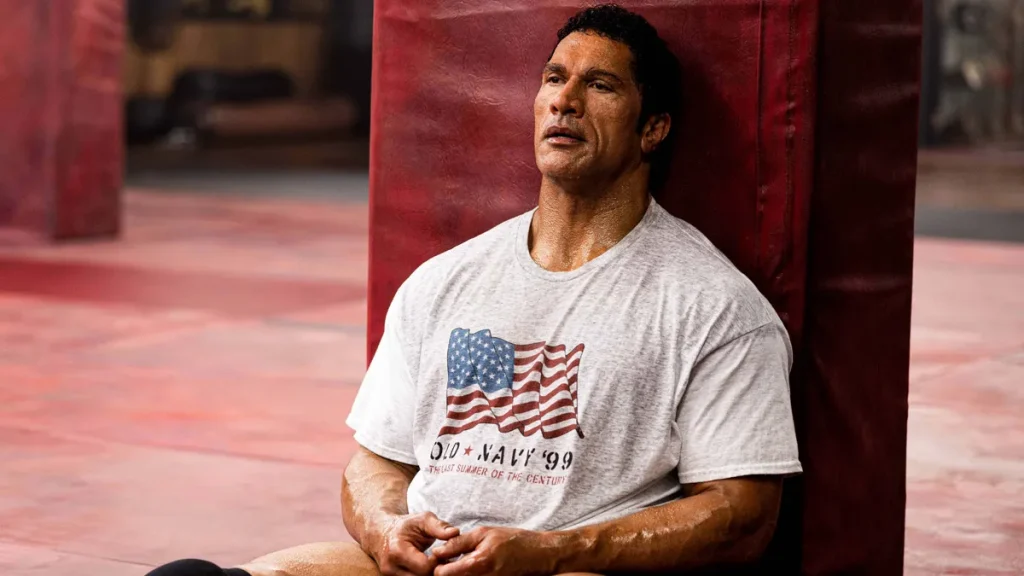
As an opportunity to showcase his acting muscles alongside his actual ones, Johnson delivers. He convincingly showcases the various “sides” of Mark scene to scene as he navigates his public persona and private realities, bringing an intensity and vulnerability (with the help of some impressively detailed makeup) that pairs effectively with Maceo Bishop’s rugged cinematography.

Blunt, too, is intense and volatile as Dawn. The confrontations between Mark and Dawn  are where “The Smashing Machine” succeeds most, as Safdie’s screenplay keeps who we’re “rooting for” in flux as the couple navigates the effects of Mark’s sobriety with often explosive results. 

Indeed, when “The Smashing Machine” focuses in on Mark’s vices, vanity, and loneliness after not being able to maintain the carefully-sculpted façade he’s spent years working towards (particularly during the first half), it succeeds where it counts.

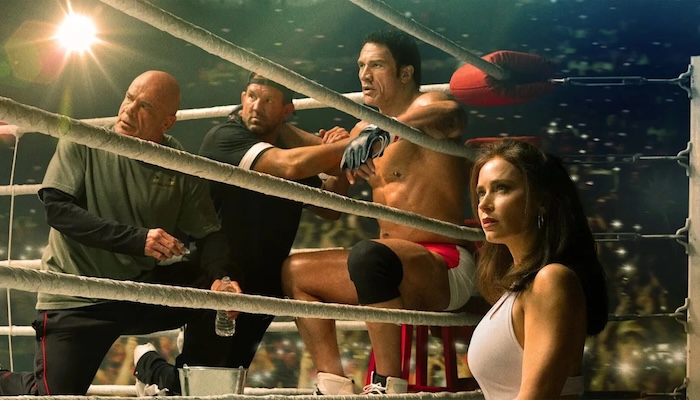
Safdie’s voyeuristic approach brings an uncomfortable immediacy that’s emotionally taxing to watch (in a good way), and the film’s period-accurate stylings and music give it a grimy sense of pizazz; the fights themselves are viscerally well-choreographed, lent extra force by Nala Sinephro’s percussive, restless score.

As soon as Mark goes through the rehab center’s doors, though, Safdie winnows the narrative down to a much more digestible framework, zapped of thematic heft. Mark’s journey from addiction to sobriety largely takes place behind (literal) closed doors, and the nuances of that growth are locked within. 

Perhaps the real-life Mark Kerr, who worked as an “informal consultant” on the film, had reservations about just how much Safdie could reveal about his story — seeing the “before” and “after” is definitely a choice, one that skips over a crucial element of Mark’s journey and the courage his recovery requires.

Mark’s eventual self-compassion and acceptance arrives, but, given the film’s lack of meaningful connective tissue, his evolution is merely seen, not felt, or fully understood.

Not every film has to be about something grandiose or particularly important. Wanting to shine light on a sport’s early pioneer is a noble enough goal. With the pedigree of a Safdie brother in the director’s chair, “The Smashing Machine” had the potential to hit hard. All this film leaves us with, though, is a sense of half-developed feeling — lots of yelling and period-accurate immersion lacking much to reflect on once the end credits roll. Oh well, maybe Johnson will get that Oscar.

“The Smashing Machine” is a 2025 sports biopic written and directed by Benny Safdie and starring Dwayne Johnson and Emily Blunt. Rated: R for language and some drug abuse. its runtime is 2 hours, 3 minutes. The film opened in theatres Oct. 3. Alex’s Grade: C.