Apple TV has revealed the premiere date for the highly anticipated fourth season of global hit series “Ted Lasso,” starring and executive produced by Emmy Award winner Jason Sudeikis. “Ted Lasso” season four will make its global debut on Wednesday, August 5, 2026 with one episode, followed by new episodes every Wednesday through October 7.

Season four marks the return of fan favorites including Emmy Award -winner Hannah Waddingham, Juno Temple, Emmy Award -winner Brett Goldstein, Brendan Hunt and Jeremy Swift, alongside new additions Tanya Reynolds, Jude Mack, Faye Marsay, Rex Hayes, Aisling Sharkey, Abbie Hern and Grant Feely.

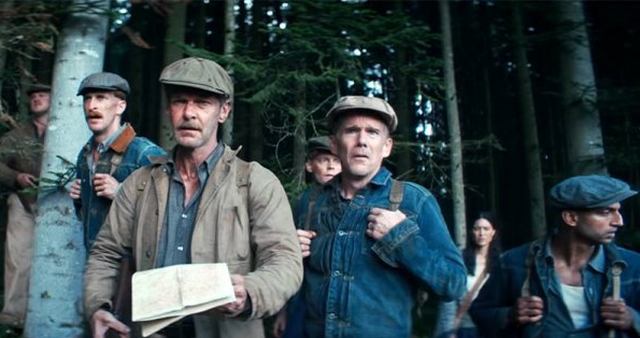
In season four, Ted returns to Richmond, taking on his biggest challenge yet: coaching a second division women’s football team. Throughout the course of the season, Ted and the team learn to leap before they look, taking chances they never thought they would.

“Ted Lasso” season four adds Emmy Award -winner Jack Burditt as executive producer under a new overall deal with Apple TV. Sudeikis stars and executive produces alongside Hunt, Joe Kelly, Jane Becker, Jamie Lee and Bill Wrubel. Goldstein serves as writer and executive producer alongside Leann Bowen. Sarah Walker and Phoebe Walsh will serve as writers and producers for season four, and Sasha Garron co-produces.

Julia Lindon will write for season four, and Dylan Marron will serve as story editor. Bill Lawrence executive produces via his Doozer Productions, in association with Warner Bros. Television and Universal Television, a division of NBCUniversal content. Doozer’s Jeff Ingold and Liza Katzer also serve as executive producers. The series was developed by Sudeikis, Lawrence, Kelly and Hunt, and is based on the preexisting format and characters from NBC Sports.

Following its global debut on Apple TV, “Ted Lasso” broke records and quickly earned praise from fans and critics all over the world. The first season became the most Emmy® Award-nominated comedy series, and the series went on to land rare back-to-back Outstanding Comedy Series Emmys® for its first two seasons on air.

The first three seasons of “Ted Lasso” are now streaming globally on Apple TV.

Here is the teaser trailer: https://youtu.be/PxZg4SfIURg?si=XR4FosCREeq5wkZS

By Lynn Venhaus

In contemporary biopics, well-known artists are usually presented in a typical template – rags to riches, bumpy roads and triumphs during a specific period, not spanning womb to tomb, and “Michael” doesn’t stray from that formula.

How this narrative distinguishes itself, in this Jackson family-produced portrait of their singular superstar, is the undeniable impact of his music and the memorable pop culture moments that Michael Jackson was a part of during his brief life. (He died at age 50 on June 25, 2009).

The story of the “King of Pop” begins in the mid-60s in Gary, Indiana, through the Jackson 5 success and their relocation to a family compound, Hayvenhurst, in Encino, Calif., to his breakout solo career, stopping at his “Bad” World Tour in 1988.

As an artistic innovator who redefined music, dance and music videos, he was known as a perfectionist who had a relentless work ethic. That is also shown in “MJ The Musical,” which opened on Broadway in 2022 and continues to tour the country, concentrating on rehearsals for Jackson’s 1992 Dangerous World Tour, and his career pressures.

Michael’s real-life nephew Jaafar Jackson portrays his uncle.

His creative genius and masterful songwriting skills are the major focus of this dramatization, while displaying his painfully shy and sensitive personality. There are glimmers of his compassion (visiting children in hospitals) and humanitarianism (although it doesn’t touch on “We Are the World” or his Heal the World Foundation).

Key moments include meeting Berry Gordy (Larenz Tate) at Motown, and his collaborations with Quincy Jones (Kendrick Sampson) on his first solo album “Off the Wall” in 1979 and then “Thriller” in 1982, which remains the best-selling album of all-time.

But the film really comes alive during the iconic pop essentials – filming of the landmark “Thriller” video, a choreography rehearsal for “Beat It,” the stunning introduction of his famous “moonwalk” on the Motown 25th anniversary special in 1983, besides his solo and group performances with his brothers Jermaine (Jamal R Henderson), Jackie (Joseph David-Jones), Tito (Rhyan Hill), and Marlon (Tre Horton).

Those scenes bristle with electricity and give the film its heartbeat. Jaafar Jackson, who is Jermaine Jackson’s son and Michael’s nephew, is remarkable in his uncanny portrayal of Michael from his teen years on, while Juliano Krue Valdi portrays him at age 10.

Jaafar has the moves, the speech pattern and the megawatt smile down pat, and Valdi is incandescent as the ebullient child singer fronting the Jackson Five. Suffice it to say he thrived in the spotlight. It’s the real-life stuff he had difficulties with (although it’s only hinted at briefly).

The struggles with his controlling and abusive father Joseph (Colman Domingo) and sweet but passive caretaker mother Katherine (Nia Long) are shown, but the family’s input on this heavily redacted narrative is obvious. After all, the list of producers includes everyone but his sister Janet and his daughter Paris. who did not sign off on this version.

So, you know you are getting a sanitized version of his life. This is the story the family wants to tell, and this is the movie that resulted – 2 hours and 15 minutes, from modest beginnings in Gary, Ind., to stopping at his Bad World Tour at Wembley Stadium the summer of 1988. Supposedly, a second part is in development. (To be continued, a screen says at the end).

If you want juicier details, look elsewhere. But if you want an entertaining slice of life that takes you back to the days when you first heard Michael Jackson and saw his evolution in the music business, those scenes pop with energy and excitement.

Colman Domingo as domineering Jackson patriarch Joseph.

Antoine Fuqua, who has directed action movies like “Training Day” and “The Equalizer,” helmed this, and his early career as a music video director is evident. His concert footage is beautifully shot by cinematographer Dion Beebe, who captures the electricity of live performances.

They also recreate the 1984 filming of the Pepsi commercial accident where Michael’s hair caught on fire from pyrotechnics and he suffered second and third degree burns on his scalp. That alludes to taking painkillers, which later caused issues for the star.

Screenwriter John Logan, who has been nominated for three Oscars for writing “Gladiator,” “The Aviator” and “Hugo,” and won the Tony Award for Best Play with “Red” in 2010, knows how to weave a compelling tale about larger-than-life personalities.

Logan also highlights Jackson as a savvy businessman, knowing exactly what he wanted, in meeting scenes with record company executives and managers.

the early beginnings of the Jackson 5 band.

This film was made for his legions of fans, and from the preview audience reaction, this will be a massive crowd-pleaser for those who separate the art from the artist, and is not for the cancel culture.

In quieter life moments, the film touches on Michael’s loneliness as a boy, his retreat into a fantasy life involving Peter Pan, old Hollywood movies, and his big dreams to be the best at what he did as an entertainer. It’s meant to tug at the heartstrings, the perennial man-child dilemma..

Yet, the film shows a loving relationship between Michael and his brothers — even when they’ve grown up and he hasn’t. In their younger days, those roles are played with great zest by Jayden Harville as Jermaine, Jaylen Lyndon Hunter as Marlon, Judah Edwards as Tito, and Nathaniel Logan McIntyre as Jackie, with Amaya Mendoza as a young LaToya.

His eccentricities include housing exotic animals that were a major part of his menagerie, including Bubbles the Chimp (a horrible CGI visual)..

The cast includes Laura Harrier as sharp Motown talent scout and later executive Suzanne de Passe, Jessica Sula as La Toya, KeiLyn Durrel Jones as Michael’s bodyguard/confident Bill Bray, and Miles Teller as lawyer and manager John Branca, who is also credited as a producer. Branca is co-executor of the Michael Jackson Estate.

Mike Myers, who also had a cameo in “Bohemian Rhapsody,” shows up here as CBS Records president Walter Yetnikoff, who puts the squeeze on MTV to play Michael Jackson’s “Billie Jean” in heavy rotation, threatening to pull his artists like Bruce Springsteen, Journey, Billy Joel, and other big names on the label if they didn’t.

While “Michael” is not a documentary or a complete picture, this fictional account encapsulates how Jackson’s talent endures and reminds the audience why they admired his unique four-decade contributions. This is definitely geared to a specific audience who is willing to get lost in the music.

“Michael” is a 2026 music drama biography about the late Michael Jackson, produced by his family and estates. It is directed by Antoine Fuqua and stars Jaafar Jackson, Colman Domingo, Nia Long, Juliano Krue Valdi, Larenz Tate, Kendrick Sampson, KeiLyn Durrel Jones, Ryan Hill, Miles Teller, Mike Myers, Jamal R. Henderson, Joseph David-Jones, Tre Horton, Jessica Sula and Laura Harrier. The film runs 2 hours, 15 minutes and is Rated PG-13 for some thematic material, language, and smoking. It opens in theatres April 24. Lynn’s Grade: B

Professional Actress Amy Holland Pennell Will Host

John K. Mefford to posthumously receive the Lifetime Achievement Award

Clayton Community Theatre leads all community theater groups with 22 nominations for this year’s 11th annual Theatre Mask Awards, followed by Kirkwood Theatre Guild with 17, Monroe Actors Stage Company in Waterloo, Ill., with 14, and O’Fallon Theatre Works” with 10.

Sponsored by the non-profit organization Arts For Life, the TMAs will take place starting at 11 a.m. on Saturday, April 25, at the Royale Orleans banquet center, 2801 Telegraph Road, St. Louis, Mo. 63125. Doors open at 10:30 a.m.

The Theatre Mask Awards, which began in 2015, honors comedies and dramas produced by local community theatre companies. Awards will be presented in 17 categories in production, performance and creative design.

Among the 2025 plays garnering the most nominations are CCT’s “Who Killed Aunt Caroline?” with 11 and “The Graduate” with 9; KTG’s “Into the Breeches” with 8 and “God of Carnage” with 7; OTW’s “The Complete Works of William Shakespeare Abridged” with 9; and MASC’s “Outside Mullingar” with 8 and “Crimes of the Heart” with 5.

Goshen Theatre Project in Collinsville’s production of ‘The Lion, The Witch and The Wardrobe” earned six nominations. Other theater companies participating in AFL include Act Two Theatre, Alfresco Productions, Hawthorne Players, KTK Productions and Theatre Guild of Webster Groves.

Nominations are listed at artsforlife.org

This year’s master of ceremonies is award-winning actress Amy Holland Pennell, and the Lifetime Achievement Award winner is John K. Mefford, who died in January after supporting community theater as a performer, volunteer and patron throughout adulthood.

Amy Holland Pennell

A native of Granite City, Ill., Pennell is a professional actress who has appeared in movies, television shows and on stage in plays and musicals.

Amy Holland Pennell

She earned Bachelor of Arts degrees in theatre and communication at Saint Louis University, honored as the outstanding graduate for performance and academic excellence. During her days here, she was a captain of the NFL St. Louis Rams Cheerleaders.

She has had recurring and guest-starring roles on HBO’s “The Newsroom,” Nickelodeon’s “Instant Mom,” Disney’s “Mighty Med,” CBS’s “NCIS: Los Angeles” and “How I Met Your Mother,” FX’s “It’s Always Sunny in Philadelphia” and ABC’s “Scandal.”

Her movie roles include “I Am,” “The Importance of Doubting Tom,” “Game Day” and “Exorcist House of Evil.”

On stage, she has played such iconic characters as Eliza Doolittle in “My Fair Lady,” Abigail in “The Crucible,” and Annie Sullivan in “The Miracle Worker.”.

Pennell said she remains deeply grateful for her faith, family, and friends, and continues to bring passion, heart, and humor to everything she does—onstage, on camera, and in life.

.John K. Mefford

John K. Mefford

Mefford, a lifelong resident of southern Illinois and longtime Granite City resident, passed away on Jan. 31, 2026, leaving behind a legacy of storytelling, service, and unforgettable characters—both on and off the stage.

 For 25 years, John served the Six Mile Regional Library District, where generations came to know him fondly as “the bookmobile guy.” He considered libraries were living places—vehicles of imagination, history, and connection—and he brought books, curiosity, and kindness to every stop he made.

 A lifelong lover of history, John immersed himself fully in the past. He was a dedicated historical reenactor with the Milice de Ste. Famille, a member of the Victorian Mourning Society of St. Louis.

That same passion for embodiment and storytelling carried naturally onto the stage. An accomplished actor who performed with Masquers, Summerstage, Alfresco Productions, and many others.

In recent years, John became a beloved part of St. Charles Christmas Traditions, portraying Clement Moore, author of “A Visit from St. Nicholas.” His readings of “’Twas the Night Before Christmas” enchanted audiences with warmth and humor.
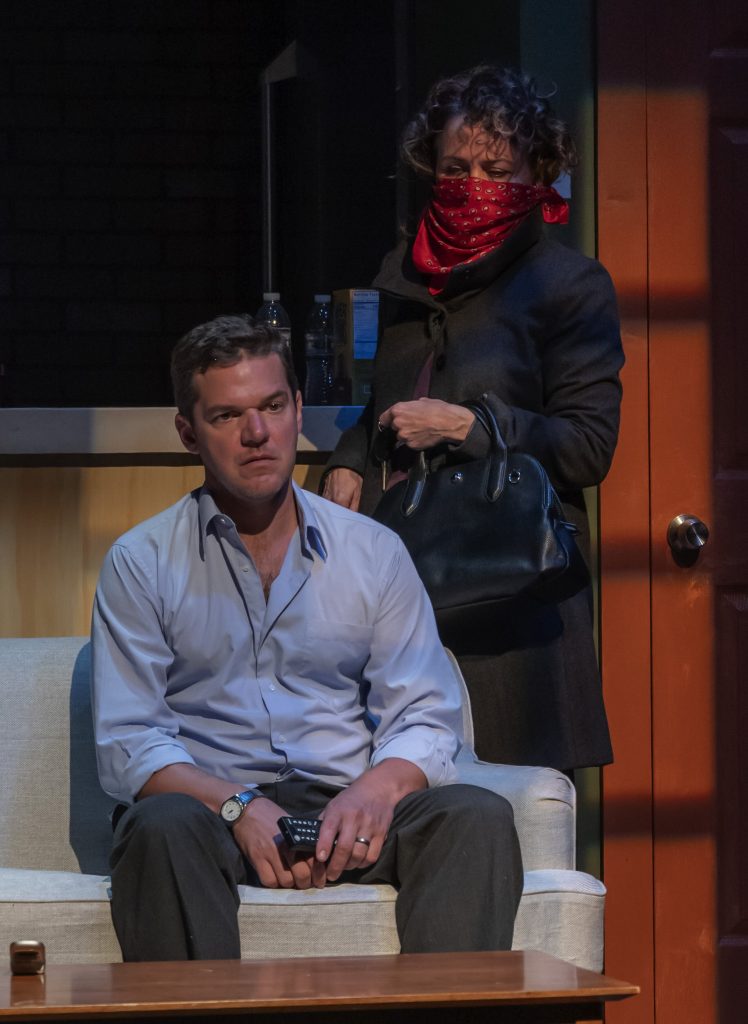
Among his favorite roles were in “1776,” “The Rocky Horror Show” and “Alice in Wonderland.”

He was a cherished father, grandfather, husband, brother, friend and colleague who will be remembered for his generosity, creativity, and unmistakable spirit.

Tickets for Sale

Combination tickets for both TMAs and BPAs are available for $50 with a $2 service fee but must be purchased by April 10. After that, each event is $30 plus the $2 service fees.

Tickets are available at: https://arts-for-life-2.square.site/. Table seating is available at 10 per table. Cocktail attire is suggested. A buffet meal will be served, and a cash/card bar will be available.

The menu includes top round of beef with special LaFitte sauce, chicken parmesan, home-style green beans, pasta primavera, potatoes royale, salad and fresh bakery bread with butter. Special cupcakes from the Blue Owl Restaurant and Bakery in Kimmswick, Mo., are dessert.

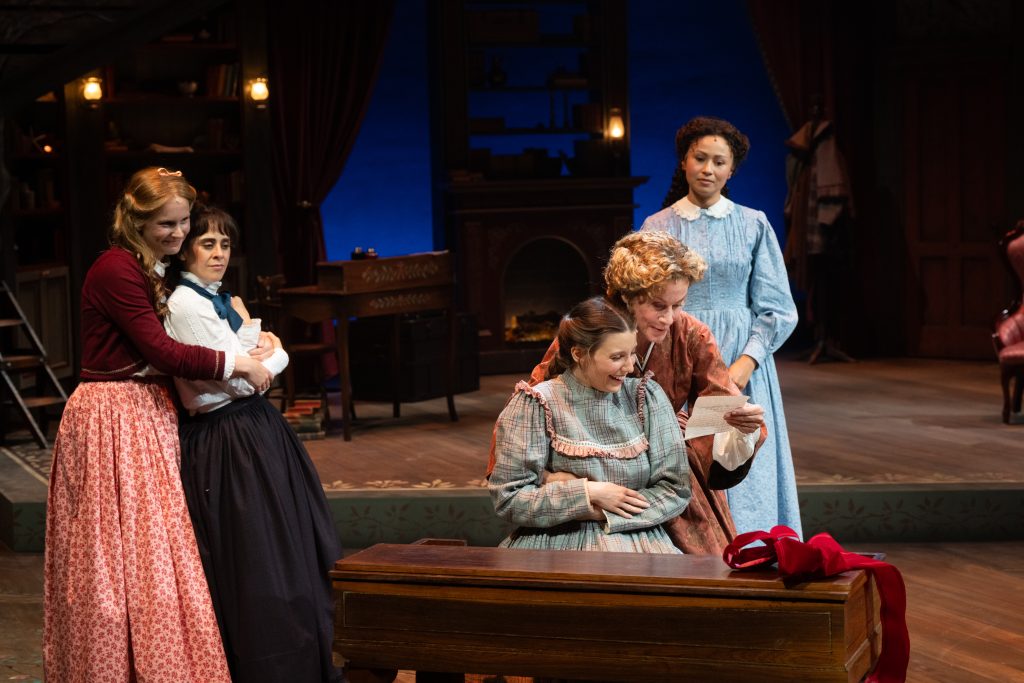
Arts For Life is a local not-for-profit arts organization dedicated to the healing power of the arts through its work with youth, the underserved, and the community, with its goal of “Making a Dramatic Difference.”

AFL is dedicated to promoting public awareness of local community theatre, encouraging excellence in the arts, and acknowledging the incredible people who are a part of it.

For more information, email [email protected] or visit the website.

By CB Adams

There is a particular intelligence in how the St. Louis Symphony Orchestra has shaped its “Playlist: Symphony Happy Hour” series, and it has less to do with programming than with invitation. These one-hour concerts feel calibrated for the way people actually live now, attentive to time, to curiosity, and to the social dimension of music that often gets sidelined in more formal settings.

This “Playlist: Symphony Happy Hour — John Williams” evening, led by Stéphane Denève, offered the expected pleasures, iconic themes, gleaming orchestration, a shared recognition that rippled easily through the hall. Yet one of the most engaging elements arrived before the downbeat.

Denève’s brief, lucid introductions opened a window into Williams’ compositional thinking, drawing connections across scores and highlighting how closely related some of these themes are in their construction.

They carried the same quiet pleasure as a poet stepping forward to frame a work before reading it, offering just enough origin and intention to deepen what follows without overdetermining it. His explanation of the “Lydian” quality in Williams’ writing, that lifted, slightly otherworldly brightness created by a raised fourth, gave listeners a way into the sound itself.

Stephane Deneve

Paired with his observation about the kinship between the musical DNA of “Star Wars” and “E.T.,” the effect was cumulative, sharpening the ear and turning what might be passive recognition into active listening. It is a small intervention with an outsized effect.

The more lasting impression, though, came from the frame around the music. The option to enjoy a drink, a concise set of insights, and the easy permeability between audience and musicians before and after the performance created something closer to a salon than a concert. It is a format that lowers the threshold without lowering the standard.

The series understands that access is not dilution. It is design. By compressing the program into a single, purposeful hour, Playlist concerts sharpen attention and invite newcomers without asking them to decode tradition first.

For seasoned listeners, there is a different reward, the chance to hear familiar repertoire reframed, and to experience the orchestra as a living, social organism.

If there is a drawback, it is a telling one. This Playlist made a compelling case for itself, and in doing so, it sparked a quiet regret at not being able to take in the orchestra’s full weekend program. A smart entry point that leaves you wanting the deeper dive.

The SLSO’s “Playlist: Symphony Happy Hour — John Williams” was presented March 19 at Powell Hall.

Deneve conducts the SLSO during a rehearsal for a Playlist.

Photos provided by the St. Louis Symphony Orchestra.

By Lynn Venhaus
Clever, funny and heart-tugging – all the crucial qualities for a crowd-pleasing movie – are abundant in “Project Hail Mary,” an unlikely epic space opera that feels intimate with a smart script that isn’t dumbed down for mass appeal but comprehensible nonetheless.

Science teacher Ryland Grace (Ryan Gosling) wakes up on a spaceship light years from home with no recollection of who he is or how he got there. As his memory returns, he begins to uncover his mission: solve the riddle of the mysterious substance causing the sun to die out.

He must call on his scientific knowledge and unorthodox ideas to save everything on Earth from extinction — but an unexpected friendship means he may not have to do it alone.

Savvy minds, rejoice! Respectfully silly at times and eager to please in one of the year’s most entertaining offerings, wildly creative directors Phil Lord and Christopher Miller take us on a journey that never loses sight of what connects us as earthlings and in the universe.


Oscar winners for the 2018 best animated feature, “Spider-Man: Into the Spider-Verse,” Miller and Lord have a track record of turning films like “The Lego Movie” and “The Mitchells vs. The Machines” not only into innovative works but surprising emotionally rich stories too.

“Project Hail Mary” is the perfect vehicle to showcase their strengths, combining scientific theory with solid storytelling. They found the heartbeat in Andy Weir’s best-selling 2021 sci-fi novel by casting Ryan Gosling as Ryland Grace, a lovable middle school science teacher who is clearly capable of pushing boundaries with his molecular biologist research.

Grace is tapped by a task force to help uncover why the Sun is dimming, leading to the formation of a dim infrared line from the sun to Venus dubbed the Petrova line, which would cause a catastrophic ice age within 30 years.

Asked to study a sample from the Petrova line, he discovers it is made up of single-celled organisms that consume electromagnetic radiation. He calls it ‘astrophage,’ and it breeds by absorbing energy from the Sun and carbon dioxide from Venus.


Without getting too much into the weeds, this astrophage is infecting stars, too, and a nearby star, Tau Ceti, is where the “Hail Mary” spaceship is bound. Grace is reluctant to participate in this space probe, which likely means he may not make it back home, but Eva Stratt, superbly played by Sandra Huller, is persistent.

Drew Goddard’s nimble screenplay adaptation makes it all understandable, while Gosling does the heavy lifting. With his megawatt charm, quick wit, and agility to immerse himself in any character, Gosling slam-dunks the Everyman-turned-superhero role.

If he is the soul, then the alien Rocky is the heart. Emphasizing empathy, the movie turns into an affectionate buddy relationship after Grace emerges 13 years later aboard the Hail Mary. Once he figures out things, he discovers he is not alone.

Enter an alien being, which he dubs Rocky. To communicate with this eyeless, spider-like five-legged creature, he develops a system, and Rocky, a skilled engineer, is trying to save his star home too, so they collaborate. And thus, the beginning of a beautiful friendship. James Ortiz voices the creature.


Hooray for the creators who resisted having a strictly CGI creature, but instead, puppeteers maneuvered this “Rocky.” We like our aliens lovable (“E.T.: The Extra-Terrestrial” being the prime example), and Rocky strikes a common chord, as homesick as E.T. and as logical as half-Vulcan Mr. Spock on “Star Trek.”

For its celestial atmosphere, cinematographer Greig Fraser, Oscar winner for “Dune,” blends digital technology with practical realism, and expertly crafts shadows and light. Composer Daniel Pemberton ingeniously uses organic matter, like glass and a squeaky water tap, and percussive sounds, to flavor his interesting score. He also uses choirs for a grand effect.

The use of Harry Styles’ 2017 song, “Sign of the Times,” in a karaoke scene, is a standout, beautifully underscoring the film’s themes.

The movie’s supporting players include Lionel Boyce, Emmy nominee as pastry chef Marcus on “The Bear,” as a government security guy, and Ken Leung and Milana Vayntrub as astronauts.


Goddard, an Oscar nominee for “The Martian,” another Weir novel, deftly delivers the contrast in big ideas and caring for others. Weir’s characters are indelible on the page, and Goddard makes them as memorable on the big screen.

Yes, it’s a long film, at 2 hours, 36 minutes, but it never loses momentum.

A thrilling triumph, “Project Hail Mary” is both classic in themes and far-reaching in scope, proving there is an audience for high-stakes storytelling that hits all the feels in a visually stunning cinematic experience.

“Project Hail Mary” is a 2026 space sci-fi thriller directed by Phil Lord and Christopher Miller and starring Ryan Gosling, Sandra Huller, Lionel Boyce, Ken Leung and Milana Vayntrub, It is rated PG-13 for some thematic material and suggestive references and the run time is 2 hours, 36 minutes. Opens March 20 in theaters. Lynn’s Grade: A-

By Lynn Venhaus

Mesmerizing and masterful, “The Enigmatist” is a mind-blowing, brain-teasing, cleverly constructed blend of magic, puzzles, cryptology, and history.

This indelible one-man show by big-brained mastermind David Kwong engages through his razor-sharp wit and a theatrical flair for surprise. Clues abound and it felt like a communal game night with fun, smart people.

In the final stretch of The Rep’s season of “Daring Imagination,” this latest gem in the Steve Woolf Studio Series ignited an exhilarating adventure that left me awestruck and feeling as if my brain had undertaken a stimulating workout.

Before he even introduced himself, Kwong had us intrigued at the Puzzle Garden, an appetizing array of four brainteasers in The Rep’s lobby that serves as a prelude to his immersive experience below in the Emerson Studio Theatre.

The Puzzle Garden is ready to explore before the show and during intermission. Photo by Jon Gitchoff.

Highly recommended is arriving early so you can spend 30 minutes trying to figure them out – with small and large hints accessible. This interactive warm-up sets the stage for a shared feeling of togetherness that made the event so memorable. And you can return at intermission.

Most impressive is Kwong’s showmanship – in both his storytelling and audience interaction. He’s a charming ‘cruciverbalist’ who writes New York Times crossword puzzles, which accounts for his astounding verbal dexterity, but he has an easy-going, self-deprecating sense of humor that instantly engages the audience.

He’ll tell you about the gap between what you see and what you believe, and you’re immediately hooked. The thrill of code-breaking soon follows. The audience gets to guess, answer and be a part of the presentation. You may think that Kwong is the smartest man in the room, but you may be surprised by the brilliant minds sitting near you.

A dapper, slender man in a suit-and-tie, Kwong’s professorial demeanor doesn’t need the enhancement of a flamboyant Vegas-type spectacle for his imaginative tricks, and in his seamless style, keeps the show moving with astonishing ‘math magic’ and a fascinating tale involving intelligent heroes and stingy villains.

An audience member interacts with David Kwong. Photo by Jon Gitchoff.

Yes, math and science figure into his show, and so do history and wordplay. Fellow nerds and brainiacs are in heaven, but you don’t have to be a card-carrying Mensa member to enjoy. Just bring your curiosity and put on your thinking cap.

Suffice it to say you’ll never look at a kiwi fruit the same way again, and you’ll want to dig out your Scrabble board once you’re at home. The thrill of discovery is a major part of this intricately concocted excursion. (And we reciprocated by introducing him to Imo’s Pizza when someone suggested Imo’s for a crossword puzzle.)

His current playground is a cozy study setting, resembling what might have been at 221B Baker Street in London, Sherlock Holmes’ fictional address, or a well-traveled academic’s sanctuary. A few cabaret tables are scattered for patrons, giving it a small basement club vibe too.

Production Designer Brett J. Banakis and Lighting Designer Sean Gleason effectively keep the focus on Kwong’s illusions while Video Designer Joshua Higgason’s treasure trove of historical research helps us understand George Fabyan, who is a central figure in this enigmatic presentation.

A veteran New York Times crossword puzzle constructionist, Kwong shows how it’s done. Photo provided.

Fabyan, an eccentric business tycoon whose Riverbank estate along the Fox River in Geneva, Illinois, became home to experts in science, agriculture, literature and more as a private research laboratory. Known for pioneering modern cryptology in early 20th century, Fabyan is recognized as a forerunner of the National Security Administration.

Just as fascinating is the backstory of William and Elizabeth Smith Friedman, two of his employees who married and became experts in code breaking. They introduced mathematical/scientific methods to codebreaking during World War I, broke Japanese codes (including PURPLE) in World War II, and developed the theory of secure, one-time-pad communication.

Kwon weaves their stories into his script, and the history lesson is noteworthy. The visuals are not only those tidbits, but we watch Kwong construct Scrabble words — including three 8-letter ‘Bingos’ — and a crossword puzzle with an incredible verbal virtuosity that must be unrivaled.

The son of history and biochemistry professors, Kwong credits his “really smart” parents for sparking his curious intellect. A Harvard graduate who has become a renowned puzzle maker, TED Talk favorite and author, he has written “Spellbound: Seven Principles of Illusion to Captivate Audiences and Unlock the Secrets of Success,” and the children’s book “How to Fool Your Parents.”

Kwong surprises another audience member. Photo by Jon Gitchoff.

He also caught the attention of Hollywood and has been a consultant on the “Now You See Me” movies, “Mission: Impossible – Rogue Nation,” “The Imitation Game” and the television series “Blindspot.”

Produced by Erica Fee and Jason Seabright, the show has wowed sell-out crowds in New York, Los Angeles, Chicago, Washington D.C., Toronto and London since its debut in 2019.

With its unmistakable new worlds of wonder, “The Enigmatist” is a delightful evening, where loud gasps, chuckles, and exclamations ripple throughout the audience, sparking applause and jaws dropping in equal measure.

No rabbits are pulled out of hats and there is no escape hatch, but you may be giddy if you find calculations appealing. You get the hocus pocus of card tricks and mystifying sleight-of-hand (best left unspoiled), and creative problem-solving that is stunning. And that’s entertaining on multiple levels.

Kwong about to reveal something that will stun the audience. Photo by Jon Gitchoff.

The Repertory Theatre of St. Louis presents “The Enigmatist” March 7 – April 5 as the final installment of The Rep’s 2025-26 Steve Woolf Studio Series in the Emerson Studio Theatre, located in the Loretto-Hilton Center on the Webster University campus, 130 Edgar Road, Webster Groves.

The show is recommended for those ages 6 and up. Including a 15-minute intermission, the show is about 2 hours. Merchandise is available for purchase, including magic books and playing cards from David Kwong,

Tickets for are general admission. Audiences can elevate their experience by upgrading to a Studio VIP Subscription, which includes reserved seating, parking in Lot K, and exclusive behindthescenes content and interactive experiences. Tickets are available at repstl.org or by calling The Rep Box Office at (314) 9684925.

Who knew Scrabble tiles could be so entertaining? Photo provided.

By Lynn Venhaus

Visually stunning but emotionally empty, “Wuthering Heights” is an abomination for fans of the classic gothic romance, a disservice to Emily Bronte’s dark source material about eternal love, longing, hurtful pride and ruthless revenge.

The 1847 novel took place on the harsh Yorkshire moors. The impoverished, abused Heathcliff, adopted into the affluent Earnshaw family around 1771, works manual labor, and forges a special bond with the privileged, petulant Catherine.

However, writer-director Emerald Fennell claims it’s not an adaptation, but a bold and sexy interpretation of how the book made her feel when she read it at age 14. Maybe she could have changed the title to avoid less-than-flattering comparisons?

Fennell’s spin is edgy excess as she favors kinky bodice-ripping sexual compulsion over the book’s spiritual obsession that lingers long after reading. The emotional heft that the novel delivered for 180 years is lacking,

Australians Margot Robbie and Jacob Elordi are pretty people who are magnetic on screen and talented Oscar-nominated actors.

Although Robbie, at 35, is too old for her character, and Elordi’s modern casting is controversial because he’s not a person of color, they display a spark as the doomed lovers — refined, selfish Catherine and rough, tormented Heathcliff.

In this salacious version, the heavy lifting required for such complicated characters in what would be considered a toxic and manipulative relationship in today’s world isn’t important.

Treated as an outcast, Heathcliff is described by Bronte as a “dark-skinned gypsy in aspect” and “dirty, ragged, black-haired,” so speculation that he was black or brown-skinned continues.

Playing the young roles, Brits Owen Cooper (Emmy winner for “Adolescence”) and Charlotte Mellington, excel at establishing the characters’ demeanors.

 In previous screen portrayals of grown-up Heathcliff – Laurence Olivier in 1939, Timothy Dalton in 1970, and Ralph Fiennes in 1992, with Richard Burton in a 90-minute DuPont Show of the Month in 1958 and Tom Hardy in a two-part series on Masterpiece Theatre in 2009 — all were white.

Only one – James Howson, a black actor, portrayed the brooding anti-hero in a 2011 film by director Andrea Arnold. So, the debate continues.

The tone is troubling too – Elordi is never savage or a brute to Robbie, and she’s not nearly as wild as the book depicts Cathy. Their relationship, so-called “forbidden,” was thwarted because of societal constraints in the Victorian Era.

Fennell gussied up the look with ready-for-influencers’ glossiness that is distracting and merely decorative — and at times, not period-appropriate.

The shiny surface spotlights the crafts over substance, foregoing the book’s deeper meaning about twisted, destructive intergenerational consequences because Fennell cut out the second half.

She has reduced this timeless tale to a tedious 2 hours, 16 minutes of fan fiction, with too many scenes reminiscent of 1990s perfume ads, complete with.artsy shadows and peculiar attitudes.

Costume designer Jacqueline Durran goes increasingly over-the-top with Catherine’s opulent, outlandish outfits – including an iridescent cellophane dress accented with a large pink bow, as if she’s a gift for her new husband. How meta!

She and production designer Suzie Davis get carried away with a color palette emphasizing red and pink. An odd collection of leeches on the wall of Catherine’s palatial dainty pink-and-freckled bedroom is a ridiculous misuse of the era’s medical customs.

Oscar-winning cinematographer Linus Sandgren (“La La Land”) emphasizes unrelenting weather elements to convey the windy, rainy and foggy conditions of the rugged moors, employing impressionistic lighting and sweeping long takes to heighten the gritty geographic-specific realism.

When Cathy marries aristocratic Edgar Linton (Shazad Latif) of neighboring estate Thrushcross Grange for financial stability, as her gambling drunkard father (Martin Clunes) has frittered away their fortune, a devastated Heathcliff feels betrayed and leaves, only to come back five years later a rich man.

After he buys Wuthering Heights, Heathcliff later seeks revenge on everyone who has wronged him (although the film misses the mark here by not continuing that storyline). As soulmates, he and Catherine maintain an intense and tumultuous relationship, more sexually explicit here than the 18th-century book.

Spitefully, he marries Edgar’s sheltered, child-like sister Isabella (a terrific Alison Oliver). This sadistic-masochistic relationship is the film’s most troubling insertion, next to the shocking hanging scene that opens the film as a sexually arousing public event (things you can’t unsee).

Known for her provocative, twisted takes on relationships (“Promising Young Woman,” “Saltburn”), Fennell has established herself as someone with a fresh, unique vision. In this strange misfire, the mood is more important than the message, and her tinkering has cut out some crucial characters or revised them in ways that don’t make sense.

She eliminated Catherine’s bully brother Hindley, who was cruel to Heathcliff while the dad was kind, changed the parents’ narratives, and dropped the second half of the book, among other puzzlers.

Therefore, characters aren’t haunted by the tragic past, and the supernatural elements aren’t brought up. That’s a huge part of this story. Fennell didn’t want to go the distance, and because of that, the character development is scattered.

Fennell has made Nelly Dean, the maid who is more of a Heathcliff ally in the book, the villain here, and is slyly played by the superb Oscar-nominated actress Hong Chau as someone wounded and lashing out (Mrs. Danvers, anyone?). It’s another confusing element.

In her Oscar-winning screenplay for “Promising Young Woman,” Fennell presented an original view on gender disparity, and “Saltburn” was an intriguing class clash, a twisty take on “The Talented Mr. Ripley,” both ramping up shocks and dropping jaws — effective contemporary pieces that kickstarted conversations (and brisk business for the novelty candle “Jacob Elordi’s Bathwater”).

The frenzy/firestorm continues here with a polarizing work, but this time it’s rooted in a beloved book. Does the original intent come through for the uninitiated, who aren’t familiar with the star-crossed lovers’ tragedy that continues to fascinate?

What will be the lasting impressions? It seems disposable, save for.bizarre images of dog collars, messy broken eggs, mountains of gin bottles, scarred flesh, pig’s blood, voyeurism, eccentric dolls, and lots of ribbons.

To add to its surreal aesthetic, Charli XCX, a pop star known for her synth-electro beats, has created a modern techno soundtrack.  

In its favor, Fennell kept some of the most revered quotes in: “Whatever our souls are made of, his and mine are the same,” “I cannot live without my life! I cannot live without my soul!” and “I have not broken your heart—you have broken it; and in breaking it, you have broken mine.”

If an adaptation – say Baz Luhrmann’s “Romeo + Juliet” and “The Great Gatsby” — brings a dynamic energy to the moral complexities of a moment in time – then we can accept the changes, but when one ignores the psychology in favor of spectacle, it’s merely a parade of ‘strike-a-pose’ cosplay scenes.

Call me a romantic traditionalist, but this ‘loosely based’ adaptation is cringy, turgid, unnecessary and interminable.

“Wuthering Heights” is a 2026 period drama romance directed by Emerald Fennell and starring Margot Robbie, Jacob Elordi, Hong Chau, Shazad Latif, Alison Oliver, Martin Clunes, Owen Cooper and Charlotte Mellington. It is rated R for sexual content, some violent content and language and runs 2 hours, 16 minutes. It opens in theaters Feb. 13. Lynn’s Grade: D.

By Lynn Venhaus

A science fiction action-adventure horror comedy are many genres to cram into one anti-artificial intelligence film, but Sam Rockwell’s bonkers’ performance makes “Good Luck, Have Fun, Don’t Die” an interesting commentary for our time.

Rockwell plays a “Man from the Future” who walks into Norm’s Diner in Los Angeles to recruit patrons to join him on a one-night quest to save the world from the terminal threat of a rogue artificial intelligence.

Disheveled and wearing a clear plastic raincoat, he alarmed diners who think he’s crazy and he flings their phones around and warns of an upcoming apocalypse. Whoa.

The unnerving snarky satire by Matthew Robinson gives Rockwell the ball to slam-dunk, and his trademark fast-talking, high-energy goofiness is worth paying attention to as he cautions earthlings to put down their phones and focus on what is happening in the world.

As the “Man from the Future,” the eccentric Rockwell screams to a diner patron: “Progress is only progress if it makes things better! Otherwise, it’s a mistake!” and this is the film’s theme – that the human cost of technology obsession and unbridled AI will be loss of connection and mental health.

At what price are we willing to sacrifice what makes us human? People whose existential dread is fueled by society’s inability to shut off screens for any length of time may experience more anxiety about perpetual distraction ruining everything.

And it’s not subtle at all. This chaotic cautionary tale gets real about school shootings and teachers’ inability to educate rude, sarcastic and apathetic teenagers in unhinged scenarios.

Director Gore Verbinski is not afraid to take risks, for he’s made “The Ring,” the original trilogy of “The Pirates of the Caribbean” and the Oscar-winning animated film “Rango.” After a 10-year break, he’s back with his quirky visual style and maintains a manic pace, even though the message’s momentum eventually wanes.

A series of backstories on characters that Rockwell’s enlists “to save society” gives strong actors like Michael Pena (Mark), and Zazie Beetz (Janet) as teachers, Haley Lu Richardson (Ingrid) as a birthday party princess, Juno Temple (Susan) as a grieving mother, Georgia Goodman (Marie), and Asim Chaudhry (Scott) as a ride-share driver an opportunity to craft distinct personalities, but they aren’t given much time to develop any depth.

The lack of explanation on character behaviors and situations ultimately hurts the film’s reception, as does the unrelenting frenzy and the overall bleak attitude. The jokes stop being funny.

Composer Geoff Zanelli, production designer David Brisbin and costume designer Neil McClean all brought their A-game to this strange, trippy production that bears closer resemblance to a cocktail of “Terminator 3: Rise of the Machines,” “Alice in Wonderland,” “The Creator,” “The Mitchells vs. The Machines,” and “The Wizard of Oz” as the film unfolds.

Messy but relevant, and overlong at 2 hours, 14 minutes, “Good Luck, Have Fun, Don’t Die” is well-meaning about brain rot and hive minds, and benefits from a bizzaro star turn by Rockwell.

The Oscar-winning actor thrives on weirdness, and he merrily goes down Verbinski’s virtual reality rabbit hole. The director takes big swings that become visual overload as the clock runs out, but the point of view is original.

“Good Luck, Have Fun, Don’t Die” is a fidget spinner for our time, and forces us to pay attention.


“Good Luck, Don’t Die, Have Fun” is a 2025 sci-fi action-adventure horror comedy directed by Gore Verbinski and starring Sam Rockwell, Juno Temple, Haley Lu Richardson, Michael Pena, Zazie Beetz, Georgia Goodman, and Asim Chaudhry. It is rated R for pervasive language, violence, some grisly images and brief sexual content and runs 2 hours, 14 minutes. Opens in theatres Feb. 13. Lynn’s Grade: B.

By Lynn Venhaus

Fans of whodunits who’ve never seen Ira Levin’s clever tale of murder and betrayal should have a good time in the cozy confines of Tower Grove Abbey as “Deathtrap” unfolds with its scathing wit and intricate surprises.

Ira Levin, author of “Rosemary’s Baby” and “The Stepford Wives,” knows his way around a suspenseful shocker, and his 1978 play “Deathtrap” holds the record for longest running comedy thriller on Broadway.

It ran for more than four years — 1,793 performances, which is a remarkable accomplishment. Fun fact: It was Victor Garber’s first major role on Broadway (as Clifford). A film adaptation starring Michael Caine and Christopher Reeve followed in 1982. Its only revival was in London’s West End in 2010 that featured Simon Russell Beale and Jonathan Groff.

Besides its ingenious construction, the dark comedy is also highly theatrical, peppered with artistic merit in-jokes and catty remarks about show business, talent and success – plus snarky gossip on friends and neighbors in upscale Westport, Conn. (The lead’s favorite play is “Angel Street,” which is a sly nod to the film “Gaslight.” Chew on that).

Stephen Peirick and Anne Vega as the Bruhls. Photo by Stray Dog Theatre.

Sidney Bruhl (Stephen Peirick), a once successful playwright, hasn’t had a hit in a long time. He reads a play by Clifford Anderson (Victor Mendez), a former student at one of his writing seminars, and tells his wife Myra (Anne Vega) about how envious he is of this young inexperienced man’s craft. He predicts “Deathtrap” will be a sure-fire hit and make Anderson very rich.

Casually, he jokes about a ‘what if” scenario – he could get away with murder if he timed it just right and then claimed the work as his own. His sleuthing skills could hatch a foolproof crime.

Myra, naturally, is horrified. He laughs at his audacity, but is he really showing his devious nature? Let’s just say the plot thickens and evil lurks.

Covering his tracks, Sidney lures the talented pupil to his country home, and they dissect writing mechanics, particularly when plotting mysteries. Sidney is a condescending mentor to Clifford’s boyish hero worship.

In small but integral supporting roles, Liz Mischel is a psychic neighbor Helga ten Dorp and David Wassilak is attorney friend Porter Milgrim.

Liz Mischel and David Wassilak as psychic neighbor and attorney friend. Photo by Stray Dog Theatre.

The only way this plot works in the 21st century is to keep the setting in the past — where people still use typewriters, carbon paper and landlines, without any digital accessories. So, a few of the cultural references are dated, but don’t detract. Levin has thrown in a dark and stormy night for good measure.

The technical elements are superb, providing an unsettling atmosphere for the disturbing behavior about to happen. Rob Lippert’s striking scenic design makes the bad vibes come alive — a rustic study renovated from a stable, with framed theatrical ‘window cards’ that are Bruhl’s greatest hits and reflect classic film noir posters.

A prominent display of antique weapons, a collection of props from his hit shows, includes gruesome pieces that look like from “Games of Thrones” and the board game Clue — guns, axes, swords, knives, crossbow, club, morning star and handcuffs.

Tyler Duenow’s lighting design is effective and precisely timed while Justin Been’s sound design adds another layer of eeriness. He’s always spot-on with his music interlude choices.

VIctor Mendez as Clifford Anderson and Peirick. Photo by Stray Dog Theatre.

While the mood changes, the characters are one-dimensional, so the performers are one-note, and that makes investing in their welfare difficult. Peirick, a dedicated all-in leading man, is the insufferable blowhard Sidney.

The pompous playwright is written as the smartest guy in the room and never lets you forget it, but he is supposed to have some charm, although it’s not apparent on stage. Peirick exaggerates his dialogue while pontificating on writing and human behavior to such an extent that the affectation is stretched out, affecting the show’s pace.

As Clifford, Mendez depicts earnestness but isn’t as convincing when his deception becomes apparent. And that façade needs to slowly crumble, from eager to underhanded.

While loving and supportive, Myra is described as sophisticated and upper-class but Vega, despite showing her sweetness, is dressed frumpily. Vega is the show’s conscience and projects that well.

Liz Mischel and Anne Vega. Photo by Stray Dog Theatre.

Mischel is ideally suited as the flamboyant psychic with an elaborate Dutch accent and a colorful wardrobe, because the over-the-top character wants to always pull focus to her. Think Madame Arcati in “Blithe Spirit.”

Wassilak is his customary professional self as Sidney’s shrewd attorney and Westport, Conn. friend.

The tangled web indicates people are never what they seem to be, some more conniving than others. And there are enough developments to keep everyone guessing through two acts.

Director Gary F. Bell uses shadows and light to punctuate this very smart murder mystery, and his crisp execution of the twists and turns is noteworthy, steadily building tension.

Yet craft is everything in this 48-year-old chestnut, because the designs are as important as the shocks.

Mendez, Peirick and Vega. Photo by Stray Dog Theatre.

For those of us who’ve seen it multiple times, you anticipate the turns so you see the cracks, and it’s no longer as fascinating, but for newbies, it’s a huge crowd-pleaser. Murmurs went through the audience when key revelations happened.

The genre piece may not have aged as well as say an Agatha Christie ‘s “The Mousetrap” or Anthony Shaffer’s “Sleuth,” but as an examination of the seven deadly sins through a modern human nature lens, remains entertaining.

Stray Dog Theatre presents “Deathtrap” Feb. 5-21, Thursdays through Saturdays at 8 p.m. and Sundays Feb. 8 and 15 only at 2 p.m. Performances take place at Tower Grove Abbey, 2336 Tennessee in Tower Grove East. For more information: www.straydogtheatre.org.

This production contains the use of replica weapons and firearms, loud noises, and flashing lights. The play is nearly 3 hours in length, with one 10-minute intermission.

By Lynn Venhaus
Maybe you think that if you’ve seen one Dracula movie, you’ve seen them all, “Nosferatu” and other spin-offs included? Quite the contrary, with this latest take on the classic vampire story more focused on gothic romance and less on gory horror.

But of course, there will be blood — and heads roll. What a mysterious revision Luc Besson’s “Dracula” is, taking concepts from Bram Stoker’s 1897 novel but going in multiple overwrought directions instead.  

The director, known for such global action hits as “Leon: The Professional” and “La Femme Nikita,” not to mention producing the “Taken” and “Transporter” franchises, created an unusual scenario, although extravagant battle scenes bookend the film with mayhem.

Besson’s visual flair, as noted in his films “The Fifth Element” and “Valerian and the City of a Thousand Planets,” is the film’s strongest suit, stylistically framing the traditional story with grandeur – namely, the opulent production design by Hugues Tissandier and lavish period costumes by Corinne Bruand.

As screenwriter, he took a major creative license. The result is a strange brew of folklore, desire, silliness and gargoyles come to life. Dracula’s quest is to find his lost love, for he’s miserable and melancholic without his adored wife, who was slaughtered in front of him.

After all, he’s been mourning for four centuries. It’s unclear how he expects to find her – another freshly minted vampire, resurrected or reincarnated? But a stronger emotional core is what Besson attempted. Danny Elfman added both bombast and urgency to his lush film score.

Originally called “Dracula: A Love Tale,” the ambitious reinvention freely mimicked the kitschy melodrama that made the cult soap opera “Dark Shadows” so irresistible in the late 1960s.

But Besson, who took this project very seriously, created a philosophical Vlad as he roamed the earth, inventing a fragrance to be his calling card for seduction. So, is he a perfume designer too?

Because of that twist, powdered and porcelain-skinned heavy-breathing socialites can’t resist him in exotic continental locations.

Caleb Landry Jones is an intriguing Prince of Darkness. The character actor known for playing Banshee in “X-Men: First Class,” as Red in “Three Billboards Outside Ebbing, Missouri” and an Armitage in “Get Out,” leaned into the flamboyance and the mannered speech in a gravelly whisper as he doubled-down on the lovesick nobleman.

His version varied from the iconic portrayals by Gary Oldman, Christopher Lee and Bela Lugosi to make the role his own. He transformed into many looks, from Middle Ages armor to high-society top hats, from swaggering royal to grotesque old man.

He and Zoe Bleu, as both Elisabeta and Mina, have a zesty chemistry. Bleu resembles her mother, actress Rosanna Arquette, and is now fourth generation of the famous acting family.

In one of the more bizarre scenes– that prolonged the inevitable – Dracula ravished a nunnery. Those poor unfortunate souls. His obsession is relentless, and as Besson detours, the film gets wackier.

But some key figures remain or are similar to the original. Instead of including vampire slayer Van Helsing, two-time Oscar winner Christoph Waltz played a Vatican-appointed priest. He attempts to save Vlad from damnation. Fresh off his appearance in Guillermo del Toro’s “Frankenstein,” he played the role matter-of-factly.

Ewens Abid is an earnest Jonathan Harkin, a lawyer who visited the count in the castle (and Mina’s fiance). David Sheets is Henry Spencer, whose fiancé Maria (a maniacally giggly Matilda De Angelis), went crazy at their wedding, and he’s still in shock.

Maria was institutionalized at a deeply unsettling insane asylum, and Besson created a disturbing tableau every time we went there, mixing primitive psychology with the supernatural. By now, Dracula looks like the Babadook.

To rid the world of this demon, we have a battle extraordinaire with cannons and animated gargoyles called to duty. (Think the flying monkeys in “The Wizard of Oz.”) 

Because we’re accustomed to “What We Do in the Shadows” and the Twilight movies, one wonders how far the mythology can be stretched.

After 2 hours, 9 minutes, it’s time to let him go. There have been around 30 Dracula movies produced, becoming a pop culture staple for 100 years, so where this lands in public opinion, only time will tell. This “Dracula” will go down as a one-of-a-kind, though.

“Dracula” is a 2025 supernatural horror romance written and directed by Luc Besson and starring Caleb Landry Jones, Zoe Bleu, Christoph Waltz, Ewens Abid, David Sheets and Matilda De Angelis. It is rated R for violence, some gore and sexuality, and its run time is 2 hours, 9 minutes. It opens in theatres Feb. 6. Lynn’s Grade: C.