Presented by the Critics Choice Association onMonday, December 6 in Los Angeles
The Critics Choice Association announced today select honorees for the annual Celebration of Black Cinema & Television, taking place on Monday, December 6 at the newly reimagined Fairmont Century Plaza Hotel. Since 2014, the Celebration of Black Cinema has honored standout achievements in Black filmmaking; this year, for the first time, the awards ceremony will also celebrate achievements in television. The event will feature 20 award categories (10 from film and 10 from television). A full list of honorees and presenters will be announced in the coming weeks.
Academy Award-winning actress Halle Berry will receive the “Career Achievement” Award as a tribute to her extraordinary roles over the years, as well as her highly anticipated directorial debut in her new film in which she also stars as the disgraced MMA fighter Jackie Justice in Netflix’s Bruised, which will release in select theaters on November 17 and globally on Netflix November 24, 2021. Berry’s career has spanned three decades, including performances in Die Another Day, Jungle Fever, Losing Isaiah, Bulworth, Swordfish, John Wick, and as legendary actress Dorothy Dandridge. She’s the first and only Black woman to win the Oscar for “Actress in a Leading Role” for her performance in Monster’s Ball in 2002.
“Berry’s iconic performances throughout her career have showcased her brilliance as an actor and blazed the trail for Black performers who have come after her. She has become the personification of excellence as she transcends from being in front of the camera to sitting in the director’s chair,” said Shawn Edwards, CCA Board Member and Executive Producer of the Celebration of Black Cinema & Television.
Emmy nominated Anthony Andersonwill receive the Producer Award for Television for his celebrated work on the critically acclaimed ABC series’ black-ish, grown-ish and mixed-ish. Anderson, who serves as an executive producer on all three series, has become a major force in Hollywood in front of and behind the camera.
Academy Award-winner Jennifer Hudson will be honored with the Actress Award for Film for her outstanding performance in the Aretha Franklin biopic, Respect. Hudson’s unique combination of singing and acting, perfectly captured the essence of the ‘Queen of Soul.’
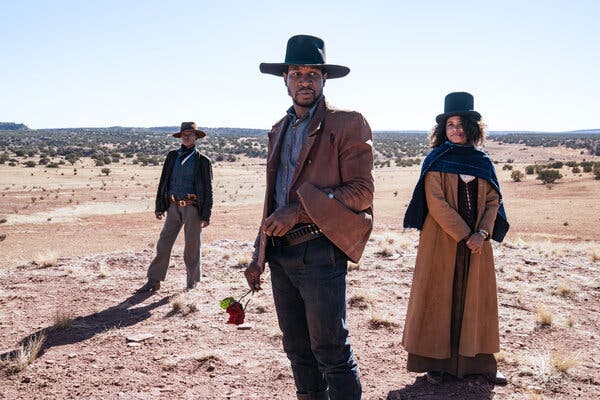
Academy Award-winner Barry Jenkinswill receive the Director Award for Television for his critically acclaimed Amazon series The Underground Railroad, based on the Pulitzer Prize-winning novel by Colson Whitehead. The series was a transformative work of art that explored the perilous journey of an enslaved woman, Cora Randall, during her desperate bid for freedom in the antebellum South as she hopes to realize a life she never thought possible.
All Celebration of Black Cinema & Television honorees will be introduced by a prestigious group of presenters who will celebrate their work and their ongoing commitment to telling Black stories.
A portion of the proceeds will be designated to provide scholarships to students from underrepresented communities participating in the Academy of Motion Picture Arts and Sciences’ Gold Rising Program. The Academy Gold Rising Program is an industry talent development, diversity and inclusion initiative that provides individuals access and resources to achieve their career pathways in filmmaking.
The Celebration of Black Cinema & Television will be produced by Madelyn Hammond and Javier Infante of Madelyn Hammond & Associates and Swisher Productions, an event production agency specializing in live events.
About the Critics Choice Association (CCA)
The Critics Choice Association is the largest critics organization in the United States and Canada, representing almost 500 media critics and entertainment journalists. It was established in 2019 with the formal merger of the Broadcast Film Critics Association and the Broadcast Television Journalists Association, recognizing the intersection between film, television, and streaming content. For more information, visit: www.CriticsChoice.com.
Features by two first-time documentarians, Ascension and Summer of Soul (…Or, When the Revolution Could Not Be Televised) lead this year’s nominations with six each.
Ascension is nominated for Best Documentary Feature, Jessica Kingdon for Best Director, Best First Documentary Feature, Best Cinematography, Best Editing and Best Score.
Summer of Soul (…Or, When the Revolution Could Not Be Televised) is nominated for Best Documentary Feature, Ahmir “Questlove” Thompson for Best Director, Best First Documentary Feature, Best Editing, Best Archival Documentary and Best Music Documentary.
Recognized with five nominations each are Becoming Cousteau and The Rescue.
The nominations for Becoming Cousteau are Best Documentary Feature, Liz Garbus for Best Director, Best Narration, Best Archival Documentary and Best Science/Nature Documentary.
The Rescue is nominated for Best Documentary Feature, Elizabeth Chai Vasarhelyi and Jimmy Chin for Best Director, Best Cinematography, Best Editing and Best Score.
“This has been and continues to be a fantastic year for documentary storytelling. And the number of first-time feature documentarians in the mix of nominees, alongside proven veterans, shows that nonfiction cinema continues to have a very bright future,” said Christopher Campbell, President of the Critics Choice Association Documentary Branch. “Our world, from its most amazing wonders to its greatest challenges, is being reflected back on the screen so immediately and creatively by today’s filmmakers, and it’s a tremendous honor for us to recognize all of their achievements.”
Last year at the Fifth Annual Critics Choice Documentary Awards, Dick Johnson is Dead took home the CCA’s top award for Best Documentary as well as the Best Director award for Kirsten Johnson.
My Octopus Teacher took home the awards for Best Science and Nature Documentary and Best Cinematography. The film later received many more accolades and awards, including an Academy Award for Best Documentary Feature.
In addition to the 14 award categories and one honor listed below, a most prestigious honor – The Pennebaker Award (formerly known as the Critics Choice Lifetime Achievement Award) – will be presented to esteemed documentarian R.J. Cutler. This award is named for Critics Choice Lifetime Achievement Award winner D A Pennebaker, who passed away in 2019. The award will be presented to Cutler by Pennebaker’s producing partner and wife, Chris Hegedus.
R.J. Cutler is the award-winning producer/director whose work includes some of the most acclaimed documentaries of the last thirty years. His most recent film, the Apple Original Film cinema verité documentary Billie Eilish: The World’s A Little Blurry, is nominated for Best Music Documentary.
The nominees for the Sixth Annual Critics Choice Documentary Awards Presented by National Geographic Documentary Films are:
BEST DOCUMENTARY FEATURE Ascension (MTV Documentary Films) Attica (Showtime)Becoming Cousteau (Picturehouse/National Geographic Documentary Films) The Crime of the Century (HBO Documentary Films) A Crime on the Bayou (Augusta Films/Shout! Studios) Flee (Neon)Introducing, Selma Blair (Discovery+) The Lost Leonardo (Sony Pictures Classics) My Name is Pauli Murray (Amazon Studios) Procession (Netflix) The Rescue (National Geographic Documentary Films) Summer of Soul (…Or, When the Revolution Could Not Be Televised) (Searchlight Pictures/Hulu)
BEST DIRECTOR Elizabeth Chai Vasarhelyi and Jimmy Chin – The Rescue (National Geographic Documentary Films) Liz Garbus – Becoming Cousteau (Picturehouse/National Geographic Documentary Films) Jessica Kingdon – Ascension (MTV Documentary Films) Stanley Nelson and Traci A. Curry – Attica (Showtime) Jonas Poher Rasmussen – Flee (Neon) Ahmir “Questlove” Thompson – Summer of Soul (…Or, When the Revolution Could Not Be Televised) (Searchlight Pictures/Hulu) Edgar Wright – The Sparks Brothers (Focus Features)
BEST FIRST DOCUMENTARY FEATURE Jessica Beshir – Faya Dayi (Janus Films) Rachel Fleit – Introducing, Selma Blair (Discovery+) Todd Haynes – The Velvet Underground (Apple TV+) Jessica Kingdon – Ascension (MTV Documentary Films) Kristine Stolakis – Pray Away (Netflix) Ahmir “Questlove” Thompson – Summer of Soul (…Or, When the Revolution Could Not Be Televised) (Searchlight Pictures/Hulu) Edgar Wright – The Sparks Brothers (Focus Features)
BEST CINEMATOGRAPHY Jessica Beshir – Faya Dayi (Janus Films) Jonathan Griffith, Brett Lowell and Austin Siadak – The Alpinist (Roadside Attractions) David Katznelson, Ian Seabrook and Picha Srisansanee – The Rescue(National Geographic Documentary Films) Jessica Kingdon and Nathan Truesdell – Ascension (MTV Documentary Films) Nelson Hume and Alan Jacobsen – The Loneliest Whale: The Search for 52 (Bleecker Street Media) Emiliano Villanueva – A Cop Movie (Netflix) Pete West – Puff: Wonders of the Reef (Netflix)
BEST EDITING Francisco Bello, Matthew Heineman, Gabriel Rhodes and David Zieff – The First Wave (National Geographic Documentary Films) Jeff Consiglio – LFG (HBO Max and CNN Films) Bob Eisenhardt – The Rescue (National Geographic Documentary Films) Affonso Gonçalves and Adam Kurnitz – The Velvet Underground (Apple TV+) Jessica Kingdon – Ascension (MTV Documentary Films) Joshua L. Pearson – Summer of Soul (…Or, When the Revolution Could Not Be Televised) (Searchlight Pictures/Hulu) Julian Quantrill – The Real Charlie Chaplin (Showtime)
BEST NARRATION 9/11: Inside the President’s War Room (Apple TV+) Jeff Daniels, Narrator Becoming Cousteau (Picturehouse/National Geographic Documentary Films) Vincent Cassel, Narrator Mark Monroe and Pax Wassermann, Writers The Crime of the Century (HBO Documentary Films) Alex Gibney, Narrator Alex Gibney, Writer The Neutral Ground (PBS) CJ Hunt, Narrator CJ Hunt, Writer The Real Charlie Chaplin (Showtime) Pearl Mackie, Narrator Oliver Kindeberg, Peter Middleton and James Spinney, Writers Val (Amazon Studios) Jack Kilmer, Narrator Val Kilmer, Writer The Year Earth Changed (Apple TV+) David Attenborough, Narrator
BEST SCORE Jongnic Bontemps – My Name is Pauli Murray (Amazon Studios) Dan Deacon – Ascension (MTV Documentary Films) Alex Lasarenko and David Little – The Loneliest Whale: The Search for 52 (Bleecker Street Media) Cyrus Melchor – LFG (HBO/CNN) Daniel Pemberton – The Rescue (National Geographic Documentary Films) Rachel Portman – Julia (Sony Pictures Classics) Dirac Sea – Final Account (Focus Features)
BEST ARCHIVAL DOCUMENTARY Becoming Cousteau (Picturehouse/National Geographic Documentary Films) The Real Charlie Chaplin (Showtime) The Real Right Stuff (Disney+) Street Gang: How We Got to Sesame Street (HBO Documentary Films) Summer of Soul (…Or, When the Revolution Could Not Be Televised) (Searchlight Pictures/Hulu) Val (Amazon Studios) The Velvet Underground (Apple TV+)
BEST HISTORICAL OR BIOGRAPHICAL DOCUMENTARY Attica (Showtime) A Crime on the Bayou (Augusta Films/Shout! Studios) Fauci (Magnolia Pictures/National Geographic Documentary Films) Final Account (Focus Features) Julia (Sony Pictures Classics) My Name is Pauli Murray (Amazon Studios) No Ordinary Man (Oscilloscope)Val (Amazon Studios)
BEST MUSIC DOCUMENTARY Billie Eilish: The World’s A Little Blurry (Apple TV+) Bitchin’: The Sound and Fury of Rick James (Showtime) Listening to Kenny G (HBO Documentary Films) The Sparks Brothers (Focus Features) Summer of Soul (…Or, When the Revolution Could Not Be Televised) (Searchlight Pictures/Hulu) Tina (HBO Documentary Films) The Velvet Underground (Apple TV+)
BEST POLITICAL DOCUMENTARY The Crime of the Century (HBO Documentary Films) Enemies of the State (IFC Films) Four Hours at the Capitol (HBO Documentary Films) Influence (StoryScope, EyeSteelFilm) Mayor Pete (Amazon Studios) Missing in Brooks County (Giant Pictures)Nasrin (Hulu) Not Going Quietly (Greenwich Entertainment)
BEST SCIENCE/NATURE DOCUMENTARY Becoming Cousteau (Picturehouse/National Geographic Documentary Films) Fauci (National Geographic Documentary Films) The First Wave (National Geographic Documentary Films) The Loneliest Whale: The Search for 52 (Bleecker Street Media) Playing with Sharks (National Geographic Documentary Films) Puff: Wonders of the Reef (Netflix) The Year Earth Changed (Apple TV+)
BEST SPORTS DOCUMENTARY The Alpinist (Roadside Attractions) Changing the Game (Hulu) The Day Sports Stood Still (HBO) Kevin Garnett: Anything is Possible (Showtime) LFG (HBO Max/CNN Films) Tiger (HBO)
BEST SHORT DOCUMENTARY Audible (Netflix) Borat’s American Lockdown (Amazon Studios) Camp Confidential: America’s Secret Nazis (Netflix) Day of Rage: How Trump Supporters Took the U.S. Capitol (The New York Times) The Doll (Jumping Ibex) The Last Cruise (HBO Documentary Films) The Queen of Basketball (The New York Times) Snowy(TIME Studios)
MOST COMPELLING LIVING SUBJECTS OF A DOCUMENTARY (HONOR) Ady Barkan – Not Going Quietly (Greenwich Entertainment) Selma Blair – Introducing, Selma Blair (Discovery+) Pete Buttigieg – Mayor Pete (Amazon Studios) Anthony Fauci – Fauci (Magnolia Pictures/National Geographic Documentary Films) Ben Fong-Torres – Like a Rolling Stone: The Life and Times of Ben Fong-Torres (StudioLA.TV) Val Kilmer – Val (Amazon Studios) Ron and Russell Mael – The Sparks Brothers (Focus Features) Rita Moreno – Rita Moreno: Just a Girl Who Decided to Go For It (Roadside Attractions) Valerie Taylor – Playing With Sharks: The Valerie Taylor Story (Disney+)
About the Critics Choice Awards The Critics Choice Documentary Awards are an off-shoot of The Critics Choice Awards, which are bestowed annually by CCA to honor the finest in cinematic and television achievement. Historically, the Critics Choice Awards are the most accurate predictor of the Academy Award nominations. The Critics Choice Awards ceremony will be held on January 9, 2022 at the Fairmont Century Plaza in Century City, CA and will be broadcast live on The CW.
|About the Critics Choice Association (CCA) The Critics Choice Association is the largest critics organization in the United States and Canada, representing almost 500 media critics and entertainment journalists. It was established in 2019 with the formal merger of the Broadcast Film Critics Association and the Broadcast Television Journalists Association, recognizing the intersection between film, television, and streaming content. For more information, visit: www.CriticsChoice.com.
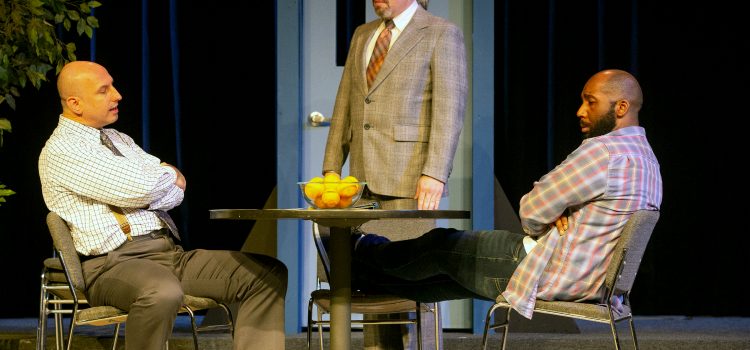
Three actors deliver brilliantly nuanced performances in “Blue/Orange,” a multi-layered satirical comedy-drama that focuses on madness, health care and race within a framework of frustrating bureaucracy and power struggles.
William Humphrey, Ben Ritchie, and Jason Meyers turn in some of their best work by grasping every shifting thought, trigger and changing attitude in conversations that blur lines on mental health.
The discourse is hefty and the roles demanding, for the characters are opaque. Allegiances switch as reasoning seems plausible – but one can’t ever be certain in these fiery exchanges.
Stray Dog Theatre is presenting this intellectually stimulating material as its first indoor show inside the Tower Grove Abbey, their longtime home, in 2021. With a contemporary focus that is more tragic than comic, that tone suits the production’s interpretation of this thorny material.
Shrewdly written by British playwright Joe Penhall, known primarily for several “fringe” works, and set in a UK institution, the play, first staged by the National Theatre in 2000, went on to win the Laurence Olivier Award for Best New Play, with Bill Nighy, as Robert, and Chiwetel Ejiofor as Christopher, nominated for several acting awards.
(More fun facts: Andrew Lincoln played Bruce and the three moved on to the London West End in 2001. The next year, the show opened off-Broadway, with Harold Perrineau Jr. as Christopher, and an acclaimed British revival in 2016 starred Daniel Kaluuya as the patient.)
Stray Dog has wisely decided to forego British accents, so that we are not distracted from the dense amount of dialogue that rapidly volleys back and forth.
The day before Christopher (William Humphrey) is supposed to be discharged from a psychiatric ward, his doctor (Jason Meyers) begins to have reservations that he shouldn’t be released. He shares his concerns with a senior colleague (Ben Ritchie).
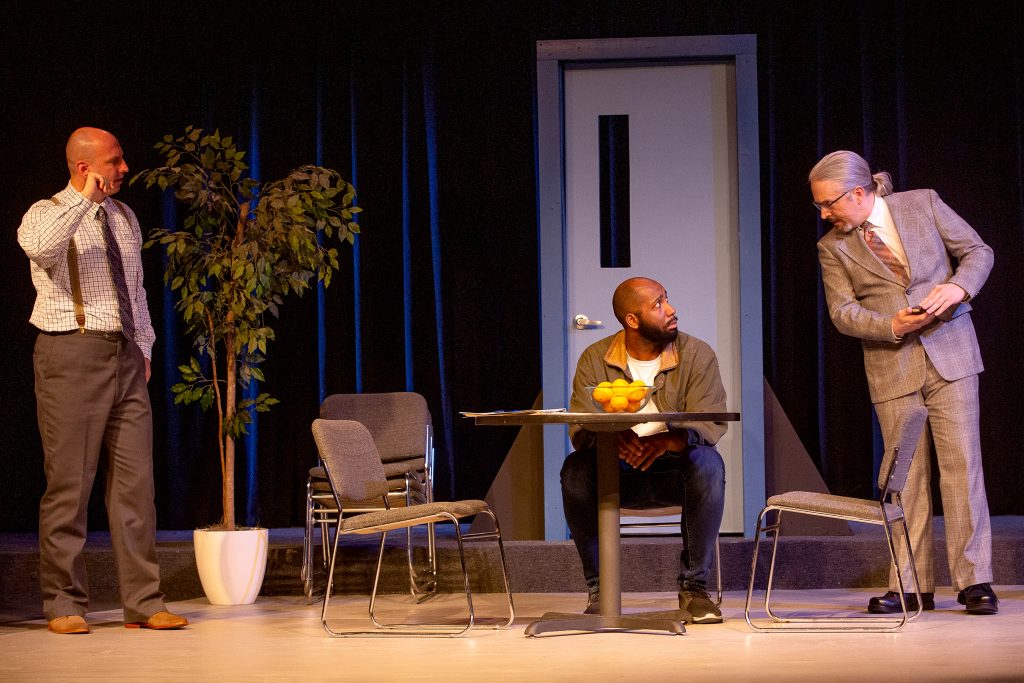
Practically jumping for joy as the hyper Christopher, Humphrey is gleefully ready to go – and already packed. He still insists his father is former Ugandan dictator Idi Amin Dada Oumee and sees the pulp inside an orange as blue. In his mind, is this real or delusional? Thus begins a bureaucratic battle.
As the now confused patient becomes increasingly agitated, is he having an acute psychotic episode or is he being unduly provoked? What must happen to prevent him from leaving?
Christopher was diagnosed with a borderline personality order, and on day 28 at the London National Health Service mental hospital, he is due for release – unless a diagnosis changes.
As Dr. Bruce Flaherty, Meyers sees red flags and makes a convincing case that Christopher could be a paranoid schizophrenic. His superior, Dr. Robert Smith, doesn’t detect it. Exuding authority and clinical acumen. Ritchie recites reasons why psychiatry can fail black men like Christopher. After all, Dr. Smith is writing a book – interesting! – on the cultural and ethnocentrism factors that come into play in these situations.
Perhaps drum beating and seeing himself as a “white savior,” the imperious Robert thinks Christopher should return to his neighborhood for the cultural support – even though he lives alone and doesn’t know that many people. Sure, his behavior is odd, but is it cause for alarm?
Smith is worried that if Christopher stays longer, he could get worse and thus begin a never-ending cycle — or is that more of a reflection on the lack of beds and prevalent bottom-line thinking?
Christopher would really like to return to Africa, where he says he has a job, but will settle for his diverse London borough neighborhood if it means his freedom. And there is a probable threat of being attacked by racist thugs, so his fear seems real, but is it indicative of instability – and is pompous Robert being patronizing?
England’s cultural population includes Caribbean and African expatriates, and there are statistics that more black people, percentage wise, are in mental and penal institutions.
And what exactly causes seemingly stable Bruce’s third-act meltdown – and earlier blurting out the “N” word, which could fill an entire act with discussion. This really complicates the narrative, not just exposing an ugly prejudice and stereotypical thinking.
However, the roots of the problems are in the eye of the beholder. As the two professionals argue, drawing Christopher, pawn-like, into a tug of war of damaging rhetoric – clearly emotional scars are being inflicted.
Is this in any way beneficial and do the doctors think this will advance their careers?
Penhall’s incendiary words, written more than two decades ago, seems as urgent now as they were relevant then. This is a living, breathing work that changes direction throughout its two acts, and the verbal dexterity required is admirable.
In a bracing portrayal, Humphrey straddles the line of helpless vulnerability and angry advocate for getting his life back on track. Both instinctive, Ritchie and Meyers convincingly earn and lose their characters’ credibility.
Associate Artistic Director Justin Been deftly moves the actors around so that we are caught off-guard as characters reveal their positions, transferring the ‘edge’ around – and the performers never get ahead of the script, not tipping their hand about what’s next.
The cast has smartly constructed their roles. It’s an exemplary showcase of control, and lack of, as perceptions differ and speeches flow.
“Blue/Orange” could have easily turned preachy but keeps its intensity, although the second act gets weighed down somewhat with repetitive opinions. And while it’s not predictable, the ending may not satisfy those who have become invested in Christopher’s well-being.
Besides directing, Been also designed the claustrophobic set and the sound, and both he and Artistic Director Gary F. Bell gathered the props. Lighting designer Tyler Duenow maintained the setting’s institutional glare.
The hell that is the ever-present boondoggle for those suffering from mental illness shows no sign of improvement in today’s uncertain world. As this riveting production demonstrates, it’s a difficult subject to ponder, and “Blue/Orange” daringly takes a stand.
Jason Meyers, William Humphrey and Ben Ritchie in “Blue/Orange.” Photo by John Lamb.
“Blue/Orange” is presented Thursday through Saturday, Oct. 7-9, 14-16 and 21-23 at 8 p.m., with a 2 p.m. matinee on Sunday, Oct. 17, at the Tower Grove Abbey, 2336 Tennessee Avenue, St. Louis, 63104.
Limited tickets are available because of physical distancing throughout the theater. For more information or tickets, visit www.straydogtheatre.org, or call 314-865-1995.
Safety precautions because of the COVID-19 public health crisis are in place for guests, actors, and staff. Masks are required to be worn by all guests, regardless of vaccination status. Stray Dog Theatre recommends, but does not require, that all guests be vaccinated. The up-to-date guidelines can be found on their website.
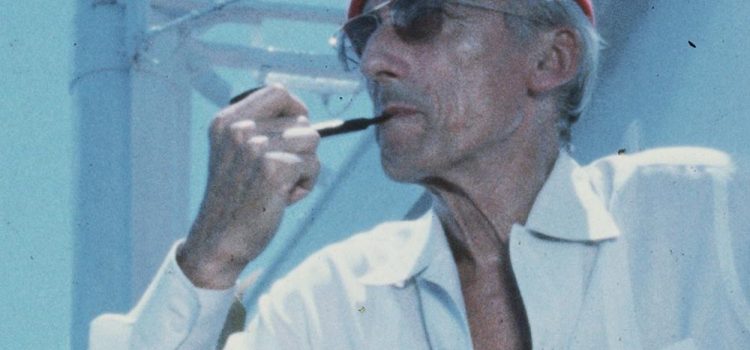
By Lynn Venhaus Oceanographer Jacques-Yves Cousteau made underwater exploration his life’s passion. In his unmistakable red knit cap and sailing the intrepid vessel The Calypso, he got our attention through his inspiring voyages.
This competently assembled documentary from director Liz Garbus looks at his extraordinary life, achievements, and tragedies. Garbus, an Emmy winner for “What Happened, Miss Simone” and Oscar nominee for “The Farm: Angola, USA,” uses newly restored footage from his archives to create a respectable biography.
Narrator Vincent Cassel reads some passages from Cousteau’s diaries, and his aquatic life was cinematic-ready, so the visuals are what holds one’s attention.
If you are not familiar with his life’s work, finding out about Cousteau’s co-invention of the Aqua-lung, a breathing apparatus for below the ocean’s surface, his innovative filmmaking techniques for under the sea, and his early efforts on conservationism are fascinating.
If you paid attention to his adventures, so well-documented in 120 television documentaries and more than 50 books, then you won’t be surprised – but perhaps have a newfound appreciation for all that he did.
The film is best when it is in water, but not as interesting when it’s on land. The man himself preferred the water too. (His first wife said he ‘smelled like the sea.’) A curious, restless man, the ocean was his oxygen.
He was a young officer in the French Navy when he started his underwater pursuits. His first book, “The Silent World: A Story of Undersea Discovery and Adventure,” was published in 1953.
As a film pioneer, he adapted his book into a documentary, “The Silent World,” with filmmaker Louis Malle that won an Oscar and the Palme d’or at the 1956 Cannes Film Festival. A restless man, the ocean was his oxygen,
During his heyday in the 1970s, he was a household name. John Denver released a popular tribute song, “Calypso,” in 1975, and his television show, “The Undersea World of Jacques Cousteau” ran on ABC from 1966 to 1976. PBS then ran his “The Cousteau Odyssey” from 1977 to 1982.
After his death in 1997 from a heart attack at age 87, Cousteau’s foundation kept up his environmental work, but the younger generation doesn’t know much about his achievements. He was one of the first to sound alarms about the environment and climate change, growing more panicked about the fate of mankind as the issues grew.
His personal life was complicated – not a particularly good husband or father, which he admits on camera, and his long absences from home affected his two sons, Jean-Michel and Philippe. At age 38, Philippe was killed in a plane crash, which devastated his parents, and Jacques became more driven about work – if that was even possible.
Some of his personal flaws are merely mentioned, but not really delved into – if you’re a tad confused about his marriages, join the club. When his wife of 53 years, Simone, died of cancer in 1990, he married Francine Triplet six months later – although he already had two children with her – Diane and Pierre-Yves. (Hmmm?) Both kids are co-producers of the film. Hmmm…
And while he had missteps – working for petroleum companies early in his career, for example, to pay the bills, his legacy is undeniable.
“Becoming Cousteau” is a nostalgic reminder of how we learned more about sea life through his perspective, and what a beautiful world he introduced us – whether we were enthralled kids or intrigued adults.
“BecomingCousteau” is a 2021 documentary from National Geographic directed by Liz Garbus. Rated PG-13 for brief strong language, some disturbing images and smoking, its run time is 1 hour, 33 minutes. It opens in theaters on Oct. 22. Lynn’s Grade: B
By Lynn Venhaus A good-looking film with a kicky soundtrack, “The Harder They Fall” comes across as a bloody western shot like a music video.
It’s no surprise, because first-time director Jeymes Samuel, a music producer and singer-songwriter known as The Bullitts, is a protégé of Jay-Z and worked with him on “The Great Gatsby” soundtrack for director Baz Luhrmann. Under his real name, Shawn Carter, Jay-Z is one of the film’s producers.
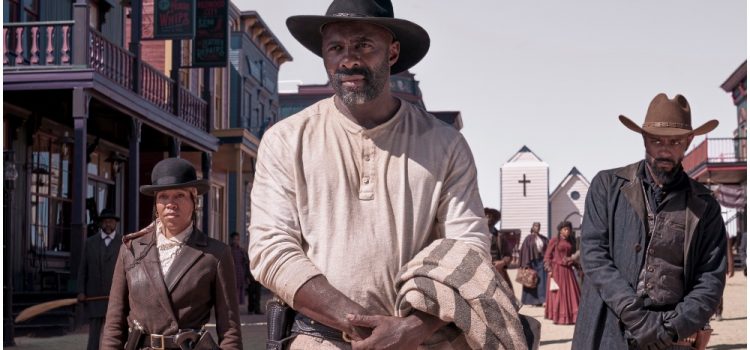
Samuel demonstrates an appealing slick style, but sadly the well-worn story lacks substance. Co-written by veteran screenwriter Boaz Yakin and Samuel as a tale of revenge and robbery, it’s merely ordinary – without much character development, squanders the talents of its extraordinary cast that includes solid-gold Idris Elba, Regina King and Delroy Lindo, with rising stars Jonathan Majors, Zazie Beetz and LaKeith Stanfield, who just gets better with every role.
The lethal shoot-outs and blood-spurting showdowns, an integral part of the western genre, are repetitive and do little to advance a gripping story. Overall, the plot is run-of-the-mill, mostly predictable, except for the third act revelation.
It’s unfortunate because you want to root for this type of new western that spotlights black cowboys. Supposedly, on the western frontier, one in four cowboys were black, and they haven’t been given proper due in America’s history on ‘go west’ and the great migration.
In the beginning, the director states that the story is fiction, but the people existed. Most of the action takes place in Redwood City, which was a primarily black community.
Faring well in this film are emerging stars Danielle Deadwyler as Cuffee, who identifies as him and would like a career in law enforcement, and Edi Gathegi as Bill Pickett, a young trigger-happy hotshot.
RJ Cyler has a solid turn as sharpshooter Jim Beckworth as does Deon Cole as Wiley Escoe, but it is Majors’ film. His outlaw Nat Love, no matter how many times he’s intimidated or dismissed, is driven and relentless.
Playing a man of few words who acts quickly, Elba’s physicality is felt throughout, a foreboding presence from the opening scene where he takes down a family, to breaking out of chains in prison stripes, and then as a feared frontier gang leader.
An interesting twist is how fierce the women are – Regina King as “Treacherous Trudy” and Zazie Beetz as Stagecoach Mary. They take the bullets out of their guns and use their fists and hand-held weapons for a rip-roaring knock-down drag-out brutal fight.
With its attractive production elements, the movie benefits from cinematographer Mihai Malaimare Jr. ‘s framing of these newly constructed towns, showcasing the period production design by Martin Whist, with editing by Tom Eagles. The violence is graphic – a blown-off arm here, an exploding head there.
Amid the dusty outdoors and bullet-ripped clothes, Antoinette Messam’s costume design features a wide range of interesting vintage hats and lived-in frontier wear, with a few striking dusters and coats adding to the characters’ stature. You can always pick out Nat Love because of his jaunty red kerchief.
Not to be confused with a 1956 movie of the same name starring Humphrey Bogart, “The Harder They Fall” unfortunately lacks staying power because it preferred style over substance.
“The Harder They Fall” is a 2021 western directed by Jaymes Samuel and stars Idris Elba, Jonathan Majors, Regina King, Zazie Beets, LaKeith Stanfield, Delroy Lindo and Danielle Deadwyler. Rated R for strong violence and language, the run time is 2 hours and 16 minutes. In theaters Oct. 22 and streaming on Netflix on Nov. 3. Lynn’s Grade: C+
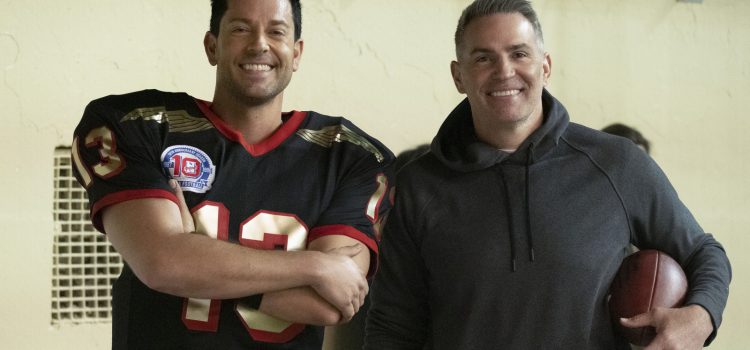
Cinema St. Louis (CSL) is pleased to announce that the Centerpiece Event of the 30th Annual Whitaker St. Louis International Film Festival (SLIFF) — held Nov. 4-21, 2021 — is “American Underdog,” a Kingdom Story Company production distributed by global content leader Lionsgate (LGF.A, LGF.B) and opening in theaters December 25. Kurt and Brenda Warner, who served as executive producers on the film, will attend and participate in a post-screening Q&A.
“American Underdog” tells the inspirational true story of Kurt Warner (played by Zachary Levi), who went from a stock boy at a grocery store to a two-time NFL MVP, Super Bowl champion, and Hall of Fame quarterback.
The screening will be held at 8 p.m. Monday, Nov. 8, at the Tivoli Theatre, 6350 Delmar Blvd. Tickets are $50 and go on sale at 9 AM for CSL members and 1 PM for the general public on Friday, Oct. 22, through the CSL website, www.cinemastlouis.org.
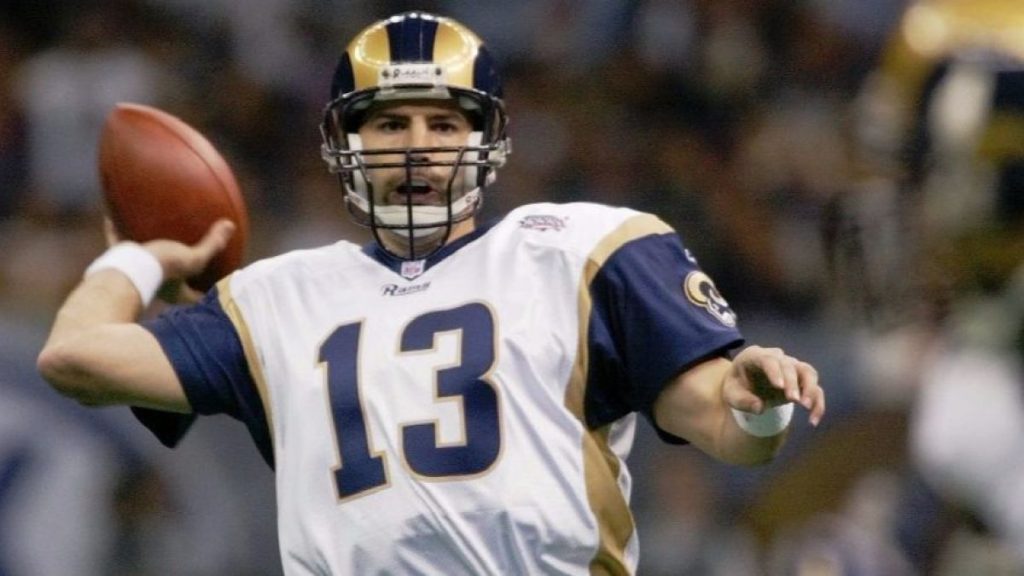
St. Louisans need no reminders about Warner’s storied career, which started here with the Rams when he went from essentially unknown backup to starter in 1999 after Trent Green suffered a torn ACL in the preseason. The Rams, of course, won the Super Bowl that season, and Warner and the “Greatest Show on Turf” went on an historic three-year offensive spree that produced a second Super Bowl appearance.
Later, Warner did it again, taking the perennially woebegone Arizona Cardinals — another franchise familiar to locals — to their first Super Bowl.
Kurt Warner as St Louis Rams Quarterback
The film centers on Warner’s unique story and the years of challenges and setbacks that could have derailed his aspirations to become an NFL player. It is only with the support of his wife, Brenda (played by Anna Paquin), and the encouragement of his family, coaches, and teammates that Warner perseveres and finds the strength to show the world the champion that he already is. “American Underdog” is an uplifting story that demonstrates that anything is possible when you have faith, family, and determination.
Also starring Dennis Quaid, the film is directed by the Erwin brothers from a screenplay by Jon Erwin & David Aaron Cohen and Jon Gunn, based on the book “All Things Possible” by Kurt Warner and Michael Silver. The producers are Kevin Downes, Jon Erwin, Andrew Erwin, Mar Ciardi, and Daryl Lefever.
To protect the safety and health of patrons, SLIFF will require masks and proof of vaccination at this and all in-person screenings. No concessions will be available. Full details on Covid-19 safety measures are on the Cinema St. Louis website: cinemastlouis.org.
By Lynn Venhaus As far as big-budget cosmic spectacles go, “Dune” is impressive at filling the screen with wonder.
Directed by visionary Denis Villeneuve, who frames everything with meticulous care, as he did with “Arrival,” his only Oscar nomination, and “Blade Runner 2049” – the film is a technical marvel, with visually stunning panoramas and innovative flying machines.
A mythic hero’s journey, “Dune” is the big-screen adaptation of Frank Herbert’s seminal 1965 bestseller about a feudal interstellar society in a galaxy far, far away, which is set in a distant future.
It’s the story of Paul Atreides, a gifted young man born into a great destiny beyond his understanding. As part of the noble house of Atreides, he must travel to Arrakis, the most dangerous planet in the universe for the future of his family and people.
The desert wasteland planet has an exclusive supply of “mélange,” aka “the spice,” a drug that extends life and enhances mental abilities. As it is the most precious resource in existence, malevolent forces are at work to prevent this, and only those who can conquer their fear will survive.
Yet are these characters engaging enough? How much do we care about what happens to these political dynasties? They prefer to whisper in cavernous spaces, and while mesmerizing Zendaya’s narration helps, the project’s mythology on such an epic scale tends to weigh it down with “importance.”
Our hero’s journey is a very long one and we spend 2 hours and 35 minutes leading up to a next chapter. This is only Part One. We are warned at the end, when one character says to Paul: “You’re just getting started.” The payoff isn’t quite there – so when is Part Two?
We have just invested time on an extended prologue. Oh dear. Will only fans of the book be able to appreciate this saga? And isn’t that the true test? As is always the case, those not familiar with the source material will be at a disadvantage trying to keep up with the warring factions.
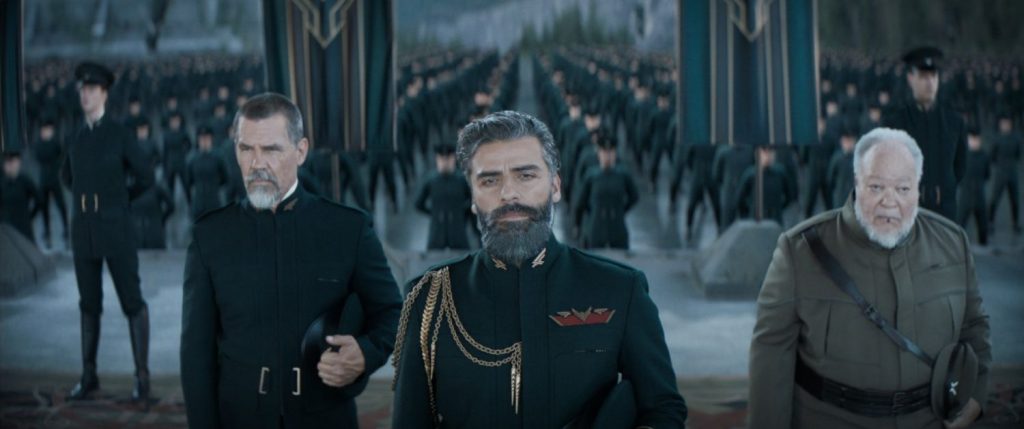
Josh Brolin, Oscar Isaac and Stephen McKinley Henderson
Considered the best-selling science fiction novel of all-time, “Dune” is gigantic in scope, and the 1965 cult classic touches on themes involving politics, religion, ecology, technology, and human emotion, threading them all together in space.
The empire’s other planets want control of Arrakis for its spice, which is also necessary for space navigation because of its multidimensional awareness and foresight.
“Dune” is only the first in a series, followed by Herbert’s five sequels: Dune Messiah, Children of Dune, God Emperor of Dune, Heretics of Dune, and Chapterhouse: Dune. After his death, others have kept the franchise going.
Its devoted fan base inspired filmmaker Alejandro Jodorowsky to attempt a film adaptation in the 1970s but it was cancelled after three years in development. Along came David Lynch’s complex adaptation in 1984, which was a harshly received misguided mess, and there was a Sci-Fi Channel miniseries in 2000.
While light years ahead of the 37-year-old film, “Dune” does seem to have the same problem about adapting something so unwieldy – that the character development suffers.
It’s difficult to figure out the planetary relationships and who’s who among the different groups, even with a strong cast that attempts to make everything as lucid as possible.
This one does attempt to over-correct in a tedious way, with a screenplay by director Villeneuve, Jon Spaihts (“Doctor Strange,” “Prometheus”) and Eric Roth, Oscar winner for “Forrest Gump,” that still is lacking in explanations.
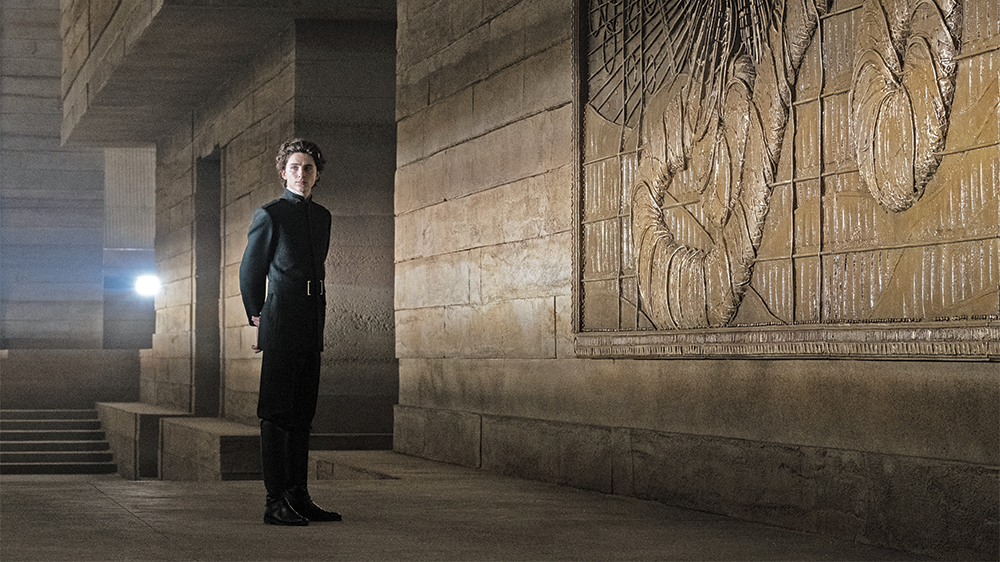
Paul is played with youthful elan by Timothee Chalamet, who seems to be working non-stop. His character, burdened by birthright, is actually the least interesting of the massive ensemble – but the camera loves him, and he looks good standing in many shots of wind and blowing sands, contemplating.
Chalamet has genuine interactions with his father, an authoritative but loving Duke Leto Atreides, well-played by the always captivating Oscar Isaac. With warm fatherly advice, Isaac tells him: “A great man doesn’t seek to lead; he’s called to it.”
It’s not his fault that Paul is a blank slate. He is being groomed to take over, and while at times reluctant and confused, he ultimately accepts his duties. His mother, all-serious Lady Jessica, is a tough taskmaster, and subtly played by Rebecca Ferguson, they have a protective relationship.
Far more compelling is Jason Momoa as the fierce warrior Duncan Idaho. He brings some oomph to the fighter’s bravado and his fists of fury are legitimate. Momoa and Chalamet warmly convey a loyal long standing friendship.
Not given much to do is Josh Brolin as Gurney Halleck, the duke’s right-hand man, and Dave Bautista as antagonist Beast Rabben Harkonnen – along with Momoa, they are the recognizable fighters.
A barely there Javier Bardem is Stilgar, a leader of a desert tribe. An unrecognizable Stellen Skarsgard appears, Jabba the Hut-like, as the disgusting despot Baron Vladimir Harkonnen. The Harkonnens are the evil not-to-be-trusted bad guys.
The first hour is full of awe. But why do movies about the future tend to mix medieval and “Star Wars” knock offs in production design and costumes, similar to the “Game of Thrones”? The color palette is deary shades of gray, beige and black.
While that gets wearisome, the cinematography of Greig Fraser is dazzling. An Emmy winner for “The Mandalorian” and Oscar nominee for “Lion,” he expresses the grandeur of the planets’ landscapes as well as the more intimate moments in various degrees of light.
He worked on “Rogue One: A Star Wars Story” and the upcoming “The Batman,” so tackling sandworms and spaceships is natural for him. His majestic work is one of the pleasures of seeing this in IMAX.
Hans Zimmer’s score is a stirring mix projecting danger and derring-do in dissonant chords, setting an urgent tone for action.
Despite its storytelling flaws, “Dune” is such a monumental example of state-of-the-art filmmaking that its cinematic universe deserves to be seen on the big screen. “Dune” is a 2021 science-fiction action adventure directed by Denis Villeneuve. It stars Timothee Chalamet, Rebecca Ferguson, Zendaya, Oscar Isaac, Josh Brolin, Jason Momoa, Dave Bautista, Stellan Skarsgard, and Javier Bardem. Rated PG-13 for sequences of strong violence, some disturbing images and suggestive material, its run time is 2 hours, 35 minutes. It opened in theaters Oct. 22 and is streaming on HBO Max for 31 days. Lynn’s Grade: B.
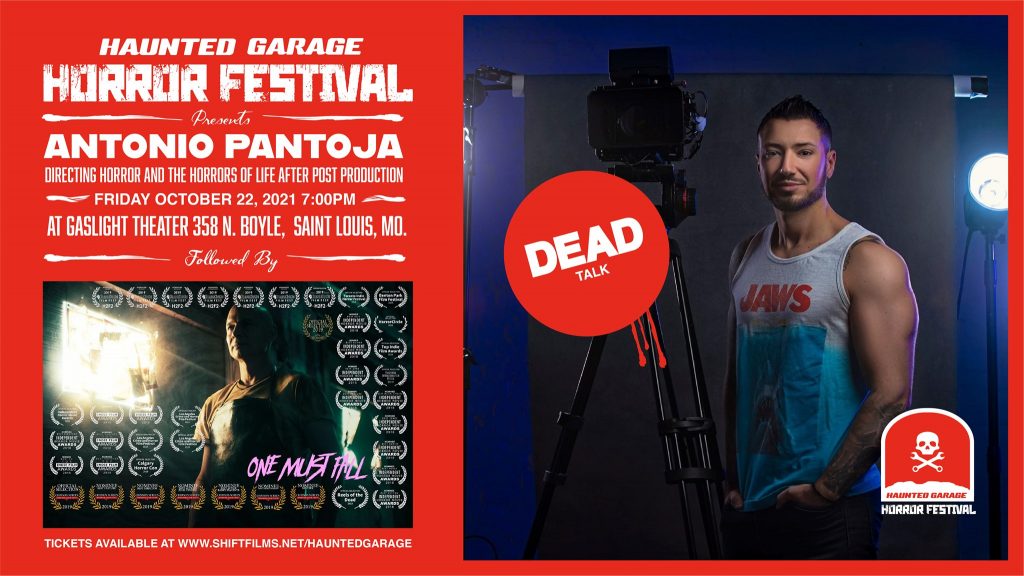
The First Annual Haunted Garage Horror Festival will take place Friday, Oct. 22, and Saturday, Oct. 23 at The Gaslight Theatre in the Central West End, 358 N. Boyle Ave., St. Louis
On Friday night, two experts on horror films will present “Dead Talk” at 7 p.m. Coltan Schrivner, an expert on morbid curiosity and horror, will talk about “The Psychological Benefits of Horror.” Antonio Pantoja will speak on directing horror and the horrors of life after post production.
It will be followed by “One Must Fall,” a 2018 horror-comedy slasher set in the 80s about a woman wrongfully fired from her office job and forced to take on a temporary job on a crime scene cleanup crew.
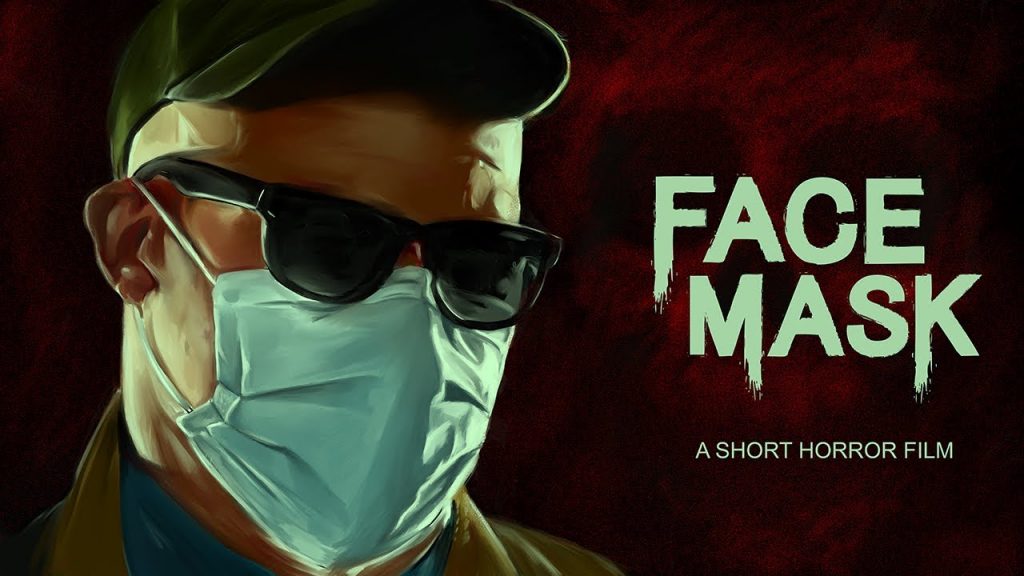
The film festival program will begin at 10:30 a.m. Saturday, Oct. 23, and conclude with awards presentation at 8:45 p.m. A short horror film, “Face Mask,” which is not in competition, will be shown at 7:22 p.m. Saturday.
Face Mask will be shown Saturday night
Micro Shorts Under !0 Minutes Selected: Video Man by Peter Lundholm . SMASHING by Kent Flaagan Spin to Win Samantha Steinle Intruder by Adam Mick Laughlin Elegy for Unfinished Lives by Adam E. Stone The Stop by Tom and Scott Hipp One Nice Thing by Cory Byers Chimera by Christian Wood Short Films Under 59 Minutes Safe Ride by Randy Rambeau And The Darkness by Andrew Huggins You Made Me by Ruben A. Sanchez Cook with the Heart by Mike Hayhurst
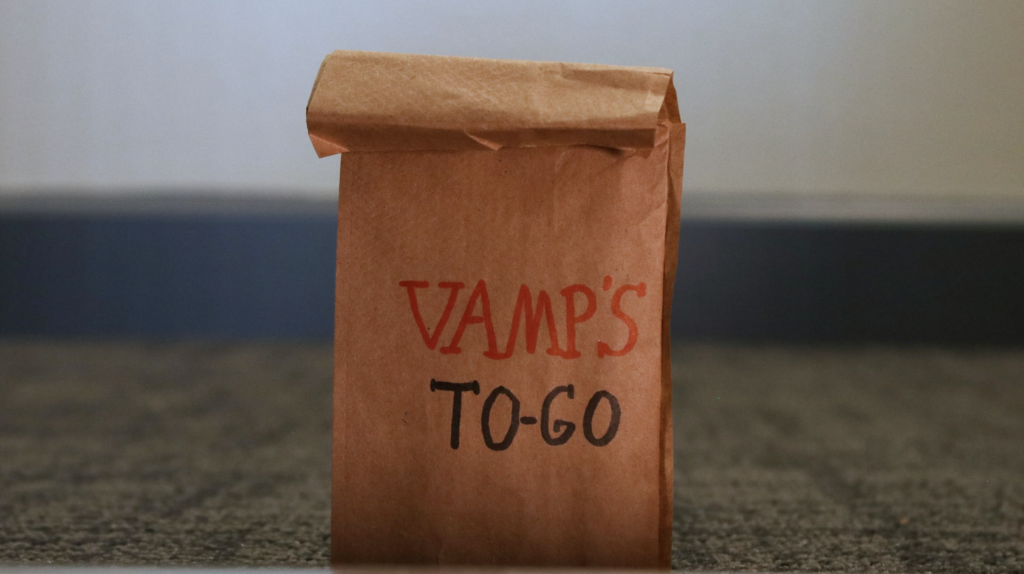
Feature Films Valentine Crush by Jamie Michael Wede Mary by Khiray Richards FRESH HELL by Ryan Imhoff and Matt Neal A Savannah Haunting by William Mark McCullough Massacre Academy by Mark Cantu Student Film Selections Last Bite by Ashley Seering Abducted by Vincent Augusto Packed Lunch by John W. Iwanonkiw
“The Last Bite”
ABOUT THE FESTIVAL The 100 mile stretch to the west of the Mississippi has been a place of interest in horror film history. Unforgettable films such as Escape from NY, White Palace, and Up in the Air all have been filmed in this great midwestern state – Missouri. To honor a burning ember tradition of horror film’s place in our community, the guys from the Haunted Garage Podcast will be hosting Saint Louis’s first Haunted Garage Horror Film Festival this October!
The goal of this first year of our fest is to create a place where filmmakers of all levels can merge in a mutual love of the art of horror. Whether you are a film student or a seasoned industry professional, this festival is for you. In addition to screening student films and high budget, feature films, we have also recruited various film and horror experts to share their knowledge and stories of the trade. Among those in attendance will be Antonio Pantoja, the director of “One Must Fall,” who will share his experience on directing horror films, how to distribute your film, and post production costs. We will also be welcoming researcher and writer Coltan Scrivner, the leading expert in the science of Morbid Curiosity, to speak about the psychological benefits of horror and scary play.
Lastly, we are devoted to promoting diversity in filmmaking. We have selected trained judges from various parts of the country to provide a selection process that is fair and consistent for all film submissions. It will be our pleasure to welcome filmmakers of all races and genders so that we may all gain insight into horror filmmaking from all perspectives of human life.
We desire to turn Saint Louis and its surrounding counties into a safe, scary space where a diverse pool of horror content creators can meet, network, and learn – together.
May the best horror story win!
Awards & Prizes
Best of Horror “The Vincent Price” $500.00 & Trophy * (Only Feature Films are eligible )
Best Horror of Missouri/Illinois $250 & Trophy * (Illinois / Missouri Residents Only) All categories are eligible for this Award
$250 & Trophy * Best Student Film
Best Horror Short * $100 & Trophy
Individual Awards: Best Director Best Actor (Male & Female Role) Best Editing Best Sound Design Best Practical Effects Best Special Effects Best Original Music Best Cinematography Best Writer/Screenplay (Jason C. Klefisch Award)
*Must be in attendance to accept cash prizes. Trophy’s will be sent at shipping cost to winners if not in attendance.Rules & Terms
• Short Films must be shorter than 50 minutes and longer than 10 minutes. Feature films must be 50 minutes or longer • We accept all foreign films as long as english subtitles are present, so long as they were created in the United States of America. • Selected films will be screened in front of a Live audience • We are not responsible for copyright infringement on your materials • All submitters agree to the terms and conditions and to receiving marketing emails and
For more information, visit: https://shiftfilms.net
Unrelenting and riveting, director Fran Kranz’s directorial debut, “Mass,” provides a complex meditation on grief and healing, as well as a mesmerizing showcase of acting talent.
The story largely takes place within a rural Episcopalian church, where the parents of two children gather to have a discussion concerning an incident that’s haunted them for six years. One of these children, named Evan, was slain in a school shooting by the other, named Hayden, who then killed himself. The parents attempt to gain greater insight and reach emotional catharsis after their lives were permanently changed.
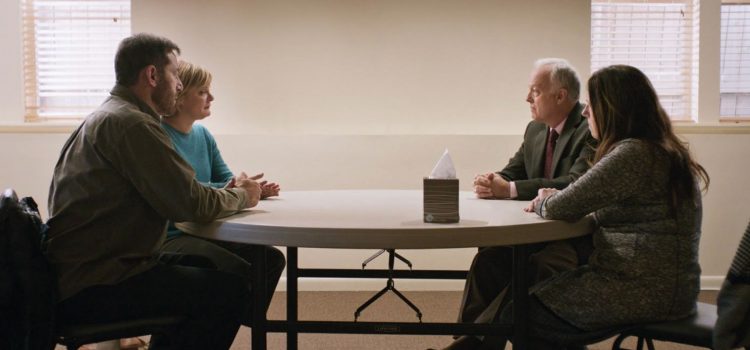
Following an opening where church employees Judy (Breeda Wool) and Anthony (Kagen Albright) anxiously prepare the sterile room for the meeting, all the while supervised by social worker Kendra (Michelle N. Carter) and a large crucifix on the wall, parents Jay (Jason Isaacs) and Gail (Martha Plimpton) arrive. Jay puts up a veneer of strength and stability, but there’s a simmering anger bubbling within that threatens to break loose at any moment. Gail is nearly monosyllabic and often requires Jay to speak for her, only growing more cagey when Hayden’s parents — uptight, sharply dressed Richard (Reed Birney) and deeply earnest Linda (Ann Dowd) — show up. As the conversation shifts from awkward pleasantries to burning anger, rage, sorrow, and compassion, we’re forced to sit with these people in their raw exchanges, authentic in their relatable contradictions.
Indeed, “Mass” is a harrowing, bleak, and profoundly real story, unfolding at an almost real-time pace. Kranz’s first feature plays like a horror film. It leaves viewers with the ideas that grief can’t always be overcome, that fighting for clear-cut answers can itself victimize, that communicating anguish is a messy and unpredictable task, and that true empathy is all-but-required to make peace with a world that refuses to make sense.
Needless to say, “Mass” isn’t an easy watch, but it’s impossible to avert your eyes from the screen once it begins. We feel the parents’ claustrophobia and vulnerability in being molded from the horrific act of violence all these years later. There’s no tidy resolution to this meeting of four broken souls, presented with the best acting I’ve seen all year so far. Each of them approaches the situation with different attitudes and perspectives, which gradually erode and evolve as their conversation carries on.
Isaacs brilliantly depicts Jay’s internal battle of impatience, lending the film considerable tension as tempers escalate. Plimpton shines as a mother who has experienced irreparable loss and who enters the conversation unsure of what exactly she wants to get out of it — retribution or forgiveness? Richard and Linda, the parents of the shooter, are just as layered. Richard’s initial defensiveness belies the guilt he harbors, blaming himself for Hayden’s decisions. Linda, gestures of goodwill notwithstanding, is also self-loathing — torn between her motherly love for Hayden and the act that forever harms his memory. Portrayed by Dowd with heartbreaking power, Linda at one point states that she continues to mourn her son even as her community doesn’t.
Kranz, who wrote the screenplay in addition to directing, excels in giving his subjects naturalistic dialogue that never once loses its authenticity. Hot button topics are brought up briefly, but the film doesn’t jam them into the narrative. Rather, by focusing on a small group of individuals confronting a deeply personal disaster, “Mass” handles its sensitive subject matter in a respectful manner without talking down to viewers. Additionally, religious aspects of the plot are used for subversive means. The difficulty of confronting the unspeakable and practicing forgiveness can’t be done through belief alone, after all, but through individual determination and perseverance.
Although “Mass” would likely work equally as well as a stage production, Kranz and editor Yang Hua Hu deploy cinematic stylings that, for the most part, amplify the proceedings. The editing gives Isaacs, Plimpton, Birney, and Dowd each their time in the spotlight, while the camera work progresses from static to handheld, and the aspect ratio condenses with new revelations. Kranz also brings the camera outside the church at brief intervals, emphasizing critical moments while not always feeling totally necessary.
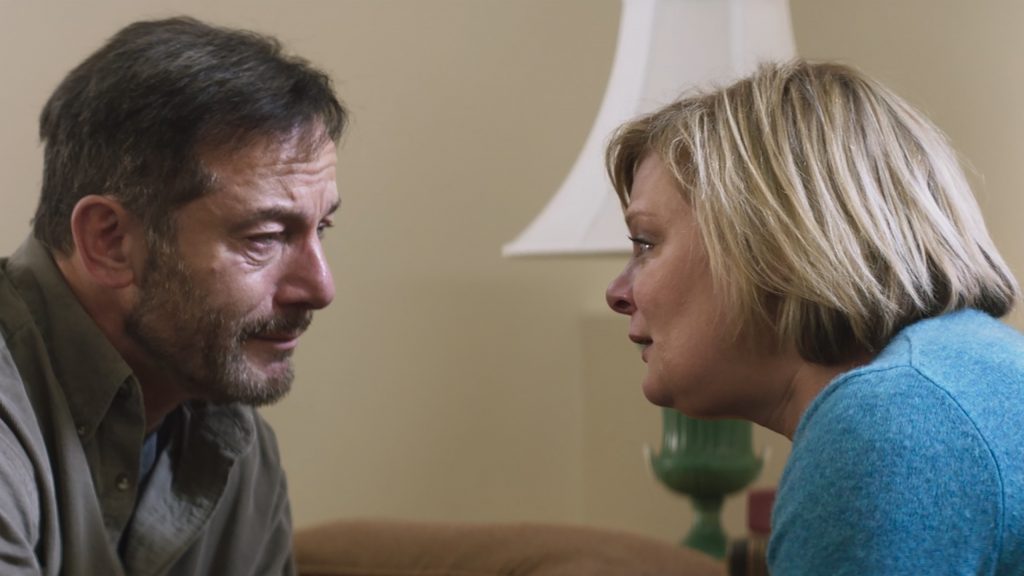
Jason Isaacs and Martha Plimpton appear in Mass by Fran Kranz, an official selection of the Premieres section at the 2021 Sundance Film Festival. Courtesy of Sundance Institute | photo by Ryan Jackson-Healy.
In the end, “Mass” is tough to recommend to general audiences, but a film that’s difficult to fault in any particular area. It’s a near-perfectly constructed drama, one that refuses to sugarcoat life’s uncompromising reality, and that remains all the better for it.
“Mass” is a 2021 drama written and directed by Fran Kranz. It stars Ann Dowd, Martha Plimpton, Reed Birney and Jason Isaacs. It is rated PG-13 for thematic content and brief strong language, and the runtime is 1 hour, 50 minutes. In theaters Oct. 22. Alex’s Grade: A
Cinema St. Louis is delighted to again offer in-person screenings during the 30th Annual Whitaker St. Louis International Film Festival (SLIFF), held Nov. 4-21, 2021.
Because the effects of the pandemic continue, this year’s fest will be a hybrid — with a significant number of virtual screenings also available — but in-person screenings will be held on all three screens of the Tivoli Theatre from Nov. 4-14 and Nov. 18-21.
Other in-person screenings will take place at Washington University’s Brown Hall Auditorium (on the weekends of Nov. 5-6, 12-14, and 19-21) and Webster University’s Winifred Moore Auditorium (on the evenings of Nov. 5-14).
In addition, the St. Louis Public Library’s Central Library Auditorium will serve as the in-person venue for six Golden Anniversaries screenings of films from 1971. Those screenings will be held on the afternoons of Nov. 6-7, 13-14, and 20-21.
Finally, the Contemporary Art Museum St. Louis will partner with SLIFF on two in-person screenings on the evenings of Nov. 4 and 11.
For those who prefer to view from home, many (though not all) of the films that receive in-person screenings will be available virtually through our partner Eventive from Nov. 4-21. SLIFF will also feature a substantial number of films, shorts programs, and livestreams that can only be accessed virtually.
To protect the safety and health of patrons, SLIFF will require masks and proof of vaccination at in-person screenings. No concessions will be available at any of the venues, including the Tivoli, to ensure audience members remain masked throughout films. Full information on the festival’s Covid-19 policies appear below.
Program Overview
The 30th Annual Whitaker St. Louis International Film Festival, a presentation of the nonprofit Cinema St. Louis (CSL), continues to provide the opportunity for St. Louis filmgoers to view the finest in world cinema — international films, documentaries, American indies, and shorts that can only be seen at the festival.
This year, after an all-virtual festival in 2020, SLIFF is pleased to offer a large selection of in-person events, including at all three screens of the Tivoli Theatre, which has been shuttered since the onset of the pandemic. For those who prefer to watch at home, we’ll still provide plenty of options, with nearly 100 virtual programs and livestreams.
Robert Greene
SLIFF begins on Nov. 4 with a powerful new Missouri-based documentary, “Procession,” which is directed by Robert Greene, the filmmaker-in-chief at the Murray Center for Documentary Journalism at the University of Missouri. In the film, six men from Kansas City, Mo. — all survivors of childhood sexual assault at the hands of Catholic priests and clergy — come together to direct a drama-therapy-inspired experiment designed to collectively work through their trauma. Greene, who will receive SLIFF’s Contemporary Cinema Award, and many of the film’s subjects will attend the screening to participate in a compelling post-film Q&A.
On the festival’s final day, SLIFF offers a Tribute to Mary Strauss, which includes a screening of Mary’s favorite film, “Sunset Boulevard.” Mary has played an absolutely essential role in Cinema St. Louis’ evolution, and we’re delighted to honor her with a Lifetime Achievement Award during our 30th edition.
We’ll also honor two other filmmakers: Documentarian and native St. Louis Nina Gilden Seavey, who will present a free special-event program called “My Fugitive” at the fest, will receive the Charles Guggenheim Cinema St. Louis Award; and documentarian Deborah Riley Draper, whose film “Twenty Pearls: The Story of Alpha Kappa Alpha Sorority” screens at SLIFF, will receive the Women in Film Award.
The festival will screen more than 400 shorts and features, and the 2021 SLIFF offers an especially impressive array of the year’s most heralded films, including selections from such destination fests as Sundance, Berlin, SXSW, Hot Docs, Tribeca, Cannes, Venice, Telluride, Toronto, and New York.
Among the most enticing English-language studio films are Kenneth Branagh’s “Belfast” (winner of the People’s Choice Award at Toronto), Mike Mills’ “C’mon C’mon” (with Joaquin Phoenix), Michael Pearce’s “Encounter” (with Riz Ahmed and Octavia Spencer), Stephen Karam’s “The Humans” (with Richard Jenkins, Beanie Feldstein, Stephen Yeun, and Amy Schumer), Clint Bentley’s “Jockey” (with Clifton Collins and Molly Parker), Reinaldo Marcus Green’s “King Richard” (with Will Smith), and Eva Husson’s “Mothering Sunday” (with Colin Firth and Olivia Colman).
“Belfast”
Major international titles include “A Chiara” from Jonas Carpignano, “Ahed’s Knee” from Nadav Lapid, “France” from Bruno Dumont (“Slack Bay”), “A Hero” from Asghar Farhadi (“A Separation”), “Hit the Road” from Panah Panahi, “Memoria” from Apichatpong Weerasethakul (“Tropical Malady”), “One Second” from Zhang Yimou (“House of Flying Daggers”), “Paris, 13th District” from Jacques Audiard (“A Prophet”), “Petite Maman” from Céline Sciamma (“Portrait of a Lady on Fire”), “Wheel of Fortune and Fantasy” from Ryūsuke Hamaguchi (“Happy Hour”), and “The Worst Person in the World” from Joachim Trier (“Oslo, August 31st”). SLIFF also offers a pair of films from Radu Jude (“Bad Luck Banging or Loony Porn” and “Uppercase Print”) and a trio of works by Hong Sangsoo (“In Front of Your Face,” “Introduction,” and “The Woman Who Ran”).
Significant documentaries include Joshua Altman & Bing Liu’s “All These Sons,” John Maggio’s “A Choice of Weapons: Inspired by Gordon Parks,” Rex Miller & Sam Pollard’s “Citizen Ashe,” Andrea Arnold’s “Cow,” Mobolaji Olambiwonnu’s “Ferguson Rises,” Brandon Kramer’s “The First Step,” Matthew Heineman’s “The First Wave,” Jonas Poher Rasmussen’s “Flee,” Julie Cohen and Betty West’s “Julia,” Peggy Callahan & Louie Psihoyos’ “Mission: Joy,” Max Lowe’s “Torn,” Debbie Lum’s “Try Harder!,” and Emily and Sarah Kunstler’s “Who We Are: A Chronicle of Racism in America.”
And that’s just scratching the surface of the 2021 lineup, which includes nearly 20 American indies, 29 shorts programs, and eight free archival selections. Below are some of the other highlights of this year’s SLIFF:
The Divided City
SLIFF’s The Divided City program focuses on the racial divide in St. Louis and other U.S. cities. The films are supported by The Divided City: An Urban Humanities Initiative, a program of Washington U.’s Center for the Humanities that addresses one of the most persistent and vexing issues in urban studies: segregation.
Sponsored by the Center for the Humanities at Washington University
“The First Wave” documentary
Free and Discounted Programs
SLIFF continues our tradition of offering a large selection of free and discounted events to maximize the fest’s outreach into the community and to make the event affordable to all. In addition, for the 18th year, we present the Georgia Frontiere Cinema for Students Program, which provides free screenings to St. Louis-area schools. This year features 31 free in-person programs, including all screenings at the Contemporary Art Museum, St. Louis Public Library, and Washington University. We’re also offering a pair of free screenings at the Tivoli, a free in-person master class, and six free livestreams. And the fest features 31 virtual programs at the special price of $5.
Georgia Frontiere Cinema for Students Program
SLIFF offers free daytime screenings for children and teens from participating St. Louis-area schools. This year’s selections include shorts, documentary features, narrative features, and shorts programs. See the Cinema for Students section of the SLIFF website for full information.
Sponsored by Chip Rosenbloom and Lucia Rosenbloom (in honor of Georgia Frontiere) and the Hawkins Foundation, with support from the Jane M. & Bruce P. Robert Charitable Foundation
Human Rights Spotlight
This selection of documentaries focuses on human-rights issues in the U.S. and the world.
Sponsored by Sigma Iota Rho Honor Society for International and Area Studies at Washington University and the Whitney R. Harris World Law Institute
Master Classes and Seminars
SLIFF provides four free master classes — one in-person event and three livestreams — and a seminar. See the Special Events section of the SLIFF website for full information.
Sponsored by the Chellappa-Vedavalli Foundation
New Filmmakers Forum
The New Filmmakers Forum (NFF), a juried competition of works by first-time feature filmmakers, is an annual highlight of SLIFF. The featured films this year are “Delicate State,” “Papaw Land,” “Shellfish,” “Walk with Me,” and “We Burn Like This,” and the filmmakers will participate in a free roundtable discussion. The screenings and roundtable are hosted by the Missouri Film Office’s Andrea Sporcic Klund. The NFF Emerging Filmmaker Award — nicknamed the Bobbie in honor of the late Bobbie Lautenschlager, NFF’s longtime curator — is presented at SLIFF’s Closing-Night Awards Presentation.
Sponsored by Barry & Jackie Albrecht and Pat Scallet
Race in America: The Black Experience
Because the events in Ferguson continue to resonate in St. Louis and the country, SLIFF again offers a large number of programs organized under the title Race in America: The Black Experience. To maximize accessibility and promote dialogue, 12 of the 26 programs in Race in America are free.
Sponsored by William A. Kerr Foundation
Show-Me Cinema
Films made in St. Louis and Missouri or by current and former St. Louisans and Missourians are an annual focus of SLIFF. This year’s lineup of Show-Me Cinema is typically strong, featuring 18 feature films, three shorts programs, and four special events.
Sponsored by the Missouri Division of Tourism and Missouri Film Office
SLIFF/Kids Family Films
Cinema St. Louis presents a selection of eight family programs, including two documentaries and two free collections of shorts. Because patrons younger than 12 are not able to attend in-person screenings this year, all SLIFF/Kids programs are offered virtually.
Tivoli Theatre in University City
COVID-19 POLICIES FOR SLIFF IN-PERSON ATTENDANCE
The safety of our patrons, filmmakers, and volunteers is Cinema St. Louis’ top priority. To ensure everyone is protected, SLIFF has instituted a number of policies for the duration of the festival.
These policies will be strictly enforced for the protection of everyone.
Guests must follow the instructions of SLIFF staff members and volunteers. SLIFF reserves the right to deny admission or dismiss any customer for noncompliance.
The following policies will apply during SLIFF:
Proof of full vaccination (at least two weeks after the final dose) of any FDA-approved vaccine is required for all staff members, volunteers, audience members, and filmmakers at each in-person screening and event.
Methods of confirming proof of full vaccination are:
CDC Vaccine Card and valid photo ID.
A photo of a CDC Vaccine Card and valid photo ID.
Guests should arrive no earlier than 30 minutes before the scheduled screening time. Any guests arriving earlier will be asked to wait outside in line until the theaters are prepared for seating.
Only guests age 12 or older will be permitted to attend.
Masks are required for everyone at all times in indoor spaces, and the face coverings must be consistent with the current CDC guidelines.
Paper masks, scarves, neck gaiters, shirts pulled up, masks with holes/filters/breathing valves, and makeshift masks are not acceptable.
New disposable surgical masks are available to all audience members.
Masks must completely cover the mouth and nose and must be replaced if wet or soiled.
PPE may be inspected for compliance or issued as needed.
No concessions will be available at any venue, and no eating or drinking will be permitted in the theaters. Outside food or drink will also not be permitted.
Guests should stay home if not feeling well or exhibiting symptoms of Covid-19 in the past 10 days.
Guests who have tested positive for Covid-19 within the past 10 days must stay home.
Guests are asked to wash hands as often as possible, use hand-sanitizing stations, and cover nose and mouth when sneezing or coughing.
Gloria Swanson and William Holden in “Sunset Boulevard”
TICKET AND PASS INFORMATION
TICKET PRICES
Individual tickets, for either in-person or virtual screenings, are $15 for general admission, $11 for Cinema St. Louis members and students with valid and current photo IDs. Prices are all-inclusive; no additional fees will be added.
The Tribute to Mary Strauss (held on Nov. 21) is $25 and includes a screening of “Sunset Boulevard,” which follows the event.
SLIFF also offers 31 free in-person screenings, six free livestreams, and 31 virtual programs for a special $5 price. Complete information can be found in the Free Events and Discounted Events sections of the festival website.
Free in-person screenings do not require a ticket.
PASS PRICES
Passes can be used for either in-person or virtual screenings and can be used to purchase multiple tickets for an in-person event. Three forms of passes are available:
Sustaining Sponsors: Albrecht Family Foundation, Chellappa-Vedavalli Foundation, Hawkins Foundation, Jane M. & Bruce P. Robert Charitable Foundation, Ward & Carol Klein, Nancy & Ken Kranzberg, Missouri Arts Council, Missouri Division of Tourism, National Endowment for the Arts, Regional Arts Commission, Chip Rosenbloom & Lucia Rosenbloom, Mary Strauss, Trio Foundation of St. Louis, TV5Monde, William A. Kerr Foundation
Presenting Partners: Center for the Humanities at Washington University, Contemporary Art Museum St. Louis, The Divided City, Eventive, Film & Media Archive at Washington University Libraries, Film & Media Studies Program at Washington University, Simple DCP, St. Louis Public Library, St. Louis Public Radio, Webster University Film Series