By Lynn Venhaus

Ah, the stories we keep close to our hearts to survive profound grief. A soulful trio of the region’s finest actors bring a poignant blending of ancient myth, historical trauma and magical thinking to “The Janeiad.”

Upstream Theater is presenting this contemporary tragedy during the 25th anniversary year of the World Trade Center attacks, which brings an immediate emotional reaction. How many stories have we heard that continue to impact us viscerally? And this one we can empathize with, too.

Upstream’s astute choice of Anna Ziegler’s richly textured play that intertwines Homer’s 20-year voyage in “The Odyssey” with a modern widow, whose husband vanished on that fateful Sept. 11 in 2001, is thought-provoking and deeply touching.

(And timely, too, with the release of Christopher Nolan’s epic film version of “The Odyssey” this summer, which has grossed $1.8 billion worldwide, now the biggest film of all-time).
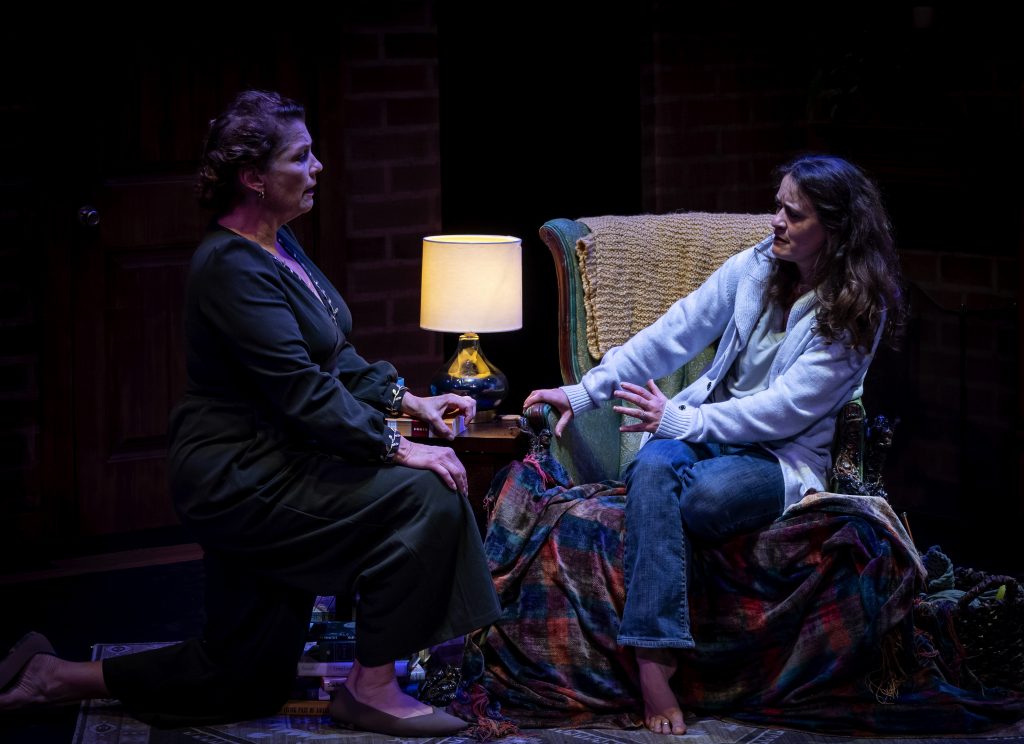
Jane Paradise and Lizi Watt in “The Janeiad.” Photo by Patrick Huber.

Ziegler, who has written the critically acclaimed “Photograph 51” and “The Wanderers,” both exceptionally performed in St Louis during the past decade, beautifully balances humor and humanity in her characters.

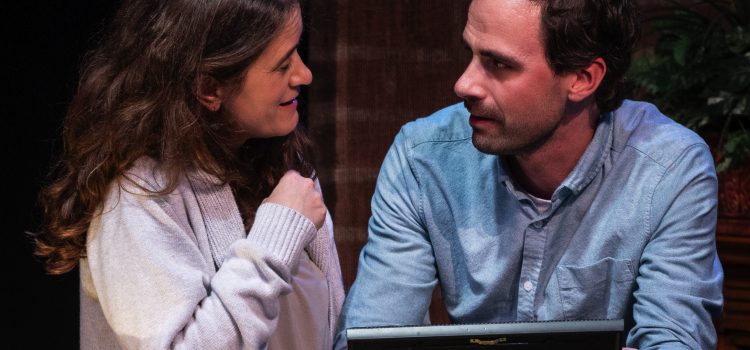
In another heart-on-her-sleeve performance, Lizi Watt is Jane, a Harvard-educated wife and mother preparing her two young sons for school while her attorney husband Gabe (Chris Tipp) is heading to his office in the World Trade Center.

In other words, a routine day in this family’s life. Only it will become the darkest day in world history, the worst terrorist attack ever. Nineteen al-Quaeda terrorists hijacked four commercial airliners, killing 2,976 people and injuring thousands more. Those of us alive that day can never forget.

It’s personal for Jane, who will navigate a difficult grief journey while clinging to the hope of being reunited with her husband. Once her family has left their Brooklyn brownstone, she settles into her comfy chair to read “The Odyssey,” her book club’s classic novel selection, and dozes off.
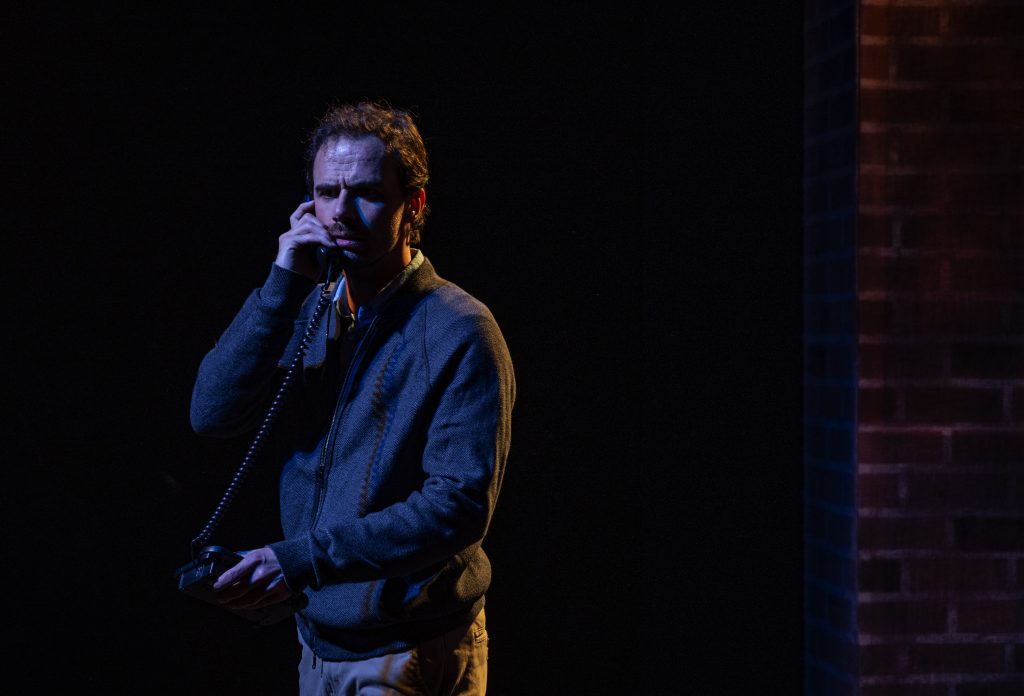
Chris Tipp as Gabe in “The Janeiad.” Photo by Patrick Huber.

Awakened by her cleaning lady Olga (Jane Paradise), who is telling her to turn on the television to watch the horrific images on screen. Then, a frantic call from a frightened Gabe – until the line goes silent. The rest becomes surreal.

She and her husband met in college; she was an English major, became a teacher. They built a comfortable life, raising two children, and she was prodding Gabe to be on board with selling their home for a larger place to grow their future.

But fate has intervened, and reality shifts. She is visited, in her thoughts, by Penelope, who famously waited 20 years for her husband Odysseus, the Greek hero and king of Ithaca, to return triumphant from the Trojan War. She counsels Jane to hold on as long as she can.

In a masterful weaving of 10 distinct characters, Paradise vividly creates different women through a variety of dialects, costume changes and contrasting tones. She is not only the faithful Greek royal wife and mother, but foreign-born maid, a female rabbi, New-Agey yoga instructor, therapist, chatty neighbor, overbearing mother, concerned sister, realtor, and friend who’s a fellow 9-11 widow.
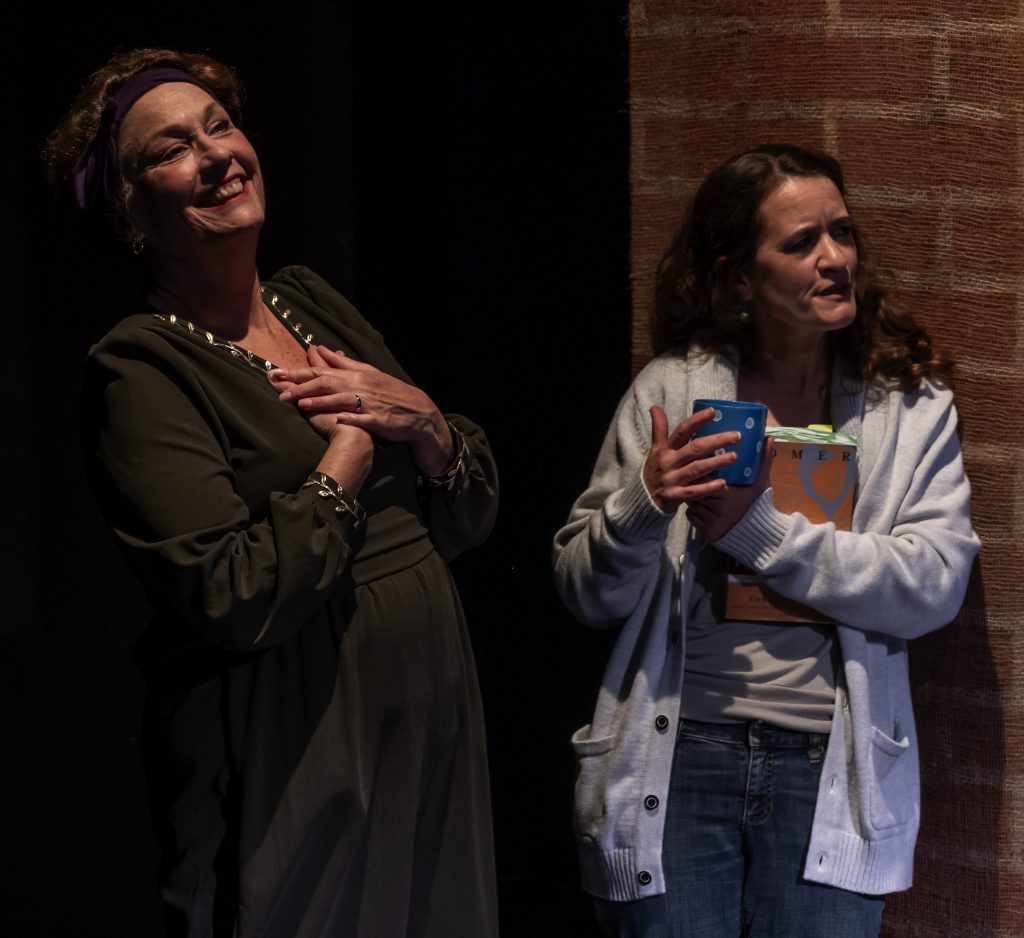
Jane Paradise and Lizi Watt in “The Janeiad.” Photo by Patrick Huber.

Sarah Gene Dowling’s costume choices quickly depict personalities and Paradise employs them smoothly. It’s a marvelous collaboration.

These modern women encourage Jane to move on, while Penelope is steadfast in her noble belief to wait. Jane is understandably stuck – her friends and acquaintances try to help her move through the day.

Director Kim McKean fluidly marks action between Jane’s internal processing and the paralysis of grief. Anyone who has experienced a devastating loss will recognize the well-meaning friends and family members nudging Jane forward, and her resistance is palpable.

While the play touches on magical thinking – Ziegler also emphasizes aging and womanhood, too, dealing with being present in life, finding purpose and joy.
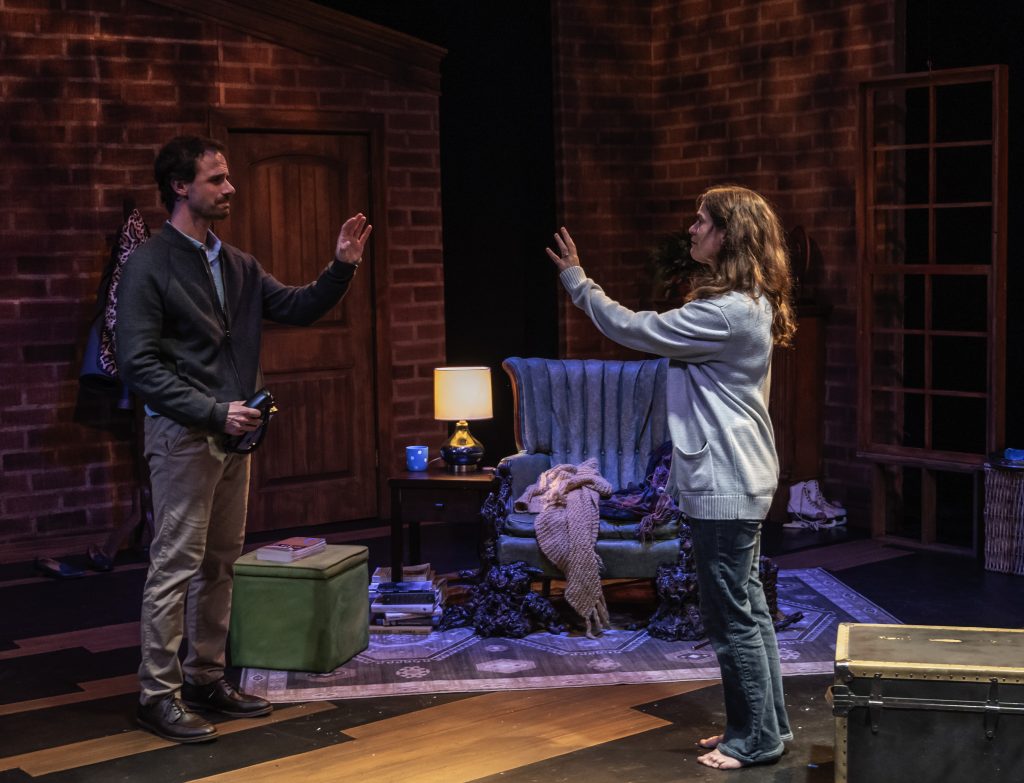
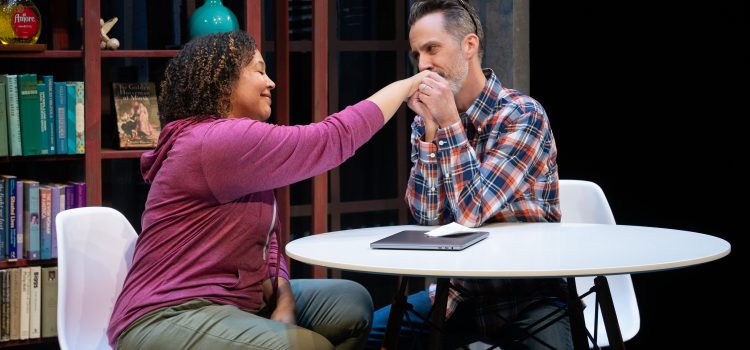
Chris Tipp and Lizi Watt. Photo by Patrick Huber.

Ah, magical thinking – that coping device we use to fool ourselves during times of major life changes and uncertainty, that we can control things, influencing cause and effect through thoughts, words and actions that defy logic instead. It’s a powerful psychological buffer, and Jane employs it for comfort and optimism.

Watt won a St Louis Theater Circle Award for her raw and real portrayal of another woman, Robyn, facing loss in “Meet Me at Dawn,” a modern meditation inspired by the myth of Orpheus and Eurydice, presented by Upstream in 2024. She is just as convincing here, courageously facing fears and conveying the howling pain of heartache.

Tipp, playing harmonica in a mournful wail, is briefly on stage, but is tender in his scenes with Jane. So much to say and never enough time – he captures that regret and their longing. He is a presence even when he’s not on stage.

McKean takes advantage of the intimate scale of The Marcelle, subtly shifting the apartment’s living space for 20 years, and the technical team aesthetically enhances the look both authentically and in a dreamlike way.
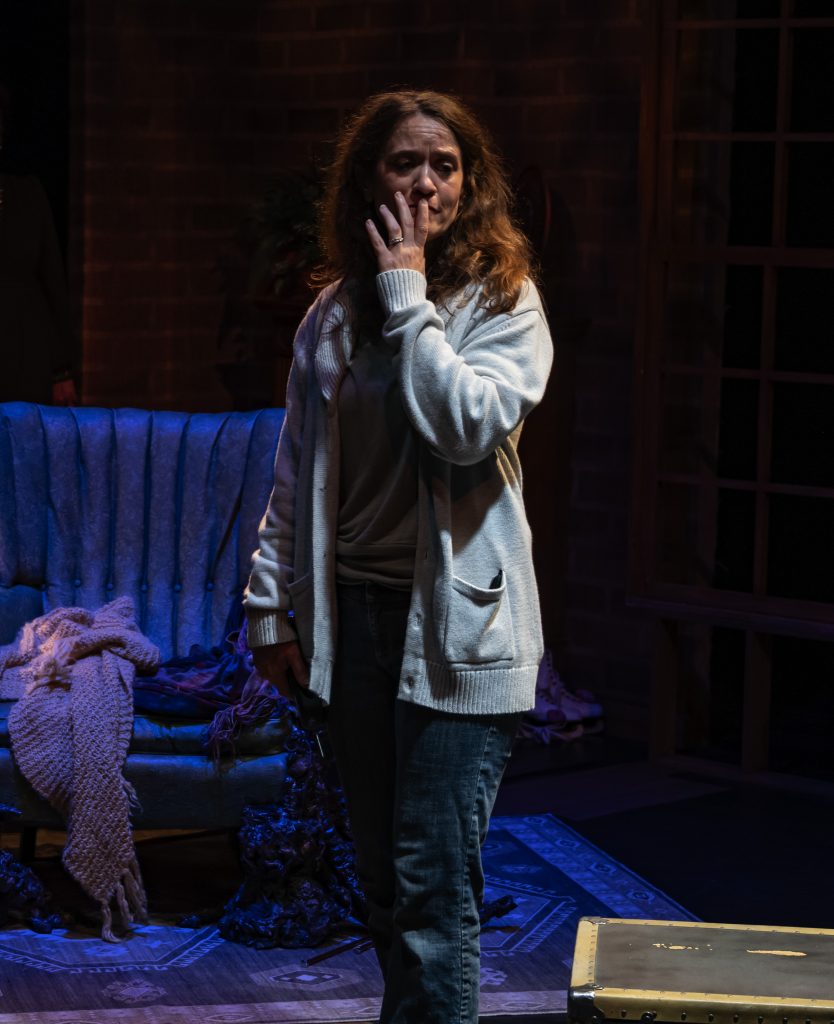
Lizi Watt as Jane. Photo by Patrick Huber.

The lighting design by Katherine Stepanek is warm and the sound design by Philip Boehm is crisp, perfectly reflects moods and times. Bonnie Carpenter’s scenic design is meticulous in its lived-in appeal, aided by Brittany Atkins’ prop design.

The 95-minute play resonates, but as it moves to its conclusion, does spiral a bit in a navel-gazing way.

Our life journeys are hard-fought, hard-won and specific to our circumstances. “The Janeiad” is at once singular and universal, emotionally grounded and delicate in fantasy.

With an engaging trio showcasing their strengths as performers and sharply depicting Ziegler’s meditative look at time passages, healing, and the complications of being adrift, Upstream’s “The Janeiad” lingers in a meaningful way.

Upstream Theater presents “The Janeiad” Nov. 6 through November 22 at The Marcelle, 3310 Samuel Shepard Drive. For tickets and more information, visit upstreamtheater.org.
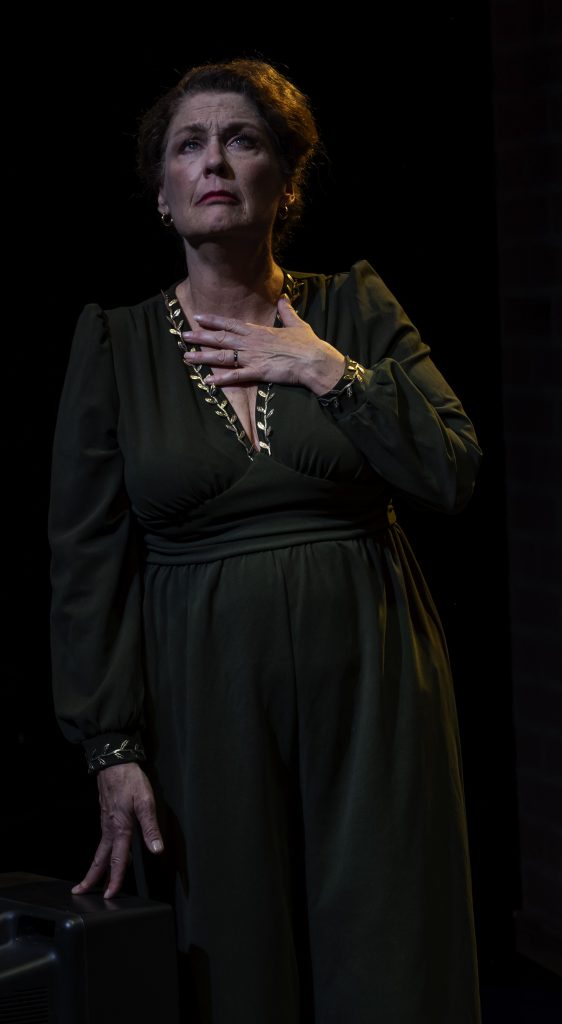

Jane Paradise. Photo by Patrick Huber.

By Lynn Venhaus

What is the cost of truth? And how will you pay for your own truth if it’s at the expense of another person’s goals?

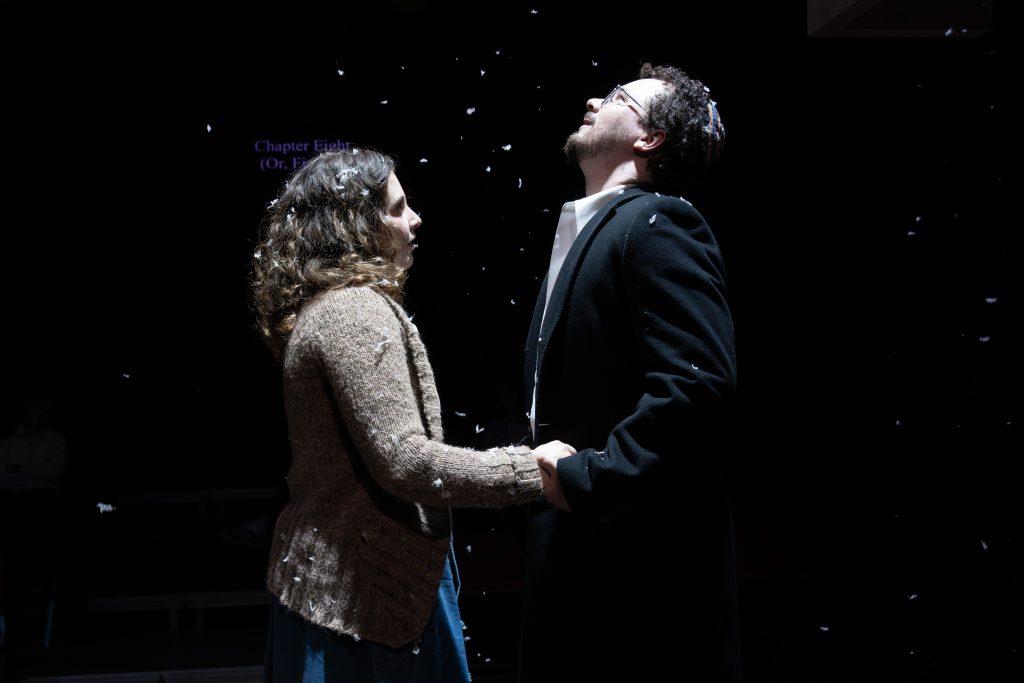
In the engrossing drama “The Wanderers,” two married Jewish couples, from different time periods and circumstances, must navigate what exactly society’s social structure on togetherness means to them.

In the current New Jewish Theatre production, all the couple’s work is revelatory, and the execution is masterful. Their stories intertwine in interesting ways.

In the 1970s, Esther and Schmuli are Orthodox Jews who must follow a strict set of Hasidic Judaism rules, and their rigid roles as husband and wife are set, no variations in the Satmar community in Williamsburg, Brooklyn.

They have married the old-fashioned way – a business transaction made by their parents, with love not in that equation. However, they are very family-focused in their beliefs.

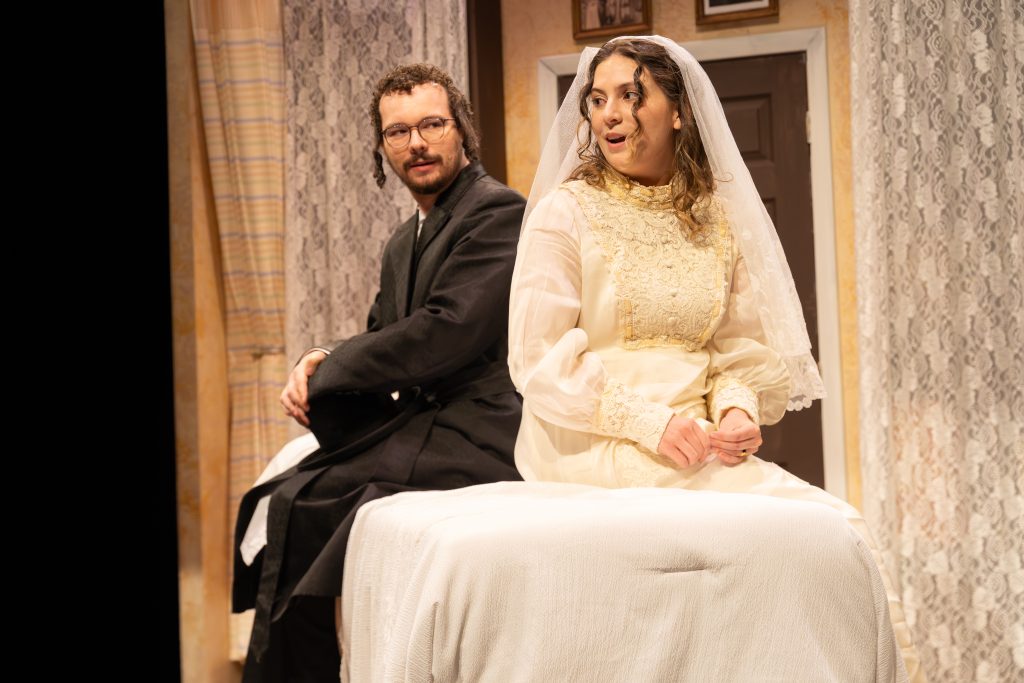
Bryce Miller and Jade Cash as Schmuli and Esther. Photo by Jon Gitchoff.

In exceptional nuanced performances, Jade Cash as the curious Esther and Bryce Miller as the conservative husband Schmuli are raising two daughters. Esther’s best friend has married for love, a man outside her faith and race, and they seem perfectly happy in their secular lifestyle.          

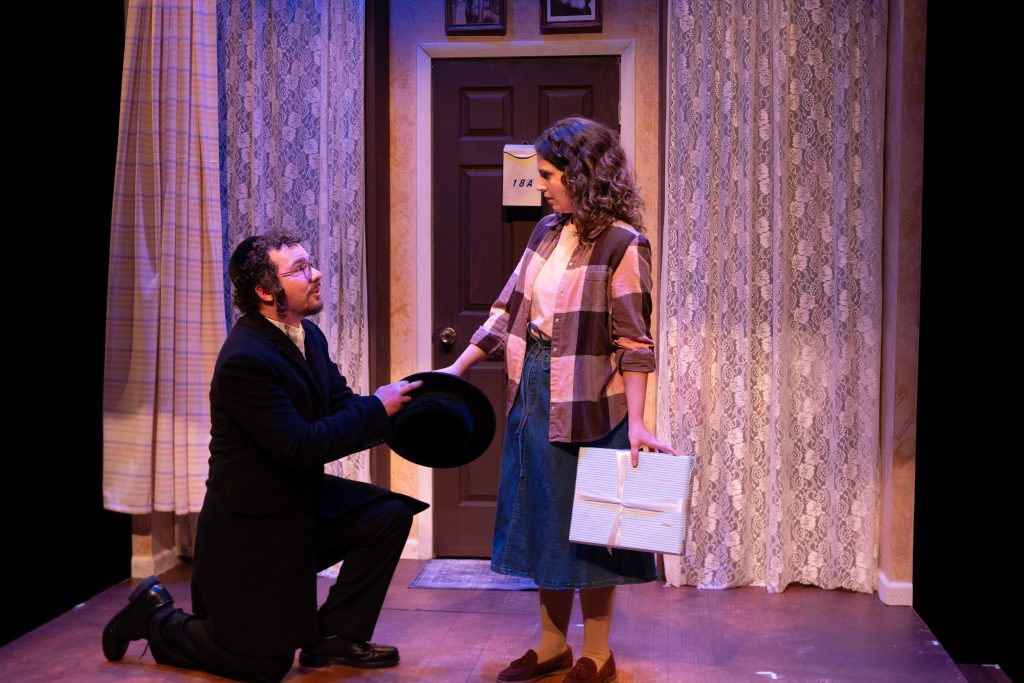
While Esther learns more about the forbidden outside world, she’s intrigued by the personal freedoms she witnesses.  Bound by the constraints of their religion, Esther is increasingly restless.

She’d love to go to school, become a librarian – and listen to pop music on the radio while she’s finishing chores. Meanwhile, she gives birth to a son, and that changes their family dynamic.

She will soon learn the cost of yearning. And Esther’s plight is gut-wrenching, for she will have hell to pay, all because she dared to dream of becoming a better version of herself. Cash, who is getting more impressive with each new role, tugs at our heartstrings as she questions the old ways.

Bryce Miller and Jade Cash in Albany, New York. Photo by Jon Gitchoff.

Schmuli is challenged, too, because he follows traditions, no discussion, no questions. He is worried about unfavorable opinions and family scandals. He’s caught in a cultural war and battle for identity that he doesn’t understand.

Miller, who immerses himself as the devout head of household, conveys Schmuli’s faith authentically. In his loneliness, he becomes conflicted, and attempts to grasp changing male-female roles.

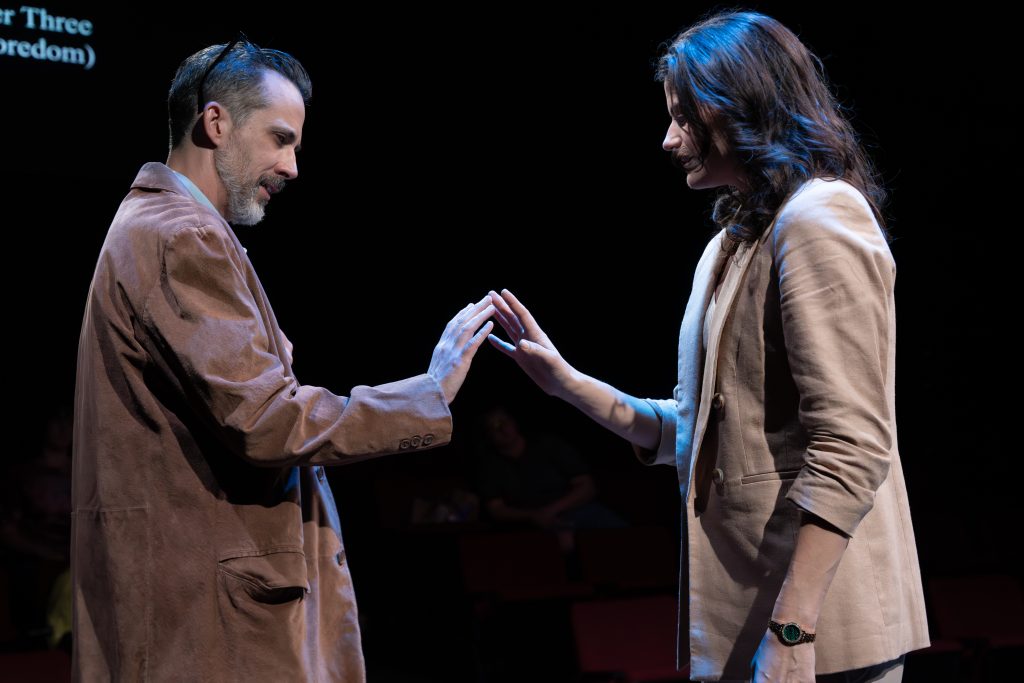
In the alternating contemporary story (2010s, gentrified Williamsburg), the other couple, Abe and Sophie, don’t necessarily practice their faith but send their children to Hebrew School. They are not rule-followers, per se, but the couple, writers by profession, attempt to raise their children in a traditional yet modern family.

Wendy Renee Greenwood and Joel Moses. Photo by Jon Gitchoff.

As they traverse a challenging emotional and spiritual landscape, neither Sophie nor Abe can let go of the past. Wendy Renee Greenwood gives a devastating performance as a wife, mother, daughter and writer who is holding her family together after facing numerous disappointments. She struggles with unfulfilled dreams and a widening gulf between her husband and her identity. Is never being satisfied going to be her destiny, just like Esther’s?

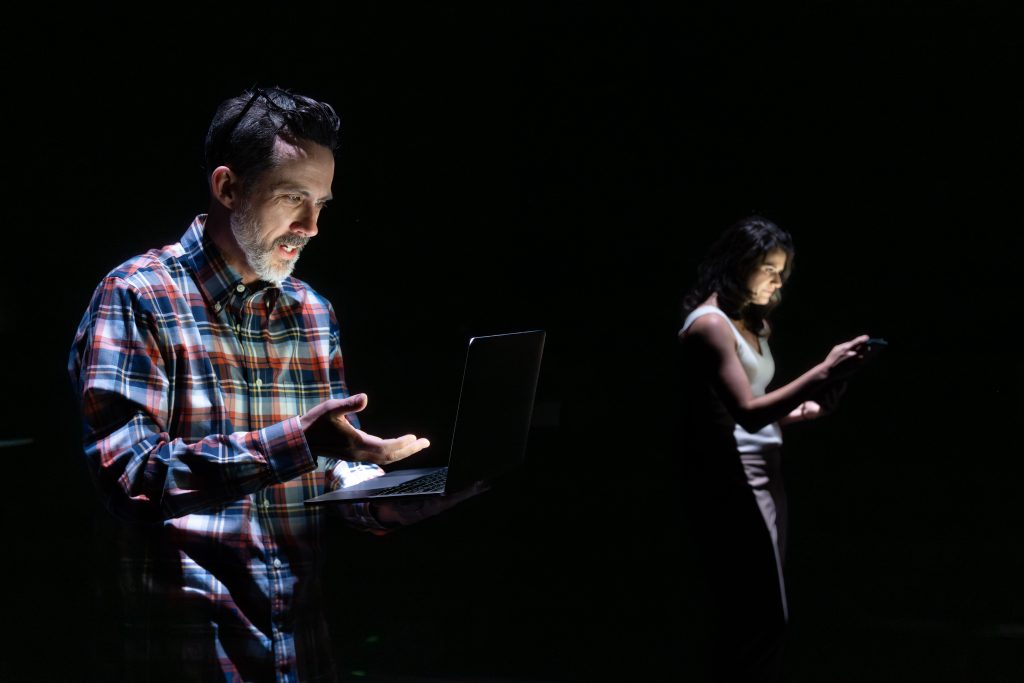
Her husband Abe, a more successful writer with a Pulitzer Prize and two National Book Awards, is tempted through an email relationship with a beautiful movie star. It starts harmless enough, as dreamgirl Julia Cheever came to a book reading of his. Flattered by that, he takes off into Abe-land when she sends him an email.

Maggie Wininger is luminous as the charismatic actress who has her own insecurities and personal issues while she practices her craft, deals with failures and successes, and tries to juggle everything for life balance. Think Julia Roberts, that kind of screen presence and popularity.

Joel Moses and Maggie Wininger read their emails to each other. Photo by Jon Gitchoff.

Joel Moses, as is typical, immerses himself in a rollercoaster journey involving growth, grief, self-doubts, emotional infidelity, and lack of effort to be present for his wife and two children.

Abe is gregarious, intelligent, conflicted and increasingly lost. Why can’t he see what he has and not what he hasn’t? When he crosses a line, can he go back and correct the mistakes he’s made?

Director Robert Quinlan brings out the intricacies between these couples and the ties that bind them – their family, heritage, dreams, desires and society mores.

He’s established these different worlds on opposite ends of a runway type set, with functional and efficient scenic design by Reiko Huffman, one of remarkable detail in intimate spaces.

Joel Moses writing in solitude. Photo by Jon Gitchoff.

IPlaywright Anna Ziegler’s twisty tale on relationships is fascinating in its entanglements. The play premiered in 2018, and debuted on Broadway in 2023. While not namechecking them per se, she explores the pledges a pair makes to each other in traditional wedding vows — “for better, for worse,” “in sickness and in health,” and “to love and to cherish” – in several vignettes.

In a layered – and sometimes dense — approach, she shows how unanchored they become trying to cling to what they assume is best for them. It’s a thoughtful play, looking at the joys and challenges of commitment in two different worlds.

Greenwood, Moses, Miller and Cash are fully invested in these roles, portraying each high and low with deep felt intensity. Wininger’s contribution is an interesting contrast of a famous person as fantasy and explaining her reality.

Their emotionally rich portraits engage and connect us to their characters’ motivations. Ziegler doles out their backstories, which led to their current plights in small nuggets. The couples get into situations in which there seems to be no escape, and this gives the play the necessary conflicts. While all vary in their beliefs, they admit their fears and show their vulnerabilities.

Jade Cash and Bryce Miller — what might have been? Photo by Jon Gitchoff.

The technical work is strong in its storytelling, too, with Amanda Werre’s skilled sound design and lighting designer Jayson Lawshee’s striking choices between reality and fantasy noteworthy. Costume designer Michele Friedman Siler accomplishes the traditional Hasidic apparel while giving the contemporary story casual attire, and the movie star cosmopolitan career wear.

The specific time frames for looking at love from both sides are 1973 -1982 for Schmuli and Esther, and 2015-2017 for Abe and Sophie, with Albany, New York part of later storytelling.

Thought-provoking, and at times, frustrating, this examination of love and marriage is far-reaching in its complicated couplings. It is those layers that give the actors some real substance, and the audience intriguing questions to ponder, and conversations to begin..

New Jewish Theatre presents “The Wanderers” from Sept. 11 through Sept. 28, with performances on Thursdays at 7:30 p.m. Saturdays at 4 and 8 p.m. and Sundays at 2 p.m. at the SFC Performing Arts Center, 2 Millstone Campus Drive. For more information: jccstl.com/arts-ideas/new-jewish-theatre/current-productions.
The play is 1 hour, 45 minutes without intermission.

Joel Moses and Maggie Wininger. What price devotion? Photo by Jon Gitchoff.