
By Alex McPherson
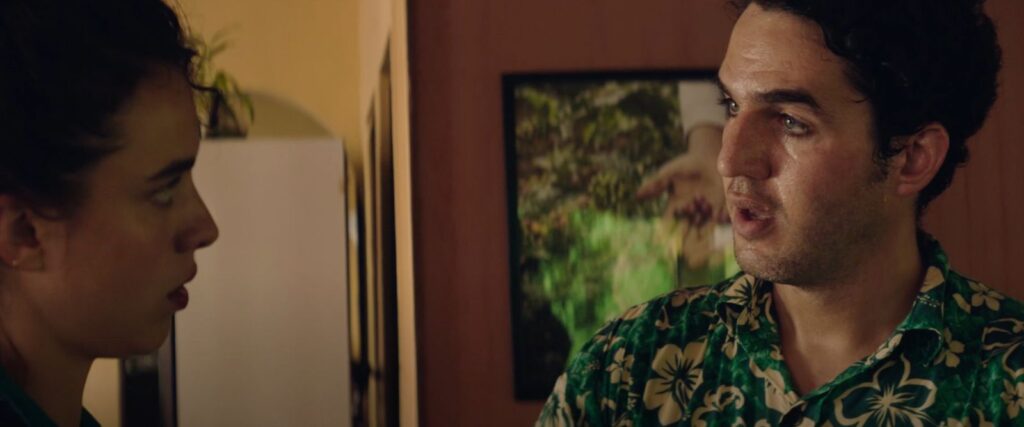
Plenty of punches are thrown but few connect in Benny Safdie’s solo directorial debut “The Smashing Machine,” an awards-hungry drama that sacrifices depth for dress up.
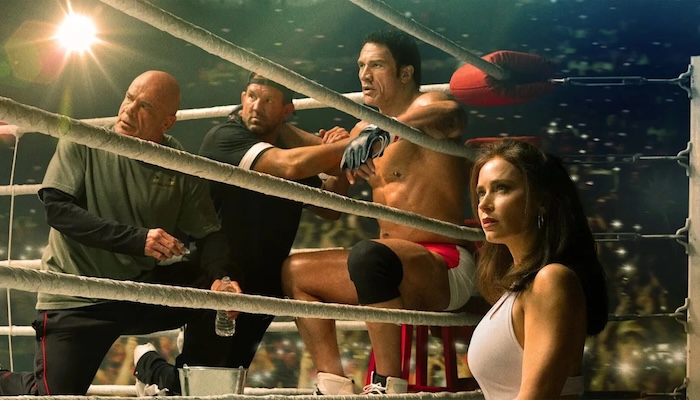
Safdie’s film focuses on Mark Kerr, one of the original American Ultimate Fighting Championship fighters, from 1997 to 2000. When we first meet Mark, he’s the hulking yet surprisingly vulnerable undefeated champ who cannot fathom the concept of losing. He appears almost gentle in his public interactions, yet he remains a force of nature in the ring with a messy life behind the scenes.
He’s accompanied by his girlfriend, Dawn Staples (Emily Blunt), with whom he shares a decidedly unstable relationship. They struggle to navigate the effects of Mark’s celebrity status, Dawn’s attempts to support him, and Mark’s addiction to painkillers.
Mark decides to take part in PRIDE to make more money, the rival UFC league in Japan, with his wrestling BFF Mark Coleman (real-life MMA fighter Ryan Bader). But Mark’s addiction takes its toll, and he loses focus, leading to his first major loss — well, a “No Contest” ruling by the judges.

This sends Mark into a tailspin. His public image is being chipped away, and his already rocky personal life veers down new chaotic avenues. Mark finally goes into rehab and emerges 21 days later (a time jump that the film abruptly cuts to) ready to redeem himself at PRIDE. But can Mark win the championship once and for all, and potentially beat up-and-coming Coleman?
Familiar and slightly-less-familiar beats follow, leading up to, ahem, not all that much to think about. Safdie, one-half of the team that brought us high-throttle stress fests “Good Time,” “Heaven Knows What,” and “Uncut Gems,” takes an unusually surface-level look at Mark’s life in “The Smashing Machine.”
It’s an ostensibly “raw” approach that comes off as curated and sanitized. At least Johnson and Blunt give impassioned performances that are perfect for Oscars highlight reels.
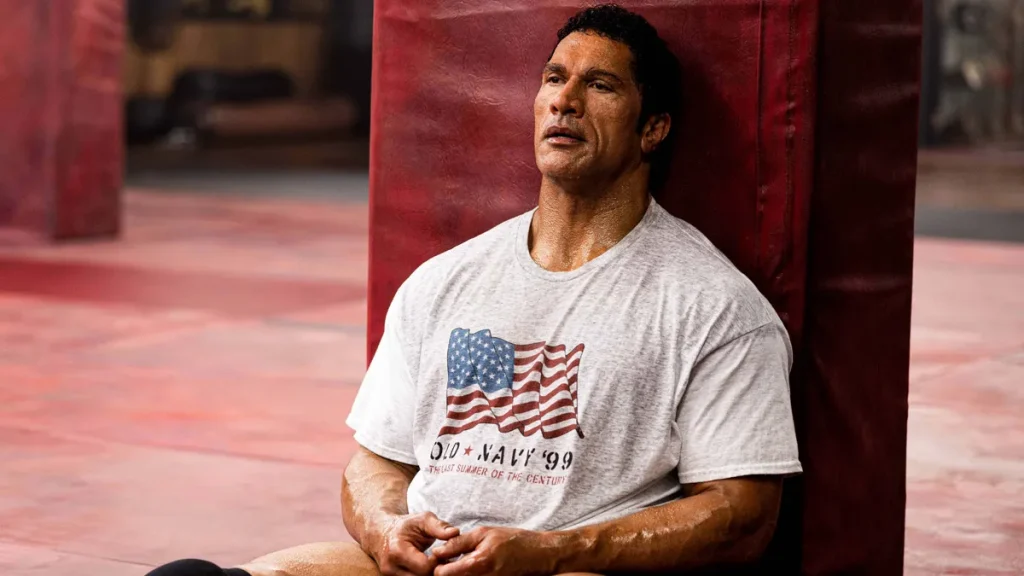
As an opportunity to showcase his acting muscles alongside his actual ones, Johnson delivers. He convincingly showcases the various “sides” of Mark scene to scene as he navigates his public persona and private realities, bringing an intensity and vulnerability (with the help of some impressively detailed makeup) that pairs effectively with Maceo Bishop’s rugged cinematography.
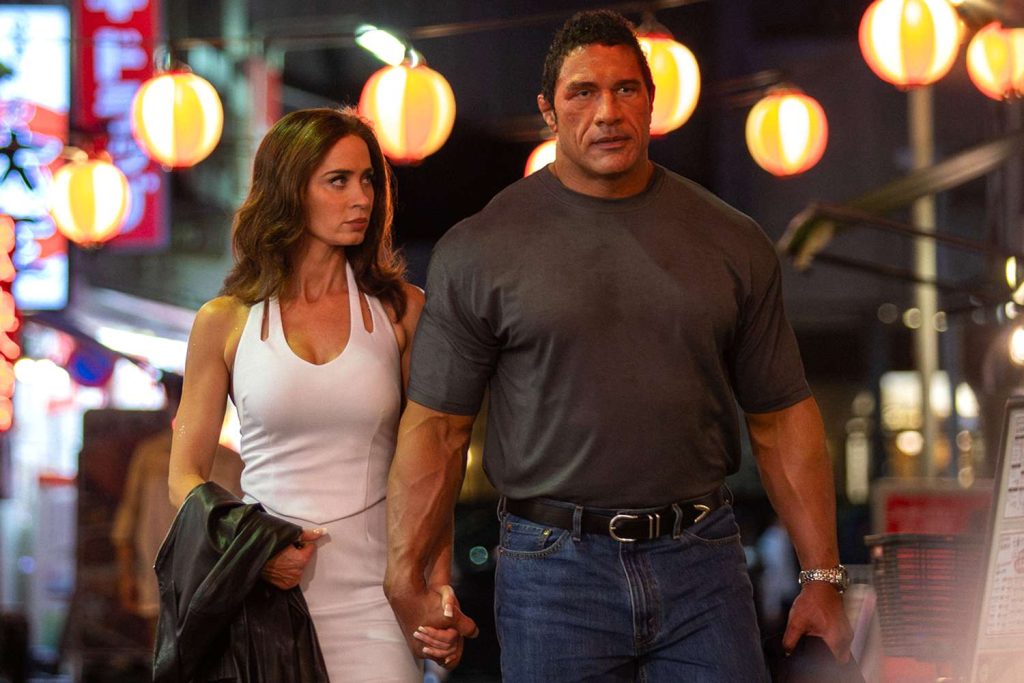
Blunt, too, is intense and volatile as Dawn. The confrontations between Mark and Dawn are where “The Smashing Machine” succeeds most, as Safdie’s screenplay keeps who we’re “rooting for” in flux as the couple navigates the effects of Mark’s sobriety with often explosive results.
Indeed, when “The Smashing Machine” focuses in on Mark’s vices, vanity, and loneliness after not being able to maintain the carefully-sculpted façade he’s spent years working towards (particularly during the first half), it succeeds where it counts.
Safdie’s voyeuristic approach brings an uncomfortable immediacy that’s emotionally taxing to watch (in a good way), and the film’s period-accurate stylings and music give it a grimy sense of pizazz; the fights themselves are viscerally well-choreographed, lent extra force by Nala Sinephro’s percussive, restless score.
As soon as Mark goes through the rehab center’s doors, though, Safdie winnows the narrative down to a much more digestible framework, zapped of thematic heft. Mark’s journey from addiction to sobriety largely takes place behind (literal) closed doors, and the nuances of that growth are locked within.
Perhaps the real-life Mark Kerr, who worked as an “informal consultant” on the film, had reservations about just how much Safdie could reveal about his story — seeing the “before” and “after” is definitely a choice, one that skips over a crucial element of Mark’s journey and the courage his recovery requires.
Mark’s eventual self-compassion and acceptance arrives, but, given the film’s lack of meaningful connective tissue, his evolution is merely seen, not felt, or fully understood.
Not every film has to be about something grandiose or particularly important. Wanting to shine light on a sport’s early pioneer is a noble enough goal. With the pedigree of a Safdie brother in the director’s chair, “The Smashing Machine” had the potential to hit hard. All this film leaves us with, though, is a sense of half-developed feeling — lots of yelling and period-accurate immersion lacking much to reflect on once the end credits roll. Oh well, maybe Johnson will get that Oscar.
“The Smashing Machine” is a 2025 sports biopic written and directed by Benny Safdie and starring Dwayne Johnson and Emily Blunt. Rated: R for language and some drug abuse. its runtime is 2 hours, 3 minutes. The film opened in theatres Oct. 3. Alex’s Grade: C.

Alex McPherson is an unabashed pop culture nerd and a member of the St. Louis Film Critics Association.