By Lynn Venhaus

A story of uncommon courage and grace while facing deeply rooted cruelty and oppression, “The Color Purple” is a momentous achievement for the Black Rep.

Through Celie’s harrowing emotional journey, a stunning Angela Wildflower leads a passionate ensemble who gives it all through the musical’s sorrows, love, pain and ultimately, triumph.

In a tour de force performance, Wildflower is the heart and soul of this deeply felt production, directed with considerable flair and impact by Daniel Bryant.

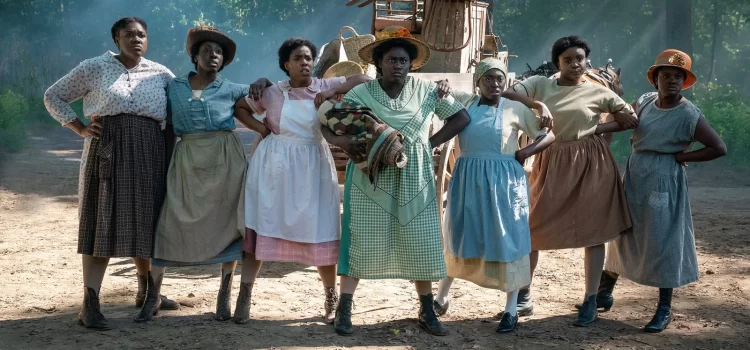
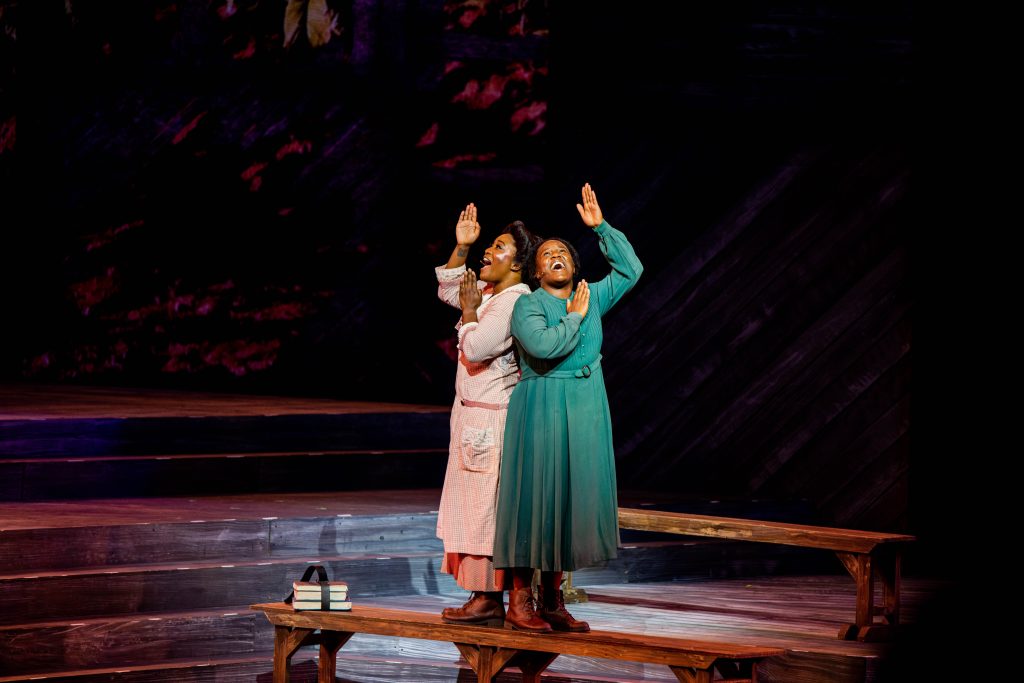
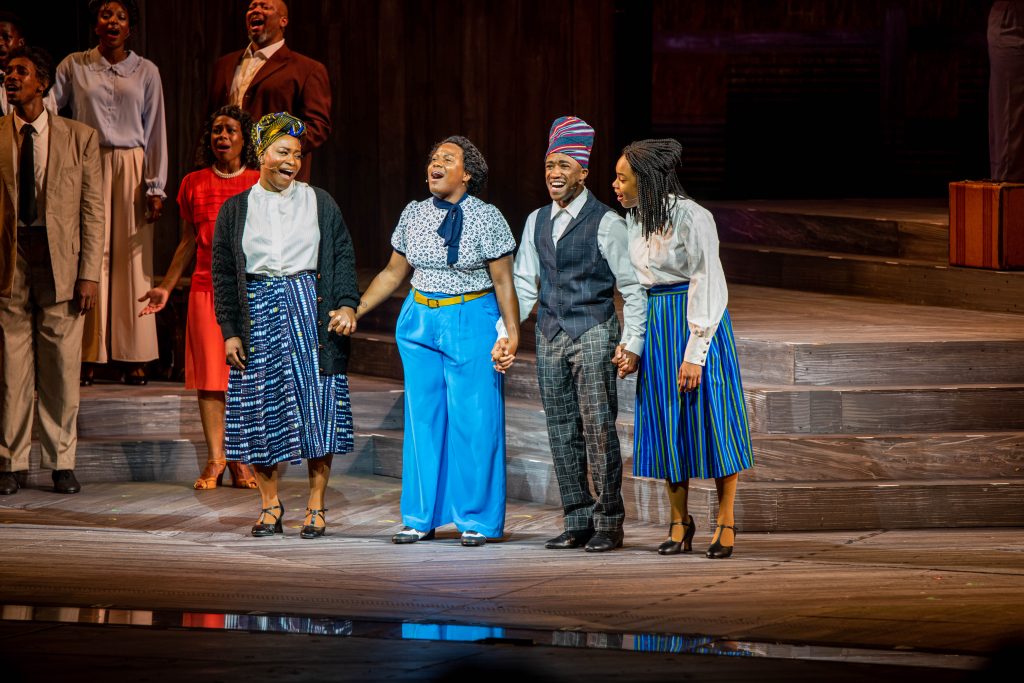
In the St. Louis Black Repertory Theatre’s premier that opened its landmark 50th season, the affection for the storytelling was palpable between the audience and the artists. The spirited cast’s voices soared, starting with powerhouse Anita Jackson and the other two ebullient Church Ladies Amber Rose and Olivia Neal with the opening.

The vibrant, roots-infused score includes gospel, jazz, ragtime, blues, and African beats, with songs by Brenda Russell, Allee Willis, and Stephen Bray that bring out the purpose and yearnings.
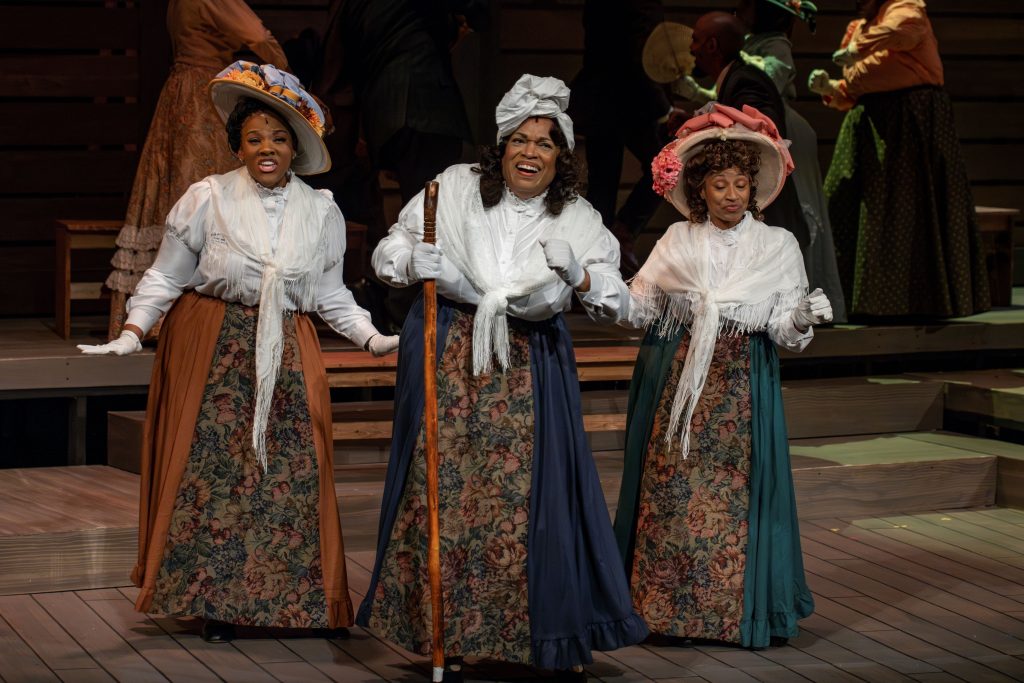
The Church Ladies Amber Rose, Anita Jackson, Olivia Neale. Photo by Arieona Phillips

In 1909, Celie, 14, is a humble, hard-working poor black girl living in rural Georgia, who has delivered two babies whose father is her father, and Pa (J. Samuel Davis) has taken them away.

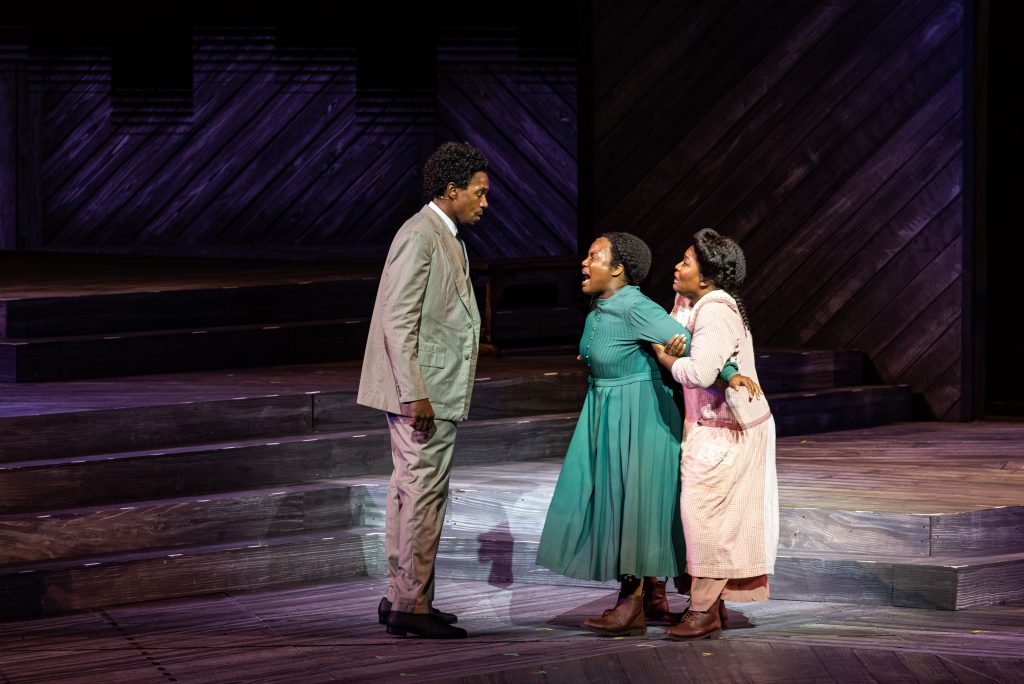
Several years later, he makes a deal to give Celie to Albert “Mister” Johnson (sturdy Kelvin Roston Jr.), an emotionally and physically abusive widower and farmer, to care for his unruly children and serve him.

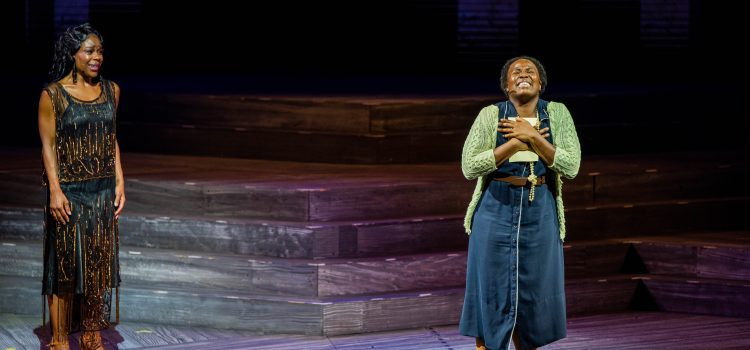
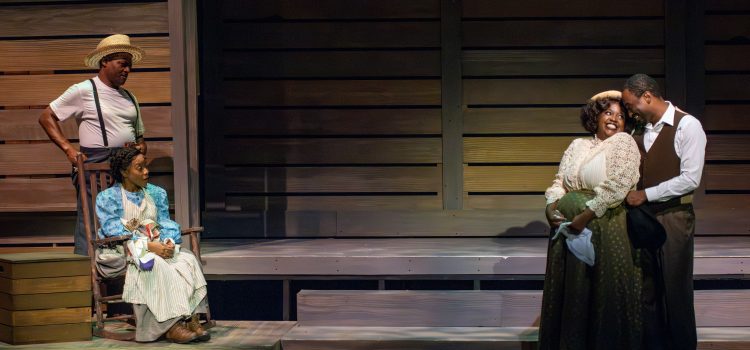
By her sacrifice, she spared her sister, Nettie (a tender Morgan Taylor), so that she could follow her dream of being a teacher. Unbeknownst to Celie, for many years, the compassionate Nettie winds up with a missionary family in Africa. When Morgan and Angela sing together, it’s magical, especially “Our Prayer.”

Celie has gone from one house of horror to another. But her faith sees her through, as do the people who raise her up. That community will return her kindness.
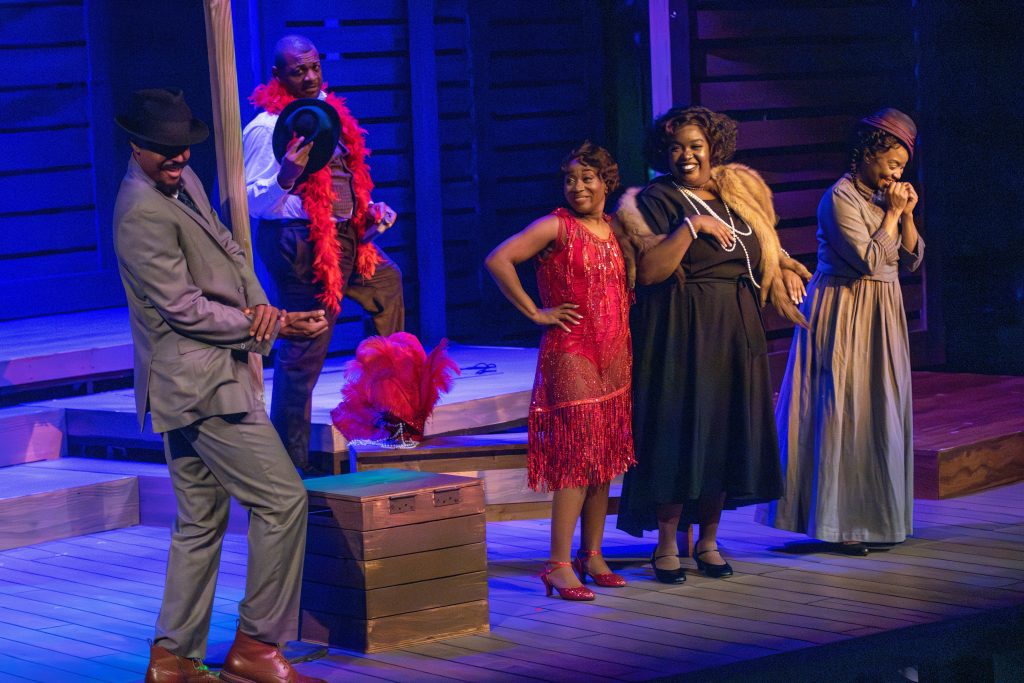
Push Da Button. Photo by Arieona Phillips

While taking care of Mister’s home, the nurturing Celie meets the glamorous and worldly nightclub chanteuse Shug Avery (dynamic Alexis J. Roston). They share romance and a deep bond.

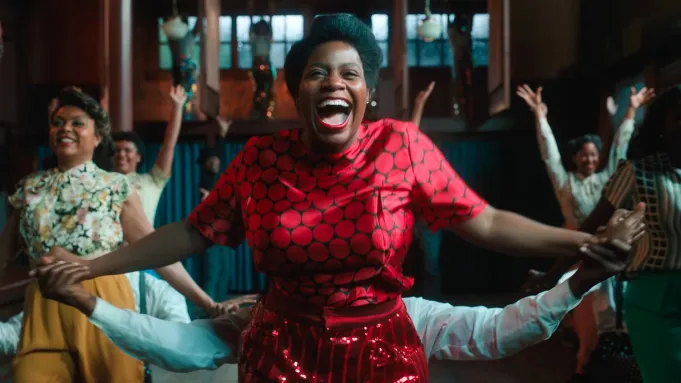
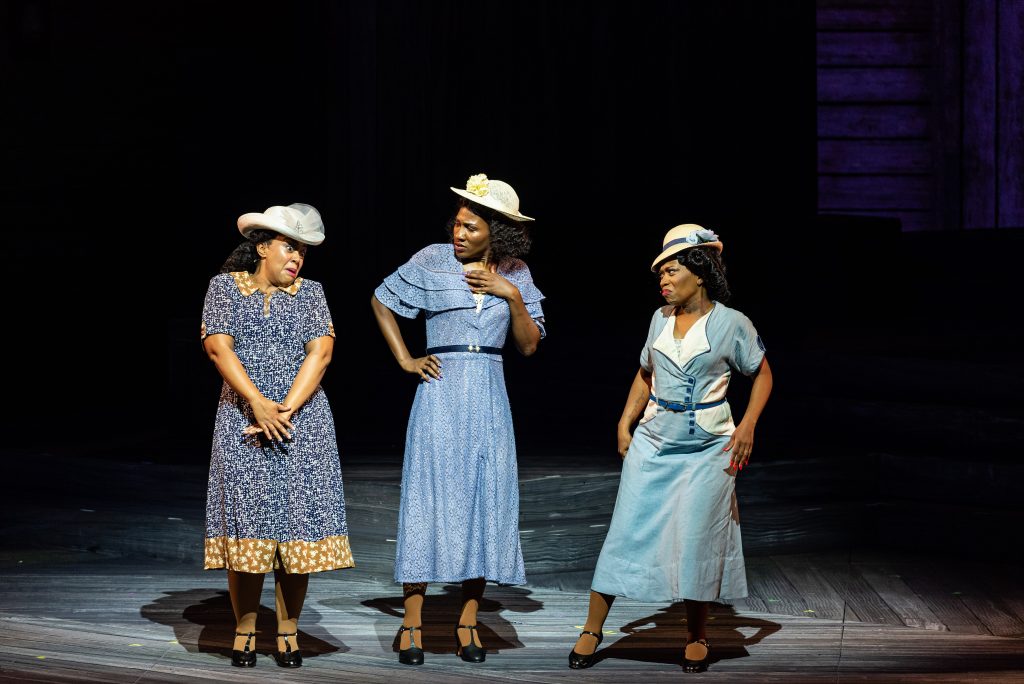
Wearing a snazzy red outfit, Roston sashays with confidence in “Push Da Button” and she shines in “Too Beautiful for Words” and “What About Love?”

One of Mister’s grown children, Harpo (versatile Brian McKinley), marries Sofia (powerhouse Adrienne Spann). Spann, impressive in her Black Rep debut, is strong as the feisty free spirit, known for her independence and speaking her mind. She stands out with her phrase (and song) “Hell, no!”

Tyler White is comical as the irrepressible Squeak and Olajuwon Davis, Dajuan Davis and Samantha Madison are well-rounded, adaptable ensemble members.

Marsha Norman wrote this musical adaptation of Alice Walker’s Pulitzer Prize-winning touchstone novel, a National Book Award winner in 1982. It debuted on Broadway in 2005 and then was revived in 2015.
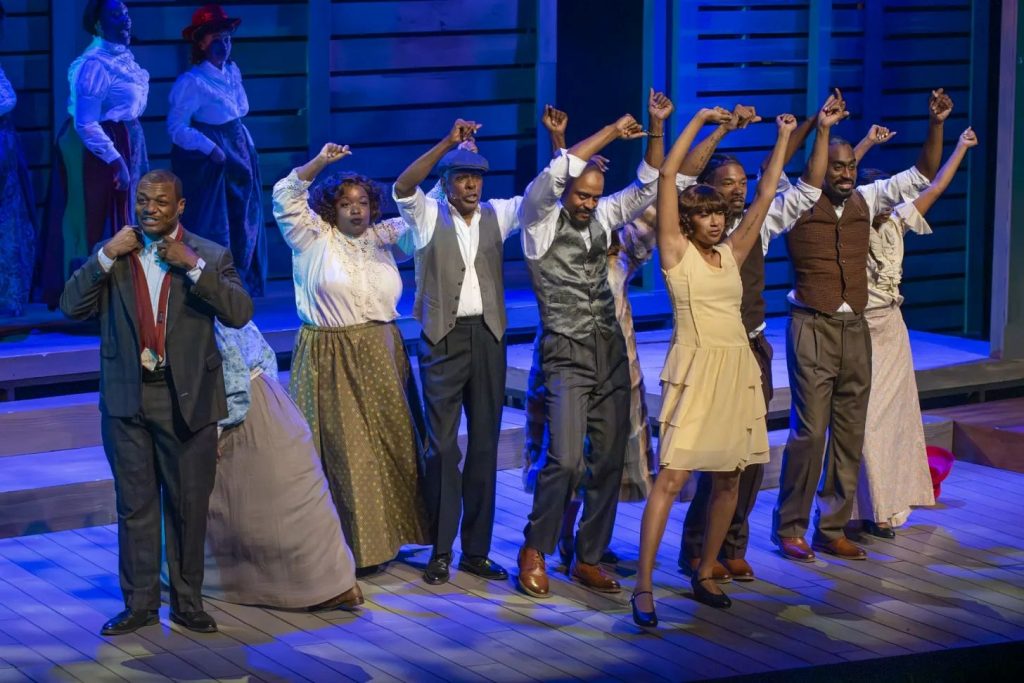
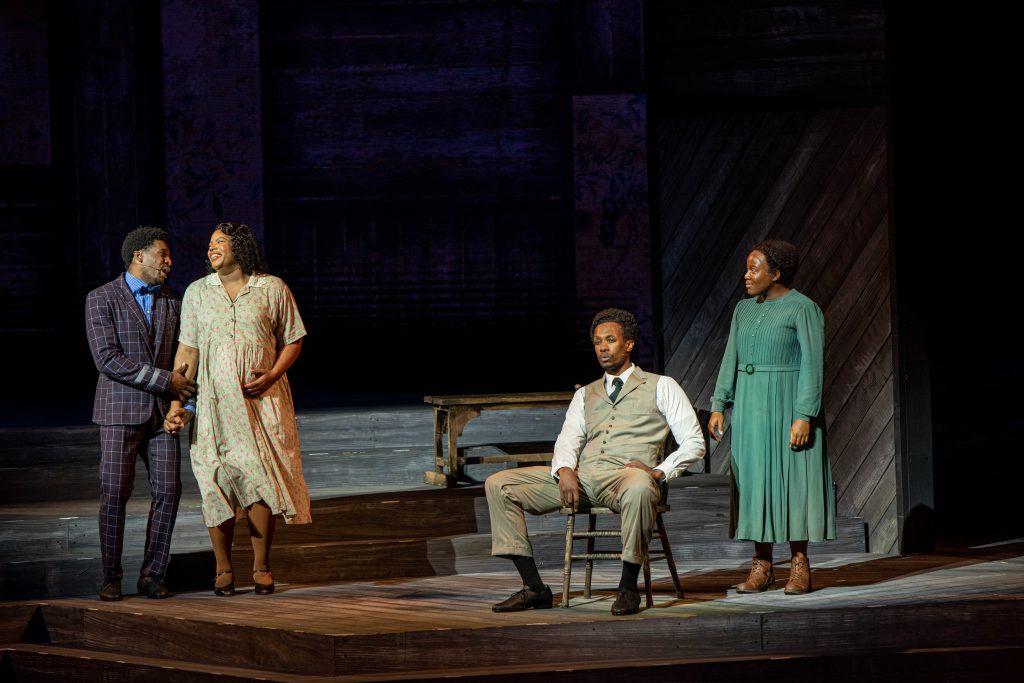
Photo by Arieona Phillips

In the two film adaptations, first in 1985 by Steven Spielberg, which garnered 11 Academy Award nominations, and then a 2023 musical version, they brought out the dignity and virtues of a trauma survivor.

Wildflower brought down the house with “I’m Here” – which was interrupted three times by applause, a goosebump moment.

With this stellar cast, the finale, reprising “The Color Purple,” is heartfelt and affecting, reminding us of the mighty power of love, healing and resilience.

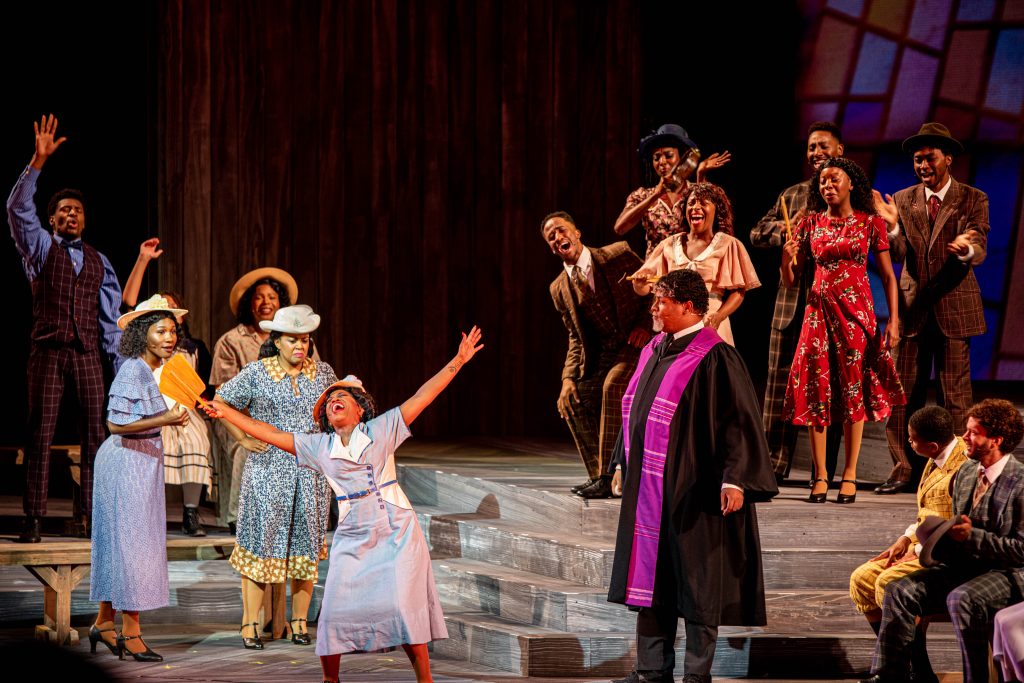
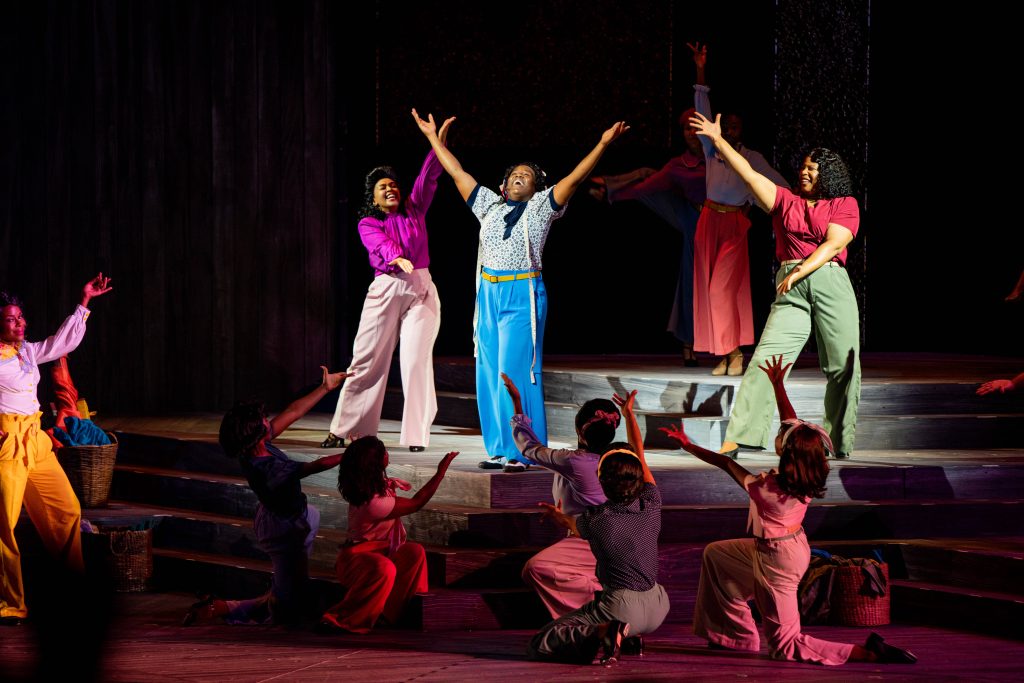
The staging is simple and Heather Beal’s choreography is supple, well-suited for this nimble ensemble. They have fun with the juke joint dance – and ‘Uh Oh.” Special mention to fight choreographer Paul Steger. The energetic African dance number is an ideal way to open the second act.
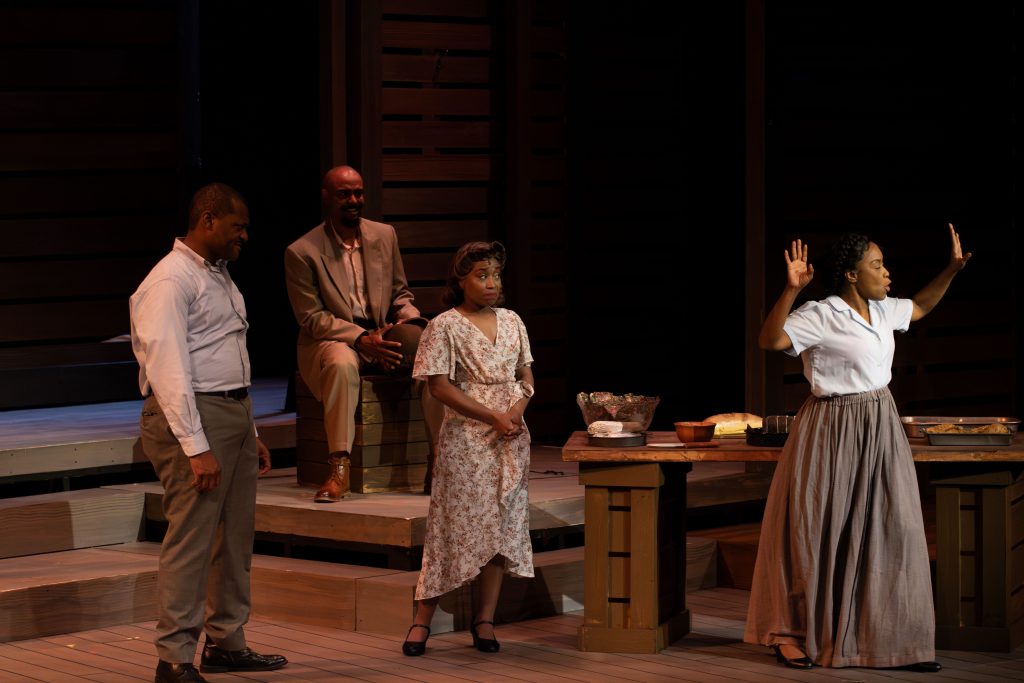
Photo by Arieona Phillips

Using cultural soundscapes beautifully, Music Director Jermaine Manor fluidly leads an eight-piece orchestra, with Zach Neumann on keyboards, Stan Coleman and Alex Macke on reeds, Dennis Brock on guitar, Willem von Hombracht on bass, Des Jones on drums, Gerald “Babtunde” Williams on percussion, and Manor on keyboards, too.

Resourceful scenic designer Tim Jones’ flexible scenic design uses an ancestral tree as a backdrop focal point, with nods to 20 Century South and Africa, and lighting designer Michael Sullivan created atmospheric notes, as did Justin Schmitz’ sound design. Mikhail Lynn did his customary excellent work on props.

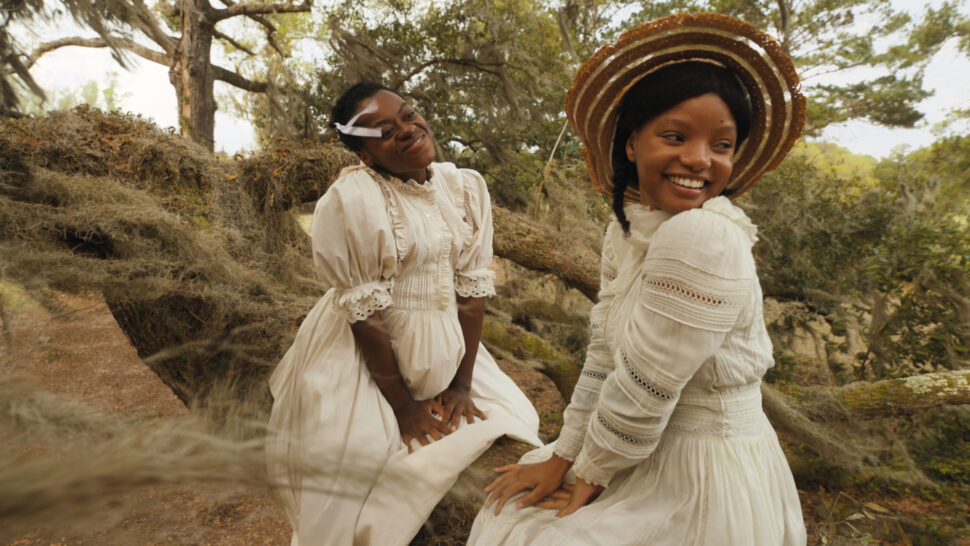
With a story spanning 40 years, costume designer Jarrod Barnes’s stylish vintage wear reflects the periods and the economic level of the characters, with Sunday best church clothes and fancier juke joint attire. Nettie’s gorgeous white Victorian dress rivals Shug’s dazzling pieces, and all the trousers are fun for “In Miss Celie’s Pants.”
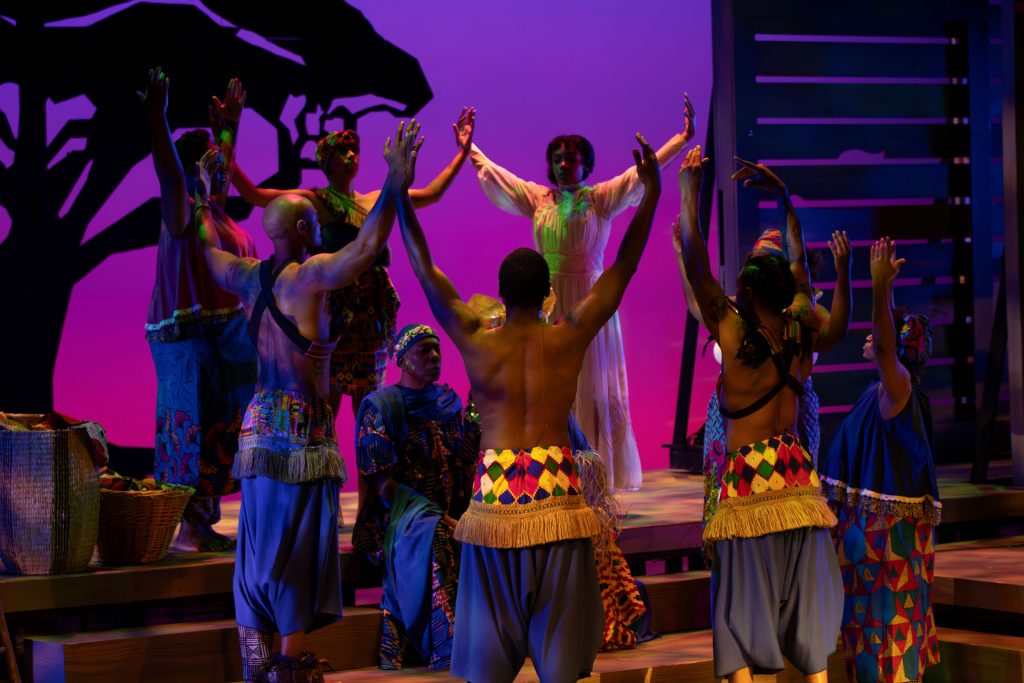
African Dance. Photo by Arieona Phillips

Of note, purple symbolizes strength, transformation, power, wisdom, bravery — and all meanings can be applied here.

What is most personal is also the most universal, and it shows in The Black Rep’s expertly produced, very moving musical.

The Black Rep presents “The Color Purple” Sept. 9 – 27 at The Edison Theatre at Washington University in St. Louis. For tickets, visit The Black Rep’s website, www.theblackrep.org.
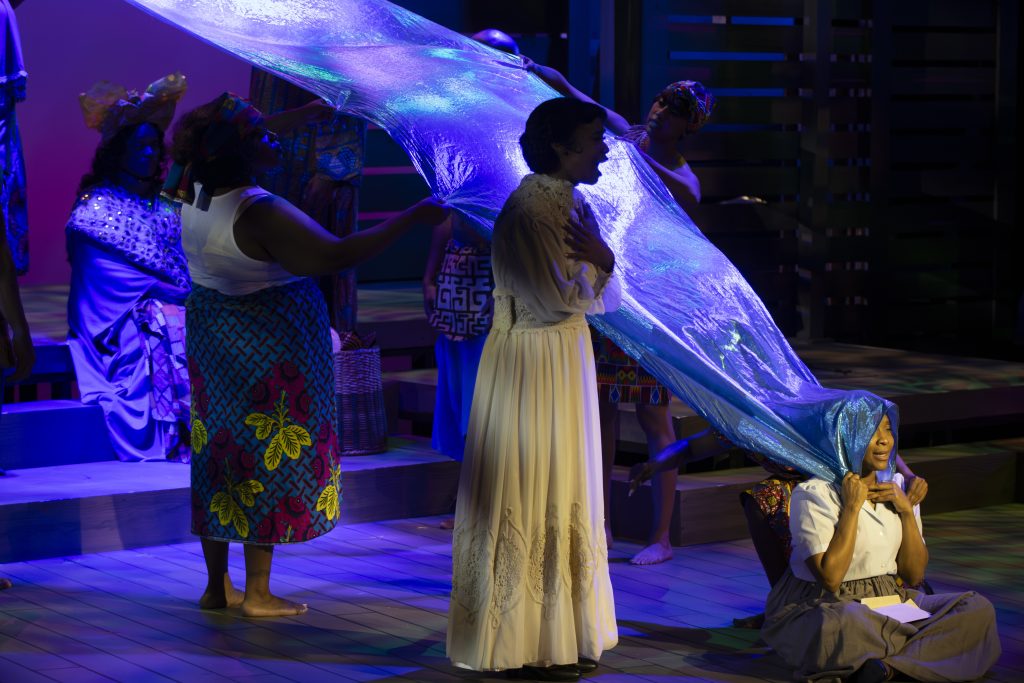
Photo by Arieona Phillips

By Lynn Venhaus

A strong sense of community, sisterhood and triumph over adversity runs through the big, splashy movie musical adaptation of “The Color Purple.”

What an inspiration Alice Walker’s Pulitzer Prize winning 1982 novel was 41 years ago, and its historic significance has not diminished. It told Celie’s powerful story through letters to her sister and children, which isn’t the easiest type of source material to adapt for film, nor are the horrors that she has endured. But a different presentation is a new way to see how one woman’s journey to self-realization resonates.

A determined Celie Harris (Fantasia Barrino) faces many hardships in life, but through the years, finds extraordinary strength and hope, and learns self-acceptance.

Purple symbolizes strength, transformation, power, wisdom, bravery, and all meanings can be applied in this version.

Celie’s tough path started in 1909 in rural Georgia. She’s a poor, black 14-year-old girl who has delivered two babies, impregnated by the man she thinks is her father. They are taken away from her. 

Against her will, she has been given to a widower Albert “Mister” Johnson, who emotionally and physically abuses her. She must serve him and his unruly children. As the heartless husband perpetuating a long cycle of suffering, Colman Domingo doesn’t soften the villainous aspects. However, after he is cursed, you do see a gradual change.

Celie’s endurance through deep-rooted cruelty and oppression is heart-tugging, and Barrino depicts her sorrows, love and indomitable spirit with courage and grace. 

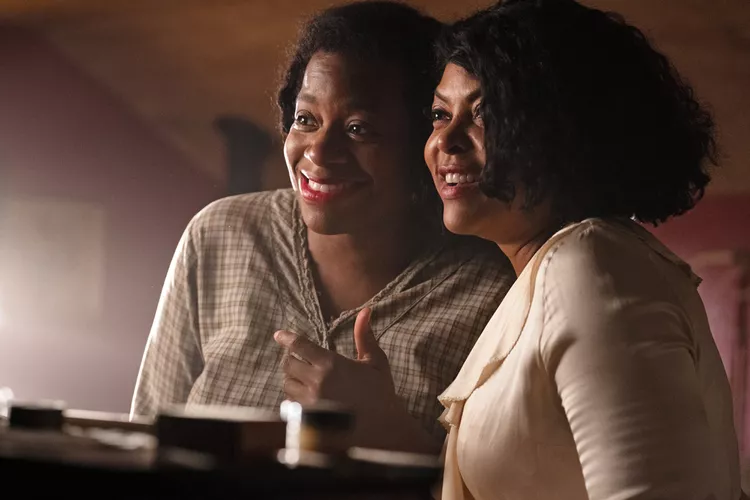
Fantasia, an American Idol winner who performed the role for eight months on Broadway, portrays Celie’s faith as unwavering through tough times, and how she relied on her beloved sister Nettie (Halle Bailey) and her church to raise her up. Her kindness will eventually lead to good things.

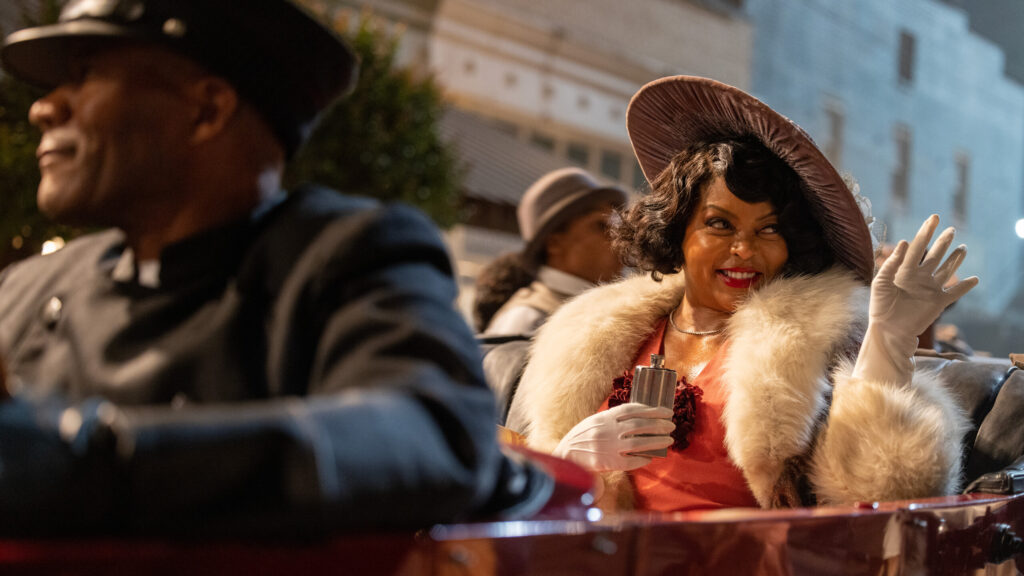
Things change, through the people she meets, but she also changes people. The nurturing Celie meets the glamorous and sophisticated nightclub chanteuse Shug Avery, and they have a deep bond even though the singer has an ongoing affair with Mister and a marriage to Grady (Jon Batiste). Taraji P. Henson is a flamboyant and fiery Shug, and sashays admirably through “Push the Button,” In a role added for the movie, David Alan Grier plays her father, Rev. Avery.

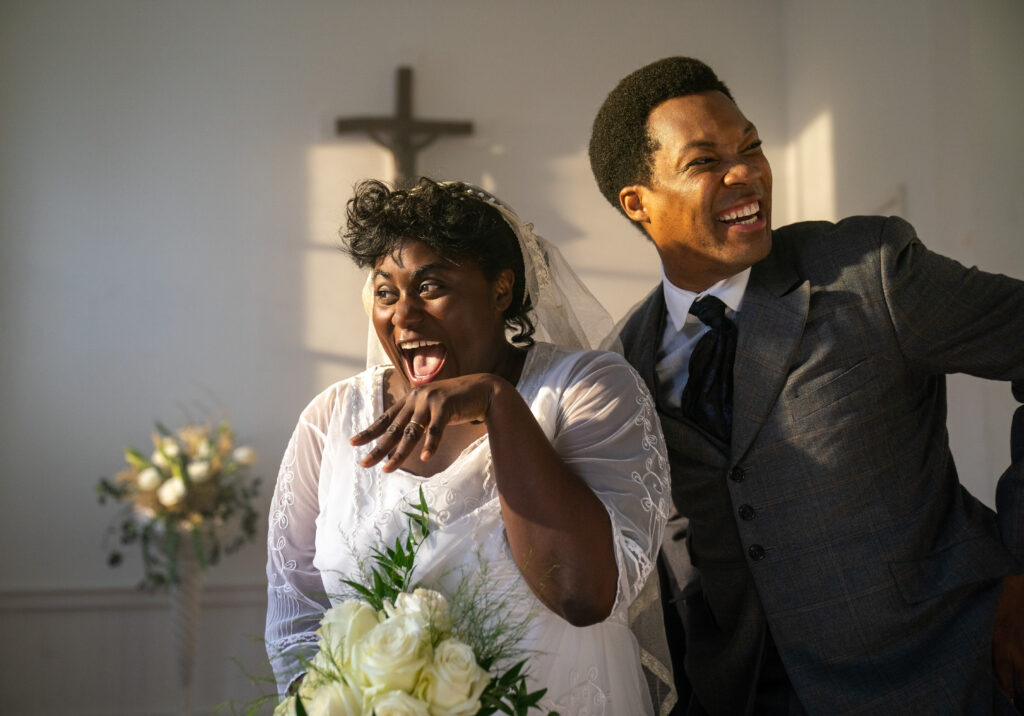
One of Mister’s grown children, Harpo (Corey Hawkins) , marries Sofia, and Danielle Brooks is marvelous as the strong-willed free spirit, known for her independence and speaking her mind, with her phrase: “Hell, no!” even a song title that’s a showstopper. She cannot be ‘tamed,’ and her outspokenness will bring her harm. Brooks reprises her Broadway role and is the dynamo here.

As the story has evolved from book to movie to musical to movie musical, the familiar main points haven’t changed, although how much time is devoted to turning points has varied. 

For whatever reason a movie that had been smoothly running along feels rushed and haphazard in its last act, because of choppy storytelling and erratic pacing. But overall, director Blitz Bazawule makes the theatrical elements of a stage play cinematic.

Dan Lausten’s cinematography, Paul Denham Austerberry’s production design and Francine Jamison-Tanchuck’s costumes — 40 years of style — are vibrant components of the ultimately uplifting and very spiritual essence of this work.

The dynamic ensemble deeply feels their experiences, but the film finds its emotional center in the musical numbers. The score is an appealing mix of gospel, jazz, ragtime, blues, and African beats, with the Broadway songs by Brenda Russell, the late Allee Willis, and Stephen Bray that bring out the purpose, yearnings and period of these early 20th century lives. Sixteen songs are from the stage musical and there are several new ones: “Keep It Movin'” (written by Halle Bailey) and “Superpower.”

Mega-talented Kris Bowers composed the film’s score, and Fatima Robinson’s choreography is joyous.

Steven Spielberg directed the first adaptation – a moving 1985 film, which famously was nominated for 11 Oscars, but didn’t win any. Spielberg is among the producers of this version, so is Quincy Jones, who scored the original, and so is Oprah Winfrey, who was Oscar-nominated as Sofia.

Jones and Winfrey helped launch the 2005 musical on Broadway, which was revived in 2015, and this is a combination of the two. While this version, adapted by Marcus Gardley from Marsha Norman’s book, doesn’t shy away from Celie’s harsh life, its sisterhood focus sweetens the story. 

Over the course of several decades, what the women learn, how they grow and overcome obstacles will tug at our hearts, so that the mercy shown in the second act leads to triumph– and somewhat of a redemption for Mister.

The heart and soul of any version is Celie, and it’s no fluke that both actresses who played Celie on Broadway — LaChanze in the original 2005 production and Cynthia Erivo in the 2015 revival — won Tony Awards (Director John Doyle’s re-imagining also won the Tony Award for Best Revival). When Fantasia sings the powerhouse “I’m Here,” she puts an exclamation point on a sensational debut.

Yes, it’s gut-wrenching, but it’s also about healing, resilience, and the mighty power of love. Throughout our history, we have learned that we should never forget what’s happened before, those teachable moments that make us better people.

The ensemble is top-tier in every way. Singers Ciara and H.E.R. are elder Nettie and Squeak respectively, and Louis Gossett Jr. has a memorable turn as Ol’ Mister. Even the brief parts contribute a sense of faith, hope and charity that church communities share.

If you believe, as I do, that if you spread light and love in the world, and are a good person, then the universe responds in kind. That is ultimately why Celie’s story is relatable. She never gave up her belief in goodness, and finally realized her worth as a human being.

While musicals are a hard sell as movies these days, “The Color Purple” has enduring appeal for what it says and what it means. The cast makes this version shine, for they bring emotional truth to each role.

“The Color Purple” is a 2023 musical directed by Blitz Bazawule and starring Fantasia Barrino, Colman Domingo, Danielle Brooks, Corey Hawkins, Taraji P. Henson, Halle Bailey, Ciara, Jon Batiste, Gabriella Wilson (H.E.R.), Louis Gossett Jr., David Alan Grier. It is rated PG-13 for mature thematic content, sexual content, violence and language, and runs 2 hours, 20 minutes. It opens in theaters Dec. 25. Lynn’s grade: B+

By Lynn Venhaus

In its Muny premier, “The Color Purple” is a momentous experience — one that cannot be missed for its historic and landmark significance, but also because it’s one of the finest ever ensembles in its 104 seasons.

The cast takes us on an unforgettable emotional journey, and their glorious harmonies soar into the summer night.

Delivering a story of uncommon courage and grace in a harrowing account of deeply rooted cruelty and oppression, the core group of female principals makes us feel their sorrows, love, pain, and indomitable spirit.

To paraphrase Annie Lennox and Aretha Franklin, sisters are doing it for themselves (referencing a 1985 Eurythmics female empowerment song). And what a sisterhood it is!

In 1909, Celie is a humble, hard-working 14-year-old poor black girl living in rural Georgia, who has delivered two babies whose father is her father, and Pa (Duane Martin Foster) has taken them away.

Several years later, he makes a deal to give Celie to Albert “Mister” Johnson, an emotionally and physically abusive widower and farmer, to care for his unruly children and serve him and his family.

She spared her sister, Nettie, so that she could follow her dream of being a teacher. Unbeknownst to Celie for a long time, the compassionate Nettie winds up with a missionary family in Africa, and is eventually tracked down by Shug Avery, another important influence in Celie’s life.

Celie has gone from one house of horrors to another. This is unsettling, of course, but her unwavering faith sees her through these tough times, as do the people who raise her up. She has always found solace with her sister and in church, and as time passes, it is the community that relies on her that pays back her kindness.

While taking care of Mister’s home, the nurturing Celie meets the glamorous, worldly, and determined nightclub chanteuse Shug Avery. They eventually share a romantic relationship and deep bond despite the singer having an on-again, off-again affair with Mister and a marriage to Grady.

One of Mister’s grown children, Harpo, marries Sofia, and she is a strong-willed free spirit, known for her independence and speaking her mind, with her phrase: “Hell, no!” even a song title. She cannot be ‘tamed,’ but she loves Harpo. Sofia’s stance will bring her serious harm.

Over the course of several decades, what the women learn, how they grow and overcome obstacles will tug at our hearts, so that the mercy shown in the second act leads to triumph– and for the men too.

Marsha Norman wrote this tough adaptation of Alice Walker’s Pulitzer Prize-winning touchstone novel, a National Book Award winner in 1982, which told Celie’s story through letters she wrote to her sister and children.

Sisters Nettie and Celie “Our Prayer.” Photo by Phillip Hamer.

For director Steven Spielberg, Menno Meyjes adapted the book into a 1985 movie that garnered 11 Academy Award nominations (but famously did not win any). A new movie based on the musical is set for a December 2023 release.

The heart and soul of any version is Celie, and it’s no fluke that both actresses who played Celie on Broadway — LaChanze in the original 2005 production and Cynthia Erivo in the 2016 revival — won Tony Awards (Director John Doyle’s re-imagining also won the Tony Award for Best Revival).

In this powerhouse role, Anastacia McCleskey is transcendent, bringing out the dignity, heartbreak, and virtues of a true survivor of overwhelming trauma. This tour de force performance is deeply felt and delivered with remarkable strength and skill.

Her eyes glistening with tears, McCleskey became a bona fide star in her 11 o’clock number, “I’m Here,” in which she expresses self-love and perseverance, and left us in awe. The thunderous ovation that followed was one of the longest in memory. Goosebump moments, indeed.

When she leads the cast in the finale, a fervent reprise of “The Color Purple,” it’s impossible for the audience to not have been affected by this sublime show.

Yes, it’s gut-wrenching, but it’s also about healing, resilience, and the mighty power of love. Throughout our history, we have learned that we should never forget what’s happened before, those teachable moments that make us better people.

The score includes gospel, jazz, ragtime, blues, and African beats, with songs by Brenda Russell, Allee Willis, and Stephen Bray that bring out the purpose, yearnings and period of these early 20th century lives.

“Mysterious Ways” number. Photo by Phillip Hamer.

The cast is stellar from leads to brief parts, evident from the Sunday church services depicted in “Mysterious Ways,” with Omega Jones belting out praise as the preacher and Alexis J. Rosten, Shantel Cribbs and Melanie Loren instant crowd-pleasers as the supremely talented trio of church ladies Doris, Darlene, and Jarene.

You will quickly discover what a joyful noise this ensemble will make, their strong vocals providing a sense of faith, hope and charity that church communities share.

Nasia Thomas, who stood out in last year’s “Smokey Joe’s Cafe,” is impressive as Celie’s beloved sister Nettie. You can feel a palpable bond between them, as if they were real sisters. Their duets are beautiful, especially the touching “Our Prayer.”

In the showy role as the irrepressible Shug, singer Tracee Beazer sashays across the stage with ultra-confidence. She leads the big splashy number “Push Da Button” but it’s her poignant ballads, “Too Beautiful for Words” and “The Color Purple,” that showcase her vocal strengths, as well as the exquisite “What About Love?”, a tender duet with Celie.

Nicole Michelle Haskins as Sofia and Gilbert Domally as Harpo reprise their roles from the acclaimed 2019 Drury Lane Theatre production in Chicago and endear as a dynamic couple — and as individuals. They have a fun, playful duet “Any Little Thing.”

Gilbert Domally, Nicole Michelle Haskins, Evan Tyrone Martin, Anastacia McCleskey. Photo by Phillip Hamer.

As the villain Mister, Evan Tyrone Martin inspires a gamut of emotions as the heartless husband perpetuating a long cycle of suffering. After he’s cursed and lost everything, “The Mister Song” begins his redemption.

Fine in supporting roles are Erica Durham as the colorful Squeak, Sean Walton as flashy Grady, and Jos N. Banks as lively Buster. Muny favorite Kennedy Holmes portrays Olivia and Rodney Thompson is Adam, Celie’s children.

The staging on a simple slab with different levels depicting various locales is a smart move by scenic designer Arnel Sanciano, which narrows our focus to the human interaction. Other accoutrements, such as Harpo’s sign for his juke joint and fields of purple flowers, are deftly handled on the LED screen by video designer Paul Deziel.

The creative team is new to the Muny but not the material. Director Lili-Anne Brown, music director Jermaine Hill and choreographer Breon Arzell were responsible for the Drury Lane Theatre production in fall 2019 that received seven Joseph Jefferson Awards nominations and won two — for directing and supporting role (Haskins).

Their collaboration has transferred well to the large outdoor stage. Every part of this exercise is told with attentiveness and passion.

The trio’s vision is brought vividly to life by the top-tier ensemble and their team, including outstanding craftsmanship by lighting designer Heather Gilbert and sound designers John Shivers and David Patridge. Production stage manager Jhanae Bonnick keeps everything at a brisk pace.

“Miss Celie’s Pants.” Photo by Phillip Hamer.

The costumes are a panoply of 40 years of style, with costume designer Samantha C. Jones dressing a church-going community in their Sunday best, what they wear to work and play in a Southern town, and how they dress up for a juke joint. Wig designer is Kelly Jordan.

With Celie designing pants in the second act, a striking array of comfortable yet stylish outfits are on display. That celebration number “Miss Celie’s Pants” marks such a turning point in the story and is one big smile.

If you believe, as I do, that if you spread light and love in the world, and are a good person, then the universe responds in kind. That is ultimately why Celie’s story resonates. Yes, she endured hell on earth, but she never gave up her belief in goodness, and finally realized her worth as a human being.

Purple symbolizes strength, transformation, power, wisdom and bravery, and all meanings can be applied here.

What an inspiration Alice Walker’s book was to the world 40 years ago, and continues to be, and what a distinguished accomplishment this show is for The Muny and St. Louis.

Nasia Thomas, Anastacia McCleskey, Rodney Thompson, Kennedy Holmes. Photo by Phillip Hamer.

The Muny presents the musical “The Color Purple” Aug. 3-9 at 8:15 p.m. nightly on the outdoor stage in Forest Park. For more information or tickets, visit www.muny.org.

Church Ladies. Photo by Phillip Hamer.