By Lynn Venhaus
Maybe you think that if you’ve seen one Dracula movie, you’ve seen them all, “Nosferatu” and other spin-offs included? Quite the contrary, with this latest take on the classic vampire story more focused on gothic romance and less on gory horror.
But of course, there will be blood — and heads roll. What a mysterious revision Luc Besson’s “Dracula” is, taking concepts from Bram Stoker’s 1897 novel but going in multiple overwrought directions instead.
The director, known for such global action hits as “Leon: The Professional” and “La Femme Nikita,” not to mention producing the “Taken” and “Transporter” franchises, created an unusual scenario, although extravagant battle scenes bookend the film with mayhem.
Besson’s visual flair, as noted in his films “The Fifth Element” and “Valerian and the City of a Thousand Planets,” is the film’s strongest suit, stylistically framing the traditional story with grandeur – namely, the opulent production design by Hugues Tissandier and lavish period costumes by Corinne Bruand.
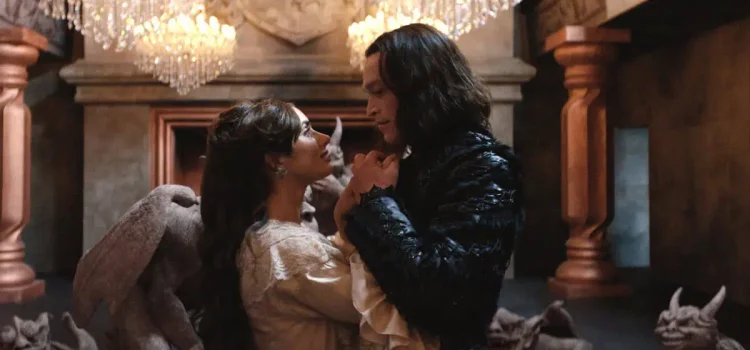
As screenwriter, he took a major creative license. The result is a strange brew of folklore, desire, silliness and gargoyles come to life. Dracula’s quest is to find his lost love, for he’s miserable and melancholic without his adored wife, who was slaughtered in front of him.
After all, he’s been mourning for four centuries. It’s unclear how he expects to find her – another freshly minted vampire, resurrected or reincarnated? But a stronger emotional core is what Besson attempted. Danny Elfman added both bombast and urgency to his lush film score.
Originally called “Dracula: A Love Tale,” the ambitious reinvention freely mimicked the kitschy melodrama that made the cult soap opera “Dark Shadows” so irresistible in the late 1960s.
But Besson, who took this project very seriously, created a philosophical Vlad as he roamed the earth, inventing a fragrance to be his calling card for seduction. So, is he a perfume designer too?
Because of that twist, powdered and porcelain-skinned heavy-breathing socialites can’t resist him in exotic continental locations.
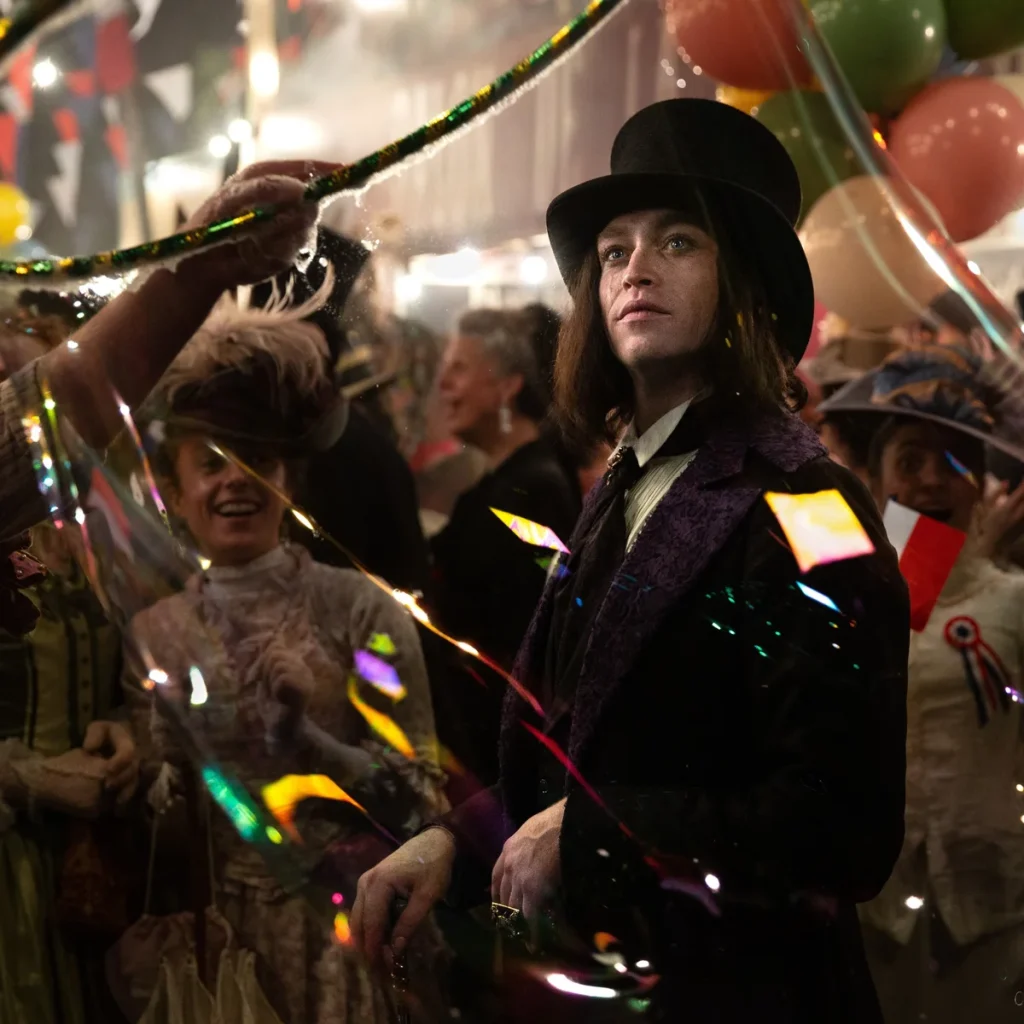
Caleb Landry Jones is an intriguing Prince of Darkness. The character actor known for playing Banshee in “X-Men: First Class,” as Red in “Three Billboards Outside Ebbing, Missouri” and an Armitage in “Get Out,” leaned into the flamboyance and the mannered speech in a gravelly whisper as he doubled-down on the lovesick nobleman.
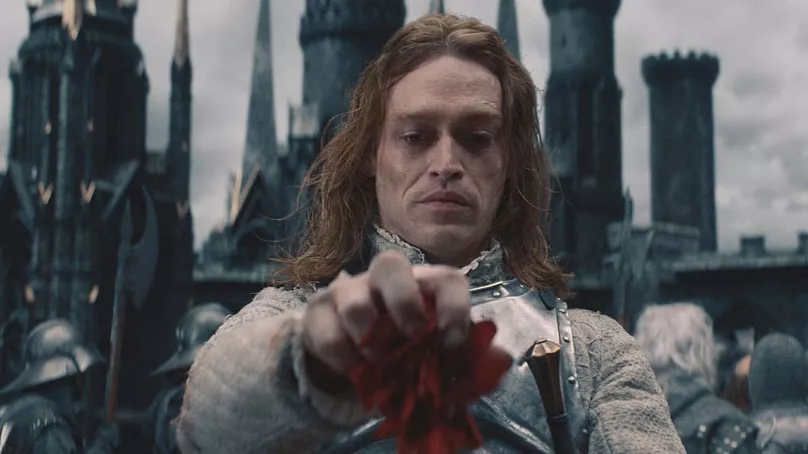
His version varied from the iconic portrayals by Gary Oldman, Christopher Lee and Bela Lugosi to make the role his own. He transformed into many looks, from Middle Ages armor to high-society top hats, from swaggering royal to grotesque old man.
He and Zoe Bleu, as both Elisabeta and Mina, have a zesty chemistry. Bleu resembles her mother, actress Rosanna Arquette, and is now fourth generation of the famous acting family.
In one of the more bizarre scenes– that prolonged the inevitable – Dracula ravished a nunnery. Those poor unfortunate souls. His obsession is relentless, and as Besson detours, the film gets wackier.
But some key figures remain or are similar to the original. Instead of including vampire slayer Van Helsing, two-time Oscar winner Christoph Waltz played a Vatican-appointed priest. He attempts to save Vlad from damnation. Fresh off his appearance in Guillermo del Toro’s “Frankenstein,” he played the role matter-of-factly.
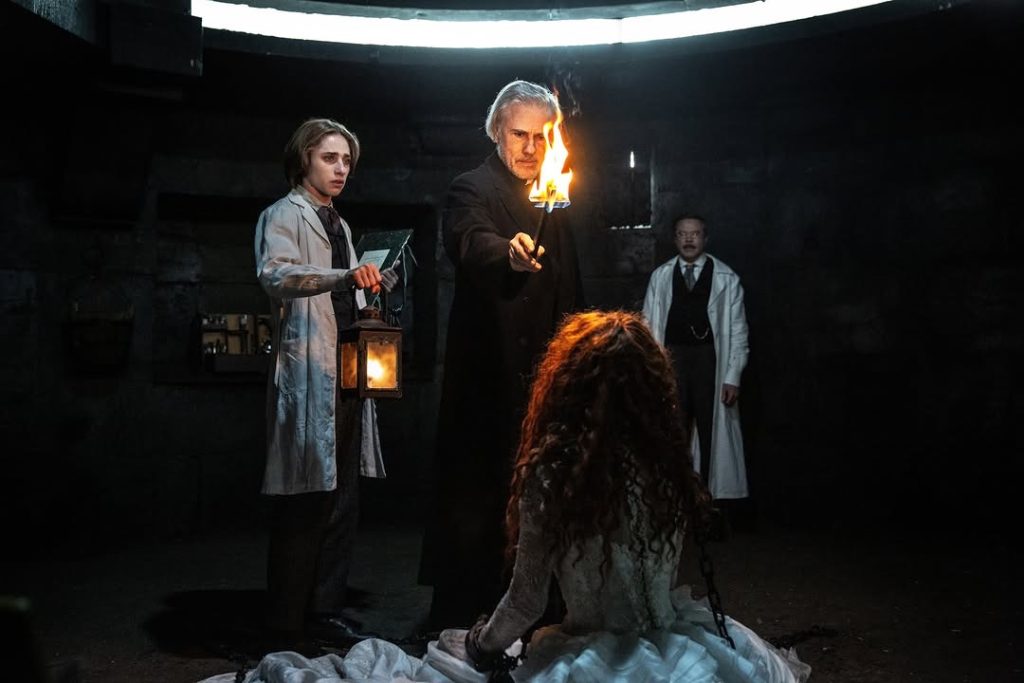
Ewens Abid is an earnest Jonathan Harkin, a lawyer who visited the count in the castle (and Mina’s fiance). David Sheets is Henry Spencer, whose fiancé Maria (a maniacally giggly Matilda De Angelis), went crazy at their wedding, and he’s still in shock.
Maria was institutionalized at a deeply unsettling insane asylum, and Besson created a disturbing tableau every time we went there, mixing primitive psychology with the supernatural. By now, Dracula looks like the Babadook.
To rid the world of this demon, we have a battle extraordinaire with cannons and animated gargoyles called to duty. (Think the flying monkeys in “The Wizard of Oz.”)
Because we’re accustomed to “What We Do in the Shadows” and the Twilight movies, one wonders how far the mythology can be stretched.
After 2 hours, 9 minutes, it’s time to let him go. There have been around 30 Dracula movies produced, becoming a pop culture staple for 100 years, so where this lands in public opinion, only time will tell. This “Dracula” will go down as a one-of-a-kind, though.
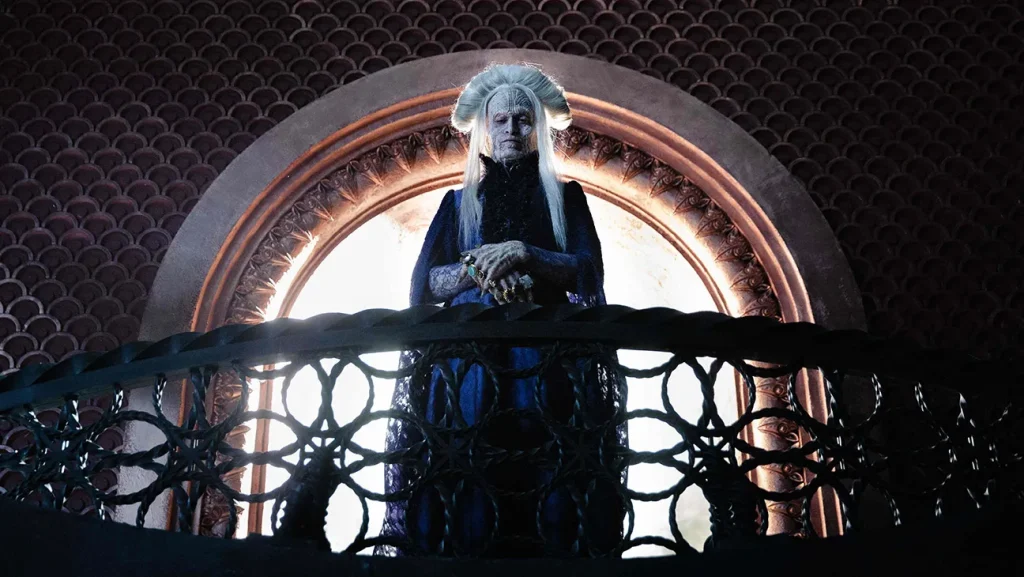
“Dracula” is a 2025 supernatural horror romance written and directed by Luc Besson and starring Caleb Landry Jones, Zoe Bleu, Christoph Waltz, Ewens Abid, David Sheets and Matilda De Angelis. It is rated R for violence, some gore and sexuality, and its run time is 2 hours, 9 minutes. It opens in theatres Feb. 6. Lynn’s Grade: C.
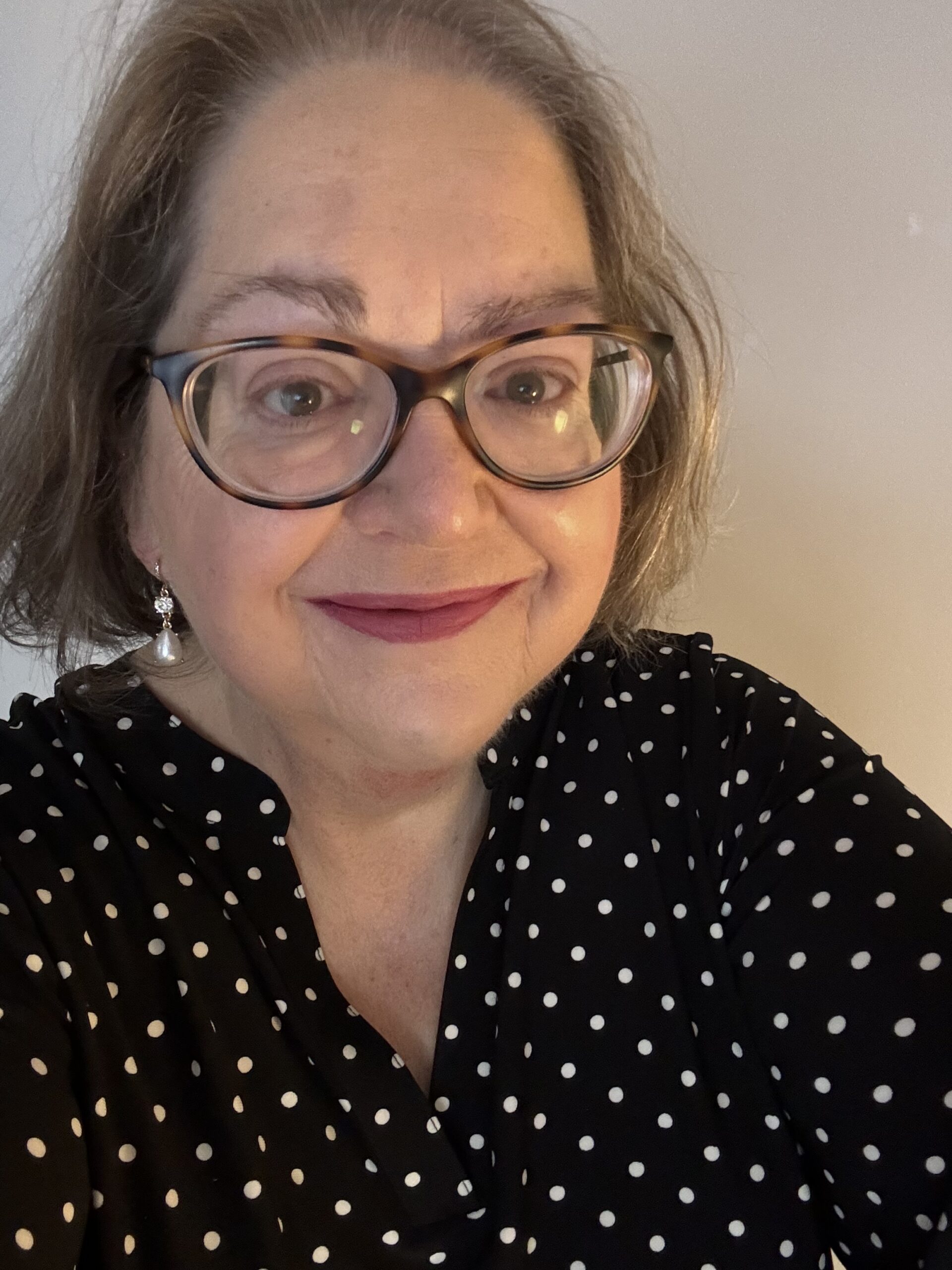
Lynn (Zipfel) Venhaus has had a continuous byline in St. Louis metro region publications since 1978. She writes features and news for Belleville News-Democrat and contributes to St. Louis magazine and other publications.
She is a Rotten Tomatoes-approved film critic, currently reviews films for Webster-Kirkwood Times and KTRS Radio, covers entertainment for PopLifeSTL.com and co-hosts podcast PopLifeSTL.com…Presents.
She is a member of Critics Choice Association, where she serves on the women’s and marketing committees; Alliance of Women Film Journalists; and on the board of the St. Louis Film Critics Association. She is a founding and board member of the St. Louis Theater Circle.
She is retired from teaching journalism/media as an adjunct college instructor.