
By Lynn Venhaus
Dark, dour and dreary, “The Death of Robin Hood” is a revisionist take on the legendary folk hero without any merry men or noble derring-do – or much of a pulse.

After a chaotic life of crime and murder, a battle-scarred and weather-beaten Robin Hood (Hugh Jackman) is roaming the austere heaths of medieval England. The year is 1247, and he’s not seeking redemption nor reconciling his past — yet. He announces: “I’m tired.”

Writer-director Michael Sarnoski has adapted a 17th century ballad, “Robin Hood’s Death,” to bust the myth about the outlaw that the common man cheered for, “stealing from the rich and giving it to the poor.”

Presenting himself as “no hero,” Robin grapples with being a heartless bandit and not a good guy glorified in folklore. He doesn’t have an altruistic bone in his broken body, and he is irked about the romanticized version because he can’t live up to expectations nor does he want to try.
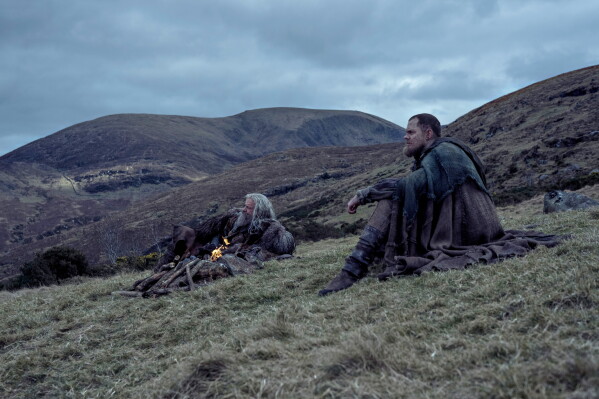
Along the way, he encounters people affected by his slicing and dicing: Arthur (Noah Jupe), a young man seeking revenge for his slain family; his longtime friend Little John (Bill Skarsgard), now a family man calling himself Edward, who wants Robin’s help in a vicious attack; and little Margaret (Faith Delaney), a traumatized orphan who latches on to him.

Grizzly and growling, Jackman’s sullen Robin is without aspirations. While enacting vengeance at Little John’s coaxing, Robin is gravely injured. He wakes up in the Priory of St. Clement, being nursed by Sister Brigid (Jodie Comer), an angel of mercy, calls himself Randolf.

Forget every screen incarnation, from silent swashbuckler Douglas Fairbanks in 1922 to Taron Egerton as a gritty Robin of Loxley in 2018, with Errol Flynn, Sean Connery, Kevin Costner, Russell Crowe, Cary Elwes, Disney animation and even Frank Sinatra as “Robbo” in a Rat Pack musical comedy in between.

While Tony Award winner and Oscar nominee Hugh Jackman has carried big-themed films before, playing an introspective elder confronting his ghosts is quite a departure from the superhero Wolverine and musical icons Jean Valjean, P.T. Barnum and Neil Diamond that he’s known for, although one can point to “Logan” for another tough-guy reflecting on his mortality.
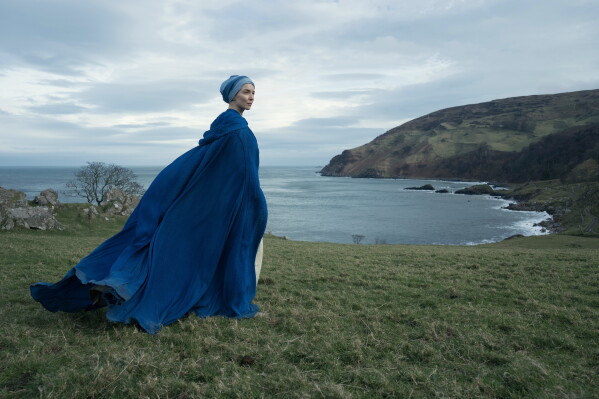
Emmy and Tony Award winner Jodie Comer lends a quiet strength to Sister Brigid, a kind, caring woman who believes in the good, and devotes her life to the afflicted and orphans.

Sarnoski employs such a top shelf cast that you want to care about their characters, but drawn only as sketchy outlines, it’s difficult to be convinced of this slow story’s merit.

Heralded for his outstanding debut feature, “Pig” in 2021, Sarnoski followed with a fine studio blockbuster, “A Quiet Place: Day One,” in 2024. Now he is poised to be one of A24’s arthouse darlings.

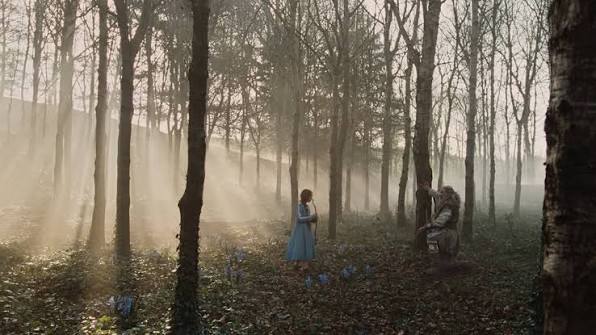
In his grim re-imagining, Sarnoski focuses on moody misty landscapes, terse dialogue and shocking violence. His reinvention is in the same vein as David Lowery’s “The Green Knight” and Robert Eggers’ “The Northman.”

The austere elements are visually interesting– cinematographer Pat Scola and production designer David Lee captured the harsh Northern Ireland landscape, contrasting it with the safe space of the monastery. But Sarnoski’s philosophical approach is one-note, that somber ambience soaking this plodding adventure.
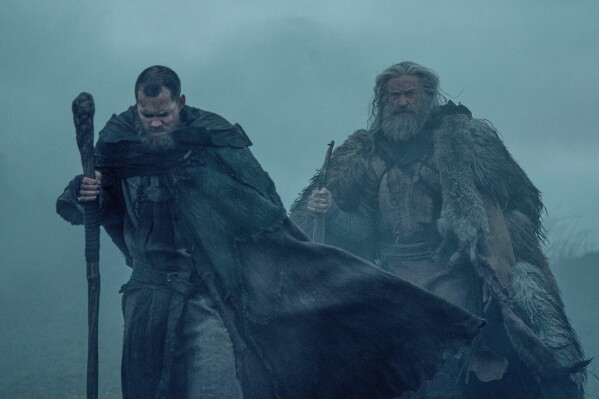
A distinctive element is the mournful score composed by Tony Lewis and folk singer Jim Ghedi that is haunting throughout the film’s 122 minutes.

Sarnoski has decided that backstories are not necessary, so there’s no evidence of a kinder, gentler swashbuckler hardened by his brutality. No mention of the Crusades or Sherwood Forest, or the cruel corrupt monarchy (Prince John and his henchman Sheriff of Nottingham and Sir Guy of Gisbourne) that spurred the Robin Hood saga in the Middle Ages.

Supporting players arrive, merely trying to survive the harsh conditions. This is mud, blood, slings and arrows – an eye for an eye.

At the monastery, one of the castoffs is a compassionate bandaged leper played by Murray Bartlett, Emmy winner as resort manager Armond in the first season of “White Lotus.” He dispenses hard-fought wisdom and seems to pierce Robin’s impenetrable demeanor, as does Sister Brigid and young Margaret.
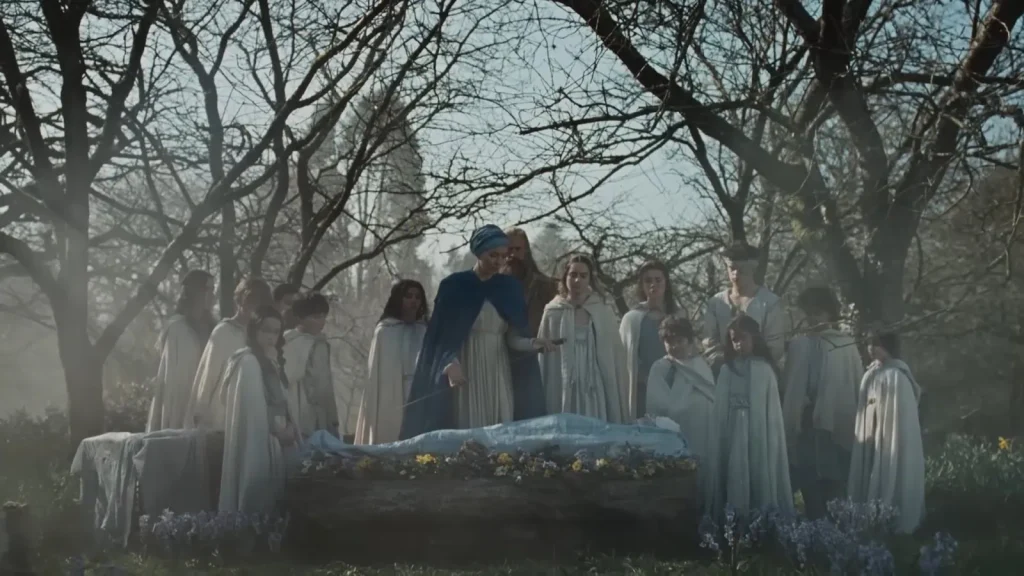
The leper encourages Robin to let go of his violent past and become part of the sanctuary community. But is he too late for salvation? In theory, this moral dilemma sounds interesting, but its subdued execution makes this film tough to embrace. And the hushed, mumbling delivery of all characters, with dialects, makes understanding the exposition even harder.

Sadly, “The Death of Robin Hood” is more a desolate dirge than a profound philosophical statement.

“The Death of Robin Hood” is a 2026 action-drama written and directed by Michael Sarnoski and starring Hugh Jackman, Jodie Comer, Bill Skarsgard, Murray Bartlett, Noah Jupe and Faith Delaney. It is rated R for strong bloody violence and the runtime is 2 hours, 3 minutes. It opens in theatres June 19. Lynn’s Grade: C-

By Lynn Venhaus

OK Boomer, this is not your generation’s “Camelot.” And this modern fresh spin on the fabled Arthurian legend is exhilarating.

For fans of the 1960 original – which has been revised multiple times through the years – rest assured that the lush romantic score, with lyrics by Alan Jay Lerner and music by Frederick Loewe, is elegantly executed and unforgettable.

Music Director Abdul Hamid Royal, who did outstanding work last year on “Smokey Joe’s Café,” makes sure the new orchestrations by Steve Orich are luxurious.

You’ll recognize the principal characters and knights’ tale of chivalry from the previous eight productions staged at the Muny, the last one in 2009. While respecting the legacy, this revamp is inspired, finding shining moments in unexpected ways.

Lilting voices, innovative movements, enchanting performances, adventurous looks, and British folklore told with conviction are lasting impressions. Therefore, embracing the changes is a risk worth taking.

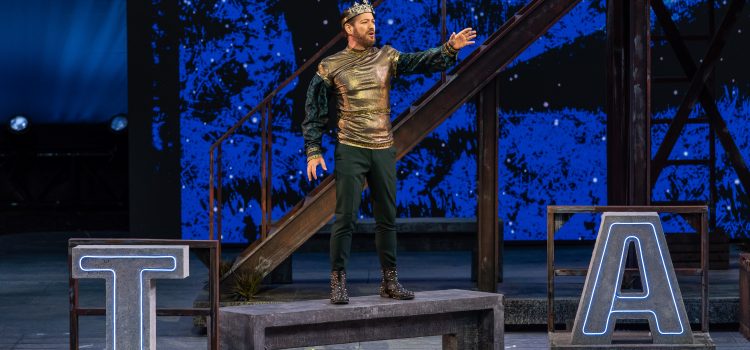
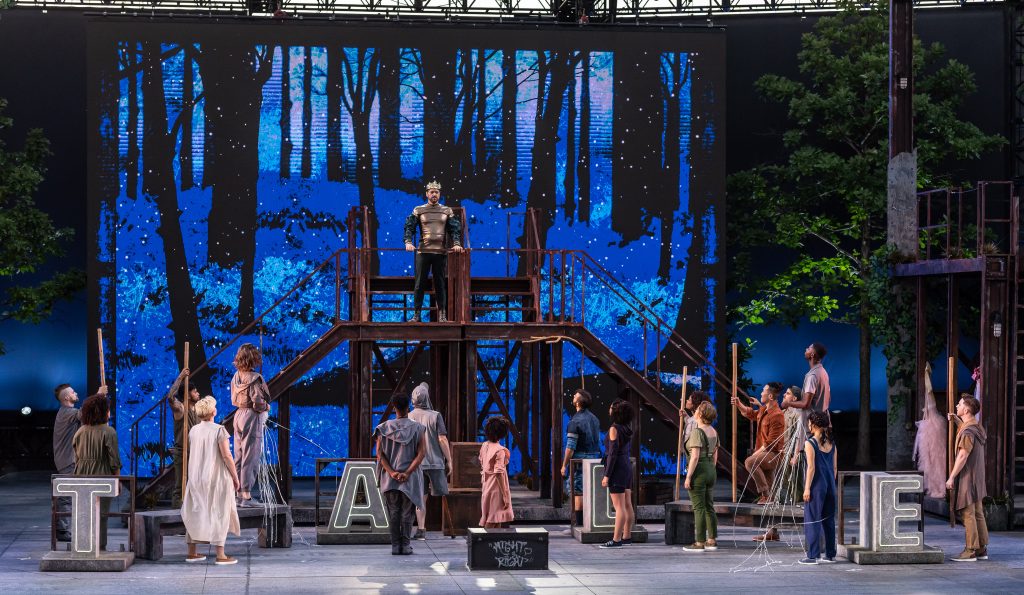
The bold, muscular re-imagining by director Matt Kunkel, and leaner book adaptation by David Lee frame King Arthur’s visionary quest as a performance tale.

The rise and fall of Arthur’s kingdom are told by a troupe of revelers, not unlike the traveling minstrels in a 16th century William Shakespeare comedy.

It is their stylized retelling, not presented as a Merlin flashback.  Lee has cut Arthur’s magician mentor Merlin, only referenced in his dialogue, the song “Follow Me,” and King Pellinore is gone too.

The unnecessary sorceress Morgan Le Fey and her clunky number “The Persuasion” has been removed before, notably from the 1967 film adaptation and the 1980 Broadway revival, so that’s no surprise.

Lee, an Emmy-winning writer of ‘Cheers,” “Frasier” and “Wings,” has strengthened the relationships between King Arthur, Guenevere, and Lancelot. And injected wit where it needed it.

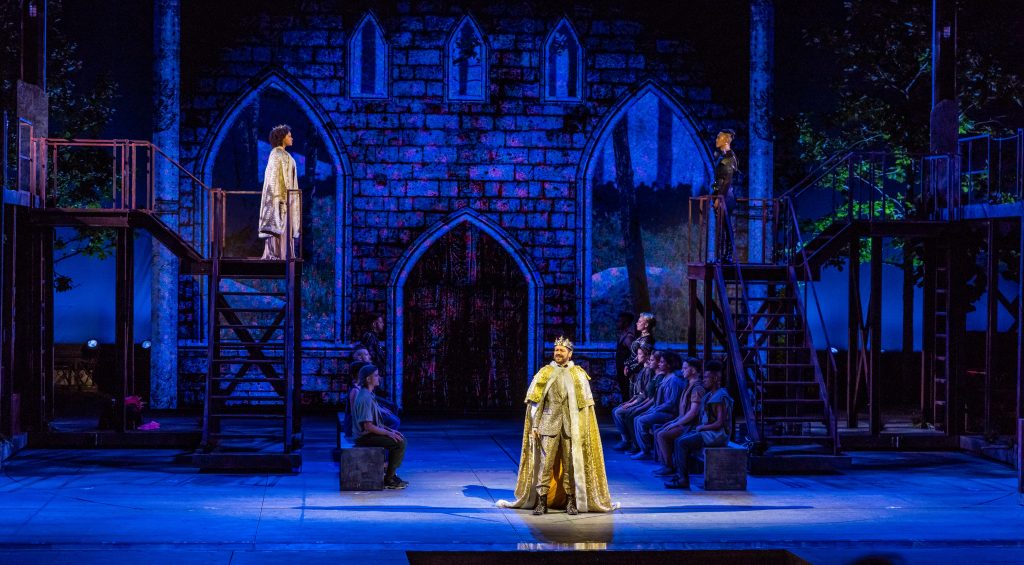
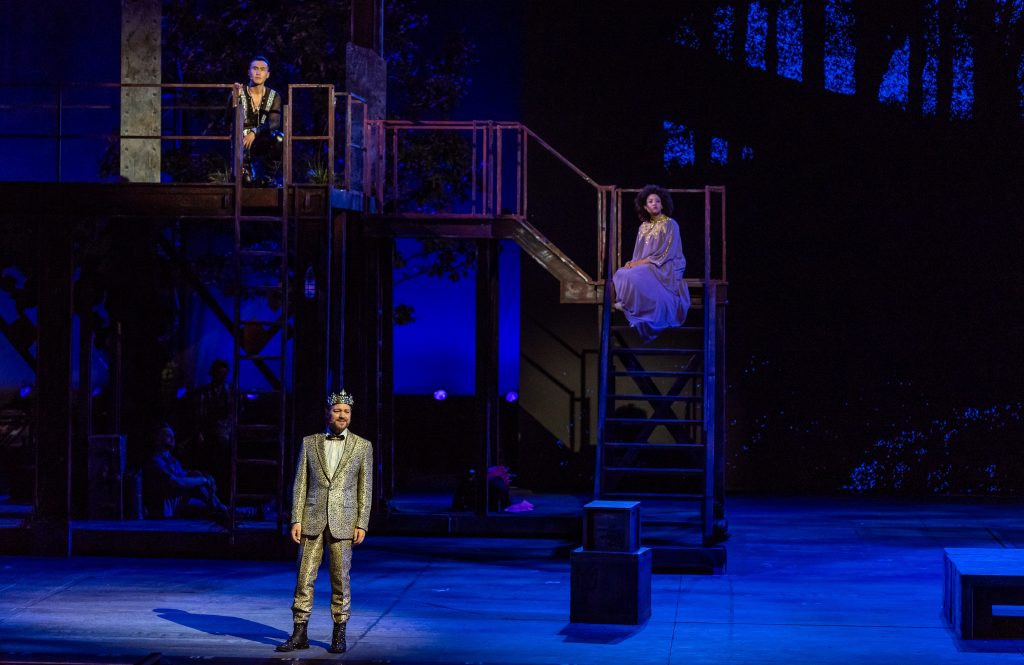
The prose’s power is conveyed in expertly crafted scenes of torment, loyalty, devotion, longing, and love between the principals. Kunkel keeps the pace lively, and the staging dynamic, especially between the trio, creating intimacy and distance by varying different configurations on the tiered set.

Of course, it must be daunting to fill shoes once worn by Richard Burton, who won a Tony as King Arthur, superstar Julie Andrews, who owned the ‘60s as the queen of musicals, and dashing Robert Goulet, whose career skyrocketed after his stunning debut. But lyrically, the Broadway veterans who are now this principal trio are well-suited for the challenge.

As engaging as he was as John Adams in “1776” in 2019 and Dr. Frederick Frankenstein in “Young Frankenstein” in 2016, Robert Petkoff strikes the right tone – from uncertain to courageous – for Arthur’s growth. He’s impressively powerful in ending Act I. His voice is strong and clear, and you feel his passion for his Knights of the Round Table mission.

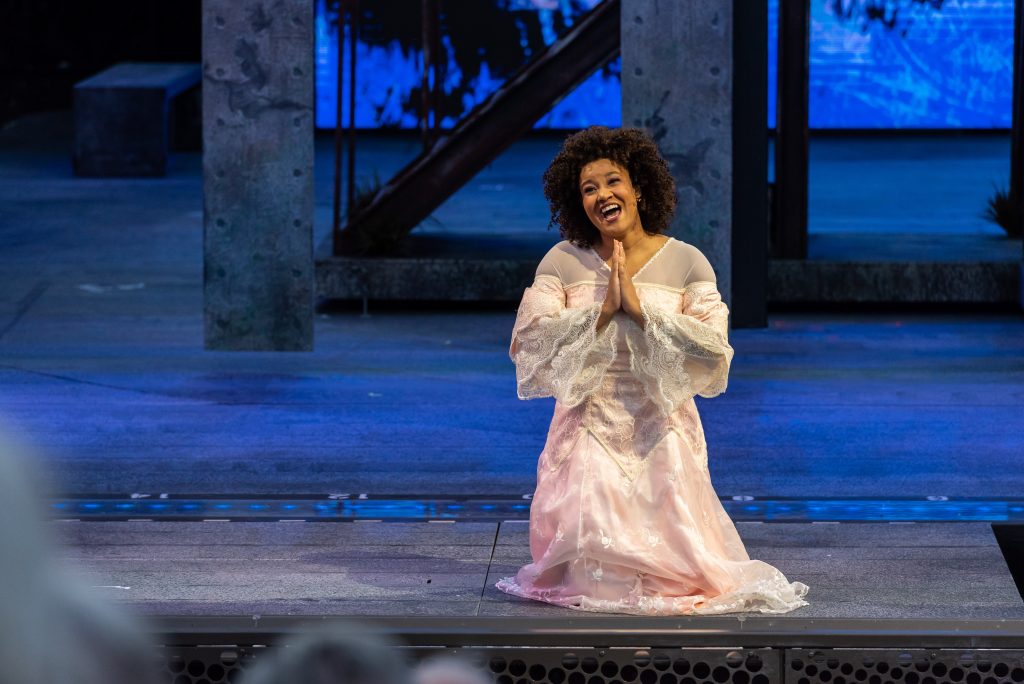
In the first years of their marriage, Petkoff depicts a playful, mutual respectful relationship with his queen, Guenevere, and Sheeren Pimentel, showcasing an exquisite soprano, plays the grand lady as an outspoken equal. They’re lively together in “What Do the Simple Folk Do?” and their initial meeting is charming.

How can you not be swept away by Arthur’s description of his paradisal home, “Camelot”?

His vision is to uphold honor and justice, but not pillage for power. And he convinces others to join his noble cause, with “Might for Right” a rallying cry.

After Guenevere and Lancelot are helpless to ignore their growing feelings for each other, Pimentel soars in “Before I Gaze at You Again” and “I Loved You Once in Silence.”

You might not feel the lightning bolt attraction between Pimentel and Brandon S. Chu, but their vocal virtuosity helps propel the story. Chu doesn’t have the typical stature of a swaggering, very self-confident Lancelot, but the delivery of the signature song, “If Ever I Would Leave You” – is a definite “Wow.” His crystal tenor is piercing.

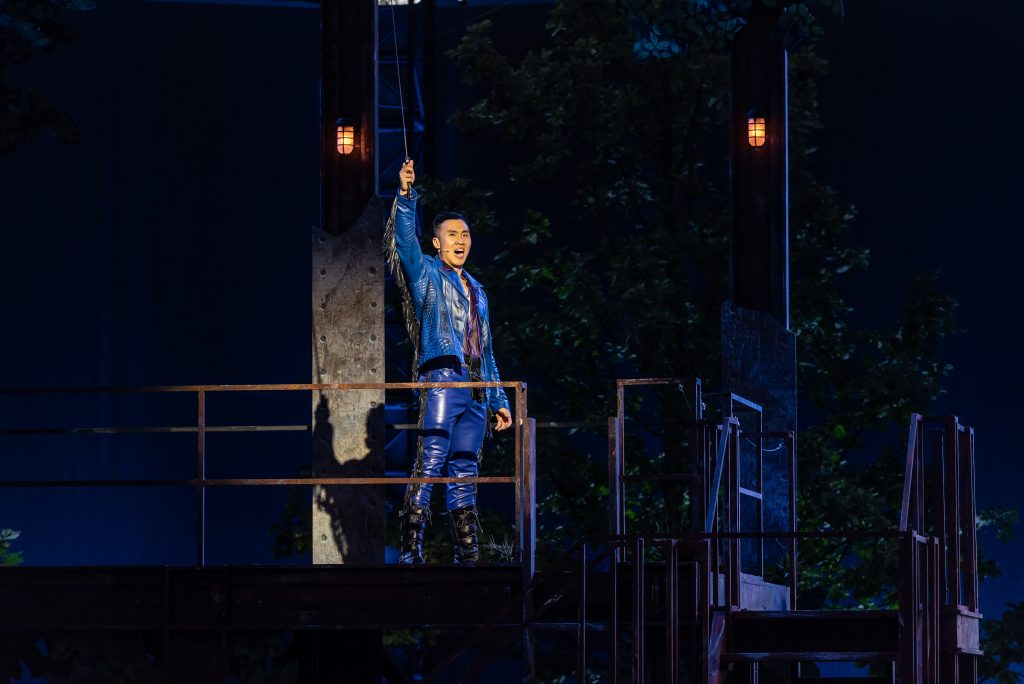
Chu, rocking the blue leather, is fierce in battle, and his physicality is a plus in the frenzied action sequences. Pimentel demonstrates her mettle, too, as Guenevere fights off the first wave of captors.

Fight choreographer Erik Gratton has effectively staged smooth action scenes without any fussiness. He was assisted by fight captain Jacob Guzman, and the precise movements are robust.

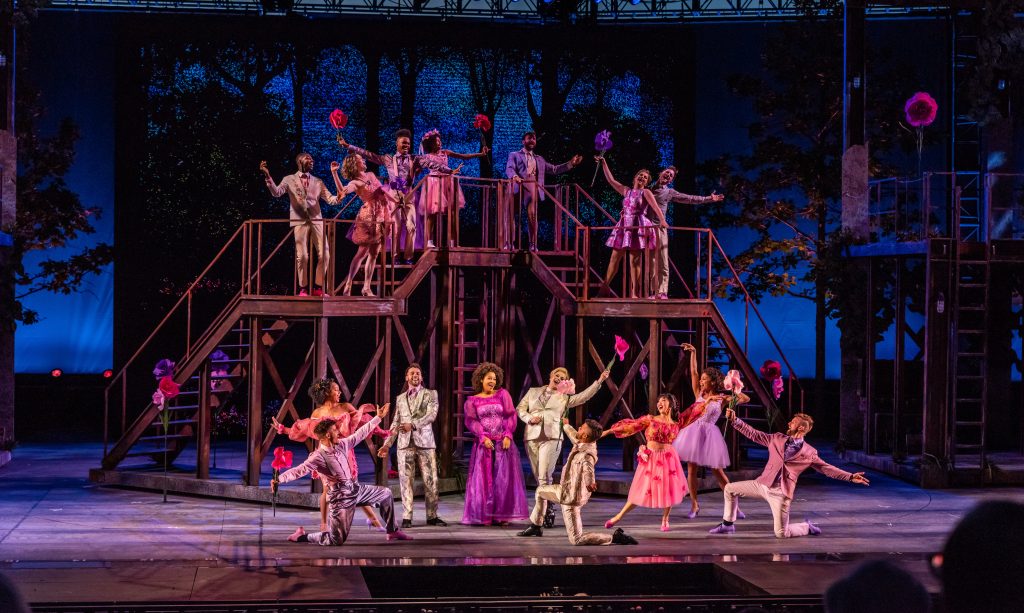
The cinematic leather-and-lace look is another important aspect, and Tristan Raines’ costume design has elements of Game of Thrones, Mad Max, boy band outfits, and dancewear combined for a vivid tableau. He has dispensed with tights and armor — and given serious thought to more summer-friendly garb.

That aids character movement considerably, for the revelers and courtiers can re-enact battles and seamlessly ramp up the palace and political intrigue.

The vitality bursts through, for the energy of this diverse and inclusive cast is noteworthy. And let’s not forget that fun is a part of the show, too.

One of the merriest high points is “The Lusty Month of May” ensemble number, bursting with bright colors and a magical transformation, showcasing the creative minds of Raines, costuming his sixth show at The Muny, and choreographer Beth Crandall, who has teamed with director Kunkel on last year’s “The Sound of Music” and “Matilda” in 2019. Their collaboration is a fruitful one.

But alas, the empire is not built for endurance. Something wicked this way comes in the second act, when Arthur’s conniving illegitimate son, Mordred, arrives, played with diabolical glee by Barrett Riggins. He’s a recognizable toad with mischievous intent to incite, leading the cast in a spirited “The Seven Deadly Virtues.” He divides the court through innuendo and misinformation, a cancer on Arthur’s reign.

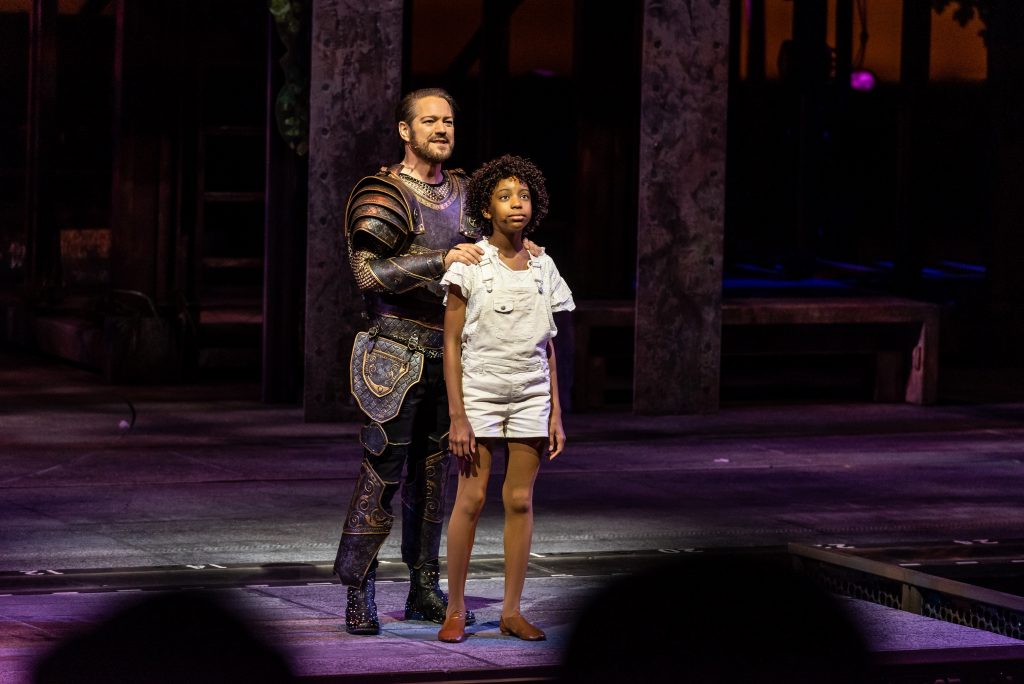
The splintered knights grow angrier in the emphatic “Fie on Goodness,” a rebuke of Arthur’s principled ideals. With the Round Table broken and relationships in tatters, a forlorn Arthur ultimately forgives. He is given hope through the eyes of a child, believed to be Sir Tom of Warwick, captivatingly played by a charming Riley Carter Adams, and her wide-eyed enthusiasm is contagious.

Do not expect any kind of accent to be discernable here, in case you are waiting for it.

The ancient mythology setting is visually reworked with a striking scenic design by Ann Beyersdorfer – an earthier palette instead of regal trappings.

The neo-medieval realism is further enhanced through atmospheric video work by Kaylee Loera, best used to show the joust action between Lancelot and Sirs Dinadin (Evan Ruggiero) and Lionel (Daryl Tofa), and Ser Sagramore (Sarah Quinn Taylor).

The lighting design by Shelby Loera, who returns after making history last summer as the first female to be in charge of lighting a show at the Muny, is stunning. The sound is perfect as well, with John Shivers and David Patridge excelling in this show.

The opting for grit over opulence is jarring to traditionalists, who want their “Camelot” to be the sentimental journey they remember. Change is challenging, to be fair. I’ve often thought the old book was too lumbering and dense. All those soliloquys! So I was fine with the slicker adaptation.

Boomers are intrinsically linked to the JFK mythology, as he was assassinated on Nov. 22, 1963, and in an interview in December in “Life” Magazine, his widow, Jackie, said the original cast recording of “Camelot” was a favorite of her husband’s, and he liked to listen to it before bedtime.

The show was then on a national tour, and a grief-stricken nation clung to the imagery of an especially hopeful time tragically cut short. His presidency has been referred to as “The Camelot Era,” and the lyric “One brief shining moment” used to define that fleeting period.

Expectations always run high, as musicals are very personal to people. What is someone’s favorite, such as “Cats,” can be annoying to another, and so on — we could go down a very long list.

I have fond memories of seeing Richard Harris play King Arthur on the Muny stage and with Robert Goulet, who filled that role on a national tour at the Fox. But those are long ago in the rearview mirror.

The planned revival, set for Broadway later this year, is to feature a book by Aaron Sorkin and direction by Bartlett Sher, so it will be interesting what the wunderkinds reimagine. Previews are expected in November, with opening Dec. 8. (Sorkin and Sher teamed up for the “To Kill a Mockingbird” reboot in 2019, which was one of the best productions I’ve ever seen, so I’m ready to see how they view this classic).

Fantasy gives more leeway to storytellers, after all. “Camelot” itself is based on the 1958 book, “The Once and Future King” by T.H. White, but this production also references Thomas Mallory’s “Le Morte d’Arthur” from the 15th century and Alfred Lord Tennyson’s “Idylls of the King” in the 19th century.

In Tennyson’s 12 narrative poems, published between 1859 and 1885, he retells the legend, the Knights of the Round Table, Guenevere and her betrayal.

The based-on folklore setting is typically around the 12th century, during the Middle Ages. Arthur’s realm is said to have taken place in the fifth century, after he defeated the Saxons.

The facts surrounding the Arthurian Legend – long revered for its golden age of peace and prosperity — have been disputed for years. But the inaccurate historical context hasn’t halted the mythology furthered by literary conventions. (Who remembers Disney’s 1963 animated film “The Sword in the Stone” during childhood?).

In this post “Hamilton” world, artists will keep pushing the envelope, and what audiences push back on will be varied. I thought on a gorgeous summer evening (Thursday, June 23), Forest Park could not be a more congenial spot to continue the Muny’s happily-ever-aftering here.

As the Muny moves forward in this second century, it is ever mindful of an obligation to art, entertainment, artists, and audience. That’s a tough balancing act sometimes, but I’m confident in the way they are leading into the future with dedicated purpose. And that music was sure persuasive under the stars.

The Muny presents “Camelot’ each evening from June 22 to June 28 at 8:15 p.m. on its stage in Forest Park. For more information, visit www.muny.org. For tickets, contact the Muny box office or visit Metrotix.

Photos by Phillip Hamer