By Alex McPherson

Stunning, beguiling, and wholeheartedly its own thing, director David Lowery’s “Mother Mary” is a polarizing experience where pretentiousness is part of the charm.

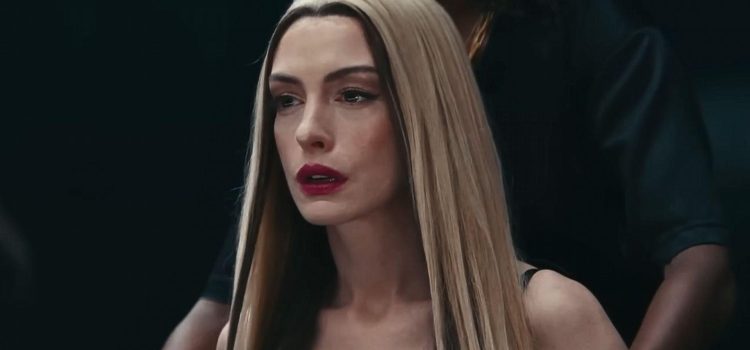
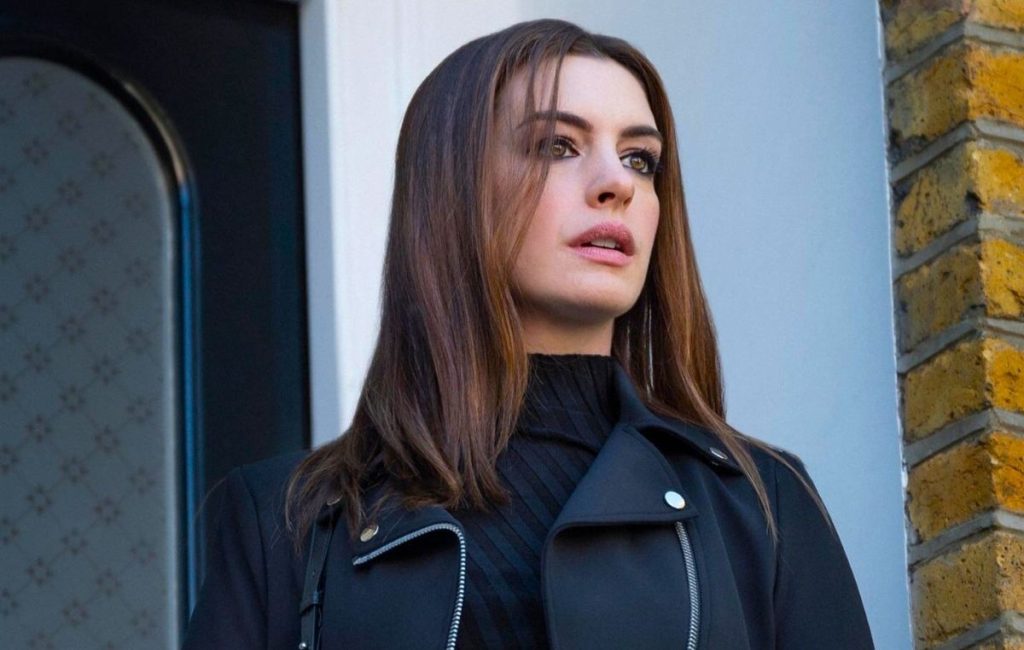
This gothic-horror-romance-pop-song-chamber-drama follows the titular Mother Mary (Anne Hathaway), a world-famous, Taylor-Swift-adjacent popstar preparing a comeback tour after she experiences a harrowing onstage accident that we get a split-second glimpse of in the film’s opening moments.

Mary is exhausted and a hollowed-out shell of her former self. She has a panic attack during a costume fitting and rushes to the English countryside to make a surprise visit to her former best friend and costume designer Sam Anselm (Michaela Coel). Sam harbors palpable resentment after being ghosted (no pun intended) 10 years ago. 

Mary is desperate for Sam to make her a dress for the tour so she can “be herself” and find “clarity.” Sam — with a prickly, slyly wolfish demeanor — agrees to take on the challenge. She also sees an opportunity for Mary to address past wrongs in their professional and personal relationship.
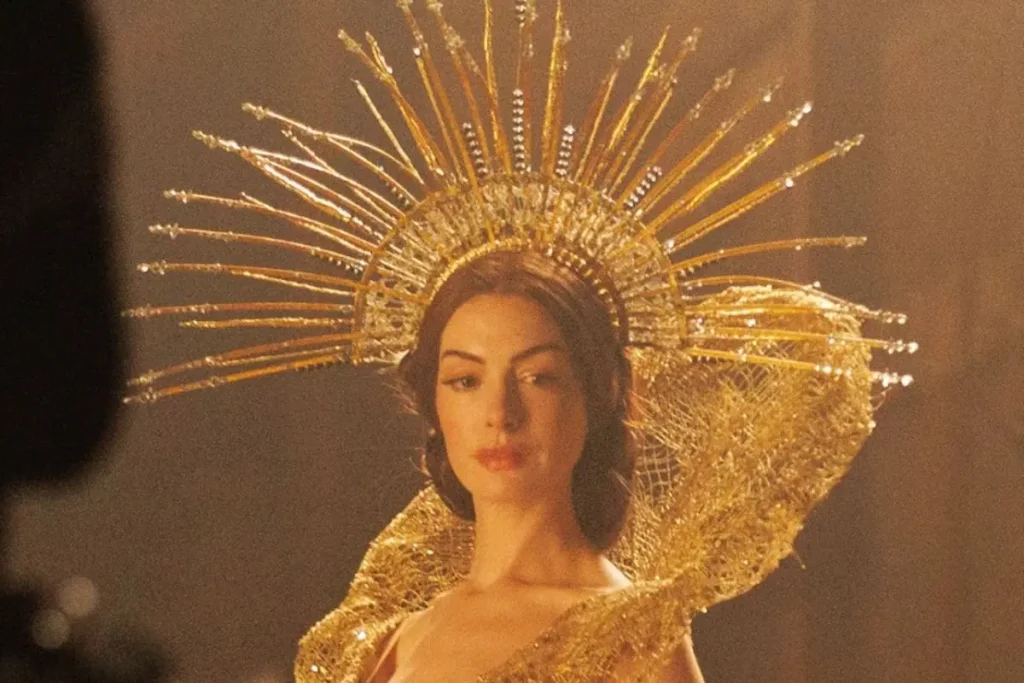
Within a foreboding barn-turned-workshop, Sam and Mary get to work, with Sam gradually unspooling years of resentment. Social niceties give way to daggers (and scissors) as the two confront the end of their creative partnership:

Sam’s tireless work to support Mary’s celebrity persona has largely gone unrecognized; the pressures of fame and of constantly being in the spotlight have taken a massive toll on Mary’s psyche and eroded her sense of self. Still, there’s work to be done and a deadline to meet. At least, until things get trippily metaphysical.

Yep, this is definitely a film by the director of “The Green Knight” and “A Ghost Story.” It floats along on its own visually astounding wavelength that never loosens its grip on its insistence for weirdness.

“Mother Mary” is ultimately a difficult experience to pin down — unimpeachable in its craft elements and its central performances, but strangely simplistic in what the narrative boils down to: a whole lot of stylistic extravagance for a story whose emotional beats feel oddly schematic.
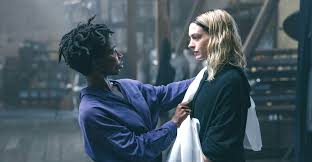
Still, Lowery’s latest is a bizarre experience made with such conviction that even when the story’s reach exceeds its grasp, the mesmerizing, phantasmagorical, genre-bending style never loses its impact. “Mother Mary” demands to be watched on the big screen.

It’s filled with gorgeous costumes, eardrum-busting concert numbers (featuring songs by Jack Antonoff, Charli XCX, and FKA Twigs), intensely intimate drama, gnarly horror, and spectral beauty, where the past elegantly blends with the present. 

The shadow-drenched barn becomes a portal to Mary and Sam’s history and imaginations, where their spiritual connection to each other is realized in ways both deeply earnest and unnerving. “Mother Mary” renders the force between the women literal as they each grapple with the weights of their connection and regrets; Daniel Hart’s score’s pulsing bass resembles a beating heart.

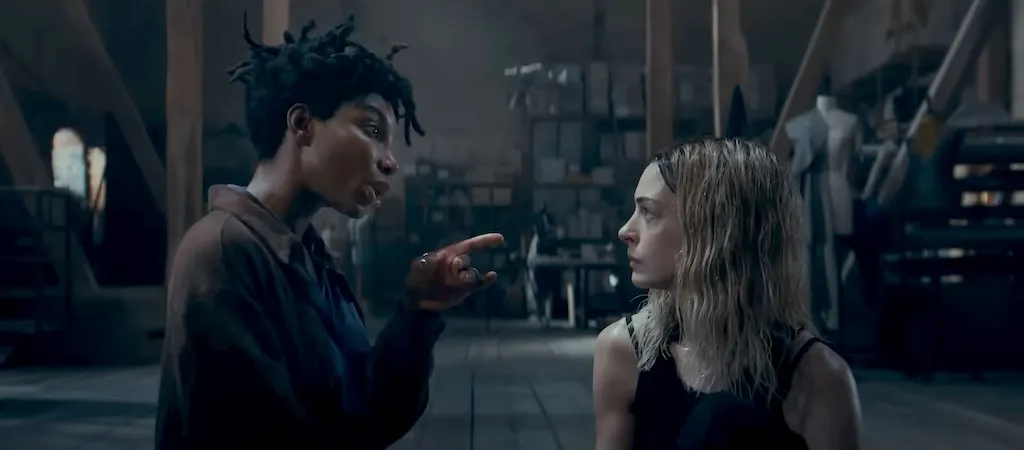
Hathaway and Coel are wholly up for Lowery’s wild swings, with Coel in particular commanding her every second onscreen. Cinematographers Rina Yang and Andrew Droz Palermo often frame her in close-up;
Coel’s face almost seems alien at times, her character’s sharp features, deep voice, and acid tongue intimidating and imposing (and sometimes darkly funny), although Sam herself is a heartbroken soul searching desperately for closure. 

Hathaway gives an equally excellent performance as the tormented celebrity. We see the years of expectations and regrets weighing her down, and her embracing a completely different persona onstage amid blinding lights and screaming fans.

One of the film’s best sequences involves Mary showing Sam her dance routine without music — monstrous and animalistic, hinting at the film’s increasingly supernatural influences.

It’s frustrating that “Mother Mary” doesn’t make the characters’ journeys quite as resonant. Indeed, while the film is – mostly – enigmatic to its benefit, Mary and Sam are too thinly-sketched as characters for their relationship to have the emotional thrust “Mother Mary” insists it does.
The main appeal is seeing just what elaborately hallucinatory set-piece Lowery has in store next, rather than investment in their (bluntly-spelled-out) inner battles. The film is so sincere, so earnest, about matters of the heart, but it opts for spectacle, which betrays the more nuanced drama that would truly let viewers into Mary and Sam’s worlds.

So, “Mother Mary” is a bit of a mixed bag, albeit one that deserves to be celebrated nevertheless — creativity and eccentricity like this should be supported, whether or not it fully lands. It’s a beautiful mess.

“Mother Mary” is a 2026 dramatic music thriller written and directed by David Lowery starring Anne Hathaway, Michaela Coel, Kaia Gerber, Hunter Schafer. and FKA twigs,, Its runtime is 1 hour, 52 minutes, and it is rated R for some violent content and language. It opened in theatres April 24. Alex’s Grade: B+.

By Lynn Venhaus

Another disappointment among Disney’s increasingly lackluster live action reboots of their classic animated films, “Peter Pan and Wendy” lacks imagination in its re-imagining.

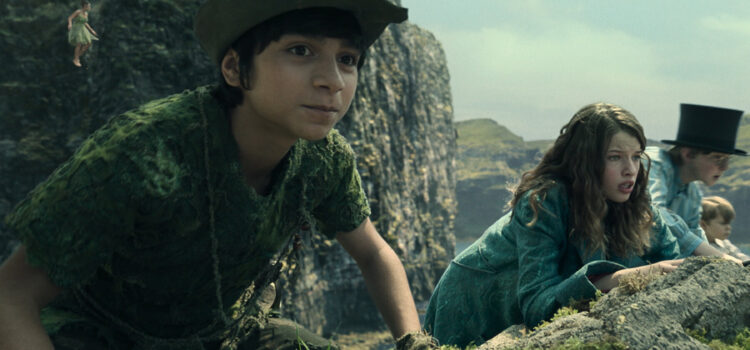
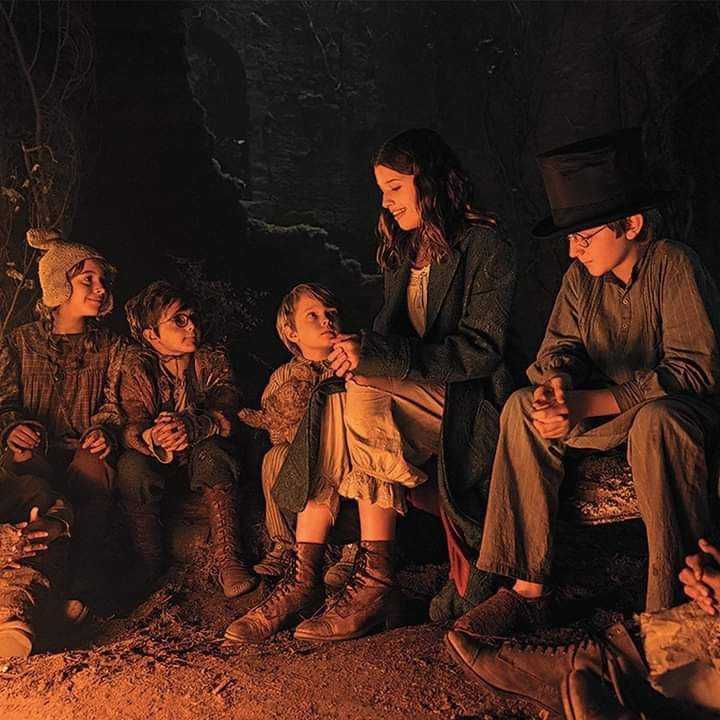
Based on J.M. Barrie’s 1904 play/novels and Disney’s 1953 animated movie, this latest version is about Wendy Darling (Ever Anderson) meeting Peter Pan (Alexander Molony), a mischievous boy who refuses to grow up. Along with her brothers John and Michael (Joshua Pickering, Jacobi Jupe), she travels to Neverland with Peter and a tiny fairy, Tinker Bell (Yara Shahidi). There, she encounters an evil pirate, Captain Hook (Jude Law) and other dangers.

Those looking for a nostalgic experience, recalling favorite versions, may wonder what’s the point of a grittier straight-to-streaming film after watching the live theatrical versions on TV, on stage, on ice, in cartoons, and countless movies from a silent era one to a 2003 Australian remake, with “Hook” sequel (1991), “Pan” (2015), “Wendy” (2020), and even the comedic spin in “Chip ‘n Dale: Rescue Rangers” (with Will Arnett as “Sweet Pete”) in the canon.

With so many different takes on “Peter Pan” already, did we need another revision? I am not sure who this film is really for, who is the targeted demographic?

Still set in Edwardian England, director David Lowery, who co-wrote the screenplay with Toby Halbrooks, has refreshed the cast with diverse characters, including girls added to the “Lost Boys” and an empowered Wendy, a welcome contemporary upgrade. They have omitted troubling language and those awful Native American stereotypes from the Disney animated film.

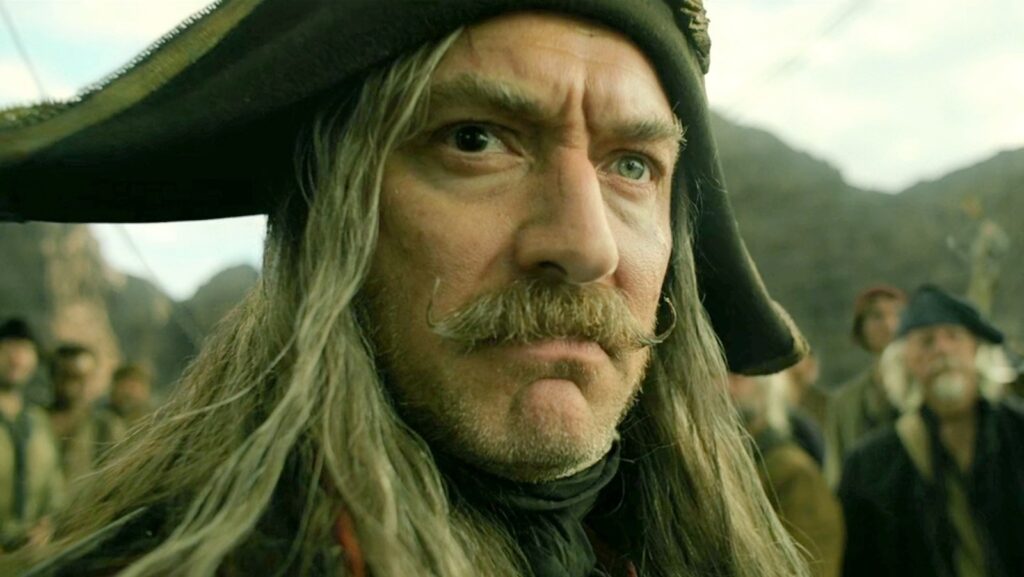
Jude Law as Captain Hook

However, the story is a puzzling mix of plot origins, new unnecessary backstories and deleting character traits and motivations. For instance, Tink is no longer jealous of Wendy, Captain Hook has something to do with Peter’s past, and Mr. Darling is not the same actor playing the captain either.

Disney regular Alan Tudyk is the stuffy dad while Jude Law is the unpleasant ill-tempered Captain, devoid of swagger, less campy rogue. He comes across as a sociopath who preys on children, not as a buffoon. It’s a curious portrait.

Lowery, known for his distinct character studies on human frailties (including “A Ghost Story,” “The Green Knight” and Robert Redford’s last film “The Old Man and the Gun”), remade “Pete’s Dragon” into a live action version in 2016, but otherwise would not be a first choice to insert whimsy into a fantasy adventure.

Despite the spectacular visual effect of turning Captain Hook’s pirate ship around in mid-air, using Tinkerbell’s pixie dust, the movie is woefully short on magic. The massive crocodile’s CGI terror reign is dialed to 11 and may scare young viewers.

The use of the Faroe Islands as Neverland is interesting, and there’s plenty of craggy rocks to explore, with Tiger Lily galloping on her horse for more natural interactions.

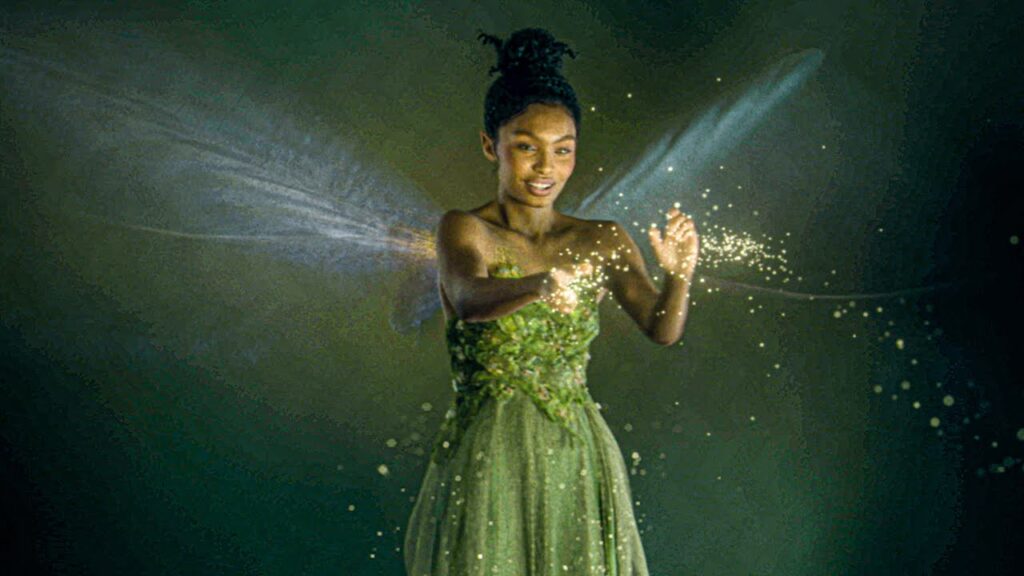
Yari Shahidi as Tinkerbell

It starts promisingly, for Wendy doesn’t want to go to boarding school and is having fun with swordplay with her two younger brothers, and they are swept away far from the comforts of home.

But the movie fumbles in trying to keep that momentum going, bogged down in realistic, anxiety-producing predicaments. Even comedian Jim Gaffigan as Smee can’t liven the proceedings.

Surprisingly, Peter Pan himself is a far less appealing character than usual, with not so much energetic bravado, but sulkier. (And really, is arrested development all that attractive?) Alexander Molony is the leader of the Lost Boys, his inexperience as an actor evident.

Wendy is far spunkier. As played by Ever Anderson, the mini-me daughter of actress Milla Jovovich, she is assertive and plucky, and not going to let the boys have all the fun.

The females fare better than the guys, for Yara Shahidi is a sparkling fairy as make-things-happen Tinkerbell, and Alyssa Wapanatâhk is a feisty Tiger Lily.

Inevitably anchored to the origin story, “Peter Pan and Wendy” doesn’t break from the mold in a satisfying way, and fails to maintain interest through its 1 hour, 46 minutes run time.

“Peter Pan and Wendy” is a 2023 fantasy-adventure directed by David Lowery and starring: Jude Law, Alexander Molony, Ever Anderson, Yara Shahidi and Jim Gaffigan. It is rated PG for violence, peril, and thematic elements and the runtime is 1 hour, 46 minutes. It began streaming on Disney Plus on April 28. Lynn’s Grade: C-

By Alex McPherson
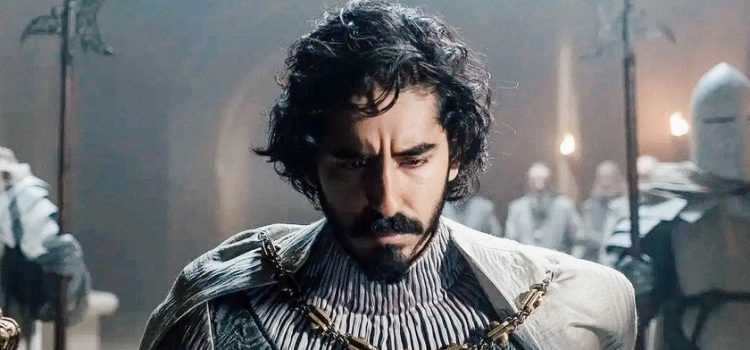
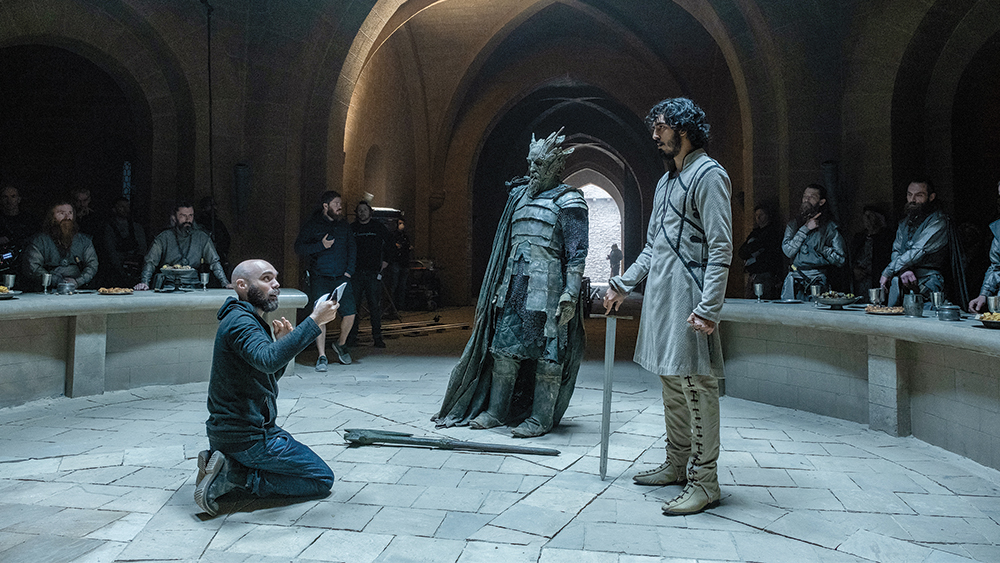
Based on the 14th-century Arthurian tale “Sir Gawain and the Green Knight,” director David Lowery’s film, aptly titled “The Green Knight,” is an impeccably constructed fantasy epic with bizarre imagery and dense themes begging to be mulled over for years to come. 

The story begins in Camelot, with Gawain (Dev Patel), an aimless young warrior and nephew to King Arthur himself (Sean Harris), getting the chance to finally give his life purpose beyond drinking and cavorting his days away. During a Christmas gathering, the aging King and his wife, Queen Guinnevere (Kate Dickie), draw attention to the fact that Gawain doesn’t have any stories to tell — not yet, at least — and a mysterious, bark-covered giant shows up, calling himself the Green Knight (voiced by Ralph Ineson with imposing gusto).

The gritty medieval Groot offers a challenge to the Round Table — he will allow anyone brave enough to strike a blow against him, so long as they agree to receive the same treatment in one year. Gawain, careless as ever and wanting to impress his company and his suspicious mother, Morgan Le Fay (Sarita Choudhury), agrees to the challenge when nobody else will, promptly decapitating the Knight. He immediately regrets his decision, as the Knight, holding his severed head, gallops away on his horse laughing maniacally. In one year, Gawain must complete his end of the agreement. Oops. 

The clock begins ticking, and once the year passes, Gawain sets out on his journey across a fantastical land to reach the Green Chapel and fulfill his pact. Unsurprisingly, the quest is grueling, and the self-doubting Gawain encounters a variety of strange entities — mischievous themes, a mournful spirit, and a fox companion, among others — that require him to confront his supposedly heroic ideals and his own mortality in the pursuit of becoming a legend. 

Absolutely brimming with cinematic artistry and featuring a magnificent performance from Dev Patel, “The Green Knight” won’t appeal to viewers seeking a more traditional, action-packed epic that spoon-feeds them what to think or how to feel. Rather, Lowery’s masterpiece embraces all the sensory qualities of the film medium to fully transport viewers into Gawain’s journey, which winds up being far more existential than some viewers may be prepared for. There are certainly physical threats to be found along the way, but “The Green Knight” renders most of Gawain’s conflicts internal, as he grapples with his self-imposed burden and slowly but surely grows not only as a warrior, but as a human being, with imperfection to match his courage.

From its opening frames, “The Green Knight” is devoted to walking its own path and being undeniably weird while doing so. There’s tons to feast on stylistically — evocative, period-accurate costuming, lighting that evolves from decorated interiors to fog-drenched forests and blood red lakes, deliciously tactile sound design, and mystical yet lived-in environments, with a score by Daniel Hart fitting for a horror film in its off-kilter, slightly crazed rhythms. All of this is complemented by sweeping, at-times mind-boggling cinematography that flows through the royal interiors and vast landscapes that Gawain traverses, becoming ever-stupefying as Gawain treks onwards, further into his own soul. This is a film that demands to be watched on the biggest screen possible and with limited distractions. 

Of course, Lowery’s film isn’t pure style over substance, and there’s plenty to contemplate in terms of storytelling and characters here. Gawain is a naive and reckless individual who isn’t initially easy to care about but develops in a significant fashion by the end. He’s forced to consider the sacrifices necessary for greatness, the notion of honor itself, and the fallibility of human nature despite illusions of superiority. Like Lowery’s other films, especially “A Ghost Story,” “The Green Knight” is focused on the concept of death, mortality, and Nature’s grip over us all. Indeed, the proceedings are depicted so ambiguously that some viewers may become frustrated with the film’s opaqueness. For this critic, however, the events — especially a nightmarish, darkly poetic sequence late in the film — haven’t left my mind, and keep revealing additional thematic layers the more I ponder them.

Lending “The Green Knight” an emotionally grounded core despite its vagueness, though, is Patel. A subversive casting choice for a story typically dominated by white men, he portrays the warrior’s growing insecurities in a subtle fashion that endears us to him from his first appearance onwards. Alicia Vikander also does excellent work playing dual roles, as Gawain’s lower-class girlfriend, Essel, and as a seductive temptress later on. Ineson, as the Green Knight, is intimidating, but has an aura of warmth and amusing self-awareness nevertheless. Barry Keoghan and Joel Edgerton give memorable turns as a creepy brigand and an uneasily jovial lad that Gawain encounters near the finale. 

There’s a lot to digest once the credits roll — make sure to stay through them —  that I’m eager to dive back into this wondrous, often frightening world to decipher all the symbolism and peculiar characters to unearth more meaning. I haven’t felt this way about many other films released in 2021 so far, but “The Green Knight” stands head and shoulders above most of them in terms of pure intellectual engagement and eye-popping creativity. Cinephiles shouldn’t expect anything less from A24, and viewers should go in knowing that “The Green Knight” engages the mind just as much as the senses, even if multiple viewings are all but required to fully appreciate it.

“The Green Knight” is a 2021 historical drama directed by David Lowery and starring Dev Patel, Joel Edgerton and Alicia Vikander. Rated R for violence, some sexuality and graphic nudity, it has a runtime of 2 hours, 10 minutes. The movie opened in theaters on July 30. Alex’s Grade: A+