
By Alex McPherson

At its best when fully leaning into uninhibited mayhem, director Sam Raimi’s “Send Help” is a knowingly loony, if broad, satire elevated by Dylan O’Brien and a deviously crazed Rachel McAdams.

We follow Linda Liddle (McAdams), a nerdy, socially awkward, yet skilled longtime employee at a consulting firm who — despite being far more knowledgeable at her job than the slick-haired men that surround her — is underappreciated. She doesn’t have many friends and most of her meaningful conversations are with her pet cockatoo.

She’s also a trained survivalist and has recently applied to be a contestant on the reality show “Survivor.” Linda hungers for more recognition, and the company’s CEO Franklin Preston (Bruce Campbell) recently promised her that she’d be Vice President one day. Preston has suddenly passed away, though, and the reins of the company fall to his son Bradley (Dylan O’Brien), who has zero interest in following through on his father’s promise. 
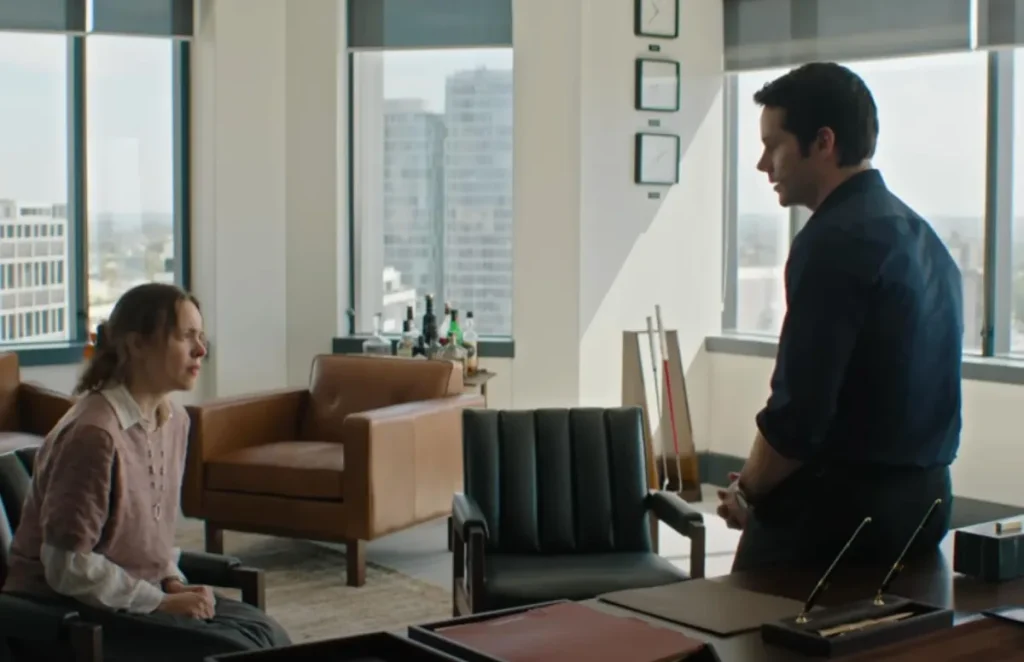
Bradley, pompous and sexist, is repulsed by Linda’s appearance and efforts to assert herself. Instead of promoting her, he installs fellow frat brother and golfing buddy Donovan (Xavier Samuel) as VP. As consolation before firing her for good, Bradley gives Linda one last assignment to “prove herself” by traveling with his boys club to Bangkok to close a major merger — she is an expert number-cruncher, after all. 

While aboard the private plane en route, Linda toils away on a work document. Bradley and his bros are not working; instead they are watching Linda’s “Survivor” audition tape and loudly snickering.

Before Linda finally snaps, a violent thunderstorm sends the plane spiraling into the ocean, killing everyone onboard in gratuitously violent (and, admittedly, quite funny) fashion. Linda barely survives and washes ashore on a nearby deserted island — a prime place to make use of her survivalist skills.

Bradley also survives and washes ashore (with a messed-up leg). Despite continuing to treat Linda terribly, he realizes that he needs her to live. Linda takes almost too much pleasure in this new power dynamic and lifestyle; it’s unclear whether she wants to be rescued at all.

Both Linda and Bradley harbor persistent hatred towards each other despite their burgeoning friendship. As the days pass, tensions escalate, as both of these damaged souls vie for dominance over each other through bloody one-upmanship. 

What begins as a rather tame dramedy evolves into something much gnarlier and more cynical. “Send Help” isn’t a revolutionary film, and it doesn’t have anything particularly incisive to say, but it’s a nasty and enjoyably twisted return to form for Raimi. It wouldn’t work anywhere near as well without O’Brien and McAdams’ sheer devotion to every twist and turn. 

McAdams in particular really sells this heightened premise. Mark Swift and Damian Shannon’s screenplay sends her on quite the journey from meek nerd to resourceful leader to someone who has fully lost her marbles. It’s great fun watching McAdams lean into Linda’s quirks and neuroses, bringing a happy-go-lucky energy that’s just as quick to stab you in the back (or anywhere on the body).

We want Linda to succeed and get her revenge against Bradley, but part of the twisted fun of “Send Help” is exploring just how far she will go, and how long we’re willing to support her along the way.

O’Brien is pitch-perfect as the smug man-child Bradley, who couches nearly every “dialogue” with a patronizing, better-than-thou tone. Swift and Shannon’s script does an excellent job portrayinging the ways that power-hungry bosses treat their employees, making even Bradley’s most callous moments ring true.

Of course, watching Bradley become wholly dependent on Linda for his survival is satisfying; yet, as “Send Help” reiterates repeatedly, there’s no easy way to resolve their deep-seated mutual hatred.

Raimi’s film is difficult to pigeonhole within a single genre. “Send Help” is a playful, tonally-all-over-the-place experience, with elements of classic adventure films (Danny Elfman’s score feels like something from Hollywood’s Golden Age), strange forays into romcom territory, and Raimi’s signature horror flourishes.

It’s an odd amalgamation that doesn’t always work — the beginning, in particular, is far less tightly edited and stylistically engaging than the island shenanigans, and the will-they-won’t-romance that comes into play heads down predictable paths. So, too, does the big “twist,” which waters down some of the film’s more pointed ideas on gender power dynamics for a far more schematic, underwhelming framework.

With Raimi at the helm, you know he won’t hold back on the over-the-top carnage, editing, and camerawork. Bob Murawski’s editing and Bill Pope’s cinematography perfectly complement Raimi’s sensibilities — match cuts, crazy zooms, POV shots of feral boars, it’s all there, along with buckets of goopy gore and a couple of genuinely squirm-inducing moments that are difficult to unsee (literally).

The film just takes a while to get to those “Holy Shit!” moments, spinning its wheels at times repeating the push-pull dynamic between Linda and Bradley, as defenses are lowered and, soon after, raised again. 

But pacing and plotting issues aside, “Send Help” is still a perfect film to watch in a crowded theater, seeing these characters regress as the outside world crumbles around us.

“Send Help” is a 2026 horror film directed by Sam Raimi and starring Rachel McAdams, Dylan O’Brien, Bruce Campbell, and Xavier Samuel. It’s run time is 1 hour, 53 minutes, and it is rated R for strong/bloody violence and language. It opened in theatres Jan. 30. Alex’s grade: B.

By Alex McPherson

Frenetic, scattershot, and thoroughly self-absorbed, director Jason Reitman’s “Saturday Night” might satisfy those nostalgic for the early days of “SNL,” but fails to make a name for itself on its own merits.

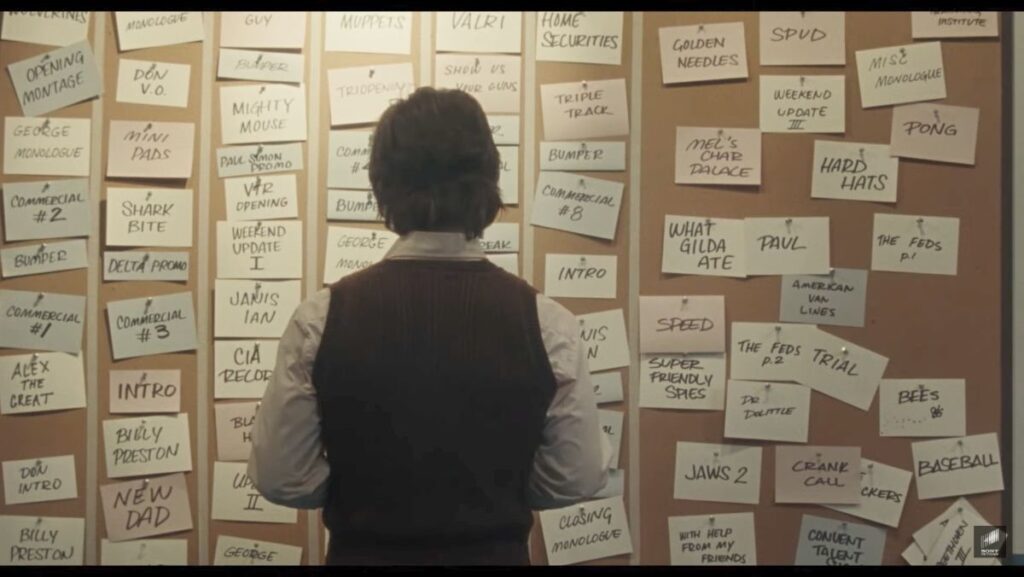
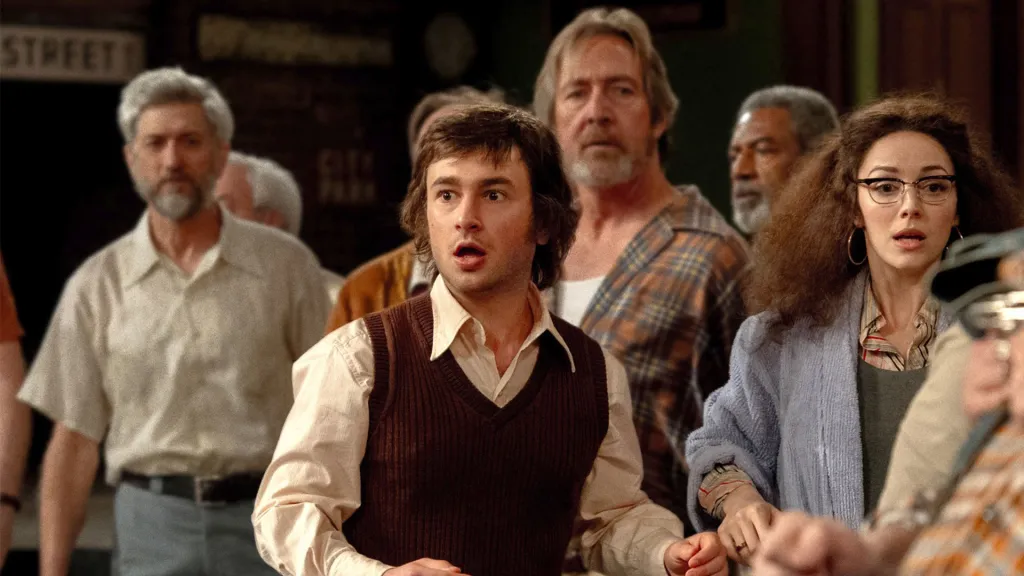
Presenting itself as a fictionalized version of the stressful 90 minutes leading up to the original “Saturday Night Live” (originally called “Saturday Night”) broadcast in October 1975 at Studio 8H, Reitman’s film revolves around Lorne Michaels (Gabriel LaBelle), the show’s executive producer and ringleader. Michaels remains insistent on the show’s potential while having little idea as to what it actually is.

Co-creator Dick Ebersol (Cooper Hoffman) is increasingly worried about how things will pan out, trying to reason with the ever-resistant Michaels as the cramped, claustrophobic halls of Studio 8H buzz with both excitement and growing fears of potentially spectacular failure. There’s also a llama, for some reason.

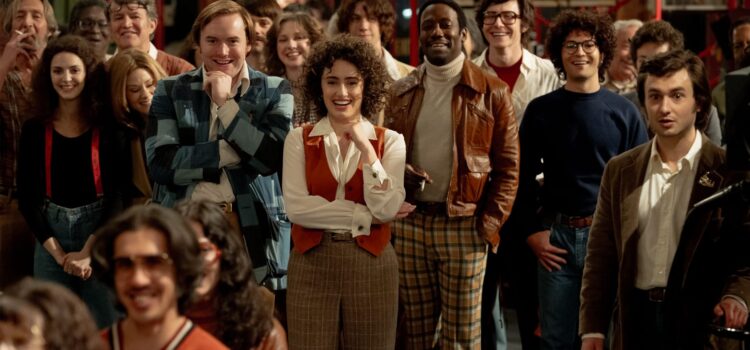
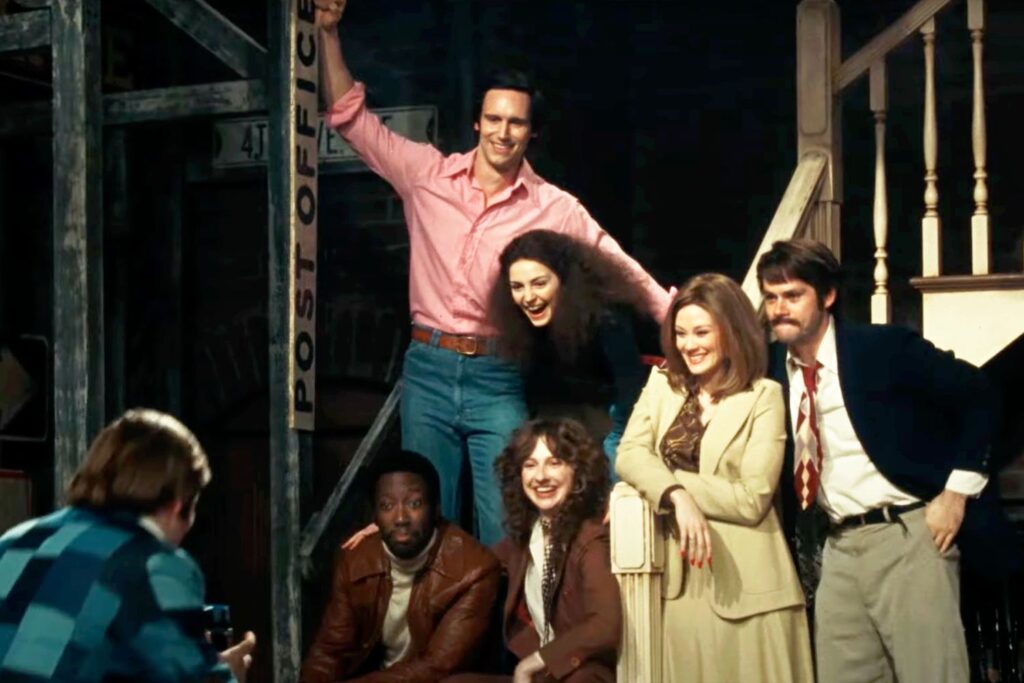
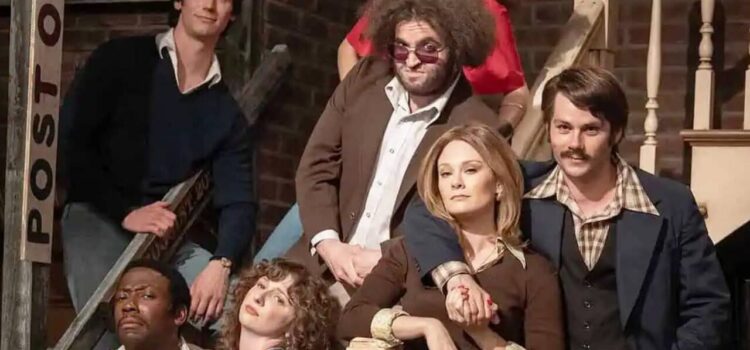
All the while, a group of unruly, up-and-coming comedians — including the arrogant yet charismatic Chevy Chase (Cory Michael Smith), Dan Aykroyd (Dylan O’Brien), Garrett Morris (Lamorne Morris, no relation), John Belushi (Matt Wood), plus several talented women such as Gilda Radner (Ella Hunt), Laraine Newman (Emily Fairn), and Jane Curtin (Kim Matula) that the film mostly treats as afterthoughts — prepare to go on-air, confronting their own mini-crises and doubts as the clock ticks, ticks, ticks toward showtime, and the history books.

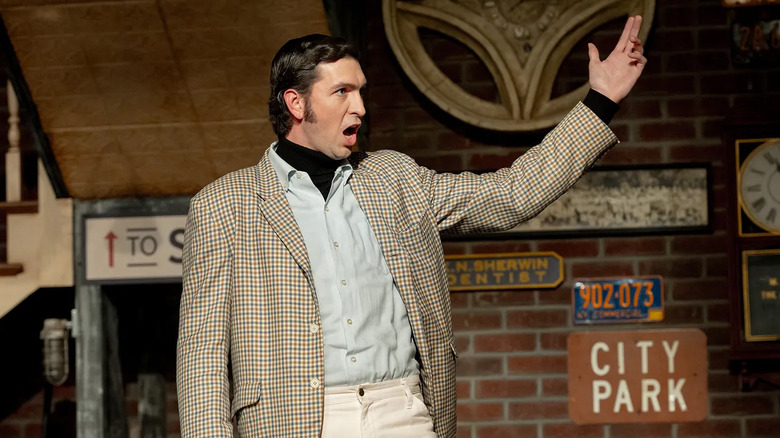
Tempers run hot (the pretentious Belushi and Chase butt heads, and Belushi hasn’t even signed his contract yet), people are stoned out of their minds, lights are falling on-stage, the sound system’s busted, head writer Michael O’Donoghue (Tommy Dewey) is spewing acerbic barbs at anyone and everyone questioning his scripts, and rival late-night host Milton Berle (J.K. Simmons, typically strong) is, quite literally, waving his dong around.

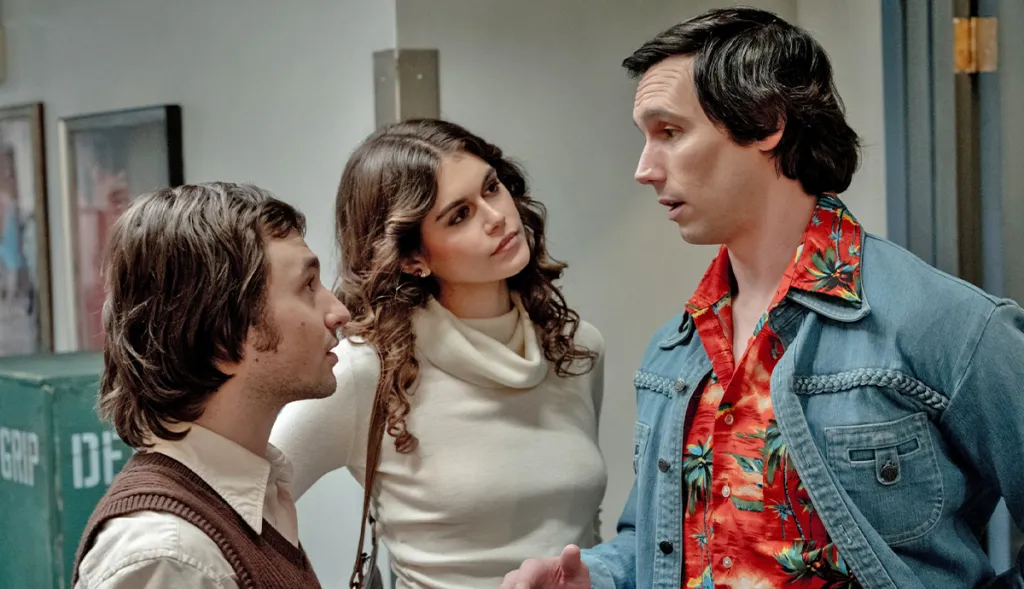
Gabrielle LaBelle, Kaia Gerber and Cory Michael Smith.

NBC executive Dave Tebet (Willem Dafoe) is observing the whole production from afar, egging on Lorne with smug anticipation of his passion project’s downfall, as the whole endeavor is a pawn in NBC’s contract dispute with Johnny Carson.

Suffice to say, the stakes are high, at least in the context of these characters, who don’t yet know that SNL will wildly succeed and become a cultural institution. Watching as a casual fan of the iconic program, though, “Saturday Night” is curiously devoid of surprise, or insight, or, even, laughs. There’s way too much smugness in Reitman’s retelling of this “revolution in comedy.” The film appeals to mainstream cinema’s obsession with callbacks at the expense of telling a story worth investing in.

Still, despite its emptiness, “Saturday Night” features dynamic performances from an ensemble doing an at-times-scarily convincing job at portraying their real-life counterparts. LaBelle brings a nervous, stubborn energy that’s simultaneously inspiring and pathetic, barely tamping down Michaels’ anxiety over his passion project’s success (or downfall, but we already know it’s going to be a success).

Hoffman is typically excellent as Ebersol, channeling his father’s capacity for emotional release during a pivotal scene in the latter half of the film.

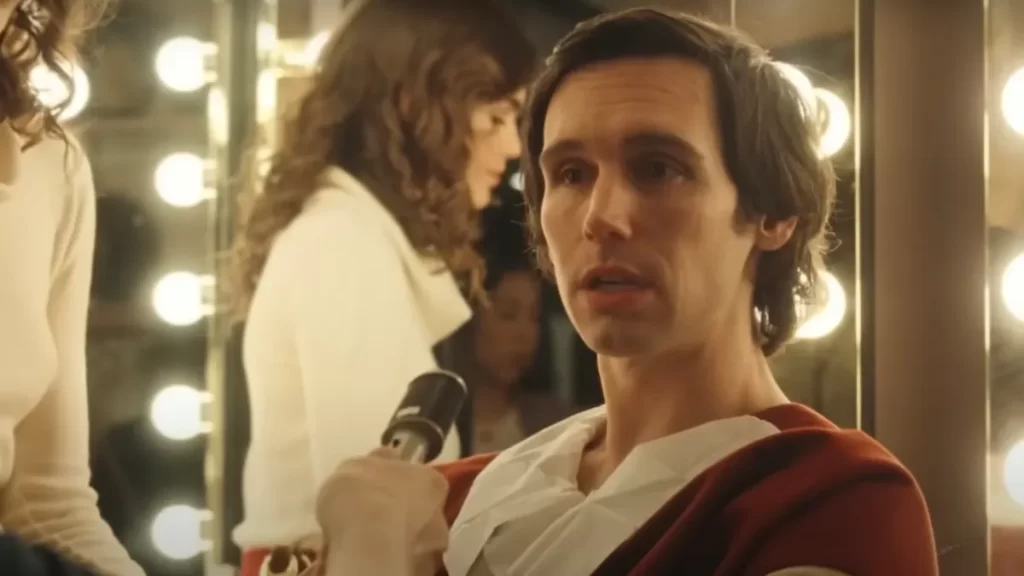
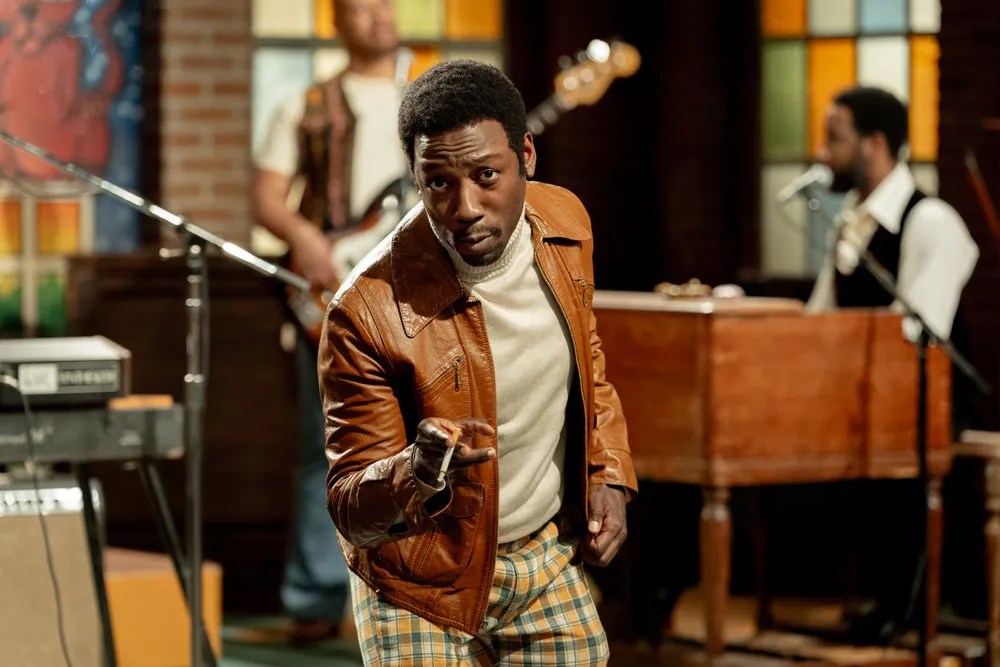
Cory Michael Smith is an obvious standout as Chase, conveying the man’s arrogance and insecurity (and hilarity) in a way that demands attention, whether we like it or not. O’Brien makes a mark with his brief screen time as Aykroyd. Morris brings some much-needed pathos as his character questions his purpose and reason for being there as the only Black cast member. Wood does what he can with Belushi, with Reitman and co writer Gil Kenan highlighting his drug use and fickleness (mostly as a punchline) — making Belushi’s will-he-won’t-he arc both semi-poignant and weirdly uncomfortable, given Belushi’s later tragedy.

Gabriel LaBelle as Lorne Michaels.

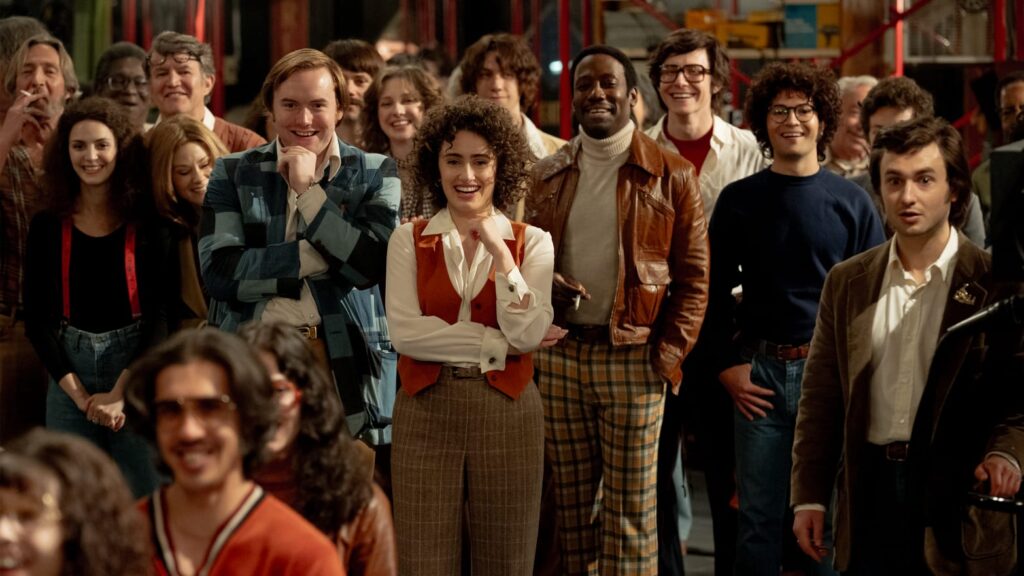
The rest of the cast — including the ever-reliable Rachel Sennott as Michaels’ then-wife, Rosie Shuster, Jon Batiste in a small-yet-memorable appearance as Billy Preston, and seemingly a million other recognizable faces playing various recognizable faces, with Nicholas Braun doing double duty as punchline-ready interpretations of Andy Kaufman and Jim Henson — are perfectly adequate, but not exactly given much to sink their teeth into narratively with their limited screen time.

Indeed, “Saturday Night” ultimately reveals itself to be little more than a carnival ride of memories and irritating dialogue that — when it’s not replicating famous jokes and sketches — takes advantage of 20/20 hindsight to constantly pat itself on the back.

Reitman and co-writer Gil Kenan’s script takes an Aaron-Sorkin-esque approach in its witticisms, fast pace, and at-times blatant sentimentality as it literally clicks down the moments until showtime, incorporating as many famous gags as possible that loyal viewers are expected to get excited about. Some barbs and vignettes amid the chaos are amusing, and “Saturday Night” is never less than watchable, if usually superficial.

Cory Michael Smith as Chevy Chase.

Eric Steelberg’s textured, 16mm cinematography weaves throughout the studio’s sweaty interiors, faithfully recreated with attention to period detail in sets and costuming, making plentiful use of long takes and whip-pans.

The film careens from one easter egg to another — complete with its own pseudo laugh track of characters cracking up; the film desperately begs us to laugh along with them. Batiste’s percussion-laden score, combined with Nathan Orloff and Shane Reid’s editing, helps create a fittingly frantic, albeit artificial, sense of paranoia that highlights the film’s construction as an allegedly off-the-rails roller coaster that’s never truly allowed to chart its own path.

It’s fine: There’s just not much there beyond the film playing to viewers’ nostalgia. And maybe that’s acceptable for those who’d like to coast on the associated dopamine rush. Myself, however, not so much. “Saturday Night” is never bad (far from it), but it never ascends beyond average — a self-congratulatory tribute to the groundbreaking show in a puzzlingly vanilla framework.

“Saturday Night” is a 2024 comedy based on a true story, directed by Jason Reitman, and starring Gabriel LaBelle, Cooper Hoffman, Willem Dafoe, Corey Michael Smith, Lamorne Morris, Rachel Sennott, Matt Wood, Dylan O’Brien, Ella Hunt, Kim Matula, Emily Fairn, Nicholas Braun, Jon Batiste, Tommy Dewey and JK Simmons. It is rated R for language throughout, sexual references, some drug use and brief graphic nudity and the run time is 1 hour, 49 minutes. It opened in theaters Oct. 11. Alex’s Grade: C

By Lynn Venhaus

The unpredictable Not Ready for Prime Time Players would go on to become household names. A shaggy group of irreverent writers would ignite a counterculture revolution with their parodies of contemporary culture and sharp political satire. And a young and scrappy Canadian would lead the inspired chaos of a late-night live sketch comedy show into showbiz history when “Saturday Night” premiered on Oct. 11, 1975.

With “Saturday Night Live” about to celebrate 50 years on television, it’s the right time to revisit the show’s frenetic start in NBC’s Studio 8H in Rockefeller Plaza. Writer-director Jason Reitman’s dramatic comedy finds the beating heart in this runaway train ride depicted in the 90 minutes leading up to the inaugural broadcast.

Along with co-writer Gil Kenan, their “based on a true story” captures the frenetic pace and the backstage lunacy that forever changed late-night comedy. It was a “big bang” that redefined the television landscape, and while a mini-series could do the origin story justice, this focused narrative framework succeeds in pulling back the curtain.

In a kinetic snapshot of what happened that fateful wild and crazy night, Gabriel LaBelle anchors the best ensemble cast of the year as the confident producer Lorne Michaels.

LaBelle, who was impressive as young Steven Spielberg in “The Fabelmans” two years ago, plays the driven big dreamer who believes in his instincts and the largely unknown cast’s talents. He’s the calm circus ringleader in the eye of the storm amidst the gusty winds threatening to blow it all down.

Gabriel LaBelle, center, as Lorne Michaels

From the start, Michaels has produced all but five years of the show, leaving in 1980 when Jane Curtin, Garrett Morris, Laraine Newman and Gilda Radner were the last original cast members to depart, and returning for the 1985-86 season.

He started out as a comedy writer whose credits included “Rowan & Martin’s Laugh-In” and now oversees a vast empire of last-night television and feature films. Michaels’ first wife, Rosie Shuster, is portrayed by a sharp Rachel Sennott as an integral force, both as a writer and someone putting fires out.

As the clock counts down to the live launch, there isn’t time for in-depth character portrayals; instead, we get snippets of familiar personality traits from those emerging stars Dan Aykroyd (Dylan O’Brien), Gilda Radner (Ella Hunt), Laraine Newman (Emily Fairn), Jane Curtin (Kim Matula) and Garrett Morris (Lamorne Morris, no relation), with Chevy Chase (Cory Michael Smith) and John Belushi (Matt Wood)’s well-documented egos and clashes getting more screen time.

The seven actors quickly convey their quirks and foreshadow the stars they would become. Standouts here include O’Brien as a minutiae devotee and big flirt Aykroyd, Emmy-winning Morris as the underused Morris — a multi-hyphenate perplexed at his inclusion, and Smith as quick-witted, arrogant and self-absorbed Chase, the show’s first break-out movie star.

The women, understandably, are trying to find their place in the boys’ club, which is representative of those early years.

The nostalgia factor is big here for longtime fans of the show, especially those of us who watched the first episode in real time (My college roommates and I tuned in, presumably because we were big George Carlin fans, for we did not recognize the others, except for Billy Preston because he played with The Beatles). A film by Albert Brooks? Jim Henson and his Muppets?

Now, fans of the National Lampoon Radio Hour (1973 – 1974) were familiar with cast members Chevy, Belushi and Gilda. Its creator, Michael O’Donoghue, a jaded, cynical anarchist, went on to be SNL’s cutting-edge head writer for three years. His tussles with the network censors’ red pens must have been headache-inducing.

Reitman’s condensed depiction of legendary writers Al Franken, Tom Davis, Alan Zweibel, and Herb Sargent (Tracy Letts!) is noteworthy. While not all sketch development is accurate timeline-wise, the inclusion of Aykroyd’s Julia Child parody where she gushes blood from a cut artery during a taping of “The French Chef” is a good one to mention – and so is the construction workers’ gender reversal cat calls with Aykroyd as the objectified — even though both were on later shows.

Reitman’s reverence for all things SNL is admirable – and understandable, for it continues to be a force in the cultural zeitgeist. His father, Ivan, directed Aykroyd and Bill Murray in 1984’s biggest box-office hit “Ghostbusters” and other movies featuring alumni.

Jason Reitman’s previous comedies “Juno” and “Up in the Air” showed much potential, so it’s nice to see him navigate this incredible moment in time and do so with a clear-cut vision and savvy casting choices.

Fellow nepo baby (in a good way) Cooper Hoffman, Philip Seymour Hoffman’s son, is a perfect foil as ambitious Dick Ebersol, rocking the polyester suits as the late-night director of programming. (He’d later go on to produce SNL after Michaels’ left.)

Portraying the old guard is Willem Dafoe as humorless network vice president of talent relations Bob Tebet, who’d be happy to run another Johnny Carson “Tonight Show” re-run instead.

Nicholas Braun as Andy Kaufman

In small but essential roles, musical wunderkind Jon Batiste plays musical guest Billy Preston and Nicholas Braun (Emmy-nominated Cousin Greg on “Succession”) astutely characterizes up-and-coming Andy Kaufman’s brilliant schtick and as a naïve but talented puppeteer Jim Henson, clearly ahead of his time.

Matthew Rhys, Emmy winner for “The Americans,” is a snarling George Carlin who does not want to play nice with others in sketches.JK Simmons swoops in to steal his scenes as cantankerous old-guard comic Milton Berle, representing a different generational style.

Batiste also composed the propulsive original music score, which adds to the fast-paced freewheeling vibe. Reitman’s go-to cinematographer Eric Steelberg offers insight into the adrenaline rush while Jess Gonchor’s production design overstuffs Studio 8H plausibly.

An engaging whirlwind representing a collaborative creative process that sparked a comedic revolution, “Saturday Night” takes us back to an extraordinary leap of faith that resonates today. No need to give us a roadmap of the past half-century because we know the rest of its remarkable history.

Lamorne Morris as Garrett Morris.

Notes: To learn more, “Live from New York: The Complete, Uncensored History of Saturday Night Live as Told by Its Stars, Writers, and Guests,” first published in 2002, is a definitive oral history by James Andrew Miller and Tom Shales.

Two documentaries on the short, brilliant and troubled lives of two of the show’s biggest stars, “Belushi” (2020) and “Love, Gilda” (2018) are available to watch on subscription streaming services, and for digital rental.

“Saturday Night” is a 2024 comedy based on a true story, directed by Jason Reitman, and starring Gabriel LaBelle, Cooper Hoffman, Willem Dafoe, Cory Michael Smith, Lamorne Morris, Rachel Sennott, Matt Wood, Dylan O’Brien, Ella Hunt, Kim Matula, Emily Fairn, Nicholas Braun, Jon Batiste, Tommy Dewey and JK Simmons. It is rated R for language throughout, sexual references, some drug use and brief graphic nudity and the run time is 1 hour, 49 minutes. It opened in theaters Oct. 11. Lynn’s Grade: A-.