By Alex McPherson

Far less lively than its premise promises, director John Patton Ford’s “How to Make a Killing” has a sturdy dramatic framework but forgets to have much fun along the way — it’s an Eat-the-Rich satire that commits the unfortunate sin of being dull.

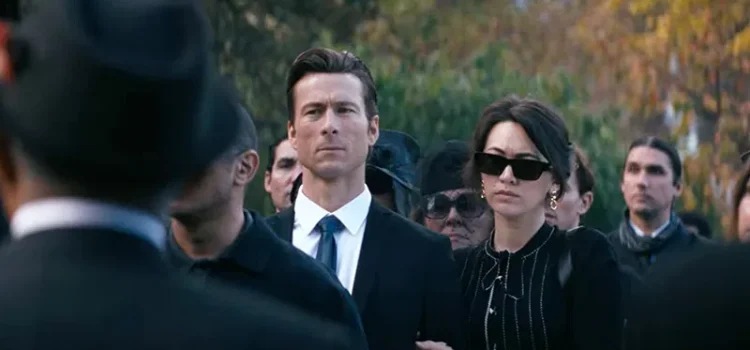
Inspired by the 1949 film “Kind Hearts and Coronets,” “How to Make a Killing” centers around Becket Redfellow (Glen Powell), a man on death row with four hours until execution who relays his life story to a priest (Sean C. Michael). The film, guided, er, dictated, by Becket’s narration, jumps back and forth in time.

Becket, with a wry smile, insists that his story is a “tragedy,” as he reveals that his family has a 28 billion dollar fortune that he was willing to kill his seven other relatives to acquire. For Becket, it’s personal.

His mother was banished from the family by the mysterious patriarch Whitelaw (Ed Harris) after becoming pregnant with Becket as a teenager with a man of “lower class,” who quickly disappeared from the scene.

She raised Becket in a working class New Jersey neighborhood, occasionally immersing him in rich-adjacent activities like archery (featuring Chekhov’s bow and arrow), and, until her dying day, insisting that Becket has a legal claim to the Redfellow fortune and that he “deserves” it. 
It’s at one of these functions that a young Becket meets the uber-wealthy Julia Steinway (later played by Margaret Qualley). The two are drawn to each other, although they drift apart as they grow up in different social spheres.

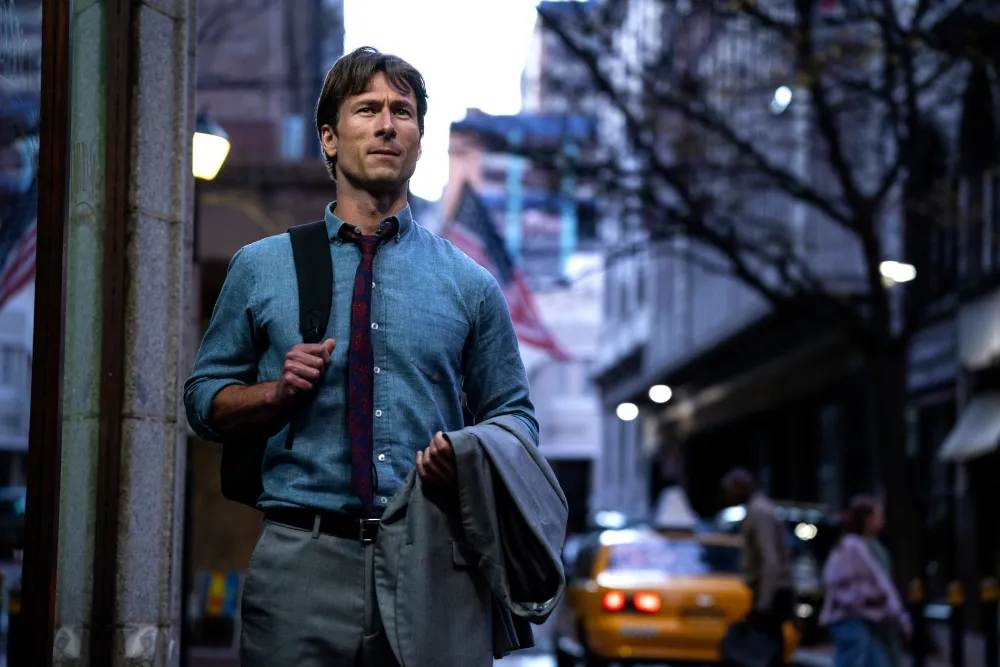
In present-day New York City (before his arrest), Becket works at a men’s suit store and runs into Julia, who strikes up a flirtation (even though she’s engaged), and reminds him that he is a Redfellow.

After being abruptly demoted, and recognizing the sad unfairness of his current non-uber-wealthy living situation, Becket decides to take action, setting out to eliminate his relatives and do away with most of his morality. 

The group includes party boy Taylor (Raff Law), smug goofball artist Noah (Zach Woods), “philanthropist” Cassandra (Bianca Amato), Richard-Branson-esque McArthur (Alexander Hanson), rock star megachurch pastor Stephen (Topher Grace), and Becket’s surprisingly kind uncle Warren (Bill Camp) who hires Becket to work at his brokerage firm, plus the intimidatingly shady Whitelaw (Harris).

Quite a few folks to get through, but Becket’s greed and hunger for retribution motivate him, to the detriment of his personal relationships and sanity.

There’s a recipe for a crackling, twisted little thriller here, but Ford’s film is frustratingly milquetoast, possessing the skeleton of a strong narrative without putting in the work to give its story poignancy, momentum, or memorably crazy set pieces.

“How to Make a Killing” feels restrained as Becket flies further off the deep end, taking the easy way out instead of leaning into the lunacy, with derivative social commentary and subplots clunkily smashed together. It’s a shame, because the foundation is there. Powell remains an appealing leading man who brings charisma in spades.

Still, he feels underutilized, as Ford’s screenplay jumps through time erratically and often resorts to blatant exposition dumps (via Becket’s prison-set narration) that attempt to streamline the film while robbing it of textural detail.

Powell’s performance is sturdy enough on its own merits, particularly when the film slows down to briefly highlight his twisted satisfaction at his various killing schemes (which occur, puzzlingly, mostly off-screen) and to develop his relationship with the beautiful Ruth (Jessica Henwick), who is first attached to Noah.
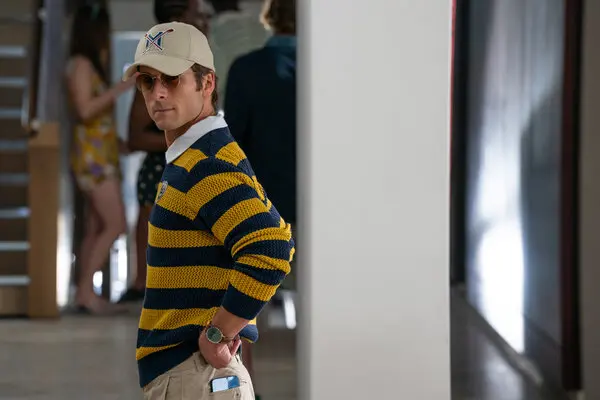
Henwick and Powell have great chemistry, yet Ford treats their dynamic as more of a plot device than anything else — the tension between happiness/comfort and the pesky pull of greed and revenge.

It’s a conflict rendered too schematic to pack much emotional punch, worsened by dialogue that spells out Becket’s “choice” in eye-rollingly obvious fashion.

Qualley, to her credit, understands the assignment more than most of the ensemble, leaning into her character’s femme-fatale cartoonishness, periodically appearing to encourage Becket to continue his murderous mission and attempt to seduce him (for love or for the money?).

f only the rest of “How to Make a Killing” was as committed to the bit as Qualley who, regardless of whether you love or hate her performance, is definitely making choices and helping to momentarily excavate the film from generic territory.

Perhaps the biggest issues with Ford’s film revolve around its “tell, don’t show” philosophy. We don’t really feel Becket’s inner turmoil, nor do we fully buy why he feels compelled to push forward even when his life seems pretty damn good, all things considered. Nor do we get any flashy moments of R-rated violence, odd considering that the film is indeed called “How to Make a Killing.”
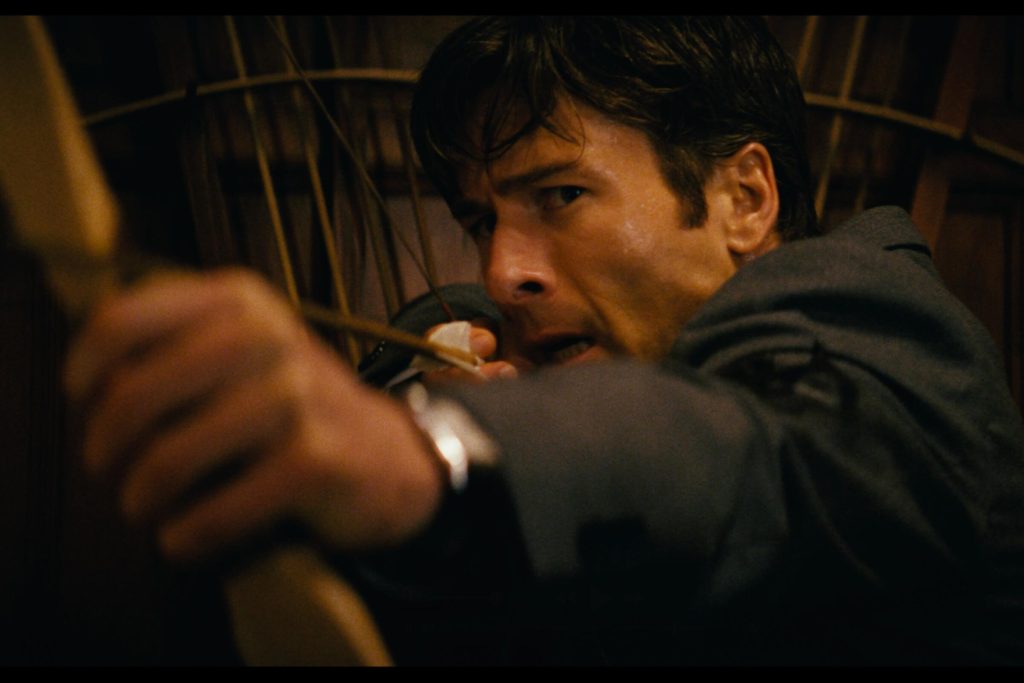
 Ford’s film does have eye-catching production design and stylistic use of light and shadow. But its conclusions are largely standard, a morality tale with a clearly telegraphed destination, and a laissez-faire approach to distinctive storytelling.

“How to Make a Killing” is a 2026 dark comedy-psychological thriller directed by John Patton Ford and starring Glen Powell, Margaret Qualley, Ed Harris, Bill Camp, Jessica Henwick, Zaff Law, Zach Woods, Bianca Amato, Topher Grace, and Alexander Hanson. It’s run time is 1 hour, 45 minutes, and it is rated R for language and some violence/bloody images. It opened in theatres on Feb. 20. Alex’s rating: C.

By Alex McPherson

With chaotically fun set pieces and an enjoyable performance from Glen Powell, director Lee Isaac Chung’s “Twisters” seemingly checks off all the boxes for a summer blockbuster treat, but it doesn’t surpass the 1996 original.

Set in the same universe of Jan de Bont’s “Twister,” but featuring a different set of characters filling in similar archetypes as before, Chung’s film begins with a flashback showing a bright-eyed group of Oklahoma college students — led by Kate Cooper (Daisy Edgar-Jones) — storm-chasing with the ultimate goal of “taming” a tornado.

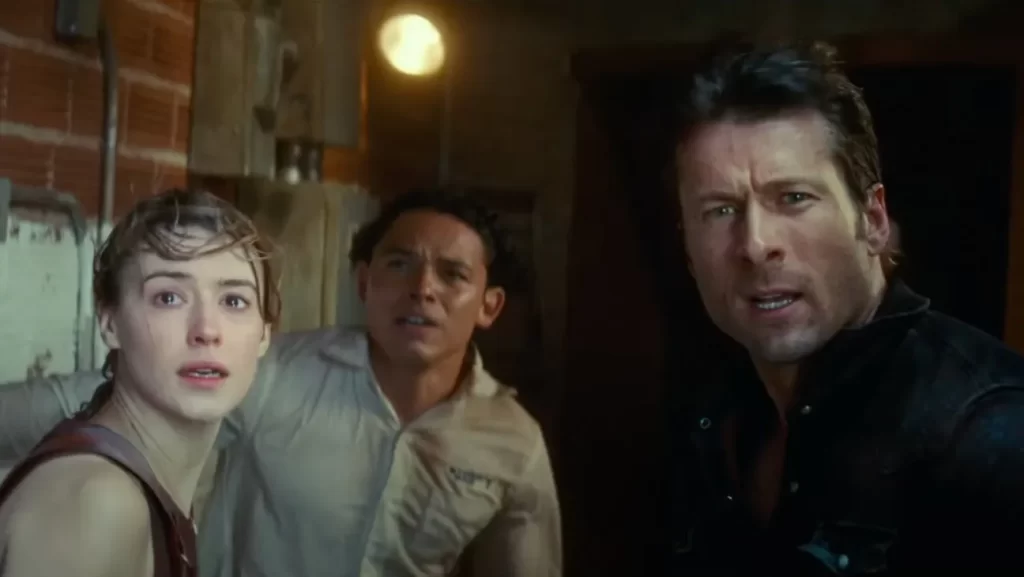
In a surprisingly dark turn of events, Kate and her squad misjudge the type of tornado they’re dealing with (it’s an F5, not an F1), and tragedy ensues. The twister claims the lives of three of the group, including Kate’s boyfriend, Jeb (Daryl McCormick), with only Kate and tech wiz Javi (Anthony Ramos) managing to survive the ordeal. Both Kate and Javi are mentally scarred, and Kate, wracked with guilt, vows to leave her storm-chasing behind.

Five years later, Kate works as a meteorologist in Manhattan, going about her days deflated and depressed. That is, until Javi shows up, urging her to join his team of scientists researching tornadoes in Oklahoma. Javi works for Storm Par, a mobile radar company that may or may not have shady motives beneath their “for the greater good” appearance.

He offers Kate a short-term position on the team. She reluctantly accepts, recognizing that extreme weather events are becoming increasingly common — but neither Kate nor any other character mentions climate change outright. Thus, she’s back in the field, tagging along with some straight-laced scientists (one played by future “Superman” actor David Corenswet) hunting down the weather phenomena that’s both her passion and trauma manifested. 

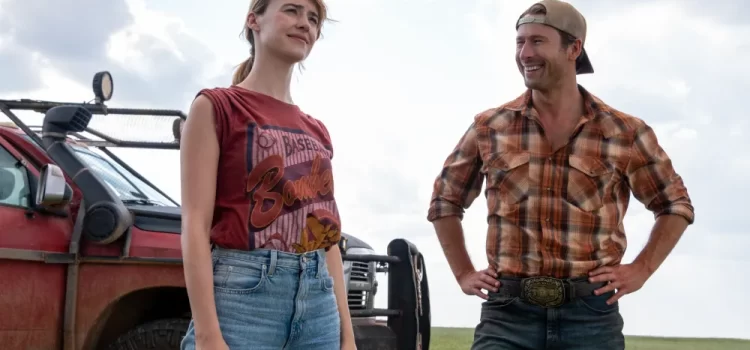
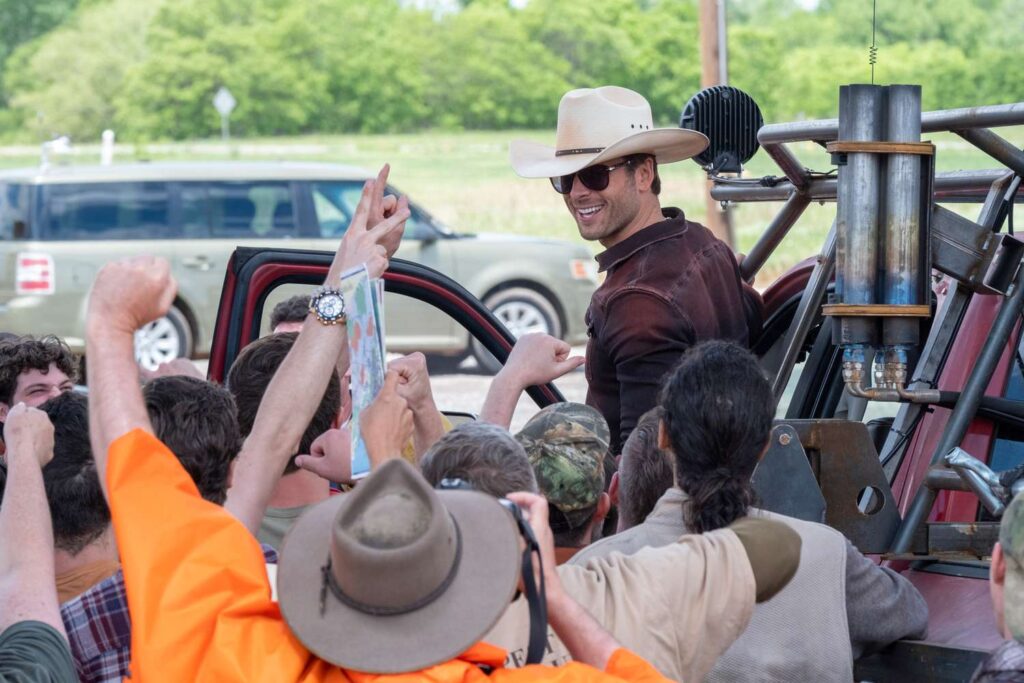
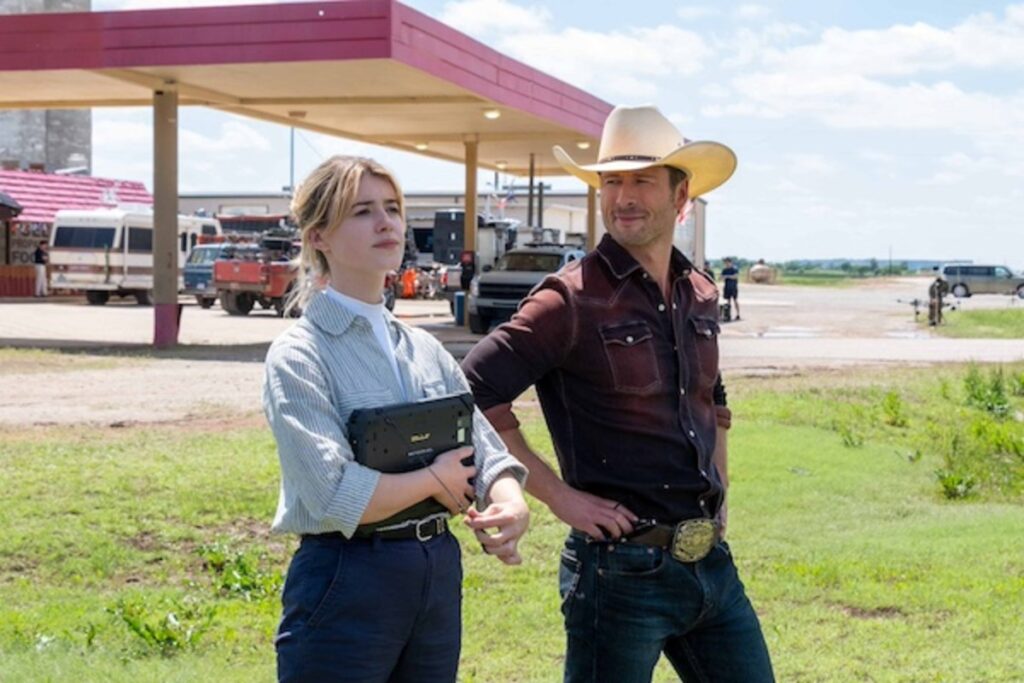
Also on-the-scene is professional “Tornado Wrangler” and YouTuber Tyler (Powell), a rambunctious chap running into danger for “views,” with country music blasting nonstop. He’s joined by a band of tech-savvy nerds played by Sasha Lane, Katy O’Brien, and Tunde Adebimpe, among others, including Harry Hadden-Paton as a clumsy British journalist whose main purpose is comedic relief and not much else.

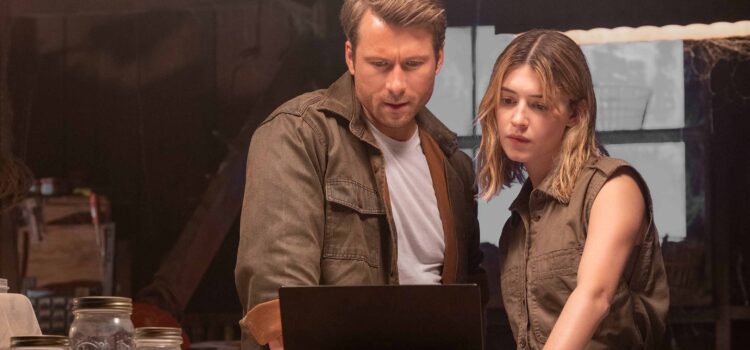
As both parties compete to reach the tornadoes first, Kate and Tyler develop an inevitable will-they-won’t-they romance. Both must confront their pasts, doubts, and motivations as they seek to make a difference in the world, and in each other’s lives, as they spout quippy dialogue and survive catastrophic incidents thanks to their plot armor.

Indeed, “Twisters,” like “Twister” before it, isn’t trying to be high art. But Chung, who directed 2020’s masterful “Minari,” still tries to inject pathos and stakes into the proceedings, tackling themes of trauma, rebirth, and corporate corruption amid the cheesiness and CGI-laden sequences of carnage. 

It’s a tonal mishmash that doesn’t quite work in Chung’s favor. “Twisters” lacks the commitment to make any meaningful statements on the topics it brings up — which, notably and puzzlingly, does not include climate change — and awkwardly sandwiches sincere attempts at poignancy between the more cartoonish and “thrilling” moments we expect. 

This is made all the more frustrating by the fact that Chung and screenwriter Mark L. Smith prove that they’re willing to address serious, albeit formulaic, ideas about managing trauma and capitalism’s nasty influence on morals. It turns out that the most important and obvious topic of all for this story — climate change — is too controversial for them. 

To make matters worse, “Twisters” ultimately embraces the idea of “conquering” nature more than understanding it, further reducing its premise to popcorn fluff that, by actively resisting taking a stand on much of anything beyond convention, is frustratingly, distractingly out-of-touch with our current moment.

That’s not to say all is lost, though. There’s still individual moments in “Twisters” that pop, and Powell’s star power is more than enough to make the film entertaining on its own lesser merits. 

Powell gives the film much-needed bursts of energy whenever he’s on screen, portraying a raucous individual who disguises his intelligence behind a rowdy, boyish veneer. With his well-sculpted physique and easy charisma, Powell steals the spotlight from Edgar-Jones who, to the film’s credit, portrays a strong, determined character in her own right, albeit one who seems to be in a completely different film from Tyler at certain points.

Kate is far less engaging to watch than Tyler, being saddled with a tragic backstory and comparatively bland personality. Edgar-Jones’ performance lacks impact as a result. The rest of the ensemble is uneven, with Ramos not quite being able to deliver Javi’s heavy-handed dialogue convincingly, and others are barely given enough time to register as fully-formed characters.

“Twisters” fares better in terms of pure production value, however. Cinematographer Dan Mindel artfully frames the Oklahoma prairies, even though there’s less dynamism to the camerawork here than de Bont’s previous effort.

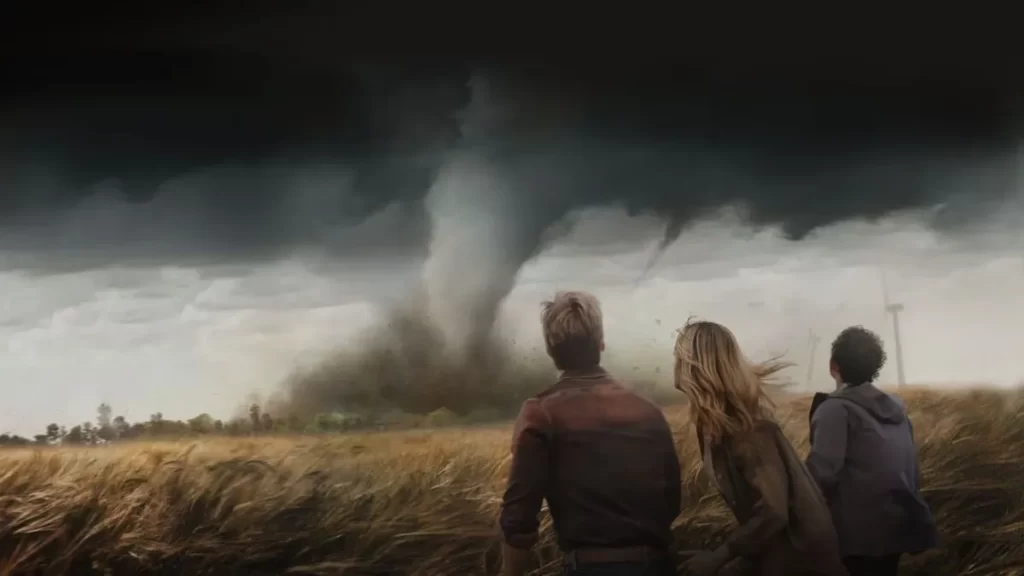
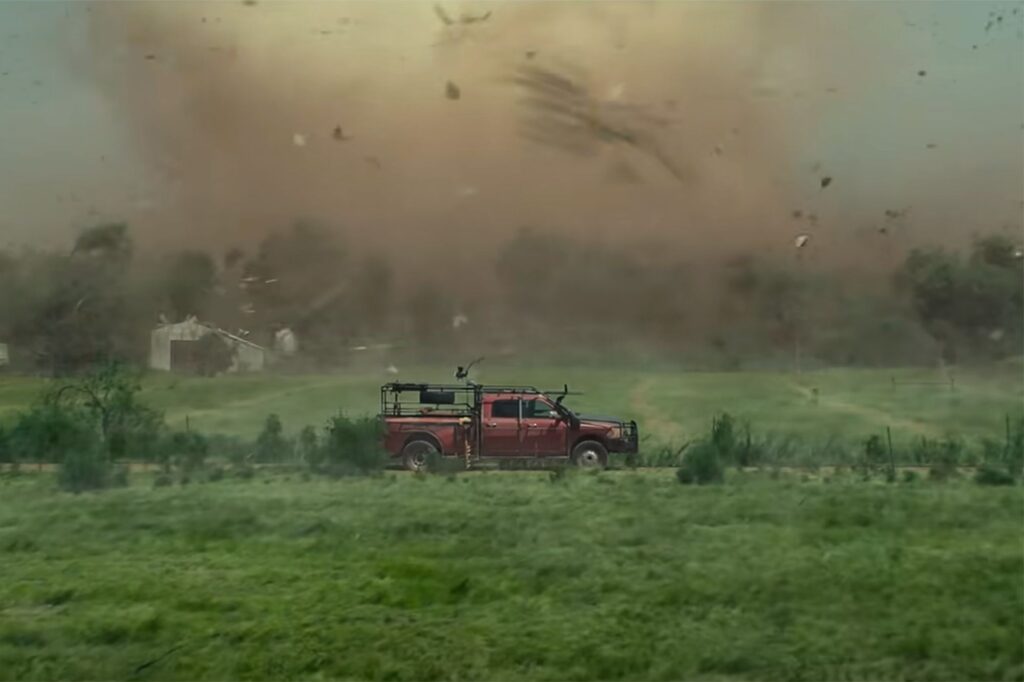
Chung stages sequences of destruction effectively, especially in the opening minutes. He seems to take some glee in showing cars, buildings, and (usually unnamed) people being sucked up into their orbits. It’s loud, scary, and thrilling, for a while, but becomes repetitive as the film goes along.

When the storm has passed, “Twisters” is a decent-to-good experience, held back by its inconsistent tone. But what’s here suffices if we can turn off our brains and let deeper thought be swept away in the wind of mainstream entertainment.

“Twisters” is a 2024 action-adventure directed by Lee Isaac Chung and starring Glen Powell, Daisy Edgar-Jones, Anthony Ramos, Maura Tierney, David Corenswet, Brandon Perea, Sasha Lane, Tunde Adebimpe, Katy O’Brian and Harry Hadon-Patton. It is rated PG-13 for intense action and peril, some language and injury images, and run time is 2 hours and 2 minutes. It opened in theatres July 19. Alex’s Grade: B-.

By Lynn Venhaus

The manufactured mayhem of “Twisters” may check off all the boxes for an entertaining summer blockbuster, but its unremarkable storyline neutralizes the visually stunning weather-induced shock and awe.

While the film showcases state-of-the-art modern technology, both in digital effects and severe weather tracking tools, this retread doesn’t feel new or fresh, but rather repetitive in its brutal storm depictions.

After all, dealing with dangerous weather patterns has become a routine part of real life in the Midwest in the 21st century. Case in point: our current summer.

So, what distinguishes this from a Weather Channel special report? This second go-round, loosely based on the 1996 disaster epic “Twister,” is super-sized in fury and look, and the mostly rural setting feels like a theme park meets “The Amazing Race,” stoking frantic chase scenes on a grander scale.

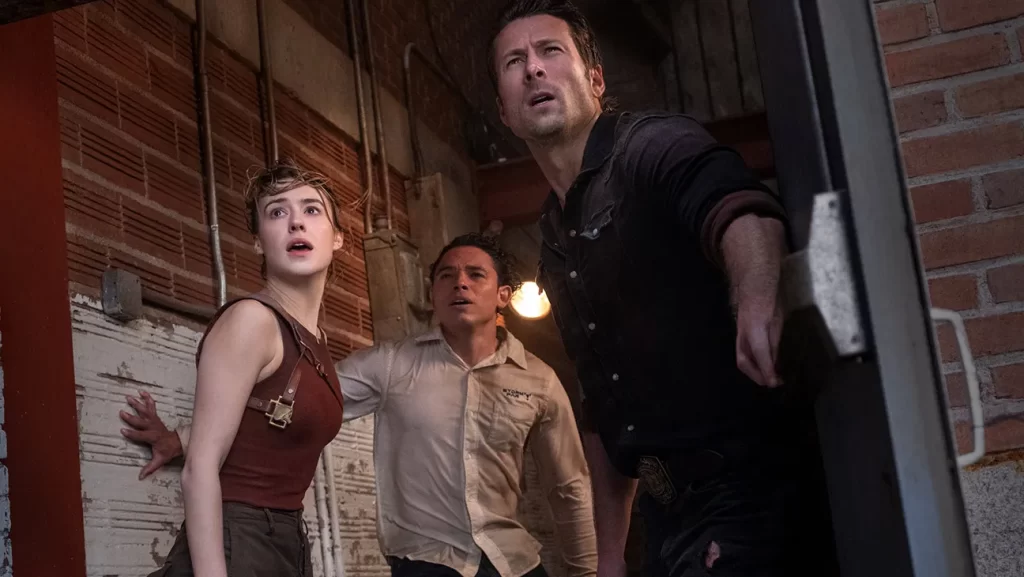
Daisy Edgar-Jones plays Kate Cooper, a retired tornado-chaser and brainiac meteorologist who is persuaded to return to Oklahoma to work with a new team and new technologies during a once-in-a-generational series of terrifying storm systems. She encounters swaggering social-media star Tyler Owens (Glen Powell) heading a team of hotshots. Will sparks fly or fizzle, and will they save anyone but themselves?

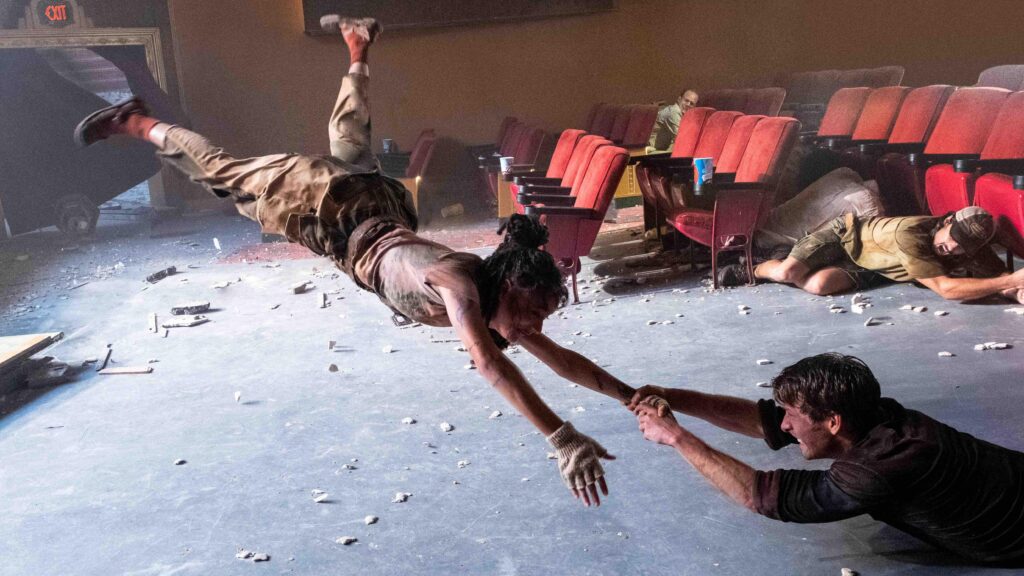
Debris flies, and people are flung like the Wicked Witch of the East. The visual effects and stunt work are impeccable, and a collapsing water tower, explosions at a massive oil refinery, and destruction of a movie theater exemplify the ‘go-big’ playbook.

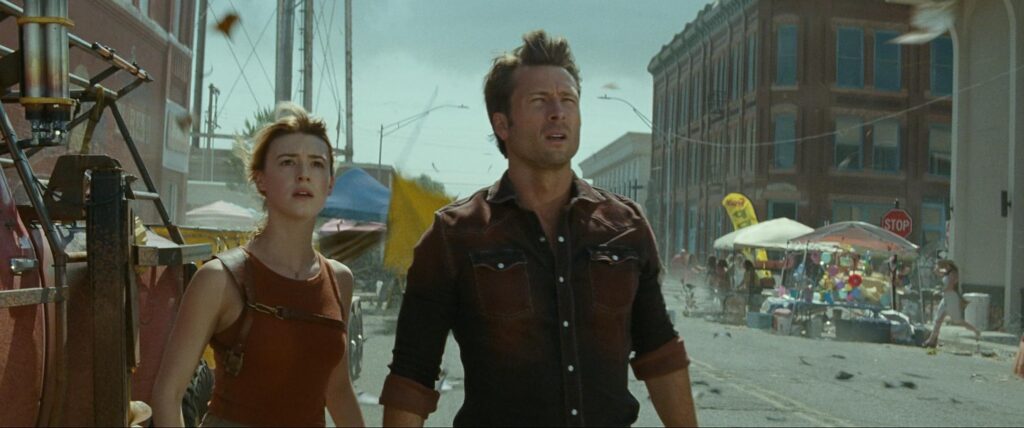
The alarming sudden onset of extreme weather is emphasized in multiple scenes, such as a carnival atmosphere turning deadly with little warning. Interestingly though, the phrase “climate change” is never uttered but looms large in our minds.

Simply stated, no, this ‘sequel’ is not as good as the 1996 original, which endeared itself to countless millennials for its ground-breaking digital effects (a flying cow!) and its revered lightning-rod cast of Bill Paxton, Helen Hunt, Cary Elwes, Philip Seymour Hoffman, Lois Smith, Jamie Gertz, Alan Ruck and other familiar ‘90s faces at a far more cinematically adventurous time.

In retrospect, the first one wasn’t anything more than a popcorn-type thrill ride, and cheesy at that, but there remains great affection for this ragtag group of adrenaline junkies because they were a fun bunch to watch – and were doing something different. Adding to the poignancy is that beloved Paxton and Hoffman are no longer alive.

The twist? The monster wasn’t a colossus like a T. Rex or Godzilla, but Mother Nature – and just as scary.

The original’s daredevil director was Jan de Bont, fresh from making the riveting action film “Speed” in 1994. Its tech-talk-rekindles-romantic-sparks screenplay was written by Michael Crichton and his then-wife Anne-Marie Martin. He was on a roll after his “Jurassic Park” novel was adapted by Steven Spielberg in 1993. (Spielberg is executive producer of both “Twister” and “Twisters,” by the way.)

While one can wonder why a sequel pops up 28 years later, this “Twisters” is similar because characters are based on fired-up storm chasers and Oklahoma is again the Tornado Alley center of dangerous activity. Oh, an apparatus named Dorothy is in both.

This time, the project is helmed by Lee Isaac Chung, a surprising choice after his 2020 gentle, intimate semi-autobiographical film “Minari,” but he does know how to tug heartstrings. He competently handles the powerful dustups on the Plains and the propulsive action but is saddled with a formulaic script.

After scoring big with the epic “The Revenant” screenplay, Mark L. Smith penned the George Clooney duds “The Boys on the Boat” and “The Midnight Sky.” He is unsurprising here, both in action and interpersonal relationships, from a story by Joseph Kosinski, director of “Top Gun: Maverick.”

(I mean, really, a skittish fish-out-of-water British journalist tagging along with a crew of quirky influencers? That’s a tired character.)

Wisely, though, the lead role is a whip-smart female scientist, who is introduced as a bright-eyed college student brimming with brilliant ideas, an uncanny knack at sizing up impending storm shifts, and a fearless save-the-world bravado. Yay for STEM girls!

The film’s best scene is a harrowing account of her spirited team’s encounter with an F5 tornado that she misread as an F1 earlier as they tried out her theory on dissipating its strength. That tragic result set the tone for the obstacles ahead.

Her life’s plans altered, it’s five years later, and she is a meteorologist- analyst for the National Weather Service in New York City, sad-eyed and deflated.

Old friend and fellow guilt-ridden survivor Javi (Anthony Ramos) pleads with her to join his corporate-funded team back home. It’s the height of a troubling storm season, and he’s trying to implement new radar hardware he devised.

With some trepidation and heavy emotional baggage, Kate returns, although she can’t forecast that this time she’ll renew her life’s purpose. You do root for her success.

Edgar-Jones, an appealing actress best known for “Where the Crawdads Sing,” and BAFTA-nominated for the TV show “Normal People” opposite Paul Mescal, shows off spunk and verve with a very obnoxious guy getting under her skin and in her way. That would be newly anointed heartthrob Powell.

Spoiler alert: They’ve met their match, but they don’t know it yet.

Charming It-guy Powell knows his lane, and fits the modern image of a smiling happy-go-lucky movie star. He doesn’t stray from the formula that got him to headline status. Cowboy scientist? Sure, why not? Throw in rodeo background and computer skills.

He is at his most annoying early on as a You Tube sensation, showboating as a “Tornado Wrangler” and leading a motley crew of fame-obsessed whooping and hollering trackers.

The real serious scientists ‘tsk-tsk’ the reckless hobbyists, and the city girl vs. the celebrity clown showdown is on, with lots of zingers being fired.

Turns out he isn’t what he appears to be, and neither is anyone else – although you might feel deja vu. Future “Superman” David Corenswet looks like a no-nonsense guy as Javi’s wingman Scott — and a lot like Elwes’ Dr. Jonas Miller. Brandon Perea is trying to be kookier as the videographer Boone than Hoffman’s Dusty. As Kate’s mom Cathy, Maura Tierney assumes the Aunt Meg role played by Smith.

As the competition intensifies between the groups, battle lines become blurred as the focus shifts to helping devastated victims. Sasha Lane is a kind drone operator, Lily. Katy O’Brian and Tunde Adebimpe are part of hotdoggers’ squad.

Powell’s cockiness conveniently melts away as a more compassionate do-gooder emerges. At this point, is anybody paying attention to the science theories or personal motives as trucks bearing heavy equipment speed through country roads while a who’s who of country music blares above the sirens?

Impressive artisans excel on an enormous canvas – cinematographer Dan Mischel, whose credits include the Star Wars’ reboots “The Force Awakens” and “The Rise of Skywalker,” editor Terilyn A. Shropshire, production designer Patrick M. Sullivan Jr. and composer Benjamin Wallfisch.

Noteworthy is a cameo by James Paxton, the late Bill Paxton’s son. His father will be forever remembered as TV weatherman Bill Harding and he plays an aggravated customer complaining just before cyclone chaos is about to erupt.

Early work by Daryl McCormack as Kate’s boyfriend Jeb, and Kiernan Shipka and Nik Dodani as pals Addy and Praveen is also memorable.

A special shout-out to Waterloo, Ill.’s own Alexandra Kay, a country singer who is featured on the Jelly Roll song “Leave the Light On,” which is a part of the soundtrack including such heavy hitters as Lainey Wilson, Zach Bryan, Luke Combs and others.

“Twisters” will satisfy audiences who want to be swept away like retro summer blockbusters once achieved, without the pesky environmental messages and science lessons. However, those looking for more than imitation, with some discernible gumption, will have to be content with a pleasant-enough engaging cast and fear-inducing stormy weather.

“Twisters” is a 2024 action-adventure directed by Lee Isaac Chung and starring Glen Powell, Daisy Edgar-Jones, Anthony Ramos, Maura Tierney, David Corenswet, Brandon Perea, Sasha Lane, Tunde Adebimpe, Katy O’Brian and Harry Hadon-Patton. It is rated PG-13 for intense action and peril, some language and injury images, and run time is 2 hours and 2 minutes. It opened in theatres July 19. Lynn’s Grade: C+

By Alex McPherson

Director Joseph Kosinski’s “Top Gun: Maverick” surpasses the 1986 original to soar among 2022’s most satisfying efforts thus far.

Taking place over three decades later, viewers are reunited with Navy aviator Pete “Maverick” Mitchell, who has since avoided promotion to keep flying as a test pilot. Continuing to mourn and feel guilt over the death of his best friend, Goose (Anthony Edwards), there’s an air of melancholy surrounding Maverick, but his penchant for rebelliousness continues in full force.

Rear Admiral Chester “Hammer” Cain (a scenery-chewing Ed Harris) informs Maverick that drones will soon replace flesh-and-blood pilots. Maverick, trying to once again prove himself and save his program, pushes a prototype jet beyond Mach-10, becoming the fastest man alive before plummeting back to the land of mere mortals in a violent fireball. Somehow he emerges to live, and fly, another day.

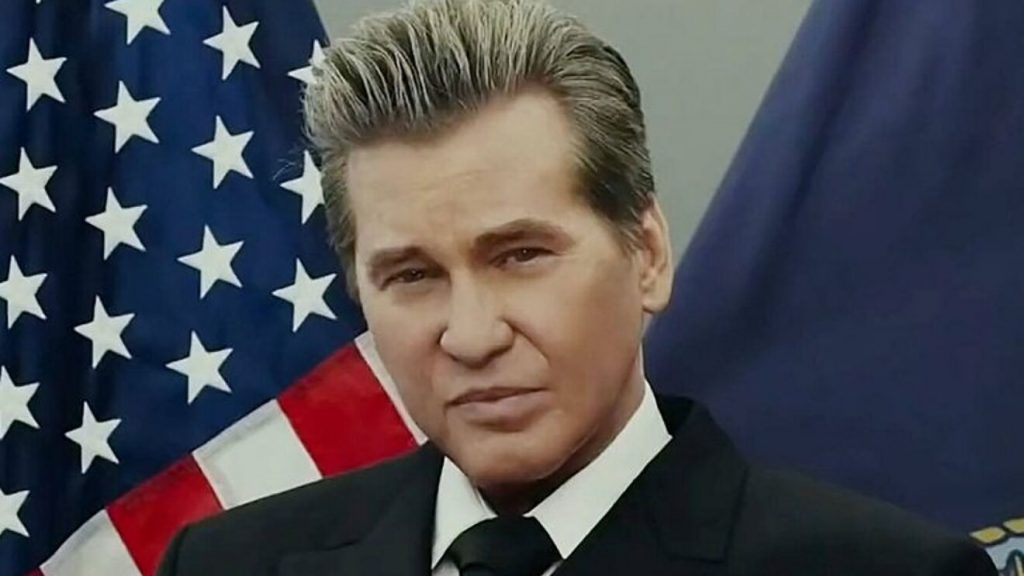
Admiral Tom “Iceman” Kazansky (Val Kilmer, truly impactful in his short screen-time) saves Maverick from being permanently grounded and requests his return to the Top Gun school in San Diego to train a new batch of aviators for a “New Hope”-esque bombing run against an unnamed foreign enemy.

The group, mostly simple characterizations, includes a badass woman pilot “Phoenix” (Monica Barbaro), a soft-spoken lad with the call sign “Bob” (Lewis Pullman), and a macho show-off named “Hangman” (Glen Powell), echoing a young “Iceman,” among others. Maverick is constantly watched over by Admiral Beau “Cyclone” Simpson (Jon Hamm), who’s none too pleased with Maverick’s unconventional methods. 

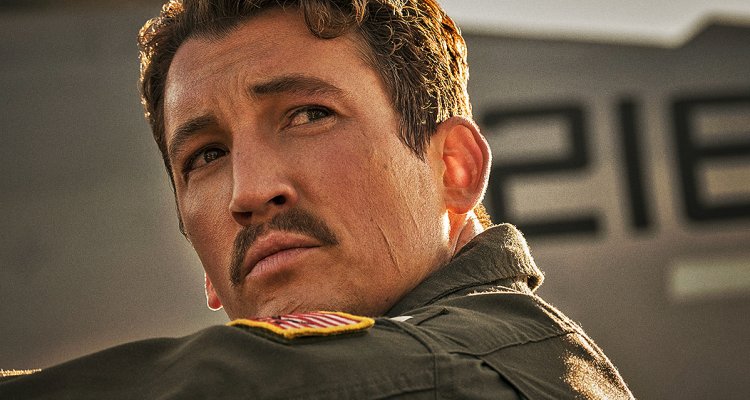
Miles Teller

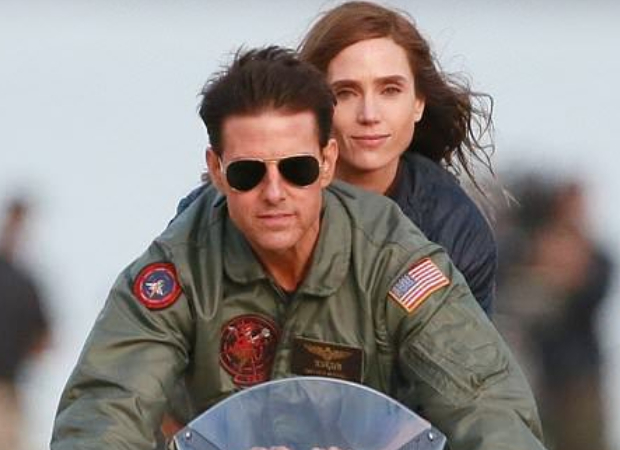
Crucially, however, Goose’s son, “Rooster” (Miles Teller, with a mustache channeling Goose’s), joins the team, carrying palpable resentment towards Maverick, whom he deems responsible for his father’s untimely demise. Maverick reunites with a long-ago lover, the beautiful Penny (Jennifer Connelly) — with nary a mention of Kelly McGillis’s Charlie — and gradually begins to recognize the appeal of leading a more “normal” existence. Tensions are high, the stakes are real, and Maverick must confront the ghosts of his past to make it out alive and reach some semblance of inner peace before he signs off for good.

Quite unexpectedly, there’s far more thematic meat to chew in “Top Gun: Maverick” than viewers might expect. But those looking for a pure shot of cinematic adrenaline won’t be disappointed either. Kosinski achieves a near-perfect balance between tongue-in-cheek popcorn thrills, nostalgic callbacks, and deeper nuance — extending beyond Maverick to comment on Cruise’s own acting career, as well the state of big-budget filmmaking today.

“Top Gun: Maverick” features one of Cruise’s all-time best performances, capturing both the character’s courageousness and newfound fearfulness at his position in the world and with the treacherous mission he’s preparing to guide. The way he carries himself throughout his old hunting grounds lacks the upbeat bounce it used to — replaced by an awareness of his own age and mortality, the sense that this once-invincible daredevil can’t be around forever. Indeed, neither can Cruise as an actor: one of the last movie stars who literally risks his life for our enjoyment.

His conversations with Penny and Iceman, especially the latter, reveal a vulnerable soul unable to forgive himself and fully accept the passage of time — an unexpected narrative choice for a character originally drenched in macho masculinity. He’s still charming and capable of copious one-liners, but the added depth is much welcomed.

Val Kilmer as Admiral Thomas “Iceman” Kazansky

Maverick’s conflict with Rooster also hangs over the film, as Maverick deeply fears losing him to the same fate as his father. Teller’s performance conveys Rooster’s stubbornness, contempt, and own self-doubt. His arc, while predictable, hits home with force in the film’s absolutely electrifying final act.

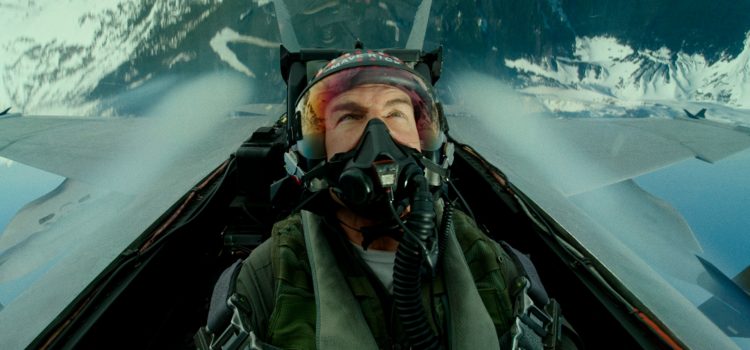
Speaking of which, “Top Gun: Maverick” features some of the most mind-blowing set-pieces I’ve ever witnessed. Reportedly filmed in real planes with minimal VFX, cinematographer Claudio Miranda puts viewers right in the cockpit with the pilots, immersing us into all the high-flying maneuvers to staggering effect.

At one point, as Cruise flies straight upwards, we practically feel the G-forces along with him, our ears bombarded by thunderous engines. I cannot overstate just how incredible these sequences are, and how impressive it is that they’re filmed coherently. Whether or not stunt work like this can ever be recreated again — if we ever get away from CGI-infested superhero flicks — the craziness on display makes “Top Gun: Maverick” a spectacle that must be viewed on the big screen, preferably in IMAX. Similarly, the score by Lorne Balfe, Harold Faltermeyer, Hans Zimmer, and Lady Gaga deserves to be blared as loudly as possible.

Yes, Kosinski’s film certainly has its cheesy, soap-opera-esque flourishes — it is a sequel to “Top Gun” after all — and the film’s militarism remains blatant, albeit neutered this time around. Where things wrap up isn’t exactly surprising, and the sweaty, crimson-hued world seems (intentionally) separated from gritty reality.

Regardless, this is a pure, balls-to-the-wall action film that contains thought-provoking undercurrents beneath its crowd-pleasing sheen. It’s an experience that I’ll be revisiting frequently and one that reminds me of the power of the summer blockbuster.

“Top Gun: Maverick” is a 2022 action-adventure directed by Joseph Kosinski and starring Tom Cruise, Miles Teller, Jennifer Connelly, Jon Hamm, Ed Harris, Glen Powell, Lewis Pullman, Monica Barbero and Val Kilmer. It is rated PG-13 for sequences of intense action, and some strong language, and runs 2 hours, 10 minutes. The movie was released in theaters and IMAX on May 27. Alex’s Grade: A-.