By Lynn Venhaus
Visually stunning but emotionally empty, “Wuthering Heights” is an abomination for fans of the classic gothic romance, a disservice to Emily Bronte’s dark source material about eternal love, longing, hurtful pride and ruthless revenge.
The 1847 novel took place on the harsh Yorkshire moors. The impoverished, abused Heathcliff, adopted into the affluent Earnshaw family around 1771, works manual labor, and forges a special bond with the privileged, petulant Catherine.
However, writer-director Emerald Fennell claims it’s not an adaptation, but a bold and sexy interpretation of how the book made her feel when she read it at age 14. Maybe she could have changed the title to avoid less-than-flattering comparisons?
Fennell’s spin is edgy excess as she favors kinky bodice-ripping sexual compulsion over the book’s spiritual obsession that lingers long after reading. The emotional heft that the novel delivered for 180 years is lacking,
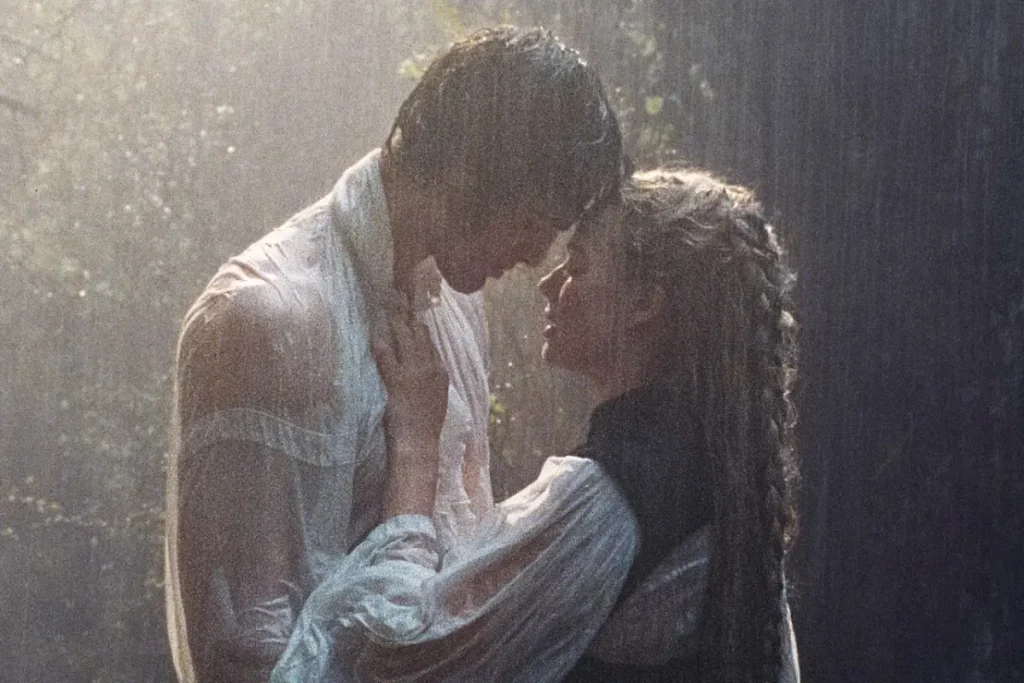
Australians Margot Robbie and Jacob Elordi are pretty people who are magnetic on screen and talented Oscar-nominated actors.
Although Robbie, at 35, is too old for her character, and Elordi’s modern casting is controversial because he’s not a person of color, they display a spark as the doomed lovers — refined, selfish Catherine and rough, tormented Heathcliff.
In this salacious version, the heavy lifting required for such complicated characters in what would be considered a toxic and manipulative relationship in today’s world isn’t important.
Treated as an outcast, Heathcliff is described by Bronte as a “dark-skinned gypsy in aspect” and “dirty, ragged, black-haired,” so speculation that he was black or brown-skinned continues.
Playing the young roles, Brits Owen Cooper (Emmy winner for “Adolescence”) and Charlotte Mellington, excel at establishing the characters’ demeanors.
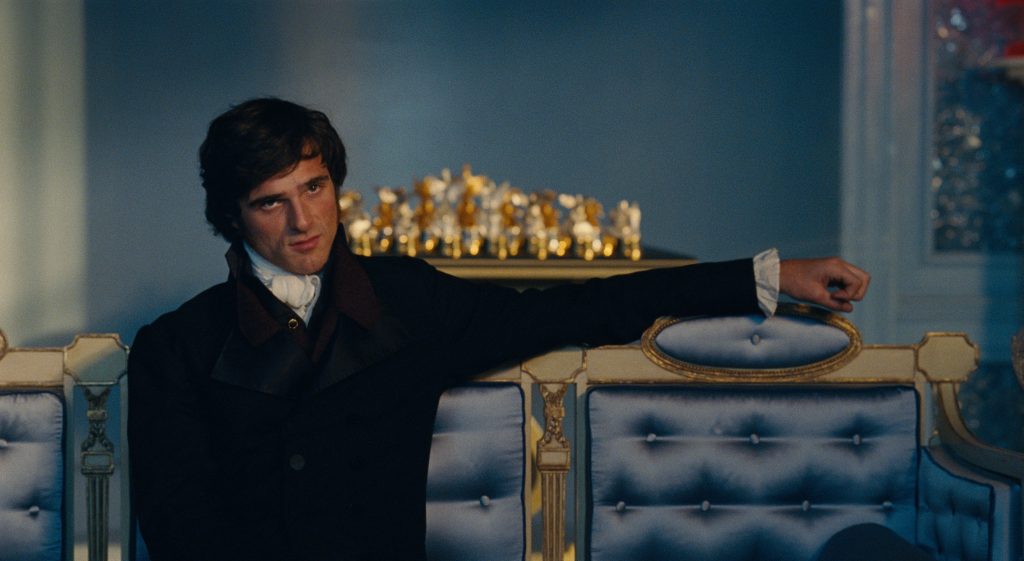
In previous screen portrayals of grown-up Heathcliff – Laurence Olivier in 1939, Timothy Dalton in 1970, and Ralph Fiennes in 1992, with Richard Burton in a 90-minute DuPont Show of the Month in 1958 and Tom Hardy in a two-part series on Masterpiece Theatre in 2009 — all were white.
Only one – James Howson, a black actor, portrayed the brooding anti-hero in a 2011 film by director Andrea Arnold. So, the debate continues.
The tone is troubling too – Elordi is never savage or a brute to Robbie, and she’s not nearly as wild as the book depicts Cathy. Their relationship, so-called “forbidden,” was thwarted because of societal constraints in the Victorian Era.
Fennell gussied up the look with ready-for-influencers’ glossiness that is distracting and merely decorative — and at times, not period-appropriate.
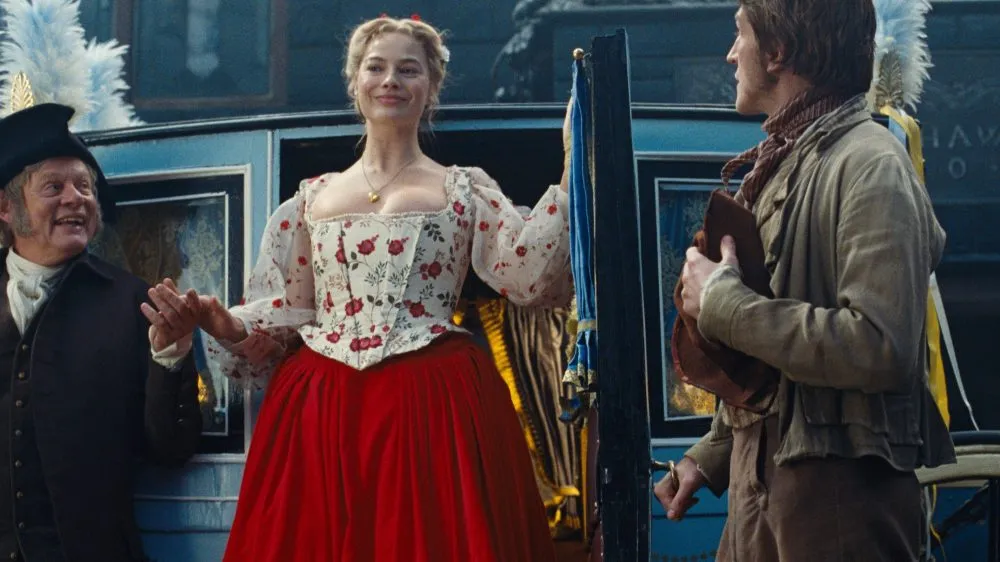
The shiny surface spotlights the crafts over substance, foregoing the book’s deeper meaning about twisted, destructive intergenerational consequences because Fennell cut out the second half.
She has reduced this timeless tale to a tedious 2 hours, 16 minutes of fan fiction, with too many scenes reminiscent of 1990s perfume ads, complete with.artsy shadows and peculiar attitudes.
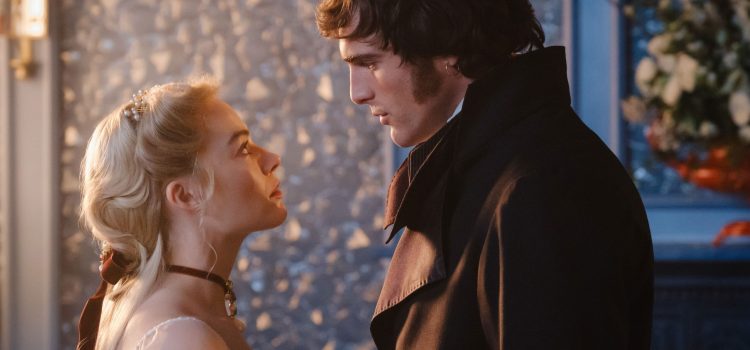
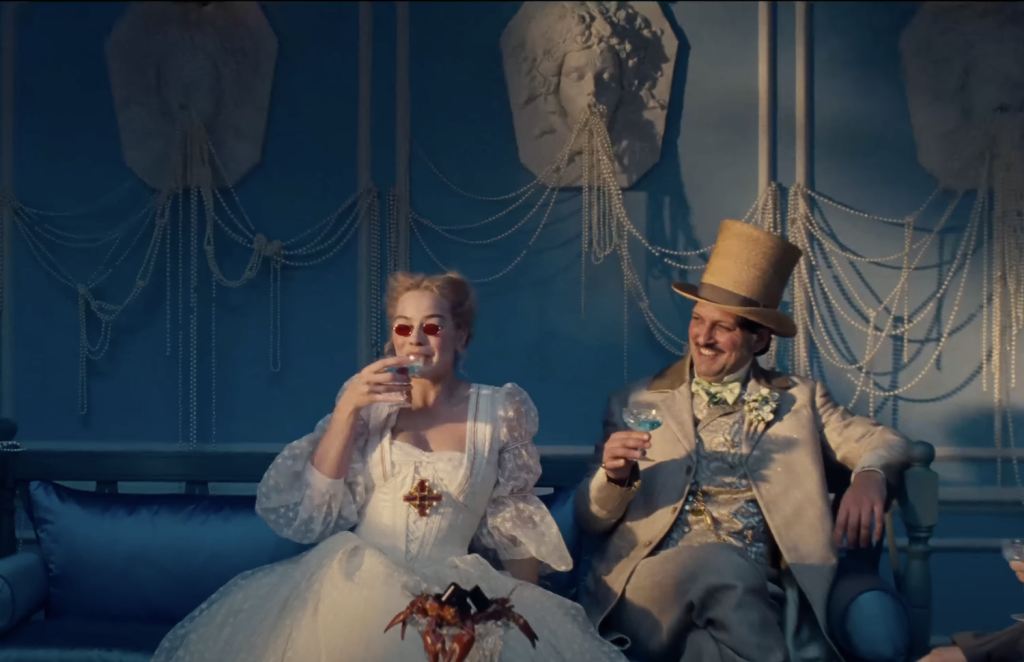
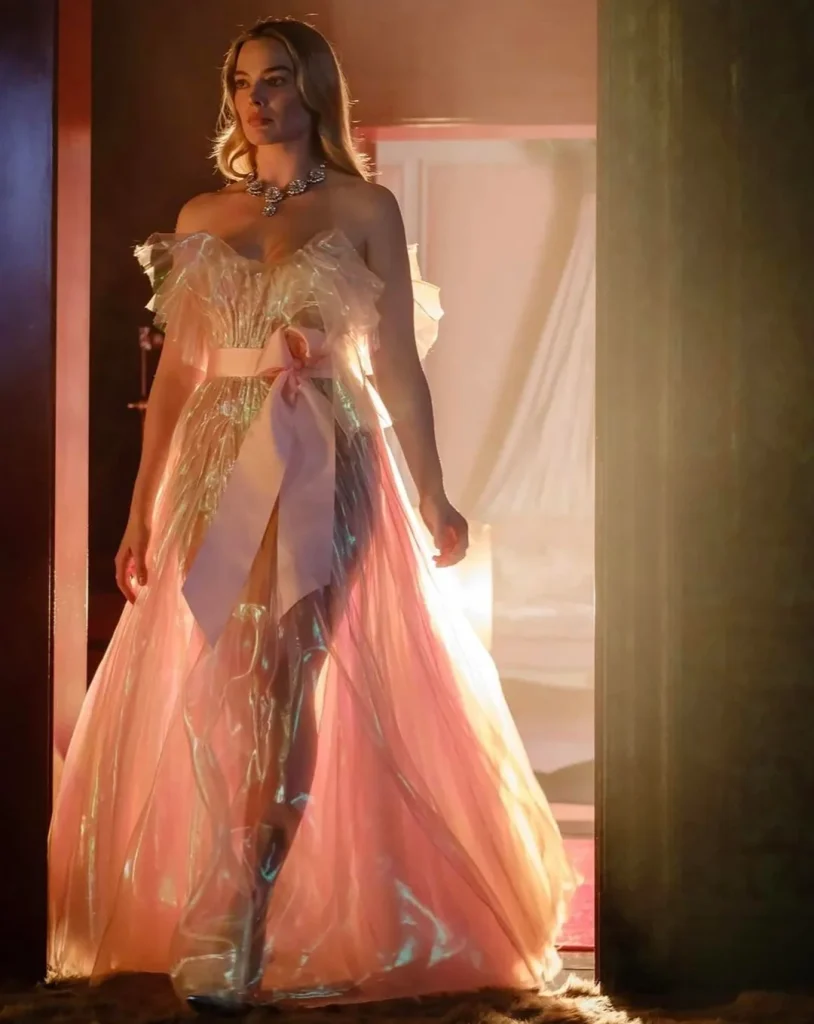
Costume designer Jacqueline Durran goes increasingly over-the-top with Catherine’s opulent, outlandish outfits – including an iridescent cellophane dress accented with a large pink bow, as if she’s a gift for her new husband. How meta!
She and production designer Suzie Davis get carried away with a color palette emphasizing red and pink. An odd collection of leeches on the wall of Catherine’s palatial dainty pink-and-freckled bedroom is a ridiculous misuse of the era’s medical customs.
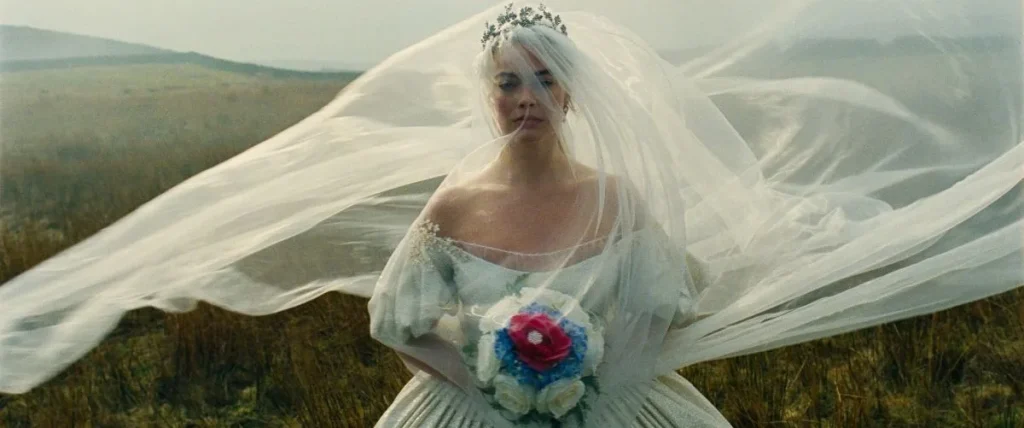
Oscar-winning cinematographer Linus Sandgren (“La La Land”) emphasizes unrelenting weather elements to convey the windy, rainy and foggy conditions of the rugged moors, employing impressionistic lighting and sweeping long takes to heighten the gritty geographic-specific realism.
When Cathy marries aristocratic Edgar Linton (Shazad Latif) of neighboring estate Thrushcross Grange for financial stability, as her gambling drunkard father (Martin Clunes) has frittered away their fortune, a devastated Heathcliff feels betrayed and leaves, only to come back five years later a rich man.
After he buys Wuthering Heights, Heathcliff later seeks revenge on everyone who has wronged him (although the film misses the mark here by not continuing that storyline). As soulmates, he and Catherine maintain an intense and tumultuous relationship, more sexually explicit here than the 18th-century book.
Spitefully, he marries Edgar’s sheltered, child-like sister Isabella (a terrific Alison Oliver). This sadistic-masochistic relationship is the film’s most troubling insertion, next to the shocking hanging scene that opens the film as a sexually arousing public event (things you can’t unsee).
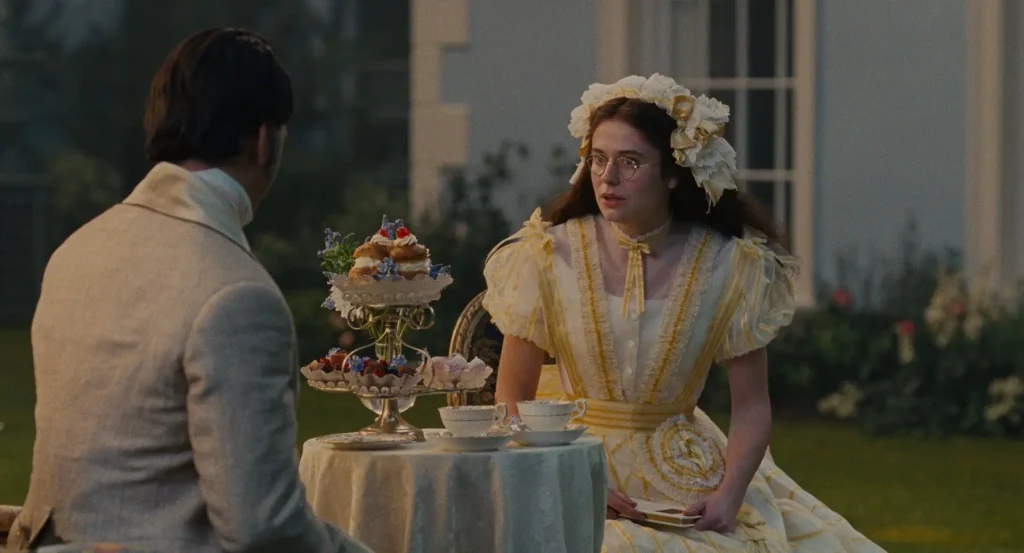
Known for her provocative, twisted takes on relationships (“Promising Young Woman,” “Saltburn”), Fennell has established herself as someone with a fresh, unique vision. In this strange misfire, the mood is more important than the message, and her tinkering has cut out some crucial characters or revised them in ways that don’t make sense.
She eliminated Catherine’s bully brother Hindley, who was cruel to Heathcliff while the dad was kind, changed the parents’ narratives, and dropped the second half of the book, among other puzzlers.
Therefore, characters aren’t haunted by the tragic past, and the supernatural elements aren’t brought up. That’s a huge part of this story. Fennell didn’t want to go the distance, and because of that, the character development is scattered.
Fennell has made Nelly Dean, the maid who is more of a Heathcliff ally in the book, the villain here, and is slyly played by the superb Oscar-nominated actress Hong Chau as someone wounded and lashing out (Mrs. Danvers, anyone?). It’s another confusing element.
In her Oscar-winning screenplay for “Promising Young Woman,” Fennell presented an original view on gender disparity, and “Saltburn” was an intriguing class clash, a twisty take on “The Talented Mr. Ripley,” both ramping up shocks and dropping jaws — effective contemporary pieces that kickstarted conversations (and brisk business for the novelty candle “Jacob Elordi’s Bathwater”).
The frenzy/firestorm continues here with a polarizing work, but this time it’s rooted in a beloved book. Does the original intent come through for the uninitiated, who aren’t familiar with the star-crossed lovers’ tragedy that continues to fascinate?
What will be the lasting impressions? It seems disposable, save for.bizarre images of dog collars, messy broken eggs, mountains of gin bottles, scarred flesh, pig’s blood, voyeurism, eccentric dolls, and lots of ribbons.
To add to its surreal aesthetic, Charli XCX, a pop star known for her synth-electro beats, has created a modern techno soundtrack.
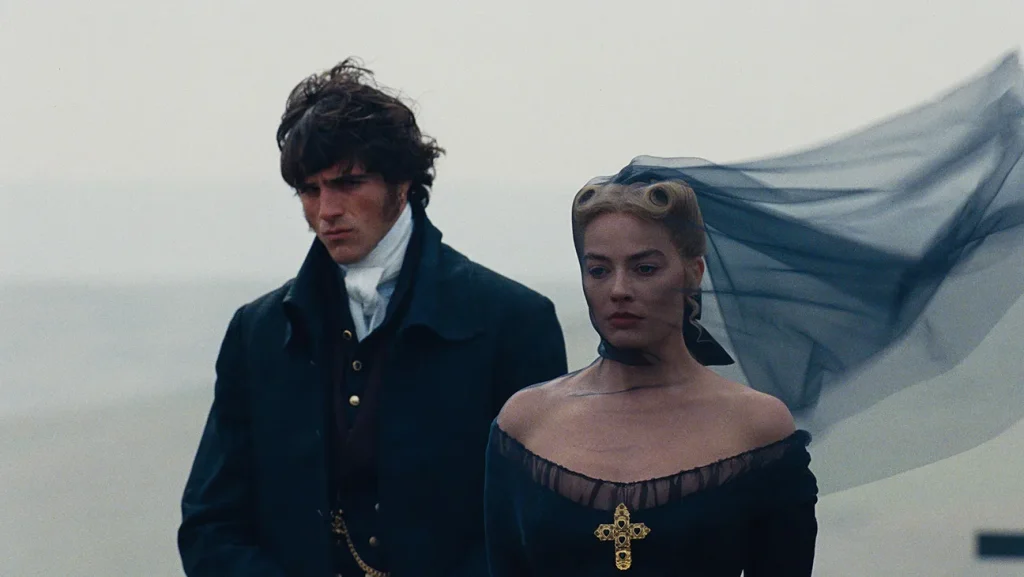
In its favor, Fennell kept some of the most revered quotes in: “Whatever our souls are made of, his and mine are the same,” “I cannot live without my life! I cannot live without my soul!” and “I have not broken your heart—you have broken it; and in breaking it, you have broken mine.”
If an adaptation – say Baz Luhrmann’s “Romeo + Juliet” and “The Great Gatsby” — brings a dynamic energy to the moral complexities of a moment in time – then we can accept the changes, but when one ignores the psychology in favor of spectacle, it’s merely a parade of ‘strike-a-pose’ cosplay scenes.
Call me a romantic traditionalist, but this ‘loosely based’ adaptation is cringy, turgid, unnecessary and interminable.
“Wuthering Heights” is a 2026 period drama romance directed by Emerald Fennell and starring Margot Robbie, Jacob Elordi, Hong Chau, Shazad Latif, Alison Oliver, Martin Clunes, Owen Cooper and Charlotte Mellington. It is rated R for sexual content, some violent content and language and runs 2 hours, 16 minutes. It opens in theaters Feb. 13. Lynn’s Grade: D.

Lynn (Zipfel) Venhaus has had a continuous byline in St. Louis metro region publications since 1978. She writes features and news for Belleville News-Democrat and contributes to St. Louis magazine and other publications.
She is a Rotten Tomatoes-approved film critic, currently reviews films for Webster-Kirkwood Times and KTRS Radio, covers entertainment for PopLifeSTL.com and co-hosts podcast PopLifeSTL.com…Presents.
She is a member of Critics Choice Association, where she serves on the women’s and marketing committees; Alliance of Women Film Journalists; and on the board of the St. Louis Film Critics Association. She is a founding and board member of the St. Louis Theater Circle.
She is retired from teaching journalism/media as an adjunct college instructor.