
By Lynn Venhaus

Laying the foundation for the palace intrigue in Shakespeare’s tragic “Hamlet,” the original play “Elsinore” is an interesting interpretation of those familiar characters in an affecting prequel.

Known for its bold choices, local theater company Chorus of Fools has mounted artistic director Eric Satterfield’s 2021 play updated by co-playwrights David Nonemaker and Satterfield, who also directed.

How did Denmark become so rotten? Satterfield wants answers and his strong cast will tell a more nuanced story.

Through compelling performances, this ensemble delves into the unraveling of the royal family and how the political scheming escalates, which eventually leads to the kingdom’s instability and headed to war with Norway.

Most remarkable is how much the language sounds like the Bard in tone and tempo. Smartly written with style, wit and theatricality, “Elsinore” plausibly imagines the backstories.
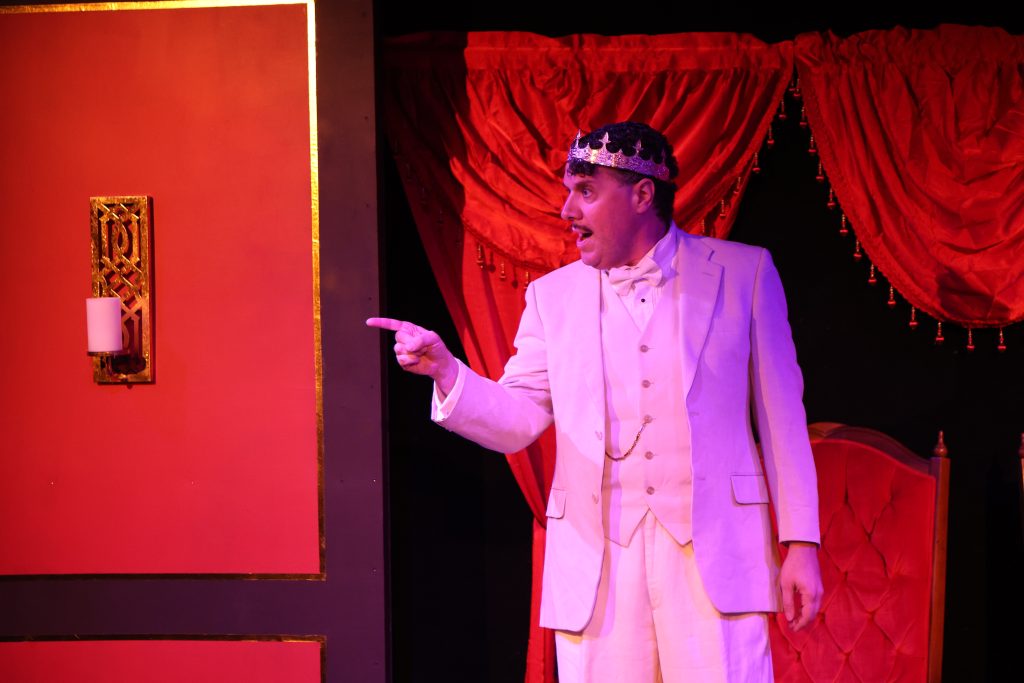
John Wolbers is the domineering King Hamlet. Photo by David Nonemaker.

The playwrights obviously have read and studied Shakespeare, presenting a new angle on one of literature’s most influential works. After all, “Hamlet” has been adapted in many ways (“The Lion King,” anyone?)

A rewarding aspect is its exploration of many of the same universal themes, such as making one’s mark, duty, honor, loyalty, destiny and revenge. However, in these earlier incarnations, character transformations and motivations give the actors a juicy challenge.

We may think we know these characters, but by the time Shakespeare crafted them, they had been developed by circumstances, revealing their true nature.  In the prequel, they are forging their paths.

While the prince of Denmark has always been fascinating, in the before times he is secondary to Claudius, who has the most complex character arc. Joseph Garner, one of the region’s most versatile performers, has been a formidable stage presence in supporting roles. As the king’s brother and emissary, he delivers a dynamic characterization rich in detail.

Initially, a dedicated selfless royal, Claudius undergoes personal tragedies and moral dilemmas that lead to his stunning power-grab as he ascends to the throne while breaking up his brother’s family.
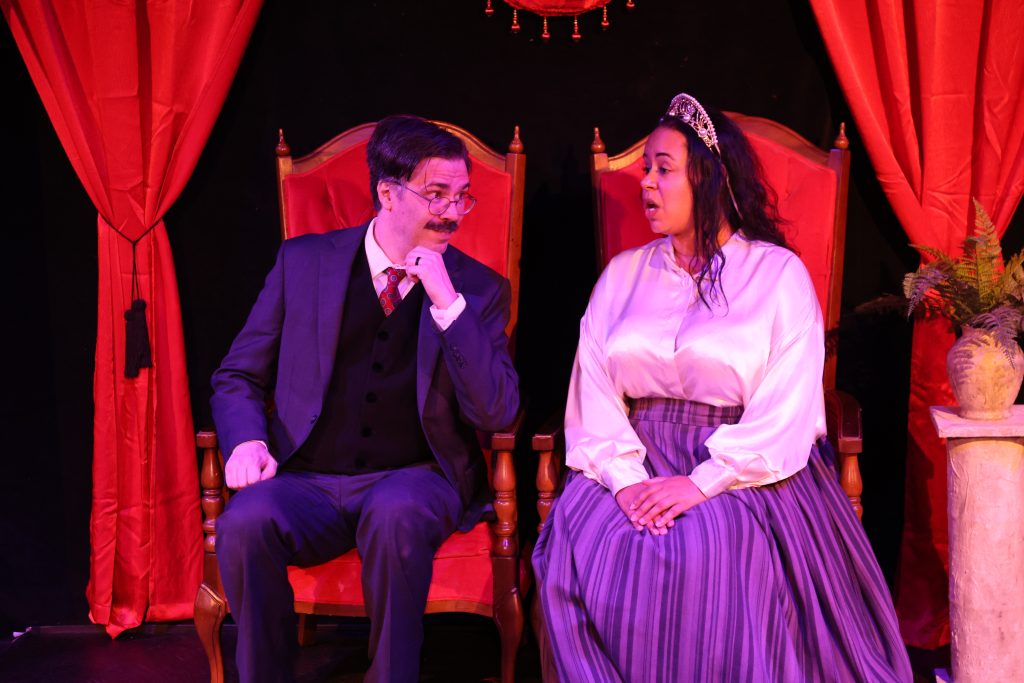
Joseph Garner and Jocelyn Padilla as Claudius and Gertrude. Photo by David Nonemaker.

King Hamlet is not a benevolent ruler. John Wolbers portrays him as imperious and devious, and with his son Hamlet, he is demanding and impatient. The young heir is finding his way, clashing with his father and being more comfortable around his uncle.

He starts brooding, and Andre Eslamian gives the intense, rebellious lad an emotional depth while conveying quicksilver moods. He’s confused and angry in interactions with his father, merry with his goofy friends Rosencrantz and Guildenstern, playful with his cousin Claudius, and tender with Ophelia.

His father is not fond of his childhood pals, and Xander Huber, as Rosencrantz, and Zach Pierson, as Guildenstern, display why. As the bumbling buddies, they demonstrate sharp comic timing and play off each other well, adept at slapstick.

Chuck Brinkley, equally good at comedy and drama, adds moments of daffiness to the garrulous Polonius, who is Claudius’ trusted advisor. But he’s capable of conniving. (And what a trouper — he really did break his ankle, hence the assistance.)

Madness has not yet affected major players. Ophelia becomes a handmaiden for Queen Gertrude. She is an intelligent, curious girl, devoted to her father Polonius and gives her heart to Hamlet. Hannah Geisz plays her as a spirited, virtuous member of the court – but one who won’t be an afterthought.
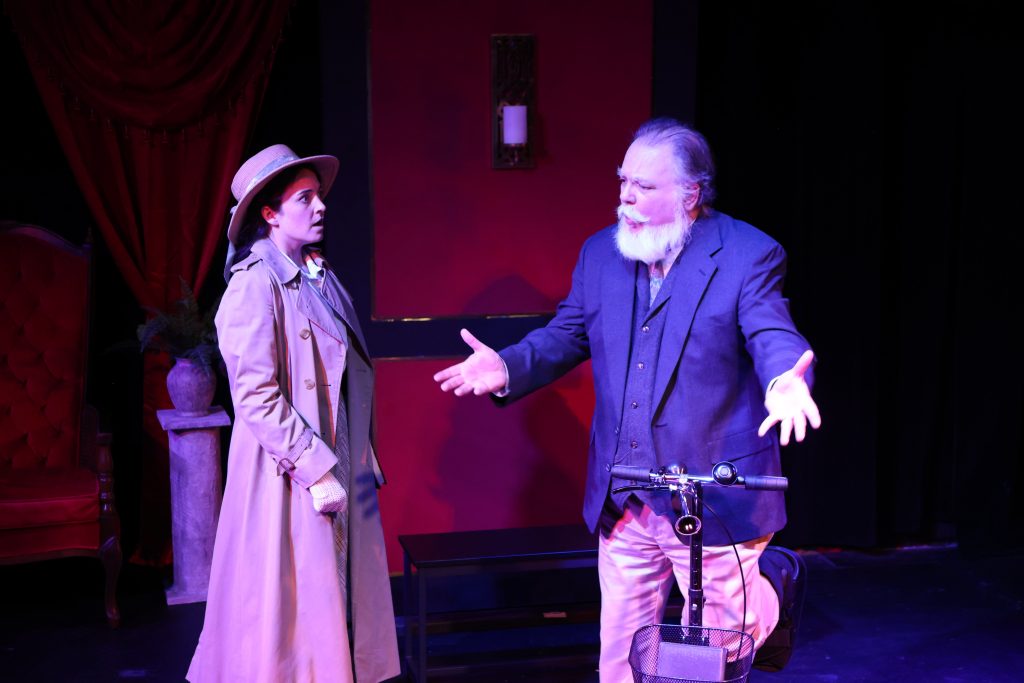
Hannah Geisz and Chuck Brinkley as Ophelia and Polonius. Photo by David Nonemaker.

As Gertrude, Jocelyn Padilla is an obedient wife and dutiful mother. She is hurt by the king’s gruff treatment of her, and after his untimely death, brightens under the gaze of Claudius.

Huber and Pierson each fill another role – Huber is Lord Waldemar and Pierson as young Claudius. Joe Kercher handles three brief roles – Lord Olaf, Laertes and a hooded figure. Rose Reiker is Osric, a courtier and messenger.

Claudius, who becomes a widower after his loving wife Colette (Lexie Johnson) and their beloved son Claudius (Zach Pierson), died in a shipwreck, has somewhat of a reset.

He has lost faith after those devastating losses, becoming bitter and angry. He disagrees with his brother’s decisions and ruthlessly sets a course to takeover.

“Hamlet” was Shakespeare’s longest play, and this version is in three acts, with two intermissions. The second act resumes 14 years later, and the third is one year after that.
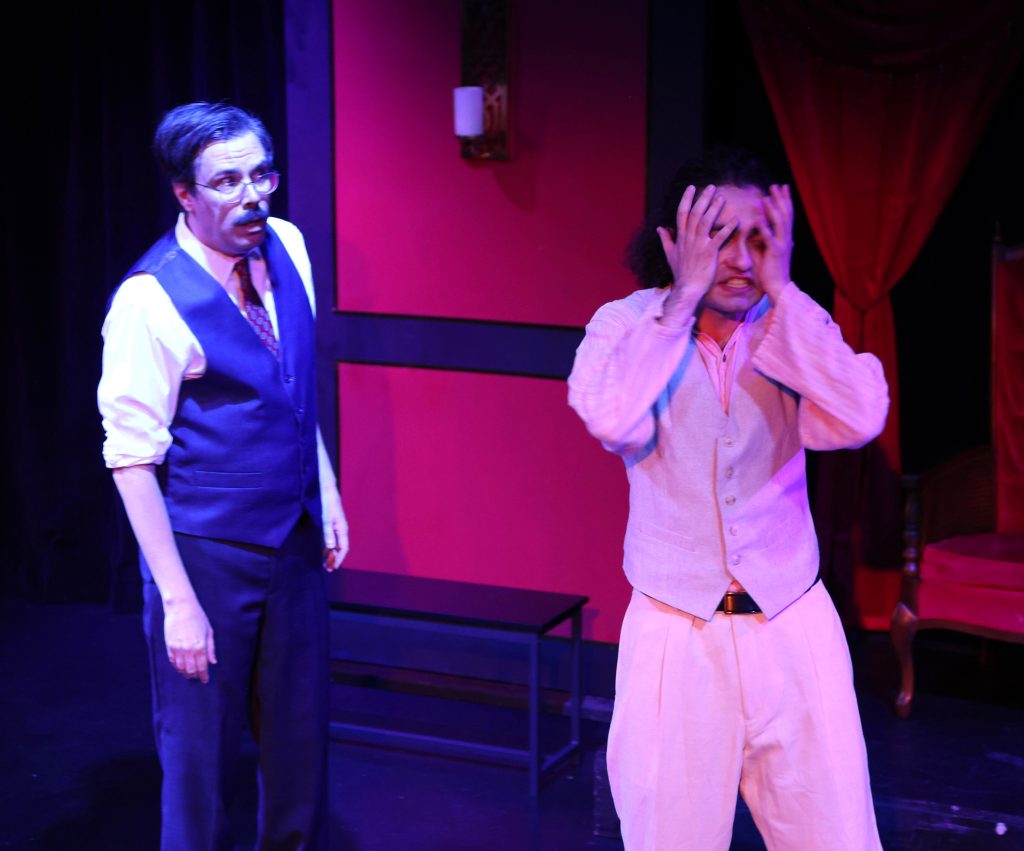
Joseph Garner, Andre Eslamian as Claudius and Hamlet. Photo by David Nonemaker.

The small company, with a modest budget, cleverly depicts the castle’s throne room, Claudius’ family sitting room, and the orchard where King Hamlet often napped. Vickie Delmas worked on the set design with Satterfield, and took care of props..

With its “Downtown Abbey” inspired Edwardian setting and period costumes, “Elsinore” creates an insular world where loyalty is demanded while secrets and lies are part of the growing corruption.

Costume designer Celeste Gardner paired different textures together to appropriately outfit the characters, with her work particularly noteworthy for Ophelia and Gertrude.

Bradley Rohlf’s atmospheric lighting design highlighted an impending doom, while giving the ghosts an other-worldly illumination. Satterfield’s outstanding sound design included imaginative needle drops and a regal music score to reflect the spreading darkness.

Other contributors were Ryan Lawson-Maeske, fight choreographer; Jen Kerner, accessibility consultant; Tress Kurzym, intimacy director; and Nikki Pilato, dramaturg (and also assistant director). Moira Healy was the stage manager.

With a castle community sensibility, the savvy cast transported us to a troubled time that has been examined through the ages, and managed to engage us with different, interesting angles. They skillfully conveyed Satterfield’s and Nonemaker’s intentions in a smart, entertaining presentation.
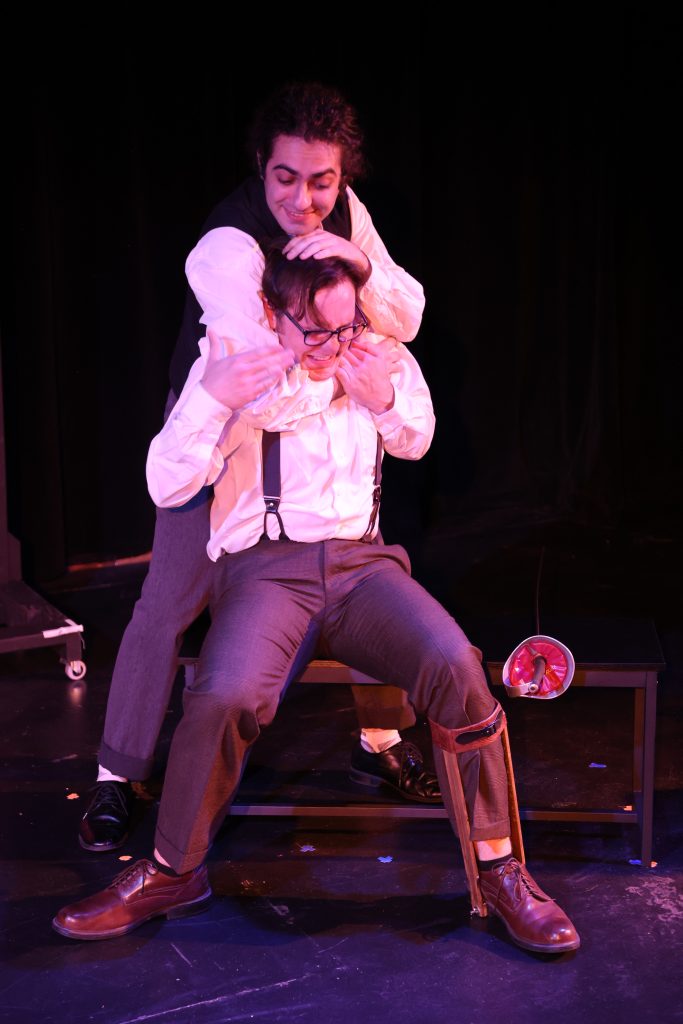
Andre Eslamian, Zach Pierson as the young Hamlet and young Claudius. Photo by David Nonemaker.

Chorus of Fools presents “Elsinore” Thursdays through Saturdays at 7:30 p.m. from Oct. 9 through Oct. 19 at The Greenfinch Theatre and Dive Bar, 2525 S. Jefferson. For more information: greenfinchstl.com/events

By Lynn Venhaus

A bold, ambitious “A Streetcar Named Desire” is the centerpiece in this year’s 10th annual Tennessee Williams Festival St. Louis.

A contemporary interpretation of the playwright’s most iconic work nearly 80 years after his masterpiece stunned Broadway audiences, director Michael James Reed asks us to look at the Pulitzer Prize and Tony-winning drama with fresh eyes. He prefers the term ‘reconstruction’ instead of ‘deconstruction,’ and that is what he delivers.

Already a relic from the past, fading and fragile Southern belle Blanche DuBois arrives at her sister Stella’s doorstep, to stay at her run-down two-room flat. Stella’s brutish working-class husband Stanley Kowalski isn’t aware of her visit and, immediately agitated, locks horns with his attention-seeking sister-in-law.

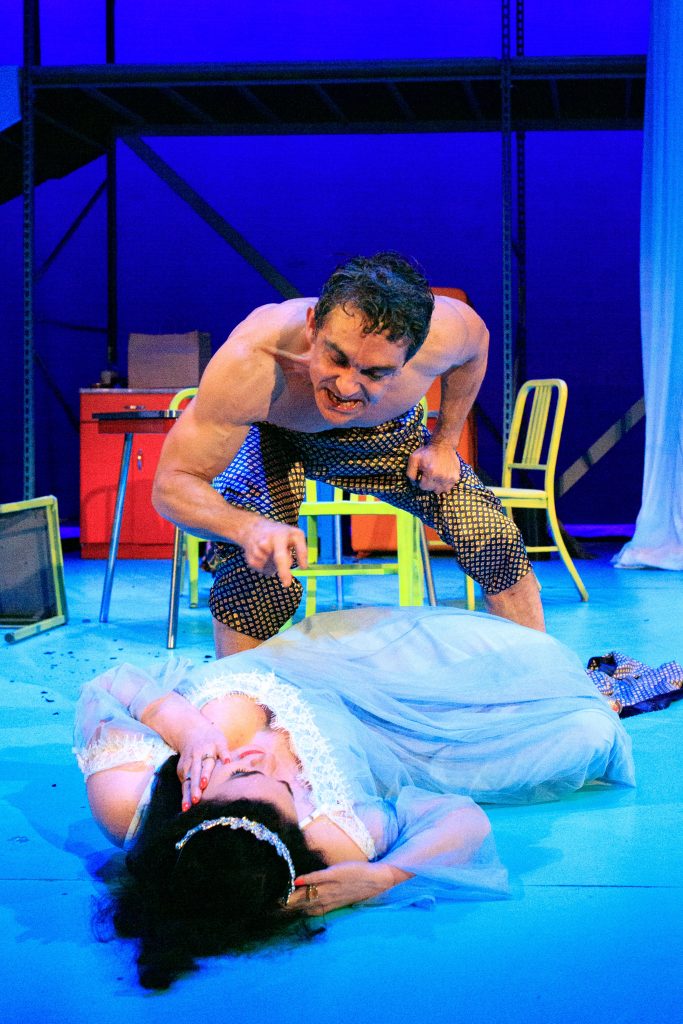
Over the course of the stifling summer, tempers flare, and Stanley becomes increasingly volatile, his bullying obsessive, while Blanche unravels – her displacement, discomfort and disorders adding to her breakdown. Stanley’s verbal and physical abuse becomes too much, leading to sexual abuse.

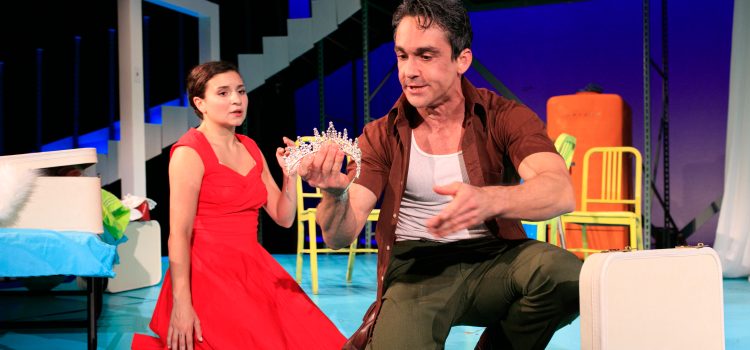
Todd D’Amour and Beth Bartley. Suzy Gorman photo.

This doomed power play leaves wreckage from a predator and prey situation, for Blanche appears like a frightened caged animal, her feminine wiles no longer effective.

Her final line, as she clings to a gentle doctor (David Wassilak) escorting her away: “I have always depended on the kindness of strangers” is shattering.

The cast portrays these indelible roles through a lens that is both rooted in Tennessee Williams’ dysfunctional framework and then Reed’s challenge to bring something different to their characterizations.

Some of the choices go outside the lines of our perceptions — with Todd D’Amour’s tightly wound abusive Stanley displaying pathological cruelty, Beth Bartley’s grittier desperate Blanche masking her many indignities, and Isa Venere’s younger Stella enabling and helpless. Think of it as an American horror story in retrospect.

As the local festival has amplified the past 10 years, Williams’ works are about loss in some way – of beauty, love, youth, identity and/or way of life, and this manifests through a range of characters developed during a career spanning 50 years, from the 1930s to his death in 1983 at age 71. After “The Glass Menagerie” made him a rising star in 1944, he opened 14 plays on Broadway from 1947 to 1980.

This is the first time that I really felt Williams’ own torment, of how humiliating it was for him to work with bullies like Stanley at the International Shoe Company during his formative years here, at a time when he was not free to express his sexuality and there was a very specific masculine ‘standard’ in society, not to mention another variation on his beloved sister Rose, mentally challenged at a time it was not understood. His own feelings poured out in these characters.

Looking back today, one sees societal changes colliding in Williams’ most famous work –the new South vs. the past, and women’s evolution regarding gender roles.

Post-war America, during this long, hot summer on Elysian Fields Street, adjacent to the French Quarter of New Orleans, we feel the heat. Sometimes, the atmosphere feels suffocating without any relief, while other times it feels like the tension is so thick and volatile, it could combust.

In that setting, the raw intensity seeps through, revealing harsh truths and emphasizes Williams’ timeless themes of illusion, trauma, power, control, and desire, and when reality hits head-on, how it changes expectations.

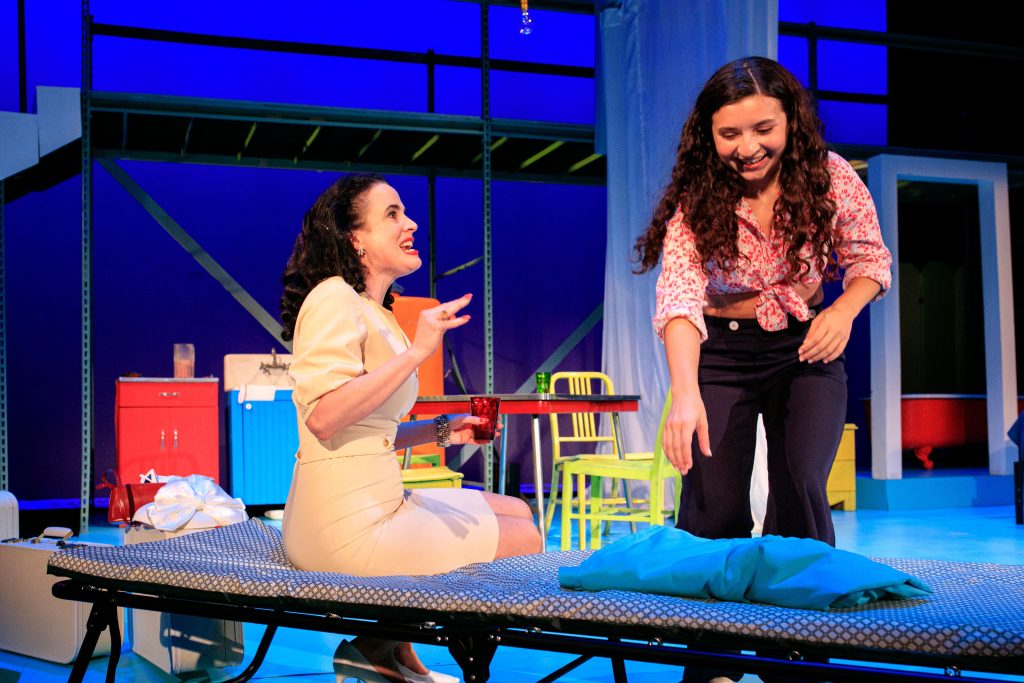
Beth Bartley and Isa Venere. Photo by Suzy Gorman.

After the play debuted to a thunderous 7-minute standing ovation on Dec. 3, 1947, it was adapted into an acclaimed Academy Award-winning film in 1951, with three of the four principals reprising their roles– Marlon Brando, Kim Hunter and Karl Malden, but Vivien Leigh as Blanche instead of Jessica Tandy.

Let’s face it, comparisons are inevitable, and “Streetcar” continues to be performed around the globe, never out of view. Andre Previn’s 1998 opera is part of Opera Theatre of St. Louis’ line-up next summer and a 2022 London play revival transferred to off-Broadway earlier this year for a limited run starring acclaimed Irish actor Paul Mescal, who won an Olivier Award as Stanley, and Spanish-British actress Patsy Ferran as Blanche.

The roles are demanding because they can easily go over-the-top into caricatures. After all, their indelible work has been exaggerated into comic archetypes in pop culture for decades.

Bartley’s panicked Blanche reunites with her sister, and Venere’s Stella, goes into caretaker mode, even when she learns that their family estate, Belle Rive in Laurel, Mississippi, has been lost to creditors.

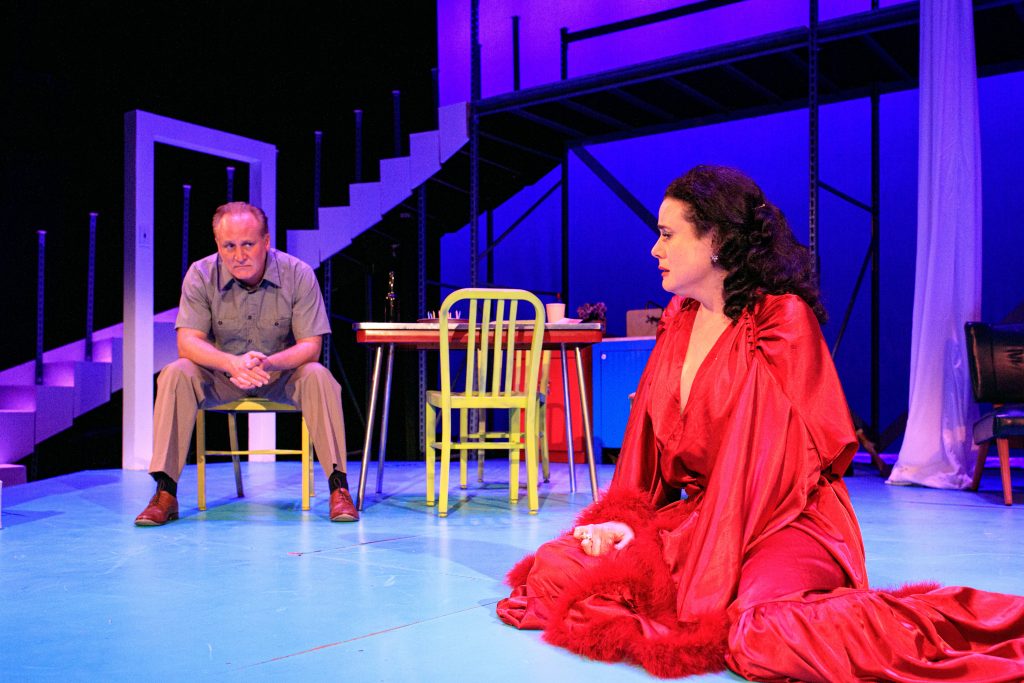
Eric Dean White and Beth Bartley as Mitch and Blanche. Photo by Suzy Gorman.

A traumatized Blanche recalls taking care of their dying relatives without help. She says she has taken a leave of absence from teaching high school literature because her nerves are so frayed. Bartley and Venere share a comfortable chemistry.

Enter suspicious, coarse and crude Stanley. D’Amour isn’t imposing, nor is he articulate. With mumbled lines, he’s hard to understand and harder to relate to, and that’s unfortunate because it throws the balance off.

Stella, caught in the middle, must try to keep the peace between the warring factions, but she is ineffective. She and Stanley share a tempestuous sexual attraction, and his aggressive domestic violence is despicable (never acceptable, no matter what era, but being a batterer fits his offensive personality).

While Stanley seethes, Blanche makes herself at home, languishing in the bathtub, lounging in their shabby quarters, secretly drinking, and putting on her Southern Belle airs.

With her fanciful ways, she attracts an admirer — Stanley’s war buddy and poker-playing friend, Harold “Mitch” Mitchell (Eric Dean White), a bachelor who lives with his ailing mother. A raging Stanley will destroy that tender union after uncovering Blanche’s scandalous secrets back home.

Photo by Suzy Gorman

Trembling like an older, needier Judy Garland, whom she resembles, and acting delusional like the moody narcissistic Norma Desmond in “Sunset Boulevard,” Bartley is heart-breaking living out a fantasy life while she is clearly in decline. Now that we know more about mental health, it’s obvious Blanche has Histrionic Personality Disorder.

It’s a devastating portrait, and she also reveals a skilled manipulator, who has managed to survive using the theatrical tools in her toolbox.

As Mitch, White shows his sweet side, and two lonely people find comfort in each other. She’s flirtatious while she tells tall tales, and he’s smitten. When he confronts Blanche with what he’s discovered about her many liaisons and seductions in her hometown, though, his anger is visible – he’s done with being a nice guy.

The other supporting characters are lived-in examples of the area – top-shelf veterans Emily Baker and Isaiah DiLorenzo are their loud neighbors (and landlords) Eunice and Steve, who live upstairs. DiLorenzo and Wassilak are the two cast members that were in the festival’s award-winning 2018 “Streetcar” production.

Jeremiah King is a young collector, Cedric Leiba Jr. is another poker player, and Gwynneth Rausch is a nurse. Offstage, Jocelyn Padilla voices a flower collector. She also served as the intimacy coordinator. Jack Kalan was the fight choreographer.

Both Matthew McCarthy’s moody lighting design and Phillip Evans’ sound design are strong in this production, with dramatic illuminations and a discordant cacophony and jazzy-blues music adding to the atmosphere.

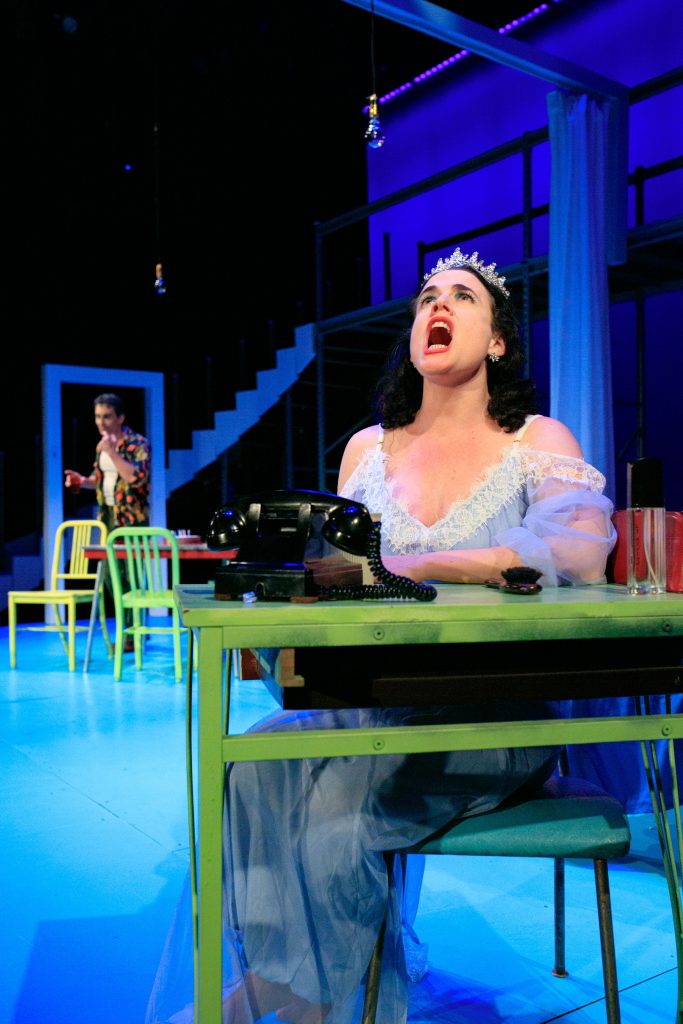
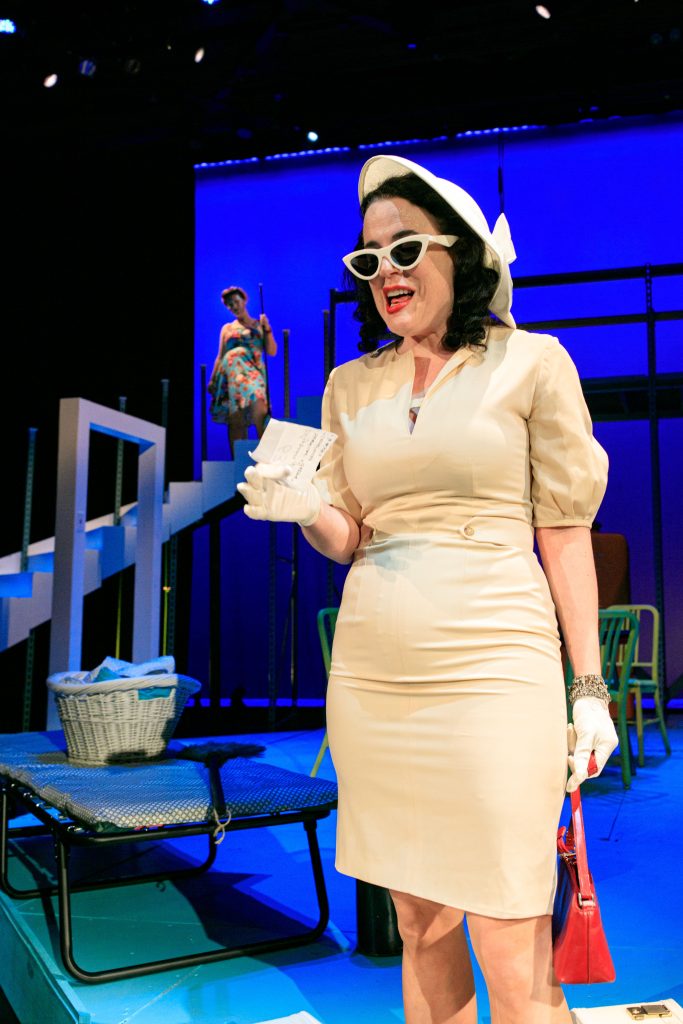
Two elements puzzled me. For a story that emphasizes claustrophobia in such small quarters, the set design did not appear so. Patrick Huber favored a nod to mid-century modern décor, with a neon palette more suited to another era or pre-school, that was stretched out on the Grandel stage.

Shevare Perry’s costume design for most of the cast worked fine, but Blanche’s daytime outfits appeared misfitting and Stella’s pants in the opening scene were jarring. Blanche’s flouncy nightgowns and bright red satin robe were just right.

Perhaps those choices were all in keeping with tossing out pre-conceived notions for this production.

Set design by Patrick Huber, lighting design by Matthew McCarthy. Photo by Suzy Gorman.

“A Streetcar Named Desire” maintains its power in Williams’ vivid poetic realism and lyrical dialogue that continues to captivate. While I prefer more emotionally charged character renderings, which was what Blanche aimed for, instead of a detached one like Stanley and Stella, these were choices made for a different take. In real life, D’Amour and Bartley are married.

Williams’ view of outsiders, of deeply flawed humans, continues to resonate some 80 years later, and that’s worth celebrating.

The Tennessee Williams Festival presents “A Streetcar Named Desire” Aug. 7 – 17 at the Grandel Theatre in Grand Center. For more information, visit www.twstl.org

Blanche DuBois (Beth Bartley). Photo by Suzy Gorman.

By Lynn Venhaus

Two life-affirming original one-acts grab the heart through humor and genuine emotion for a moving night of original stories in “As Told By Us” presented by Prison Performing Arts’ Alumni Theatre Company.

Featuring works by two Missouri playwrights who have written from their heart about home, both strike universal chords with their observations on life, love, loss and surviving despair, heartaches and regrets. These are characters that feel real.

“Go Before I Do,” written by Hazel McIntire, features Katherine Leemon as a world-weary mixologist working at a craft cocktail bar. In walks a daughter who is meeting her father for a drink.

Jocelyn Padilla plays a sophisticated, well-traveled woman, and her dad, played by David Nonemaker is a typical Midwest good guy who likes simple things, and simple pleasures. They are dealing with the loss of their mother and wife – in different ways.

Under Eric Satterfield’s direction, it’s a lived-in portrait, warm with humor from quoting “The Golden Girls” but also expressing the aches of loss, and the daunting task of moving forward.

Jocelyn Padilla and David Nonemaker. Photo by RayBayCreates.

The characters explore grief and loss as they grow and learn to understand. Its emotional impact sneaks up on you when you least expect it. “Go Before I Do” was first presented by SATE at their Aphra Behn Festival in 2022.

It’s a good start to this two-act program, setting the table for “Don’t Be a Hero, Thank You.”

Leemon, who played the bartender in the first one-act, is the playwright of the exceptional “Don’t Be a Hero, Thank You.” Be prepared for its emotional wallop as force of nature LaWanda Jackson is raw and vulnerable in a remarkably honest performance.

Jackson mesmerizes in a hard-fought journey to make sense of her incarceration and moving beyond those years with self-acceptance, and a desire to be everything she can become.

Directed by Rachel Tibbetts, the play unfolds with warmth, humor, sweetness, light, interesting observations and outlooks on life. When everything is taken from you, how do you bounce back and re-enter society?

Kristen Strom and LaWanda Jackson. Photo by RayBayCreates.

This tale also tackles friendship, with Kristen Strom in several supporting roles. When Jackson talks about what it means to be a contemporary woman, she is as funny as a stand-up comedian delivering a monologue. Sarcasm with a smile, delivered sincerely. But she always keeps it real, and her ability to express a full range of emotions in that one-act is impressive..

Jackson’s work is one of my favorite performances of the year, and the play one of the candidates for Best New Play.

The tech work is crisp, with Bess Moynihan’s astute lighting design and a set design that’s reveal is best not spoiled (misty-eyed memories!), Brian Dooley’s expert sound design – and deft needle drops, and Tyler White’s modern casual costume design. Eric Satterfield’s project designs are also noteworthy.

In the intimate confines of the Greenfinch performance space, Prison Performing Arts presented a cozy, comforting environment to share beautiful stories about going through the hard knocks of life and coming through the other side. Poignant and powerful, they resonated deeply because two pieces were a sample of joy that can be found in the unlikeliest of places and with unexpected connections.

PPA presents “As Told By Us” Thursday through Sunday, Nov. 14-17, at the Greenfinch Theatre & Dive 2525 S. Jefferson Avenue, St. Louis, Mo 63104. Sunday matinee at 2 p.m., evenings Thursday – Saturday at 7:30 p.m. Tickets can be purchased through Purple Pass. For more information, please visit www.prisonperformingarts.org. Content warning/Trigger warning:Be advised that this production contains mature content and references to suicide.

LaWanda Jackson as Kate spills her life story. Photo by RayBayCreates.