By Alex McPherson

Furious and scattershot, director Gore Verbinski’s madcap sci-fi parable “Good Luck, Have Fun, Don’t Die” has numerous incisive ideas about humanity’s dependence on technology but muddles them with a heavy dosage of smug humor.

One cannot accuse Verbinski of not being ambitious, though, with his latest effort bringing to mind a range of films including “Groundhog Day,” “The Terminator,” and “Everything Everywhere All At Once.” The film takes place in a near-future in which humanity’s addiction to technology has created a society of apathetic, homogenous-seeming beings doing nothing to stop society’s descent into tech company servitude. 

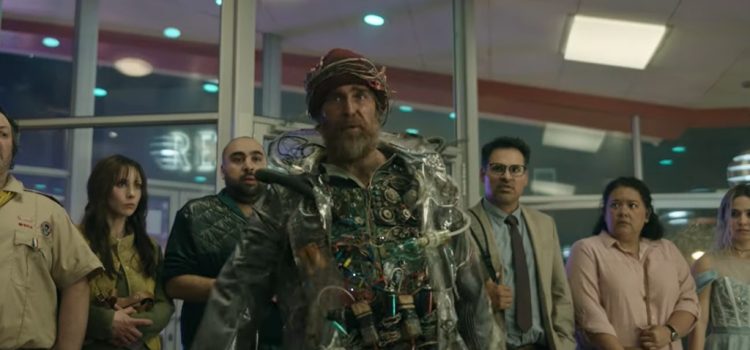
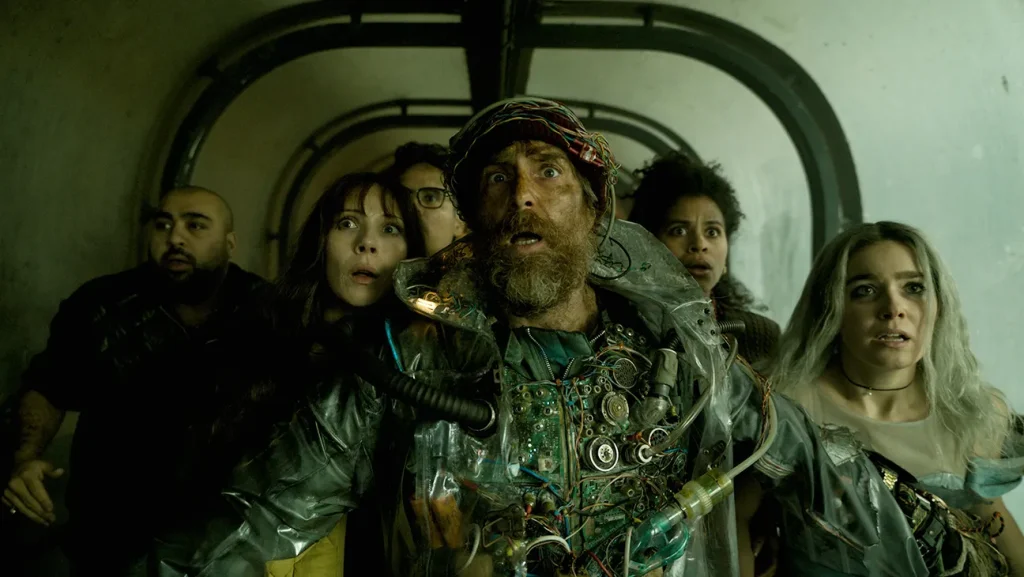
We open with an extended sequence featuring a disheveled, sardonic Man From the Future (Sam Rockwell) bursting into Norm’s Diner in Los Angeles in search of people to join him on an epic quest to prevent the AI apocalypse. He claims to have a bomb strapped beneath his transparent raincoat and launches into a speech about how technology has ruined modern life, insisting that time is of the absolute essence. 
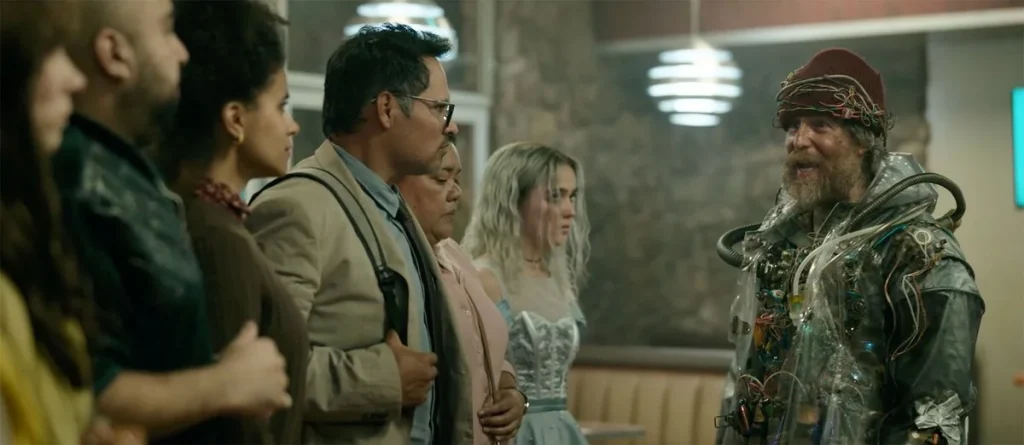
This isn’t the Man’s first rodeo, though; it’s actually his 117th attempt with this same batch of disbelieving patrons. All of his previous 116 attempts have ended in death for everyone involved (except him), with the Man “resetting” and trying to find the right combination of people necessary to complete his mission. This time could be different, though. 

The group the Man pseudo-forces to participate includes Mark (Michael Peña) and Janet (Zazie Beetz), a couple going through a rough patch who recently started new jobs as high school teachers. They are increasingly disturbed by their students’ obsession with their smartphones and cynical detachment from the outside world, even during a school shooting, which is treated like “just another day.”

There’s also Susan (Juno Temple), a mother who lost her son in that same shooting and whose grief is brushed away — there is, as a squad of local mothers tells her, a company that specializes in creating clones of children who died in school shootings. Yikes. 

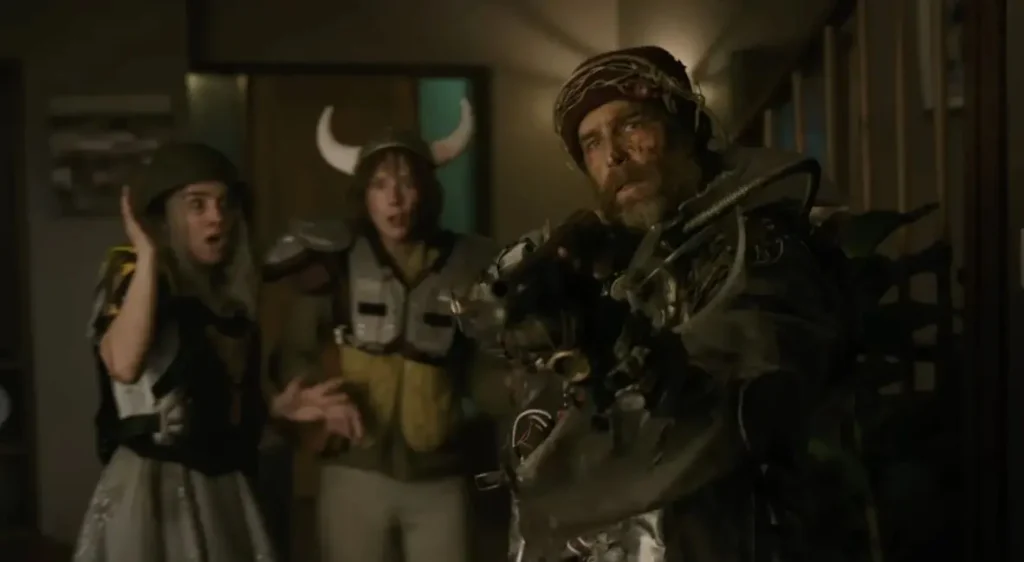
There’s Ingrid (Haley Lu Richardson), a severely depressed woman wearing an off-brand Disney princess costume who is literally allergic to Wi-Fi and smartphones. Along with a few other people who aren’t given much meaningful character development, the Man and his team embark on an increasingly loony journey.
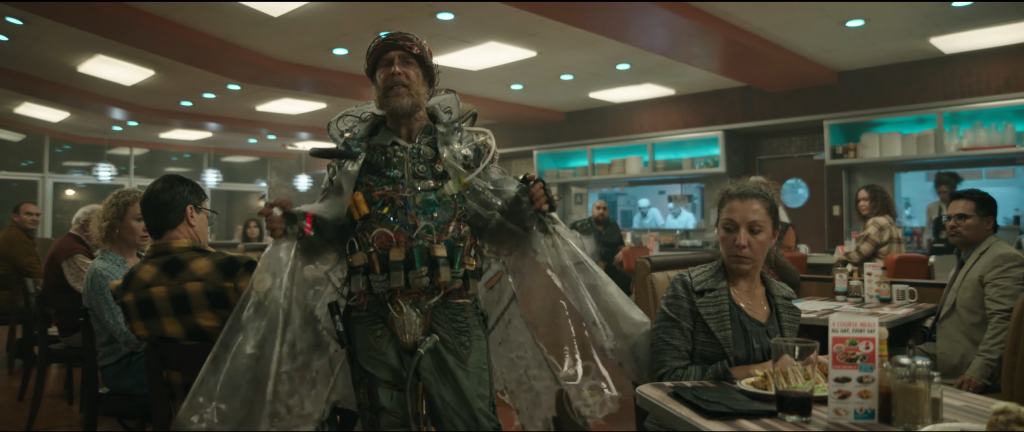
Mixing madcap sci-fi action with a decidedly nihilistic streak, “Good Luck, Have Fun, Don’t Die” is alternately amusing and exhausting over its 135-minute runtime. For all of Verbinski and screenwriter Matthew Robinson’s sharp thoughts on our technological hellscape (did you see how many SuperBowl ads were about AI?), there’s a shakiness to the film that draws you in and subsequently pushes you away. 

The film mines plentiful deadpan humor from the populace’s matter-of-fact reactions, whether it be judgy, entitled high schoolers glued to their phones, or Susan’s newly-cloned kid who is “ad-supported,” all while nobody is taking action to turn things around.

Even so, the film can’t decide between championing these idiosyncratic, reluctant heroes and reveling in the tech-addicted nastiness that surrounds them. Poignant moments are offset by edgelord, shock-value humor that is deeply proud of itself and leaves a cold aftertaste.

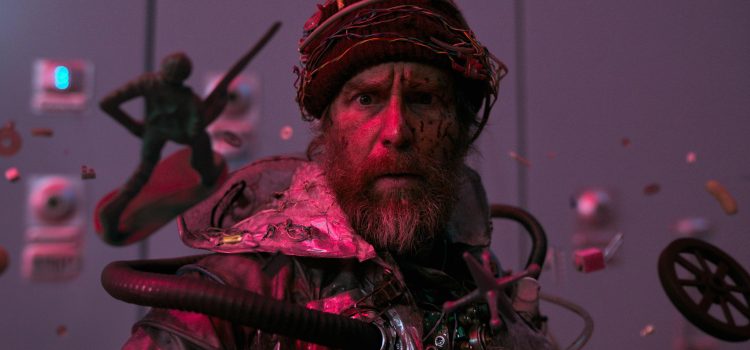
Rockwell is the perfect choice to play this snarky antihero. He’s goofy and sometimes callous but strong in his convictions, with an increasing desperation creeping in as he nears closer to finally stopping the horrors of an AI-controlled future.
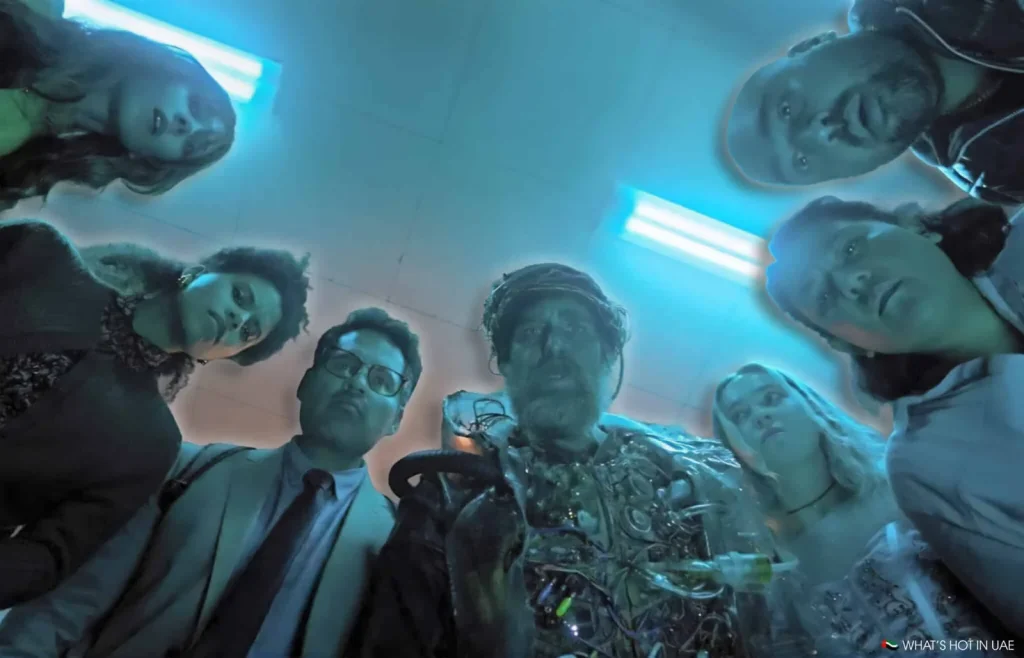
The rest of the cast aren’t anywhere near as dynamic to watch as Rockwell, but they get the job done, effectively emphasizing their feelings of displacement with an environment that refuses to recognize their empathy and, indeed, their humanity.

Verbinski and Robinson take ample time to provide backstory for the “core group,” structured in “Black Mirror” -esque flashbacks that periodically break up the immediate action of the Man and co. escaping from Norm’s and venturing to their next objectives.

This vignette structure works well enough (albeit padding the runtime to an excessive degree), and helps illuminate the personal costs of living in this reality that’s not all that dissimilar from our own. Less impactful are the labyrinthine multiversal shenanigans that arise in the finale, difficult to follow and messy in a decidedly hand-made way.

“Good Luck, Have Fun, Don’t Die,” then, is a rickety experience that’s still impossible to discount. Verbinski and Robinson take rightful aim at the devices and companies that are hijacking our attention and transforming us into passive, homogenous consumers rather than informed people with agency over our own lives.
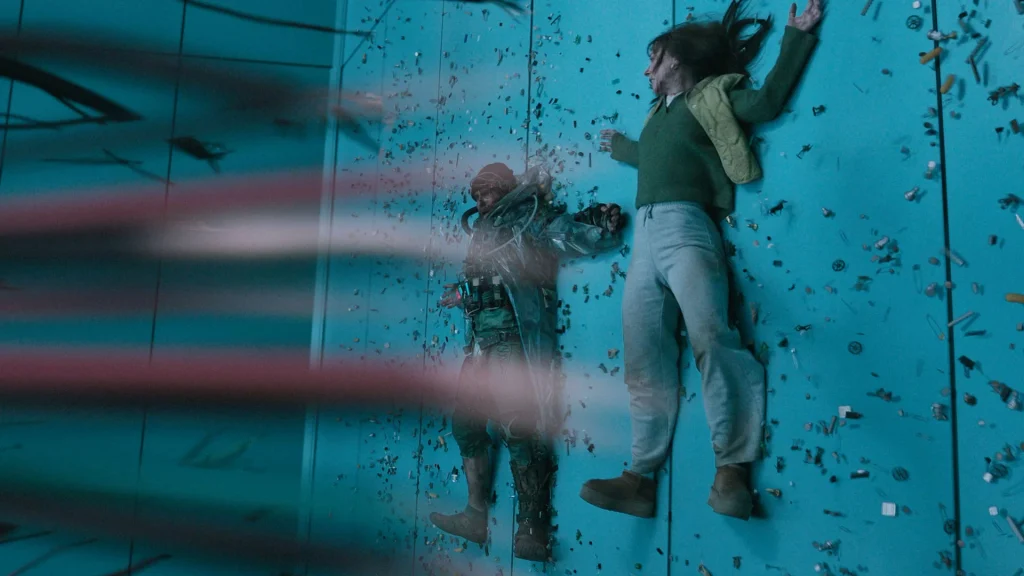
The crafts, too, are noteworthy, especially James Whitaker’s energetic cinematography and a techno score by Geoff Zanelli that pulses with rambunctious life.

Verbinski and Robinson are clearly interested in sounding a 5-alarm fire about doing something now rather than waiting until all hope is lost. The messiness of living in the real world, the film says, is worth fighting for, even when the digital one offers an illusion of safety and happiness.

There’s definitely merit to that message in 2026, although “Good Luck, Have Fun, Don’t Die” is ultimately a mildly entertaining, pitch-black yell at the Cloud.
“Good Luck, Don’t Die, Have Fun” is a 2025 sci-fi action-adventure horror comedy directed by Gore Verbinski and starring Sam Rockwell, Juno Temple, Haley Lu Richardson, Michael Pena, Zazie Beetz, Georgia Goodman, and Asim Chaudhry. It is rated R for pervasive language, violence, some grisly images and brief sexual content and runs 2 hours, 14 minutes. Opens in theatres Feb. 13. Alex’s Grade: B-.

By Lynn Venhaus

A science fiction action-adventure horror comedy are many genres to cram into one anti-artificial intelligence film, but Sam Rockwell’s bonkers’ performance makes “Good Luck, Have Fun, Don’t Die” an interesting commentary for our time.

Rockwell plays a “Man from the Future” who walks into Norm’s Diner in Los Angeles to recruit patrons to join him on a one-night quest to save the world from the terminal threat of a rogue artificial intelligence.

Disheveled and wearing a clear plastic raincoat, he alarmed diners who think he’s crazy and he flings their phones around and warns of an upcoming apocalypse. Whoa.

The unnerving snarky satire by Matthew Robinson gives Rockwell the ball to slam-dunk, and his trademark fast-talking, high-energy goofiness is worth paying attention to as he cautions earthlings to put down their phones and focus on what is happening in the world.

As the “Man from the Future,” the eccentric Rockwell screams to a diner patron: “Progress is only progress if it makes things better! Otherwise, it’s a mistake!” and this is the film’s theme – that the human cost of technology obsession and unbridled AI will be loss of connection and mental health.

At what price are we willing to sacrifice what makes us human? People whose existential dread is fueled by society’s inability to shut off screens for any length of time may experience more anxiety about perpetual distraction ruining everything.

And it’s not subtle at all. This chaotic cautionary tale gets real about school shootings and teachers’ inability to educate rude, sarcastic and apathetic teenagers in unhinged scenarios.

Director Gore Verbinski is not afraid to take risks, for he’s made “The Ring,” the original trilogy of “The Pirates of the Caribbean” and the Oscar-winning animated film “Rango.” After a 10-year break, he’s back with his quirky visual style and maintains a manic pace, even though the message’s momentum eventually wanes.

A series of backstories on characters that Rockwell’s enlists “to save society” gives strong actors like Michael Pena (Mark), and Zazie Beetz (Janet) as teachers, Haley Lu Richardson (Ingrid) as a birthday party princess, Juno Temple (Susan) as a grieving mother, Georgia Goodman (Marie), and Asim Chaudhry (Scott) as a ride-share driver an opportunity to craft distinct personalities, but they aren’t given much time to develop any depth.

The lack of explanation on character behaviors and situations ultimately hurts the film’s reception, as does the unrelenting frenzy and the overall bleak attitude. The jokes stop being funny.

Composer Geoff Zanelli, production designer David Brisbin and costume designer Neil McClean all brought their A-game to this strange, trippy production that bears closer resemblance to a cocktail of “Terminator 3: Rise of the Machines,” “Alice in Wonderland,” “The Creator,” “The Mitchells vs. The Machines,” and “The Wizard of Oz” as the film unfolds.

Messy but relevant, and overlong at 2 hours, 14 minutes, “Good Luck, Have Fun, Don’t Die” is well-meaning about brain rot and hive minds, and benefits from a bizzaro star turn by Rockwell.

The Oscar-winning actor thrives on weirdness, and he merrily goes down Verbinski’s virtual reality rabbit hole. The director takes big swings that become visual overload as the clock runs out, but the point of view is original.

“Good Luck, Have Fun, Don’t Die” is a fidget spinner for our time, and forces us to pay attention.


“Good Luck, Don’t Die, Have Fun” is a 2025 sci-fi action-adventure horror comedy directed by Gore Verbinski and starring Sam Rockwell, Juno Temple, Haley Lu Richardson, Michael Pena, Zazie Beetz, Georgia Goodman, and Asim Chaudhry. It is rated R for pervasive language, violence, some grisly images and brief sexual content and runs 2 hours, 14 minutes. Opens in theatres Feb. 13. Lynn’s Grade: B.

By Lynn Venhaus
“Palmer” may be predictable, but it’s a heartwarming relatable story about acceptance and second chances.

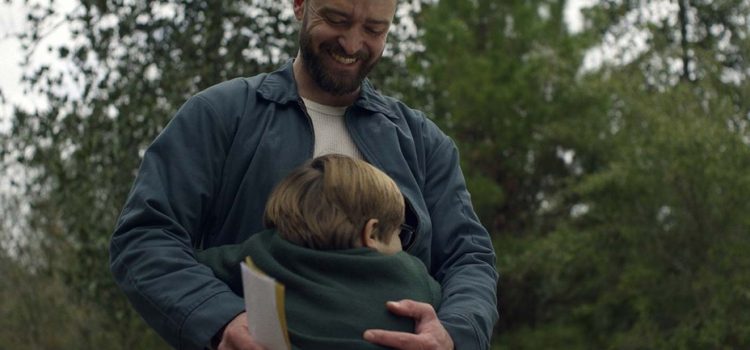
After 12 years in prison, former high school football star Eddie Palmer (Justin Timberlake) returns home to put his life back together, Living with his grandma (June Squibb), he forms an unlikely bond with neighbor Sam (Ryder Allen), an outcast boy from a troubled home.

This modest film uses the trope of small minds in a small town as its setting in Louisiana, which works for the character of a young nonconformist who doesn’t care about fitting into a gender lane. And leads to the bond he forms with an ex-con starting over.

Cheryl Guerriero’s screenplay has created roles that the cast plays convincingly. Newcomer Ryder Allen delivers a poignant performance as Sam, who is bullied for his feminine-leaning proclivities, like wearing a princess costume for Halloween and playing with dolls.

Justin Timberlake, the Tennessee-born music superstar, is strong as straightened out Eddie Palmer trying to fly right. He’s always been a likeable personality, from his days on “The All-New Mickey Mouse Club” to his boy band popularity to his five times hosting “Saturday Night Live” and his Grammy-winning solo career (10 wins, 39 nominations).

In his few movie appearances, he’s been a natural. Here, he must carry the movie, and he’s believable at every step. He becomes the father figure to Sam, and there isn’t a false move from either of them.

Their bond is genuine. Over time, they become to rely on each other as Sam stays at Palmer’s house – his drug-addict mom Shelly (Juno Temple) has taken off with her boyfriend Jerry (Dean Winters) – and Eddie has been hired as a janitor at Sam’s elementary school. Eddie becomes his watchdog and caretaker.

The supporting cast is strong, too, with Alisha Wainwright as helpful third grade teacher Miss Maggie, who begins dating Eddie, and Juno Temple as Sam’s irresponsible mother.

Ninety-year-old June Squibb, from Vandalia, Ill., is Eddie’s crotchety but loving grandmother Vivian, a devout churchgoer and benevolent neighbor to Sam and his mother.

Actor-director Fisher Stevens directed fluidly, simply letting the story be told.

Once in a while, you discover a sweet story about people struggling to make things right in their world. “Palmer” succeeds in bringing together people who need each other, whose lives are changed because of their association. 

“Palmer” is a drama directed by Fisher Stevens and starring Justin Timberlake, Ryder Allen, June Squibb, Juno Temple, Alisha Wainwright and Dean Winters. Rated R for language, some sexual content and nudity, and brief violence, it runs 1 hour, 50 minutes. Available Jan. 29 on Apple TV+. Lynn’s Grade: B