By Lynn Venhaus

With boundless enthusiasm, a six-person ensemble enlivens “The Two Gentlemen of Verona,” an early Shakespeare comedy about boundaries in friendship and romance that remains a timeless cautionary coming-of-age story.

The intent is light-hearted, the folly of best buds falling in love with the same woman, and the betrayal and forgiveness that ensues. And saucy minions, too. (Google it).

If we’re outdoors, it must mean it’s a lovely summer evening courtesy of St. Louis Shakespeare Festival’s annual TourCo, where they travel across the bi-state area to bring live theater to local parks and plazas, this year 33 locations in all.

Six years’ strong, this far-reaching accessible and free initiative has evolved into a must-see experience. It is both the longest running play in St. Louis every season and the second largest Shakespeare tour in the country.
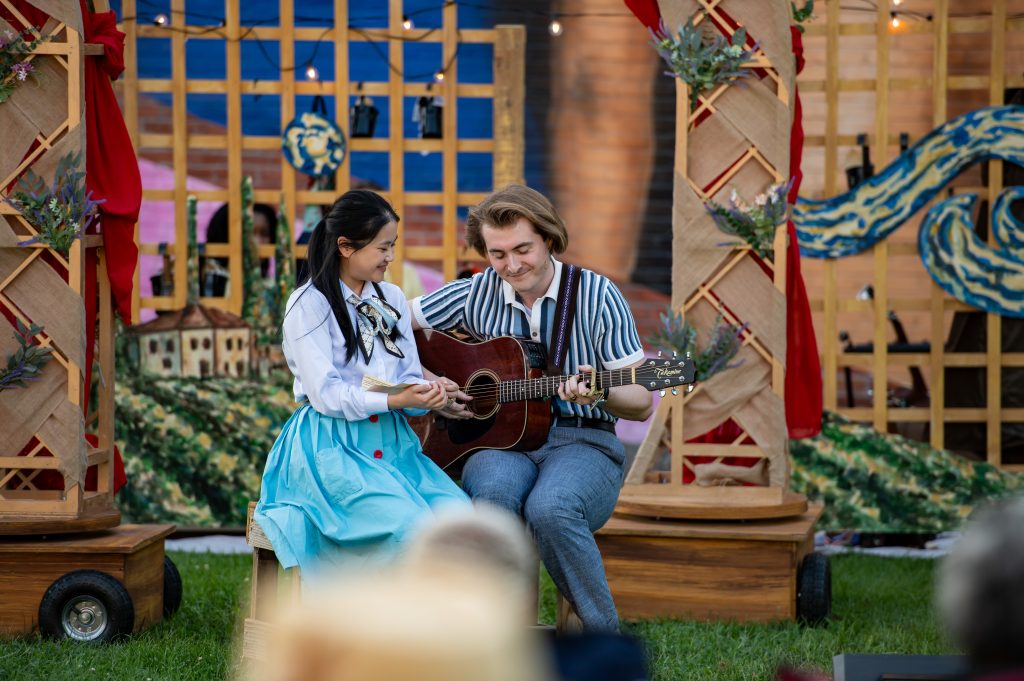
Sarah wilkinson and Tristan Wallach as young lovers Julia and Proteus. Photo by Phillip Hamer.

The picturesque open-air Cohen amphitheatre setting at the Missouri Botanical Garden was the stage Wednesday night, and it showcased all the key aspects of Shakespeare in the park that entertain: appealing performers, musicality and surprises – this time, a scene-stealing dog in the cast.

Director Rebekah Scallet, a Shakespeare veteran, has brought out the universality of the story, generally regarded less than other works, but she points out that it is a precursor to other themes and situations he explores in later plays. Capricious young men! As is typical in early Shakespeare comedies, there’s misunderstanding, disguises, and growing up to do.

What separates this version is its zip. The cast delivers a zesty introduction to set the stage for the 90-minute show in their Living Study Guide, which is a summary explaining characters and their motivations at the beginning. Because it’s a compact and concise adaptation, where the actors play multiple roles, they let us know who’s who and what’s what.

The energetic performers dash around, frequently changing an outfit or grabbing a musical instrument. All but one are making their Shakespeare debut. Newcomer Tristan Wallach is Proteus, who shifts from lovesick romantic into a traitor who betrays both his girlfriend Julia (Sarah Wilkinson) and best friend Valentine (Otto Klemp, who was in “The Tempest” earlier this summer).
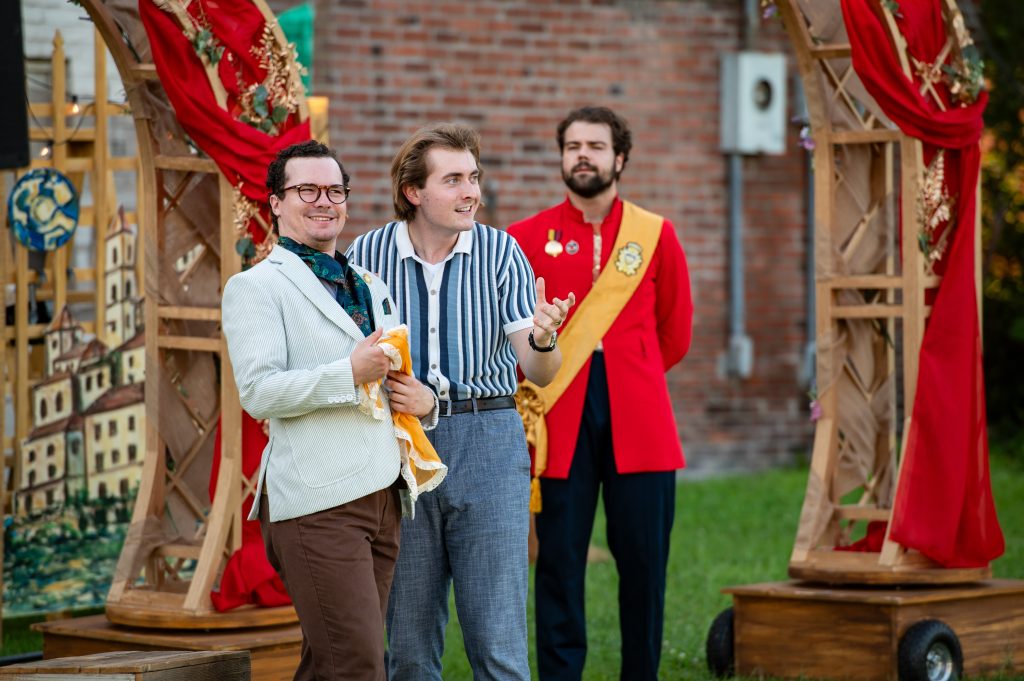
Bryce Miller, Tristan Wallach and Jayson Heil. Photo by Phillip Hamer.

In Milan, to broaden his horizons, Valentine falls in love with the strong-willed Silvia (Jade Simone Francis), daughter of the Duke (Jayson Heil). Proteus, who stayed home, fell in love with Julia. However, Proteus’ father Antonio has sent him to Milan, where he falls in love with Valentine’s girlfriend. Rut-ro. But Silvia rejects him, repeatedly (cue women in audience applauding).

But things get messy as loyalty and good judgment go out the window, and we travel between court to forest (sound familiar?). Say what you will, but in those Renaissance times, they valued the bonds of male friendship over romantic love. Hmmm…That was around 1590, and times have changed.

Charmer Bryce Miller adds oomph to his role of Speed, the quick-witted servant of Valentine. He often comments on the two besties’ foolish antics and works hard to make sure the ‘older language’ sounds fresh. He also portrays goofy Thurio, a wealthy suitor pursuing Silvia, who is favored by the Duke.

As the smart but impulsive Julia, graceful and winsome Sarah Wilkinson disguises herself as a page boy, ‘Sebastian,’ to spy on Proteus, the first evidence of Shakespeare’s cross-dressing heroines. She is assisted by her sassy waiting-woman, Lucetta, played vibrantly by Francis. She has a more practical attitude about courtships than the fickle youths do, especially her faithful boss.
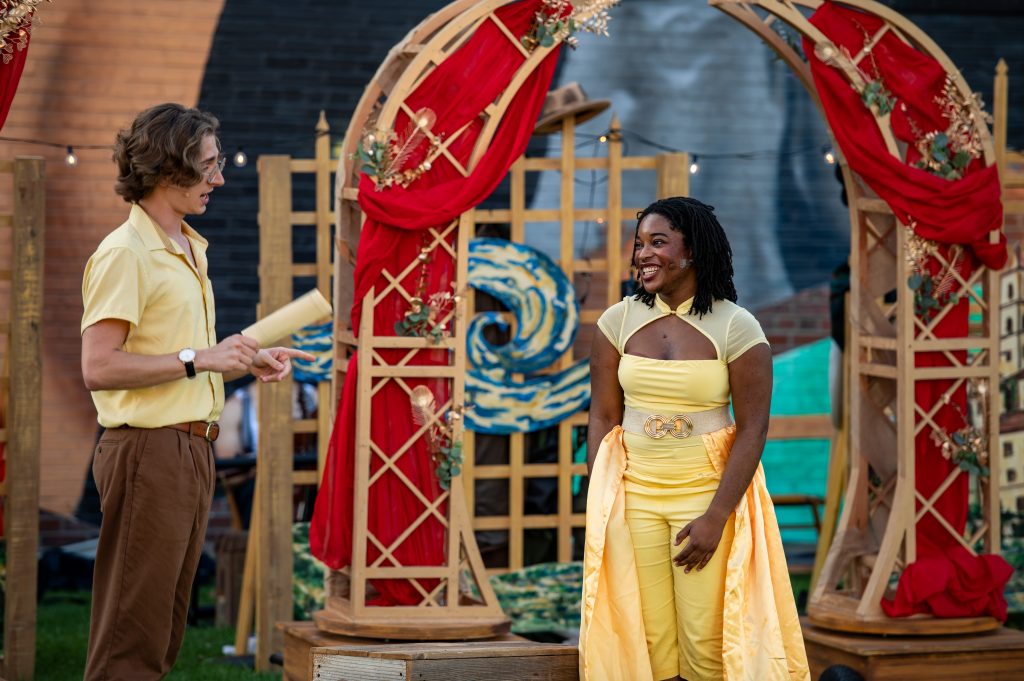
Otto Klemp and Jade Simone Francis. Photo by Phillip Hamer.

Adding even more charm is the seventh cast member, Crab, the ill-behaved pet of clownish Launce (Jayson Heil), Proteus’ servant. Five dogs are being rotated to play this scene-stealing role.

Many times, in Shakespeare comedies, the supporting characters are more interesting than the male leads, and that holds true here. Wallach and Klemp are fine in lead roles, but where they shine is in their acoustic musical accompaniment. They are both accomplished musicians.

Another distinguishing factor is original music, under the superb direction of Larry D. Pry, whose arrangements of melodic tunes fitting the period and setting stand out. The original music was written by Jordan Coughtry, who worked with Scallet when she was artistic director at the Arkansas Shakespeare Theatre.

It’s not all that unusual that “The Two Gentlemen of Verona” features music, for a groundbreaking rock musical adaptation at Joseph Papp’s NYC Shakespeare in Central Park in 1971 went on to Broadway and won the 1972 Tony Award for Best Musical (and best book), featuring Clifton Davis and Raul Julia as the leads.

Pre-pandemic, St. Louis Shakespeare Festival presented a 1980s hip-hop high school musical version of it, “Dress the Part,” in February 2020 from The Q Brothers, who played football players among over 20 parts, which won an ensemble award from the St. Louis Theater Circle in 2022.
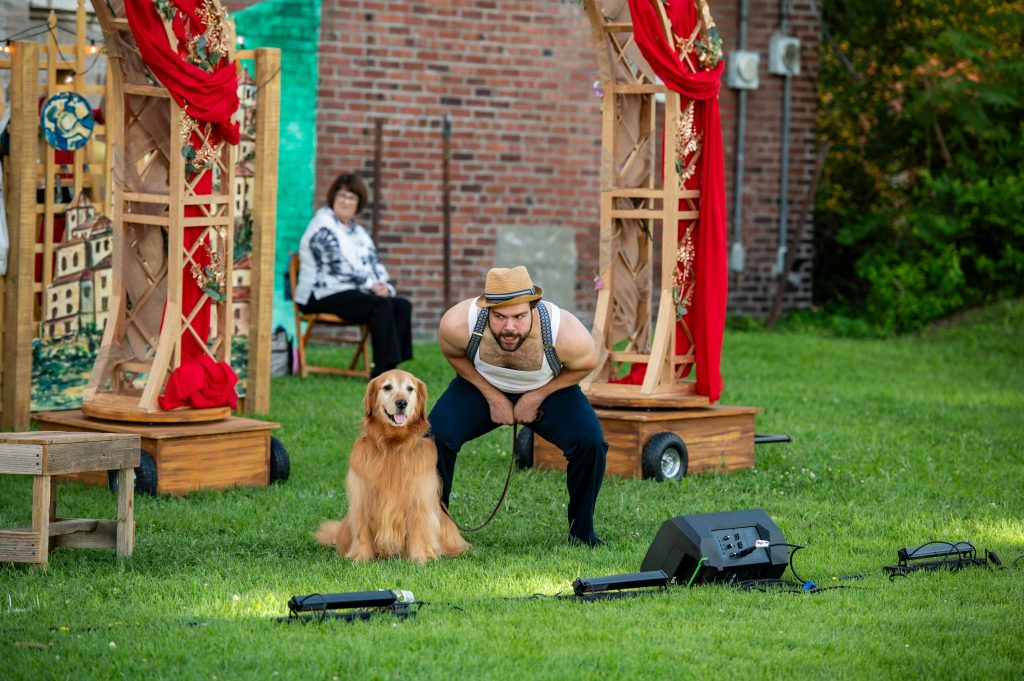
Jayson Heil with Rocky, a Golden Retriever, as Crab. Photo by Phillip Hamer.

This company features a similar fast-paced, playful spirit that Scallet strived for, imbuing a fresh attitude.

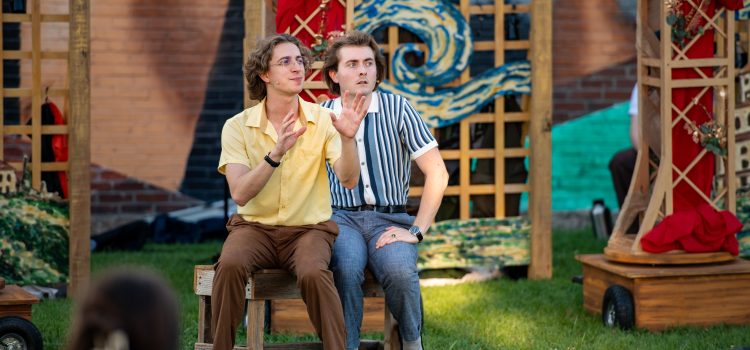
The touring company requires a portable set, and scenic designer Katherine Stepanek shows her keen eye for setting a stage to be practical and attractive, with floral-festooned arch-shaped trellises draped with a vivid red material. These move easily to suit the locales. Like she always does, costume designer Michele Friedman Siler fits the occasion with perfectly suited outfits – and ones adaptable for St. Louis summers and quick changes.

The talented technical team also includes John Wilson as both the fight and intimacy coordinator, and Colin O’Brien as the expert production manager, with Britteny Henry doing her customary efficient job as stage manager, ensuring fluid entrances and exits.

Shakespeare may have been taught in your English class, but the best way to appreciate the bard is to see his plays performed, not read. And with the touring company coming to communities and neighborhoods, the time is perfect to bring a blanket or lawn chairs, pack a picnic, and see a family-friendly 90-minute Shakespeare show. Check social media for weather updates.
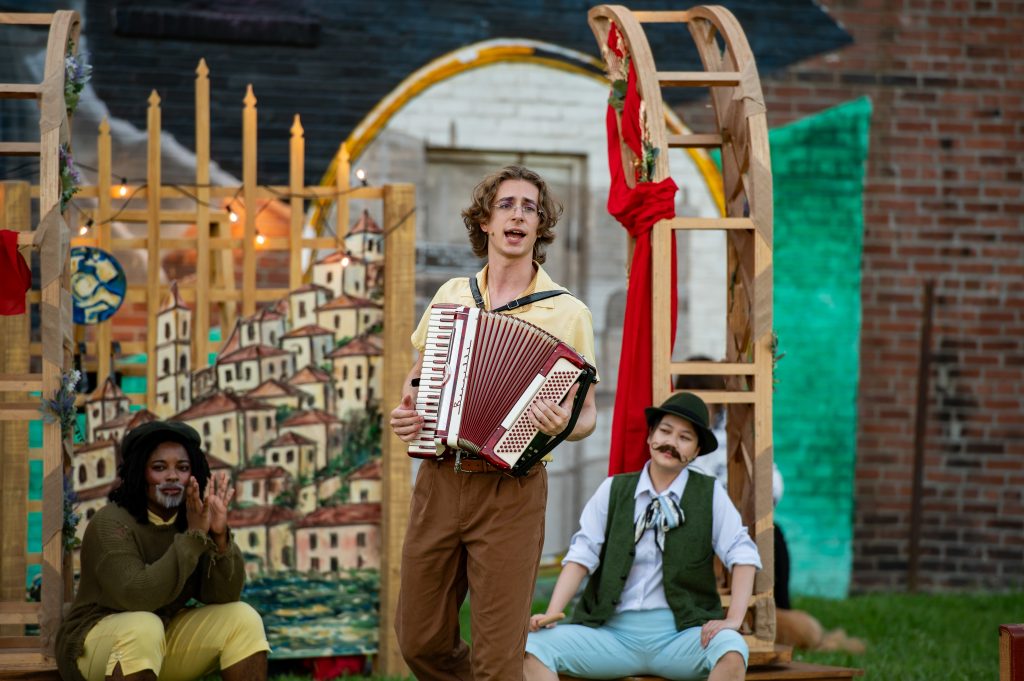
Simone, Klemp and Wilkinson. Photo by Phillip Hamer.

St. Louis Shakespeare Festival’s TourCo is presenting “The Two Gentlemen of Verona” free and open to all, no tickets required, to more than 30 parks and plazas in Missouri and Illinois from Aug. 4 to Sept. 6. Performances start at 6:30 p.m. and are 90 minutes in length. Visit https://stlshakes.org/tourco/ for a complete schedule.
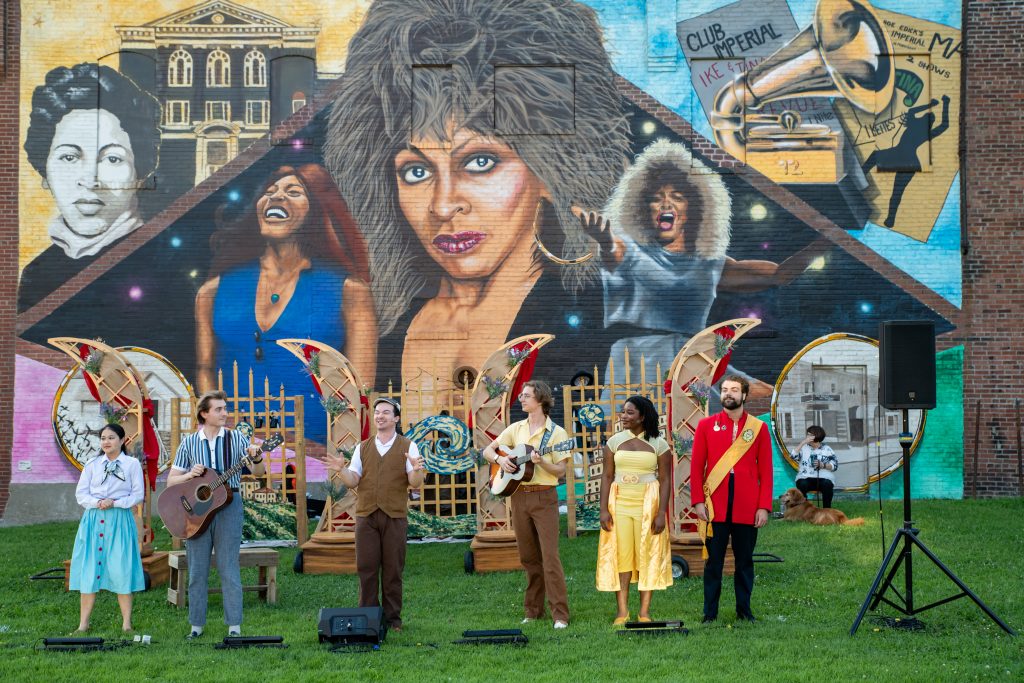

The cast of “The Two Gentlemen of Verona” – Sarah Wilkinson, Tristan Wallach, Bryce Miller, Otto Klemp, Jade Simone Francis and Jayson Heil. Photo by Phillip Hamer.

By Lynn Venhaus

With a modern sense and sensibility, local playwright John Wolbers created a warm, welcoming and wild woman’s world of the 16th century in the private chambers of Queen Elizabeth I.

In Prism Theatre Company’s world premiere of the comedy-drama “Progress,” this is an uninhibited Bess – presented informally and not on official duty, although she prepares to meet dignitaries, ambassadors and advisors.

In discussions with his life partner Liz in 2020, he discovered an aspect of Bess’s untold story he needed to tell – that she had a savvy squad of advisors uplifting her so that her regal image would be impressive and dignified every day.

With an uncanny ability to write multi-dimensional roles for women, Wolbers has peeled back the curtain, creating a chummy workplace environment that feels lived-in and nurturing. Straight talk is how conversations are played – even if it would be TMI or NSFW in today’s parlance.

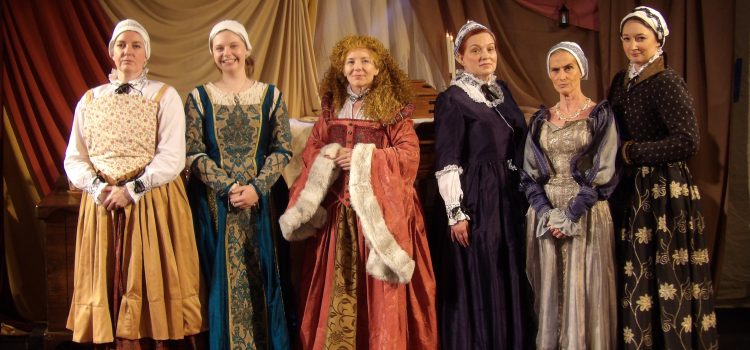
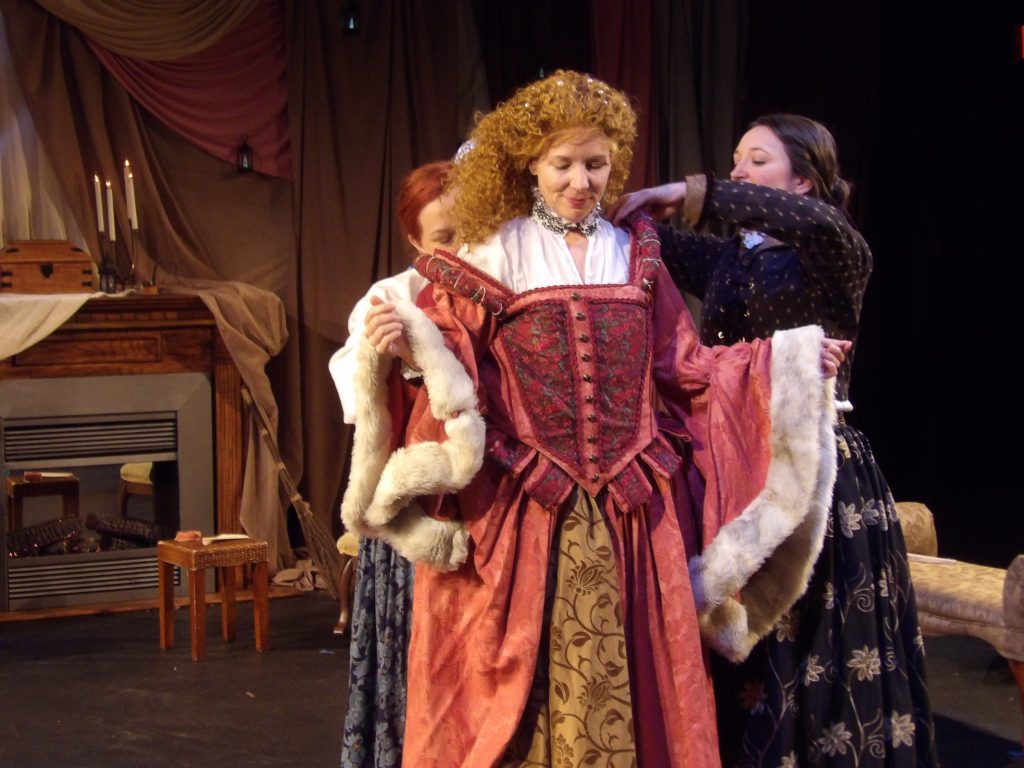
Featuring an all-star cast, these six crafty servants surround the queen in her inner sanctum. They manage her daily routine – dressing her, checking personal care, taking care of correspondence, schedule, budgets, sweet snacks and liquid refreshments.

Local treasure Michelle Hand assuredly plays the swearing sweet-and-sour “Virgin Queen” whose 45-year reign from 1558 to 1603 was viewed favorably as “Progress” and called a “Golden Age” because it brought stability, a cultural Renaissance and the rise of England as a world power.

Prone to emotional outbursts, Bess flies into a rage but then switches to warm and witty. Hand conveys the royal’s intellect, charm, and energy – and dishes dirt with glee. She’s also pragmatic when dealing with world leaders, not making hasty decisions.

KODAK Digital Still Camera

The play begins on Christmas Day in 1562, in London, at the Palace of Whitehall. Sarah Lantsberger excels as an earnest and eager newcomer, Mary, who is nervously introduced to the key ladies.

These colorful characters, all properly prepped and styled by virtuoso costume designer Liz Henning, include Nicole Angeli as right-hand Blanche, a rather stern taskmaster who is also a mother hen. Rachel Tibbetts is the pregnant Dorothy who prides herself on a good job.

Carly Uding is Sidney, who has a complex relationship with her majesty because she is the sister of childhood friend and suitor Robert Dudley.

Margeau Steinau is spicy as Kat, a crusty and blunt attendant whose husband is also on staff. She knows what’s what and who’s who and freely shares locker room talk.

The women are also given other duties to carry out and keep themselves busy when they’re not fussing and fretting. The queen delivers news of an impending bubonic plague in London, and in the second act, the women are relocated to Windsor Castle in late summer 1863, to evade the spreading infection.

They’re hot, tired, cranky and restless. Tempers flare and then cool down. The plague has everyone on high alert, and they all must learn to trust – and soothe each other.

The experienced ensemble is adept at the verbal jousting the dialogue demands, and as smart, intuitive actors, they shade their characters with personality. Wolbers laid out conflicts in those challenging times, and the women rose to their best selves when they’re with each other.

In Act II, there is an amusing dream sequence where Bess is visited by past and future queens – Steinau is Queen Elizabeth II, Lantsberger is Lady Jane Grey, Uding is Queen Boudica, Tibbetts is Queen Anne and Angeli is Queen Victoria. They were all in that elite birthright club and know some things.

The final scene jumps ahead 25 years to Christmas 1589, in London’s Richmond Palace. The queen defeated the Spanish Armada a year earlier and is more comfortable ruling. Hand demonstrates Bess’s growth, for she has marched through the fire, with the help of her loyal ladies – and they’ve changed too.

Director Trish Brown has trusted these talented performers to play well with others in a sister showcase, designed by women artisans, who convinced us of the period trappings and their predicaments. Zayana Brown is the ensemble swing, if needed.

Katherine Stepanek, scenic and lighting designer, immersed us in a cozy period piece, intimately illuminated, with aid from assistant lighting director Brianna Shipley. Leo Young was the technical director, Delaney Plank production intern, and stage manager Joy Addler (and co-producer), along with assistant stage manager Avery Harrison.

Sound designer Bryn McLaughlin also composed nicely textured music, including a lively folk song that the women often broke into, and fight choreographer Riley Capp designed moves for when things weren’t so collegial. Jenni Ryan served as dramaturg and assistant director.

This community breathed life into an engaging piece of very funny, thoughtfully executed theater that showed us how strong women can be when difficulties must be overcome, a timely message no matter from what century.

Prism Theatre Company presents “Progress” July 3-5 and July 9-12 at the Kranzberg Black Box Thearre, 501 N. Grand, St. Louis, Mo. For more information, visit www.prismtheatrecompany.org

This production contains adult language and discussion of adult content.

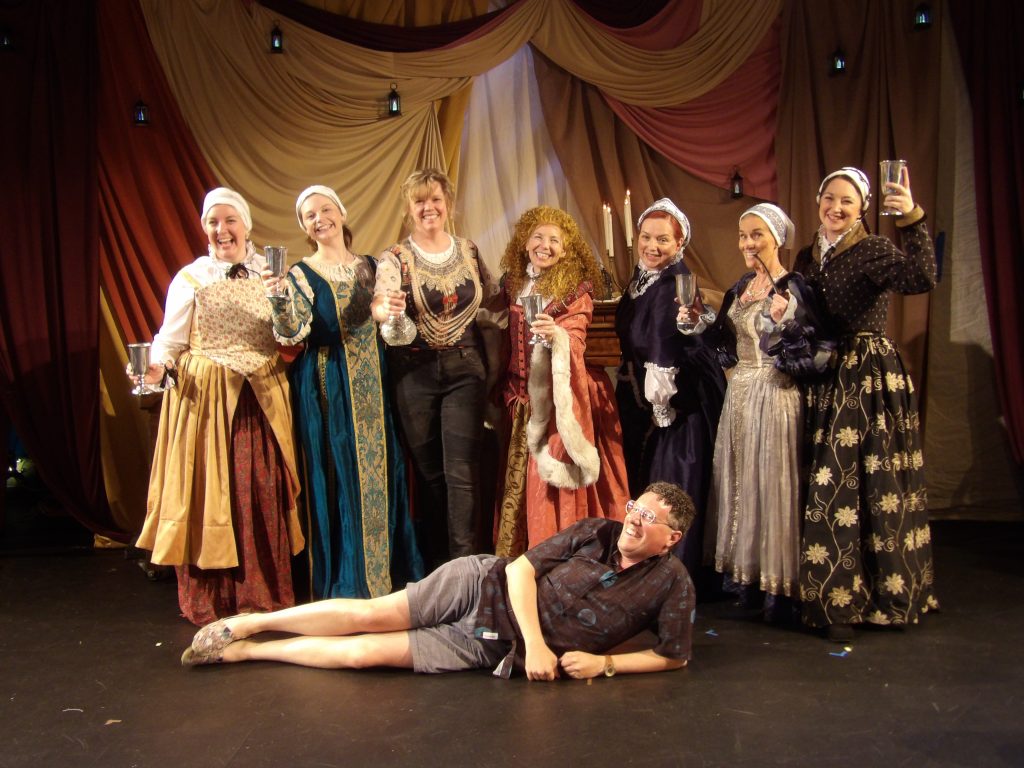
KODAK Digital Still Camera Nicole Angeli, Sarah Lantsberger, Liz Henning, Michelle Hand, Rachel Tibbetts, Margeau Steinau, Carly Uding, and John Wolbers.

By Lynn Venhaus

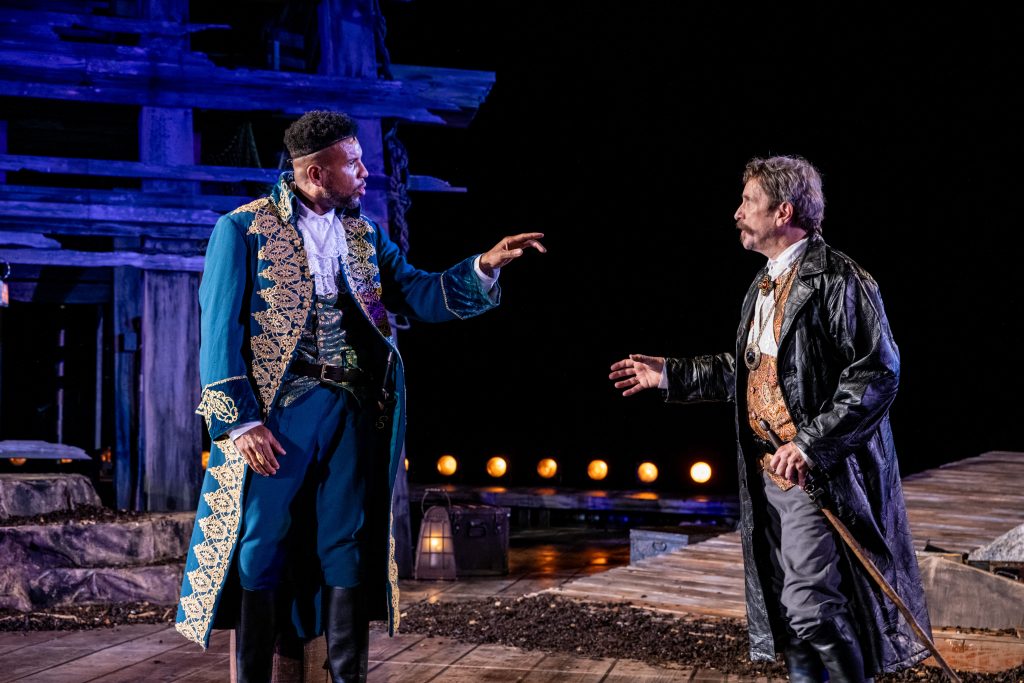
On a remote island far, far away, a mischievous mix of magic and mayhem mark “The Tempest,” which is the St. Louis Shakespeare Festival’s flagship production now anchored in Forest Park’s Shakespeare Glen.

William Shakespeare’s drama-tinged romantic comedy takes place after a violent storm has washed ashore a merry band of revelers, upending the inhabitants on this island – and nothing is as it seems. Perhaps, someone’s bad dream is another’s hopeful voyage. In any case, there is perceptible verve.

Think of this as a way-back machine “Survivor,” where everyone must outwit, outplay and outlast the people who want power. And Prospero (Nancy Bell) is manipulating a chess game.

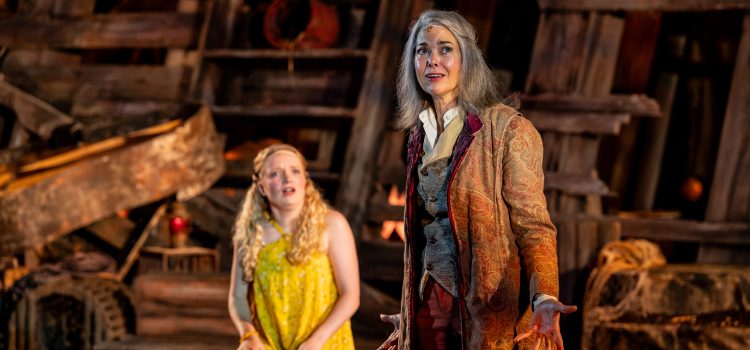
A mother and sorcerer, Prospero rules this mystical place, and tensions rise between her, her teenage daughter and now the brother who messed up her future and has reappeared. Haunted by his betrayal, she has vengeance on her mind, for she was once Duke of Milan.

Reginald Pierre and Jeff Cummings as Prospero’s evil brothers. Photo by Phillip Hamer.

Through royal chicanery, Antonio (Jeff Cummings) usurped the title, and with the help of another brother, Alonso (Kathryn Bentley), King of Naples, she was banished 12 years earlier. But they can’t be trusted because another ambitious brother, Sebastian (Reginald Pierre), wants the king’s crown himself.

Ariel (Eliza Pagelle) is a shape-shifting spirit on the island that aids Prospero. Through her occult preoccupation, the boss finds out that her nefarious brothers are on their way from Tunis to Italy, so she conjures a squall, and they wind up where she is. Mama Bear thinks she is in control.

It won’t be long until old wounds resurface and new challenges arise. Oh, be careful what you wish for, as Alonso’s honorable son Ferdinand (an earnest Zay Williams) spies Miranda (Sigrid Wise) and falls in love.

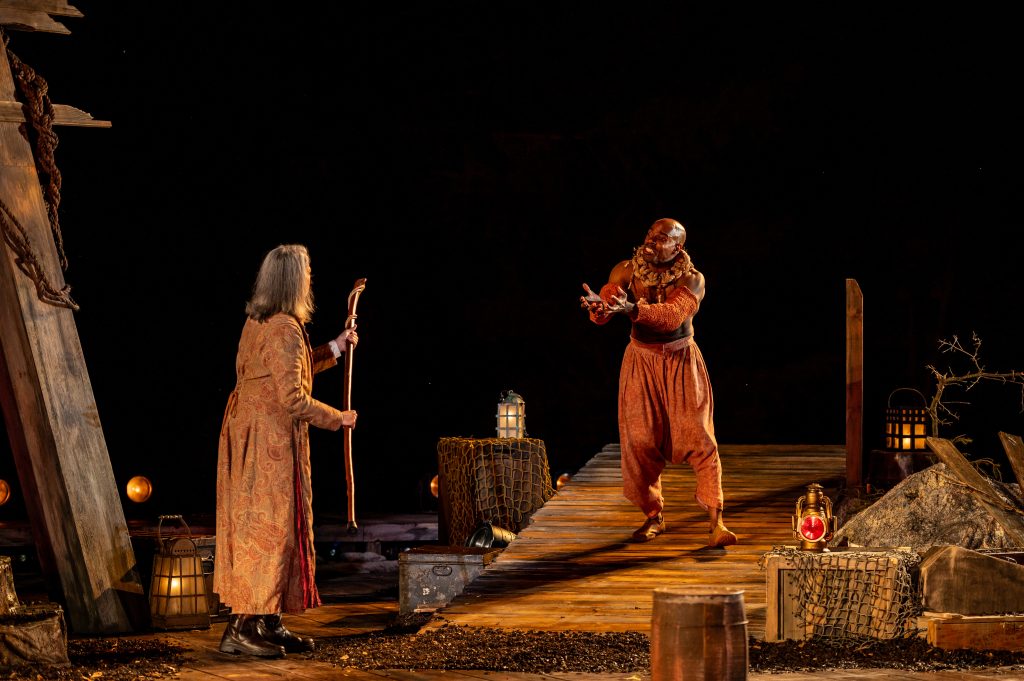
Caliban (Chauncy Thomas) is the only true island inhabitant, a witch’s son, and resents being overtaken by Prospero, who imprisoned him so he doesn’t get too close to her daughter.

A fierce Thomas musters all his fury as a resentful native. Formerly of St. Louis, Thomas is always a welcome addition when he returns, now for the sixth time.

Bell and Chauncy Thomas as Caliban. Photo by Phillip Hamer.

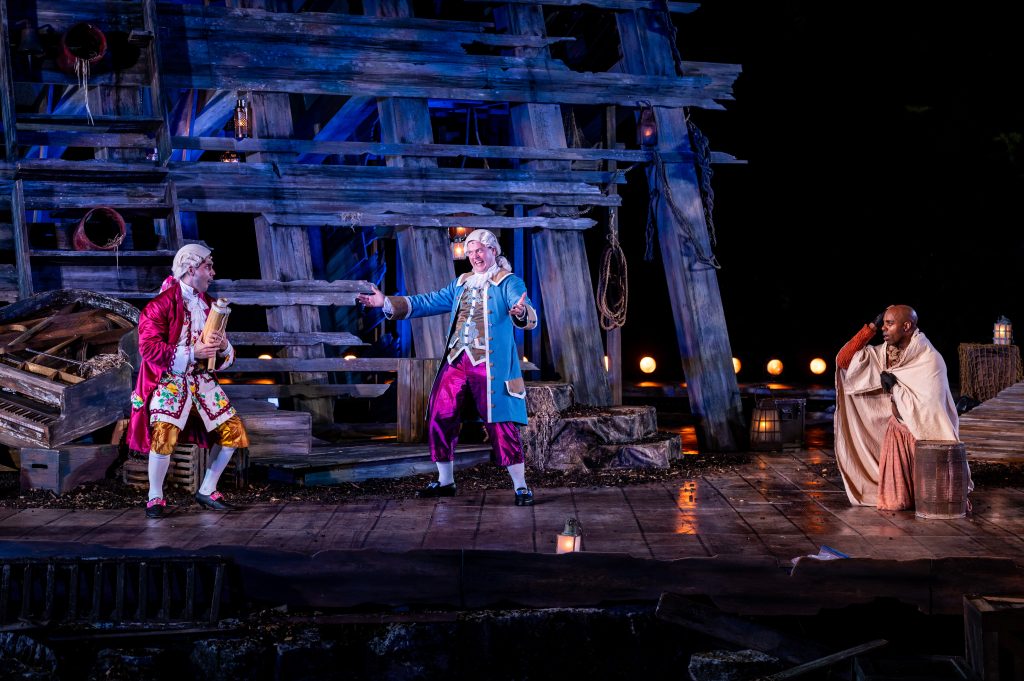
The ensemble includes kindly Gonzalo (veteran Whit Reichert), an elderly Neapolitan lord who helped Prospero survive exile (but secretly), and comic buffoons Stephano (Michael Dougherty) and Trinculo (Jose Sabillon), Alonso’s butler and court jester. That daffy duo plots with Caliban to take over.

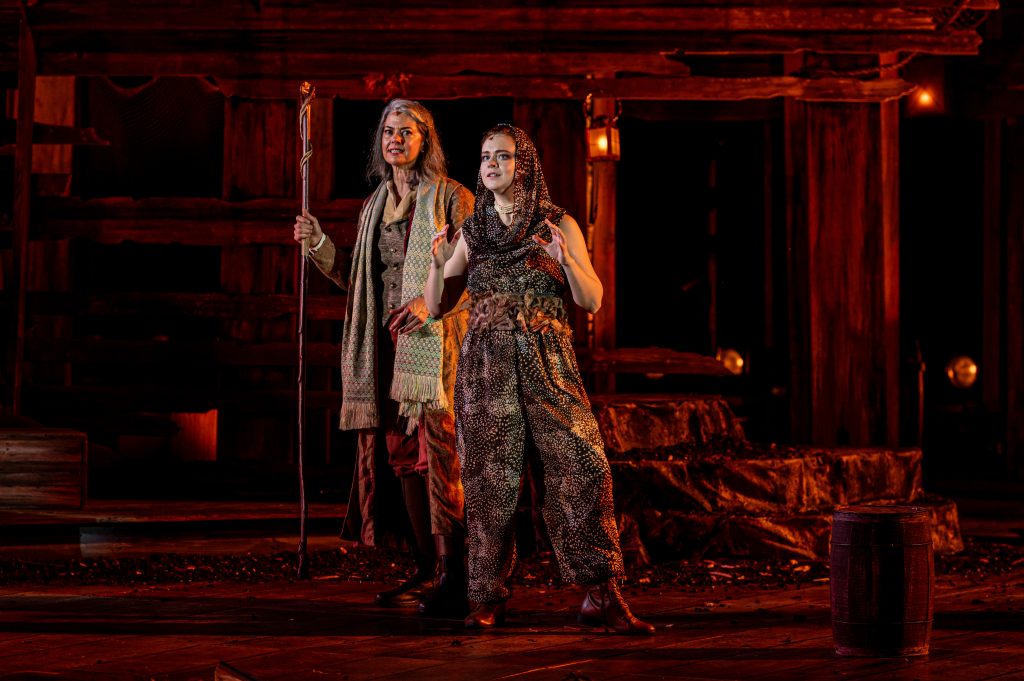
Mother and daughter have been marooned since the girl was 2 years old, so one can imagine her naivete and innocence – and yearning to break free of the overbearing parent. Nevertheless, the protective mom wants her daughter to marry for love and position.

Wise, enchanting as the isolated Miranda, is as luminous as she was as Juliet in “Romeo and Juliet” in 2018 and was part of “The Winter’s Tale” the year before. She has tangible chemistry with Williams as a decent prince who can be trusted.

Through her instincts and technique, Bell is a formidable Prospero – and as much of an impact she has had on Shakespeare in this city, one must note that this is her first leading role outdoors in Shakespeare Glen.

Bell and Eliza Pagelle as Ariel. Photo by Phillip Hamer.

 (As Playwright-in-Residence, Bell wrote several “Shakespeare in the Street” productions, earning Best New Play awards from the St. Louis Theater Circle for “The World Begun” and “Old Hearts Fresh,” and two years ago, directed the award-winning “As You Like It.” She also founded the Confluence New Play Festival.)

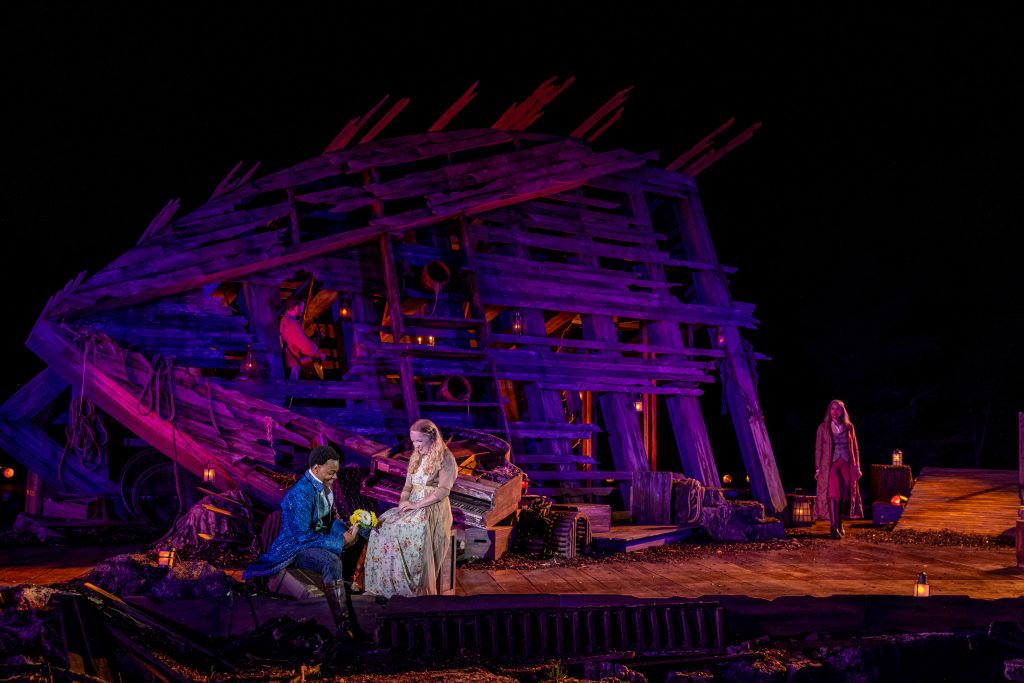
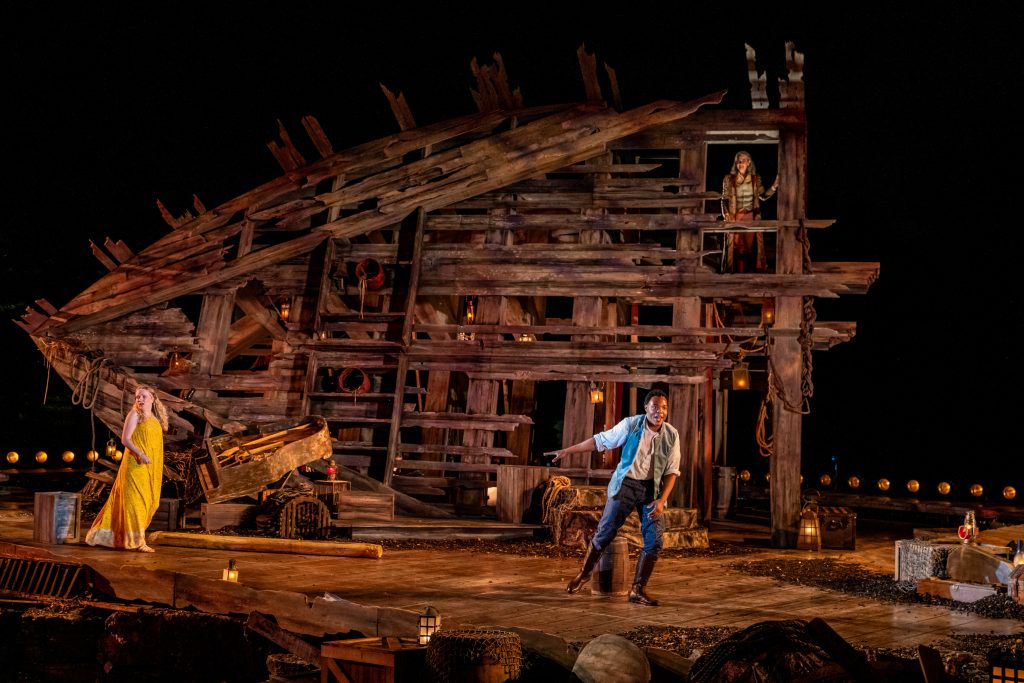
The Circle’s most awarded theater artist, for acting, writing and directing, Bell commands attention from various vantage points perched on the decaying hull of a shipwreck. Her character must find a way to forgive on this journey.

Director Rick Dildine shrewdly showcases Prospero’s dominance by staging Bell’s position at different heights – when she’s talking to others. It’s rare when she’s on the same level of this imposing set, masterfully adorned with functional nooks and crannies.

The former director of St. Louis Shakespeare Festival (2009 – 2017) emphasizes nature’s impact as well as the colonial-era themes. Dildine’s version is a breezy 90 minutes without an intermission.

Goofballs Jose Sabillon and Michael Dougherty with Thomas. Photo by Phillip Hamer.

He is aided by a talented squad — assistant director Lize Lewy, producer Colin O’Brien, production company Blank Slate, stage manager Sarah Luedloff, and assistant stage manager Britteny Henry.

Dildine won a Circle award for directing a shimmering “A Midsummer Night’s Dream” in 2016 where sound, lighting and scenic design enhanced the production, especially the original music.

The storytelling here is boosted by those same elements. The artisan MVPs who blended music and storm effects to elevate the experience included music director Michael Grieve, sound designer Melanie Chen Cole, lighting designer Jeff Behm and scenic designers Justin and Christopher Swader, all making impressive debuts, as were costume designer Kathleen Geldard and props designer Katherine Stepanek.

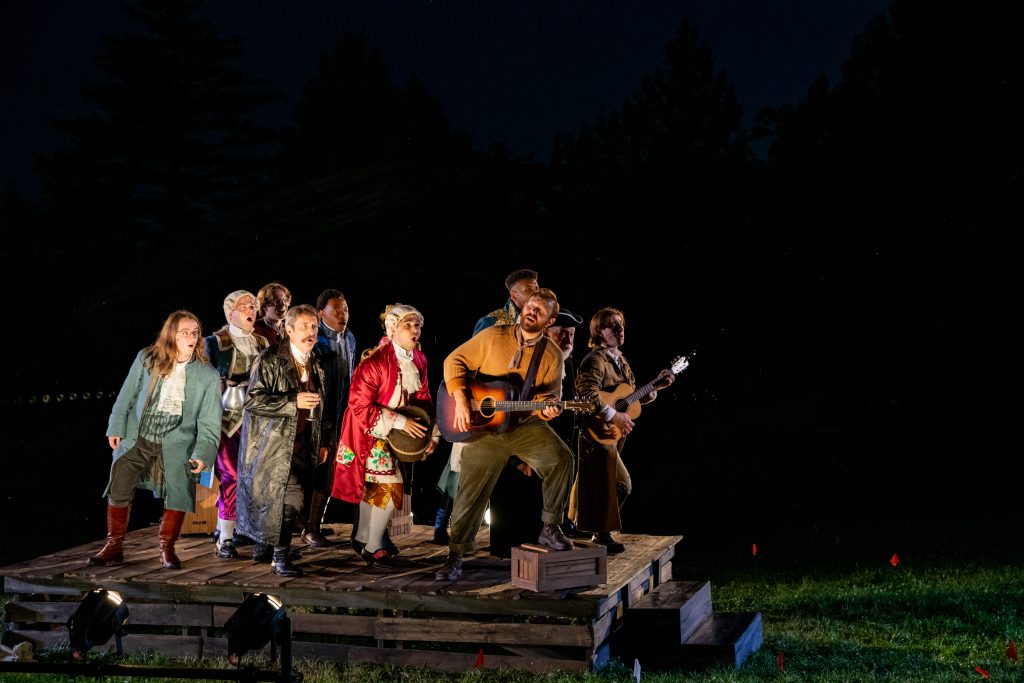
Grieve’s captivating immersive upbeat music is a zesty blend of roots music, sea shanties and folk melodies, with lively musicians Harrison Farmer, Crayton Haney and Otto Klemp, also in supporting roles, as is Grieve.

Musicians and partiers aboard a vessel. Photo by Phillip Hamer.

An original prologue on a satellite stage creates a festive atmosphere at Alonso’s daughter Claribel’s wedding, which kicks off the show (starting at 8 p.m.). Paul Dennhardt has provided interesting moves for the musicians and guests. All that’s swept away in the tempest.

Regarded as Shakespeare’s last play, when he was in his late 40s, this tale of forgiveness has the compassion of an experienced man looking at what’s important in life. And that is expressed well in this vibrant setting.

Dildine’s focus on nature’s capacity to heal is a key component to this 26th annual outing in the park, a year after a destructive tornado tore through Forest Park. He interprets that resiliency in the aftermath, as we all weather calm seas and violent storms in life.

A portion of the donations collected during “The Tempest” will go towards the tornado relief funds for the St. Louisans hit the hardest. And thanks to the parks department and Forest Park Forever, we are sitting today in these hallowed grounds of immense cultural importance.

Zay Williams and Sigrid Wise as Ferdinand and Miranda while Bell looks on. Photo by Phillip Hamer.

St. Louis Shakespeare Festival presents “The Tempest” May 27 – June 21 at 8:15 p.m., Tuesdays through Sundays, in Shakespeare Glen in Forest Park, 6604 Fine Arts Drive (next to the Art Museum). Admission is free and accessible to everyone. The Glen opens at 6:30 p.m. and the Teen Green Show takes place at 7:15 p.m. Thursday through Sunday. For more information, visit www.stlshakes.org

Wise, Williams and Bell. Photo by Phillip Hamer.