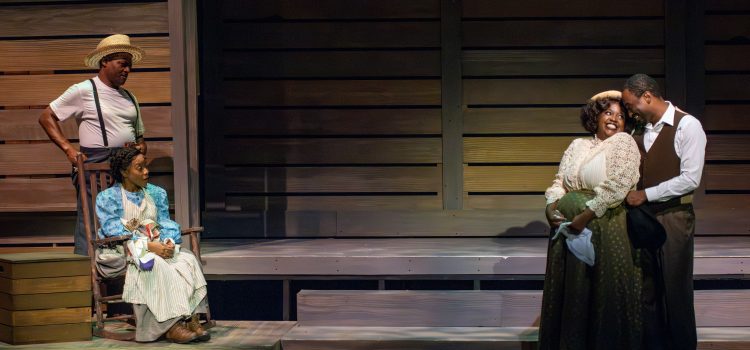
By Lynn Venhaus

A story of uncommon courage and grace while facing deeply rooted cruelty and oppression, “The Color Purple” is a momentous achievement for the Black Rep.

Through Celie’s harrowing emotional journey, a stunning Angela Wildflower leads a passionate ensemble who gives it all through the musical’s sorrows, love, pain and ultimately, triumph.

In a tour de force performance, Wildflower is the heart and soul of this deeply felt production, directed with considerable flair and impact by Daniel Bryant.

In the St. Louis Black Repertory Theatre’s premier that opened its landmark 50th season, the affection for the storytelling was palpable between the audience and the artists. The spirited cast’s voices soared, starting with powerhouse Anita Jackson and the other two ebullient Church Ladies Amber Rose and Olivia Neal with the opening.

The vibrant, roots-infused score includes gospel, jazz, ragtime, blues, and African beats, with songs by Brenda Russell, Allee Willis, and Stephen Bray that bring out the purpose and yearnings.
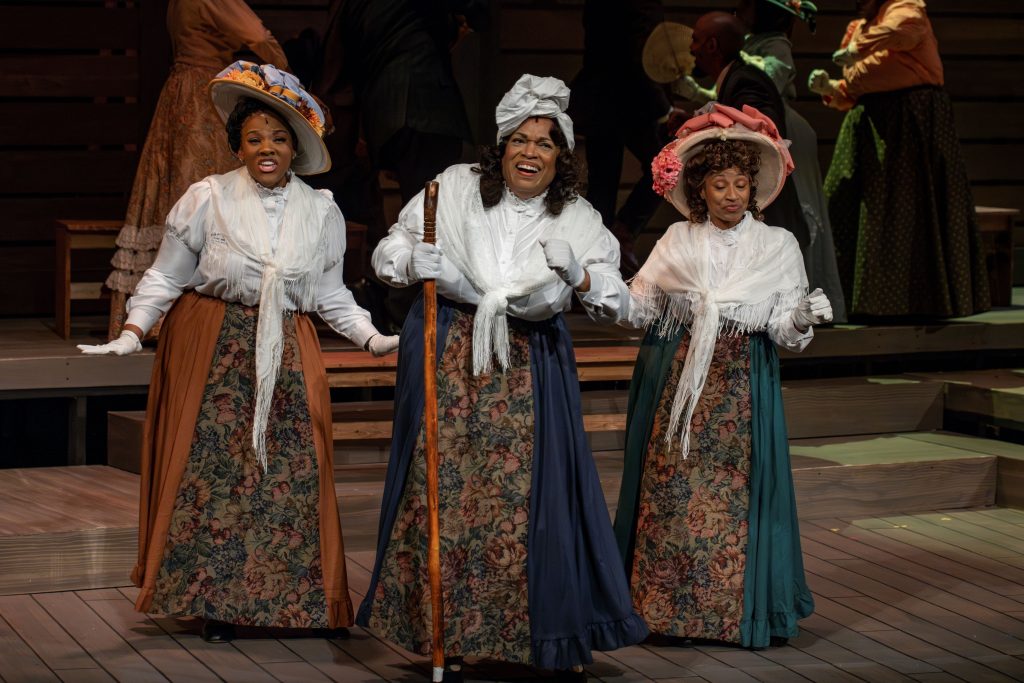
The Church Ladies Amber Rose, Anita Jackson, Olivia Neale. Photo by Arieona Phillips

In 1909, Celie, 14, is a humble, hard-working poor black girl living in rural Georgia, who has delivered two babies whose father is her father, and Pa (J. Samuel Davis) has taken them away.

Several years later, he makes a deal to give Celie to Albert “Mister” Johnson (sturdy Kelvin Roston Jr.), an emotionally and physically abusive widower and farmer, to care for his unruly children and serve him.

By her sacrifice, she spared her sister, Nettie (a tender Morgan Taylor), so that she could follow her dream of being a teacher. Unbeknownst to Celie, for many years, the compassionate Nettie winds up with a missionary family in Africa. When Morgan and Angela sing together, it’s magical, especially “Our Prayer.”

Celie has gone from one house of horror to another. But her faith sees her through, as do the people who raise her up. That community will return her kindness.
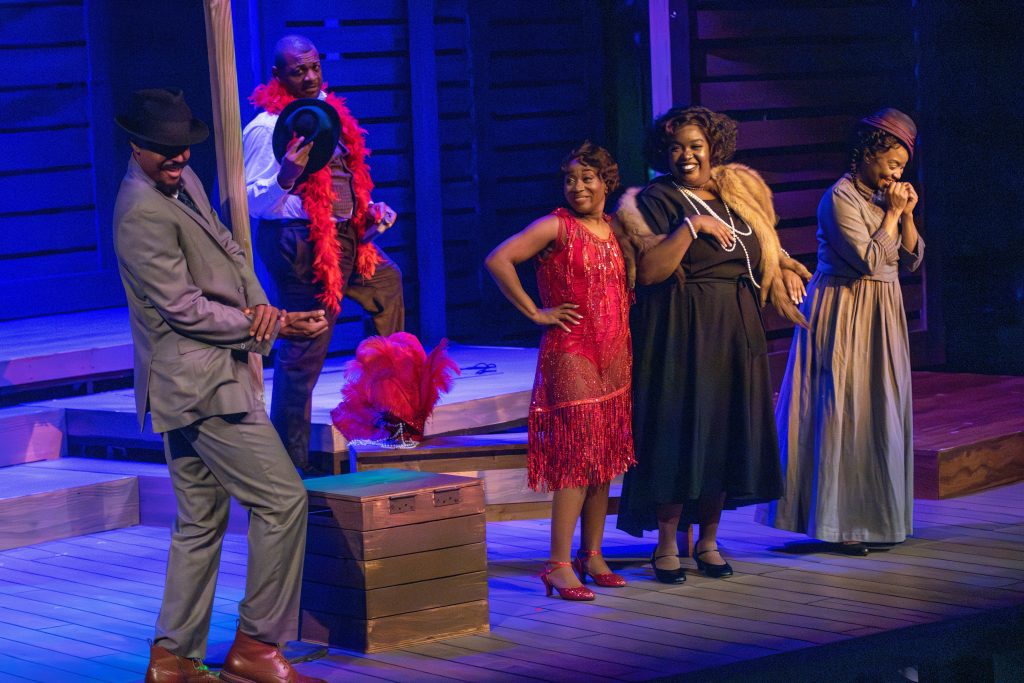
Push Da Button. Photo by Arieona Phillips

While taking care of Mister’s home, the nurturing Celie meets the glamorous and worldly nightclub chanteuse Shug Avery (dynamic Alexis J. Roston). They share romance and a deep bond.

Wearing a snazzy red outfit, Roston sashays with confidence in “Push Da Button” and she shines in “Too Beautiful for Words” and “What About Love?”

One of Mister’s grown children, Harpo (versatile Brian McKinley), marries Sofia (powerhouse Adrienne Spann). Spann, impressive in her Black Rep debut, is strong as the feisty free spirit, known for her independence and speaking her mind. She stands out with her phrase (and song) “Hell, no!”

Tyler White is comical as the irrepressible Squeak and Olajuwon Davis, Dajuan Davis and Samantha Madison are well-rounded, adaptable ensemble members.

Marsha Norman wrote this musical adaptation of Alice Walker’s Pulitzer Prize-winning touchstone novel, a National Book Award winner in 1982. It debuted on Broadway in 2005 and then was revived in 2015.
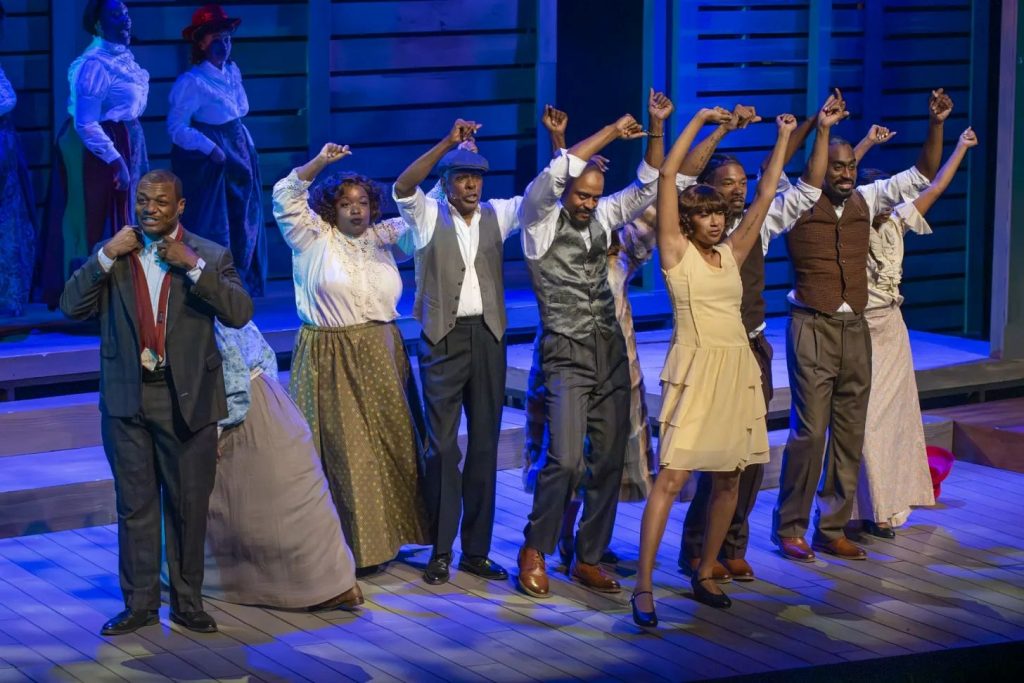
Photo by Arieona Phillips

In the two film adaptations, first in 1985 by Steven Spielberg, which garnered 11 Academy Award nominations, and then a 2023 musical version, they brought out the dignity and virtues of a trauma survivor.

Wildflower brought down the house with “I’m Here” – which was interrupted three times by applause, a goosebump moment.

With this stellar cast, the finale, reprising “The Color Purple,” is heartfelt and affecting, reminding us of the mighty power of love, healing and resilience.

The staging is simple and Heather Beal’s choreography is supple, well-suited for this nimble ensemble. They have fun with the juke joint dance – and ‘Uh Oh.” Special mention to fight choreographer Paul Steger. The energetic African dance number is an ideal way to open the second act.
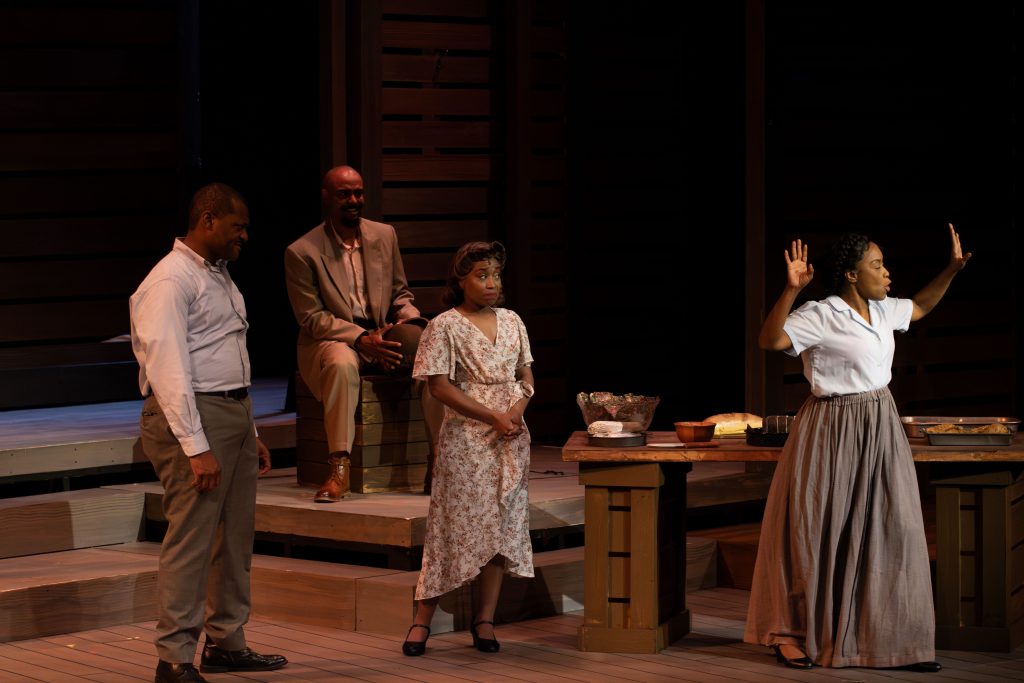
Photo by Arieona Phillips

Using cultural soundscapes beautifully, Music Director Jermaine Manor fluidly leads an eight-piece orchestra, with Zach Neumann on keyboards, Stan Coleman and Alex Macke on reeds, Dennis Brock on guitar, Willem von Hombracht on bass, Des Jones on drums, Gerald “Babtunde” Williams on percussion, and Manor on keyboards, too.

Resourceful scenic designer Tim Jones’ flexible scenic design uses an ancestral tree as a backdrop focal point, with nods to 20 Century South and Africa, and lighting designer Michael Sullivan created atmospheric notes, as did Justin Schmitz’ sound design. Mikhail Lynn did his customary excellent work on props.

With a story spanning 40 years, costume designer Jarrod Barnes’s stylish vintage wear reflects the periods and the economic level of the characters, with Sunday best church clothes and fancier juke joint attire. Nettie’s gorgeous white Victorian dress rivals Shug’s dazzling pieces, and all the trousers are fun for “In Miss Celie’s Pants.”
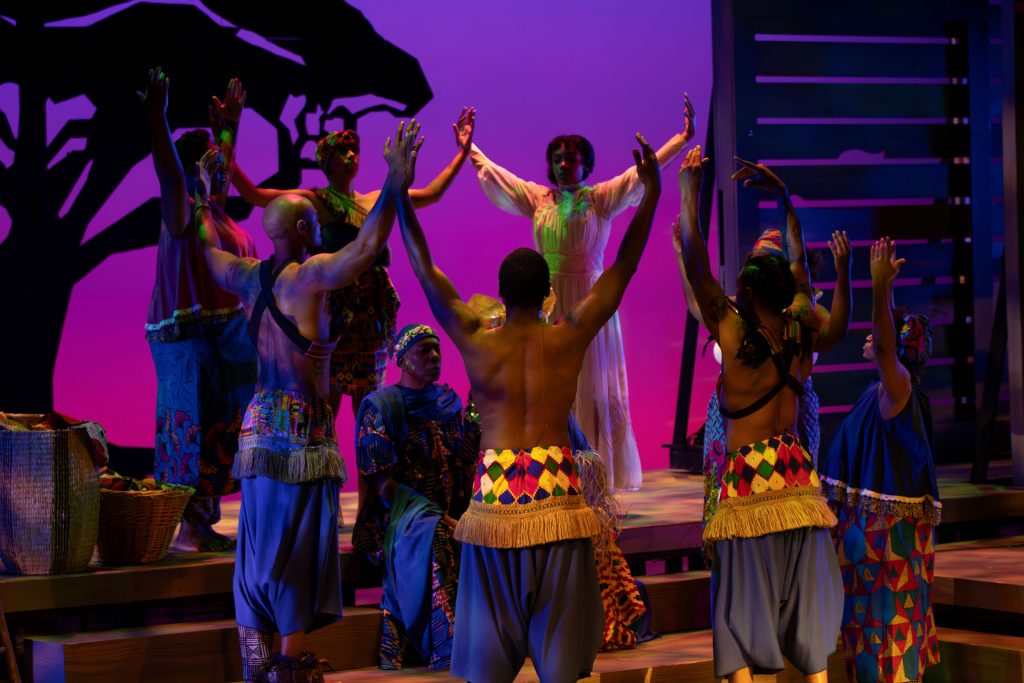
African Dance. Photo by Arieona Phillips

Of note, purple symbolizes strength, transformation, power, wisdom, bravery — and all meanings can be applied here.

What is most personal is also the most universal, and it shows in The Black Rep’s expertly produced, very moving musical.

The Black Rep presents “The Color Purple” Sept. 9 – 27 at The Edison Theatre at Washington University in St. Louis. For tickets, visit The Black Rep’s website, www.theblackrep.org.
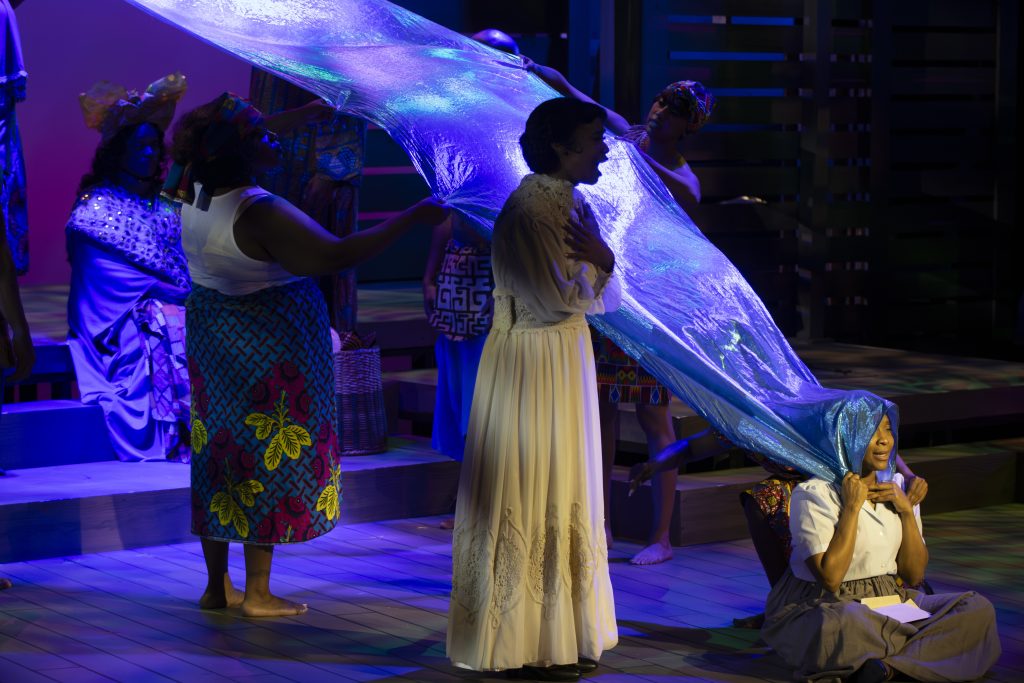

Photo by Arieona Phillips

By Lynn Venhaus

With its superlative cast, August Wilson’s powerful storytelling, and impressive milestones, “Radio Golf” is a triumph in all aspects.

Thoughtfully presented by the Black Repertory Theatre of St. Louis through June 8 in the Edison Theatre, this shrewdly observant play says so much about at what cost is doing the right thing vs. getting ahead. While it is set 1997, it speaks to issues for the ages.

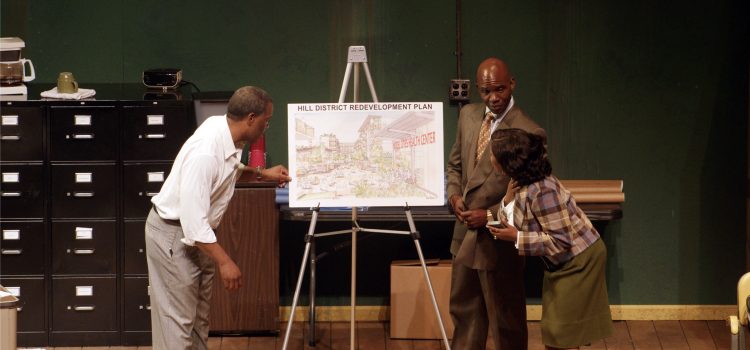
The premise of Wilson’s 10th and final play is about a real estate entrepreneur who is determined to become Pittsburgh’s first black mayor. Set in the Hill District, Harmond Wilks and his business partner Roosevelt Hicks are golf enthusiasts with big plans for the neighborhood, and their future. But at what risk?

Their office, Bedford Hills Redevelopment Inc., is a storefront on Centre Avenue. The two partners talk of their hopes and dreams as they work on a modern housing and shopping development that will include Whole Foods and Starbucks.

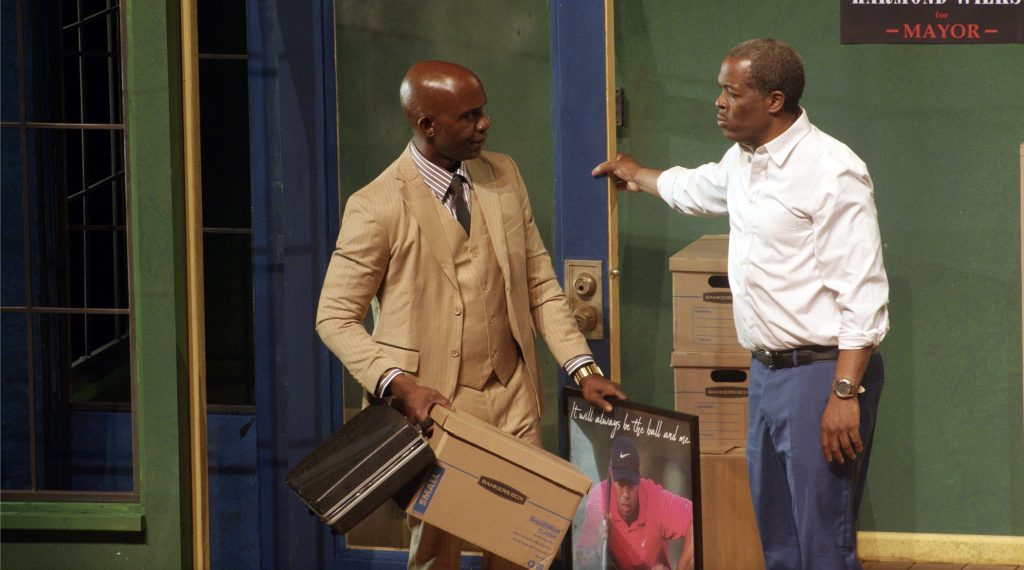
Ronald L. Conner, a St. Louis native now living in Chicago, is a fiery, slick, upwardly mobile Roosevelt who is a bank vice-president and plays golf games to get ahead. Being accepted by the Country Club movers-and-shakers is a goal that he feels is within reach.

Ronald L. Conner and Reginald L. Wilson as business partners Roosevelt and Harmond. Photo by Keshon Campbell

Reginald L. Wilson, in a slow-burn riveting performance, views the development as a way to lift people up. But a block of the Hill District must be torn down. It’s his Black Rep debut but he has immersed himself in Wilson’s works, and previously starred in “Ma Rainey’s Black Bottom” and “Fences.”

Where Harmond and Roosevelt see blight, others see the heritage that marks the tight-knit families who grew up there. He isn’t looking at the other side – and both a cranky yet wise Old Joe Barlow and no-nonsense handyman-contractor Sterling Johnson remind him of people’s worth, no matter their economic means or position.

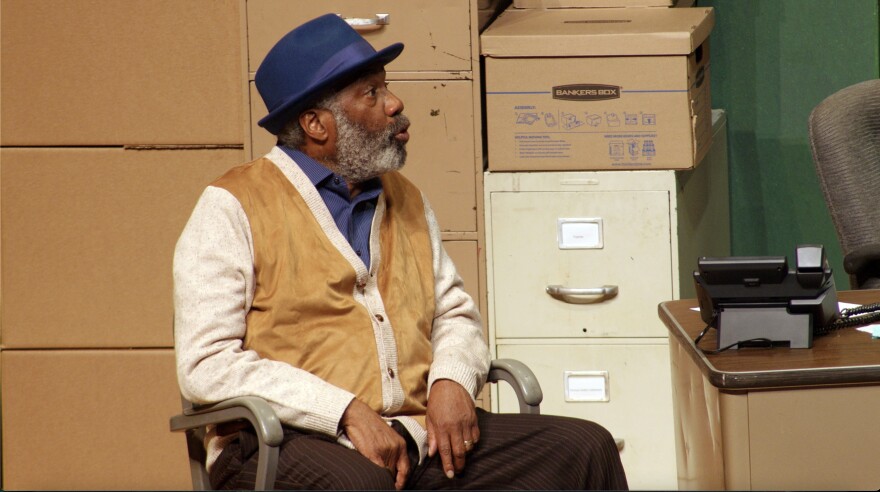
Himes is unabashedly brilliant and the audience’s favorite character as Joe, a neighborhood elder who knows its history. He also remembers Harmond’s father who was in the real estate business. Blunt and smart like a fox, Joe tells it like it is.

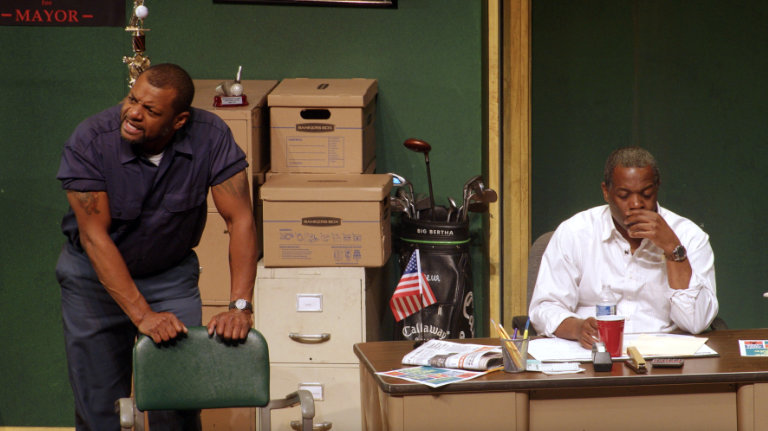
As street-smart Sterling, Kelvin Roston Jr. is the play’s conscience. A good judge of people and their motives, he warns Harmond about neglecting the reasons why people value their history and turning his back on his neighbors. An ex-con who has lived a colorful life, and his dialogue just sings with authenticity, thanks to Roston.

Savvy Velma Austin is the lone female in the cast, portraying Mame, Harmond’s ambitious wife and public relations professional. She is looking ahead and extremely conscious of image. She doesn’t want him to jeopardize the path they envision for their future.

The conflicts occur organically because the ensemble is skilled in delivering Wilson’s rhythmic prose, making their characters’ struggles well-grounded.

Ron Himes as Old Joe Barlow. Photo by Keshon Campbell.

Director Jon Royal’s layered approach allows Wilson’s realistic dialogue to breathe and to build with tense clashes.

Jim Burwinkel’s scenic design aptly encapsulates Wilks’ needs and his hopes – an MLK poster is near his desk and a Tiger Woods poster is near Roosevelt’s. Lighting designer Jayson Lawshee captures times of day through the windows and Justin Schmitz’ astute sound design includes a terrific soundtrack.

Also setting the moods were costume designer Shevare Perry, who fits the period well, and Mikhail Lynn, who nailed the props, such as stolen golf clubs.

In “Radio Golf,” like he has touched on so eloquently before, Wilson examines the lifelong practices of white-run institutions, and whether minorities getting a place at the table was lip service, or another way for control, or an opportunity. And what would you do to ensure that opportunity?

All good, thoughtful points. As Martin Luther King once said, “The time is always right to do the right thing.”

Wilson published the play before his death in 2005, long before social media could have exploited the efforts of people involved to do the right thing vs. the corporate and political spins of the day. However, at that time, the outrage that is the norm when righteous dudes stand up for rights and beliefs now is sadly absent.

Reginald L Wilson and Velma Austin as Harmond and Mame. Photo by Keshon Campbell.

Wilson’s monumental American Century Cycle covers 100 years of the Black experience in America, chronicling social and historical changes in his remarkable style. He won Pulitzer Prizes for two of the plays – “Fences” and “The Piano Lesson.”

“Radio Golf” is the Black Rep’s second completion of the cycle, which took them 18 years to achieve. The Black Rep first completed it – only the third company in the U.S. to do so – from 1988 to 2003.

Starting in 2007, they have presented Wilson’s collection in chronological order. Thanks to the Black Rep, since 2012, I have seen seven of Wilson’s works, and each one has been a gem to treasure.

“Radio Golf” is also a record for actors Himes, founder and producing artistic director of the Black Rep, and Conner, who complete their own personal cycle this go-round.

They have earned St. Louis Theater Circle awards for outstanding production of a drama with Wilson’s “Two Trains Running” in 2022 and “Jitney” in 2023, and Ron Himes won best actor for “Fences.”

All 10 powerful in their own ways, these finely acted and impeccably produced shows illuminate black heritage and specific challenges as only Wilson can, and it’s always the right time to be reminded of his humanity.

With vibrant performances, The Black Rep’s “Radio Golf” is a masterful production that elevates its timeless message for today.

Kelvin Roston Jr as Sterling talks to Harmond.

The St. Louis Black Repertory Company presents “Radio Golf” through June 8. The opening weekend of May 16 – 18 was cancelled because of tornado damage, and performances have been added from Thursday, June 5 to Sunday, June 8. A portion of those ticket sales will support tornado relief. Performances take place in the Edison Theatre on the campus of Washington University with support from The Whitaker Foundation. For more information: www.theblackrep.org Box Office at 314-534-3807. Reduced pricing is available for seniors, educators, museum staff, students, and groups of 12 or more.