By Alex McPherson

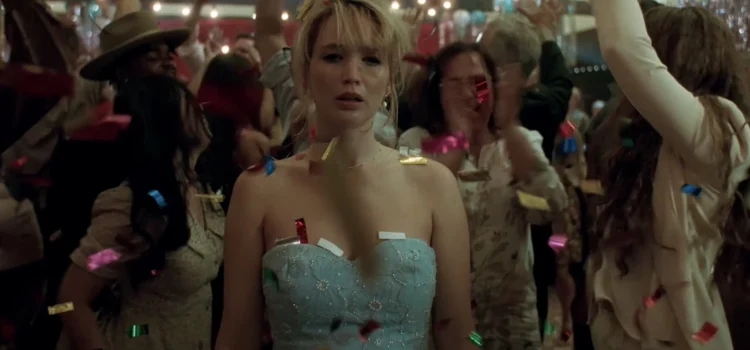
An intensely gripping acting showcase for Jennifer Lawrence, director Lynne Ramsay’s “Die My Love” paints an existentially nightmarish picture of motherhood, conformity, and relationships in fateful disarray.

Based on the novel Matate, Amor by Ariana Harwicz, the film follows Grace (Lawrence), a free-spirited and frustrated writer who moves into an old house in rural Montana with her ruggedly handsome but insecure boyfriend, Jackson (Robert Pattinson). The house, nestled within tall grasses and fairy-tale woods, was left to Jackson by his uncle who committed suicide.

It’s seemingly a prime location for Grace and Jackson’s antics; they drink nonstop and have wild sex, fully embracing their physical passions. Before long, Grace is pregnant and gives birth to a baby boy (whom they choose not to name), forever altering the paradigms they exist within.

Grace and Jackson’s relationship begins to crumble. Jackson is away at work for suspiciously long periods, and Grace suspects him of infidelity. Loneliness, emotional detachment, and sexual frustration grow exponentially day by day, with Grace feeling abandoned even when Jackson is at home.

She crawls on all fours like a prowling dog and masterbates in the nearby woods, at one point walking through the plain’s wispy grass, knife in hand, while their son sits unattended on the porch. 

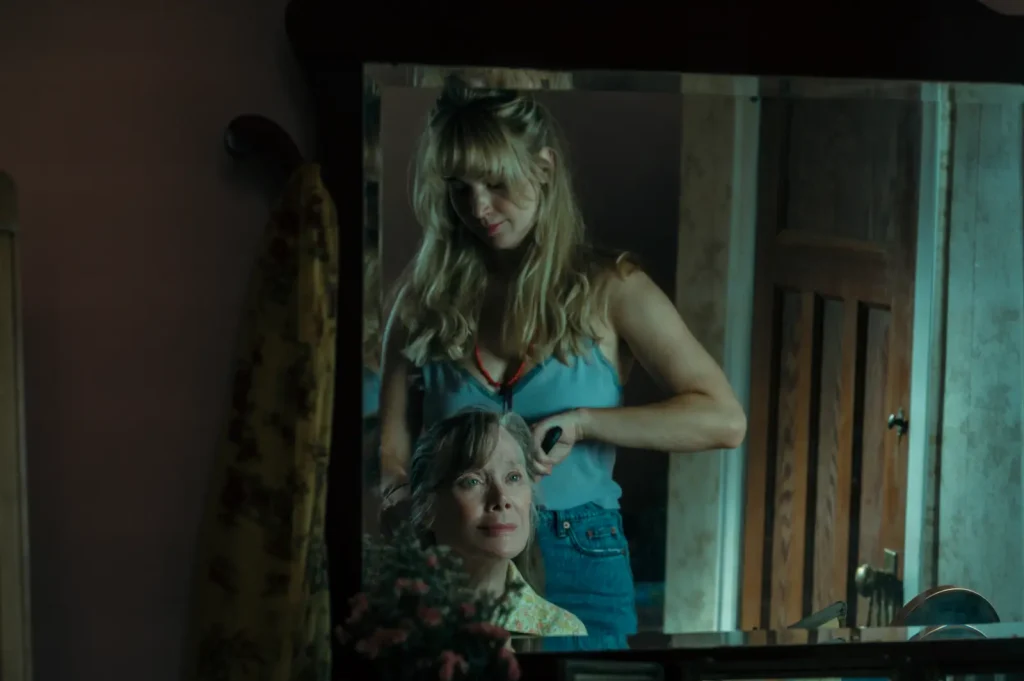
Grace’s new responsibilities and social expectations untether her present self from her former self, with troublingly extreme results. Jackson’s unstable mother, Pam (Sissy Spacek), lives nearby and is grieving her recently-deceased husband (Nick Nolte). She offers Grace some support, but Grace stubbornly refuses to accept help during her postpartum spiral. 

Jackson is also largely clueless and unwilling to change his ways. He and Grace are still drawn to each other, but they’re unable to let go of a toxic cycle of fighting and reconciliation. A mysterious biker (LaKeith Stanfield) living in the area offers the possibility for Grace to indulge her needs.

Melding sheer brutality with sequences of dreamy, sensual beauty, “Die My Love” thrives on its ethereal atmosphere and a show-stopping performance from Lawrence. She inhabits Grace with a wild-eyed intensity and crushing pathos, a woman fallen out of touch with both herself and with “civilized” society writ large. 
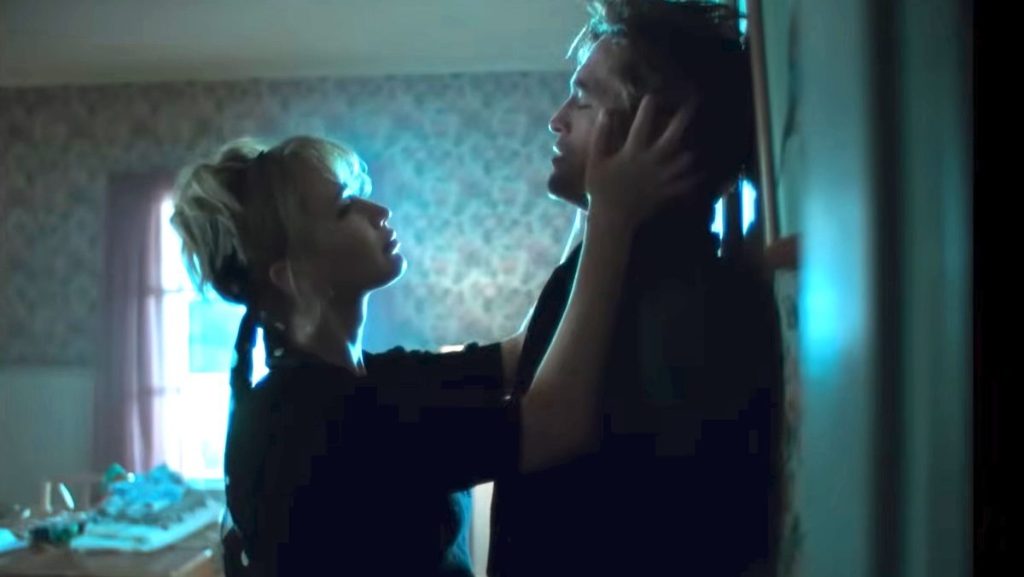
Ramsay, known for disquieting character studies, is a prime fit for this portrait of mental decline. “Die My Love” prizes tone over traditional narrative —we’re watching a hypnotizing trainwreck as Grace destroys both herself and her relationships.

Neither Grace nor the people in her orbit have the power to shift her trajectory; she’s as much a byproduct of postpartum depression as she is from the ways that Jackson and the world treat her in her new role as a mother. 

Seamus McGarvey’s cinematography frames the expansive yet confining landscape as foreign and disorienting. The environment often distorts as characters move through space, as if each step renders Grace further divorced from desires she feels forbidden from embracing, with other characters also struggling to find their own paths forward.

There’s a haunting, symbolic quality to the 4:3 aspect ratio and the wide-open surroundings the characters reside within: expansive and limiting, even isolating.
“Die My Love,” not completely unlike Mary Bronstein’s “If I Had Legs I’d Kick You,” does a fantastic job at submerging us into its protagonist’s mind. Ramsay’s filmmaking is at times dreamlike and other times startling in its blunt depiction of Grace’s self-destructive behaviors (animal lovers beware).

Music plays a critical role here, featuring one of the year’s best soundtracks, expressing dread as well as mournful reflection on the idealized life Grace once envisioned she’d have.

Lawrence gives a highly physical performance, from manifesting Grace’s desires through animalistic, “interpretive dance” sequences (that the film plays completely straight), to the peace she feels within the nearby woods away from civilization, and the violent self-hatred that flares unexpectedly.

There’s some bone dry humor in Lawrence’s matter-of-fact delivery. This is especially apparent during a scene where she has a “conversation” with a friendly gas station cashier, although Grace’s wit always reflects her deep-seated malaise.
The screenplay by Ramsay, Alice Birch, and Enda Walsh doesn’t provide much backstory, which puts more emphasis on the intricacies of Lawrence’s performance. Luckily, she is fully up to the task of conveying Grace’s emotional limbo.

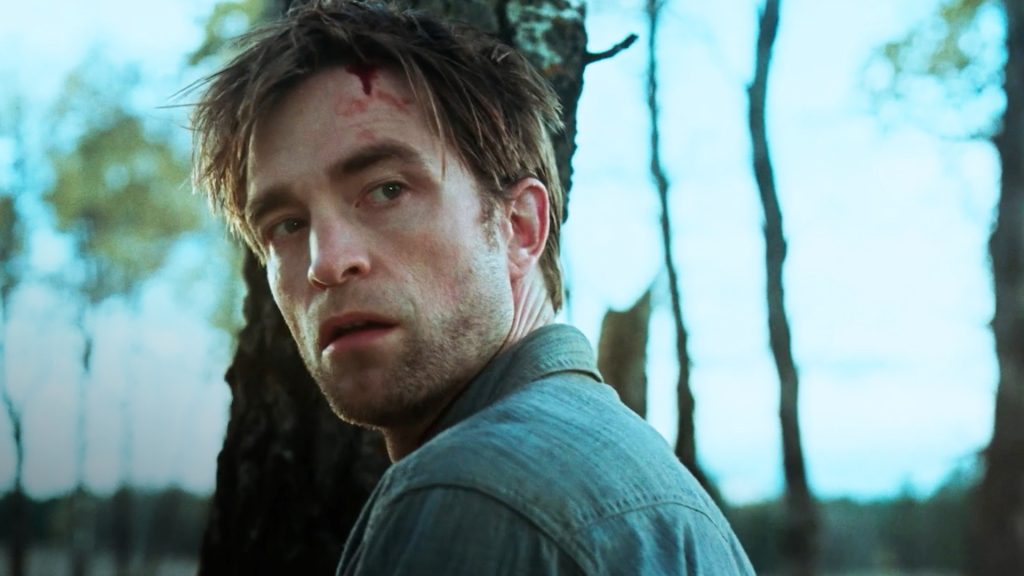
Pattinson, not given as much to do as Lawrence, brings a shaggy insecurity that underlines Jackson’s volatility and half-hearted attempts at making amends. Like most other characters in “Die My Love,” Jackson remains unable to truly listen to Grace and understand where she’s coming from, every conversation seemingly creating more distance.

Spacek, too, does a lot with limited screen time; on some level, Pam identifies with Grace’s decline, and supports her efforts for independence even as they threaten Grace’s life.

The problem is that “Die My Love” eventually starts to wear out its welcome in Grace’s perpetual perils. Grace’s “journey” is a downhill slide that won’t stop until it’s all burned down. Ramsay’s film is disconcertingly harsh, alienating viewers through a story about alienation. And, well, isn’t that part of the point? It’s a dark, twisted vision of Hell still worth experiencing.

“Die My Love” is a 2025 psychological thriller directed by Lynne Ramsay and starring Jennifer Lawrence, Robert Pattinson, Sissy Spacek and LaKeith Stanfield. It is rated R for sexual content, graphic nudity, language, and some violent content, and the run time is 1 hour, 59 minutes. It opened in theatres Nov. 7. Alex’s Grade: B+.

By Lynn Venhaus
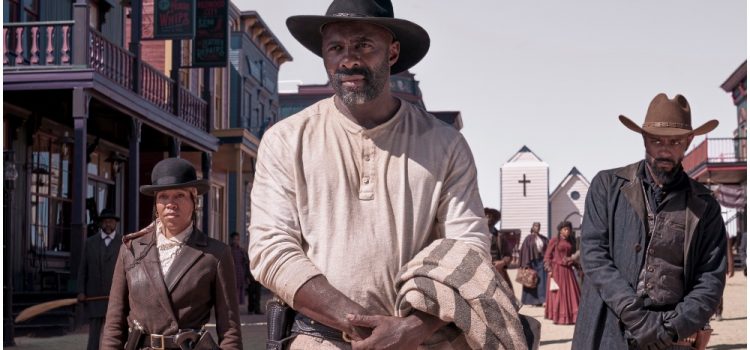
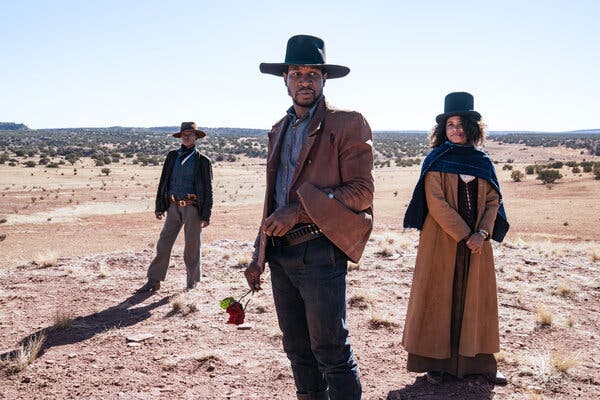
A good-looking film with a kicky soundtrack, “The Harder They Fall” comes across as a bloody western shot like a music video.

It’s no surprise, because first-time director Jeymes Samuel, a music producer and singer-songwriter known as The Bullitts, is a protégé of Jay-Z and worked with him on “The Great Gatsby” soundtrack for director Baz Luhrmann. Under his real name, Shawn Carter, Jay-Z is one of the film’s producers.

Samuel demonstrates an appealing slick style, but sadly the well-worn story lacks substance. Co-written by veteran screenwriter Boaz Yakin and Samuel as a tale of revenge and robbery, it’s merely ordinary – without much character development, squanders the talents of its extraordinary cast that includes solid-gold Idris Elba, Regina King and Delroy Lindo, with rising stars Jonathan Majors, Zazie Beetz and LaKeith Stanfield, who just gets better with every role.

The lethal shoot-outs and blood-spurting showdowns, an integral part of the western genre, are repetitive and do little to advance a gripping story. Overall, the plot is run-of-the-mill, mostly predictable, except for the third act revelation.

It’s unfortunate because you want to root for this type of new western that spotlights black cowboys. Supposedly, on the western frontier, one in four cowboys were black, and they haven’t been given proper due in America’s history on ‘go west’ and the great migration.

In the beginning, the director states that the story is fiction, but the people existed. Most of the action takes place in Redwood City, which was a primarily black community.

Faring well in this film are emerging stars Danielle Deadwyler as Cuffee, who identifies as him and would like a career in law enforcement, and Edi Gathegi as Bill Pickett, a young trigger-happy hotshot.

RJ Cyler has a solid turn as sharpshooter Jim Beckworth as does Deon Cole as Wiley Escoe, but it is Majors’ film. His outlaw Nat Love, no matter how many times he’s intimidated or dismissed, is driven and relentless.

Playing a man of few words who acts quickly, Elba’s physicality is felt throughout, a foreboding presence from the opening scene where he takes down a family, to breaking out of chains in prison stripes, and then as a feared frontier gang leader.

An interesting twist is how fierce the women are – Regina King as “Treacherous Trudy” and Zazie Beetz as Stagecoach Mary. They take the bullets out of their guns and use their fists and hand-held weapons for a rip-roaring knock-down drag-out brutal fight.

With its attractive production elements, the movie benefits from cinematographer Mihai Malaimare Jr.            ‘s framing of these newly constructed towns, showcasing the period production design by Martin Whist, with editing by Tom Eagles. The violence is graphic – a blown-off arm here, an exploding head there.

Amid the dusty outdoors and bullet-ripped clothes, Antoinette Messam’s costume design features a wide range of interesting vintage hats and lived-in frontier wear, with a few striking dusters and coats adding to the characters’ stature. You can always pick out Nat Love because of his jaunty red kerchief.

Not to be confused with a 1956 movie of the same name starring Humphrey Bogart, “The Harder They Fall” unfortunately lacks staying power because it preferred style over substance.

“The Harder They Fall” is a 2021 western directed by Jaymes Samuel and stars Idris Elba, Jonathan Majors, Regina King, Zazie Beets, LaKeith Stanfield, Delroy Lindo and Danielle Deadwyler. Rated R for strong violence and language, the run time is 2 hours and 16 minutes. In theaters Oct. 22 and streaming on Netflix on Nov. 3. Lynn’s Grade: C+

By Alex McPherson
Director Shaka King’s new film, “Judas and the Black Messiah,” is a visceral exploration of resistance, sacrifice, betrayal, and legacy.

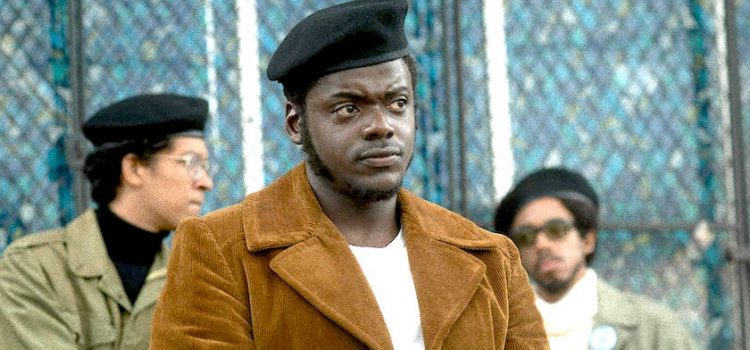
The film takes place in late 1960s Chicago, where tensions are high between the Illinois Black Panther party and law enforcement. Amid the aftermath of recent political assassinations, Panther Deputy Chairman Fred Hampton (Daniel Kaluuya) is growing increasingly influential. Hampton, only 21 years old, is a passionate leader who seeks to advance the self-determination of black people to rebel against injustice, calling for cultural revolution. He establishes programs providing food, education, and medical care to local communities. He also unites disparate groups across Chicago under shared fury at the powers that be, including an all-white group called the Young Patriots.

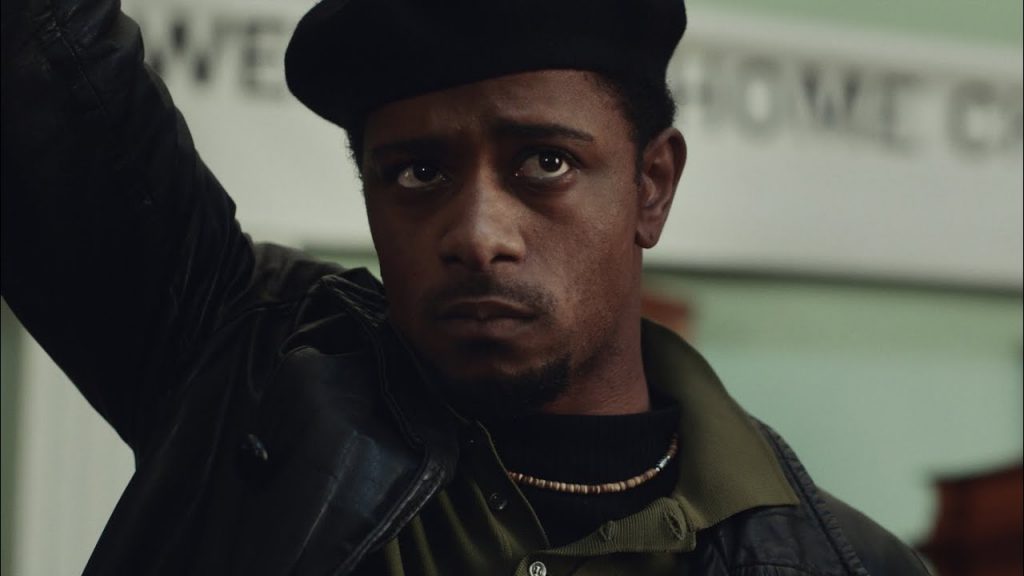
Despite all that Hampton does for the community, however, FBI director J. Edgar Hoover, monstrously played by Martin Sheen, sees Hampton’s growing impact as a threat and formulates a plot to eliminate him by any means necessary. FBI agent Roy Mitchell, played with surprising nuance by Jesse Plemons, recruits a youthful, petty criminal named William O’Neal (Lakeith Stanfield) to infiltrate the Black Panther Party and become an informant, in exchange for his freedom from jail time. As O’Neal starts ascending through the ranks — eventually becoming Hampton’s security chief — he starts to question what he’s doing and whose side he’s really on.

The following events are often enraging and sobering. Indeed, “Judas and the Black Messiah” is a deeply moving film, depicting its subjects with depth while spotlighting historical events that remain scarily relevant today.

Through focusing on a condensed period of time, King’s film isn’t a mere biopic of Hampton or O’Neal. Rather, viewers are thrown into a warzone twisted by prejudice and misinformation. This was a volatile period in Chicago’s history, as well as a formative time for several of the film’s subjects. As Hampton’s political prowess grows, so do the malevolent machinations operating behind the scenes. Through the film’s crisp cinematography, expressive score, and harrowing scenarios, we can practically taste the danger in the air. The suspense is palpable, both of cultural change and of violence looming on the horizon.

It’s a bold decision to frame the proceedings through O’Neal’s perspective. Though his actions are often reprehensible, “Judas and the Black Messiah” paints him in an empathetic fashion, where we can see his inner turmoil. Trapped in a precarious situation, both the manipulator and the manipulated, O’Neal is an intriguing enigma throughout the film. “Judas and the Black Messiah” contains several nail-biting scenes where O’Neal escapes by the skin of his teeth — slyly grinning to himself when the coast is clear, but also realizing the constant danger he’s in, and his own growing attachment to the Panther cause. 

Stanfield’s performance is downright incredible, capturing O’Neal’s selfishness and slippery nature, but also his discomfort and mental conflict as the film progresses. Although some viewers may take issue with his lack of clear-cut motivation, King and co-writer Will Berson refuse to simplify him for entertainment purposes. O’Neal is a flawed individual, who we may never truly understand. In the film, he comes across as a tragic figure, battling for a sense of self amid delusion, propaganda, and frontline interaction with the Panthers themselves.

This lends the proceedings an uncomfortable tone, as we simultaneously care about O’Neal, but also reel from the actions he takes to undermine the Panthers’ cause. Although I appreciate his complex portrayal, “Judas and the Black Messiah” misses an opportunity to elaborate on his attachment, or lack thereof, to the Panthers. The film rushes through his time spent in the Party early on, and the film’s emotional core could have been strengthened by showing more of his interactions with Hampton in particular. 

Hampton isn’t portrayed quite as three-dimensionally as O’Neal, but the film effectively establishes his skills as an orator and as someone who truly cares about the people he’s serving. Kaluyya gives a powerful, soaring performance, where Hampton’s bravery as a leader is on full display. His girlfriend, Deborah Johnson (Dominique Fishback), helps him mature over the course of the film, as he reckons with the weight of his responsibilities for his personal life and the legacy he leaves behind. 

We also get several quieter scenes of Hampton reflecting on his life, helping to ground his character in relatable, personable emotions beneath his in-your-face persona. He reckons with how he’s perceived by the FBI, along with the consequences his passionate rhetoric has on his followers. While I wish the film had provided more of these intimate moments, “Judas and the Black Messiah” showcases the tragedy of a groundbreaking life of activism cut short by forces emboldened by racism and lust for power.

Despite the film’s missed potential in exploring the relationship between Hampton and O’Neal, “Judas and the Black Messiah” remains a must-watch cinematic experience — spotlighting a heroic figure, while encouraging viewers to fight for a more equitable world for future generations.

“Judas and the Black Messiah” is a dramatic biopic directed and co-written by Shaka King, starring LaKeith Stanfield, Daniel Kaluuya, Dominique Fishback, Jesse Plemons, Lil Rel Howery, and Martin Sheen. It runs 2 hours 6 minutes. Alex’s Rating: A- Now playing in theaters and on HBOMax Feb. 12