By Lynn Venhaus
“Extremities” starts with a jump scare – a violent home invasion, and the situation is every bit as horrific as it would seem. In a pulse-pounding few minutes, Marjorie (Claire Coffey) becomes a victim of a sexual assault.
William Mastrosimone’s intense 1980 play grapples with difficult issues surrounding violence against women, the legal system, personal agency, revenge and morality. This is an uncomfortable, tough watch that will spark discussions afterwards.
Although police procedures have changed in the 46 years since the play premiered, and viewpoints too, especially after #MeToo in 2017, its potency is in how ordinary people act and react in extraordinary circumstances.
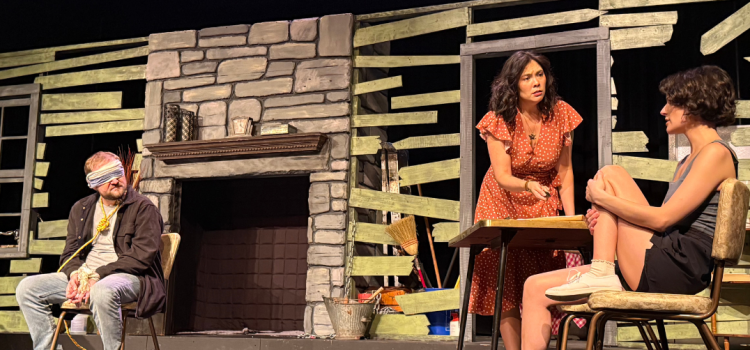
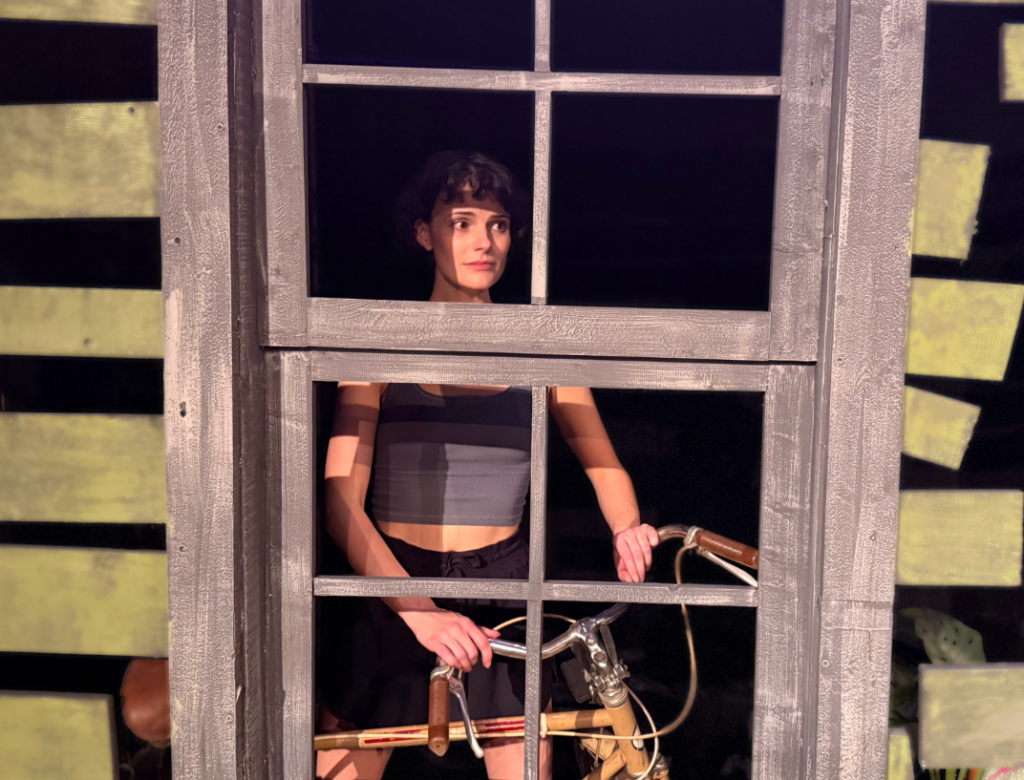
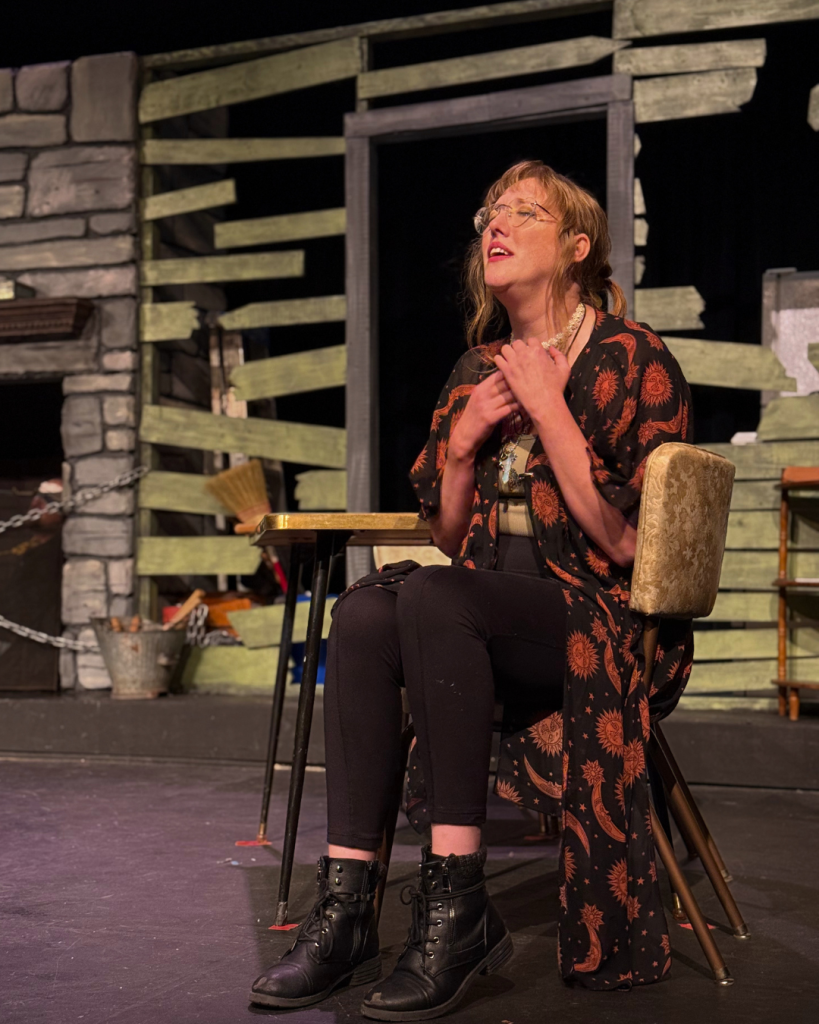
Stray Dog Theatre’s production, which is presented as a period piece, takes place in a remote farmhouse. Scenic designer Rob Lippert has created a fragmented, broken-wood set to be a visual representation of the characters’ emotional lives.
As director Gary F. Bell described in a program note: “lives that have been slowly fractured and damaged by fear, violence, guilt, anger, and the inability to escape the consequences of what has happened.”
In this show, Bell and assistant director Jude Hagene focus on fear, what ifs, and the revenge fantasies going through Marjorie’s traumatized mind.
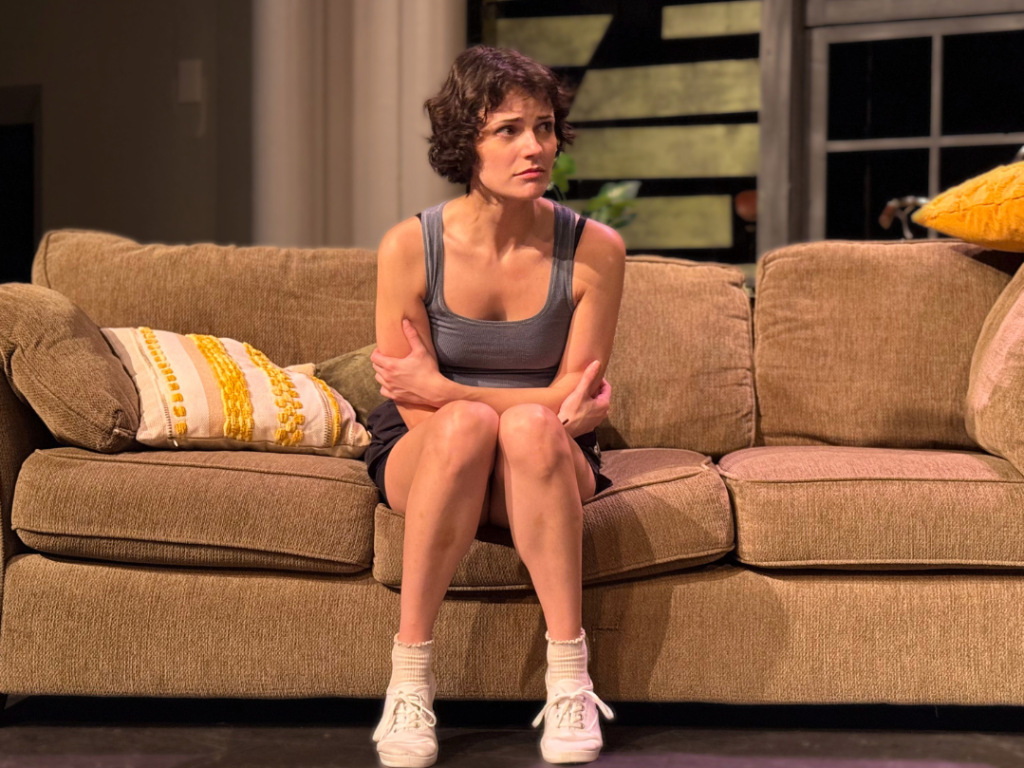
In a raw, real and relatable performance, Coffey is convincing as a desperate, terrified woman who turns the tables on her attacker and becomes an avenger. During the past few years, Coffey has often portrayed accomplished, confident women, in everything from “Bell, Book & Candle” and “The Mousetrap” to “A Doll’s House, Part 2” – and here she also demonstrates a fierce physicality.
A strong, independent woman, Marjorie is alarmed when Raul walks into her home, looking for a “Joe.” His stories keep changing, he keeps advancing, his tone is sinister, her announcement that her husband’s asleep upstairs is flimsy, and he attacks her.
In a graphic depiction, he pins her down, forces her to say ‘I Love You,’ demands she touch him, follow his orders or he’ll smother her with a pillow, which he has demonstrated several times.
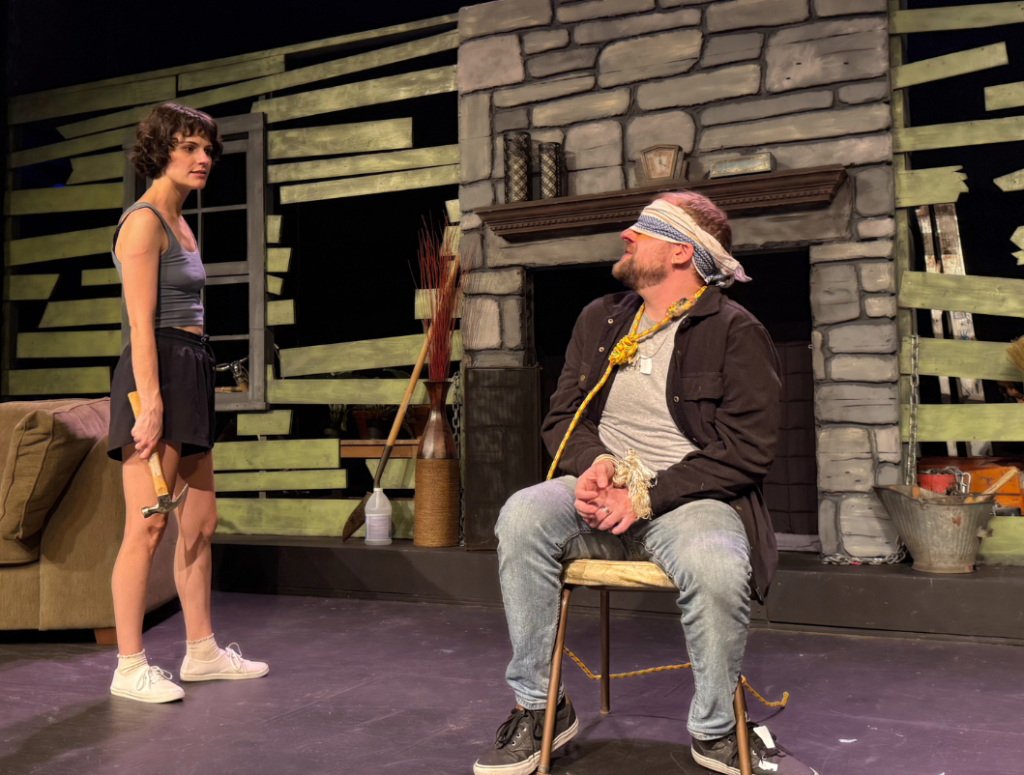
She fights back, grabbing a can of insecticide and sprays his eyes. Forceful, she subdues him by tying him up in the fireplace. But she can’t call the cops because he’s pulled the phone out (in those days, landline only).
Oh, she rages. What would we do? Would we become the judge, jury and executioner?
In his Stray Dog Theatre debut, Andrew Woodard is chilling as the sleazy attacker Raul. An unreliable narrator, he makes up his narrative, but he appears to be a psychopath who has been stalking her.
A slick criminal used to bending rules his way, Raul aggressively taunts her, saying because he didn’t rape her, lack of evidence means he will probably be let go. He flaunts the burden of proof argument. (Back then, a woman’s sexual history was still admissible in court.)
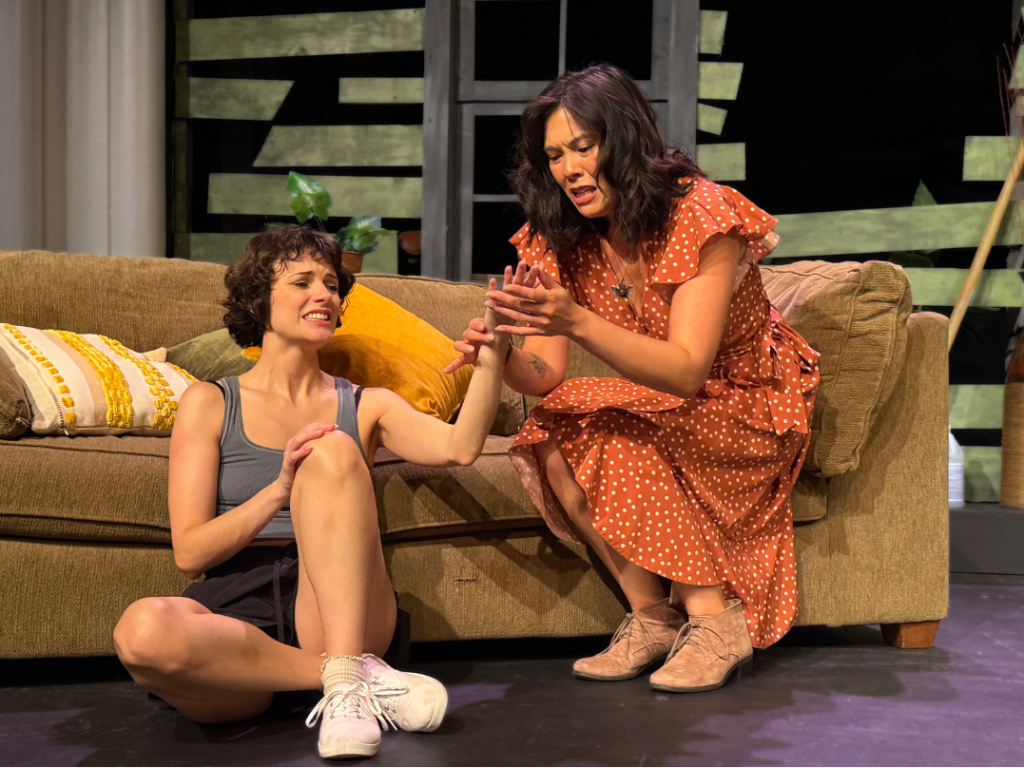
She’s terrified of the consequences and that he will return someday. The power struggle continues, her methods blurring lines, and this difficult situation becomes a tug-of-war between justice and revenge.
One of the most important duties here is the intimacy/combat choreographer Lisa Fischel. The attempted rape is very graphic – and disturbing. In the aftermath, fighting and torture includes kicks, ropes, boiling water, and a knife. Strong stuff.
One can only imagine the psychological and physical toll of mounting this production – and the stamina the four actors must summon.
Marjorie’s roommates eventually return from work separately, and each has a different response. They are dragged into an impossible situation, and nerves become frayed. Shaken up are Lisa Hinrichs as Terry and Lynett Vallejo as Patricia.
The three women are challenged like never before in their adult lives – shocked, frightened, hysterical, confused. They worry about justice, safety, and civil liberties.
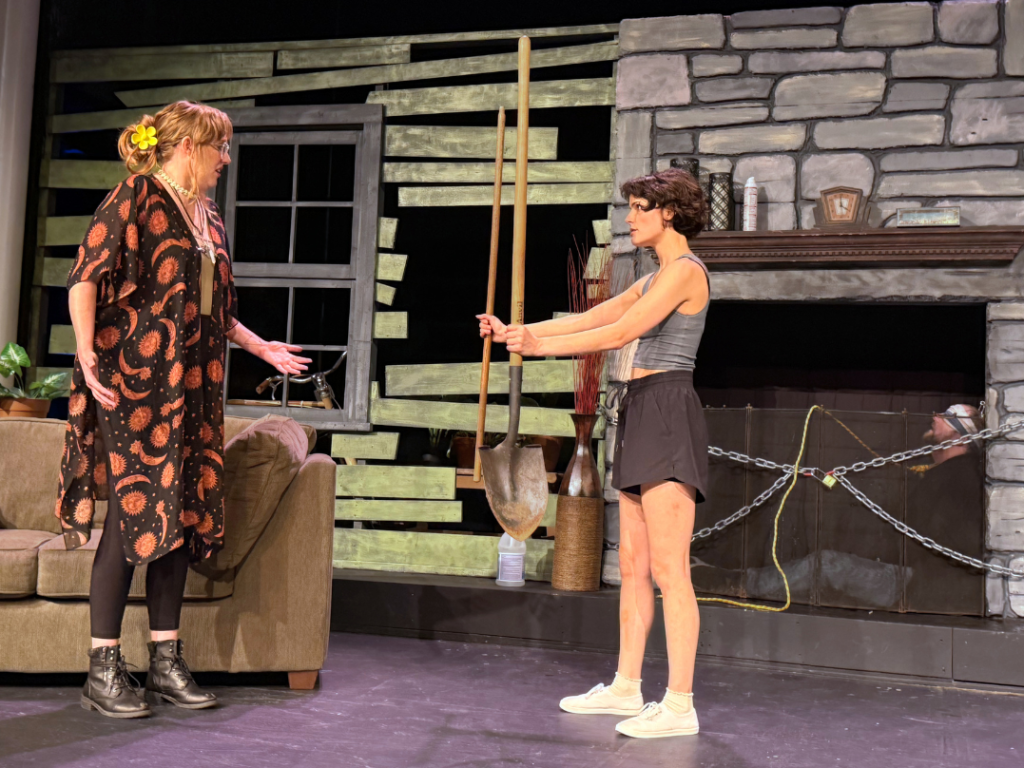
When Raul masterfully manipulates each roommate to gain sympathy, it’s obvious he is gaslighting them, but Terry and Patricia aren’t thinking clearly and take pity on him. He cunningly divides their loyalties.
Kill? Help? Feed? Treat wounds? These possibilities can be debated, as the women argue and insult, and one wonders how credible the playwright’s logic is. Sure, the point is to examine and discuss society’s attitudes and stigmas.
Terry has a secret to share about her own experience, and Patricia, being a social worker, is presented as a ‘liberal’ who respects the law.
Mastrosimone’s backstory includes hearing a rape victim’s story – she identified the rapist but lost in court because of “insufficient evidence.” She wondered if she should have seized her own justice?
Writing from that perspective, one hears and feels his rage. But we don’t have much character development to go on, and what we do know isn’t much. The dynamic is complicated because it’s dated.
The play, first performed at Rutgers Theatre Company in July 1980, eventually premiered off Broadway in December 1982, starring Susan Sarandon. A 1986 film adaptation starred Farrah Fawcett. Actor James Russo portrayed Raul both off-Broadway and in the film.
It’s meant to be a jolt, a shock to the system. Yet, there are exasperating moments too — When the roommates criticize Marjorie for wearing clothes inviting attention, that’s when it went off the rails. We’re really going there?
Predatory behavior is unsettling, and if we could only view women’s behavior as courageous — but the playwright has added all these gray areas: the blame game, asking for it, objectification and exposing society’s prejudices to create a murky environment.
That lengthens the play, and it’s disconcerting to put the women through this shame cycle, too. The emotions escalate, but the actresses sensitively handle their roles.
The reality of Raul’s story is never presented, so we don’t know what to believe, but he is tortured, and behaves like a trapped animal, then works the situation to his advantage (or so he thinks). That’s believable, but his transformation toward the end is questionable. Sure, he has lost his dominance once he plays the victim card. But should we view him as pathetic?
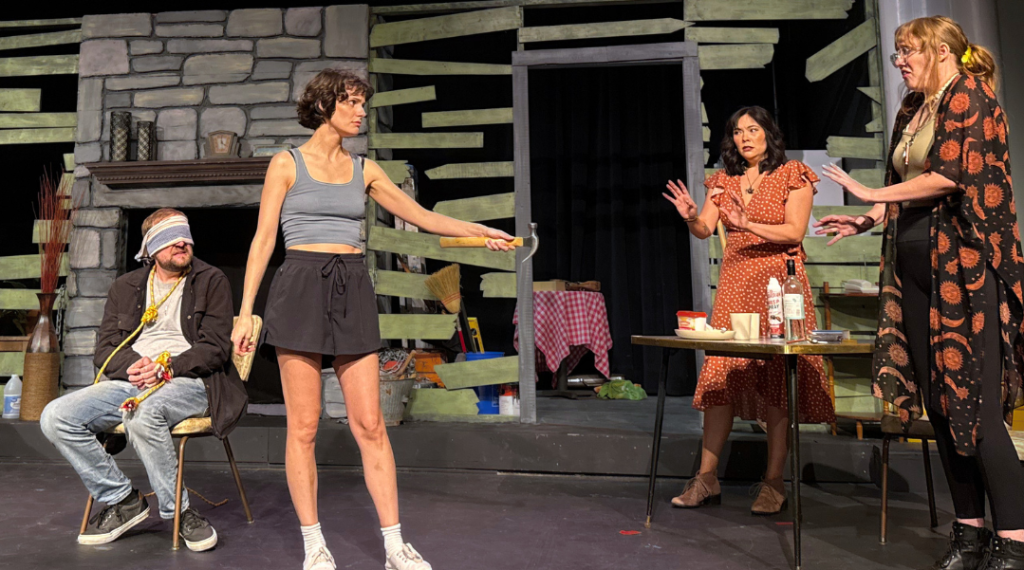
Technical work – lighting design by Tyler Duenow and sound design by Justin Been – adds to the harrowing atmosphere.
This powerful show is for adults only and is unflinching in its difficult storytelling. Triggers may occur with victims of trauma, so that is something to be mindful of – and something not to be taken lightly.
A note on the program states: “This production contains mature themes and intense subject matter, including an attempted sexual assault, physical violence, strong language, restraint, and psychological trauma. The production features emotionally charged scenes that may be distressing for some audience members, viewer discretion is advised.
Stray Dog Theatre’s production of “Extremities” is being presented Aug. 6 to Aug. 22, with performances Thursday, Friday and Saturday at 8 p.m., and special matinees on Sundays, Aug. 9 and 16 at 2 p.m. All performances take place at the Tower Grove Abbey, 2336 Tennessee Avenue, St. Louis. The show is in two acts with a 10-minute intermission and is for mature audiences. For tickets or more information, visit www.straydogtheatre.org.

Lynn (Zipfel) Venhaus has had a continuous byline in St. Louis metro region publications since 1978. She writes features and news for Belleville News-Democrat and contributes to St. Louis magazine and other publications.
She is a Rotten Tomatoes-approved film critic, currently reviews films for Webster-Kirkwood Times and KTRS Radio, covers entertainment for PopLifeSTL.com and co-hosts podcast PopLifeSTL.com…Presents.
She is a member of Critics Choice Association, where she serves on the women’s and marketing committees; Alliance of Women Film Journalists; and on the board of the St. Louis Film Critics Association. She is a founding and board member of the St. Louis Theater Circle.
She is retired from teaching journalism/media as an adjunct college instructor.