By Lynn Venhaus
With a modern sense and sensibility, local playwright John Wolbers created a warm, welcoming and wild woman’s world of the 16th century in the private chambers of Queen Elizabeth I.
In Prism Theatre Company’s world premiere of the comedy-drama “Progress,” this is an uninhibited Bess – presented informally and not on official duty, although she prepares to meet dignitaries, ambassadors and advisors.
In discussions with his life partner Liz in 2020, he discovered an aspect of Bess’s untold story he needed to tell – that she had a savvy squad of advisors uplifting her so that her regal image would be impressive and dignified every day.
With an uncanny ability to write multi-dimensional roles for women, Wolbers has peeled back the curtain, creating a chummy workplace environment that feels lived-in and nurturing. Straight talk is how conversations are played – even if it would be TMI or NSFW in today’s parlance.
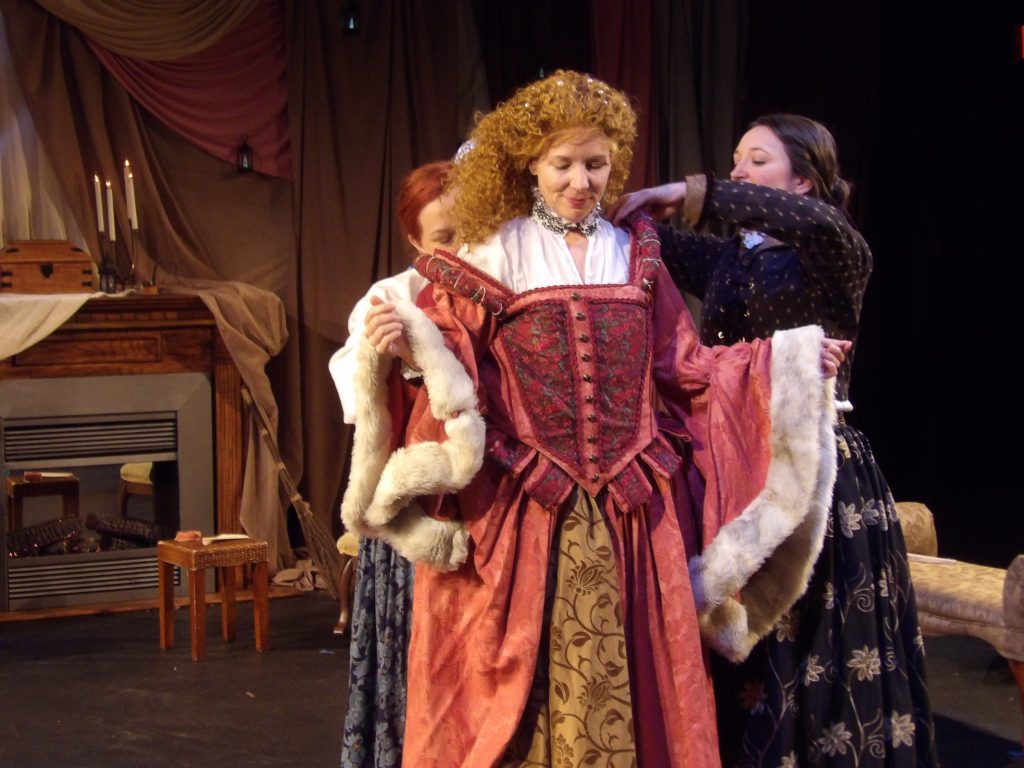
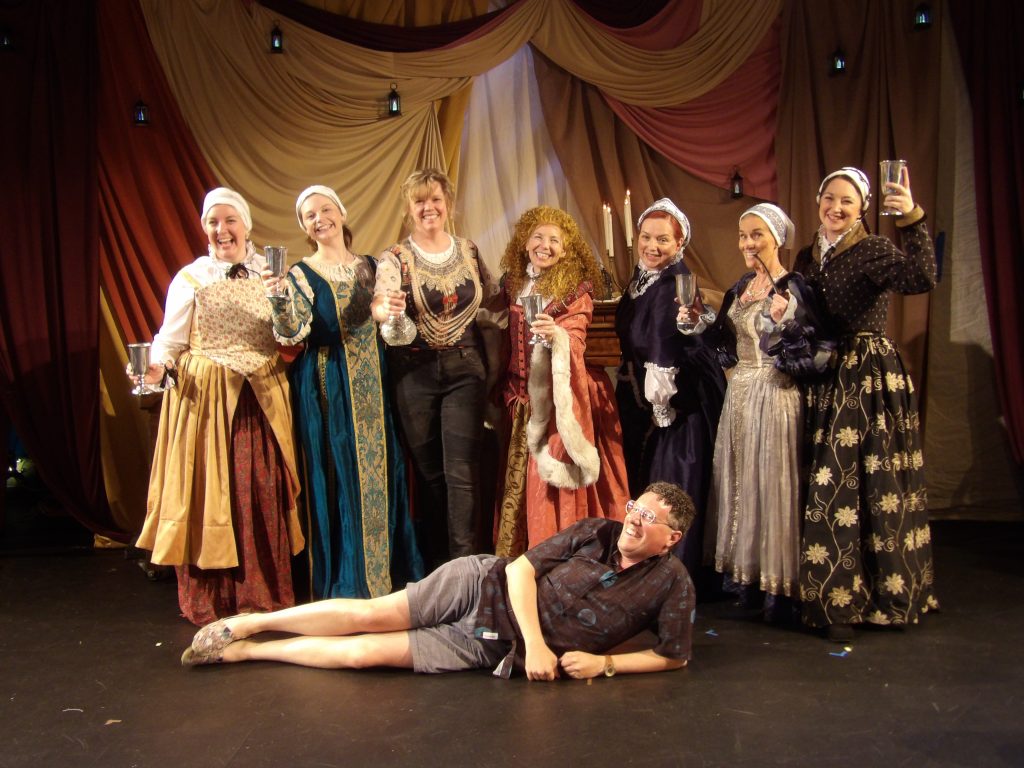
Featuring an all-star cast, these six crafty servants surround the queen in her inner sanctum. They manage her daily routine – dressing her, checking personal care, taking care of correspondence, schedule, budgets, sweet snacks and liquid refreshments.
Local treasure Michelle Hand assuredly plays the swearing sweet-and-sour “Virgin Queen” whose 45-year reign from 1558 to 1603 was viewed favorably as “Progress” and called a “Golden Age” because it brought stability, a cultural Renaissance and the rise of England as a world power.
Prone to emotional outbursts, Bess flies into a rage but then switches to warm and witty. Hand conveys the royal’s intellect, charm, and energy – and dishes dirt with glee. She’s also pragmatic when dealing with world leaders, not making hasty decisions.
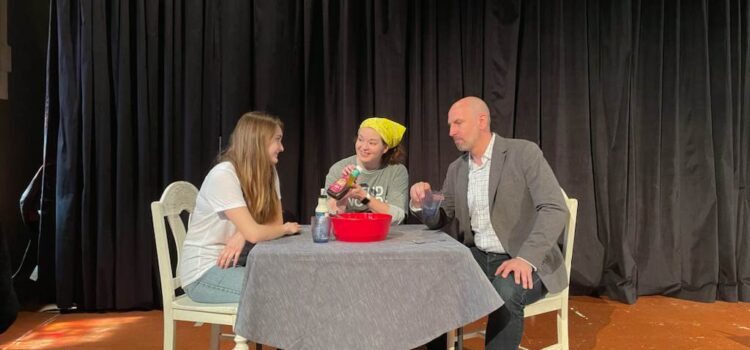
The play begins on Christmas Day in 1562, in London, at the Palace of Whitehall. Sarah Lantsberger excels as an earnest and eager newcomer, Mary, who is nervously introduced to the key ladies.
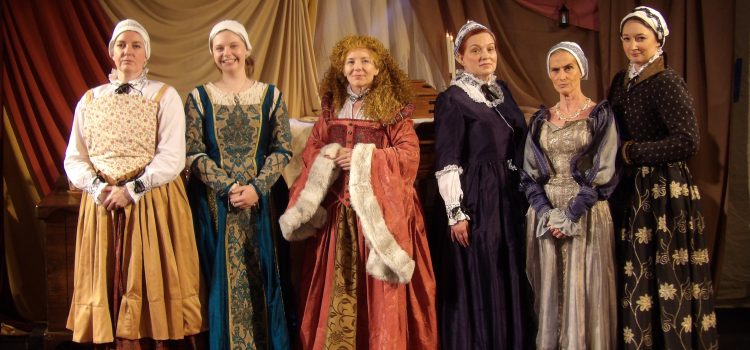
These colorful characters, all properly prepped and styled by virtuoso costume designer Liz Henning, include Nicole Angeli as right-hand Blanche, a rather stern taskmaster who is also a mother hen. Rachel Tibbetts is the pregnant Dorothy who prides herself on a good job.
Carly Uding is Sidney, who has a complex relationship with her majesty because she is the sister of childhood friend and suitor Robert Dudley.
Margeau Steinau is spicy as Kat, a crusty and blunt attendant whose husband is also on staff. She knows what’s what and who’s who and freely shares locker room talk.
The women are also given other duties to carry out and keep themselves busy when they’re not fussing and fretting. The queen delivers news of an impending bubonic plague in London, and in the second act, the women are relocated to Windsor Castle in late summer 1863, to evade the spreading infection.
They’re hot, tired, cranky and restless. Tempers flare and then cool down. The plague has everyone on high alert, and they all must learn to trust – and soothe each other.
The experienced ensemble is adept at the verbal jousting the dialogue demands, and as smart, intuitive actors, they shade their characters with personality. Wolbers laid out conflicts in those challenging times, and the women rose to their best selves when they’re with each other.
In Act II, there is an amusing dream sequence where Bess is visited by past and future queens – Steinau is Queen Elizabeth II, Lantsberger is Lady Jane Grey, Uding is Queen Boudica, Tibbetts is Queen Anne and Angeli is Queen Victoria. They were all in that elite birthright club and know some things.
The final scene jumps ahead 25 years to Christmas 1589, in London’s Richmond Palace. The queen defeated the Spanish Armada a year earlier and is more comfortable ruling. Hand demonstrates Bess’s growth, for she has marched through the fire, with the help of her loyal ladies – and they’ve changed too.
Director Trish Brown has trusted these talented performers to play well with others in a sister showcase, designed by women artisans, who convinced us of the period trappings and their predicaments. Zayana Brown is the ensemble swing, if needed.
Katherine Stepanek, scenic and lighting designer, immersed us in a cozy period piece, intimately illuminated, with aid from assistant lighting director Brianna Shipley. Leo Young was the technical director, Delaney Plank production intern, and stage manager Joy Addler (and co-producer), along with assistant stage manager Avery Harrison.
Sound designer Bryn McLaughlin also composed nicely textured music, including a lively folk song that the women often broke into, and fight choreographer Riley Capp designed moves for when things weren’t so collegial. Jenni Ryan served as dramaturg and assistant director.
This community breathed life into an engaging piece of very funny, thoughtfully executed theater that showed us how strong women can be when difficulties must be overcome, a timely message no matter from what century.
Prism Theatre Company presents “Progress” July 3-5 and July 9-12 at the Kranzberg Black Box Thearre, 501 N. Grand, St. Louis, Mo. For more information, visit www.prismtheatrecompany.org
This production contains adult language and discussion of adult content.

Lynn (Zipfel) Venhaus has had a continuous byline in St. Louis metro region publications since 1978. She writes features and news for Belleville News-Democrat and contributes to St. Louis magazine and other publications.
She is a Rotten Tomatoes-approved film critic, currently reviews films for Webster-Kirkwood Times and KTRS Radio, covers entertainment for PopLifeSTL.com and co-hosts podcast PopLifeSTL.com…Presents.
She is a member of Critics Choice Association, where she serves on the women’s and marketing committees; Alliance of Women Film Journalists; and on the board of the St. Louis Film Critics Association. She is a founding and board member of the St. Louis Theater Circle.
She is retired from teaching journalism/media as an adjunct college instructor.