By Lynn Venhaus
Dark, dour and dreary, “The Death of Robin Hood” is a revisionist take on the legendary folk hero without any merry men or noble derring-do – or much of a pulse.

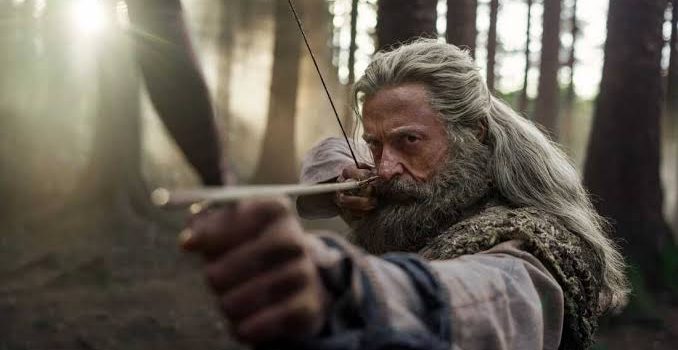
After a chaotic life of crime and murder, a battle-scarred and weather-beaten Robin Hood (Hugh Jackman) is roaming the austere heaths of medieval England. The year is 1247, and he’s not seeking redemption nor reconciling his past — yet. He announces: “I’m tired.”

Writer-director Michael Sarnoski has adapted a 17th century ballad, “Robin Hood’s Death,” to bust the myth about the outlaw that the common man cheered for, “stealing from the rich and giving it to the poor.”

Presenting himself as “no hero,” Robin grapples with being a heartless bandit and not a good guy glorified in folklore. He doesn’t have an altruistic bone in his broken body, and he is irked about the romanticized version because he can’t live up to expectations nor does he want to try.
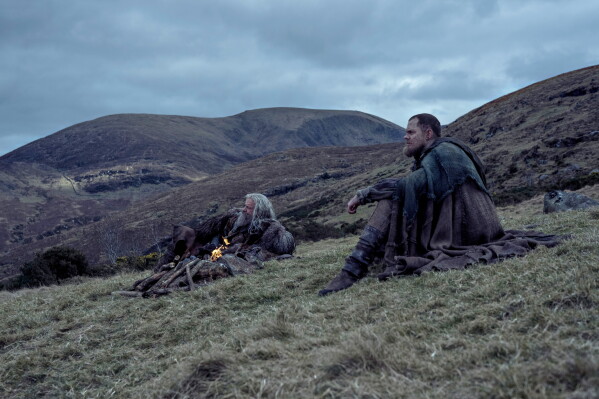
Along the way, he encounters people affected by his slicing and dicing: Arthur (Noah Jupe), a young man seeking revenge for his slain family; his longtime friend Little John (Bill Skarsgard), now a family man calling himself Edward, who wants Robin’s help in a vicious attack; and little Margaret (Faith Delaney), a traumatized orphan who latches on to him.

Grizzly and growling, Jackman’s sullen Robin is without aspirations. While enacting vengeance at Little John’s coaxing, Robin is gravely injured. He wakes up in the Priory of St. Clement, being nursed by Sister Brigid (Jodie Comer), an angel of mercy, calls himself Randolf.

Forget every screen incarnation, from silent swashbuckler Douglas Fairbanks in 1922 to Taron Egerton as a gritty Robin of Loxley in 2018, with Errol Flynn, Sean Connery, Kevin Costner, Russell Crowe, Cary Elwes, Disney animation and even Frank Sinatra as “Robbo” in a Rat Pack musical comedy in between.

While Tony Award winner and Oscar nominee Hugh Jackman has carried big-themed films before, playing an introspective elder confronting his ghosts is quite a departure from the superhero Wolverine and musical icons Jean Valjean, P.T. Barnum and Neil Diamond that he’s known for, although one can point to “Logan” for another tough-guy reflecting on his mortality.
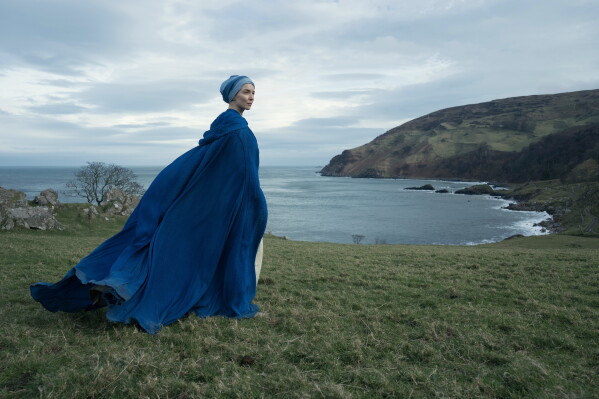
Emmy and Tony Award winner Jodie Comer lends a quiet strength to Sister Brigid, a kind, caring woman who believes in the good, and devotes her life to the afflicted and orphans.

Sarnoski employs such a top shelf cast that you want to care about their characters, but drawn only as sketchy outlines, it’s difficult to be convinced of this slow story’s merit.

Heralded for his outstanding debut feature, “Pig” in 2021, Sarnoski followed with a fine studio blockbuster, “A Quiet Place: Day One,” in 2024. Now he is poised to be one of A24’s arthouse darlings.

In his grim re-imagining, Sarnoski focuses on moody misty landscapes, terse dialogue and shocking violence. His reinvention is in the same vein as David Lowery’s “The Green Knight” and Robert Eggers’ “The Northman.”

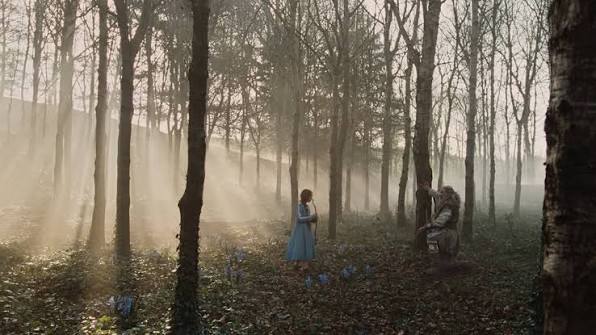
The austere elements are visually interesting– cinematographer Pat Scola and production designer David Lee captured the harsh Northern Ireland landscape, contrasting it with the safe space of the monastery. But Sarnoski’s philosophical approach is one-note, that somber ambience soaking this plodding adventure.
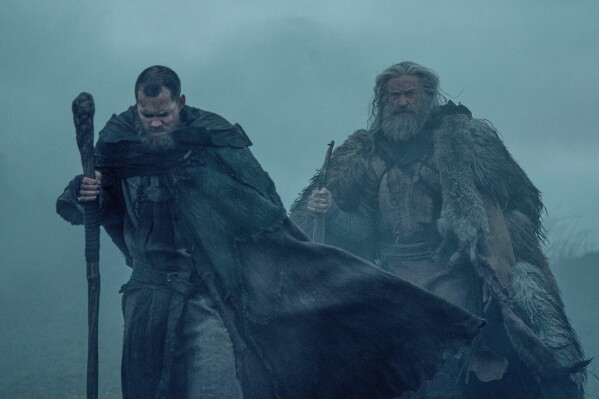
A distinctive element is the mournful score composed by Tony Lewis and folk singer Jim Ghedi that is haunting throughout the film’s 122 minutes.

Sarnoski has decided that backstories are not necessary, so there’s no evidence of a kinder, gentler swashbuckler hardened by his brutality. No mention of the Crusades or Sherwood Forest, or the cruel corrupt monarchy (Prince John and his henchman Sheriff of Nottingham and Sir Guy of Gisbourne) that spurred the Robin Hood saga in the Middle Ages.

Supporting players arrive, merely trying to survive the harsh conditions. This is mud, blood, slings and arrows – an eye for an eye.

At the monastery, one of the castoffs is a compassionate bandaged leper played by Murray Bartlett, Emmy winner as resort manager Armond in the first season of “White Lotus.” He dispenses hard-fought wisdom and seems to pierce Robin’s impenetrable demeanor, as does Sister Brigid and young Margaret.
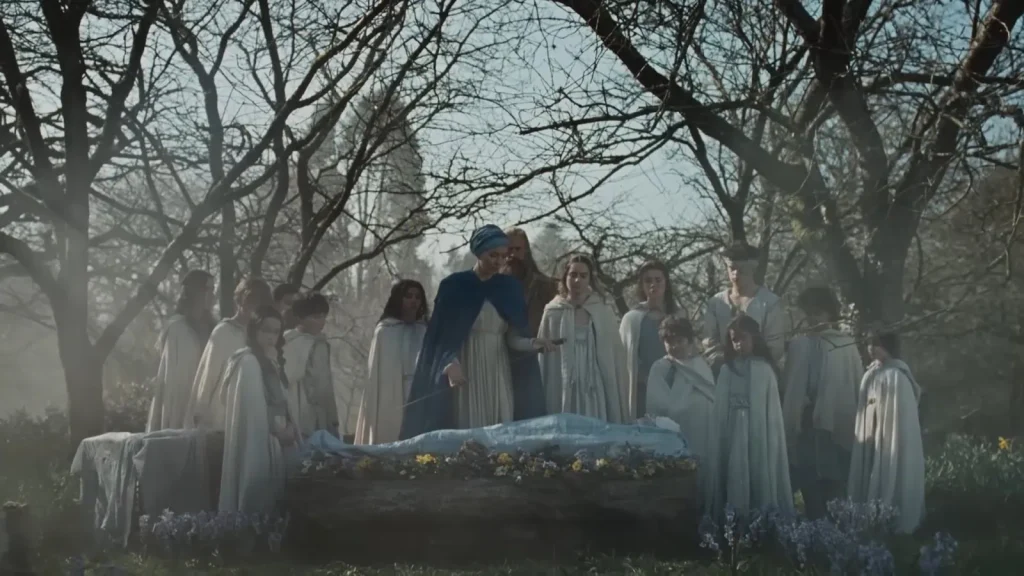
The leper encourages Robin to let go of his violent past and become part of the sanctuary community. But is he too late for salvation? In theory, this moral dilemma sounds interesting, but its subdued execution makes this film tough to embrace. And the hushed, mumbling delivery of all characters, with dialects, makes understanding the exposition even harder.

Sadly, “The Death of Robin Hood” is more a desolate dirge than a profound philosophical statement.

“The Death of Robin Hood” is a 2026 action-drama written and directed by Michael Sarnoski and starring Hugh Jackman, Jodie Comer, Bill Skarsgard, Murray Bartlett, Noah Jupe and Faith Delaney. It is rated R for strong bloody violence and the runtime is 2 hours, 3 minutes. It opens in theatres June 19. Lynn’s Grade: C-

By Lynn Venhaus

Still terrifying and unnerving, the third chapter of this durable horror science fiction franchise presents a smart origin story, “A Quiet Place: Day One.”

That’s no small feat, given the popularity of the first two films that were co-written, directed and starred John Krasinski. He contributed to the story here, is a producer, and will be back with a Part 3 to continue the Abbott family saga.

“A Quiet Place” in 2018 set up a chilling post-apocalyptic world, where the Abbotts are trying to survive – dad Lee (Krasinski), mom Evelyn (Emily Blunt) and children, deaf daughter Regan (Millicent Simmonds), son Marcus (Noah Jupe) and toddler Beau. They live in a small, tight-knit community in Millbrook, New York, in the Hudson Valley, and action commences about 89 days after the June 18, 2020, attack.

The sequel in 2021 saw the remaining Abbotts expand their horizons beyond their farm. That’s when family friend Emmett (Cillian Murphy) and Henri (Djimon Hounsou), known as “Man on the Island,” are introduced, and it’s been about 474 days since the monsters wreaked havoc on Earth. Henri shows up in the prequel, adding a nifty thread.

They have discovered the creatures can’t swim, so escaping to water is a safe bet, and for the Abbotts, they find out another weakness, and use high-frequency audio feedback from Regan’s cochlear implant as a weapon.

“A Quiet Place: Part 2” gave us a glimpse of the aliens’ arrival, but this prequel takes place in the first four days of the chaos and moves the action to hustling and bustling noisy New York City.

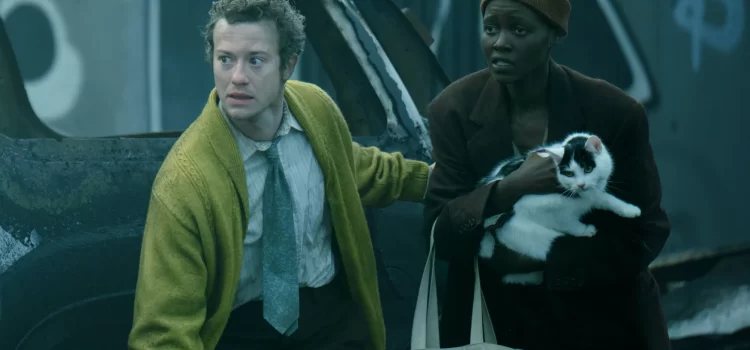
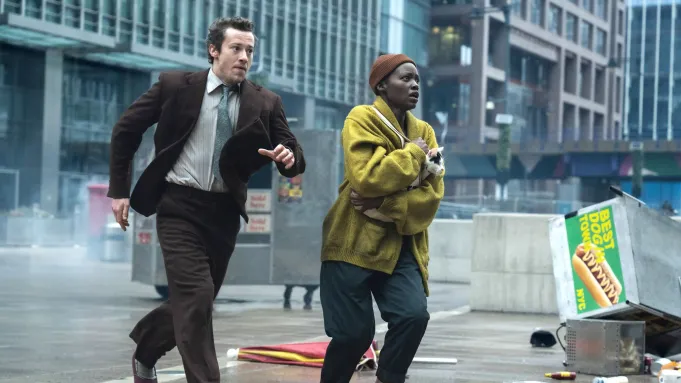
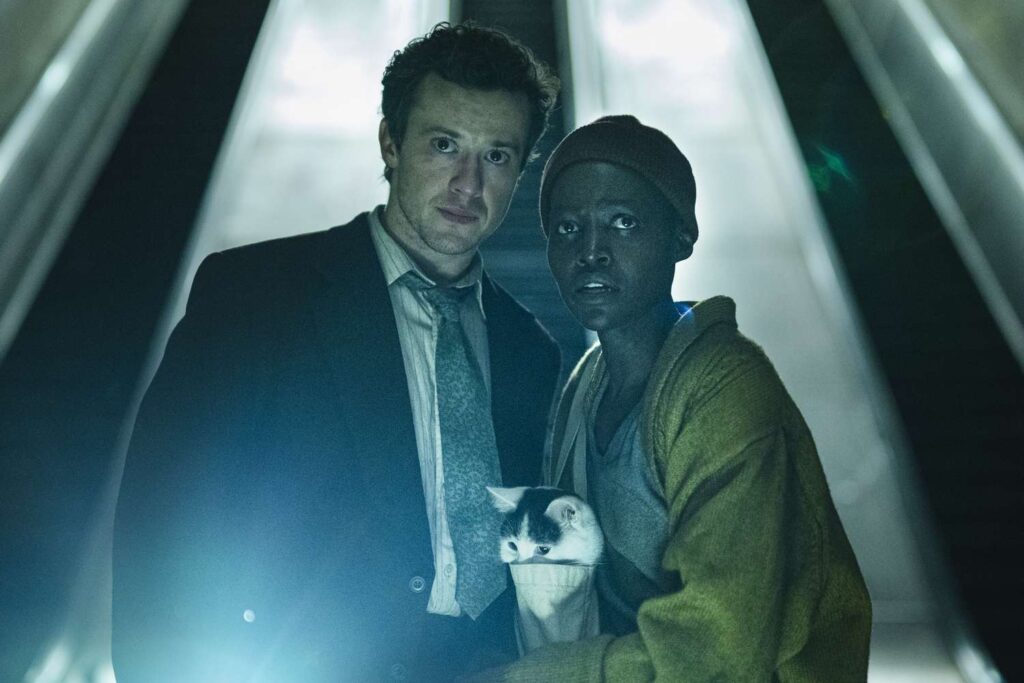
A prickly cancer patient, Samira (Lupita Nyong’o) is on a group trip to New York City with fellow hospice residents and their nurse Reuben (Alex Wolff) when an alien invasion sends the world into silence.

That’s because the blind ‘Death Angel’ marauders have super-sensitive hearing and will brutally swoop in for the kill when hunting by sound. Sam gets separated, and on a quest for her childhood favorite pizza — she’s determined to get to Patsy’s in East Harlem, she encounters law student Eric (Joseph Quinn), and they help each other fight for survival.

There’s added dread, reminiscent of the shock of 9-11, as the panic-stricken populace struggles to escape grisly deaths. And to see the subways paralyzed, skyscrapers danger zones as those swift aliens crawl lightning-fast over every surface, and an anxious, shell-shocked humanity is unsettling.

Every car alarm, luggage wheel traveling over city streets, stepping delicately on crunchy debris, and general urban cacophony is magnified, and when people forget that silence is golden, calling out to loved ones or having an emotional meltdown, they’re goners.

Now one would think using this clever device of sound being death’s calling card would grow tiresome, but it doesn’t. I was still on the edge of my seat with every snap, crackle and pop after the three films, and eager for Part 3.

The best thing about this franchise is the thrilling communal movie-going experience it provides. I have fond memories of being in a very still crowd watching the first six years ago, where every soda slurp and popcorn munch was magnified, and the cathartic release that came when Evelyn had the baby, by herself, in the bathtub. The tension was practically unbearable– and Blunt vanquished those evil marauders in fine fierce form.

The sequel was the first movie I saw in a theater post-pandemic shut down, in May 2021, and it was such a celebratory event that even the jump scares were welcome.

Cut to a warm June night last week where I joined fellow fans collectively holding our breaths as the engaging new characters tried to outsmart the creatures. The jump scare is a doozy, and the crowd loved it. Sharing suspense is such a pleasurable big-screen experience!

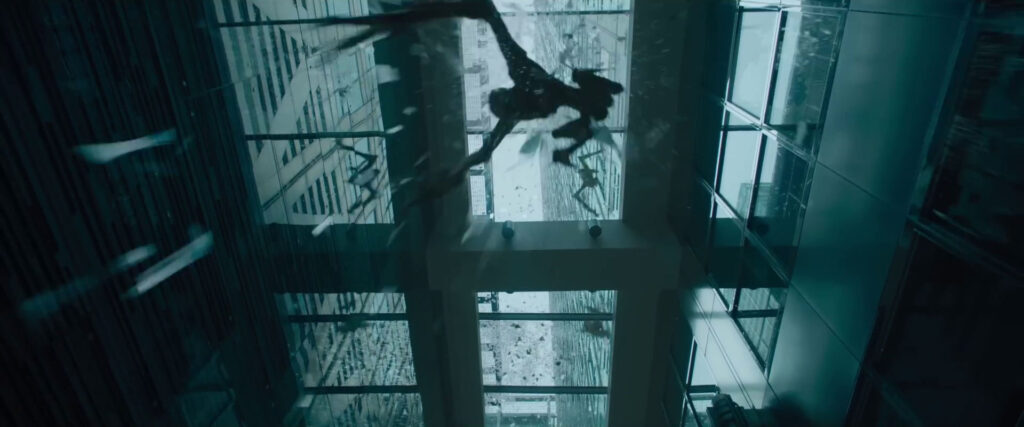
Those critters are ugly! The CGI is remarkably seamless and the sound design, always the movie’s strongest suit, is at another state-of-the-art level.

While the first film was stingy in its reveal of the grotesque beasts, and the second time, lengthier in full view, this time we get various looks – a particularly terrifying one is when they scatter, like spiders, over all the tall buildings. Wisely, director Michael Sarnoski refrained from too much gore.

But the personal emotional connection of the characters has always been key to this franchise’s commercial success. Original co-screenwriters Scott Beck and Bryan Woods had helped create memorable characters that we cared about and Sarnoski does the same here.

Stand-offish Sam might be initially an unlikable lead character, but as you learn her backstory, sympathy builds, especially with her service cat Frodo. Lost soul Eric, a guy from England unfamiliar with America, is a stranger in a strange land angle that works, particularly his compassion.

How they cling to each other to make it through each hour keeps focus on the ferocious fight to stay alive, whether Sam is scribbling in a journal, or Eric makes a treacherous trek to get her thermal fentanyl patches for her Stage 4 cancer pain.

Lupita Nyong’o, Oscar winner for “12 Years a Slave,” has found a good niche in horror films, as her memorable turn in Jordan Peele’s “Us,” indicated. Like the best silent film actresses, she conveys so much with a glance.

Equally expressive is Joseph Quinn, mostly known as Eddie in “Stranger Things,” who will be in the upcoming “Gladiator 2.” He is convincing as an earnest guy dazed by the predicament but one who finds practical solutions to situations they find themselves in as they roam the city. He’s resourceful, and that comes in handy.

Their unlikely, but touching, bond is the reason this series remains compelling, but also handing this project off to Sarnoski was a bold and wise move. With fresh characters and a new location, he maintains the tension.

Sarnoski scored big with a small drama he directed and wrote, “Pig,” in 2021. He resuscitated Nicolas Cage’s reputation, giving him one of his best roles as a grieving former gourmet chef (St. Louis Film Critics Association’s Best Actor). It’s now streaming on Hulu, worth seeing. And Alex Wolff, a prominent brash character in “Pig,” is the kind hospice nurse Reuben in “Day One.” Wolff, who has made his mark in horror movies, including “Hereditary,” “Old,” and “My Friend Dahmer,” is a calming presence here.

Sarnoski’s different approach, while honoring the origin’s intentions, keeps its zing. The lurking destroyers remain very creepy, and the goal of a safe haven means all hope is not lost.

Each movie has offered its own well-crafted tone and tempo, and this runtime is 100 minutes, compared to the original’s 90 minutes, and Part 2’s 97 minutes.

“A Quiet Place: Day One” takes us on a familiar course in frightening fashion, touching on tender moments that make life worth living while dealing with a dystopian future no one saw coming. Challenge met.

“A Quiet Place: Day One” is a 2024 horror sci-fi drama directed by Michael Sarnoski and starring Lupita Nyong’o, Joseph Quinn, Alex Wolff and Djimon Hounsou. It is rated PG-13 for terror and violent content/bloody images and the run time is 1 hour, 40 minutes. It opened in theatres June 28. Lynn’s Grade: B+.

By Lynn Venhaus

No matter what perception you might have about this film beforehand, “Pig” takes you on an unexpected journey.

Like a shabby hole-in-the-wall joint that surprises you with its elevated cuisine and depth of flavor, this unorthodox drama is a richly textured experience that comes together with tender loving care.

I will be talking about this earthy delight for the rest of the year, for as a debut narrative feature, writer-director Michael Sarnoski has crafted an absorbing original tale with impeccable detail.

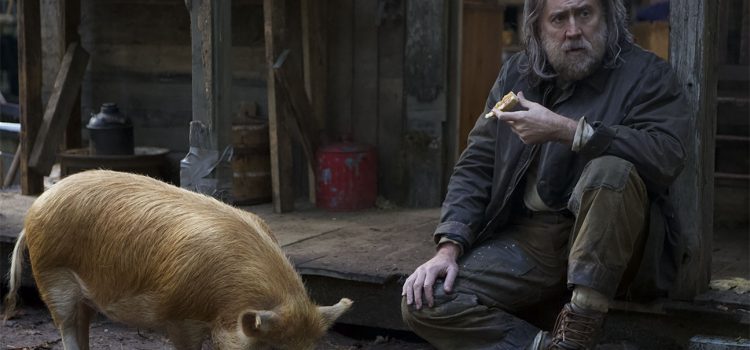
Nicolas Cage plays a truffle hunter who lives alone in the Oregon wilderness, and after his beloved pig is poached, returns to his past life in Portland to track down his beloved animal.

On the surface, it seems simple, but oh no – uncommon riches await, and Sarnoski ladles revelations out in due time. He doesn’t dot all the i’s and cross all the t’s, expecting his audience to be smart enough to fill in the blanks.

With a minimalist approach, Sarnoski immerses us in pretense and profundity. A hard-to-get lunch reservation is an astute example of both, and a pivotal scene that you won’t soon forget.

Cage’s protagonist is a disheveled hermit known to truffle purveyor Amir (Alex Wolff) as strange anti-social Rob. But out of desperation, he gets the impatient lad to drive him around the cutthroat fine-dining brotherhood of Portland, that northwest hipster mecca. They are in search of the pig but come upon much more.

Amir will get the ride of his life, for he discovers the mysterious grizzly guy is a legendary chef, THE Robin Feld, whose very name invokes great reverence – and curiosity as to what happened to him. Feld knows people, that’s why he figures out where to look and who to talk to underground.

Fifteen years earlier, Feld left his celebrated career behind to live off the grid, his chef knives and cast-iron skillet in tow. We get morsels of information as to the why, and as we get in Robin’s head, we find out he has a philosopher’s intellect and a poet’s heart.

This is a rare and meaty role for Academy Award winner Cage, whose restraint here is admirable. He speaks in hushed tones instead of grander histrionics. No matter how you view his career detours, he subtly pulls off this reflective loner with definitive artistry. It is his best performance in years.

Cage has made so many off-the-wall action films during the past 20 years, a long way from his last Oscar nomination (“Adaptation” in 2002), that he is easy to dismiss, but do not count him out.

The principal cast is playing characters that seem easy to figure out, but again, nope. These well-drawn roles not only gave Cage an opportunity to convey layers of emotional consequences, but also Wolff and Arkin.

Wolff, notable in the 2018 horror film “Hereditary” as the son who unravels, makes the most of his character’s jodyssey. Next up is M. Night Shyamalan’s “Old,” so he is having quite a summer.

Wolff’s sharply dressed brat comes across as this slick materialistic poser who is only looking out for himself, but he becomes as fascinated as we are by Robin’s backstory and sticks around.

Then, we find out about his unhappy upbringing with squabbling parents, a dad he is always trying to please but never quite measures up to, even though he emulated his career path – and a tragic mom story.

Amir is more than meets the eye, as is his self-important father, Darius, portrayed with the right amount of hubris by Arkin.

With a lush forest as backdrop, cinematographer Patrick Scola captures Feld’s tranquil existence, his pig his only companion. Sarnoski beautifully sets up their special relationship, not unlike the subjects and their dogs in the 2020 documentary “The Truffle Hunters.”

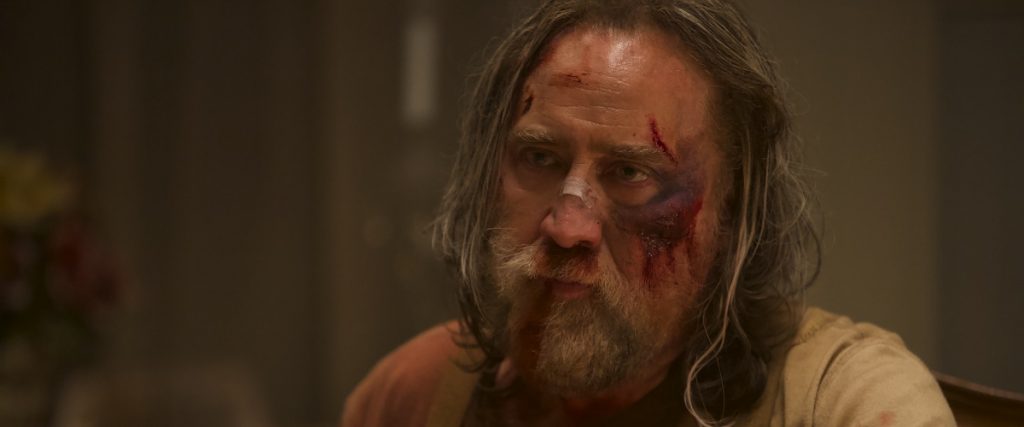
When the paid tweakers kidnap the pig, the well-choreographed attack is horrific, and leaves Robin in a bloody pool on his cabin floor.

One of the goofier aspects of the film is that Cage’s character, already unkempt, goes through nearly the entire film with his face pummeled into a swollen pulp, thanks to a “Fight Club” like scene in addition to the assault, blood streaked on his face and matted in his beard and hair. He couldn’t have taken a few minutes to clean up? However, he does wash his hands before he cooks.

The atmospheric story, by producer Vanessa Block and Sarnoski, touches on loss, love, passion, memory, and the quest for the meaning of life. Is it more important to be “somebody” or to achieve inner peace, and why should we crave approval?

Robin is a man of few words, but when he talks, people listen, and his wisdom is a special component of this moving story.

Robin tells someone: “We don’t get a lot of things to really care about in life.” And that resonates.

Sandwiched between the releases of two documentaries on renowned chefs, Wolfgang Puck and Anthony Bourdain (“Roadrunner”), this film should also appeal to foodies – as well as anyone who has spent time meditating during the pandemic.

At only 92 minutes, extra time could have provided more aspects, because I wanted to stay with these characters – but then again, it would likely be another movie, not this hypnotic trek.

“Pig” is a quiet little film with a big impact. The wrap-up may not be as satisfying as the pursuit of the truth, but overall, all the elements are impressive.

“Pig” is a 2021 drama, rated R for language and some violence. It is written and directed by Michael Sarnoski and stars Nicolas Cage, Alex Wolff and Adam Arkin. Its run time is 1 hour, 32 minutes. It starts in theaters July 16. Lynn’s Grade: A-

Nicolas Cage in “Pig”