By Lynn Venhaus

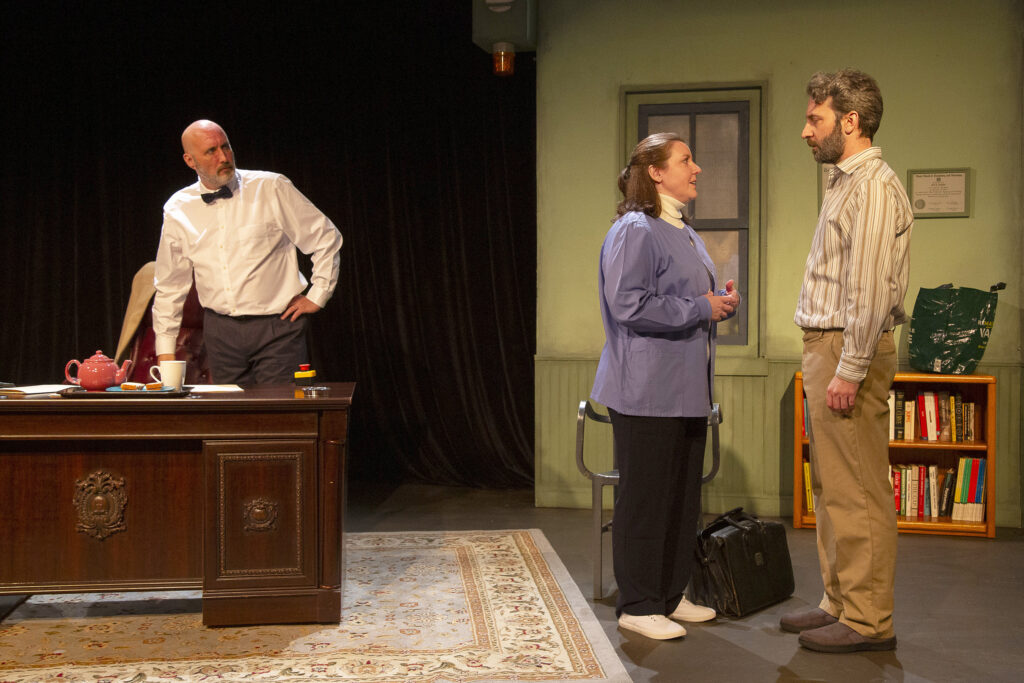
In a modern satire on parenting, social graces and the notion that polite society is merely a thin veneer, “God of Carnage” becomes a living room throwdown in the hands of a murderer’s row of talent and razor-sharp execution at New Jewish Theatre.

Think of it as a rambunctious comedy of manners – without the manners. This relationship play, where two upper-middle-class couples meet after a playground fight between their 11-year-old sons, will get really ugly – and hilarious.

All pros, the dynamic quartet offer a master class of limber verbal and physical exchanges. Alan and Annette Raleigh (Nick Freedman, Bridgette Bassa), contrite, arrive one afternoon at the Novaks (Joel Moses, Christina Rios), uneasy. Henry Raleigh hit Benjamin Novak with a stick, knocking two teeth out.

For the next 90 minutes, the civilized discussion unravels from courteous into chaos, with shrewd characterizations that expose these upwardly mobile sophisticates’ immaturity, hypocrisy and true nature.

Christina Rios and Joel Moses are Veronica and Michael Novak. Photo by Jon Gitchoff

Playwright Yasmina Reza earned her second Tony Award for Best Play for its Broadway debut, translated from the French by Christopher Hampton, in 2009, following her critically acclaimed “Art” in 1998. The all-star ensemble was nominated: Jeff Daniels, Hope Davis, James Gandolfini and Marcia Gay Harden, who won best supporting actress.

This is the first time New Jewish Theatre is tackling one of the French Jewish playwright’s celebrated shows. And this cast of local all-stars are paired well, bouncing off each other with a natural rhythm, keeping the witty dialogue sharp and the action fast paced.

These ill-will games are fluidly directed by Gad Guterman, whose clear-cut vision escalates the tension as pretense crumbles and the gloves come off in the Brooklyn home.

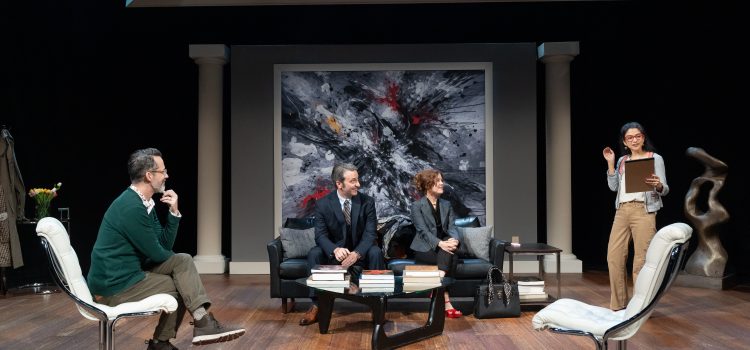
Rob Lippert’s well-appointed set gives the Fab Four adequate room to nimbly move, and each has their stand-out meltdowns. Alan is a corporate lawyer, Annette in wealth management, Michael a wholesaler and Veronica a writer.

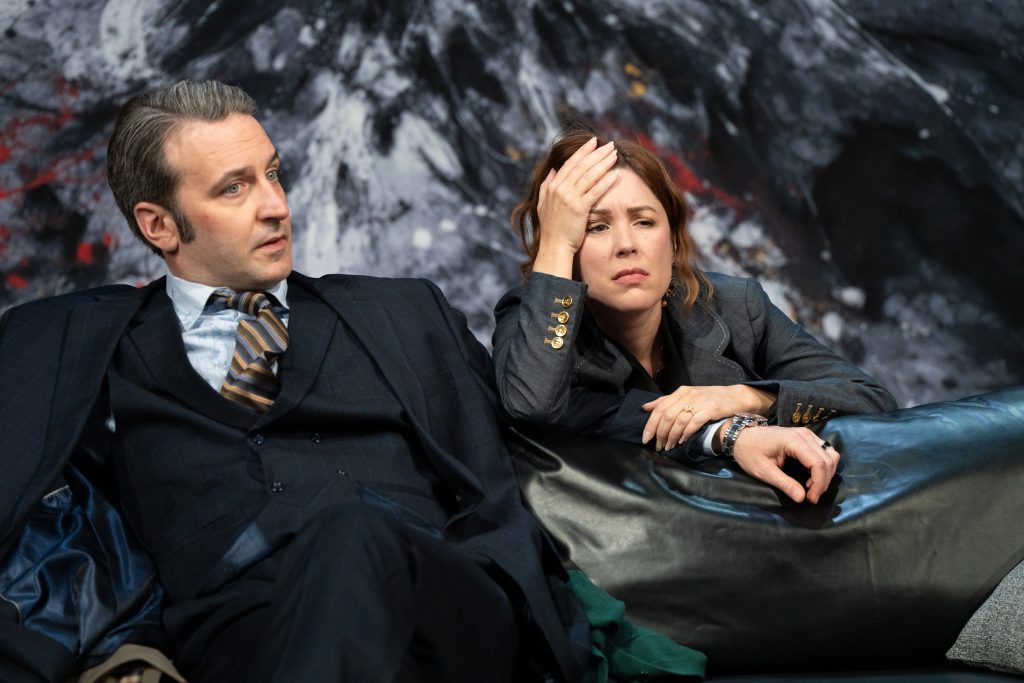
Nick Freed and Bridgette Bassa are Alan and Annette Raleigh. Photo by Jon Gitchoff.

Even though superficial, the initially polite adults become openly hostile and judgmental as conflicts build. The awkwardness is palpable; the social niceties start falling away. They compliment Veronica on her clafouti, a French baked fruit dessert she made from scratch, talk about their careers and life in their affluent Cobble Hill neighborhood. Then, things take a turn.

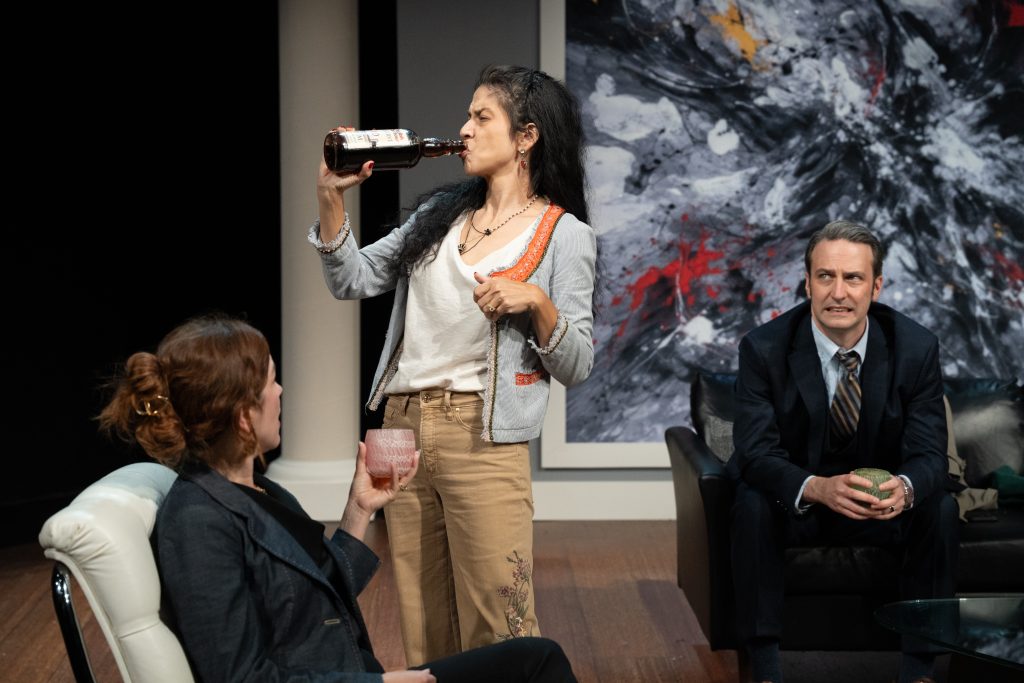
The actors dig in as the grown-ups don’t take long to get primitive – misinterpreting phrases, defending meanings, and boldly stating opinions. Rum flows, marital issues surface and the tact disappears. Better judgment goes out the window.

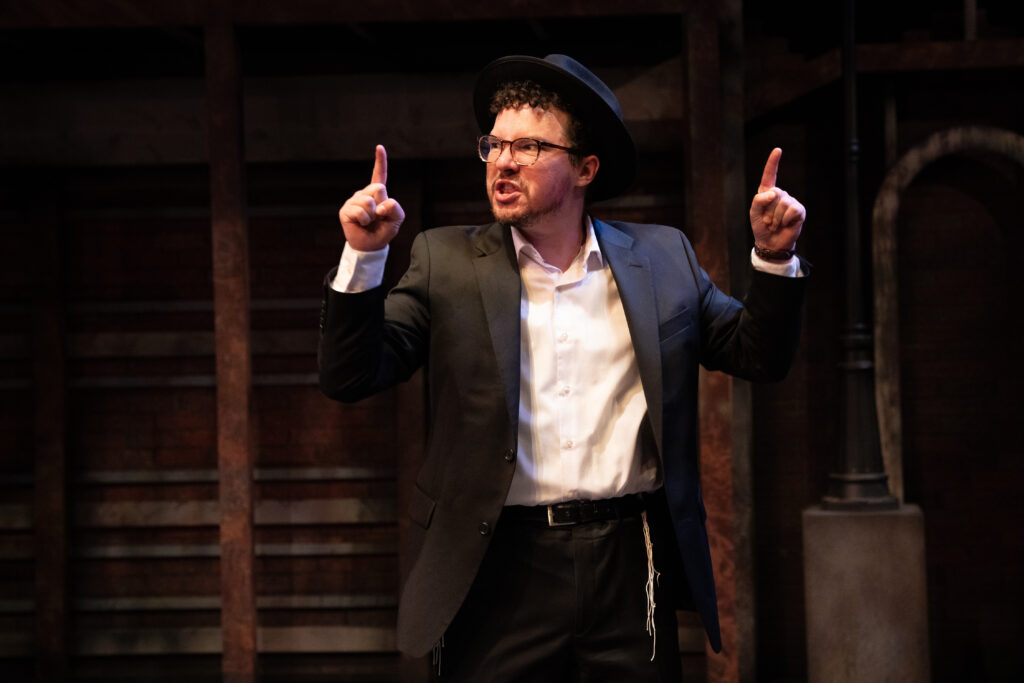
Nick Freed deftly captures Alan’s smugness and self-importance as the preoccupied attorney, constantly distracted by taking calls about a problematic client in a high-profile case. His wife, Annette, is polished but frazzled, trying to diffuse misunderstandings at first. In this role, Bridgette Bassa boldly takes the driver’s seat after she gives up, exasperated, and lets loose.

As Veronica, Christina Rios portrays the sanctimonious control freak host. She writes pretentious books focused on social causes, and projects a superior attitude that contrasts with her husband Michael’s seemingly more easy-going nature. But ever so cleverly, she gets sassier and her moods swing farther.

The reserved bottle of rum comes out. Photo by Jon Gitchoff.

As the gruffer dad, Moses attempts to be agreeable but is hamster-shamed when he gets rid of his daughter’s beloved pet and becomes defensive right away. At first, he seems to choose his words more carefully, but then adroitly strips away any liberal pretense.

As they argue, Rios picks her battles, and her clashes with Moses rise on the DEFCON scale – so madcap and raucous. They both are such skilled performers in movement, as are Bassa and Freed, that the free-for-all is a master class in over-the-top antics. Special nod to fight choreographer John Wilson, for the staging is quite a workout.

The men, in a bro-bonding way, gang up on the women as alliance shifts, pointing out animalistic instincts. It is Alan who mentions his belief in the God of Carnage – “He has ruled, interruptedly, since the dawn of time.”

Getting metaphorical, Reza is taking aim at the primal and violent nature of humanity that we are born with, our tendency toward aggression and self-interest. Despite modern education and culture, when those artificial societal norms masks are torn off, the true instincts can surface.

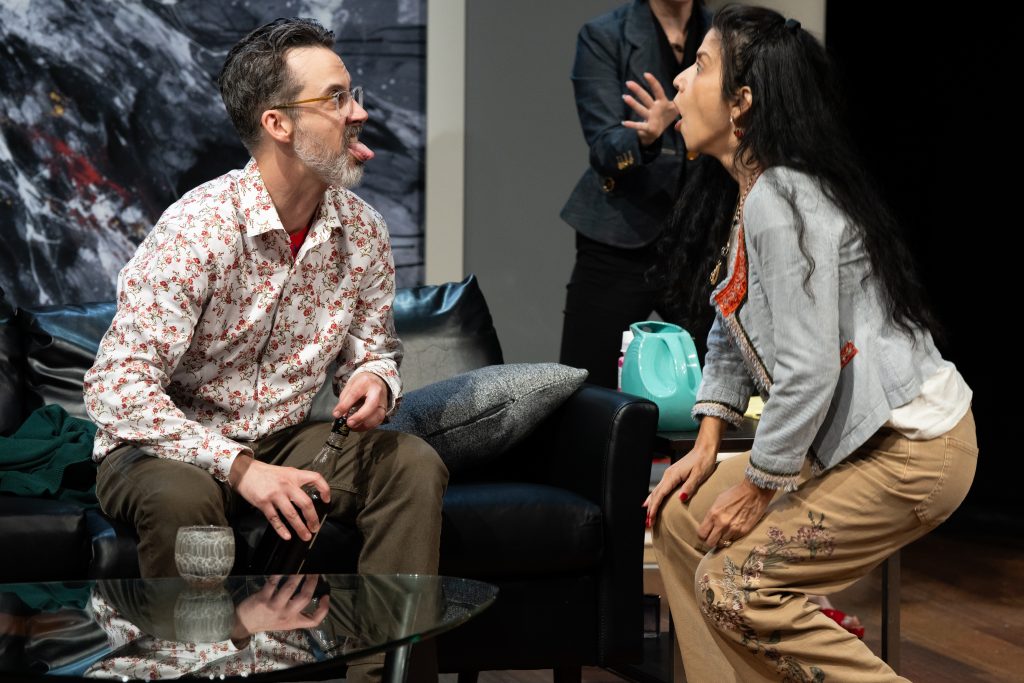
The Novaks spitefully go at it. Photo by Jon Gitchoff.

Hence, the digression into childish behavior, appearing like playground bullies as attacks become personal, and a wild night ensues. Rather than just a battle royale, it offers smart food-for-thought: When our ideas are challenged, how do we react because in our everyday lives, we all deal with difficult people and situations.

The technical aspects marvelously enhance the engaging experience, with lighting design by Jayson Lawshee-Gress and sound design by Kareem Deanes that is beautifully timed, especially the frequent cell phones — Kudos for picking “The Imperial March (Darth Vader’s Theme)” for Michael’s mother’s ringtone!

Costume Designer Michele Friedman Siler has chosen the ideal socio-economic status wardrobe for each character, down to the accessories, and props supervisor Laura Skroska has selected a colorful assortment of hospitality items for eating and drinking. (I particularly liked Veronica’s Frida Kahlo socks).

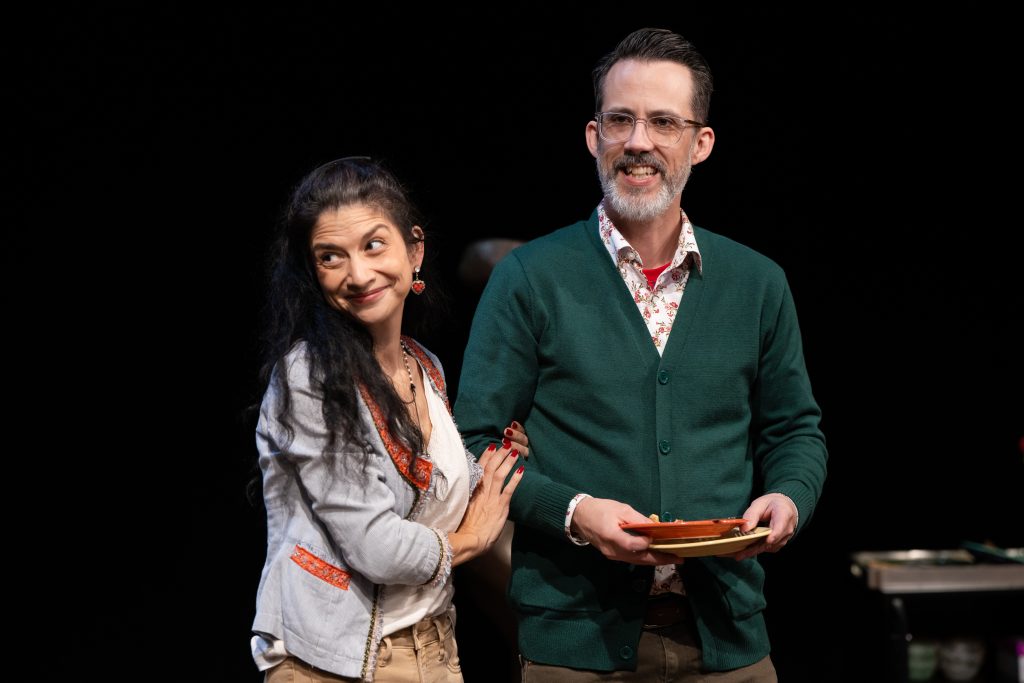
Christina Rios and Bridgette Bassa share pleasantries. Photo by Jon Gitchoff.

Because of the cast and crew’s high-level of commitment, the explosive rollercoaster-like proceedings come across effortlessly on stage, when in reality it took an amusement park-sized dedication to get the tempo, timing and storytelling arranged so precisely.

This outstanding production of “God of Carnage” maintains momentum and relevancy — and is laugh-out-loud funny. (You may have heard me on Thursday, June 25).

New Jewish Theatre presents “God of Carnage” June 11 – 28, which runs at the J’s Wool Studio Theatre (2 Millstone Campus Drive, St. Louis, MO 63146). Performances are on Thursdays, Saturdays, and Sundays. Showtimes and tickets are available by phone at 314.442.3283 or online at jccstl.com/njt

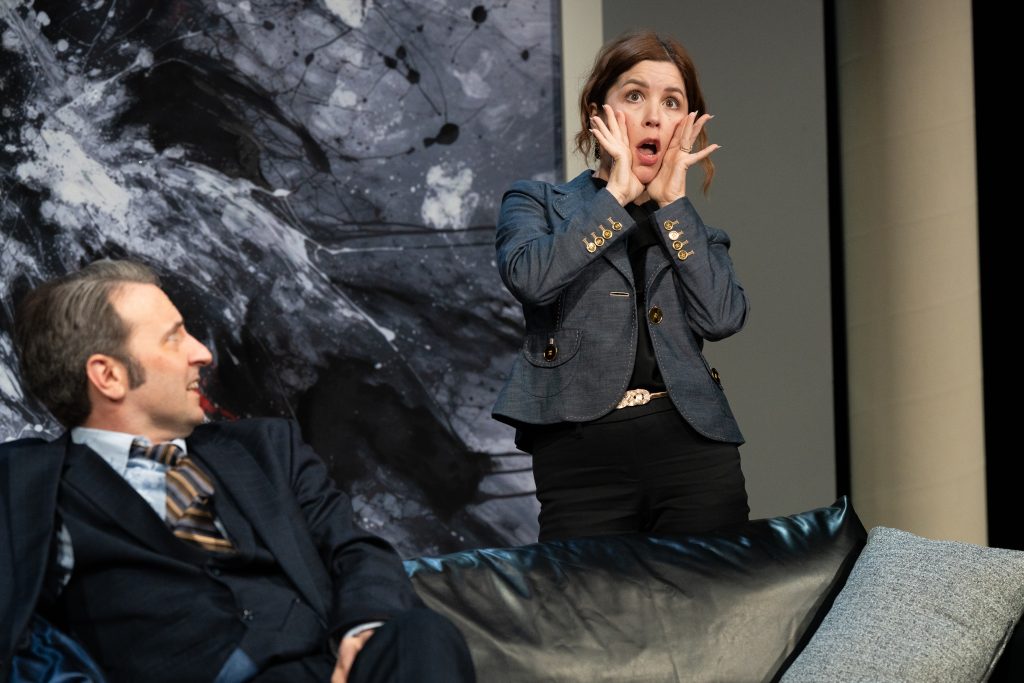
Bridgette Bassa gets feisty with Nick Freed. Photo by Jon Gitchoff.

By Lynn Venhaus

“A hundred years from now, will anyone care?”

And that line, asked by a small-town council member, is a double-edged sword in Tracy Letts’ brilliant “The Minutes.” Presented by Stray Dog Theatre, this comedy-drama is a rare work of raw theatrical power as told by a razor-sharp ensemble.

In his usual unflinching way, the master playwright probes the very tenets of democracy with his customary sharp wit and acerbic style. The eight-year-old play is as timely as ever as news is suppressed, and rules of law are disregarded currently in various administrations.

The Tony-nominated play, produced by the Steppenwolf Theatre Company in Chicago in 2017, was scheduled for previews on Broadway in 2020, but had to be shut down due to COVID-19, then returned for opening in 2022.

What starts out as an amusing series of exchanges recalling the eccentric film “Waiting for Guffman” and nutty TV sitcom “Parks and Recreation,” nailing the quirkiness of small-town living and municipal government, makes a hairpin turn into a scalding look at democratic principles that should leave you shaken and stirred.

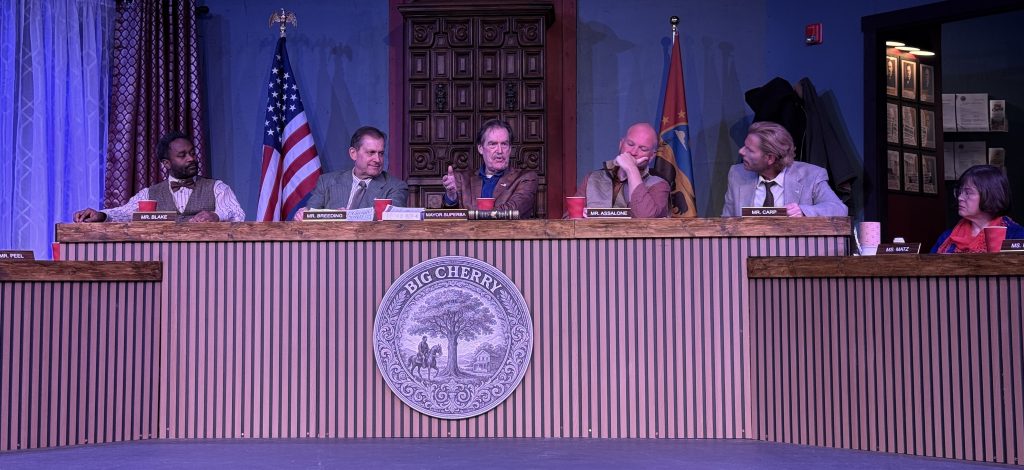
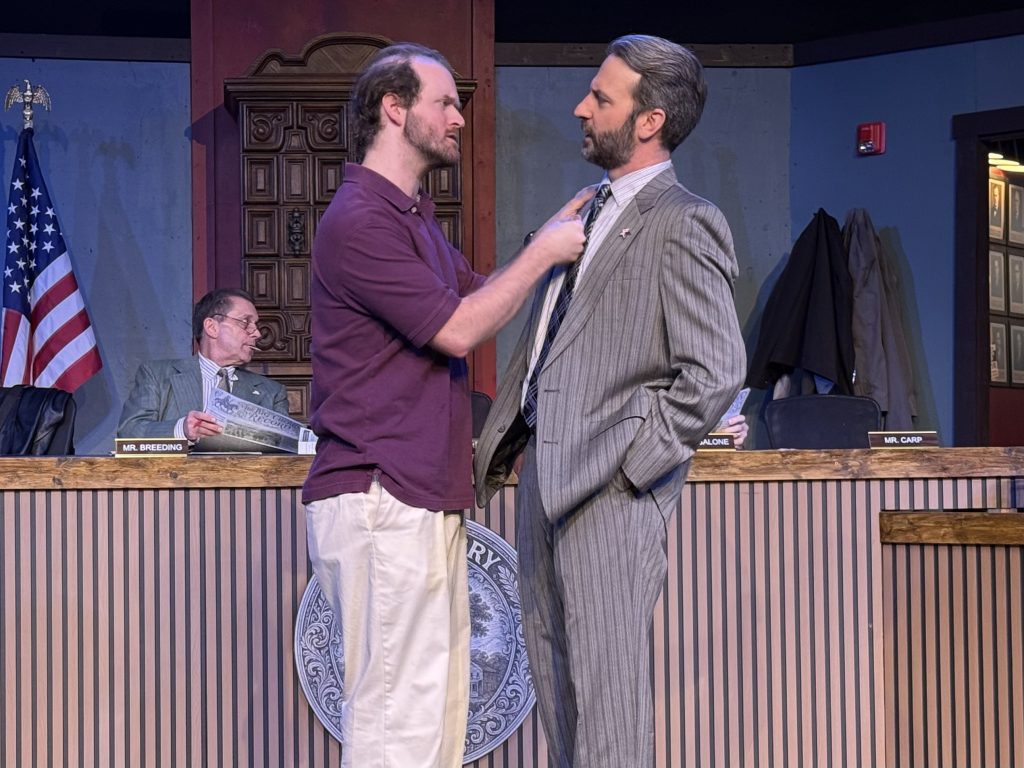
Tawaine Noah, John Reidy, Gerry Love, Jon Hey, Stephen Peirick and Jan Niehoff. Stray Dog photo.

The well-chosen cast, shrewdly subverting expectations, smartly interprets Letts’ blistering look at how those in power will ignore revisionist history to distort the accuracy for political agendas. And that’s chilling to think about how history is written and recorded.

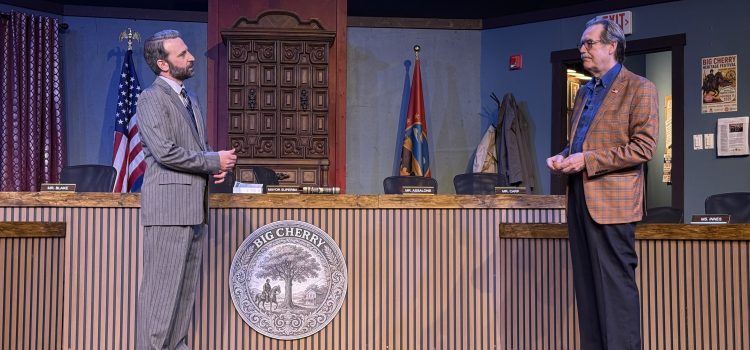
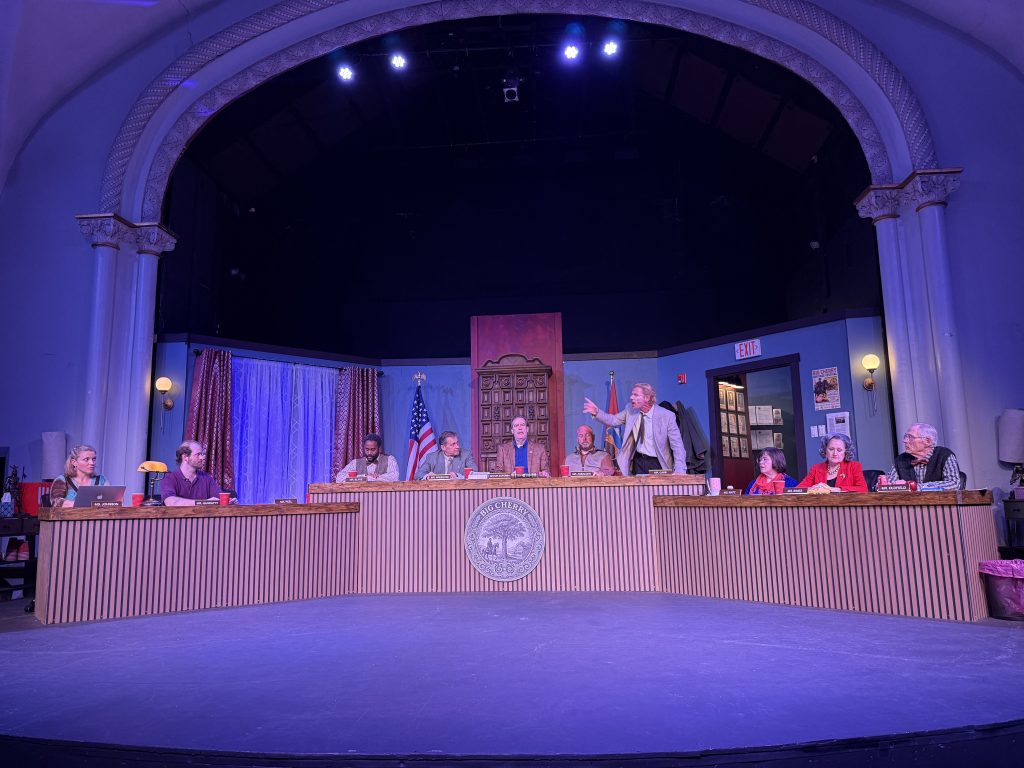
In his contemporary civics discourse, Letts focuses on a fictional town called Big Cherry. At first, we witness funny coffee-break chatter before eight elected members of the city council comprise a quorum, and along with the mayor and clerk, have a closed-door session – but wait, one guy is missing, and the reason isn’t very clear.

Oh, Letts’ cunning. The minutiae have a motive – he’s carefully chosen every topic, every chuckle. Letts has smoothly built the action to reveal how people in authority overlook principles for their own greed and ambition.

The personalities are distinct. John Reidy is sly Mr. Breeding, your typical gladhander who measures people by their golf game. Will Shaw is the eldest statesman Mr. Oldfield, a cranky sort who likes things the way they were. Patrick Canute is harder-to-read Mr. Hanratty, who appears to be thoughtful and committed.

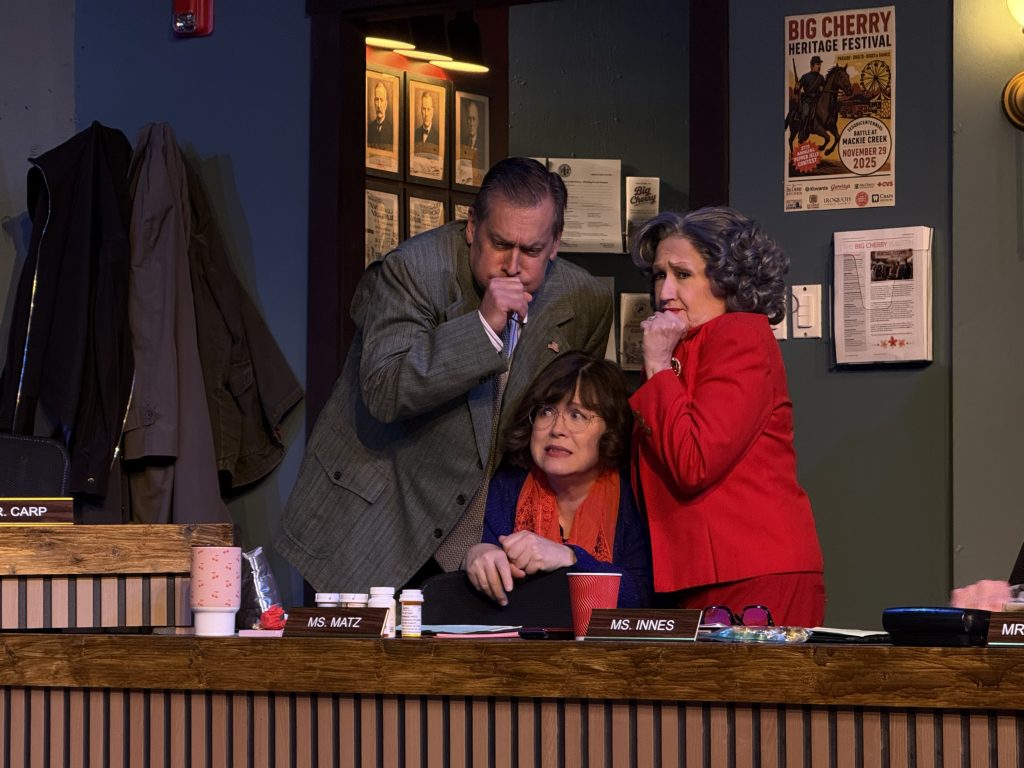
John Reidy, Jan Niehoff and Lavonne Byers in skit re-enactment of town’s founders. Stray Dog photo.

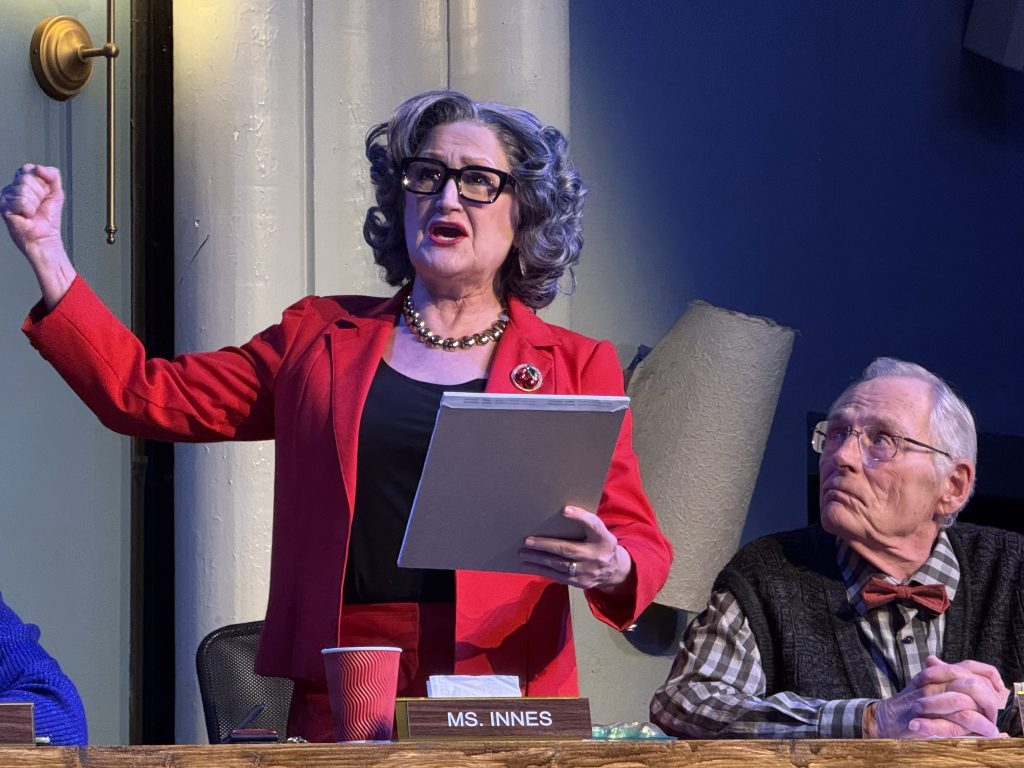
As Mr. Blake, Tawaine Noah is glib and fired up, pushing his pet project, “Lincoln Smackdown,” a cage match. Has he been drinking? Jan Niehoff is ditzy Ms. Matz, who is scattered and blurts out that she’s heavily medicated. Lavonne Byers is Ms. Innes, whose inflated sense of self-importance means she tends to make things all about her. Grandstanding is her favorite way to address her peers.

Mr. Assalone is one of Mayor Superba’s cronies who has little patience for transparency. As “that guy,” his portrayal measured, Jon Hey is smarmy and curt, attitude and aggression festering as the meeting progresses.

Gerry Love deftly plays the iron-fisted mayor as jovial enough but he’s manipulative, controlling and entitled, as his good old boy façade collapses into self-righteous excuses.

The city clerk, Ms. Johnson, savvily played by Rachel Hanks, is machine-like in efficiency, and Hanks has affected an annoying sing-songy voice to appear like an insufferable goody-two-shoes honor roll student you knew in school.

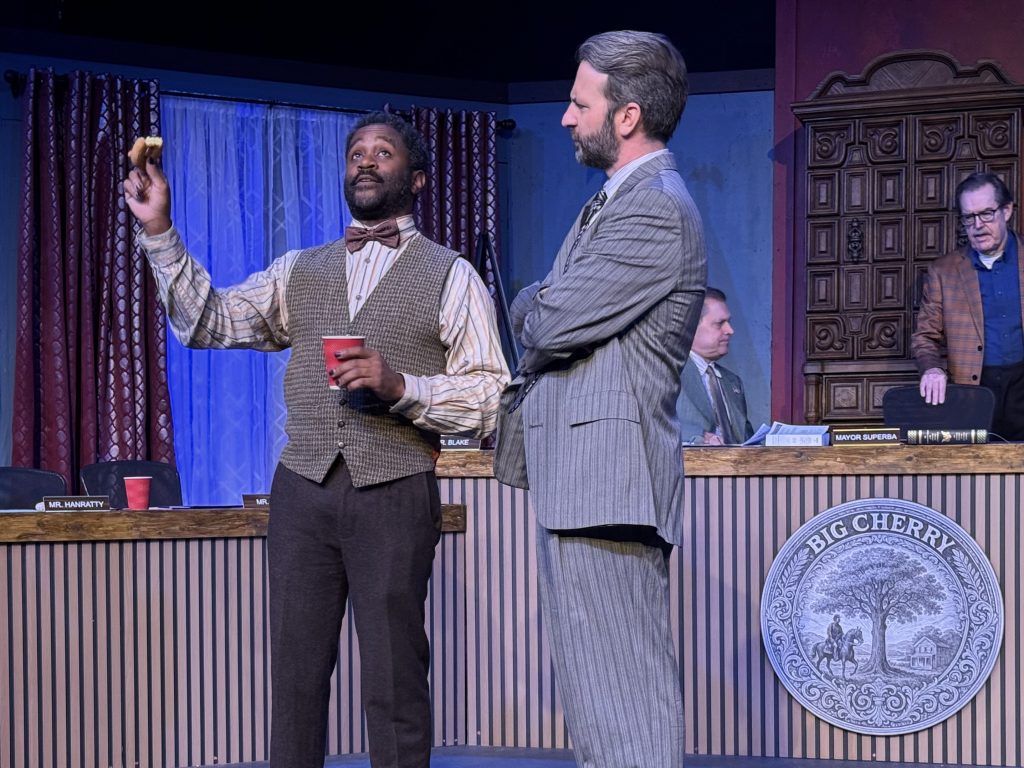
The guy who gets under all their skin is Mr. Peel, the earnest newcomer. Always impressive Nick Freed skillfully portrays the newly elected council member who wants to make a difference. He asks a lot of questions, harmless enough, but his curiosity is unwelcome.

Tawaine Noah, Nick Freed.

Mr. Peel missed the last meeting because his mother died. Where is Mr. Carp? This appears shrouded in secrecy. In a clever flashback, Stephen Peirick shows up as the now absent council member who dared to challenge his colleagues.

As preparations are underway for the annual Founders’ Day, a horrified Carp is compelled to share his findings. Delivered urgently and passionately, Carp has discovered something rotten they don’t want to hear.

Even the reason behind the town’s name is a lie. What is taught in classrooms and presented in pageants with great fanfare is not the reality Carp has uncovered. There’s a danger to the truth, and Peirick implores them to listen.

Peel, a dentist who is not from Big Cherry but moved there with his young family, is not familiar with the town’s founding father story. All he wants is to see the minutes from the meeting he missed. But as Peel becomes aware of why Carp retreated, a growing apprehension of being an outlier comes sharper into focus, and Freed’s work here adroitly exposes malfeasance.

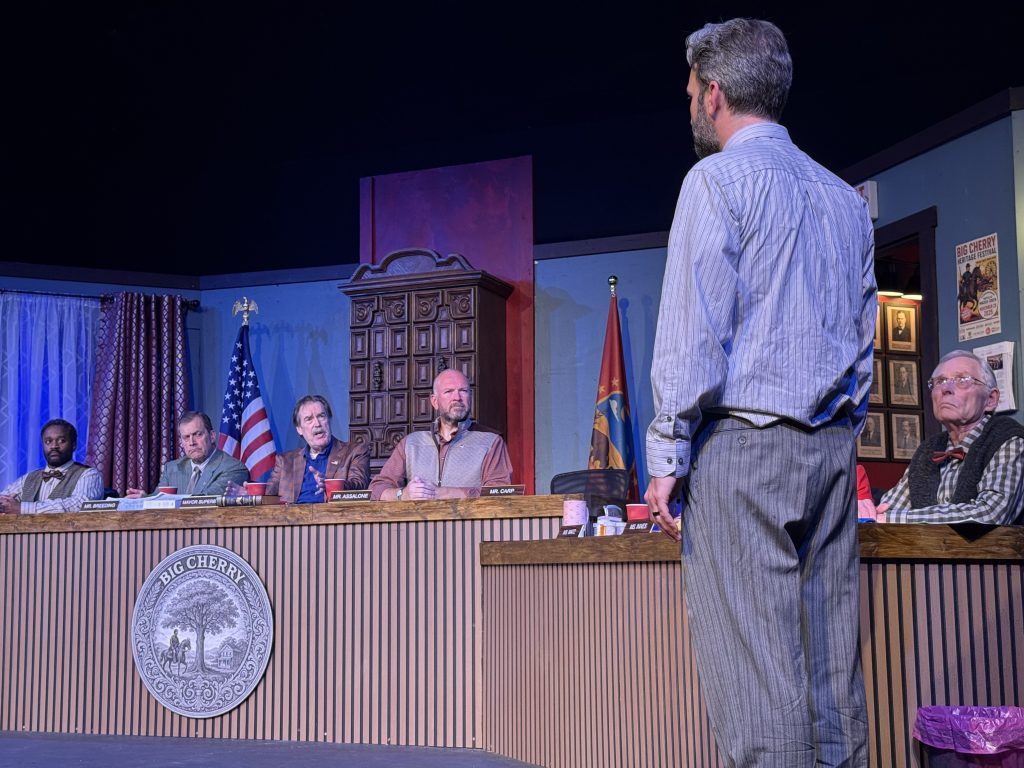
Understanding the play’s complexities, director Justin Been finessed Letts’ nuances in a terrific push-pull with all the characters. As the power dynamics shifted, he carefully modulated the temperature in the room as the actors serve and volley, mostly seated, but occasionally as they move around the dais.

Along with Tyler Duenow’s effective lighting design, Been’s sound design signals a storm outside on this November evening. His scenic design captures a nondescript place like dozens of meeting spaces around the country, where public participation shapes laws.

Other creatives contributing to the production include Kevin Corpuz’ choreography, Colleen Michelson’s costume design and Lizi Watt as cultural consultant.

Letts, who was a finalist for the Pulitzer Prize for Drama in 2018 for this pitch-black show, exposes ugly truths and how self-preservation and complacency factors into moral dilemmas.

Letts grew up in Oklahoma and won a Pulitzer Prize and Tony Awards for his masterwork, “August: Osage County” in 2007. An insightful writer about dysfunctional human experience, he’s always thought-provoking, sometimes unsettling, with a penchant for the absurd.

Patrick Canute and Nick Freed. Stray Dog photo.

In “The Minutes,” he expertly built tension as the comfort level evaporated. At its core, the complicit council’s smugness threatened to suffocate common sense and decency in favor of expediency.

The one quibble is that while Letts engaged with a conventional narrative structure, he abandoned that for a surreal ending that seemed at odds with the tone of what’s gone on exploring imagery vs. substance, alternative facts vs. reason.

While he enjoys keeping people on edge, it appeared to be an extreme turn after already zig-zaggy storytelling. Still, an admirable work performed vividly with deliberate direction.

“The Minutes” is a potent, politically charged American allegory for the ages, relevant then and now. It may be a cliché that the smallest towns hide the biggest secrets, but exposing hypocrisy is always welcome.

Lavonne Byers, Will Shaw. Stray Dog photo.

Stray Dog Theatre presents “The Minutes” Oct. 2 – 18 at the Tower Grove Abbey, 2336 Tennessee Avenue, St. Louis, Mo 63104. Performances are at 8 p.m. on Thursdays through Saturdays, with additional performances at 2 p.m. Sundays on Oct. 5 and Oct. 12. The play is 90 minutes without an intermission.

The cast of “The Minutes” at Stray Dog Theatre.

All photos by Stray Dog Theatre.

By Lynn Venhaus

“Mindgame” is one of those clever psychological thrillers that keeps you guessing through two acts, as the twists and gasps mount.

Set in an experimental maximum-security asylum for the criminally insane, a feeling of dread permeates the drab walls of Fairfields, which is located in an isolated part of the English countryside. In the director’s office, you can only imagine what horrors are on the other side of the door.

The program notes state that “nothing is what it seems.”

The 1999 play written by Anthony Horowitz is a rather verbose exercise, but the tension builds as we question who is legit and who is unhinged, and why the psychopaths who live undetected next door send chills up our spines.

It takes place in the summer at the turn of the 21st century, hence the modern references instead of the dated Agatha Christie-Arthur Conan Doyle tropes.

When Act One begins, a journalist has an appointment to see the director in hopes of gaining permission to interview a notorious serial killer named Easterman for a true-crime book. Easterman’s terrifying string of murders were grisly – and we’ll hear about them in more detail. Would you go near Hannibal Lecter or Ed Gein?

We will also hear about more cases, and while Easterman is fictional, the other stories are based on real murderers. For instance, sadist Andrei Chikatilo who is mentioned killed more than 50 women and children.

As presented by Albion Theatre, “Mindgame” is a tour de force for its two leading actors, Chuck Winning and Nick Freed, who are reminiscent of Michael Caine and Laurence Olivier going toe to toe (or head-to-head) in the brilliant 1972 film “Sleuth,” which was based on Anthony Shaffer’s Tony-winning play. (Fun fact: Both were so captivating that they were nominated for Oscars, losing to Marlon Brando for “The Godfather.”)

The third cast member, Nicole Angeli, is Nurse Paisley, and as always, she delivers a multi-layered performance in a smaller supporting, but pivotal, role.

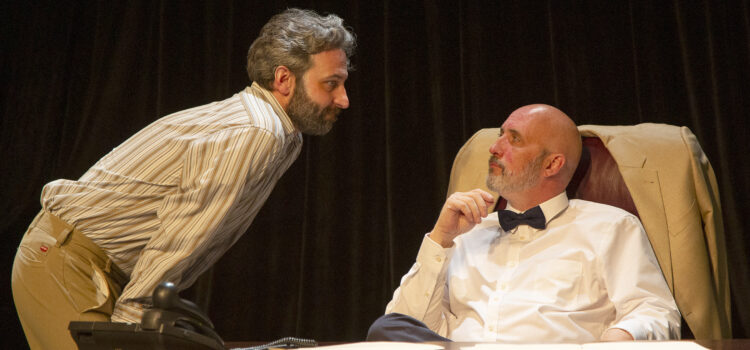
Winning, Angeli and Freed. Photo by John Lamb

Winning, as Doctor Farquhar, and Freed, as writer Mark Styler, are on stage nearly the whole time, and work so well together that it’s like watching a 5-set tennis match at the Wimbledon finals, such are the nimble verbal volleys and quicksilver shifts of power between their characters.

Earlier this year, both actors stood out in Albion’s second play, “The Birthday Party.” As a pair of menacing villains, Winning was a revelation and Freed, who moved here from Chicago, made a stunning debut.

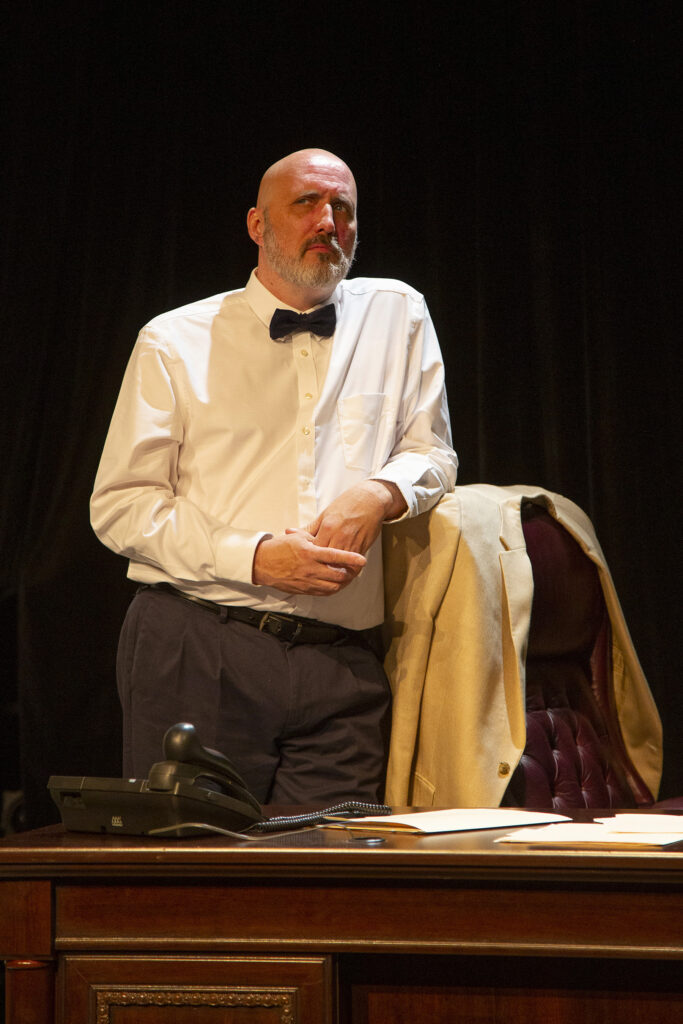
Winning’s Farquhar is garrulous, pompous, and brainy, displaying contempt for the patients and superiority in his psychoanalysis and therapy skills. When he pontificates about his perception of how to treat the mentally ill, Winning’s hot-air blathering teeters on that fine line between ridiculous and expertise.

Freed’s Styler is confident, cocky, and skeptical at first, then increasingly unsettled by the surroundings and peculiar behaviors. His instincts are finely tuned as his moods change.

The play is elaborate in how it threads the needle from point A to point B – and that can get a little tedious as dynamics flip. However, the actors hold our attention and bring out the best in each other as scene partners, and Robert Ashton ups the ante with his adroit direction.

In British slang, the mystery’s a corker, and Ashton, a nimble theater veteran with a flair for crisp and purposeful staging, masterfully controls the suspense.

To give more away would be to spoil the plot, and the fun part of being in the audience is the discovery. Because you know something’s not quite right, and deceit and delusions are there for the deducing.

It’s a credit to all involved that they never tip us off, stay in the moment and do not anticipate what’s ahead, making us fascinated by what’s unfolding.

The technical sight and sound work are also sharp, with Erik Kuhn the tech director and set designer, and an expert fight choreographer. Eric Wennlund’s lighting design is both functional and artful while Jacob Baxley’s sound design adds layers of fright. Stage Manager and Assistant Director Gwynneth Rausch keeps the danse macabre taut.

It’s only Albion’s fourth show, and they have impressed with their well-staged productions featuring strong performances and outstanding production values. Founded in 2022 to explore the rich history of playwrighting in Britain, with regular trips across the sea to Ireland, they not only entertainan audience, but strive to inform them of the social, political, and cultural influences of the time. So far, they are nailing every facet of the archetypes of a good drama/comedy.

One thing is always a given – that the accents will be spot-on, and the trio’s work here is superb. Albion provides a word and phrases guide for us in their programs, too.

If you like hair raised and minds bent, this is a dandy way to spend 2 hours and 15 minutes.

Chuck Winning as Dr Farquhar. Photo by John Lamb.

Albion Theatre presents “Mindgame” by Anthony Horowitz from Oct. 20 to Nov. 5 at the Kranzberg Arts Center, 501 N. Grand in Grand Center. Performances are Friday and Saturday at 8 p.m. and Sunday at 2 p.m. For more information, visit www. albiontheatrestl.org.

By Lynn Venhaus

An absurd comedy with heightened drama is an aural treat in Albion Theatre’s tension-filled, cryptic Harold Pinter classic, “The Birthday Party.”

In a small boarding house – “it’s on the list!” – at the English seaside, longtime lodger Stanley is tormented by a secret. When two mysterious strangers arrive, nothing seems to be what it appears to be.

Pinter’s unusual combination of humor and menace crystalizes the chaos at a bizarre birthday party, and lives will change that night and in the aftermath.

They talk to each other, but do they really listen?

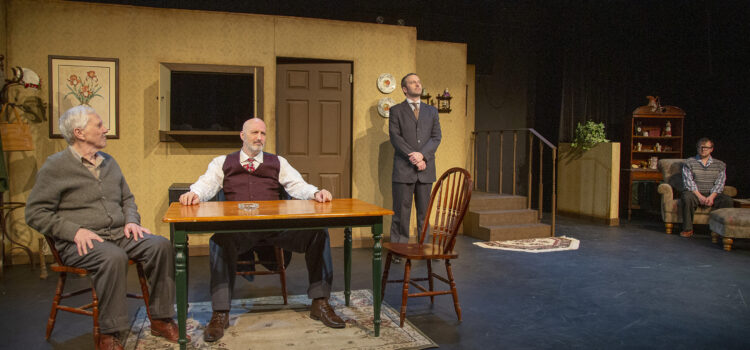
A skilled and sharp ensemble is crisply directed by Suki Peters in the Kranzberg Black Box Theatre. Creating this odd world, they never skip a beat, measuring their pauses and growing a sense of dread while supplying both irrational behavior and their usual routines.

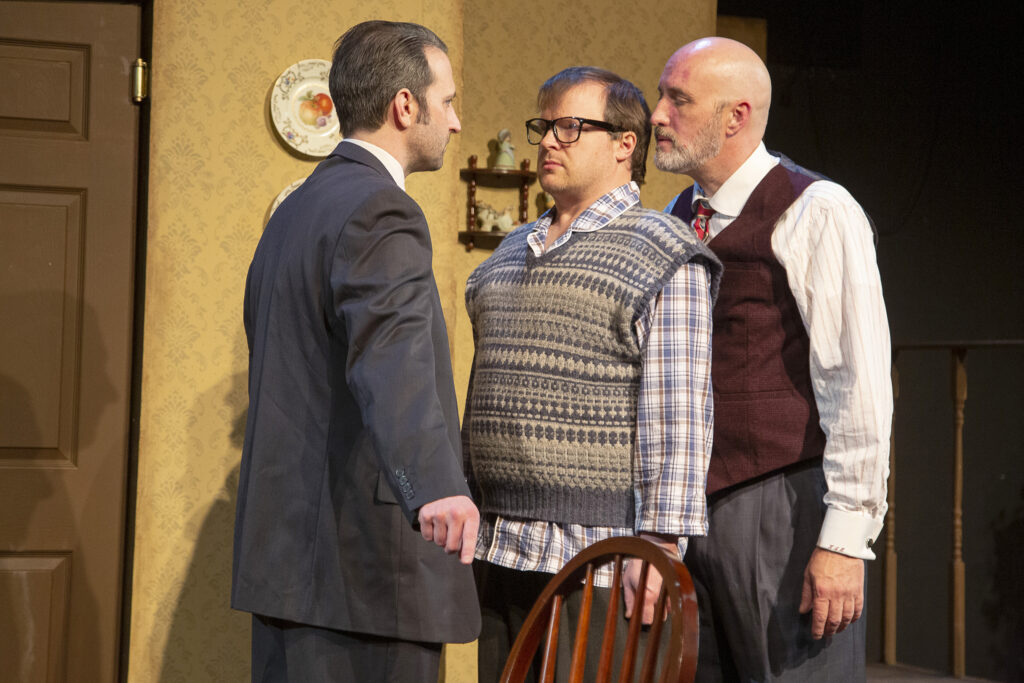
Nick Freed, Ted Drury, Chuck Winning. Photo by John Lamb


When they focus on the humor, they draw out nervous laughter from the audience. Playwright Pinter’s first work, from 1959, is seen through this creative team’s fresh eyes, and while edgy and powerful, is a model of restraint.

Pinter’s trademarks of confusing time and space, as well as making isolated characters ambiguous are noted here.

The extraordinary work of this cast in shaping their enigmatic portrayals elevates this experience. Instead of confusion about its peculiarities, we grasp their rhythms.

Robert Ashton is Petey, an amiable senior with a menial beach job who seems to tolerate his wife Meg’s daffiness. Teresa Doggett is delightfully flaky and giggly as an eccentric Meg, flitting about her domestic duties.

As the charming Boles’, Ashton and Doggett add authenticity with their native tongues amplifying their characters, and the remaining cast members, Midwesterners all, are flawless in delivering their United Kingdom dialects.

This sets the mood splendidly. Danger is looming, but what and why?

The couple’s boarder seems harmless, but then reveals a temper. In a flash, Ted Drury complicates Stanley’s erratic behavior. He says he was a piano player, which impresses Meg – but leaves things open for interpretation. He’s concealing his past, which is murky. Drury conveys simmering tension until he boils over.

Winning, Summer Baer. Photo by John Lamb

An imposing Chuck Winning is a marvel when his threatening blowhard character Goldberg waltzes down memory lane or philosophizes about life, in a dominating, disturbing way.

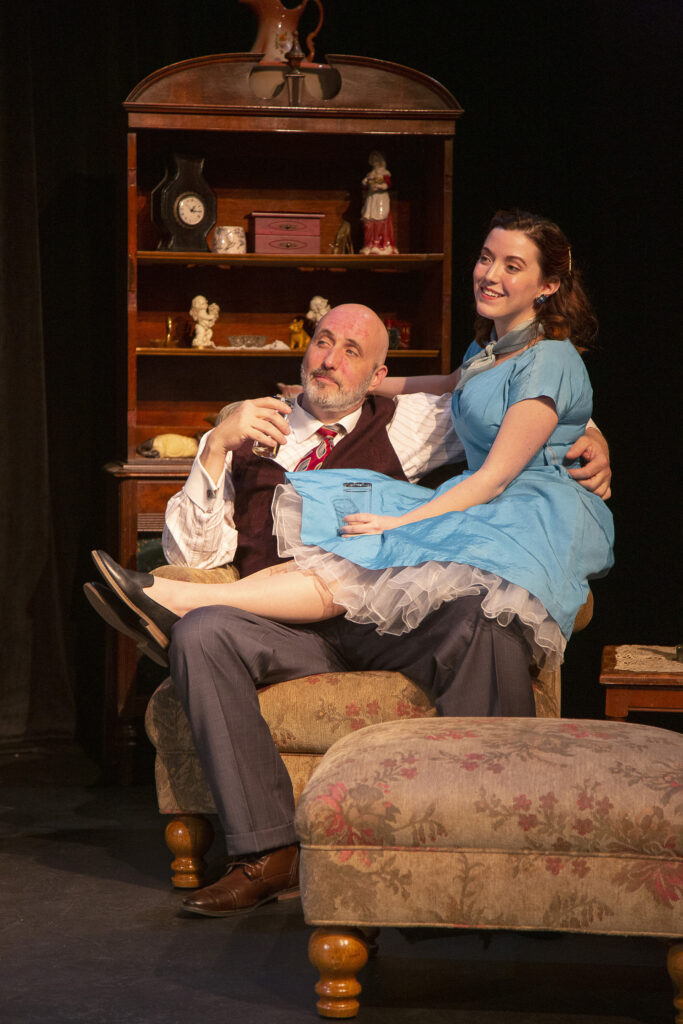
His associate McCann, well-played by newcomer Nick Freed, isn’t as intimidating as Goldberg, but is frightening, nonetheless. A mob enforcer? Hitman? He has the look and the sinister tone, but also projects a world-weariness.

Ryan Lawson-Maeske has capably choreographed significant fight scenes, and one is an especially scary encounter.

A sunny Summer Baer has a small but pivotal role as Lulu, a light-hearted local girl who enjoys socializing. She’s an innocent who becomes targeted in untoward behavior.

Baer looks terrific in vintage outfits fashioned by costume designer Tracey Newcomb, who has captured the characters’ well in apparel. A special shout-out for Meg’s shiny party gown.

Set designer Brad Slavik’s shabby living and dining rooms accurately reflect the Boles’ economic status, with Majorie Williamson’s scenic design contributions, while Tony Anselmo’s lighting design punctuates the atmosphere perfectly.

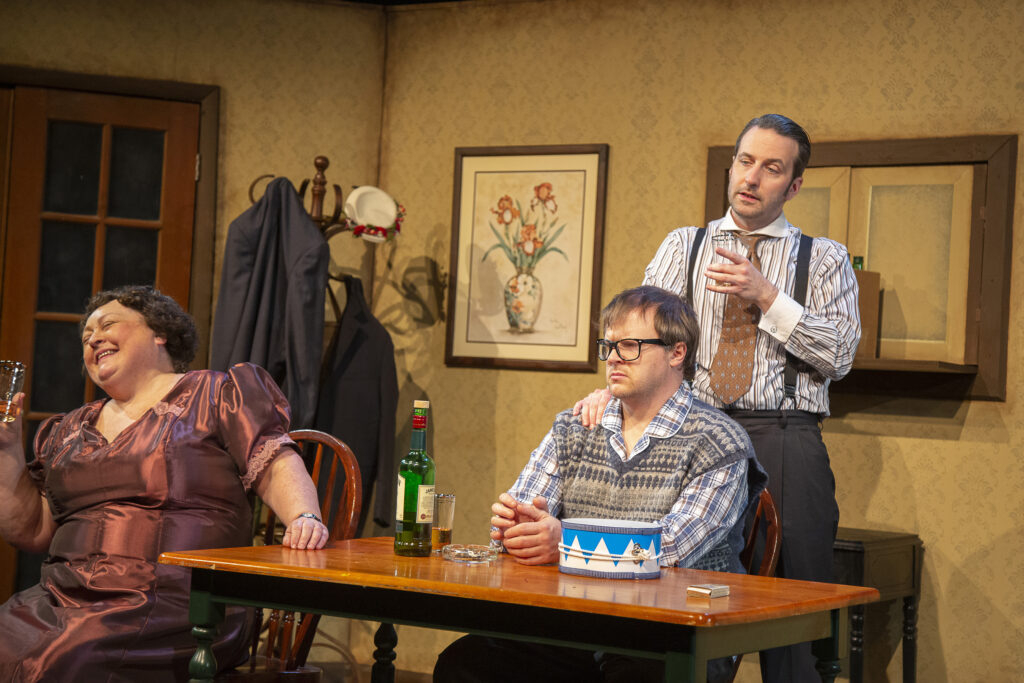
Gwyneth Rausch has found appropriate props – that toy drum – to reflect the period, and sound designer Michael Musgrave-Perkins has enhanced the atmosphere with his choices.

“The Birthday Party” is meant to often seem illogical, but Albion’s inspired production is actually quite cohesive, benefitting from outstanding ensemble work and Peters’ distinct direction.

Teresa Doggett, Ted Drury, Nick Freed. Photo by John Lamb

Albion Theatre presents “The Birthday Party” Fridays and Saturdays at 8 p.m. and Sundays at 2 p.m. from March 10 through March 26 at the Kranzberg Arts Center, 501 N. Grand in Grand Center. For more information: albiontheatrestl.org.