By Lynn Venhaus
Dark, dour and dreary, “The Death of Robin Hood” is a revisionist take on the legendary folk hero without any merry men or noble derring-do – or much of a pulse.
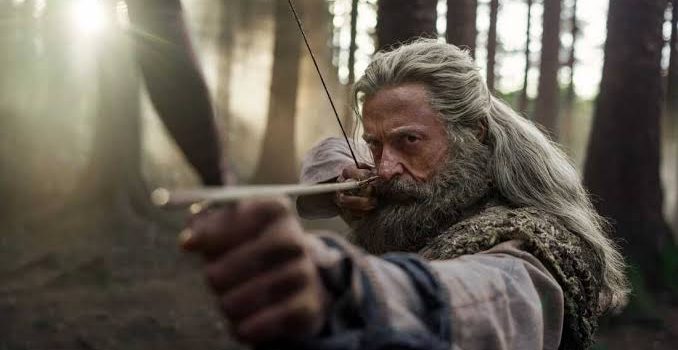
After a chaotic life of crime and murder, a battle-scarred and weather-beaten Robin Hood (Hugh Jackman) is roaming the austere heaths of medieval England. The year is 1247, and he’s not seeking redemption nor reconciling his past — yet. He announces: “I’m tired.”
Writer-director Michael Sarnoski has adapted a 17th century ballad, “Robin Hood’s Death,” to bust the myth about the outlaw that the common man cheered for, “stealing from the rich and giving it to the poor.”
Presenting himself as “no hero,” Robin grapples with being a heartless bandit and not a good guy glorified in folklore. He doesn’t have an altruistic bone in his broken body, and he is irked about the romanticized version because he can’t live up to expectations nor does he want to try.
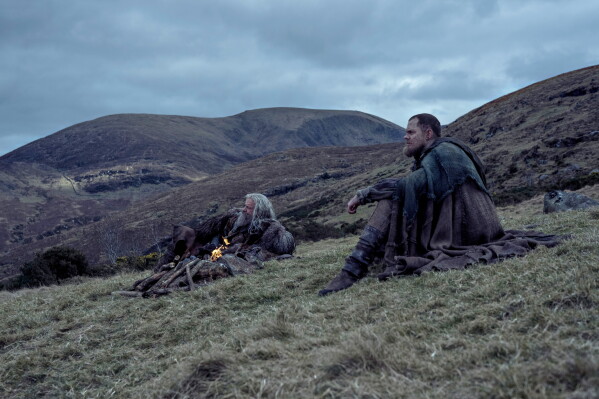
Along the way, he encounters people affected by his slicing and dicing: Arthur (Noah Jupe), a young man seeking revenge for his slain family; his longtime friend Little John (Bill Skarsgard), now a family man calling himself Edward, who wants Robin’s help in a vicious attack; and little Margaret (Faith Delaney), a traumatized orphan who latches on to him.
Grizzly and growling, Jackman’s sullen Robin is without aspirations. While enacting vengeance at Little John’s coaxing, Robin is gravely injured. He wakes up in the Priory of St. Clement, being nursed by Sister Brigid (Jodie Comer), an angel of mercy, calls himself Randolf.
Forget every screen incarnation, from silent swashbuckler Douglas Fairbanks in 1922 to Taron Egerton as a gritty Robin of Loxley in 2018, with Errol Flynn, Sean Connery, Kevin Costner, Russell Crowe, Cary Elwes, Disney animation and even Frank Sinatra as “Robbo” in a Rat Pack musical comedy in between.
While Tony Award winner and Oscar nominee Hugh Jackman has carried big-themed films before, playing an introspective elder confronting his ghosts is quite a departure from the superhero Wolverine and musical icons Jean Valjean, P.T. Barnum and Neil Diamond that he’s known for, although one can point to “Logan” for another tough-guy reflecting on his mortality.
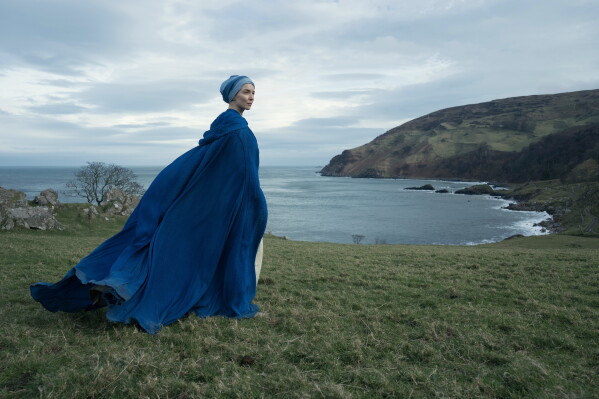
Emmy and Tony Award winner Jodie Comer lends a quiet strength to Sister Brigid, a kind, caring woman who believes in the good, and devotes her life to the afflicted and orphans.
Sarnoski employs such a top shelf cast that you want to care about their characters, but drawn only as sketchy outlines, it’s difficult to be convinced of this slow story’s merit.
Heralded for his outstanding debut feature, “Pig” in 2021, Sarnoski followed with a fine studio blockbuster, “A Quiet Place: Day One,” in 2024. Now he is poised to be one of A24’s arthouse darlings.
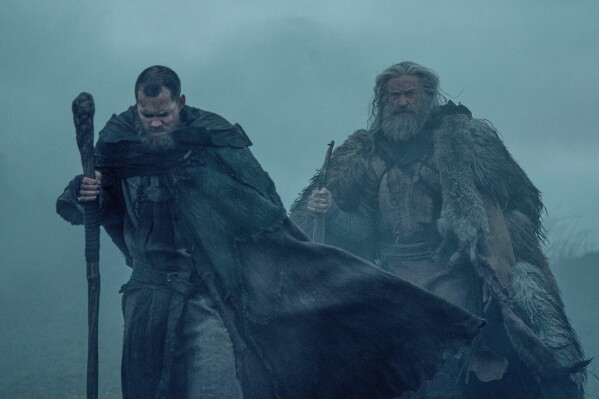
In his grim re-imagining, Sarnoski focuses on moody misty landscapes, terse dialogue and shocking violence. His reinvention is in the same vein as David Lowery’s “The Green Knight” and Robert Eggers’ “The Northman.”
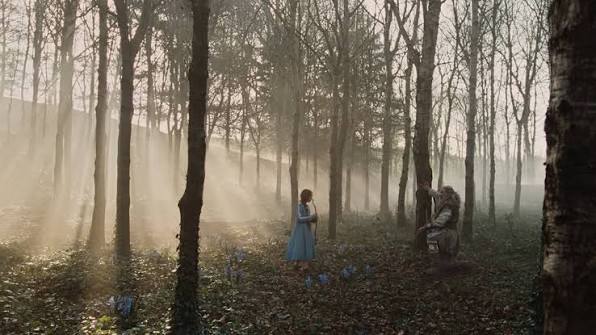
The austere elements are visually interesting– cinematographer Pat Scola and production designer David Lee captured the harsh Northern Ireland landscape, contrasting it with the safe space of the monastery. But Sarnoski’s philosophical approach is one-note, that somber ambience soaking this plodding adventure.
A distinctive element is the mournful score composed by Tony Lewis and folk singer Jim Ghedi that is haunting throughout the film’s 122 minutes.
Sarnoski has decided that backstories are not necessary, so there’s no evidence of a kinder, gentler swashbuckler hardened by his brutality. No mention of the Crusades or Sherwood Forest, or the cruel corrupt monarchy (Prince John and his henchman Sheriff of Nottingham and Sir Guy of Gisbourne) that spurred the Robin Hood saga in the Middle Ages.
Supporting players arrive, merely trying to survive the harsh conditions. This is mud, blood, slings and arrows – an eye for an eye.
At the monastery, one of the castoffs is a compassionate bandaged leper played by Murray Bartlett, Emmy winner as resort manager Armond in the first season of “White Lotus.” He dispenses hard-fought wisdom and seems to pierce Robin’s impenetrable demeanor, as does Sister Brigid and young Margaret.
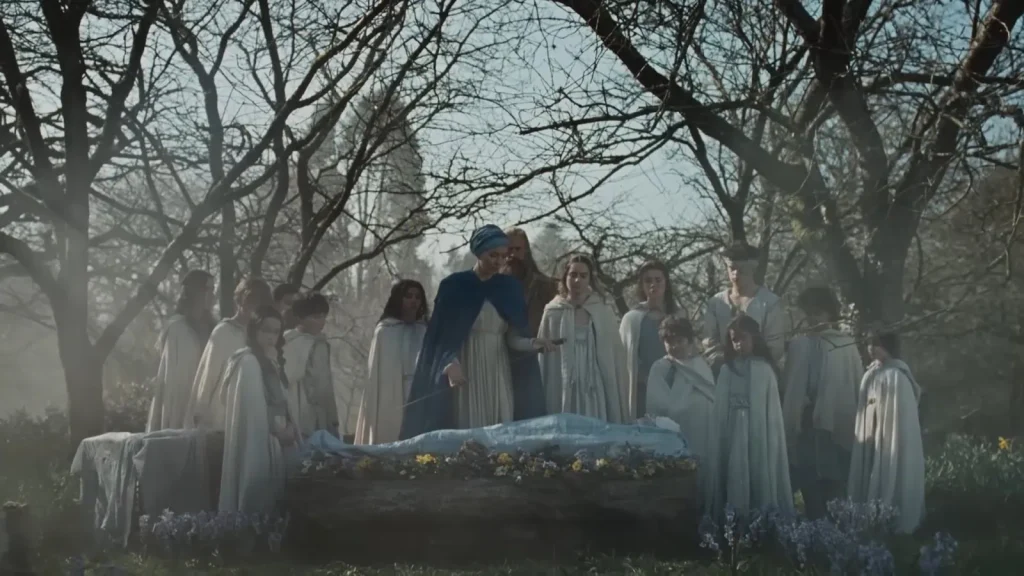
The leper encourages Robin to let go of his violent past and become part of the sanctuary community. But is he too late for salvation? In theory, this moral dilemma sounds interesting, but its subdued execution makes this film tough to embrace. And the hushed, mumbling delivery of all characters, with dialects, makes understanding the exposition even harder.
Sadly, “The Death of Robin Hood” is more a desolate dirge than a profound philosophical statement.
“The Death of Robin Hood” is a 2026 action-drama written and directed by Michael Sarnoski and starring Hugh Jackman, Jodie Comer, Bill Skarsgard, Murray Bartlett, Noah Jupe and Faith Delaney. It is rated R for strong bloody violence and the runtime is 2 hours, 3 minutes. It opens in theatres June 19. Lynn’s Grade: C-

Lynn (Zipfel) Venhaus has had a continuous byline in St. Louis metro region publications since 1978. She writes features and news for Belleville News-Democrat and contributes to St. Louis magazine and other publications.
She is a Rotten Tomatoes-approved film critic, currently reviews films for Webster-Kirkwood Times and KTRS Radio, covers entertainment for PopLifeSTL.com and co-hosts podcast PopLifeSTL.com…Presents.
She is a member of Critics Choice Association, where she serves on the women’s and marketing committees; Alliance of Women Film Journalists; and on the board of the St. Louis Film Critics Association. She is a founding and board member of the St. Louis Theater Circle.
She is retired from teaching journalism/media as an adjunct college instructor.