By Lynn Venhaus

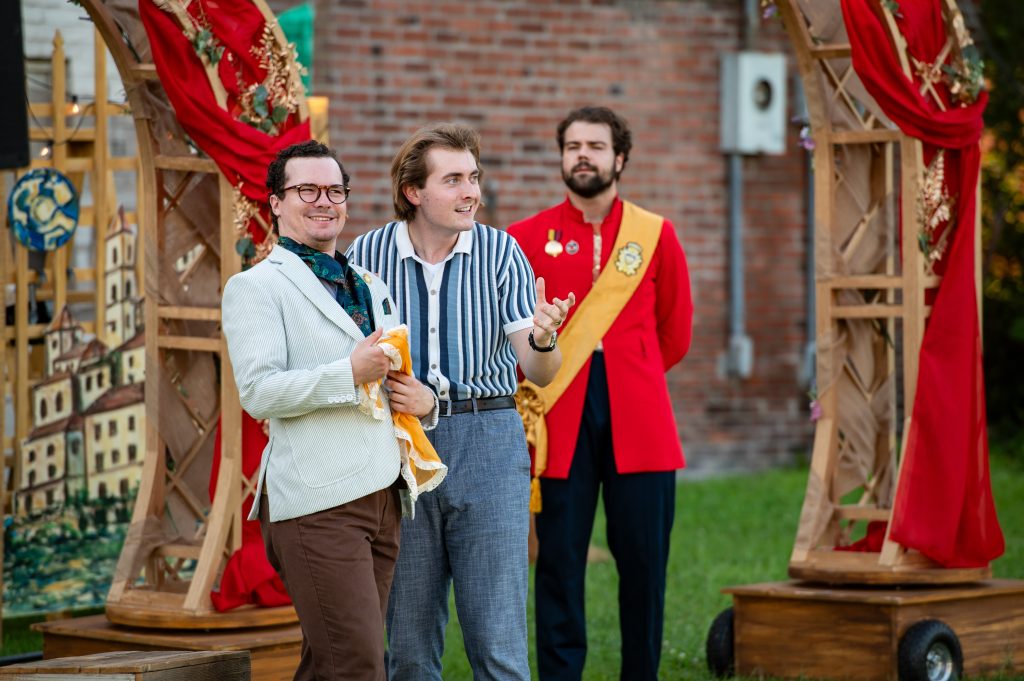
On a remote island far, far away, a mischievous mix of magic and mayhem mark “The Tempest,” which is the St. Louis Shakespeare Festival’s flagship production now anchored in Forest Park’s Shakespeare Glen.

William Shakespeare’s drama-tinged romantic comedy takes place after a violent storm has washed ashore a merry band of revelers, upending the inhabitants on this island – and nothing is as it seems. Perhaps, someone’s bad dream is another’s hopeful voyage. In any case, there is perceptible verve.

Think of this as a way-back machine “Survivor,” where everyone must outwit, outplay and outlast the people who want power. And Prospero (Nancy Bell) is manipulating a chess game.

A mother and sorcerer, Prospero rules this mystical place, and tensions rise between her, her teenage daughter and now the brother who messed up her future and has reappeared. Haunted by his betrayal, she has vengeance on her mind, for she was once Duke of Milan.

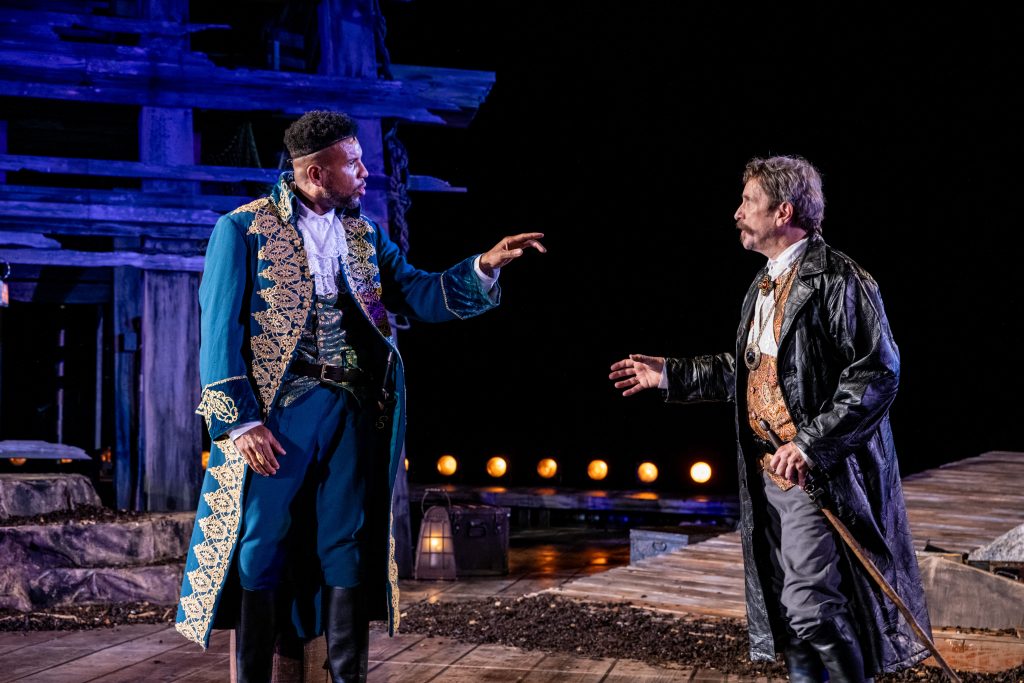
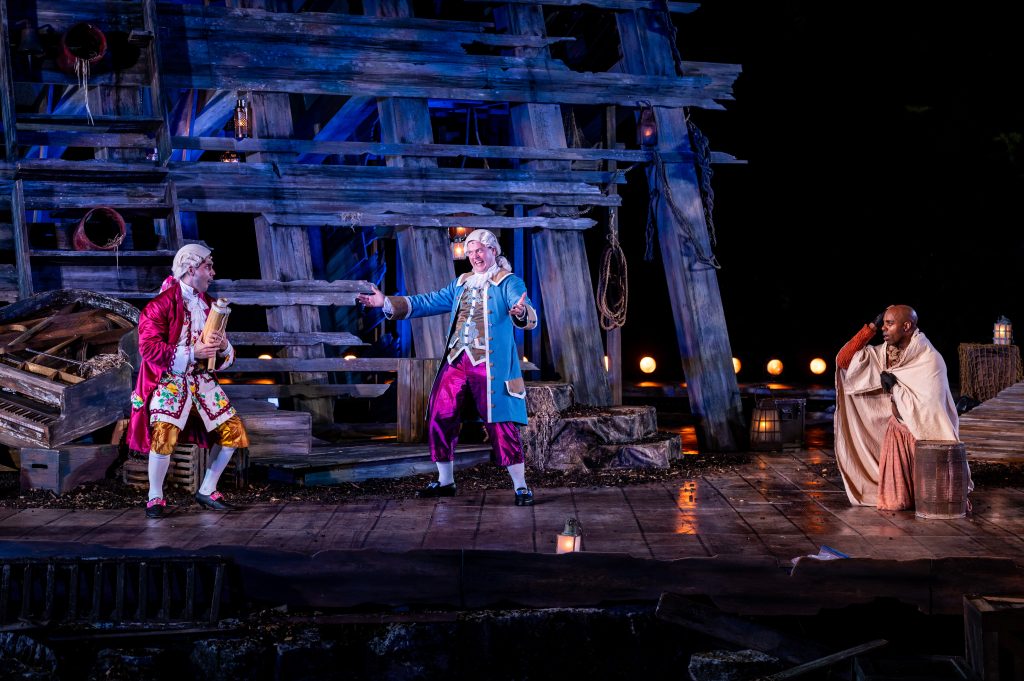
Reginald Pierre and Jeff Cummings as Prospero’s evil brothers. Photo by Phillip Hamer.

Through royal chicanery, Antonio (Jeff Cummings) usurped the title, and with the help of another brother, Alonso (Kathryn Bentley), King of Naples, she was banished 12 years earlier. But they can’t be trusted because another ambitious brother, Sebastian (Reginald Pierre), wants the king’s crown himself.

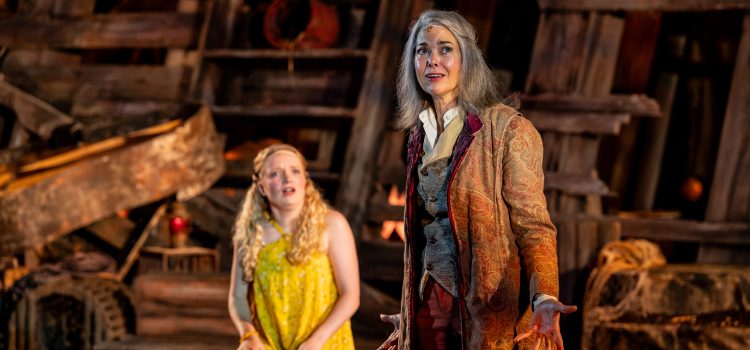
Ariel (Eliza Pagelle) is a shape-shifting spirit on the island that aids Prospero. Through her occult preoccupation, the boss finds out that her nefarious brothers are on their way from Tunis to Italy, so she conjures a squall, and they wind up where she is. Mama Bear thinks she is in control.

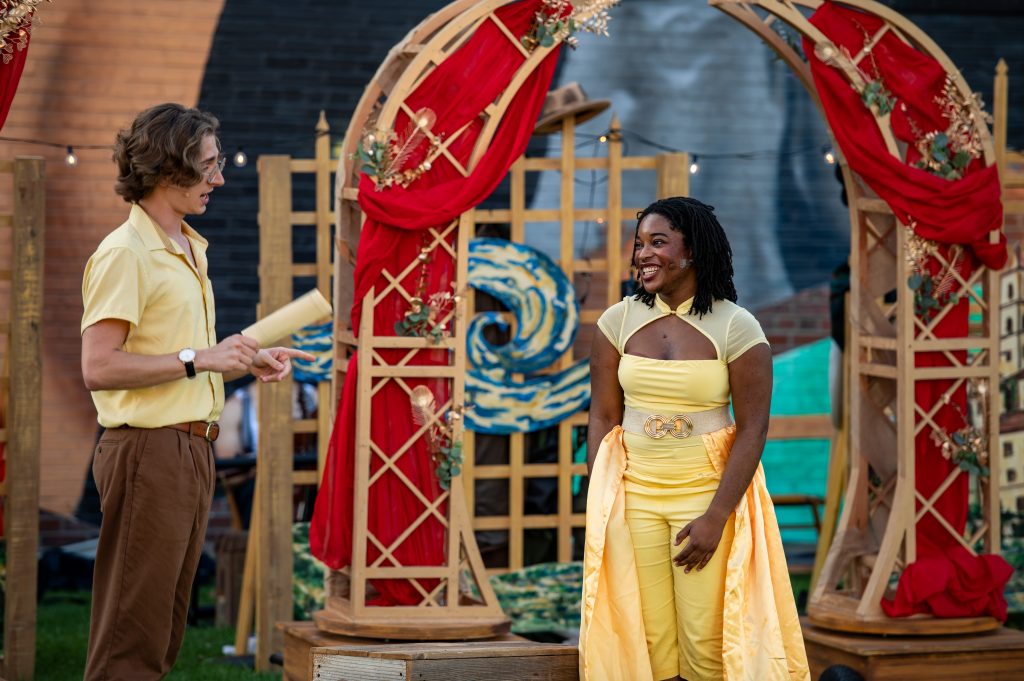
It won’t be long until old wounds resurface and new challenges arise. Oh, be careful what you wish for, as Alonso’s honorable son Ferdinand (an earnest Zay Williams) spies Miranda (Sigrid Wise) and falls in love.

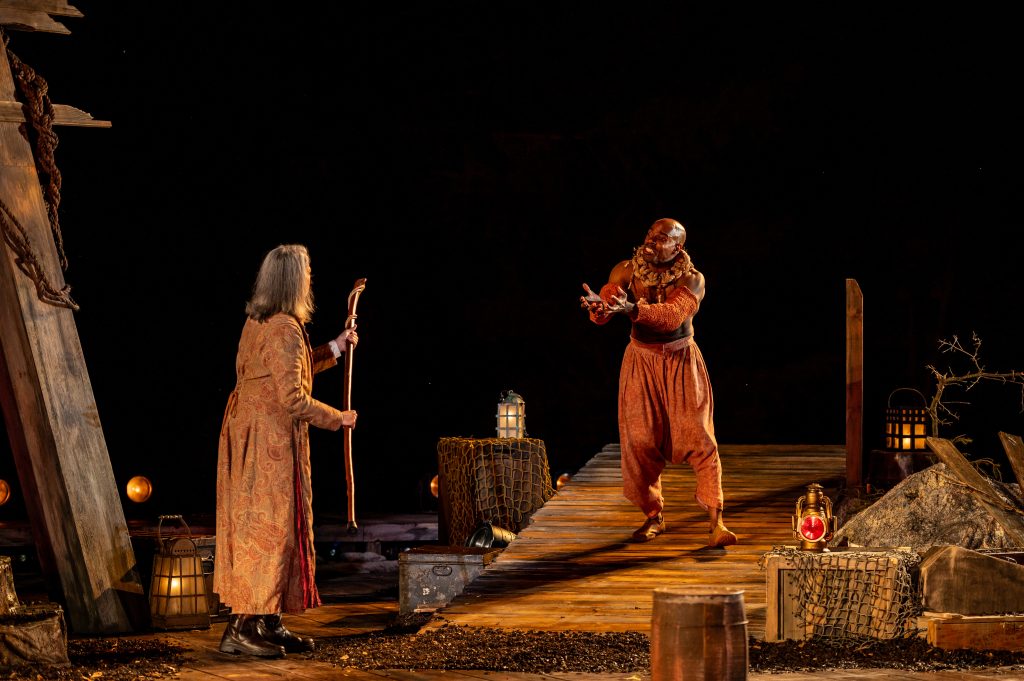
Caliban (Chauncy Thomas) is the only true island inhabitant, a witch’s son, and resents being overtaken by Prospero, who imprisoned him so he doesn’t get too close to her daughter.

A fierce Thomas musters all his fury as a resentful native. Formerly of St. Louis, Thomas is always a welcome addition when he returns, now for the sixth time.

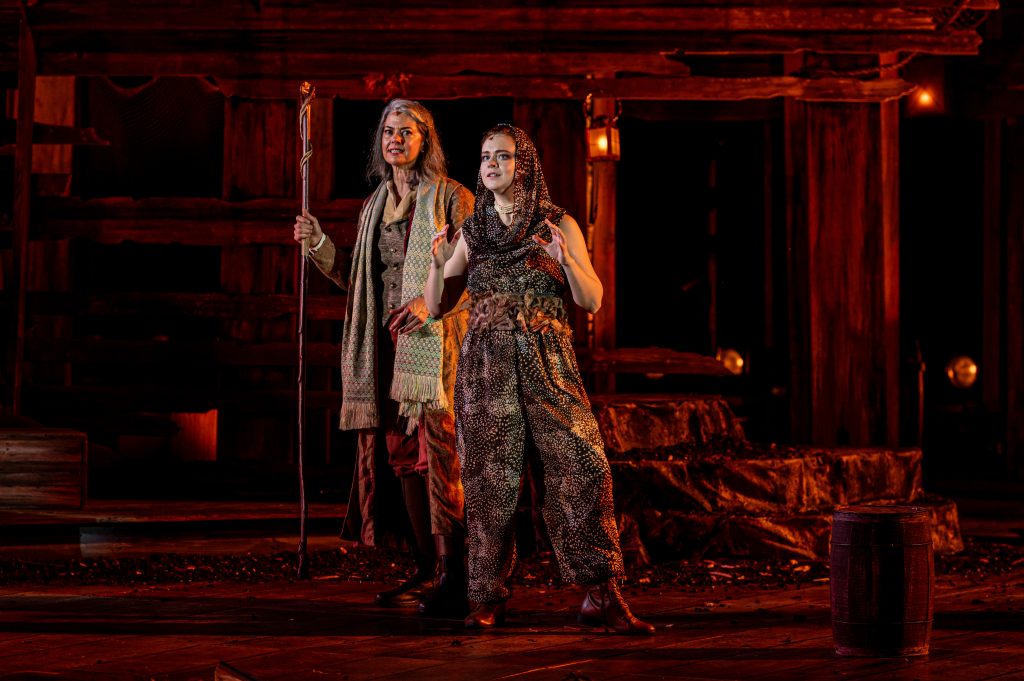
Bell and Chauncy Thomas as Caliban. Photo by Phillip Hamer.

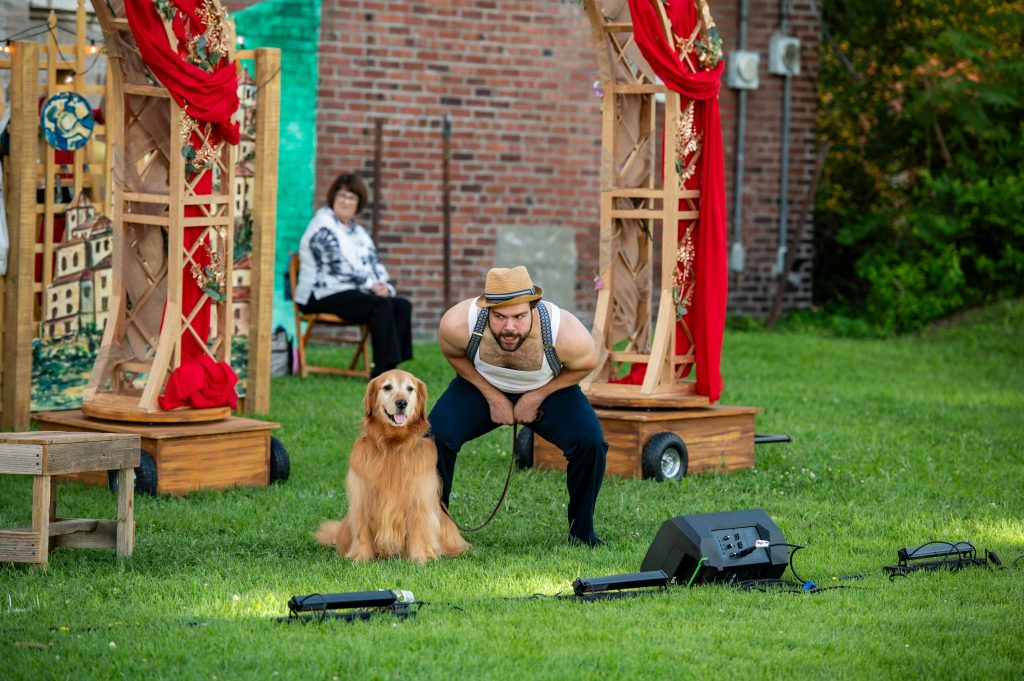
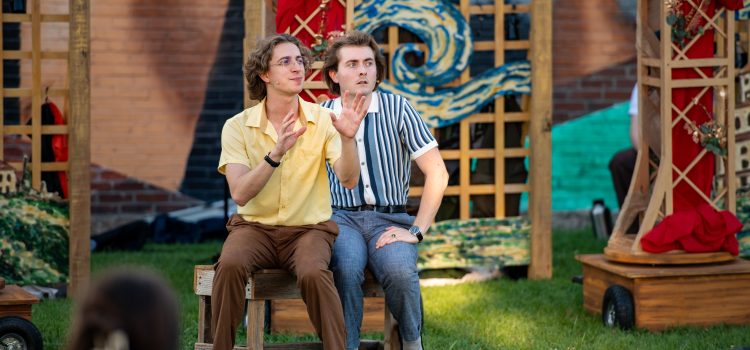
The ensemble includes kindly Gonzalo (veteran Whit Reichert), an elderly Neapolitan lord who helped Prospero survive exile (but secretly), and comic buffoons Stephano (Michael Dougherty) and Trinculo (Jose Sabillon), Alonso’s butler and court jester. That daffy duo plots with Caliban to take over.

Mother and daughter have been marooned since the girl was 2 years old, so one can imagine her naivete and innocence – and yearning to break free of the overbearing parent. Nevertheless, the protective mom wants her daughter to marry for love and position.

Wise, enchanting as the isolated Miranda, is as luminous as she was as Juliet in “Romeo and Juliet” in 2018 and was part of “The Winter’s Tale” the year before. She has tangible chemistry with Williams as a decent prince who can be trusted.

Through her instincts and technique, Bell is a formidable Prospero – and as much of an impact she has had on Shakespeare in this city, one must note that this is her first leading role outdoors in Shakespeare Glen.

Bell and Eliza Pagelle as Ariel. Photo by Phillip Hamer.

 (As Playwright-in-Residence, Bell wrote several “Shakespeare in the Street” productions, earning Best New Play awards from the St. Louis Theater Circle for “The World Begun” and “Old Hearts Fresh,” and two years ago, directed the award-winning “As You Like It.” She also founded the Confluence New Play Festival.)

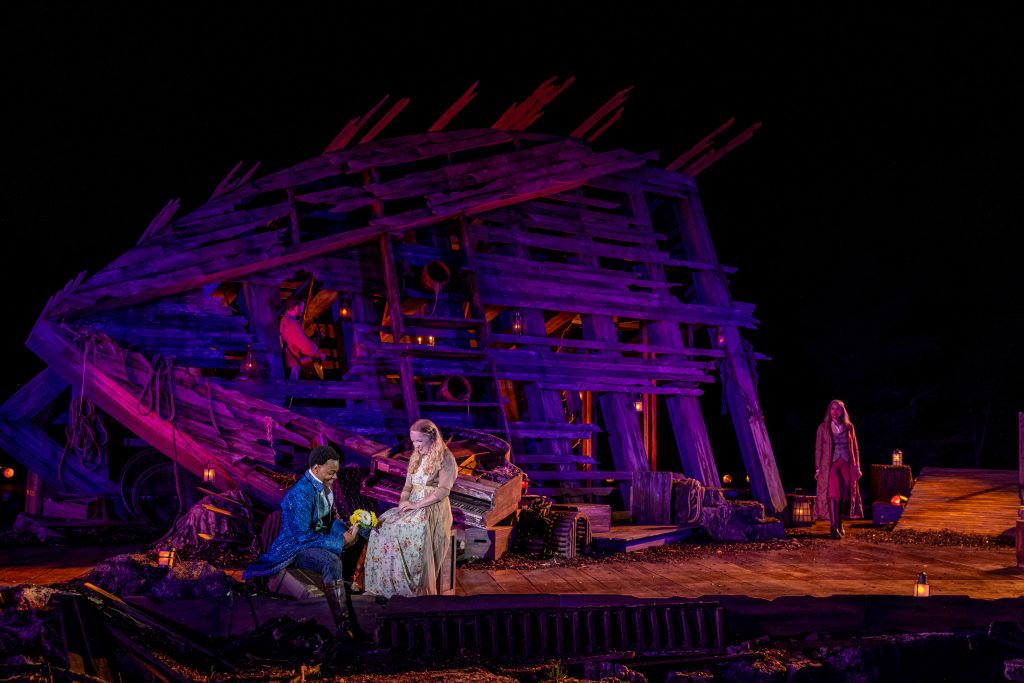
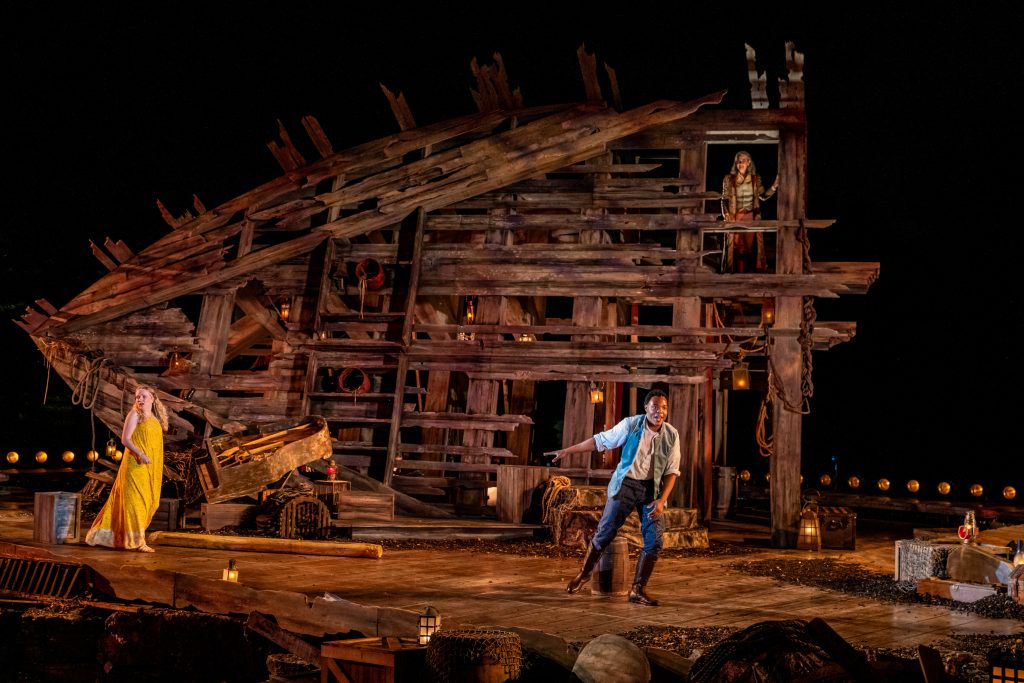
The Circle’s most awarded theater artist, for acting, writing and directing, Bell commands attention from various vantage points perched on the decaying hull of a shipwreck. Her character must find a way to forgive on this journey.

Director Rick Dildine shrewdly showcases Prospero’s dominance by staging Bell’s position at different heights – when she’s talking to others. It’s rare when she’s on the same level of this imposing set, masterfully adorned with functional nooks and crannies.

The former director of St. Louis Shakespeare Festival (2009 – 2017) emphasizes nature’s impact as well as the colonial-era themes. Dildine’s version is a breezy 90 minutes without an intermission.

Goofballs Jose Sabillon and Michael Dougherty with Thomas. Photo by Phillip Hamer.

He is aided by a talented squad — assistant director Lize Lewy, producer Colin O’Brien, production company Blank Slate, stage manager Sarah Luedloff, and assistant stage manager Britteny Henry.

Dildine won a Circle award for directing a shimmering “A Midsummer Night’s Dream” in 2016 where sound, lighting and scenic design enhanced the production, especially the original music.

The storytelling here is boosted by those same elements. The artisan MVPs who blended music and storm effects to elevate the experience included music director Michael Grieve, sound designer Melanie Chen Cole, lighting designer Jeff Behm and scenic designers Justin and Christopher Swader, all making impressive debuts, as were costume designer Kathleen Geldard and props designer Katherine Stepanek.

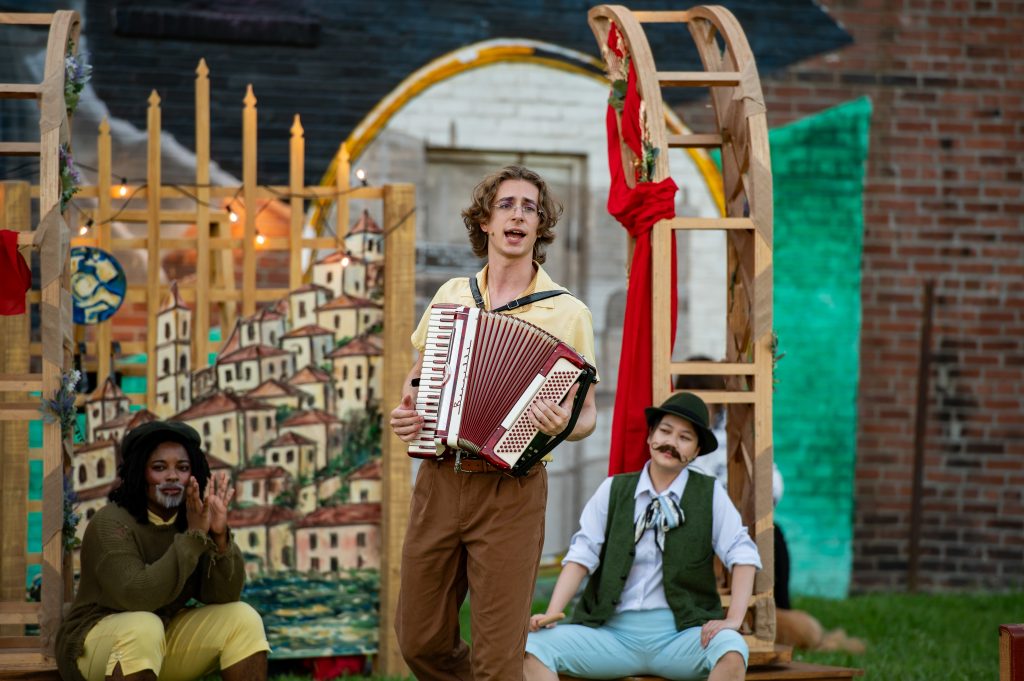
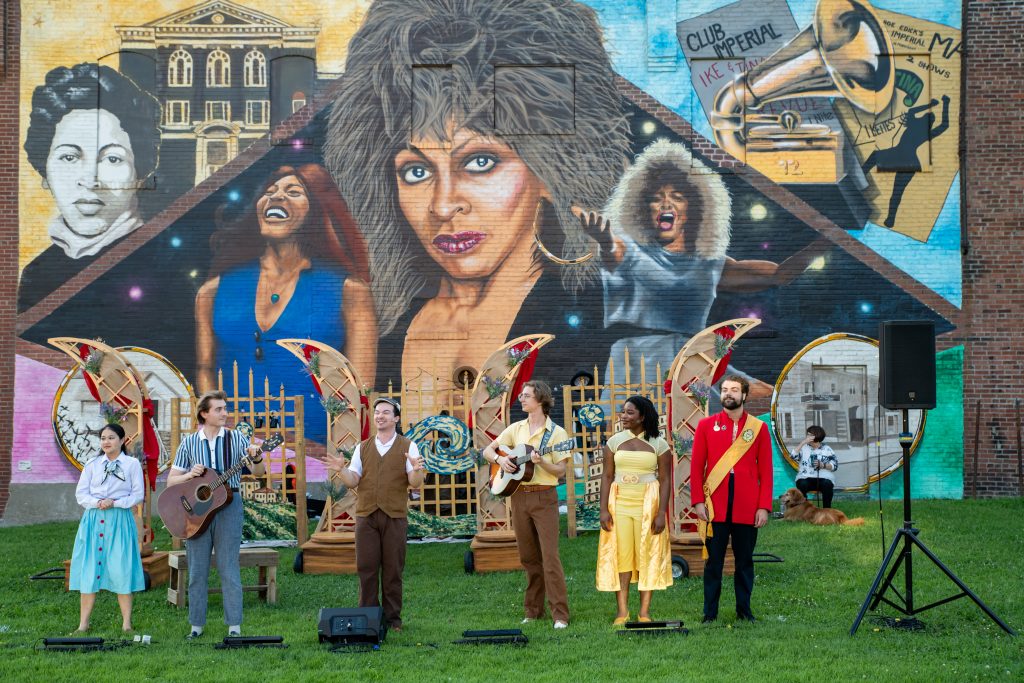
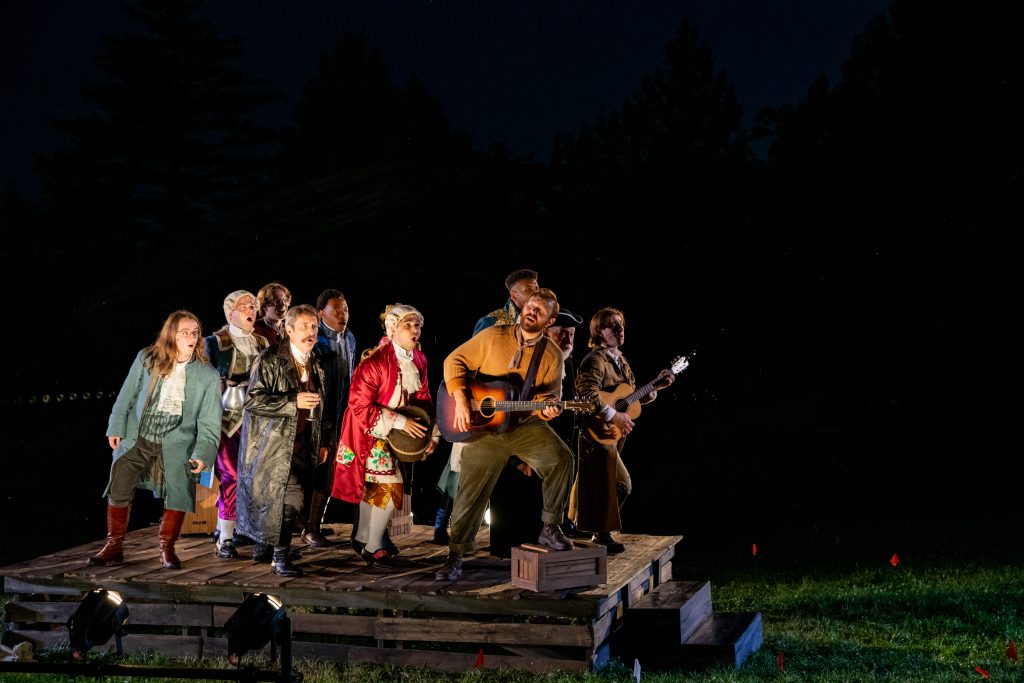
Grieve’s captivating immersive upbeat music is a zesty blend of roots music, sea shanties and folk melodies, with lively musicians Harrison Farmer, Crayton Haney and Otto Klemp, also in supporting roles, as is Grieve.

Musicians and partiers aboard a vessel. Photo by Phillip Hamer.

An original prologue on a satellite stage creates a festive atmosphere at Alonso’s daughter Claribel’s wedding, which kicks off the show (starting at 8 p.m.). Paul Dennhardt has provided interesting moves for the musicians and guests. All that’s swept away in the tempest.

Regarded as Shakespeare’s last play, when he was in his late 40s, this tale of forgiveness has the compassion of an experienced man looking at what’s important in life. And that is expressed well in this vibrant setting.

Dildine’s focus on nature’s capacity to heal is a key component to this 26th annual outing in the park, a year after a destructive tornado tore through Forest Park. He interprets that resiliency in the aftermath, as we all weather calm seas and violent storms in life.

A portion of the donations collected during “The Tempest” will go towards the tornado relief funds for the St. Louisans hit the hardest. And thanks to the parks department and Forest Park Forever, we are sitting today in these hallowed grounds of immense cultural importance.

Zay Williams and Sigrid Wise as Ferdinand and Miranda while Bell looks on. Photo by Phillip Hamer.

St. Louis Shakespeare Festival presents “The Tempest” May 27 – June 21 at 8:15 p.m., Tuesdays through Sundays, in Shakespeare Glen in Forest Park, 6604 Fine Arts Drive (next to the Art Museum). Admission is free and accessible to everyone. The Glen opens at 6:30 p.m. and the Teen Green Show takes place at 7:15 p.m. Thursday through Sunday. For more information, visit www.stlshakes.org

Wise, Williams and Bell. Photo by Phillip Hamer.

By Lynn Venhaus

“There was a cabaret, and there was a master of ceremonies, and there was a city called Berlin, in a country called Germany… and it was the end of the world” – “Cabaret” 1966

Eerily relevant now more than ever, the musical “Cabaret” has only grown in potency and insight over its 59-year history.

In New Jewish Theatre’s haunting production, director Rebekah Scallet has faithfully adapted Sam Mendes’ brilliant 1998 revival that emphasized the sinister motives as we witness the gathering storm that would lead to World War II and the Holocaust.

However, she has focused on making sure the parallels between then and now are clear, and she has strengthened the shattering epilogue even more than Mendes did. She puts a hard-hitting NJT stamp on it.

As impressive as her track record has been since becoming the artistic director in 2022, it’s noteworthy to mention that this is the first musical she has directed in Wool Studio.

Through the decadent setting of the seedy Kit Kat Club in 1929 Berlin, we witness the end of the Weimar Republic and the rise of the Nazis.

Photo by Jon Gitchoff.

This passionate cast resonates because of how committed they are to the bleak and shocking themes. In their telling of this story, the desperation is palpable. And their layered approach to the hummable John Kander-Fred Ebb score is commendable.

As the cunning Emcee welcomes patrons in “Wilkommen,” he seductively entices: “Leave your troubles outside! So—life is disappointing? Forget it! In here, life is beautiful. The girls are beautiful. Even the orchestra is beautiful!”

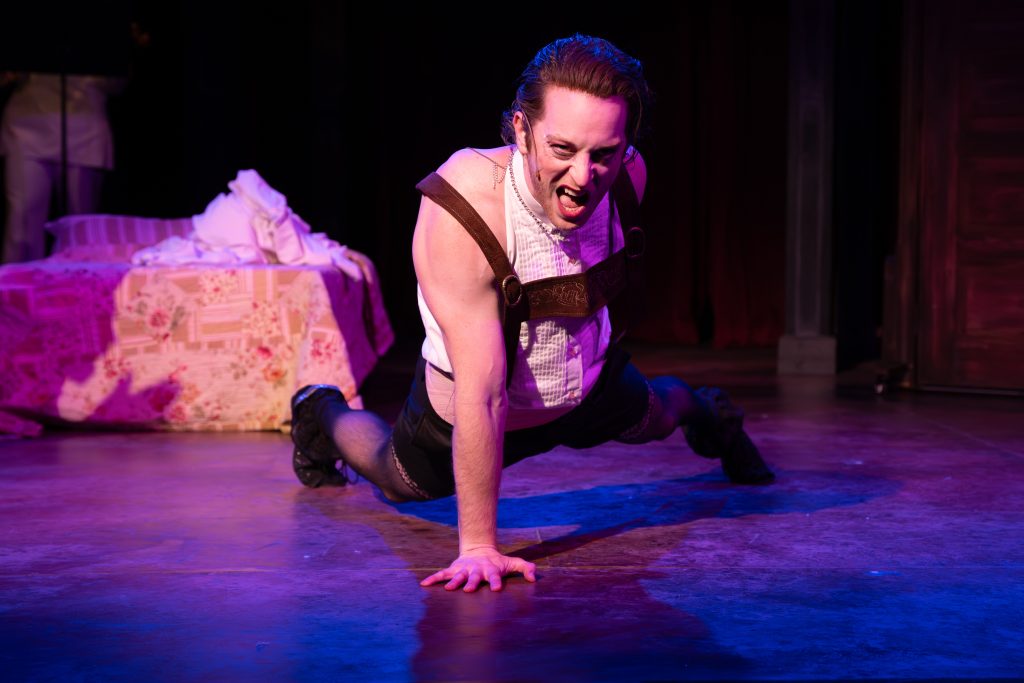
In a magnetic performance, Spencer Davis Milford embraces the tawdriness and makes sure the ominous feeling grows. He lurks in other scenes where he’s not the saucy showman, his menacing presence foreshadowing the horrors that are ahead.

Oh, he has doused his “I Don’t Care Much” and “If You Could See Her” in irony, making those numbers even more chilling. After such iconic actors as Joel Grey, Alan Cumming and Eddie Redmayne have created their indelible portraits, Milford makes the role his own.

Fresh from his starring role as Frodo Baggins in “The Lord of the Rings” national tour, he’s back home making his mark in yet another special show. His work has always captivated since he was a youngster, whether on stage at The Muny or The Repertory Theatre of St. Louis, or a myriad of other companies. But this is quite a departure from anything he’s done.

When it was time for “Tomorrow Belongs to Me,” I braced myself, for its intensity remains affecting — and induces chills.

As conditions deteriorate in the polarizing landscape, those loyal to the “new Germany” face apathetic citizens and those who don’t understand the consequences.. In hindsight, how could they and why were people so unaware?

Soencer Davis Milford as the Master of Ceremonies. Photo by Jon Gitchoff.

The innovative 1998 Tony winning Mendes collaboration with Rob Marshall deconstructed the heralded 1966 Hal Prince show in an earlier 1993 London re-imagining. While the original introduced social commentary in uncommon staging, this version heightens the present danger of ignoring anti-Semitism.

Mendes and Marshall would go on to helm Oscar-winning films in the early 2000s – “American Beauty” and “Chicago” respectively – but their impact has carried over for several vivid revivals in the past 27 years, notably 2014 and 2024, and in this striking, moving interpretation.

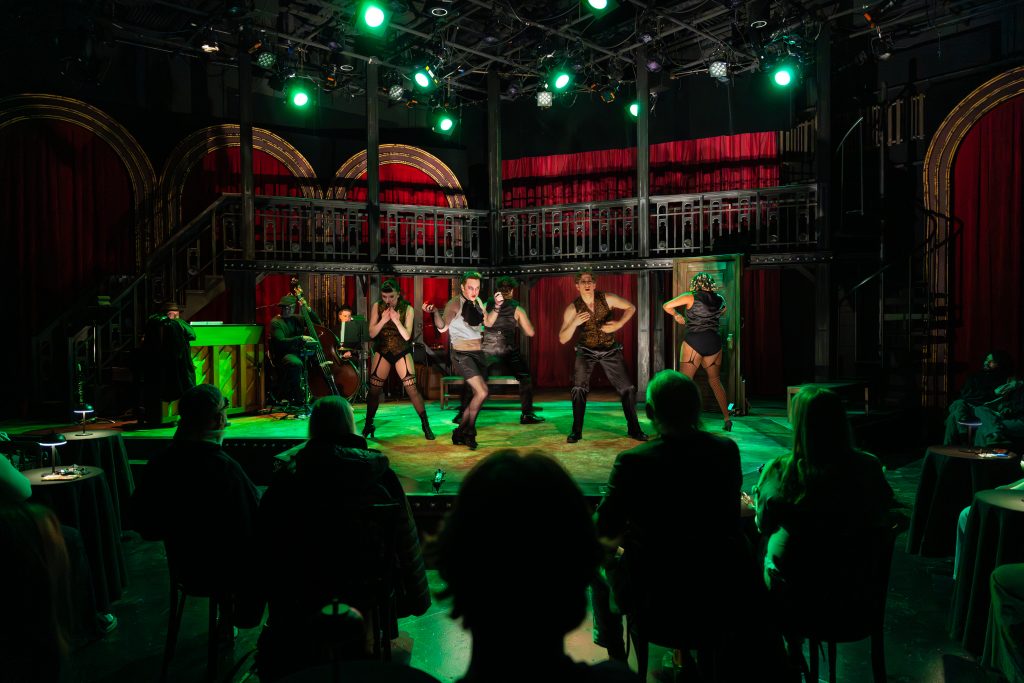
Scallet makes the most of the Wool Studio’s intimate setting, through an immersive experience placing some audience members in club configurations.

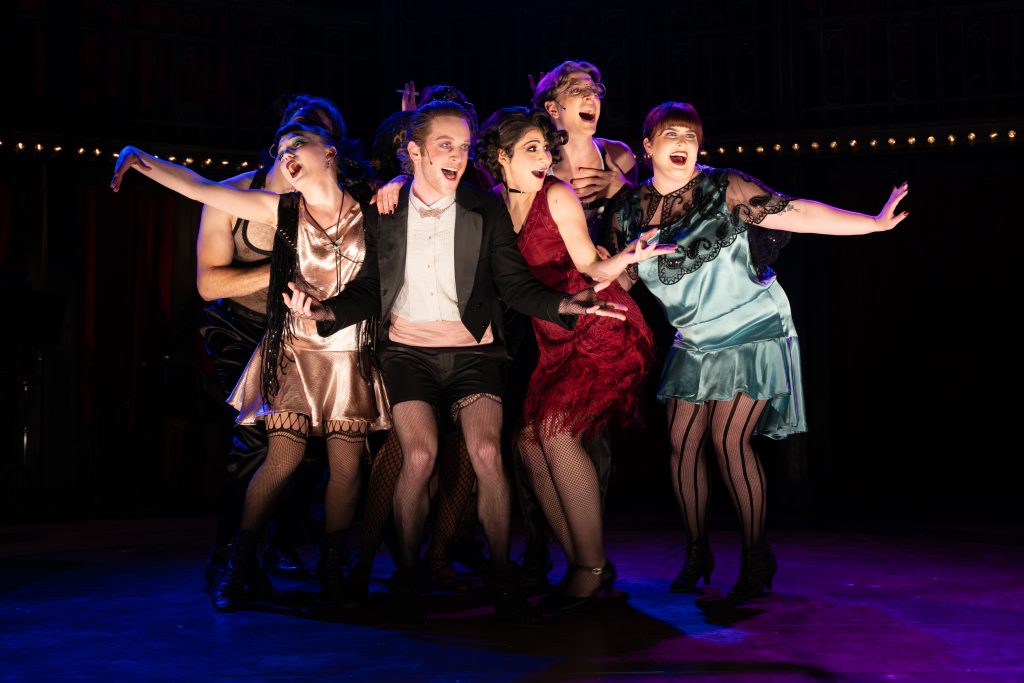
As the small but vibrant ensemble delivers high-energy precision in musical numbers, Scallet skillfully maintains fluidity throughout, with brisk staging, as one scene quickly melds into another.

Ellen Isom’s crisp and snappy choreography adds pizzazz to “Don’t Tell Mama,” “Mein Herr,” “Money,” and “Two Ladies,” and the robust kick line number in second act is an exceptional feat.

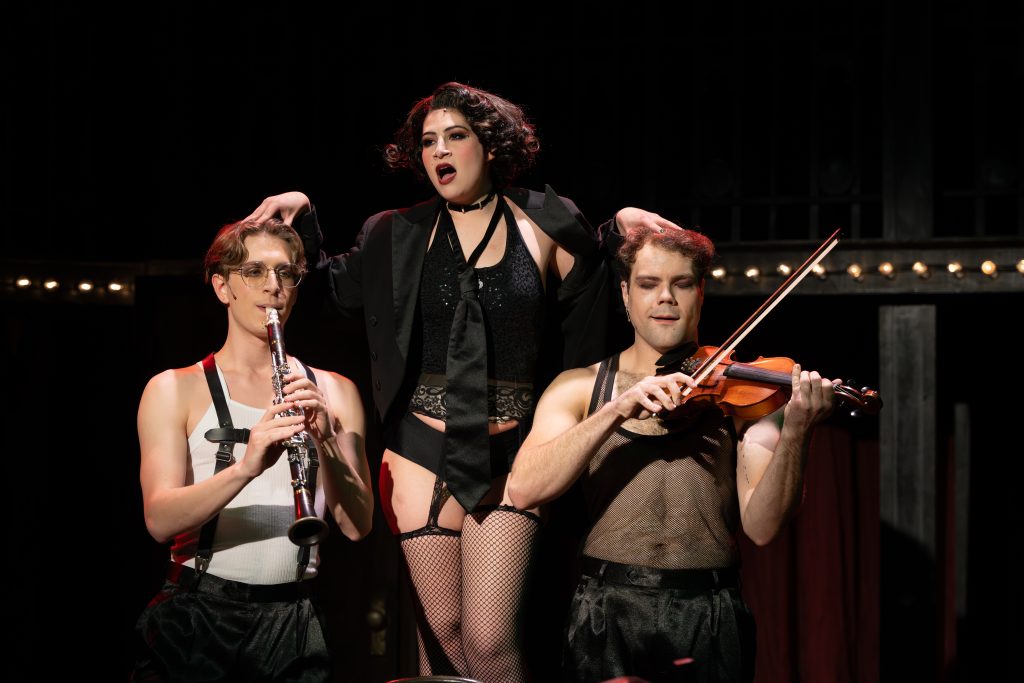
Otto Klemp, Hailey Medrano and Jayson Heil. Photo by Jon Gitchoff.

Music Director Carter Haney conducts the band on stage – Brad Martin on drums, Alerica Anderson on a stand-up bass, and Kris Pineda on accordion and trombone, and their polished presentation is a highlight.

Scenic Designer David Blake’s visually interesting set has a grand balcony implying secretive dalliances behind closed doors while the downstairs doubles as the nightclub stage and both Sally’s and Fraulein Schneider’s shabby living quarters.

Denisse Chavez’s lighting design shrewdly draws us into the action, highlighting the moods, while Justin Smith’s sound design captures the atmosphere.

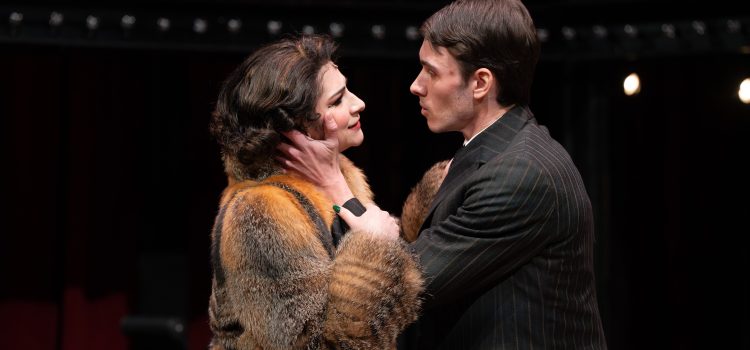
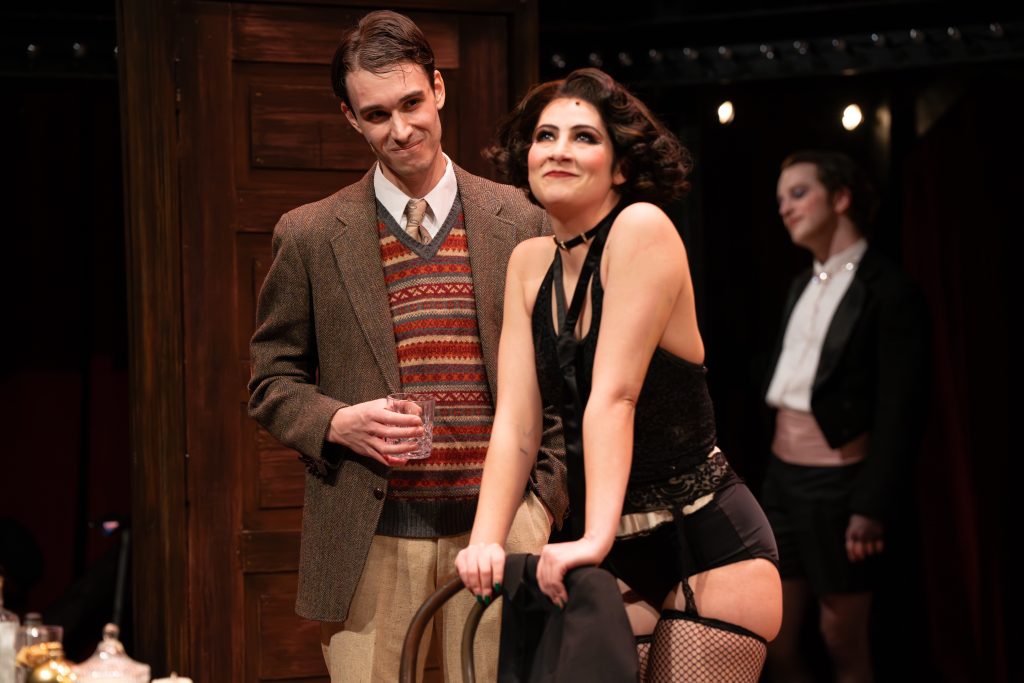
Hailey Medrano and Dustin Lane Petrillo are strong together as flighty, flirty nightclub singer Sally Bowles and broke American writer Clifford Bradshaw, brought together by fate, desire and living on the edge.

Separately, they are heart-tugging. Petrillo brings a discernable gravitas to every role he tackles, including virtuoso work in “Red,” The Immigrant,” “Hamlet” and “A Long Day’s Journey into Night” on local stages during the past two years.

Not as innocent as he first appears, and initially caught up in the whirlwind, Cliff eventually becomes the keen —-and appalled — observer whose conscience can no longer ignore the signs.

Dustin Petrillo, Medrano and Milford. Photo by Jon Gitchoff.

His character is the fictionalized British writer Christopher Isherwood, who would go on to write the semi-autobiographical novel “Goodbye to Berlin.” The musical’s book by Joe Masteroff is based on the 1951 John Van Druten play “I Am a Camera,” which is adapted from Isherwood’s collection of short stories that he wrote between 1930 and 1933, published in 1939.

Medrano, who has returned to St. Louis with memorable turns in NJT’s “We All Fall Down” last year and work with Metro Theater Company, is at her most heart-wrenching when she refuses to leave her reckless livelihood for the safety and promise of a new life.

She makes drastic self-destructive decisions after spending much of the show flaunting her tough exterior that masks an emotional fragility.

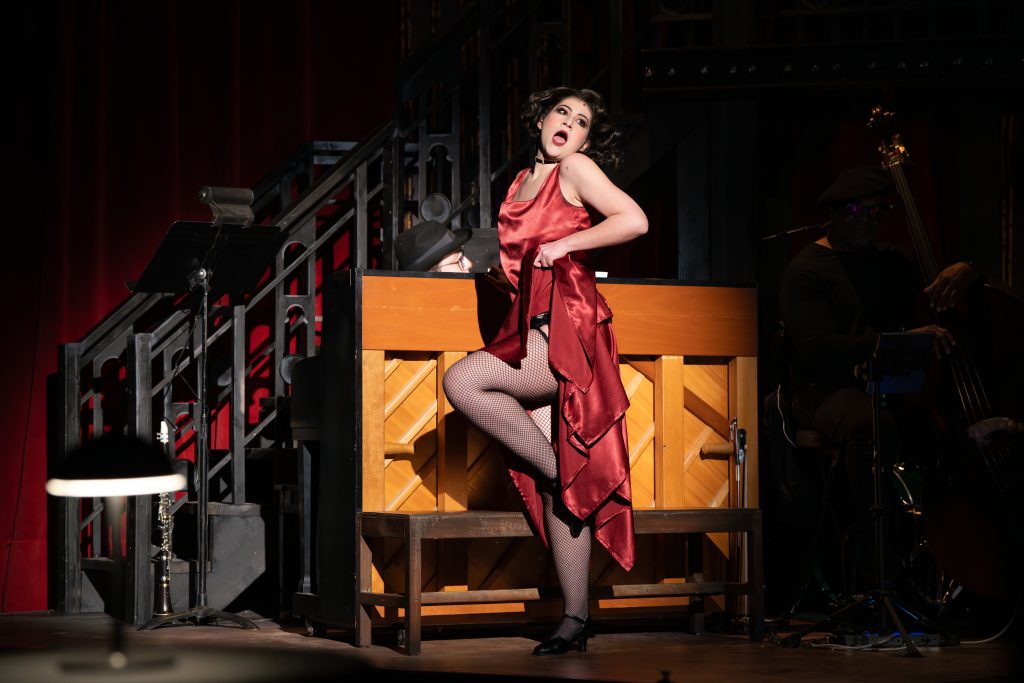
In a smart change of pace, Medrano slows down several classic renditions, boosting their power – the raw, emotional “Maybe This Time” and the title song, aka “Life is a Cabaret” (old chum!) – infused with regret – are both knockouts.

The undercurrent of irony laced with a stinging gut-punch, her anguish seeping through as she breaks. It’s all the more tragic that she chooses to remain oblivious to what’s happening.

Medrano as Sally Bowles. Photo by Jon Gitchoff.

Because Sally is such a confused mess, she is not always sympathetic, but Medrano is alluring when she’s “always on” as Sally Bowles, and tender, for a time, with new love interest Cliff.

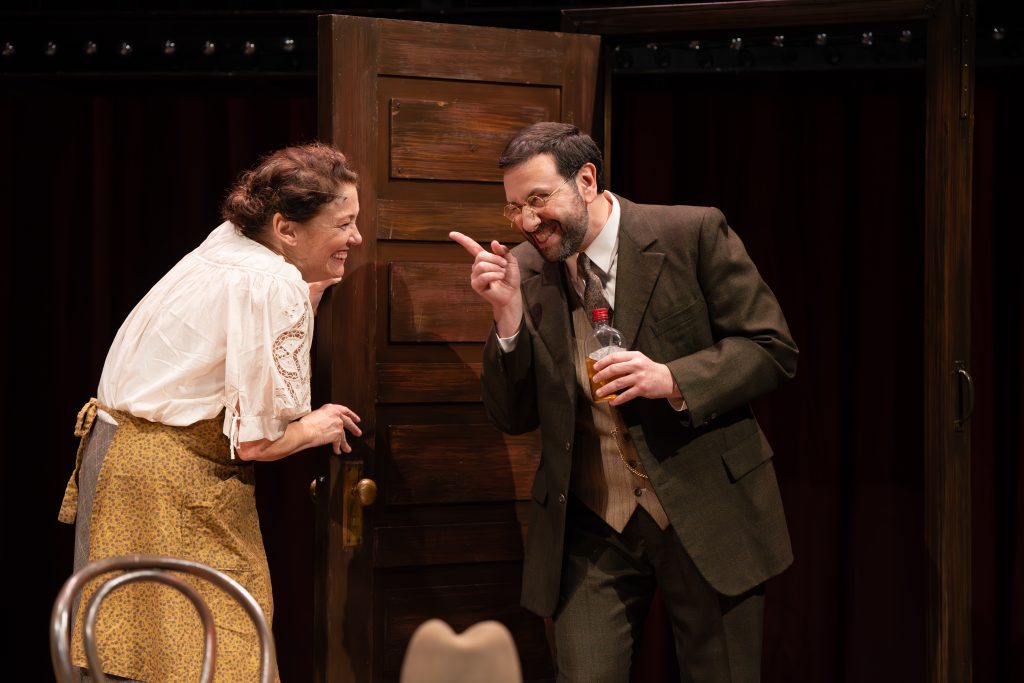
In the show’s most devastating performance, Jane Paradise projects world-weariness but also a yearning she hides with pragmatism. The veteran character actress is known for lived-in portrayals and is often the MVP in any ensemble.

As Fraulein Schneider who discovers late-in-life love, her doomed romance with shy, kind fruit vendor Herr Schultz, played sweetly by Dave Cooperstein, is agonizing, for he is a Jew, and their shared dreams collapse under the weight of current events.

From their joyous duets “The Pineapple Song” and “Married,” to her melancholy “So What” and the tragic “What Would You Do?” are sad reminders of the choices we make and life’s turns, depriving them of even a shred of happiness.

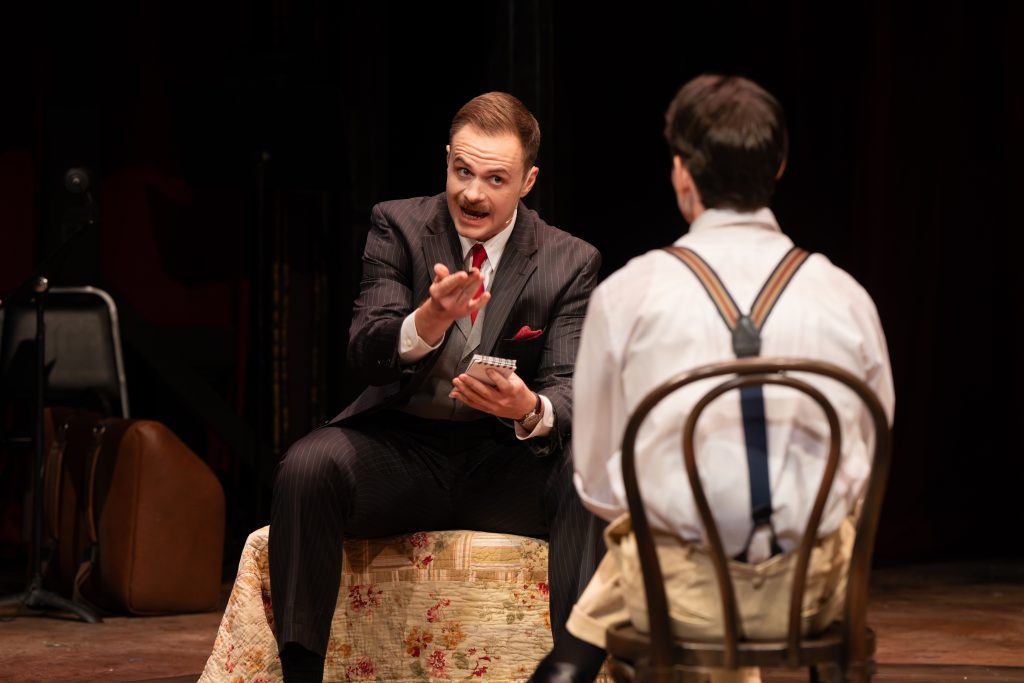
Also standing out is Aaron Fischer as the calculating smuggler Ernst Ludwig, whose growing fervor for the Third Reich is alarming. With an impeccable German accent, Fischer slowly reveals his bigotry. Fischer, fairly new to the professional stage, and splendid in last fall’s “Anastasia: The Musical” at Tesseract Theatre Company, is one of the most exciting performers to keep your eye on.

Aaron Fischer and Petrillo. Photo by Jon Gitchoff.

In fact, John Wilson’s dialect work is superb from all 11 performers. Besides doubling as soldiers and shady characters, the ensemble includes devil-may-care revelers celebrating their hedonistic culture before fear and chaos will grip their world. The nightclub’s naughty boys and girls, and their free-spirited customers live in the moment: Otto Klemp as Bobby, officer, ensemble and on clarinet; Jayson Heil as Victor, Max, ensemble and on violin; Amarachi Kalu as Lulu and on the flute; Caroline Pillow as Fritzie; and Lillian Cooper as Texas and the gorilla.

Costume Designer Michele Friedman Siler expertly incorporated luxurious shiny blacks and reds for the performers, often with torn fishnet stockings, and more middle-class attire for everyone else. Because of doubling characters, costume changes are remarkably smooth.

We won’t forget, we can’t forget the unflinching cautionary tale this enduring musical tells us.

Jane Paradise and Dave Cooperstein. Photo by Jon Gitchoff.

The New Jewish Theatre presents “Cabaret” from March 20 to April 13. Please check for showtimes, as several Wednesday shows have been added as well as an extended run. For mature audiences, the show has adult content. The show runs 2 hours and 15 minutes, with a 15-minute intermission. Performances take place at the SFC Performing Arts Center, 2 Millstone Campus Drive. For more information: jccstl.com. Tickets are available online at newjewishtheatre.org or by phone at 314.442.3283.

NJT’s 2025 Season is generously sponsored by Mary Strauss, with Cabaret receiving additional sponsorship from Stellie Siteman and the Siteman Family Foundation.

Alongside the production, NJT hosts special events that will give the audience a special understanding of the iconic musical:

Saturday, April 5 –The Weimar Republic the Rise of Hitler with Helen Turner

Have a conversation with Helen Turner, Education Director for the St. Louis Kaplan Feldman Holocaust Museum, as she presents information about the Weimar Republic and the real-life historical events that provide the backdrop for Cabaret. This event will take place between the matinee and evening performances on Saturday, April 5. Doors will open at 4:30 with the presentation beginning at 5pm. Light refreshments will be provided. The presentation is free, but reservations are required at https://formstack.io/80312

Photo by Jon Gitchoff.