By Alex McPherson
Brilliantly charting the relationship between locomotive innovation and humanity’s darkest instincts, Polish director Maciej J. Drygas’s “Trains” weaves together hypnotically-edited archival footage that speaks, urgently and incisively, to our current moment.
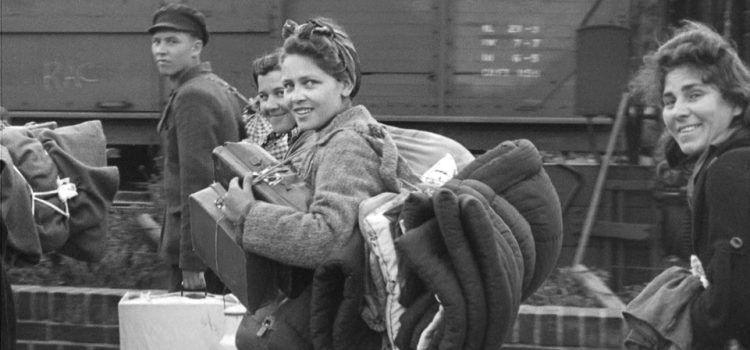
Drygas’s film, a project 10 years in the making that compresses footage from 46 archives from around the world (without narration or voiceover), examines the multifaceted role of the titular machines in Europe during the first half of the 20th Century.
We begin with a rosy quote from forever-optimist Franz Kafka, and are launched into a sequence showing locomotives being assembled in a factory: huge, hulking constructions ominously framed like they’re about to come to life on their own and enact some “Terminator”-esque vengeance.
Drygas then takes us outside to train yards and stations packed with travelers, putting us in the passenger seat as we ride along with them. After showing some soldiers and generals lounging at a rail cafe, the film transitions into the start of World War I, where the machines begin to take on a different life altogether.

Railcars previously filled with ordinary people become vessels for weapons and soldiers traveling to and from battlefields. Initially joyful camaraderie morphs into pain and anguish on trips back home, as soldiers return maimed, disfigured, and mentally shattered from war.
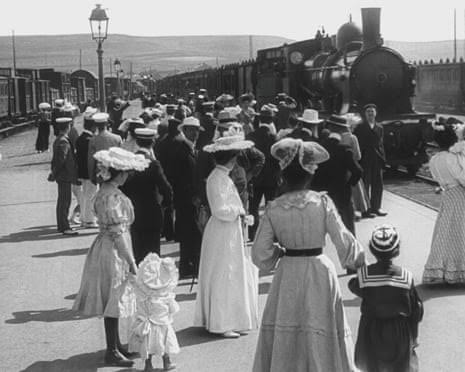
We’re then shown a variety of services available onboard for passengers post World War I — elaborate meals, fashion shows, film screenings featuring Charlie Chaplin — before shifting gears into the rise of Adolf Hitler and the horrific machinery of World War II.
History continues to repeat itself even as technology “advances,” with Drygas zeroing in on the repetitive, seemingly inevitable ways we corrupt it for inhumane yet, also, very human, means.
Drygas’s film is full of imagery both beautiful and horrific, woven together with an astonishing soundscape and a sense of moving forward while being trapped in place, at the mercy of impulses seemingly beyond societal control. Despite Drygas’s bleak views on humanity, though, “Trains” is a completely fascinating watch.
The film lulls one into a rapt daze through its rhythmic, cyclical structure before shocking and sobering with editing that turns its subjects into symbols of humanity in general, with trains as the engine powering them.
It’s less a history lesson than a eulogy for “progress,” speaking volumes through the power of its footage alone. That’s not to say that “Trains” is quiet in the “silent film” sense. Drygas, editor Rafal Listopad, sound designer Saulius Urbanavićius, and composer Pawel Szymanski give voice to the trains themselves — clanking and grinding and droning groans (added via impressive foley work) mixing with a score that maintains a pervasive ambient dread, at times conjuring a feeling of wading through molasses as we zoom along winding tracks through bustling cities and ravaged battlegrounds.
In one outstanding sequence early on, we observe soldiers doing drills with each of their movements synced with hisses of steam and turns of pistons, like they’re almost one and the same. “Trains” is chock-full of these juxtapositions, equally as incisive when mixing together moments of comfort and luxury with horror.
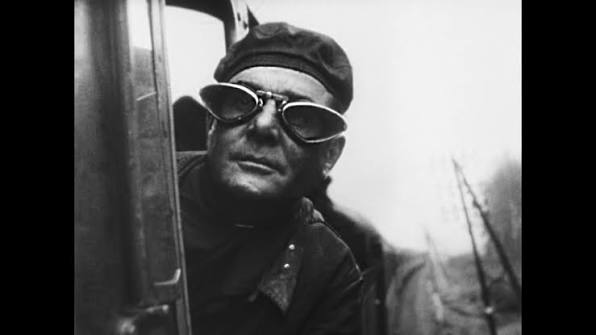
The footage itself — sourced from educational programs, private collections, and historical films — is remarkable, especially in how Drygas and Listopad select certain faces to highlight: nameless souls who, by the final minutes, carry the weight and trauma of what the wars have wrought, as “Trains” becomes further abstracted.
The film also doesn’t shy away from the grim reality of the Holocaust — train cars full of victims are filmed unflinchingly; at one point the screen visibly shakes with sadness and rage.
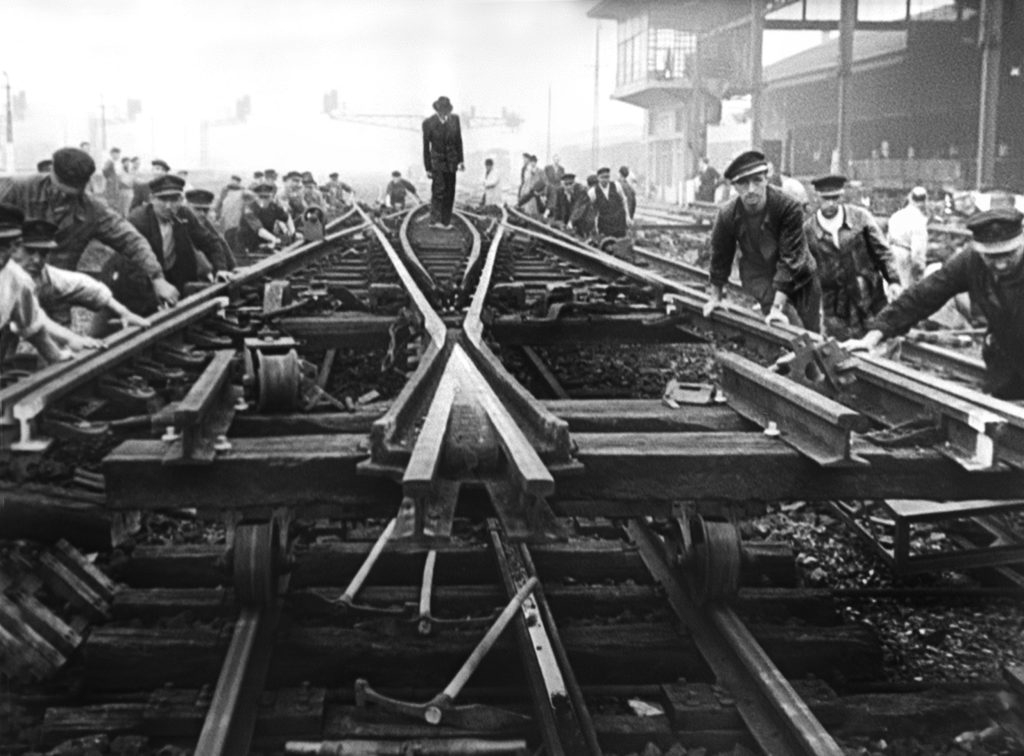
So, no, “Trains” doesn’t inspire much faith in the human race to harness technology for “good.” But neither does it fully condemn us. The branching, crisscrossing paths shown in its final shots show potential futures we can head down — particularly trenchant in this age of AI. Will we regress once again, or forge new paths forward?
As both a narrative and audiovisual experience, “Trains” is an essential watch, especially on the big screen.
“Trains” is a 2024 documentary by Polish director Maciej Drygas. It has a runtime. It will be shown nightly at 7:30 p.m. on July 24, 25 and 26 at the Webster University Film Series in Winifred Moore Auditorium (Webster Hall, 470 E. Lockwood Ave, Webster Groves, MO 63119. It is being co-presented by the Big Bend Railroad Club. Winner of Best Film and Best Editing at the 2024 International Documentary Film Festival Amsterdam. For more information visit: https://www.webster.edu/film-series/index.php) Alex’s Grade: A+.

Alex McPherson is an unabashed pop culture nerd and a member of the St. Louis Film Critics Association.