By Lynn Venhaus
In contemporary biopics, well-known artists are usually presented in a typical template – rags to riches, bumpy roads and triumphs during a specific period, not spanning womb to tomb, and “Michael” doesn’t stray from that formula.
How this narrative distinguishes itself, in this Jackson family-produced portrait of their singular superstar, is the undeniable impact of his music and the memorable pop culture moments that Michael Jackson was a part of during his brief life. (He died at age 50 on June 25, 2009).
The story of the “King of Pop” begins in the mid-60s in Gary, Indiana, through the Jackson 5 success and their relocation to a family compound, Hayvenhurst, in Encino, Calif., to his breakout solo career, stopping at his “Bad” World Tour in 1988.
As an artistic innovator who redefined music, dance and music videos, he was known as a perfectionist who had a relentless work ethic. That is also shown in “MJ The Musical,” which opened on Broadway in 2022 and continues to tour the country, concentrating on rehearsals for Jackson’s 1992 Dangerous World Tour, and his career pressures.
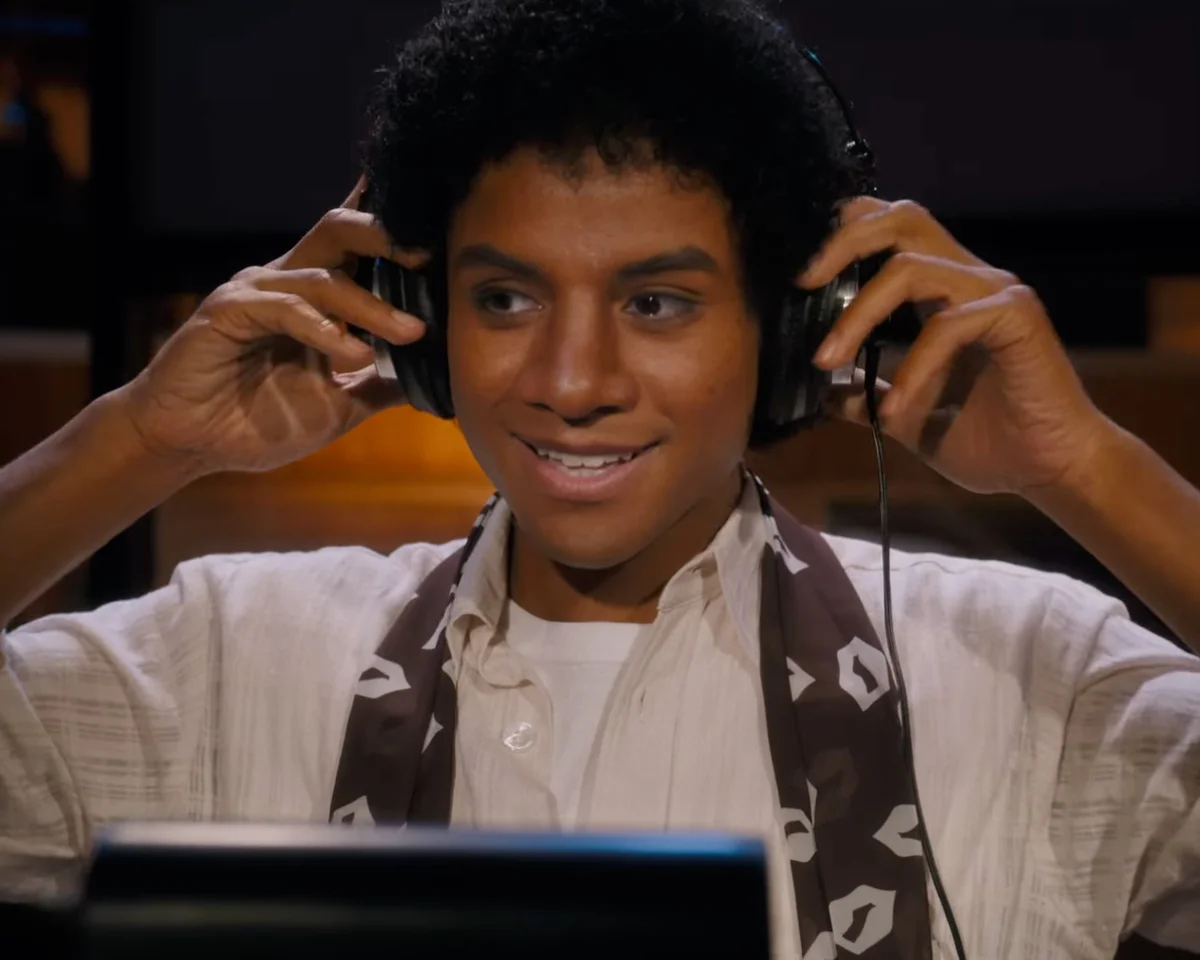
His creative genius and masterful songwriting skills are the major focus of this dramatization, while displaying his painfully shy and sensitive personality. There are glimmers of his compassion (visiting children in hospitals) and humanitarianism (although it doesn’t touch on “We Are the World” or his Heal the World Foundation).
Key moments include meeting Berry Gordy (Larenz Tate) at Motown, and his collaborations with Quincy Jones (Kendrick Sampson) on his first solo album “Off the Wall” in 1979 and then “Thriller” in 1982, which remains the best-selling album of all-time.
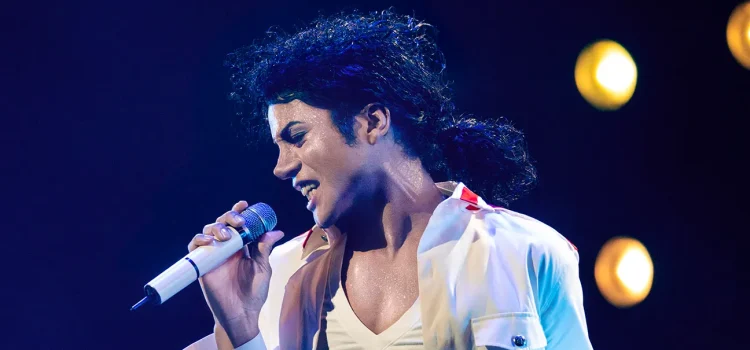
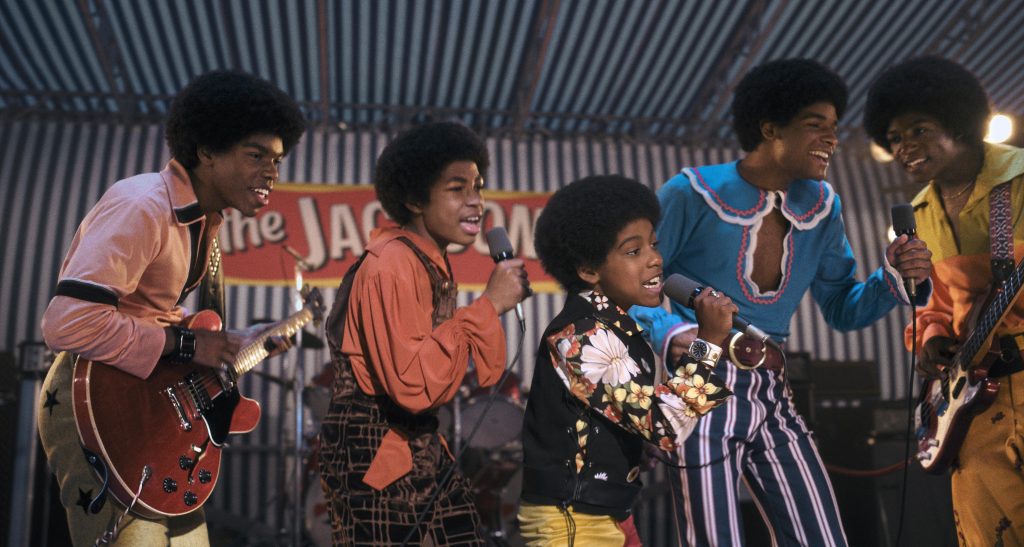
But the film really comes alive during the iconic pop essentials – filming of the landmark “Thriller” video, a choreography rehearsal for “Beat It,” the stunning introduction of his famous “moonwalk” on the Motown 25th anniversary special in 1983, besides his solo and group performances with his brothers Jermaine (Jamal R Henderson), Jackie (Joseph David-Jones), Tito (Rhyan Hill), and Marlon (Tre Horton).
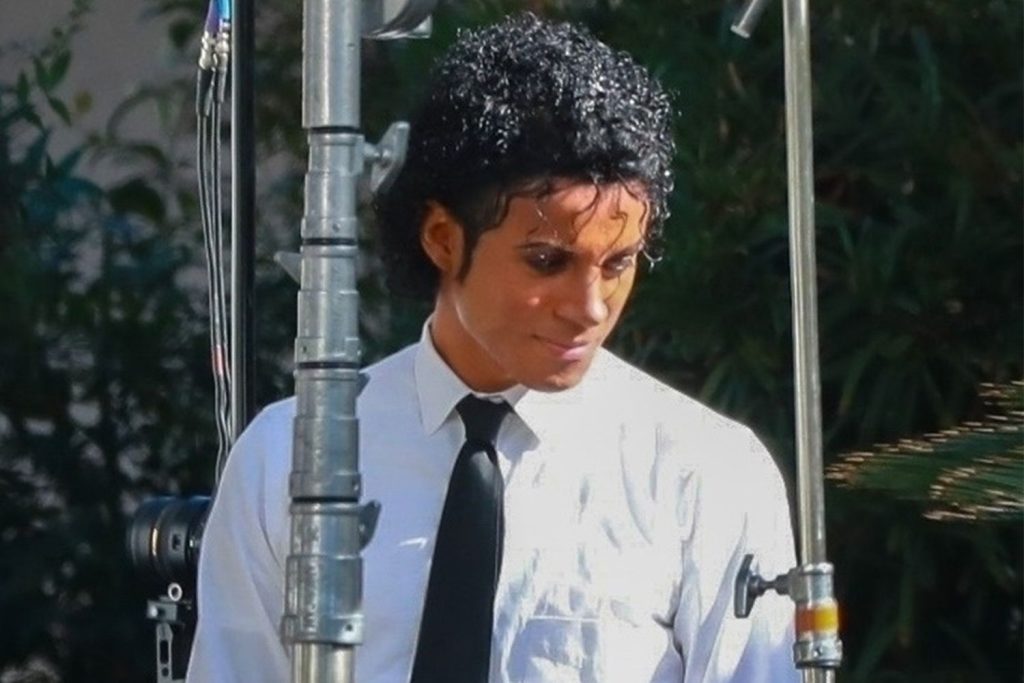
Those scenes bristle with electricity and give the film its heartbeat. Jaafar Jackson, who is Jermaine Jackson’s son and Michael’s nephew, is remarkable in his uncanny portrayal of Michael from his teen years on, while Juliano Krue Valdi portrays him at age 10.
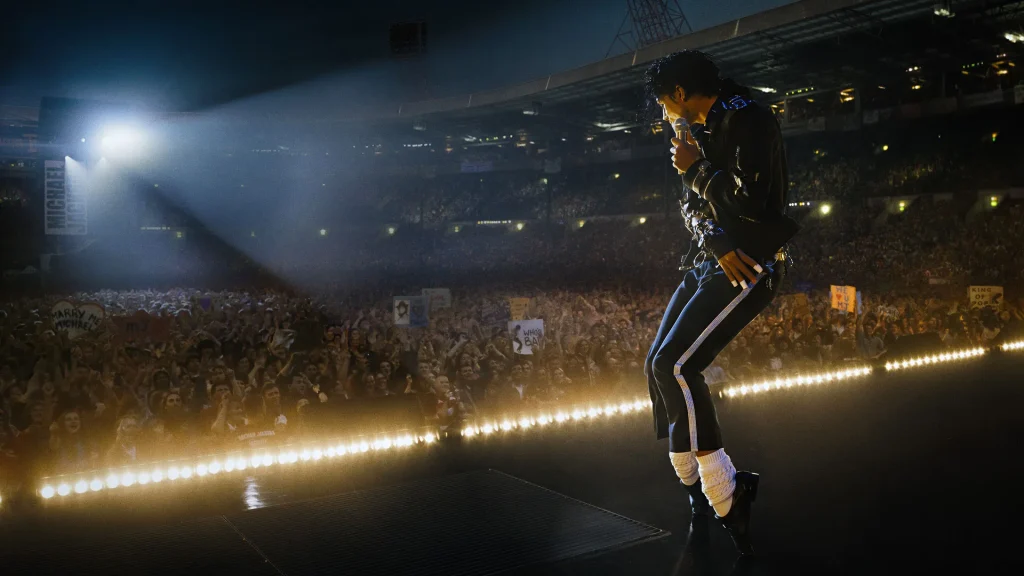
Jaafar has the moves, the speech pattern and the megawatt smile down pat, and Valdi is incandescent as the ebullient child singer fronting the Jackson Five. Suffice it to say he thrived in the spotlight. It’s the real-life stuff he had difficulties with (although it’s only hinted at briefly).
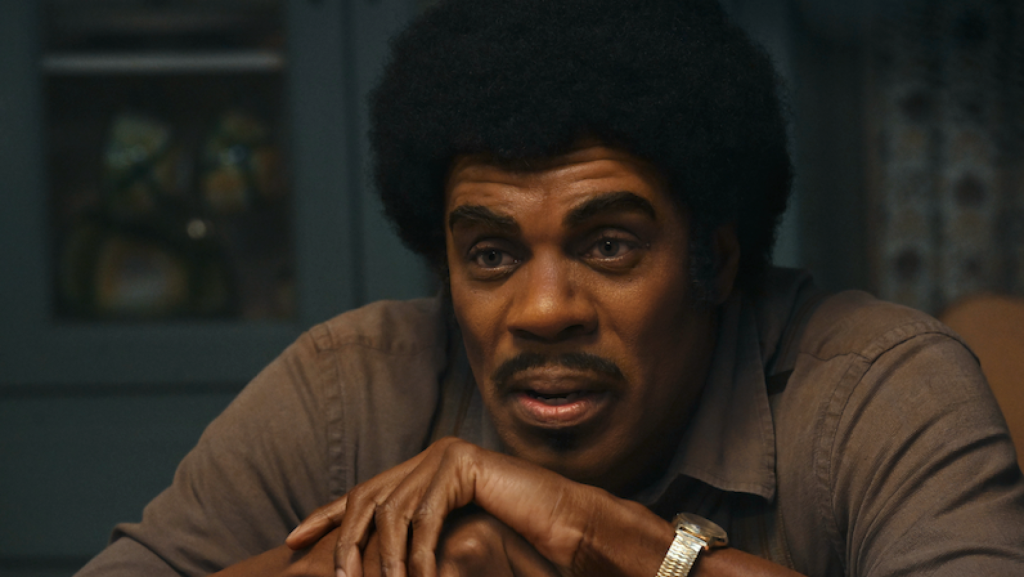
The struggles with his controlling and abusive father Joseph (Colman Domingo) and sweet but passive caretaker mother Katherine (Nia Long) are shown, but the family’s input on this heavily redacted narrative is obvious. After all, the list of producers includes everyone but his sister Janet and his daughter Paris. who did not sign off on this version.
So, you know you are getting a sanitized version of his life. This is the story the family wants to tell, and this is the movie that resulted – 2 hours and 15 minutes, from modest beginnings in Gary, Ind., to stopping at his Bad World Tour at Wembley Stadium the summer of 1988. Supposedly, a second part is in development. (To be continued, a screen says at the end).
If you want juicier details, look elsewhere. But if you want an entertaining slice of life that takes you back to the days when you first heard Michael Jackson and saw his evolution in the music business, those scenes pop with energy and excitement.
Antoine Fuqua, who has directed action movies like “Training Day” and “The Equalizer,” helmed this, and his early career as a music video director is evident. His concert footage is beautifully shot by cinematographer Dion Beebe, who captures the electricity of live performances.
They also recreate the 1984 filming of the Pepsi commercial accident where Michael’s hair caught on fire from pyrotechnics and he suffered second and third degree burns on his scalp. That alludes to taking painkillers, which later caused issues for the star.
Screenwriter John Logan, who has been nominated for three Oscars for writing “Gladiator,” “The Aviator” and “Hugo,” and won the Tony Award for Best Play with “Red” in 2010, knows how to weave a compelling tale about larger-than-life personalities.
Logan also highlights Jackson as a savvy businessman, knowing exactly what he wanted, in meeting scenes with record company executives and managers.
This film was made for his legions of fans, and from the preview audience reaction, this will be a massive crowd-pleaser for those who separate the art from the artist, and is not for the cancel culture.
In quieter life moments, the film touches on Michael’s loneliness as a boy, his retreat into a fantasy life involving Peter Pan, old Hollywood movies, and his big dreams to be the best at what he did as an entertainer. It’s meant to tug at the heartstrings, the perennial man-child dilemma..
Yet, the film shows a loving relationship between Michael and his brothers — even when they’ve grown up and he hasn’t. In their younger days, those roles are played with great zest by Jayden Harville as Jermaine, Jaylen Lyndon Hunter as Marlon, Judah Edwards as Tito, and Nathaniel Logan McIntyre as Jackie, with Amaya Mendoza as a young LaToya.
His eccentricities include housing exotic animals that were a major part of his menagerie, including Bubbles the Chimp (a horrible CGI visual)..
The cast includes Laura Harrier as sharp Motown talent scout and later executive Suzanne de Passe, Jessica Sula as La Toya, KeiLyn Durrel Jones as Michael’s bodyguard/confident Bill Bray, and Miles Teller as lawyer and manager John Branca, who is also credited as a producer. Branca is co-executor of the Michael Jackson Estate.
Mike Myers, who also had a cameo in “Bohemian Rhapsody,” shows up here as CBS Records president Walter Yetnikoff, who puts the squeeze on MTV to play Michael Jackson’s “Billie Jean” in heavy rotation, threatening to pull his artists like Bruce Springsteen, Journey, Billy Joel, and other big names on the label if they didn’t.
While “Michael” is not a documentary or a complete picture, this fictional account encapsulates how Jackson’s talent endures and reminds the audience why they admired his unique four-decade contributions. This is definitely geared to a specific audience who is willing to get lost in the music.
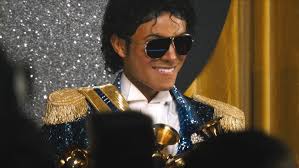
“Michael” is a 2026 music drama biography about the late Michael Jackson, produced by his family and estates. It is directed by Antoine Fuqua and stars Jaafar Jackson, Colman Domingo, Nia Long, Juliano Krue Valdi, Larenz Tate, Kendrick Sampson, KeiLyn Durrel Jones, Ryan Hill, Miles Teller, Mike Myers, Jamal R. Henderson, Joseph David-Jones, Tre Horton, Jessica Sula and Laura Harrier. The film runs 2 hours, 15 minutes and is Rated PG-13 for some thematic material, language, and smoking. It opened in theatres April 24. It became available to rent or purchase Video on Demand on June 9 and DVD on July 14. It began streaming on Starz on Aug. 10. Lynn’s Grade: B

Lynn (Zipfel) Venhaus has had a continuous byline in St. Louis metro region publications since 1978. She writes features and news for Belleville News-Democrat and contributes to St. Louis magazine and other publications.
She is a Rotten Tomatoes-approved film critic, currently reviews films for Webster-Kirkwood Times and KTRS Radio, covers entertainment for PopLifeSTL.com and co-hosts podcast PopLifeSTL.com…Presents.
She is a member of Critics Choice Association, where she serves on the women’s and marketing committees; Alliance of Women Film Journalists; and on the board of the St. Louis Film Critics Association. She is a founding and board member of the St. Louis Theater Circle.
She is retired from teaching journalism/media as an adjunct college instructor.