By Alex McPherson

Bringing to mind a range of influences including “The Wages of Fear,” but never fully capitalizing on the intensity of its premise, director Padraic McKinley’s debut feature “The Weight” is a solid, if underwhelming, adventure that gives Ethan Hawke yet another opportunity to flex his acting chops.

Taking place in Oregon in 1933 amid the throes of the Great Depression, battle-scarred World War 1 veteran Samuel Murphy (Hawke) and his young daughter Penny (Avy Berry) are struggling to make ends meet. Murphy is a deeply devoted father who, despite his traumatic past, is gentle and tender with Penny, helping her mature in a world that forces her to grow up way too quickly. 

Murphy is evicted from his dingy apartment and, to make matters worse, is beaten up by a squad of corrupt cops in self-defense. They promptly take him to prison and he’s sent off to a work camp led by the arrogant yet charismatic Warden Clancy (Russell Crowe) to build roads. 

Murphy — quiet, introspective, highly resourceful, and possessing a superhuman ability to withstand pain — sparks up a strange rapport with Clancy. Clancy gives Murphy the opportunity for an early release, and the chance to reunite with Penny before she’s adopted, if Murphy helps haul a fortune of gold bars from a nearby mine across the Oregonian wilderness (avoiding confiscation by FDR’s government).
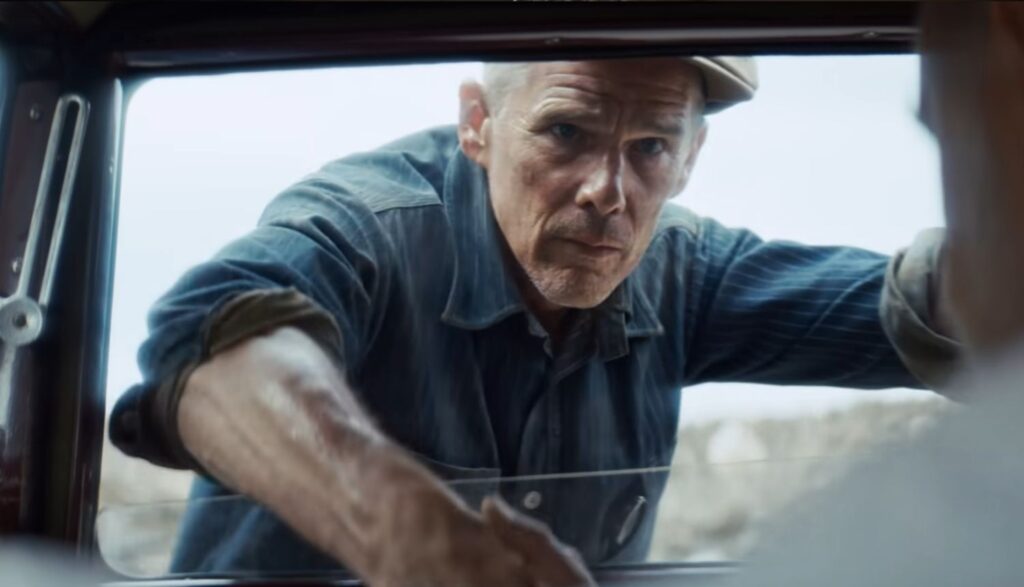
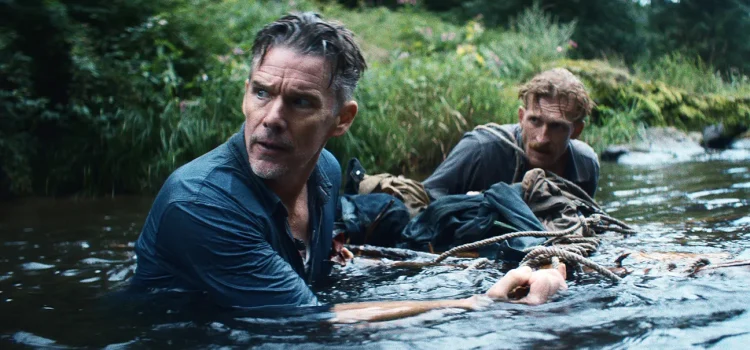
Ethan Hawke in “The Weight.”

Murphy agrees to the job, bringing along fellow convicts Singh (Avi Nash), Olson (Lucas Lynggaard Tonnesen), and the boisterous, unpredictable Rankin (Austin Amelio). They’re accompanied by tough-guy enforcers Amis (Sam Hazeldine) and Letender (George Burgess) who were hired by shady lawman Taggart (Alec Newman) to keep the men in line and make sure all the gold makes it to the drop-off point. The group is soon joined by Anna (Julia Jones), an Indigenous woman seeking her own freedom.

Danger, both from the natural world and from their fellow men, plagues the journey, pushing Murphy to his limits as he fights to complete the trek and, ultimately, to reunite with his dear Penny before it’s too late.

It’s a gritty, pulpy yarn, full of high peril and (mostly expected) double-crosses peppered with crackling dialogue and a badass protagonist using a “particular set of skills” to achieve his goals. “The Weight” is also muddled, clunkily paced, and only fitfully containing the armrest-gripping moments that define its throwback inspirations.

But what’s here remains greatly helped by Hawke’s performance, full of pain and grim determination that balances McKinley’s film through its clumsier stretches.
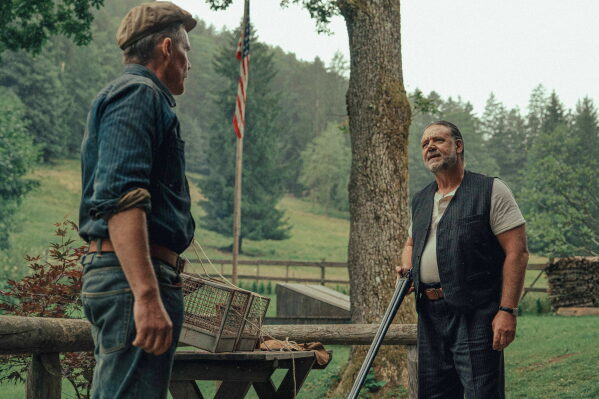
Ethan Hawke, Russell Crowe.

Hawke once again proves his versatility as a performer, coming off his Oscar nominated turn in Richard Linklater’s “Blue Moon.” Although Matthew Booi and Shelby Gaines’ screenplay generally paints in broad strokes without truly digging into any individual character’s psyche, Murphy’s rage and deep resolve is palpably conveyed.

Hawke plays Murphy as a semi action hero who becomes the de-facto leader of the group. His portrayal, full of solemn stares, gruff one-liners, and often quiet anguish (albeit not so subdued when he eventually goes off the chain) brings more to the table for Murphy as a character than the actual script does. 

Indeed, it’s clear that “The Weight” isn’t trying to be a profound character piece so much as an old school experience that, by the time its “frontier justice” climax rolls around, prioritizes crowd-pleasing catharsis over making a strong statement about anything in particular. 

The set-pieces — especially a hair-raising sequence involving a barely-held-together rope bridge and a fatal nighttime ambush lit by flashes of lightning — are well-helmed by cinematographer Matteo Cocco. He tightens the framing to ratchet up feeling, which jolts the film out of its otherwise rudimentary editing and shot compositions.
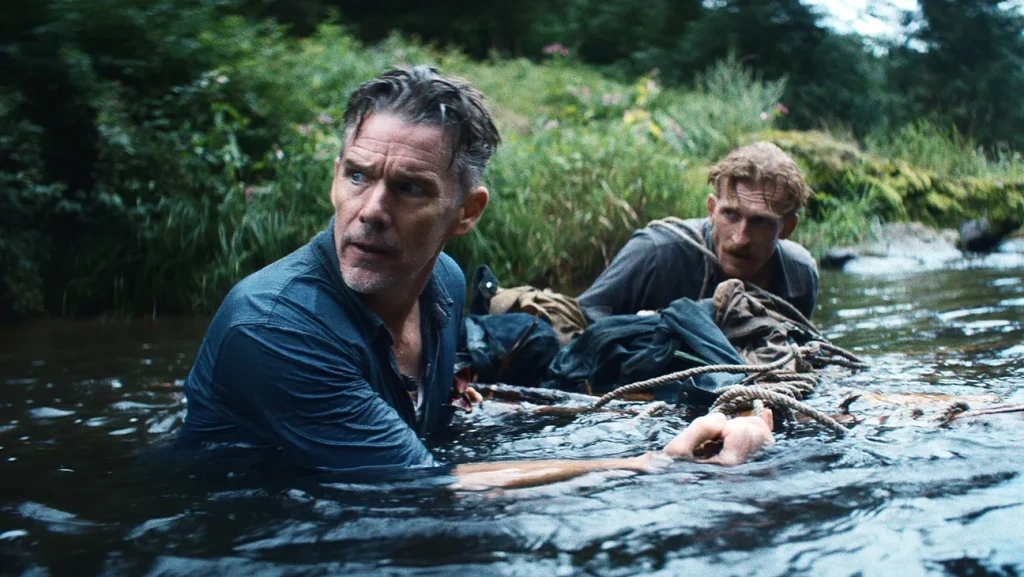
Austin Amelio, at right, with Ethan Hawke.

There are several sequences of convincingly gnarly brutality, as well as a strong attention to period detail that shines when McKinley lets us sit in the quieter moments.

The screenplay, particularly during conversations between Clancy and Murphy (Crowe is underutilized), hisses with enjoyably cynical energy. Amelio is also great as the erratic yet good-hearted Rankin; he’s given far more to do than the majority of the supporting characters, who mostly function as cogs moving the plot from Point A to Point B. 

There are attempts to bring in social issues — like economic inequality, racism, the treatment of Indigenous peoples, burgeoning political movements of the time — but they don’t add up to much besides scene-setting, given McKinley’s preference for more traditional thrills.

Uneven pacing and structural issues limit this approach, though, with McKinley and Woolley’s editing distractingly holding shots for just a beat too long. The film’s segmented, time-jump-heavy structure also weirdly undermines the grueling nature of the journey.
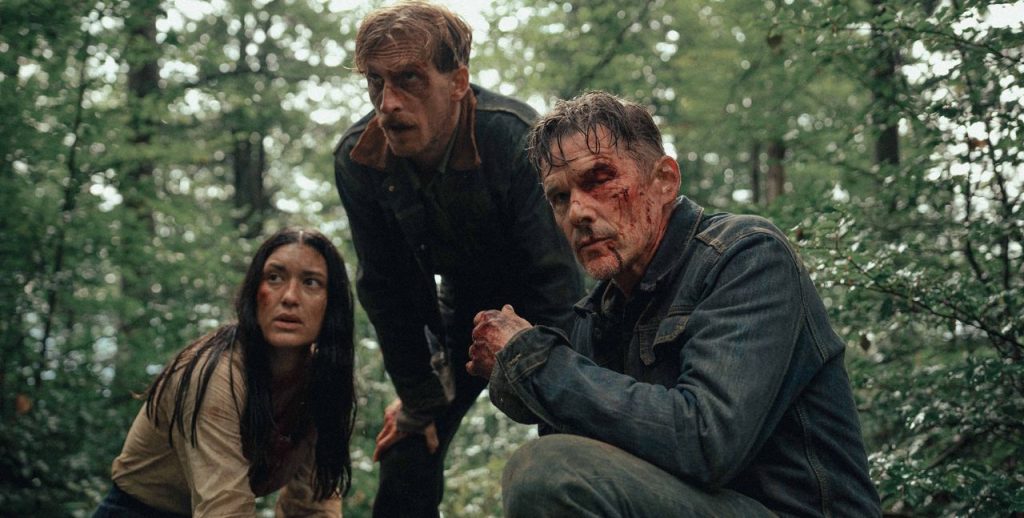
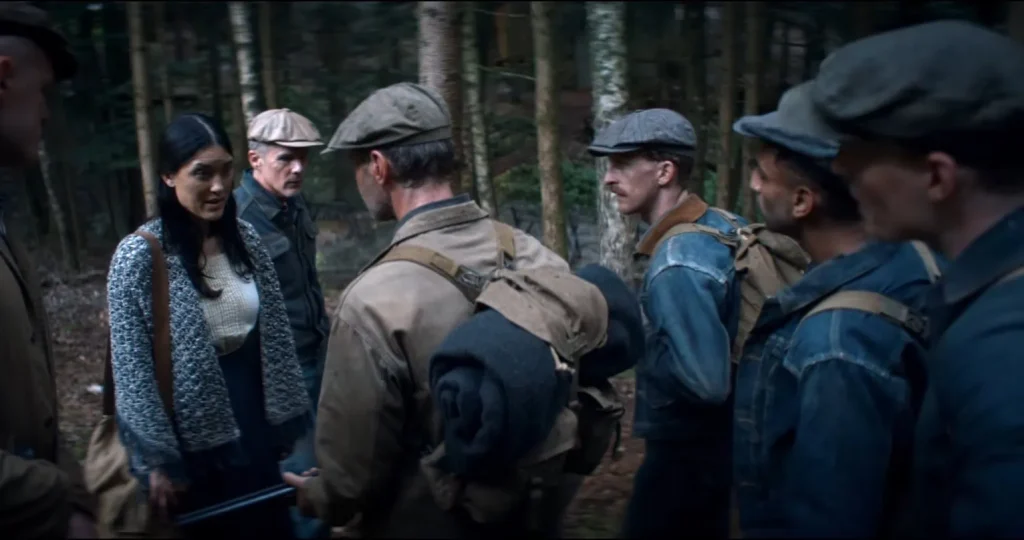
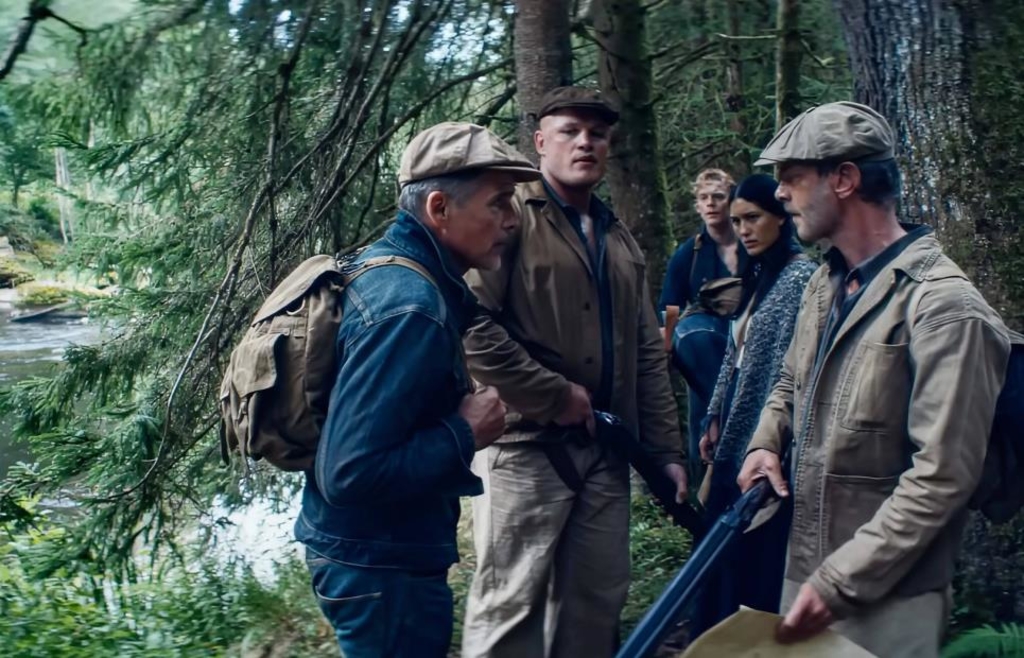
Julia Jones, Amelio and Hawke.

It’s a shame that “The Weight” never quite finds its footing, but there are flashes of excitement here, and another role for Hawke that’s almost worth the price of admission on its own.

“The Weight” is a 2026 crime-action period drama directed by Padraic McKinley and starring Ethan Hawke, Russell Crowe, Austin Amelio, Avi Nash, Julia Jones, Lucus Lynggaard Tonnesen, Avy Berry, Sam Hazeldine, George Burgess and Alec Newman. The runtime is 1 hour, 55 minutes, and it’s rated R for language and some violence/bloody images. It opens in theaters Sept. 18. Alex’s Grade: B-

By Lynn Venhaus

A grueling and gritty crime-action drama set during the 1930s, “The Weight” benefits from a superb Ethan Hawke performance – both physically and emotionally – with a sly turn from Russell Crowe as a cagey opportunist.

Reminiscent of survival-driven suspense movies like ‘70s throwbacks “Deliverance” in the South and William Friedkin’s “Sorcerer” in South America, and more recently, Spike Lee’s “Da Five Bloods” in Vietnam, this is a slow-burn tale about tough people in tough times involving a heist scheme.

Four years into the Great Depression, Samuel Murphy (Ethan Hawke), a battle-scarred veteran of World War I and single father, is an honorable man of few words but strong in love for his young daughter Penny (an adorable Avy Berry). His mechanical and military skills barely keep them afloat, and they are evicted from their apartment.

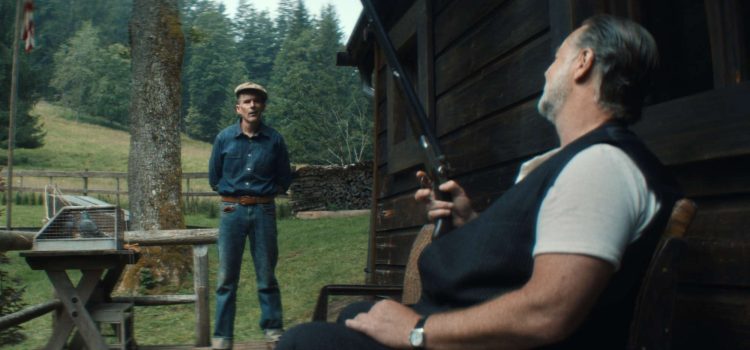
While they seek an affordable place to live, he scuffles with corrupt cops, in self-defense, but he’s sent to prison. Working on a road gang, the resourceful Murphy catches the eye of shady warden Clancy — Crowe in fine form — who offers him a deal: early release for hauling a fortune in stolen gold bars across 100 miles of wilderness. If he doesn’t, Penny may be adopted by the time he gets out.

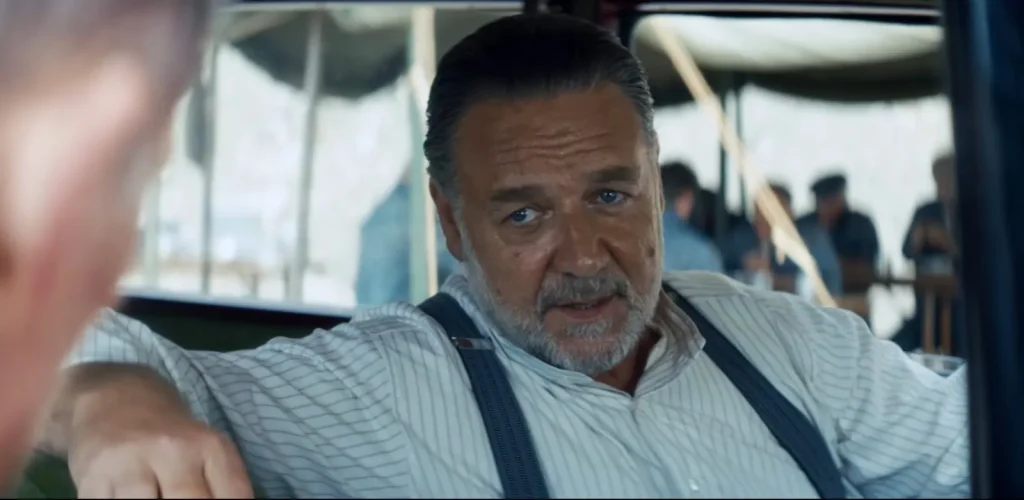
Russell Crowe is the unscrupulous warden Clancy.

Why the secret assignment? Another crooked lawman, Taggert (Alec Newman), has concocted a way to transport gold, because FDR is shutting mines down to use the gold for the federal government. What’s a half ton of gold bricks conveniently taken when no one’s looking? The weighty loads are to be dropped off at a pickup point, then Clancy will sign their release papers. What could go wrong?

Hawke does the heavy lifting here as a smart problem-solver who becomes the de facto leader of the prison workers, enlisting his fellow convicts Singh (Avi Nash), Olson (Lucus Lynggaard Tonnesen), and sketchy Rankin (Austin Amelio) as part of the courier crew. These downtrodden guys evoke the dire depressive times, and you feel their desperation and pain. And they’re wary of each other.

Padraic McKinley, who is making his feature film debut as a director, has worked as a producer and editor before, including the 2020 TV limited series “The Good Lord Bird,” featuring Hawke, and in the 2019 TV limited series “The Loudest Voice,” with Crowe as Roger Ailes.

McKinley takes his time setting up the mission, and there are uneven pacing issues throughout. The story itself is compelling – although not as satisfying as it could have been. Co-writers Matthew Booi, Shelby Gaines and Leo Scherman build tension and relationships through the endangered men.

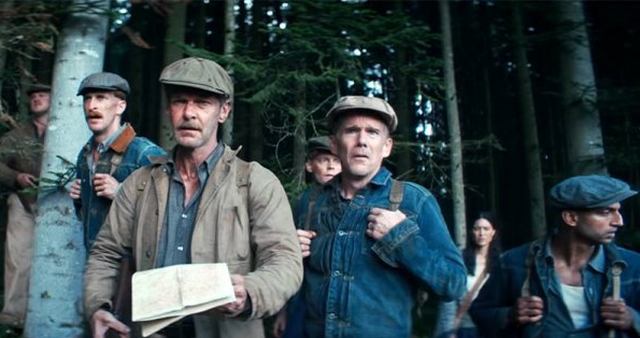
Guard Sam Hazeldine leads the prisoners through the rugged terrain.

The six-day journey, under the watchful eye of compromised gun-toting prison guards Amis (Sam Hazeldine) and thuggish Letender (George Burgess) is arduous – physically demanding and nerve-wracking.

Nature is hazardous enough, but a rickety bridge over a deep gorge, a harrowing shootout with locals, and a perilous river crossing ratchets up the intensity. That leads to stronger bonds with these scrappy guys. Actors Amelio and Nash, both veterans of “The Walking Dead,” eventually become helpful partners.

Along the way they meet Anna (Julia Jones), an Indigenous woman who has escaped from a cruel situation. She is enlisted to cook and help them navigate the rough terrain, becoming their secret weapon multiple times despite some degrading treatment. Even though her part is slim, Jones shows how Anna can hold her own in a white man’s world.

As Murphy faces every setback as a challenge to the freedom endgame, Hawke, 55, grounds the film with his integrity and desire to get back to his daughter. Oscar acting nominee for “Training Day,” “Boyhood” and “Blue Moon,” he continues to show his diverse range and versatility among genres. Acting since he was 14, his physicality here is remarkable and his emotional journey is telegraphed naturally. His weathered, bruised and battered face tells you everything.

Julia Jones is an escaped native woman Anna.

Cinematographer Matteo Cocco vividly captures the Pacific Northwest while composers Latham Gaines, along with his brother and co-screenwriter Shelby Gaines, enhance the atmosphere with an industrial score, especially as the suspense tightens. Both costume designer Esther Walz and production designer Cora Pratz impeccably depict the period.

The film premiered at this year’s earlier Sundance Film Festival. Its final act is thrilling, so much so that it almost makes up for the story’s shortcomings. But it’s Hawke’s standout performance that will linger long after “The Weight” ends.

“The Weight” is a 2026 crime-action period drama directed by Padraic McKinley and starring Ethan Hawke, Russell Crowe, Austin Amelio, Avi Nash, Julia Jones, Lucus Lynggaard Tonnesen, Avy Berry, Sam Hazeldine, George Burgess and Alec Newman. The runtime is 1 hour, 55 minutes, and it’s rated R for language and some violence/bloody images. It opens in theaters Sept. 18. Lynn’s Grade: B-

Ethan Hawke suggests an idea to the guards.

=

By Lynn Venhaus

English philosopher R.G. Collingwood said, “The only clue to what man can do is what man has done.”

That is the direction this historical drama takes as it revisits the Nuremberg trials but delves more into a psychological perspective on what led the Third Reich to invade other countries and commit Holocaust atrocities, overseeing the extermination of 6 million Jews.

Based on the 2013 non-fiction book, “The Nazi and the Psychiatrist” by Jack El-Hai, writer-director James Vanderbilt looks back through a modern lens to send an urgent message about justice, intolerance, and cruelty to contemporary audiences.

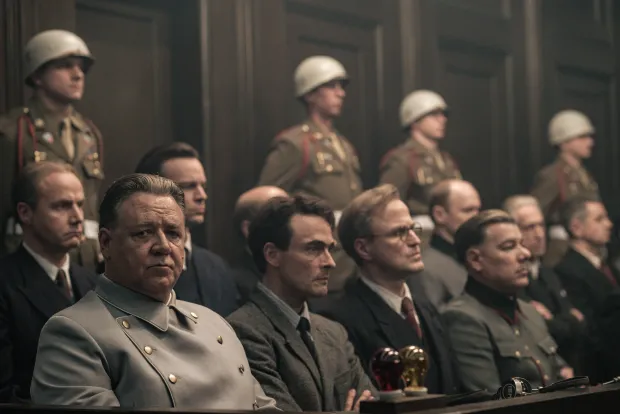
The Nazi regime had their day in court during the main Nuremberg trials, held between Nov. 20, 1945, and Oct. 1, 1946. Beforehand, the Allies prepared to unveil the horrors for the world to hear as they wanted the highest-ranking officials to answer for their war crimes.

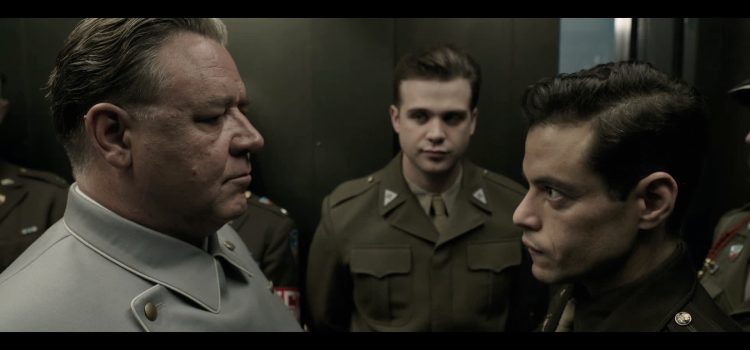
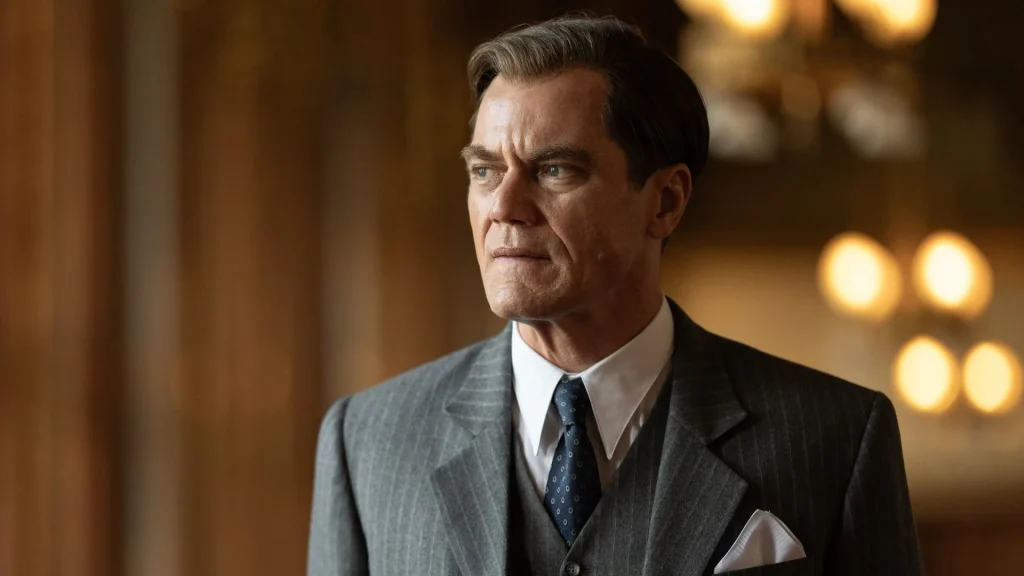
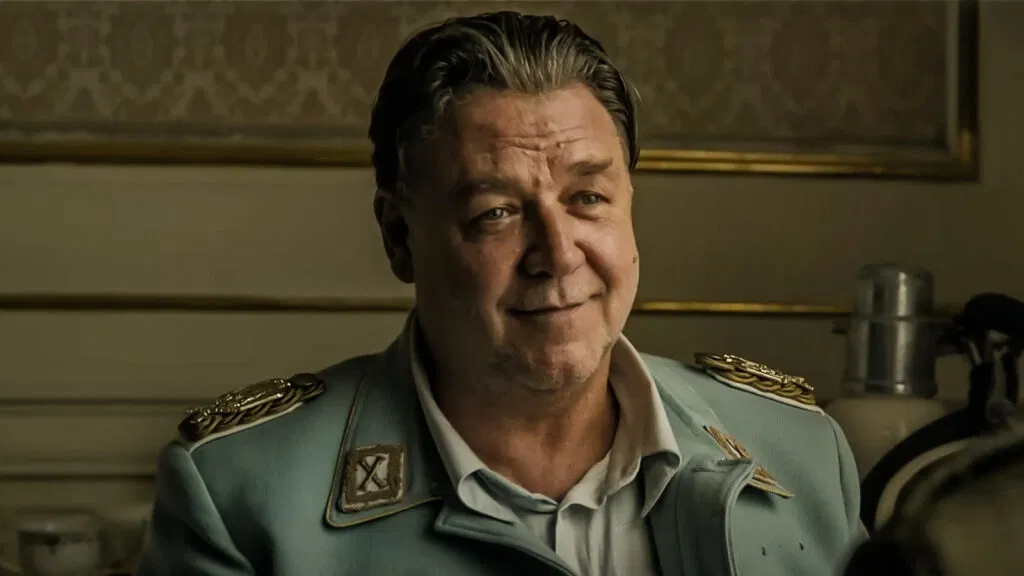
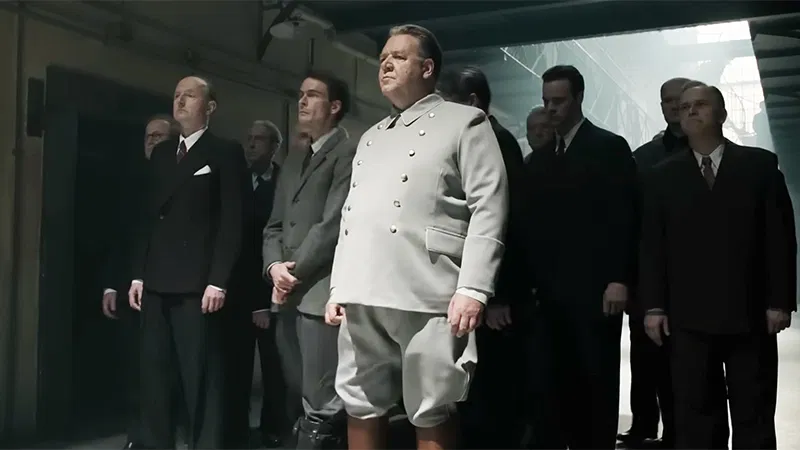
The chief prosecutor, Robert H. Jackson (Michael Shannon) wants to expose evil. Army psychiatrist Lt. Col. Douglas Kelley (Rami Malek) attempts to understand their complex psyches, and front and center is Hermann Goering (Russell Crowe), Hitler’s right-hand man.

Leading the legal team, ever-reliable Shannon portrays Jackson, who worked diligently to bring 12 members of the Nazi High Command to trial for war crimes.

While others just wanted to put the war in the rear-view mirror, and favored executing those responsible for the genocide, Jackson wanted the world to see and hear what they had done. He was responsible for this international tribunal that involved the U.S., England, France and the Soviet Union, the first of its kind.

Jackson, later a Supreme Court justice, didn’t want these ‘monsters’ to become martyrs upon their deaths. His instincts were correct, but the proceedings were not smooth because this was new territory.

How do you define evil? Oscar winner Malek stars as dedicated Kelley, an Army mental health professional tasked with analyzing Hitler’s henchmen. His methods come under fire as he appears to be sympathetic to the prisoners.

He was attempting to build trust. But really, who is trying to outmaneuver whom? It becomes mainly a cat-and-mouse mind game with malevolent Goering, not unlike Jodie Foster and Anthony Hopkins in “The Silence of the Lambs.”

Goering was second in command to Hitler, engineering the horrors of what transpired without any remorse. At the time of this trial, he was the highest-ranking Nazi still alive. (Rudolph Hess is also a fellow prisoner).

Kelley wrote a personal account in his book, “22 Cells in Nuremberg,” but the movie indicates his fall from grace, so he’s been historically ignored, until now. His book’s final chapter is a cautionary tale about how he could see the mindset of pre-World War II Germany happening in the United States.

For those who don’t believe the Holocaust happened, this film won’t let anyone forget. The stakes, past and present, should remain in the forefront.

The chess-like match between the men, especially with Oscar winner Crowe in full command, is fascinating. However the account is fictionalized, Crowe is back to displaying the power he had in his prime, igniting the screen as the cagey, cunning and diabolical Goering.

With his keen intelligence and massive ego, narcissist Goering believed he could justify his actions on this global stage, and it’s chilling to see it unfold.

The 1961 classic Oscar-nominated film “Judgment at Nuremberg,” directed by Stanley Kramer, was mostly a courtroom drama while the current film spends more time behind the scenes on the dangers of unchecked malice.

While this 2-hour, 30-minute film gets ham-fisted in its editing and bogged down in its cumbersome narrative that makes its points repeatedly, the performances are uniformly strong.

Standouts include Leo Woodall as interpreter Sgt. Howie Triest, John Slattery as Col. Burton C. Andrus, who oversaw the prison, and Richard E. Grant as Sir David Maxwell-Fyfe, who is a British co-counselor.

The film’s other strengths include period-accurate designs – production (Eve Stewart), costume (Bartholomew Cariss) – as well as cinematographer Dariusz Wolski’s interiors in ​the secret military prison and​ German homes.

The most powerful scene is what was shown at the trial 80 years ago, the same disturbing archival footage of skeletal victims at work camps being bulldozed into their graves. The six gut-wrenching minutes are from the 1945 “Nazi Concentration and Prison Camps,” which was partially shot by director John Ford and included in George Stevens’ 52-minute film.

This footage showed the world what really happened, what these Nazi leaders were capable of, and that they must be punished for their crimes.

​N​ot just a reminder of the past, the film​s​ ​strives to be clear that the prevention and proliferation of evil is always necessary. One recalls Edmund Burke’s famous quotation: “The only thing necessary for the triumph of evil is for good men to do nothing.”

Triest, the German-born translator, says at one point: “Do you know why it happened here? Because people let it happen.”

While the film doesn’t reveal anything new, it is committed to being a clarion call. People have been quoting philosopher George Santayana a lot these days — “Those who cannot remember the past are condemned to repeat it,” from his “The Life of Reason” in 1905.

The fact that we must be nudged out of complacency and realize the consequences on a global stage is the reason that films like “Nuremberg” are made.

“Nuremberg” is a 2025 historical drama written and directed by James Vanderbilt and starring Russell Crowe, Rami Malek, Michael Shannon, John Slattery, Leo Woodall and Richard E. Grant. It is Rated PG-13 for violent content involving the Holocaust, strong disturbing images, suicide, some language, smoking and brief drug content and the runtime is 2 hours, 28 minutes. It opened in theatres Nov. 7. Lynn’s Grade: B.

By Lynn Venhaus
Dumbfounded, I can’t recall a recent movie that is as tone-deaf as “The Greatest Beer Run Ever.”

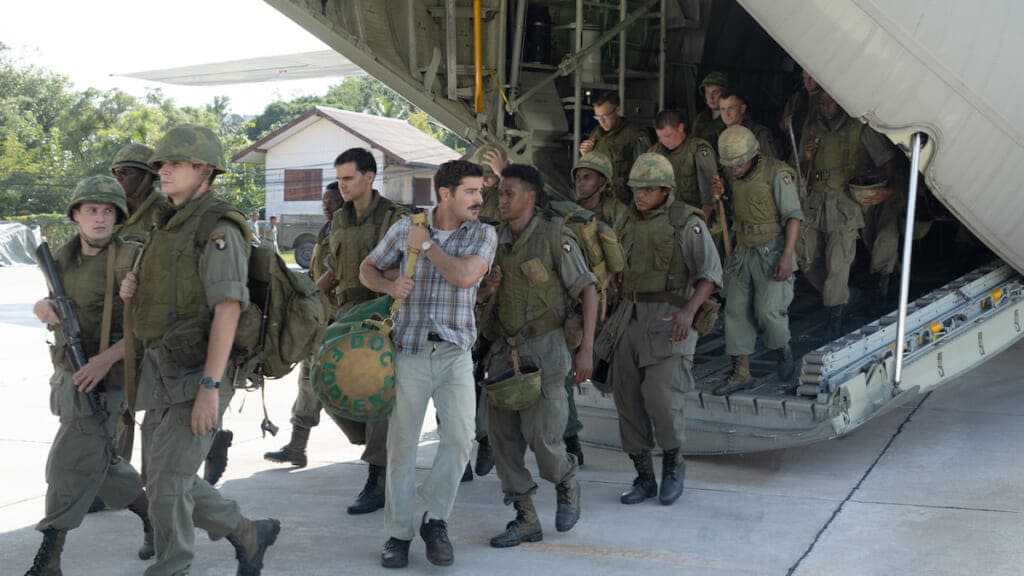
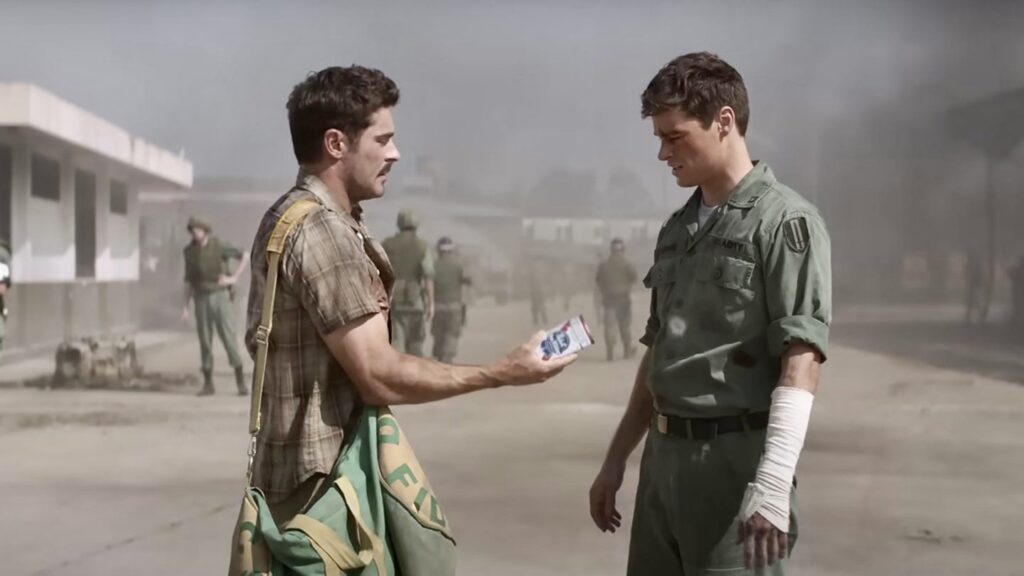
In 1967, John “Chickie” Donohue decides to track down his friends fighting in Vietnam and honor them with a Pabst Blue Ribbon for their service. When the pro-war Merchant Marine is confronted with the horrors of the conflict, he sees that the ‘real’ chaos is different than the ‘public relations’ portrait the powers-at-be are giving to the American people.

Director Peter Farrelly has followed up his Oscar-winning crowd-pleaser “Green Book” with another true story, although this one is harder to make palatable. Somehow, pairing a harrowing war drama with comedic elements doesn’t work, getting more head-scratching as it unfolds in 2 hours, 6 minutes.

This isn’t “M*A*S*H,” not even close. It is also a war depiction that we have seen multiple times, and with a much better story, although I don’t think I’ve ever seen such a dunderheaded protagonist.

Merchant Marine and world-class slacker John “Chickie” Donohue lives in Inwood, a working-class enclave in northern Manhattan. Without thinking, he agrees to a scheme suggested by bar owner “The Colonel,” a World War II veteran played by Bill Murray.

The bar crowd at Doc Fiddler’s Tavern is pro-war, this being early in the escalation, and everyone’s dad or grandad fought in World War II, aka “The Good War.”

So, when The Colonel says he’d like to send the guys serving in ‘Nam a beer to thank them for their service, Chickie volunteers: “I could do that.”

Well, nobody thinks he can, so he doubles-down. Zac Efron’s grown on me as an actor, but he can’t make such an idiot, with far too much hubris, that likeable. He thinks he will just hitch-hike through enemy territory handing out beers on the front lines.

And when did New York accents sound like Boston Southees?

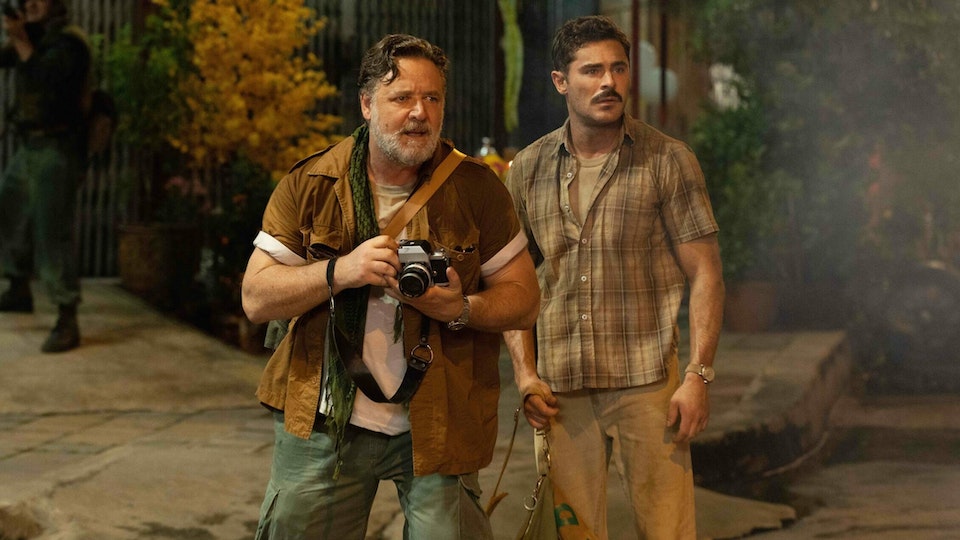
His duffle bag of beer seems to have an unlimited supply of warm, maybe stale, Pabst Blue Ribbon. As Russell Crowe, playing a war correspondent for Look magazine says: “They have beer here,” Chickie retorts “but not American beer!”

(My Uncle Eddie, a career Air Force officer, was at Tuy Hoa Air Base for a year in 1968, and I know they had beer. He wrote letters home talking about the guys unwinding.)

The soldiers from back home don’t exactly know what to think about this gesture. Some are glad to see him, some think its foolhardy to risk life and limb this way.

Because people think no one would be a tourist in a war zone, guys believe he is a CIA operative, so he gets around using military and media guides to help him.

Along the way, he sees intense action. The tail-end of his visit actually coincides with the Tet Offensive. (Another aside – I had a cousin in the Marines who was killed right before Christmas in 1967. I’m sure he would not have appreciated some lunkhead roaming around where he shouldn’t have been. This movie is rather offensive, I would think, to those who served honorably.)

Chicken comes home a changed man because he learns “war is hell.” He’s seen the guys who love the smell of napalm in the morning. Once a hawk, he starts to understand the anti-war sentiment 

Russell Crowe, Zac Efron

So, that’s the takeaway. He has an epiphany that LBJ, General Westmoreland and others in the government are lying about how well the war is going, which the media keeps pointing out to Chickie over bars in Saigon.

Does he deserve a round of applause, a medal? He not only put himself in harm’s way but endangered his buddies too.

He does tell the barflies that the chaos is not like the previous world war, and they should be more skeptical of what the U.S. brass is telling citizens.

At the end, he doesn’t become a peacenik like his sister Christine (Ruby Ashbourne Serkis), who is seen chanting “Hey, hey LBJ, how many kids did you kill today?” earlier, but they come to an understanding.

Chickie’s harsh lesson is a good thing, and he’s endured the loss of several friends, which does tug at your heart strings — especially the flashbacks in which Will Hockmann plays Tommy, questioning if he did the right thing by signing up. He’s one missing in action early on, and it’s sad. 

The other soldiers – just kids – making an impression are Jack Picking as Rick Duggan and Archie Renaux as Tom Collins.

Crowe lends gravitas as the jaded journalist, but he’s been given the “important” task of being the voice of reason – and he’s not in the film that much (neither is Murray).

Farrelly, in an attempt to have lightning strike twice, debuted this at the Toronto International Film Festival, hoping to be in contention for the Audience Award, just like “Green Book” did. Well, it didn’t win – Spielberg’s semi-autobiographical film “The Fablemans” did. 

The only awards I think this film might be considered for would be The Razzies, which honors the “worst.”

Farrelly’s used to success with low-brow humor, such as “Dumb and Dumber” and “There’s Something About Mary,” but in recent years, he’s moved into more ‘prestige’ picks that seem pretentious.

He stages some harrowing action scenes and shows how a jungle climate threw wrenches into things, as in long slithering insects. 

Cinematographer Sean Porter’s work captures the madness that was an Asian country where you couldn’t tell the enemy from the supporters, and the dangers therein.

Just because this is based on a true story doesn’t mean it’s a sympathetic one to tell. There are so many WTH moments that it becomes painful to slog through. For instance, Chickie is riding in a helicopter. Another man is interrogating a Viet Cong operative. He tosses him out the chopper while The Association’s song “Cherish” plays.

Oh, the irony.

Farrelly co-wrote the script with Brian Hayes Currie and Pete Jones, based on the book by Chickie and J.T. Molloy. Did they not see that Chickie should have ‘read the room’ — or themselves?

The soundtrack is chock-full of groovin’ 60s hits, which is a plus when it’s used in context. But not suitable for a montage of dead soldiers in flag-draped coffins. Not sure it all fits or syncs well to the story, but sometimes it’s on the nose, punctuating a bizarre tale.

This buddy movie is a dud, and can’t quite blend the somber with the silly in an effective way.

“The Greatest Beer Run Ever” is a 2022 war drama-comedy directed by Peter Farrelly and starring Zac Efron, Russell Crowe, Bill Murray, Jack Picking and Will Hockmann. Rated R for language and some war violence. It is in theaters Sept. 30 and streaming on Apple TV+. Lynn’s Grade: C-

By Lynn Venhaus
The beguiling “Thor: Love and Thunder” is a sweet love story wrapped in a darker cosmic adventure and draped in Norse god mythology.

This flashy blend of heroics, heart and humor is sometimes too goofy to be taken seriously, but overall is an inspired take from director Taika Waititi, and that is reason enough to spring extra for the IMAX viewing.

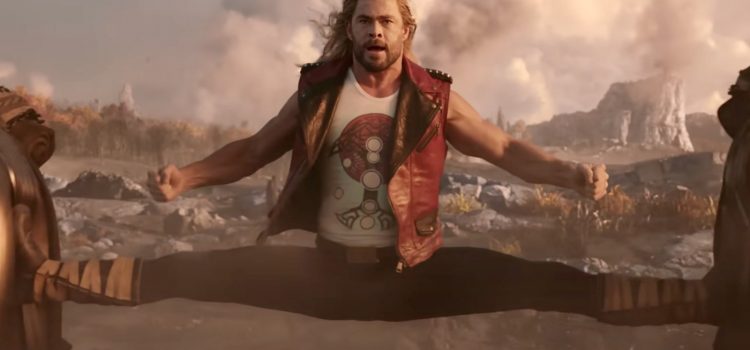
But first and foremost, the enormously appealing Chris Hemsworth is back as the crown prince of Asgard being playful, very physical – and emotional. In the Summer of the Chris’, he might be having the best one (His comrades Chris Evans and Chris Pratt, although, are not being left in the dust).

Hemsworth has now played Thor in four stand-alone installments and in four Avengers films, and has made the role his signature. When we last saw the superhero in “Avengers: Endgame” in 2019, he was having an existential crisis, and Hemworth’s comedic skills were used well.

In this chapter, Thor, interrupted in his retirement, enlists the help of King Valkyrie (Tessa Thompson), Korg (Taika Waititi) and ex-girlfriend Jane Foster (Natalie Portman) to combat the galactic killer Gorr the God Butcher (Christian Bale), who intends to make the gods extinct. To Thor’s surprise, Jane wields his magical hammer, Mjolnir, as the Mighty Thor, and they must join forces to stop Gorr’s vengeance and save the multi-universe.

Picking up where “Avengers: Endgame” left off three years ago, Thor gets back in shape, going from “Dad bod to god bod” — and is shown meddling in the Guardians of the Galaxy’s quests, and hanging out in Asgard as this retired guy content to let the world pass him by. Naturally, duty calls, and so does his ex, astrophysicist Dr. Jane Foster, now battling cancer and wielding the enchanted hammer.

Hemsworth and Natalie Portman have a delightful chemistry together, and their scenes of tussling and reconnecting are sincere and sentimental. They make you believe in them – and care.

And as The Mighty Thor, Portman shows off her physicality. She’s able to meet the demands of the role with ebullience and grace.

Jane Foster (Natalie Portman) as Mighty Thor

Thor, the god of thunder, was turned into comic book gold by writer Stan Lee, scripter Larry Lieber and artist Jack Kirby in 1962, making his debut in Marvel’s “The Silver Age of Comic Books,” and #82 “Journey into Mystery.”

Now, 60 years later, the brawny do-gooder is an indispensable part of the Marvel Cinematic Universe treatments. The Kenneth Branagh-directed one started his story in 2011, followed by “The Dark World” sequel in 2013, then Waititi took over in “Thor: Ragnarok” in 2017 and now “Love and Thunder.”

Hemsworth plays up Thor’s strong, beefy, and boastful qualities, and always seems to let the audience in on the joke.

Multi-hyphenate Waititi, who won an Oscar for best original screenplay for “JoJo Rabbit” in 2020, is known as a writer for his cheeky and brazen humor, and injects a liveliness into his second Thor film, for which he wrote the story and co-wrote the screenplay with Jennifer Kaytin Robinson.

As a director, the New Zealander takes on quirky projects – see “Hunt for the Wilderpeople” for a surprisingly fun adventure – and as an actor, he’s stood out in a wide range of wacky characters. He might be best known for creating “What We Do in the Shadows,” now a wildly successful television series adaptation.

Waititi moves through a jumble of genres with ease. This installment of “Thor” actually straddles darkness and light rather deftly, but it is certainly a jolt to plunge into the creepy ink-black world of Gorr’s cruelty as he terrorizes kidnapped children.

So, while “Love and Thunder” is geared to be a family film, it has elements of horror, and can scare the young ones. They really push that PG-13 rating.

A gaunt and nearly unrecognizable Christian Bale is quite good as the sinister villain, bringing an interesting edge to the role. It’s a welcome return, for the Oscar-winning actor had planned not to do any more superhero movies after he finished playing the Caped Crusader in “The Dark Knight Rises” in 2012, relented, and he makes his mark giving Gorr more dimension as a grief-stricken father.

The quality of the performances, with both Bale, Portman and even Russell Crowe being silly as Zeus, is indicative of their willingness to take risks and not rest on their golden Academy Awards statuettes.

The cast is up to the challenges, both in harrowing danger and in the “Team Thor” camaraderie – especially with Tessa Thompson as Valkyrie presiding over Asgard as the ruler, and Waititi voicing the giant hunk of stones Korg.

The zippy action-packed visual effects extravaganza is set to a very loud pulse-pounding classic rock score. After two hours and five minutes, it intriguingly leaves us wanting more with two surprising scenes during the end credits.

“Love and Thunder” whets our appetites for the future projects – what a fun reveal some recognizable people are – but satisfies as a rip-roaring, energetic, and entertaining stand-alone with a compelling story and fine performances.

But — those screaming goats are a bit much.

“Thor: Love and Thunder” is a 2022 action, adventure, fantasy film directed by Taika Waititi and stars Chris Hemsworth, Christian Bale, Natalie Portman, Tessa Thompson and Russell Crowe. It is rated PG-13 for intense sequences of sci-fi violence and action, language, some suggestive material, and partial nudity, and runs 2 hours, 5 minutes. Opens in theaters on July 8. Lynn’s Grade: B+