
By Lynn Venhaus

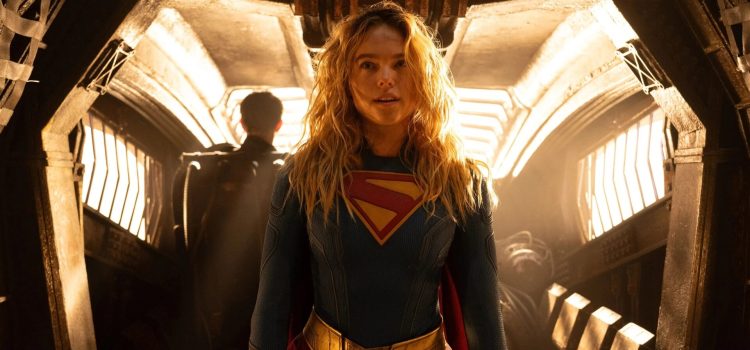
A messier, edgier alien superhero has arrived in “Supergirl,” with all its expected over-reliance on CGI visual effects and its anticipated female-forward power dynamic. What is surprising is Milly Alcock’s spunky, punky portrayal of the party girl from Krypton.

Alcock, who portrayed Princess Rhaenyra Targaryen in the first five episodes of HBO’s “House of The Dragon” prequel to “Game of Thrones” and as insecure sister Simone in Netflix’s limited series “Sirens,” brings considerable heart and vulnerability to Kara Zor-El’s backstory.

The origin story is in a flashback detailing  her solo grief-stricken journey to Earth. An only child, her parents (Emily Beecham, David Krumholtz) became terminally ill when they were sent to live in Argo City after Krypton’s demise. Her father is Zor-El, brother to Superman’s father Jor-El.

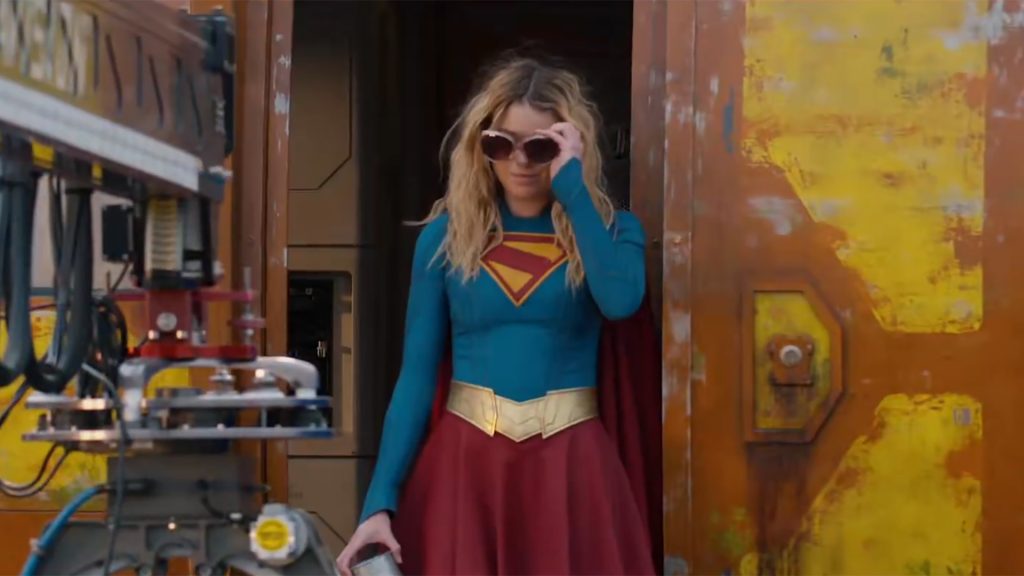
Alcock’s present-day Kara is angsty, sassy, and sarcastic, and needs to find a compelling reason to put the suit back on and do good for mankind. Instead, she  stumbles and mumbles through life only clad in a Blondie t-shirt and a rumpled trench coat until she is called upon to be heroic. Her self-destructive tendencies have masked her pain and she questions her purpose. 

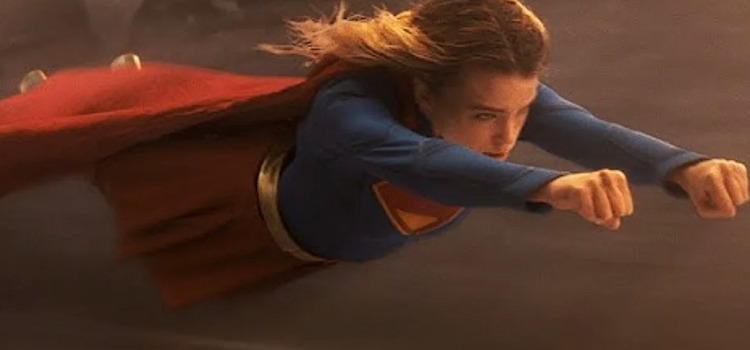
Kara Zor-El lands on Earth to be welcomed by cousin Kal-El.

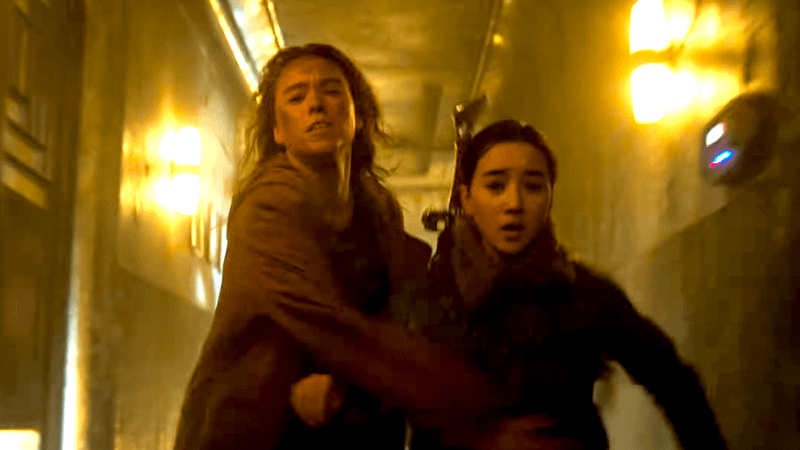
She must rise to her destiny when she reluctantly joins forces with Ruthye (an impressive Eve Ridley), whose family was slaughtered by the monstrous villain Krem of the Yellow Hills (Matthias Schoenaerts).

As the sole survivor, she seeks vengeance. Kara reluctantly takes her under her wing on an interstellar journey, where they planet-hop between red, yellow and green-designated planets.

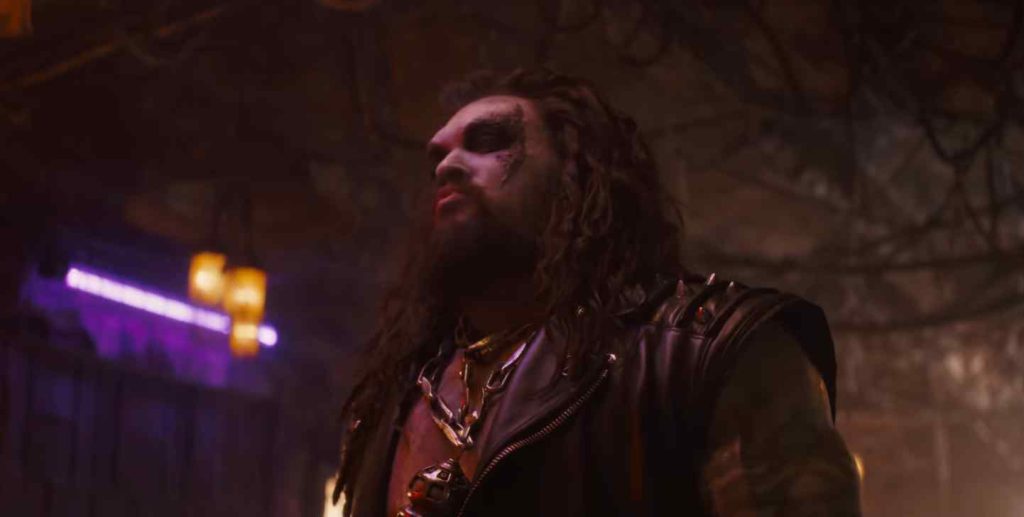
Hot on their trail, Krem, devoid of any humanity, injures Krypto, Kara’s beloved rascally pet, with a poison dart. Supergirl has three days to find the antidote, so that ramps up her motivation. The scalawag bounty hunter Lobo (colorful Jason Momoa) becomes an unlikely ally.

.As a follow up to DCU’s “Superman” reboot last summer, this “Supergirl” presents a different, grittier spin on Clark Kent’s younger first cousin (eight years apart). Magnetic David Corenswet returns as the noble Man of Steel, and he’s a terrific addition to James Gunn’s new vision for the DCU.

Milly Alcock as Supergirl with her beloved pet Krypto.

The return of fan-favorite Krypto is another welcome sight. As the clock ticks, Ruthye becomes a wily companion, and anti-hero Lobo steals every scene he’s in as an “immortal” with glowing eyes and a big, bad, brassy demeanor.

The entertaining actor, best known as DC’s “Aquaman,” is now a go-to for extended cameos in action films in the same way Jack Black shows up in comedies to add his over-the-top sauce.

With his hulking physique, gravelly growling voice, and riding a tricked-out motorcycle, Momoa fits into this grimy aesthetic that resembles the chaotic “Mad Max: Fury Road” and the irreverent “Guardians of the Galaxy.” The film features a visually striking motley crew of space creatures that look like an even gnarlier collection of “Star Wars” cantina revelers.

This renegade-like adventure is capably directed by Craig Gillespie, who helmed such standout darkly comedic films as “I, Tonya,” “Cruella,” and “Dumb Money” in recent years, after his breakout indie “Lars and the Real Girl” that’s among his eclectic resume..

Waiting for a bus.

Based on Tom King’s 2021-22 comic book mini-series, “Supergirl: Woman of Tomorrow,” the screenplay was written by Ana Nogueira, who focused on emotional depth, cheeky wit, a found-family connection, and an underground vibe. Where the story is weakest is its villain, Krem.

Supergirl first showed up in a DC comic in May 1959, created by Otto Binder and artist Al Plastino for the story “The Supergirl from Krypton.” If you are unfamiliar with the source materials, no worries. The plot isn’t so dense that you can’t figure out what drives the super-powered Kryptonians to save the universe, one epic battle at a time.

St. Louis native Gunn, creator of Marvel’s vastly successful “Guardians of the Galaxy,” took over the reins of DC Studios as co-chair and co-CEO with Peter Safran in 2022, and he is the creative leadership for the film, TV and animation slate.

As writer-director of the 2025 “Superman,” Gunn restored the iconic American superhero to his altruistic roots and did considerable world-building. He also teased the new Supergirl coming this summer, when Kal-El was headed for the Fortress of Solitude, and she returned to fetch Krypto.

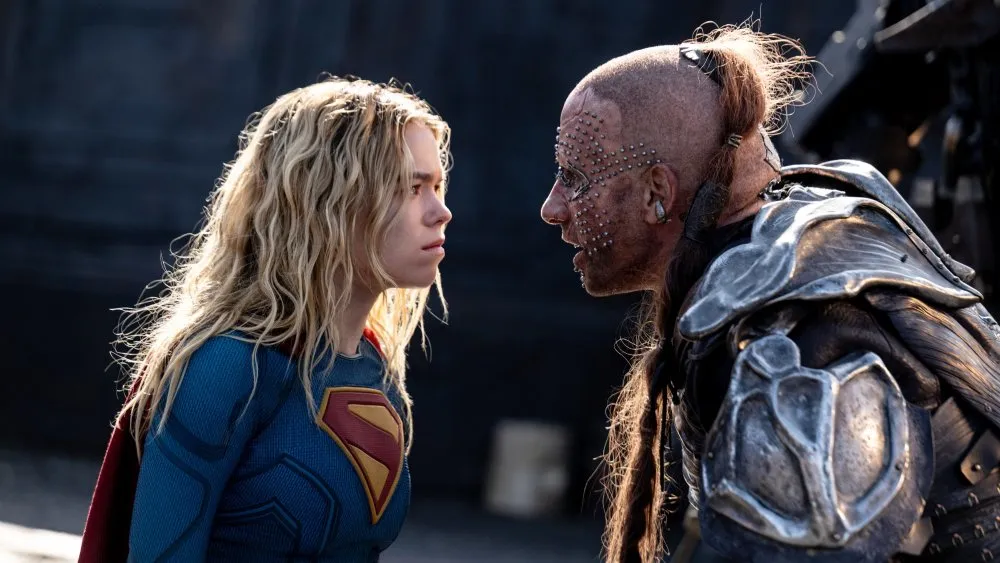
Supergirl (Milly Alcock) face to face with villain Krem (Matthias Schoenaerts).

Gunn is up next writing and directing “Superman: Man of Tomorrow,” which is set for release July 9, 2027, with Corenswet back and Nicholas Hoult reprising his role as arch-villain Lex Luthor.

Memorable villains are always key to how good a movie holds up, and Krem is bland. It’s not that Schoenaerts isn’t a good actor, because the Belgian has been noteworthy in acclaimed international films (“Bullhead,” “Rust and Bone”), as a thug in the vastly underrated “The Drop” and as a prisoner seeking redemption in “The Mustang.”

But written as a one-note demonic space pirate, he’s not interesting. His physique is imposing as a sadistic killing machine, but there is not much to work with here.

Jason Momoa as “Immortal” antihero Lobo.

The last “Supergirl” live adaptation feature was in 1984, as a spin-off of Christopher Reeve’s Superman movies, and bombed, with Helen Slater in the title role.

Three decades later, Supergirl re-appeared as a popular television series on the CW from 2015 to 2021, starring Melissa Benoist. Since then, the character appeared as an alternate-universe Kara in the crossover 2023 film “The Flash,” played by Sasha Calle.

While this “Supergirl” is not without flaws, it still is a promising start to the new direction, and has enough characters to care about, particularly the lovable scruffy floppy-eared, white furry mutt, and the resourceful and determined Ruthye. The female protagonists both deal with trauma in an identifiable way.

Milly Alcock as Kara Zor-El and Eve Ridley as Ruthye Marye Knoll.

“Supergirl” is a 2026 sci-fi action-adventure directed by Craig Gillespie and starring Milly Alcock, Matthias Schoenaerts, Eve Ridley, David Corenswet, Jason Momoa, Emily Beecham and David Krumholtz. It’s runtime is 1 hour, 47 minutes, and is rated PG-13 for sequences of strong violence, action, language, and smoking. It opens in theatres June 26. Lynn’s Grade: B

By Lynn Venhaus
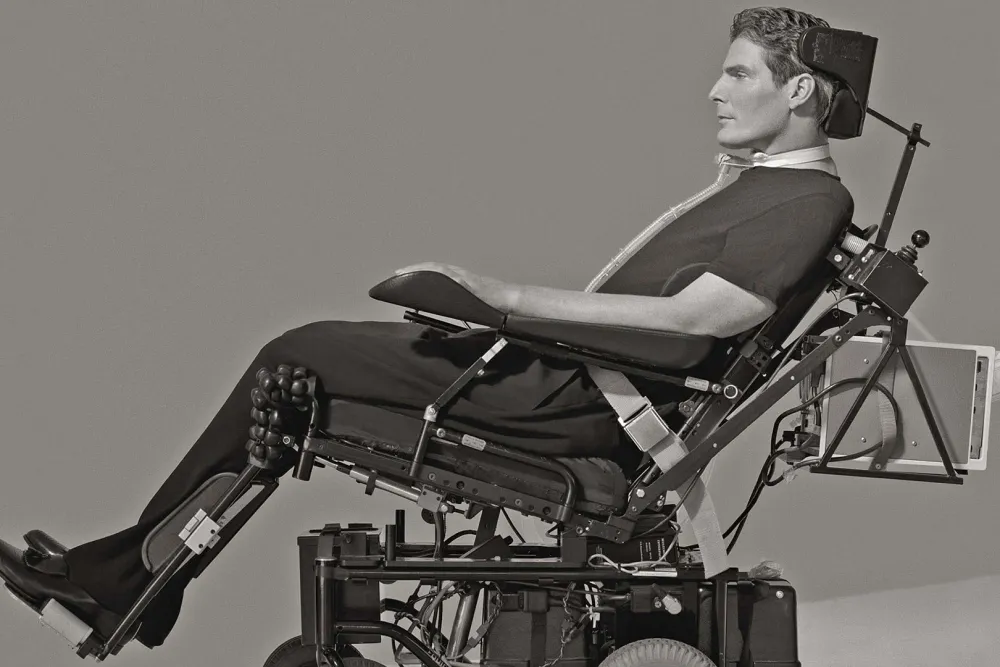
A profoundly moving documentary, “Super/Man: The Christopher Reeve Story” focuses on the impactful life of the legendary actor, and how his activism for spinal cord injury treatments and disability rights changed many lives after his near-fatal horse-riding fall.

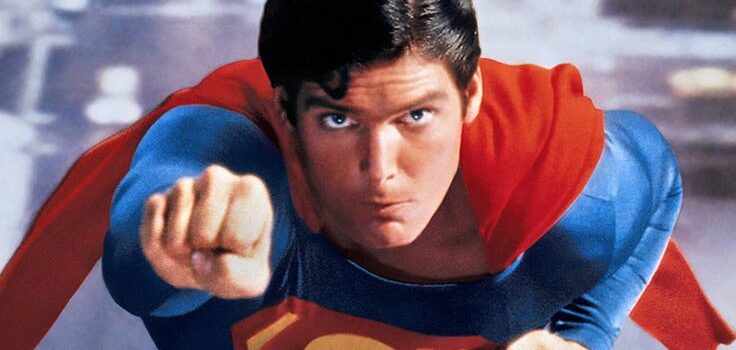
He played an iconic superhero in four movies – the best-ever take on the Man of Steel/Clark Kent starting with 1978’s “Superman,” and became a real-life hero after that life-altering event on May 27, 1995.

At age 42, he had become not only a global superstar but also an accomplished equestrian. A fluke accident occurred when his horse stopped, and he was paralyzed from the neck down. He would live for 10 more years, and supported by family and friends, became a beacon of hope and a profile in courage.

He died on Oct. 10, 2005, and left a tremendous legacy to uphold. His fiercely devoted wife, Dana, tragically lost her life to cancer just five months later, at age 44. His sons Matthew and Will, and daughter Alexandria are tireless advocates for The Christopher and Dana Reeve Paralysis Foundation. Their interviews illuminate this documentary in a warm and motivating way.

Filmmakers Ian Bonhôte and Peter Ettedgui spotlight Reeve’s struggles and his accomplishments, fluidly weaving a treasure trove of archival footage and never-before-seen home movies, which stresses the loving relationships he forged in his short lifetime.

In a sincere, non-exploitive way, they use Reeve’s own voice, from his narration of his 1999 autobiography, “Still Me,” and many clips of his wife Dana, a true force of positivity, carrying on in the worst of times.

A portrait of his early years learning his craft emerges through such talking heads as Jeff Daniels, Glenn Close, Susan Sarandon and Whoopi Goldberg, and his friendship with Robin Williams, his roommate at Juilliard.

Williams’ closeness was widely known in Hollywood, but to those unfamiliar with their beautiful bond, it’s tearjerking. If you haven’t started crying by the time Williams is shown delivering Reeve’s eulogy, get the tissues ready.

The directors do not flinch when showing Reeve’s battles as a quadriplegic, but also highlight his achievements during periods of tremendous adversity. After his emotional appearance onstage at the 1996 Academy Awards, Reeve resumed his career – both in front of and behind the camera.

Dana and Christopher Reeve.

Until his final breath, he remained a loving father and husband, and a dedicated activist – there always seemed to be hope with the Reeves. His passion and celebrity have helped raise $140 million for spinal cord research, and that work is helping advance treatments today, and strive for more health access and ‘able-ism.’

While the film is as open-hearted as possible, it does not lionize the actor – and presents conflicts and controversies, but also, remarkably, his growth as a human being post-tragedy. Overall, it’s powerful, inspiring, and supremely poignant.

“Super/Man: The Christopher Reeve Story” shows us the best of humanity at the lowest, most fateful times. Sure, it’s sad – the audience was in tears at the Sundance premiere, hailing it with a standing ovation. Yet, it’s heartwarming too — you feel the joy people had knowing what he accomplished in 52 years. And the work that continues in his name.

“Super/Man: The Christopher Reeve Story” is a 2024 documentary co-directed by Ian Bonhôte and Peter Ettedgui. It is rated PG-13 for some strong language and thematic elements, and runtime is 1 hour, 44 minutes. It opens in theatres on Oct. 11. Lynn’s Grade: A.

Christopher Reeve’s children Matthew, Alexandria and Will.

By Alex McPherson

“Zack Snyder’s Justice League” is an entertaining, four-hour superhero epic that greatly improves on Joss Whedon’s 2017 version. After leaving the first production due to a family tragedy, director Snyder is finally able to give fans what they’ve been craving. 

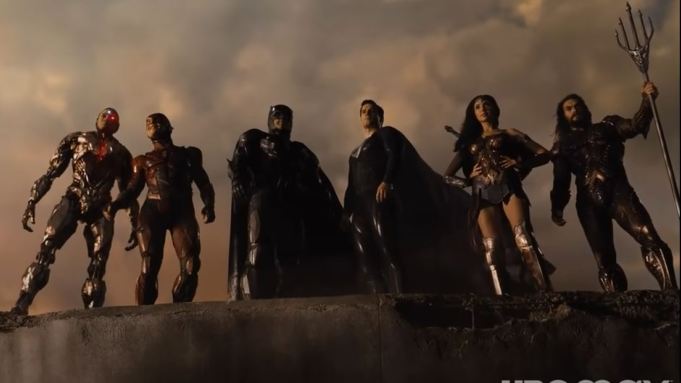
Batman (Ben Affleck), Wonder Woman (Gal Gadot), Aquaman (Jason Momoa), The Flash (Ezra Miller), Cyborg (Ray Fisher), and another familiar face team up to take down a world-ending threat. This time, a horned monstrosity named Steppenwolf (Ciaran Hinds) seeks to eliminate humanity from Planet Earth via three powerful “Mother Boxes” and rebuild it under the leadership of Darkseid (Ray Porter), who wants to control the galaxy. Feeling partly responsible for the death of Superman (Henry Cavill) in “Batman V. Superman: Dawn of Justice,” Batman becomes a reluctant leader as he and Wonder Woman bring the squad together. Heroes both new and old undergo their own arcs, to varying degrees — involving the topics of grief, faith, hope, and unity in times of crisis.

Aiming to please those who willed it into existence, “Zack Snyder’s Justice League” is difficult to recommend to viewers who aren’t already fans of the DC Cinematic Universe. The film contains moments of emotional resonance and visual spectacle, but proves grueling by the final hour — reverting to predictable plotting and repetitive, CGI-reliant action sequences.

At least the central characters are given more opportunities to shine. From its opening frames, “Zack Snyder’s Justice League” establishes itself as a slower, mournful affair, with a 4:3 aspect ratio, dour chapter titles, muted color palette, and a clearer sense of organization. Snyder has crafted an unarguably more coherent storyline than before, maintaining a grittier tone than the original cut and giving scenes more time to breathe. Even though the storytelling itself is clunky, largely thanks to hit-or-miss dialogue and frequent exposition dumps, I appreciate Snyder’s ambition. 

The added depth to Cyborg (a.k.a Victor Stone) is particularly noteworthy. After Victor and his mother are killed in a car crash, his father, Silas Stone (Joe Morton) uses a Mother Box to resurrect Victor in a robotic body. Thanks to his new abilities, Victor becomes an all-powerful presence, able to tap into the world’s technological web with ease, and representing the League’s key to vanquishing Steppenwolf. Despite his powers, Cyborg is gripped with resentment towards his father and deeply uncertain of his own future. Fisher’s acting is endearing and empathetic, the most convincing in the entire film. His character  — practically deserving of its own standalone installment — remains the heart and soul of the whole endeavour. 

The Flash (a.k.a. Barry Allen) is also further fleshed out, but his journey lacks the nuance and complexity of Cyborg’s. He is much more confident in his speedy capabilities and doesn’t spout as many cringey quips as in the 2017 iteration. Batman, Aquaman, and Wonder Woman, on the other hand, aren’t given much new material to work with under Snyder’s guidance, but we’re given more context for their actions. This helps create a stronger sense of flow from scene to scene than before, and all the actors give decent performances.

In terms of antagonists, Steppenwolf’s goals are more clearly outlined. Exiled from his demonic homeworld, he’s trying to prove himself to his master, Darkseid. Even though we understand where he’s coming from, Steppenwolf is still difficult to empathize with. Revealing more about his history doesn’t automatically fix his blandness or render him memorable. He’s big, powerful, odd-looking, and ready to slice and dice his way to victory.

Speaking of violence, “Zack Snyder’s Justice League” is rated R, allowing Snyder to indulge in bloody carnage that feels far more visceral than other cinematic comic book offerings. As expected, however, Snyder deploys an over-abundance of slow motion to present every shot as a work of art to be gawked at. Yes, there’s instances of beauty in his eye-popping, effects-heavy compositions, but they lose their thrill as the hours pile up.

Combined with an unnecessary epilogue that’s purely fan service, “Zack Snyder’s Justice League” doesn’t quite justify its existence for casual moviegoers. Nevertheless, I wholeheartedly support Snyder’s efforts to realize his vision. That being said, four hours is a huge time commitment, especially when viewed in a single sitting, and his film doesn’t differentiate itself enough to truly stand out.

A self-serious, over-indulgent, yet admirable effort, “Zack Snyder’s Justice League” isn’t the masterpiece that some have touted it as, but it proves sporadically enjoyable. I just needed a long nap afterwards.

“Zack Snyder’s Justice League” is a 2021 release from Warner Brothers that is exclusively showing on HBOMax, as of March 18. It stars Ben Affleck, Gal Gadot, Jason Momoa, Henry Cavill, Ray Fisher and Ezra Miller as the six superheroes in the DC Justice League. is Rated R for violence and some language. It has a run time of 242 minutes. Alex’s Grade: B –