By Lynn Venhaus
Calls to action come in familiar places – neighborhoods, schools, and city halls, which we know produce results because of the recent primary election and other grassroots activism on display in St. Louis.
And who knows? Maybe even a theater. Playwrights can sound a clarion call like moms, nuclear scientists and teachers do. Produced by SATE, an original play “Confetti Kids” by Aurora Behlke kicks of their “Season of Motherhood.”
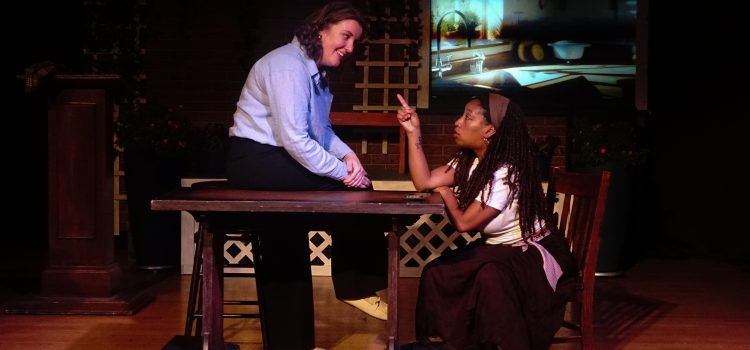
And sometimes, the lead character can be a nifty combo of all three — a mom, nuclear scientist and teacher. Such is the protagonist Dr. Rachel Graves, who is realized by Nicole Angeli, in a quietly devastating, emotionally shattering performance.
Behlke uses humor and hope to spotlight the enduring public health and environmental crisis from World War II radioactive waste contamination in Coldwater Creek and the north St. Louis County communities.
Sure, it’s from a long time ago, but the ripple effect is enormous – generations of St. Louisans and new hot spots continue to surface, therefore it is very much a contemporary issue, and it affects us all as a region.
The past is going to collide with the present, and not in a good way. The world that Rachel desperately tries to control is unraveling. She is on the front lines of the nuclear waste crisis as the community confronts this decades-old contamination near her daughter’s high school.
Behlke tells this story through relatable relationships – the single mother’s only child Maya (Tia Renee Williams), the mother’s friend Daniel (Adam Flores) and the daughter’s teacher Vera (Hailey Medrano).
While Rachel is naturally drawn to the fight for environmental justice, she wants to protect her teenage daughter, and that makes her guarded and vulnerable. Maya’s world is one of drama – friendship issues and prom preparations are priorities.
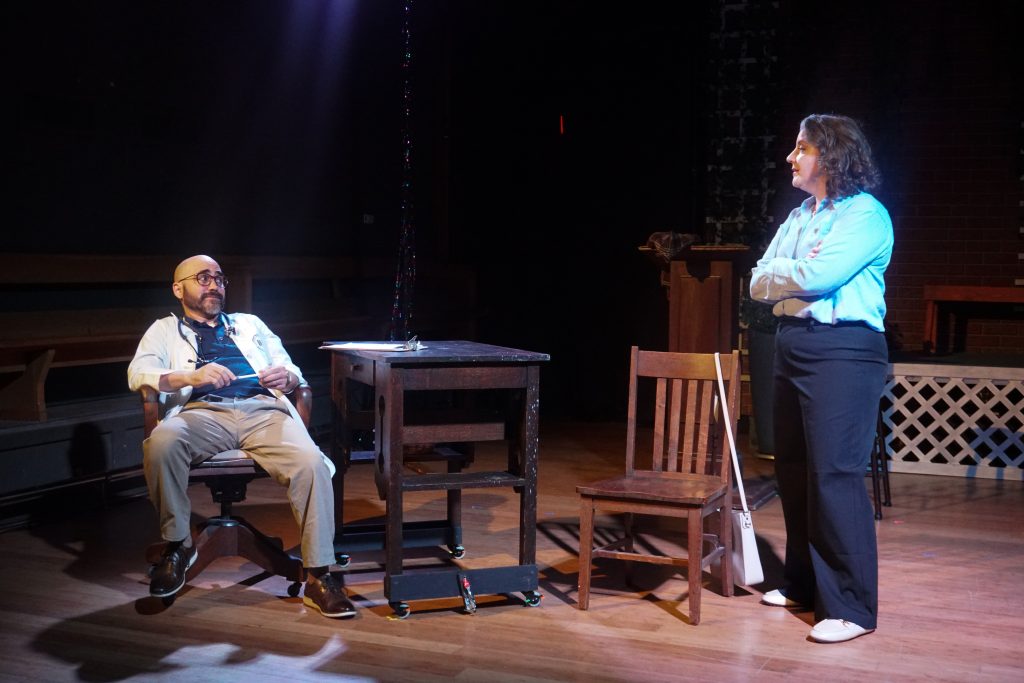
Because of those rites of passage, her mother doesn’t want to distract, so she keeps her significant medical news to herself, despite her friend , who is also a doctor, urging her to tell Maya and start treatment.
In his grounded way, Adam Flores plays the sincere caring friend. He also expresses frustration by Rachel’s stubbornness and what he perceives to be inaction and poor decisions.
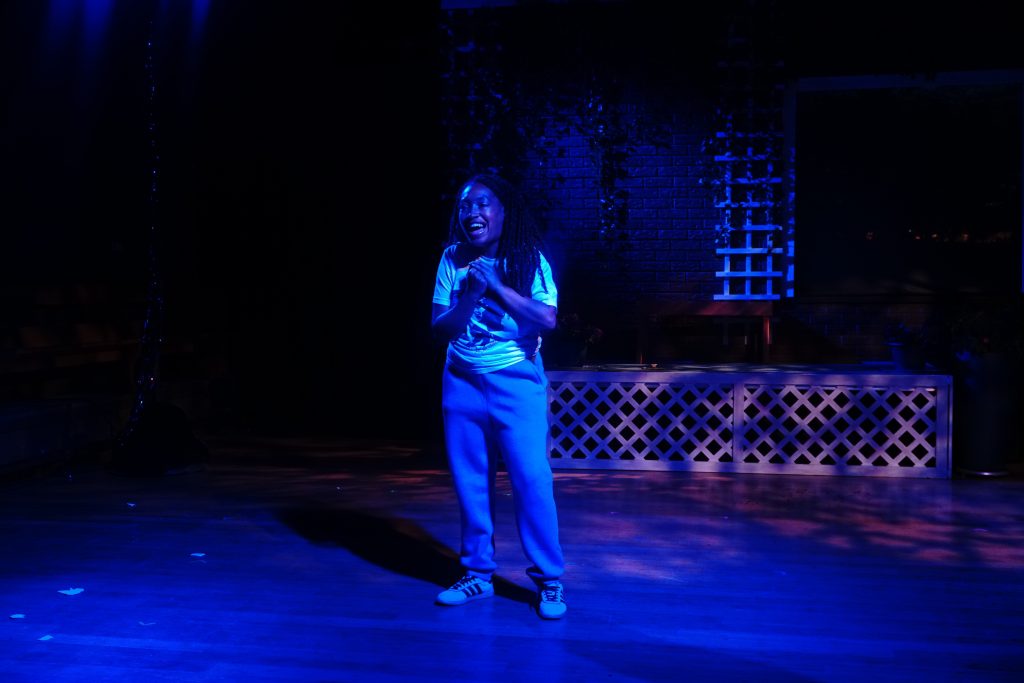
A natural dynamo, Tia Williams continues to impress after her first local stage performance this spring as Juliet in A Chorus of Fools’ “Romeo and Juliet.” While she’s not exactly in the age range of high school students, she’s still a bright spot here.
While the provocative play weaves a history lesson into a lecture by Rachel, who recently lost her professor job, these are not dry textbook examples – these relate to the humans affected.
For the unfamiliar, starting in 1942, Mallinckrodt Chemical Works downtown St. Louis processed uranium for the first atomic bombs. That resulted in the Manhattan Project nuclear waste being uncontained in North St. Louis County.
Byproducts containing radium, thorium and uranium were moved to poorly secured sites near Lambert Airport and piled openly along Latty Avenue. Rainwater and floods washed radioactive materials into the 19-mile Coldwater Creek and the West Lake Landfill, contaminating neighboring suburban yards, parks and schools.
Residents have documented staggering clusters of rare cancers, autoimmune diseases, and birth defects. Grassroots activism, led by such groups as Just Moms STL and the North County Community Advisory Group, is pushing to expand radioactive soil testing and expedite the multi-million-dollar cleanup of Coldwater Creek.
The play’s audio includes sounds of a child playing in the creek accompanied by her mother, which would be innocuous if we didn’t know the frightening implications, and why we’re hearing it. Studies have linked those living near the creek in childhood to having significantly higher rates of various cancers.
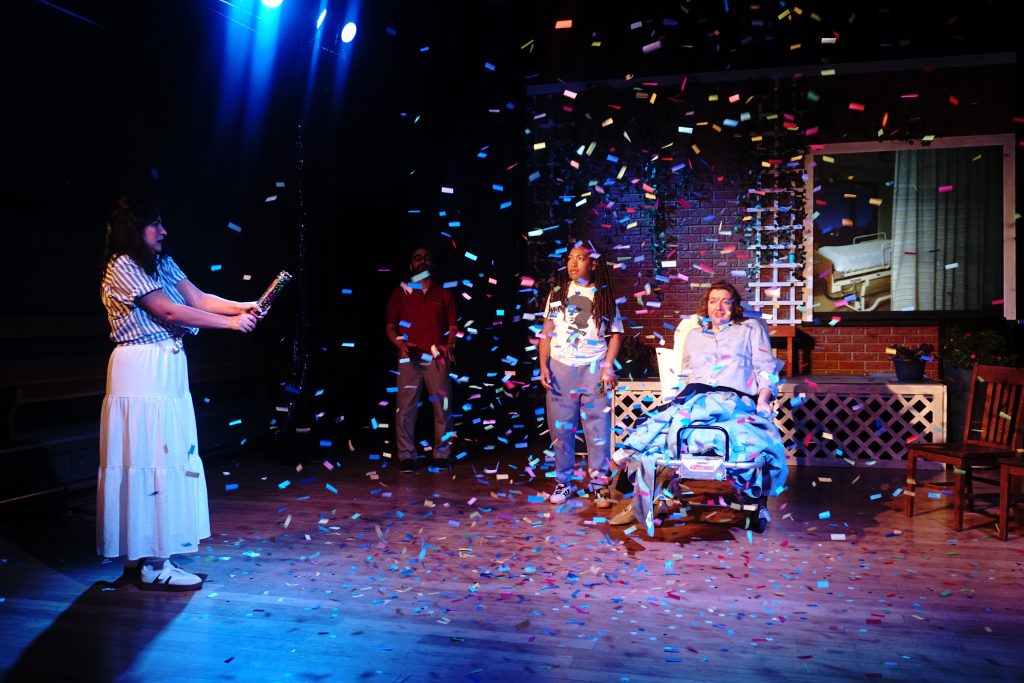
The very real consequences of neighbors walking, kids playing, and families spending time with each other have led to unimaginable horrors scarier than anything Stephen King has conjured up in his more than 65 novels.
One must mention Jana Elementary School in Florissant, part of the Hazelwood School District, which closed in late 2022 after independent tests found radioactive contamination there. The building is now a district logistics and storage center, and the students were shifted to other schools. This place is part of Behlke’s story.
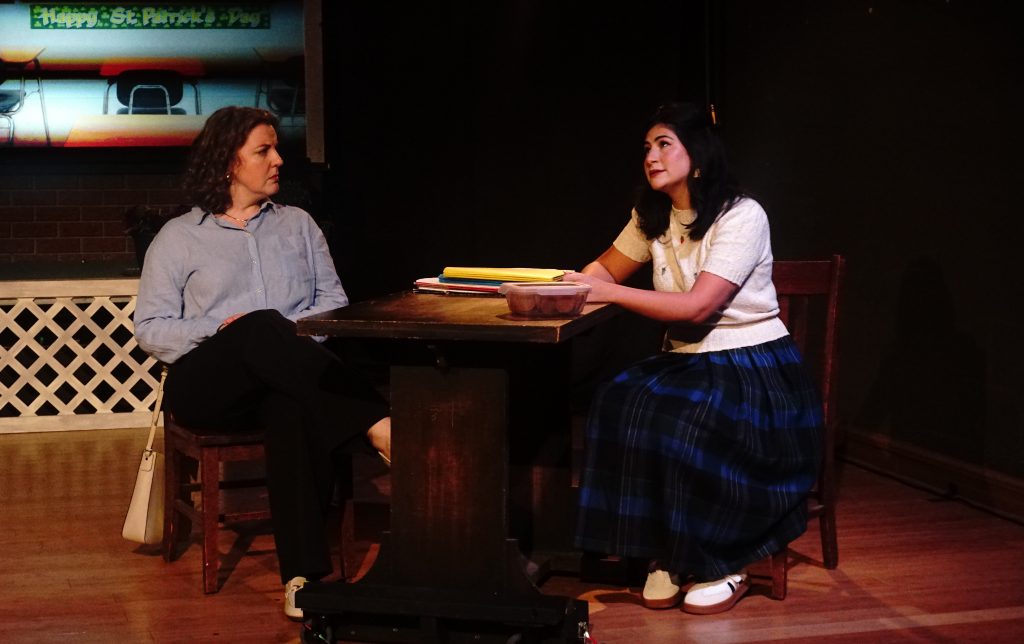
Rachel reluctantly delivers a PTA lecture, at the urging of an overzealous teacher marvelously embodied by Hailey Medrano, which is a way to detail all the accurate historic facts.
Rachel acknowledges the conflicting safety reports between private testers and federal agencies, with the EPA on hand, too. Behlke has painstakingly researched this subject, and the result is a passion project that has legitimate staying power and perhaps can advance more discussion, more activism and more understanding.
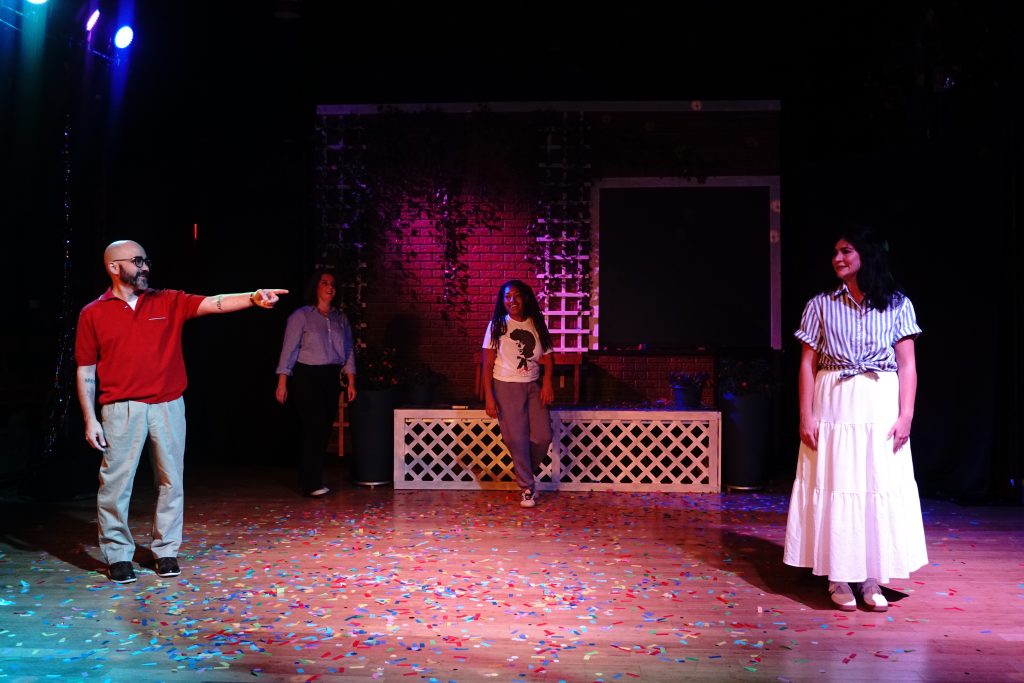
The basics – that neighborhoods and schools should be a safe and healthy place to learn, work, and play – are no longer a given. And that should send a chill down your spine. That’s why Rachel wants to carry the torch for action and reform.
One of her most powerful lines: “…and I will fight. Because I guess that’s what moms do. Love so hard it becomes a fight.”
Don’t ever discount a mom. While the subject matter is serious, Behlke also included character traits to make sure community advocacy is appealing. She has engaged with small details – including an enthusiastic first-year teacher who runs on caffeine and home-baked treats – and a desire to genuinely shift the narrative.
In this 90-minute one-act show, the ensemble delivers poignant and affecting portraits of people you may interact with daily. Director Kristen Strom allows this tender tale to unfold in a realistic way, showcasing flawed characters and the performers’ instincts for nuance. Angeli and Williams are convincing as the close-knit mother and daughter, and the other relationships are earnest as well.
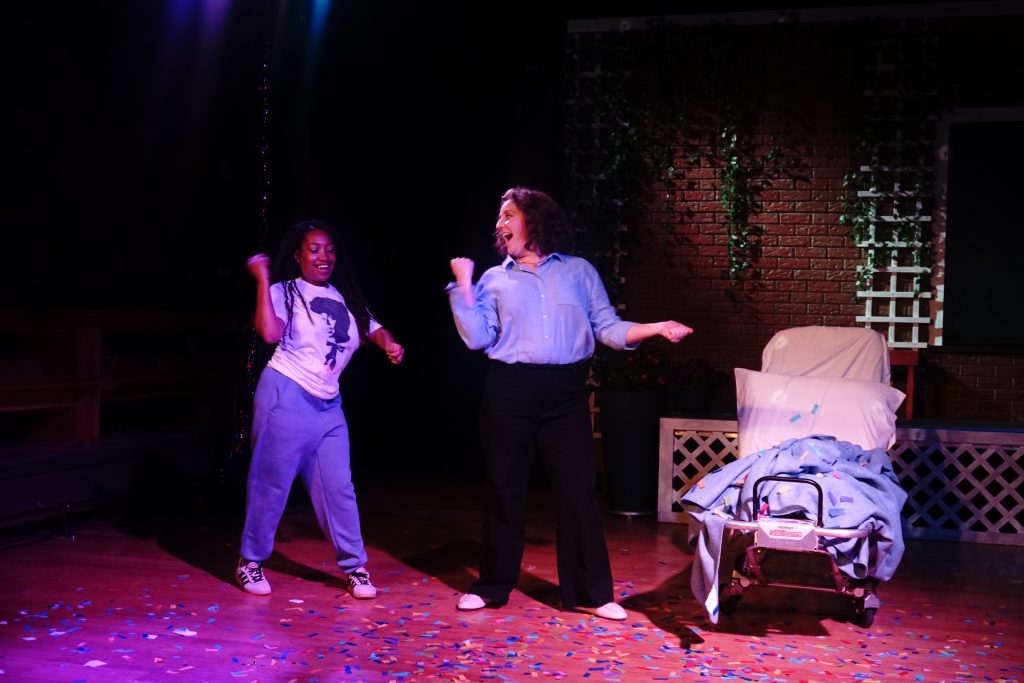
Pitch-perfect sound design by Ellie Schwetye, and video/ projection designs by Eric Satterfield add to the message’s urgency. Theresa Comstock’s lighting design and Erik Kuhn’s set design give this intimate play a cozy feel, and director Kristen Strom has adroitly staged the action for maximum effect. Kayla Lindsay’s costume designs project personality and Cecile “Cece” Entz’s prop work helps the atmosphere.
A finalist in St. Louis Shakespeare Festival’s Confluence Writers Project in 2024, which spotlights Midwest stories, Behlke is an intriguing emerging voice that was mentored by three prominent local playwrights – Courtney Bailey, Taylor Gruenloh and Deanna Jent.
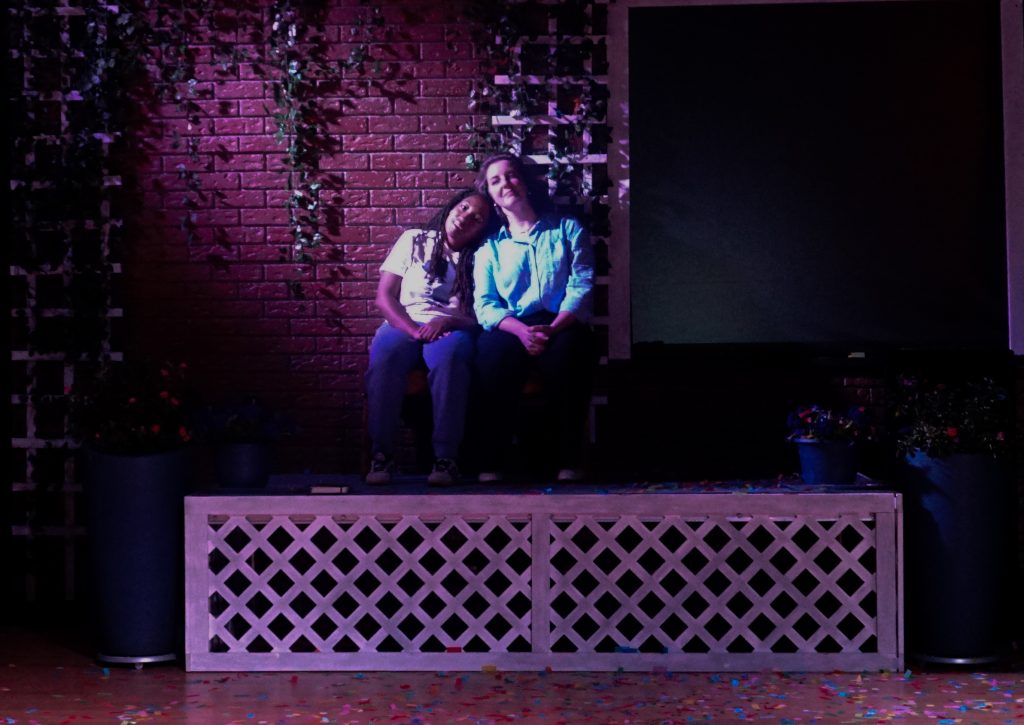
Communities come in all configurations, and one seems to have been born through audience engagement during “Confetti Kids.” The impactful work is not finished by any means.
(And special mention to stage manager Jim Bernatowicz and assistant stage manager Tara Laurel for managing all that confetti.)
“Confetti Kids” by Aurora Behlke is a world premiere, with performances Aug. 20–Sept. 5, Thursdays through Saturdays at 7 p.m., at The Chapel, 6238 Alexander Drive (63105). Tickets are $20 for artists, seniors, and students; $25 for general admission; and are available through Eventbrite.

Lynn (Zipfel) Venhaus has had a continuous byline in St. Louis metro region publications since 1978. She writes features and news for Belleville News-Democrat and contributes to St. Louis magazine and other publications.
She is a Rotten Tomatoes-approved film critic, currently reviews films for Webster-Kirkwood Times and KTRS Radio, covers entertainment for PopLifeSTL.com and co-hosts podcast PopLifeSTL.com…Presents.
She is a member of Critics Choice Association, where she serves on the women’s and marketing committees; Alliance of Women Film Journalists; and on the board of the St. Louis Film Critics Association. She is a founding and board member of the St. Louis Theater Circle.
She is retired from teaching journalism/media as an adjunct college instructor.