By Lynn Venhaus

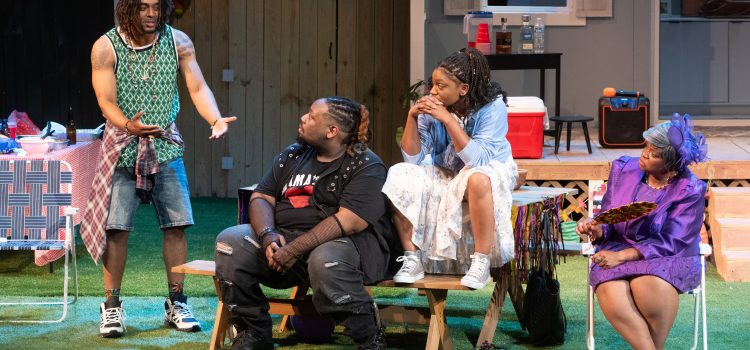
An extraordinary work of vision, power and poetry, “The Brothers Size” is one of The Repertory Theatre of St. Louis’s finest achievements to date.

Because of a cohesive collaboration between some of the most talented artists in St. Louis, this spiritual exploration of brotherhood and the black male experience has a dramatic impact that may leave you emotionally spun and moved to tears.

Directed with grace and deep understanding by multi-hyphenate Jacqueline Thompson, Metro Theater Company’s artistic director and winner of multiple St. Louis Theater Circle Awards for acting and directing, this gritty tale is staged in a lean, deliberate manner.

This immersive triumph is enhanced by the muscular choreography of Kirven Douthit-Boyd, artistic director of Saint Louis Dance Theatre; the memorable music composition and sound design of Tre’von Griffin and David A. N. Jackson; and the atmospheric lighting of Jayson Lawshee.

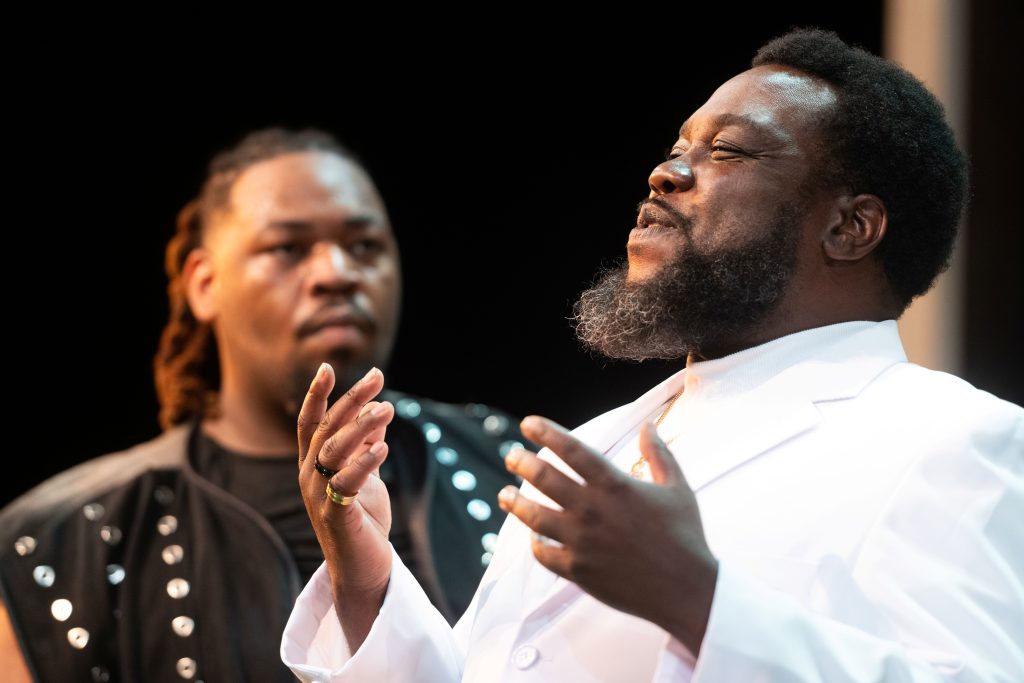
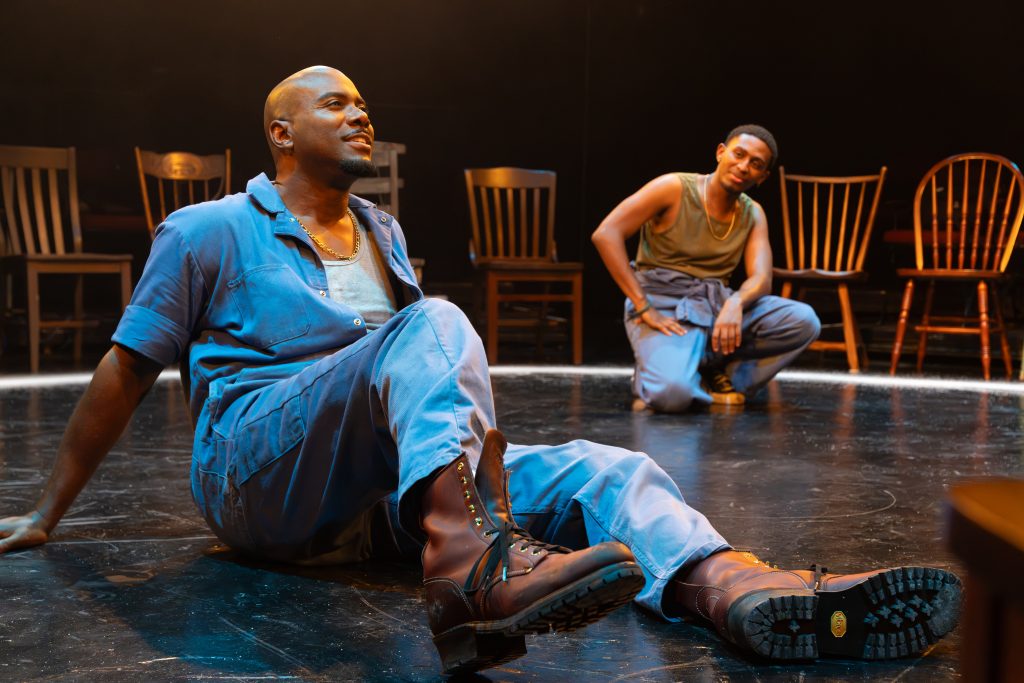
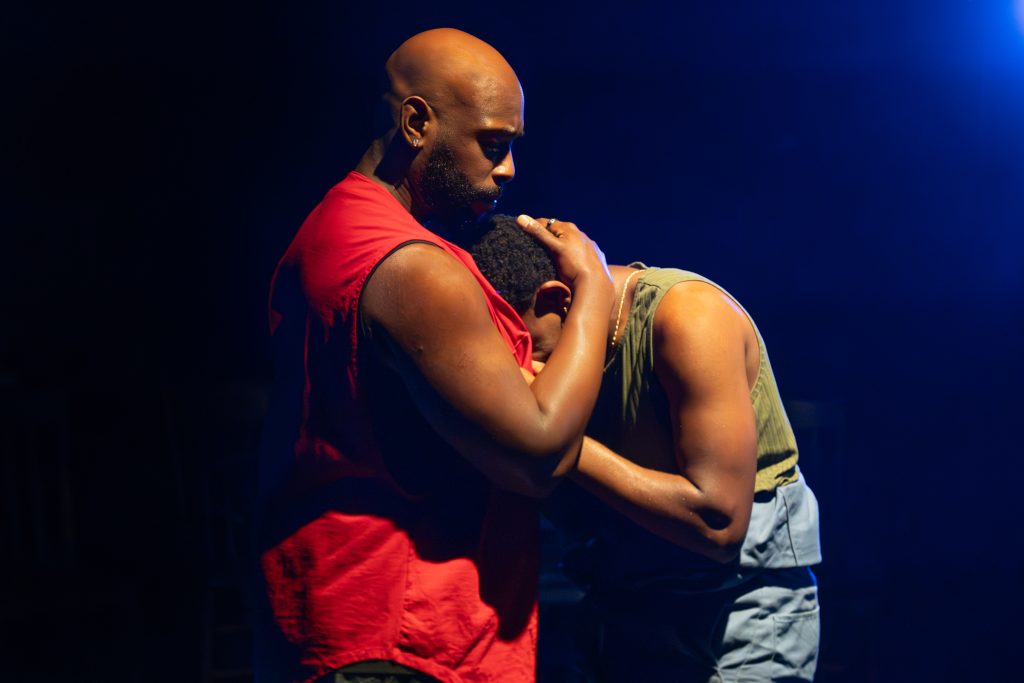
Nic Few as Ogun and Christian Kitchens as Oshoosi. Photo by Jon Gitchoff.

Their artistic vision, along with other artisans behind-the-scenes and the dynamic performances of Nic Few, Christian Kitchens and Donald Jones Jr., make this an unforgettable presentation.

They strived to make this resonate emotionally and do so in waves, for it grows in intensity and richness. Artistic consultant LaWanda Jackson and dramaturg Taijha Silas helped make that happen.

In his signature lyrical style, playwright Tarell Alvin McCraney, who won an Oscar for the screenplay of “Moonlight,” unfolds a common man story, with heart and humor, in the Louisiana bayou, which he wrote 20 years ago.

He examines the complex bonds of family, how love and loyalty affect relationships, the ripple effects of crime and punishment, systemic racism, and the hard road to healing.

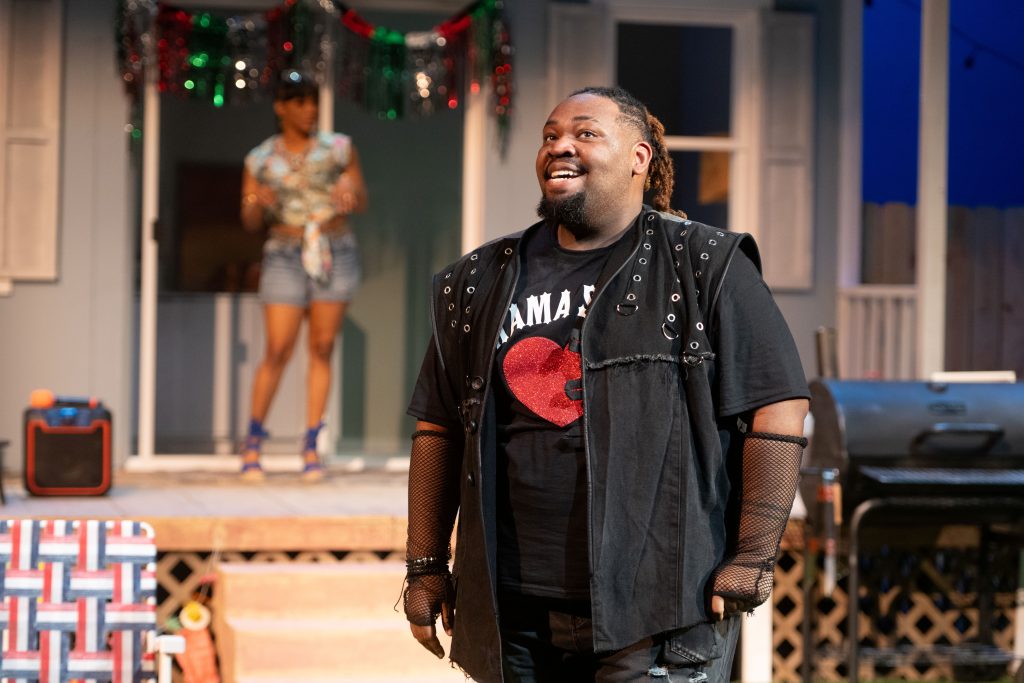
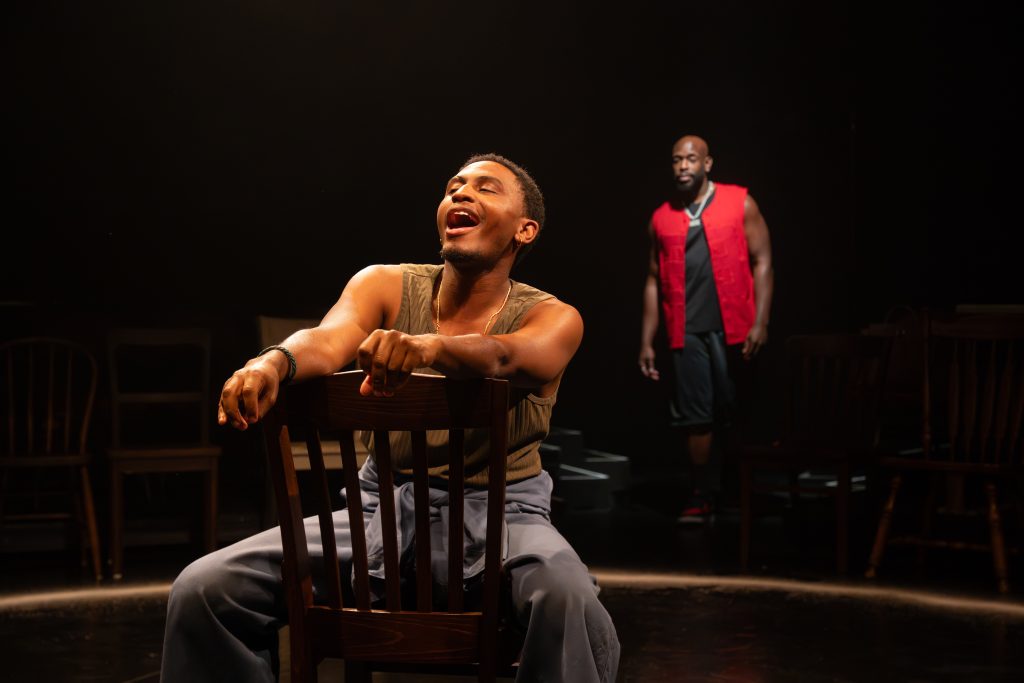
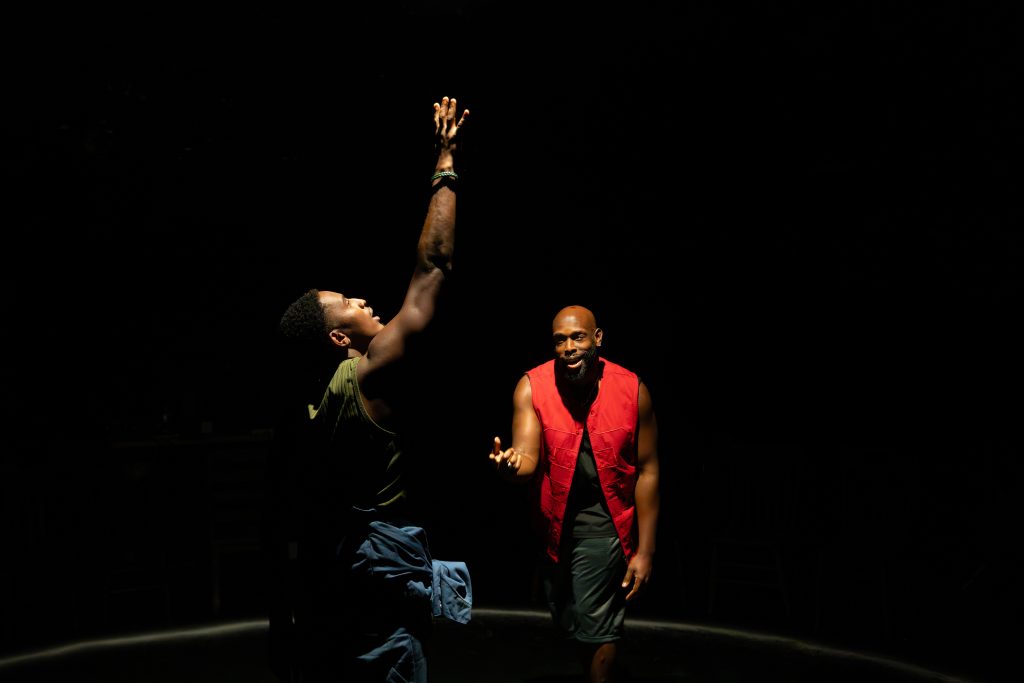
Christian Kitchens and Donald Jones Jr. Photo by Jon Gitchoff.

Nic Few is big brother Ogun, a responsible, hard-working auto mechanic whose younger brother Oshoosi (Christian Kitchens), has been released from prison. He’s restless, impulsive, trying to carve out a new life.

Can they reconnect or will the youngest return to his old habits when his ex-con friend Elegba (Donald Jones Jr.), his former cellmate, comes by for visits.

Ogun is tough on Oshoosi, annoyed by his swagger and aimlessness, and that chafes his little brother. It’s complicated when the oldest wants stability and the youngest is content to be carefree, tempted by a friend who’s a bad influence.

The brothers are eager to succeed, but they tussle often, like many siblings. Their temperaments are different – Few embodies fierce physicality and weighted down by the world and Kitchen imbues his part with musicality and a lightness of being.

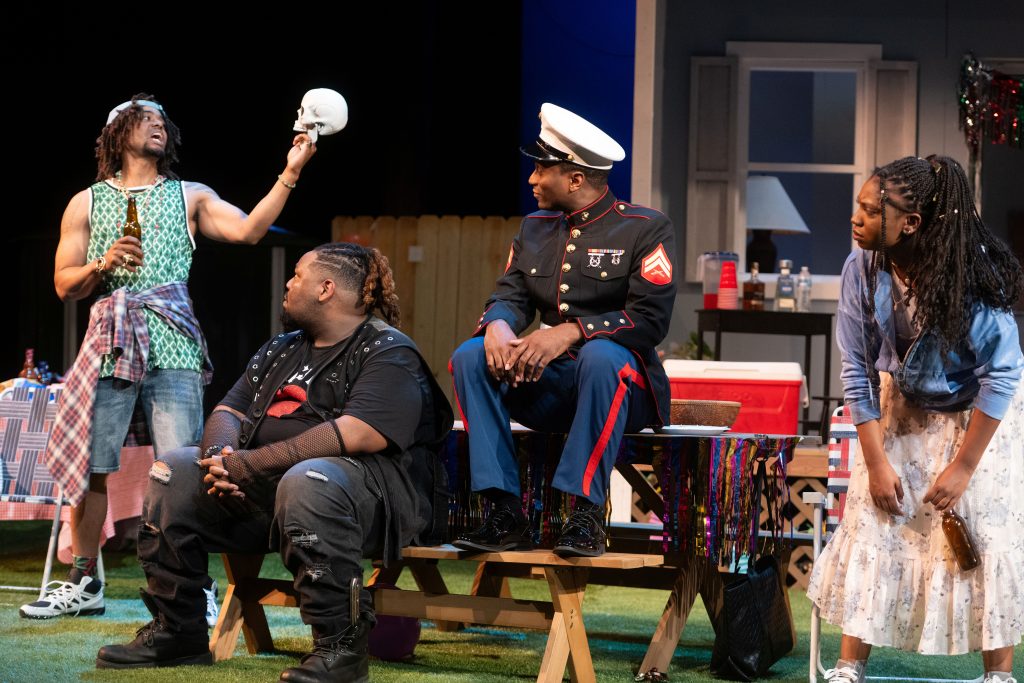
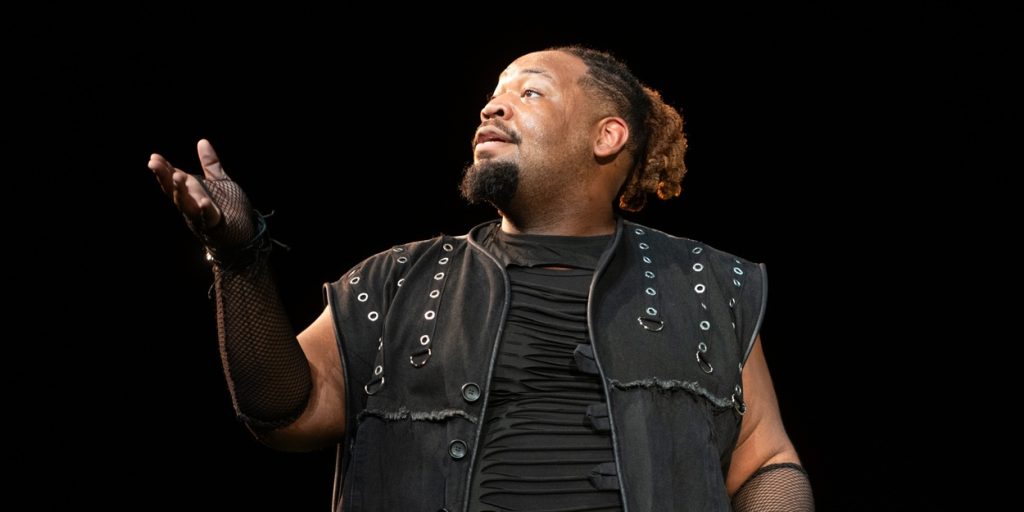
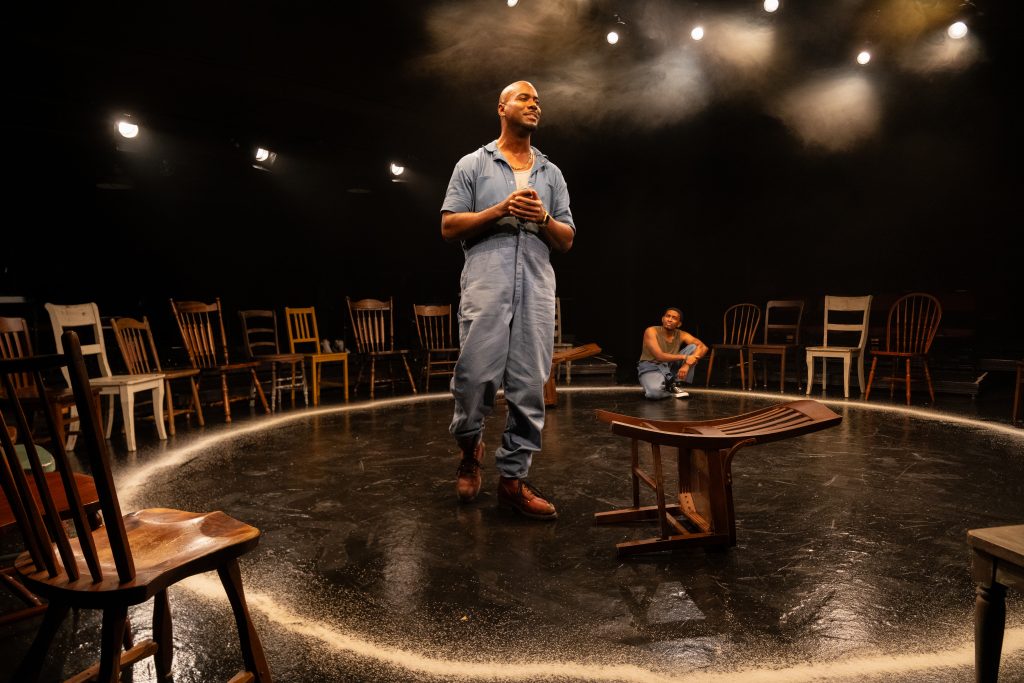
Photo by Jon Gitchoff.

The charming Elegba seems to want the same things but actually is a detriment to Oshoosi and Ogun’s goals. Ogun is suspicious but Oshoosi is faithful. Are we our brother’s keeper?

The effects of incarceration and the never-ending fight to be free, to make something better for their futures, shape this raw portrait. When danger lurks, they wrestle with decisions (Shades of “Nickel Boys.”)

Few, Kitchens and Jones corral an electrical charge to deliver honest characterizations that are physically and emotionally demanding. Their chemistry personifies their close ties. They are natural in their interactions – arguing, goofing off, trash talking, soul-singing, dancing and expressing their feelings.

Thompson was determined to find entry points for everyone watching, illuminating what could be considered abstract elements. The trust between everyone is obvious, their artistry elevated through her guidance.

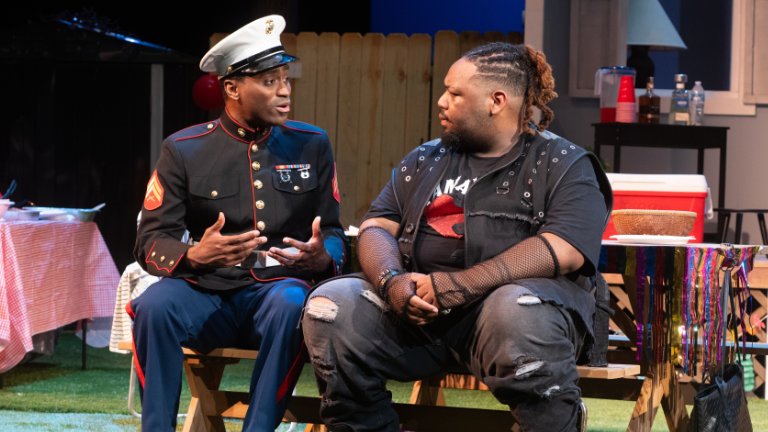
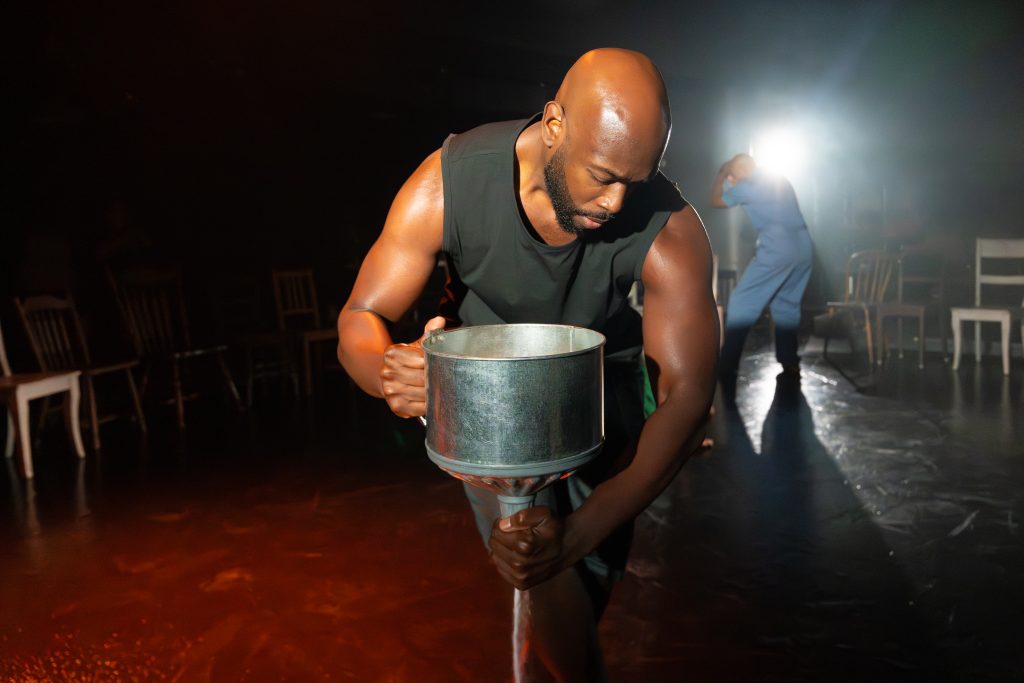
Photo by Jon Gitchoff.

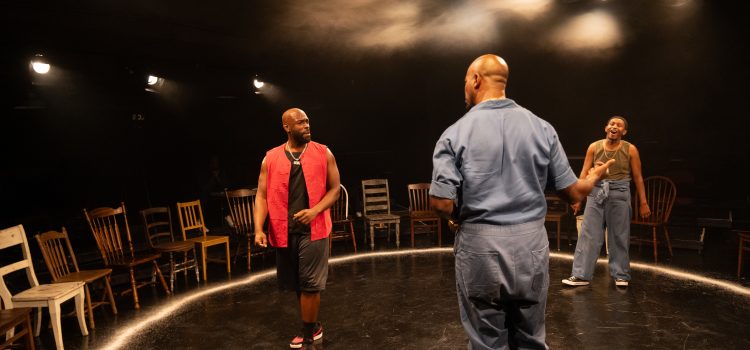
The minimalist staging, with action taking place within a circle, is reflected in Kristie C. Osi’s costume design, Jayson Lawshee’s scenic design and Eric William Barnes’ props design.

A regional premiere, “The Brothers Size” is the first time one of McCraney’s plays are staged in St. Louis. Considered a modern-day fable, “the script includes stage directions in the dialogue to heighten the encounter between the actor and the audience.

McCraney was inspired by the Yoruba people of West Africa – their rituals and religion, so he incorporated symbolism. His stylistic choices are rhythmically distinctive, seamlessly blending verse and conversation. In his original way, he aims for a mythical quality, making it about something larger than our daily lives. That adds a potency and an urgency.

The first show this season in the Steve Woolf Studio Series, it’s a play that was made for the intimate space and the series, praised for its risk-taking. The former artistic director, who retired in 2019 after 33 years at The Rep and died during the pandemic in 2021, encouraged theatregoers to be adventurous with newer works and unknown playwrights. What a fine legacy.

Photo by Jon Gitchoff.

Opening night bristled with electricity, the kind of buzz that marks a big deal event. After this profound, gut-wrenching experience, the audience leapt to their feet as soon as it ended, with an outpouring of love and thunderous applause. It was indeed a moment (well, several).

“The Brothers Size” boldly represents The Rep’s vision and demonstrates their commitment to produce works of daring imagination and transformative symmetry with exceptional casts and crews.

The Repertory Theatre of St. Louis presents “The Brothers Size” from Oct. 22 to Nov. 16 as part of the Steve Woolf Studio Series in the Emerson Studio of the Loretto-Hilton Center, 130 Edgar Road, St. Louis.

The play is 90 minutes without intermission. A post-show discussion follows the performance on Sunday, Nov. 2, at 2 p.m.

To purchase tickets, visit www.repstl.org or call the box office Monday through Friday noon to 5 p.m. at 314-968-4925.

Photo by Jon Gitchoff.

By Lynn Venhaus
A poorly executed musical revue, “Side by Side by Sondheim” is miscast and misguided.

The Repertory Theatre of St Louis’ production hasn’t jelled yet, and on Feb. 3, the result was a tepid tribute to one of the greatest composers and lyricists in Broadway history.

That’s particularly disappointing because of The Rep’s previous presentation of its Sondheim masterpieces “Follies,” in 2016 and “Sunday in the Park with George” in 2012.

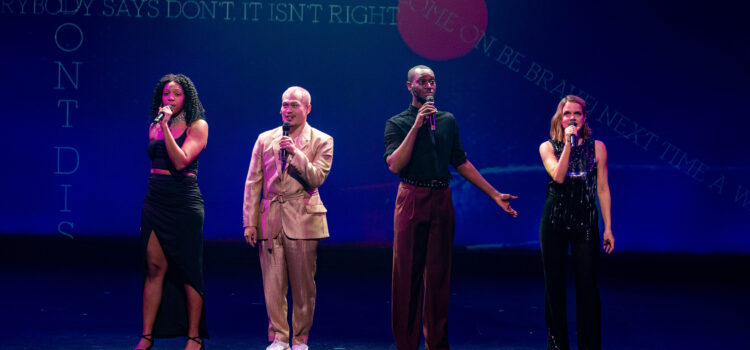
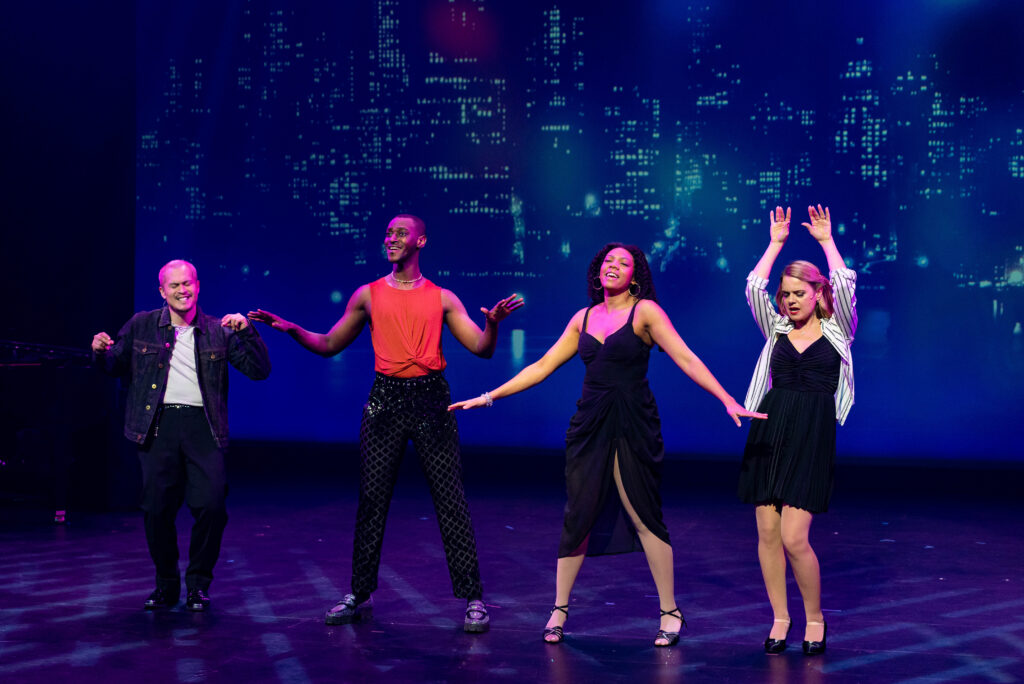
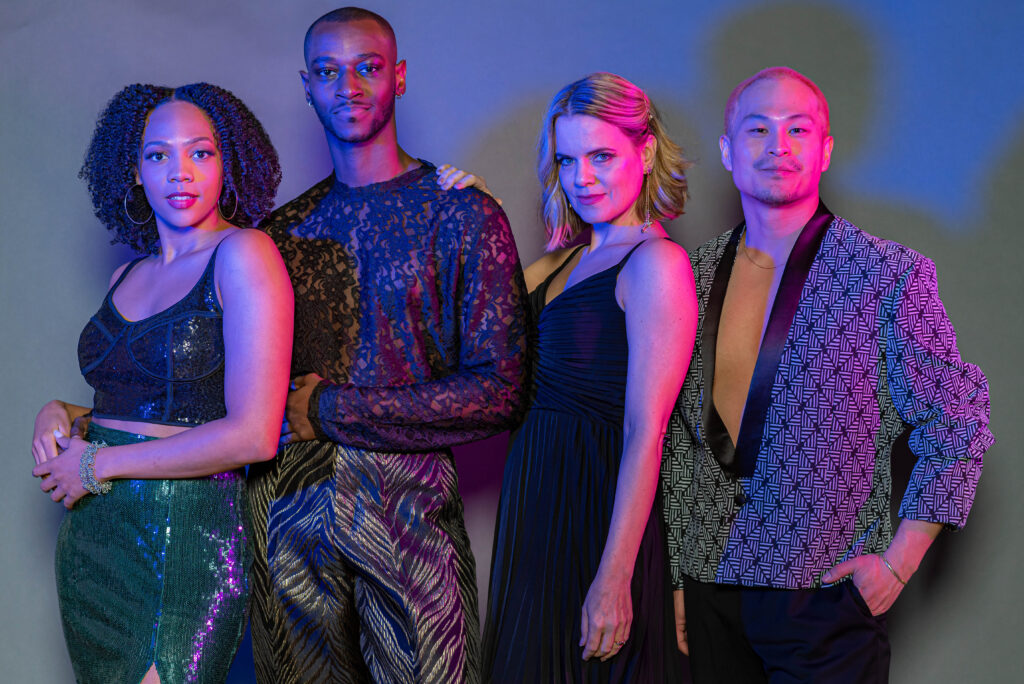
Phoenix Best, Paul HeeSang Miller, Saidu Sinlah and Amy Spanger are the quartet of singers that rarely appear as a cohesive unit. Think of it less as side by side and more as standing by themselves and not in sync with the others.

Their ‘70s-style Vegas dance moves, designed by Heather Beal, are at different stages and they often appear lazy and repetitive as they ‘do their own thing.’

Not sure where the disconnect began, especially when you have 28 songs spanning Sondheim’s landmark canon. Perhaps the addition of an older, seasoned vocalist or two would have helped ground it – the revue cast has shifted over the years, and once had a female trio, not duo. And the two here are not up to any kind of heavy lifting together for the vocal demands of Sondheim.

Given Sondheim’s penchant for games and puzzles (the film “Glass Onion: A Knives Out Mystery” is dedicated to him, and he makes a brief appearance), the mystery is thus: Have these singers ever been in a Sondheim show? Seen one?

Was there a vision for the production other than let’s slap-some-Sondheim tunes together? Reggie D. White, the new associate artistic director, took charge of this runaway train, which seems like an afterthought, and it never felt polished or had much pizzazz the entire runtime.

The range of unprepared musical numbers is the most blatant misstep. Occasionally, the harmony works, but mostly, we have singers not able to stick the landing, which is criminal with Sondheim.

Yes, his music is challenging and complicated. You need singers at the top of their game, but you also need singers who feel the emotional level of his work. He’s all about the feels. You can’t fake it. Finish the hat, dammit!

The man reinvented the modern musical, and we’re reducing his music to punch lines? That seems the focus here — let’s milk as much for laughs as possible, the bawdier, the better.

This revue is two hours and 15 minutes, with a 15-minute intermission. The sections are tied together by a narrator, who explains a common theme or background about a song. Or nuggets like how Oscar Hammerstein was a mentor.

Veteran pro Alan Knoll is charming and witty as the narrator, knowing how to work a crowd. He provided interesting tidbits about Sondheim’s recurring themes, particularly marriage. He was a late addition to the cast, hence, the notecards. (The program originally listed Miller as the narrator).

Sondheim’s collaborations with other composers – Jule Styne, Leonard Bernstein, Mary Rodgers, and Richard Rodgers among them – are an important part of the narrative here. And Knoll points out his lesser-known works, for laughs.

But it shouldn’t be all Shecky Greene-yucks without the perspective of the man’s greatness. This cast seems incapable of grasping his lyrical complexities and the level of sophisticated music, especially when they are in sequined and gaudy outfits going through awkward motions. (White satin hot pants, really?)

Costume Designer Oona Nateson has found a theatrical grab bag of ubiquitous black apparel augmented by shiny fabrics, leather pants and unnecessary sequins, some of it ill-fitting for their frames. The junior high talent show called and needs their hot pink satin disco shirt back.

After Sondheim’s death at age 91 on Nov. 26, 2021, the world put his loss in perspective and the tributes haven’t stopped.

His work should never be a museum piece – it should be as vibrant as ever – witness “Company” winning a Tony last year for Best Revival of a Musical and an acclaimed version of “Into the Woods” that kept being extended until recently, with plans of it touring (I saw this sublime stunner at the St. James Oct. 1, with Patina Miller, Joshua Henry, and Gavin Creel. It’s a must-see for the ages.). Locally, we had two superb “A Little Night Music” presentations last year, at Union Avenue Opera and Stray Dog Theatre, and the Muny’s resplendent “Sweeney Todd,” which we will be talking about for years to come. A brilliantly interpreted “Assassins” was staged by Fly North Theatricals last summer.

So, the lack of nuance in favor of a good-time variety hour reminiscent of one of those summer replacement shows networks were fond of back in the 1960s and 1970s, is perplexing.

Could we not be entertained merely by exquisite vocals transporting us to various times and places? The sense of wonder and human connection that often arises when a Sondheim show delivers a moment is nowhere to be found here.

To my surprise, Tre’von Griffith is listed as the music director, and I had more faith in his ability to interpret Sondheim’s genius. Did the creatives underestimate the time necessary to put it all together?

Sadly, the songs from “Company” and “West Side Story” seem the most adversely affected, like when those singing “Tonight” can’t hit the upper notes, and it is painful. The women’s duet, “A Boy Like That” is OK until it veers into a wobbly rendition of “I Have a Love.”

The women forgot lyrics to “Getting Married Today,” which is performed slower in tempo than usual, lacking the punch of the original.

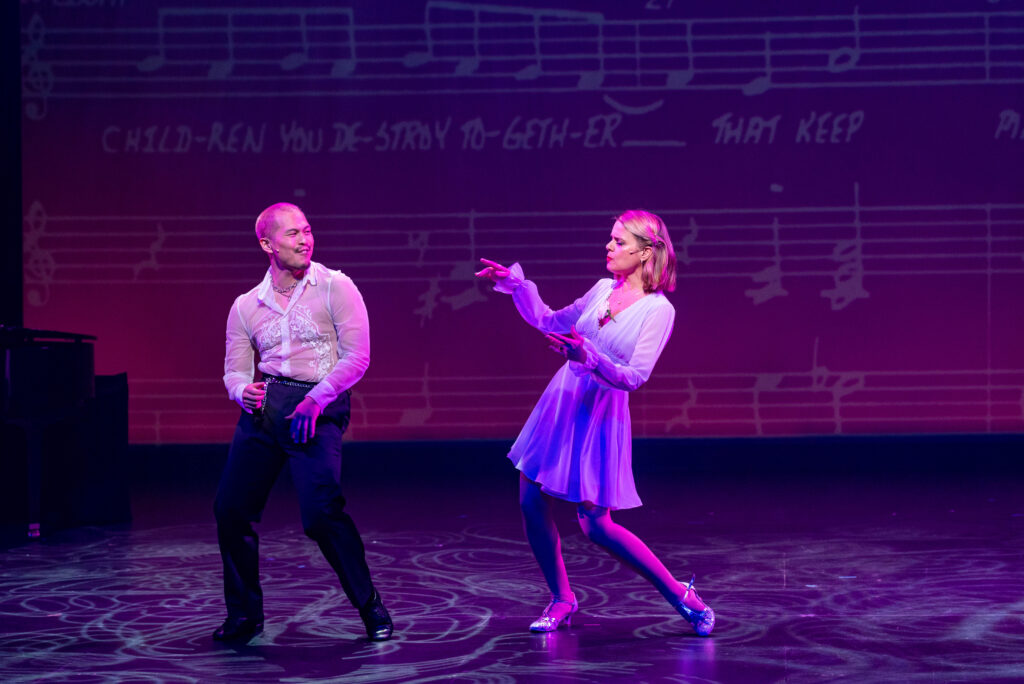
Amy Spanger is entrusted with singing “Another Hundred People,” and several other big numbers that she is incapable of nailing, and it’s a travesty. The weakest link of the four, she has difficulty staying on key and enunciating, and instead, often goes for broader dance moves – and tugging at her too-tight sequined mini-dress.

During “Broadway Baby,” the LED screen shows some of her Broadway roles behind her, including Roxie Hart in “Chicago,” as if to remind us she’s been on a big stage before. Her list of credits is extensive, that’s why it’s so hard to believe she can’t hit notes. Her casting is a head-scratcher as she is clearly out of her depth.

Paul HeeSang Miller started strong, with Company’s restored gem “Marry Me a Little,” and so did Saidu Sinlah with “I Remember,” from “Evening Primrose,” but he faded fast, incapable of rising to the occasion the rest of the show.

The four don’t seem to have much chemistry and relied on the vaudeville-type schtick for laughs.

Because of these lackluster renditions, you find yourself thinking of better versions that you’ve heard before. I’m just grateful this is an earlier revue, so they don’t ruin “Into the Woods,” “Assassins,” “Sunday in the Park with George,” “Sweeney Todd” and “Merrily We Roll Along” in any way.

Phoenix Best, who benefits from a comedic approach to some numbers, delivers an effective “I’m Still Here” and “Send in the Clowns,” but tended to go louder when unsure during other numbers. Her solos were often introduced with her making an entrance to build up the drama.

The women often relied on ‘kittenish,’ playing up the double entendres in “Can That Boy Foxtrot,” which was cut from “Follies.”

In a slinky leotard, Best stretched out “I Never Do Anything Twice” from the film, “The Seven-Percent -Solution,” using a chaise lounge to drape herself over.

And the crowd-pleaser, “You Gotta Get a Gimmick” by the strippers in “Gypsy,” draws laughs over the women’s well-placed percussion.

Those unfamiliar with “Follies” get a lesson on different musical styles, especially vaudeville, but then Spanger attempts “Losing My Mind,” and it was my clench-fist time. I may have blurted out “Please don’t let her sing this” instead of just thinking it to myself. (Sorry to my neighbors).

The guys singing “Bring on the Girls” is nearly laughable.

Paul HeeSang Miller, Amy Spanger. Photo by Philip Hamer

When the show delves into the lesser-known works, expectations are lowered, but the butchering of “Pretty Lady” from “Pacific Overtures” by all four was excruciating. Was anyone on key?

The production design by Camilla Tassi consists of slides showing Sondheim at various stages of his life, and the New York milieu, which is so important to his work.

If you are a Sondheim fan, one can appreciate accompanists Stephen A. Eros and Kris Pineda, whose piano work is stellar.

The sound, designed by Sharath Patel, however, has some rough moments.

But the whole affair smacks less of collaboration and more self-preservation than any serious performance piece. When they move four chairs around on the set, I was reminded of the deck of the Titanic, where the band played as doom closed in around them.

This production should not be considered an introduction to Sondheim, for you can find multiple tributes online that celebrate his artistry in better ways.

The outstanding documentary, “Six by Sondheim,” is currently streaming on HBOMax, and can be rented on various video on demand platforms. This is a sensational piece that tells you all you need to know, and is time much better spent than at COCA.

One wonders why this show replaced another Sondheim revue, “Putting It Together,” from 1992, which had been on The Rep’s schedule.

But this is a colossal waste of resources – there needed to be an assistant costume designer, assistant sound designer and two assistant directors?

The man who won eight Tony Awards, an Academy Award, eight Grammy Awards, a Olivier Award, a Pulitzer Prize, a Kennedy Center Honor, and a Presidential Medal of Freedom deserved better.

If you are not going to give Sondheim his proper due, then what’s the point? Maybe start by hiring singers who have the compatible vocal range for the songs?

The Repertory Theatre of St. Louis presents “Side by Side by Sondheim” from Jan. 29 through Feb. 19 at the Catherine Berges Theatre at the Center for the Creative Arts (COCA). For more information or tickets, visit www.repstl.org.

Phoenix Best, Saidu Sinlah, Amy Spanger, Paul HeeSang Miller. Photo by Philip Hamer.