
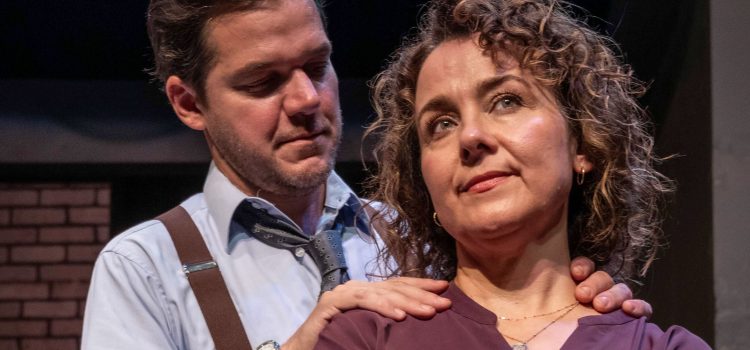
By Lynn Venhaus
Messy and unflinching, “The Mercy Seat” is a complicated relationship play between two New Yorkers in the immediate aftermath of Sept. 11, 2001. At the time of a monumental national tragedy, lovers Ben Harcourt and Abby Prescott are preoccupied with their own lives, not the missing and dead as those numbers climb.
In the Neil LaBute two-hander, first staged in 2002, the thorny dynamic between these two is difficult because the characters are morally bankrupt. And the uncomfortable setting is often claustrophobic, as intended.
After the 25th anniversary commemorating the lives lost that day on Friday, anyone seeking reflection or comfort may be shocked by this unexpected selfish take, for this doesn’t reflect mourning or any insight into universal 9-11 grief, or commentary on national unity.
But those familiar with LaBute’s signature edgy plays won’t be surprised by this brutal battle of the sexes as they sort out or attempt to make sense of being together. Because of the unprecedented attack on the nearby World Trade Center the day before, right at their doorstep, the world has changed overnight.
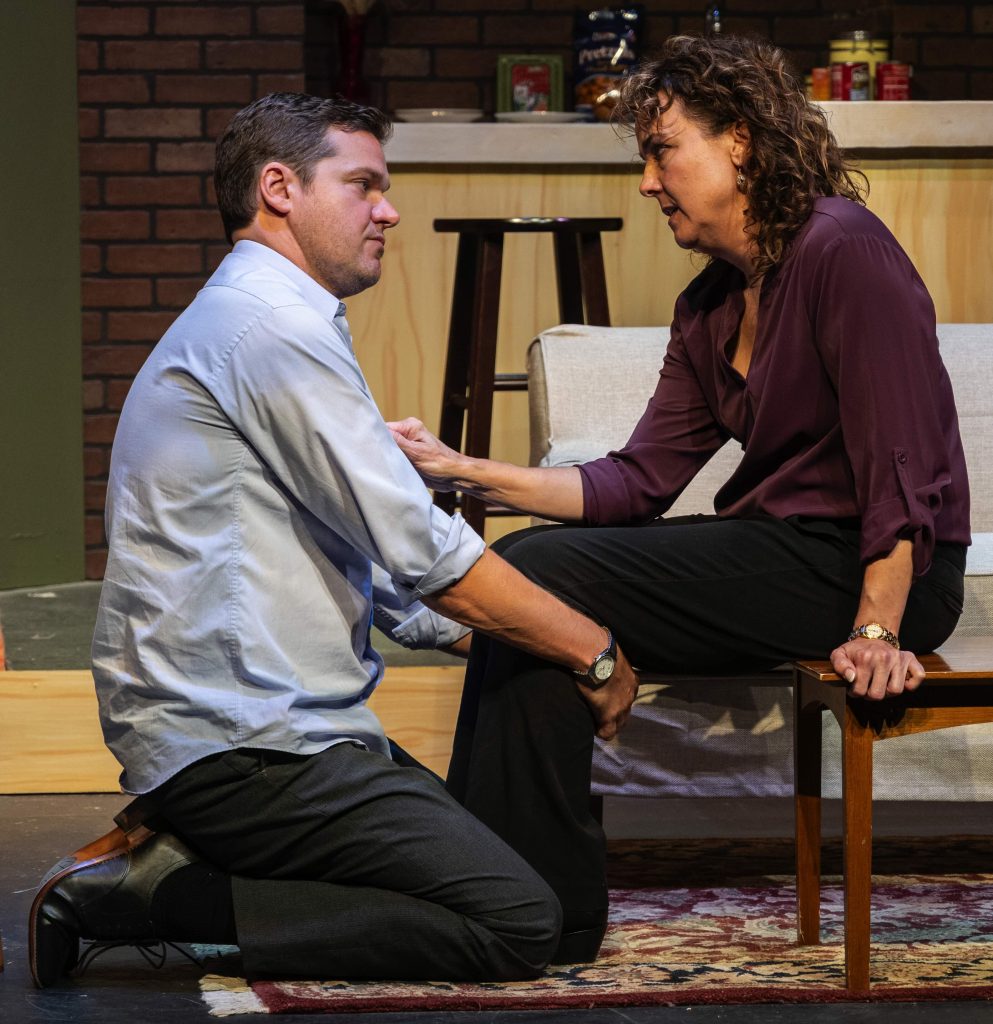
This pair, once in a thorny situation, may have more options available because of everyone’s disrupted lives. But how opportunistic are these thoughts and ideas? And how awful are they to even think of a convenient solution?
Franklin Killian and Kelly Schnider, making their St. Louis Actors’ Studio debut, are remarkably adept at the playwright’s rapid-fire dialogue, which creates a certain kind of rhythm that is emphasized in John Pierson’s direction.
Pierson’s nimble staging makes the most of the Gaslight Theatre’s intimate black-box space. The conversation is a power struggle that features frank sex talk and explicit language. Ben is cynical, Abby is bitter– and vice versa.
She is his superior, and older. He is married with children. In the Old Testament, “The Mercy Seat” carries the idea of the removal of sin. But they’re not getting off easy here.
The rawness of the bruised feelings, the surprise – and anguish – of what the other is thinking, and saying out loud, is apparent in the emotional interactions. Nothing is important and everything matters; such is the way LaBute creates the ebb and flow between two strong personalities flailing about on a day after the nation went numb.
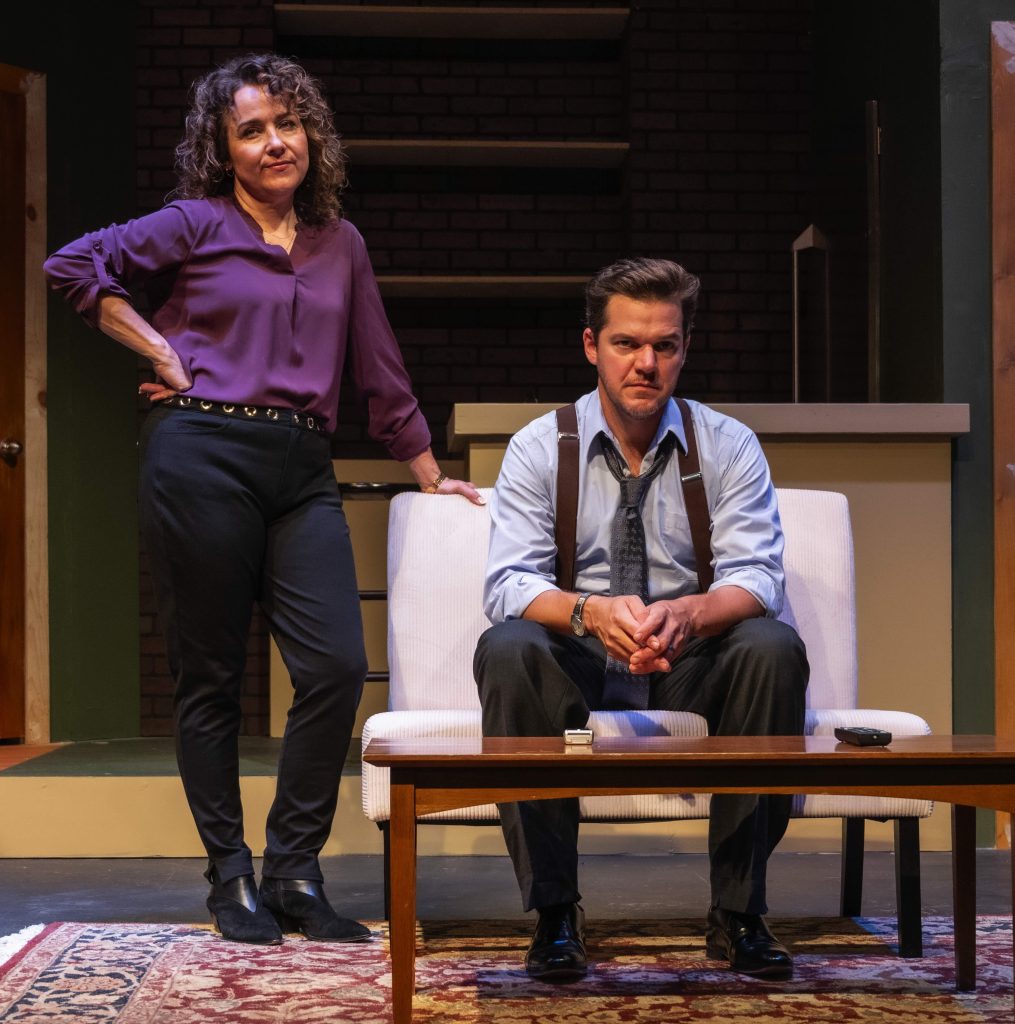
In momentary panic, each blurts out thoughtless remarks at each other, capitalizing on what they view as character flaws. What is it that they ever liked about each other – is it only sexual desire? And how self-absorbed is that? Are they both manipulating each other?
In the new upside-down interrupted world, is it worth maintaining their affair, breaking off or making a deeper commitment? Endgame questions that seek immediate answers. The wordplay is intense, and even in a twisty finish, prioritizes themselves.
Set and lighting designer Patrick Huber has created an efficient apartment setting without any windows on the world – but there is a door where a neighbor in need knocks. As the couple navigates between the kitchen and living room, the walls appear to close in on them.
Pierson also designed the sound, and the outside world intrudes through sounds of sirens and an occasionally ringing cellphone that Ben never picks up. Abby has ventured out to a store, which is no longer a simple task. Casual costumes provided by Teresa Doggett.
Kline and Killian fearlessly operate at a high level of verbal volleying, shifting tones throughout with this discomforting dialogue. LaBute intends to make us squirm – he maintains that clever, cavalier approach, and you’re either appalled or questioning your own impulses.
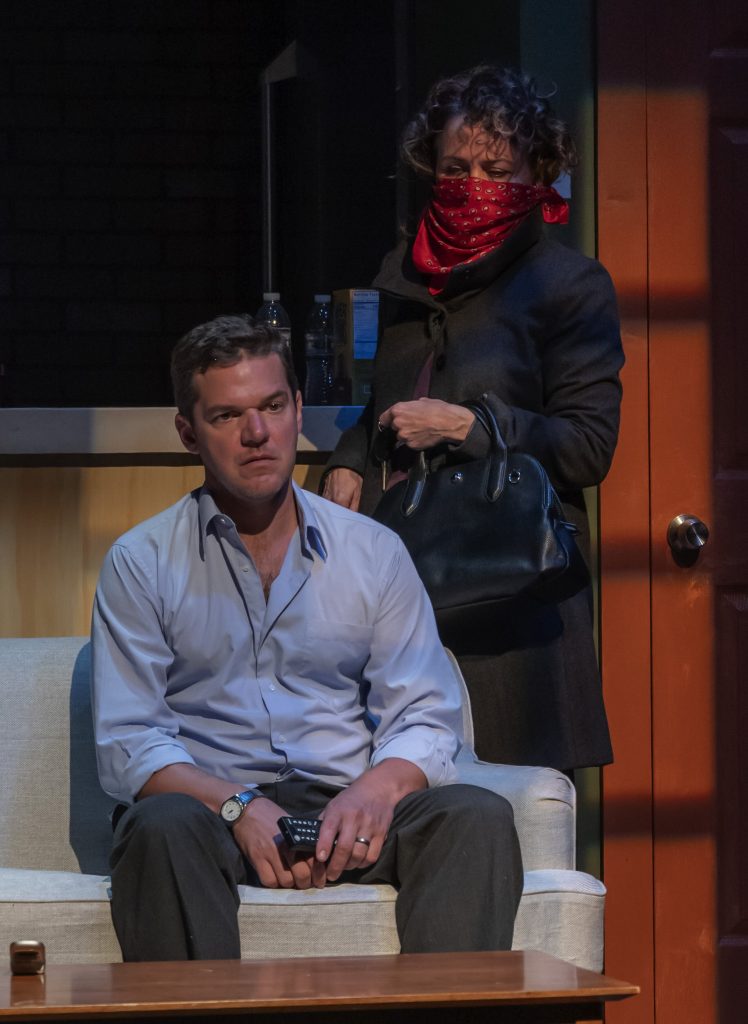
The characters aren’t sympathetic, and those involved in the production are fully aware of the ugliness of human nature and how emotionally draining this work is. But LaBute has made a career of subverting people’s expectations (“The Shape of Things,” “Fat Pig,” “Reasons to be Pretty”).
“The Mercy Seat” premiered Off-Broadway at the Acorn Theatre in an MCC Theater production on Dec. 18, 2002, and closed on Jan. 15, 2003. Directed by LaBute, it starred Liev Schreiber and Sigourney Weaver
Because of his longstanding relationship with St. Louis Actors’ Studio since the creation of the LaBute New Theater Festival in 2013, which features curated short plays, he premieres a one-act every summer.
STLAS has also performed his full-length shows, including “Comfort” in 2022 and “The Way We Get By” in 2017, and his short plays have had lasting impact: “The Possible,” “Here We Go ‘Round the Mulberry Bush,” “Kandahar,” “Hate Crime,” “The Fourth Reich,” “Great Negro Works of Art,” “Unlikely Japan,” “Who’s on First,” and “Brunch” among them.
At 95-minutes without intermission, this unsettling confrontation in a lower Manhattan apartment is an often-fascinating narrative that at times is repetitive, and the sheer verbosity can be tedious.
One can’t shake the feeling that outside, on the ash-covered streets, traumatized New Yorkers are looking for the missing and answers. But inside, this self-centered couple bypasses universal selflessness and collective grief by thinking only of soothing their disillusioned selves.
St. Louis Actors’ Studio presents “The Mercy Seat” by Neil LaBute, Sept. 11-27 at The Gaslight Theater. Performances are on Thursday (second and third week), Friday and Saturday evenings at 8 p.m. and on Sundays at 3 p.m. For more information or to purchase general admission tickets, visit stlas.org or email [email protected].

Lynn (Zipfel) Venhaus has had a continuous byline in St. Louis metro region publications since 1978. She writes features and news for Belleville News-Democrat and contributes to St. Louis magazine and other publications.
She is a Rotten Tomatoes-approved film critic, currently reviews films for Webster-Kirkwood Times and KTRS Radio, covers entertainment for PopLifeSTL.com and co-hosts podcast PopLifeSTL.com…Presents.
She is a member of Critics Choice Association, where she serves on the women’s and marketing committees; Alliance of Women Film Journalists; and on the board of the St. Louis Film Critics Association. She is a founding and board member of the St. Louis Theater Circle.
She is retired from teaching journalism/media as an adjunct college instructor.