By Lynn Venhaus

A zestful and exuberant “Anastasia: The Musical” is a crowning achievement for the Tesseract Theatre Company, which has crafted a big, bold production where every element is in harmony together.

Elegantly produced and seamlessly performed, this intriguing story centering on the legend of a Russian grand duchess is executed with remarkable skill by innovative creatives and a first-rate cast.

Impeccably staged as a swirling mix of constant motion, this adventurous blend of history, mystery and romance engaged from the jump. While this 2017 musical is not a flawlessly constructed show, the company’s determination and their lively interpretation propels it forward.

Using an abstract, intimate stage design at The Marcelle, director Brittanie Gunn, a Tesseract co-founder and creative director along with Kevin Corpuz, has focused sharply on the storytelling. The charming and well-cast 17-person ensemble’s hard work is obvious throughout this emotional journey that leads to a bittersweet finale.

The Press Conference. Photo by FF.

This ultimately is a tale of self-discovery. Gunn wanted Anya to be seen as a strong woman, and Sarah Wilkinson is believable as she works on herself – who is she and who will she become? But other characters find their purpose and their way, too.

Tesseract has been dipping its toe into musical productions for the past two years, with small-scale shows “Ordinary Days” in November 2022, “The Last Five Years” in February 2023, and “The Mad Ones” in November 2023, with its first large-cast splashy musical “Kinky Boots” in August 2023. This year, an original musical “Cascade’s Fire,” and another small-scale effort “My Heart Says Go” were previously performed.

With the ambitious “Anastasia,” they are taking a huge leap forward, and each component is impressive — Gunn’s thoughtful depiction, Zach Neumann’s vigorous music direction, choreographer Michelle Sauer’s graceful ballet and vibrant period dance numbers, and the superb technical team’s designs.

This all-ages show, which has been performed by schools, youth and community theaters in recent years but not yet by regional professional companies, features lyrics by Lynn Ahrens and music by Stephen Flaherty, whose best-known works are “Ragtime” and “Seussical.”

This grand-scale musical is adapted from the well-liked 1997 animated movie, which in turn was inspired by the 1956 “what if” dramatic film “Anastasia” that starred Ingrid Bergman in her second of three Oscar-winning roles.

The Czar’s Family Pre-Revolution. Photo by FF.

Fun fact: The animated musical’s music, composed by Ahrens and Flaherty, also featured music by David Newman, whose father, Alfred, was Oscar-nominated for the original 1956 film. This team earned two Oscar nominations for the film – musical score, and “Journey to the Past” for best song.

That power ballad is reprised in this stage musical, with a dynamic rendition by Sarah Wilkinson ending Act 1. There are five other songs from the movie, including the poignant “Once Upon a December,” and 16 new songs.

Playwright Terence McNally wrote the book, from the play by Marcelle Maurette, as adapted by Guy Bolton. While the late McNally is among the greatest, winning five Tony Awards, this result isn’t among his best. However, he shaped what could have been a too-sprawling complex narrative into several subplots that mesh well.

He has omitted the villain Rasputin and dropped the magic realism that were a major part of the animated tale, replacing the shady wizard with a formidable Bolshevik general Gleb, who seems as obsessed as Javert in “Les Miserables.” In fact, this show may remind you somewhat of “Les Miz,” only not as epic in scope.

Photo by FF.

The character Anastasia has always been enigmatic because she may or may not be who she thinks she is. The story arc begins at the twilight of the Russian Empire and moves to Paris in the 1920s, as this young woman tries to fit the puzzle together of her life.

The real story is that the royal family Czar Nicholas II, his wife, Alexandra; son, Alexis; and four daughters, Olga, Tatiana, Maria, and Anastasia, were taken captive after he abdicated the throne on March 15, 1917. They were executed by a firing squad of Communist Bolsheviks on July 17, 1918, along with four of their servants, but no bodies were immediately found. Reports were so unclear that the dowager empress, then in Crimea, doubted the news of her family’s death.

The musical begins nine years after the Russian Revolution in 1918. Legend has it that Anastasia escaped her family’s murder, but hit her head while running away, causing her to lose all her memories.

Can she reclaim the magic of her childhood? In an interesting contrast, the show flashes back to Anya as a child, and 12-year-old Devynn Phoenix is luminous in her dance sequences as both the young Anastasia and Alexia. Ella Drake demonstrates superb dancing skills in ballet sequences, also.

Ella Drake. Photo by FF.

As the grown-up Anya, she meets two conmen, Dmitry and Vlad, who are looking for a girl to pretend she is the lost princess. Wilkinson easily slips into Anya’s skin, while new-to-professional theatre Aaron Fischer is revelatory as Dmitry, and Kent Coffel, an MVP when it comes to playing comedic sidekicks, works well with both.

The men hatch their imposter plan in “A Rumor in St. Petersburg.” They tutor her, a la “My Fair Lady,” in “Learn to Do It,” then take her to Paris and plan to meet with her grandmother, because they think the Dowager Empress will give them a substantial reward for recovering this long-lost member of the royal family.

Through this process, she slowly starts to regain her memory and believes she is indeed the real Anastasia. Wilkinson’s transformation is palpable, and you see her become more radiant.

Wilkinson, who has been memorable on local stages in “Nine” and “Into the Woods,” is an accomplished singer and dancer. With an opportunity to anchor this production, she grabs it with gusto.

She shines on her solo numbers. “Once Upon a December” is wistfully delivered, as is “A Secret She Kept,” and “In My Dreams” is a touching tribute to starting over. She also possesses considerable poise and carries herself regally on stage.

Danielle Feinstein, Kimmie Kidd-Booker and Lindsey Grojean. Photo by FF.

Act 2 opens with an ebullient “Paris Holds the Key (to Your Heart)” and the chorus also has fun with “Land of Yesterday” led by the intrepid Kimmie Kidd-Booker as the lady-in-waiting Countess Lily.

Anya and Dimitry are in a budding romance that’s straight out of a Hallmark movie template, but Wilkinson and Fischer have a genuine connection. He soars in his strong vocals, especially “Everything to Win” and with Anya in “My Petersburg” and “In a Crowd of Thousands.”

Vlad reminisces about hobnobbing with the aristocracy, and his wit comes through – as does his physical comedy.

In his role as Gleb, Donald Kidd stuns with his sturdy vocals and layered characterization. “The Neva Flows,” along with Anya, showcases his vocal command, and when he realizes he has feelings for Anya, “Still.”

As the Dowager Empress, dauntless Margery A. Handy is imposing, and has a terrific song, “Close the Door.” She is as stately as Lily is goofy. Kidd-Booker is hilarious hamming it up as Vlad’s former mistress, and she and Coffel know how to create an effective chemistry in “The Countess and the Common Man,” ramping up the physical comedy.

Aaron Fischer, as Dmitry, revs up the crowd. Photo by FF.

The ensemble is quite strong, with distinctive characterizations developed by each supporting player. Tielere Cheatem, Scott Degitz-Fries, Ella Drake, Danielle Feinstein, Julia Gilbert Gaglio, Lindsey Grojean, Jaelyn Hawkins, Stephanie Merritt, Jacob Schmidt and Kelvin Urday all blend well, but also stand out as different characters.

They harmonize beautifully, and the orchestra’s vitality is noticeable. Besides conducting, Neumann is on keyboards, joining Chuck Evans on violin, John Gerdes on brass, Lea Gerdes and Joseph Hendricks on reeds, Brad Martin on percussion, and Paul Rueschhoff on cello.

The musical’s costumes are an opulent showcase, with costume designer Sarah Gene Dowling assembling a bevy of beautiful gowns, flashy vintage party dresses, textured ethereal whites, working-class garments and heavy wintry outerwear. She collected over 100 looks for this show alone.

The craftsmen meet the moment, with noteworthy sound design by Phillip Evans, lighting design by Kevin Bowman, properties design by Rachel Puleo, and scenic design by Todd Schaefer.

Kevin “Kevlar” Sallwasser was the technical director, Sarah Baucom production manager, and Marisa Daddazio the stage manager, with Bella Lucero assistant stage manager and Hannah Lohmeyer the intimacy coordinator.

Donald Kidd as Gleb. Photo by FF.

The show’s lush qualities combine with the venue’s cozy ambience to create an enchanting experience. “Anastasia: The Musical” will linger for a while. Tesseract’s mission accomplished, and it was refreshing to see how well it all came together.


Tesseract Theatre presents the musical Anastasia Thursdays through Saturdays at 8 p.m. and Sundays at 4 p.m., Nov. 14 – 24. Performances take place at the Marcelle Theatre in Grand Center. For more information: www.tesseracttheatre.com.

Facebook Comments

By Lynn Venhaus

Two life-affirming original one-acts grab the heart through humor and genuine emotion for a moving night of original stories in “As Told By Us” presented by Prison Performing Arts’ Alumni Theatre Company.

Featuring works by two Missouri playwrights who have written from their heart about home, both strike universal chords with their observations on life, love, loss and surviving despair, heartaches and regrets. These are characters that feel real.

“Go Before I Do,” written by Hazel McIntire, features Katherine Leemon as a world-weary mixologist working at a craft cocktail bar. In walks a daughter who is meeting her father for a drink.

Jocelyn Padilla plays a sophisticated, well-traveled woman, and her dad, played by David Nonemaker is a typical Midwest good guy who likes simple things, and simple pleasures. They are dealing with the loss of their mother and wife – in different ways.

Under Eric Satterfield’s direction, it’s a lived-in portrait, warm with humor from quoting “The Golden Girls” but also expressing the aches of loss, and the daunting task of moving forward.

Jocelyn Padilla and David Nonemaker. Photo by RayBayCreates.

The characters explore grief and loss as they grow and learn to understand. Its emotional impact sneaks up on you when you least expect it. “Go Before I Do” was first presented by SATE at their Aphra Behn Festival in 2022.

It’s a good start to this two-act program, setting the table for “Don’t Be a Hero, Thank You.”

Leemon, who played the bartender in the first one-act, is the playwright of the exceptional “Don’t Be a Hero, Thank You.” Be prepared for its emotional wallop as force of nature LaWanda Jackson is raw and vulnerable in a remarkably honest performance.

Jackson mesmerizes in a hard-fought journey to make sense of her incarceration and moving beyond those years with self-acceptance, and a desire to be everything she can become.

Directed by Rachel Tibbetts, the play unfolds with warmth, humor, sweetness, light, interesting observations and outlooks on life. When everything is taken from you, how do you bounce back and re-enter society?

Kristen Strom and LaWanda Jackson. Photo by RayBayCreates.

This tale also tackles friendship, with Kristen Strom in several supporting roles. When Jackson talks about what it means to be a contemporary woman, she is as funny as a stand-up comedian delivering a monologue. Sarcasm with a smile, delivered sincerely. But she always keeps it real, and her ability to express a full range of emotions in that one-act is impressive..

Jackson’s work is one of my favorite performances of the year, and the play one of the candidates for Best New Play.

The tech work is crisp, with Bess Moynihan’s astute lighting design and a set design that’s reveal is best not spoiled (misty-eyed memories!), Brian Dooley’s expert sound design – and deft needle drops, and Tyler White’s modern casual costume design. Eric Satterfield’s project designs are also noteworthy.

In the intimate confines of the Greenfinch performance space, Prison Performing Arts presented a cozy, comforting environment to share beautiful stories about going through the hard knocks of life and coming through the other side. Poignant and powerful, they resonated deeply because two pieces were a sample of joy that can be found in the unlikeliest of places and with unexpected connections.

PPA presents “As Told By Us” Thursday through Sunday, Nov. 14-17, at the Greenfinch Theatre & Dive 2525 S. Jefferson Avenue, St. Louis, Mo 63104. Sunday matinee at 2 p.m., evenings Thursday – Saturday at 7:30 p.m. Tickets can be purchased through Purple Pass. For more information, please visit www.prisonperformingarts.org. Content warning/Trigger warning:Be advised that this production contains mature content and references to suicide.

LaWanda Jackson as Kate spills her life story. Photo by RayBayCreates.
Facebook Comments

By Lynn Venhaus

A movable feast of tumbling ideas and kernels of wit, “Wolf Kings” is an inspired piece of inter-disciplinary performance by indomitable producing partners Maggie Conroy and Chuck Harper of YoungLiars.

The producers say they like to set hearts and minds on fire with bold theatricality, and this one has plenty of sparks to ignite. Written and directed by Harper, it’s a one-act fusion of original thought, critical thinking and re-imagined classics that are mysterious puzzle pieces in a larger picture designed to provoke and engage.

Back after a five-year hiatus, the avant-garde troupe was known for interpreting works in a lyrical and collage-like way, comparable to the like-minded experimental theater companies SATE and ERA.

They all draw from a close-knit collective that understands their assignments in interpreting these works. These performers don’t do dull – they bend, stretch and draw from literature to make statements and explore possibilities of live theater.

In “Wolf Kings,” a lionhearted quintet of women and that one-man band Cassidy Flynn take us in multiple directions, and the enigmatic journey appears to start in a Parisian literary salon.

With clever nods to fairy tales, Victorian theatricals, and French writers, Conroy and Harper adapted text and were inspired by the writings of Angela Carter, Alphonse Daudet, Marie de Rabutin-Chantal Sevigne, and Benjamin Walker.

Maggie Conroy and Kay Ailee Bush.

The ensemble had input as well as to shaping what their weekly gathering to ‘divert, distract and delight each other’ would be. Conroy role plays, as does Ashwini Arora, Frankie Ferrari, Keating and Kay Ailee Bush, who show up as if they are visiting Gertrude Stein’s studio at 27 Rue de Fleurus.

Their similar attire suggests a performance within a performance, setting the stage for quick changes – and revolving around a red cape. Marcy Wiegert designed the costumes to reflect a cabaret quality, then transforming into characters.

Flynn arrives, insistent to crash the clandestine soiree. But this eclectic mix – one arrives carrying a hatchet – isn’t exactly a book club although they are smart and could be hobnobbing with Zelda and Scott Fitzgerald, and other intellectuals and philosophers.

Balancing comedy and drama, the players are modern Bohemians who enjoy each other’s company. They demonstrate their verbal dexterity with a fun parlor game called “Compliments,” and quick-witted conversations ensue.

They play vinyl records, offering interesting needle drops for a dance party where they execute precise movements, choreographed by Mikey Thomas. Sound board operator Morgan Schindler, following Harper’s sound design, keeps us on our toes.

Eventually, they land on cloak-and-dagger storytelling, where they probe issues related to the Brothers Grimm fairy tale “Little Red Riding Hood,” but also 17th century folk tale versions. Converging in that proverbial cabin in the woods appears to be somehow connected to Angela Carter’s feminist short stories “The Company of Wolves,” “Wolf-Alice,” and “The Werewolf.”

Cassidy Flynn and Keating.

Who exactly is in danger and how straying from the path can be interpreted are given different options. Some characters go through metamorphosis, and there’s a sharp menacing turn as lines are blurred between those oppressed and who is oppressing in the forest. The actors display a passion and a purpose.

Lighting designer Morgan Brennan enhances the paradoxical elements.

While viewers may not understand where the playwrights are taking us, one constant is unpredictability. The group’s keen observational skills are intriguing to watch unfold through a tight-rope edge.

Because of the perceptive performers and their finely tuned interplay, the evening’s theatrical “Wolf Kings” challenges us as it entertains – taking us in bold directions as we try to find our way.

YoungLiars presents “Wolf Kings” Thursdays through Saturdays at 8 p.m. from Nov. 7 to Nov. 23 at The Chapel, 6238 Alexander Drive in Clayton, Mo. For more information: www.youngliarstheatre.org.

Frankie Ferrari and Kay Ailee Bush.
Facebook Comments

By Lynn Venhaus

Whatever the imaginary magical Christmas feeling we crave to experience every year at this time, we seek it out in holiday traditions, seasonal foods, songs and movies – whether fantasy or funny.

Granted, most holiday movies are a license to print money. A certain greeting card company’s cable television channel churns out cheery Christmas fare for days on end starting when leaves are still on the trees.

Make no mistake, commerce-driven craftsmanship is manufacturing all the warm and fuzzy, and none of the emotions “Red One” is trying to elicit are earned. This poorly executed family fare will live on eventually streaming on Amazon Prime video. Its clash of tones is irritating, but nevertheless, there are elements that can make either the naughty or nice list.

When a villain kidnaps Santa Claus (JK Simmons) from the North Pole, an E.L.F. (Extremely Large and Formidable) operative (Dwayne Johnson) joins forces with the world’s most accomplished tracker (Chris Evans) to find him and save Christmas.

With an abundance of twinkly tinsel, the slickly made fast-paced fantasy action comedy is the latest attempt to please both adults and children alike – and it is likely to be a major crowd-pleasing hit, if the preview audience’s reaction is any indication.

However, upon critical analysis, it’s an overstuffed stocking too big for hanging on the mantel because it sags with extra weight.

“Red One” is altogether too much – aggravating over-the-top computer-generated images (CGI), big beefy actors going through the motions imitating standard characters, derivative storylines from better films, and an overload of shiny distractions. The film cost $250 million to make. And it’s 2 hours and 3 minutes’ long.

The goal is to thwart gigantic gnarly shape-shifting evildoers to save Christmas. Sure, let’s scare the little kids in between the holly and jolly.

With parts both dark and light, weird and wonderful (who wouldn’t want to live and work in Santa’s extravagant futuristic village?), and an occasional sliver of charm and good humor, “Red One” tries to be all things to everyday people, like an all-you-can-eat buffet pre-global pandemic where the budget cuts of meat are over-sauced.

You might have seen the bounteous plot strands before: derelict dad learns the meaning of Christmas after bonding with the son he chose to neglect—reminiscent of “The Santa Clause” from 1994 starring Tim Allen; a Santa Claus kidnap plot in “The Christmas Chronicles” from 2018 starring Kurt Russell; a wintry North Pole wonderland looking like “The Polar Express” with touches of “Elf”; animals out of “Narnia,” and an assortment of ne’er-do-wells, cretins and bad behavior a la “Bad Santa,” “A Christmas Story” and “Jingle All the Way.”

And that’s only the tip of this iceberg. “A miniature sleigh and eight tiny reindeer”? Ha! Santa’s sleigh is souped-up, a marvel of technology that could have been crafted by NASA scientists. The “eight tiny reindeer” that Clement C. Moore wrote about in his “Twas the Night Before Christmas” poem are huge hulking beasts.

JK Simmons created a fine Father Christmas, a good ol’ sincere Nick, who doesn’t have a round belly that shakes like a bowlful of jelly because he’s fit as a fiddle. He works out so he can visit every single home around the world in one night – and sample the cookies left for him. But because he is being held hostage for most of the film, we only experience his delightful performance as bookends.

In a crazy conflict, his adopted brother is Krampus (Kristofer Hivju). This subplot is where it turns nasty and gross, for the mythology surrounding the horned figure is as a punisher of the bad kids.

The mastermind of the nefarious plot is Gryla, a witch who’s got a bee in her bonnet about how the naughty kids don’t really receive the consequences they deserve. She is played, with a lot of CGI enhancement, by Kiernan Shipka, best known as Sally Draper on “Mad Men.” Here she wears glossy dark lipstick and has an ominous magnified voice.

It’s a ridiculous premise, written by Chris Morgan, who is responsible for three “Fast and Furious” franchise scripts that I thought were written by chimps, and Hiram Garcia, who wrote one episode of “Young Rock” and produced two “Jumanji” movies directed by Jake Kasdan, who was at the helm here.

Kasdan is known for broad satire and has missed the mark before in the raunchy “Bad Teacher” and goofy “Walk Hard: The Dewey Cox Story.” This mash-up is just bizarre, devoid of any genuine sentiment, like a chase-based videogame being played while a fake fireplace is on the television screen. Let’s go to a tropical island with babes in bikinis and attacking snowmen — and Nick Kroll as a bad guy!

Among the vacuous thinly developed characters is Jack O’Malley played by Chris Evans, in selfish cad “Knives Out” mode. A revered hacker and tracker who is supposed to be a legend in the high-tech espionage world despite being a scoundrel in real life. He does have a few earnest moments with Wesley Kimmel, who plays his son Dylan (and is a nephew of Jimmy Kimmel).

He’s enlisted to help the very serious Callum Drift, who is Santa’s head of security – of course, it’s Dwayne Johnson in a role he could do sleepwalking. Do not expect a bromance.

Totally wasted is Lucy Liu as a director who oversees the elaborate Santa compound, and the marvelous Bonnie Hunt as Mrs. Claus. Their screen time is as miniscule as a funny bit with real trolls working the cyber-security detail.

Naturally, filmmakers pepper the soundtrack with some snappy Motown-type versions of Christmas classics, distracting from the movie’s flaws with jingly bells.

Everything is wrapped up in a big red bow.  For some viewers, “Red One” is a pleasant holiday movie. For others, it’s time to let out a cranky ‘Bah, Humbug” and turn to a comforting old favorite.

“Red One” is a 2024 action-comedy-fantasy movie directed by Jake Kasdan and starring Dwayne Johnson, Chris Evans, JK Simmons, Kiernan Shipka, Kristofer Hivju, Nick Kroll, Lucy Liu, Bonnie Hunt and Wesley Kimmel. It is rated PG-13 for action, some violence, and language, and its runtime is 2 hours, 3 minutes. It opened in theaters Nov. 15. Lynn’s Grade: C-.

Facebook Comments

By Lynn Venhaus

Complicated family ties and honoring Jewish heritage are explored in the heartfelt “A Real Pain.” With its strong emotional pull as two once-close cousins reconnect, the comedy-drama is often amusing but also tinged with melancholy. After all, it is a Holocaust tour, and a reverent one at that.

A Real Pain” follows mismatched first cousins David (Jesse Eisenberg) and Benji (Kieran Culkin) who reunite for a tour through Poland to honor their beloved grandmother. The adventure takes a turn when the odd couple’s old tensions resurface against the backdrop of their family history.

Following the adage ‘write what you know,’ writer-director Jesse Eisenberg brings an appealing earnestness to his labor of love. When the cousins visit their grandmother’s home in Poland, this location is actually where Eisenberg’s real-life ancestors settled in diaspora.

In his second directorial effort, Eisenberg is in his acting comfort zone as an uptight worrywart who is a responsible, dedicated family man. (His real-life son Banner is seen briefly as David’s little boy Abe.)

He reveals a remarkable knack for storytelling, and his deft direction makes for a lean 90-minute odyssey where the pair discover themselves and move forward with far more understanding.

Eisenberg, who came to prominence in “The Squid and the Whale,” earned an Oscar nomination as Mark Zuckerberg in “The Social Network,” and has amassed a varied range of roles, including “Zombieland,” “Now You See Me,” “Rio,” two Woody Allen movies, and one of my favorites “The End of the Tour.”

He has terrific chemistry with scene-stealer Kieran Culkin as his free-spirited chatty first cousin who seemingly breezes through life as a carefree adult unencumbered by responsibilities.  In first impressions, he’s fun, funny and rarely uses a filter in conversations, making friends easily.

Culkin’s moving, multi-layered performance as the adrift man-child Benji may just earn him an Oscar nomination for Best Supporting Actor, and for sure he’ll be on the shortlists for other year-end awards consideration. Emmy winner for his role as Roman Roy on HBO’s “Succession,” Culkin’s verbal dexterity and his natural mannerisms are effortless in creating a relatable Benji as someone you know.

Growing up, the boys were very close, as their dads were brothers. But through the years and with different lifestyles, they grew apart. This trip to honor their grandmother, a Holocaust survivor, is an opportunity to renew their bond. As the journey progresses, they have their ups and downs. Benji is more troubled than at first glance, and David’s persnickety nature can be annoying.

Because they are traveling in a group, their behavior affects others. Their fellow travelers include a nearly unrecognizable Jennifer Grey as a newly divorced woman Marcia, Kurt Egiywan as Eloge, who escaped a genocide in his Rwanda homeland, and Liza Sadovy and Daniel Oreskes as a married couple, Mark and Diane.

The efficient tour guide James, played by an affable Will Sharpe, is criticized by Benji for not connecting enough to the people in the towns they visit, instead of just regurgitating facts.

The film’s power is disarming, for it packs an emotional wallop, especially in exploring the Holocaust aftermath, the Majdanek concentration camp, and the effect of loss and grief on Benji.

Eisenberg’s nimble narrative brings up the pair’s old misunderstandings and resentments as they bicker, but they have one thing in common: love for their grandmother, and that resonates. We do get a finely drawn, compelling portrait of these individuals.

They remember the family love fostered, and do care for each other, which is obvious when David worries about Benji being lonely.

A breakout hit at the Sundance Film Festival, “A Real Pain” was nominated for the Grand Jury Prize and Eisenberg won the Waldo Salt Screenwriting Award. He also won the Humor and Humanity Award at the Heartland Film Festival and Culkin is a nominee for a Gotham Independent Film Award. This isn’t going to be the end of their awards journey.

The cinematography by Michael Dymak subtly makes statements, while the editing by Robert Nassau makes the story flow well.

Warm and genuine, “A Real Pain” is that rare film that intimately speaks to us so eloquently, yet is universal in intentions, thus making a lasting impression.

“A Real Pain” is a 2024 comedy-drama written and directed by Jesse Eisenberg and starring Jesse Eisenberg, Kieran Culkin, Jennifer Grey, Will Sharpe, Liza Sadovy, Daniel Oreskes and Kurt Egiywan. It is Rated R for language throughout and some drug use, and its runtime is 90 minutes. It opened in local theatres Nov. 15 and was the opening night film at the St. Louis International Film Festival. Lynn’s Grade: A.

Facebook Comments

Prison Performing Arts is excited to present two plays written by PPA Alumni Theatre Company members. The first, Go Before I Do, written by Hazel McIntire and directed by Eric Satterfield, featuring Katherine Leemon, David Nonemaker, and Jocelyn Padilla, is set in a bar in the nightlife district which becomes a portal into others’ lives as drinks are poured and memories made. A daughter lives through the loss of both of her parents in the span of a few short years, which is viewed by her faithful bartender. A view of the world seen by the often unseen, Go Before I Do is a story of growth, exploration, and understanding. This play was originally produced for SATE’s Aphra Behn Festival in 2022. 

The second is a brand-new play, Don’t Be a Hero, Thank You, written by Katherine Leemon and directed by Rachel Tibbetts. Featuring LaWanda Jackson and Kristen Strom, it is about life, friendship, and reentry. Don’t Be a Hero, Thank You takes a tongue-in-cheek look at what it means to be a contemporary woman. 

The production ensemble includes Jim Bernatowicz (stage manager), Brian Dooley (sound designer), Bess Moynihan (set/lighting designer), Eric Satterfield (projection designer), and Tyler White (costume designer).

Performances are Thursday, November 14, 2024, 7:30 PM, Friday, November 15, 2024, 7:30 PM, Saturday, November 16, 2024, 7:30 PM, and Sunday, November 17, 2024, 2:00 PM. All performances will be held at Greenfinch Theater & Dive, 2525 S Jefferson Ave, St. Louis, MO 63104. Tickets are $25 and can be purchased through PurplePass. For more information, please visit www.prisonperformingarts.org

Founded in 1999 by Agnes Wilcox, Prison Performing Arts (PPA) is a multi-discipline, literacy and performing arts program dedicated to enriching the lives of youth and adults in Missouri’s criminal and juvenile justice systems. PPA’s Alumni Theatre Company, unique in its existence as one of the only prison alumni theatre companies in the United States, is an ensemble of returning citizens who worked with PPA while incarcerated. ​The group meets on a regular basis both online and in-person to develop new material for performances, focus on skill development, and to offer support for company members. 

Both playwrights Katherine Leemon and Hazel McIntire are members of the PPA Alumni Theatre Company. Both artists give credit to PPA for shaping their approach to writing. McIntire says, “PPA has shown me so many different styles of writing, which then gave me the confidence to tackle more than just a poem. PPA promoted my self-esteem in a way that told me I could do it, even if I didn’t think I could.”

Leemon agrees, “It gave me the confidence to try something I never imagined was possible. PPA is infectious. Their unwavering belief in me, gave me the courage to at least give it a shot, even if nothing ever came from writing the play.”

Content warning/Trigger warning:

Be advised that this production contains mature content and references to suicide.

Facebook Comments

By CB Adams

The same week that I attended Dance St. Louis’ presentation of the dance company Pilobolus, I read something in Oliver Burkman’s “Four Thousand Weeks, Time Management for Mortals” that perfectly captured the experience of watching the performance: “As dancers know, when they lose themselves in the dance, synchrony is also a portal to another dimension—to that sacred place where the boundaries of the self grow fuzzy, and time seems not to exist.”

That falling – or being pulled – into that sort of reverie is one of the joys of experiencing a live dance concert in general and of being entranced by the work of Pilobolus in particular.

Dance St. Louis kicked off its 59th season on Nov. 9, at the Touhill Performing Arts Center, with “re:CREATION” by the world-renowned Pilobolus. I was eager to see Pilobolus again. I still remember fondly the only other time I have attended a Pilobolus performance – way back in college. Back then, I was as attracted to the company’s boundary-pushing, innovative and highly collaborative performances as I was to the mildly countercultural way the founding dancers took their name from a type of fungus that grows on dung and is known for its ability to launch spores toward light.

Ever since that first experience, I’ve been aware that Pilobolus has continued to evolve and thrive by focusing on their approach to physical storytelling, intricate human formations and weight-sharing choreography to create visually striking and gravity-defying performances. Their style has always seamlessly blended humor, illusion and raw physicality while embracing new technologies, shadow work and multimedia elements to expand the scope of their artistry while staying true to their signature ensemble-driven movement.

Photo by Steven PIsano

When Dance St. Louis announced the performance of Pilobolus, I was eager to witness – again – the way the company can captivate with unexpected shapes and fluid transitions. Pilobolus’ collaborative creative process, emphasizing improvisation, partnering and group-driven choreography encourages participants to explore their creativity, work together toward a common goal and discover their unique artistic voices.

The work that Pilobolus is known for was on full display throughout “re:CREATION.” The performance featured a series of interconnected pieces that explored themes of transformation, connection and human resilience. The dancers moved with fluidity and precision, creating stunning shapes and patterns that seemed to defy gravity. The performance featured:

  • “Tales from the Underworld,” a new creation that harnessed the creative energy and collaborative spirit of the company while weaving together stories that revealed profound connections through elements of horror, humor and revelation.
  • “Walklyndon,” a seminal piece in Pilobolus’ repertoire, capturing the playful essence of the company’s early days with themes of youth, playfulness and bawdy humor.
  • “Bloodlines,”: a powerful piece that delved into the concept of family and heritage, with dancers forming intricate patterns and shapes.
  • “Awaken Heart,” which explored the theme of awakening and renewal, with dancers moving in sync to create a sense of unity and hope.
  • “Branches,” a piece inspired by nature, this piece featured fluid movements that mimicked the growth and movement of tree branches. “Branches” beautifully contrasts the upward, elevated movements typical of classical ballet with the grounded, earthy movements of modern dance. This approach is reminiscent of Martha Graham’s teachings and philosophy, which often highlighted the grounded nature of modern dance. Graham’s technique emphasized movements like contraction and release, which draw energy from the core and connect the dancer to the earth. This approach contrasts with ballet’s focus on lightness and verticality, creating a dynamic interplay between elevation and grounded-ness in “Branches.”
Awaken Heart by Steven Pisano.

Oliver Burkman’s notion of losing oneself applies to both the dancers and an audience member like me. During a performance like the one Pilobolus offered in St. Louis, the audience can be transported to that same sacred place, where we become fully immersed in the experience, losing track of time and self. The seamless synchrony and captivating choreography of Pilobolus created a shared moment of transcendence, where both dancers and viewers are united in the beauty and emotion of the performance.

I have only one complaint about Pilobolus’ performance, and that is an unfulfilled desire to see some additional works from its repertoire. I would like to experience, rather than read about works such as “Shadowland,” from 2009 that shadow theater, multimedia projections and contemporary dance to create a surreal, dreamlike narrative. Another, from 2011, titled “Connected” was a collaboration with sculptor Jared Bark, in which dancers interacted with a large-scale kinetic sculpture. The piece blurs the lines between dance, visual art and engineering, demonstrating Pilobolus’s ability to merge movement with physical structures in a technologically influenced way.

I am also curious about 2021’s “UP!” that was created in collaboration with MIT’s Computer Science and AI Lab. Pilobolus worked with roboticists and engineers to explore new ways of integrating human movement with robotics and interactive technology. This project examined how artificial intelligence and motion sensors could be used to enhance live performances.

Dance St. Louis has been a leader in presenting world-class dance to the St. Louis region for 59 years. As one of the country’s oldest nonprofit dance-only presenters, Dance St. Louis brings leading dance companies like Pilobolus from across the country and beyond to local audiences. Their commitment to making dance accessible to everyone is evident through their extensive educational programs and community outreach initiatives.

Here’s hoping they can find a way to bring back Pilobolus some time soon.

Facebook Comments

By CB Adams

Timing, as they say, is everything. And Winter Opera’s sprightly production of Gilbert and Sullivan’s “H.M.S. Pinafore” succeeds thanks to all sorts of good timing.

First, Winter Opera’s timing was perfect – after the intensity of the recent elections – for anyone in need of a good laugh combined with catchy, rhythmic melodies. Yet, it was more than merely a distraction from the news cycles. It was an engaging and fulfilling experience starting from the first notes of the overture.

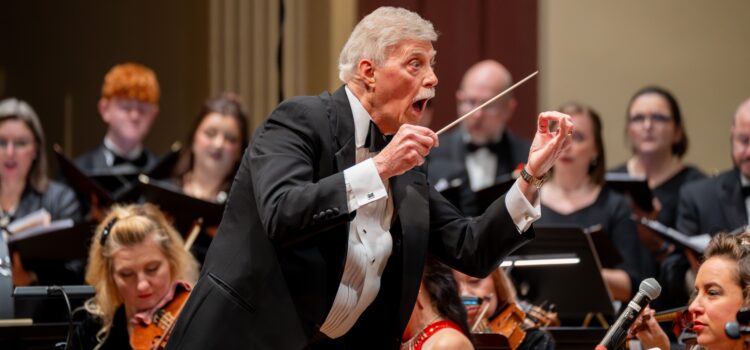
“Pinafore,” which debuted in 1878, endures because it offers both entertainment and a clever commentary on British social class and the workings of the naval hierarchy – a commentary that is relevant and nearly universal. The combined talents of conductor Scott Schoonover and director John Stephens delivered fresh vitality to “Pinafore.”

That’s a double dip of timing to Sullivan’s lively score and Gilbert’s witty lyrics – delivered with panache. Schoonover in particular captained this production’s consistent buoyancy, bright tempos and lively orchestrations.

Stephens injected contemporary energy into the operetta’s classic routines and underscored how bureaucratic absurdities and class distinctions are still relevant today.

Photo by ProPhotoSTL.

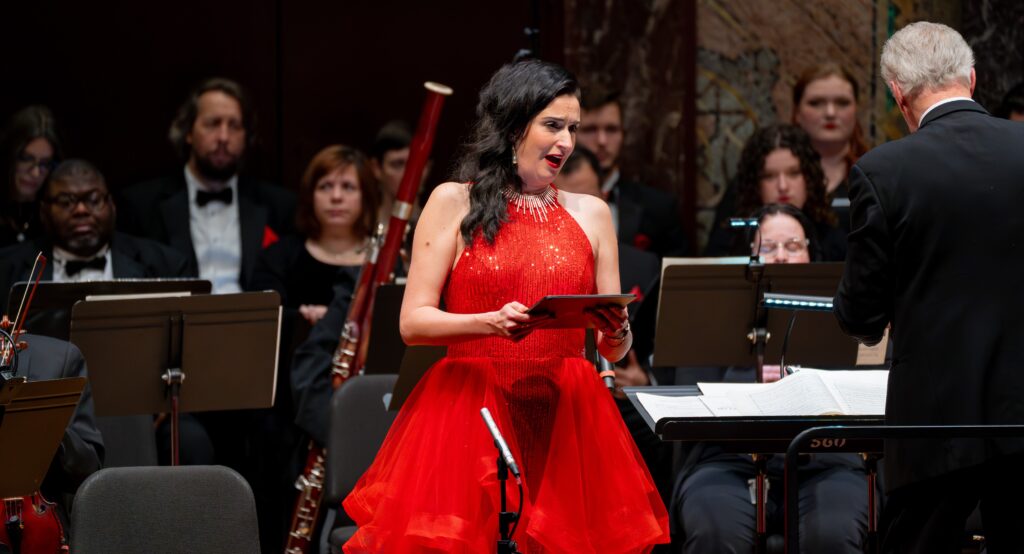
This production’s success relied on performances that combined vocal robustness with affection and irony. Brittany Hebel, as Josephine, and Brian Skoog, as Ralph, gave particularly charming performances, delivering their roles with vocal clarity and comic finesse. Hebel’s expressive soprano made Josephine’s role memorable with her strong top notes and flexibility – essential traits for Gilbert and Sullivan heroines.

Skoog’s warm tenor and cheery portrayal of Ralph added depth to their onstage romance. Jacob Lassetter’s Captain Corcoran was dignified and fatherly, effectively balancing authority with warmth. Gary Moss, playing Sir Joseph Porter, embodied the absurdity of his character with flair, delightfully showcasing Sir Joseph’s inflated self-importance as a government figure who commands the Royal Navy despite never having set foot on a ship.

More good “timing” was casting Emily Harmon in the role of Little Buttercup. She delivered playful mischief to the character, particularly in her duet “Things Are Seldom what They Seem” – a standout from the entire performance. Another was Tyler Putnam’s portrayal of the cynical seaman, Dick Deadeye. Putnam was immensely entertaining, vocally hearty, and ably added a touch of gritty realism to the otherwise farcical narrative.

Scenic designer Scott Loebl created a straightforward – and perfectly sized – quarterdeck set that captured the essence of a Victorian ship, allowing the performers’ comedic interactions to shine. Costume designer Jen Blum-Tatara and lighting designer Michael Sullivan enhanced the production’s ambiance, with era-appropriate attire and crisp lighting that brought out the unique personalities of each character.

Photo by PhotoProSTL.

Especially noteworthy were the performances of the ensemble songs that bookend the operetta: “We Sail the Ocean Blue” and “Oh Joy, Oh Rapture Unforeseen.” The first featured the chorus of sailors in a performance with definite “Anything Goes” vibes. The latter was a triumphant and celebratory rendition in which a stage full of characters happily rejoice in the resolution to the operetta’s romantic entanglements and class conflicts.

The combination of skilled musicianship, clever staging and talented vocal performances made this rendition of “H.M.S. Pinafore” a humorous, musically satisfying experience that exemplified why this operetta endures – time and again.

Winter Opera’s production of “H.M.S. Pinafore” ran November 8 and 10, 2024 at the Kirkwood Performing Arts Center.

Photo by PhotoProSTL.
Facebook Comments

Super/Man: The Christopher Reeve Story and Will & Harper Tie for Best Documentary Feature at the Ninth Annual Critics Choice Documentary Awards

Winners Revealed at the Gala Event on Sunday, November 10 at the Edison Ballroom in New York City

The Critics Choice Association (CCA) unveiled the winners of the Ninth Annual Critics Choice Documentary Awards at a gala event in New York City. Super/Man: The Christopher Reeve Story and Will & Harper tied for the top award of the evening, Best Documentary Feature. With a sweep of all six of its nominated categories, Super/Man: The Christopher Reeve Story also scored wins for Best Director for Ian Bonhôte and Peter Ettedgui, Best Editing for Otto Burnham, Best Score for Ilan Eshkeri, Best Archival Documentary, and Best Biographical Documentary.

The Last of the Sea Women, Simone Biles Rising, and Sugarcane each took home two awards.

The Last of the Sea Women won the awards for Best Cinematography for Iris Ng, Eunson Choo, and Justin Turkowski, and Best Science/Nature Documentary.

Simone Biles Rising was another of the evening’s double award winners, earning trophies for Best Sports Documentary and Best Limited Documentary Series.

Sugarcane took home dual awards as well, for Best Political Documentary and Best True Crime Documentary.

Natalie Rae and Angela Patton won Best New Documentary Filmmaker(s) for their work on Daughters.

Steve! (Martin) A Documentary in 2 Pieces won for Best Narration, written and performed by Steve Martin.

The trophy for Best Historical Documentary was awarded to The Greatest Night in Pop.

Best Music Documentary went to Music by John Williams.

The award for Best Short Documentary was presented to The Only Girl in the Orchestra.

30 for 30 took home the award for Best Ongoing Documentary Series.

The Last of the Sea Women’ won for best science and nature doc, and for cinematography.

At the ceremony, the Pennebaker Award was presented to acclaimed documentarian Rory Kennedy. The award is named in honor of D A Pennebaker, a past winner. It was presented to Kennedy by Chris Hegedus, Pennebaker’s long-time collaborator and widow.

The event was hosted by actor and longtime-event supporter Erich Bergen. Presenters and attendees included Ron Howard, Chelsea Clinton with Amanda Zurawski, Jerry and Jessica Seinfeld, Jeremy Piven, Bridget Moynahan, Lorraine Toussaint, Michael Cyril Creighton, Daphne Rubin-Vega, Ali Wentworth, R.J. Cutler, Lauren Greenfield, Andrew Jarecki, Ken Leung, Chai Vasarhelyi, and Marc Shaiman, among many others.

Christopher Campbell, Vice President of Documentaries of the Critics Choice Association said, “Tonight brought about some wonderful surprises as we celebrated a fantastic array of documentaries and the remarkable people whose stories they told. Our ninth show was certainly our most inspiring yet. Congratulations to all the winners!”

The Critics Choice Association honors the year’s finest achievements in documentaries released in theaters, on TV, and on major digital platforms, as determined by the voting of qualified CCA members. The ninth annual awards ceremony was produced by Bob Bain Productions.

The Catalyst Sponsors for the event were  Amazon MGM Studios, National Geographic Documentary Films, Netflix, and Super/Man: The Christopher Reeve Story
 

“Music By John Williams” named Best Music Documentary.


WINNERS OF THE NINTH ANNUAL CRITICS CHOICE DOCUMENTARY AWARDS

BEST DOCUMENTARY FEATURE (TIE)
Super/Man: The Christopher Reeve Story (Warner Bros. Pictures, DC Studios, HBO Documentary Films, CNN Films)
Will & Harper (Netflix)

BEST DIRECTOR
Ian Bonhôte & Peter Ettedgui – Super/Man: The Christopher Reeve Story (Warner Bros. Pictures, DC Studios, HBO Documentary Films, CNN Films)

BEST NEW DOCUMENTARY FILMMAKER(S)
Natalie Rae & Angela Patton – Daughters (Netflix)

BEST CINEMATOGRAPHY
Iris Ng, Eunsoo Cho, Justin Turkowski – The Last of the Sea Women (Apple TV+)

BEST EDITING
Otto Burnham – Super/Man: The Christopher Reeve Story (Warner Bros. Pictures, DC Studios, HBO Documentary Films, CNN Films)

BEST SCORE
Ilan Eshkeri – Super/Man: The Christopher Reeve Story (Warner Bros. Pictures, DC Studios, HBO Documentary Films, CNN Films)

BEST NARRATION
Steve! (Martin) A Documentary in 2 Pieces (Apple TV+)
   Written and performed by Steve Martin

BEST ARCHIVAL DOCUMENTARY
Super/Man: The Christopher Reeve Story (Warner Bros. Pictures, DC Studios, HBO Documentary Films, CNN Films)

Lionel Ritchie and Quincy Jones in “The Greatest Night in Pop”

BEST HISTORICAL DOCUMENTARY
The Greatest Night in Pop (Netflix)

BEST BIOGRAPHICAL DOCUMENTARY
Super/Man: The Christopher Reeve Story (Warner Bros. Pictures, DC Studios, HBO Documentary Films, CNN Films)

BEST MUSIC DOCUMENTARY
Music by John Williams (Walt Disney Studios)

BEST POLITICAL DOCUMENTARY
Sugarcane (National Geographic)

BEST SCIENCE/NATURE DOCUMENTARY
The Last of the Sea Women (Apple TV+)

‘Simone Biles Rising’ won for Best Sports Documentary

BEST SPORTS DOCUMENTARY
Simone Biles Rising (Netflix)

BEST TRUE CRIME DOCUMENTARY
Sugarcane (National Geographic)

BEST SHORT DOCUMENTARY
The Only Girl in the Orchestra (Netflix)

BEST LIMITED DOCUMENTARY SERIES
Simone Biles Rising (Netflix)

BEST ONGOING DOCUMENTARY SERIES
30 for 30 (ESPN)

Will & Harper


About the Critics Choice Awards

The Critics Choice Documentary Awards are an offshoot of the Critics Choice Awards, which are bestowed annually by the CCA to honor the finest in cinematic and television achievement. Historically, the Critics Choice Awards are the most accurate predictor of Academy Award nominations.

The 30th annual Critics Choice Awards ceremony will be held on January 12, 2025 at Barker Hangar in Santa Monica, CA, hosted by Chelsea Handler. It will air live on E! and will be available the next day on Peacock

About the Critics Choice Association (CCA) 

The Critics Choice Association is the largest critics organization in the United States and Canada, representing more than 600 media critics and entertainment journalists. It was established in 2019 with the formal merger of the Broadcast Film Critics Association and the Broadcast Television Journalists Association, recognizing the intersection between film, television, and streaming content. For more information, visit CriticsChoice.com.

To stream the ceremony, learn more about the Critics Choice Documentary Awards, and see the full list of nominees and winners, visit the Critics Choice Association website.

“Sugarcane” Best Political and Best True Crime Documentary Awards.
Facebook Comments

By Alex McPherson

In large part due to a deliciously sinister performance from Hugh Grant, co-directors Scott Beck and Bryan Woods’ “Heretic” is a taut, suspenseful slice of horror that strikes an unwieldy but entertaining balance between big ideas and blood-soaked chills.

We follow two young Mormon missionaries, Sister Paxton (Chloe East) and Sister Barnes (Sophie Thatcher), on a seemingly innocent quest to proselytize about the tenets of the Church of Jesus Christ of Latter Day Saints (LDS) in a small mountain town.

Sister Paxton has been a member all her life, her faith passed down to her by her parents. Sister Barnes is a more recent convert — trauma-hardened and steadfast, finding in Mormonism a way to cope with past family tragedy. 

Paxton and Barnes travel door-to-door and are used to being turned away, even publicly humiliated, but when they’re invited to the home of an older gentleman named Mr. Reed (Grant), they see a chance for a new convert — potentially Paxton’s first! When they show up at Mr. Reed’s deceivingly modest cottage, everything seems fine, initially.

A thunderstorm is raging, so Mr. Reed (donning a cozy cardigan) welcomes Paxton and Barnes inside, reassuring them that his wife is in the kitchen baking a blueberry pie.

But all is certainly not as it seems. Mr. Reed, radiating charisma (Grant’s specialty), begins to poke at Paxton and Barnes’ beliefs — questioning their personal histories in the Church as well as, in an awkward shift, how they square the Church’s doctrines with Joseph Smith’s practice of polygamy. The Sisters (especially Barnes) push back against his assertions.

Mr. Reed’s mansplaining leaves little room for counterargument, and the Sisters uncomfortably balance standing up for themselves with going along for the sake of getting to leave the house sooner. At least, that’s what they’re hoping. 

But remember that blueberry pie? Barnes notices that its smell is being simulated by a scented candle on the living room table. The front door is also locked, and, thus, they’re forced to venture further into Reed’s puzzle-box-esque abode. Reed is certainly not finished with his pop-culture-laden TED talks on the nature of faith as business. And the Sisters must play along, or else, as Reed ultimately seeks to sell them on what he views as the “Ultimate Religion.”

Beck and Woods’ film — for all its “high-minded” talk of faith and free will — prizes entertainment above much else. It’s a haunted-house-monster movie with a pompous mansplainer strutting his stuff, reasonable conversation be damned.

Although the well-crafted suspense and incisive dialogue of the first half devolves into rushed twists later on, “Heretic” ascends to new levels of enlightenment thanks to a wonderfully creepy performance from Grant, who uses his characteristic charm to fiendish ends.

In a just world, Grant would be in the awards consideration. Committing completely to the film’s over-the-top swings, he renders Mr. Reed a deceivingly plausible villain, disguising his rotten core beneath a veneer of interpersonal niceties. There’s an obvious glee in the way he manipulates the Sisters.

Mr. Reed is giddy at another chance to voice himself, luring the vulnerable into his lair and daring them to fight back, with no “correct” answers to the questions he poses. 

It’s impossible to take your eyes off Grant whenever he’s on screen. He’s definitely evil, but there’s a strange appeal in watching him walk Sister Paxton and Sister Barnes towards their fates, and “Heretic” doesn’t discount the incisive points he makes about modern religion. Rather, it acknowledges their validity while underlining the real horror at play — the insidious ways Mr. Reed imposes his views on others.

The film refuses to make a statement on the literal “truth” of religion itself, zeroing in on the psychological functions it can serve instead.

Mr. Reed is high off his own ego and his alleged understanding of human behavior, wrapping his takedown of religion around the idea of iteration, with every new belief system building upon the other in the name of the wealthy and privileged exerting power over the masses.

He throws in everything from Monopoly to Lana Del Rey to the “Star Wars” prequels to illustrate his point, complete with a blasphemous impression of Jar Jar Binks. It’s to the film’s, and Grant’s, credit that Mr. Reed never becomes too irritating.

The rest of the film, while not operating quite on the same level as Grant, impresses nevertheless. East and Thatcher are capable leads — likable from the first scene onwards, and never letting their characters slide into caricature. Thatcher’s world-weary turn conveys Sister Barnes’ hurt and perseverance. East, with a bubbly screen presence, conveys Sister Paxton’s relative innocence and surprising layers. 

Philip Messina’s production design is outstanding in how off-kilter it makes the Reed residence seem — a twisted puzzle-box of interlocking parts that Mr. Reed maintains like a master conductor. Chung Chung-hoon’s cinematography reflects this idea, confidently flowing throughout spaces as if pre-ordained to do so, smoothly on-rails and mechanical, also using close-ups to suspenseful effect.

Beck and Woods’ wry screenplay incorporates plenty of humor throughout its accessible discussions of faith and control, and it delights in misdirection. It’s disappointing that third-act twists (particularly Mr. Reed’s final intentions) are spelled out so bluntly, however, somewhat abandoning the slow-burn satisfaction of what came before.

Indeed, when “Heretic” opts for more standard horror movie set-pieces (bringing plenty of blood and gore to the table) and reveals that stray far from believable, it’s less easy to become swept up in. And the ending, while thought-provoking and up to interpretation, is still frustratingly abrupt.

This remains one of the year’s stronger horror films in a year that’s already been full of them. Watch it for Grant if nothing else. His acting chops are certainly not up for debate.

“Heretic” is a 2024 psychological thriller-horror film written and directed by Scott Beck and Bryan Woods, and starring Hugh Grant, Chloe East and Sophie Thatcher. It is rated R for some bloody violence and the runtime is 1 hour, 51 minutes. It opened in theaters Nov. 8. Alex’s Grade: B+.

Facebook Comments