
By Alex McPherson
Laced with cynicism about the human condition, director Cristian Mungui’s Palme d’Or-winning “Fjord” is less a provocative conversation-starter than a slow-motion trainwreck of harshly enjoyable proportions.
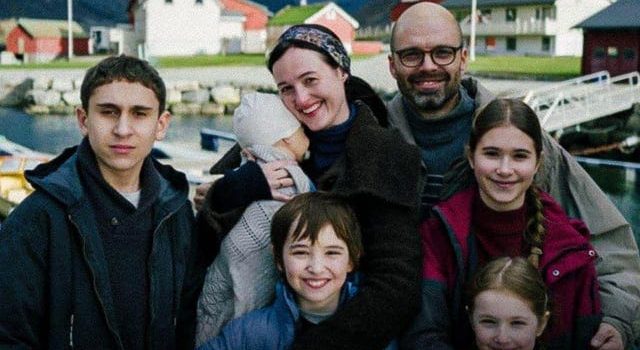
We follow the trials and tribulations of the Gheorgiu family, devout evangelical Christians who have just moved from Romania to a remote, snow-covered village in Norway after a tragedy. Mihai (Sebastian Stan), a Romanian, is stern, buttoned-up, and working as an engineer. His more sensitive Norwegian wife, Lisbet (Renate Reinsve), is a nursing home worker who spends much of her time caring for their newborn baby.
Mihai and Lisbet have four other children. Their oldest, teenagers Elia (Vanessa Ceban) and Emmanuel (Jonathan Ciprian Breazu), bond with their new next-door neighbor Noora (Henrikke Lund-Olsen). Noora’s father, Mats (Markus Tønseth), is the local school headmaster, who lives with his wife Mia (Lisa Carlehad), an attorney, and her disabled father, Åke (Øyvind Venstad Kjeksrud), who Lisbet helps care for.
There’s definitely tension between the Gheorgius and the rest of the community. Whether or not people state it outright (but most of them do), the town “others” the whole family for their conservative cultural roots.
Elia and Emmanuel are also clearly shaken by their strict upbringing. Noora encourages them to break the rules and, well, act like teenagers; her rebellious spirit partly stems from harsh treatment from her own secular parents.
Things spiral out of control (albeit quite deliberately via the film’s pacing) when schoolteacher and bus driver Frida (Lisa Loven Kongsli) notices bruises on Elia’s body. Suspecting abuse, she reports the Gheorgiu family to Child Protective Services. After Mihai admits spanking the children, Child Services promptly puts all the children into foster care without giving Mihai or Lisbet an opportunity to accurately defend themselves.
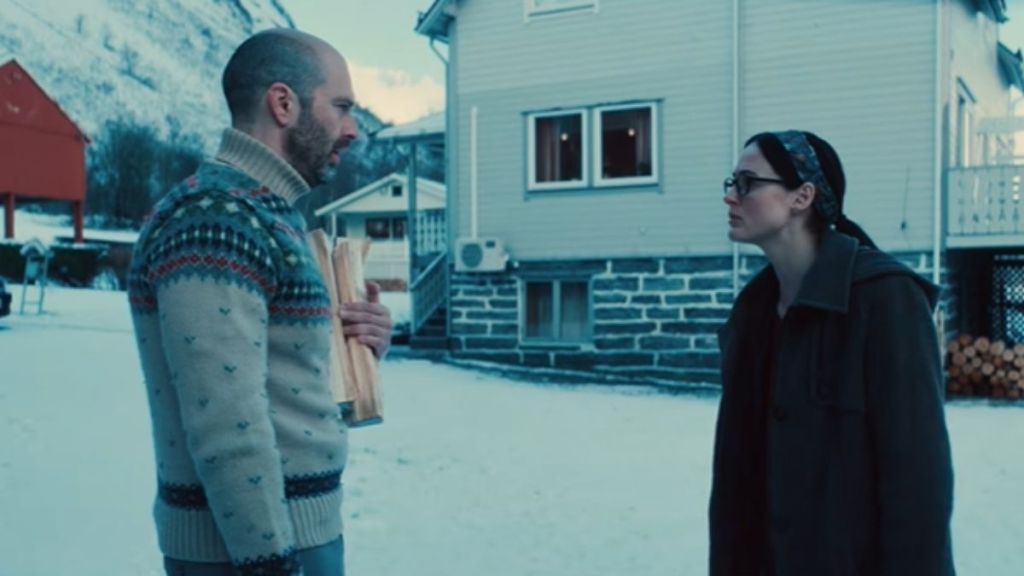
Thus begins a tragicomic battle through the legal system where every party believes they’re doing “the right thing” as they’re rapidly destroying the lives of those they’re trying to protect. Indeed, “Fjord” views the adults at the center of its drama through a deeply nihilistic lens — positioning both sides as ignorant to the impacts their actions have on the children thrown into this situation against their will.
Mungiu’s film, loosely based on true events, is a bleak, chilly experience that takes its time building towards melodramatic conclusions, presenting its story with straight-faced seriousness that belies a playfully sinister heart. Given the quietly exaggerated way the narrative unfolds, perhaps it’s better to view the self-seriousness of “Fjord” with a layer of ironic dark poetry; stubbornness and hate take over while the younger generations lose their innocence.
The film isn’t interested in taking traditional, “left vs. right” sides here, though. Mungiu’s screenplay makes it clear that Mihai, Lisbet, and their children come from different societal and religious standards than the culture they’re assimilating into. Mihai and Lisbet are convinced their mistreatment by Child Services is due in large part to prejudice against their belief system when, ultimately, the ways they attempt to control and dictate their children’s lives is their real flaw.
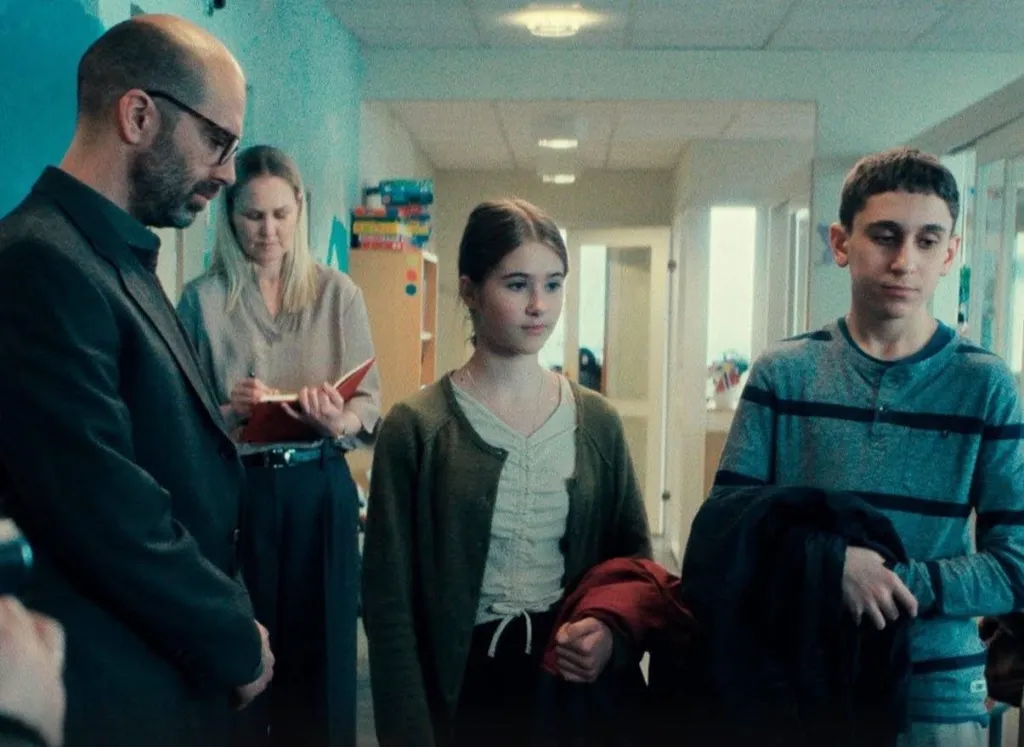
Similarly, “Fjord” doesn’t take a particularly favorable view of the central Norwegians, who jump at the opportunity to alienate and condemn the Gheorgius without due process, far beyond the “see something, say something” guidelines the school administrators have.
What is clear, however, is that the main group caught in the crossfire is the kids — we focus almost exclusively on Elia and Emmanuel, who are pawns in an ever-increasing downward spiral.
“Fjord” takes an observational stylistic approach that’s evocative without being didactic, allowing tension to simmer scene-to-scene, at times to an almost unbearable extent, buoyed by icily atmospheric cinematography. Mungiu revels in making viewers uncomfortable here, with stark, naturalistic acting masking increasingly heightened emotions.
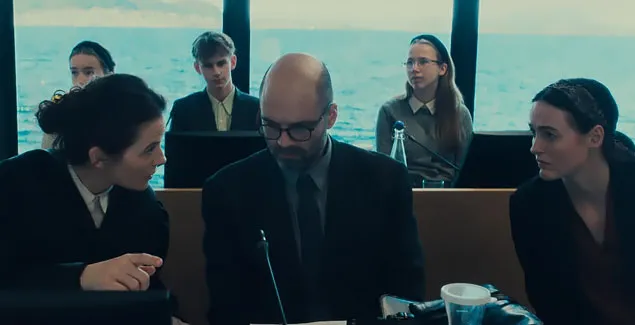
Stan gives one of his best performances as the severe and stoic Mihai, barely holding back his deep-seated rage. He’s perpetually in a state of backed-into-a-corner defense. Reinsve is as reliably excellent as ever, bringing more warmth and compassion to her portrayal as Lisbet balances her caring heart with the cutthroat reality of their messy, increasingly public custody battle. Supporting players Carlehad and Kjeksrud bring additional complexity as characters refusing to be painted in broad strokes.
Less successful are the child performers who are, almost universally, stilted in their performances. It’s unclear whether their emotional stuntedness results from their characters’ respective backgrounds, or from poor direction. Even though they fade to the background midway through, as “Fjord” focuses on the legal drama, it’s disappointing that when they are onscreen, the actors don’t bring the pathos that Mungiu gestures towards.
All in all, the less one takes “Fjord” seriously, the more effective it becomes as a shrewd critique of modern society and culture wars writ large. This isn’t a groundbreaking nor particularly illuminating experience. But it is a compellingly pessimistic time at the movies.
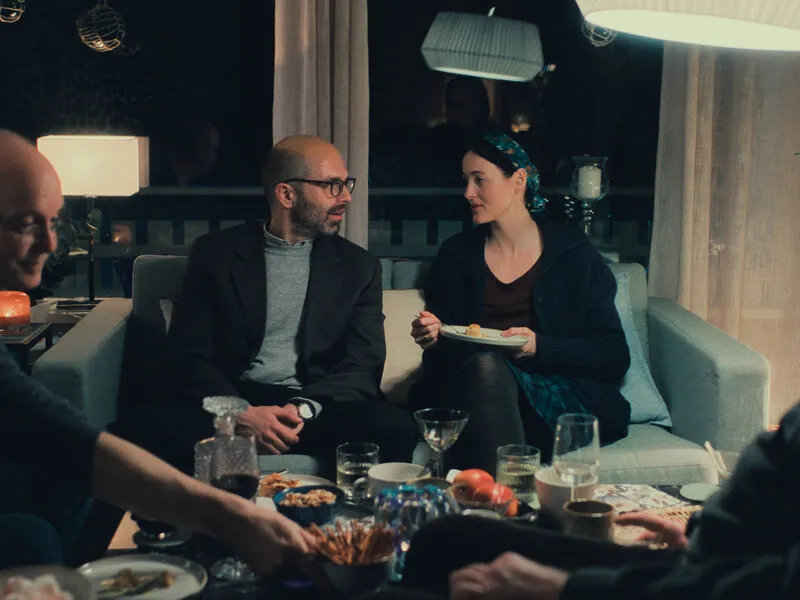
“Fjord” is a 2026 drama directed by Cristian Mungiu and starring Sebastian Stan, Renate Reinsve, Vanessa Ceban, Jonathan Ciprian Breazu, Henrikke Lund-Olsen, Markus Tønseth, Lisa Carlehad, and Øyvind Venstad Kjeksrud. The runtime is 2 hours, 26 minutes, and it’s rated R for language, full nudity, and self injury. It opened in theaters Oct. 23. Alex’s Grade: B+

Alex McPherson is an unabashed pop culture nerd and a member of the St. Louis Film Critics Association.
