
By Alex McPherson

Efficient and stylistically engaging, if being neither especially scary nor emotionally involving, director Leigh Whannell’s “Wolf Man” is the embodiment of a serviceable horror flick— coasting along on atmospherics and gory set-pieces instead of fully chowing down on its themes.

We begin in 1995, where a young boy named Blake (Zac Chandler) lives with his survivalist father, Grady (Ben Prendergrast), on a farm nestled within a remote valley in west-central Oregon. Dad, a single, paranoid ex-Marine with a temper, runs a tight ship around the house; his over-protectiveness masks a deep-seated distrust and fear of the outside world.

One day while out hunting, Blake and Grady encounter a strange, frighteningly erratic humanoid creature weaving amongst the trees. They barely fend it off while holed up in a deer stand — a sequence greatly enhanced by the film’s enveloping sound design and camerawork; the threat could come at any time, from any angle. Could it be the hiker that recently went missing and is, allegedly, feral? Grady must find out.

Flash forward 30 years, and the all-grown-up Blake (Christopher Abbott), now an aimless writer in-between jobs, has moved from the Cascades to the Big Apple and started a family. He’s seemingly doing pretty well, but he’s going through a rough patch with his journalist wife, Charlotte (Julia Garner). Blake is very close with their young daughter, Ginger (Matilda Firth), but strains of his father’s toxicity shine through from time to time, an uneasy reminder of the mental scars Grady left on him.

Blake receives a letter in the mail notifying him of Grady’s passing, along with the keys to the farmhouse. Thinking that it could be a good opportunity to get away from the city and reconnect with his family, Blake, Charlotte, and Ginger take a roadtrip to the foreboding mountains. 

It’s not exactly a relaxing vacation, though, as they soon encounter a creepy acquaintance from Blake’s childhood (Benedict Hardie) and, yes, that fuzzy-mugged humanoid beast from all those years ago. After causing Blake’s van to crash, the creature scratches Blake, later prompting Blake to undergo a gnarly metaphorical transformation in which he slowly but surely becomes the titular “Wolf Man.” 

Whannell, a skilled filmmaker who previously directed such works as 2020’s deeply messed up “Invisible Man” remake and 2018’s underappreciated sci-fi gem, “Upgrade,” ensures that “Wolf Man” coasts along well enough on its jolt-heavy suspense and excellent sound design without impressing from a character standpoint. 

Indeed, for all its effective scenes of cat-and-mouse suspense, “Wolf Man” can’t deliver on the emotional front. The seams of Whannell and Corbett Tuck’s screenplay show early on, where exposition dumps largely take the place of organically learning about who these characters are and what they’re striving towards. 

The performances are merely fine. Abbott gets more to chew on than others, literally, as he embodies Blake’s gradual loss of faculties and humanity and visibly battles the disease that’s overtaking him, while Garner’s Charlotte is underwritten and mostly one-note. Firth fares better than some other child-actors-in-horror-movies as of late, but she can’t break free from the clunky confines of the screenplay. 

It’s all quite programmatic. At the least the simple characterizations help make the film’s 103-minute runtime go at a fast clip; all the better that we get to the scares sooner. 

These are Whannel’s forte, and he delivers the goods — creating a series of setups and payoffs that are more enjoyable than outright scary, playing with viewers’ expectations to catch us off guard (or at least attempt to), complete with suitably graphic makeup effects. Whannell and cinematographer Stefan Duscio make great use of the isolating landscape, peppered with trees, and Blake’s creaky farmhouse, keeping the focus tight on the characters as the events pass in real-time, largely over a single night. 

The film’s outstanding sound design also does much of the heavy lifting throughout — especially strong during the tense opening sequence, and in visualizing the werewolf mutation directly through Blake’s eyes. Whannell shows the difference between reality and the warped distortions Blake experiences, often changing between them in the same shot; voices become muffled and faces turn barely recognizable. It’s neat, bringing to mind the sorts of cinematic tricks Whannell deployed in “Upgrade,” but remains more of a novelty, since “Wolf Man” doesn’t do enough early on to make us actually care.

While Whannell should be commended for tackling this Universal Monsters character with a different angle — veering away from the mysticism of its origins — and focusing on generational trauma and mental illness, “Wolf Man” feels half-baked. Whannell tries to be both fun and, by the end, weirdly sobering. This tonal mishmash doesn’t do the film any favors given itss sloppiness in scenes that aren’t focused on the immediate horror at play.

But “Wolf Man” was never trying to be groundbreaking. Watching in a theater is always the best option for movies, but, in this case, it’s the essential way to sink your teeth into this perfectly fine take on a horror legend.

“Wolf Man” is a 2025 horror movie directed by Leigh Whannell and starring Christopher Abbott and Julia Garner. It is rated R for bloody violent content, grisly images and some language and the run time is 1 hour, 43 minutes. It opened in theaters Jan. 17. Alex’s Grade: B-.

Facebook Comments

By Lynn Venhaus

A massive and ambitious drama, “The Brutalist” swings for the fences with big, bold visuals from a mid-century architect and an unwieldy dark narrative about struggles between art and commerce that spans 33 years over a 3 hour, 35-minute runtime.

To view it in one setting is a commitment, although theaters have a 15-minute intermission built in, showing the 215-minute film in two divided parts. It’s shot in Vista Vision, the first film using that process in many years.

While the film is technically brilliant, with stunning production design by Judy Becker and impressive stark cinematography by Lol Crawley to convey a giant scope of artistic vision and architectural grandeur, the script co-written by director Brady Corbet and his wife, Mona Fastvold, is a rocky road populated with thorny, complex characters.

This immigrant tale about László Tóth, a Jewish architect who crosses the Atlantic by boat from Hungary after World War II in 1947, gives the Oscar-winning actor Adrien Brody a meaty role that he can dig into, exploring various facets. This is not a biography, although it seems as if this character is based on a real person.

Once in Pennsylvania, he struggles to find comparable work to what he did so well before, and his wife Erzsébet (Felicity Jones) comes later, also a Holocaust survivor. Their backstory is bare minimum, and their family dynamic is odd.  They appear independent at times, others as dependent and intertwined.

After being commissioned to build a library for his elitist father by his pompous son, Toth encounters a wealthy industrialist, Harrison Lee Van Buren Sr. (Guy Pearce), who is a cold and callous businessman.

But Van Buren has sense enough to realize Toth’s talent. To strive for the American Dream, they need each other to accomplish their goals, and an uneasy partnership – of sorts – begins as Toth is hired by Van Buren for a structure in his mother’s honor, envisioning a modernist community center that will establish their legacy.

Neither man likes to compromise, and they each dream big, but Van Buren is a bully and has an off-putting way of humiliating Toth. The architect is also difficult to corral, stubborn in irritating ways, and it seems, teeters on going mad at times.

And then there is a doozy plot development that changes everything (and won’t be spoiled here). And a flat ending that seems tacked on after the film could have ended.

Neither of these deeply flawed, ethically challenged guys is all that likable, and the film has a weird chilliness and sterility to it. But it’s obvious both actors are giving their best efforts molding these distinctive men.

For clarity, brutalism is a style of architecture popular from the 1950s to the 1980s known for exposed concrete and brick that was designed with geometric, angular shapes and blocky forms. You’ve seen government buildings, parking garages and high-rises made in this style, and to me, ugly metropolitan slabs that are not visually appealing nor memorable.

Corbet, in his third feature after 2018’s “Vox Lux,” has a certain style, and those enamored by visionary auteurs will be enthralled. This film is a grand effort in establishing his singular vision. Yes, it’s artsy, but it’s also indulgent, and I feel parts are disjointed and often try too hard.

Corbet keeps viewers on their toes and when you think he’s headed in one direction, he veers a different way. Some of the most outrageous plot points don’t exactly fit a tidy narrative, and it spirals into several tangents that become increasingly head-scratching.

The strong supporting cast features two of Corbet’s actresses from Vox Lux, Raffey Cassidy as Toth’s niece Zsofia and Stacy Martin as Van Buren’s daughter Maggie Lee, as well as Joe Alwyn as her entitled creepy twin brother Harry Lee, and Isaach De Bankole as Toth’s friend Gordon, often a voice of reason.

Because of its audacious sweeping saga, punctuated by Daniel Blumberg’s haunting music score, few movies compare to “The Brutalist.” An awards magnet, it won the Silver Lion at the Venice Film Festival, and recently, a Golden Globe for motion picture – drama, as well as many critics’ groups’ love.

Yet, upon reflection, it’s more showy style than substance, and lacks connection. Not sure what it’s trying to say, but it’s not easy to embrace, except for what it is – an aspirational work of art that is one of those films more admired than widely accepted. 

“The Brutalist” is a 2024 drama directed by Brady Corbet and starring Adrien Brody, Guy Pearce, Felicity Jones. Joe Alwyn, Raffey Cassidy, Stacy Martin, Isaach De Bankole and Alessandro Novolo. It is rated R for strong sexual content, graphic nudity, rape, drug use and some language, and its runtime is 3 hours, 35 minutes. It opened in local theatres Jan. 10. Lynn’s Grade: B.

Facebook Comments

By Alex McPherson

Brilliantly clever and charming, the 20-years-coming return of the world’s favorite inventor, Wallace, and his canine companion, Gromit, does not disappoint. Directors Nick Park and Merlin Crossingham retain the franchise’s beating heart in “Vengeance Most Fowl,” and, as a lifelong fan, I think that makes for absolutely essential viewing.

“Vengeance Most Fowl” takes place many years after the events of “The Wrong Trousers,” with the criminal mastermind penguin Feathers McGraw imprisoned in a cell off the Arctic exhibit of the Lancashire zoo, biding his time for an escape, and the Blue Diamond back in the hands of bumbling authorities.

The jaded Chief Inspector Mackintosh (Peter Kay) is preparing to redisplay the priceless rock in the local museum, assisted by the eager newcomer PC Mukherjee (Lauren Patel). 

Meanwhile, things are proceeding as usual in cheery 62 West Wallaby Street — the cheese-loving inventor Wallace (admirably voiced by Ben Whitehead after the passing of Peter Sallis) has filled the house with even more Rube-Goldbergian contraptions aimed at maximizing “convenience,” while his loyal pooch Gromit provides emotional support and cleans up the messes Wallace leaves behind. 

Wallace has a new invention, however, that he claims will make both their lives easier: a perpetually-smiling garden gnome turned handyman called “Norbot” (Reece Shearsmith), who can carry out any and all chores around the house while yapping incessantly about how it “likes to do a job.”

One of the “tidying ups” included slicing-and-dicing Gromit’s well-kept garden into a squarely homogenized version of its former self. Wallace and Gromit’s neighbors take interest in Norbot and want to employ him, so Wallace starts a “Gnome Improvement” company to help him pay the ever-worrying stack of bills. 

Ol’ Feathers watches from afar, and as Norbot gains in popularity, the incarcerated penguin plots how to take advantage of the gnome to escape the zoo, exact his revenge, and acquire the Blue Diamond once and for all. An action-packed adventure ensues, where Wallace’s future as an inventor is threatened, and Gromit’s ingenuity is put to the test.

Indeed, “Vengeance Most Fowl” hits the spot like a warm cup of hot chocolate on a cold winter’s day: a Greatest Hits celebration of Wallace and Gromit that’s beautifully animated, hilarious, and packs in some resonant commentary about the current state of technology for good measure.

On a basic level, though, it’s great to spend more time with these characters — “Vengeance Most Fowl” is a balm for even the most cynical soul, packing more creativity, craft, and all-ages entertainment into its 79-minute runtime than most films could ever dream of.

Even so, achieving the heights set by the original three short films (“A Grand Day Out,” “The Wrong Trousers,” and “A Close Shave”) was a near impossible task. “Vengeance Most Fowl,” for all its strengths, isn’t immune from shameless nostalgia (particularly regarding Lorne Balf’s score, which is largely content to riff on older tracks) nor is it as well-paced as it could be, occasionally feeling stretched with side-characters that are nowhere near as fun to watch as the dynamic duo and dastardly penguin. 

But Park and Crossingham preserve the essence of “Wallace and Gromit” here. The claymation stop-motion animation (with some occasional CGI) is glorious to behold — tactile and timeless, albeit smoothed-down compared to its predecessors.

Park and Mark Burton’s screenplay is chock full of puns and dad jokes, often opting for broader, more literal comedic beats than the prior installments (perhaps to appeal to a wider audience than the sometimes niche humor of the originals), but no less amusing, and always in the affably British spirit of the series.

Gromit and Feathers are the true standouts in “Vengeance Most Fowl,” though, two silent film adversaries squaring off once again after many years. Feathers, in particular, gets numerous opportunities to shine like a pseudo James Bond villain, using his wits and badass vibes to get what he desires — beady-eyed, intimidating, and darkly funny, with plenty of totally convincing disguises at his disposal.

Gromit provides much of the film’s pathos, struggling to accept Wallace’s increasing overreliance on technology in practically every facet of daily life, greatly exacerbated by Norbot, who seemingly hijacks Gromit’s roles in the household. Gromit’s bemusement, frustration, and undying loyalty to his master and friend is as funny and emotional as ever.

“Vengeance Most Fowl” is a fun ride from start to finish, with gags and plot developments that are best left unspoiled. What’s surprising, though, is the film’s trenchant commentary on artificial intelligence and technology in general — the necessary balance between what can be automated and what’s best left to the human touch. 

Park and Crossingham don’t take the easy way out and demonize Norbot, but rather recognize the guardrails that must be put in place, and the importance of not letting convenience hijack lived, meaningful experience.

This also extends to the film’s construction itself — “Vengeance Most Fowl” is an ingenious mixture of old-school and new-school animation, of updating the look of “Wallace and Gromit” without sacrificing its soul, brought to life with hand-crafted effort.

There’s just no excuse not to give “Vengeance Most Fowl” a shot. This newest adventure is a real treat, sure to please longtime fans and newcomers alike.

“Wallace & Gromit: Vengeance Most Fowl” is a 2024 stop-motion animated film directed by Nick Park and Merlin Crossingham, with voice-over work by Ben Whitehead, Peter Kay, Lauren Patel, and Reece Shearsmith. It is rated PG for some action and rude humor and runtime is 1 hour, 19 minutes. It began streaming on Netflix on Jan. 3. Alex’s Grade: A.

Facebook Comments

By Lynn Venhaus

Anchored by Timothee Chalamet’s brilliant immersive portrayal of a young Bob Dylan, this exhilarating, extraordinary film recreates a period when art, music, politics, and culture came together to significantly define the 1960s.

The characters are unforgettable because of the nuanced performances from Monica Barbaro as Joan Baez, Edward Norton as Pete Seeger, Boyd Holbrook as Johnny Cash and Elle Fanning as Sylvie Russo (a fictionalized version of Dylan’s first New York girlfriend, Suze Rotolo, who died in 2011).

Whether you like Dylan’s music or not is immaterial – director James Mangold makes us feel his impact as one of the most iconic singer-songwriters in history, and it’s glorious. He captured a vibrant music scene in New York 1961 and a pivotal four-year span where a generational voice was emerging.

 Mangold, who made “Walk the Line” about Johnny Cash and the crowd-pleasing “Ford v. Ferrari,” has created an authentic world – the burgeoning folk scene in Greenwich Village, the political upheaval of the times, and the events that shaped America. Dylan forged relationships with singer-songwriters finding their voices.

Mangold collaborated with Jay Cocks on the screenplay, which they adapted from Elijah Wald’s 2015 book “Newport, Seeger, Dylan, and the Night That Split the Sixties.”

The film follows a young Bob Dylan from the time he arrives in New York as a 19-year-old Minnesota native named Robert Allen Zimmerman to his groundbreaking and controversial appearance at the Newport Folk Festival in 1965, when he played the electric guitar and revolutionized the genre.

Dylan’s masterpiece, “Highway 61 Revisited,” is now considered one of the most influential albums of all-time, and the film explores how this period, going from acoustic to rock, cemented his legacy as someone who changed the course of American music.

He got his start with traditional folk song recordings in 1962, including his tribute “Song to Woody” on that debut, followed by “The Freewheelin’ Bob Dylan” in 1963, which featured “Blowin’ in the Wind” and “A Hard Rain’s a-Gonna Fall.” His lyrics became more sophisticated and introspective.

As Dylan’s fame grew, he became increasingly frustrated and the writers did not soften his prickly edges, while showing what drives the creative process. Besides his hero Woody Guthrie (Scoot McNairy), Seeger and Baez would shape his artistry as well.

Chalamet’s scenes with Barbaro are electric, particularly the live performance of “It Ain’t Me, Babe” at Newport.

He also has terrific chemistry with Elle Fanning – they were a couple in Woody Allen’s “A Rainy Day in New York” (2019) — and she is grounded as the committed activist that helped mold Dylan’s political awareness. (Dylan requested her name be changed in the film).

The principals did their own singing and playing, and that adds to the film’s realistic environment. Chalamet’s career-best performance is seamless, with some of the numbers hypnotic – especially the seminal “The Times They Are a-Changin’,” which became an anthem for civil rights and anti-war movements.s

He doesn’t imitate Dylan’s rough vocal quality, but rather gives the essence in phrasing and delivery. Chalamet learned to play 30 songs and took lessons from a vocal coach, a guitar teacher, a dialect coach, a movement coach and even a harmonica tutor.

The fact that he personified the legend’s elusive nature is a marvel to witness as well. While the movie doesn’t provide a complete portrait of the complex artist’s 60-year career, it is a good start to learning about this mysterious figure who at times became confrontational, although it is not a deep dive by any means.

In addition to the folk singers, fine supporting actors include P.J. Byrne as folk music promoter Harold Leventhal, Dan Fogler as Dylan’s manager Albert Grossman, and Will Harrison as Bob Neuwirth, Dylan’s road manager.

I hope it fosters more appreciation for the album “Highway 61 Revisited,” Dylan’s sixth that was released on Aug. 30, 1965. He used rock musicians as his backing band on every track except “Desolation Row,” the last song.

The album is named for the major American highway that connected his birthplace of Duluth, Minn., to the southern cities connected by the Mississippi River and their rich musical heritage – St. Louis, Memphis, and New Orleans, plus the Delta blues areas.  

Boyd Holbrook as Johnny Cash.

Dylan wrote about his kinship with that route in his memoir “Chronicles: Volume One,” “Highway 61, the main thoroughfare of the country blues, begins about where I began. I always felt like I’d started on it, always had been on it and could go anywhere, even down into the deep Delta country. It was the same road, full of the same contradictions, the same one-horse towns, the same spiritual ancestors … It was my place in the universe, always felt like it was in my blood.”

Dylan has sold more than 125 million records, and among his awards are the Presidential Medal of Freedom, ten Grammy Awards, a Golden Globe Award and an Academy Award. Dylan has been inducted into the Rock and Roll Hall of Fame, Nashville Songwriters Hall of Fame and the Songwriters Hall of Fame.

In 2008, the Pulitzer Prize Board awarded him a special citation for “his profound impact on popular music and American culture, marked by lyrical compositions of extraordinary poetic power.” In 2016, Dylan was awarded the Nobel Prize in Literature, and he famously did not attend.

He was included in the Time 100: The Most Important People of the Century, where he was called “master poet, caustic social critic and intrepid, guiding spirit of the counterculture generation” for his musical and cultural contributions.  

“A Complete Unknown” mirrors the times that Dylan helped shape, but don’t expect a documentary, for everyone with intimate knowledge can pick apart the accuracy. But the creative team’s thoughtful attention to detail is remarkable , visualizing an important period for one of the most enigmatic individuals in music history.

Costume designer Arianne Phillips, known for “Once Upon a Time…in Hollywood,” has vividly stamped that ‘60s period with counterculture flair, while production designer Jacques Audouy, Mangold’s go-to designer, has provided expert depictions of that time and place.

What a long, strange trip it has been – and I enjoyed waltzing down memory lane in the spectacular fashion presented here. This is more a look back with appreciation rather than analysis; and a celebration of our finest music poets.

“A Complete Unknown” is a 2024 drama directed by James Mangold and starring Timothee Chalamet, Monica Barbaro, Elle Fanning, Edward Norton, Boyd Holbrook, Dan Fogler, Norbert Leo Butz and Scoot McNairy. It is rated R for language and has a 2-hour, 21 minutes runtime. It opened in theaters Dec. 25. Lynn’s Grade: A.

Facebook Comments

By CB Adams

There’s a reason that “BBC Magazine” named the Bach Society of St. Louis’ Christmas Candlelight Concert as one of their top-20 live holiday events in North America and why I named it one of the top-five 2024 recommendations for my STL Stage Snaps Recommends.

In contrast to all the hustle and bustle and jingle and jangle of holiday entertainment options, the Candlelight Concert stands out as a sublime respite, a reminder of the powerful analogue combination of human voices singing songs with rich depth and emotion, accompanied by a talented orchestra.

It is not hyperbole to call the Candlelight Concert a St. Louis holiday tradition. It has secured its place since 1951 with a Christmas event distinguished by fine musicianship and an intelligent, well-curated program of music old and new, familiar and should-be-familiar. With a sell-out on its second performance and nary an empty seat in the first, it’s proof positive that there’s interest and support for concerts filled with something more substantial than the sugar rush of holiday pop tunes (no shade on Mariah Carey, but she’s not all I want for Christmas).

There were approximately 90 singers and orchestra musicians filling the stage of the beautiful 560 Music Center in University City. As they do every year, the chorus surrounds a venue, electric candles in hand, and processes to the stage singing (this year) “Come, Thou Long-Expected Jesus.” This is a simple and effective way to begin this immersive performance – immersive without stagecraft, special effects or amplification – and is a hallmark of the annual performance that balances contemplative and celebratory music.  

Guest soloist Josefien Stoppelenburg, Photo by ProPhotoSTL.

A highlight and the centerpiece of this year’s program was Antonio Vivaldi’s “Gloria in Excelsis Deo,” one of his most celebrated sacred works. A. Dennis Sparger conducted the orchestra and elicited from the orchestra the 28 minutes of exuberance and lyrical beauty in this Baroque classic’s 12 movements.

Renowned for its dynamic contrasts, rich harmonies and virtuosic demands, Vivaldi’s “Gloria” is rightly celebrated for its evocation of celestial majesty and human devotion – and Bach Society’s choir and orchestra delivered it with excellence.

The piece featured the talents of two soloists: Josefien Stoppelenburg, soprano, and Kate Tombaugh, mezzo-soprano. Their performances individually and together were remarkable for their seamless interplay of virtuosic precision and expressive phrasing that captured the joy and devotional intensity of the piece, even if sometimes overwhelmed by the orchestra.

The highlights were Stoppelenburg’s radiant solo in the lyrical “Domine Deus,” a tender dialogue between voice and oboe (beautifully performed by Eileen Burke) and Tombaugh’s solo in “Domine Deus, Agnus Dei.” Tomabaugh delivered with nuance and passion the rich alto line set against a somber backdrop of strings. The two soloists were well-paired for the effervescent “Laudamus te” duet that brimmed with agility and charm.

Guest soloist Kate Tombaugh. Photo by ProPhotoSTL.

After an audience sing-along of “Joy to the World,” (no review necessary), the second “half” of the program of approximately 90 minutes comprised a world-tour with eight carols from Ireland, England, Italy, Ukraine, Poland and Wales. This portion began with the delightful “Noel!” from Karen Marrolli’s “Light of Peace” album. The choir, backed with a rich orchestration, delivered a joyful, uplifting rendition with an elegant, spirited blend of classical and contemporary influences.

Also noteworthy was the arrangement by Elaine Hagenberg of the well-worn “Wexford Carol.” Hagenberg beautifully reimagined this traditional Irish carol with lush harmonies, sensitive orchestration and intricate counterpoint. The choir’s performance provided a serene, reflective quality to the piece, capturing its historical roots and timeless beauty.

For “Gesu Bambino,” Tombaugh and Stoppelenburg retook the stage to perform Pietro Yon’s arrangement. His lush and expressive setting showcases the Italian carol’s emotive melody, and the singers fully captured his lyrical choral writing with an authentic reverence and celebration of the nativity.

Conductor Sparger introduced the pairing of David Mooney’s “Dublin Bells Carol” with the better-known “Carol of the Bells” by Mykola Leontovich. Sparger described how, on Christmas Eve, all the bells of Dublin’s more than 200 churches and two cathedrals ring out. Mooney was inspired by the sounds of 36 of those bells to create his lively, captivating “Dublin Bells Carol” that blends Irish folk influences with traditional Christmas themes. The choir was up to the challenge of creating the sounds of the rhythmic and vibrant melody.

Photo by ProPhotoSTL.

The orchestra then segued seamlessly into Peter Wilhousky’s arrangement of “Carol of the Bells.” Wilhousky’s dynamic and exhilarating setting intensifies the original Ukrainian carol with rapid, cascading choral phrases and vibrant harmonies.

The Bach Society’s Candlelight Christmas performance shares a similar sense of reverence and holiday spirit with the renowned Christmas at King’s College. Both offer a captivating evening of choral excellence and festive beauty. Both performances showcase stunning vocal harmonies and intricate orchestration, evoking a sense of peace and joy that resonates deeply. And both are – or should be – cherished holiday traditions.

The Bach Society of St. Louis Christmas Candlelight Concert was performed on December 18-19 at 560 Music Center.

Sold–out audience at the Bach Society of St. Louis’ Candlelight Christmas Concert. Photo by ProPhotoSTL.
Facebook Comments

By Lynn Venhaus

Woof. Thirty years after its landmark opening, Disney’s “The Lion King” has returned as a computer-animated prequel that’s a mere shell of its majestic and inspired coming-of-age drama origins.

Lacking a creative spark, this misfire is a generic, dull and soulless attempt to go back to the familiar Shakespearean theme, with Biblical roots, to rehash family bonds and destiny. Yawn.

Walt Disney Studios has blended live-action filmmaking techniques with photoreal computer-generated imagery, which looks like a nature documentary and has less of an emotional impact.

A nice touch is opening the film with a dedication to James Earl Jones, who voiced the regal Mufasa in Disney projects from the original 1994 to the remake in 2019. He died in September.

To set in motion Mufasa’s journey as a lion cub after his parents (Keith David and Anika Noni Rose) perish in a frightening flood, the wise shaman Rafiki (John Kani) begins telling Kiara (Blue Ivy Carter), daughter of Simba (Donald Glover) and Nala (Beyonce Knowles-Carter), the origin story of her grandfather.

Lost and alone, Mufasa, voiced as a young cub by Braelyn Rankins and Aaron Pierre as he gets older, is aided by Taka (Theo Somolu as a cub, Kelvin Harrison Jr. later), an heir to a royal bloodline.

Taka’s father King Obasi (Lennie James) is suspicious of outsiders, but his mother Queen Eshe (Thandiwe Newton) is more understanding, and the future king proves his mettle.

They team up to thwart their vicious foe, a pride of hateful territorial white lions – looking like they’re rolled in flour, I suppose so we can keep them straight – led by the evil Kiros (Mads Mikkelsen).

Mufasa eventually rises to become king of the Pride Lands, but not without much strife and multiple conflicts. He learns the dangers of tribalism and tyranny.

After all, this is the origin story of Scar as well. We eventually find out the reasons why his ‘brother’ Taka becomes bitter and resentful and will eventually betray him more than once.

The pair pick up a couple other strays on an expansive sojourn to the promised land Milele. The orphaned lioness cub Sarabi (Tiffany Boone) falls in love with Mufasa, spurning Taka. Rut-ro. Her screechy scout Zazu (Preston Nyman) the hornbill is back, both helping and hindering.

Returning from the unfortunate 2019 ‘live action’ remake are a younger but still mystical Rafiki (Kagiso Ledigo) and the now annoying self-absorbed duo of Pumbaa the warthog and Timon the meerkat as voiced, insufferably, by Seth Rogen and Billy Eichner.

Their banter isn’t funny and pulls us away from the journey, not to mention wrecking our “Hakuna Matata” vibe. Every time they start chattering, it halts the trek with forced humor. Their meta references about the 1997 stage musical are odd and seem out of place.

This band of misfits is on what seems to be an endless journey. Directed by the esteemed Barry Jenkins, the shot selection includes wide grand vistas – mimicking drone action above snow-capped mountains and expansive parched savannahs, which alternates with extreme close-ups of lions.

While the vocal work is fine, the remarkably similar visuals make it hard to distinguish the lions. The ensemble is too big to invest in the characters, too.

Emmy, Oscar and Tony winner Lin-Manuel Miranda’s songs usually signal a bright spot in any Disney project but here they seem intrusive. Did we need them? 

They just seem to unnecessarily pad the narrative, telling us what we can see – “Milele” as a beautiful utopia, “I Always Wanted a Brother” as the bonding occurs between Mufasa and Taka, then the love song “Tell Me It’s You” and the friends relying on each other on their trek “We Go Together” (as in “Grease”?).

While his lyrics are always clever, this score pales in comparison to the Elton John – Tim Rice tunes and Hans Zimmer score that each won Oscars, or even his multi-award-winning “Encanto.”

“The Lion King” was the highest grossing film of 1994 and the film became the top home video, holding that record for years. It was adapted for the stage in 1997, earning six Tony Awards and is now the third longest running musical on Broadway and the highest-grossing show of all time.

Its pedigree is undeniable, it’s a favorite with families, and will make a lot of money. But couldn’t they find a fresher, more engaging story than to keep going over the same themes just to appeal to fan service? Nostalgia aside, what are the biggest takeaways? That Disney is going to wring every penny out of the public for its beloved properties until the end of time?

“Mufasa: The Lion King” is an animated adventure family musical directed by Barry Jenkins with the voice-over work of Aaron Pierre, Kelvin Harrison Jr., John Kani, Tiffany Boone, Kagiso Lediga, Mads Mikkelsen, Thandiwe Newton, Lennie James, Anika Noni Rose, Keith David, Blue Ivy Carter, Beyonce Knowles-Carter, Donald Glover, Seth Rogen, Billy Eichner, Preston Nyman. It is rated PG for action/violence, peril and some thematic elements and the run time is 2 hours. It opened in theaters on Dec. 20. Lynn’s Grade: C

Facebook Comments

By CB Adams

If you’ve ever eagerly unwrapped a gift and found it filled with many other wrapped gifts, that’s the sort of Matryoshka doll experience delivered by the St. Louis Symphony Orchestra’s IN UNISON Chorus, which celebrated its 30th anniversary on Dec.13 with a sold-out performance at Stifel Theatre.

The gift-within-gift was witnessed by an audience of more than 3,000 who received a night of festive music that featured the SLSO, the IN UNISON Chorus and Grammy-winning vocal group Take 6.

The concert program showcased the chorus’s unique connection to St. Louis’s Black church community and spotlighted the unique synergy between the orchestra and the IN UNISON Chorus (always worthy of its all-cap moniker). The show highlighted – as it always does – a well-curated program of traditional holiday classics and innovative interpretations and arrangements that collectively reflect the chorus’s deep roots in gospel and spiritual music.

While Take 6 was no doubt the big-name draw for this year’s program, the absolutely most heartfelt, soul-stirring and roof-blowing performances were delivered by the chorus’ own Mary Moorehead and De-Rance Blaylock. Everything else, although excellent, was bonus in comparison.

IN UNISON Chorus member Moorehead delivered a standout, heartfelt performance of Norman Hutchins’ “Emmanuel,” richly arranged by Loehrs. Alto Moorehead’s powerful, nuanced voice commanded the arrangements layered harmonies and soaring modulations with a grounding rhythmic pulse.

Her soulful performance, paired with the arrangement’s dynamic shifts and luminous crescendos, delivered profound emotional depth to this classic, capturing the power and intimacy of its message. Her moving rendition was exceptional for its emotional authenticity and reverent energy.

During the second half of the program, IN UNISON Chorus member Blaylock belted out a stunning performance of Walter Hawkins’ “Thank You,” a gospel masterpiece that expresses profound gratitude for divine grace, blending heartfelt lyrics with a lush, uplifting arrangement. As arranged by Cymbalta, this version introduces dynamic shifts and intricate vocal layering to enhance the song’s emotional resonance and spiritual fervor.

This song and arrangement exemplified why the IN UNISON Christmas concert perennially stands prominently in the St. Louis calendar of holiday entertainment. It’s always noteworthy for the performance as well as the curation of the richly varied program by conductor and chorus director Kevin McBeth and the SLSO’s artistic team, especially the inclusion of lesser known compositions, especially for those not immersed in the world of gospel and spiritual.

Backed by the chorus, alto Blaylock truly earned the tag showstopper with her performance of “Thank You.” Blaylock’s intense performance soared effortlessly above the choir’s richly textured harmonies and the arrangement’s dramatic crescendos. That combination created a powerful blend of intimacy and exaltation.

Also impressive was the wide range of ways she projected the two words – thank you – to deliver new and expanding meaning to the song’s message. Blaylock’s performance was so emotional, moving and powerful that it earned its own well-deserved (one-verse) encore.

The concert opened with an orchestral rendition of “Joy to the World,” which set a jubilant tone, then the chorus joined for Dan Forrest’s “Gloria in Excelsis” from “LUX: The Dawn from On High.” This song was a dazzling choral and orchestral celebration of light and divine glory, and indicated the level of performance promised by the rest of the program.

Among the pleasing mix of works, the program reprised a crowd favorite – Handel’s “Hallelujah” chorus, a song composed for Easter celebrations that has nonetheless elbowed its way in the Christmas repertoire. This program delivered the Warren/Jackson/Kibble/Hey/Chinn arrangement made famous in the Grammy-winning 1992 album “Handel’s Messiah: A Soulful Celebration.” McBeth paid tribute the producer of that album – Quincy Jones.

McBeth introduced Take 6 as “those jazzers” and announced this was the fourth time the group had collaborated with IN UNISON. Midway through the first half, the a cappella group jingled, jangled and jazzed their way through Christmas favorites, including a swing version of “Do You Hear What I Hear” in their defining style.

As the master showmen that they are, Take 6 could have carried an entire show all by themselves, yet they wove their songs into the program as seamlessly and tightly as their harmonies. The group returned in the second half to light up the final segment of the concert. Their humorous take on Tchaikovsky’s “Dance of the Sugar Plum Fairy,” which they titled “Sugar Plum Dance,” was a tasty aural treat with inventive vocal mimicry of orchestral instruments.

A Celebration of Tradition and Innovation

This year’s IN UNISON Christmas concert was a powerful reminder of the chorus’s enduring impact over three decades. Founded in 1994, the SLSO’s IN UNISON Chorus brings together talented volunteer singers from more than 30 local Black churches. Since then, it has become a vital cultural institution, blending community traditions with musical excellence. This year’s IN UNISON Christmas concert honored its enduring legacy with a joyous celebration of faith, collaboration and the transformative power of music.

The SLSO IN UNISON Christmas concert was performed at Stifel Theatre on Dec. 13.

Photos courtesy of St. Louis Symphony Orchestra.

Facebook Comments

Colman Domingo, Mikey Madison, Kieran Culkin and Aunjanue Ellis-Taylor Win Acting Honors Announced Dec. 15

In a year without an overwhelming frontrunner, three films – Denis Villeneuve’s visionary science-fiction epic “Dune: Part Two,” RaMell Ross’s harrowing debut adaptation of “Nickel Boys” and David Eggers’ evocative remake of the gothic horror tale “Nosferatu” – won three awards apiece from the St. Louis Film Critics Association for 2024.

The regional critics’ group announced winners in 26 awards categories on Dec. 15.

“Dune: Part Two” won for film, director, and visual effects. “Nickel Boys” won for supporting actress Aunjanue Ellis-Taylor, first feature film for director RaMell Ross, and editing. “Nosferatu” won for cinematography, production design and horror film.

“Saturday Night” earned two – for ensemble and original screenplay, as did “The Wild Robot” – for animated feature and best vocal performance by Lupita Nyong’o.

Besides Ellis-Taylor, acting honors went to Colman Domingo, Best Actor in “Sing Sing”; Mikey Madison, Best Actress for “Anora” and Kieran Culkin, Best Supporting Actor for “A Real Pain.”

“The Seed of the Sacred Fig” was honored for Best International Feature, “Hundreds of Beavers” for Best Comedy, “Furiosa: A Mad Max Saga” for “Best Action Film, and “No Other Land” for Best Documentary Feature.

“The Brutalist,” “Civil War,” “A Complete Unknown,” “Conclave” and “The Fall Guy” were among the films singled out for one award each.

In addition to the awards, St. Louis critics bestowed three special merits:

Mohammad Rasoulof, director of ‘The Seed of the Sacred Fig.” Photo by Julie Cunnah.

Special Merit: Iranian Director Mohammad Rasoulof and the cast/crew of “The Seed of the Sacred Fig” for their courage and persistence in confronting political oppression in the pursuit of artistic expression and portraying truth through film.

Special Merit: Pete Timmermann, director of Webster University’s Film Series in St. Louis, for his exceptional, expert programming of international, restored, and independent films, including fiction and nonfiction, animation and live action, in addition to special events. His superb offerings for the St. Louis film community enriches and expands our cinematic world.  

Special Merit: Filmmakers who found creative uses for practical effects and were less reliant on digitized computer-generated graphics this year, such as hair and makeup artist Christine Brundell using puppetry and prosthetics, in collaboration with director Tim Burton, on “Beetlejuice Beetlejuice”; makeup effects director Pierre Oliver Pierson on “The Substance” prosthetics; the micro budget DIY home computer effects from director Mike Cheslik for “Hundreds of Beavers”; the no-green-screen creature work on “Alien: Romulus” with animatronics and puppetry, among other collaborations by director Fede Alvarez; and the “Wicked” production design by Nathan Crowley where he merged practical imagery with CGI throughout, and grew 9  million tulips for Munchkinland.

Nominations, announced Dec. 8, included 12 for “Dune: Part Two,” 9 for “The Brutalist,” 8 apiece for “Conclave” and “Wicked,” 6 for “Nickel Boys” and 5 for “Sing Sing.” Besides those films, other Best Film nominations also included “Anora,” “A Complete Unknown,” “September 5,” and “The Seed of the Sacred Fig.”

For a complete list of nominations, visit: www.stlfilmcritics.org/awards

Founded in 2004, the St. Louis Film Critics Association is a nonprofit organization of professional film reviewers who regularly publish current and timely film criticism, support local productions and festivals, and enhance public education, awareness, and appreciation of films. Approved members are affiliated with qualifying media outlets in the St. Louis metropolitan region.

For awards consideration, eligible films are those that opened in the greater St. Louis area or had an online premiere during the 2024 calendar year – – including those films that were given awards-qualifying runs but aren’t slated for release until early 2025.

For more information, visit the site: www.stlfilmcritics.org

Full List of Awards and Runners-Up

Best Film: Dune: Part Two

Runner-up: Anora

Best Director: Denis Villeneuve “Dune: Part Two”

Runner-up: Mohammad Rasoulof “The Seed of the Sacred Fig”

Best Actor: Colman Domingo “Sing Sing”

Runner-up: Adrien Brody “The Brutalist”

Best Actress: Mikey Madison “Anora”

Runner-Up: Marianne Jean-Baptiste “Hard Truths”

Best Supporting Actor:
Kieran Culkin “A Real Pain”

Runner-Up: Denzel Washington “Gladiator II”

Best Supporting Actress: Aunjanue Ellis-Taylor “Nickel Boys”

Runner-Up: Ariana Grande “Wicked”

Aunjanue Ellis-Taylor as Hattie in “Nickel Boys.” Photo credit: Courtesy of Orion Pictures

Best Ensemble: “Saturday Night”

Runner-Up: “Conclave”

Best Adapted Screenplay: Peter Straughan, “Conclave”

Runner-Up:  Denis Villeneuve, Jon Spaihts “Dune: Part Two”

Best Original Screenplay: Jason Reitman and Gil Kenan “Saturday Night”

Runner-Up: Mike Leigh “Hard Truths”

Best Cinematography: Jarin Blaschke, “Nosferatu”

Runner-Up: Greig Fraser “Dune: Part Two”

Best Editing: Nicholas Monsour, “Nickel Boys”

Runner-Up: Hansjörg Weißbrich, “September 5”

Best Production Design: Beatrice Brentnerova, Paul Ghirardani, Craig Lathrop, “Nosferatu”

Runner-Up: Nathan Crowley, Lee Sandales, “Wicked”

“Nosferatu” remake. Photo courtesy of A24.


Best Costume Design: Paul Tazewell “Wicked”

Runner-Up: Linda Muir “Nosferatu”

Best Music Score: Daniel Blumberg “The Brutalist”

Runner-Up: Trent Reznor and Atticus Ross, “Challengers”

Best Music Soundtrack: “A Complete Unknown”

Runner-Up: “Wicked”

Best Visual Effects: “Dune: Part Two”
Runner-Up: “Kingdom of the Planet of the Apes”

The sandworms of “Dune: Part Two.” Photo courtesy of Warner Brothers.

Best Stunts: “The Fall Guy”

Runner-Up: “Furiosa: A Mad Max Saga”

Best Action Movie: “Furiosa: A Mad Max Saga”

Runner-Up: “Dune: Part Two”

Best Comedy:
“Hundreds of Beavers”

Runner-Up: “Deadpool & Wolverine”

Maya Hawke voiced “Anxiety” in “Inside Out 2.” Photo courtesy of Pixar Studios.

Best Horror: “Nosferatu”

Runner-Up: “The Substance”

Best Animated Feature: “The Wild Robot”

Runner-Up: “Wallace & Gromit: Vengeance Most Fowl”

Best Vocal Performance: Lupita Nyong’o “The Wild Robot”

Runner-Up: Maya Hawke “Inside Out 2”

Best Documentary Feature: “No Other Land”

Runner-Up: “Super/Man: The Christopher Reeve Story”

Best International Feature: “The Seed of the Sacred Fig”

Runner-Up: “Don’t Expect Too Much from the End of the World”

Best First Feature: RaMell Ross, “Nickel Boys”

Runner-Up: Malcolm Washington “The Piano Lesson”

Best Scene: “Civil War” – “What kind of American are you?”

Runner-Up: “Furiosa: A Mad Max Saga” – The war rig battle

“The Seed of the Sacred Fig.” Photo courtesy of NEON.

Facebook Comments

Tables still available to celebrate silver anniversary of Best Performance Awards; Tim Naegelin to host

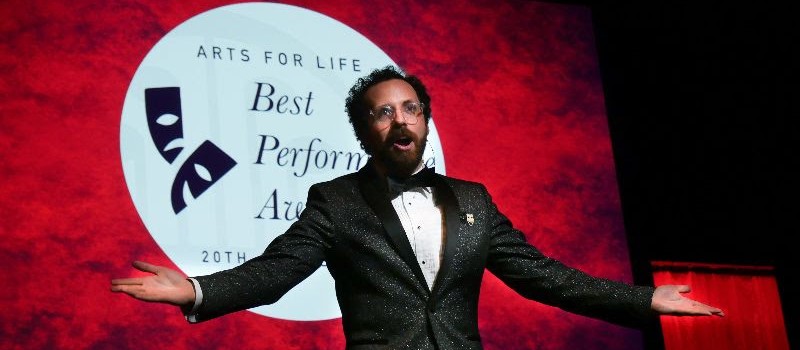
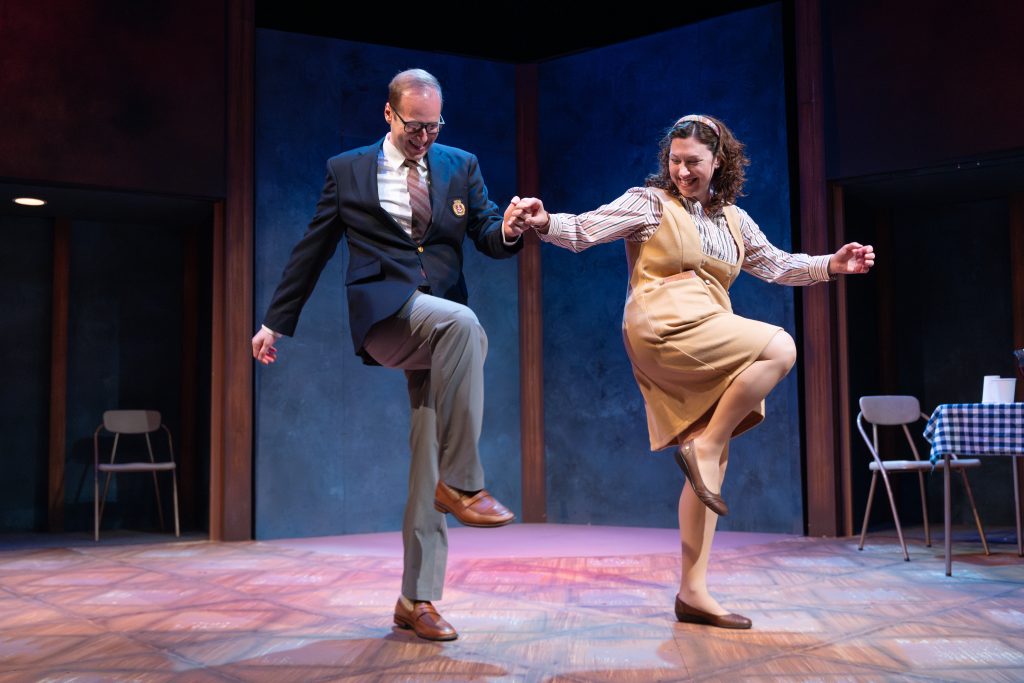
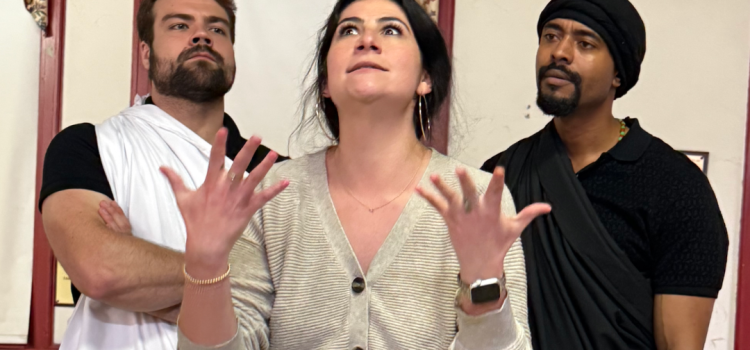
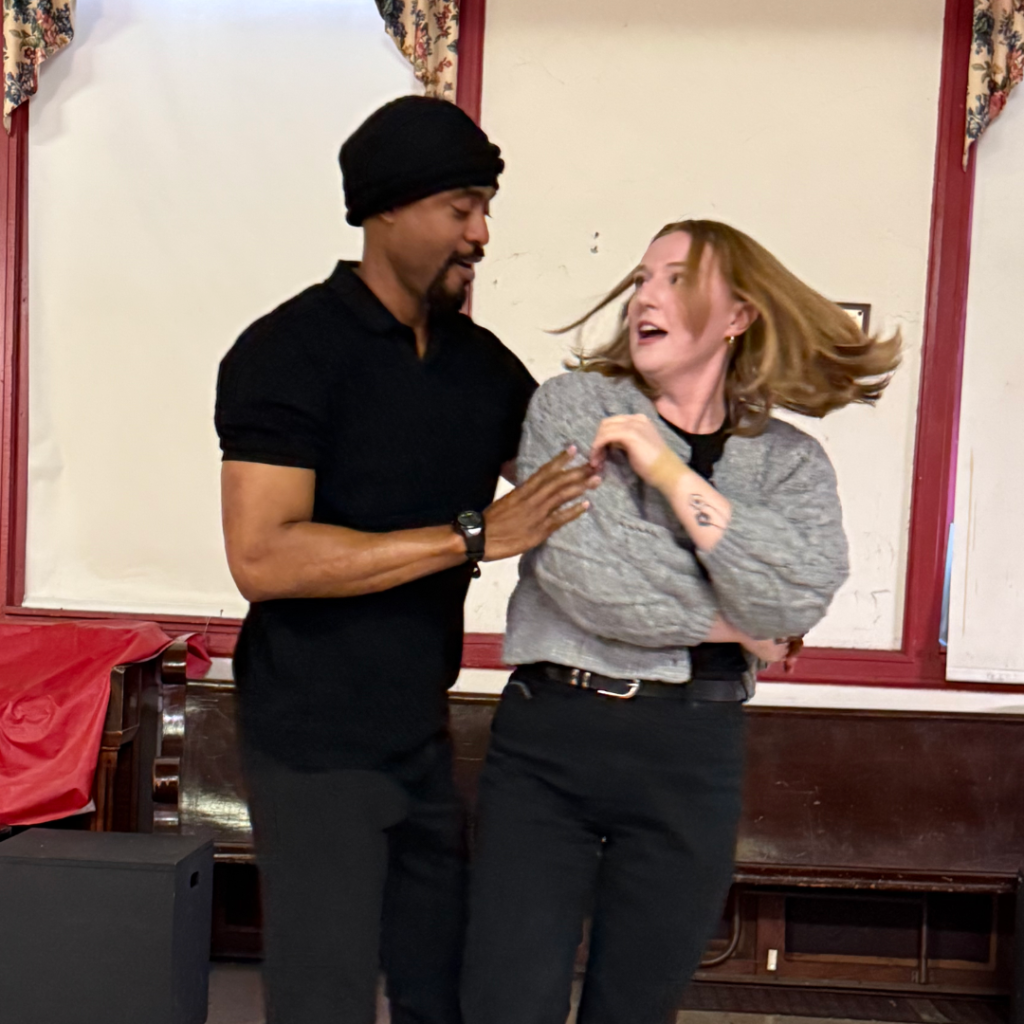
Theatre artist Tim Naegelin will be the emcee for Arts For Life’s annual Trivia Night on Saturday, Jan. 25. Tables are still available.

The “25 Years of Shining Stars” event will take place at the Kirkwood Community Center, 111 S. Geyer Road, St. Louis, with doors open at 6:30 p.m. and 10 rounds of general-knowledge questions to begin at 7 p.m.

This year’s theme celebrates the 25th anniversary of AFL’s Best Performance Awards, which first took place in 2000, honoring excellence in community theater in 1999. At that time, 21 organizations participated. Since then, recognition for youth productions was added, and the Theatre Mask Awards, honoring comedy and drama plays, were introduced in 2015.

Nominations will be announced for the annual TMAs and BPAs honoring performances and achievements during 2024.

Cash prizes will be awarded to first and second place teams. There will be a 50/50 raffle, silent auction, mulligans available, and a costume contest (optional). Participants are encouraged to dress up as a character from stage or screen.

“Don’t miss the most fun time in metropolitan St. Louis’ community theater!” said AFL President Mary McCreight.

“The AFL Trivia Night is a great way to get together and celebrate a fantastic year of community and youth theatre in the St. Louis area. It shows just how connected we are and how much we want to support each other, all while having a good time,” Naegelin said.

“I’m excited and honored that AFL asked me to host. It’s such a fun evening and makes me proud to be part of this community,” he noted.

Tim Naegelin

Naegelin is a current Arts For Life board member and a past co-chair of the Theatre Mask Awards steering committee. He was last seen on stage in “The Last Night of Ballyhoo” at Kirkwood Theatre Guild, for which he was nominated for a Theatre Mask Award. 

Other acting credits include “Sylvia” with Stray Dog Theatre, “Blithe Spirit” with ACT INC, and “A Walk In The Woods” with West End Players Guild. He has also performed with Clayton Community Theatre (“Ordinary People” and “The Laramie Project” – Theatre Mask Award nominee), O’Fallon TheatreWorks (“The Diary of Anne Frank” and “Peter and the Starcatcher”), and with Act Two Theatre (“Moonlight and Magnolias” and “The Boys Next Door”). 

Aside from being onstage, Tim has also directed “Hillary and Clinton” with West End Players Guild, “Twilight of the Golds” with Solid Lines Productions, and was assistant director for “The 25th Annual Putnam County Spelling Bee” with O’Fallon TheatreWorks.

He has been a judge for the American Association of Community Theatre’s NewPlayFest for two years and wrote a one act play that was produced as part of Spectrum with First Run Theatre.

Tables of 8 players are available, at $160 per table. Soft drinks are provided. To make a reservation, visit https://arts-for-life-2.square.site/ or www.artsforlife.org. You can also email: [email protected] for more information. Mulligans will be available, at 5 for $10 or 10 for $20.

This year’s TMA ceremony will take place on Saturday, April 26, at the Royale Orleans in South County and the Best Performance Awards will be held on Sunday, June 29, in the Keating Theatre at Kirkwood High School. More information will be forthcoming.

“These events recognize the incredible talent we have in St. Louis community theater and honor the passion and dedication of those who build this amazing and unique theatrical community,” McCreight said.

Arts For Life is a local not-for-profit arts organization dedicated to the healing power of the arts through its work with youth, the underserved and the community, with its goal of “Making a Dramatic Difference.”

AFL promotes public awareness of local community theatre, encouraging excellence in the arts, and acknowledging the incredible people who are a part of it.

“St. Louis is an amazing city, especially for the Arts. There are over 60 theater companies at home here, a third of which are community theaters. As we watch music education and theatre programs rapidly die in our schools, the need to keep community theatre alive is more important now, than ever,” McCreight said.

“To the hundreds of local musicians and amateur thespians, the Best Performance Awards and Theatre Mask Awards are a way for the community to say thank you for its volunteers in the performing arts,” she said.

Theatre groups within a 35-mile radius of Clayton, Mo., who hold open auditions for non-paid actors are invited to participate in AFL.

For more information, email [email protected]. or visit the website.
Facebook Comments

By Lynn Venhaus

Charming and delightful, “That Christmas” is an animated comedy that will give you the warm-and -fuzzies without the too-sweet and unrealistic situations that derail many of these holiday-themed movies.

And that’s because of the pedigree involved. Based on a trio of children’s books written by Richard Curtis and illustrated by Rebecca Cobb, his screenplay is not your typical fluff but features relatable characters and believable human interactions – and his trademark wit. (The other books are “Snow Day” and “The Empty Stocking.”)

Rom-com legend Curtis is known for writing “Four Weddings and a Funeral,” “Love Actually,” “Notting Hill” and “Yesterday.” Along with co-screenwriter Peter Souter, they tickle the funny bone through his imperfect adult characters and an endearing cast of quirky children. (And for Curtis fans, several in-jokes about his other films are clever references).

Now streaming on Netflix, the story centers on an unforgettable Christmas for the townsfolk of Wellington-on-Sea when the worst snowstorm in history alters everyone’s plans, including Santa’s.

The film touches on community, friendship and the bonds between families, especially siblings – all rendered in amusing and heartwarming ways throughout the breezy 91-minute film.

The seasonal adventure focuses on three families – and nobody’s having a picture-perfect holiday. In fact, calamities ensue, not to mention a whole flock of turkeys liberated before they become dinner entrees.

Simon Otto makes his feature film directorial debut — he was responsible for the character animation and story art in the superb “How to Train Your Dragon” trilogy. The animation is by Locksmith Animation (“Ron’s Gone Wrong,” and it’s bright, cheery and sufficiently wintry.

There is more to love – music is by the renowned film composer John Powell – recent credit “Wicked” — and Ed Sheeran wrote an original song “Under the Tree” for the film.

Brian Cox lent his distinguished voice as Santa, Bill Nighy has a small but impactful role as the lighthouse keeper Bill, and Fiona Shaw is the stern teacher Ms. Trapper.

The kids reflect modern views, especially Bernadette (India Brown), who rewrote the school’s traditional Christmas pageant (“The Three Wisewomen”!) and went too ‘woke’ to the horror of those in attendance. But to be fair, it had more to do with the messy watermelon splatter.
Sam (Zazie Hayhurst) is the ‘good sister’ who is exasperated by her rowdy, messy twin Charlie (Sienna Sayer), for a naughty-or-nice subplot, and Danny (Jack Wisniewski) is the sweet, sincere kid with a crush on Sam. His parents are going through a divorce. Jodie Whittaker voices his hard-working mom.

The entwined tales don’t shy aways from the realities of loneliness at holiday time, but there is plenty of merriment because of the parents’ more colorful personalities. Rhys Darby and Lolly Adefope’s

Wellington-on-Sea is fictional, but Curtis drew inspiration from the coastal towns of Walberswick and Southwold, which are in the English county of Suffolk.

It’s just a fun ride, with a pesky blizzard, Santa’s woes, and a sassy reindeer, Dasher (Guz Khan), plus the kids go through ‘learning experiences.’

The old-fashioned emotional touches in the story and contemporary cozy look are both appealing, making this Christmas one to remember. Watching “That Christmas” is as comforting as a cup of hot cocoa with a plate of Christmas cookies. In fact, that may be the best way to see it, along with snuggling up with a throw.

“That Christmas” is a 2024 animated comedy directed by Simon Otto and starring (voice-over work) Brian Cox, Bill Nighy, Fiona Shaw, Jodie Whittaker, Jack Wisniewski, Sienna Sayer, India Brown, Zazie Hayhurst, Rhys Darby, Lolly Adefope, Guz Khan, and Bronte Smith. It is rated: PG for thematic elements, some language and rude humor. It began streaming on Netflix Dec. 4. Lynn’s Grade: B+

Facebook Comments