By Lynn Venhaus

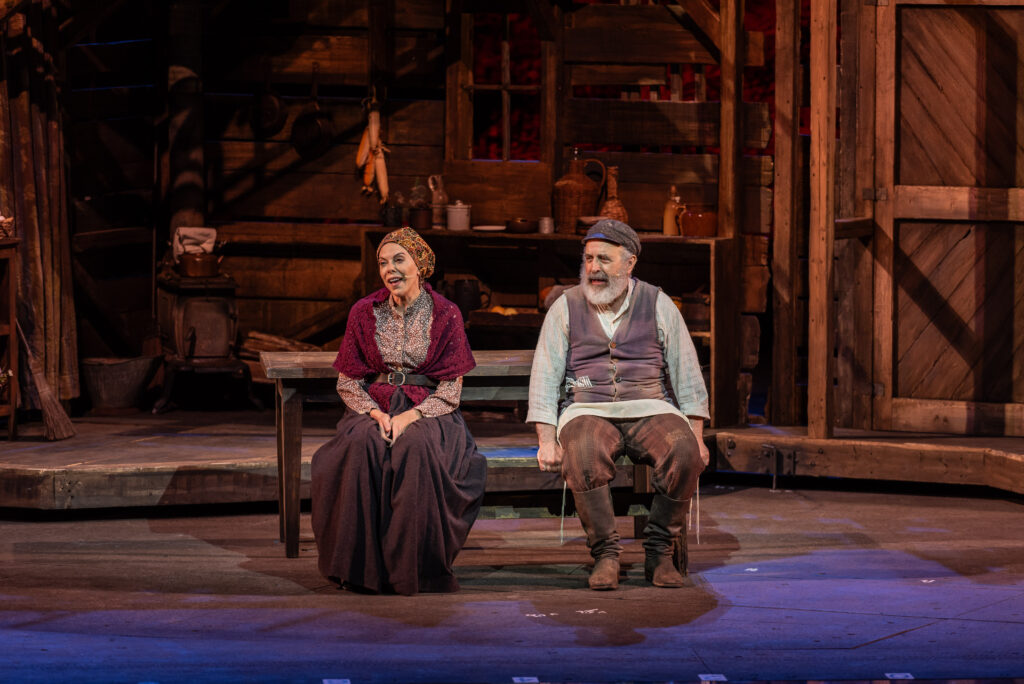
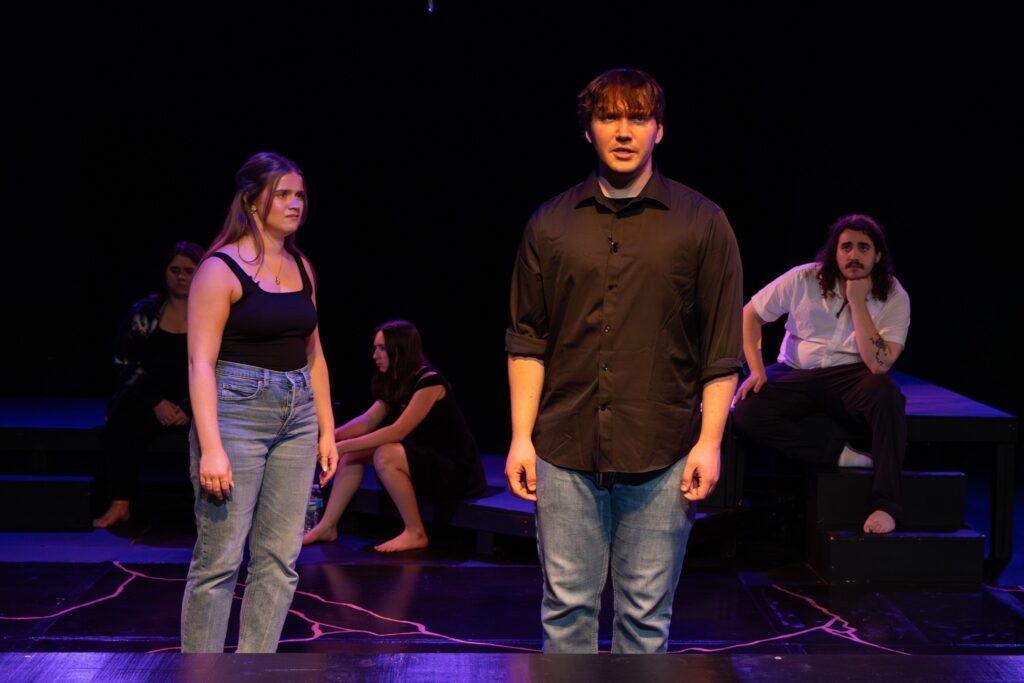
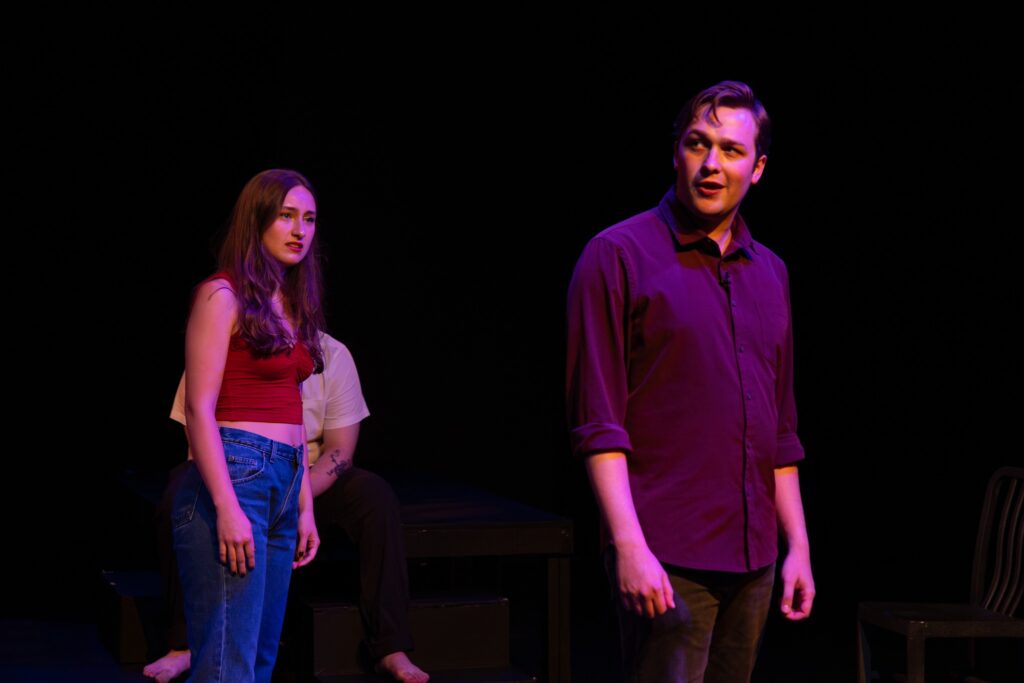
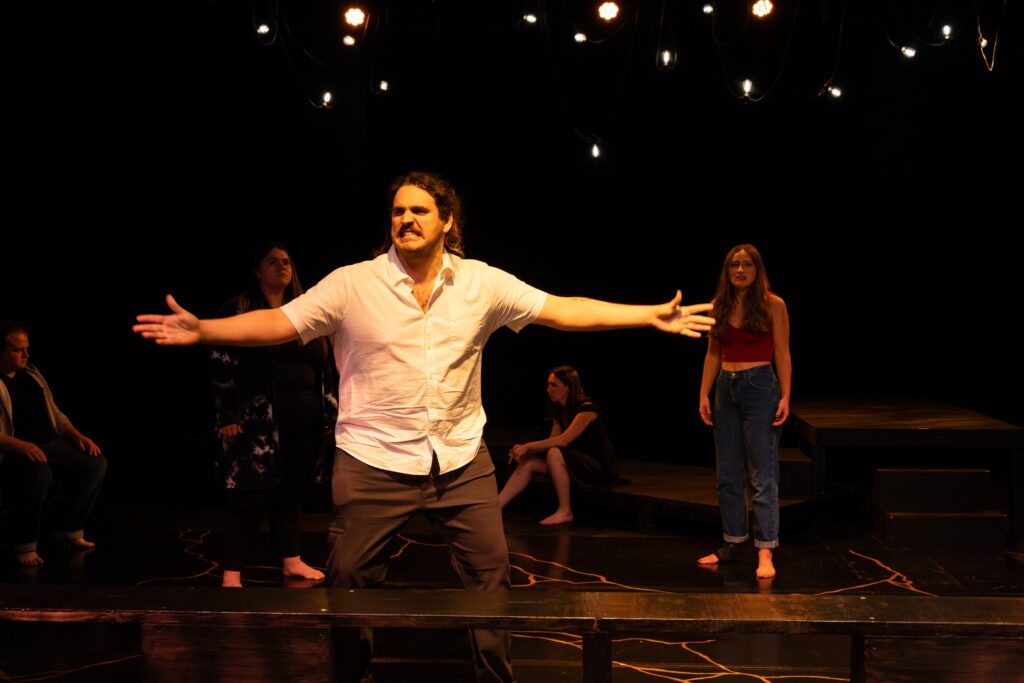
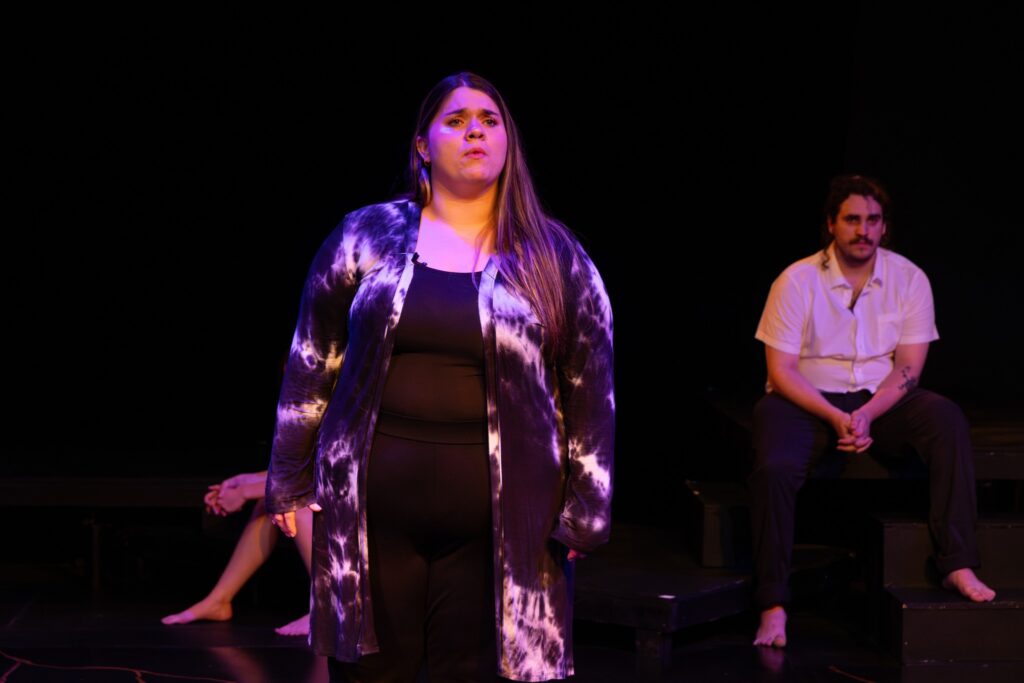
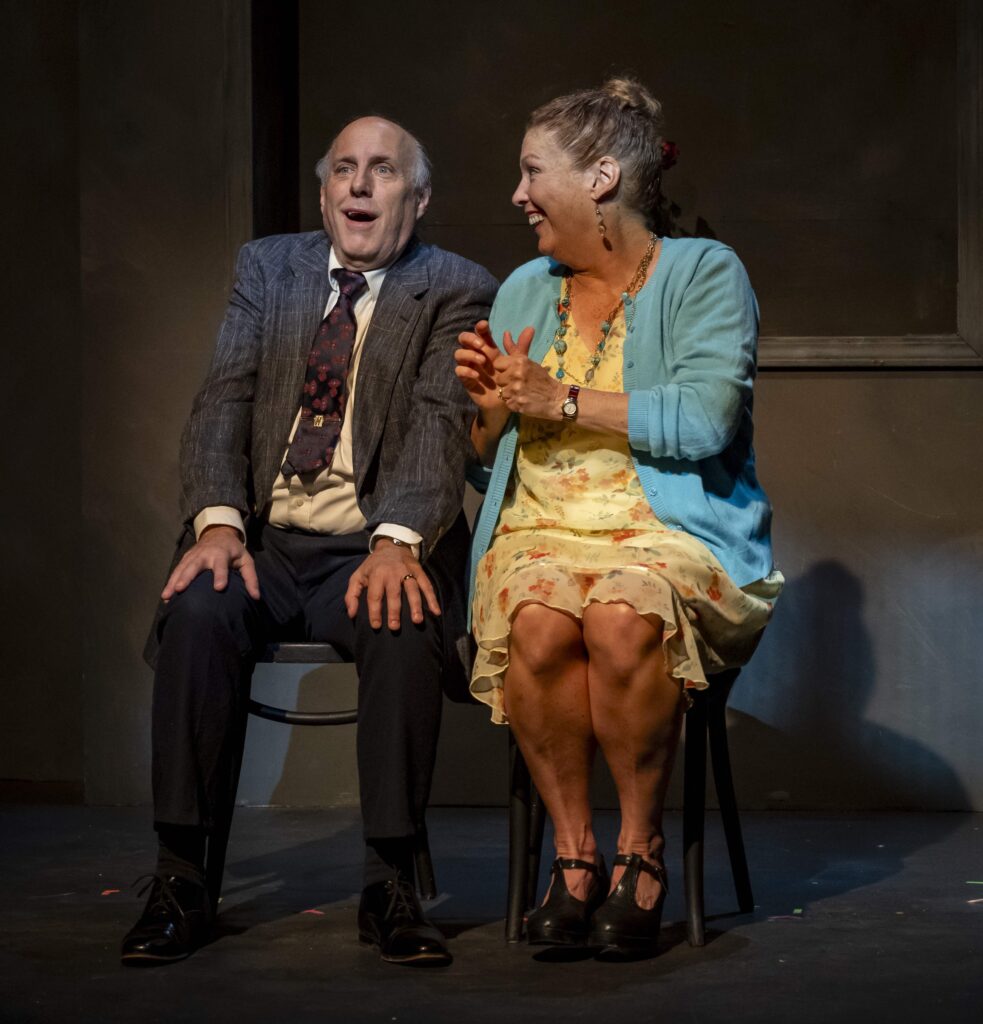
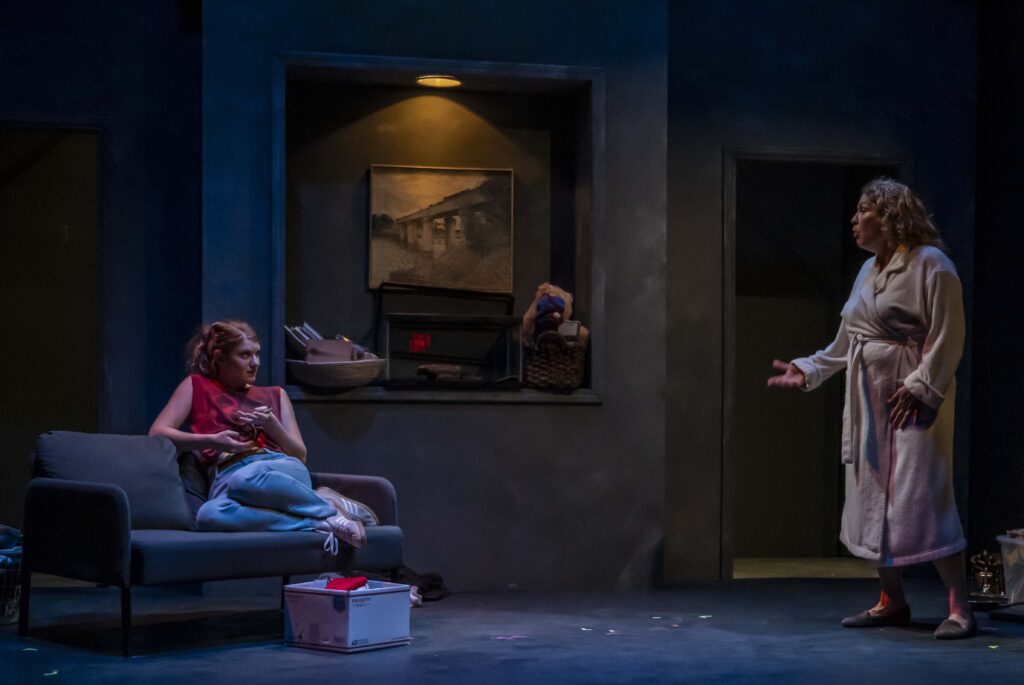
At only 16, Nadja Kapetanovich is beginning to make a splash on local stages. She is appearing as Ellie in “The Whale,” a role she says is her favorite to date: “It has been a true gift.”

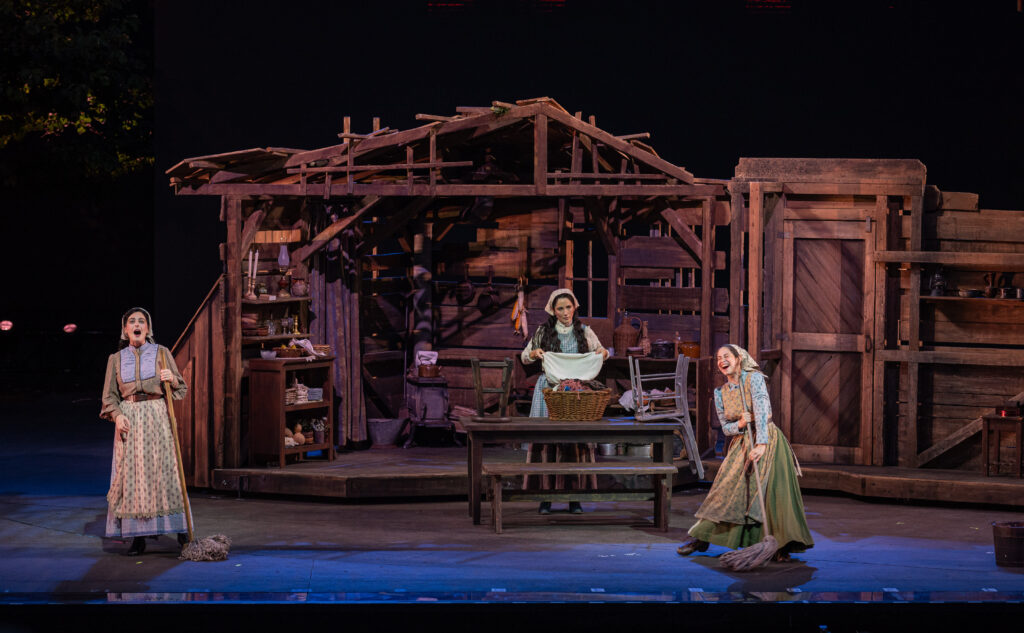
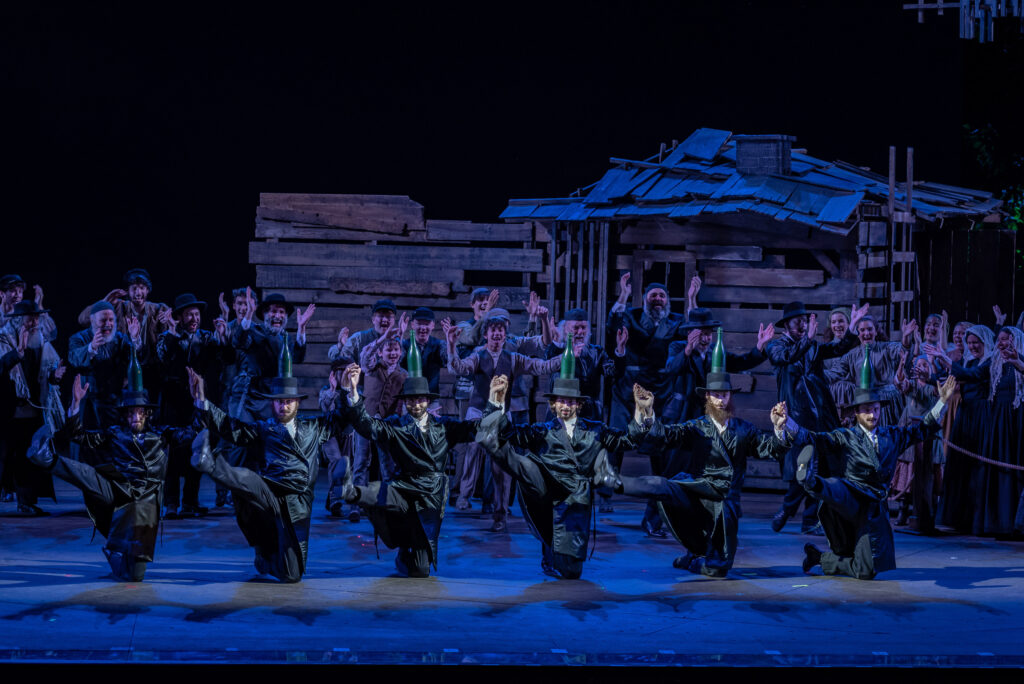
A junior in high school who lives in Alton, Ill., she has appeared in community theater, youth productions and recently, in regional professional theater. She was Tony Manero’s little sister Linda in Stray Dog Theatre’s “Saturday NIght Fever” last fall and a dancer in St. Louis Shakespeare Festival’s “Winds of Change,” an original production presented in the Bevo Mill neighborhood as part of the Shakespeare in the Streets event in 2022.

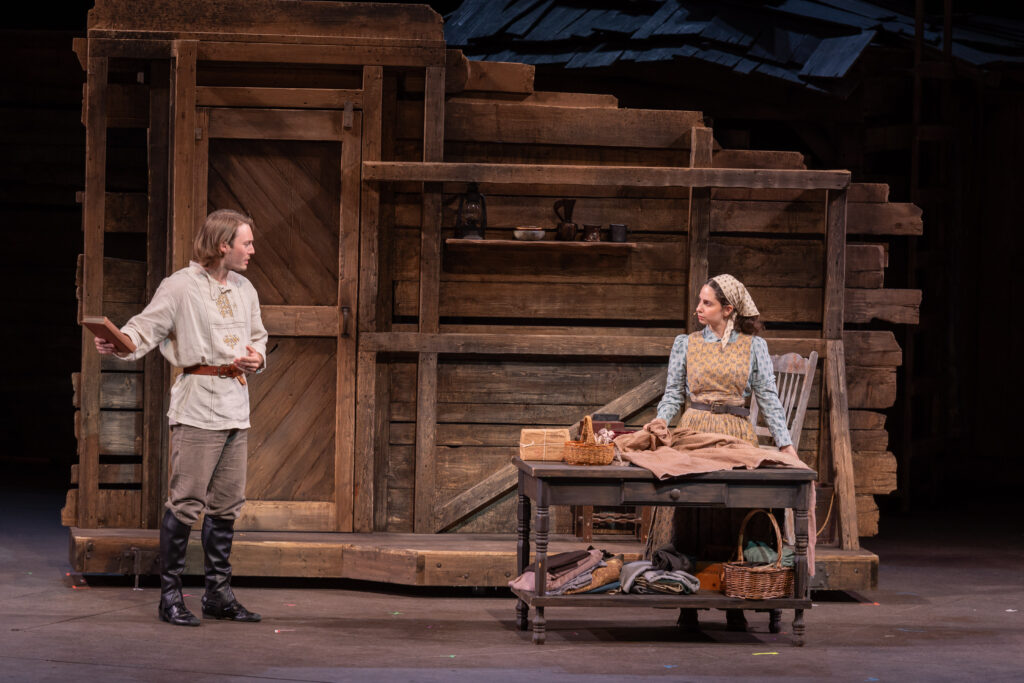
She played another daughter in “From the Garden,” an original play by Don Cameron Miller, that was produced by Wee Laddie Theatrics. She will be part of a reading this summer for another original play, “13 Hours of Sun,” by Elizabeth Breed Penny.

And then trying to figure out school, future, and what’s ahead.

Here’s a glimpse into the young actress currently in “The Whale” at St. Louis Actors’ Studio Thursday, Friday and Saturday evenings at 8 p.m. and Sundays at 3 p.m. April 5 through April 21 at The Gaslight Theatre, 358 N. Boyle. For more information: stlas.org.
Take Ten Q & A with Nadja Kapetanovich

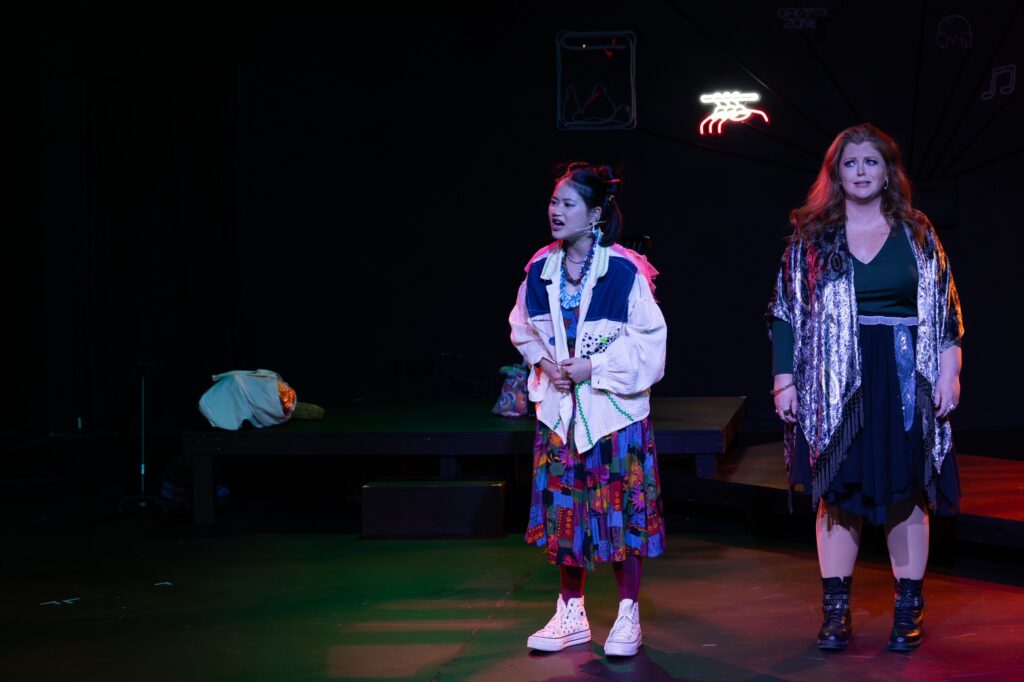
Nadja Kapetanovich and William Roth in “The Whale.” Photo by Patrick Huber.

1. What is special about your current project?

“The Whale” has been a true gift. Getting to play a character who is so misunderstood and broken has been a big challenge, but doing it alongside this cast of actors is everything I could have ever wished for. Being directed by Annamaria Pileggi has taught me so much, and I will always thank her for showing me what it feels like to really understand a character and allow myself to truly feel every emotion that comes in a natural way.

2 Why did you choose your profession/pursue the arts?

“My favorite memories from when I was a little kid were going to see musicals and plays in St Louis with my family. My childhood dream was to be an actor, and my parents were extremely supportive and helped me to find my first few auditions. I have always loved dissecting people’s personalities and finding out who they really are, which is why I found the process of developing your own version of a show with your cast and crew members to be extremely exciting and rewarding.”

3. How would your friends describe you?

“I did not know how my friends would describe me, so I asked them! Here were some of the things they said: “outgoing,” “super-funny and spontaneous,” “constantly bursting into song, would burst into dance but space often doesn’t allow,” “hard-working and persevering,” “passionate about her dreams,” “kind-hearted, honest, and true to her word,” and “quick-witted.” I have the best friends ever.”

4. How do you like to spend your free time?

“Recently, I have been spending my free time going on walks with my friends, trying to teach myself guitar, playing piano, painting and drawing, and reading.”

5. What is your current obsession?

“My current obsession is going on walks after school and on the weekends. I love walking around my neighborhood while listening to my favorite music. I am also currently very obsessed with vegetarian chicken sandwiches.”

6. What would people be surprised to find out about you?

“Many people are very surprised to find out that I speak Bosnian. I do not tell my new friends this, and just let them find out by hearing me speak to my dad in Bosnian for the first time. I really appreciate the shock value.”

:The Gingerbread Lady” at KTK Productions. Nadja was nominated for an Arts For Life Theater Mask Award in 2023.

7. Can you share one of your most defining moments?

“One of my most defining moments was when I was 3 years old and I saw my first musical. I think it might have either been “Annie” or “Cinderella.” At this moment, I absolutely fell in love with live theatre. On the way home from the show, I turned to my mom and said “Mommy? On Monday I need you to find out how I can become an actress.” The rest is history!

8. Who do you admire the most?

“The person I admire most in my life is my grandma. She is the most caring and helpful person I have ever met, and she is full of a huge amount of love and life. She has taught me so so much, and has been there for me whenever I needed help with anything. She is truly inspiring, and I hope that I will be like her in my future.”

9. What is at the top of your bucket list?

“Currently, moving to a big city is at the top of my bucket list. Chicago, New York, or St. Louis are all places I would really love to live. Also, I would love to be in a film in the near future.”

10. How were you affected by the pandemic years, and anything you would like to share about what got you through and any lesson learned during the isolation periods? Any reflections on how the arts were affected? And what it means to move forward?

“The COVID-19 pandemic was extremely hard for my family and I. A few months after quarantine started, my grandpa was infected with COVID. He ended up passing away from the virus, and we were not able to say goodbye to him because of social distancing. I learned that I get my energy from being around other people, so having to be apart from all of my friends and loved ones during that time was extremely difficult. Also, not getting to perform for a year was very sad. I was supposed to make my professional debut in “Looking For Normal” at Max and Louie Productions, but the show was cancelled due to the pandemic. Moving forward from COVID in the arts was extremely exciting, and it feels great to be able to come back and make my professional play debut four years later.”

11. What is your favorite thing to do in St. Louis – or your hometown?

“As someone who lives about 45 minutes away from St. Louis, I come often, but usually visit the same places over and over. I love the Zoo and the Art Museum. I also really enjoy walking in Central West End before rehearsals with my dad. In my hometown, Alton, I really love walking down by the river and on the docks with my friends.”

12. What’s next?

“I’m currently auditioning for some summer shows, and I will be doing a reading of a play by Elizabeth Breed Penny called “13 Hours of Sun” this summer. Apart from theatre, I am very focused on school right now. I’m going to be a senior next year, which means I have to start applying to colleges and decide what I am going to do with my future.”

Nadja in “Winds of Change,” an original production presented in the Bevo Mill neighborhood as part of the Shakespeare in the Streets event in 2022.

More Information on Nadja Kapetanovich

Age: 16 years old
Birthplace: Alton, Ill.
Current Location: Alton, Ill.
Family: Jennifer and Mirsad Kapetanovich are my incredible parents.I do not have any siblings, but spend a lot of time with my grandparents.
Education: Currently a high school junior.
Day job: High School
First Job: Selling vegetables at a farmers’ market
First play you were involved in: “Shrek the Musical” when I was 8 years old.
Favorite Jobs/Roles/Plays or work in your medium: My favorite role I have played is Ellie in “The Whale,” but Jeannine Pratt in “Ordinary People,” Esther Smith in “Meet Me in St. Louis,” and Polly Meara in “The Gingerbread Lady” are also high on my list.
Dream job/opportunity: Professional actor/clinical psychologist
Awards/Honors/Achievements: I was nominated for Best Supporting Actress in a Drama for my role in The Gingerbread Lady” a few years ago! I also won Best Supporting Performer in a Play for the 2023 St. Louis Broadway World Awards.
Favorite quote/words to live by: “There are places you haven’t been where you already belong”
A song that makes you happy: “Here Comes the Sun” by The Beatles

“Freaky Friday” at Christ Memorial Productions in 2023..


Facebook Comments

Renowned for its innovative and impactful theatrical work in St. Louis, Gateway Center for Performing Arts is producing one of its most epic musical endeavors yet — “Ragtime.”

“This production pulls out all the stops, including aerial effects by On the Fly Productions, the functioning Model T Ford used in the national tour, and a large live orchestra,” said GCPA Executive Director Paul Pagano, who is directing the show.

“This is a very deep, emotional, and complicated story. These young artists are telling it with a wisdom that is beyond their years. They understand what it means to fight for equity far better than I did at their age. I learn a lot from them. My hope is that through their telling of
this story, you will learn from them, too,: Pagano said.

The musical will be staged for four performances at the Kirkwood Performing Arts Center April 19-21, with showtimes at 7 p.m. Friday, 2 p.m. and 7 p.m. Saturday, and 2 p.m. Sunday.

“Ragtime” intertwines the lives of three families – white, black and immigrant – navigating the vibrant and tumultuous landscape in turn-of-the-century America. The lush Tony award-winning musical score by Lynn Ahrens and Stephen Flaherty sets the backdrop for this powerful tapestry, delving into the complexities of racial tensions, social change, and the pursuit of the “American Dream.”

GCPA’s talented and passionate young cast, under the direction of a diverse powerhouse creative team, tell a story that not only revisits the struggles of the past, but also holds a mirror to the present, inviting audiences to reflect on how much has truly changed, and how much remains the same.

“My role was to research this show, but I really learned the most from the actors in this cast,” said Dramaturg Kate Schuler. “We can – and should – learn about racial injustice in school, but learning directly from the performers, having open conversations and how the story of “Ragtime” resonates with them as they bring it to life, has been so Important. We need to keep having these conversations.”

Zion Thomas, a GCPA alum now joining the creative team as Assistant Director, shared his perspective. “We see the protagonist, the passionate and adventurous Coalhouse Walker Jr., grow angry and violent as the story unfolds. His actions are a calculated response to all he has lost. They come from the mind of a man who screams for respect yet has found no other way to be heard. I do not excuse his actions, but I do understand them.”

“In my opinion, one cannot focus on Coalhouse’s violence without first dwelling upon what drove him to it: the defilement of his dignity, the inability to obtain legal justice, and the brutal murder of his love with impunity. Like all people, Coalhouse sought common decency and respect. And when it was denied him, he demanded it. I hope you fall in love with Coalhouse, but more importantly, I hope you hear his plea. It is one that many cry to this day,” he said.

Ragtime takes a hard look at the connection between the injustices of the past and the present, but it also calls audiences to action for the future. Aurora Lindsey, who plays Sarah’s friend, shared the impact of connecting with community while developing her character.

“Working alongside this gifted cast, especially in a group of gifted black friends, I have experienced such deep connection as we’ve grown together through telling this story. My character experiences a lot of pain, but she has taught me the importance of even through pain, always taking the chance to lift people up, create change, and move forward.”

Activist Emma Goldman is played by Grace Cooperstein, who reflected, “I’ve learned from my character how to speak up and use every opportunity to make change. My sword is my voice.”

And James Davis IV, who is a part of the Harlem Ensemble and plays Coalhouse’s Follower, said: “Ragtime illuminates the very real discrimination we still face today, but my takeaway is that these characters never gave up and never stopped fighting for their joy and for their dreams. We have the power. especially when we are family together, to make change. When opportunity strikes, don’t linger in the noise. Keep going.”

The choreography is by Laura Roth and Lawrence Haliburton and Lori Pagano is the music director.

Tickets are available through Metrotix or the KPAC box office for $15-26 and can be purchased through www.gcpastl.org/tickets. Student
tickets are available on Saturday night for $15. You can avoid Metrotix fees by purchasing directly from the KPAC box office.

Facebook Comments

By Alex McPherson

Depicting a frightening near-future scenario, Alex Garland’s “Civil War” is a sincere ode to journalists, a chilling warning to take history seriously, and a stark reminder to never lose our humanity amid chaos.

Eschewing backstory to throw us right into the middle of the conflict, “Civil War” depicts an America where an authoritarian, three-term president (Nick Offerman), who has disbanded the FBI, leads an army of loyalists against the secessionist “Western Forces” of Texas and California. Florida has also formed its own breakaway faction, apparently.

The less one thinks about the logistics of Garland’s film, the better. What really matters is that WF forces are getting closer and closer to Washington, DC, with the President in their sights, and America has turned into a scorched battleground.

The clock’s ticking for our lead characters – celebrated war photographer Lee (Kirsten Dunst) and Reuters print journalist Joel (Wagner Moura) – who are determined to snag an interview with the President before he’s killed, even though it may cost them their own lives. We first meet them in New York City, covering a gathering for water rations that ends in a suicide bombing.

Lee encounters Jessie (Cailee Spaeny), a young, wannabe photojournalist, on the scene. Jessie idolizes Lee and wants to follow in her footsteps, while Lee feels uncertain about encouraging Jessie to become a photojournalist —even as she recognizes part of herself in Jessie that has long atrophied into cold professionalism.

Lee has spent her career documenting overseas conflicts, becoming hardened and haunted by the atrocities she’s witnessed – continuing to put herself in harm’s way for a potentially misplaced belief that her photos will mean something.

Joel, hard-drinking and charismatic, is fueled by a thrill-seeker’s urge to capture the next Big Moment. His sociability, contrasting with Lee’s, masks his own trauma and desensitization; he’s holding onto a sliver of boyishness through the nightmare.

Lee and Joel reluctantly agree to bring along aging New York Times writer Sammy (an ever-comforting Stephen McKinley Henderson) on their trip from NYC to DC. Sammy, out of shape and vulnerable though he is, is still drawn to danger and his craft. He acts as a pseudo father-figure for the group – helping guide them (to a point) through the various predicaments they run into along their road trip from Hell.

Jessie also weasels her way into the group thanks to Joel, much to Lee’s annoyance. Thus, the archetype-filled press squad begins their voyage across the heartland – encountering numerous terrors along the way, documenting them for the future, and grappling with their work’s purpose (or lack thereof) as an already-scarred America continuously slashes new wounds.

Indeed, Garland’s film is an uncomfortable, eerily prescient, and strangely entertaining experience. It’s difficult to look away from this nightmarish vision of a war on America’s soil, particularly given America’s current political tensions and fresh memories of the January 6 insurrection.

However, Garland avoids delving too much into the specifics of the conflict, and “Civil War” isn’t concerned with examining what led America to this point, or giving us a clear side to root for or against. The film tackles grander ambitions than just capitalizing on partisan hatred that anyone with an Internet connection can witness every day.

Rather, he presents a possible future where complete dehumanization of the Other runs rampant, and any hope for peace is shattered by self-perpetuating cycles of violence. Seen through the eyes of our central journalists, the film succeeds at both depicting their heroic sacrifices, as well as issuing a grim warning to viewers without providing easy answers. 

Garland’s politically vague approach (he’s British, an outsider looking in) allows us to observe the horror without playing on or exploiting current offscreen tensions — an equalizing choice that renders the film’s graphic acts of barbarity all the more disturbing; startling and not sensationalized, every side is capable of cruelty.

Some viewers may decry the film’s both-sides-ism stance, but Garland’s film works better as a possible future taken to extremes, where negotiations and democracy have seemingly failed, and people have reverted to base instincts to cope.

As the characters variously become more numb, enraged, and even darkly energized by the situations they witness (massive shootouts, an idyllic Main Street patrolled by rooftop snipers, a bullet-ridden Santa’s wonderland), “Civil War” paints them as noble souls performing a necessary task, some of them mentally crumbling before our eyes.

Garland’s film, then, despite all its political side-stepping, stresses the importance of making their sacrifices and effort mean something, both within America and beyond it, within the film and outside of it. Garland puts the onus on us viewers to pay attention and to not merely let images wash over us as content to be consumed and forgotten, but rather as tools to be acted upon for change and action. 

It’s a provocative, somewhat self-important message, one that has faith in cinema’s ability to affect hearts and minds, and its effectiveness depends on whether viewers are willing to pick up what Garland’s putting down.

Still, “Civil War” works on a more basic level, too, depicting complex characters on a visually striking journey full of suspense and tragedy with an occasional glint of gallows humor, each stop a new opportunity for taughtly-directed drama.

Rob Hardy’s gorgeous cinematography finds beauty in the desolation of familiar spaces — abandoned vehicles strewn across empty highways, suburban neighborhoods morphed into warzones, a forest aflame, and once vibrant, buzzing cities becoming eerily quiet, with the threat of violence lurking around every corner.

Combat sequences — enhanced by stellar sound work — are jolting and involving, going from cacophonies to silence as we sometimes abruptly cut to watching Jessie’s pictures develop. 

The whole ensemble, too, is outstanding and has great chemistry, giving their characters a haunted gravitas. They embody, in distinct ways, a push/pull dynamic between documenting the truth and acting on innate empathy that might get them killed. Their contradictions only make them more compelling, rendering the film’s alternately cerebral and hectic rhythms powerful on both a large and small scale.

Dunst and Spaeny are particularly effective portraying characters that are seemingly mirror images of each other at different stages of their lives. Lee sees her former self in Jessie, a person who still has hope for the profession and for a better future, but witnesses first-hand Jessie’s growing desensitization — losing pieces of her youthfulness and, in some respects, her sense of self as she chases danger for the next shot.

Dunst gives an emotionally wrenching performance illustrating the shreds of hope and compassion that shine, if only briefly, through her tough exterior, while Spaeny sells Jessie’s arc without being melodramatic — Jessie bonding with the team as she comes into her own as the journalist she’s dreamed of becoming.

The film’s more memorable performance, though, is given by Jesse Plemmons as a member of a militia who’s as scary (if not scarier) than any recent horror movie monster, in a scene that’s difficult to shake.

Ultimately, “Civil War” is a gripping experience that will grow in power upon further reflection. It will no doubt spark heated debates — a feature that only great, necessary art can provide.

“Civil War” is a 2024 action science fiction film written and directed by Alex Garland and starring Kirsten Dunst, Wagner Moura, Stephen McKinley Henderson, Cailee Spaeny, Sonoya Mizunoand Nick Offerman. It is rated R for strong violent content, bloody/disturbing images, and language throughout, and runs 1 hour, 49 minutes. It opens in theatres April 12. Alex’s Grade: A.

Facebook Comments

By Lynn Venhaus

Anyone who has experienced grief knows that moving forward, life is measured by “Before” and “After.”

“The Whale” delves into the mental and physical health problems of a morbidly obese recluse, showing us the “After” and explaining the “Before” in an emotionally honest drama by Samuel D. Hunter.

In yet another well-cast, impeccably directed production, St. Louis Actors’ Studio imbues this gut-punch of a script with empathy and authenticity.

In his play, Hunter forces us to see the complexities in human nature, so impressions aren’t so easily defined, and judgment can wait. He has crafted flawed characters who have dealt with adversity and challenges in very different ways. Yet, they are stuck in time.

First presented in 2012, Hunter later wrote a bleak screenplay adaptation for the 2022 film that won two Oscars – one for Brendan Fraser’s performance and the other for makeup.

The film, while much dimmer inside the claustrophobic apartment, is very similar to the stage play, yet the characters are more severely portrayed, and redemption doesn’t seem plausible.

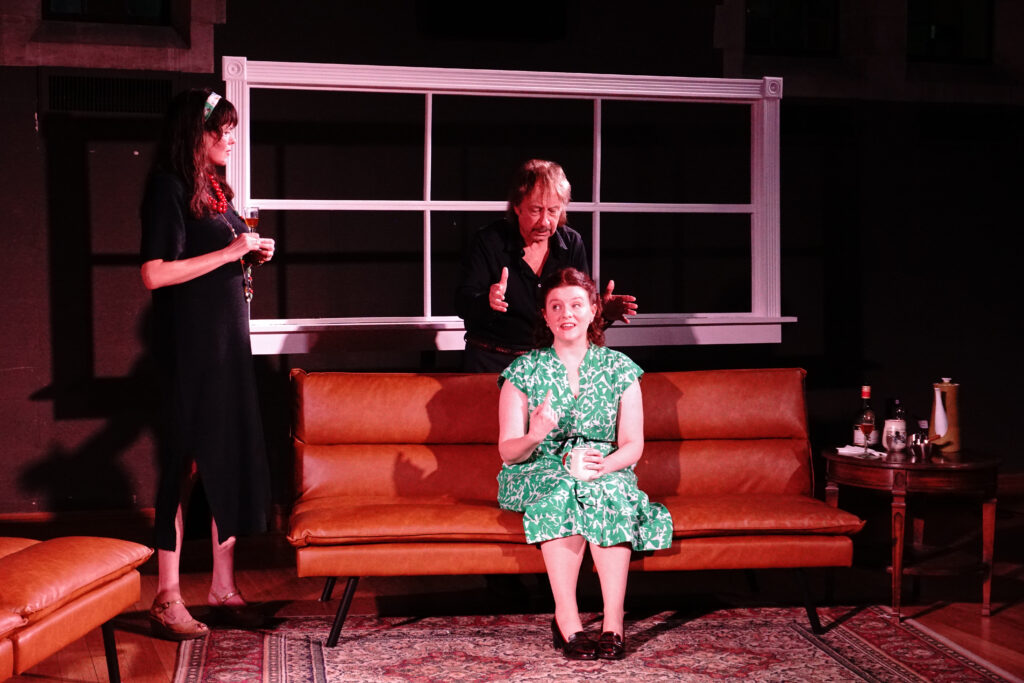
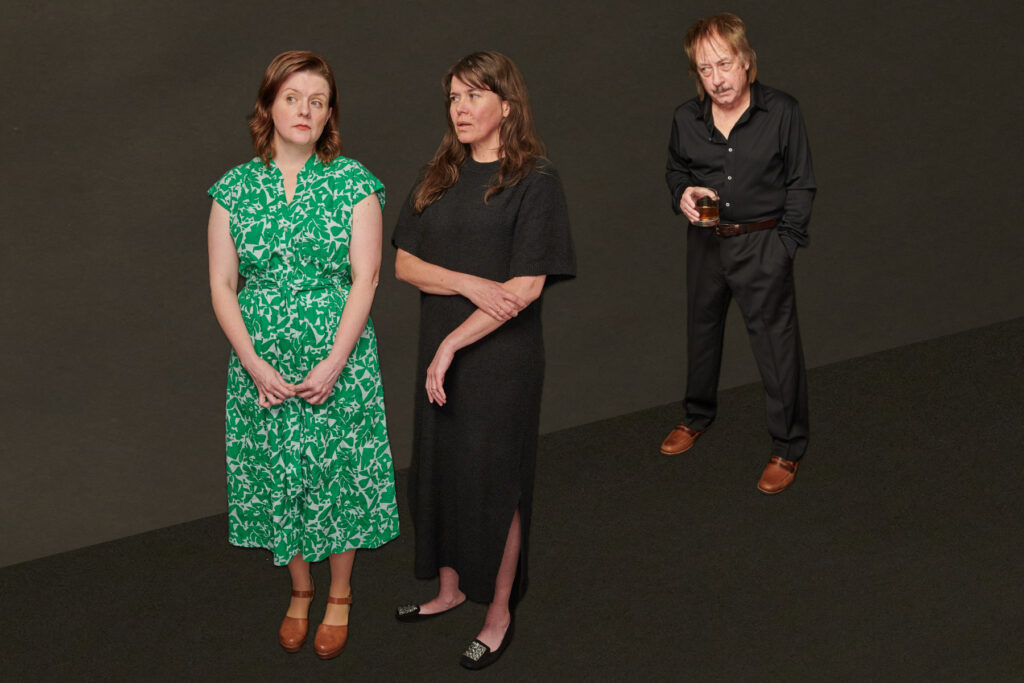
Set in a small town in northern Idaho, over the course of a week, four people interact with a nearly immobile Charlie (William Roth) in his dingy living room – nurse and friend Liz (Colleen Backer), estranged daughter Ellie (Nadja Kapetanovich), ex-wife Mary (Lizi Watt), and Mormon missionary Elder Thomas (Thomas Patrick Riley).

All affected by loss and loneliness, they are each wrapped in their own cocoons, and grace has eluded them. Director Annamaria Pileggi has drawn out nuances among this exemplary cast as they reveal truths about themselves. You feel their misery, but you also see signs of hope.

In a brave, towering performance, William Roth has never been better as Charlie, a sensitive soul whose heartache and regrets have led to self-destructive behavior. A writing instructor who now conducts classes online, he has ballooned to 600 lbs., suffers from congestive heart failure and is on a trajectory to imminent death.

Roth has delivered virtuoso performances before, notably as George in “Who’s Afraid of Virginia Woolf?” and as Charlie Aikin in “August: Osage County,” both at St. Louis Actors’ Studio, which he founded and is the artistic director.

William Roth as Charlie. Photo by Patrick Huber

But this realization is both heartfelt and haunting. Hunter enlists many ways to display Charlie’s self-loathing, visually masking his pain with an eating disorder, and describing memories from what had been an ordinary life. Roth disappears into the role, wistfully recounting happier times at the seashore with his wife and child, and then later being with his lover and former student Alan. Will he ever forgive himself for what he perceives are his failings?

Using a colloquial term, Charlie has “let himself go.” Eating his feelings since Alan’s death eight years ago, he has guilt in his psyche – but passion in his heart for literature. You feel his remorse – and his enormous capacity for love.

Through grading papers, talking to his class via computer, and reading aloud their essays, Charlie displays a fine mind, a keen grasp of literature, what authors meant, and encourages self-expression.

Conveying that love for the written word that once gave him great joy makes it much sadder that, sidelined by grief, he’s not the teacher he once was, and not entirely comfortable connecting with his students (yet, astute in his comments). The isolation, as reflected in that tiny room, is crushing.

He also has vast unconditional love for his daughter Ellie, a sullen teenager who feels abandoned and lashes out cruelly. After years of no contact, he has attempted to reconnect with her, and she is seemingly unreachable – tough, rebellious, impulsive.

Her mother, angry and filled with rage too, has kept her from establishing a relationship with her father. At 17, she hates everything and everybody, and is flunking out of school. She is repulsed by his appearance, but visits anyway — after all, he is writing her English papers, and there is a pledge of money.

Displaying hostility, confusion, forlornness, and defiance, Nadja Kapetanovich is a knockout in a finely textured performance as Ellie. It’s a sensational breakthrough performance in regional theatre.

Kapetanovich, Riley, Watt, Backer, Roth. Photo by Patrick Huber.

Thomas Patrick Riley also has a breakout opportunity as Elder Thomas, and he’s splendid. He has the most complicated backstory of them all, and represents the evangelical religion that Hunter focuses on as a root to issues expressed here, particularly religious homophobia, and pointedly The Church of Jesus Christ of Latter-day Saints.

More dots in the plot are connected through Liz, the tough-love nurse played with heartbreaking compassion by Colleen Backer, whose ability to shift moods between comic and dramatic is one of her finest features.

Liz is Alan’s sister, so there is that. And she’s trying to keep Charlie healthy and alive, but also enabling him with high-fat, high-sodium foods (fried chicken, sub sandwiches, pizza, doughnuts and soda). She offers comfort while admonishing him with lectures. It’s an endearing performance by the always entertaining Backer.

In a brief but pivotal role, Lizi Watt blows in as the blustery ex-wife Mary, whose resentment is at a full rolling boil. She’s full of outrage, and vents to Charlie on how exasperated she is about their daughter. While she’s snarling, she’s also drinking copious amounts of vodka. It’s apparent that Ellie is a mirror image of her mother.

What is interesting about these hardened characters is you see them mentally and physically soften when confronted with Charlie’s predicament – if only fleeting. There is also more humor in the play than I recall from the film, which are moments of relief from the grim subject matter and the blame game volleys.

Wearing an impressively designed body suit by Angela B. Calin and engineered and constructed by Laurie Donati of the South Coast Repertory Theatre in Costa Mesa, Calif., Roth’s physicality is key to the character, portraying the very real struggles of someone so overweight as to be in pain from the slightest exertion.

Costume Designer Teresa Doggett also worked skillfully on Roth’s prosthetics to ready him for this appearance on stage, and her casual outfit choices for the five actors were on point.

Patrick Huber’s scenic and lighting design reflects the slovenly quarters but also Charlie’s thirst for knowledge, with crammed bookshelves and papers everywhere. Props designer Emma Glose did a fine job littering the apartment with discarded food boxes, beverage containers and academia.

Caleb D. Long supervised the crafts parts as technical director. Another standout is the sound design by Kristi Gunther, also production manager, which incorporated hearing seaside noises like seagulls and the waves on the beach to evoke pleasant memories.

Others responsible for shaping this tight production: Bryn McLaughlin was the assistant director, and stage manager Amy J. Paige, with Glose her assistant.

This show’s cast was able to let us into their world, tinged with melancholy, and indicate the possibility of mercy, which is a final grace note.

And we can debate the ending for a long time, but I choose triumph, even if it is just in the teeniest glimmers of change that may be ahead for all.

St. Louis Actors’ Studio presents “The Whale” Thursday, Friday and Saturday evenings at 8 p.m. and Sundays at 3 p.m. April 5 through April 21 at The Gaslight Theatre, 358 N. Boyle. For more information: stlas.org.
Facebook Comments

By Lynn Venhaus

Unrelentingly grim, the harrowing action film “Civil War” is a provocative look at a nightmarish “What If?” scenario — and claims to be science fiction as it’s set in the future.

Disturbing real-life events in recent years have stirred up thoughts of a domestic doomsday, a cataclysmic reckoning with armed militias if our country’s structures of power, authority and social norms are subverted.

Projecting a second Civil War without getting too deep into politics, British writer-director Alex Garland has escalated America’s current divisions to envision a ravaged war-torn landscape with refugee camps, resistance fighters, military checkpoints, and violent conflict zones. We don’t see how it starts, just that it did, and the nation is engulfed in violent conflicts.

He focuses on the press documenting the atrocities in besieged areas, and their struggles to work and survive in a dystopian dictatorship. Those ethics and their costs personally are a key part of the story.

As a professional journalist for 46 years, I found this very raw and realistic film triggering. It ramped up my anxiety from start to finish, so it’s hard for me to separate fact from fiction here. 

However, as a film the technical work is first-rate while Garland’s screenplay, meant to be an allegory, is a tad wobbly.

It’s no coincidence that the national release date, April 12, just happens to be the day in 1861 that the first — and so far, only — Civil War started. (Note: The film did have its premiere at SXSW on March 14).

This much is true: Actions have consequences. We can all agree on that.

And whether you’re alarmed by seeing a partisan extremist holding an assault rifle and asking what kind of an American are you while he stands next to a mass grave is going to determine how you feel about this hard-hitting but not entirely convincing film.

The primary character is Kirsten Dunst as Lee Smith from Colorado, a bold, taciturn war photographer patterned after the famous World War II chronicler Lee Miller, who embedded with the military in Europe, and was among the first in Dachau concentration camp after liberation.

Dunst plays Lee as a hardened risk-taker who eventually shows signs of being weary of all the horror she’s witnessed. Wagner Moura is her more gregarious but still jaded colleague Joel, a reporter for Reuters News Service.

Their dispatches are defining images for a homeland where some folks are pretending it’s not happening. Their next assignment is taking them from New York City 800 miles away to D.C. to interview the president. 

With no mention of a name or party affiliation, he is serving his third term and is played with gravitas by Nick Offerman. We do know he abolished the FBI, and a bit of dialogue refers to an ‘anti-fa massacre.’

The pair are trying to get to the White House before rebel factions do, and complications arise with the addition of two passengers. 

Their professional rival, a grizzled veteran named Sammy from the New York Times, tags along – and he’s played by first-class character actor Stephen McKinley Henderson.

The film’s strength lies in the performances, with Cailee Spaeny a standout as Jessie, a novice photographer whose encounter with her role model Lee leads to her inclusion in the car. Lee is reluctantly forced to take Jessie under her wing, and it’s on the job training in a hurry.

Garland prefers to keep a distance instead of emotionally engaging us, as the desensitized journalists are sketched in broad strokes. Fueled by adrenaline, they fearlessly rush into danger while others flee it – because that is what they do.

Garland uses snapshots of their work to demonstrate the impact of visual images in telling a story. Cinematographer Rob Hardy’s vivid work is exceptional as he contrasts the bucolic countryside with the bloody chaos of bombings. Hardy has collaborated with Garland before, on his acclaimed “Ex Machina” and “Annihilation.”

While journalists are notorious for gallows humor, these cynical correspondents go about their jobs with workmanlike precision. Yet, the trauma they witness has changed them – although we don’t get too many details.

That is a frustrating aspect of this film – the lack of specifics, which is intentional, but confusing because it is so vague. I get Garland’s point that he’s trying to be sly, but whether he’s lensing the aftermath of apathy or anarchy — or both — is unclear.

Several states have alliances, and soldiers from the Western Forces are headed to the capital. Don’t waste time trying to figure out what California, Texas and Florida are up to because you’re not going to find out.

Garland has written some of the best sci-fi films of the new millennium, including “28 Days Later,” “Sunshine” and “Never Let Me Go.”

His films always pack a visceral punch, and for this one, the examples of torture and war crimes are grisly. Just as chilling, though, are glimpses of random weaponized citizens roaming in quaint small towns.

Editor Jake Roberts has done a fine job of plunging us into the darkness and despair of this depiction. The sound work is award-worthy, from the loud bursts of ricocheting bullets to the primal screams you don’t hear.

However, for all its bravura, the film’s needle-drops are puzzling, and are more jarring than appropriate. Ben Salisbury and Geoff Barrow’s odd choices in music don’t seem to fit the action that we’re witnessing.

In the controversy-courting “Civil War,” a Brit gives us an unsettling look at a fractured America without much rhetoric, which could be a clarion call if it wasn’t so detached in its details.

Yet, it’s impossible not to be affected in some way by it. We have been watching similar footage in other countries, and now, this hits close to home. Garland is fueling opinions, that is for sure. Given such an inflammatory subject matter, the post-release debates should be interesting. 

(As Harper Lee wrote in “To Kill a Mockingbird”: “People generally see what they look for and hear what they listen for.” — Judge Taylor)

“Civil War” is a 2024 action science fiction film written and directed by Alex Garland and starring Kirsten Dunst, Wagner Moura, Stephen McKinley Henderson, Cailee Spaeny, Sonoya Mizuno, and Nick Offerman. It is rated R for strong violent content, bloody/disturbing images, and language throughout, and runs 1 hour, 49 minutes. It opens in theatres April 12. Lynn’s Grade: somewhere between a B- and a C+.

Facebook Comments


By CB Adams
It must have been a challenge trying to fill the Stifel Theater on April 5 for a program with the St. Louis Symphony and guest conductor Ward Stare playing backup band to The Music of R.E.M. Die-hard symphony goers might have resisted a hybrid program of orchestral interpretations of R.E.M. songs and the “Concerto for Violin, Rock Band and String Orchestra” by the band’s bassist, Mike Mills.

The program might have been overshadowed by the reputation of R.E.M., one of the most influential rock bands from the early 1980s to the early aughts, known for their melodic-yet-enigmatic sound, poetic lyrics and the distinctive vocals of frontman Michael Stipe.

On the other side of the spectrum die-hard R.E.M. fans who want nothing less than the band to reunite (good luck with that), might have resisted the program for softening and diluting R.E.M.’s potent oeuvre. Despite the challenges of such perceptions or expectations, St. Louisans delivered a respectable showing while the symphony Mills delivered a satisfying experience that beautifully integrated rock elements into classical structures.

The first half of the performance were two sets of “Orchestral Reconstructions” of R.E.M. songs by composers Carl Marsh and David Mallamud. It is these two composers who deserve the kudos for this portion of the program – come for the R.E.M., stay for Marsh, Mallamud and the SLSO.

Emphasizing a desire for originality, Mills expressed his preference for orchestral pieces that incorporated R.E.M. melodies in innovative ways rather than relying on conventional symphonic embellishments. And that’s exactly what was most interesting and intriguing about these works.

Other than the occasional recognizable phrase, they weren’t really recognizable as R.E.M. songs. Even if you knew nothing of R.E.M., these reconstructions stand alone as enjoyable experiences. For instance, you wouldn’t miss Stipe’s plaintive howl in “Cuyahoga” even if you knew the song – that’s how differently distinctive Marsh’s interpretation is.

Mills and McDuffie in concert with Winston-Salem Orchestra. J Farley Photography.

Several years ago, Mills approached Marsh with a commission, inviting him to “deconstruct” several R.E.M. songs (a mix of hits and personal favorites) and create new orchestral compositions from their elements. Marsh is known for his eclectic blend of classical orchestration and contemporary electronic elements, crafting immersive soundscapes that traverse genres with depth and innovation.

Mills tasked Marsh deconstructing five R.E.M. songs: “Pilgrimage” from Murmur (1983), “Cuyahoga” from Life;s Rich Pageant (1986), “Near Wild Heaven” from Out of Time (1991), and “Try Not To Breathe” and “Everybody Hurts” from Automatic for the People (1992). Marsh’s approach to “Everybody Hurts,” R.E.M.’s iconic song, involved exploring variations of the dominant piano line’s triplet patterns.

To complement Marsh’s contributions, Mills enlisted David Mallamud, a renowned composer and arranger, to deconstruct another set of R.E.M. songs. Mallamud’s selections included “Fall on Me” from Life’s Rich Pageant (1986), “It’s the End of the World as We Know It (and I Feel Fine)” and “The One I Love” from Document (1987), “Find the River” and “Man on the Moon” from Automatic for the People
(1992), and “Supernatural Superserious” from Accelerate (2008).

Mallamud’s approach differed from Marsh’s, resulting in a single long suite composed of his six deconstructed pieces that began that flowed from the Intro and Bargaining through Denial, Anger, Depression and Acceptance. All interpretations were strong, but the last song, a jaunty “It’s The End of the World As We Know It” was the clear crowd-pleaser.

The second half of the performance featured Mill’s own “Concerto for Violin, Rock Band, and Orchestra,” which is a hybrid of a song suite and a true concerto. The piece is a collaboration between Mills and lifelong friend and violin virtuoso Robert McDuffie, who is known for his appearances with prestigious ensembles like the New York and London Philharmonic Orchestras.

Debuting in 2016, the concerto has been performed a dozen times and explores a unique fusion of rock and classical elements. Unlike previous attempts at blending these genres, the concerto stands out for its focus on melody, effectively marrying the raw energy of rock with the sophistication of a string ensemble.

Divided into six sections, the concerto resembles more of a diverse suite than a cohesive violin-centric composition. Notably, the orchestration and additional music contributions from David Mallamud underscore the collaborative nature of the piece. As you might expect, the rock influence predominated during this performance, with Mills assuming his role on bass alongside McDuffie, William Tonks on guitar and Gerry Hansen on drums.

Unlike previous attempts at blending these genres, the concerto stands out for its focus on melody, effectively marrying the raw energy of rock with the sophistication of a string ensemble. This was most evident in “Stardancer’s Waltz,” during which McDuffie fully explored a variety of riffs that could make the tune an enduring standard.

Mills in concert at another hall with this touring show.

He showcased remarkable confidence and strength in his rendition of melody lines and demonstrated mastery in precision, fluidity and speed. He also displayed skills that would challenge even the most adept electric guitarists, which contributed immensely to the success of this hybrid concerto.

Another crowd-pleaser was “A Little Nightswimming,” a poignant, piano-driven track from R.E.M.’s acclaimed 1992 album, Automatic For The People – and a personal favorite. “Nightswimming,” is one of the best songwriting achievements that Mills made with R.E.M. and the concerto’s version was a beautiful, graceful duet between Mills and McDuffie.

For those who took a chance on the SLSO’s R.E.M. performance (let’s call ourselves shiny, happy people), the experience demonstrated that the mutability of music is a big tent that can accommodate hybridizations among genres. After all, classical composers from Bartók and Dvořák to Copland and Williams have drawn folk songs and popular music, infusing classical compositions with the rich cultural
tapestry of their respective regions. And you can add Mills to that list.

Facebook Comments

By Lynn Venhaus
Embarking on his most challenging role to date in an acting career spanning 35 years, William Roth has transformed himself into Charlie, the 600-lb. writing instructor recluse that is the center of Samuel D. Hunter’s play “The Whale.”

St. Louis Actors’ Studio presents “The Whale” April 5 – 21, with performances Thursday, Friday and Saturday evenings at 8 p.m. and Sundays at 3 p.m. at The Gaslight Theater, 358 N. Boyle. For more information: stlas.org.

Wearing a body suit by Angela B. Calin, and engineered and constructed by Laurie Donati of the South Coast Repertory Theatre in Costa Mesa, Calif., with prosthetics by costume designer Teresa Doggett, Roth must physically move like someone so morbidly obese as to have issues with the slightest exertion.

Director Annamaria Pileggi made sure his physical gestures matched, and he had watched some episodes of TLC’s “My 600-lb. Life” and other documentaries for research as well.

The play is part of the St. Louis Actors’ Studio’s 16th season, “A Way Forward,” and has provided a strong ensemble environment for its 5-person cast, including Colleen Backer, Nadja Kapetanovich, Thomas Patrick Riley and Lizi Watt. Backer is a regular on The Gaslight Theatre stage, while this is Watt’s third show in two years, and Kapetanovich and Riley are making their debut.

The Whale. Photo by Patrick Huber.

When founded by Roth in 2006, the mission was that “through the use of ensemble work, to explore the endless facets and various themes of the human condition by producing existing and original collaborative theatre.”

Roth, who grew up in the Central West End, purchased and helped rehab The Gaslight Theater, which had been a key fixture in the iconic Gaslight Square heyday, into a 99-seat black box, That continues to be the home for STLAS shows, and also programs concerts and other entertainment acts.

An adjacent restaurant, West End Grill and Pub, opened in 2009, and Roth was one of four owners. It closed and reopened in 2019 with two of the original owners, and that version of WEGAP closed in 2022. It is now operated as Black Mountain Wine House, at 354 N. Boyle.

He continues to be the theater’s artistic director and is a member of SAG/AFTRA and Actors’ Equity. He has produced more than 75 shows at STLAS, including New York premiere productions of “Day of the Dog” and four seasons of the LaBute New Theater Festival at the 59E59 street theaters and The Davenport in Midtown Manhattan.

The festival will celebrate its 10th year this July, and a special edition of all the world-premiere plays LaBute has written for the annual event will be published collectively this year, Roth said. LaBute has contributed a one-act play per year, and has often attended the annual event.

In the July 2013 issue of the publication American Theatre, Roth explained how LaBute agreed to put his name on the festival. When STLAS was staging “The Shape of Things,” he began corresponding with the playwright, and after they produced an anthology of his short plays titled “Just Desserts,” Roth asked.

“He came to me with this idea of a short play festival named after myself. It makes you feel both proud and silly, but if it helps draw in writers and/or audience, I’m willing to do it. I’m a crusader for theatre, wherever it might be,” LaBute told the magazine.

Associate Director John Pierson, playwright Neil LaBute, William Roth in New York.

Every year, they receive about 250 submissions from around the globe, and a jury selects which ones should be produced, mostly relationship studies – with an edge. There is also a high school playwrighting contest component, too.

Since 2013, when the St. Louis Theater Circle Awards began, STLAS has won 18 awards and received about triple that in nominations, with 18 nominations garnered in 2014 the most in one year.

Two Best New Play Awards have been for one-acts at the LaBute New Theater Festival — ‘Percentage America” by Carter Lewis and “One Night in the Many Deaths of Sonny Liston” by J.B. Heaps.

Roth has been nominated for his work as George in Edward Albee’s “Who’s Afraid of Virginia Woolf?” and Mervyn in Martin McDonagh’s “A Behanding in Spokane.”

At STLAS, his roles have included Horace in Lillian Hellman’s “The Little Foxes,” Teach in David Mamet’s “American Buffalo,” Charlie Aikin in Tracy Lett’s “August Osage County,” Saul in Sam Shepard’s “True West,” Robert in David Mamet’s “A Life in the Theatre,” Ben in Harold Pinter’s “The Dumbwaiter” and Peter in Albee’s “The Zoo Story,” Ben in Neil Simon’s “The Sunshine Boys,” Michael Waterman in Steven Dietz’s “Fiction” and Sir Thomas More in Robert Bolt’s “A Man for All Seasons.”

During his acting career, he has performed with The Classic Theater Company, American Ballet Theater, River City Players, Magic Smoking Monkey, The Goldenrod Showboat, The International Hemingway Festival, HotHouse Theatre and Muddy Waters.

“August: Osage County.”

He spent six years with the Orthwein Theatre Company, appearing in several shows, including “The Grapes of Wrath,” “Our Town,” “Hamlet,” “ER,” and “Harvey.” His Shakespeare productions include “King Lear,” “Richard III,” “Much Ado About Nothing,” “A Winter’s Tale,” “As You Like It,” “Macbeth,” “Othello,” and “Antony and Cleopatra.”

In recent years, he has been cast in a couple films, including LaBute’s “Fear the Night” in 2023 and locally shot “Hungry Dog Blues,” which was written and directed by Jason Abrams and won several awards at the 2022 St. Louis Filmmakers Showcase.

He will be seen in the upcoming “On Fire,” which stars William H. Macy and John Corbett. Roth plays a construction guy in the film adaptation of St. Louis native John O’Leary’s book about his experience surviving a horrific housefire when he was nine years old and burned on 100% of his body. It was shot in St. Louis last fall, directed by Sean McNamara.

Another side gig is his band, Holy Friars, which plays songs by George Harrison, among other artists.

Coming soon is also the announcement of STLAS’s 17th season. For more information about St. Louis Actors’ Studio, visit www.stlas.org

William Humphrey and William Roth in “True West” in 2019. Photo by Patrick Huber.

Here is the Take Ten Q&A with William Roth:


1. What is special about your latest project?

Telling Charlie’s story. Trying to figure out what is going on inside this 600lb man

2. Why did you choose your profession/pursue the arts?
Seeing Plays, Opera, Symphony. Wanting to participate

3. How would your friends describe you?
Idiotic Introvert

4. How do you like to spend your spare time?
Playing hockey

Joel Moses and William Roth in “The Zoo Story.” Photo by Patrick Huber.

5. What is your current obsession?
My Band “The Holy Friars”

6. What would people be surprised to find out about you?
Enlisted in the Marine Corps on my 17th Birthday

7. Can you share one of your most defining moments in life?
London Trip 1976 — I saw Richard Burton, Rex Harrison, Robert Morley and Antony Hopkins all in different plays over a 10 day period.

8. Who do you admire most?
Most of the people I meet

9. What is at the top of your bucket list?
I don’t have one, just try to achieve something each day..

10. How were you affected by the pandemic years, and anything you would like to share about what got you through and any lesson learned during the isolation periods? Any reflections on how the arts were affected? And what it means to move forward?-
Shut down our season and theater, patrons learned to stay home and watch TV –trying to get them back to the theater one at a time is not easy, the couch is nice place to sit.

11. What is your favorite thing to do in St. Louis?
Forest Park, Zoo, Art Museum, my neighborhood street.

12. What’s next?
Hockey Sunday and Tuesday evenings

William Roth in “American Buffalo.” Photo by Patrick Huber.

More about William Roth:

Age: 60
Birthplace: Cincinnati, Ohio
Current location: St. Louis
Family: Wife Elisa, daughter Josephine, son Jack
Education: BS, ASM Aeronautics (yea I know)
Day job: Running STLAS, Roth Investments LLC and The Eleven Inc
First job: US Marine
First play or movie you were involved in or made: The Black Stallion film (1979), South Pacific at Webster Groves Theater Guild-1970ish
Favorite jobs/roles/plays or work in your medium? George (Who’s Afraid of Virginia Woolf), Earl Moss (The Late Henry Moss), Thomas Moore (A Man For All Seasons) Bill( Here We Go Round the Mulberry Bush – LaBute world premiere), 
Dream job/opportunity: I have it
Awards/Honors/Achievements: Honored that folks still come to see our plays
Favorite quote/words to live by: “All Things Must Pass, None of Life’s Strings Can Last. So I Must Be On My Way, Face another Day”
A song that makes you happy: Any song by George Harrison, or The Grateful Dead

“Who’s Afraid of Virginia Woolf?” in 2014, with Kari Ely, Betsy Bowman, Michael Amaroso and William Roth. Photo by John Lamb.
The Gaslight Theatre is home to STLAS and other events. To find out what’s playing, visit www.gaslighttheater.net
Facebook Comments

By Alex McPherson

Bone-crunchingly violent and layered with social commentary, director Dev Patel’s “Monkey Man” is an action thriller that packs a real punch, in more ways than one.

Our unnamed protagonist (Patel), called the Kid in the credits, lives in the perpetually dark slums of Yatana (a fictional city modeled off Mumbai), where skyscrapers overshadow the have-nots below, and religion is used by those in authority as a tool to retain power above all else.

The Kid makes ends meet working as a fighter in an underground club run by the sadistic Tiger (a typically unhinged, scenery-chewing Sharlto Copley). Performing under the guise of a character named Monkey Man, the Kid gets paid when he loses matches and only receives his full fee if Tiger sees him bleed in the ring. 
It’s a bleak existence; a reflection of the Kid’s tortured soul molded with trauma, quietly biding his time to get enough money for a gun and find the moment to strike back. Kid’s fury stems from a tragic childhood, wherein the corrupt police chief Rana (Sikandar Ker, perfectly detestable) murdered his mother, Neela (Adithi Kalkunte), while Rana and his cronies, under guidance from a blatantly evil spiritual guru Baba Shakti (Makarande Deshpande), burned his forest-dwelling community to the ground to take their land. Kid’s hands are scorched and rugged: a reflection of his past and the vengeance he’s compelled to deliver against Rana one day.
When the Kid was little, Neela told him the story of the Hindu deity Hanuman, who consumed the sun (thinking it was a fruit), was stripped of his powers, and gradually reacquired them to lead an army against forces of evil. This story left a deep mark on the Kid, and helps further his desire for righteous payback.

The Kid finds a high-end nightclub/brothel called Kings, run by Queenie (Ashwini Kalsekar), that’s frequented by Rana and his cronies. The Kid swiftly gets hired as a kitchen worker via returning Queenie’s “stolen” wallet and returning it to her (depicted like a Rube Goldbergian system of handoffs among crowded city streets and rooftops). He befriends Alphonso (Pitobash), a gangster working for Queenie who owns a super-charged tuk-tuk and provides most of the film’s comic relief.

After helping Alphonso win a large bet on one of Kid’s matches in exchange for a promotion, the Kid is granted access to the VIP room, where Rana often makes an appearance. The Kid also meets the beautiful Sita (Sobhita Dhulipala), a prostitute working for Queenie who shares the Kid’s deep-seated anger against authority figures.

The stage is set for maximum carnage, complete with a trusty canine who helps transport the Kid’s pistol of choice in a back alley handoff. Suffice to say, however, that the Kid’s machinations don’t go exactly to plan. Hyper violence ensues, the Kid is on the run, and unlikely allegiances form.

He fights resourcefully, and cartoonishly brutally, for the marginalized and to achieve some sort of justice for the wrongs committed against him and his community, starting from the bottom and willing to fight all the way to the top: taking no prisoners along the way as he gradually embodies the Hanuman of legend. 

Indeed, “Monkey Man” is an unrelenting thrill ride from start to finish, directed with sustained energy by Patel. It’s an abrasive, kinetic experience with rough edges that only add to its provocative charm. With balls-to-the-wall (and knives-in-mouths-to-throats) action sequences, cultural representation, and a tragic emotional core (unflinchingly detailing the horrors of India’s caste system and the cycles it perpetuates), “Monkey Man” effectively carves its own niche in the action genre while paying tribute to its cinematic inspirations, more “The Raid” and “Oldboy” than a mere “John Wick” knockoff. 

And boy oh boy, do those action scenes hit hard. “Monkey Man” is chock-full of gonzo, wince-inducing violence (which sometimes doubles as slapstick comedy) that lands with tangible force. Patel and cinematographer Sharone Meir find an excellent balance between clarity and chaos, throwing viewers into the action with dynamic camerawork that runs, flips, and swerves with each strike, putting us right in the thick of it, fighting to keep up with the carnage on display. 

Anything and everything at-hand is used at combatants’ disposal (microwaves, firecrackers, good ole’ chompers), and Patel most assuredly does not cut away from gnarly impacts. The flow of these sequences syncs with the Kid’s own arc, expertly reflecting his growth from an impulsive man seeking justice to someone fighting for a purpose beyond himself. 

Patel, lean and ripped, with expressive eyes that convey a man driven by self-destructive determination, brings pathos and frightening, live-wire energy to the role. We see a man wracked with trauma, guilt, and possessing a fierce desire for revenge, communicating multitudes through his haunted eyes alone as someone willing to go to any length to find some semblance of peace through violence. 

Patel’s performance would, by itself, sell the Kid’s rage and thirst for vengeance, but part of the thrill of “Monkey Man” is how the film brings viewers into his world and mind. Meir’s frenetic, grimy cinematography (complemented by a badass soundtrack and dramatic, percussive score by Jed Kurzel) flies through Yatana’s seedy underbelly and grows more controlled over time, evolving as the Kid evolves, hypnotic in its eventual singularity of form and vision. 

Scattered flashbacks mix in tranquil memories of Neela’s teachings with the shocking massacre of their village, forcefully emphasizing the thoughts that dominate the Kid’s every waking moment and sometimes becoming downright horrific. This establishes the grim momentum of a wronged man charting a path towards revenge and, likely, his own death. 

But later on, when the Kid is saved from near-death and subsequently trained by the hijra (a tribe of third-gender people marginalized by Baba’s government) to confront his trauma and follow in Hanuman’s footsteps, “Monkey Man” becomes almost euphoric. The jagged, at-times clunky film that came before morphs into something more confident, assured, and focused on what it wants to be.

We’re witness to a rousing training montage that’s electric in its musicality and depth of feeling – the claustrophobic intensity of what came before releasing in a kind of focused catharsis for the Kid, and by extension, us as viewers, as the film leans into hallucinogenic imagery and brings in actual news footage of modern day India.

The resulting film, while familiar in its revenge-genre-beats, is almost uncomfortably effective at putting us in the Kid’s psyche: religion and rage guiding him towards bloody salvation underneath the story’s deceptively simple “Eat the Rich” appearance.

It’s to the film’s credit that we’re with the Kid nearly every step of the way, stepping back once the end credits roll to examine what’s been gained and lost along his anarchic path – self-actualization or loss of personhood, and if his actions even mean anything for the future of Yatana. Patel, provocatively, leaves us to come to our own conclusions.

Whether or not the film’s commentary on the state of India today is particularly insightful, too, is up for debate (and something I’m not qualified to evaluate with my limited cultural knowledge), but as a crowd-pleasing action film that finds new avenues into a familiar genre, “Monkey Man” delivers the goods, albeit not for the squeamish. It’s an experience that deserves recognition (and the big screen treatment, thank you Jordan Peele), and signals Patel as a director capable of something truly legendary in the future.

“Monkey Man” is a 2024 action thriller directed by Dev Patel and starring Patel, Sharlto Copley, Adithi Kalkunte, Ashwini Kalsekar, Makarande Deshpande, Sikandar Ker and Sobhita Dhulipala. It is rated R for strong bloody violence throughout, language throughout, sexual content/nudity and drug use, and the runtime is 2 hours, 1 minute. It opened in theatres April 5. Alex’s Grade: A-.

Facebook Comments

By Lynn Venhaus

“Xanadu” is a silly bunch of nonsense – and that is its intention. A spoof of the ridiculous 1980 romantic musical fantasy movie must be playful, and Stray Dog Theatre leans into the stage musical comedy sendup with full-bodied camp.

The theater company’s affinity for broad comedy romps is well-known, and they’ve presented these types of crowd-pleasers for years, from “Evil Dead: The Musical” and “Triassic Parq” to Charles Busch’s oeuvre “Red Scare at Sunset,” “Vampire Lesbians of Sodom” and “Psycho Beach Party,” among them.

And they gleefully double-down on this show’s cheesiness. Director Justin Been takes great delight in skewering the movie’s premise as a turgid soap opera that’s part “Saturday Night Live” sketch (think of the deliberate exaggerated acting in “The Californians”) and part old-timey Hollywood studio system dream factory, sprinkled with fairy dust.

To fully understand the surprising transformation from movie to Broadway, here’s a little backstory. Somehow, after the film was totally trashed upon its release, it developed a cult audience, and then in 2007, a stage adaptation was Tony-nominated for Best Musical. Stranger things.

The comical book was written by Douglas Carter Beane, who won a Drama Desk Award for it and is known for his musical adaptations of “Cinderella” and “Sister Act.” He wrote the 1995 movie “To Wong Foo, Thanks for Everything! Julie Newmar.” Stray Dog Theatre produced his Tony-nominated play, “The Little Dog Laughed,” in 2014.

Being familiar with the movie “Xanadu” is not a prerequisite to enjoy this farcical show, but it helps if you have some knowledge of ancient Greek mythology, for Beane incorporates the shlocky epic “Clash of the Titans” into his themes, including the Immortals.

Photo by John Lamb

The wackadoodle screenplay by Richard Danus and Marc Rubel was already inspired by the 1947 Rita Hayworth movie “Down to Earth,” which features muses showing up to teach Earthlings a lesson. Fun fact: Xanadu is the exotic name of Mongolian emperor Kublai Khan’s summer palace.

This far-fetched plot doesn’t take itself seriously – or shouldn’t. Set in Los Angeles, the 44-year-old movie focused on a beautiful muse (pop star Olivia Newton-John riding the ‘Grease’ wave) who inspires a young hunky artist (Michael Beck, fresh from “The Warriors”) and his older friend (Gene Kelly! Yes, the ‘Singin’ in the Rain’ icon) to convert a dilapidated auditorium into a hip roller-skating club, all set to the beat of Yacht Rock songs.

She is forbidden to fall in love with a mortal, but two mean-spirited sisters (Calliope and Melpomene) concoct a curse, and chaos ensues. Is it surprising that it was nominated for six Razzie Awards?

At the first Golden Raspberry Awards in 1981, the movie lost the worst picture award to another truly awful musical, “Can’t Stop the Music,” which was a pseudo-autobiography of the Village People and starred then-Bruce Jenner (now Kaitlyn), Oscar nominee Valerie Perrine and Steve Guttenberg (Gotta love the ‘80s!). But the “Xanadu” director Robert Greenwald did take a Razzie home.

See if this makes any kind of sense: Artist Sonny Malone – Phil Leveling having a blast doing ‘beach’ dressed like Malibu Ken and talking like a righteous dude – has completed a mural at Venice Beach that he’s not satisfied with, so he wants to end it all.

He has a chance encounter with Clio, a muse masquerading as a fetching Aussie named Kira who roller skates and wears leg warmers. She sprang eternally from the Mount Olympus artwork, and her effect has made him change his mind. She is played with a wink and a smile by Shannon Lampkin Campbell.

They pair well on their duets “Suddenly” and “Suspended in Time.”

Shannon Lampkin Campbell and Phil Leveling. Photo by John Lamb

However, she didn’t arrive alone. Because Sonny envisioned the Immortals, her six sisters (Zeus’ daughters) magically appear, cavorting in their goddess cosplay – two are guys in drag.

Eight are part of the ensemble in multiple roles: Mateo Bluemel, Sarah Gene Dowling, Lindsey Grojean, Chelsie Johnston, Madison Mesiti, Drew Mizell, Katie Orr, and Lauren Tenenbaum.

Dowling, as Calliope, and Johnston, as Melpomene, inject much humor in “Evil Woman” and “Strange Magic,” two of Electric Light Orchestra’s power-pop songs added to the stage musical.

Sonny’s new dream is to turn an old theater into a roller disco. He tries to convince a wealthy real estate magnet Danny McGuire, a former Big Band musician, to give him the property, and eventually they become partners. But the road to success is rocky.

Kira’s presence re-awakens part of Danny’s past where he had a memorable fling with a look-alike named Kitty. This is all played for laughs, as well it should. That leads to a snazzy ‘40s-style song-and-dance because Gene Kelly played the film role, so of course (“When You’re Away from Me”).

Scott Degitz-Fries, a lithe dancer whose smooth moves on local stages are always admirable, is effortless in these dancing sequences. He has mad roller-skating skills and is a former competitive figure skater (made it to the national finals in high school), so he also served as roller-skating consultant.

Everyone else is trying very hard, and skills vary, but you can’t knock people doing their best given such a demanding challenge.

Photo by John Lamb.

Choreographer Mike Hodges worked the moves out with Degitz-Fries, and he created the bouncy musical group numbers so that it accurately resembles late ‘70s, early ‘80s dance-floor action: “I’m Alive,” “Magic,” and “All Over the World,” with a grand “Xanadu” are bright spots.

A mash-up scene that attempts to duplicate the movie’s “Battle of the Bands” between The Tubes, which was a rock band then (you may recall their 1983 “She’s a Beauty”), and an Andrews Sisters type girl-group circa World War II. Called “Dancin’,” it is a tad messy, and the ill-fitting costumes hamper the girl duo in their movements because of the clingy fabric. Cute little hats, nevertheless.

Costume designer Colleen Michelson’s dresses are mostly distracting and unflattering. Overall, the muses’ cheap-looking chiffon outfits don’t seem suitable, with tacky designs and shoddy material – unless it’s done on purpose? Are they meant to be versions of flimsy Johnny Brock Halloween costumes for quirky ‘80s looks? Costumers must adhere to budgets, but to me, the styles are a disconnect for the female characters. Now the Mount Olympus white gowns are fine, and the guys’ attire is, too.

Music director Leah Schultz and her zesty band keep the beat peppy – Adam Rugo on guitar, Randon Lane on second keyboard, and Joe Winters on percussion. They have added some amusing riffs, too.

Leveling is strong leading the power ballad “Don’t Walk Away” that ends Act I on a good note, while the finale “Xanadu” gets the crowd on their feet.

Campbell set the right tone for Newton-John’s signature 1975 hit “Have You Never Been Mellow” that was added to the stage musical and winds up a memorable ensemble piece.

Photo by John Lamb.

ELO’s Jeff Lynne is credited with music numbers, as is John Farrar, Newton-John’s longtime producer. Their work propelled the soundtrack to skyrocketing sales that ended that year with twice-platinum numbers.

Director Been also simply constructed the set so that movement could flow on the small stage, and it was illuminated well by lighting designer Tyler Duenow.

Because of its lightweight goofy premise that can only be stretched so far, one’s relieved when the wrap-up comes around 2 hours (with an intermission). Pacing is uneven at times, and the show can get a little shaggy. The meaning of this falderal? “Xanadu” is “true love and the ability to create and share art.”

The film came out at a time when everyone had been trying to duplicate the magic of “Saturday Night Fever” and disco, so hot for a brief time, was waning. And the stage musical came out at a time that jukebox musicals were emerging as a trend, such as “Mamma Mia!” and the retro “Hairspray.” Ah, that elusive “Next Big Thing.”

This production of “Xanadu” is well-meaning fluff, with entertaining tongue-in-cheek performances, so don’t expect more – just go with the good vibes coming from kitschy pop culture.

“Xanadu” is going to hit people differently, depending on when and how this tale came into their lives – whether they were young listening to the soundtrack on their Walkman, or today, enjoying a sentimental walk down memory lane.

Photo by John Lamb.

Stray Dog Theatre presents “Xanadu” from April 4 to April 27, Thursdays through Saturdays at 8 p.m., with Sunday matinees at 2 p.m. April 14 and April 21 at the Tower Grove Abbey, 2348 Tennessee Ave, St. Louis, MO 63104/ For tickets or more information, visit www.straydogtheatre.org

Facebook Comments

Nada Vaughn, whose dedication to music and theatre in St Louis began as a schoolgirl and flourished in later years as an integral part of Clayton Community Theatre, is this year’s Lifetime Achievement Award recipient at the 9th Annual Theater Mask Awards on April 20.

She was part of school plays as a youth, majored in voice and minored in theater and education in college, and retired from teaching music at Bishop DuBourg High School in 2010.

Nada Vaughn

After that, she devoted more time to music, theater, and art. At Clayton Community Theatre, she has been board president, producer, director, music director, assistant director, stage manager, house manager, concession manager, sound designer, and on crews for sets and lights.

She received a TMA award for directing “A Soldier’s Play” in 2021, and has directed “Black Coffee,” “Unexpected Guest,” “The Piano Lesson,” “Night Must Fall,” “Two Trains Running,” “Ma Rainey’s Black Bottom” and “Murder on the Nile.”

Tickets are now available for the Arts For Life annual awards ceremonies for community theater recognition.

Through the nonprofit organization AFL, the TMAs have honored drama and comedy plays since 2015.

This year’s 9th annual Theatre Mask Awards will take place starting at 11 a.m. on Saturday, April 20, at the Royale Orleans banquet center, 2801 Telegraph Road, St. Louis, Mo. 63125. Doors open at 10:30 a.m.

Awards will be presented in 17 categories as lunch is served. Cocktail attire is suggested. Tickets to the event are $30 + $2 service fee. Table seating is available at 10 per table. A full meal will be served, and a cash/card bar will be available.

O’Fallon Theatre Works topped all TMA nominations with 23, with a production-leading 12 for “Radium Girls” and 11 for “Emma: Portrait of a Lady.”

The Kirkwood Theatre Guild followed with 16 overall, six for both “The Last Night of Ballyhoo” and “Vanya and Sonia and Masha and Spike” with Agatha Christie’s “The Mousetrap” garnering four.

Monroe Actors Stage Company in Waterloo had a total of 14, including 10 for “Unnecessary Farce,” three for “Father of the Bride” and one for “Fuddy Meers.”

Act Two Theatre in St. Peters earned 12 TMA nominations, including 11 for “Peter and the Starcatcher” and one for “Sandy Toes and Salty Kisses.”

Other groups receiving TMA nominations included Clayton Community Theatre, Looking Glass Playhouse and Theatre Guild of Webster Groves.

“This has been one of our best years yet for community theatre plays, and it shows in just how many of the productions received nominations,” said TMA Chairman Melissa Boyer. “I am so proud of all of our groups that put all their heart into these productions, and of all of our judges that take the time to go to so many shows.”

Mark Lull

Mark Lull returns as the master of ceremonies after hosting in 2022. A 10-time AFL nominee, he won Best Performance by a Comedic Actor as Uncle Fester in Alfresco Productions’ “The Addams Family” in 2015.

A retired school principal, he has performed at Worlds of Fun in Kansas City, The Muny, and with other theater companies in the St. Louis metropolitan area. He is currently teaching early childhood education at St. Louis Community College and serves as vice president on the AFL board of directors.

Tickets are available online with a service fee of $2 added: https://arts-for-life-2.square.site/.

A combination ticket for both TMAs and Best Performance Awards, at a discounted price of $50 with a $2 service fee, is available, but must be purchased by April 12.

The BPAs have honored musical theater in community and youth productions for 24 years. The awards ceremony will take place on Sunday, June 30, at 2 p.m. at the Keating Theater at Kirkwood High School. Formal attire is requested, and the event will be reserved-style seating. Soft drinks and snacks will be available in the lobby. Doors open at 1:30 p.m.

The event will include performances from the top musicals nominated in the three Best Musical Production categories. Tickets to the show are $30.00 + a $2.00 service fee per ticket. Seating is reserved seating.

Cast members of “Calendar Girls,” and director Deanna Jent, which Kirkwood Theatre Guild presented in 2022, winner of best comedy at the TMAs April 2023, with trophy presenter Natalie Klick. Photo by Chuck Hill.
Cast members of “The Curious Incident of the Dog in the Nighttime” at Hawthorne Players, and director Ken Clark, which won Best Drama Production at the 2023 TMAs. Chuck Hill Photo.

AFL Community Theatre Awards

Nominations are listed on the website, www.artsforlife.org.

Arts For Life is a local not-for-profit arts organization dedicated to the healing power of the arts through its work with youth, the underserved, and the community, with its goal of “Making a Dramatic Difference.”

AFL is dedicated to promoting public awareness of local community theatre, encouraging excellence in the arts, and acknowledging the incredible people who are a part of it.

“Arts For Life provides a community recognition program. These events recognize the incredible talent we have in St. Louis community theater and honor the passion and dedication of those who build this amazing and unique theatrical community,” said Mary McCreight, AFL president.

Nomination and selection of the community theatre awards are done by a special committee, i.e., the Theatre Recognition Guild, made up of theatre critics, drama teachers, professional performers or artists, members of community theatre groups, and people who just have an avid interest in theatre.

This committee reviews each of the theatrical productions as an audience member and scores each participant in each category.  

Theatre groups within a 35-mile radius of Clayton, Mo., who hold open auditions for non-paid actors are invited to participate.

For more information, email [email protected] or visit the website, www.artsforlife.org

Facebook Comments