
The Sheldon Art Galleries presents the 6th annual Golf the Galleries interactive exhibition, June 9 – August 6, 2023, sponsored by UMB Bank. The playable, artist-designed, nine-hole mini golf installation will again be situated in the beautiful Sheldon Art Galleries space, and is designed to be inclusive, family-friendly and accessible.

The nine unique mini golf holes are designed by St. Louis area artists, architects, organizations and other creatives, and have been curated this season by artists Philip and Kelsey Jordan, whose popular golf holes were featured in 2021 and 2022. Tickets are $12 adults / $10 children 12 and under. Golf the Galleries is open Tuesday – Thursday, 12 – 5 p.m.; Friday, 12 – 8 p.m.; and Saturday and Sunday, 10 a.m. – 5 p.m. No advanced reservations will be offered this season. Sales will be accepted at the door only for maximum flexibility. Visit TheSheldon.org for more information.


The Sheldon is proud to announce the Golf the Galleries 2023 hole designs:

Take the Factory Tour by Dave Kish finds players putting their balls through the stages of product life: factory, fairway and dump! Creator Dave Kish presents a collection of recycled cardboard wall sculptures to compliment a zany industrial- themed miniature golf hole where players can take the “factory tour.”

Kish is a St. Louis-based designer and builder. Twice a graduate of Lehigh University, he also studied at the design think-tank SCI-Arc and has compiled extensive and overlapping portfolios in the fields of architecture, fine art, illustration and education.

MuseumCeption by City Museum and artists True Mead & Angelina Brown incorporates several exhibits displayed within the confines of City Museum that many who visit are not familiar with. Most know City Museum as a metalworks playground, focused on reuse, where structures and components of other once-upon-a-time buildings become the play place for children and adults of all ages. This new mini golf hole highlights collections and items being shown for the very first time! City Museum is a Maker Sponsor.

MuseumCeption


Sound Moves by the World Chess Hall of Fame is the first golf hole dedicated to the intersection of chess and music! It will include artifacts and media representing a wide range of musical genres, both traditional and contemporary, featuring a selection of the greatest and most influential musicians and chess players the world has seen. A full exhibition on this subject is currently on display at the World Chess Hall of Fame in the Central West End at 4652 Maryland Avenue. World Chess Hall of Fame is a Maker Sponsor.

Candyman by LitShop is based on the beloved Roald Dahl children’s book Charlie and the Chocolate Factory and the trio of films that followed. The immersive mini golf hole mimics the experiences of the movie characters when they first enter Wonka’s factory. Golfers can take selfies with a life-size cutout of the candyman himself, Willy Wonka. LitShop is a non-profit organization that pairs literacy with hands-on making and building for girls and gender-expansive youth ages 10-16. Founded in 2019, LitShop offers workshops in reading, writing, building and making through modalities such as design, woodworking, carpentry, printmaking and fiber arts.

Putt your way upstream on Wally and Jacob Hauck’s Fly Fishing. Inspired by their love for fly fishing in Missouri’s beautiful streams, the golf hole’s centerpiece features a large sculpture of a native trout. Over the last 15 years, the Hauck’s have been working with a variety of agricultural companies to design and create large-scale sculptures depicting the properties of plants and scientific innovations for display at national trade shows. The Hauck’s are known for turning imaginative ideas into stunning realities, and their talent will be on full display in this unique hole!

In If you hit it, it’s a Drum, artists Kelsey and Phillip Jordan encourage users to explore the act of creating sound and rhythm out of known musical and found instruments. The artists, one a pianist and one a bassist, believe that music is important in child development and exploration, and is beneficial to all ages. Players “make some music” by taking one of the boomwhackers (tuned percussion tubes) around the column to play a little tune – just what they need to make that hole in one!

In A Trip to the Moon by Paul Casey and Sarah Frost, players can choose one of two methods of travel to our favorite celestial body. Starting at adjacent points, one route follows Jules Verne’s 19th century cannon, while the other tracks the 1969 moon landing.

Paul Casey was props master for over 25 years for Opera Theatre of St. Louis and at The Repertory Theatre of St. Louis, and has freelanced for local TV stations, small theaters and trade show companies. Sarah Frost has created sculptures and installation art for 15 years. Originally trained as a painter, she also enjoys working as a set painter at The Muny and other local theaters and returns to Golf the Galleries for a second season after last year’s audience- favorite installation, Hole at the Pole.

The Anatomy of a House by Silas Coggeshall takes inspiration from literature and explores the age-old notion of a haunted house. What happens when the function of architecture and furniture becomes obtuse or even antagonistic to the human experience? What does the history of an object look like when made visible? What sort of presence does a home have when given the attributes of a living organism that has become malignant? Golfers must maneuver through an uncanny, haunting and macabre depiction of the home in this delightfully chilling hole.

Kelsey and Philip Jordan have made the final hole a walk in the park: the dog park! Day at the Dog Park creates a sense of fun and play in one of the most genuinely joyful places for its users. Furry companions remind us to let our stresses go and find excitement in little things like TREATS! BALL! WALKS! There is always something new to explore and a story that’s being created – who was there before them and what were they doing? Together, Phil and Kelsey Jordan are experienced architectural, furniture, construction and graphic designers. They return to Golf the Galleries for a 2nd year.

Hole sponsorships for Golf the Galleries are still available. Call The Sheldon’s Development Department at 314-533-9900 or e-mail [email protected]. For more information about Golf the Galleries call The Sheldon at 314-533-9900 or visit TheSheldon.org.

The Sheldon’s Exhibition series is sponsored by The Bellwether Foundation, Arts and Education Council, Regional Arts Commission, and the Missouri Arts Council, a state agency Golf the Galleries is sponsored by UMB Bank

Facebook Comments

By Lynn Venhaus

Relevant and empowering, New Jewish Theatre’s “Gloria: A Life” celebrates one of the most inspiring women in history with a knockout performance by Jenni Ryan as feminist icon Gloria Steinem.

Ryan wasn’t initially cast as Steinem, but was announced as the replacement on May 27, a mere five days before opening night. Under intense pressure, not to mention a time crunch, Ryan admirably captures the essence of the leading lady, with gumption and authenticity.

Like others who have been called in at the last minute on productions, for the-show-must-go-on on opening night June 1, she did have a script with her, and nonchalantly glanced at it a few times, but without any awkward interruptions. She affected Steinem’s calmer demeanor while other females are venting on inequality.

Ryan was last seen at the J as the mom in “Broadway Bound” in January. This current turn is a real-life triumph when the show is highlighting women’s accomplishments. After all, Steinem refers to herself as a “Hope-aholic.”

Hope and drive permeate this work. And Ryan gets it – why Gloria matters, why this story is important, and why it is crucial that social activism continue in this current political climate.

Photo by Jon Gitchoff

But it’s not a one-woman show. Emily Mann’s play spotlights other remarkable activists who were catalysts for change in the workplace, the home, and politics in the late 20th century.

Mann, a veteran playwright and artistic director, enlisted Steinem’s participation and guidance for this play, which premiered in 2018.

Now 89 years old, Steinem’s legacy is a remarkable one, and this interpretation details how she used her voice to champion others, putting into practice her philosophy that conversations can prompt changes.

For those who weren’t alive during the rise of the women’s liberation movement in the 1960s and 1970s, this gives that time perspective and is a valuable history lesson. But the 90-minute play (without intermission) is not merely a look back at the discrimination and harassment women faced and how they found their voices in unity.

Rather, it is an urgent call to action for today’s pressing issues. Because struggles are ongoing – race relations, reproductive rights, gender equality, gun violence, patriarchy, #MeToo, other freedoms threatened and democracy in peril. (And that’s where the second act comes into play.)

During the first act of Gloria’s journey, a passionate ensemble embodies a revolutionary spirit, with six actresses playing various pioneers of an earlier era and key people in Gloria’s life.

Actress Sarah Gene Dowling is both gutsy Congresswoman Bella Abzug and Gloria’s broken mother Ruth; Kayla Ailee Bush is fiery Ms. Magazine co-founder Dorothy Pitman Hughes; and Lizi Watt is fierce Wilma Mankiller, first female chief of Cherokee Nation, among the prominent figures; and Chrissie Watkins, Summer Baer, and Carmen Cecilia Retzer take on multiple roles, wearing many hats (and scarves).

Civil rights attorney Florynce Kennedy is depicted, as are women wanting to make a difference. Nevertheless, there are some famous not-so-nice guys, people who aren’t fans, and other negative folks among the positivity.

As directed by Sharon Hunter in the J. Wool’s Studio Theater space configured in the round, the women swiftly move in and out, expressing themselves in discussion, fiery tirades, protests, sisterhood bonding, period music and dance. They reflect the conscience-raising efforts of those past decades.

Significant life touchstones mentioned include Steinem’s reporting days (of course the undercover Playboy Bunny magazine piece); co-founding the National Women’s Political Caucus in 1971 with Abzug, Betty Friedan, Shirley Chisholm, and others; co-founding the monthly Ms. Magazine in 1972; and the 1977 National Women’s Conference.

Gloria’s story portion concludes with the Women’s March in January 2017 in Washington D.C., where Steinem spoke to thousands of women wearing pink pussy hats.

Photo by Jon Gitchoff

A lively Dowling excels as “Battling Bella” – who was elected to the House of Representatives for New York City’s 19th district in 1970, and was a driving force in liberal political organizations, supporting the Equal Rights Amendment, a women’s credit-rights bill, abortion rights, and child-care legislation. (In 1974, women could finally get a loan without their father or husband co-signing it, thanks in part to Bella).

It’s also important to note that the cast and crew are all women. Scenic designer Fallon Podrazik kept the set simple for movement and interaction, costume designer Michele Friedman Siler assembled retro fashions representative of the times, while sound designer Amanda Werre created a mélange of important sound bites and familiar tunes, and there is distinct illumination from lighting designer Denisse Chavez.

Props master Katie Orr’s work was particularly demanding, replicating magazine articles and finding Ms. Magazine issues, not to mention making protest signs.

And there is a unique second act, a 20-minute interactive “talking circle,” that seeks audience participation in hopes of harnessing the energy of this production. Playwright Mann thought it was important to engage people and that these conversations could propel folks into action, pointing to Steinem’s mantra “the healing is in the telling.”

The ultimate goal is for people to learn from each other, and as Gloria has said: “This is the way we discover we’re not crazy and we’re not alone.”

Photo by Jon Gitchoff

At several performances, a local Guest Responder is launching the talking circle by sharing their own story of breaking barriers or simply responding to the play. For a complete list, visit: jccstl.com/njt-gloria-a-life.

The night I was there, State Senator Tracy McCreery led the conversation. One of the audience members pointed out that black women were at the forefront of the feminism movement, and that led to more reflections.

While it may seem that the needle hasn’t been moved that much in the past 10 years, I know that I stand on the shoulders of giants, and I am appreciative of the women who fought hard for the rights we now enjoy. After this viewing, I am optimistic, citing the words of “Hamilton”: “This is not a moment, it’s a movement.”

“Gloria: A Life” is certainly galvanizing, and the cast is enthusiastic about the stories they are sharing. It can fire up younger generations and spark renewed excitement by re-activating those Baby Boomers who recall the victories of the past. And Steinem is still fighting for human rights.

And this intimate look is another opportunity for those to marvel at how far we have come– although the work is unfinished. There are more trails to blaze and fires to put out. The play has something to say and the cast underlines it with vigor.

New Jewish Theatre presents “Gloria: A Life” from June 1 – 18, on Thursdays at 7:30 p.m., Saturdays at 4 and 8 p.m., and Sundays at 2 p.m. at the SFC Performing Arts Center, 2 Millstone Campus Drive. For more information: jccstl.com/arts-ideas/new-jewish-theatre. For tickets, call 314-442-3283 or go online at newjewishtheatre.org.

Photo by Jon Gitchoff

Addendum: Some follow-up streaming programming:

  • “9to5: The Story of a Movement” is a 2021 documentary directed by Steven Bognar and Julia Reichert,” and currently streaming on Netflix. (It won the Joe Williams Documentary Award given by the St. Louis Film Critics Association. I was on that jury).

  • CNN miniseries “The Seventies” in 2015 – seventh episode is “Battle of the Sexes.” (Max)
  •  In a 2020 Amazon Prime original narrative film, “The Glorias,” Julie Taymor directed four different actresses to play Steinem at different stages of her life — Julianne Moore and Alicia Vikander as adults and Ryan Kiera Armstrong and Lulu Wilson as youngsters.
Photo by Jon Gitchoff
Facebook Comments

By Lynn Venhaus
Pop art, quantum physics and pathos collide in a grand superhero spectacle, resulting in this “Spider-Man: Across the Spider-Verse” sequel being a mind-blowing amalgamation of next-level animation like but surpassing the 2018 original.

In this second installment of an animated film trilogy, Miles Morales (Shameik Moore) catapults across the multiverse, where he encounters a team of Spider-People charged with protecting its very existence. When the heroes clash on how to handle a new threat, Miles must redefine what it means to be a hero.

However inventive and clever it is, though, about half of the storyline is incoherent and panders to fan service — and the sensory-overload-on-steroids style is overwhelming and exhausting. Yet, we’re all locked in.

This 2 hour and 20- minute eye-popping extravaganza takes place across six dimensions, has 240 characters in it and had over 1,000 animators working on it – the most ever.

The Spider-Man mythology, easily relatable for teens who understood creator Stan Lee’s metaphors for figuring out their place in the world, began as a socially inept high school student who was bitten by a radioactive spider, and thus developed superpowers. That was in 1962, and in fighting crime in his subsequent Marvel Comics issues, Peter Parker would eventually learn “with great power comes great responsibility.”

Since 2002, there have been eight live-action Spider-Man movies, plus his role in “The Avengers” franchise, not to mention a past TV series, Broadway musical, video games and books.

The three co-directors Joaquim Dos Santos, Kemp Powers, and Justin K. Thompson mash parts of the old films with elements of the comic books. That comic imagery, added in with drawing and painting styles of the 20th and 21st centuries, results in a visually stunning work. Art historians will be in for a treat.

And comic book fans will be delirious about the Easter eggs – no doubt courtesy of cheeky producers Phil Lord and Chris Miller who finally won an Oscar for directing the first movie (previously robbed for “The Lego Movie”) but only co-wrote this script with David Callaham, a veteran of the first and “Shang-Chi and the Legend of the Ten Rings.”

I understand their desire to throw in as many gags for the super-fans, but that darn muddled narrative lets the rest of us down. And their need to fiddle with the Spider-Man canon to keep it fresh and interesting. Sure, there are compelling human emotional touches (dead relatives, loved ones in peril), but the hyper-kinetic storytelling weakens the overall effect for those ‘not in the zone.’

Another sticking point is that the middle entry in this animated world ends with a cliffhanger, then states Miles will return in “Spider-Man: Beyond the Spider-Verse.” It is set for a March 29, 2024, release — frustrating to viewers who like things resolved before waiting for another one, because this one just ends without a resolution.

And if you did not see “Spider-Man: Into the Spider-Verse” released four and a half years ago, you will be lost here. As a quick recap, Miles Morales, a black Hispanic Brooklynite, was juggling his life between being in high school and a Spider-Man, but when Wilson “Kingpin” Fisk uses a super collider, he finds out that others from across the Spider-Verse have been transported to his dimension.

This time, 15-year-old Miles remains on Earth – 42, but as he discovers more multi-verses, he meets dozens of other Spider-People. In this global take, we meet a Spider-Man India (Karan Soni), a cockney street punk Spidey named Hobie (Daniel Kaluuya), a snarling, hulking vampire Spidey Miguel O’Hara (Oscar Isaac), and a pregnant Spider-Woman, motorcycle mama Jessica Drew (Issa Rae). Saving the world is tough business, and there are existential crises happening.

Miles’ mentor, Peter Parker (Jake Johnson), is shown as a young father, married to MJ (Zoe Kravitz), who brings his baby along for the adventures. Sad girl Gwen Stacy (Hailee Steinfeld) is a combo grrrl rocker and a Spider-Girl whose anguished storyline is equal to Miles’.

Spidey and The Spot

While one can applaud the energy and the dazzling visuals of non-stop action, characters are often frazzled, and the pace is so frenetic that you feel like you are trapped in this parallel universe too. Who’s good, who’s evil, and who may be both?

Shameik Moore has returned to voice Miles, and he’s dandy as the angsty teen who is exasperating to his parents because of his time-management skills (they don’t know he’s keeping the bad guys in check, at least in his neighborhood).

His parents are voiced by Brian Tyree Henry and Luna Loren Valdez, joining a slate of major talent whose vocal work is solid but does not immediately identify them. Yet, it’s easy to place J.K. Simmons as J. Jonah Jameson, SNL’s Rachel Dratch as the principal, and Jason Schwartman as the revenge-seeking villain “The Spot” (a standout).

Hyper and hypnotic, “Spider-Man: Across the Spider-Verse ” has pushed forward the genre and is a fun fan experience. The propulsive score by composer Daniel Pemberton is also a plus. I give the animation an A+ but the story a B-.

It’s a lot to juggle sci-fi, action, adventure, family, comedy, drama, and fantasy in one animated feature, and this film does display heart, even if the movie can’t stand on its own.

After two decades of superhero comics ruling the bombastic blockbuster box office, what’s next? Has art opened another dimension? One of the Spider-Verse’s greatest strengths is that it still surprises, and these multiverses show no signs of maxing out.

One thing is for certain, the enthusiasm for this head-spinning series is not waning anytime soon (even with the grumbling about waiting for the next sequel). It’s as if we’ve hopped on one of the wildest amusement parks rides ever, and we need to see where it leads.

“Spider-Man: Across the Spider-Verse” is a 2023 animation-fantasy film directed by Joaquim Dos Santos, Kemp Powers, and Justin K. Thompson and starring (voices): Shameik Moore, Hailee Steinfeld, Luna Loren Valez, Oscar Isaac, Issa Rae, Jake Johnson, Jason Schwartzman, Rachel Dratch, Brian Tyree Henry, Shea Whigham, Karan Soni, Daniel Kaluuya, J.K. Simmons, and Mahershala Ali.
It is rated PG for sequences of animated action violence, some language and thematic elements and the runtime is 2 hours and 20 minutes. It opens in theaters on June 2. Lynn’s Grade: B

This review also appeared in the Webster-Kirkwood Times’ Reel World with Kent Tentschert.

Facebook Comments

The Muny and the award-winning Classic 107.3 announced today a partnership for programming. The partnership will begin on Monday, June 12, 2023. Two separate shows are planned for 2023-2024.

First on the schedule, to coincide with The Muny’s 2023 Season, is “Muny Post-Show Conversations,” a half-hour program where listeners can learn the behind-the-scenes details and fun facts on how “Muny Magic” is created for each production. Immediately following each performance, audience members, St. Louisans, and listeners around the world can tune in to Classic 107.3 FM (or 96.3 HD-2) to join hosts Julie Schuster and Gavriel Savit for the inside scoop from actors, designers, creatives, and Muny team members about what it takes to put on The Muny’s epic shows.

Peel back the petals of Audrey II in Little Shop of Horrors to see what lies within. Follow the moves involved when two St. Louis cultural partners come together for a production of Chess. Reveal the secrets of the enchanting costumes in Disney’s Beauty and the Beast. Listeners will discover all this – and more – when they tune in to “Muny Post-Show Conversations” this season!

Along with interviews, “Muny Post-Show Conversations” will feature a segment called Rooted in St. Louis, where local contributors to the production are featured. Episodes will also highlight Muny Moments, where listeners can hear what it is like to be an usher, a member of guest services, a member of the administrative staff, a part of the concessions team, and more!

“We are thrilled to partner with this outstanding station, which promotes the arts in St. Louis so expertly. This adds another layer of experience for our guests as they leave each show,” said President and CEO of The Muny, Kwofe Coleman. He continued, “I am looking forward to tuning in on my ride home!”

“Classic 107.3’s focus is the incredible arts institutions in St. Louis, and summertime at The Muny is one of our region’s most treasured traditions,” said Julie Schuster, CEO and General Manager of Classic 107.3. “We can’t wait to bring some of that ‘Muny Magic’ to the airwaves for Muny audience members as well as our regular listeners!”

Tune in to Classic 107.3 FM (or 96.3 HD-2) each night immediately following the show for an entertaining half-hour, seven days a week during The Muny season. The episodes will also be featured on the Classic 107.3 website, classic1073.org.

Beginning in late August, the program will shift to a weekly hour-long program called “The Muny Hour.” This weekly show will become a roundtable for the arts, exploring hot topics in St. Louis and on Broadway and the state of the arts in St. Louis and beyond. It will also feature selections from notable cast recordings; discussions about actors, creatives, and significant productions; and what’s new in theatre. Details about “The Muny Hour” broadcast times will be announced at a later date.

The Muny’s 2023 Season includes Beautiful: The Carole King Musical (June 12-18), Disney’s Beauty and the Beast (June 22-30), Chess (July 5-11), West Side Story (July 15-21), Little Shop of Horrors (July 25-31), Rent (August 4-10) and Sister Act (August 14-20).

Single tickets and gift cards to The Muny’s 105th Season are on sale now online and at The Muny Box Office. For more information, visit muny.org or call (314) 361-1900.

###

The Muny’s mission is to enrich lives by producing exceptional musical theatre, accessible to all, while continuing its remarkable tradition in Forest Park. As the nation’s largest outdoor musical theatre, we produce seven world-class musicals and welcome over 350,000 theatregoers each summer. Now celebrating 105 seasons in St. Louis, The Muny remains one of the premier institutions in musical theatre.

Classic 107.3, The Voice for the Arts in St. Louis, was created in 2013 by people who believe a vibrant arts and cultural scene is essential for our community to thrive, with a mission to enrich the cultural landscape of St. Louis through the programming and outreach efforts of a nonprofit classical music station.

For more information about The Muny, visit muny.org. For more information about Classic 107.3, visit classic1073.org.

Facebook Comments

The Midnight Company will present Cindy Lou Johnson’s THE YEARS, running July 13-29 at The Chapel.  Performances will be Thursdays, Fridays and Saturdays at 8pm, with Sunday matinees July 16 and 23. 

Tickets, $20 for Thursdays and $25 for Fridays, Saturdays and Sundays, will be on sale at MetroTix.com on Monday, June 12. The show will be directed by Midnight’s Artistic Director, Joe Hanrahan.

The play opens on a tumultuous day for two sets of cousins:  Andrea and Eloise, and Isabelle and Andrew.  It is Andrea’s wedding day, and she and her sister Eloise, are dealing with the recent death of their father, which was soon followed by their mother’s suicide.  On the day of her wedding, Andrea has gone into work to help someone, and returning home is mugged. Meanwhile Eloise has just learned of her husband’s betrayal and the end of their marriage.   They make it through that turbulent day.  And as the story continues, thirteen years pass, and all of the cousins are forced to deal with the vagaries of life and death that the years deliver.

Joe Hanrahan directed this script some years ago for The Orthwein Theatre Company, and Gerry Kowarsky, writing for the St. Louis Post-Dispatch, called that production of THE YEARS “…an exceptional work.  Many plays deal with the pain of family relationships, but few have as much insight, pathos and humor as THE YEARS.”  And Phyllis Thorpe, for Intermission, a theatre publication at the time, called it “…a beautiful play.  Those who saw it will cherish it for a long, long time.”  In its premiere New York production, Broadway World cited an “…amazing script,” that resulted in “…a poignant play.”

Hanrahan said, “THE YEARS is a delicate, haunting, unusual play.  It deals with situations everyone faces in life, and so we’re able to quickly connect and feel  deeply for these characters.  I’m so looking forward to working with it once more.  And so lucky to have such a great cast to tell this story.”

The Midnight production features Summer Baer and Alicen Moser as sisters Eloise and Andrea.  For Midnight, Summer was seen in last year’s RODNEY’S WIFE.  And recently she’s appeared in PROOF for Moonstone,  THE BIRTHDAY PARTY for Albion, and currently GLORIA: A LIFE at New Jewish Theatre.  Alicen, Artistic Director for Poor Monsters, just directed THE ABSOLUTE BRIGHTNESS OF LEONARD PELKEY for Midnight, and previously appeared in the Company’s Beatle play at the St. Louis Fringe Festival, THE EVEREST GAME.  She’s currently appearing in ERA’s THE BRECHTFAST CLUB.  

Ashley Bauman and Joey File will play their cousins, Isabelle and Andrew.  Ashley has appeared in AS YOU LIKE IT for SIUE, A LATE SUMMER NIGHT’S STROLL for St. Louis Shakespeare Festival and DR. FAUSTUS: THE MODERN PROMETHEUS for SATE.  Joey was also in the cast of AS YOU LIKE IT, and has also been seen in MUCH ADO ABOUT NOTHING and RENT at SIUE.

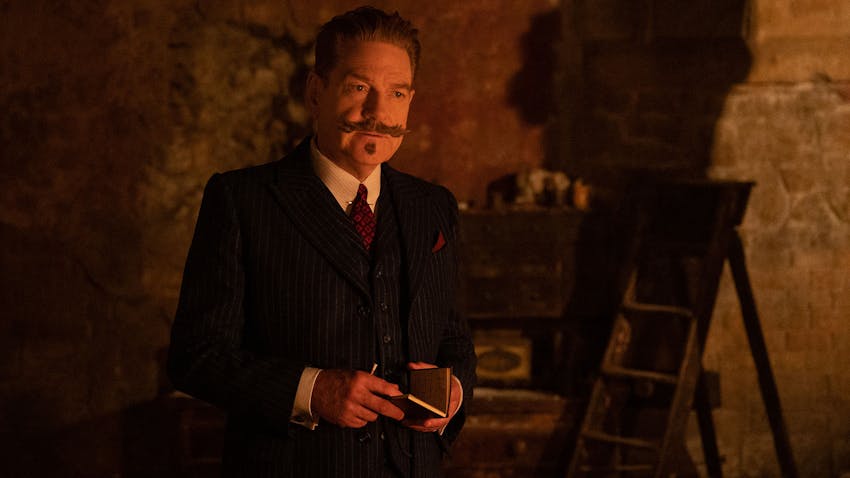
Michael Pierce will portray Jeffrey, husband to Eloise.  Michael, who will also serve as Fight Director for the play, has been seen in the Aphra Behn Festival for SATE, and LAUGHTER ON THE 23rd FLOOR for New Jewish.  He also served as Fight Director for St. Louis Shakespeare Festival’s TWELFTH NIGHT and MURDER ON THE ORIENT EXPRESS for The Rep.  And Joseph Garner will portray Bartholomew, a stranger who becomes involved in the cousins’ lives.  Garner appeared in Midnight’s ANOMALOUS EXPERIENCE, was seen in THE CHRISTIANS at West End and currently in CLASH OF THE TITANS for Cherokee Street Theater.

Hanrahan recently appeared in Midnight’s THE ABSOLUTE BRIGHTNESS OF LEONARD PELKEY.  He wrote and directed the Linda Ronstadt show, JUST ONE LOOK, currently playing in extended performances at The Blue Strawberry, and is writing and directing the upcoming Judy Garland show, YOU MADE ME LOVE YOU, coming in late July there.  Hanrahan was nominated by The St. Louis Theatre Circle as Outstanding Director for last year’s RODNEY’S WIFE from Midnight.

Mason Hunt will be Stage Manager for the show,  Brad Slavik is designing the set, Tony Anselmo the lights, and Elizabeth Henning costumes.  Miriam Whatley will handle props.

Photos Todd Davis.  Alicen Moser (black eye/wedding dress)  Summer Baer (wedding veil/smile)

The Midnight Company’s 2023 season continues with:
Extended Performances of the JUST ONE LOOK July 19, August 16 & 30 at Blue Strawberry
YOU MADE ME LOVE YOU July 26, August 2 & 9 at Blue Strawberry
HUMANS OF ST. LOUIS at The St. Louis Fringe Festival  August 15-21
and
THE LION IN WINTER at the .ZACK  October 5-21

Kelly Howe in “Just One Look”

more at MidnightCompany.com

Facebook Comments

By Lynn Venhaus

“From the Garden” is a clever topical one-act play that deserves to be seen. Its brief weekend run revealed a local writer’s biting wit and sharp observations that were realized by a zealous cast.

Whip-smart playwright Donald C. Miller directed his own show earlier this month (May 5-7) for four performances at the intimate venue, The Chapel, a modest production by Wee Laddie Theatrics.

It may have been staged on a shoestring budget, but the satire had big ideas and pointed barbs delivered by a taut ensemble of veteran performers, whose natural abilities carried over the message.

The three sold-out and one near-capacity matinee crowds got the jokes, so merry laughter ensued. Whether or not you know the real-life community conflict that sparked Miller to put pen to paper, tongue firmly in cheek in this “work of fiction,” you’ll mull over the points he’s making that are far from heavy-handed.

This is not a preachy diatribe about well-meaning citizens whose self-righteous stances can derail compassionate acts for ‘the greater good.’ It’s far more insightful about hypocrisy and personal agendas, pegging the democratic divide between old-school liberals and uberleft progressives.

And how some decent folks who want to avoid drama in their daily lives are unwittingly caught up in the maelstrom. And made very uncomfortable by those purporting to know what’s best for everyone.

We are familiar with the modern political climate of loud extremists, the right and left often far apart and unwilling to compromise or work together. It’s not just at the national and state level, but in our fair city’s distinct neighborhoods – and lines are drawn between left and far-left in the Democratic Party (and right and far-right in Republican circles).

This is an ‘across the aisle’ situation, only it’s set in an outdoor community garden tended to by neighbors and civic-minded people.

You’ll be able to recognize numerous characters as the cast nails the nimble wordplay. They are playing relatable people, not overly complicated roles.

Donald Kidd, Brenda Morrison, Mara Bollini and Camille Elena Fensterman

Playing against type, Ann Hier Brown is amusingly annoying as Lisbeth Stanton, an upper middle class urban housewife that has cultivated an activist-advocate persona through curated social media posts.

She considers herself a feminist but is not seeking equality, for she is a control-freak do-gooder. As the comedic melodrama unfolds, she agitates her neighbors who want to get involved but eventually are put off by her sanctimonious lectures – and her assortment of chic bandanas. She is not above escalating conflicts for her personal gain.

It’s no coincidence her name resembles the great woman’s suffragette Elizabeth Cady Stanton. Miller is not anti-women’s rights at all, just pointing out how some folks take charge and then play martyrs or victims when they don’t get their way.

He provides more Easter Eggs, for other characters are given the last names of Nixon, Carter, Monroe and Ford. Ring a bell?

Funny guy Jason Meyers plays her husband Kirk, who tries to be supportive but is often a referee between mother and daughter. Teenager Emmy, conveyed by Nadja Kapetanovich in a defiant and questioning way, is like oil and water with her mom, who gets snippy and defensive in interactions.

Lisbeth also tussles with her no-nonsense natty mom, Sylvia Ford, played shrewdly by Margeau Steinau. Sylvia, with a deep pocketbook, travels in important circles and is organizing a benefit that Lisbeth is loath to attend.

Donald Kidd is well-suited to play Dwayne Jenkins, a committed activist who is running for the city council, but Lisbeth attempts to pull the strings and back another candidate. Rut-ro.

Neighbors who want to make a difference, but not necessarily get into a toxic situation, include Mara Bollini as Kate Carter, Camille Elena Fensterman as Xiomara Monroe, and Brenda Morrison as Ruth Nixon. They toss off snappy remarks with ease – and can spot a Karen lurking on the tree-lined streets – and don’t buy the disingenuous Lisbeth’s savior schtick.

Calvin Chambers was the technical coordinator and stage manager Ann Rapko.

The scenes are divided into soil preparation, weed prevention, watering and care, infestation, harvest, and dormancy. Of course, these are structured so that people can read between the lines.

The scene changes were a tad cumbersome, given the short time-length and the small performance space. But the sets were simple, reflecting the low-budget labor of love.

Nevertheless, small technical issues – like some performers being easier to hear than others – would be worked out in an encore presentation.

Hopefully, the play will have some staying power and there will be an opportunity for more theatergoers to enjoy it. Because an examination of identity politics is a good thing, exposing how unproductive it can be.

For background on playwright motivation, read this article in the Riverfront Times:

https://www.riverfronttimes.com/news/andoes-society-page-its-left-vs-far-left-in-maplewood-politics-39605670?media=AMP%20HTML&fbclid=IwAR1tU88TYee-aMpt9BK_yUxpL_y2libTFCqj52gq5_jSabftcc009Gvzk9E

Because after all, not conforming and speaking out instead is always the preferable way to go, especially someone as skilled as Miller in expressing himself. In “From the Garden,” he mocks the obvious – and is not so subtle in a very funny way.

Margeau Steinau and Ann Hier Brown

Cover Photo: Nadja Kapetanovich and Jason Meyers

Facebook Comments

By Alex McPherson

Breezy, funny, and insubstantial, director Nicole Holofcener’s “You Hurt My Feelings” provides its ensemble ample room to flex their comedic chops, but remains emotionally limited by a low-stakes narrative aiming for profundity and arriving at something less than revelatory. 

Set within our dying planet in the bustling metropolis hellscape of New York City, “You Hurt My Feelings” revolves around Beth (Julia Louis-Dreyfus), a middle-aged author and teacher at The New School, who, all things considered, lives a pretty-damn-privileged existence. She has a new novel coming out — two years in the making — that she’s having trouble getting off the ground due to an unenthusiastic agent. It’s the follow-up to her moderately successful memoir that spotlighted her father’s verbal abuse, which instilled a huge layer of insecurity. 

She’s sarcastic and judgy, but enjoys a happy marriage with her husband, Don (Tobias Menzies), a somewhat burnt-out therapist whose clients — played by real-life spouses Amber Tamblyn and David Cross, plus Zach Cherry in peak straight-faced hilarity — are becoming increasingly fed up with his lack of engagement and “results.”

Their 20-something son Eliot (Owen Teague) is an aspiring playwright working at a weed dispensary, frequently annoyed that he feels like a third wheel around his parents. Beth’s sister, Sarah (Michaela Watkins), is a jaded interior designer with a sardonic wit. Her brother-in-law, Mark (Arian Moayed), is an actor with dreams of fame and fortune struggling to secure roles beyond a small part in a “pumpkin movie.”

Arian Moayed and Michaela Watkins

Suffice to say, everyone in this little circle is self-doubting, seeking validation and reassurance from those close to them. Our heroine, Beth, is particularly vulnerable. When she and Sarah overhear Don disclosing to Mark that he doesn’t like her newest novel and can’t stand reading draft after draft of it, Beth spirals — putting her marriage at risk as she grapples with this bombshell revelation.

Over the course of a 93-minute runtime, Beth gains greater understanding of how the “little white lies” we tell each other aren’t always that bad, along with how (shocker) we shouldn’t let our work or other’s reactions to our work define us and our well-being.

With Louis-Dreyfus inhabiting her character with an anxious, believable energy, “You Hurt My Feelings” remains an appealing watch, as Beth and company navigate rocky waters of communication and come to realizations that gently inform their existences going forward. This reflects life, in a sense, as some people change and some don’t, but the film still lacks heft. By the end, it takes a surprisingly light touch to its flawed characters, saying little of significance in the process.

That’s not to say the experience of watching “You Hurt My Feelings” isn’t enjoyable, though. Holofcener’s dialogue crackles with snarky wit, as Beth bumbles her way around NYC – casually critiquing plenty of people along the way, sometimes in offensive fashion. Beth herself, whether she realizes it or not, strategically deploys truths and little white lies in her day-to-day life — whether it’s half-heartedly volunteering at a church clothing giveaway to feel like a “good person,” to feigning interest in her students’ off-putting story ideas. 

Louis-Dreyfus sells Beth’s outwardly bubbly nature and conceitedness, friendliness belying a lack of self love and belief in her own abilities as a creative. Her mother, Georgia (the always excellent Jeannie Berlin), perpetuates Beth’s anxieties through humorous passive-aggressiveness.

Beth trusts Don more than anyone else, however, so his seeming “betrayal” hits her like a wrecking ball, which Louis Dreyfus neither undersells nor overplays; if anything, the film would have benefited from a more cartoonish expression of her panic. As it stands, it’s difficult to connect with her concerns: they’re monumental to her, but as outside observers, they seem trivial, and Holofcener never dives deeply into her background or creative drive to establish real pathos for her plight. 

She loves Don and Don loves her. Of course Don wants to be a supportive husband, of course he wouldn’t tell her his true feelings about her writing (which we’re never led as viewers to believe is actually praiseworthy), as he recognizes that his opinions are ultimately irrelevant: he’ll support her no matter what. This is evident from the outset, and, with some late-movie platitudes lacking nuance delivered by Teague (doing the most with a clichéd character), renders the core conflict of “You Hurt My Feelings” fairly shallow and predictable.

Aside from Beth’s unwarranted stressors, “You Hurt My Feelings” explores other facets of this idea, as people in her social bubble navigate similar waters of honesty and dishonesty, truth and lies, in their personal and professional bonds. Don, stressed about aging and exhausted from a string of demanding clients while putting on a brave face (which Menzies embodies with subtly-calibrated mannerisms), avoids admitting to his cataclysmic falsehood. This doesn’t pan out well, but guess what? Communication is key, as usual.

Sarah encounters her own challenges — her whole job involves appeasing finicky clients with artwork to adorn their homes, smiling and gritting her teeth, with plenty of unused insults at the ready under her breath. Mark struggles to find meaning and work as an actor, while Sarah stands behind him through thick and thin, notwithstanding she doesn’t think he’s all that good all the time.

Boosted by Holofcener’s zinger-filled screenplay and patient editing that zeroes in on expressions and awkward pauses, “You Hurt My Feelings” depicts these situations with a crowd-pleasing touch, but that doesn’t excuse that they aren’t all that compelling to watch in the first place. Indeed, the film’s muted style and inherent softness misses opportunities to critique its characters on a more foundational level, not fully selling their problems nor Beth’s gradual gaining of self-awareness. It’s not all that dramatic, or relatable, as we (im)patiently wait for the characters to catch up with reality.

Perhaps I’m the wrong demographic for this story, and perhaps the film’s lack of spectacle is the point, but it remains slight, less a meaningful story than a batch of gently amusing scenarios in service of relatable yet obvious messaging.

Julia Louis-Dreyfus

“You Hurt My Feelings” is a 2023 comedy-drama written and directed by Nicole Holofcener and starring Julia Louis-Dreyfus, Tobias Menzies, Owen Teague, Michaela Watkins, Arian Moayed, David Cross, Amber Tamblyn, Zach Cherry and Jeannie Berlin. It is rated R for language and runtime is 1 hour and 33 minutes. It opened in theaters May 26. Alex’s Grade: B-.

Facebook Comments

By CB Adams

Opera Theatre of St. Louis’ season opener of a reimagined-yet-respectful version of Scott Joplin’s Treemonisha by composer Damien Sneed and librettist Karen Chilton is a transformative experience that beautifully balances theatrical spirit with artistic integrity.

It is an example of the power of art in general and opera in particular to serve as a  “moral instrument” (borrowing from Constantin Stanislavski) that ennobles the mind and spirit. My top take-away: It deserves sold-out status audiences for its entire run – no seat left behind.

This production of Treemonisha, occurs at a pitch-perfect moment in the St. Louis zeitgeist. The citywide triennial exhibit, Counterpublic, is weaving contemporary art into the life of St. Louis for three months to “reimagine civic infrastructures towards generational change.” In his introduction to the 285-page Counterpublic catalog, James McAnally (executive and artistic director and founder of St. Louis-based artist space The Luminary) explains that he envisions an exhibit that allies “itself with generational, cultural, economic, and civic change; a post-pandemic, post-uprising exhibition demanding that we, as arts workers and artists, do more to repair our broken world.”

Justin Austin as Scott Joplin in “Treemonisha.” Photo © Eric Woolsey

Counterpublic seeks to help initiate “concrete change” of the sort that Joplin was exploring more than a century ago in his original Treemonisha, a hybridized classical/ragtime opera that reveals a Wagnerian influence while also presaging  George Gershwin’s “Porgy and Bess.” But Treemonisha, especially with this new version, proves the old Latin phrase true: “Art is long, life is short.” Joplin died too young at age 48 in 1917.

Treemonisha did not receive a real premiere until a 1972 production by the Afro-American Music Workshop of Morehouse College (though a New York Times piece states that it was performed at a theater in Bayonne, N.J. in 1913. Either way, it was a tragedy that Joplin didn’t get to see his magnum opus, his hoped-for recognition of ragtime as a new, American form of classical music.

Opera Theatre staged a successful production of this opera  23 years ago. I didn’t see that production, but this current iteration of Treemonisha stands as an engaging, exuberant example of what opera can achieve when all of its elements – direction, staging, casting, acting, singing passion – align. Such alignment is a rarity.

It’s the bane of my reviewing existence: why can’t it all be this good?  The obvious answer makes this production all the sweeter. It brings to mind something the novelist Julian Barnes wrote in “Levels of Life,” his memoir: “Opera cuts to the chase—as death does . . . [it is] an art which seeks, more obviously than any other form, to break your heart.”

KS. Tichina Vaughn as Monisha in “Treemonisha” Photo © Eric Woolsey

 My heart was broken, especially during Act V, during which the aging Scott Joplin character, sung with naked, wrenching emotion by baritone Justin Austin (who also plays Remus), reveals his frustration about his artistic legacy. Austin’s inspired performance proves how difficult it is to both sing with perfection while acting with authenticity – and how marvelous when achieved. To best describe Austin’s artistic feat, I rely on a quote by Marina Abramović in “Last Days of the Opera” by the Viennese critic Karl Kraus: “You can go so deep into a performance that you become one with the character and create a charismatic state of unity with the public.”

Austin’s so-deep achievement is matched nearly across the board by the rest of the cast, and especially by soprano Brandie Inez Sutton (making her Opera Theatre debut) as both Freddie Alexander Joplin and Tremonisha (look for the moment when the origin of her name is revealed). As Act II (and the original opera itself) begins, it’s clear that this is really the eponymous Treemonisha’s story about an educated Black woman who guides her fellow small-town citizens, (persecuted by endemic racism and poverty) away from ignorance and superstition and toward an enlightened self-worth and self-reliance. With considerable stage presence, Sutton reveals her heroic character as sweet but strong, simple but literate, and humble but exalted – all while proving she can sing!

Balancing the deep characters of Remus and Treemonisha, are the conjurer Zodzetrick, played imposingly and malevolently by Phillip Bullock (making his OTSL debut), and Parson Alltalk, played by entertainingly by Markel Reed. Zodzetrick and Alltalk are not as three-dimensional (they can’t all be) as Remus and Treemonisha, but as performed with the adroitness of Bullock and Reed, they are nonetheless essential to Joplin’s story and his use of many musical styles.

Deserving equal bill are the performances by Amani Cole-Felder as Lovie Alexander and Lucy, KS. Tichina Vaughn as Monisha and Normal Garrett as Ned – the latter two also making their OTSL debuts.

Maestro George Manahan directs the orchestra, composed of members of the St. Louis Symphony Orchestra, and delivers a deft, lively musical underpinning that adheres to the spirit of Joplin’s unique, profoundly expressive score. As serious as Treemonisha may seem in terms of story and subject matter, it beautifully and seamlessly integrates an appealing group of influences ranging from ragtime to spirituals, fiddle tunes and hymns, among others. The appeal of these influences is like what comedian Steve Martin has observed about banjo playing: “The banjo is such a happy instrument–you can’t play a sad song on the banjo – it always comes out so cheerful.” The same can be said for ragtime, and Treemonisha is the better for it.

The set design by Marsha Ginsberg is also noteworthy. It’s common for an opera to begin with a musical overture, but this production improves upon that with a visual overture. Against a gauzy scrim backdrop, there’s a shadow play that’s a visual highlight reel for the upcoming performance – and it’s brilliant. It established the right tone while setting a high bar for the rest of the performance.

Justin Austin as Remus and Brandie Inez Sutton as Treemonisha (center) and Jeremiah Tyson as Andy and Amani Cole-Felder as Lucy (right) in “Treemonisha.” Photo © Eric Woolsey

I also admired the Ginsberg’s use of black-painted barren tree trunks that bookend the performance, suspended above the stage. During intermission, the trees are lowered onto the stage. This “black forest” of trunks serves as a clever, subtle and effective scorched-earth metaphor for the post-Civil War, Reconstruction-era South in which this opera is set (and as written by an African American man who lived through it). 

There’s so much going for Treemonisha, and that includes the choreography (blending traditional and modern dance) by Maleek Washington. The dance elements are woven into the scenes and, though noteworthy, never overtly call attention to themselves, with the exception of a perplexing, show-offy “frolic of the bears” in Act II , which pulled me out of the scene.

An opera, no matter how passionately conceived, is like a discarded memory, an empty platform, merely marks on a manuscript. To bring it to life – or to give it continued life – requires production. With a commission by OTSL, Sneed, Chilton, stage director Rajendra Ramoon-Maharaj, the cast and all the other talents have taken Joplin’s platform (wrapping ragtime’s irresistible catchiness around his rage against time), extended it beyond a fine performance and ascended to theatrical art. 

Can an opera change the world? Let this production of Treemonisha inspire you to walk out of the Loretto Hilton Theater and begin to try, even if only in the “backyard” of St. Louis.

Opera Theatre’s Treemonisha continues at the Loretto-Hilton Center through June 24. For ticket information, visit opera-stl.org. For more information about Counterpublic 2023 civic exhibition, visit counterpublic.org

This review also appears on the KDHX website by mutual agreement.

Photo by Eric Woolsey
Facebook Comments

By Alex McPherson

Elevated by a magnetic performance from Halle Bailey, director Rob Marshall’s “The Little Mermaid” neither wows nor underwhelms — a film that’s far from essential, but one that provides light, comforting entertainment. 

Retelling the story from the 1989 animated version, this live-action iteration follows Ariel (Bailey), a courageous, rebellious mermaid and youngest of several sisters, who’s deeply curious about the surface world and dissatisfied with her life underwater. With her fish pal Flounder (Jacob Tremblay) in tow, Ariel collects human artifacts to store in her grotto among the coral — her collection is a reminder of a world she’s eager to explore and held back from reaching. Ariel’s father, King Triton (Javier Bardem), refuses to let her have any contact with humans. He instructs his right-hand-crab, the wry-yet-soft-hearted Sebastian (Daveed Diggs) to keep her out of trouble (spoiler alert: he soon takes Ariel’s side). 

Ariel, with an adventurous spirit and desire for freedom, stumbles upon Prince Eric (Jonah Hauer-King), the new leader of an island nation somewhere in the Caribbean who wishes to expand the kingdom and is discouraged by his mother (Noma Dumezweni). Ariel falls in love with him at first sight. After a violent storm ruins his raucous birthday celebrations, Ariel saves him, dragging him to safety on his island’s beach, singing her siren song to keep him alive.

“Kiss the Girl”

 Back underwater, Ariel can’t stop thinking about him (and vice versa), which attracts the attention of “the sea witch” Ursula (Melissa McCarthy), Triton’s sister who was previously exiled from the kingdom. Conniving and fueled by resentment, Ursula makes a deal with Ariel to transform her into a human for three days in exchange for Ariel’s siren voice. If she can share a “true love’s kiss” with Eric within those three days, she can remain a human permanently. If not, she’s under Ursula’s control, and will be used as ransom for Triton’s all-powerful trident. More complications arise, putting the pressure on Sebastian, Scuttle the seagull (Awkwafina), and, to a lesser extent, Flounder, to ensure the kiss comes to fruition, and help Ariel achieve her dreams.

Songs, romance, drama, and more songs ensue. Yes, this is certainly “The Little Mermaid,” so viewers expecting a massive departure from the previous film will be let down. Marshall’s film is another example of studios pandering to nostalgia rather than offering a meaningful reimagining of what’s come before. Taken on its own terms, though, the new “Little Mermaid” is still an amiably enjoyable watch — a story of love, independence, cultural understanding, and growing up that’s kept afloat by confident performances and directorial flashiness.

Bailey absolutely nails the role of Ariel — bringing to life her daring spirit and lovable stubbornness with an enchanting mixture of bravery and deep yearning for new horizons. Ariel is a (slightly) more layered protagonist this time around. She sees Eric as not only a good-looking hunk, but as a kindred spirit in search of freedom from tradition, which Marshall emphasizes through their nerdy, cute interactions with each other — they’re each fascinated with each other’s knowledge of the world beyond their homelands. 

Melissa McCarthy as Ursula

Bailey conveys Ariel’s longing and naivete in a fairly grounded fashion: the songs function as an extension of her inner thoughts, allowing for some impressively emotional moments, particularly during her renditions of “Part of Your World” and “For the First Time” (one of the several new tunes scattered throughout). It’s clear from the outset, however, that Bailey has the acting chops for a more dramatically rich take on Ariel’s story than Marshall’s film provides. She breathes exciting new life to the heroine nevertheless.

McCarthy is campily over-the-top as the fiendish squid Ursula, with her undulating tentacles and booming delivery, giving a no-holds-barred performance that’s both funny and menacing. Diggs is amusing as Sebastian (nailing his new-ish take on “Under the Sea”), sassy and witty. Awkwafina is serviceable as a seagull willing to rap if need be (Lin Manuel-Miranda’s writing hand is keenly felt), and Bardem’s talents are underused as King Triton — an oddly subdued performance conveying Triton’s anxiety and fear for Ariel’s well-being, albeit lacking gravitas.

Hauer-King is perfectly fine as Prince Eric, notwithstanding one ho-hum musical number, but “The Little Mermaid” doesn’t give him enough depth or personality to stand out among the others. The film makes an effort to more clearly paint parallels with his goals and aspirations with Ariel’s, yet the gesture comes across as more manufactured than organic — attempting to sand down the less-polished aspects of their bond from the 1989 film, as opposed to a true expansion.

Javier Bardem as King Triton

In terms of visuals, “The Little Mermaid” is hit-or-miss. Dion Beebe’s cinematography shines when gliding through environments in time to the music — bringing all manner of aquatic creatures to the stage during “Under the Sea” in a dazzling display of CGI-heavy showmanship — and during some impressively smooth scene transitions, such as one in which the camera travels through the eye of a moray eel into Ursula’s cavernous lair. What isn’t as successful is the look of the non-human characters themselves. Heads awkwardly sit on bodies and hair undulates distractingly; far easier to represent through animation than live-action. Regarding Flounder, Sebastian, and Scuttle, there’s an awkward tug-of-war between realism and fantasy, to middling effect.

Indeed, this reflects the film’s greatest flaw. “The Little Mermaid” is solid, family-friendly entertainment, but with a talent as strong as Bailey, it deserves to break free from its sanitized formula to become something fresher. Minor alterations aside, this is still the same story, where stakes are neutered and songs fly freely.

Yes, it’s great that Bailey’s casting speaks to a new generation of moviegoers, but they (and her) deserve a story less beholden to the past, as does the live-action medium itself, which pushes against the film’s fantastical elements. What’s left is a better-than-average Disney remake that has little more to say and boatloads of money to rake in.

Scuttle, Dingelhopper, Flounder and Ariel

“The Little Mermaid” is a 2023 live-action, animated musical remake of Disney’s 1989 classic directed by Rob Marshall and starring Halle Bailey, Javier Bardem, Jonah Hauer-King, Awkwafina, Daveed Diggs, Jacob Tremblay and Noma Dumezweni. It is rated PG for action/peril and some scary images and the runtime is 2 hours, 15 minutes. It opens in theaters on May 26. Alex’s Grade: B-.

Jonah Hauer-King as Prince Eric and Halle Bailey as Ariel roam the castle grounds.
Facebook Comments

Fox Associates, L.L.C. and Foxland, Inc. are pleased to announce that they have reached a mutually satisfactory settlement in resolution of their dispute over the Fox Theatre. Fox Associates has operated the Theatre for 40 years after undertaking its restoration in the 1980s.

Since April 2021, the parties have been involved in a lawsuit in the Circuit Court of the City of St. Louis over which party will have the right to own and operate the Theatre once the current lease expires in 2025.

Under the parties’ settlement agreement, Fox Associates will purchase Foxland’s interest in the land underlying the Theatre, thereby consolidating ownership in one party. The parties worked together to achieve this resolution and share the belief that this is the right result for the St. Louis community, as it will ensure uninterrupted Theatre operations.

“On behalf of myself and partners Lisa Baudendistel Suntrup and Julie Baudendistel Noonan, we are thrilled that the Fabulous Fox Theatre will continue to bring world class entertainment to St. Louis for generations to come,” said Mary Strauss, Fox Associates partner. “It has been a labor of love for our Strauss and Baudendistel families to be the custodians of this St. Louis treasure and national landmark for the past four decades and we look forward to a fabulous future.”

Charles Modlin of Foxland, Inc. stated, “While our family had been looking forward to operating the Theatre for many years, we are happy with the result and believe the Theatre remains in good hands with Fox Associates, who we are confident will continue its important legacy of successfully operating one of the most magnificent historic Theatres in the world.”

Facebook Comments