By CB Adams
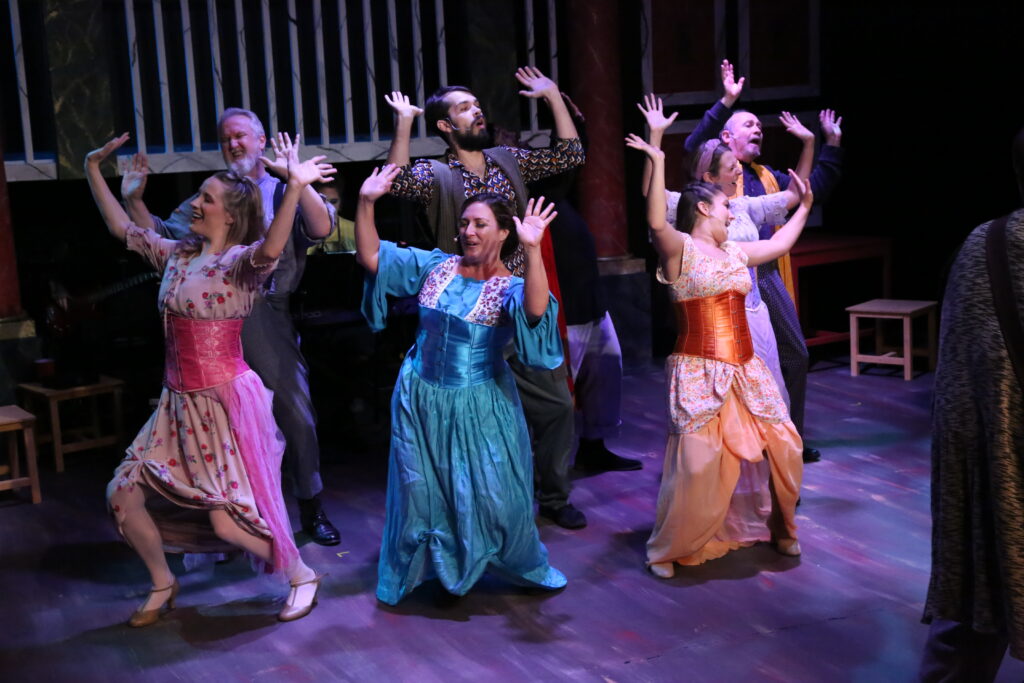
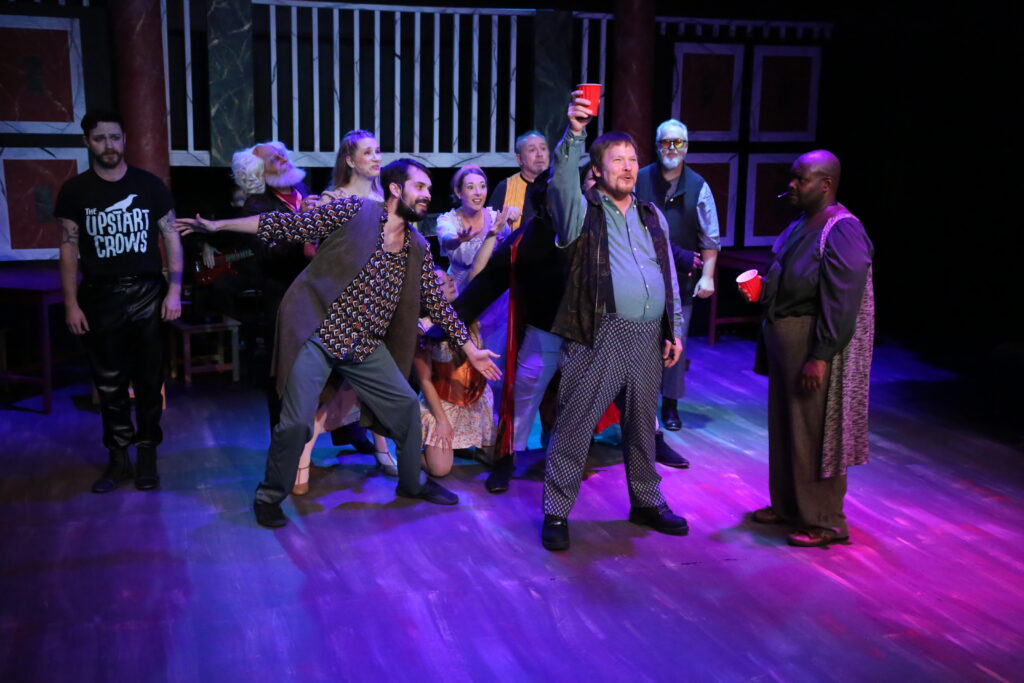
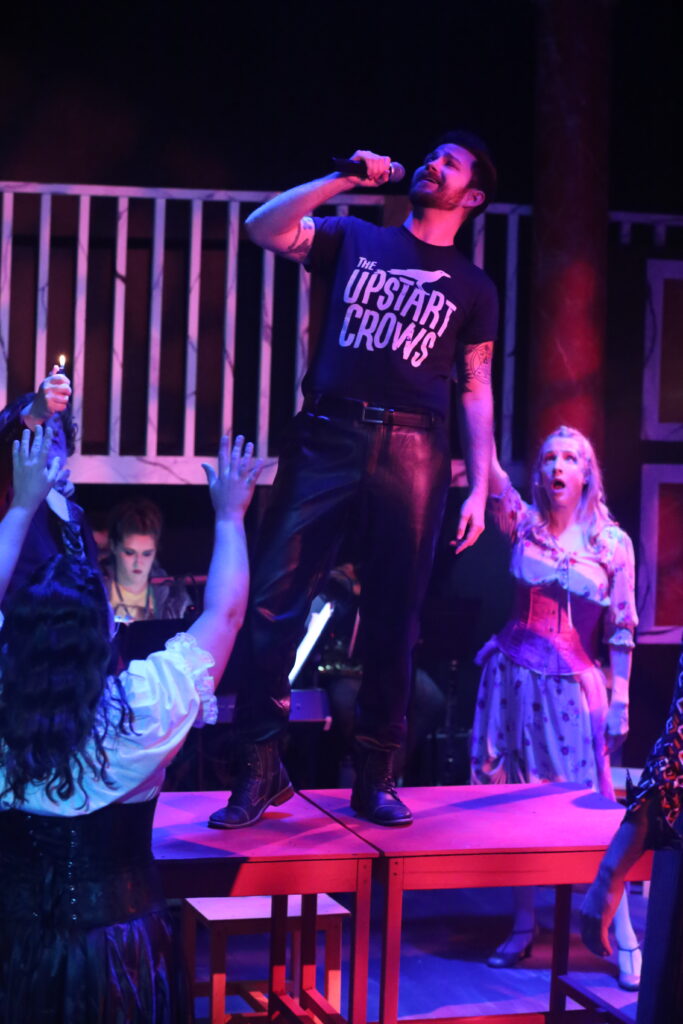
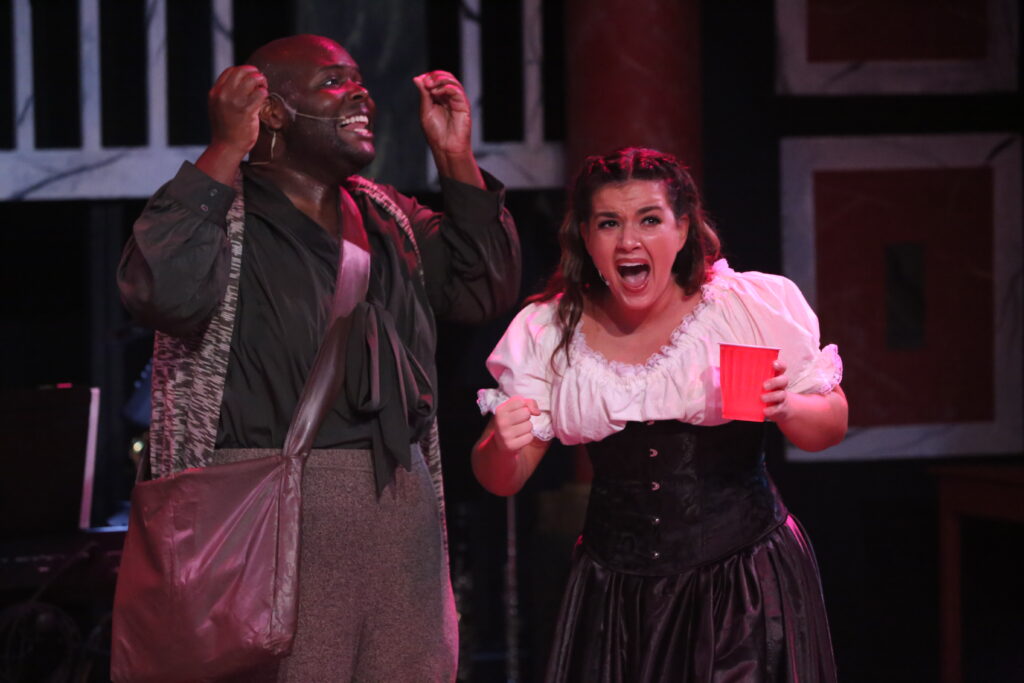
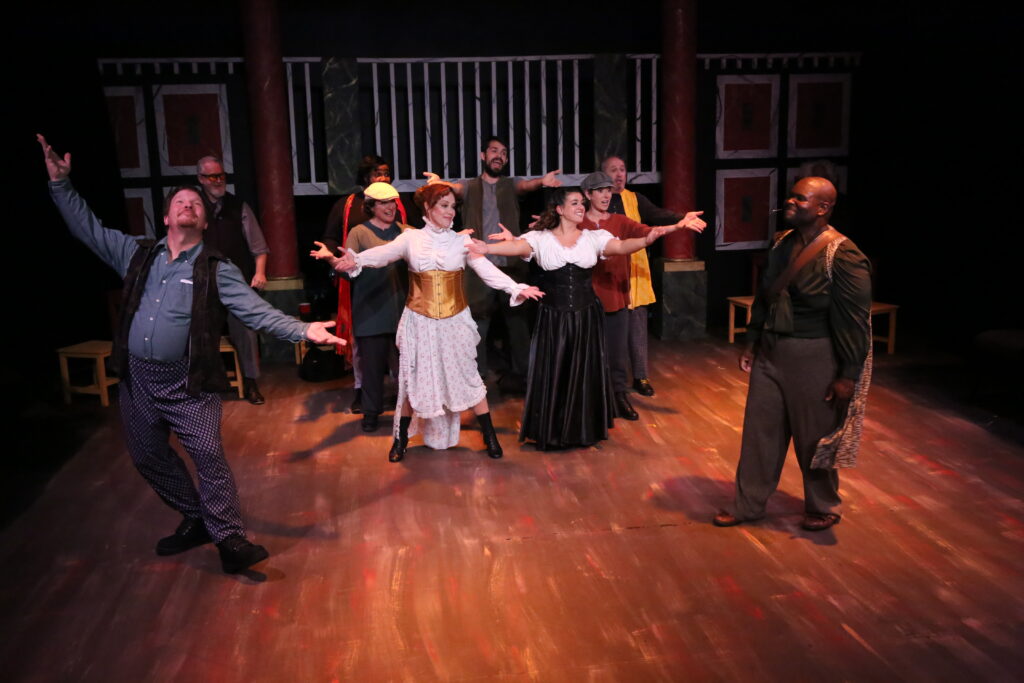
Before the lights dimmed and the 8th annual LaBute New Theater Festival began, this reviewer felt pity instead of anticipation – pity for the nine playwrights who had to endure a two-year, pandemic-induced delay for their works to be fretted and strutted upon the intimate performance space at the Gaslight Theater.

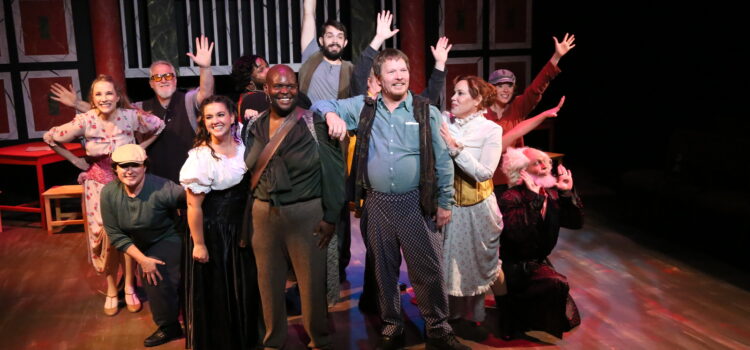
During the festival’s four-week run, the St. Louis Actors’ Studio presents two sets of five one-act plays selected in 2020 – a Whitman’s Sampler (something for everyone!) of short dramas. Each slate includes “St. Louis,” written by the festival’s founder and namesake, the Tony-nominated, acclaimed writer and director Neil LaBute.

Two years may have felt like an eternity to playwrights and public alike, but the first set of one acts, running from July 8–17, delivers a collectively gratifying experience resonating with relevance to the current zeitgeist.

The first set includes Aren Haun’s “What Else is New,” John Doble’s “Twilight Time,” Willie Johnson’s “Funny Thing,” and Fran Dorf’s
“Time Warp,” as well as LaBute’s “St. Louis.”

Experiencing this evening of one acts is like reading a short-story collection. You might not enjoy every play (not all in the first set are one-hit wonders), but taken together, they are engaging, thought-provoking and satisfying. When soliciting for one acts, the LaBute
Festival seeks plays that feature no more than four characters. They should be crafted specifically to exploit the Gaslight’s intimate, 18-foot square performance space with quick changes in scenery, setting and set moves.

For theater-goers who love plays that focus on the fundamentals of dramaturgy – plot, character and theme – the LaBute Festival is a must-see, based on this first slate.

The plays presented this year are diverse, yet share a common thread, if not a common theme, of human connectedness:

“What Else is New,” set in a diner, involves Bruno (and his suitcase), an unhoused loner (replete with an annoying need for conversation and more tics and twitches than Brad Pitt in the film “12 Monkeys”) and Mark, a disinterested college art student who works the counter. t’s a marvel to watch the two characters circuitously connect.

“Twilight Time,” concerns a chance encounter between Benjamin and Geraldine, two disaffected youths who discover they are both planning their suicides. Though not as humorously death-drenched as “Harold and Maude,” they connect over common political and other opinions and soon make plans to live, perhaps happily ever after.

“Funny Thing” is anything but funny as the four-month relationship between Older Man and Younger Man is stuffed into a blender and set to frappe. The resulting, non-chronological plot makes frequent pivots that are easy to follow, thanks to fine acting and effective lighting changes.

No one dances in “Time Warp,” but, as the song goes, “…With a bit of a mind flip / You’re into the time slip / And nothing can ever be the same…” For those of us who like stories that explore the possibilities presented by punctures in the time- space continuum, “Time Warp” delivers a mind-bending – and ultimately harrowing – tale involving Brian, a Vietnam War army psychiatrist, his wife, Beth, a curiosity shopkeeper, CG Young, and a specter-like painter and fellow soldier, Joey Passarelli. The warping of time and circumstance ensues, though not in a science fiction sort of way.

LaBute’s “St. Louis” (presented in both sets of the festival) could have been titled Stand and Deliver because that’s what this play’s three characters do: they stand and deliver (as does the entire play itself). St. Louis does not concern itself with Ted Drewes, the Arch or any other tourist destinations. There are a few compass- point references to St. Louis, such as the Central West End, but the true location
of this one act is the triangulated world and relationships of the three monologists, She, Her and Him. The climax of the relationship – the connection – among these characters is too good to spoil.

But, climax aside, the most noteworthy achievement is how the story is unfolded by the three characters, each in a pool of
light and each speaking as if to their own offstage interlocutor. Separately, and yet collectively, they stand and deliver their part of a shared, very personal history. Under the deft direction of Spencer Sickmann (himself a seasoned actor), the actors collectively embrace their characters and deliver these short plays with confidence, believability and chemistry.

And, in the case of “Twilight Time,” they surpass the play itself. Mitch Henry Eagles plays triple duty in “What Else is New,” “Funny Thing” and “Time Warp.” All are fine performances, but the standout is as the Younger Man in “Funny Thing.” His character is whiplashed by the on-again/off-again relationship he shares with Older Man and Eagles easily flips between “should I stay” or “should I go?”

Bryn McLaughlin does double duty as Geraldine in “Twilight Time” and She in “St. Louis.” Her performance in the former is the strongest in that play, and in the latter, she’s even better as she projects a strong, confident counterpoint to the bro-ish Him. As Him, Brock
Russell plays a character one loves to hate, or vice versa, and that dichotomy is testament to his ability to fully reveal the complexities of Him.

Eric Dean White demonstrates tremendous range playing the twitchy chatterbox Bruno in “What Else is New” and, a couple of one acts later, as the sensitive psychiatrist and husband in “Time Warp.” The nervous energy he pours into his Bruno is as exhausting as it is exhilarating.

In the case of these one acts, to call the sets, lighting and costumes bare bones is a compliment. As in most literary short stories, there’s nothing extraneous and everything must serve a purpose in black-box one acts. In this first slate of plays, that’s exactly what Patrick Huber achieves with the flexible sets and lighting, as does Carla Landis Evans with the costume designs.

Set One of the LaBute New Theater Festival runs July 8-17 at at the Gaslight Theater, 358 N Boyle Ave. Set Two runs from July 22–31. Times are 3 p.m. on Sundays and 8 p.m. Friday and Saturday. For more information, www.stlas.org
All photos by Patrick Huber

Facebook Comments

By CB Adams

 Whether you’re a die-hard Muny season ticket holder, a Stephen Sondheim devotee, someone attracted to a dark Dickensian tale about a murderous Victorian barber, someone seeking a great night of musical theater, or anything in between, “Sweeney Todd: The Demon Barber of Fleet Street” is a must-see.

Fresh off the heels (or should we say umbrella) of “Mary Poppins” comes a show with a wholly different cut. It’s populated with hordes of the great unwashed, a steampunk-inspired set, love songs sung to razors and more dead bodies on stage than a Greek tragedy. And if that’s not enough, add in the music and lyrics by Sondheim (one of his greatest showpieces). Who else could have created a toe-tapping sing-along about meat pies made with human flesh?

“Sweeney Todd” originally opened in 1979 and, after sweeping the Tony Awards, has since grown into one of Broadway’s top-ten musicals – emphasis on musical because 80 percent of this show is sung. It is just now making its Muny premiere after a two-year pandemic-induced delay. It is definitely worth the wait.

Photo by Julia Merkle

This a muscular “go big or go home” production. Rob Ruggiero, director, and Mike Isaacson, artistic director and executive producer, leveraged their many talents and definitely chose the go-big option. They take full advantage of the Muny’s automated stage with its performer lifts, turntable and scenery wagons. A tip of the hat also goes to Jessica Hartman, associate director and musical staging, and James Moore, musical director, for their talents.

One of the challenges of “Sweeney Todd” is presenting the violence and carnage, which includes numerous throat slashings. The bloodletting is cleverly and effectively portrayed through lighting (thanks to design by John Lasiter) rather than with fountains of fake blood.  

As befits the big production values, this “Sweeney Todd” requires – and delivers – a powerful principal cast. Tony nominee Carmen Cusack, an audience favorite, plays the crafty, ambitious Mrs. Lovett. Cusack’s voice is equal to Ben Davis’s booming Sweeney Todd. Davis achieves a Todd who is complex, wounded and angry, and can still fill the stage with a larger-than-life presence. Julie Hanson’s bawdy Beggar Woman weaves throughout the scenes like an annoying fly with a Cockney accent, while Stephen Wallen’s corpulent The Beadle waddles about like an officious toady in service to Robert Cuccioli’s imperious, love-struck lech, Judge Turpin.

Photo by Phillip Hamer

Even a slasher show like “Sweeney Todd” has a love story at its heart. Riley Noland plays Johanna with a thin high voice that befits her role as captive and victim. Her duet with Jake Boyd as sailor boy/love interest Anthony Hope is an extended highlight of this production. Though the two interact mostly from afar, their love and attraction is palpable.

Lincoln Clauss’s Tobias Ragg is a standout. The Ragg character evolves from wig-wearing hawker of snake-oil hair tonic to sprite-like table server and finally to traumatized avenger. Clauss has the acting and vocal range to match.

This production also makes full use of a large ensemble chorus with a panoply of tatty, bedraggled characters who introduce and frame Sweeney Todd’s descent from a cruelly treated barber into a lusty lasher and ultimately tragic victim of his own revengeful scheming. And, there haven’t been this many raised fists on the Muny stage since “Les Misérables” was in town.

The ensemble sings the last chorus at the conclusion of “Sweeney Todd,” but it’s the audience, walking toward the exits and excitedly talking about this production’s wow factor, that gets the last word and best positive review.

Photo by Phillip Hamer

The Muny presents “Sweeney Todd” July 16 – 22 at 8:15 p.m. nightly on the outdoor stage in Forest Park. For tickets or more information, visit: www.muny.org.

Photo by Phillip Hamer
The cast of Sweeney Todd. Photo by Phillip Hamer
Facebook Comments

By Alex McPherson

A Rube-Goldbergian smorgasbord of grotesqueries, special effects guru Phil Tippett’s stop-motion passion project, “Mad God,” oozes with both incredible artistry and dispiriting nihilism.

A curving tower stretches into the red-scorched sky, grasping for freedom from the hellscape below. A scroll reads “Leviticus 26-27,” in which God tells Moses the curses he’ll bring down upon the Israelites if they’re disobedient. We’re then introduced to a humanoid figure, clad in steampunk-esque attire and a gas mask, who boards a diving bell and floats beneath the clouds.

Referred to as “the Assassin,” he’s sent on a fateful mission by a long-nailed overseer (Alex Cox, portraying the titular Mad God in one of the film’s only live-action performances). As the Assassin descends, he passes remnants of civilizations gone by and monuments to higher powers, until finally reaching the cracked, muck-covered surface.

He carries a suitcase with a bomb inside, as well as a map that seemingly crumbles every time it’s glanced at. En route to an ambiguous destination, the Assassin navigates a hostile environment filled with untold horrors. This includes a cleaver-wielding troll with huge teeth, disposable workers molded from excrement slaving away to a scabbed-mouthed supervisor screeching in babytalk, and surgeons engaging in extreme medical malpractice (to say the least). 

Indeed, Tippett’s painstakingly realized world is the real star of the show, and “Mad God” eventually shifts focus to showcase bloody vignettes within each circle of Hell, progressing closer towards the core of it all. Is there a light at the end of the tunnel? 

Nope, but it’s damn-near impossible to avert your gaze from the darkness. “Mad God” is a work of such incredible devotion that the plot’s obliqueness doesn’t detract much from the experience on the whole — so long as viewers approach it as more of an artistic thesis statement on humanity than a traditional narrative.

Tippett’s film is, above all else, a display of one man’s staggering interpretation of a universe broken beyond repair, and each frame of this 30-years-in-the-making project is meticulously-formed — the gnarled beasts and industrial apocalypse surrounding them are lent tactility by the stop-motion approach. This renders them extra disturbing and, strangely enough, charming in a morbidly fascinating way, before they’re unceremoniously brutalized by their next-door neighbors.

The cinematography, by Tippett and Chris Morley, also rivals any live-action production released this year, with shots emphasizing the vast, imposing scale of a place stuck in endless cycles of war, exploitation, and utter hopelessness. 

Minotaurs, spider-legged aliens, a baby resembling that of “Eraserhead,”  a sentient doll wasting away, the camera exhibits them all, unflinching in its gaze, leaving immediate, searing impressions. Add to this a wistful score by Dan Wool — featuring a central melody gradually morphed over the course of the film — and “Mad God” is glorious to behold from a visual and auditory perspective.   

Story-wise, it’s a bit more complicated. As viewers are shepherded from one deranged situation after another like tourists, “Mad God” reveals itself to ultimately be an illustration of humanity’s worst instincts and the futility of existence when all is out of your control; survival is tenuous at best. Everything in “Mad God” feeds into the next, like a clockwork machine of suffering, suiting the needs of forces beyond our comprehension, forever churning onwards even through civilization’s extinction. 

The film eludes simple explanation, and “Mad God” stumbles as a result of the dour, sadistic tone maintained from beginning to end. Regardless of the relatively brief, 85-minute runtime, observing the same themes being repeating themselves again and again — albeit via different vessels — grows tiresome.

Additionally, we don’t spend enough time with any specific creatures to grow “attached” to them, which makes the appeal of “Mad God” centered around what unhinged sight Tippett has in store for us next. The most sympathetic entities, surprisingly, are those aforementioned shit-people, doomed to serve a tyrannical overlord without any agency of their own. It’s all a bit of a sensory overload, almost feeling overstuffed by the conclusion.

This relentlessness might just be the point, however, lending the film’s final psychedelic stretch a sense of existential release as we witness death and rebirth on a grand scale.

Perhaps the epitome of “isn’t for all tastes,” “Mad God” is a nevertheless impressive work of craftsmanship that intrigues and repels in equal measure.

“Mad God” is a 2021 animated fantasy-horror film written and directed by Phil Tippett. It stars Alex Cox and runs 1 hour, 23 minutes. It is is intended to be viewed by mature, adult audiences and is not suitable for children under 17. It is available on Shudder, AMC on Demand and Spectrum on Demand. Alex’s grade: B

Facebook Comments

By Lynn Venhaus

During the ten-minute intermission, I overheard a woman in the audience tell her companion: “I hope my kids don’t find my diaries.”

Whoa, and that reaction was before The Midnight Company’s seismic second act of “Rodney’s Wife.” I surmised other parents probably shared that sentiment at some point during this unsettling, distressing drama written by Richard Nelson.

Director Joe Hanrahan, who is eager to explore different dimensions, does not shy away from edgy or dark, thinks cinematically, and has an affinity for the period and the inner workings of show business, slowly pulling back the curtain, so to speak.

He has assembled a cast of six local acting heavyweights, who illustrate why they are so highly regarded, and the retro Italian setting is a designers’ dream.

The daughter of Rodney and his second wife, who found her mother’s diary from an eventful summer in 1962, introduces herself and takes us back to that time.

Kelly Howe is believable in dual roles, carefully choosing what emotion to display when. The statuesque Fay is a former actress who had married a widower 10 years ago. Rodney (John Wolbers) is now a fading movie actor. Is she content in her current role as “Rodney’s wife”?

In a quietly shattering performance, Howe starts out staying in the background while other big personalities suck the air out of the room — and then tries not to be suffocated.

Kelly Howe as Fay. Photo by Joey Rumpell

Her arrogant, domineering husband and his overbearing, busybody sister Eva (Rachel Tibbetts) try to control the temperature in the room. Eva was married to Rodney’s manager but is now a widow.

For people who pretend to live out loud, something is obviously ‘off,’ and subtle clues poke through the facades. Nelson builds tension, with anxiety and desperation fighting for attention in a shades of Anton Chekhov meets Tennessee Williams way, minus all-encompassing gloom and predictably overwrought hysteria.

Without spoiling any crucial plot turns, “Rodney’s Wife” has many layers and moving parts in its portrayal of a dysfunctional family. Oh, it’s complicated, all right. The melodramatic action is akin to divulging bombshells on a TV soap opera, and torching others with the secrets.

A prolific American writer, Nelson won a Tony Award for best book of a musical (James Joyce’s “The Dead” in 2000), and several Obie Awards. “Rodney’s Wife” was mounted off-Broadway in 2004 at the Playwrights Horizons, starring David Strathairn and Jessica Chastain as father and daughter.

As Fay prepares for a small celebration in a rented villa on the outskirts of Rome, well-heeled and seemingly carefree folks rush in, laughing and drinking copious amounts of alcohol. Rodney’s daughter Lee (Summer Baer), who has been mostly away at boarding school and college, has surprised her father with big news — she is engaged to Ted, a smart, amiable American writer (Oliver Bacus).

Rodney is regaling his future son-in-law with boorish moviemaking stories. Turns out the actor, a legend in his own mind, is filming a spaghetti western, but this is not exactly Clint Eastwood as the Man with No Name. These are the low-budget early years of the Italian fascination with the American West, before Sergio Leone would make his mark with this distinctive genre.

Dissatisfied and unpleasant, Rodney is rescued from his miserable experience by his new manager Henry (Ben Ritchie), who drops off a script that he views as more suitable for his talents, only they’d have to leave for America the next day. In addition, Henry, while professional and practical, has his own worries back home.

And why is Fay like a cat on a hot tin roof in the midst of the merriment?

Summer Baer and Ben Ritchie. Photo by Joey Rumpell

What started out as a forced happy family gathering unravels into shock and betrayals, attitudes are laid bare, and scabs are picked at and reformed. Some prefer not to play along, others mask their feelings for survival, and the perpetual role-playing is ongoing.

All six are clinging – whether to fading beauty, to their comfortable lifestyle, to forging a new identity, to the past, to keeping up appearances, their deceptions, or to whom they think they are/should be.

As the self-absorbed Rodney, John Wolters is revelatory, displaying a dramatic heft that you don’t often see when he’s trotting the boards, usually (but not always) in lighter fare. I wish Nelson had not written Rodney as a cliché.

Sartorially splendid, Rachel Tibbetts’ Eva craves the spotlight as much as her actor brother, and she fools no one as a busybody Karen trying to tell everyone else how to live their lives. Her equally loud brother indulges her, and Tibbetts embraces being abrasive in a role that’s mostly comical, but she conveys enough depth to make it more than one-note.

As the not-fully-formed 25-year-old adult daughter Lee, Summer Baer modulates the tones between dutiful daughter, her stepmom’s pal, tolerant of her hovering aunt and supportive fiancé to Ted. But what is it that she wants? A conflicted Lee doesn’t appear to be as forceful expressing what she wants as everyone around her seems to know what’s best for her.

Photo by Joey Rumpell

Although Bacus portrays Ted as assured as he’s making first impressions, it is as if Lee has blithely brought a prey into the lion’s den. You feel for this guy, hoping he’s better at seeing the red flags than we are.

Nelson has boxed himself into a corner narratively, and both Fay and Lee are frustratingly enigmatic – but the pair of actresses do everything they can for more fully realized interpretations.

However, his savvy choice of Rome 1962 is an exciting canvas for Bess Moynihan, whose scenic and lighting designs are astonishing, and for Liz Henning, whose astute costume designs are some of the best she’s ever done on local stages. Miriam Whatley has designed props that are ideally suited to the atmosphere.

Moynihan’s flair for striking production design – complete with an inviting patio –provides a good flow for character movements. Her superb lighting, especially the natural dawn, effectively establishes the shifting moods over the course of a night and day.

The drama’s impressive sleek look touches on what an attractive playground Italy was in the 1960s, not only because of the cultural revolution in movies, music, art, fashion, and style but how post-war Italy was putting fascism in the rear-view mirror and hedonism was in full throttle.

Hanrahan and company are successful in creating an intoxicating vibe of exotic travel, lush surroundings, and a pop art palette without having the benefit of idyllic sun-drenched exteriors. (I mean, we’ve seen “Three Coins in the Fountain”! I digress…).

As an example, Federico Fellini had unleashed “La Dolce Vita” in 1960 and was working on his opus, “8-1/2” (released in 1963), and he wasn’t the only director getting buzz in this new golden age. Michelangelo Antonioni’s “L’avventura” also was released in 1960.

Rodney looks like a guy who could be driving an Alfa Romeo while the handsome, well-mannered Ted could be tooling down the Amalfi Coast in a Fiat, doing his best Marcello Mastroanni.

The women wear their stylish cocktail dresses and chic casual attire with aplomb, sometimes adorned with bright scarves, and their hair is fixed in elegant styles – Lee’s swept-back ponytail, Eva’s classic elegant knot. The air of luxury permeates the small space.

During intermission or before/after the show, be sure to view a special fashion collection in the Chapel, which highlights haute couture of the era, and the designers, colors and styles that were famous.

Because of the fine performances, The Midnight Company has elevated this work, sharpening the explosive interpersonal dynamics. With inspired highly skilled craftmanship from the creative team, The Chapel’s intimate space has been admirably transformed into a mid-century modern with an international aesthetic.

Using the irony of such a luxurious landscape, Nelson has basically imprisoned his characters, who are products of their time, for better or for worse, which makes the sorrow and the unspoken regrets hang heavy in the air.

The Midnight Company presents “Rodney’s Wife” from July 7 to July 23, with performances at 8 p.m. on Thursdays, Fridays, and Saturdays and at 2 p.m. on Sunday, July 10 and 17, at The Chapel, 6238 Alexander Drive, St. Louis. For more information, visit: www.midnightcompany.com.

Facebook Comments

The Saint Louis Art Fair presented by Centene Charitable Foundation (SLAF) and produced by Cultural Festivals is proud to announce its 29th year as the Art Fair returns to the streets of downtown Clayton on September 9 to September 11, 2022. The Saint Louis Art Fair is a nationally juried fine art and fine craft show consistently ranked as one of the nation’s top fine art fairs.

“On behalf of the Board of Directors, we look forward to welcoming everyone back this September to be a part of the magic in the streets of downtown Clayton, Missouri during the St. Louis Art Fair,” said Stacy Engles Wipfler, 2022 Chairperson. “With world-class Art, local food and drink, live entertainment and thousands of area community members sharing their love of art, I can’t think of better way to end summer and kick off fall. This event would not be possible without our generous sponsors, tremendous staff, hundreds of volunteers and our event management team leaders, and of course we also thank the City of Clayton for continued support as we lay out the groundwork for this year’s art fair.”

Hours for this year’s art fair will be Friday, September 9 from 5:00 pm to 10:00 pm; Saturday, September 10 from 11:00 am to 10:00 pm; and Sunday, September 11 from 11:00 am to 5:00 pm. The three-day celebration of art attracts thousands of art enthusiasts from across the region to a space filled with beautiful art, live music performances, delicious food samplings from some of the area’s premier restaurants, children’s activities, and much more.

Each year, the production team and its governing board choose a theme to best represent the mood and feel they’d want guests to experience. This year’s theme exemplifies the spirit of joy and expressiveness that Art provides to the community. To highlight the immense amount of love and connection SLAF receives from its supporters, the theme has officially been selected as, “Love is in the Art.”

“We continue to be overwhelmed by the love and support of the community and are thrilled to be bringing the Saint Louis Art Fair presented by Centene Charitable Foundation back to the streets of downtown Clayton,” said Executive Director Sarah Umlauf. “Our goal this year is simply to continue our mission to inspire and engage our community with the foremost celebration of exceptional visual art, and, of course, spread the theme of ‘love’.”

A nationally recognized art fair, artisans will be coming from more than 33 states and 3 countries with an incredible collection of sculptures, paintings, mixed media, and more on display in downtown Clayton. Something is bound to catch every art lover’s eye while capturing their hearts. As always, the art fair features a field of emerging artists, first-timers as well as returning artists and award winners who will bring their original art to town for the event. Each year, up to 1,200 artists submit to be included in the prestigious art fair. From there, jurors whittle the list down to 180 artist vendors, who are invited to showcase their creations.

Guests will not only fall in love with the Art but find entertainment from a variety of musical, dance and spoken-word performances along with a special Creative Castle area with hands-on activities for children. There will also be new, interactive artistic experiences including custom-led tours to help you, “Meet the Artists,” larger-than-life floral installations, chalk art creations, chef-inspired food demonstrations, and so much more! Please refer to saintlouisartfair.com for more details and a full schedule of new features. 

Additionally, SLAF is excited to release its 2022 Commemorative Print. The official Commemorative Print will be unveiled during a private Saint Louis Art Fair Kick-off Party on Thursday, August 11.

Sign up for Cultural Festivals’ St. Louis Art Fair newsletter and follow Saint Louis Art Fair on social media for the latest updates. Follow us on: Facebook @CulturalFestivals, on Twitter @STLArtFair and on Instagram @STLArtFair.

About Cultural Festivals and the Saint Louis Art Fair

Cultural Festivals enhances the cultural landscape of St. Louis, offering innovative programs that bring the arts to dedicated arts enthusiasts.

The Saint Louis Art Fair presented by Centene Charitable Foundation and produced by Cultural Festivals is a not-for profit corporation, designated by the Internal Revenue Service as a 501(c)3 organization and is tax-exempt in the state of Missouri. Governed by a local board of directors, all support goes directly toward presentation of the annual St. Louis Art Fair and its cultural outreach programs and services presented throughout the year. Donations to the Art Fair are tax-deductible as a charitable contribution. For more information, visit www.saintlouisartfair.com.

Facebook Comments

By CB Adams

Opera Theatre of St. Louis has concluded a successful and altogether satisfying 48th festival season. But it would be a shame to look forward to the next season without first taking note of a cast change for five of the six performances of this year’s premiere of the performing edition of “Harvey Milk” (music by Stewart Wallace and libretto by Michael Korie).

When the original tenor in the role of Dan White had to withdraw after the premiere, Cesar Andres Parreño provided a two-of-one performance. Not only did he nail the role of White, the real-life nemesis/assassin of civil rights hero Harvey Milk, Parreño also made his principal role debut at Opera Theatre.

This was a busy season for Parreño. His principal role debut occurred on the heels of his performance of the supporting role of Remendado in the company’s production of Bizet’s Carmen his debut role for Opera Theatre. And that after being accepted into Opera Theatre’s Gerdine Young Artist Program, which is committed to discovering, nurturing and launching emerging young artists such as Parreño. Like other young artists in the program, he was offered opportunities to be featured in featured in supporting roles, cover all roles in mainstage productions and perform as featured soloists in the annual Center Stage concert.

Parreño hails Manabí, Ecuador and started his voice studies with Beatriz Parra at Colegio de Artes Maria Callas. He was named a Kovner Fellow in Darrell Babidge’s studio at The Juilliard School, where he was the first Ecuadorian ever to attend. In 2016, Parreño performed as a soloist with the University of Cuenca’s Orchestra and with Guayaquil’s Symphonic Orchestra. Since then, his performances have included his debut role as Lysander in Benjamin Britten’s “A Midsummer Night’s Dream,” in Chautauqua, New York, his soloist debut with the Juilliard Orchestra in Stravinsky’s “Pulcinella and his Peter Jay Sharp Theater opera debut as Momo in Luigi Rossi’s “L’Orfeo.”

Parreño definitely had credible potential to step into the role of Dan White in “Harvey Milk.” Kudos to Opera Theatre for nurturing young talent of his caliber. Anything can happen in live theater – and regularly does – and it is gratifying to know that the show will go on. There’s no way to compare Parreño’s performance with his predecessor’s, but after experiencing his performance, there’s no reason to. Parreño was that good, not only with his beautiful, classic Irish tenor moments, but for his ability to humanize what could otherwise have been a one-dimensional “bad guy.” He may not physically resemble the real-life Smith (a sandy-haired WASP), but that doesn’t – and shouldn’t – matter.

Parreño’s performance can, however, be compared to those of his fellow singers: baritone Thomas Glass (making his own Opera Theatre debut) as Harvey Milk and tenor Jonathan Johnson as Scott Smith, Milk’s lover. During a performance filled with memorable and moving arias by all three men, the best was certainly the deeply affecting love duet between Glass and Smith. It set a high standard for love duets in the future.  

This talented triumvirate were the epitome of the best ensembles – excellent voices, engaging characterizations and spot-on dramatic timing. In other words, Parreño, with his bright tenor, was in very good company.

With its 48th festival season now completed, all the reviews having been published and hoping COVID cancellations are a thing of the past, it’s good to know that young talent is being nurtured, fostered and encouraged through programs like Opera Theatre’s Gerdine Young Artist Program. And that, live theater being live theater, that young talent may unexpectedly get the chance to step into a principal or supporting role. As W. H. Auden once observed, “Drama began as the act of a whole community. Ideally, there would be no speculators. In practice, every member of the audience should feel like an understudy.”

Facebook Comments

By Lynn Venhaus

“Attention must be paid.”

In Fly North Theatrical’s hard-hitting “Assassins,” as the vainglorious actor John Wilkes Booth, a mesmerizing Jordan Wolk reminds us of those words, which were written by Arthur Miller in “Death of a Salesman” in 1949. With that, he connects these two commentaries on the American Dream.

This show, bending time and space, plunges us into a nightmare that we vividly recall but one, as the company makes clear, is no longer in the far-distant past.

Such is the unnerving grip of Stephen Sondheim’s 1990 musical, with book by John Weidman, based on a concept by Charles Gilbert Jr., as it delves into the twisted minds and violent motives of infamous criminals – four murderers and five would-be killers of U.S. presidents.

Weidman’s loose narrative features these footnotes in American history meeting, interacting, and inspiring each other in set pieces. He acknowledges the strange brew of celebrity culture colliding with deranged misfits, and Far North presents it with a raw, painful intimacy in the .Zack space.

This is Fly North’s first foray into presenting a classic landmark after offering original works in St Louis since 2017 (“The Gringo,” “Madam,” “Forgottonia.”)

The collaborative duo, music director and founder Colin Healy and director Bradley Rohlf, are at the helm, leading a creative team and cast that zealously dives into the deep end, uncompromising on the musical’s dark and disturbing nature. Its perspective is fresh, voices virtuoso and focus laser-like with minimal staging.

Lighting Designer Tony Anselmo’s work is outstanding, establishing an eerie mood through shadows and light. Costume designer Eileen Engel outfitted each character with period appropriate outfits, Healy created the sound design to add historical texture and Rohlf handled the projection design to enhance the visuals. Brian McKinley is the assistant director.

The .Zack has had some sound/microphone issues since it opened, and continues, in various degrees with an array of productions, but usually it affects musicals more than straight plays. In “Assassins,” some of the more intricate vocals are difficult to discern, but the singers project and enunciate with a lot of effort to overcome those moments, but it still happens. There is always this feeling, when you attend a show there, of “let’s hope the sound is OK.”

Thirty-two years after its off-Broadway premiere, this bold, ambitious, and revolutionary musical continues to haunt in a different way. It is one of those seminal works of the American theater, although at the time considered one of Sondheim’s least accessible. Interpretations change through the years, uniquely tapping into current political climates and realities.

The ensemble includes the mentally unstable killers of Presidents Abraham Lincoln, James Garfield, William McKinley, and John F. Kennedy, and would-be murderers of Franklin D. Roosevelt, Richard Nixon, Gerald Ford (two!) and Ronald Reagan.

Basically, mostly losers who wanted desperately to be winners, these are the little guys tired of being oppressed by the rich and powerful, railing against injustice. Or they’re just extremists on the fringe, American psychos craving attention.

In the jaundiced group number, “There’s Another National Anthem,” Sondheim wrote “For those who never win” — The ensemble sings: “No one listens.” and “Where’s my prize?”

As the Proprietor entices the group to fame and glory, sweet-voiced Eileen Engel sells the devastating “Everybody’s Got the Right” like a QVC barker — but no doubt would administer death penalty lethal injections or place a hangman’s noose with a big smile.

The seeds are planted for disaffected and alienated souls, and their insatiable need to be someone. The song, also used in the finale, is almost sinister in context by the end of the 100-minute one-act.

“Look at me!” “Attention must be paid!” (see also @prescon2022, which prepares future leaders, because #EverybodysGotTheRight to be president).

Healy and Rohlf were forced to delay their plans for this musical several times because of the coronavirus pandemic. But perhaps it couldn’t be a timelier presentation.

With razor-sharp cynicism, the clever, whip-smart creative team has produced a fully immersed take, transforming the .Zack into Prescon 2022 – you must get there early (half-hour before) to take part in “Tinfoil Hat Origami,” “Q, no A, with Marjorie Taylor Greene,” “White Collar Crime and How to Get Away With It” and “Tips and Tricks For a Perfect Rose Garden,” sponsored by Four Seasons Total Landscaping.

The run started during the Independence Day holiday weekend, at an unsettling time when political divisions are at a fever-pitch with nasty midterm campaigns heating up a summer of primaries, hearings, and mass shootings.

Of course, the musical was ahead of its time when the original off-Broadway production premiered at the Playwrights Horizons, and while still controversial, the acclaimed 2004 Roundabout revival on Broadway won five Tony Awards and a stripped down version was mounted off-Broadway by John Doyle in late 2021.

Rohlf’s re-imagining of the original carnival framing, a fairground shooting gallery, is a bull’s eye with the convention panel and recreation of vignettes, as narrated by The Balladeer, a riveting Stephen Henley, projecting melancholy and despair in a measured tone. He is the play’s soul.

As in other productions, The Balladeer performer transitions to play a conflicted Lee Harvey Oswald, and Henley imbues JFK’s assassin with a soul-crushing sadness. He is goaded into the deed by Booth, cunning in his persuasion while Oswald wrestles with his demons.

Sensitive to the issues of gun violence, Fly North uses mostly toy guns, but gunfire is used for the Kennedy assassination.

And it is jarring, and powerful, most effective in that one use, and leads up to the evocative and moving “November 22, 1963,” and “Something Just Broke,” which features Americans’ personal accounts from that day of infamy. The impact reverberated for years, as historians tell us, and anyone alive that day can recount in universal details about hearing the news and what it meant.

Such is the indelible Dealey Plaza in Dallas. And the Ford Theatre in Washington D.C., Bayfront Park in Miami, and parades, motorcades, and wherever death changed the course of history.

 “Assassins” is not just the JFK-Oswald Special, nor is it all about Booth, but Lincoln’s assassin is a major catalyst. As written by Weidman, the Confederate sympathizer is embodied more dimensionally in Wolk’s fiery orations, starting with “The Ballad of Booth.”

On the evening of April 14, 1865, Booth entered the Ford Theatre’s presidential box, where Lincoln was watching the comedy “Our American Cousin,” in the third act, and shot him in the back of the head with a .44-caliber derringer. Lincoln died the next morning. Booth escaped with another conspirator, David Herold, and they fled to a barn in Virginia, where they were finally cornered. Herold gave himself up, but Booth refused to surrender and was fatally shot by a police officer. He died on April 26, at age 26.

The show features other characters we may not know much about beyond their names. The bizarre cases of two women, who both attempted to shoot President Gerald Ford within three weeks of each other in California in 1975, are played for laughs — only they are not in on the joke.. While dark, the ineptness and the looney-tunes perception of Charles Manson follower Lynette “Squeaky” Fromme and accountant-turned-hothead Sara Jane Moore is further enhanced by the manic performances of Avery Lux and Kimmie Kidd-Booker.

Lux portrays the brainwashed cultist believing Manson is the son of God and savior of the world as a woman not tethered to any reality while Kidd-Booker depicts easily agitated Moore as a loose cannon. Weidman has used creative liberties here in teaming up the unstable women.

Fromme was first, and the Manson Family mainstay, on Sept. 5, 1975, in Sacramento’s Capitol Park, was hoping to talk to President Ford about the redwoods. Armed with a Colt semi-automatic pistol that had four rounds, she aimed at Ford but there was no bullet in the magazine chamber and was immediately apprehended by Secret Service. She was 26 and received life imprisonment, paroled in 2009 after serving 34 years.

Moore, 45, had 113 rounds of ammunition when she fired a single bullet at President Ford, who was about 40 feet away, and uninjured, while she was in a crowd across the street from the St. Francis Hotel in San Francisco. Moore later admitted to radical political views and expressed regret. She served 32 years of a life sentence and was released on parole in 2007, at age 77.

As one of the three would-be assassins not killed, Jaymeson Hintz portrays John Hinckley Jr. as a pathetic mentally ill young man who had an unhealthy obsession with actress Jodie Foster, then a student at Yale. At age 25, in Washington D.C., he shot President Reagan . on March 30, 1981. With a .22 caliber revolver, he also  wounded police officer Thomas Delahanty and Secret Service agent Tim McCarthy. Press Secretary James Brady was left permanently disabled in the shooting.

Hinckley was found not guilty by reason of insanity and spent over three decades in psychiatric care. He is now released.

His duet with Fromme, “Unworthy of Your Love,” is one of Sondheim’s most heart-breaking ballads.

As the meeker but fixated marksman, Hintz holds his own on stage with the showier roles. He nails Hinckley’s schizoid personality disorder, among other diagnoses. Hintz also has some fun acting as bumbling President Ford.

This musical is not constructed to be a documentary, so the historical figures are shaped by their known backstory but in a more snapshot-type way than a History Channel recap.

Attorney Charles J. Guiteau is portrayed by Bradley Rolen as a delusional gasbag whose increasingly grandiose ramblings are dismissed as nonsense. He considered himself a “Stalwart,” the “Old Guard” faction of the Republican party, supporting Chester A. Arthur, then vice president. He purchased a gun he “thought would look good in a museum,” and followed President James A. Garfield several times, losing his nerve until destiny happened at a train station.

On the morning of July 2, 1881, as the 20th leader of our country departed for New Jersey, Guiteau shot him twice with a revolver. Garfield had only been president for three months when he died Sept. 19, from complications attributed to his doctors, and Guiteau was executed by hanging the next June. He was 40.

“The Ballad of Guiteau” and the chilling “The Gun Song” are part of his repertoire – “pull the trigger, change the world.”

After his second inauguration, the 25th president, William McKinley, another Ohioan, embarked on a six-week tour of the nation. Stopping in Buffalo, New York, to greet people at the Pan-American Exposition Hall’s Temple of Music on Sept. 6, 1901, disgruntled factory worker Leon Czolgosz concealed a handgun in a handkerchief.

The young laborer had become disillusioned by the country’s economic and social turmoil, later involved with a radical socialist group and influenced by anarchist Emma Goldman. Speaking with a Polish accent, Eli Borwick channels that anger and frustration in his powder-keg reactions.

When Czolgosz made it to the front of the line, he shot McKinley twice in the abdomen at close range. The president died a week later. Caught in the act, Czolgosz was quickly tried, convicted, and executed in an electric chair seven weeks later. He was 28.

Borwick’s bombast suits the character, particularly in his songs “The Gun Song” and “The Ballad of Czolgosz.”

As troubled Italian immigrant Guiseppe Zangara, Ryan Townsend conveys the bricklayer’s severe abdominal pain, which in his autopsy was attributed to adhesions on his gallbladder, but he had never received relief in life, even after an appendectomy.

Zangara attempted to kill president-elect Franklin D. Roosevelt during a night speech in Miami, 17 days before his inauguration, on Feb. 15, 1933. He shot a .32 caliber pistol five times but missed Roosevelt, striking four others.

Without remorse, when taken to the Dade County Courthouse, he said: “I kill kings and presidents first and next all capitalists.”

He was charged with their attempted murders, but when a victim, Chicago Mayor Anton Cermak, died 19 days later from peritonitis, Zangara was upgraded to a first-degree murder charge and sentenced to death. He was electrocuted in the Florida State Prison’s electric chair, nicknamed “Old Sparky,” at age 32.  

Townsend uses a thick accent that sometimes makes it hard to understand his rants. He’s part of “How I Saved Roosevelt” and group numbers, displaying a strong voice.

One of the more amusing portrayals is Sarah Lantsberger as Sam Byck, who really thought he would be a hero if he hijacked a plane and flew it into the White House in hopes of killing the much-despised Nixon. On Feb. 22, 1974, he put his plan into motion – trying to hijack a plane flying out of the Baltimore/Washington International Airport, but during the bungled incident, he killed a policeman and a pilot. He was then shot by another policeman and turned the gun on himself, death by suicide.

In two scenes, Byck is shown taping his diatribes, one to Leonard Bernstein (?!) – which can get very meta, connecting Sondheim’s contributions to “West Side Story”, and another to Nixon. Lantsberger commits to earnestly delivering his grievances. She also portrays Emma Goldman in scenes with Borwick..

Of note are Trey Marlette as a Secret Service agent and Layla Mason as Billy, Sara Jane Moore’s son that she brings along to the crime scene.

The vocals are exceptional, and the 11-piece band smoothly covers the complexities of Sondheim’s score that mixes tones and genres. Ryan Hinman, keyboards, Nicki Evans keyboards, Adam Lugo guitar, Teddy Luecke bass, Des Jones percussion, Lucille Mankovich reeds, Linda Branham Rice reeds, John Gerdes horn, Ron Foster trumpet, Joe Akers trumpet, and Adam Levin trombone, led by conductor Healy, are superb.

The ever-inventive Sondheim, whose brilliance encompassed writing lyrics of irony, emotional pain, humanity’s foibles and hunger for connection, has penned some of his most perturbing ones on our inalienable rights here. And now, after his passing in November, his words resonate from beyond the grave. “Made me wonder who we are” — “Something Just Broke.”

With the political chaos of the past decade and continued death threats against our political leaders and public servants, we have yet to fully comprehend the “Twilight Zone”-like reality that is life in 2022. After all, seditionists and malcontents tried to thwart democracy and nearly hung the vice president last year.

And after this show opened, a 22-year-old loner — who legally obtained five guns despite the ‘red flag laws,’ ripped a community apart from a rooftop as it was celebrating our 246th Independence Day.

This cogent “Assassins” certainly gives one pause about the current state of the union — If it doesn’t raise the hair on your arms, you are not paying attention.

After all, “Attention must be paid”!

Stephen Henley as The Balladeer, using his cellphone to pull up information on the assassins. Photo by John Gramlich.


Fly North Theatricals presents “Assassins” from July 1 through July 23, with a special July 4 show at 4 p.m. for $17.76. Other performances are Thursday through Saturday at 7:30 p.m. July 7-9, July 14-16 and July 21-23, with Sunday matinees at 2 p.m. July 3, 10, and 17 at the .Zack building,  It runs 100 minutes and is presented in one act without an intermission. The show contains strong language, use of a racial slur as well as the use of prop firearms in the house in proximity to audience members. For more details, refer to the content warnings – which contains spoilers. For tickets, visit www.MetroTix.com and for more information, visit the website, www.flynorththeatricals.com

Facebook Comments

By Lynn Venhaus

When the titular character floats in using her umbrella, carried by the East wind to 17 Cherry Tree Lane in London, it’s a welcome jolt of joy — signaling that a merry time is ahead in this stage musical version of “Mary Poppins.”

And this vibrant, candy colored Muny production of the beloved magical nanny tale is as whimsical as you remember.

Director John Tartaglia makes it sparkly and this cast of 75 brings the magic that he is striving for in his sixth show, hoping to see smiles on a summer night.

The nostalgia factor is high, recalling the sublime Oscar-winning performance of Julie Andrews in the iconic 1964 Disney movie, which is based on P.L. Travers’ series of children’s books, eight of them starting in 1934.

Disney’s crowning live-action achievement was the highest-grossing film of 1964 and garnered 13 Oscar nominations, winning five: (actress, editing, original music score, visual effects, and song for “Chim Chim Cher-ee”). During Walt’s lifetime, it was the only one of his films to earn a Best Picture nomination.

With Travers’ permission, master producer Cameron Mackintosh turned the tale into an acclaimed stage musical in London in 2004, which opened on Broadway in 2006, and continued for more than six years. It closed on March 3, 2013, after 2,619 – the 24th longest-running show in Broadway history.

The show is a mix of the movie and the books. The sentimentality is part of its appeal, and this ensemble blends both freshness and fondness for the traditional qualities to please a new generation.

Jeanna de Waal is an ideal Mary, moving with ease, popping in and out with her grace and regal bearing.  She is a good sport for her spectacular flying segments, with seamless effects work by ZFX.

For a little extra insight into the mystical nanny, she projects an air of mystery, indicating there’s more than meets the eye. She also sings like a dream, smoothly cavorting in the newer song “Practically Perfect” and a reworked setting for “A Spoonful of Sugar.”

In fact, this is a cast of glorious voices.

The charismatic and charming Corbin Bleu uses his considerable song and dance skills as the lovable happy-go-lucky Bert. It’s a triumphant return to the Muny following his sensational turn as Don Lockwood in “Singin’ in the Rain” in 2018. He had dazzled critics and audiences alike, winning the St. Louis Theater Circle Award for Best Actor in a Musical. 

Photo by Phillip Hamer

Bleu, who first came to prominence as Chad in the “High School Musical” movies, works well with De Waal and the ensemble — and has a few cool moves I won’t spoil.

That score by Robert B. and Richard M. Sherman is unforgettable – and in fact, some Muny patrons sang along. But the musical is not a replica of the film, for “I Love to Laugh” has been omitted, as has “Sister Suffragette,” “Stay Awake” and “Fidelity Fiduciary Bank.”

With a few exceptions, the new songs by George Stiles and Anthony Drewe do not seem to be as catchy as the Sherman brothers’ collaborations. Even at a 2 hour and 35 minute-run time, “Anything Can Happen,” delivered in two parts, seems to drag on and on. A little editing of some numbers would have made for a tighter experience.

“The Life I Lead” has been replaced by “Precision and Order,” sung by the stern banker, George Banks. In Julian Fellowes’ book, George is revealed to have had a strict childhood, and the parents are more dysfunctional, with Winifred Banks a former actress who can’t seem to fit in to the elite society, and the two children, Jane and Michael, are naughtier.

The real-life husband-and-wife duo of Nehal Joshi and Erin Davie are splendid in vocals and their character development. Their new songs include “A Man Has Dreams” and “Being Mrs. Banks.” I do wish Mrs. Banks was still a suffragette, as Glynis Johns was so robustly in the film.

The kids are brattier – as played by Laila Fantroy and Gabe Cytron, so they are not likable, especially when acting entitled and wreaking havoc in the kitchen, but their growth results in more compassionate youngsters. Whew!

A new character, Robertson Ay, is a screwball addition, and Barrett Riggins, so deliciously wicked in “Camelot,” shines as the bumbling oh-so-not-helpful houseboy.

Chipper Jade Jones has the versatile three-peat of Katie Nanna, Mrs. Corry and Miss Smythe.

Photo by Phillip Hamer

Debby Lennon, two-time St. Louis Theater Circle Award winner, is a hoot as the “Holy Terror!” – aka George’s cruel childhood nanny Miss Andrew – who arrives to get everyone back in ship-shape after the breezy frolics with Mary. She is overbearing in “Brimstone and Treacle Parts 1 and 2.”

A masterful Darlesia Cearcy brings the house down as the Birdwoman at the park, with a superbly executed rendition and reprise of “Feed the Birds.”

Other high points include the jaunty stroll through the park “Jolly Holiday,” the robust showstopper “Step in Time,” a bubbly “Supercalifragilisticexpialidocious” at Mrs. Corry’s sweet shop and a wondrous “Let’s Go Fly a Kite” with the ensemble placed through the audience with red kites.

First seen in 2013 when the show was led by Muny fan favorites Jenny Powers and Rob McClure, this version is as enchanting, with Tartaglia’s penchant for puppetry giving an added ‘oomph.’

He has created another Muny moment with puppeteers swarming the stage with flocks of birds, produced by puppet designer Eric Wright of Puppet Kitchen International Inc. It’s a marvelous sight.

Tartaglia, such a bouncy personality as evident through his Muny performances (The Genie in “Aladdin,” The Cat in the Hat in “Seussical,” Hysterium in “A Funny Thing Happened on the Way to the Forum — St. Louis Theater Circle Award for Best Supporting Actor in a Musical in 2017), has brought a sunny outlook to his productions here.

The director of “Matilda” 2019, Annie” 2018, “The Wizard of Oz” 2016, “Disney’s Tarzan” in 2014 and “Shrek” 2013 is again inspired by the tasks at hand, no doubt influencing his creative choices.

Photo by Phillip Hamer

A crackerjack production team has delivered an attractive look and encouraged high spirits throughout, even with performers dealing with oppressive summer heat. Music Director Brad Haak and Choreographer Patrick O’Neill focused on peppy musical and dance numbers for fluid movement (with a high percentage of youngsters in the audience).

The sights — Paige Hathaway’s production design, Robin L. McGee’s costume design, Kelley Jordan’s wig design and Alex Basco Koch’s video designs are true to the 1910 time of Edwardian London, but with pizzazz.

It’s also nice to see such local treasures as Zoe Vonder Haar (as Mrs. Brill), Whit Reichert (as Admiral Boom/Bank Chairman), Jerry Vogel (as Park Keeper, Von Hussle, ensemble), Rich Pisarkiewicz (Policeman/ensemble), and Lynn Humphrey (Miss Lark/ensemble) back together on the Muny stage.

Does “Mary Poppins” have the same appeal to today’s youths like the movie did for my generation? Not sure if it is a home run as much for them as it is for adults. Nevertheless, the audience left humming a happy tune.

Photo by Phillip Hamer

The Muny presents the musical “Mary Poppins” July 5-13 at 8:15 pm. on the outdoor stage in Forest Park. For more information, visit www.muny.org.

Cast photo by Philip Hamer
Facebook Comments

By Lynn Venhaus
The beguiling “Thor: Love and Thunder” is a sweet love story wrapped in a darker cosmic adventure and draped in Norse god mythology.

This flashy blend of heroics, heart and humor is sometimes too goofy to be taken seriously, but overall is an inspired take from director Taika Waititi, and that is reason enough to spring extra for the IMAX viewing.

But first and foremost, the enormously appealing Chris Hemsworth is back as the crown prince of Asgard being playful, very physical – and emotional. In the Summer of the Chris’, he might be having the best one (His comrades Chris Evans and Chris Pratt, although, are not being left in the dust).

Hemsworth has now played Thor in four stand-alone installments and in four Avengers films, and has made the role his signature. When we last saw the superhero in “Avengers: Endgame” in 2019, he was having an existential crisis, and Hemworth’s comedic skills were used well.

In this chapter, Thor, interrupted in his retirement, enlists the help of King Valkyrie (Tessa Thompson), Korg (Taika Waititi) and ex-girlfriend Jane Foster (Natalie Portman) to combat the galactic killer Gorr the God Butcher (Christian Bale), who intends to make the gods extinct. To Thor’s surprise, Jane wields his magical hammer, Mjolnir, as the Mighty Thor, and they must join forces to stop Gorr’s vengeance and save the multi-universe.

Picking up where “Avengers: Endgame” left off three years ago, Thor gets back in shape, going from “Dad bod to god bod” — and is shown meddling in the Guardians of the Galaxy’s quests, and hanging out in Asgard as this retired guy content to let the world pass him by. Naturally, duty calls, and so does his ex, astrophysicist Dr. Jane Foster, now battling cancer and wielding the enchanted hammer.

Hemsworth and Natalie Portman have a delightful chemistry together, and their scenes of tussling and reconnecting are sincere and sentimental. They make you believe in them – and care.

And as The Mighty Thor, Portman shows off her physicality. She’s able to meet the demands of the role with ebullience and grace.

Jane Foster (Natalie Portman) as Mighty Thor

Thor, the god of thunder, was turned into comic book gold by writer Stan Lee, scripter Larry Lieber and artist Jack Kirby in 1962, making his debut in Marvel’s “The Silver Age of Comic Books,” and #82 “Journey into Mystery.”

Now, 60 years later, the brawny do-gooder is an indispensable part of the Marvel Cinematic Universe treatments. The Kenneth Branagh-directed one started his story in 2011, followed by “The Dark World” sequel in 2013, then Waititi took over in “Thor: Ragnarok” in 2017 and now “Love and Thunder.”

Hemsworth plays up Thor’s strong, beefy, and boastful qualities, and always seems to let the audience in on the joke.

Multi-hyphenate Waititi, who won an Oscar for best original screenplay for “JoJo Rabbit” in 2020, is known as a writer for his cheeky and brazen humor, and injects a liveliness into his second Thor film, for which he wrote the story and co-wrote the screenplay with Jennifer Kaytin Robinson.

As a director, the New Zealander takes on quirky projects – see “Hunt for the Wilderpeople” for a surprisingly fun adventure – and as an actor, he’s stood out in a wide range of wacky characters. He might be best known for creating “What We Do in the Shadows,” now a wildly successful television series adaptation.

Waititi moves through a jumble of genres with ease. This installment of “Thor” actually straddles darkness and light rather deftly, but it is certainly a jolt to plunge into the creepy ink-black world of Gorr’s cruelty as he terrorizes kidnapped children.

So, while “Love and Thunder” is geared to be a family film, it has elements of horror, and can scare the young ones. They really push that PG-13 rating.

A gaunt and nearly unrecognizable Christian Bale is quite good as the sinister villain, bringing an interesting edge to the role. It’s a welcome return, for the Oscar-winning actor had planned not to do any more superhero movies after he finished playing the Caped Crusader in “The Dark Knight Rises” in 2012, relented, and he makes his mark giving Gorr more dimension as a grief-stricken father.

The quality of the performances, with both Bale, Portman and even Russell Crowe being silly as Zeus, is indicative of their willingness to take risks and not rest on their golden Academy Awards statuettes.

The cast is up to the challenges, both in harrowing danger and in the “Team Thor” camaraderie – especially with Tessa Thompson as Valkyrie presiding over Asgard as the ruler, and Waititi voicing the giant hunk of stones Korg.

The zippy action-packed visual effects extravaganza is set to a very loud pulse-pounding classic rock score. After two hours and five minutes, it intriguingly leaves us wanting more with two surprising scenes during the end credits.

“Love and Thunder” whets our appetites for the future projects – what a fun reveal some recognizable people are – but satisfies as a rip-roaring, energetic, and entertaining stand-alone with a compelling story and fine performances.

But — those screaming goats are a bit much.

“Thor: Love and Thunder” is a 2022 action, adventure, fantasy film directed by Taika Waititi and stars Chris Hemsworth, Christian Bale, Natalie Portman, Tessa Thompson and Russell Crowe. It is rated PG-13 for intense sequences of sci-fi violence and action, language, some suggestive material, and partial nudity, and runs 2 hours, 5 minutes. Opens in theaters on July 8. Lynn’s Grade: B+

Facebook Comments

City Museum’s July 4th Fest celebrates the Independence Day holiday from July 1 through July 10 with amazing activities including Circus Harmony acts, music, great fair-style food and patriotic craft-making fun. 

The City Museum rooftop will come alive daily from 11 a.m. to 3 p.m.with 10 days of Circus Harmony’s fantastical acts, music by the incomparable DJ Rico Steez and more. Grillmasters will be fixing sliders, hotdogs, and cheeseburgers. Ice cream, wine slushies, and other summer drink refreshers also will be available.

Artists will help guests make flags, paper fans and souvenir key chains throughout the days. 

On July 4, City Museum will have extended hours from 10 a.m. to 11 p.m., with the rooftop closing at 5:30 p.m. for the CIty Nights: Electric Sky event.

CITY NIGHTS: ELECTRIC SKY

On the night of July 4, City Museum will host its annual rooftop fireworks watch party — City Nights: Electric Sky, from 7 -11 p.m.  The Rooftop offers a stunning 360-degree view of fireworks all across the St. Louis skyline. The 21+ event is $50 per person and only 350 tickets are available.

Tickets for City Nights: Electric Sky include admission to the indoor floors of the museum all day long and one complimentary beer from 4 Hands Brewery during the City Nights: Electric Sky event. Specialty cocktails, beer, barbecue and festival fare are available for purchase. Tickets also include exclusive access to the Rooftop attractions, including the Ferris wheel, slides, climbers and the school bus lounge—perfect for chilling out on the edge. City Nights: Electric Sky guests are encouraged to BYOCC (bring your own camp chair) for seating,

For more information and advance tickets, visit www.citymuseum.org. City Museum is located at 750 N 16th St., St. Louis, MO 63103. On social media: @citymuseum. 

Photos provided by City Museum.

Facebook Comments