
By Alex McPherson

Patient, meditative, and pulsing with feeling beneath its calming atmosphere, the latest effort by video-essayist-turned-film-director Kogonada, “After Yang,” poses profound questions in quietly gripping fashion.

The film, based on the short story “Saying Goodbye to Yang” by Alexander Weinstein, is set in an unnamed futuristic city — presumably after a war or natural catastrophe — where slightly heightened technology has permeated daily life, and East Asian stylistic influences abound, cleanly melding the ecological with the manmade.

Everyone speaks in muted, passionless tones. We follow a family encountering a shattering loss. Jake (Colin Farrell) owns a tea shop lacking customers, going about his days with isolated remove. Kyra (Jodie Turner-Smith) is constantly busy as a corporate executive. Neither are as present as they should be with their young adopted Chinese daughter, Mika (Malea Emma Tjandrawidjaja), who spends much more time with Yang (Justin H. Min), a “technosapien” they purchased to help educate Mika about her cultural heritage. Over time, though, shown in flashbacks, Yang becomes less of a “Chinese Fun Fact” distributor for Mika and more of a brother figure, rendering his untimely malfunction all the more traumatic. 

Trying to console a distraught Mika, Jake tries to get Yang repaired. Before long, a paranoid mechanic (Ritchie Coster) finds a box within Yang that contains memory clips of what Yang found meaningful while he was online. As Jake views the recordings — thanks to a museum curator (Sarita Choudhury), who provides him the ability to view them in exchange for permission to create an exhibit about Yang’s life — he begins to value Yang on a whole new level while neglecting to tell his wife and child the full truth.

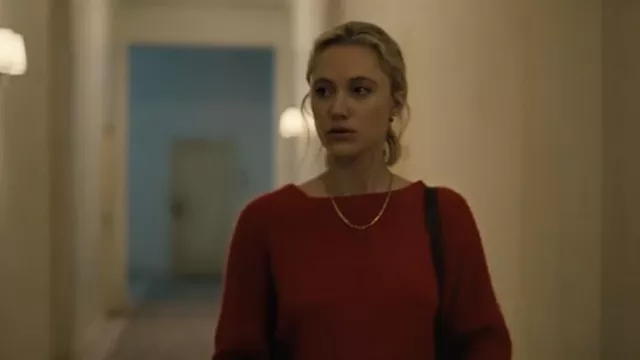
Yang’s memories are visualized as stars comprising a galaxy, within which lie resonant snippets of time Yang chose to preserve. Jake also learns about his own flaws, imperfections, and potential to develop as an aimless entity in search of meaning in our chaotic universe. He eventually encounters a strange woman in Yang’s memories (Haley Lu Richardson), who unearths more of Yang’s secrets.

Although some viewers might find “After Yang” too subtle and ponderous for its own good, part of what makes Kogonada’s film so moving is how gentle it is — letting plot developments unfold with a dreamlike rhythm that percolates into a rich, textured whole upon later reflection. 

The opening, however, where the central family competes in an intensive dance competition from their living room, is bursting with infectious energy. The rest of the film’s melancholic tone underscores the void left behind by losing Yang, and a family dynamic that Jake and Kyra have difficulty recapturing. Despite their relative privilege and open, spacious house — with a large tree growing in their central courtyard — they’re missing something crucial and comforting, stuck in a sort of limbo not unlike the confusion Yang feels about his own being.

Indeed, although Yang himself possesses a warmth and compassion that’s instantly endearing, it’s much harder to connect with either Jake or Kyra — especially Jake, who isn’t by any means a bad person, but someone drifting through life not fully appreciating those around him. Farrell gives an incredible, understated performance, where viewers observe — through small, yet meaningful shifts in attitude and behavior — a man reckoning with his own memories, by viewing Yang’s, and recognizing the messy, conflicted entity bubbling beneath his programming.

We don’t spend as much time with Kyra, who wants to tell Mika the truth about Yang’s death and move on, but as the story unfolds, she too recognizes a trapped soul searching for more. “After Yang” also paints an emotionally affecting contrast between Mika’s current despondence and her happiness alongside Yang, who gave her attention lacking from her adoptive parents. Yang himself, basically forced to take on a particular Asian identity sans much free will, is performed expertly by Min, who movingly conveys the android’s heartache and yearning through simple, powerful line delivery and facial expressions.

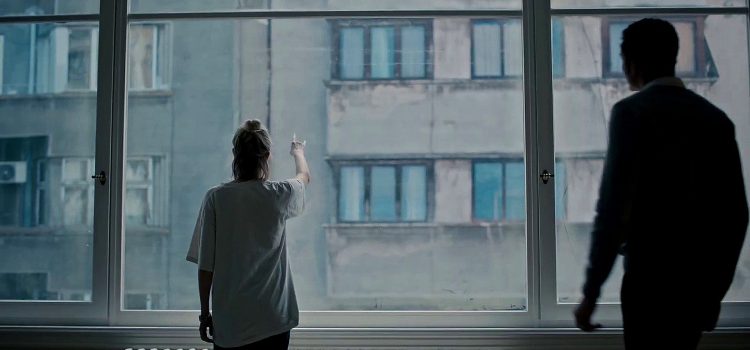
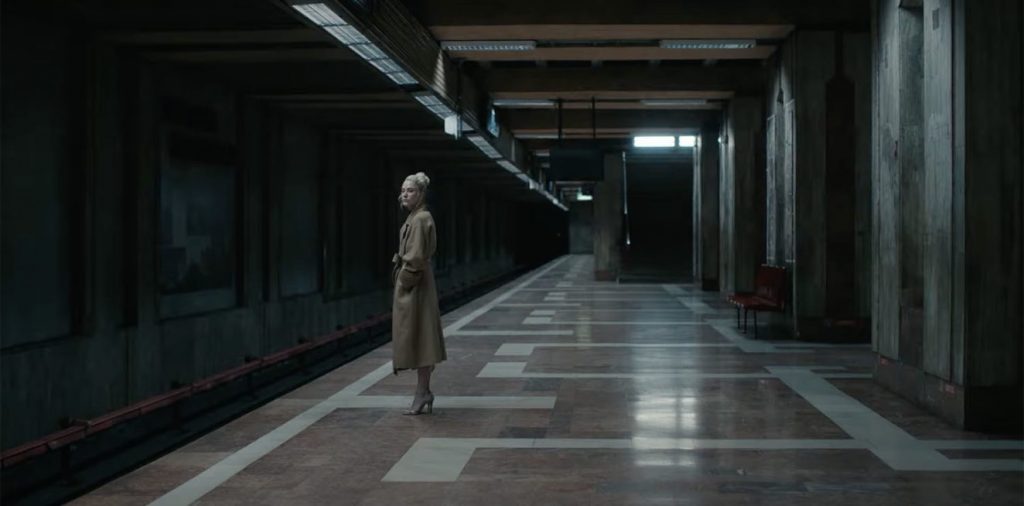
In terms of visuals, Kogonada infuses “After Yang” with depth that perfectly complements the subject matter. The cinematography by Benjamin Loeb features wide, static shots of this plausible world, conveying the ennui faced by Jake and Kyra with effective chilliness. When watching Yang’s memories play out, “After Yang” takes a more documentary-esque, arty approach reminiscent of Terrence Malick’s films, where we get colorful snippets of the natural world and human connection that gradually form a grander portrait. Additionally, when Jake and Kyra look back on specific conversations with Yang, Kogonada repeats lines of dialogue with different tones and camera angles, illustrating how the simple act of remembering has unmoored them to an extent, adding dimension previously overlooked.

The score, by Aksa Matsumiya and Ryuichi Sakamoto, is at once relaxing and raw, elegiac while also accentuating the eeriness of not truly “understanding” technology, or even our loved ones, or ourselves. Within a world over-reliant on technology, “After Yang” depicts the ways that it can benefit our lives if used properly, and how confronting grief can ultimately prove liberating. 

Kogonada’s film isn’t perfect — expository dialogue and simplistic characterizations of certain side characters stand out — but it’s one of 2022’s most thought-provoking films thus far, and one that rewards viewers eager for the unexpected.

“After Yang” is a 2021 American sci-fi drama directed by Kogonada and starring Colin Farrell, Jodie Turner-Smith, Justin H. Min, Malea Emma Tjandrawidjaja, Haley Lu Richardson, Ritchie Coster, and Sarita Choudhury. It is rated PG for some thematic elements and language, and the run time is 1 hour, 36 minutes. It started streaming on Showtime and its channels, and DirecTV on March 4. Alex’s Grade:: A- 

Facebook Comments

By Lynn Venhaus

With nods to “Back to the Future,” “The Terminator” and “Field of Dreams,” not to mention a 1949 hit song “Enjoy Yourself (It’s Later Than You Think)” by Guy Lombardo and his Royal Canadiens, “The Adam Project” has a familiar but fun retro vibe that relies on its gifted cast to save the day.

This personality-driven science-fiction drama is a combo plate of movie themes set in a sci-fi time-travel world. The action is more video game than epic but has a sincere emotional center, working in a grieving family’s healing.

Pre-teen Adam Reed is small for his age but is quick with quips, and trying to cope with the death of his science professor dad Louis (Mark Ruffalo), who may have accidentally created time travel, as is his exasperated mom Ellie (Jennifer Garner). While home alone, a spacecraft lands in his backyard, piloted by his now-40-year-old buff self (Ryan Reynolds). “Big Adam” has come back from 2050 to find his endangered wife Laura (Zoe Saldana) but was aiming for 2018. They must work together to save the world, each other and strengthen their family ties.

Reuniting cheeky monkey Ryan Reynolds with his “Free Guy” director Shawn Levy, who has a knack for crowd pleasers (“A Night at the Museum,” “Stranger Things” TV series), this film capitalizes on the star’s strengths.

Reynolds, who looks like the Homecoming King but acts like the class clown who’s on the honor roll, rapidly delivers sarcasm and wisecracks in a jaunty way. He easily slips into renegade roles. Both Reynolds and Levy are producers here, and they demonstrate a collaborative spark (just announced that they will work on “Deadpool 3” together).

As Adam Reed, once a scrawny, nerdy kid with nimble verbal skills who grows up to be a buff fighter pilot, Reynolds quips and cajoles with the skills he’s shown in “Deadpool,” “Red Notice” and last summer’s surprise hit “Free Guy.”

He meets his match when he comes face-to-face with smart young Adam, his 12-year-old self in 2022 — Walker Scobell making his film debut, who is truly Reynolds’ mini-me. Together, they are very entertaining and use their powers for good.

It gets a little head-trippy when they go back to 2018, “Big” Adam’s intended target, and their dad is still alive. They have reason to believe his tech project financier Maya Sorian (Catherine Keener) is an unethical megalomaniac with only dollar signs in mind. Despite a brief appearance, Mark Ruffalo’s scruffy workaholic professor lends both gravitas and heart to the story.

Relatable Jennifer Garner plays Ellie Reed, Adam’s overwhelmed widowed mom, while Zoe Saldana, who knows a thing or two about sci-fi, having been in “Avatar” and the “Guardians of the Galaxy” series, effortlessly appears as Adam’s fierce warrior wife Laura, who has been missing and presumed dead.

That’s the thing about time travel – logic goes out the window, and the more you think about connecting the dots, the more your head hurts. Your brain needn’t work that hard about wormholes, quantum leaps, electro-magnetic particles, and time streams.

Four screenwriters are credited, starting with Jonathan Tropper, who adapted his novel for the 2014 film “This Is Where I Leave You,” starring Jason Bateman, Adam Driver, Corey Stoll and Tina Fey as siblings sitting shiva after their father’s death, which was directed by Levy.

T.S. Nowlin, who wrote “The Maze Runner” series, and Jennifer Flackett and Mark Levin, who were Emmy-nominated for the “Big Mouth” animated series, were brought on board.

The dialogue is zippy and the action has genuine peril, although Sorian’s henchmen look more like Daft Punk than Stormtroopers.

As is the digital-age custom – and following James Gunn’s lead in the “Guardians” movies, all action scenes are accompanied by radio-friendly classic rock hits. There’s Boston’s “Long Time,” Led Zeppelin’s “Good Times Bad Times” and Spencer Davis Group’s “Gimme Some Lovin’” – sense a time theme? That clever touch carries over to a scene when you can discern Cyndi Lauper’s “Time After Time” as the instrumental music heard in the drug store.

The past meets the future – or is it the future meets the past? — in this amiable film, but the sci-fi takes a back seat to the family story that matters more, illustrated by a dad playing catch with his sons. As “Field of Dreams” still shows to this day, when grown men blubber about a baseball field surrounded by cornfields, something so elemental from childhood can be so profound.

“Enjoy yourself, it’s later than you think
Enjoy yourself, while you’re still in the pink
The years go by, as quickly as a wink”

“The Adam Project” is a 2022 sci-fi action-adventure comedy directed by Shawn Levy and starring Ryan Reynolds, Walker Scobell, Jennifer Garner, Zoe Saldana, Mark Ruffalo and Catherine Keener. It is rated PG-13 for violence/action, language and suggestive references and it runs 1 hour, 46 minutes. Streaming on Netflix beginning March 11. Lynn’s Grade: B.

Facebook Comments

Create TV is launching a national video contest designed to seek hosts for a digital lifestyle series. Nine PBS Create airs 24/7 over the air on channel 9.4 and on Spectrum 184. 

This year, the Create Cooking Challenge: My Family’s Recipe is focused on the rich, diverse heritage of Americans and the foods families pass down through generations. The winners will be awarded cash prizes and production equipment to host a 10-episode web series on CreateTV.com.   

Sponsored by American Public Television, the Create Cooking Challenge: My Family’s Recipe runs from March 8 to April 5, 2022. The contest will be judged by Create staff and some of Nine PBS’s most recognized hosts: Kevin Belton (Kevin Belton’s Cookin’ Louisiana), Pati Jinich (Pati’s Mexican Table), Diane Kochilas (My Greek Table), Nick Stellino (Storytellers in the Kitchen), and Martin Yan (Yan Can Cook!).  

The panel will judge submissions based on an entrant’s demonstrated knowledge, ability to present ideas succinctly, overall telegenic appeal, uniqueness, and production values. The grand prize includes $4,000 cash and production equipment valued at $1,000 to complete a 10-episode web series for CreateTV.com. The second prize winner will receive $1,000 cash and the same production equipment valued at $1,000 to complete a 3-episode digital series for CreateTV.com.  

The cooking show genre has its roots in public television. Julia Child’s The French Chef had a 10-year run, beginning in 1963, followed Jeff Smith’s the Frugal Gourmet in 1973. Nine PBS has celebrated St. Louis’s robust food and beverage scene since 1999, originating cooking series like Breaking Bread with Father Dominic (1999–2001), Feast TV (2013–2018), tasteMAKERS (2018–2020); Food Is Love is currently airing its second season. Nine PBS covers the local food scene and PBS cooking content on its website Chew in the Lou, a companion podcast, and social media platforms: FacebookTwitterInstagram, and TikTok.  

A complete list of judging criteria, official rules, and a preview copy of the submission form are available starting today at CreateTV.com/challenge.  

About Nine PBS  

As an essential community institution, Nine PBS exists to enable access to information, knowledge, and learning opportunities for all. We tell stories that move us. We meet people where they are the most comfortable consuming content. Nine PBS’s platforms include four distinct broadcast channels (Nine PBS, Nine PBS KIDS®, Nine PBS World, and Nine PBS Create), ninepbs.org, social media, the free PBS Video App, streaming services, live and virtual events, and the Public Media Commons. Since 1954, Nine PBS has accepted the community’s invitation into their homes, schools, and businesses. Follow Nine PBS on TwitterFacebookInstagramLinkedIn, and TikTok. 

About Create TV 

Now in its 17th year, Create® is the premier lifestyle channel featuring public television’s most popular how-to series, focused on food, travel, home and garden, arts and crafts, fitness, and lifestyle. Create is produced and distributed by American Public Television (APT), The WNET Group (New York), and GBH Boston, in association with National Educational Telecommunications Association (NETA) and PBS. Create TV is carried by 241 local public television stations nationwide and reaches 40 million viewers annually. Nine PBS Create can be watched in St. Louis, over the air on channel 9.4 and on Spectrum 184. 

y Lynn Venhaus

Facebook Comments

To celebrate St. Patrick’s Day, Focus Features and Cinema St. Louis are presenting an encore screening of BELFAST, the St. Louis International Film Festival’s 2021 winner of the TV5MONDE Award for Best International Feature, at 7 pm on Wednesday, March 16..

The screening will kick off St. Patrick’s Day festivities at the Hi-Pointe Theatre, near Dogtown. All attendees will receive a voucher for a complimentary small soda and popcorn (no substitutions allowed). The screening will be free for Cinema St. Louis members and is also open to the general public, with complimentary passes available at the following link, while supplies last: http://focusfeaturesscreenings.com/DAjlf49051

Please note: The screening will be overbooked to ensure capacity and seating is not guaranteed.

Written and directed by Academy Award® nominee Kenneth Branagh, BELFAST is a poignant story of love, laughter, and loss in one boy’s childhood, amid the music and social tumult of the late 1960s. BELFAST is now nominated for seven Academy Awards®, including Best Picture of the Year.

About Cinema St. Louis: The nonprofit Cinema St. Louis produces the St. Louis International Film Festival, one of the largest and highest-profile international film festivals in the Midwest. The fest has been lauded in USA Today’s 10Best list. CSL also produces the St. Louis Filmmakers Showcase, QFest St. Louis, the Classic French Film Festival, and Golden Anniversaries (a series of films celebrating their 50th anniversary).

Facebook Comments

By Lynn Venhaus
The grittiest, gloomiest, and most pitch-black of the entire Caped Crusader canon, “The Batman” expands the compelling mythology with a neo-noir approach and very gothic Gotham look.

Now in his second year as masked crime-fighter Batman, reclusive billionaire Bruce Wayne (Robert Pattinson) wades deeper into Gotham City’s underworld after The Riddler (Paul Dano) leaves a trail of cryptic clues, cyber messages and greeting cards addressed to The Batman. Wayne uncovers rampant corruption and abuse of power that has long plagued the metropolis while he seeks to apprehend a deranged killer.

Director Matt Reeves has set the iconic DC comic book character into year two of his “Batman Project,” where the scion of Wayne Enterprises, Bruce Wayne, calls himself “Vengeance” and roams at night, throwing punches with the “drophead” drug addicts and hoodlums overtaking his town.

His nocturnal alter-ego somberly narrates the film from his journals. “They think I’m hiding in the shadows, but I am the shadows,” he says in an intense, hushed tone.

This Batman works as a vigilante, delving into the detective work with Police Commissioner Gordon, played with his customary gravitas by Jeffrey Wright. After all, DC stands for Detective Comics, which Batman has been a part of since 1943.

Reeves, who helmed the found-footage thriller “Cloverfield” and two of the three “Apes” prequels “Dawn of the Planet of the Apes” in 2014 and “War for the Planet of the Apes” in 2017, taps into modern-day fears here, much like a horror film. It’s not science that’s created an aberration, but human nature at its bleakest, because evil has seeped into the everyday fabric of big-city life.

Reeves and co-screenwriter Peter Craig, who specializes in gutsy action (Oscar nominee for “The Town,” the upcoming “Top Gun: Maverick”) take a page from Todd Phillips’ 2019 bold and menacing “Joker,” which depicted Gotham City’s slide into lawlessness as greed and sadistic forces rose.

No one out-broods actor Robert Pattinson, and he inhabits the Batsuit with an imposing physique – although a human one, battle-scars on his back. This superhero’s physical prowess is on full display in fierce fight sequences.  

The Bat and The Cat

He has the Bat “toys” at his disposal – a very cool Batmobile makes a splashy entrance and he uses a turbo-charged Batcycle in hot pursuit of justice.

Pattinson, who broke out as sensitive heartthrob and tortured vampire Edward Cullen in the “Twilight” Saga (2008-2012), took a few years to find his way in post-blockbuster projects but has been memorable in interesting but odd indies – “The Lost City of Z,” “High Life,” “The Devil All the Time,” and his acclaimed “Good Time” and “The Lighthouse” (Independent Spirit Awards nominations).  He projects vulnerability and an inner strength along with the physicality.

His re-imagined Bruce is even more emotionally bruised and psychologically battered than any previous characterization, although Christian Bale came the closest in the masterful Christopher Nolan trilogy (“Batman Begins,” “The Dark Knight” and “The Dark Knight Rises”).

For 80 years, the dynamic hero has grown a passionate fanbase and many spin-offs – including TV shows, animated series, and video games. Since Tim Burton’s “Batman” in 1989, there have been many incarnations of the Caped Crusader, each with their own take.

Bale perfectly embodied both the conflicted hero and suave bachelor, while glib charmers Michael Keaton and Ben Affleck played to their strengths as seasoned veterans. The OG, Endearing Adam West, of the landmark TV series and first movie in 1966, had fun with the kitschy camp and the bombastic cartoonish Joel Schumacher ones in the 1990s, with Val Kilmer and George Clooney, though charismatic, took a wrong turn.

With less to say and more to emote, Pattison is convincing as driven to restore order while wrestling with his demons. The poor little orphaned rich boy, traumatized by watching his parents murdered at age 10, has found a solitary life of purpose. He remains a lone wolf who doesn’t let people in easily – even his loyal butler Alfred.

After Michael Caine’s emotional turn in Nolan’s three, as a surrogate father and protector, to see a gruff Bruce keep Alfred at a distance is jarring. Andy Serkis, who was Caesar in Reeves’ “Ape” movies, is every bit the archetypal British gentleman and dutiful servant.

Nolan’s work remains the gold standard, but Reeves’ deeper dive into the crevices is interesting – and unrelentingly grim. The skies are either a gloomy gray or a foreboding hard downpour, reminiscent of “Blade Runner.”

Cinematographer Greig Fraser, Oscar-nominated for “Dune,” sets a moody atmosphere to emphasize the scummy cesspool, and uses very little daylight. Blood red punctuates the darkness.

Reeves has cast the ensemble well, with Zoe Kravitz intriguing as both Catwoman and Selina Kyle, who develops a complicated alliance with Batman.

While nothing will ever approach Heath Ledger’s fearsome Joker in “The Dark Knight,” the familiar villains here are fresh takes — Paul Dano plays The Riddler as a dangerous mastermind, revealing hard truths about the powerful and elite of Gotham, and exposing himself as an unhinged psychopath. He may not have the maniacal laugh of Frank Gorshin and Jim Carrey, but he will send shivers down your spine, nonetheless. You want more of his Edward Nashton.

The Riddler’s killing spree, brutally murdering political figures and lawmen as he baits Batman, ramps up the tension.

John Turturro excels as mob boss Carmine Falcone, a smooth operator who is as lethal with his words as his deeds.

Colin Farrell as The Penguin

Less successful is Colin Farrell, unrecognizable as the thuggish Penguin (Oswald Cobblepot). His sleazy character is not as developed as the other bad guys.

The tech work is solid, and production designer James Chinlund went farther with a crumbling Wayne Manor, a once-grand mansion that serves as a forlorn reminder of what all has been lost.

Reeves tapped his frequent collaborator Michael Giacchino to compose the score. Giacchino, who won an Oscar for “Up,” an Emmy for “Lost” and Grammy Awards for “Up” and “Ratatouille,” has created haunting character themes.

“The Batman” is one of the more complex reinventions in the DC-verse and signals a promising new story thread, but at 176 minutes, the pace is a detriment, for it seems unnecessarily slow. But it is rare that you get this much depth in a tentpole genre film.

“The Batman” is a 2022 action-adventure crime drama directed by Matt Reeves and stars Robert Pattinson, Zoe Kravitz, Paul Dano, John Turturro, Colin Farrell, Jeffrey Wright, Andy Serkis and Peter Sarsgaard. It is rated PG-13 for strong violent and disturbing content,
drug content, strong language, and some suggestive material and runs 2 hours, 56 minutes. It is only in theaters starting March 4. Lynn’s Grade: B.

Facebook Comments

By Lynn Venhaus
During the month of March, PopLifeSTL.com will recognize significant female contributions in filmmaking.
Below, you will find a link to the Alliance of Women Film Journalists’ list of Real Reel Women, which we published in 2019, after whittling down a nominated list of 150 to 50 deserving candidates whose remarkable life was adapted into a film. All worth checking out this month.

I was privileged to write about Billie Jean King and Annie Sullivan.

On this day, March 3, in 1887, Helen Keller met Annie Sullivan, her “Miracle Worker.”

The following excerpt is what I wrote about Sullivan’s impact on Keller and the film for the AWFJ website.

Annie Sullivan (April 14, 1866 – Oct. 20, 1936)

Without the creative communication skills of Annie Sullivan, neither she nor her star pupil, blind and deaf Helen Keller, would be significant.

But their painful and uplifting struggles, as shown in “The Miracle Worker,” helped advance education.

William Gibson wrote it for TV’s “Playhouse 90” in 1957, then a stage adaptation in 1959, winning Tony Awards for Best Play and Anne Bancroft as Best Actress. For the 1962 film, director Arthur Penn was adamant, despite the studio wanting a bigger “name” than Bancroft and someone younger than 15-year-old Patty Duke to play Keller at age 7, the Broadway duo would recreate their physically demanding roles.

The pairing was dynamic on screen too, both winning Oscars for their honest, heart-wrenching performances.

Born Johanna Mansfield Sullivan, Annie overcame many obstacles and graduated valedictorian from the life-changing Perkins School for the Blind in Boston. Hired by Helen’s parents to avoid institutionalizing her, that ultimately successful journey in Alabama illuminated understanding.

The women became lifelong friends, living together even when Sullivan was married to John Macy for nine years.

They improved the quality of life for so many, it’s fitting they are together in eternity, interred at the Washington National Cathedral. Sullivan was the first woman so honored, in 1936.

Inga Swenson, Victor Jory, Andrew Prine, Patty Duke, Anne Bancroft

“The Miracle Worker”
Released on July 28, 1962, the film was a critical success and modest box office hit. The film was nominated for five Academy Awards, including Best Director for Arthur Penn, who had also directed the Broadway play, Best Screenplay Adapted from another medium for playwright William Gibson, Best Actress for Anne Bancroft and Best Supporting Actress for Patty Duke. The women won, and Duke, at age 16, became the youngest competitive Oscar winner at that time.

The film ranked 15 on AFI’s 100 Years…100 Cheers: America’s Most Inspiring Movies in 2006. Currently, the film has a 96% score on Rotten Tomatoes, the movie critics site (Note: this writer is on the Tomatometer).

The film focuses on young Helen as a wild, stubborn child, prone to violent outbursts, and her frustrated, exasperated parents — Victor Jory as Captain Arthur Keller, a former Confederate office, and Inga Swenson as his wife Kate — hire a young teacher to help. A battle of wills ensues, but she gets through Helen’s wall of silence and darkness.

The 1962 movie was remade for television in 1979 with Patty Duke as Anne and Melissa Gilbert as Helen as well as in 2000 with Alison Elliott and Hallie Kate Eisenberg in the lead roles.

More on Helen and Annie


Anne Sullivan was hired to teach Helen Keller, then 6, who had lost her sight and hearing after a severe illness — they think it was either a bacterial meningitis or scarlet fever– when she was 1 year and seven months old. She could not hear, speak or see. Her parents contacted the Perkins Institution for the Blind, and they recommended Sullivan as a teacher. They lived on an estate, Ivy Green, in Tuscumbia, Alabama.

Helen Keller and Annie Sullivan

Sullivan pioneered a “touch teaching” technique, and because of her help, Keller had a breakthrough when she felt water from a pump and Sullivan spelled w-a-t-e-r in her palm. Keller learned how to read, write and speak. She attended Radcliffe College and graduated with honors in 1904.She became an activist, public speaker and published her first book, “The Story of My Life” in 1902.

Sullivan was born in 1866 in Massachusetts and had suffered loss of vision as a child because of an infection. She attended the Perkins Institution for the Blind, where she learned the manual alphabet. She eventually had several operations on her eyes, improving her sight.

Until her death in 1936, she was a companion and interpreter for Helen. At age 87, Helen Keller died on June 1, 1968, at her home in Connecticut.

Where to Find:
The 1962 film “The Miracle Worker” is available on the subscription streaming service Amazon Prime and for rental on multiple digital/video on demand platforms.


Facebook Comments

9 Mile Garden, a Missouri food truck garden, is officially announcing the opening of its new season on Tuesday, March 1 with a Fat Tuesday extravaganza. The garden will resume operating seven days a week for lunch, dinner and special events. 9 Mile Garden is excited to be welcoming back the city’s most beloved food trucks for the season and an all-day Fat Tuesday celebration. The day will feature a special cocktail menu of Mardi Gras essentials, local music by Hosteen and the Aztechs from 5:00 p.m. to 7:00 p.m., and of course, beads galore!

“We are so ready to invite guests and trucks back to the Garden for another incredible season,” said Brian Hardesty, managing partner of 9 Mile Garden. “Mardi Gras is a St. Louis tradition and we can’t think of a better way to kick off the season than with a huge Fat Tuesday party celebrating our local food trucks and business owners!”

Although subject to change, the following trucks will be ready to serve food for 9 Mile Garden’s opening day and Fat Tuesday party:

  • Mothers on Wheels
  • Picture Perfect Panini
  • Quesa Don’s
  • Super Smokers
  • Taste-D-Burger
  • Truckeria Del Valle
  • Zacchi

Entry to the Fat Tuesday party and opening day at 9 Mile Garden is free, with food and drinks available for purchase from the visiting food trucks and hurricanes, sazeracs, and more available for purchase in the Canteen.

New food trucks to 9 Mile Garden, as well as returning favorites, will serve tasty lunches from 11:00 a.m. to 2:00 p.m. and delicious dinners from 5:00 p.m. to 9:00 p.m. daily, along with Sunday brunch from 10:00 a.m. to 2:00 p.m. weekly. The 9 Mile Garden grounds themselves, along with The Canteen, its draft house and cocktail bar, will feature games, big screen televisions, and spacious event space and will be open daily from 11:00 a.m. to 12:00 a.m. each day.

About 9 Mile Garden

9 Mile Garden is a family-focused entertainment district and home to Missouri’s first food truck garden, featuring local food trucks, outdoor movies, live performances and community events. The park can be rented for private events such as weddings, corporate events, fundraisers, reunions and more. For more information, visit www.9milegarden.com and follow us on social media @9milegarden.

Facebook Comments

By Lynn Venhaus
A soaring symphony of romanticism, “Cyrano” is one of the most daring and best-looking films from last year.

Too self-conscious to woo Roxanne (Haley Bennett) himself, wordsmith Cyrano de Bergerac (Peter Dinklage) helps young Christian (Kelvin Harrison Jr.) win her heart through love letters. The ruse will tangle their lives in unintended ways.

Sadly, its wider release wasn’t set until this February, although eligible for awards and played earlier elsewhere. The arthouse film just seemed to be one of the prestige awards-bait movies that got lost in the shuffle, so to speak. It is, however, nominated for three BAFTA awards, including Best Picture, and one Oscar nomination.

At once peculiar and precious, this film adaptation of Edmund Rostand’s 1897 play benefits from a breathtaking lush look. With his background in fine art, director Joe Wright has framed everything like a painting from the Renaissance – and moved the setting to Sicily.

The intricately detailed baroque production design is a wondrous sight to behold, outstanding craft work from Sarah Greenwood, and cinematographer Seamus McGarvey has beautifully lit the interiors with flickering candles while drenching the Mediterranean exteriors with sun.

Frequent Wright collaborator Jacqueline Durran, a two-time Oscar winner for “Anna Karenina” and “Little Women,” designed the costumes for Roxanne while Massimo Cantini Parrini did the rest, and they both share an Oscar nomination for the work. (She could have easily scored another one for “Spencer” this year).

Not only is this sumptuous film a feast for the eyes but also the ears, with an intimate musical score by twin brothers Aaron and Bryce Dessner of the indie-rock group The National, with lyrics by fellow bandmate Matt Berninger and his wife Carin Besser. They had all collaborated on Erica Schmidt’s 2018 stage musical. A new song, “Somebody Desperate,” plays over the end credits.

The bittersweet songs are gracefully delivered, tinged with an aching tenderness, as if singers are revealing their intensely personal monologues.

The pitch-perfect cast is fully immersed in the 17th century story, which has been presented in countless forms over the years – as radio, television, opera, theater, dance, and film. While it has received modern treatments, this version is steeped in the original’s classicism, which suits the performers well.

The love triangle resonates emotionally because of the actors’ strengths. Bennett is luminous and Harrison earnest as the lovestruck pair. With his sad eyes, Dinklage’s melancholy demeanor deepens the title character’s pain about unrequited love.

Cyrano is convinced that his appearance makes him unworthy of his friend Roxanne’s affections and once she falls for Christian, he helps foster the romance through his words, writing dazzling love letters she assumes are penned by her suitor.

Dinklage, undaunted by all the acclaimed actors who’ve played the role before, demonstrates both the wordplay and swordplay with ease. The character loses nothing in the switch from the presumed hideous bulbous nose to a dwarf, conveying his perceived inferiority.

As the hopelessly romantic and endlessly disappointed poet, he’s just as heartbreaking as Oscar winner Jose Ferrer was in the 72-year-old film — and one can imagine on stage in his most famous role.

Both Bennett and Dinklage reprise their roles from Schmidt’s musical, initially staged at the Goodspeed in Connecticut, then moved to off-Broadway with Jasmine Cephas-Jones replacing Bennett in 2019.

Schmidt has adapted it here for the film, still cut-to-the-essentials. (Fun fact: Bennett is the significant other of the director).

One of the best young actors working today, Harrison’s soulfulness hits the right notes. He projects Christian’s love as noble and true, which is even more heart-wrenching after he is spitefully sent off to war.

Scorned by Roxanne, De Guiche, the reprehensible duke played with such arrogant cruelty by Ben Mendelsohn, pushes Christian into wartime service, and Cyrano accompanies him as a cadet.

Wright has often demonstrated a flair for long tracking shots – for example, the five-minute Dunkirk scene in “Atonement” that was better than Christopher Nolan’s entire 2017 film, and on display here.

But he runs hot and cold – as reminded in the woefully misguided “The Woman in the Window” on Netflix last year. Yet, his films always have a delectable visual appeal.

Because of the stripped-down script, Wright seems to rush the ending to what had been a thoughtful rumination on longing and desire. Still, some minor characters come and go with little relevance.

Nevertheless, Wright maintains the overarching theme of pride. More haunting than hopeful, this “Cyrano” is an ambitious work of art that may be flawed script-wise, but its stunning look and strong performances keep it timeless.

“Cyrano” is a 2021 romantic drama musical directed by Joe Wright and stars Peter Dinklage, Haley Bennett, Kelvin Harrison Jr. and Ben Mendelsohn. It’s rated PG-13 for some strong violence, thematic and suggestive material, and brief language, and the run time is 2 hours 4 minutes..It opened in theaters on Feb. 25. Lynn’s Grade: B+

Facebook Comments

By Alex McPherson

Crass and packed with enough blood to fill a swimming pool, director David Blue Garcia’s “Texas Chainsaw Massacre” leaves behind a bitter aftertaste, despite moments of hyper-violent enjoyment.

Taking place nearly 50 years after Tobe Hooper’s 1974 masterpiece — as well as retconning the seven other “TCM” films released since then — the latest entry finds a group of Gen-Z entrepreneurs venturing out into the remote area of Harlow, Texas, and having a grand ol’ time.

Dante (Jacob Latimore), Ruth (Nell Hudson), and Melody (Sarah Yarkin) want to gentrify Harlow and turn the ghost town into a hipster haven, or something like that. Melody brings along her depressed sister, Lila (Elsie Fisher), who recently survived a school shooting. 

As the naive younglings encounter various slimy locals, Dante and Melody find a woman inhabiting a former orphanage (Alice Krige), who refuses to leave. Being the cutthroat capitalists they are, they evict her, creating an unfortunate domino effect. Guess who else happens to be living there, in hiding from the authorities? Couldn’t be Leatherface (Mark Burnham), could it? The porky cannibal who’s since become something of a Texas celebrity?

Attempting to replicate the grungy, unforgettable thrills of Hooper’s effort, “Texas Chainsaw Massacre” lacks the craft and inventiveness needed to carve a name for itself. Rather, Garcia’s film is woefully miscalculated, bringing in a huge swathe of cultural talking points only to toss them aside, providing only sporadically engaging genre thrills.

Topics of post-traumatic stress, liberal guilt, cancel culture, gun control, and more are treated with very little subtlety: they’re designed to provoke rather than enlighten or add any meaningful subtext, like Hooper’s vision attempted. The film’s 83-minute runtime limits how much time any particular theme can develop, so the overall impression is woefully tone-deaf and disgustingly offensive, especially in regard to gun violence. 

Indeed, it’s difficult to ignore just how profoundly mean-spirited the film is, painting its young protagonists as semi-antagonists from the get-go, reducing them to basic characterizations aggressively foregrounding their “wokeness” without any real soul. The actors try their best with the material, especially Yarkin and Fisher, but there’s only so much they can do with people making one bone-headed decision after another, playing into horror movie tropes that viewers have likely seen time and time again. 

To their credit, Garcia and screenwriter Chris Thomas Devlin try to give Lila some development — it’s just pretty damn insensitive how the film uses her trauma as a set-up for her own acts of violence against the iconic face-wearer. Without spoiling too much, “Texas Chainsaw Massacre” exploits America’s gun violence epidemic to gross, confused ends.

Similarly, the film’s most promising thread — bringing back Sally Hardesty (Olwen Fouéré), the sole survivor of the 1974 bloodbath — is largely neglected until the conclusion. Even then it resembles a pale imitation of what director David Gordon Green achieved with Laurie Strode in his far superior horror sequel, 2018’s “Halloween.”

Fortunately, being a slasher film, “Texas Chainsaw Massacre” doesn’t require anyone to latch onto emotionally, so long as they die in entertaining fashion. And on those merits, it delivers the goods. Although Leatherface’s scare factor is neutered this time around due to the film’s reliance on formulaic jump scares, Garcia stages some blackly comic set-pieces that leave a satisfyingly queasy impact.

One sequence involves a busload of social media influencers being graphically slain while livestreaming the whole ordeal on their smartphones after threatening to “cancel” Leatherface. It goes on for a ridiculously long time, and fits the tone well as a sick, apathetic joke.

Additionally, Ricardo Diaz’s cinematography contains several aesthetically pleasing compositions, albeit abandoning the documentary-esque stylings of Hooper’s film that helped give it such an uncomfortable atmosphere. Colin Stetson’s score features growling rhythms that add some welcome suspense when the scenarios themselves remain generic.

If viewers go into “Texas Chainsaw Massacre” with the absolutely lowest of expectations, there’s enough flashes of sadistic slasher glee to briefly divert. For everyone else, however, there’s little here that stands out, and far better cinematic offerings to grab from the toolshed.

Texas Chainsaw Massacre” is a 2022 film directed by David Blue Garcia and starring Sarah Yarkin, Elsie Fisher and Mark Burnham. Rated R for strong bloody horror violence and gore, and language, the runtime is 1 hour, 21 minutes. Streaming on Netflix beginning Feb. 18. Alex’s Grade: C-

Facebook Comments

Awards to Be Given at March 28, 2022 Virtual Event Streaming on HEC Media

ST. LOUIS, February 23, 2022 – Special lifetime achievement awards to Michael Hamilton and Jack Lane, co-founders of Stages St. Louis, will be given by the St. Louis Theater Circle at its March 28 virtual event, which will be streamed by HEC Media. Ken and Nancy Kranzberg, who received a special award from the Theater Circle at the 2020 virtual streaming ceremony, will make an acceptance speech for that award, as will Lane for this year’s special award, for the 2022 ceremony.

After a hiatus due to the coronavirus pandemic in 2020 and 2021, the St. Louis Theater Circle Awards are returning in 2022 in a ‘virtual’ ceremony. That event will be streamed at 7 p.m. on Monday, March 28, 2022 on HEC Media’s Facebook page, YouTube channel, and web site (www.hecmedia.org).

Nominees in more than 30 categories will vie for honors covering comedies, dramas, musicals and operas produced by local professional theater and opera companies in the combined calendar years of 2020 and 2021.

Hamilton, who served as artistic director for Stages since its founding in 1987, retired at the end of the company’s 2021 season. He directed both of Stages’ productions in 2021, “Always…Patsy Cline” and “Jersey Boys.” Hamilton has been nominated for both productions for Outstanding Director of a Musical.  Stages St. Louis has been nominated for a total of 16 awards, 11 for “Jersey Boys” and five for “Always…Patsy Cline.”

Lane, who serves as executive producer of Stages and co-founded the company with Hamilton in 1987, was instrumental in the development and eventual opening of the Kirkwood Performing Arts Center, which held its first productions by local companies in 2021.

Because the pandemic brought about the cancellation of so many productions by virtually all local professional theater companies, approximately 75 productions have been considered for nominations for the combined years of 2020 and 2021. This compares to roughly 110 to 120 productions normally considered in one year alone.

The eighth annual award ceremony, which was to have been held ‘live’ at the Loretto-Hilton Center on the campus of Webster University, was cancelled in February 2020 due to the escalating number of cases of COVID-19. Instead, that event was held virtually in a highly polished presentation produced by HEC Media and streamed on HEC’s Faceook page, YouTube channel and web site.  There was no ceremony of any type by the Theater Circle in 2021.

HEC’s 2020 production of the St. Louis Theater Circle Awards was one of the first major productions of any awards ceremony in the United States after the coronavirus pandemic shut down nearly all theatrical activities in mid-March 2020. The ceremony had one of the largest viewership figures for any virtual streaming event of HEC at that time.

For this ninth annual ceremony, members of the St. Louis Theater Circle considered nominees from shows produced in the first three months of 2020 and the last eight months of 2021 combined. In addition, a few shows produced between April 2020 and May 2021 were included. The total number of shows considered from the years 2020 and 2021 combined amounted to about 75 shows.

The mission of the St. Louis Theater Circle is simple: To honor outstanding achievement in St. Louis professional theater. Other cities around the country, such as Boston, Chicago, Los Angeles, Philadelphia, San Diego, San Francisco and Washington, D.C., pay tribute to their own local theatrical productions with similar awards programs.

Members of the St. Louis Theater Circle include Steve Allen (stagedoorstl.com); Mark Bretz (Ladue News); Bob Cohn (St. Louis Jewish Light); Tina Farmer (KDHX); Michelle Kenyon (snoopstheatrethoughts.com); Gerry Kowarsky (Two on the Aisle, HEC-TV); Chuck Lavazzi (KDHX); Rob Levy (Broadwayworld.com); Judith Newmark (judyacttwo.com); Ann Lemons Pollack (stlouiseats.typepad.com); Lynn Venhaus (PopLifeSTL.com); Bob Wilcox (Two on the Aisle, HEC-TV); and Calvin Wilson (St. Louis Post-Dispatch). Eleanor Mullin, local performer and arts supporter, is group administrator.

For more information, contact [email protected] or like the St. Louis Theater Circle on Facebook.

Facebook Comments