By Lynn Venhaus

How legendary singer-songwriter Carole King found her voice is chronicled in the crowd-pleasing “Beautiful: The Carole King Musical,” a remarkable life story that hits all the right notes in an exuberant debut at Stages St. Louis.

The smartly constructed show is the soundtrack of a generation, and King’s influential journey parallels the evolution of women in the 1960s and 1970s.

Bursting with catchy pop songs, King’s fascinating rise to stardom is as much about the beginnings of rock ‘n roll – all those tunes that had a good beat and we could dance to them – as well as the transformative power of music.

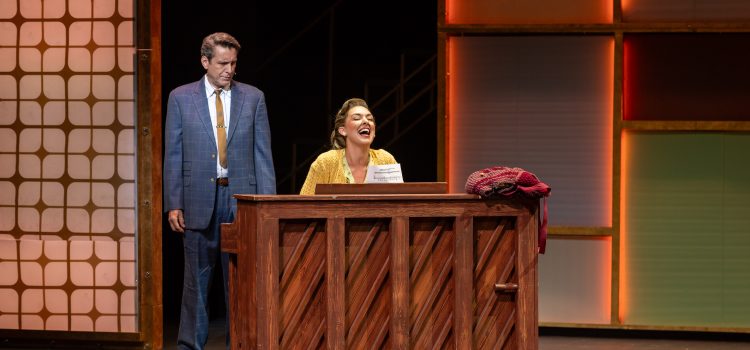
Entrancing in the title role, Brianna Kothari Barnes believably transforms from an insecure, talented teen into a strong independent woman, making Carole easy to love and empathize with through every change and heartbreak.

The charming, affable Barnes was matched in zest by the other principals and ebullient ensemble. Nobody misses a beat.
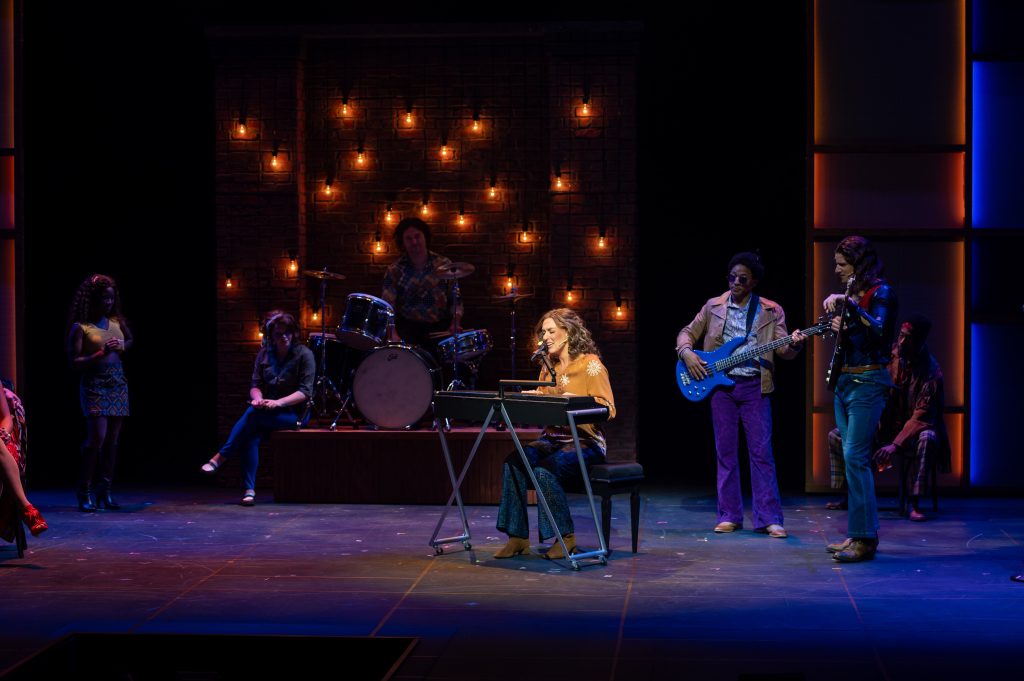
“It’s Too Late” turning point. Photo by Phillip Hamer.

Carole grew up in Brooklyn and then fought her way into the record business as a teenager. She begins as part of the pop hit machine at the Brill Building, located at Broadway and 49th St. in New York City.

Hired by producer Don Kirshner (a droll Jeff Cummings), she meets her first husband Gerry Goffin (Sean McGee) at Queens College, and they make beautiful music together – he writes the lyrics, and she composes the melodies, from 1959 to 1969. Soon, the whole world would sing their songs.

The hits keep coming when they start a friendly rivalry with the songwriting duo Barry Mann (David Socolar) and Cynthia Weil (Kailey Boyle) and that not only enlivens the script but ups the game. The foursome’s good-natured competitiveness produced standards for the girl groups and teen idols that defined the rock era.

(Fun fact: The Brill building was home to Burt Bacharach-Hal David, Mike Lieber-Jerry Stoller, Neil Diamond, and Jeff Barry-Ellie Greenwich.)
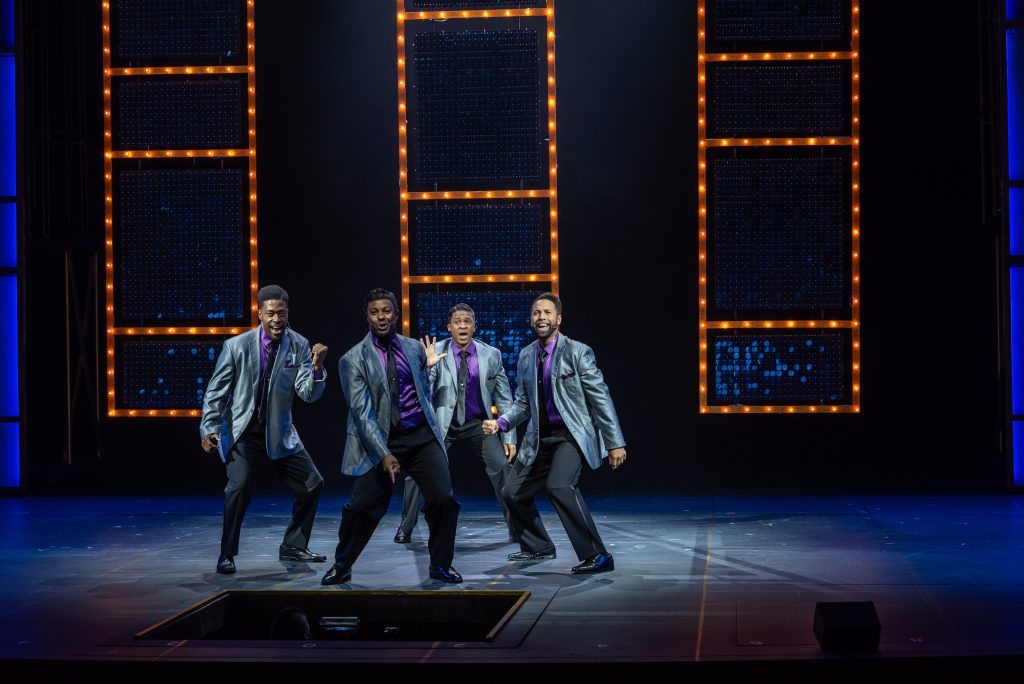
The Drifters – Ian Coulter-Buford, Trey McCoy, Devin Price, Justin Reynolds. Photo by Phillip Hamer.

Douglas McGrath’s witty and warm book conveys the emotional connections that music makes throughout the show, in many different ways. The two pairs have an effortless interaction – until the dramatic action gets tense because the biz overtakes Gerry’s psyche – but they all share an easy chemistry.

Veteran Amy Loui astutely captures Carole’s well-meaning mom Genie Klein, quick with the advice and the quips. As Kirshner, Cummings is both a caring friend and a sharp-as-a-tack boss with a terrific ear for what sells.

The ensemble is equally robust in singing the non-stop parade of peppy hits – Tatiana Bahoque, Maya Talia Bishop, Ian Coulter-Buford, Hugh Entrekin, Tiffany Frances, Jayna Glynn, Connor Kelly-Wright, Trey McCoy, McKay Marshall, Cara Palombo, Devin Price, Sydney Quildon, Alexandrea Reynolds, Justin Reynolds, Bryce Valle, and RJ Woessner.

As the chart-toppers The Drifters, The Shirelles, Little Eva and others, they perform their iconic songs. “Up on the Roof,” “One Fine Day,” “The Locomotion,” and “Will You Still Love Me Tomorrow” among them.

These songs clearly struck a chord. One of my favorite moments is when Hugh Entrekin and RJ Woessner, as The Righteous Brothers, deliver a soulful “You’ve Lost That Loving Feeling.”
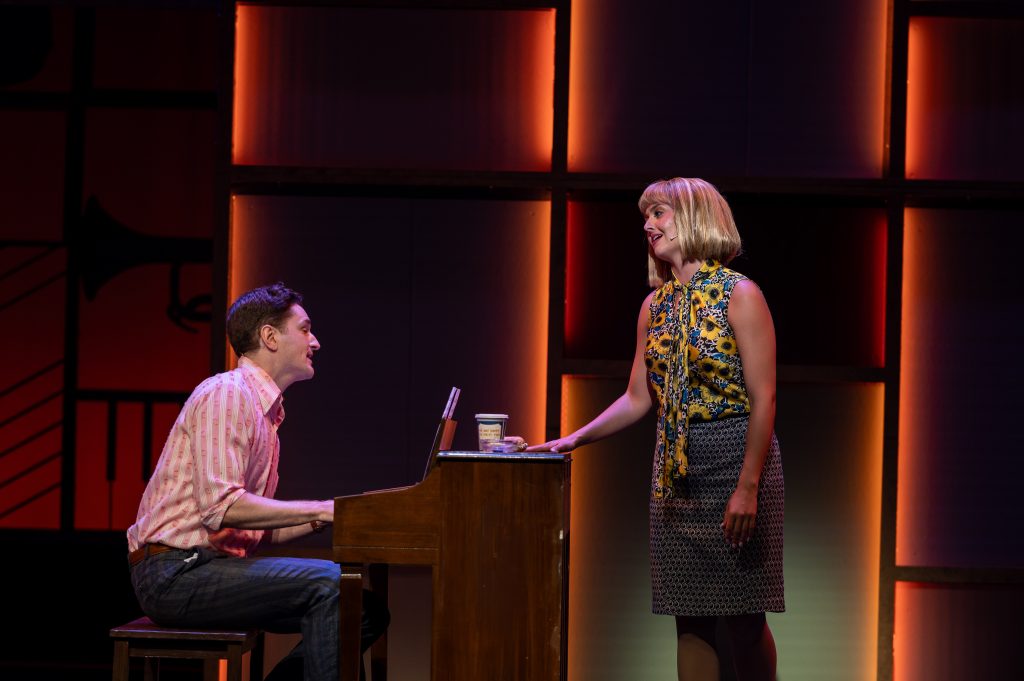
David Socolar and Kaley Boyle as Barry Man and Cynthia Weil. Photo by Phillip Hamer.

So many music memories abound — Carole’s emergence as a potent solo artist when she tries out ‘It’s Too Late” at the Bitter End signals a turning point.

Her landmark 1971 album, “Tapestry,” which sold over 25 million copies, won Grammys for Best Record, Song and Album of the Year. It is still one of the bestselling albums of all-time, and the longest Billboard run by a female artist.

My generation knows every single word — still (My 1972 high school yearbook was titled “Tapestry”).

For us Boomers, this show is a true lovefest, a sentimental flashback. But other generations can enjoy it as well – as a blast from the past pop music history lesson and as a portrait of a resilient woman who finally believed in herself.

In a male-dominated business, her integrity and kindness stood out, and she not only survived but thrived in changing times.
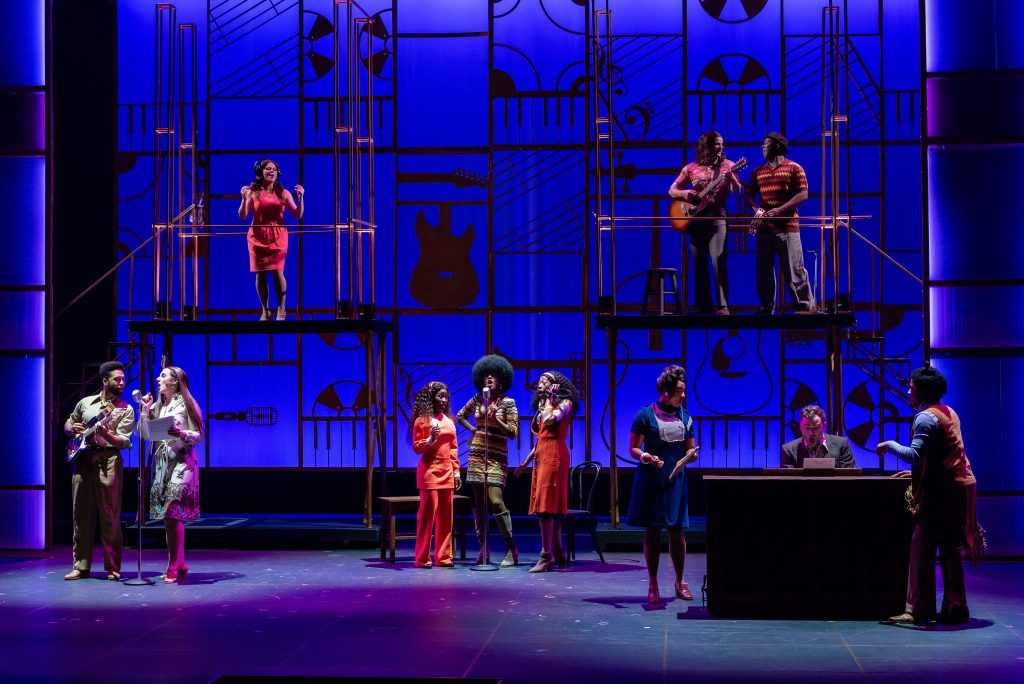
Photo by Phillip Hamer.

Popular on Broadway, “Beautiful” played for 2,418 performances from Jan 12, 2014, to Oct 27, 2019, nominated for seven Tony Awards and won two – Jessie Mueller as Carole and sound design.

(The gifted and troubled Goffin died in 2014 at age 75, and did see “Beautiful” on Broadway before he passed. He and Carole each had three other spouses in their lives.)

Two national tours have played at the Fabulous Fox in St. Louis, in 2016 and 2019. The Muny produced it as one of four premieres for its 105th season in 2023. This production is the fifth time for me, since Broadway in 2014, and I believe it’s on par with that show – for its intimacy and its heartfelt desire to tell this fascinating story.

Jennifer Werner, who directed and choreographed the musical, brings out the fun and the joy in the music-making. For lack of a better word, she made the production ‘sing’ – and the scenes flow into each other smoothly. She made us feel what the times were like.
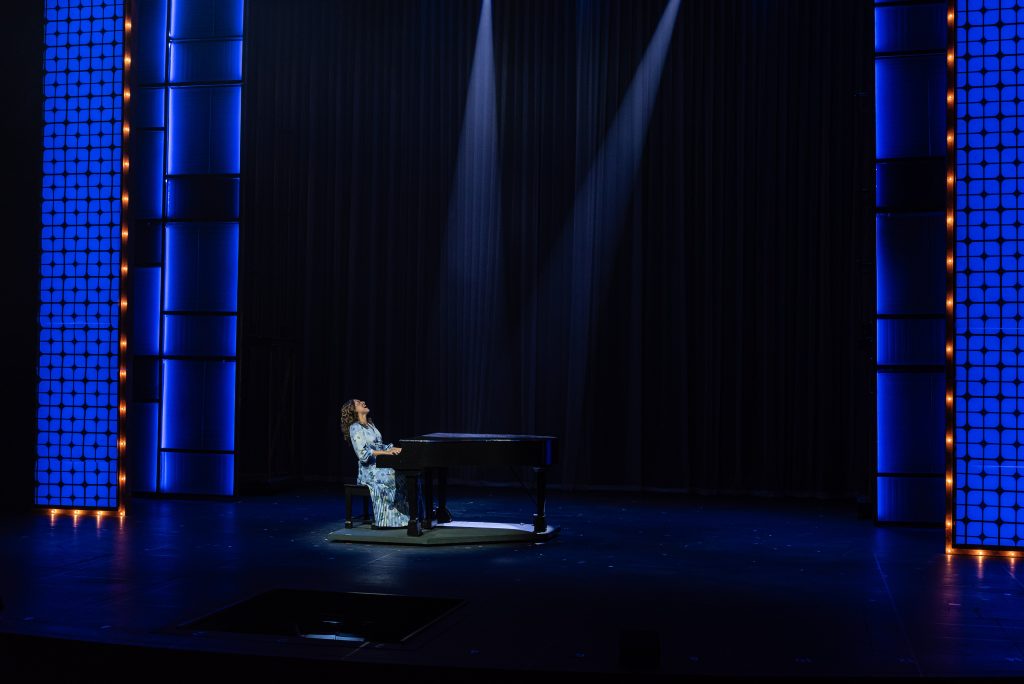
So Far Away…Carole at Carnegie Hall. Photo by Phillip Hamer.

 Music Director David Nehls conducted with gusto, and to play 29 songs from the great American songbook with aplomb was a remarkable feat for the musicians. Besides Nehls on keyboard, so was Mark Maher, with Alerica Anderson on bass, Travis Mattison on guitar, Abby Steiling on violin (select performances Fiona Brickey), Lea Gerdes and JD Tolman on reeds, Tom Vincent on trombone, Andy Tichenor on trumpet, Jonathan Taylor on drums and percussion. Randon Lane was associate music director.

Collaborating to set the scene, Peter Barbieri’s grid-like scenic design superbly captures the different eras, as did costume designer Johanna Pan, with costume design coordinator Cat Lovejoy and wig and hair designer Paige Stewart. all precise in the vintage looks.

Sean M. Savoie’s lighting design added just the right ambiance for every scene, day or night, while sound designer Breanna Fais was pitch-perfect in execution.

“Beautiful: The Carole King Musical” is the best kind of jukebox musical – one that unites us, tells us a story rich in sincerity and humor, and has us leaving the theater with a smile on our faces and a song in our hearts.
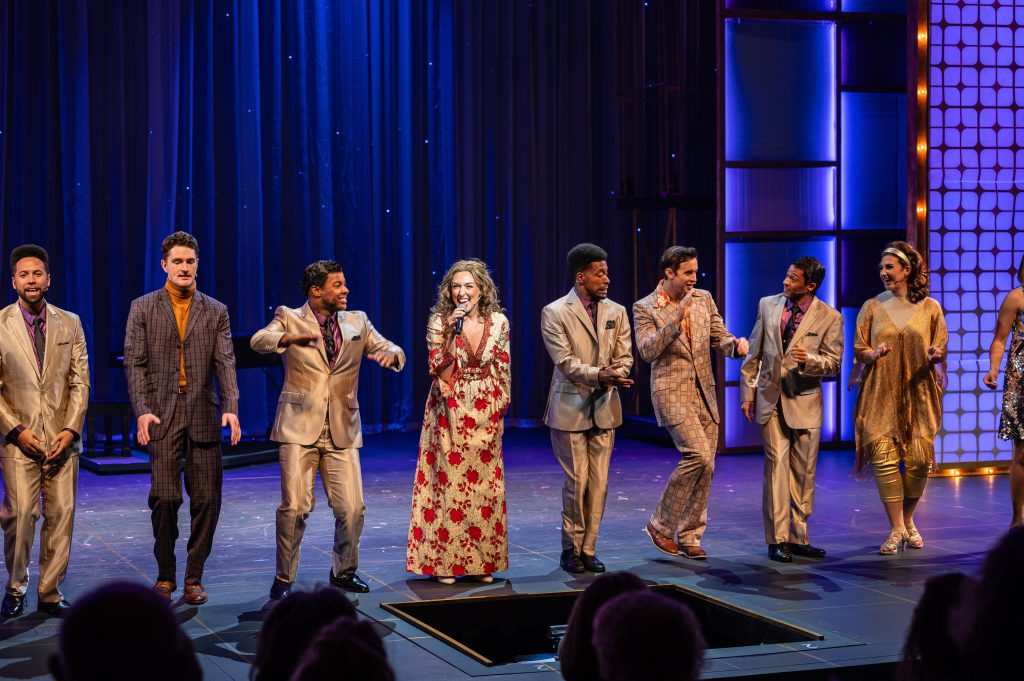
We all feel the earth move at curtain call. Photo by Phillip Hamer.

Stages St. Louis presents “Beautiful: The Carole King Musical” from Sept. 19 to Oct. 19 at the Kirkwood Performing Arts Center’s Ross Family For more information, visit For tickets, visit www.stagesstllouis.org

.
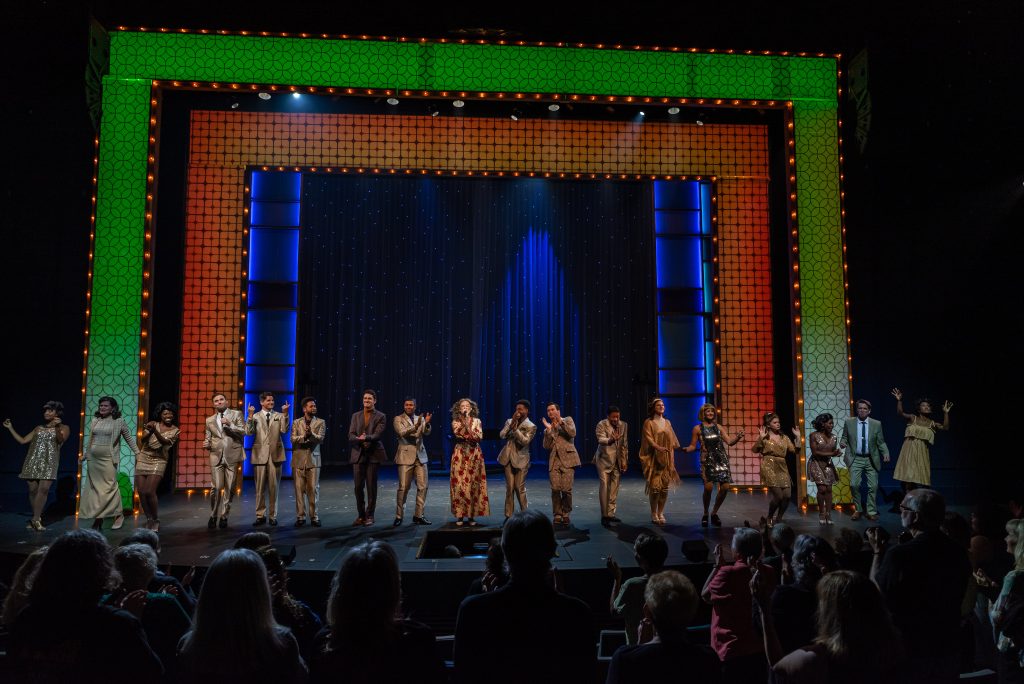
The outstanding ensemble of “Beautiful: The Carole King Musical” at Stages St. Louis. Photo by Phillip Hamer.

By Lynn Venhaus

“There was a cabaret, and there was a master of ceremonies, and there was a city called Berlin, in a country called Germany… and it was the end of the world” – “Cabaret” 1966

Eerily relevant now more than ever, the musical “Cabaret” has only grown in potency and insight over its 59-year history.

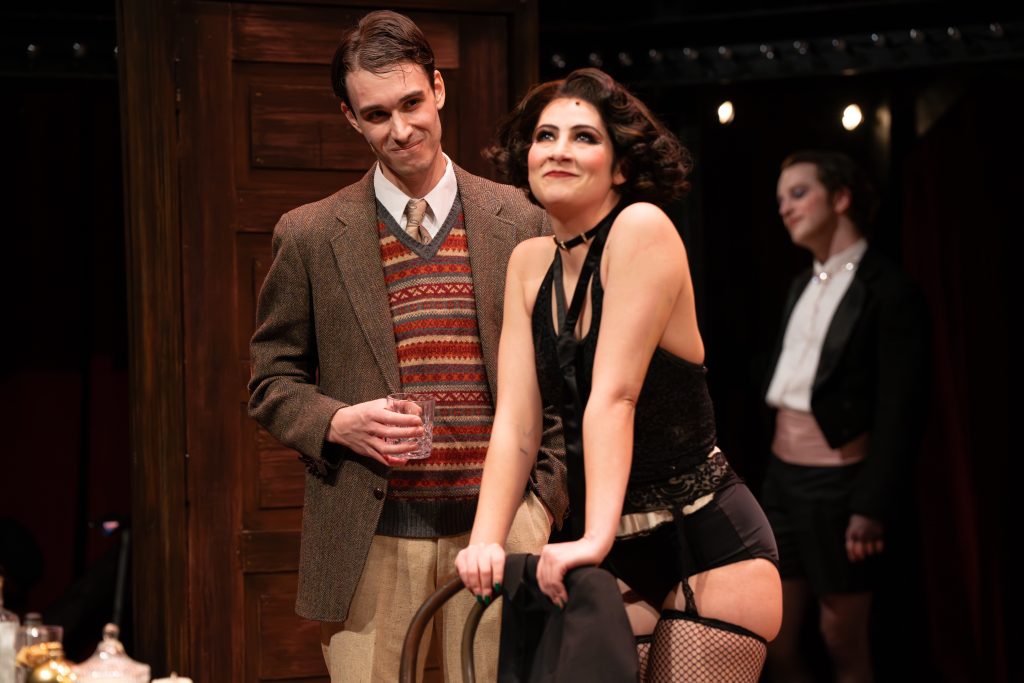
In New Jewish Theatre’s haunting production, director Rebekah Scallet has faithfully adapted Sam Mendes’ brilliant 1998 revival that emphasized the sinister motives as we witness the gathering storm that would lead to World War II and the Holocaust.

However, she has focused on making sure the parallels between then and now are clear, and she has strengthened the shattering epilogue even more than Mendes did. She puts a hard-hitting NJT stamp on it.

As impressive as her track record has been since becoming the artistic director in 2022, it’s noteworthy to mention that this is the first musical she has directed in Wool Studio.

Through the decadent setting of the seedy Kit Kat Club in 1929 Berlin, we witness the end of the Weimar Republic and the rise of the Nazis.

Photo by Jon Gitchoff.

This passionate cast resonates because of how committed they are to the bleak and shocking themes. In their telling of this story, the desperation is palpable. And their layered approach to the hummable John Kander-Fred Ebb score is commendable.

As the cunning Emcee welcomes patrons in “Wilkommen,” he seductively entices: “Leave your troubles outside! So—life is disappointing? Forget it! In here, life is beautiful. The girls are beautiful. Even the orchestra is beautiful!”

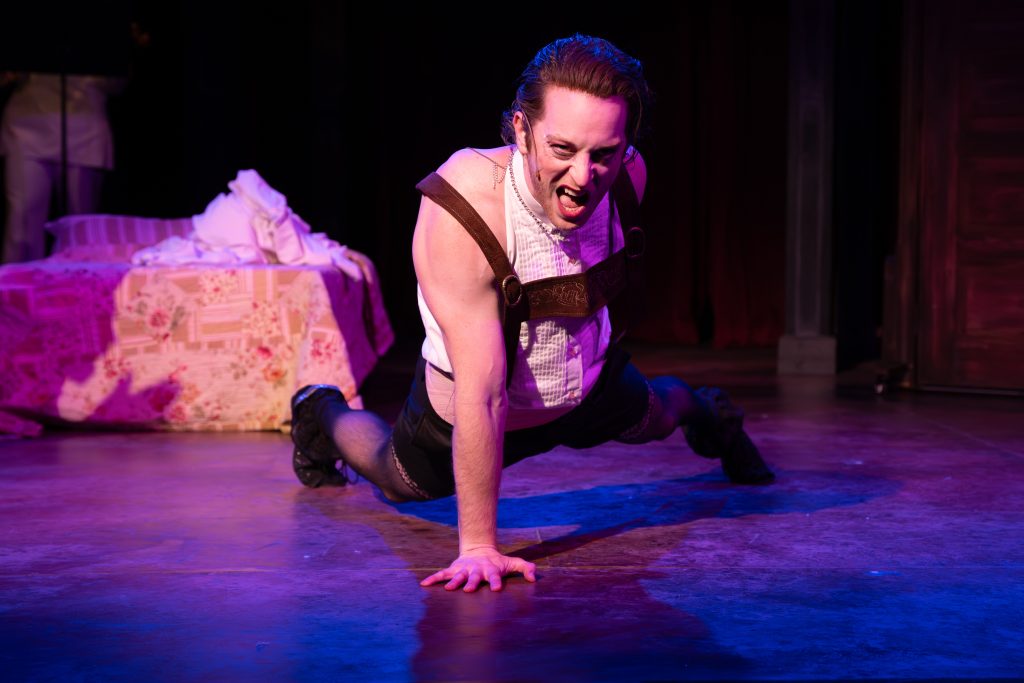
In a magnetic performance, Spencer Davis Milford embraces the tawdriness and makes sure the ominous feeling grows. He lurks in other scenes where he’s not the saucy showman, his menacing presence foreshadowing the horrors that are ahead.

Oh, he has doused his “I Don’t Care Much” and “If You Could See Her” in irony, making those numbers even more chilling. After such iconic actors as Joel Grey, Alan Cumming and Eddie Redmayne have created their indelible portraits, Milford makes the role his own.

Fresh from his starring role as Frodo Baggins in “The Lord of the Rings” national tour, he’s back home making his mark in yet another special show. His work has always captivated since he was a youngster, whether on stage at The Muny or The Repertory Theatre of St. Louis, or a myriad of other companies. But this is quite a departure from anything he’s done.

When it was time for “Tomorrow Belongs to Me,” I braced myself, for its intensity remains affecting — and induces chills.

As conditions deteriorate in the polarizing landscape, those loyal to the “new Germany” face apathetic citizens and those who don’t understand the consequences.. In hindsight, how could they and why were people so unaware?

Soencer Davis Milford as the Master of Ceremonies. Photo by Jon Gitchoff.

The innovative 1998 Tony winning Mendes collaboration with Rob Marshall deconstructed the heralded 1966 Hal Prince show in an earlier 1993 London re-imagining. While the original introduced social commentary in uncommon staging, this version heightens the present danger of ignoring anti-Semitism.

Mendes and Marshall would go on to helm Oscar-winning films in the early 2000s – “American Beauty” and “Chicago” respectively – but their impact has carried over for several vivid revivals in the past 27 years, notably 2014 and 2024, and in this striking, moving interpretation.

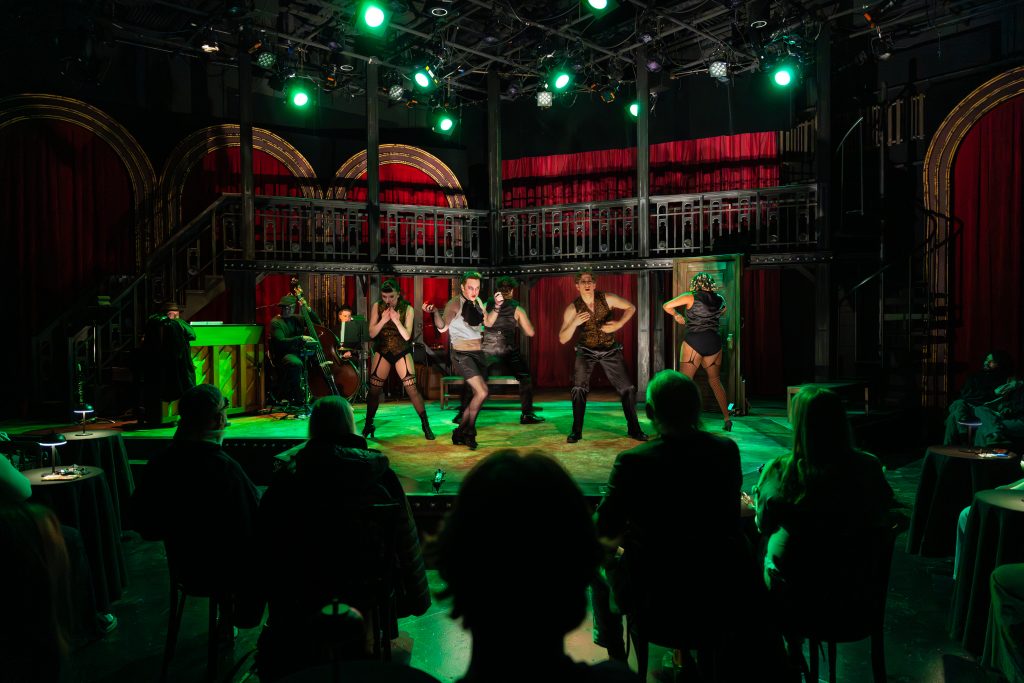
Scallet makes the most of the Wool Studio’s intimate setting, through an immersive experience placing some audience members in club configurations.

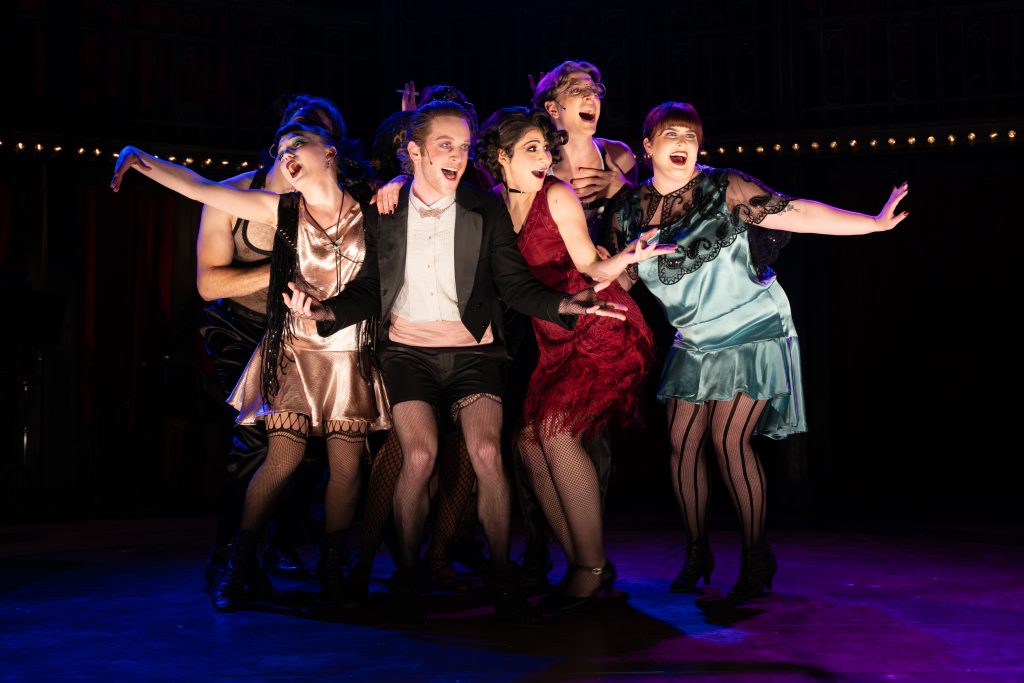
As the small but vibrant ensemble delivers high-energy precision in musical numbers, Scallet skillfully maintains fluidity throughout, with brisk staging, as one scene quickly melds into another.

Ellen Isom’s crisp and snappy choreography adds pizzazz to “Don’t Tell Mama,” “Mein Herr,” “Money,” and “Two Ladies,” and the robust kick line number in second act is an exceptional feat.

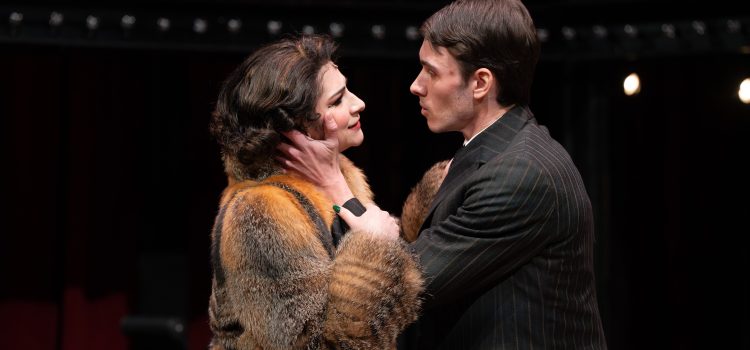
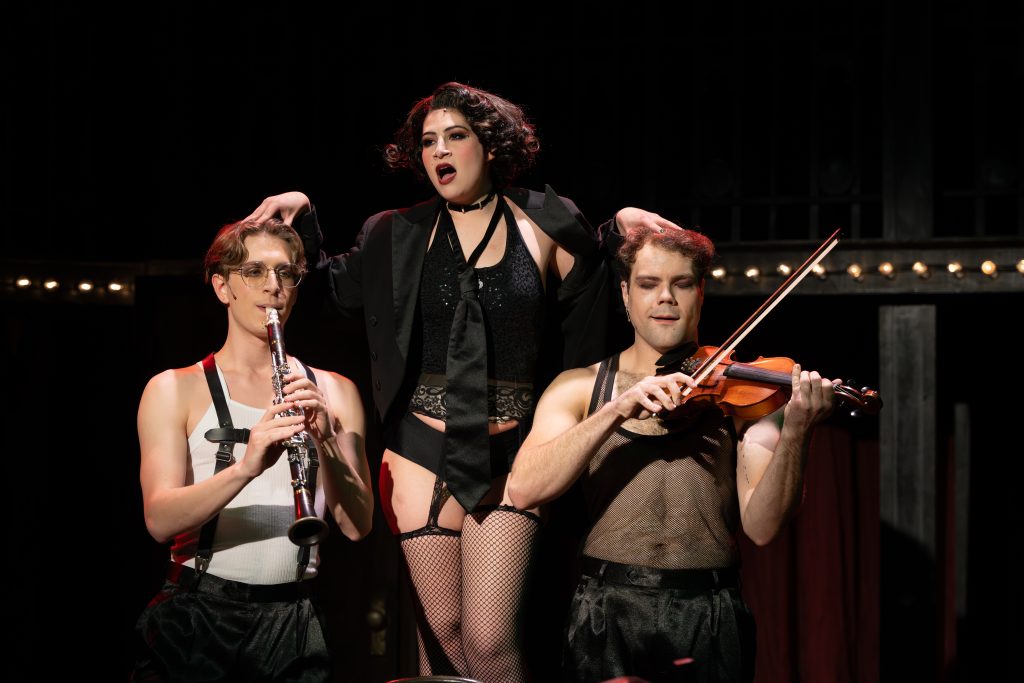
Otto Klemp, Hailey Medrano and Jayson Heil. Photo by Jon Gitchoff.

Music Director Carter Haney conducts the band on stage – Brad Martin on drums, Alerica Anderson on a stand-up bass, and Kris Pineda on accordion and trombone, and their polished presentation is a highlight.

Scenic Designer David Blake’s visually interesting set has a grand balcony implying secretive dalliances behind closed doors while the downstairs doubles as the nightclub stage and both Sally’s and Fraulein Schneider’s shabby living quarters.

Denisse Chavez’s lighting design shrewdly draws us into the action, highlighting the moods, while Justin Smith’s sound design captures the atmosphere.

Hailey Medrano and Dustin Lane Petrillo are strong together as flighty, flirty nightclub singer Sally Bowles and broke American writer Clifford Bradshaw, brought together by fate, desire and living on the edge.

Separately, they are heart-tugging. Petrillo brings a discernable gravitas to every role he tackles, including virtuoso work in “Red,” The Immigrant,” “Hamlet” and “A Long Day’s Journey into Night” on local stages during the past two years.

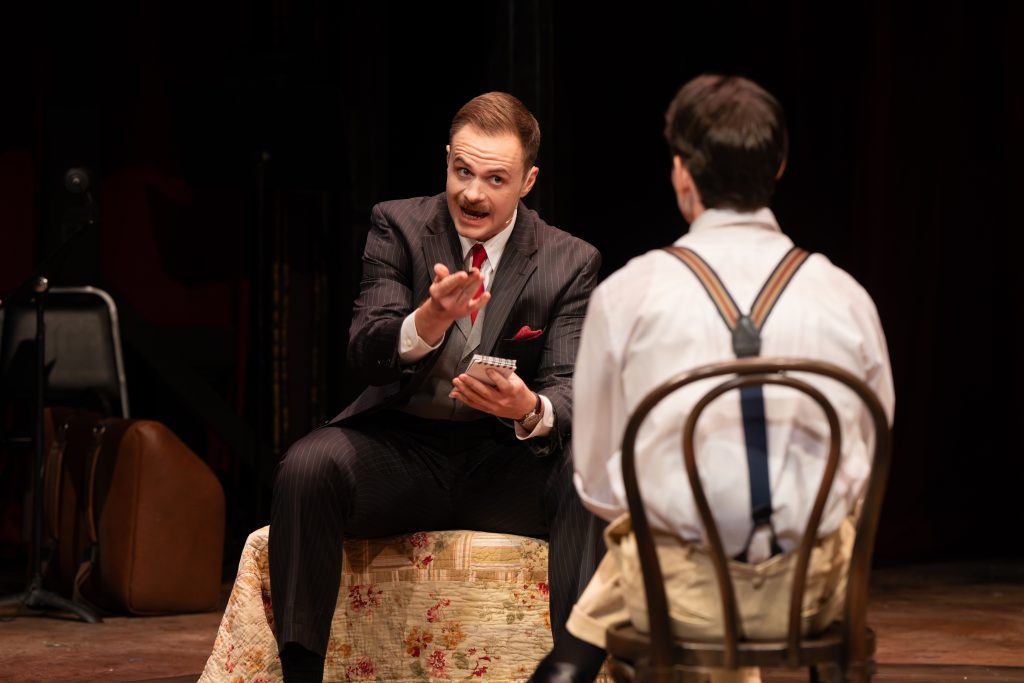
Not as innocent as he first appears, and initially caught up in the whirlwind, Cliff eventually becomes the keen —-and appalled — observer whose conscience can no longer ignore the signs.

Dustin Petrillo, Medrano and Milford. Photo by Jon Gitchoff.

His character is the fictionalized British writer Christopher Isherwood, who would go on to write the semi-autobiographical novel “Goodbye to Berlin.” The musical’s book by Joe Masteroff is based on the 1951 John Van Druten play “I Am a Camera,” which is adapted from Isherwood’s collection of short stories that he wrote between 1930 and 1933, published in 1939.

Medrano, who has returned to St. Louis with memorable turns in NJT’s “We All Fall Down” last year and work with Metro Theater Company, is at her most heart-wrenching when she refuses to leave her reckless livelihood for the safety and promise of a new life.

She makes drastic self-destructive decisions after spending much of the show flaunting her tough exterior that masks an emotional fragility.

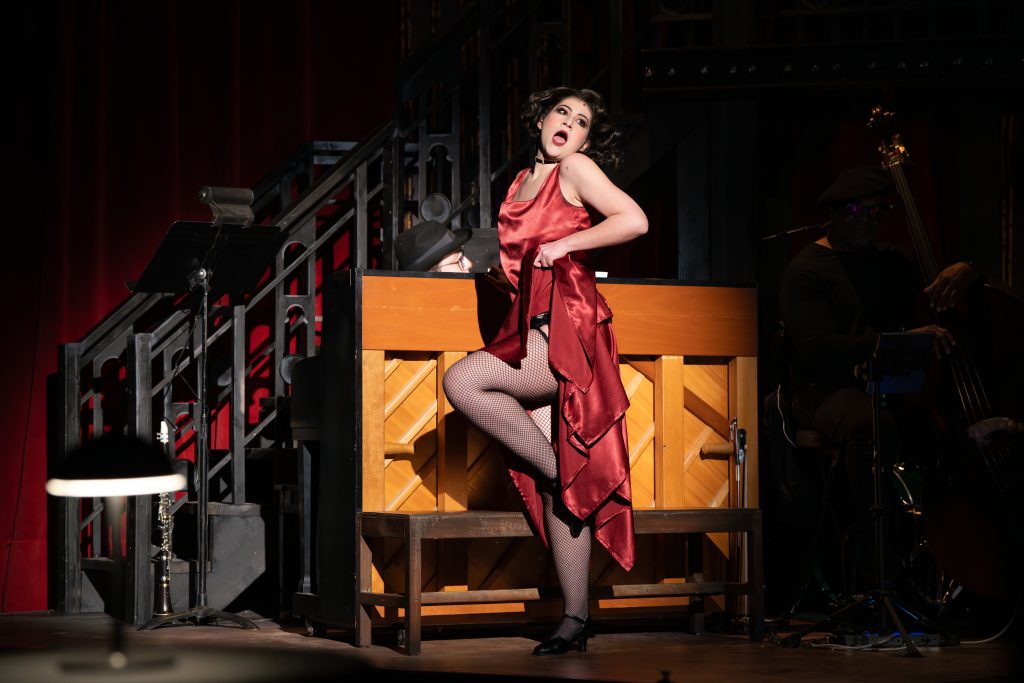
In a smart change of pace, Medrano slows down several classic renditions, boosting their power – the raw, emotional “Maybe This Time” and the title song, aka “Life is a Cabaret” (old chum!) – infused with regret – are both knockouts.

The undercurrent of irony laced with a stinging gut-punch, her anguish seeping through as she breaks. It’s all the more tragic that she chooses to remain oblivious to what’s happening.

Medrano as Sally Bowles. Photo by Jon Gitchoff.

Because Sally is such a confused mess, she is not always sympathetic, but Medrano is alluring when she’s “always on” as Sally Bowles, and tender, for a time, with new love interest Cliff.

In the show’s most devastating performance, Jane Paradise projects world-weariness but also a yearning she hides with pragmatism. The veteran character actress is known for lived-in portrayals and is often the MVP in any ensemble.

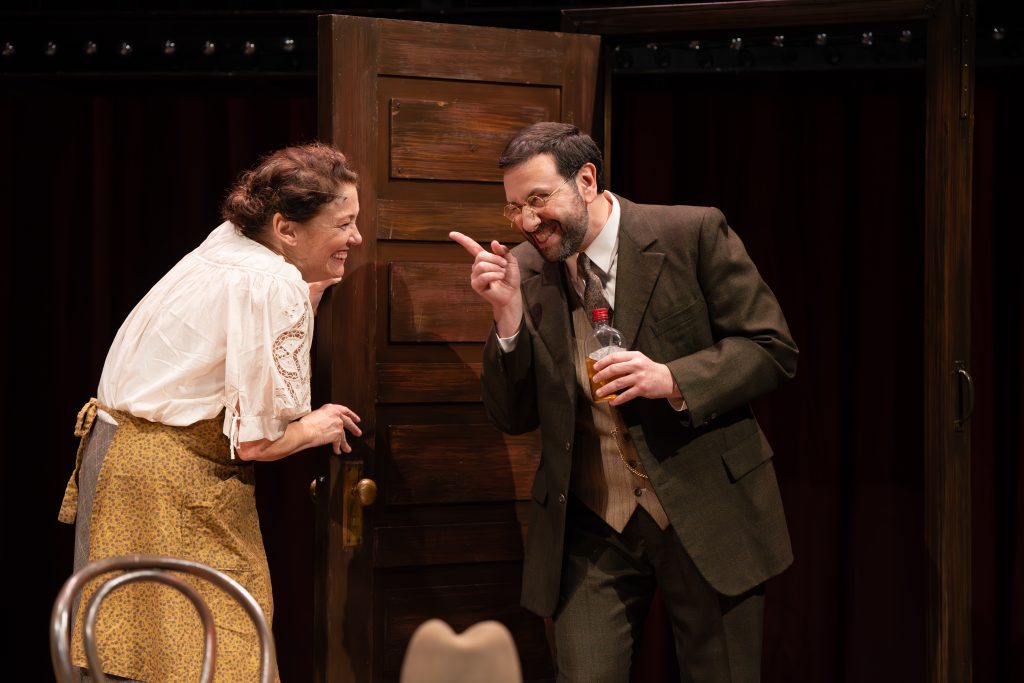
As Fraulein Schneider who discovers late-in-life love, her doomed romance with shy, kind fruit vendor Herr Schultz, played sweetly by Dave Cooperstein, is agonizing, for he is a Jew, and their shared dreams collapse under the weight of current events.

From their joyous duets “The Pineapple Song” and “Married,” to her melancholy “So What” and the tragic “What Would You Do?” are sad reminders of the choices we make and life’s turns, depriving them of even a shred of happiness.

Also standing out is Aaron Fischer as the calculating smuggler Ernst Ludwig, whose growing fervor for the Third Reich is alarming. With an impeccable German accent, Fischer slowly reveals his bigotry. Fischer, fairly new to the professional stage, and splendid in last fall’s “Anastasia: The Musical” at Tesseract Theatre Company, is one of the most exciting performers to keep your eye on.

Aaron Fischer and Petrillo. Photo by Jon Gitchoff.

In fact, John Wilson’s dialect work is superb from all 11 performers. Besides doubling as soldiers and shady characters, the ensemble includes devil-may-care revelers celebrating their hedonistic culture before fear and chaos will grip their world. The nightclub’s naughty boys and girls, and their free-spirited customers live in the moment: Otto Klemp as Bobby, officer, ensemble and on clarinet; Jayson Heil as Victor, Max, ensemble and on violin; Amarachi Kalu as Lulu and on the flute; Caroline Pillow as Fritzie; and Lillian Cooper as Texas and the gorilla.

Costume Designer Michele Friedman Siler expertly incorporated luxurious shiny blacks and reds for the performers, often with torn fishnet stockings, and more middle-class attire for everyone else. Because of doubling characters, costume changes are remarkably smooth.

We won’t forget, we can’t forget the unflinching cautionary tale this enduring musical tells us.

Jane Paradise and Dave Cooperstein. Photo by Jon Gitchoff.

The New Jewish Theatre presents “Cabaret” from March 20 to April 13. Please check for showtimes, as several Wednesday shows have been added as well as an extended run. For mature audiences, the show has adult content. The show runs 2 hours and 15 minutes, with a 15-minute intermission. Performances take place at the SFC Performing Arts Center, 2 Millstone Campus Drive. For more information: jccstl.com. Tickets are available online at newjewishtheatre.org or by phone at 314.442.3283.

NJT’s 2025 Season is generously sponsored by Mary Strauss, with Cabaret receiving additional sponsorship from Stellie Siteman and the Siteman Family Foundation.

Alongside the production, NJT hosts special events that will give the audience a special understanding of the iconic musical:

Saturday, April 5 –The Weimar Republic the Rise of Hitler with Helen Turner

Have a conversation with Helen Turner, Education Director for the St. Louis Kaplan Feldman Holocaust Museum, as she presents information about the Weimar Republic and the real-life historical events that provide the backdrop for Cabaret. This event will take place between the matinee and evening performances on Saturday, April 5. Doors will open at 4:30 with the presentation beginning at 5pm. Light refreshments will be provided. The presentation is free, but reservations are required at https://formstack.io/80312

Photo by Jon Gitchoff.

By Lynn Venhaus

A jubilant celebration of culture, community, and connection, “In the Heights” is a warm embrace emphasizing the meaning of home.

This Stages St. Louis production sizzles with its scrupulous staging and splendid ‘triple-threat’ cast. Director Luis Salgado, whose heart is big as the George Washington Bridge in New York City, makes the show ‘pop’ with his spirited direction and vibrant choreography.

The ensemble makes its mark individually — impressive as personalities but they come together as a whole, with a spark that lights up the stage like Fourth of July fireworks.

From the uplifting title song that introduces the cast, they will quickly endear because of their characters’ devotion to their friends and family, sharing heartwarming stories and creating a tapestry in their little corner of the world.

This version’s brilliant burst of energy is because of Salgado’s inspiration and his unwavering commitment to the musical that began 15 years ago. His effusive motto “Dare to go beyond” is apt here.

As a performer and emerging choreographer, Salgado was involved in the original work – with 118 performances off-Broadway in 2007 and nearly 1,000 on Broadway (2008-2010). He was assistant to three-time Tony winner Andy Blankenbuehler (“In the Heights,” “Hamilton,” “Bandstand”).

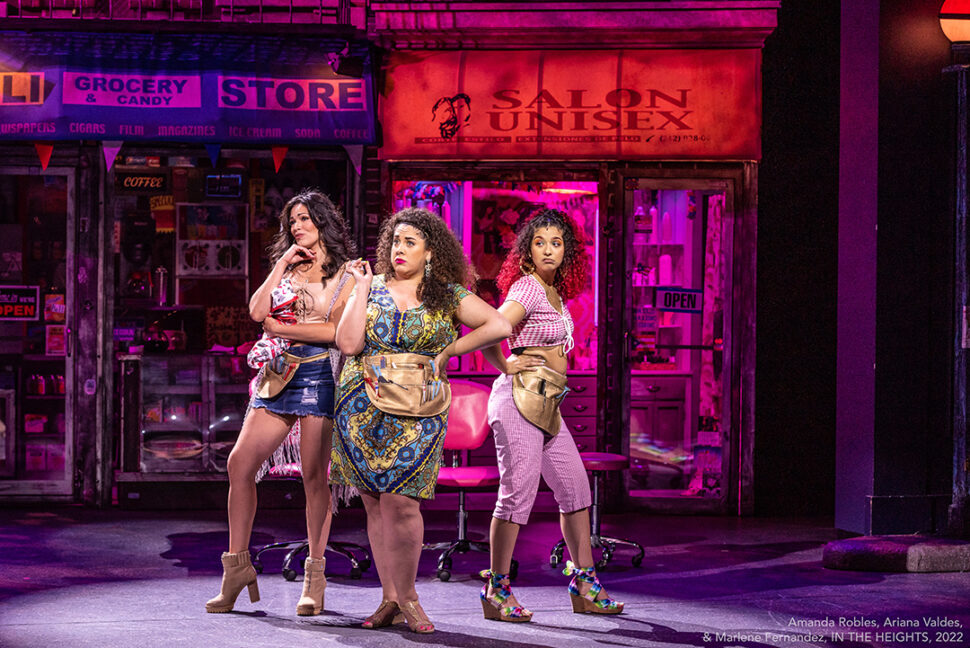
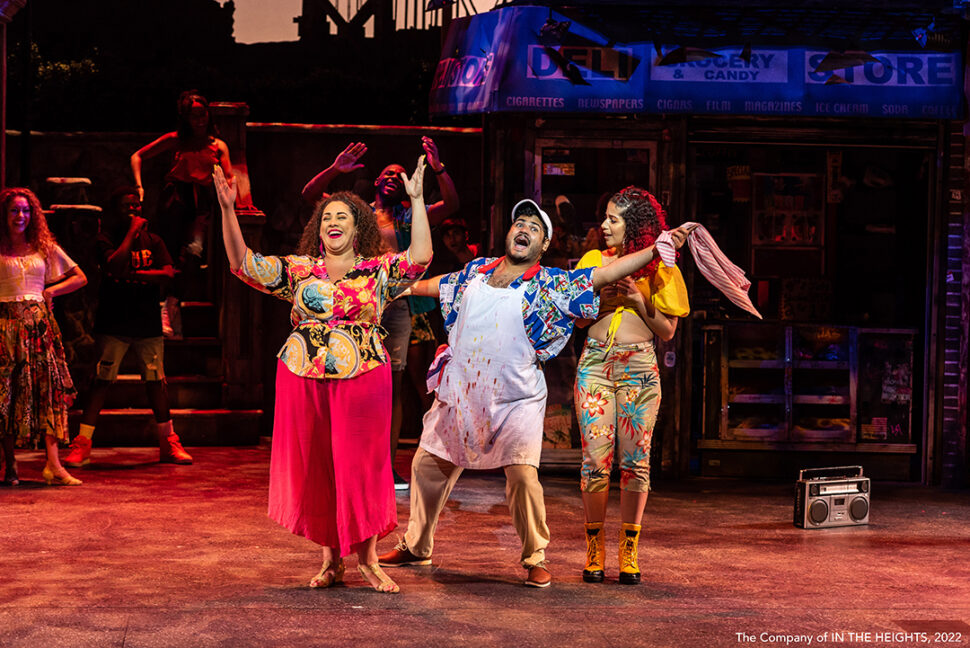
Amanda Robles, Marlene Fernandez and Ariana Valdes. Photo by Phillip Hamer.

Blankenbuehler had brought Salgado on board to give authenticity to the show’s movements and to help bring the creative team’s vision to life. He described Salgado as “passionate” and “inventive.”

Their mutual admiration society has resulted in Salgado using Blankenbuehler’s original choreography on the sensational ensemble numbers “In the Heights,” “96,000,” “Blackout” and “Finale.”

However, Salgado isn’t the only original connection involved at Stages.

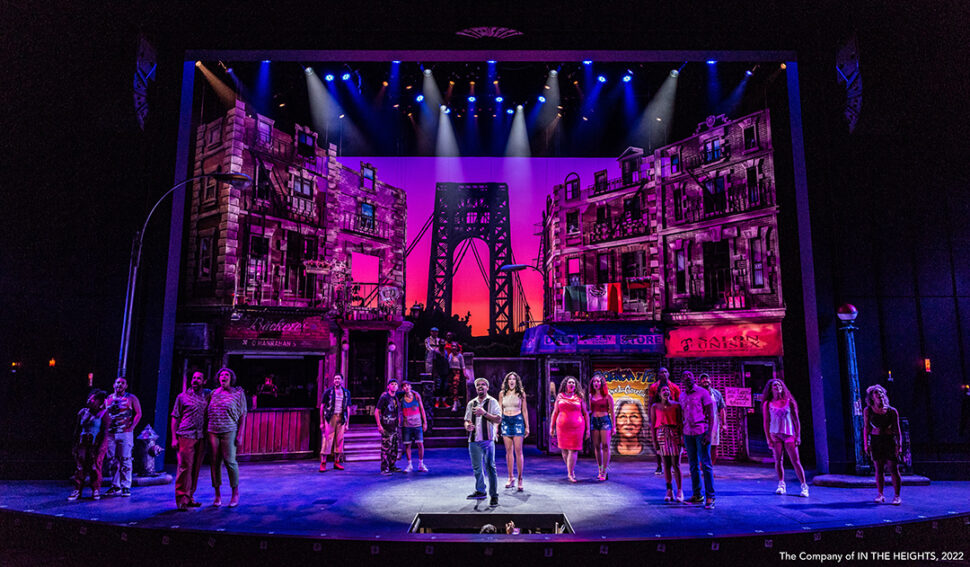
Anna Louizos, Tony nominee for the show’s scenic design, designed the Ross Family Theatre’s richly textured set, creating the Washington Heights neighborhood that comes alive in a stunning recreation inside the Kirkwood Performing Arts Center.

This is an ideal setting for such an exuberant group sharing their hopes while struggling with everyday realities. “In the Heights” takes place over the course of three days, during a blistering summer heat wave in the barrio, which is on the brink of change.

Creator of the historic and cultural phenomenon “Hamilton,” Lin-Manuel Miranda’s first Tony-winning musical in 2009 was special because it had a specific sense of place and resonated with a universal story about people chasing their dreams.

Manuel honored his Latin heritage and cultural traditions as an American whose parents came from Puerto Rico, growing up in Washington Heights (where he still lives). He included the Dominican Republic, Cuba, Mexico, and Caribbean Islands as origins, too.

The pulsating score is a hybrid of Latin, urban, hip-hop and salsa beats but also features touching ballads. Miranda was the first composer to put hip-hop lyrics in a Broadway show — and the youngest to win the Tony for Best Music Score in 2009.

Ryan Alvarado grew on me as the hard-working, good-hearted Usnavi de la Vega, the owner of a local bodega who dreams of selling the store and moving to a tropical place where he feels he can be happy. He’s the lynchpin to all the action swirling around him.

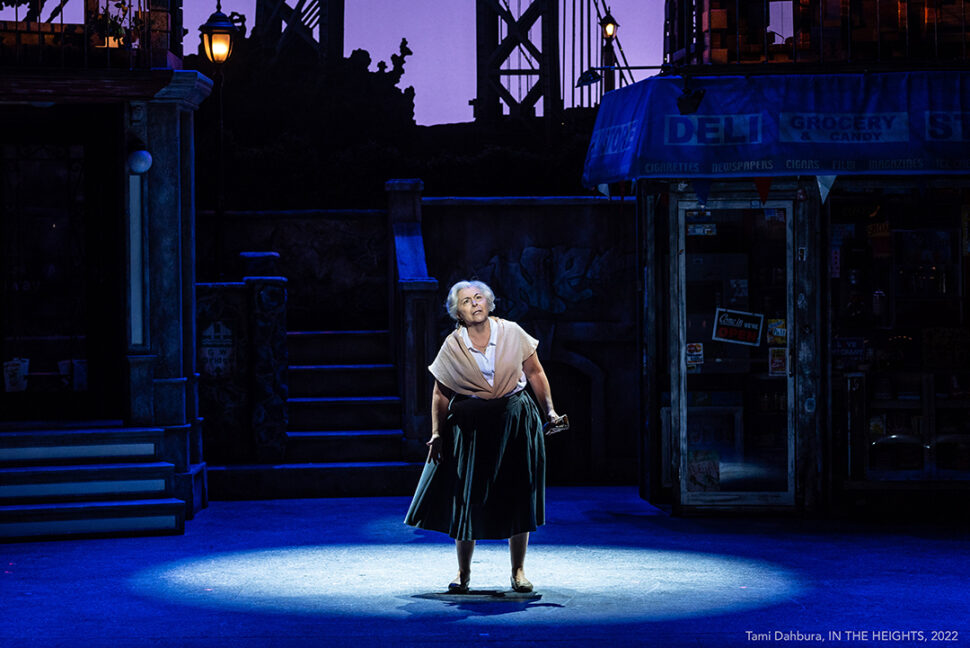
Tami Dahbura as Abuela Claudia. Photo by Phillip Hamer.

His confidante, Abuela Claudia, who dispenses advice – and love – to the neighborhood denizens, is the heart and soul of the show, and Tami Dahbura stood out in her heart-tugging numbers, “Paciencia y Fe” (Patience and Faith) and “Hundreds of Stories.”

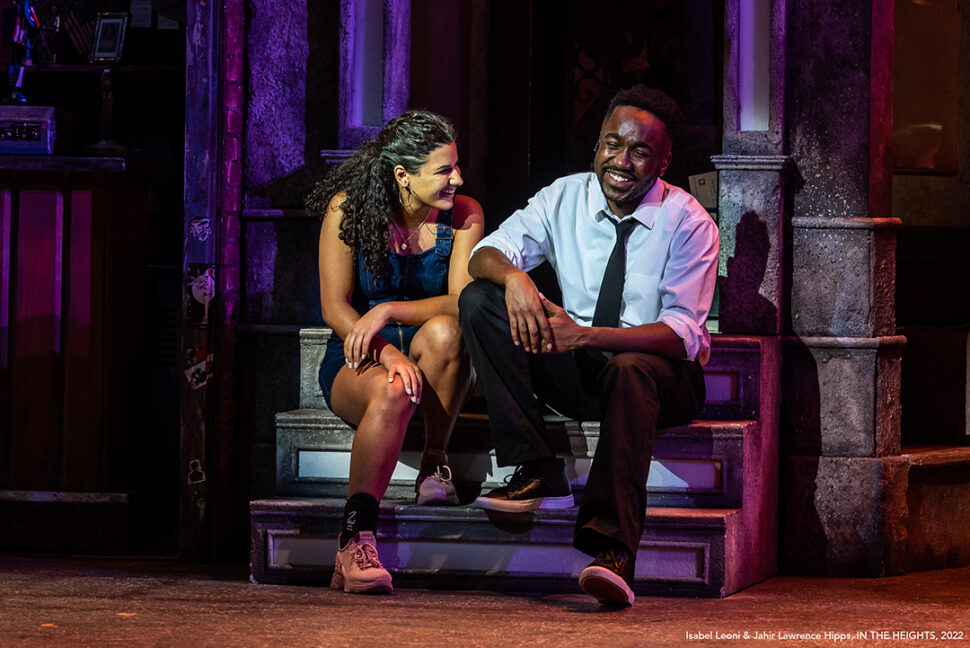
Isabel Leoni as Nina and Amanda Robles as Vanessa are high points, showcasing their outstanding voices. You feel a connection with their characterizations immediately.

Nina, the golden girl who landed a scholarship at Stanford University, was a role model for many but now she is disappointed with herself and feels she let everyone down. She delivers a poignant “Breathe” and a sentimental tribute “Everything I Know” with much passion.

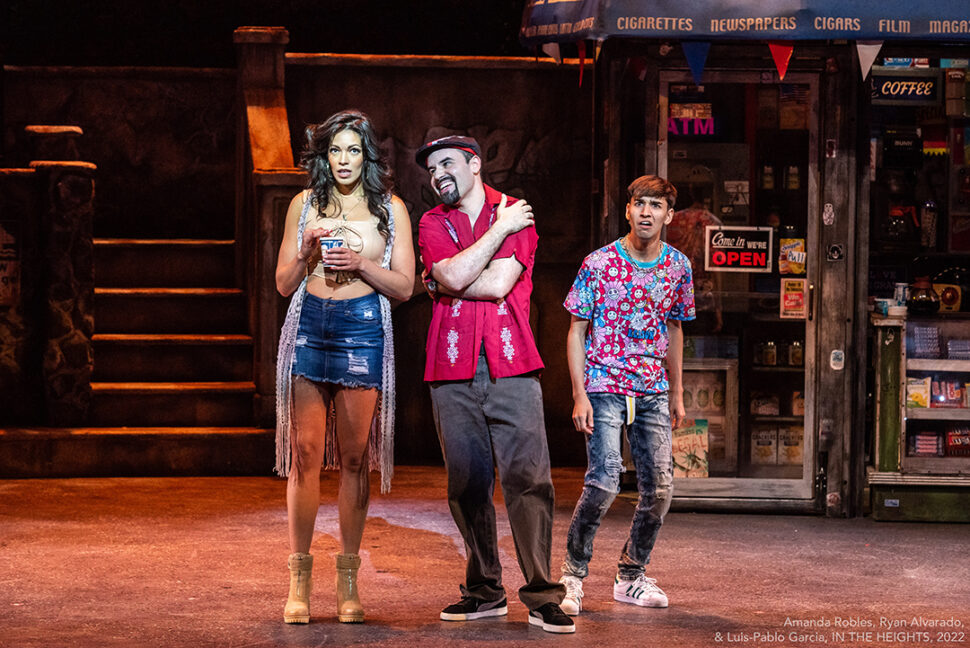
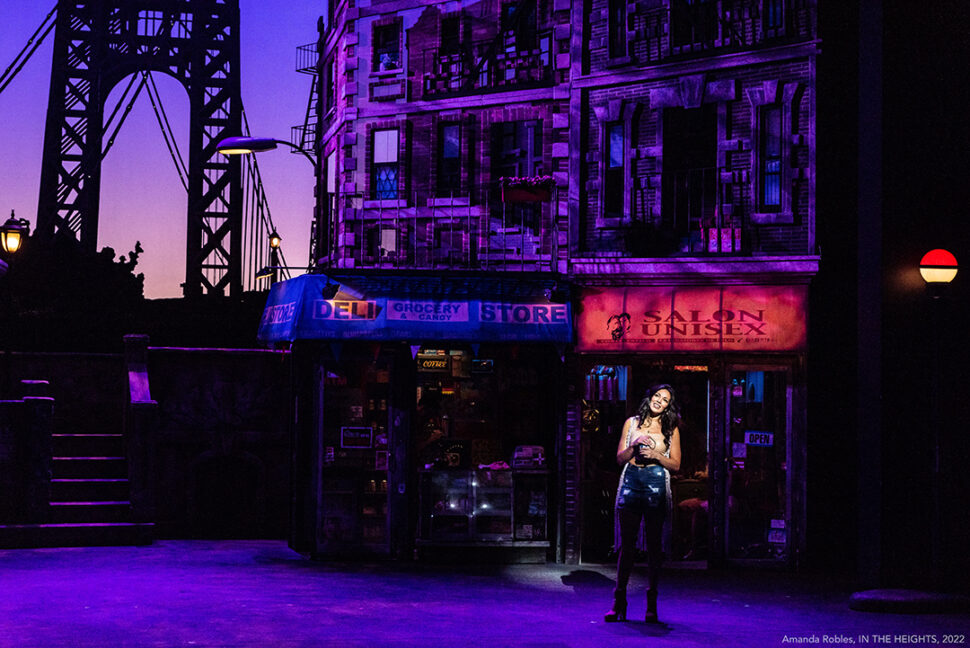
Usnavi’s crush, hairdresser Vanessa, is someone who sees moving to Manhattan as a steppingstone to a better life. Robles soars in “It Won’t Be Long Now,” joined by Alvarado, who clearly wears his heart on his sleeve, and the whirlwind Luis-Pablo Garcia as his cousin Sonny.

Robles, Alvarado, Garcia. Photo by Phillip Hamer.

While the robust and oh-so-catchy “96,000” is Usnavi’s big number dreaming about winning the lottery, Robles shines in her part. Closer to the finale, Robles and Alvarado have sweet, tender and funny moments in “Champagne.”

The most moving song of all is “Alabanza” (Praise) in honor of Abuela Claudia, such love and respect expressed. It just may bring a tear to your eye.

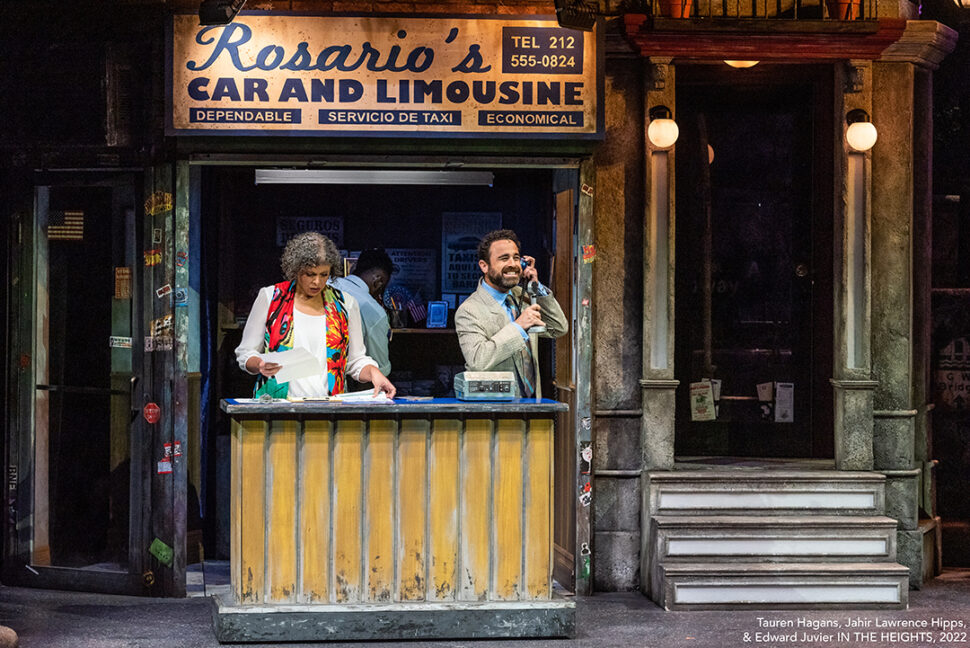
Quiara Alegría Hudes wrote the musical’s original book, and it’s noteworthy regarding all the strong women role models, including Camila, Kevin’s wife and partner in a car service business, in addition to Abuela Claudia, Nina, Vanessa, hairdresser Carla and salon owner Daniela.

Tauren Hagans excels in her two solo numbers “Siempre” (Always) and “Enough” as Nina’s strong mom Camila, and the four younger women have fun with “No Me Diga” (You Don’t Say!).

 Jahir Lawrence Hipps is impressive as Benny, who works for Nina’s intense dad Kevin (Edward Juvier). But when he falls in love with Nina, that’s another story.

Leoni and Hipps. Photo by Phillip Hamer.

The duets featuring Hipps and Leoni are lovely – especially “When the Sun Goes Down” and they superbly lead the company on “When You’re Home” and “Sunrise.”

Juvier, a Stages veteran, with a St. Louis Theater Circle Award for Outstanding Supporting Actor in a Musical for “The Drowsy Chaperone” in 2017 and a nominee in “My Fair Lady” in 2014, was Bob Crewe in “Jersey Boys” last summer.

As the demanding dad Kevin, he showcases his vocal prowess in “Inutil” (Useless) and “Atencion” (Attention).

Comical relief is welcome when crowd-pleasers Cristian Rodriguez as Graffiti Pete and Michael Schimmele as Piragua Guy are on stage, as well as the salon’s Carla, firecracker Marlene Fernandez, and Ariana Valdes as the animated owner Daniela, who leads the buoyant “Carnaval del Barrio” (Neighborhood Carnival).

Fernandez, Schimmele and Valdes. Photo by Phillip Hamer.

And Garcia, who was memorable as Freddy in “The Karate Kid – The Musical,” is in a league of his own, as cheerful chatterbox Sonny, stealing practically every scene he’s in, eliciting laughs every time he’s on stage.

The sprightly ensemble includes Tavis Kordell Cunningham, Mauricio Villanueva Espinosa, Carmen Guynn, Sarah Hampton, Paola Hernandez, Karma Jenkins, Ricco Martin Jr., Jovany Ramirez, Joey Rosario and Carlita Victoria.

Music Director Walter “Bobby” McCoy keeps the tempo lively and brings out the emotional sincerity in the ballads, using the arrangements and orchestrations of Tony winner Alex Lacamoire and Bill Sherman.

As the conductor and a keyboard player, McCoy has a dynamic orchestra that flavors the Latin score with their expert musicianship in strings, woodwinds, brass, and percussion. Trumpet player Chris Miller brings such a great sound to “The Club/Fireworks” while the percussion’s driving beat is such a treat. Ovations for McCoy, Miller, associate music director and bass Alerica Anderson, Sean Andrews on second keyboard, Travis Mattison on guitar, Lea Gerdes on reeds, Evan Palmer on trombone, Charles “Chuck” Smotherson on drums and Peter Gunn on percussion.

Hagans and Juvier. Photo by Phillip Hamer.

Bethany “Beef” Gratz’s sound design is exceptional — smooth and crystal-clear, capturing not only three generations of rhythms but the ambiance of the neighborhood.

Costume Designer Brad Musgrove outfits the vivacious residents in casual, colorful summertime attire, with a few dress-up glam looks, while Sean M. Savoie’s lighting design is a striking enhancement on the day’s progression and the nighttime worries. 

Salgado’s joy regarding the material infuses the entire production, as he moves things at a vigorous pace from well-staged big numbers to intimate emotional scenes. Special mention to assistant director and associate choreographer Bryan Ernesto Menjivar and dance captain Megan Elyse Fulmer, for this show is a terrific example of teamwork and collaboration.

This uplifting show had me on my feet and humming the songs afterwards, putting the cast album back on rotation at home. If anything can change a mood, it is this 23-song collection and this exciting ensemble that aims for the heart and has us at “Hola!”

Amanda Robles as Vanessa. Photo by Phillip Hamer.

Stages St. Louis presents “In the Heights” from July 22 to Aug. 21 at the Kirkwood Performing Arts Center in Kirkwood, Mo. Performances take place in the Ross Family Theatre. For more information: www.stagesstlouis.org

Photo by Phillip Hamer