
By Alex McPherson

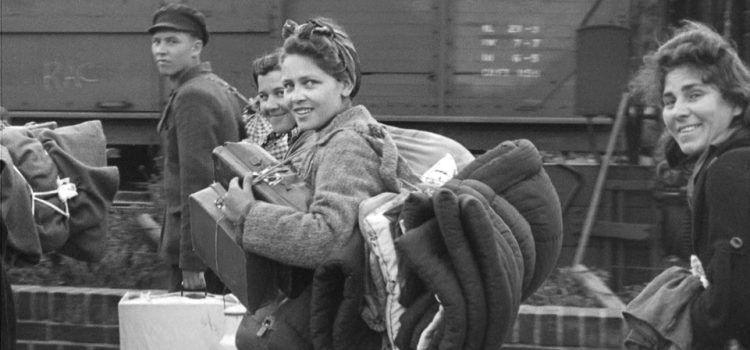
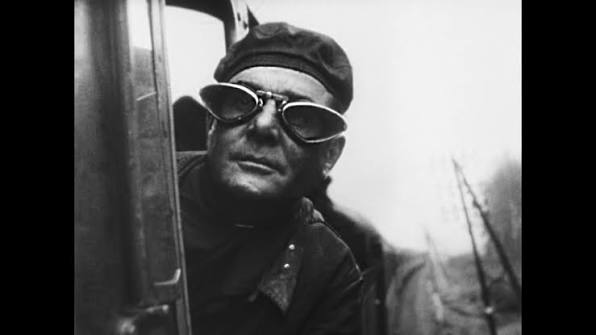
Measured but pulsing with suspense, Ukrainian writer/director Sergei Loznitsa’s riveting new film “Two Prosecutors” underscores the all-seeing shadow of fascism in 1937 USSR while remaining scarily relevant today.

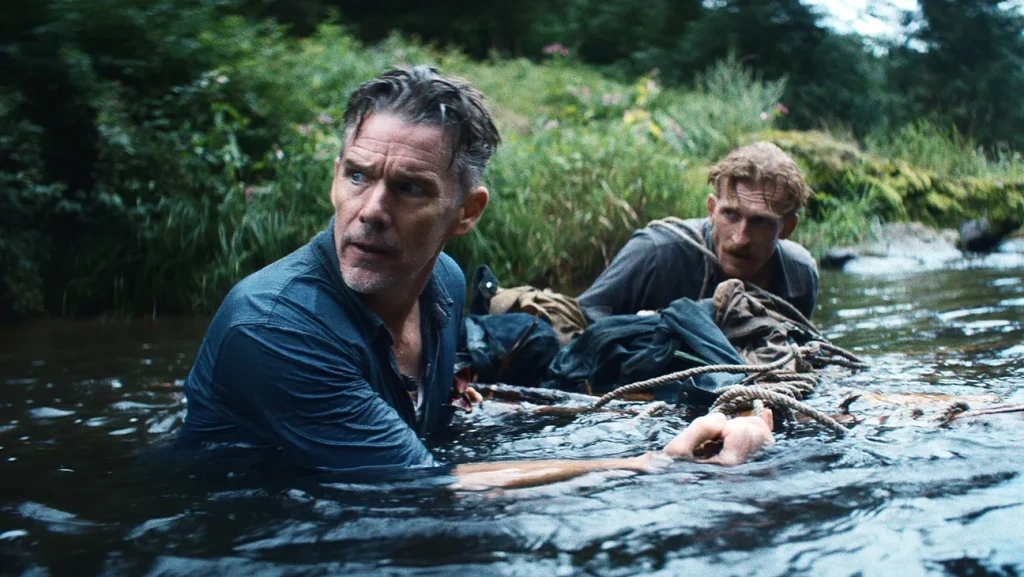
Based on a story by the Soviet dissident and physicist Gyorgy Demidov, the film takes place during Stalin’s Great Purge and revolves around Kornyev (Aleksandr Kuznetsov), a young prosecutor fresh out of law school who truly believes in the sanctity of the law. Kornyev’s idealism blinds him to the systemic conspiracies surrounding him.

One day, Kornyev receives a note scribbled in blood alleging abuse by the NKVD (Stalin’s secret police) from a “counter-revolutionary” inmate named Stepniak (Aleksandr Filippenko), who is being held in a prison in Bryansk. Stepniak’s note was miraculously smuggled out by an elderly prison laborer tasked with burning letters, and it wound up in his office.

Kornyev takes it upon himself to investigate, hoping to bring those culpable to justice, unaware of the jeopardy he’s putting himself in.

Upon arriving at the compound, which is layered with a never-ending series of locked doors, cramped hallways, and death-glare guards, Kornyev is uneasy but deadset in his mission to talk to Stepniak. He’s willing to wait alone in a room for hours and overlook not-so-subtle hints from prison officials that he’d better watch his back.

After finally getting access to Stepniak and hearing his story, Kornyev is emboldened to seek justice. He fully believes that higher-ups will want to hear the truth, ignorant of the fact that his government is, indeed, rotten to its very core.

Suffice to say, Kornyev’s mission doesn’t go according to plan. With a patient approach that ratches up tension, and fateful inevitability, by the second, “Two Prosecutors” paints a fable-like portrait of a society in the throes of totalitarian power. Our protagonist is always being watched and judged as an invading force to be put down.

Loznitsa also interrogates just how useful a legalistic approach is to counter the horror — wryly critiquing Kornyev’s stubborn insistence on following procedure when the law has been thrown to the wind. Even when Kornyev leaves the Bryansk prison, he never really leaves; walls of eyes surveille him wherever he goes.

“Two Prosecutors” takes its time, letting us sit and breathe in the harrowing situations Kornyev finds himself in. Whole conversations take place nonverbally: silent battles waged in stares and body language, dare Kornyev to back off and look the other way. Equally as frequent are trials of patience, where Kornyev is forced to wade through soul-crushing bureaucracy to an almost Kafkaesque degree. 

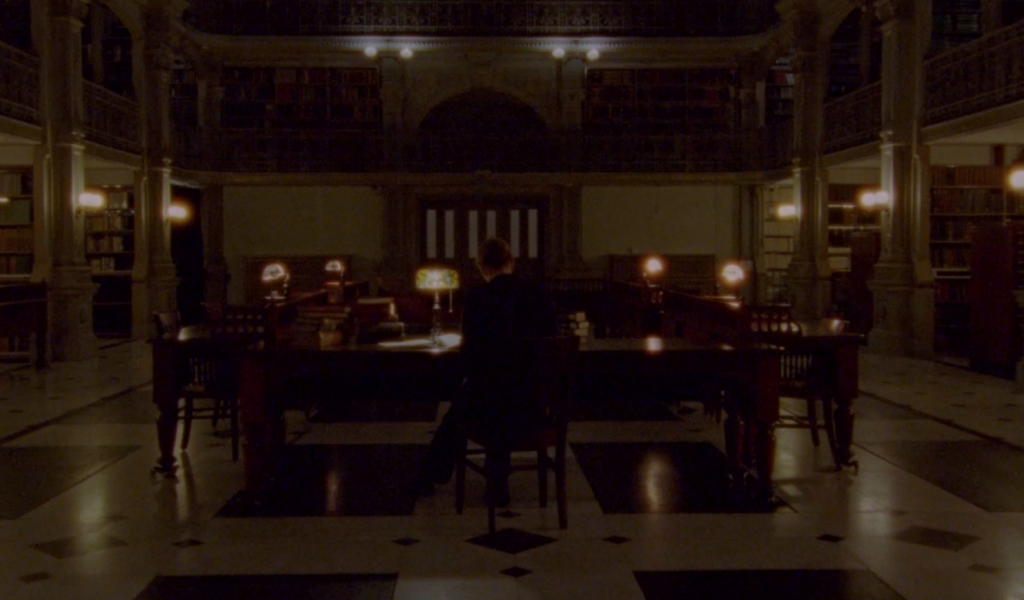
It’s to Loznitsa and cinematographer Oleg Mutu’s credit that the film is eminently watchable and incredibly suspenseful. We can immerse ourselves in the starkly still, desaturated tableaus, which sometimes resemble a stage-play, and experience the doomed clock ticking along with Kornyev in real-time.

The film’s ensemble is uniformly excellent, with Kuznetsov giving his admirably flawed character equal parts dignity and face-palming frustration. Kornyev ignores clues that are right in front of him while remaining steadfast in his beliefs of right and wrong, and who he assumes is on which side of the scale.

In this sense, Kornyev is a maddeningly flawed character that we desperately want to “wake up”; but his faith in government also reflects a deep-seated optimism that nobly counters the society, and film, that he’s a piece of. Many of the actors actually fled Russia following Putin’s 2022 invasion of Ukraine.

“Two Prosecutors” is a coldly engrossing watch. Its intense focus on the here-and-now and economical storytelling doesn’t bog us down in historical dumps or convoluted plotting.

Loznitsa’s film is quietly unrelenting — celebrating Kornyev’s determination while mocking his naivete (partially through some weirdly buoyant musical interludes); he’s existing within a dystopian system that cannot simply be dismantled by “doing the right thing.” 

Loznitsa paints obvious parallels to modern times, if we’re willing to look, and “Two Prosecutors” shouldn’t be missed.

“Two Prosecutors” is a 2025 legal thriller from Ukranian director Sergei Loznitsa and run time is 1 hour, 58 minutes. It plays Friday through Sunday, May 8-10, as part of the Webster University Film Series, which takes place om the Winifred Moore Auditorium, Webster Hall, 470 E. Lockwood, Webster Groves, MO 63119. Alex’s Grade: A

By Alex McPherson

Stunning, beguiling, and wholeheartedly its own thing, director David Lowery’s “Mother Mary” is a polarizing experience where pretentiousness is part of the charm.

This gothic-horror-romance-pop-song-chamber-drama follows the titular Mother Mary (Anne Hathaway), a world-famous, Taylor-Swift-adjacent popstar preparing a comeback tour after she experiences a harrowing onstage accident that we get a split-second glimpse of in the film’s opening moments.

Mary is exhausted and a hollowed-out shell of her former self. She has a panic attack during a costume fitting and rushes to the English countryside to make a surprise visit to her former best friend and costume designer Sam Anselm (Michaela Coel). Sam harbors palpable resentment after being ghosted (no pun intended) 10 years ago. 

Mary is desperate for Sam to make her a dress for the tour so she can “be herself” and find “clarity.” Sam — with a prickly, slyly wolfish demeanor — agrees to take on the challenge. She also sees an opportunity for Mary to address past wrongs in their professional and personal relationship.

Within a foreboding barn-turned-workshop, Sam and Mary get to work, with Sam gradually unspooling years of resentment. Social niceties give way to daggers (and scissors) as the two confront the end of their creative partnership:

Sam’s tireless work to support Mary’s celebrity persona has largely gone unrecognized; the pressures of fame and of constantly being in the spotlight have taken a massive toll on Mary’s psyche and eroded her sense of self. Still, there’s work to be done and a deadline to meet. At least, until things get trippily metaphysical.

Yep, this is definitely a film by the director of “The Green Knight” and “A Ghost Story.” It floats along on its own visually astounding wavelength that never loosens its grip on its insistence for weirdness.

“Mother Mary” is ultimately a difficult experience to pin down — unimpeachable in its craft elements and its central performances, but strangely simplistic in what the narrative boils down to: a whole lot of stylistic extravagance for a story whose emotional beats feel oddly schematic.

Still, Lowery’s latest is a bizarre experience made with such conviction that even when the story’s reach exceeds its grasp, the mesmerizing, phantasmagorical, genre-bending style never loses its impact. “Mother Mary” demands to be watched on the big screen.

It’s filled with gorgeous costumes, eardrum-busting concert numbers (featuring songs by Jack Antonoff, Charli XCX, and FKA Twigs), intensely intimate drama, gnarly horror, and spectral beauty, where the past elegantly blends with the present. 

The shadow-drenched barn becomes a portal to Mary and Sam’s history and imaginations, where their spiritual connection to each other is realized in ways both deeply earnest and unnerving. “Mother Mary” renders the force between the women literal as they each grapple with the weights of their connection and regrets; Daniel Hart’s score’s pulsing bass resembles a beating heart.

Hathaway and Coel are wholly up for Lowery’s wild swings, with Coel in particular commanding her every second onscreen. Cinematographers Rina Yang and Andrew Droz Palermo often frame her in close-up;

Coel’s face almost seems alien at times, her character’s sharp features, deep voice, and acid tongue intimidating and imposing (and sometimes darkly funny), although Sam herself is a heartbroken soul searching desperately for closure. 

Hathaway gives an equally excellent performance as the tormented celebrity. We see the years of expectations and regrets weighing her down, and her embracing a completely different persona onstage amid blinding lights and screaming fans.

One of the film’s best sequences involves Mary showing Sam her dance routine without music — monstrous and animalistic, hinting at the film’s increasingly supernatural influences.

It’s frustrating that “Mother Mary” doesn’t make the characters’ journeys quite as resonant. Indeed, while the film is – mostly – enigmatic to its benefit, Mary and Sam are too thinly-sketched as characters for their relationship to have the emotional thrust “Mother Mary” insists it does.

The main appeal is seeing just what elaborately hallucinatory set-piece Lowery has in store next, rather than investment in their (bluntly-spelled-out) inner battles. The film is so sincere, so earnest, about matters of the heart, but it opts for spectacle, which betrays the more nuanced drama that would truly let viewers into Mary and Sam’s worlds.

So, “Mother Mary” is a bit of a mixed bag, albeit one that deserves to be celebrated nevertheless — creativity and eccentricity like this should be supported, whether or not it fully lands. It’s a beautiful mess.

“Mother Mary” is a 2026 dramatic music thriller written and directed by David Lowery starring Anne Hathaway, Michaela Coel, Kaia Gerber, Hunter Schafer. and FKA twigs,, Its runtime is 1 hour, 52 minutes, and it is rated R for some violent content and language. It opened in theatres April 24. Alex’s Grade: B+.

By Alex McPherson

Sharp, spare, and icy to the touch, director Radu Jude’s latest indictment of modern society, “Kontinental ‘25” confronts complicity and learned helplessness within a crumbling world.

Jude’s film, which takes place in modern-day Cluj-Napoca in Northwest Romania, opens in a forested park exhibit featuring animatronic dinosaurs. The unhoused Ion (Gabriel Spahiu) scrounges for scraps of food, muttering obscenities.

Wandering around the rapidly gentrifying city looking for work, and largely being met with disdain from the populace, Ion (who used to be a famous Romanian Olympic athlete before becoming injured) is losing hope. He has been squatting in the boiler room of a building that’s slated to be torn down and replaced with a hotel called the Kontinental Boutique.

Orsolya (Eszter Tompa) is well-off, married-with-children, and working as a bailiff — she’s also Hungarian, which brings with it a bunch of cultural baggage. She is set to evict Ion from the premises with the help of her ready-for-action “ninja turtles” gendarmes.

Clearly enjoying the power she has over Ion as she informs him of his imminent eviction, she gives him 20 minutes to pack his things. Ion then kills himself. Orsolya is shocked. 

Even though she constantly reminds herself and everyone she talks to that she didn’t do anything “illegal,” Orsolya feels responsible for Ion’s death. She’s forced to face reality head-on, or, at least, mope around Cluj-Napoka looking for reassurance from coworkers, friends, and family while her husband and children go on vacation.

It’s a bleak premise, rendered in darkly comic fashion, with a lead character who’s equal parts maddening and relatable as she grows increasingly desperate to soothe her guilty conscience. Thanks to Jude’s characteristically provocative and gutting eye, “Kontinental ‘25” takes aim at not only Orsolya’s hypocrisies but also our own. A

fter all, Jude posits, we are inhabitants of this doomed planet, going about our days distracting ourselves from horrors many believe are out of our control.

These are happy days, indeed, brought to life as Orsolya’s psychological wounds are papered over with self-serving arguments that prize comfort over actual reflection. Meanwhile, gentrification, economic inequality, and deep-seated prejudice run rampant throughout Cluj-Napoca. History is rewritten by the “victors,” as wars rage across the globe.

Jude, whose previous films include “Dracula,” “Do Not Expect Too Much From the End of the World,” and “Bad Luck Banging or Loony Porn,” is unafraid to go for it and lean into his indulgences to show just how crazy modern life has become. “Kontinental ‘25” is no less fierce and biting at its core, but Jude takes a more social-realist approach this time around. 

Jude eschews stylistic extravagance for a stark approach that refuses to give Orsolya a heroic arc or distract from the main ideas at play — his anger and judgment practically seep off the screen. “Kontinental ‘25” is still full of acerbic wit and I-can’t-believe-they-just-said-that surprise, but the overall effect is a feeling of “tragedy of cruelty,” of how the status quo persists as time marches on.

That’s not to say the film isn’t also funny in a squirm-inducing way. “Kontinental ‘25” finds blunt ridiculousness in the matter-of-fact detachment of Orsolya’s interactions; each illuminates different ways of coping with her guilt and feelings of powerlessness.

The screenplay here is biting, harsh, and deadpan, with most conversations filmed in long-takes that let us marinate in uncomfortable silences and give us ample time to put ourselves in Orsolya’s shoes and reflect on our own place in the world. 

Do we donate to organizations about causes we care about in order to feel better about ourselves, or to actually make a difference? Do we let our prejudices and religious beliefs excuse happenings as inevitable? Do we indulge in drugs and alcohol to distract ourselves from our problems and avoid accountability? These are all questions that Orsolya grapples with, yet she is  never quite able to assuage her existential dread or “redeem” herself.

In Orsolya’s state of perpetual stasis, “Kontinental ‘25” can sometimes feel as if it’s spinning its gears along with her. The film is less a forward-moving narrative than a series of vignettes building towards, fittingly, not much at all in terms of her character. 

But Jude knows what really matters here, spending the first 20 minutes of the film solely with Ion, and ending with a heartbreaking montage of the transformation of Cluj-Napoka’s landscape. It’s the ever-present march of “development” at the expense of the vulnerable; an increasingly fragmented community that still resides under the same flag. This quietly powerful conclusion stands in contrast to the mostly empty language of the rest of the film, wordlessly conveying tragedy that will take large-scale action to reform.

Jude’s film is still definitely not for everyone; the mixture of nihilism and humanism is unusual, to say the least. It’s still a rich, confrontational text that leaves a nasty sting.

“Kontinental ’25” is a 2025 comedy drama from Romania, directed by Radu Jude and starring Eszter Tompa, Gabriel Spahiu, Adonis Tanta, Oana Mardare, and Annamaria Biluska. It is 1 hour, 49 minutes long. It was released in the U.S. on April 3. The film will play at the Webster University Film Series April 17-19. Alex’s Grade: A-.

By Alex McPherson

Playful and excoriating in equal measure, director Igor Bezinović’s documentary “Fiume o Morte!” (Fiume or Death!) examines the absurdity, horror, and sobering legacy of fascism, presenting an irreverent reframing of place and history that gives power back to the people.

Bezinović’s film takes place in his hometown of Rijeka, Croatia, a port on the Adriatic about 50 miles from Italy, with a tumultuous history. The city, once known as Fiume, was ruled by the Hapsburgs during World War I. After the War ended, it was left under the control of Yugoslavia, not Italy. This surprised many, including the vainglorious Italian aristocrat, poet, drug addict, womanizer, and army officer Gabriele D’Annunzio (a friend and inspiration for the young Benito Mussolini). 

In 1919, fueled by vanity and nationalism, D’Annunzio led an insurgency with 186 unemployed and hate-filled “legionaries” to occupy the city and claim it as an independent, pro-Italy city-state with himself as its supreme ruler. D’Annunzio’s leadership didn’t last long; he was forced out of power by none other than Italy itself in 1920. 

Bezinović aims to reckon with D’Annunzio’s complicated legacy on both sides of the Italo-Croatian border with “Fiume o Morte!” He also, just as importantly, cuts the failed despot down to size. 

Walking through a vibrant farmer’s market in present-day Rijeka, Bezinović asks passers-by whether they know who the man was — some have no idea, others are quick to label D’Annunzio a fascist, and others aren’t willing to make such sweeping statements, noting that he was also a “great poet and lover.” 

Bezinović reveals that he’s making a film about D’Annunzio’s coup, and he hires non-actor residents of Rijeka (including plumbers, musicians, and professors, some recruited directly from that farmers market, and at least one pet dog) to play every role and provide the film’s dry-humored narration, with several bald men recruited to play the (in)famously hairless D’Annunzio.

The historical reenactments themselves (which take up the bulk of “Fiume o Morte!”) treat D’Annunzio with the respect he deserves – that is, none at all. Performed with period-accurate costumes, keen attention to framing (Gregor Božič’s cinematography is beautiful), and a limited budget encouraging bucketloads of mocking comedy, Bezinović replicates scenes and tableaus from thousands of photographs and video footage documenting D’Annunzio’s “heroic” coup with a winking, anachronistic twist.

“Fiume o Morte!” jumps back-and-forth between these “grandiose” historical documents and a considerably less impressive present. The goofy yet faithful reenactments (in the same locations) seem out of place within the colorful hustle and bustle of modern-day Rijeka.

A photo of D’Annunzio speechifying before hundreds of onlookers turns into an aged non-actor revealed (via a slow zoom-out) to be speaking to an audience of two family members. A high-stakes meeting between generals concludes with D’Annunzio walking uphill to play rock music with his band as trucks leisurely drive by on their way to storm the city.

Some photos and videos — like a sword-wielding D’Annunzio posing naked draped with the Fiume flag, or homoerotic revelry on the beach with his unemployed legionaries — barely need exaggeration at all in the present-day. Sometimes onlookers stop to take pictures, others essentially ask “What the Hell are you doing?”

The reenactments are absurd and satisfyingly savage, emphasizing the ridiculousness of D’Annunzio’s occupation and putting his story in the hands of the community he attempted to suppress; a violent past juxtaposed by a resilient present that has endured and, as Bezinović keenly points out, is still grappling with D’Annunzio’s legacy and broader society’s continued cozying up to his fascist ideals.

Indeed, although “Fiume o Morte!” is often a breezy, immensely enjoyable viewing experience (particularly charming when narration highlights the backgrounds of each featured member of the ensemble), Bezinović never loses sight of the barbarity of D’Annunzio’s self-imposed mission, and the consequences of his violently prejudiced enterprise that helped pave the way for Kristallnacht. 

Bezinović is selective about what he chooses to recreate, in certain moments relying entirely on historical artifacts instead of reenactments to drive home the oppressiveness of D’Annunzio’s rule and the tragic consequences for the (especially non-Italian) citizenry, as well as painting clear parallels between then and now.

Not only do we get a clear picture of D’Annunzio’s hubris and failures, but also a spirited portrait of Rijeka and its diversity, and caustic reminders of how his memory lives (and, in terms of younger generations, dies) among the populace. Just nearby in the Italian city of Trieste, for example, statues are continuing to be erected of the bald buffoon to this day, more celebratory than critical.

“Fiume o Morte!,” then, works as an irreverent history lesson, a reclamation of storytelling by the community he claimed he conquered, and an example of how nationalism and pride distort the truth. And that art, liberating in its creative freedom, has the ability to both entertain and educate, empowering those whose stories were brushed over by forces of evil. 

This is a masterful documentary that’s enlightening and downright ingenious – an absolute must-watch that stands tall among the year’s best films thus far.

“Fiume o Morte!” Is a 2025 documentary directed by Igor Bezinovic. It was the official submission of Croatia for the ‘Best International Feature Film’ category of the 98th Academy Awards in 2026. It is 1 hour and 52 minutes run time. It can be seen at the Webster Film Series on March 8. Alex’s Grade: A+

By Alex McPherson

Far less lively than its premise promises, director John Patton Ford’s “How to Make a Killing” has a sturdy dramatic framework but forgets to have much fun along the way — it’s an Eat-the-Rich satire that commits the unfortunate sin of being dull.

Inspired by the 1949 film “Kind Hearts and Coronets,” “How to Make a Killing” centers around Becket Redfellow (Glen Powell), a man on death row with four hours until execution who relays his life story to a priest (Sean C. Michael). The film, guided, er, dictated, by Becket’s narration, jumps back and forth in time.

Becket, with a wry smile, insists that his story is a “tragedy,” as he reveals that his family has a 28 billion dollar fortune that he was willing to kill his seven other relatives to acquire. For Becket, it’s personal.

His mother was banished from the family by the mysterious patriarch Whitelaw (Ed Harris) after becoming pregnant with Becket as a teenager with a man of “lower class,” who quickly disappeared from the scene.

She raised Becket in a working class New Jersey neighborhood, occasionally immersing him in rich-adjacent activities like archery (featuring Chekhov’s bow and arrow), and, until her dying day, insisting that Becket has a legal claim to the Redfellow fortune and that he “deserves” it. 

It’s at one of these functions that a young Becket meets the uber-wealthy Julia Steinway (later played by Margaret Qualley). The two are drawn to each other, although they drift apart as they grow up in different social spheres.

In present-day New York City (before his arrest), Becket works at a men’s suit store and runs into Julia, who strikes up a flirtation (even though she’s engaged), and reminds him that he is a Redfellow.

After being abruptly demoted, and recognizing the sad unfairness of his current non-uber-wealthy living situation, Becket decides to take action, setting out to eliminate his relatives and do away with most of his morality. 

The group includes party boy Taylor (Raff Law), smug goofball artist Noah (Zach Woods), “philanthropist” Cassandra (Bianca Amato), Richard-Branson-esque McArthur (Alexander Hanson), rock star megachurch pastor Stephen (Topher Grace), and Becket’s surprisingly kind uncle Warren (Bill Camp) who hires Becket to work at his brokerage firm, plus the intimidatingly shady Whitelaw (Harris).

Quite a few folks to get through, but Becket’s greed and hunger for retribution motivate him, to the detriment of his personal relationships and sanity.

There’s a recipe for a crackling, twisted little thriller here, but Ford’s film is frustratingly milquetoast, possessing the skeleton of a strong narrative without putting in the work to give its story poignancy, momentum, or memorably crazy set pieces.

“How to Make a Killing” feels restrained as Becket flies further off the deep end, taking the easy way out instead of leaning into the lunacy, with derivative social commentary and subplots clunkily smashed together. It’s a shame, because the foundation is there. Powell remains an appealing leading man who brings charisma in spades.

Still, he feels underutilized, as Ford’s screenplay jumps through time erratically and often resorts to blatant exposition dumps (via Becket’s prison-set narration) that attempt to streamline the film while robbing it of textural detail.

Powell’s performance is sturdy enough on its own merits, particularly when the film slows down to briefly highlight his twisted satisfaction at his various killing schemes (which occur, puzzlingly, mostly off-screen) and to develop his relationship with the beautiful Ruth (Jessica Henwick), who is first attached to Noah.

Henwick and Powell have great chemistry, yet Ford treats their dynamic as more of a plot device than anything else — the tension between happiness/comfort and the pesky pull of greed and revenge.

It’s a conflict rendered too schematic to pack much emotional punch, worsened by dialogue that spells out Becket’s “choice” in eye-rollingly obvious fashion.

Qualley, to her credit, understands the assignment more than most of the ensemble, leaning into her character’s femme-fatale cartoonishness, periodically appearing to encourage Becket to continue his murderous mission and attempt to seduce him (for love or for the money?).

f only the rest of “How to Make a Killing” was as committed to the bit as Qualley who, regardless of whether you love or hate her performance, is definitely making choices and helping to momentarily excavate the film from generic territory.

Perhaps the biggest issues with Ford’s film revolve around its “tell, don’t show” philosophy. We don’t really feel Becket’s inner turmoil, nor do we fully buy why he feels compelled to push forward even when his life seems pretty damn good, all things considered. Nor do we get any flashy moments of R-rated violence, odd considering that the film is indeed called “How to Make a Killing.”

 Ford’s film does have eye-catching production design and stylistic use of light and shadow. But its conclusions are largely standard, a morality tale with a clearly telegraphed destination, and a laissez-faire approach to distinctive storytelling.

“How to Make a Killing” is a 2026 dark comedy-psychological thriller directed by John Patton Ford and starring Glen Powell, Margaret Qualley, Ed Harris, Bill Camp, Jessica Henwick, Zaff Law, Zach Woods, Bianca Amato, Topher Grace, and Alexander Hanson. It’s run time is 1 hour, 45 minutes, and it is rated R for language and some violence/bloody images. It opened in theatres on Feb. 20. Alex’s rating: C.

By Alex McPherson

At its best when fully leaning into uninhibited mayhem, director Sam Raimi’s “Send Help” is a knowingly loony, if broad, satire elevated by Dylan O’Brien and a deviously crazed Rachel McAdams.

We follow Linda Liddle (McAdams), a nerdy, socially awkward, yet skilled longtime employee at a consulting firm who — despite being far more knowledgeable at her job than the slick-haired men that surround her — is underappreciated. She doesn’t have many friends and most of her meaningful conversations are with her pet cockatoo.

She’s also a trained survivalist and has recently applied to be a contestant on the reality show “Survivor.” Linda hungers for more recognition, and the company’s CEO Franklin Preston (Bruce Campbell) recently promised her that she’d be Vice President one day. Preston has suddenly passed away, though, and the reins of the company fall to his son Bradley (Dylan O’Brien), who has zero interest in following through on his father’s promise. 

Bradley, pompous and sexist, is repulsed by Linda’s appearance and efforts to assert herself. Instead of promoting her, he installs fellow frat brother and golfing buddy Donovan (Xavier Samuel) as VP. As consolation before firing her for good, Bradley gives Linda one last assignment to “prove herself” by traveling with his boys club to Bangkok to close a major merger — she is an expert number-cruncher, after all. 

While aboard the private plane en route, Linda toils away on a work document. Bradley and his bros are not working; instead they are watching Linda’s “Survivor” audition tape and loudly snickering.

Before Linda finally snaps, a violent thunderstorm sends the plane spiraling into the ocean, killing everyone onboard in gratuitously violent (and, admittedly, quite funny) fashion. Linda barely survives and washes ashore on a nearby deserted island — a prime place to make use of her survivalist skills.

Bradley also survives and washes ashore (with a messed-up leg). Despite continuing to treat Linda terribly, he realizes that he needs her to live. Linda takes almost too much pleasure in this new power dynamic and lifestyle; it’s unclear whether she wants to be rescued at all.

Both Linda and Bradley harbor persistent hatred towards each other despite their burgeoning friendship. As the days pass, tensions escalate, as both of these damaged souls vie for dominance over each other through bloody one-upmanship. 

What begins as a rather tame dramedy evolves into something much gnarlier and more cynical. “Send Help” isn’t a revolutionary film, and it doesn’t have anything particularly incisive to say, but it’s a nasty and enjoyably twisted return to form for Raimi. It wouldn’t work anywhere near as well without O’Brien and McAdams’ sheer devotion to every twist and turn. 

McAdams in particular really sells this heightened premise. Mark Swift and Damian Shannon’s screenplay sends her on quite the journey from meek nerd to resourceful leader to someone who has fully lost her marbles. It’s great fun watching McAdams lean into Linda’s quirks and neuroses, bringing a happy-go-lucky energy that’s just as quick to stab you in the back (or anywhere on the body).

We want Linda to succeed and get her revenge against Bradley, but part of the twisted fun of “Send Help” is exploring just how far she will go, and how long we’re willing to support her along the way.

O’Brien is pitch-perfect as the smug man-child Bradley, who couches nearly every “dialogue” with a patronizing, better-than-thou tone. Swift and Shannon’s script does an excellent job portrayinging the ways that power-hungry bosses treat their employees, making even Bradley’s most callous moments ring true.

Of course, watching Bradley become wholly dependent on Linda for his survival is satisfying; yet, as “Send Help” reiterates repeatedly, there’s no easy way to resolve their deep-seated mutual hatred.

Raimi’s film is difficult to pigeonhole within a single genre. “Send Help” is a playful, tonally-all-over-the-place experience, with elements of classic adventure films (Danny Elfman’s score feels like something from Hollywood’s Golden Age), strange forays into romcom territory, and Raimi’s signature horror flourishes.

It’s an odd amalgamation that doesn’t always work — the beginning, in particular, is far less tightly edited and stylistically engaging than the island shenanigans, and the will-they-won’t-romance that comes into play heads down predictable paths. So, too, does the big “twist,” which waters down some of the film’s more pointed ideas on gender power dynamics for a far more schematic, underwhelming framework.

With Raimi at the helm, you know he won’t hold back on the over-the-top carnage, editing, and camerawork. Bob Murawski’s editing and Bill Pope’s cinematography perfectly complement Raimi’s sensibilities — match cuts, crazy zooms, POV shots of feral boars, it’s all there, along with buckets of goopy gore and a couple of genuinely squirm-inducing moments that are difficult to unsee (literally).

The film just takes a while to get to those “Holy Shit!” moments, spinning its wheels at times repeating the push-pull dynamic between Linda and Bradley, as defenses are lowered and, soon after, raised again. 

But pacing and plotting issues aside, “Send Help” is still a perfect film to watch in a crowded theater, seeing these characters regress as the outside world crumbles around us.

“Send Help” is a 2026 horror film directed by Sam Raimi and starring Rachel McAdams, Dylan O’Brien, Bruce Campbell, and Xavier Samuel. It’s run time is 1 hour, 53 minutes, and it is rated R for strong/bloody violence and language. It opened in theatres Jan. 30. Alex’s grade: B.

By Alex McPherson

Savage, heartfelt, and memorable, director Nia DaCosta’s “28 Years Later: The Bone Temple” carves its own gory yet defiantly hopeful path through the apocalypse.

Taking place shortly after the events of Danny Boyle’s “28 Years Later,” DaCosta’s “The Bone Temple” follows young Spike (Alfie Williams) shortly after being saved from the zombielike Infected by the tracksuit-wearing and Satan-loving Sir Jimmy Crystal (Jack O’Connell) and his gang of seven “Fingers,” who are all forced to call themselves Jimmy.

Spike might have come-of-age amid the apocalypse, but instead of thriving on his own, he’s stuck in a barbaric cult of suspended development. He is forced to take part in a murderous initiation ritual and accompany the Jimmies as they cause death and destruction throughout the mainland, somewhat akin to the Droogs in “A Clockwork Orange.” Sir Jimmy is profoundly screwed up (to put it mildly), and asserts that he is Satan’s son.

Meanwhile, the benevolent Dr. Kelson (Ralph Fiennes), who constructed the titular Bone Temple as a memorial to those lost to the virus, is maintaining some semblance of peace. Strict in his routines and rituals, there’s a sense of heaviness to how he moves through the world, with the weight of history and his own grief bubbling to the surface.

Dr. Kelson maintains a strange connection with an “Alpha” Infected he named Samson (Chi Lewis-Parry), who might retain some humanity, and possibly a key to altering the future as they know it. 

Of course, it’s only a matter of time before Sir Jimmy and Dr. Kelson encounter each other. It’s ultimately a battle between hope and cynicism, fatalism and personal agency. Dr. Kelson and Spike grapple with their identities amid fascist forces and the continuing Infected threat.

Indeed, “The Bone Temple” has much on its mind despite being a clear middle chapter in this revamped franchise. DaCosta, a highly versatile filmmaker, doesn’t try to recreate Boyle’s brilliantly kinetic style or experimental pizazz. She nevertheless brings both an unflinching brutality and surprising sentimentality to the forefront, striking a mostly successful tonal balance that thrills, disgusts, and rocks its way into the soul.

DaCosta’s film isn’t a “full meal” like “28 Years Later,” but on its own, less ambitious merits, it succeeds, and brings along a resonant message for staying true to your values while the world crumbles.

“The Bone Temple” explores familiar genre ideas, zeroing in on how, yes, humans can be even more monstrous than the Infected, and some aspects of DaCosta’s film feel rushed just for the sake of bridging to the next chapter of Spike’s arc. DaCosta and returning screenwriter Alex Garland make Spike a less central character this time around, assembling pieces for the next installment. Instead, DaCosta focuses on the Jimmies, while spending considerable time with Dr. Kelson, who essentially becomes the de facto protagonist.

Jumping back and forth between these two groups definitely causes whiplash from time to time; this film also lacks much of the kinetic momentum and messy energy of its predecessor (Anthony Dod Mantle’s cinematography and Young Fathers’ music are missed).

It’s jarring to go from squirm-inducing horror one moment to kooky-yet-earnest meditations of life and periodic dance sessions. Still, DaCosta’s grounded, unflinching approach to violence hammers home the stakes (sometimes literally), setting the stage for eventual reckoning.

“The Bone Temple” also preserves much of the weirdness that pervades this franchise (in a good way), and it isn’t afraid to veer in unexpected directions regardless of familiar setups. 

Fiennes in particular understands the assignment. Dr. Kelson is a weathered soul doing what he can to survive and honor the dead, quietly fighting back against the fear and cynicism bubbling within his own thoughts. At the same time Samson (brought to life with bittersweet pathos by the intimidating but vulnerable Chi Lewis-Parry) represents a thread that Dr. Kelson can latch onto, possibly the dawn of a new age and another reminder to not give up on the future entirely.

Fiennes is alternately hilarious and heartbreaking here, expanding  his unexpectedly profound role in “28 Years Later” in emotionally resonant ways that give him opportunities to let his freak flag fly, especially during a finale that I won’t dare spoil. 

O’Connell — coming off his villainous portrayal in Ryan Coogler’s “Sinners” — is absolutely frightening as Sir Jimmy (a character apparently modeled after Jimmy Savile, the late British DJ who was fond of wearing track suits), a man haunted by his past with a desire for control and utter disregard for human life. Like most of “The Bone Temple,” Sir Jimmy is both cutthroat and oddly funny at times, with O’Connell walking that tightrope far more elegantly than the film overall.

“The Bone Temple” isn’t up to par with “28 Years Later,” but when the two opposing forces finally come together, DaCosta synthesizes the film’s disparate tones to present a set piece that ranks among the best in the franchise. She and Garland emphasize that it’s noble to fight back against evil and not capitulate, even when all seems lost. It also ends in a place that makes the wait for Part 3 almost unbearable.

“28 Years Later: The Bone Temple” is a 2026 horror film that is directed by Nia DaCosta and stars Ralph Fiennes, Jack O’Connell, Alfie Williams and Chi Lewis-Parry. It is rated R for strong bloody violence, gore, graphic nudity, language throughout, and brief drug use, and runs 1 hour, 49 minutes. It opened in theatres Jan. 16. Alex’s grade: B+,

By Alex McPherson

An intensely gripping acting showcase for Jennifer Lawrence, director Lynne Ramsay’s “Die My Love” paints an existentially nightmarish picture of motherhood, conformity, and relationships in fateful disarray.

Based on the novel Matate, Amor by Ariana Harwicz, the film follows Grace (Lawrence), a free-spirited and frustrated writer who moves into an old house in rural Montana with her ruggedly handsome but insecure boyfriend, Jackson (Robert Pattinson). The house, nestled within tall grasses and fairy-tale woods, was left to Jackson by his uncle who committed suicide.

It’s seemingly a prime location for Grace and Jackson’s antics; they drink nonstop and have wild sex, fully embracing their physical passions. Before long, Grace is pregnant and gives birth to a baby boy (whom they choose not to name), forever altering the paradigms they exist within.

Grace and Jackson’s relationship begins to crumble. Jackson is away at work for suspiciously long periods, and Grace suspects him of infidelity. Loneliness, emotional detachment, and sexual frustration grow exponentially day by day, with Grace feeling abandoned even when Jackson is at home.

She crawls on all fours like a prowling dog and masterbates in the nearby woods, at one point walking through the plain’s wispy grass, knife in hand, while their son sits unattended on the porch. 

Grace’s new responsibilities and social expectations untether her present self from her former self, with troublingly extreme results. Jackson’s unstable mother, Pam (Sissy Spacek), lives nearby and is grieving her recently-deceased husband (Nick Nolte). She offers Grace some support, but Grace stubbornly refuses to accept help during her postpartum spiral. 

Jackson is also largely clueless and unwilling to change his ways. He and Grace are still drawn to each other, but they’re unable to let go of a toxic cycle of fighting and reconciliation. A mysterious biker (LaKeith Stanfield) living in the area offers the possibility for Grace to indulge her needs.

Melding sheer brutality with sequences of dreamy, sensual beauty, “Die My Love” thrives on its ethereal atmosphere and a show-stopping performance from Lawrence. She inhabits Grace with a wild-eyed intensity and crushing pathos, a woman fallen out of touch with both herself and with “civilized” society writ large. 

Ramsay, known for disquieting character studies, is a prime fit for this portrait of mental decline. “Die My Love” prizes tone over traditional narrative —we’re watching a hypnotizing trainwreck as Grace destroys both herself and her relationships.

Neither Grace nor the people in her orbit have the power to shift her trajectory; she’s as much a byproduct of postpartum depression as she is from the ways that Jackson and the world treat her in her new role as a mother. 

Seamus McGarvey’s cinematography frames the expansive yet confining landscape as foreign and disorienting. The environment often distorts as characters move through space, as if each step renders Grace further divorced from desires she feels forbidden from embracing, with other characters also struggling to find their own paths forward.

There’s a haunting, symbolic quality to the 4:3 aspect ratio and the wide-open surroundings the characters reside within: expansive and limiting, even isolating.

“Die My Love,” not completely unlike Mary Bronstein’s “If I Had Legs I’d Kick You,” does a fantastic job at submerging us into its protagonist’s mind. Ramsay’s filmmaking is at times dreamlike and other times startling in its blunt depiction of Grace’s self-destructive behaviors (animal lovers beware).

Music plays a critical role here, featuring one of the year’s best soundtracks, expressing dread as well as mournful reflection on the idealized life Grace once envisioned she’d have.

Lawrence gives a highly physical performance, from manifesting Grace’s desires through animalistic, “interpretive dance” sequences (that the film plays completely straight), to the peace she feels within the nearby woods away from civilization, and the violent self-hatred that flares unexpectedly.

There’s some bone dry humor in Lawrence’s matter-of-fact delivery. This is especially apparent during a scene where she has a “conversation” with a friendly gas station cashier, although Grace’s wit always reflects her deep-seated malaise.

The screenplay by Ramsay, Alice Birch, and Enda Walsh doesn’t provide much backstory, which puts more emphasis on the intricacies of Lawrence’s performance. Luckily, she is fully up to the task of conveying Grace’s emotional limbo.

Pattinson, not given as much to do as Lawrence, brings a shaggy insecurity that underlines Jackson’s volatility and half-hearted attempts at making amends. Like most other characters in “Die My Love,” Jackson remains unable to truly listen to Grace and understand where she’s coming from, every conversation seemingly creating more distance.

Spacek, too, does a lot with limited screen time; on some level, Pam identifies with Grace’s decline, and supports her efforts for independence even as they threaten Grace’s life.

The problem is that “Die My Love” eventually starts to wear out its welcome in Grace’s perpetual perils. Grace’s “journey” is a downhill slide that won’t stop until it’s all burned down. Ramsay’s film is disconcertingly harsh, alienating viewers through a story about alienation. And, well, isn’t that part of the point? It’s a dark, twisted vision of Hell still worth experiencing.
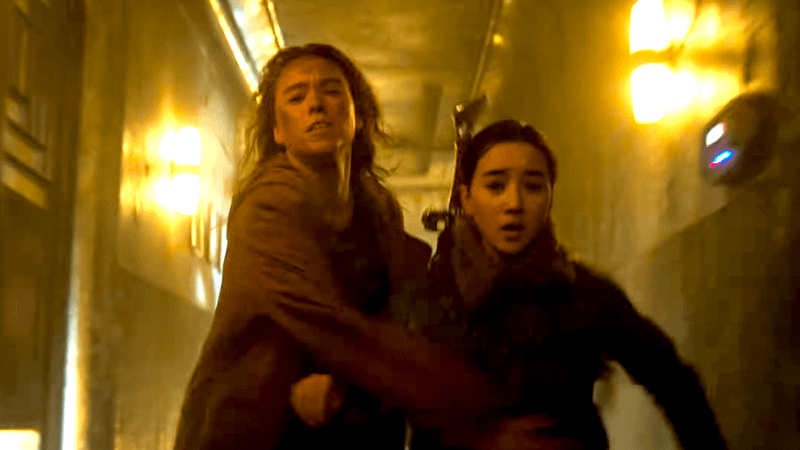
“Die My Love” is a 2025 psychological thriller directed by Lynne Ramsay and starring Jennifer Lawrence, Robert Pattinson, Sissy Spacek and LaKeith Stanfield. It is rated R for sexual content, graphic nudity, language, and some violent content, and the run time is 1 hour, 59 minutes. It opened in theatres Nov. 7. Alex’s Grade: B+.

By Alex McPherson

An aggressively unpleasant experience that traps viewers within its protagonist’s tortured psyche, director Mary Bronstein’s “If I Had Legs I’d Kick You” throws us into the void and leaves us to flail. A feverishly commanding performance from Rose Byrne guides us through the pressures of parenthood and a largely uncaring world.

The film focuses on Linda (Byrne), a therapist in Montauk, New York, who is stretched beyond her limits. Her daughter (Delaney Quinn) has a mysterious illness that causes a severe aversion to food and requires a feeding tube apparatus that Linda maintains and monitors every night. Linda’s ungrateful husband, Charles (Christian Slater), who’s in the Navy, is away on a two-month assignment.

It is of course during this time that a leak causes their bedroom ceiling to collapse and flood the house. This gaping hole makes the house unlivable, requiring Linda and her daughter to stay in a seedy motel. It also becomes a metaphorical window into Linda’s traumatic memories

Linda desperately wants doctors to remove her daughter’s feeding tube, but a nurse informs her that her daughter is not meeting her weight requirements, and threatens to “re-evaluate the level of care” that Linda can give her. She’s scolded every day when she double-parks at the daughter’s facility.

Her own patients take a toll (one of them, concerned about motherhood, is clearly on a dark path), and Linda’s own therapist down the hall (a surprisingly intense Conan O’Brien) refuses to take her swirling thoughts seriously. 

The snarky motel clerk (Ivy Wolk) refuses to sell Linda wine late at night, and the curious superintendent (A$AP Rocky) takes a liking to her and wants to strike up a friendship (which Linda immediately refuses). Everything is happening to Linda and she cannot catch a break, as barely-repressed psychological wounds resurface and send her already tenuous illusion of control veering drastically off course.

Catastrophe is around the corner, and Linda — lacking any clear support system — is headed right towards it.

Definitely not all sunshine and rainbows. Through Linda’s perpetually escalating crises, Bronstein explores the crushing psychological weight that Linda faces in every avenue of her life, trapping Linda in a version of Hell that she feels guilty for existing within. Bronstein’s film firmly roots us in Linda’s world, forcing us to view it through her eyes and never providing a sense of catharsis or release. I

t’s an exhausting watch (with an overlong runtime), but its maximalist stylings are viscerally, hauntingly tangible. Byrne’s performance is so strong, and heartbreaking, too, that no matter how intentionally off-putting “If I Had Legs I’d Kick You” gets, it’s difficult to look away.

Byrne  inhabits her  character, who makes impulsive, often questionable decisions that leave her paralyzed despite being constantly in motion. Linda is a complicated, emotionally fractured presence who’s on edge from frame one, barely holding on to her sanity as proceedings grow further frenzied.
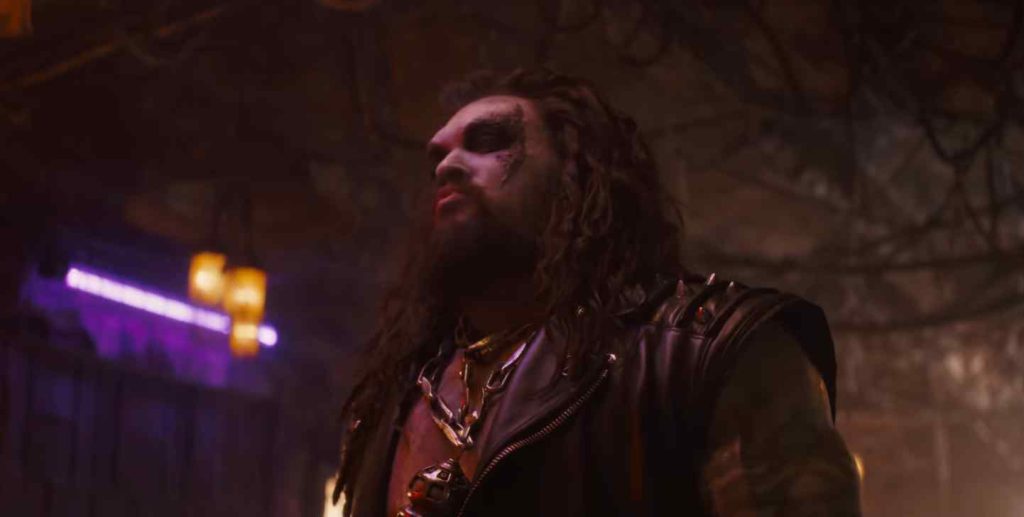
Byrne’s comedic chops are put to use through Linda’s acerbic wit, yet we can see the damage being wrought upon Linda’s mind as she code-switches from role to role, trying, unsuccessfully, to keep her mounting dread at bay.

Bronstein keeps the chaos level high from start to finish, with cinematographer Christopher Messina (also the DP on Josh and Benny Safdie’s “Good Time”) remaining uncomfortably closed-in on Linda. This lends a palpable, subjective sense of peril to her actions; we’re seeing her struggles through her eyes.

Sound design plays just as big a role here — we never actually see Linda’s daughter’s face. Instead, we hear her nagging demands and meltdowns off-screen like a burdensome creature that requires Linda’s constant attention.

Sequences within Linda’s house have a horror-esque feel, complete with impressively effective jump-scares, disorienting visual effects, and the mocking, ironic jingle that plays whenever Linda’s office door opens. 

Indeed, “If I Had Legs I’d Kick You” is an alarming cacophony of noise and stress punctuated with bursts of pitch-black humor and sobering poignancy. Parenthood, depression, skewed gender dynamics, isolation, and the pressure that therapists feel are all under Bronstein’s magnifying glass — confronting aspects of motherhood, especially, that aren’t typically portrayed in media, and that people are often too nervous to address. 

The main issue with “If I Had Legs I’d Kick You” is that it starts at such a high key that there’s little crescendo throughout the 113-minute runtime. The domino effect of issues grows almost comical at times (poor hamster), and, after a while, the film starts to spin its gears and become repetitive — complete with a grueling finale that’s both inevitable and deeply distressing.

Still, Bronstein’s film shines as an acting showcase and a manifestation of pure, no-holds-barred cinematic panic. You might just feel completely drained afterwards.

“If I Had Legs I’d Kick You” is a 2025 psychological drama written and directed by Mary Bronstein and starring Rose Byrne, A$AP Rocky, Christian Slater, Delaney Quinn and Conan O’Brien. It’s runtime is 1 hour 53 minutes and it is rated R for for language, some drug use and bloody images. It opened in theatres Oct. 31. Alex’s Grade: B+
By Alex McPherson

A nail-biting exploration of the selfishness and deep-seated class enmity afflicting our doomed species, director Yorgos Lanthimos’ “Bugonia” grips from its opening frames and never lets go, even as it grows increasingly, thoroughly unhinged.

Based on the 2003 South Korean film “Save the Green Planet!,” “Bugonia” follows Teddy (Jesse Plemons), a disheveled and emotionally scarred beekeeper working a low-level warehouse job for the pharmaceutical company Auxolith.

The company is managed by the performative, media savvy CEO Michelle Fuller (Emma Stone), whose face appears on magazine covers and who claims to support her employees while stripping them of work-life balance. 

Teddy, who has done his own research, believes that wealthy elites are destroying humanity and the planet. Reasonable, right? Well, not so much. He asserts that they are “Andromedan” aliens, and that he must stop them from wiping us out. Michelle might provide an opportunity to enact his master plan.

With help from his neurodivergent cousin Don (Aidan Delbis), Teddy hatches a plan to kidnap Michelle. If Michelle is an alien, they will force her to beam them into her mothership before the next lunar eclipse so that Teddy can negotiate with her leaders to let humanity be. 

Donning cheap Jennifer Aniston masks and syringes, the pair nab Michelle and lug her to their dingy basement for interrogation, shaving her head and slathering her with anti-itch cream for good measure.

Michelle is, understandably, quite shaken, and confused about what exactly Teddy and Don are ranting about. The clock is ticking for both her and her paranoid kidnappers as the eclipse draws near.

It’s not a particularly rosy view of humanity, and one that Lanthimos — ever the provocateur — packs full of his signature twisted sensibilities that dare viewers to follow along or get the hell out.

Lanthimos and screenwriter Will Tracy present a disquieting allegory for the ways our (very American) communication has broken down amongst each other.

Indeed, “Bugonia” is a relentless but, ultimately, cathartic experience as proceedings swiftly descend into all-out madness, with lead performances that stagger in their intensity and commitment to the plot’s every twist and turn. 

Plemons is startlingly compelling as Teddy, who has gone so far down the rabbit hole of conspiracies and personal vendettas that he’s a ticking time bomb, driven by rage, fear, and a search for purpose.

He believes he’s the savior of Earth while he succumbs to his neuroses, every hitch in his plan emboldening him to act more violently and rashly.

Plemons is frightening and unpredictably cruel in his portrayal, yet Teddy never becomes an outright monster. 

Lanthimos and Tracy paint Teddy as someone wronged by corporations and the lies they spew. He is consumed with grief, self-loathing, and hatred of the “elites” he feels have set the planet on a spiral towards doom.

He acts out on beliefs that are both absurdist and based in emotional truth, rendering his decisions darkly funny and deadly serious, even tragic. 

Stone, too, brings layers to Michelle that complicate our feelings towards her scene to scene. She’s an almost comically condescending character thrust into a situation seemingly beyond her control–that is, until she learns how to manipulate her captors.

She plays into their frayed headspaces in an attempt to regain agency, save herself, and deliver her own cutthroat retribution for the wrongs they committed against her and her “kind” at large. It’s a performance on par with her Oscar-winning turn in “Poor Things”: she maintains a calculated, sometimes vicious edge even in Michelle’s most powerless moments.

Equally strong is Delbis in his feature film debut. Don is trapped within Teddy’s conspiracy-driven world and sees Teddy as his only support and someone who can potentially free him from the hardships of his reality. Don feels that he has no choice but to follow along, although Teddy’s reckless and cruel treatment of Michelle makes him increasingly guilty and frightened.

Shreds of compassion break through, along with a gradual realization of the monstrous actions that he and Teddy have taken. Through Delbis’ superb performance, that bubbling inner turmoil is palpable.

“Bugonia” presents little hope for these characters. Nearly every bizarre conversation (including with a creepy, bumbling cop played by Stavros Halkias) is based in manipulation and misdirection over understanding, the constant sense of ulterior motives and trying to gain the upper hand without meeting the other party on their level.

(L to R) Emma Stone as Michelle, Aidan Delbis as Don and Jesse Plemons as Teddy in director Yorgos Lanthimos’ BUGONIA, a Focus Features release. Credit: Atsushi Nishijima/Focus Features

There’s little common ground, and what common ground exists is paved over with different terrain, which reflects America’s condition in 2025. Through this, Lanthimos shrewdly, and effectively, observes the end of “truth” as we know it. 

The film is stylistically crisp yet abrasive, with Robbie Ryan’s wide-lensed cinematography opting for extreme close-ups and angling to reflect ever-shifting power dynamics. A memorably jarring score by Jerskin Fendrix, plus creative use of Chappell Roan and Marlene Dietrich, enhances the film’s gonzo atmosphere

Add to this an ending that ranks among the most twisted (and horrifically beautiful) in recent memory, and “Bugonia” is a wild viewing experience — making up for broad-strokes commentary with exceptionally tense filmmaking, gasp-worthy set-pieces, and outstanding performances.

It’s an understatement to say that the film is not for everyone, but, in its pessimistic glory, it stands among Lanthimos’ most engagingly disturbed efforts yet.

“Bugonia’ is a 2025 dark comedy-sci-fi film directed by Yorgos Lanthimos and starring Emma Stone, Jesse Plemons, Aidan Delbis and Brad Carvalho. It’s run time is 2 hours, 15 min., and it is rated R for bloody violent content including a suicide, grisly images and language. It opened Oct. 31 in theatres. Alex’s Grade: A-