
By Alex McPherson
Director Gabe Polsky’s new documentary, “Red Penguins,” is a memorable tale of cross-cultural friendship, misunderstanding, greed, betrayal, societal unrest, and good, old-fashioned hockey.
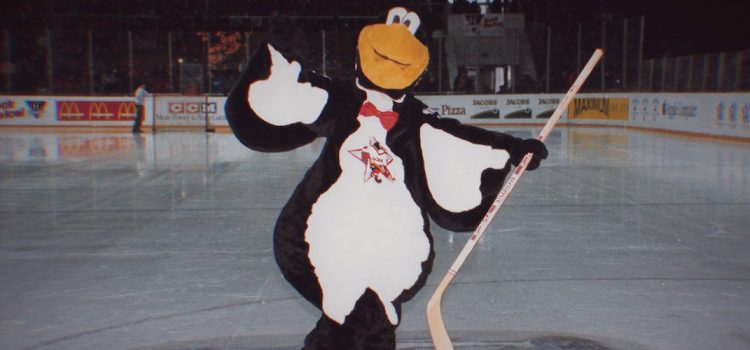
Soon after the fall of the Soviet Union, two owners of the Pittsburgh Penguins and an idiosyncratic marketing executive — Tom Ruta, Howard Baldwin, and Steven Warshaw, respectively — helped manage Russia’s national hockey team, which was fading into obscurity. Working with the general managers Valery Gushin and Victor Tikhonov, they attempted to revive the team and its brand — taking advantage of Russia’s new market and attempting to set an example for the rest of the world.
In order to attract the attention of the Russian populace, free alcohol was provided (served by live bears at one point, resulting in a player losing half a finger), strippers were hired to perform on the ice rink, and everything was generally ratcheted up a notch, a true spectacle to behold.
Thanks to this approach, the team, eventually referred to as the Red Penguins, became internationally popular, even catching the eye of Michael Eisner, then-Chairman of the Walt Disney Company. Set against the backdrop of the 1993 Russian Constitutional Crisis, however, violent tensions ran high. Ego, greed, opportunism, and ignorance among all parties also infected this Russian-American partnership, but rendered it ripe for cinematic portrayal.
And good grief, what a wild ride it was, especially when told through Polsky’s lens. Less about hockey than about Post-Soviet Russia more broadly, “Red Penguins” works on multiple levels — as an emotional roller coaster swerving between hilarity and dead seriousness, as a Russian history lesson, and as a testament to the importance of effective intercultural communication.
Polsky takes a brisk, fast-paced approach to the material, finding a near-perfect balance between humor and horror. The story itself, told by the people, American and Russian alike, who lived it, is undeniably compelling, featuring several outlandish moments that I won’t dare spoil here. Even so, “Red Penguins” spends equally as much time providing context, describing a Post-Soviet Russia permeated with social unrest. With rising crime rates, economic struggles, and the ever-powerful influence of the mafia among authority figures, the atmosphere is tense. One montage, for example, juxtaposes the rambunctious fun of the hockey games with graphic footage of police clashes outdoors in the streets, to chilling effect.
Indeed, the film’s humorous, happy-go-lucky tone early on quickly gives way to dread about what’s to come later. Nationalism and pure, unadulterated foolishness rule the day, creating a nervous atmosphere throughout that pervades even the film’s most absurd moments. This feeling, in a sense, emulates how the initial mindsets of Warshaw and company were replaced with fear when they realized the situation they put themselves in.
Case in point, Warshaw, the film’s most endearing presence, is a cocky individual willing to go to cartoonish lengths to ensure the team’s success — regardless of his personal safety or Russian cultural norms. This creates obvious problems down the road with the authority figures he claims to have befriended.
The consequences are potentially life and death, and Polsky adds another fearful layer by showing the interviewee’s differing interpretations of the events at hand and letting them reveal their true selves to the camera. When Valery Gushin, also interviewed for the film, laughs heartily about “teaching [Warshaw] a lesson,” a chill ran down my spine.
By its conclusion, “Red Penguins,” is ultimately a sobering, disturbing story of societal change and dangerous misunderstandings. This film is, at its essence, an ode to understanding the Other, told via a stranger-than-fiction story that deserves to be known.
“Red Penguins,” a 2019 documentary written and directed by Gabe Polsky, is rated PG-13 for violence/bloody images, sexual material/nudity, some strong language and a drug reference/ Runtime is 80 minutes. The film was released Aug.4 in U.S. and available video on demand. Alex’s Grade: A.

Alex McPherson is an unabashed pop culture nerd and a member of the St. Louis Film Critics Association.