By Lynn Venhaus
A story of uncommon courage and grace while facing deeply rooted cruelty and oppression, “The Color Purple” is a momentous achievement for the Black Rep.
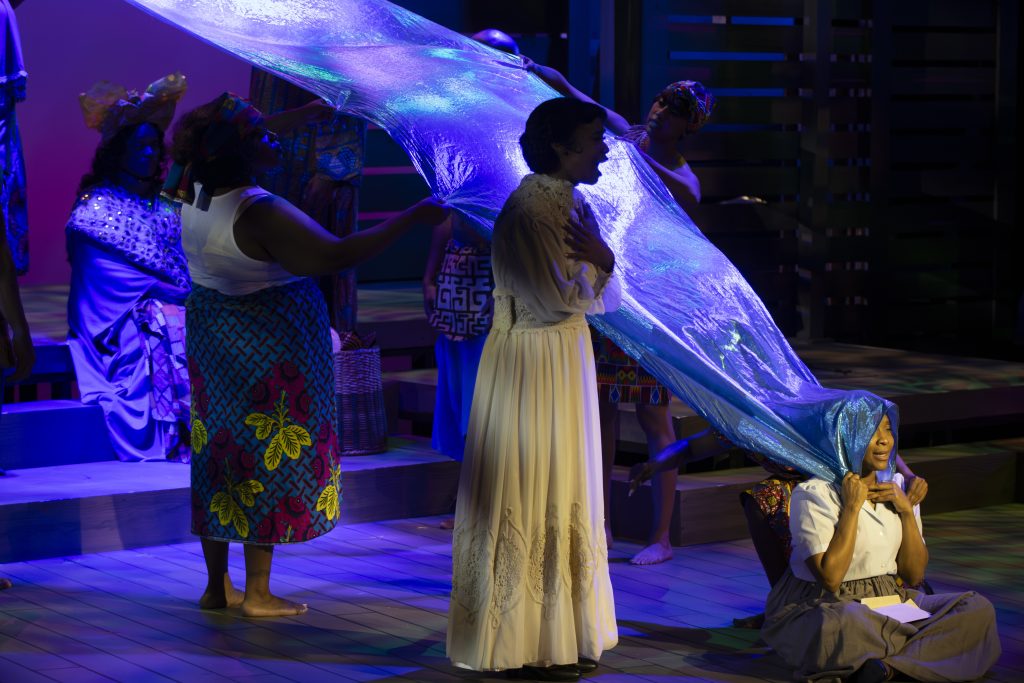
Through Celie’s harrowing emotional journey, a stunning Angela Wildflower leads a passionate ensemble who gives it all through the musical’s sorrows, love, pain and ultimately, triumph.
In a tour de force performance, Wildflower is the heart and soul of this deeply felt production, directed with considerable flair and impact by Daniel Bryant.
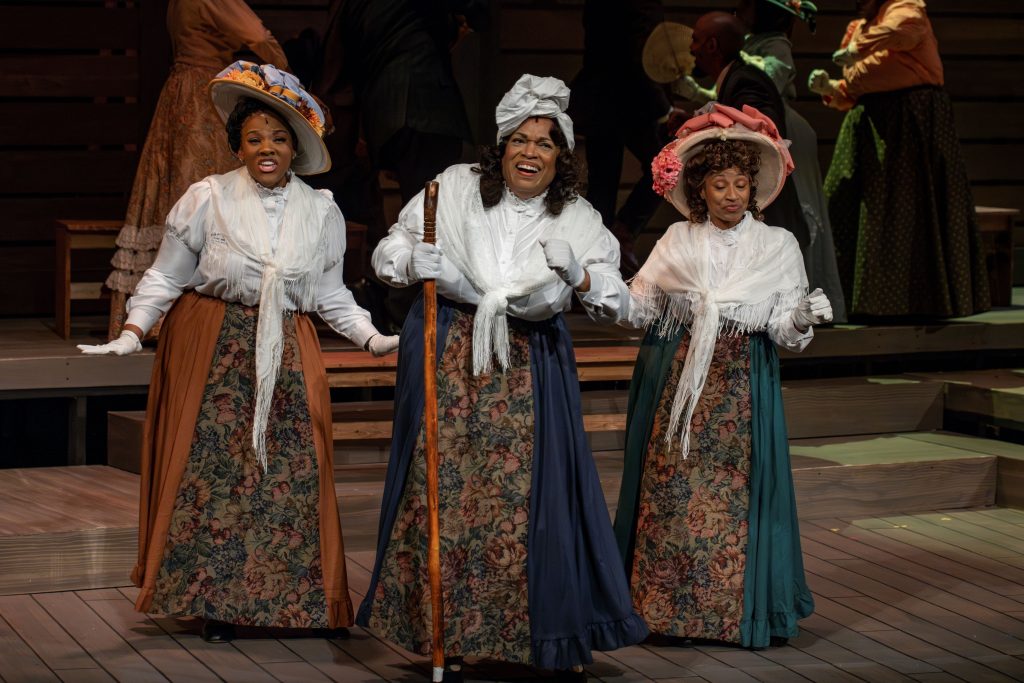
In the St. Louis Black Repertory Theatre’s premier that opened its landmark 50th season, the affection for the storytelling was palpable between the audience and the artists. The spirited cast’s voices soared, starting with powerhouse Anita Jackson and the other two ebullient Church Ladies Amber Rose and Olivia Neal with the opening.
The vibrant, roots-infused score includes gospel, jazz, ragtime, blues, and African beats, with songs by Brenda Russell, Allee Willis, and Stephen Bray that bring out the purpose and yearnings.
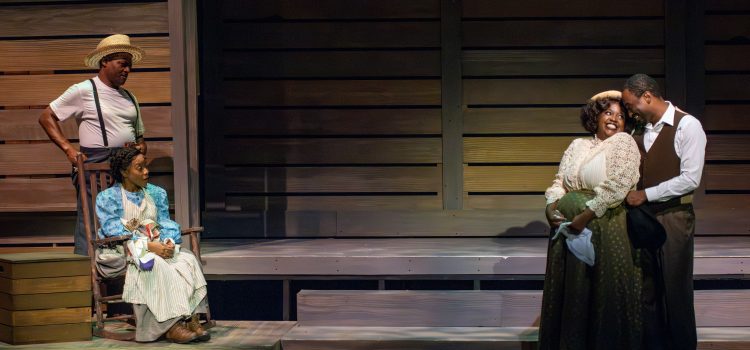
In 1909, Celie, 14, is a humble, hard-working poor black girl living in rural Georgia, who has delivered two babies whose father is her father, and Pa (J. Samuel Davis) has taken them away.
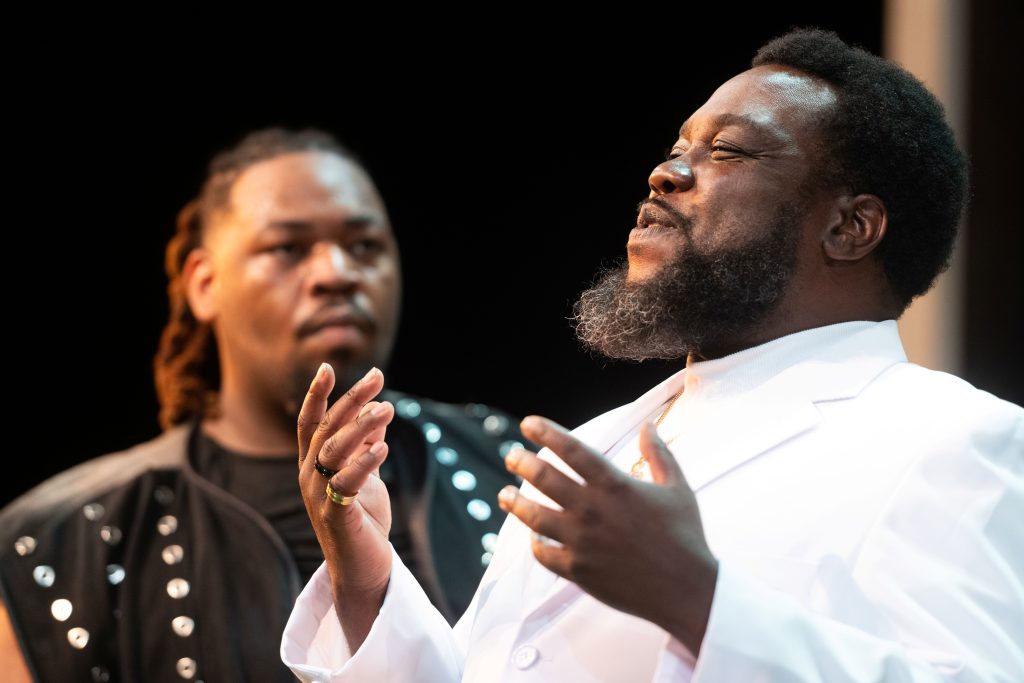
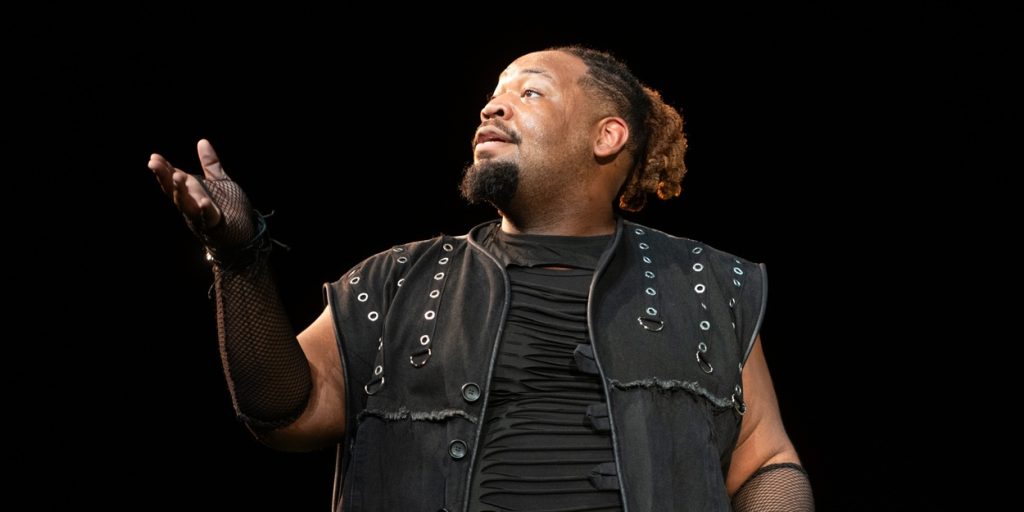
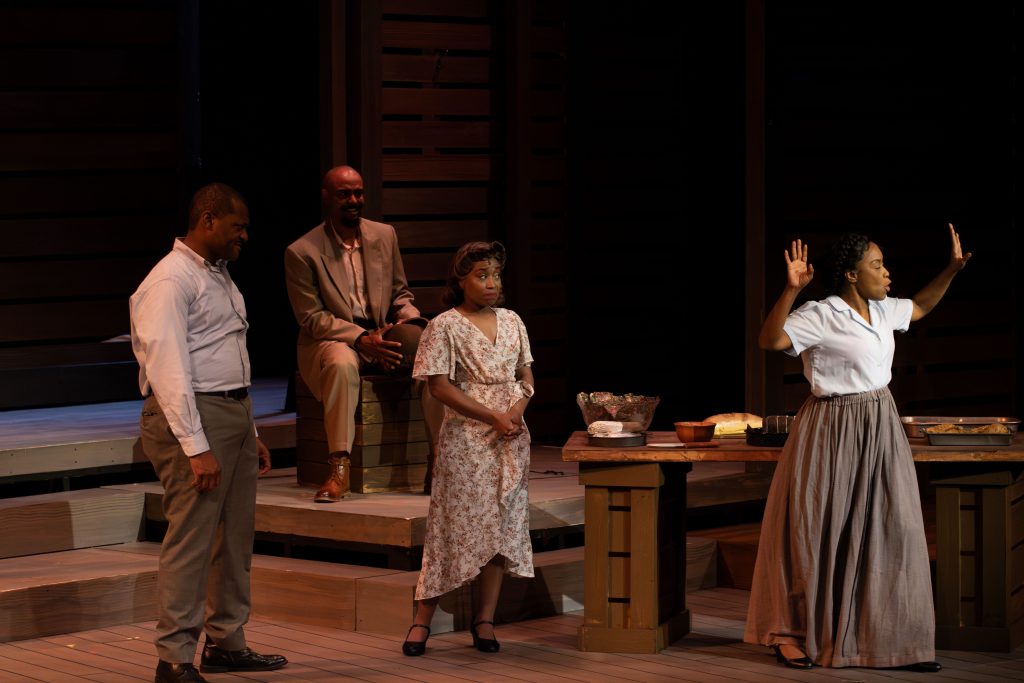
Several years later, he makes a deal to give Celie to Albert “Mister” Johnson (sturdy Kelvin Roston Jr.), an emotionally and physically abusive widower and farmer, to care for his unruly children and serve him.
By her sacrifice, she spared her sister, Nettie (a tender Morgan Taylor), so that she could follow her dream of being a teacher. Unbeknownst to Celie, for many years, the compassionate Nettie winds up with a missionary family in Africa. When Morgan and Angela sing together, it’s magical, especially “Our Prayer.”
Celie has gone from one house of horror to another. But her faith sees her through, as do the people who raise her up. That community will return her kindness.
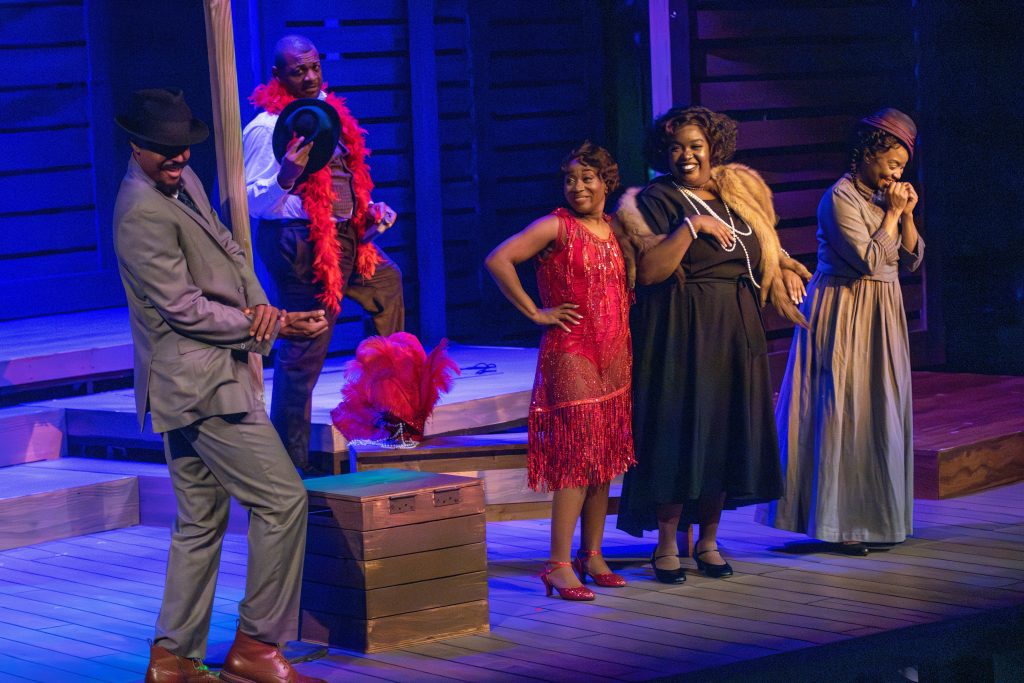
While taking care of Mister’s home, the nurturing Celie meets the glamorous and worldly nightclub chanteuse Shug Avery (dynamic Alexis J. Roston). They share romance and a deep bond.
Wearing a snazzy red outfit, Roston sashays with confidence in “Push Da Button” and she shines in “Too Beautiful for Words” and “What About Love?”
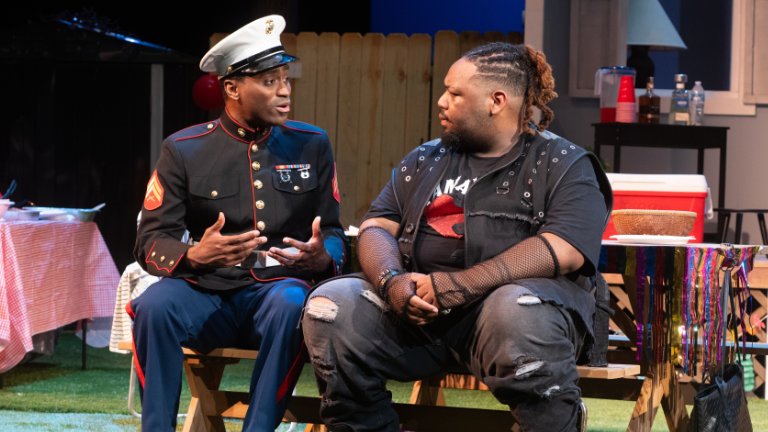
One of Mister’s grown children, Harpo (versatile Brian McKinley), marries Sofia (powerhouse Adrienne Spann). Spann, impressive in her Black Rep debut, is strong as the feisty free spirit, known for her independence and speaking her mind. She stands out with her phrase (and song) “Hell, no!”
Tyler White is comical as the irrepressible Squeak and Olajuwon Davis, Dajuan Davis and Samantha Madison are well-rounded, adaptable ensemble members.
Marsha Norman wrote this musical adaptation of Alice Walker’s Pulitzer Prize-winning touchstone novel, a National Book Award winner in 1982. It debuted on Broadway in 2005 and then was revived in 2015.
In the two film adaptations, first in 1985 by Steven Spielberg, which garnered 11 Academy Award nominations, and then a 2023 musical version, they brought out the dignity and virtues of a trauma survivor.
Wildflower brought down the house with “I’m Here” – which was interrupted three times by applause, a goosebump moment.
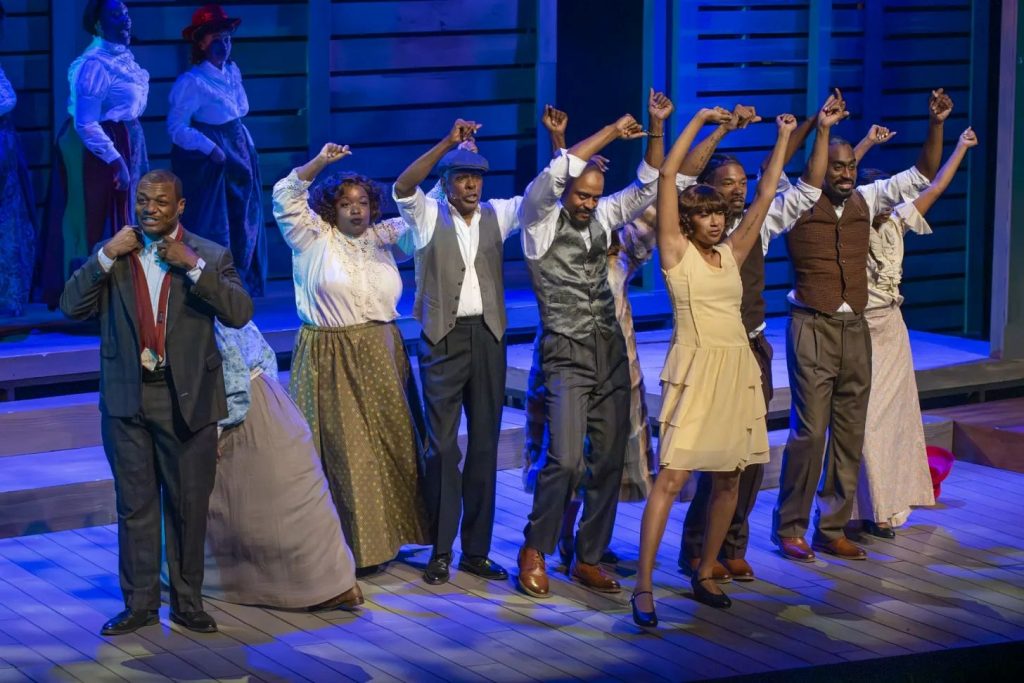
With this stellar cast, the finale, reprising “The Color Purple,” is heartfelt and affecting, reminding us of the mighty power of love, healing and resilience.
The staging is simple and Heather Beal’s choreography is supple, well-suited for this nimble ensemble. They have fun with the juke joint dance – and ‘Uh Oh.” Special mention to fight choreographer Paul Steger. The energetic African dance number is an ideal way to open the second act.
Using cultural soundscapes beautifully, Music Director Jermaine Manor fluidly leads an eight-piece orchestra, with Zach Neumann on keyboards, Stan Coleman and Alex Macke on reeds, Dennis Brock on guitar, Willem von Hombracht on bass, Des Jones on drums, Gerald “Babtunde” Williams on percussion, and Manor on keyboards, too.
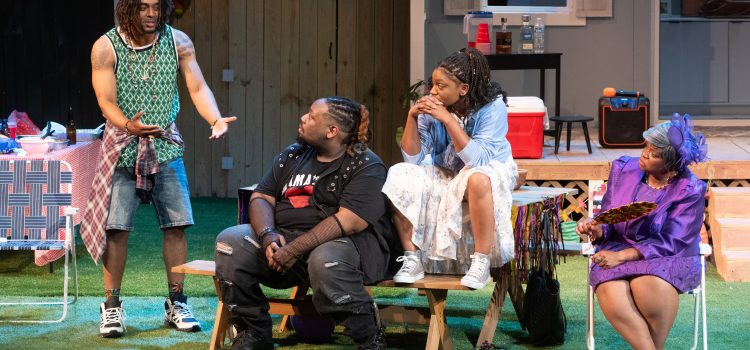
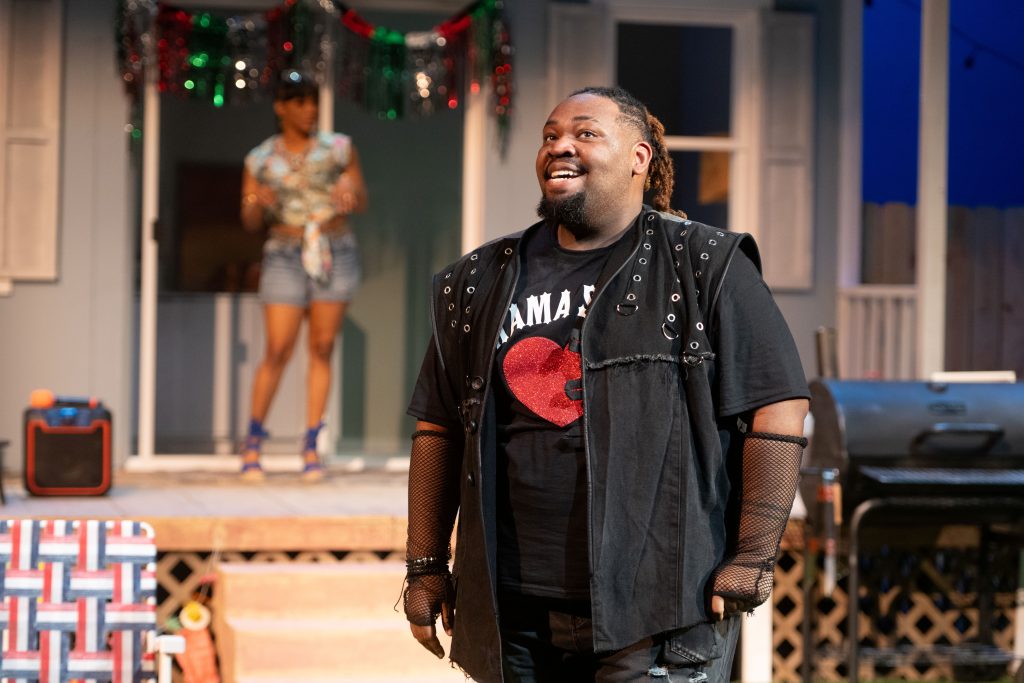
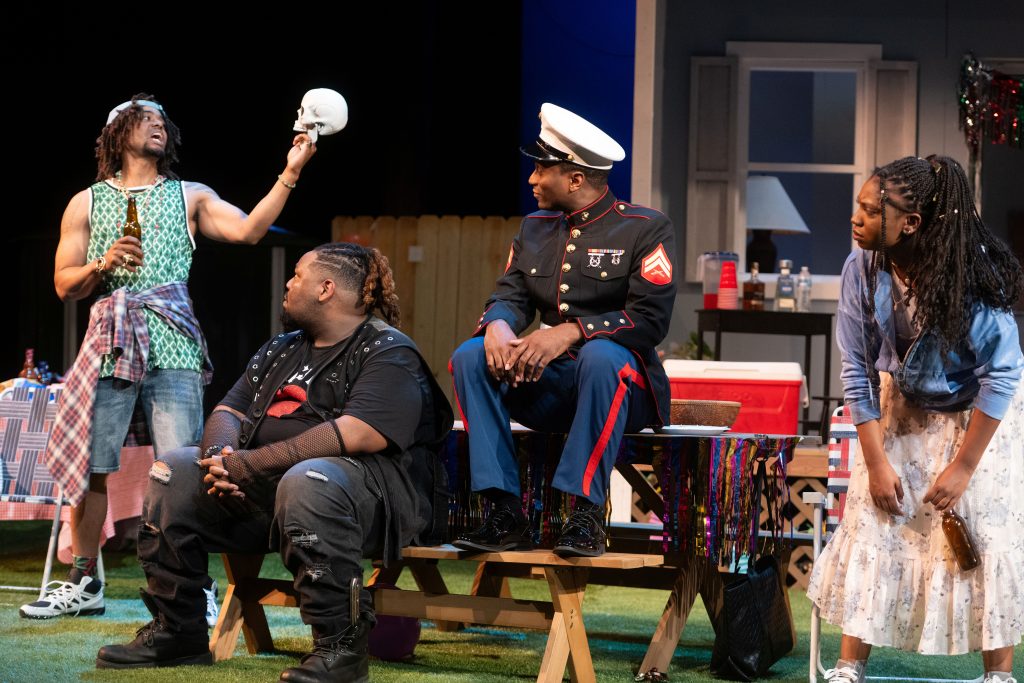
Resourceful scenic designer Tim Jones’ flexible scenic design uses an ancestral tree as a backdrop focal point, with nods to 20 Century South and Africa, and lighting designer Michael Sullivan created atmospheric notes, as did Justin Schmitz’ sound design. Mikhail Lynn did his customary excellent work on props.
With a story spanning 40 years, costume designer Jarrod Barnes’s stylish vintage wear reflects the periods and the economic level of the characters, with Sunday best church clothes and fancier juke joint attire. Nettie’s gorgeous white Victorian dress rivals Shug’s dazzling pieces, and all the trousers are fun for “In Miss Celie’s Pants.”
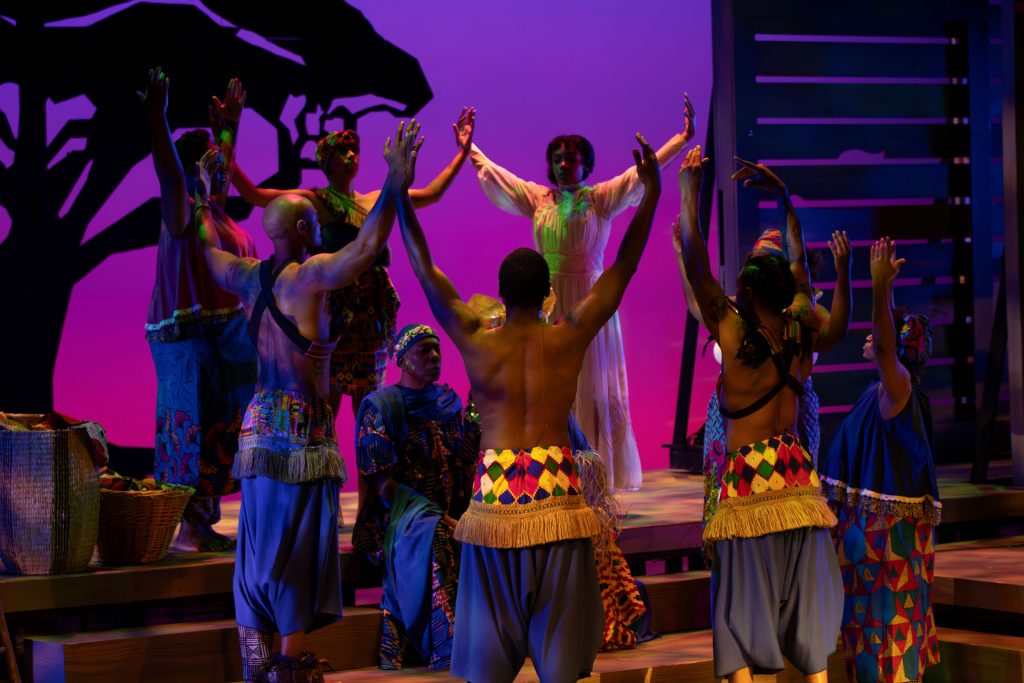
Of note, purple symbolizes strength, transformation, power, wisdom, bravery — and all meanings can be applied here.
What is most personal is also the most universal, and it shows in The Black Rep’s expertly produced, very moving musical.
The Black Rep presents “The Color Purple” Sept. 9 – 27 at The Edison Theatre at Washington University in St. Louis. For tickets, visit The Black Rep’s website, www.theblackrep.org.
Lynn (Zipfel) Venhaus has had a continuous byline in St. Louis metro region publications since 1978. She writes features and news for Belleville News-Democrat and contributes to St. Louis magazine and other publications.
She is a Rotten Tomatoes-approved film critic, currently reviews films for Webster-Kirkwood Times and KTRS Radio, covers entertainment for PopLifeSTL.com and co-hosts podcast PopLifeSTL.com…Presents.
She is a member of Critics Choice Association, where she serves on the women’s and marketing committees; Alliance of Women Film Journalists; and on the board of the St. Louis Film Critics Association. She is a founding and board member of the St. Louis Theater Circle.
She is retired from teaching journalism/media as an adjunct college instructor.