By CB Adams

Concert presenters have a name for performers and composers who reliably fill seats: bankers. Beethoven is a banker. Wagner is a banker. Debussy is a banker. Opera Theatre of Saint Louis’ annual Center Stage concert has become a banker of a different sort.

The evidence could be heard in the departing crowd following Tuesday’s performance. Audience members traded variations on the same thought: Center Stage just keeps getting better. The buoyancy was palpable.

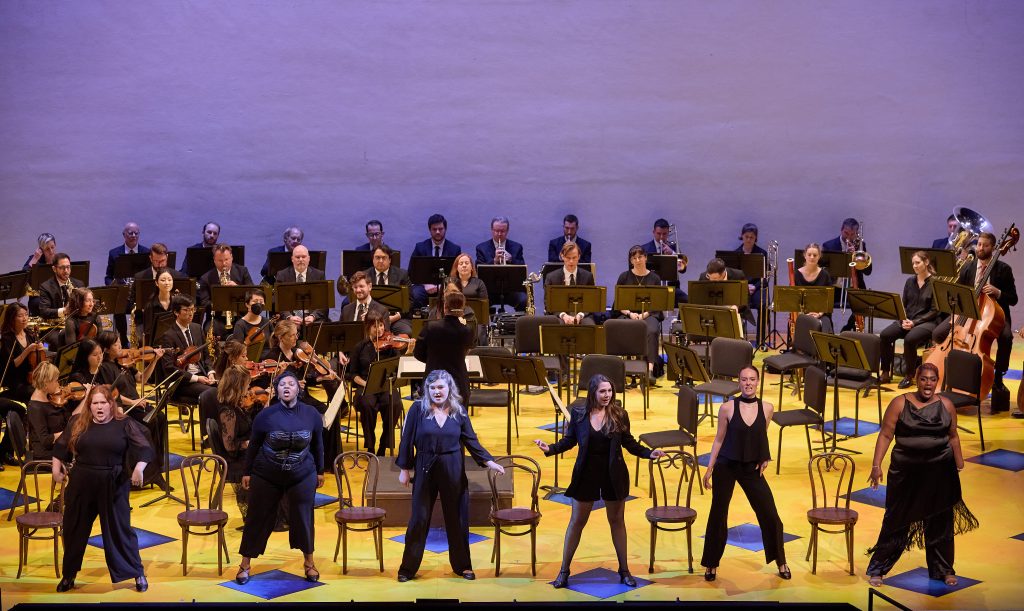
This year’s concert featured 28 Richard Gaddes Festival Artists and Gerdine Young Artists, selected from more than 1,100 applicants. Accompanied onstage by select musicians of the St. Louis Symphony Orchestra, the singers performed a thoughtfully curated program of opera and Broadway selections, all sung in their original languages.

Artistic Director Patricia Racette has shaped Center Stage into an evening of theater. Semi-staged scenes and ensembles dominate, with minimal props and plenty of dramatic intensity. Heavy on the Italian seasoning this year, the program moved confidently through the operatic repertoire before folding in selections from “Chicago,” “West Side Story” and “Carousel.” The arc gave individual singers their moments while sustaining the momentum of a complete evening.

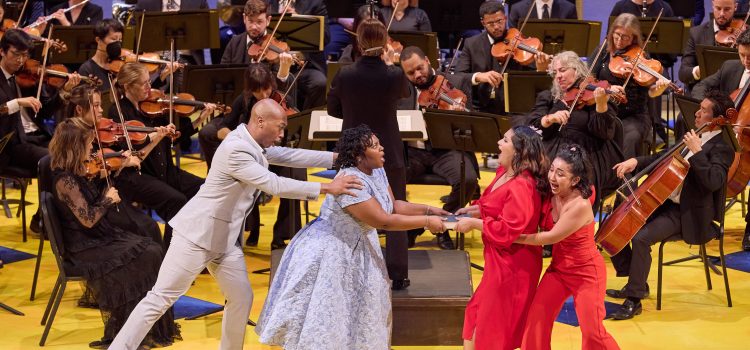
Vinicius Costa as Mephistopheles and Landry Allen as Faust performing “A mois les plaisirs” from Faust. Photo © Eric Woolsey, 2026

The performers attacked their opportunities with the unmistakable energy of young artists who know a few minutes onstage can make an impression. One of the evening’s pleasures came in watching the instant transformation after a scene ended: the final note, a flicker of silence, then the character disappeared and the young artist emerged to receive the applause.

That dramatic commitment surfaced throughout the program. Gaddes Festival Artist Vinicius Costa showed impressive range, bringing swagger and menace to Mephistopheles in Gounod’s “Faust,” then pivoting to deft comic timing as Don Basilio in Rossini’s “The Barber of Seville.” The six “merry murderesses” of “Cell Block Tango” from “Chicago,” meanwhile, attacked Kander and Ebb’s number with individually etched characters and a collective ferocity that made the stage feel suddenly crowded with dangerous women.
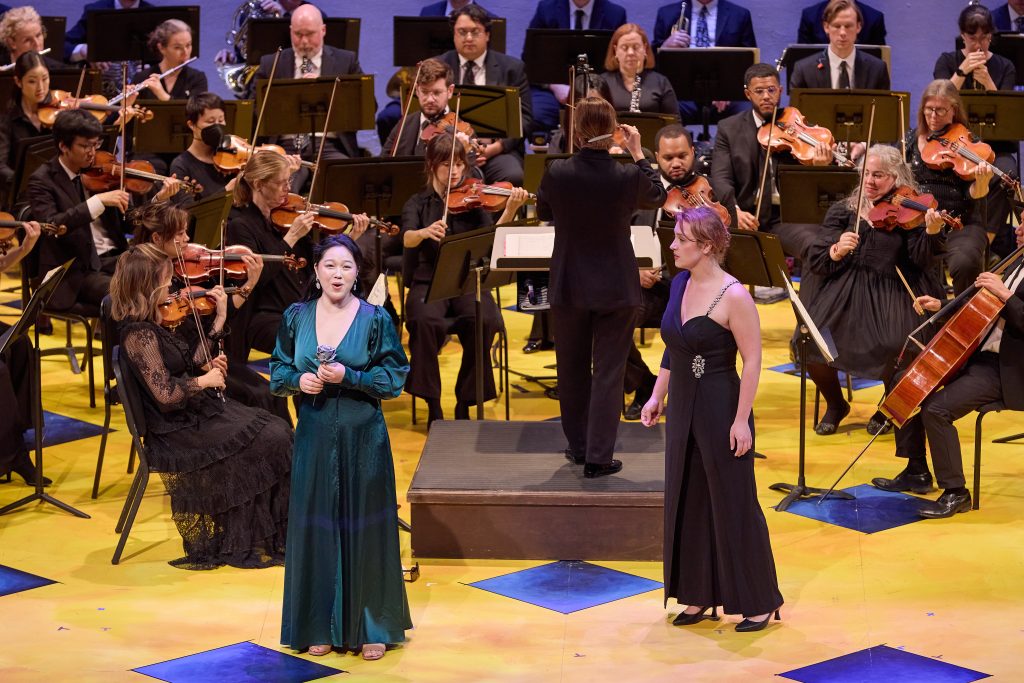
Shiyu Zhuo as Sophie and Ashlyn Brown as Octavian performing “Mir ist die ehre widerfahren” from Der Rosenkavalier. Photo © Eric Woolsey, 2026

In previous years, Center Stage often produced a handful of performances that left one thinking, “That one’s going somewhere.” This year, the remarkable depth of the roster became the story. Memorable individual performances emerged across a field operating at a strikingly high level. The growing strength of the applicant pool — and the precious few who earn places in these programs — has raised the level of the entire enterprise.

That consistency explains why Center Stage has become such a reliable draw. Racette and her team have created an evening built around discovery, theatrical immediacy and the infectious intensity of artists eager to show what they can do. That’s a banker worth betting on.

Opera Theatre of Saint Louis presented Center Stage on June 23 at the Loretto-Hilton Center.
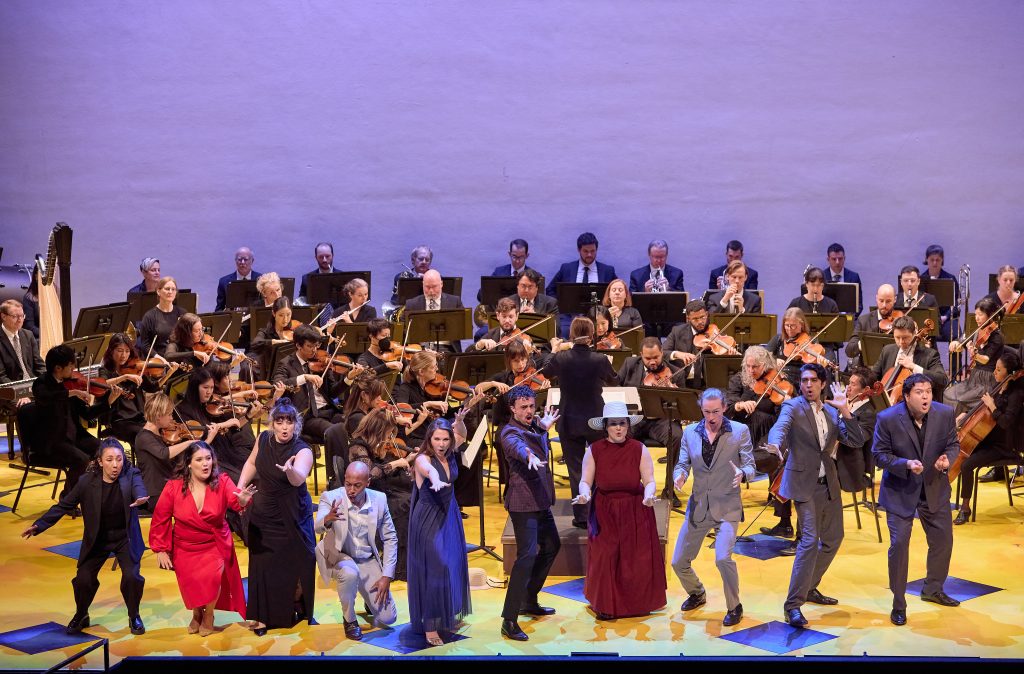
(L to R) Rosaria Armas, Cristina Escobedo, Kim Stanish, Shyheim Selvan Hinnant, Julia Maria Johnson, Joel Clemens, Paige Michels, Lazuli Bruno Clark, Edmond Rodriguez, and Anthony Voiers in the Act IV finale from Le nozze di Figaro. Photo © Eric Woolsey, 2026
Emily Kondrat, Audrianna Hughes, Kaya Giroux, Julia Maria Johnson, Veronica Siebert, and Imara Ashton as the Six Merry Murderesses in “Cell Block Tango” from Chicago. Photo © Eric Woolsey, 2026

Patricia Racette’s production finds operatic scale, emotional truth and remarkable balance in Williams’s enduring tragedy.

By CB Adams

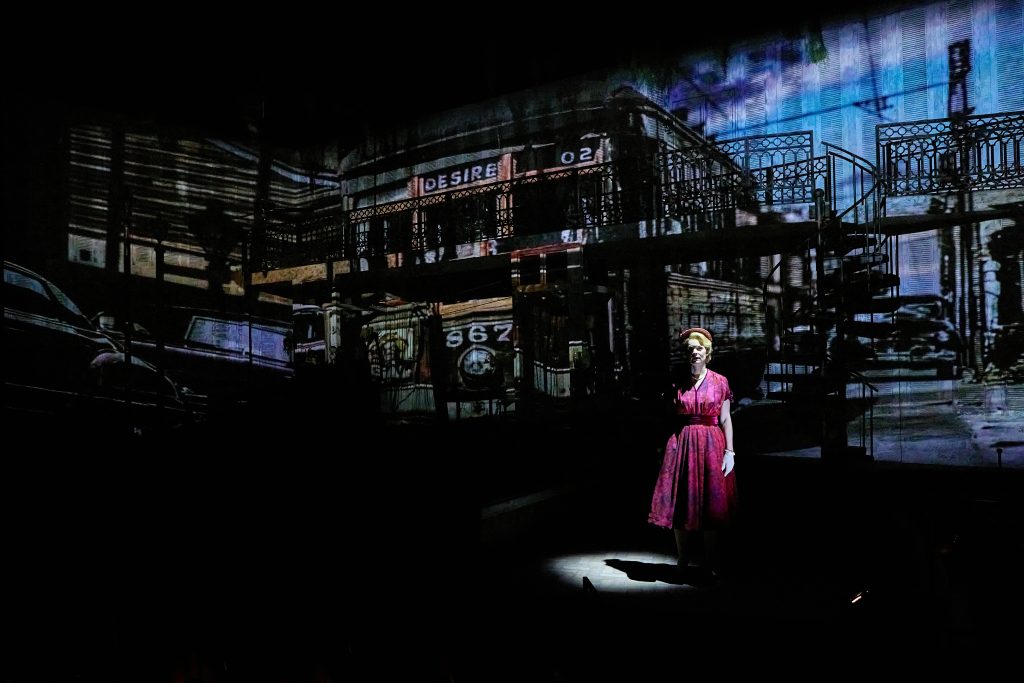
Andrew Boyce’s scenic design announces Opera Theatre of Saint Louis’s intentions before a note is sung. Towering walls of weathered white shutters dominate the stage, instantly evoking New Orleans while suggesting something more confining.

Projected across those walls, a black-and-white montage culminates in a huge streetcar lumbering toward the audience with the slow, inexorable force of a locomotive.

It is a striking image and an honest one. We know where this story is headed. Racette and Boyce embrace that inevitability from the outset. There is no attempt to disguise the destination. Some productions try to improve the classics. This one trusts one.

André Previn’s opera, with a libretto by Philip Littell, remains remarkably faithful to Williams’s play. Racette embraces that faithfulness as an artistic choice. She trusts Williams’s characters, conflicts and hard-earned understanding of human weakness. The result never feels preserved under glass.

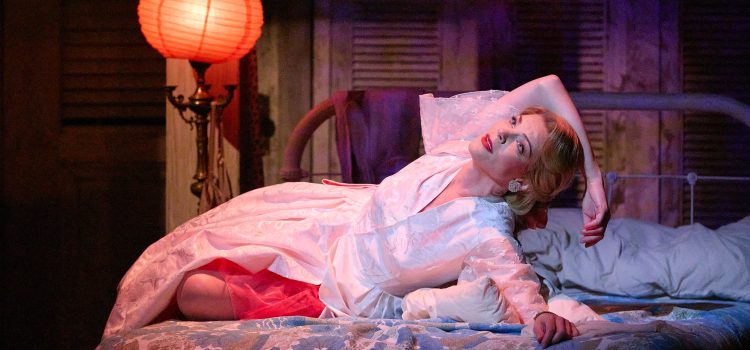
Blanche DuBois (Sara Gartland) arrives in New Orleans. Photo by Eric Woolsey.

Daniela Candillari leads the St. Louis Symphony Orchestra with equal command. Previn’s score moves beneath the action like an unseen current, deepening tension and longing without overwhelming the drama unfolding onstage. Candillari maintains an ideal balance between pit and stage. The orchestra remains firmly in service to the story.

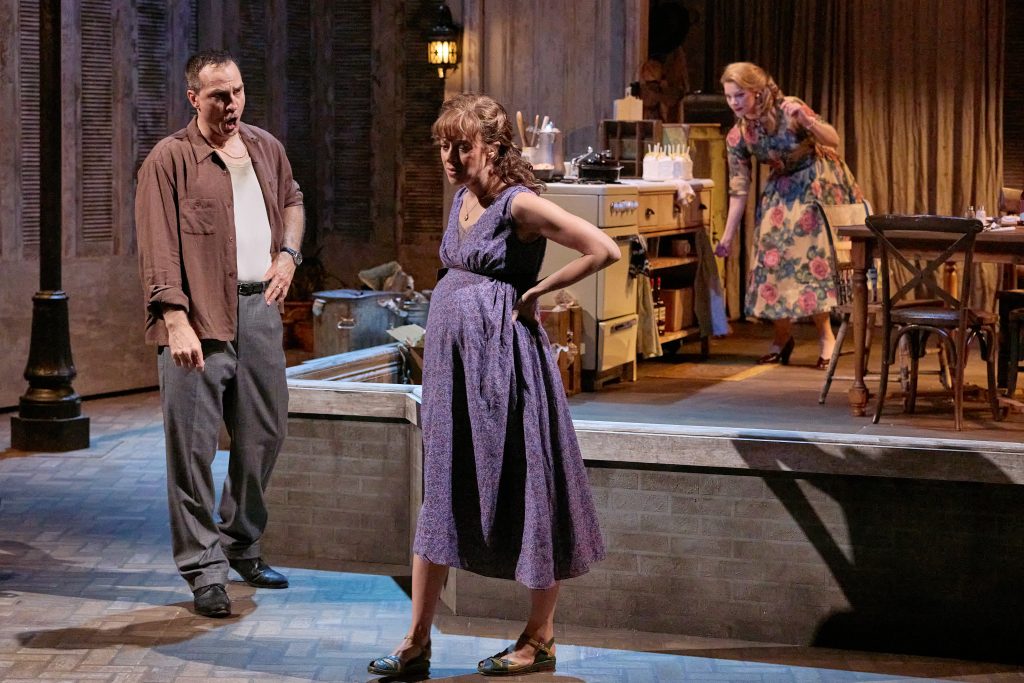
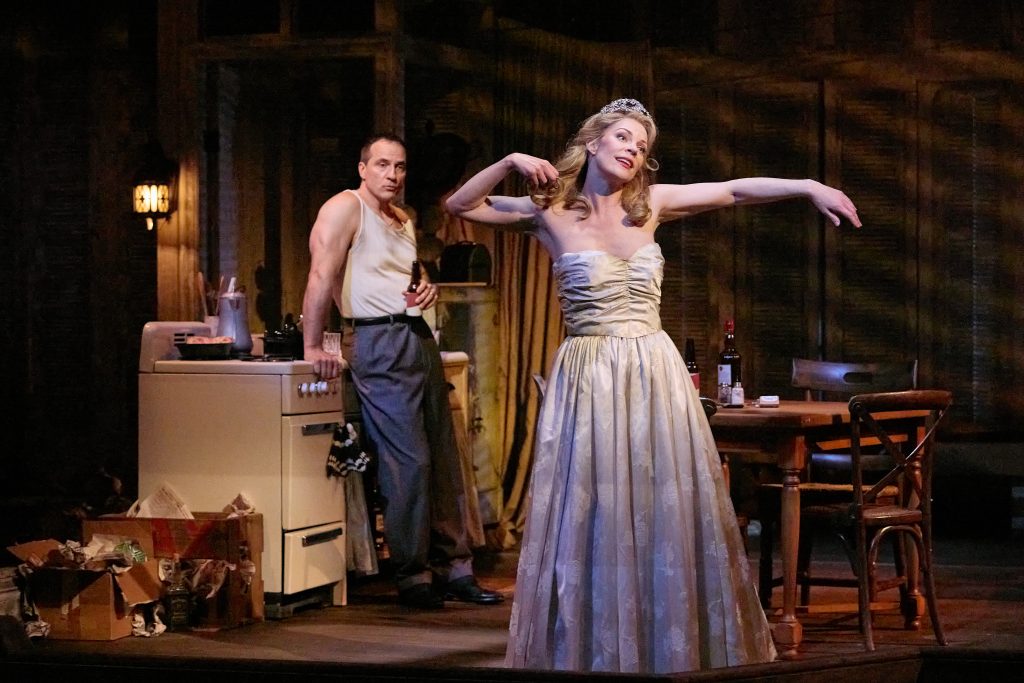
The production’s dramatic engine is the ongoing contest between Sara Gartland’s Blanche DuBois and David Adam Moore’s Stanley Kowalski. They spar like star pugilists across Williams’s language and Previn’s score, each encounter carrying as much psychological force as vocal power.

Gartland captures Blanche’s contradictions without simplifying them. Under Racette’s careful guidance, her Blanche remains vain, vulnerable, manipulative, frightened, self-aware and self-deluding, often simultaneously.

Moore faces the equally difficult task of making Stanley more than a brute. He succeeds. Stanley’s eventual victory remains disturbing, but Moore preserves enough magnetism and humanity to make it believable.

(L to R) David Adam Moore as Stanley, Lauren Snouffer as Stella, and Sara Gartland as Blanche in “A Streetcar Named Desire.” Photo by Eric Woolsey.

Racette allows Stanley’s appeal to remain visible even when his behavior becomes reprehensible. His spoken dialogue, used sparingly throughout the opera, sharpens the realism of the surrounding music rather than interrupting it.

Just as important is Lauren Snouffer’s Stella. More than a participant in Blanche and Stanley’s struggle, she becomes the emotional fulcrum of the evening, giving equal weight to Stella’s love for Blanche, desire for Stanley and determination to survive the impossible position in which she finds herself.

The relationship between the sisters is rendered with uncommon care, while Stella’s marriage to Stanley remains equally persuasive. Those relationships feel lived-in rather than merely dramatic.

Boyce’s towering shutter walls evoke New Orleans architecture while functioning as a kind of emotional enclosure. At times they resemble prison bars, at others the walls of memory closing around Blanche. Their scale is distinctly operatic, creating a world far larger than the cast occupying it.

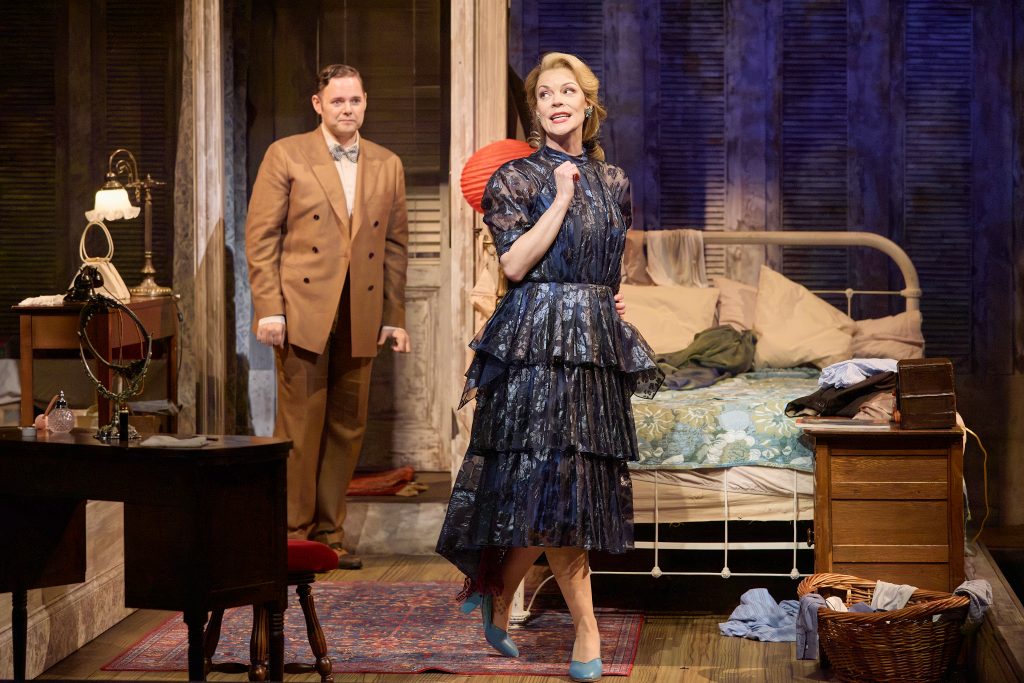
Blanche (Sara Gartland) flirts with the smitten Harold “Mitch” Mitchell. Photoby Eric Woolsey.

Yet Gartland, Moore, Snouffer and their colleagues fill that space through voice, presence and sharply defined characterizations. They do not merely survive the set. They complete it. In a production with relatively few principals, there is nowhere to hide. Every performer must command the space. They do.

The supporting cast contributes significantly to that achievement. Bille Bruley’s Harold Mitchell brings warmth and humanity to the role, while Ashlyn Brown’s Eunice provides an earthy, clear-eyed counterpoint to Blanche’s unraveling. Her nurturing support of Stella reinforces one of the production’s central relationships and helps ground the emotional reality of Elysian Fields.

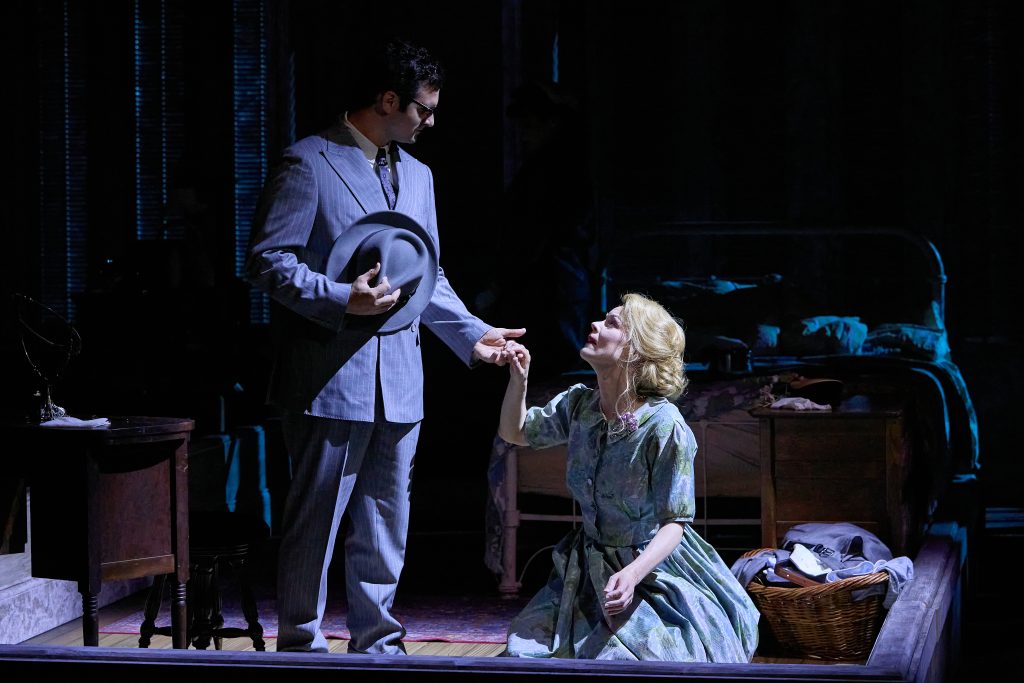
The ensemble consistently strengthens Williams’s world. Kim Stanish is especially memorable as the Nurse in the final scene. Her prolonged struggle to restrain Blanche avoids melodrama and instead underscores the heartbreaking finality of the character’s collapse, a moment Racette allows to linger rather than rush past.

Blanche (Sara Gartland) begins to unravel under Stanley’s (David Adam Moore) menacing presence. Photo by Eric Woolsey.

The production’s scenes of violence and sexual assault are staged with careful restraint. Racette, intimacy coordinator Delaney Piggins and fight choreographer Shaun Sheley convey the ugliness of Stanley’s actions with just enough physical detail to communicate their impact without lapsing into sensationalism.

The projections prove equally effective throughout the evening. Most haunting is the appearance of Blanche’s young husband, whose portrait looms over the stage just as relentlessly as his memory looms over her life.

Throughout the evening, projections become another actor in the drama, carrying memory and desire across Boyce’s towering walls. By the time Blanche reaches her final music, Gartland and the production have earned every note of it.

“A Streetcar Named Desire” continues at Opera Theatre of Saint Louis through June 26 at the Loretto-Hilton Center on the Webster University campus as part of OTSL’s 2026 Festival Season. Ticket information, performance schedules and additional production details are available on the Opera Theatre of Saint Louis website.

A shattered Blanche (Sara Gartland) is gently led away by a doctor (Erik DeMario). Photo by Eric Wooley.