By Lynn Venhaus
Big personalities and bigger voices fill the Muny’s expansive stage for an enthralling excursion into an exotic place that remains a timeless touchstone of American musical theatre.
In their 11th staging of “South Pacific” – a stunning tour de force in every element, the Muny meets a significant cultural moment through the vision of director William Carlos Angulo. Using the gutsier 2008 revival script, the show expands on the heightened love, intolerance and war themes.
Angulo emphasizes the two intercultural romances where couples grappled with acceptance and overcoming prejudice some eight decades ago, which resonates today. Suave Emile de Becque is a French plantation owner with a mysterious past who falls for spunky nurse Nellie Forbush, from Little Rock, Ark.
The time is 1943 when the Allies fought the Axis – the coalition of Nazi Germany, fascist Italy and Imperial Japan in World War II. The unworldly Nellie is stationed on an unnamed island where the U.S. Navy and Marines are keeping tabs on the enemy.
These characters populated James Michener’s short stories in “Tales from the South Pacific,” which was adapted by Joshua Logan and Oscar Hammerstein for the wartime musical, with music by Richard Rodgers and lyrics by Hammerstein. It opened on April 7, 1949, when war memories were fresh in people’s minds.
The work won the Pulitzer Prize for Drama in 1950, the first (and only musical until “Hamilton” in 2016) and 10 Tony Awards. It ran for nearly five years on Broadway until 1954, a record album was a huge hit, and a popular movie adaptation was released in 1958. The show had never been revived on Broadway until Bartlett Sher’s acclaimed 2008 Lincoln Center run, which tackled the darker themes realistically.
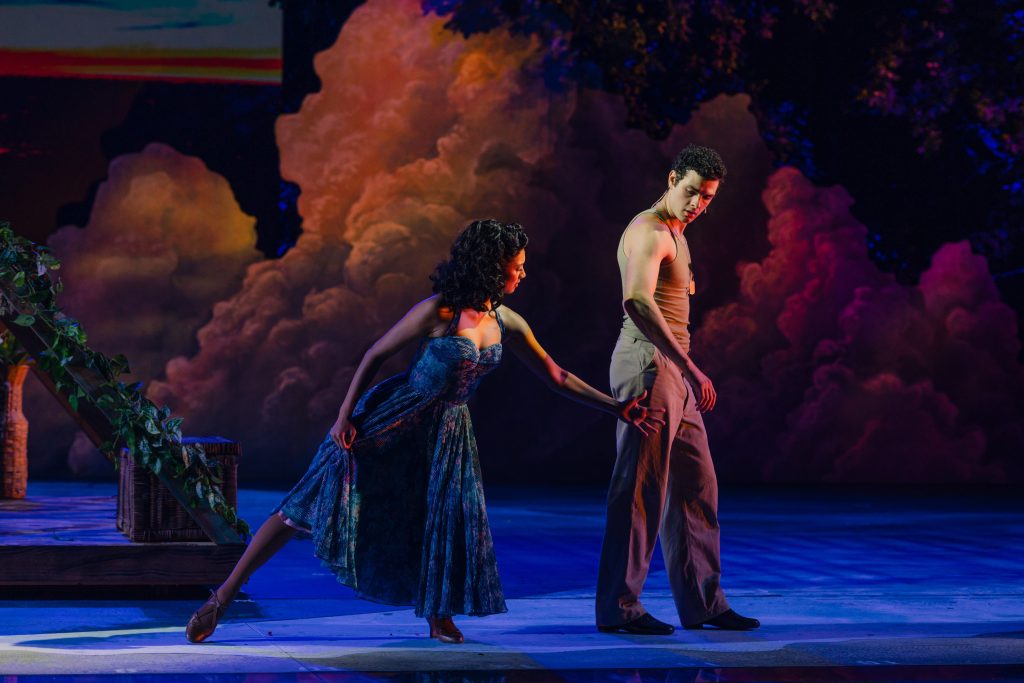
After Marine officer Lt. Joseph Cable arrives for a dangerous espionage mission, he is smitten by Liat, a Tonkinese woman who lives on the mystical island Bali Ha’i. As the young lovers, Michael Canu and Michaela Marfori are mesmerizing in dance sequences that Angulo has incorporated for richer storytelling. Choreographer Karla Puno Garcia has added a tender tableau that sets this production apart, a ravishing debut.
That glorious music! Music Director Roberto Sinha conducts 29 musicians for those iconic sweeping ballads and fun ensemble numbers, so very sumptuous, starting with that fabulous overture.. Sinha returns after marvelous maestro turns in Angulo’s “In the Heights” and “Dear Evan Hansen” and is currently the music director of Broadway’s “Hamilton.”
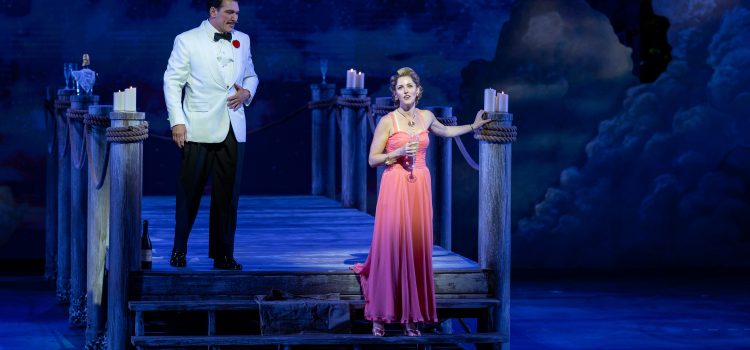
To experience Brazilian bass-baritone Paulo Szot recreate his Tony-winning role as Emile is wondrous and breathtaking live. This is the kind of powerful operatic performance that people will still be talking about for years.
They’ll single out his magnetic renditions of “Some Enchanting Evening” and “This Nearly Was Mine” with the kind of reverence that is spoken about Yul Brynner in “The King and I,” Robert Preston in “The Music Man,” and Zero Mostel in “Fiddler on the Roof.”
Sarah Fenske, St. Louis Magazine executive editor, declared it “The Summer of Szot” after seeing him at both Opera Theatre of St. Louis as charming Signor Naccarelli in “The Light in the Piazza” and now the Muny. I’m jumping on this bandwagon too. (He’s returning to Broadway to play Lance in “& Juliet” later this month, a role he originated.)
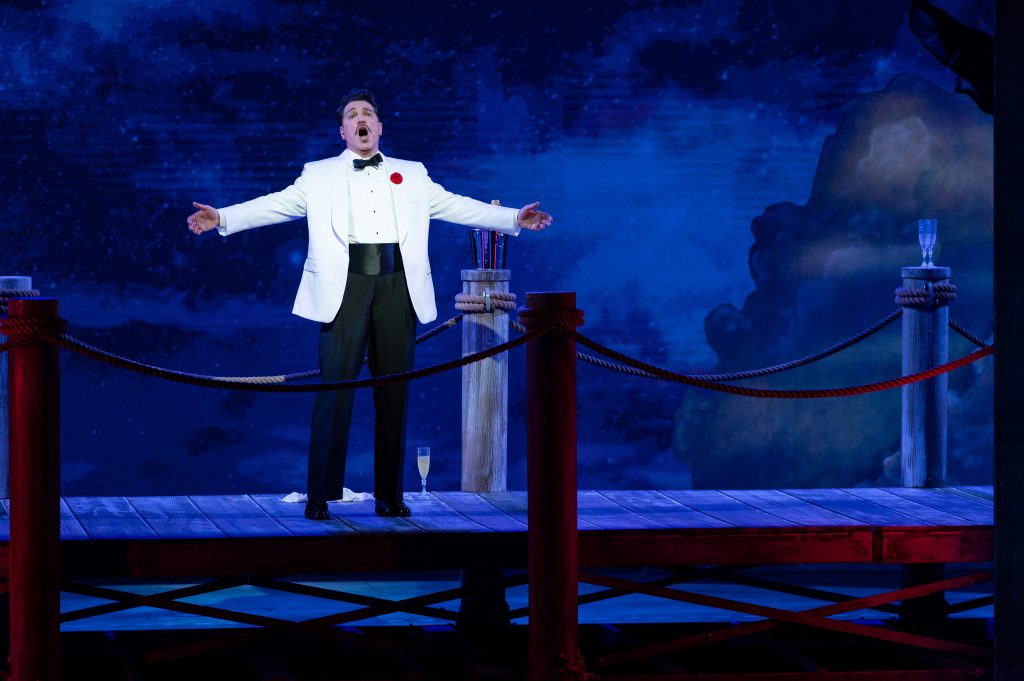
While a charismatic presence, he’s not the only reason to see this cherished classic. Taylor Louderman is enthusiastically welcomed back to where it all started for the Tony nominee as a teenager, combining a sunny disposition with her physicality and lovely lilting vocals as the spirited, unsophisticated Nellie. Showing genuine emotional depth, she brings out the turmoil that Nellie faces because of ingrained attitudes that affect her relationship with Emile.
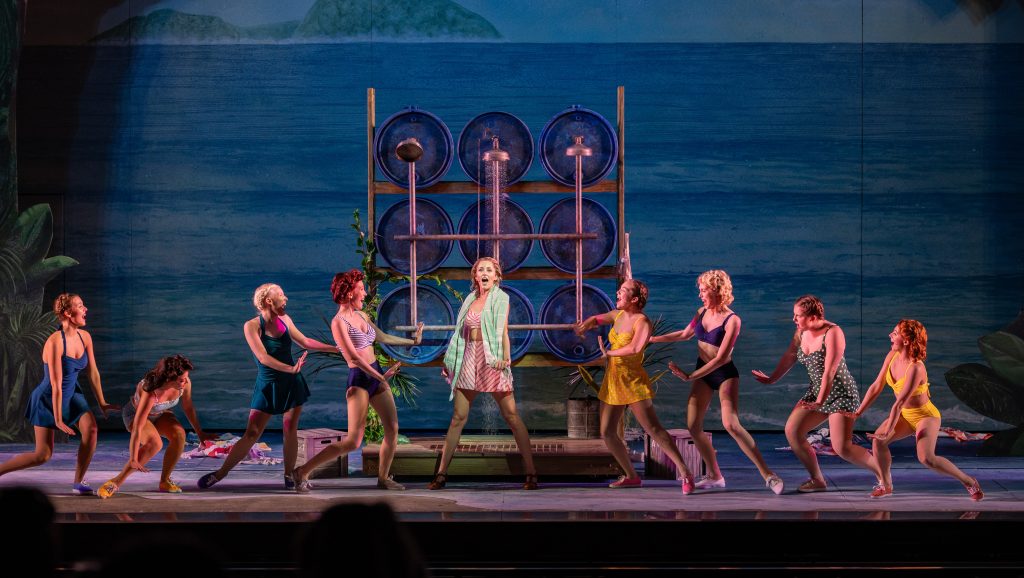
Now playing a very grown-up role, she’s the epitome of exuberance in “A Cockeyed Optimist,” “I’m Gonna Wash That Man Right Outa My Hair,” “I’m In Love with a Wonderful Guy,” and “Honey Bun.” Together, Louderman and Szot have a sweet chemistry., and their “Twin Soliloquys” is silky smooth.
Not only can Canu dance ballet, but his strong tenor soars in “Younger Than Springtime” and “My Girl Back Home.” Being brought up in Philadelphia society, when he’s disgusted by his own ingrained bigotry, he erupts into the pivotal “You’ve Got to Be Carefully Taught.”
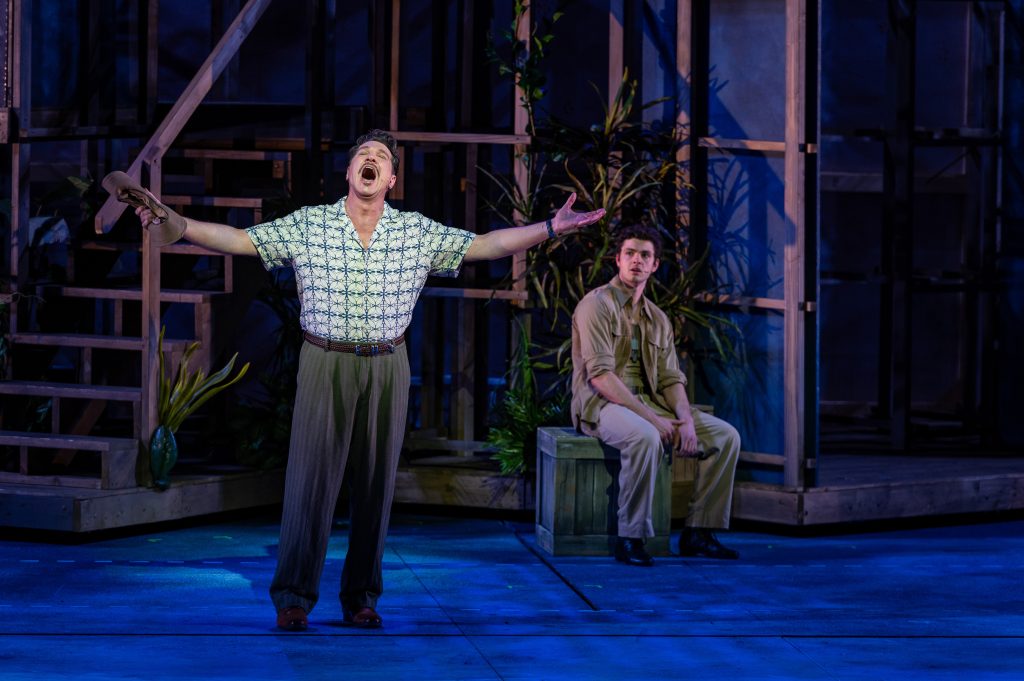
This decades-old social commentary remains impactful today, which sets “South Pacific” apart from other golden-age chestnuts. When she meets Emile’s Polynesian children, Louderman must say “colored,” which has been restored in the script. The understanding comes later. It’s a scrupulously constructed show that wants to say something.
The rest of the ensemble is flawless, with Joan Almedilla a knockout as Bloody Mary, avoiding making her a caricature, and transporting us in “Bali Ha’i.” After playing a conniving prince in “Frozen” last year, Bobby Conte returns as an animated Luther Billis, the lovable schemer who provides much needed comic relief.
It’s a pleasure to see three St. Louisans make their mark on the Muny stage, with veteran Michael James Reed as Captain George Brackett, Jeff Cummings in his debut as Commander William Harbison, and former Muny Kid Robert Crenshaw in his debut as Stewpot. Crenshaw, who lit up stages on national tours of “Ain’t Too Proud” and “The Wiz,” is fun to watch as the goofy Seabee.
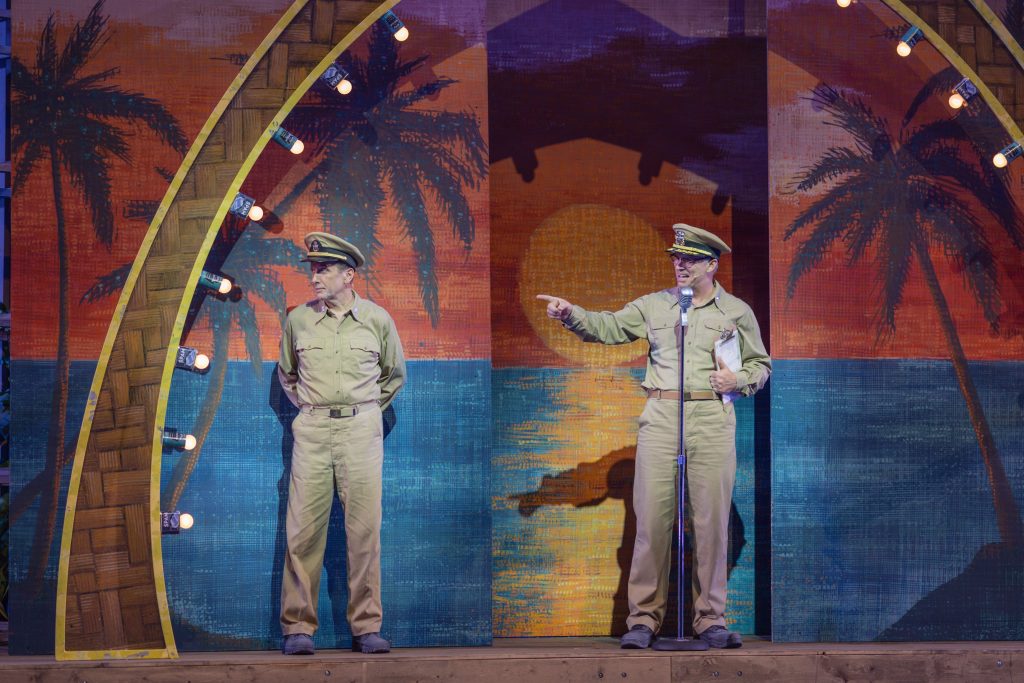
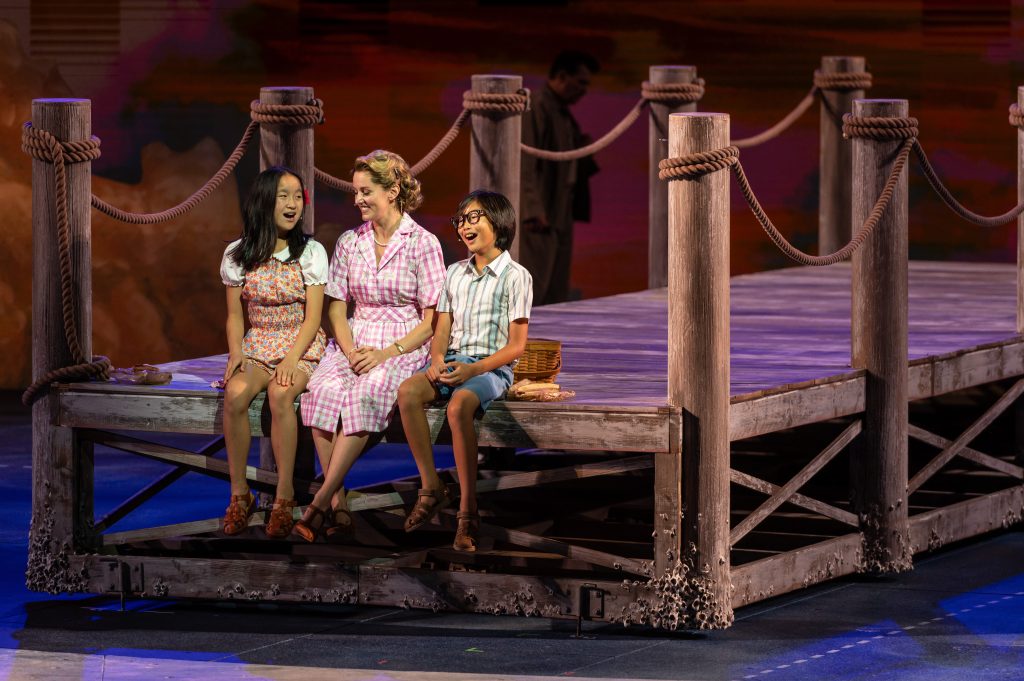
The lavish atmosphere, in contrast to the gritty war mission, is beautifully rendered in Arnel Sancianco’s lush scenic design, with the tropical touches carried through in John Lasiter’s sun-drenched lighting design and Yee Eun Nam’s video designs of breezy foliage and ocean waves. Josh Hummel crafted the sound design.
Costume designer Raquel Adorno’s lovely flowing evening gowns set an enchanting mood, with a gorgeous palette of seafoam greens and blues as well as flowery prints. The elegant party clothes contrast with the military attire of the sailors and nurses. Ashley Rae Callahan was the wig designer.
The robust singers and dancers have fun with “Bloody Mary,” “There Is Nothin’ Like a Dame,” and the Thanksgiving Follies. As Emil’s children Ngana and Jerome, Grace Moore and Josiah Paik are delightful in “Dites-Moi.”
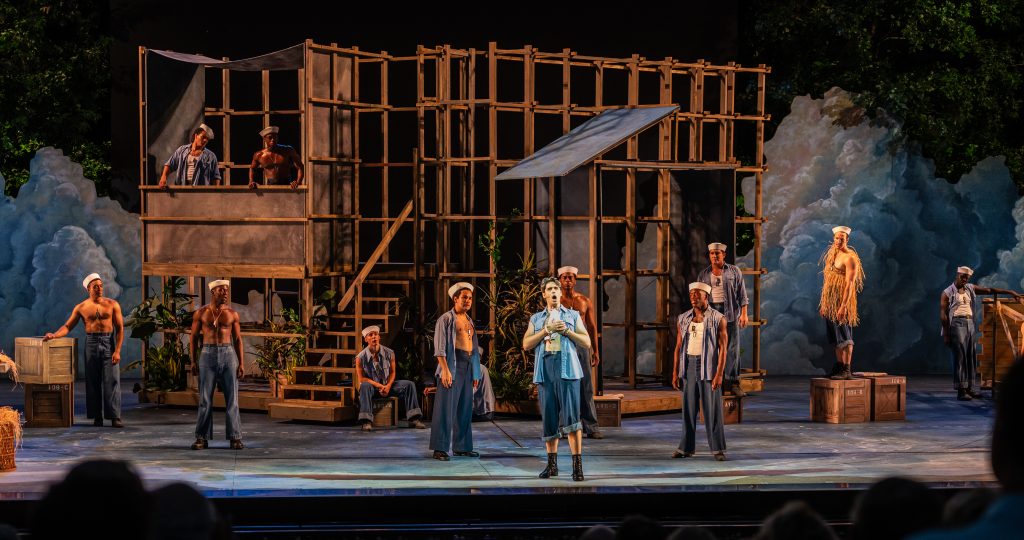
The cast includes Julia Aguinaldo, Tre’ Booker, Jessica Carmona, Chloe Chamberlin, Aaron Patrick Craven, Arielle Ploy Dettmer, Alex Benetiz Evans, Rachel Fairbanks, Hannah Florence, Garrick Goce Macatangay, Jake Mendes, Caylie Rose Newcom, Julian Ramos, John Ray Jr., Hayden Rivas, David Rowen, Connor Schwantes, Gordon Semeatu, Francisco Thurston, and Nicholas A. Wilkinson.
The Muny’s “South Pacific” is a snapshot of how we once were, with hope for the future. It’s a grand glimpse of the best of times, the worst of times, and how people connect dramatically on the world arena. This exceptional cast and crew of artisans have created an unforgettable night of theater that deeply resonates and carries us away in song.
“The Muny” presents “South Pacific” on the outdoor stage from July 6 – 12. Visit muny.org for more information on The Muny’s 108th season.

Lynn (Zipfel) Venhaus has had a continuous byline in St. Louis metro region publications since 1978. She writes features and news for Belleville News-Democrat and contributes to St. Louis magazine and other publications.
She is a Rotten Tomatoes-approved film critic, currently reviews films for Webster-Kirkwood Times and KTRS Radio, covers entertainment for PopLifeSTL.com and co-hosts podcast PopLifeSTL.com…Presents.
She is a member of Critics Choice Association, where she serves on the women’s and marketing committees; Alliance of Women Film Journalists; and on the board of the St. Louis Film Critics Association. She is a founding and board member of the St. Louis Theater Circle.
She is retired from teaching journalism/media as an adjunct college instructor.