By Lynn Venhaus

For COCA’s magical production of Disney’s “The Little Mermaid,” I had the pleasure of being surrounded by beloved family for a special afternoon of live musical theater.

This was not an assignment for regional professional theater reviewing, but rather supporting the arts and being with people I love. It was a charming and delightful show Sunday, the last of six performances this July – and the audience was clearly appreciative of this momentous labor of love. It was just fun to be a part of, and watch families enjoy the experience.

As a fan of the show, seen multiple times, it was heart-warming to see how transfixed my guests Josie, 9, and Meadow, 3, were by the fairy tale’s whimsy and wonder, and so were us moms and company. I spied many little girls in mermaid outfits in the beautiful Catherine B. Berges Theatre in University City.

So many fine elements were impressive – the vibrant characters in the underwater kingdom, the dazzling seascape, the glistening costumes, and the lush orchestrations. Shout-outs to scenic designer Seth Howard, technical director Cameron Tesson, costume manager Cody Floyd, Jayson Lawshee-Gress’ lighting designs and Luke Bowers’ sound designs.
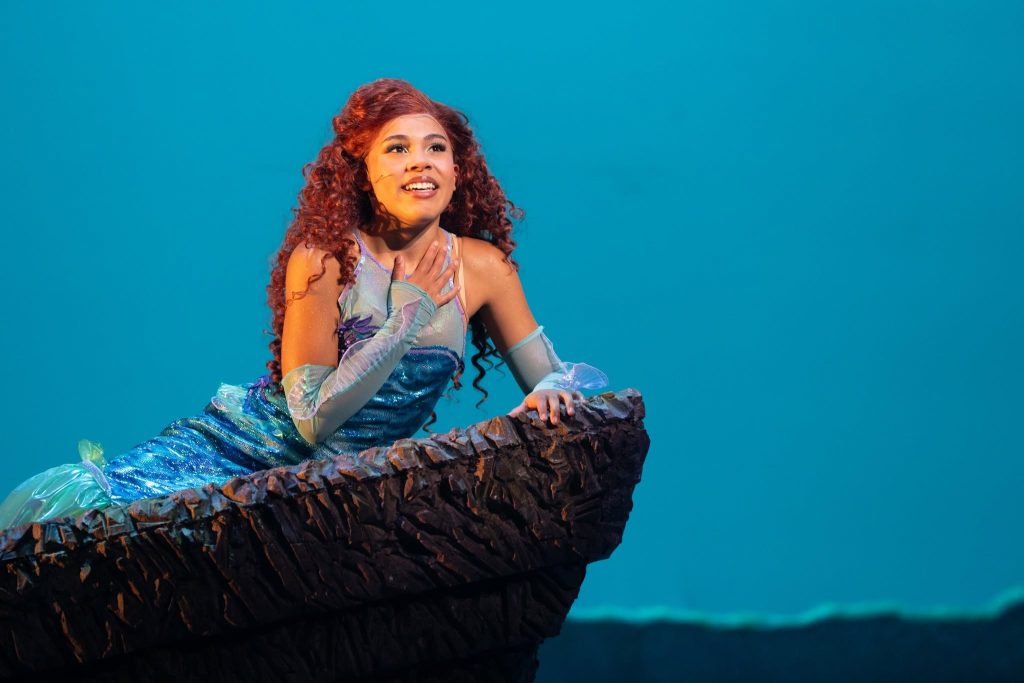
Kaelyn McCurtis as Ariel

With that many costumes, special mention to assistant costume designer and draper Meredith LaBounty and costume shop manager Ari Stern. And to the volunteer make-up artist Michael Coleman.

It’s the first COCA musical directed by Will Bonfiglio as the Artistic Director of Theatre, and he surrounded himself with a strong creative team. Peerless Larry D. Pry as the music director and vivacious choreography by alum Alisa Cooper.

The production benefitted from student assistant director Aspen Meyer and JiaLi Deck as alumni assistant choreographer. And no production can do without a stellar production manager (Carolyn Carter), with assistants Lexi Sims and Gray Campbell, and youth manager Cassie Gant, who also served as an effective prop designer.

Always a fan of Bonfiglo’s innovative eye, he has an imaginative, clear image of an overall picture and how to achieve maximum heart-tugging. To date, Bonfiglio is the only three-time St. Louis Theater Circle Award winner as lead actor in a comedy.
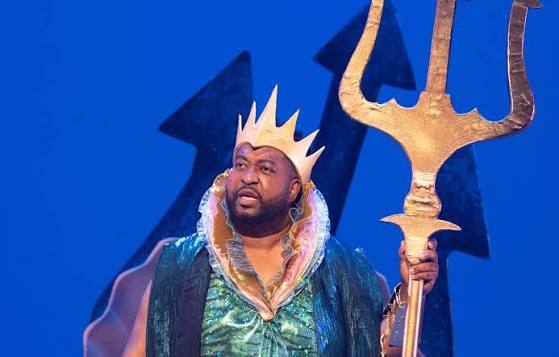
Dr. Philip A. Woodmore as King Triton.

Bonfiglio incorporated so many enchanting aspects – including aerial wizardry! (Kudos to flying effects by On the Fly Productions and fly operators Mason Hunt, Connor Kielty, Isaac Bunting and Elliot Wright).

He set the shimmering tone in the opening “The World Above,” and the cast quickly endeared themselves. Kaelyn McCurtis was a spunky, engaging Ariel with a gorgeous voice, and Xander Ungerboeck was a likable Prince Eric.

Nayomi Shackelford was quite the villainess as Ursula – and special shout-out to Ursula’s shell designer Bess Moynihan. Flotsam and Jetsam looked great – Rian Page and Karajana Caplinger were quite nimble, too.

Grimsby is always an unsung hero, so bravo to Grayson Ritson for an impeccable job keeping the show moving fluidly. Ariel’s six sisters had fun with their roles – Nora Griswold, Clara Garcia, Cora Donaldson, Haylin Travis, Peyton Webster, and Molly Fitzpatrick.
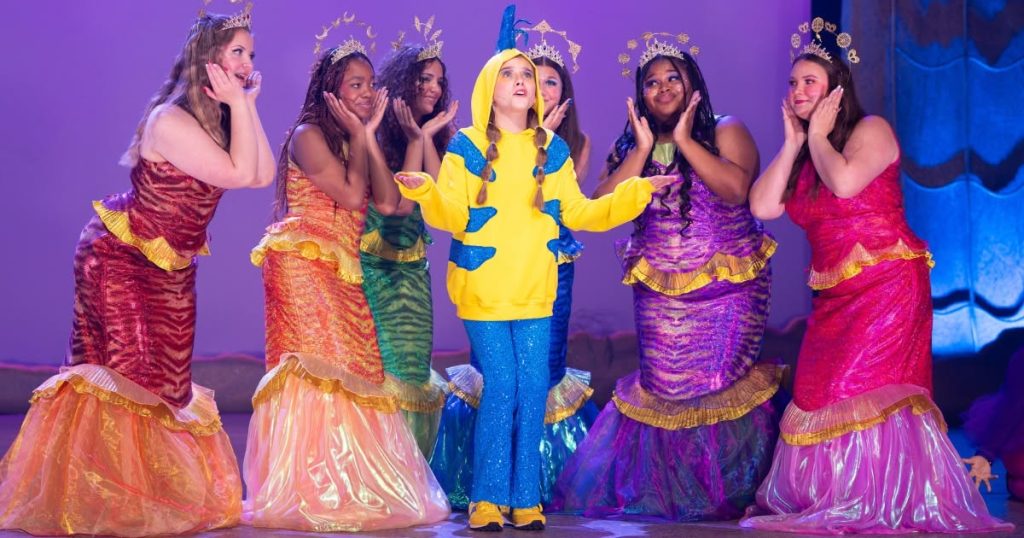
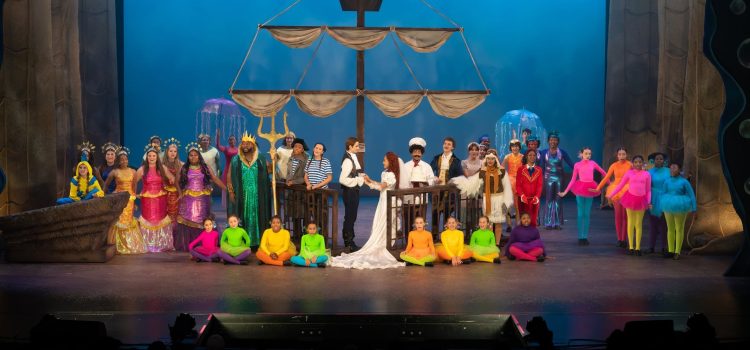
Ariel’s sisters Nora Griswold, Clara Garcia, Cora Donaldson, Haylin Travis, Peyton Webster, and Molly Fitzpatrick with Flounder Nora Turner.

With adorable cheerfulness, the 16-person featured ensemble and the 13-person guppy and gull ensemble added to the show’s big, bright numbers. The cast included student performers, alumni, and adult professionals – including COCA’s Dr. Philip A. Woodmore, Artistic Director of Voice, as King Triton.

They sung their hearts out of composer Alan Menken and lyricist Howard Ashman and Glenn Slater’s game-changing score from the 1989 animated film: especially “Part of Your World” and “Kiss the Girl.” Always a showstopper, “Under the Sea” was a fun spectacle – complete with jellyfish, swimming turtles and other marine life.

The three comical characters — Nora Turner as confidante fish Flounder, Brynn Meyer silly seagull Scuttle and Safiya Austin-El as skittish sidekick Sebastian the crab – were standouts, as was Byron Jenkins as the fussy French Chef Louis in his signature number “Les Poissons.”
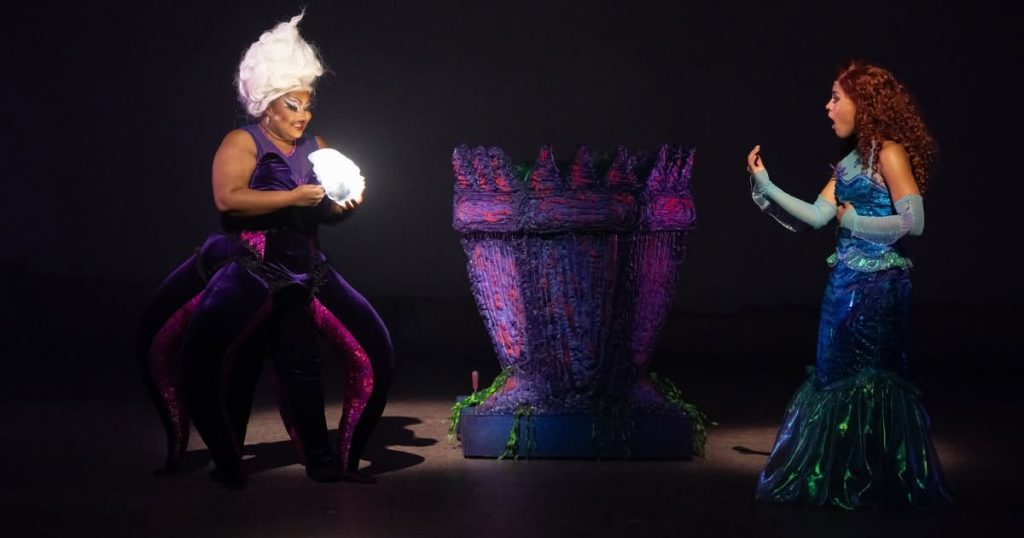
Nayomi Shackelford as Ursula with Kaelyn McCurtis.

Pry led an accomplished pit orchestra of 12 – Jonah Larsen, Joe Winters, Anne Stevenson, John Gerdes, Timothy R. Clark, Kris Pineda, Jeffrey Brayden Bollwinkel, Becca Bessette, Stephanie Brueggeman, Brandon Thompson, Alex Macke and Mo Carr.

(Fun fact: The movie is regarded as the property that resuscitated Disney’s reputation and ushered in the studio’s creative renaissance in the 1990s.)

The stage musical arrived in 2007, and there was a live-action remake in 2023.

With strong performances and portraying a vivid underwater fantasy world, COCA offered family-friendly escapism and provided an emotional connection with comedic and theatrical flair.
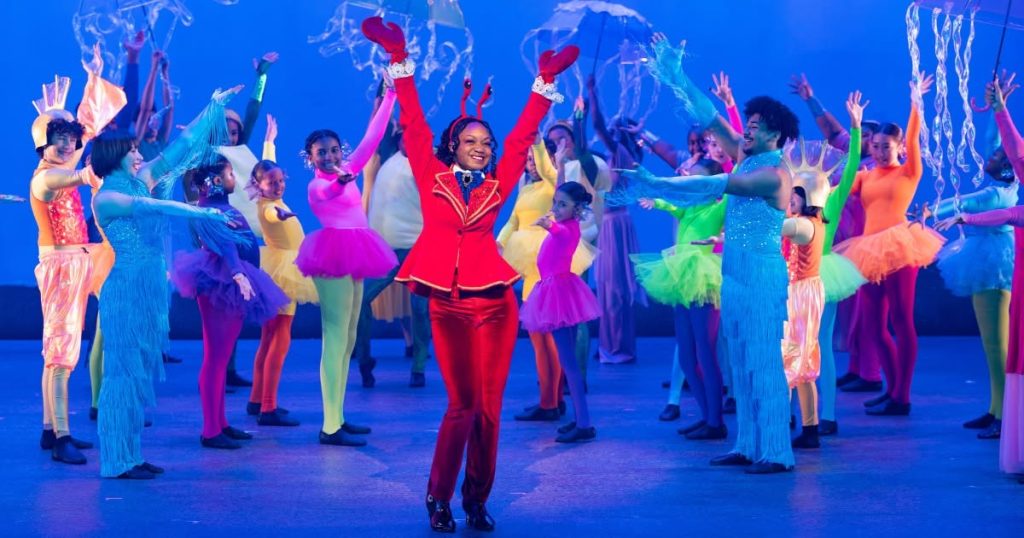
Safiya Austin-El as Sebastian led the showstopper “Under the Sea.”

COCA presented their summer musical, “The Little Mermaid,” on July 17-19 and July 24-26.

By CB Adams
Union Avenue Opera’s production of “Into The Woods,” stage directed by Jennifer Wintzer, is a rich tapestry. From the set design through the final song, you (figuratively) want to run your hands over the texture and enjoy its quality.

Stephen Sondheim and James Lapine are the weft and weave, but it’s way UAO finely stitches the musical’s balance of humor and humanity with death and disillusionment that delivers a sumptuous and reassuring tapestry – like a Bayreux or Unicorn come to life.

UAO earns these accolades for its season-ending production of “Into the Woods” with excellence in all the theatrical components: direction, staging and set design, costumes and cast performance. If you’re a Sondheim fan but have never attended a UAO performance, don’t let the word opera scare you off. They deliver a traditional interpretation of this classic without any elaborate or ornamental operatic embellishments.

If you’re an opera fan, UAO always ends its season with an operetta or musical. Last year, they concluded the season with a fine production of “Ragtime.” Many opera companies do this, such as the storied New York City Opera, and it’s a way to demonstrate how opera set the stage for subsequent musical theater iterations. It’s also a way to fill the seats.

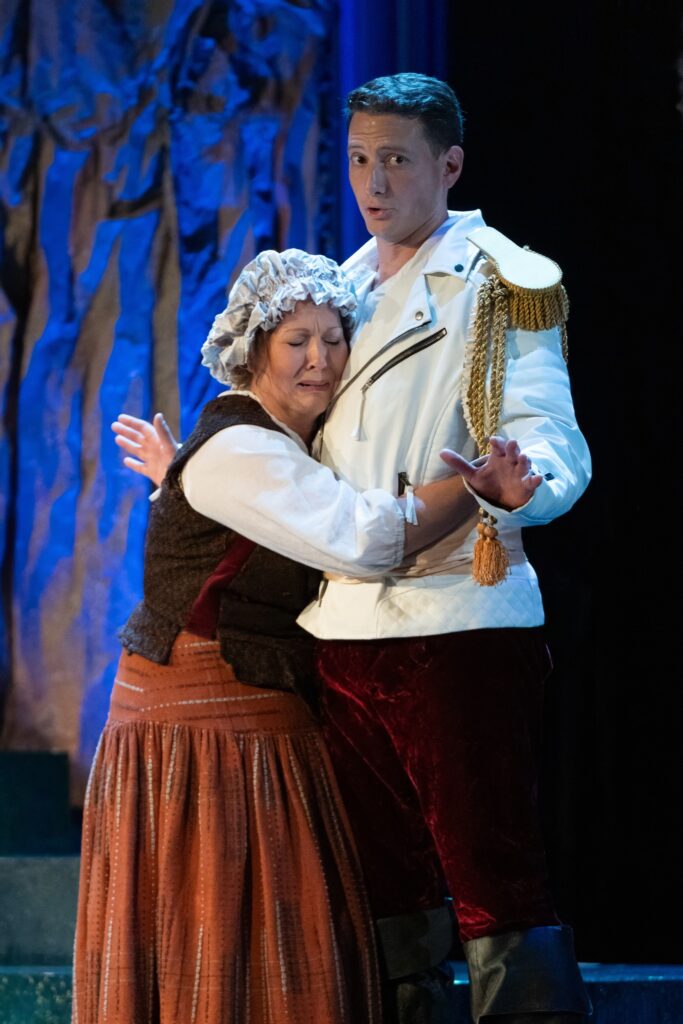
 Stephanie Tennill as Jack’s Mother and Matthew Greenblatt as Cinderella’s Prince, Photo by Dan Donovan.

The first – and one of the most impressive – aspects of this “Into The Woods” is the stage design by Laura Skroska, whose work on UAO’s production of the moody, atmospheric “Turn of the Screw” set was one of last year’s best. For “Into The Woods,” Skroska’s vision evoked the magical and eerie atmosphere of this fairytale world.

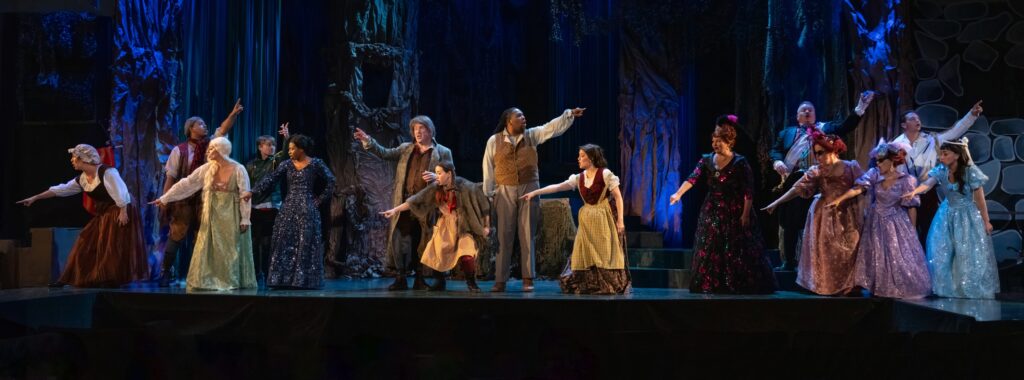
She, along with scenic artist Lacey Meschede and set decorator Cameron Tesson,  maximized the use of the Union Avenue Church’s modest stage by filling it with mossy tree trunks that serve as posts to multiple, rising platforms. The set extended into the sanctuary with the balcony festooned with moss and other elements from the main stage. The balcony also served as Rapunzel’s tower and the home of the heard-but-not-seen giants of Jack and Beanstalk fame.

Before the show began, the set created the ideal visual preparation for the rest of the performance. Skroska’s design elements  — expertly and effectively illuminated by Patrick Huber – underscore the timeless and complex nature of Sondheim’s work, ensuring that the woods felt both enchanting and foreboding, perfectly complementing the story’s themes.

Further enhancing the production are the outstanding costumes by Teresa Doggett. Appropriately tatty and fairytail-ish, Doggett’s costumes play a pivotal role in elevating “Into The Woods” by enhancing the visual storytelling and deepening the understanding of each character’s journey through the intertwined storylines. They reflect the dark, whimsical aspects of the show while paying homage to the traditional fairytale origins.

The movie adaptation of “Into the Woods” could use Disney magic to conjure the special effects. On stage, it’s a bit more challenging. UAO’s production makes fine use of the talents of puppeteer Jacob Kujath to portray Milky White, the emaciated cow, and a flock of birds. The use of these puppets adds a whimsical and imaginative element to the production. Kujath brings them to life through expressive manipulation and playful interactions that seamlessly integrate with the live action.

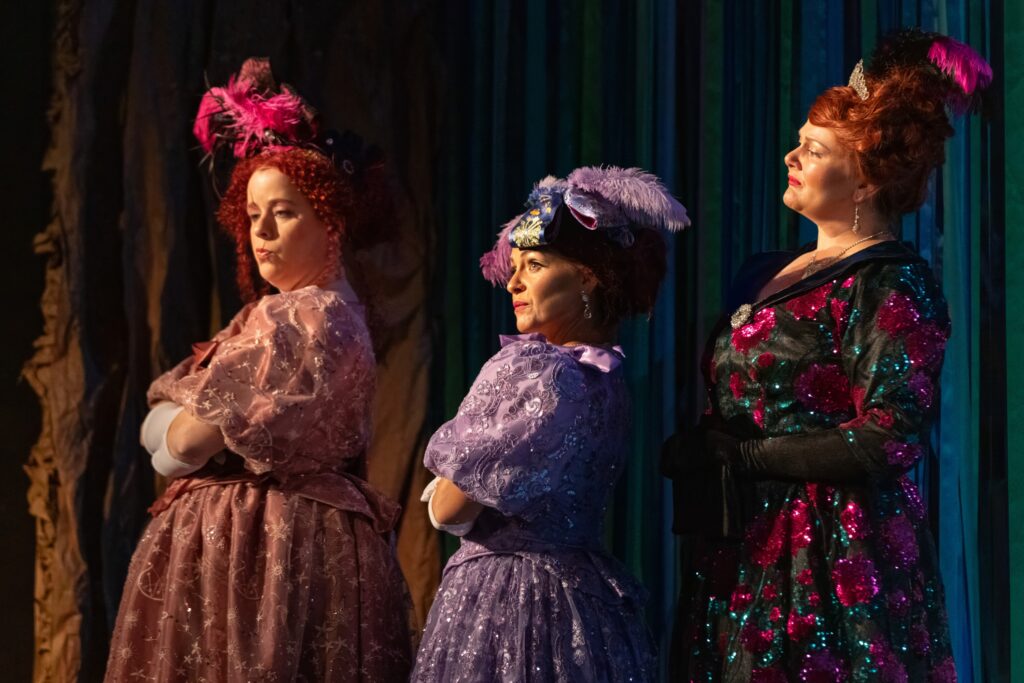
Rebecca Hatlelid as Lucinda, Gina Malone as Florinda, Debra Hillabrand as Cinderella’s Stepmother. Photo by Dan Donovan.

The cast of 21 showcases the depth and versatility across the roles with performances that rise from solidly good to exceptional. That latter response is earned by mezzo-soprano Taylor-Alexis Dupont for her Witch. Clad in a wickedly good mask, which is almost a character unto itself, Dupont intensely inhabits the character of the Witch and delivers an impressive performance.

It is a sheer delight witnessing Dupont – through powerful song and acting – deliver a full transformation of the Witch, exemplifying the duality of her character. Her believable duality turns “Children Will Listen” into an emotional, cautionary swan song delivered by a once-menacing – but now tragic – figure.

“Into The Woods” isn’t all serious and dark. At the other end of the spectrum from the Witch are Rapunzel’s and Cinderella’s respective, rather vacuous princes, played by tenors James Stevens and Matthew Greenblatt. Their duet “Agony” is usually one of the top-three most favorited songs, and Stevens and Greenblatt do not disappoint in their delivery of this biting, satirical tune.

Sidenote: “Into the Woods” debuted in 1986, and Cinderella’s dum-dum prince with his “I was raised to be charming, not sincere” attitude is definitely a precursor, if not the model, for the Ken character in the recent “Barbie” movie.

Soprano Brooklyn Snow’s portrayal of Cinderella her vulnerability with a growing strength, effectively conveying her journey from innocence to self-awareness through both subtle acting and dynamic vocals. Likewise, soprano Leann Schuering’s Baker’s Wife successfully merges the character’s fairy-tale origins with the weight of her decisions.

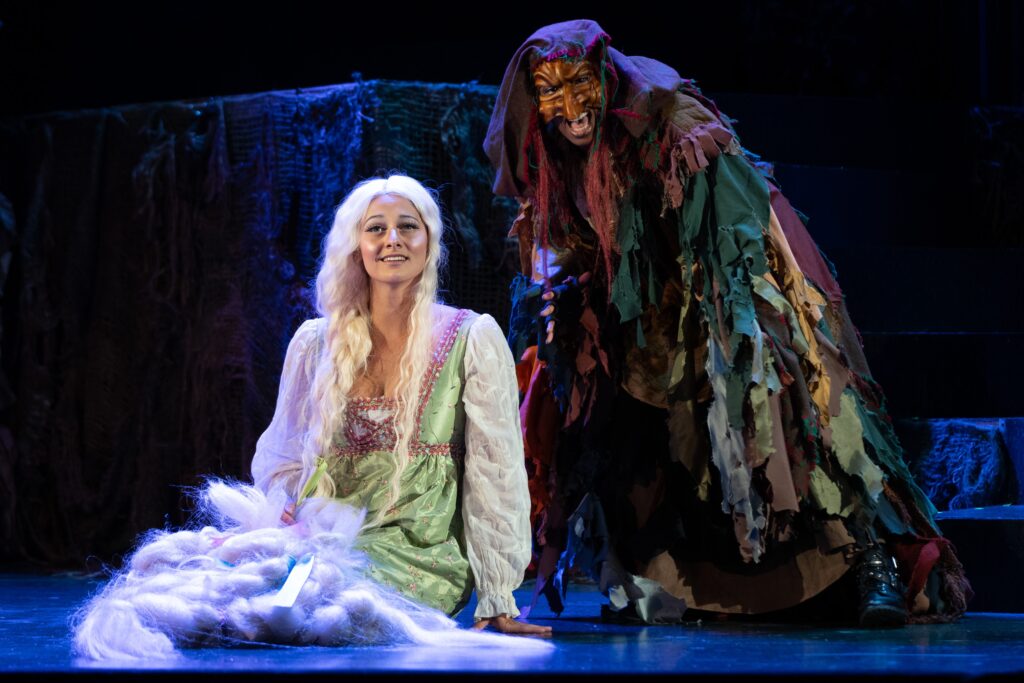
Lauren Nash Silberstein as Rapunzel and Taylor-Alexis DuPont as the Witch. Photo by Dan Donovan.

Schuering’s performance is marked by its depth and emotional resonance. Soprano Laura Corina Sanders performance of Little Red Ridinghood [sic] captures the character’s innocence and curiosity and skillfully transforms from naive cheerfulness to a deeper understanding of the dangers and complexities of the world.

Baritone Brandon Bell bakes into his performance as the Baker a balance of warmth with emotional complexity. Like the Witch, he too undergoes a transformation. Bell’s expressive acting and strong vocals make transition from reluctant hero to a more self-assured character both relatable and compelling.

Another baritone – a base baritone – Eric McConnell, delivers another highlight performance as the Wolf, with a blend of seductive charm and menacing undertones. McConnell’s deep voice projects exceptionally well into the sanctuary and masterfully balances the Wolf’s allure and danger with “Hello Little Girls” – a song that could come off as “pervey” with a less skilled performance.

Christopher Hickey plays both the Narrator and the Mysterious Man. Perhaps because the demands of each character are different, the Mysterious Man is the better of Hickey’s performances because there is more opportunity for him to inhabit the character, which he does by subtly weaving together intrigue and depth to create a profound and haunting presence.

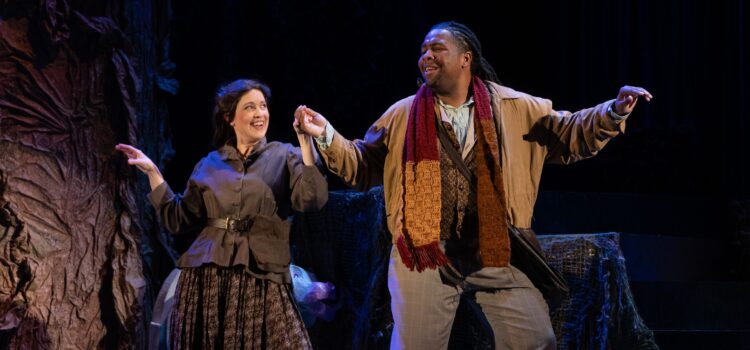
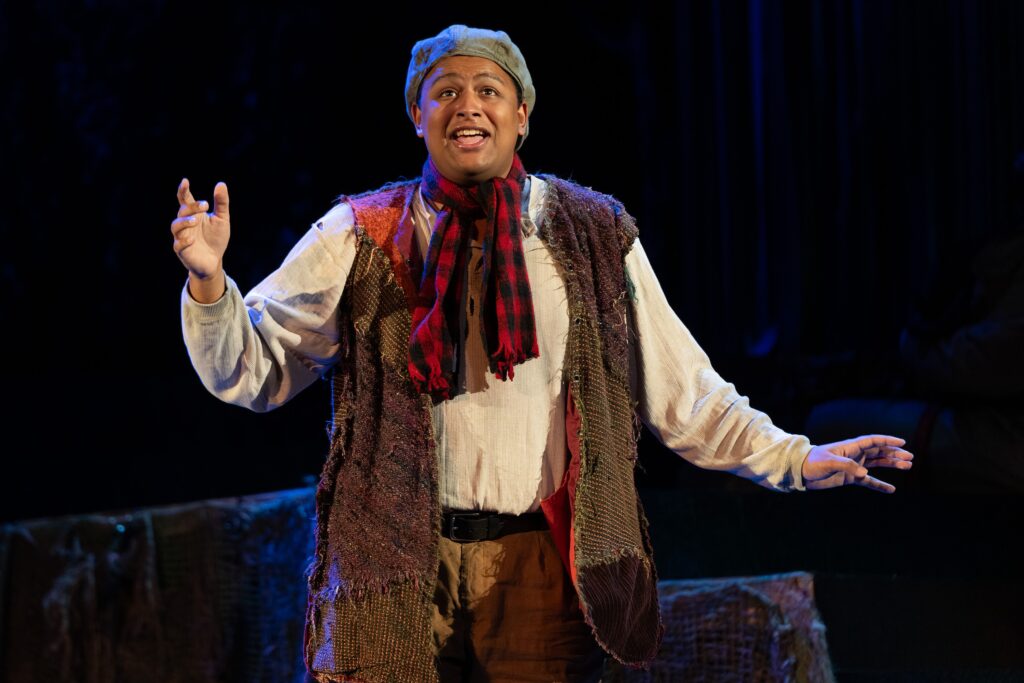
Cameron Tyler as Jack. Photo by Dan Donovan.

On opening night, the weakest element of this otherwise satisfying performance was the imbalance of the sound, especially during the first half. The unamplified voices, especially those of the female performers, were repeatedly overwhelmed by the orchestra.

This performance includes supertitles, but with a musical in English, they shouldn’t be necessary to hear what’s going on. This made for a frustrating experience, leaving one wishing to “turn up” their volume a click or two to better enjoy the quality of the singing and dialogue.

This feeling was further exacerbated because the orchestra, under the direction Scott Schoonover, superbly performed the score. It would have been a shame to miss a single note. Perhaps because adjustments were made during the intermission, the sound issue was almost eliminated in the second half.

Another side note: From Greek myths to Joseph Campbell’s “The Hero’s Journey,” Carl Jung’s psychology and the fairytales of the Brothers Grimm, the “dark woods” are often inhabited by archetypal patters and are a place of confusion, danger or the unknown where the hero or heroes confront trials and their shadow selves.

Sondheim and Lapine created a masterful musical that hews closely to the cautionary purpose that fairytales were designed to convey. This cannot be a musical with an empty, happily-ever-after ending. UAO’s production effectively – and accurately – delivers an ending that should leave the audience feeling reflective, with a palpable poignancy that underscores the idea that while fairy tales may end, the journey of growth and understanding continues. It takes two acts and a lot of songs to reach that point.

Union Avenue Opera’s “Into The Woods” plays August 16-24. Visit unionavenueopera.org for more information.

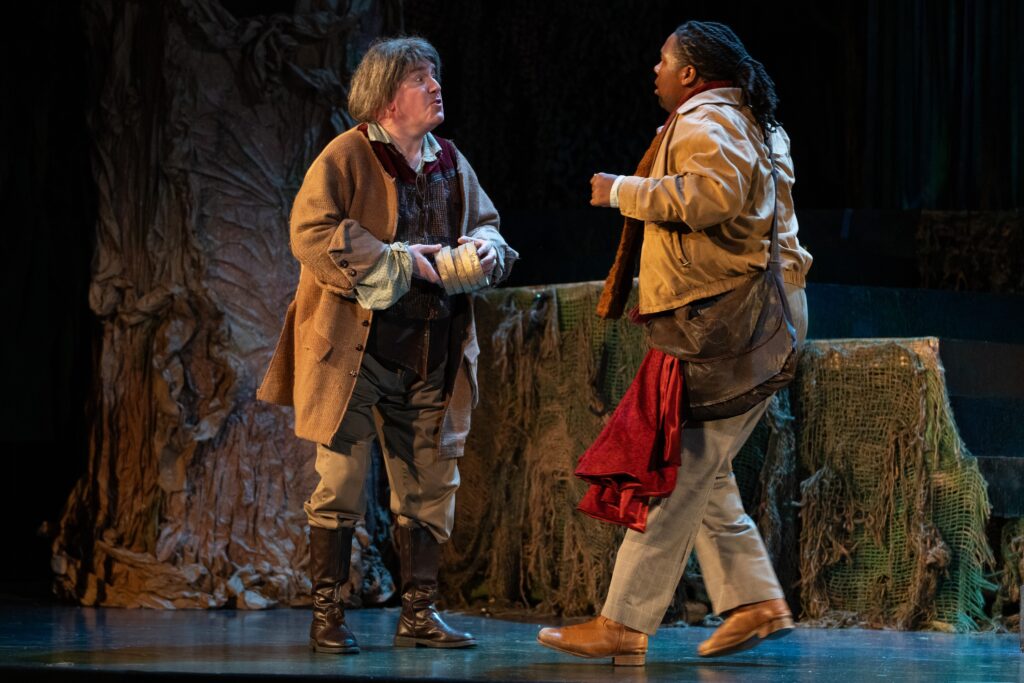
Christopher-Hickey-as-the-Narrator-and-Brandon-Bell-as-the-Baker. Photo by Dan Donovan.