
By Alex McPherson

Director Matt Johnson’s “Tony” is an excellently acted mini-biopic that goes beyond  familiar plot beats to paint a textured portrait of a fascinating, troubled soul.

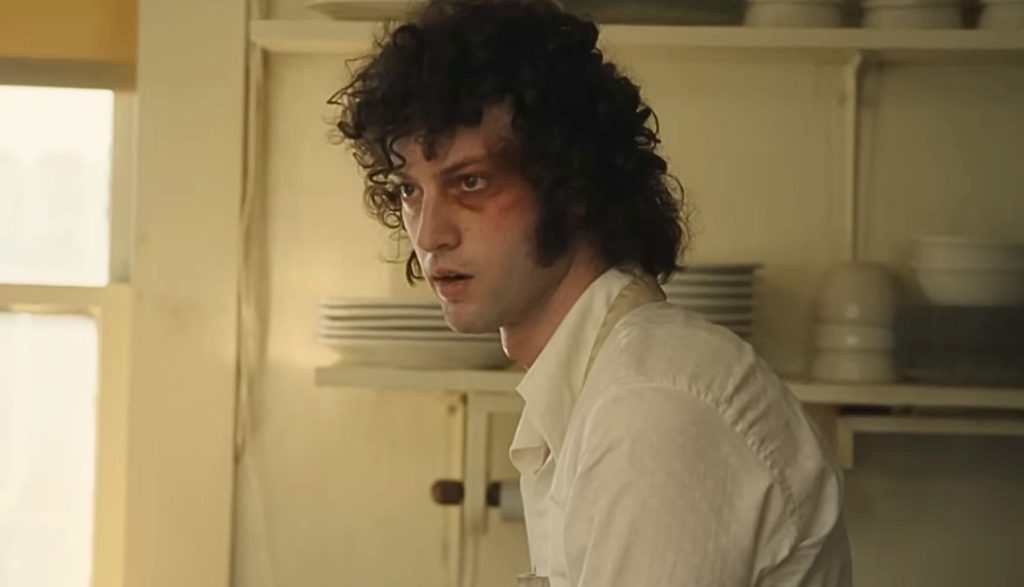
Adapted from a few chapters of Bourdain’s 2000 memoir, Kitchen Confidential: Adventures in the Culinary Underbelly, “Tony” takes place over the summer of 1975, when 19-year-old Anthony Bourdain (Dominic Sessa), a cocky student at Vassar College, dreams of becoming the next Great American novelist.

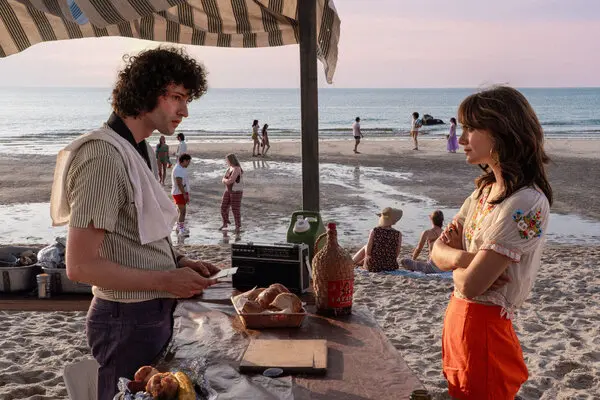
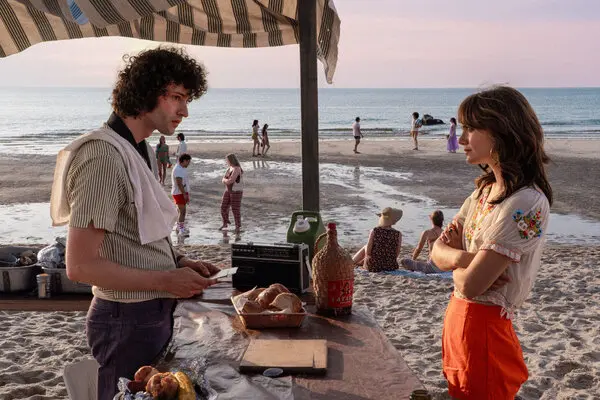
He’s super confident he’ll receive a grant from the school’s Fellowship Committee — too confident, actually. He even works up the courage to chat up Nancy (Emilia Jones), a high school crush, and learns she’s headed to Provincetown for summer break. 

He’s rejected for the grant, but Bourdain will be damned if he admits to anyone he didn’t get it, especially his judgmental mother (Dagmara Dominczyk). He tells his family he got the fellowship and travels to Provincetown to track Nancy down. He finds her, but discovers she has a boyfriend. 

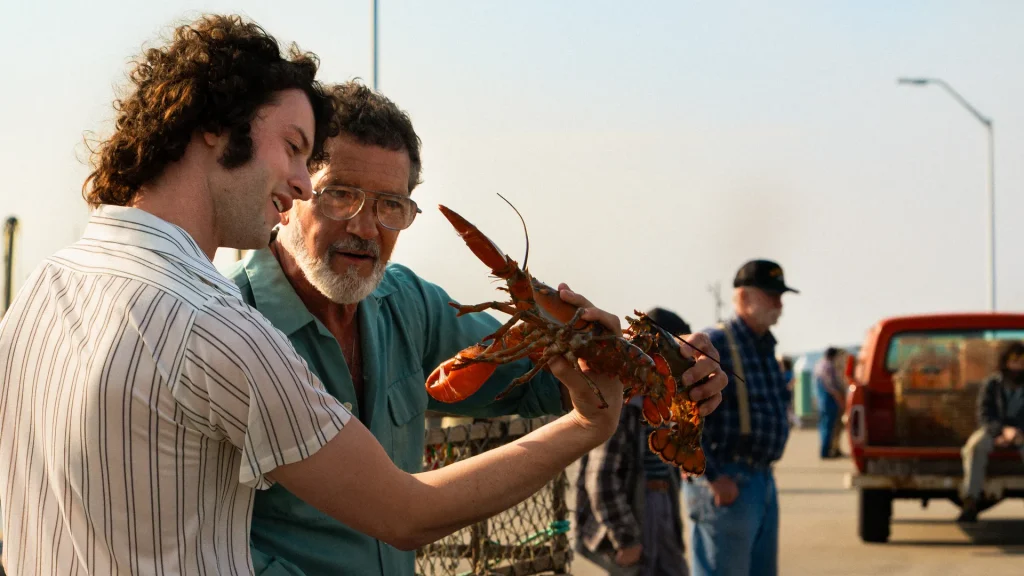
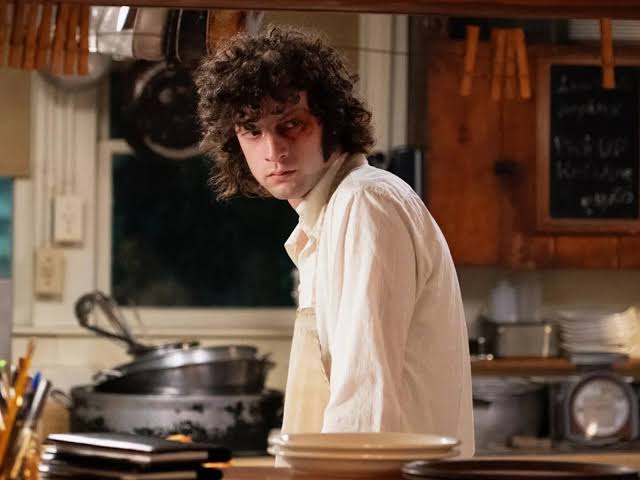
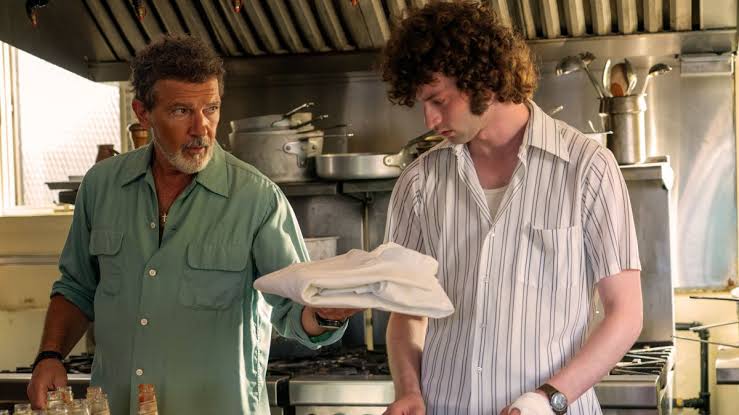
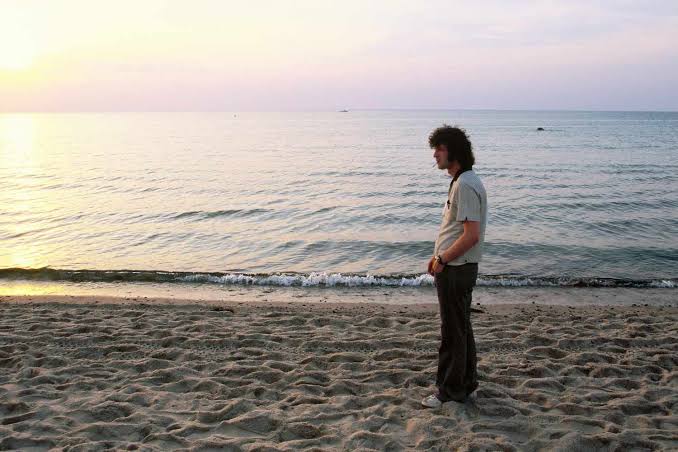
A drunken Bourdain is beaten up shortly afterwards at a local bar, The Flagship, and is thrown out on the street. He later finds himself (without his wallet) in a beachside hammock on a residence owned by The Flagship’s head “Chef” (Antonio Banderas). Chef takes pity on down-on-his-luck Bourdain and offers him a job as a dishwasher.

Through reluctantly accepting this new gig, Bourdain becomes immersed in the culinary world in all its messiness and joys, and we catch glimpses of the influential chef he’ll ultimately become. 

With a premise like this, “Tony” seems like it’ll follow a conventional trajectory, and, generally, it does. But one mustn’t underestimate the directorial verve of Johnson (director of “Nirvanna the Band the Show the Movie” and “BlackBerry”), who finds humor, pathos, and surprising authenticity between the lines.

Nuance abounds in “Tony,” which examines its central subject without sanding down his idiosyncratic brilliance or the darkness and self-destructiveness lurking beneath his confident façade. It doesn’t depend on previous knowledge of Bourdain to succeed as a coming-of-age story in its own right.

The film’s lived-in charms are supported by filmmaking that builds a deep, sun-tinged sense of place. Johnson captures the trauma-bonded camaraderie and undeniable thrill of working in restaurant kitchens, and recreates 1975 Provincetown with striking attention to detail.

Numerous outdoor shots are draped in a wistful, golden hour glow beautifully filmed by cinematographer Michael Bauman and soundtracked to a collection of pitch-perfect needle drops. He also conveys Bourdain’s loneliness and alienation, by initially having him drift through bustling places like an invisible outcast.

Sessa is downright magnetic as Bourdain, capturing his charisma and bravado along with his self-pity and deep-seated feelings of inadequacy, lending even the film’s more outright comedic moments a sense of melancholy. This is especially effective if you know the struggles of Bourdain’s later years.

Bourdain, as written by Johnson, Todd Bartels, Lou Howe, and Matthew Miller, struggles to reconcile the person he wants to become (a writer who we never actually see write anything) with who he actually is.

He’s unable to admit to himself and to others (particularly Nancy) that his life is following a different trajectory than what he had initially planned. He’s adrift, searching for a sense of direction, and his experiences at The Flagship present different paths he could head down.

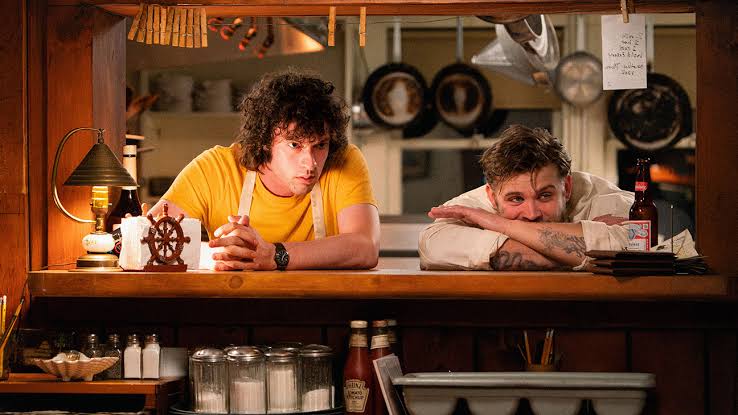
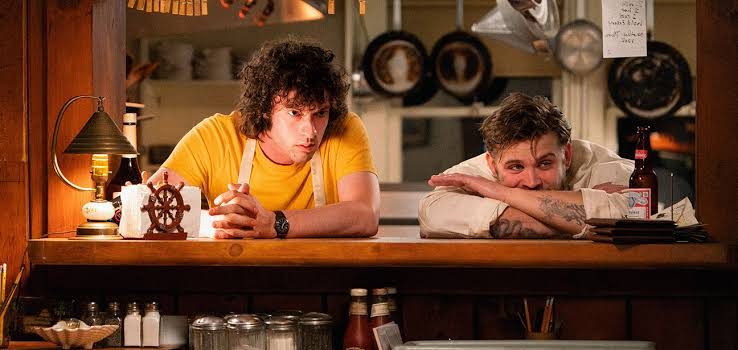
Bourdain strikes up a friendship with Sal (an outstandingly live-wire Leo Woodall), a hard-partying, womanizing, rebellious coworker who helps bring him out of his slump while tempting him with numerous vices.

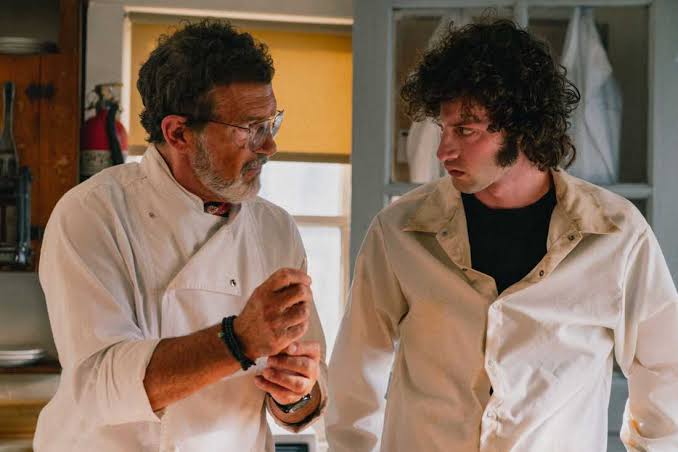
But it’s really “Chef” who truly connects; Banderas brings a deep sense of wisdom and tough love that helps unlock Bourdain’s eventual passion for food, even if he takes too much joy in splashing a bucket of ocean water on Bourdain’s face every morning before work. 

Both Sal and Chef (created as amalgamations of various people Bourdain met throughout his career) are vividly realized with a naturalism and dry wit that feels real and decidedly un-Hollywood.

Each provides Bourdain with different paths he could follow, if he’s willing to finally grow up. The supporting cast, including Stavros Halkias, Michael Jibrin, and Monica Raymond, is fantastic; frankly, they’re just a fun group to hang out with.

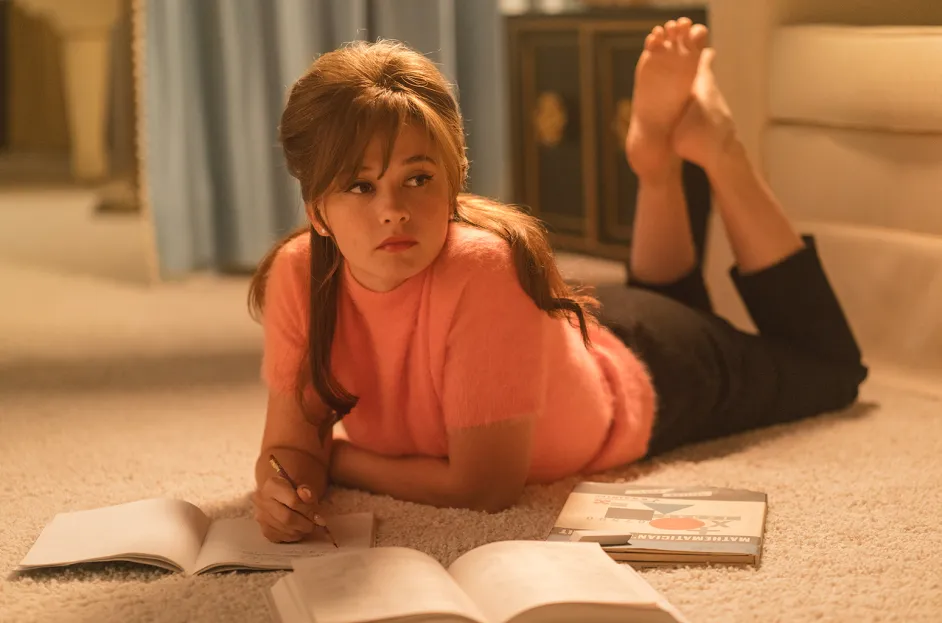
Emilia Jones as Nancy is given far less to work with here, and it’s clear that “Tony” doesn’t quite know what to do with her besides make her an object of Bourdain’s obsession and eventual growth. At several points, the camera seems to linger creepily over Jones — whether or not we’re supposed to be viewing Nancy through Bourdain’s eyes, it’s off-putting and distracting.

When “Tony” nears its conclusion, though, the more generic aspects of the narrative fall away to leave us with surprising poignancy. The film reminds us to live in the moment and not confine ourselves to expectations. It becomes a more truthful tribute to the real Bourdain (and a fuller  meal) than any hagiographic biopic could ever be.

“Tony” is a 2026 biopic directed by Matt Johnson and starring Dominic Sessa, Antonio Banderas, Emilia Jones, Leo Woodall, Stavros Halkias, Dagmara Dominczyk, Michael Jibrin, Monica Raymund and Rich Sommer. It is Rated R for pervasive language, drug use, and sexual content/nudity and is 1 hour, 46 minutes. It opened in theatres Aug. 21. Alex’s Grade: A-

By Alex McPherson

Stylistically resonant with absorbing performances from Cailee Spaeny and Jacob Elordi, director Sofia Coppola’s “Priscilla” is emotionally removed, eschewing a deeper dive into its subject’s headspace for dreamlike stasis with little payoff and, ultimately, not much of note to say.

Based on the book “Elvis and Me” by Priscilla Presley (who also executive-produced the film), Coppola’s adaptation charts the whirlwind romance between young Priscilla (Spaeny) and the insecure, hip-gyration-loving King of Rock and Roll himself (Elordi). We’re introduced to 14-year-old Priscilla (then Beaulieu) in 1959, when she’s a high school student living with her parents (Ari Cohen and Dagmara Dominczyk) on a U.S. Air Force Base in Wiesbaden, Germany. A chance encounter at a diner leads to her being invited to a house party hosted by 24-year-old Elvis, who’s currently serving in the Army.

Priscilla is thrilled and, after battling her anxious, apprehensive parents, is allowed to attend. Once she arrives at the party in Bad Nauheim, which the film frames like a moody jazz club radiating from the powerful man at its center, Elvis (again, 10 years Priscilla’s senior) almost immediately falls for her; she reminds him of home. 

Thus begins their deeply problematic courtship. Elvis leaves Germany for The States, which tears the crestfallen Priscilla apart: she spends her days anxiously awaiting letters and calls, daydreaming through classes and growing increasingly jealous hearing about Elvis’s tabloid headlines involving other women. In 1963, she’s summoned to Graceland, indulging in extravagance (and prescription drugs, instigated by Elvis) with his posse of rowdy friends who became known as the Memphis Mafia. 

After returning to Germany, she and Elvis convince her parents to let her move to Graceland to finish her senior year of high school. Everything seems like a fairy tale in Priscilla’s eyes, at least at the beginning, but deep cracks begin to form in their relationship. Denied intimacy and manufactured to be Elvis’s porcelain doll of a wife, Priscilla is sapped of independence – trapped in a glossy cage with an emotionally unintelligent artist grappling with his own identity at the expense of hers, until she decides that she’s had enough.

Indeed, “Priscilla” is a depressingly bleak look at a relationship steeped in toxic behaviors and feelings of claustrophobia. While Coppola effectively conveys the story’s saddening atemporality, in which Priscilla’s lack of development reflects her captor’s attempts to mold her, the intentionally distant approach backfires. The film jumps erratically through time without meaningful buildup to Priscilla’s rebellion, or, oddly, real insight into who she is and hopes to be.

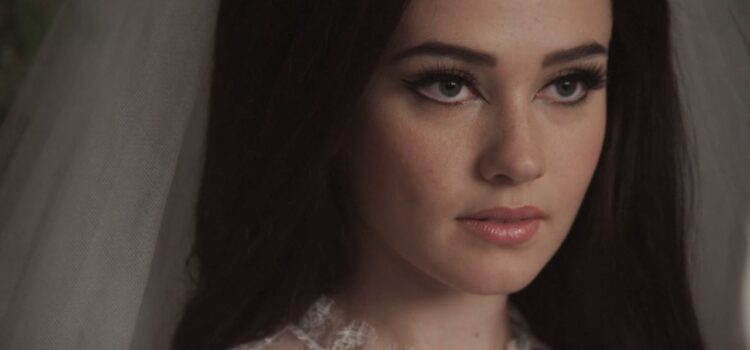
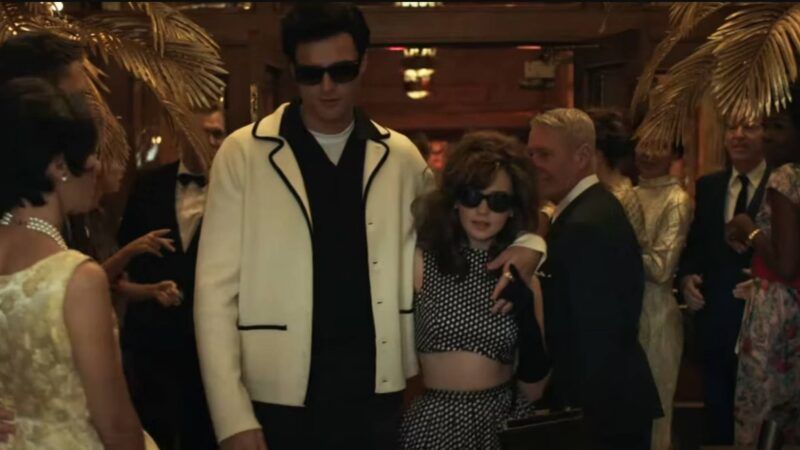
The performances, however, are difficult to fault, even when delivering Coppola’s occasionally clunky dialogue. Spaeny precisely embodies Priscilla’s wide-eyed youthfulness and growing maturity. We observe her longing, euphoria, and disillusionment with a celebrity she’s idealized and who has trapped her in cycles of loving and abuse, tenderness and chaos. “Priscilla” is largely framed through her eyes, as we watch her enduring situations where others talk at her and she, often nonverbally, emotes multitudes through subtle facial expressions and body language. Stacy Battat’s costume design further helps emphasize Priscilla’s separation from her past and from her true self, fashioned to appease Elvis’s demands. Her frustration and yearning is efficiently portrayed by an actor deserving of all the accolades (hopefully) headed her way.

Elordi is similarly effective, taking a far different approach than Austin Butler’s flamboyant (and highly entertaining) turn in Baz Luhrman’s 2022 biopic, “Elvis.” Elordi nails Elvis’s voice and physique, towering over Spaeny in an on-the-nose reminder of their age gap and power dynamic. Elordi’s Elvis is charismatic, trouble-making, and selfish, a victim of stardom grappling with his own image and expectations forced on him by people like Colonel Tom Parker. 

While “Priscilla” is more focused on his direct interactions (or lack thereof) with Priscilla, we infer outside drama and betrayal through conversations Priscilla overhears and headlines she reads. The victimization and mental struggles that Elvis experiences seep into his personal life. He might love Priscilla on some level, but sees her as someone to be controlled. Elvis holds her back to retain her purity, perhaps as a way for him to appease his own regrets and status as a sex symbol while he lives a life of stardom singing and acting in Hollywood (sleeping with many women along the way).

With such committed performances from Spaeny and Elordi, it’s a shame that “Priscilla” is such a cold viewing experience – which might be the point. This is a dark story of fantasy brought down to earth, less about empowerment than disempowerment. 

The film’s first half unfolds like a dream, hazy and ethereal, as Sarah Flack’s editing conveys the whirlwind romance with a sense of inertia that Priscilla finds difficult to break free from. What starts out as unexpected, surprising, and thrilling devolves into tedious cycles of mistreatment and placation. We feel for Priscilla, mostly thanks to Spaeny’s acting, but the film’s second half sags due to Coppola’s seeming refusal to dig deeper into Priscilla’s psyche; more based on vibes than genuine insight as the years tick by and Priscilla becomes a bride and mother. 

Frequent Coppola collaborator Philippe Le Sourd’s cinematography is murky and cloudy, echoing Priscilla’s stagnation – never drawing too much attention to Tamara Deverell’s period-accurate set design. Coppola frequently resorts to montages to depict the passing years, emphasizing how little has changed in Priscilla’s fraught situation.

This minimalist approach to Priscilla’s rebellion is muted to a fault. There’s little crescendo to her final decision, besides viewers knowing from the outset that she eventually divorces Elvis. As a result, Coppola’s restrained approach to the material seems like checking off boxes instead of organically telling a story about one woman’s resilience in the face of adversity. The reasons Priscilla continues to stay with Elvis are complex and worthy of exploration, though the film holds her at arm’s length. 

Combined with a jarringly abrupt ending and a soundtrack that too often tries to sell emotions through lyrics (with no Elvis tunes in the lineup), “Priscilla” stays afloat thanks to the magnetic performances of its two leads. For Spaeny and Elordi, especially Spaeny, “Priscilla” is worth a look, but it remains a missed opportunity for a filmmaker capable of greatness.

“Priscilla” is a 2023 drama directed by Sofia Coppola and starring Cailee Spaeny, Jacob Elordi, Ari Cohen, and Dagmara Dominczyk. It is rated R for drug use and some language, and runs 1 hour, 50 minutes. It opened in theaters November 3. Alex’s Grade: B-