By CB Adams

Winter Opera St. Louis’ “Un Ballo in Maschera” succeeds through design. Dianna Higbee approaches Verdi’s tragedy as an architectural problem — how to assemble inevitability — and solves it with patience, proportion, and a clear understanding of where the drama must turn.

The result is an evening of quiet authority, its pressure accumulating through the deliberate arrival and consequence of Verdi’s great confessional arias, and supported by three solid, intelligent performances at its core.

This is Verdi at the height of his dramatic powers, writing in liberated form, where arias reorganize the action and reshape the moral terrain. Higbee honors that maturity by spacing those moments as structural pillars, allowing each confession to alter the dramatic balance. Tragedy unfolds by design, threshold by threshold, until the final masked ball arrives as the natural release of long preparation.

Beneath that design, the orchestra, under Andy Anderson’s direction, sustains the evening with clarity and proportion. Anderson shapes Verdi’s score with rhythmic lift and supple balance, allowing the architecture of the arias to emerge with natural ease rather than orchestral insistence.
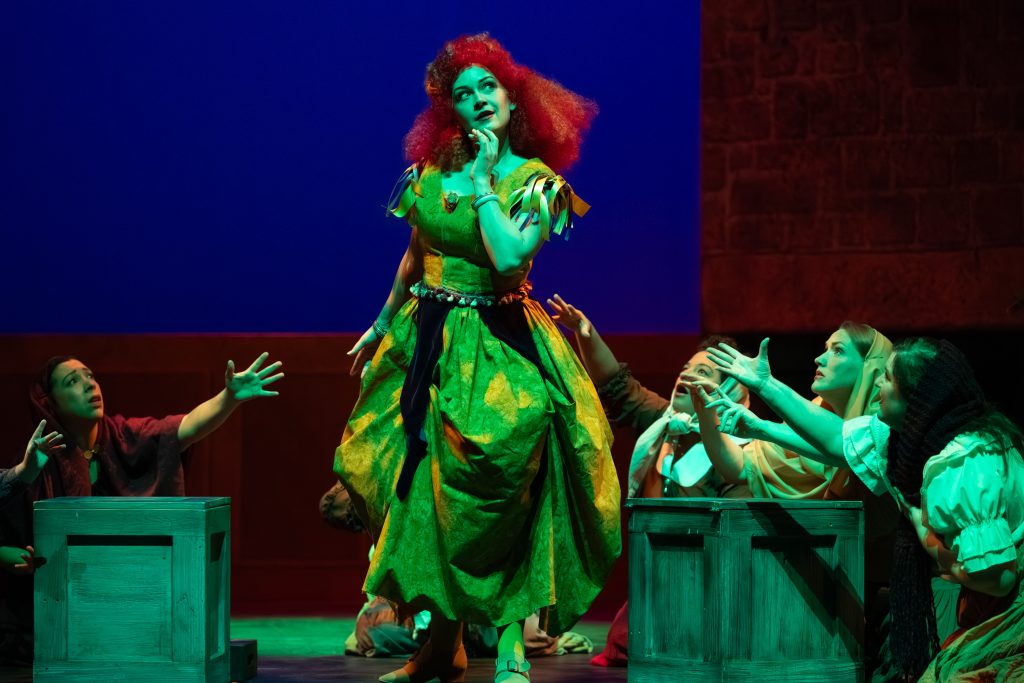
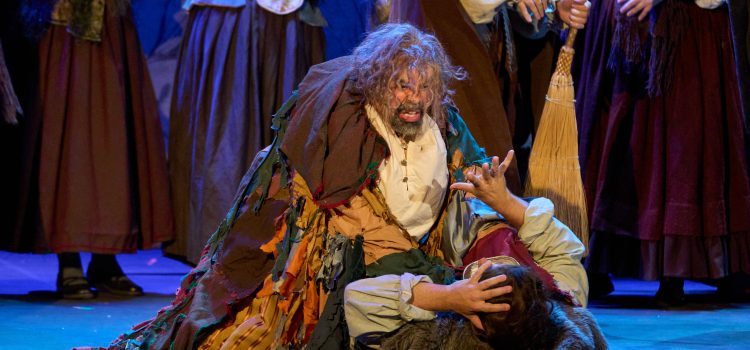
Photo by Dan Donovan.

Owing to the postponed performance and inclement weather, the harp part was realized at the piano and a bass was absent from the ensemble, adjustments that passed almost unnoticed in playing of such refinement.

Textures remained transparent, transitions breathed freely, and climaxes rose from accumulated pressure rather than display. The result gave Higbee’s pacing its continuous pulse while leaving the psychological weight squarely with the singers.

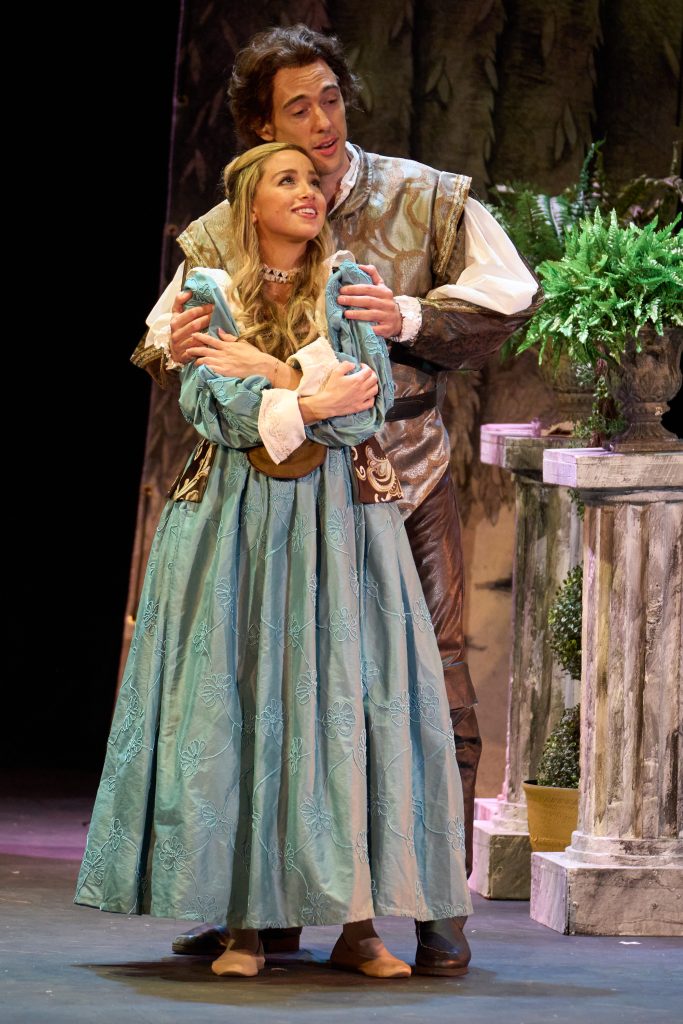
At the foundation of that design stands Isaac Hurtado’s Riccardo, the lighthearted governor whose charm quietly initiates the ruin to come. Hurtado sings “La rivedrò nell’estasi” with easy lyric brightness, establishing authority and allure without courting display.

Desire enters the drama gently here, almost casually, and that very ease becomes dangerous. Hurtado’s Riccardo remains humane throughout, a leader whose discipline delays catastrophe without preventing it.
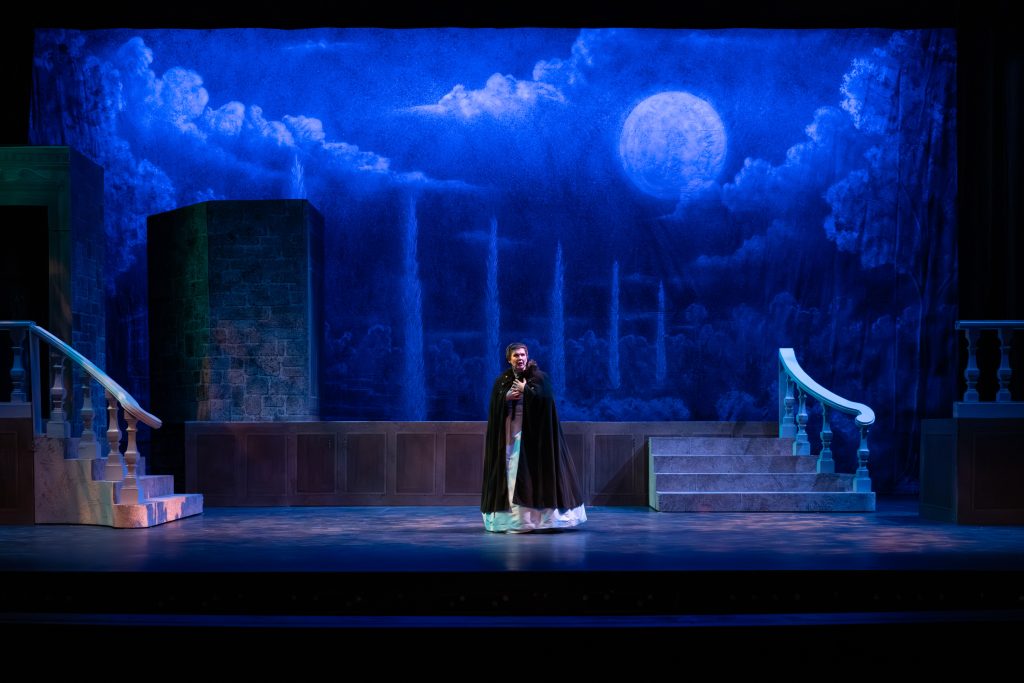
Photo by Dan Donovan.

Liz Baldwin’s Amelia forms the opera’s moral center, and her performance anchors the evening with a rare balance of power and vulnerability. In “Morro, ma prima in grazia,” Baldwin shapes the line as an interior reckoning, the voice carrying fear, longing, and resolve in equal measure. This becomes the threshold where tragedy turns irreversible. After her confession, the emotional landscape shifts, and the opera’s remaining possibilities quietly contract.

The final structural pillar arrives with Joseph Gansert’s Renato. His transformation from loyal secretary to assassin unfolds with grim clarity, and in “Eri tu” Gansert delivers the evening’s defining rupture.

The aria rises as psychological collapse rather than bravura, the baritone’s force shaped by anguish rather than fury. Here the architecture locks into place. After this moment, the opera contains no alternatives, only ritual.

Verdi’s tragedy rests on the slow destruction of three people who love one another, and Higbee allows that triangle to emerge with uncommon coherence. Riccardo’s charm, Amelia’s conscience, and Renato’s wounded loyalty form a geometry that builds its own ruin, confession by confession, until fate requires only a public stage.
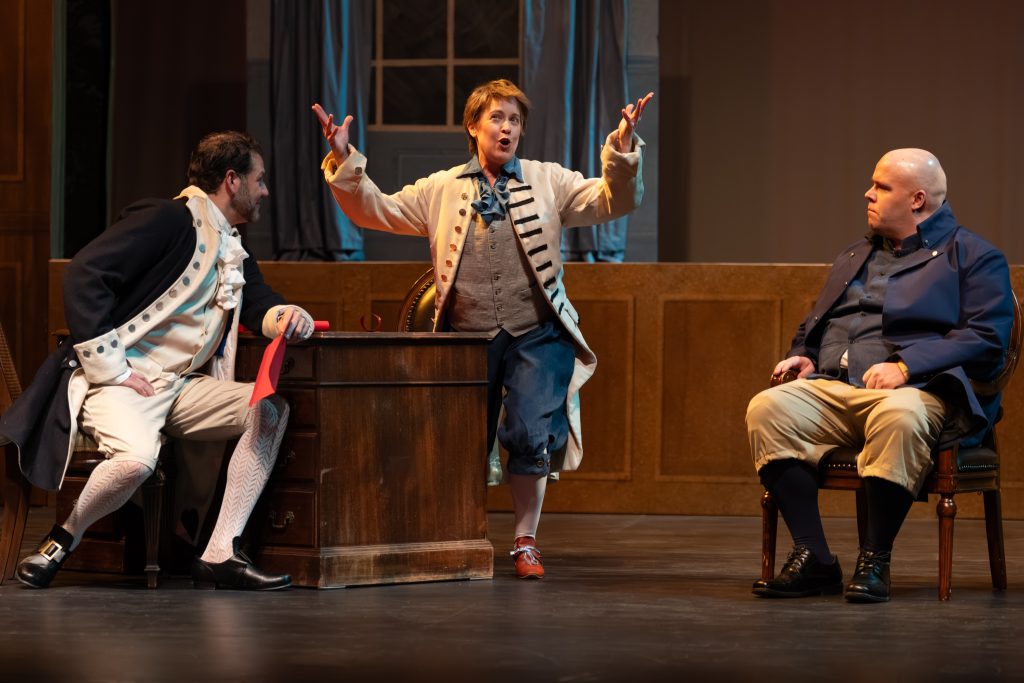
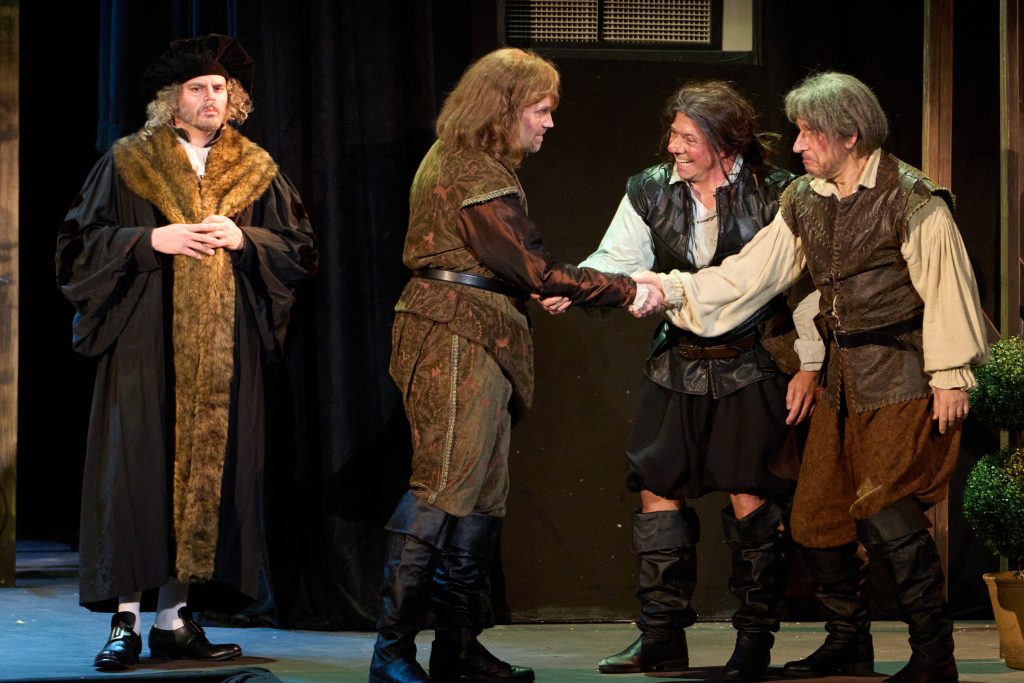
Photo by Dan Donovan

Around that core, the production finds its colors with intelligence. Ola Rafalo’s Ulrica delivers prophecy with impassive authority, her restraint giving fate the calm weight of certainty — a discipline owed as much to Higbee’s direction as to the mezzo’s control.

At the opposite pole, Leann Schuering’s Oscar, one of opera’s classic “pants” roles, emerges as sprightly, puckish, almost Chaplinesque, her physical wit and bright tone preserving humanity inside gathering darkness.

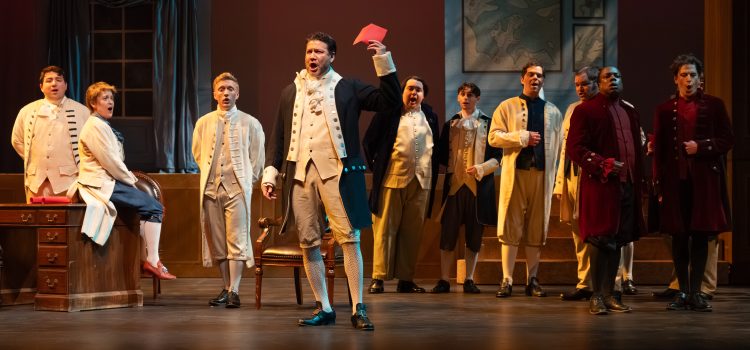
The visual world reinforces that architecture with quiet intelligence. Drawing on the Boston setting and the approaching 250th anniversary of the American Revolution, Higbee frames the drama in a clear chromatic language, Americans in blue set against the red of their British adversaries, the evening moving steadily toward a Fourth of July finale shadowed by catastrophe.

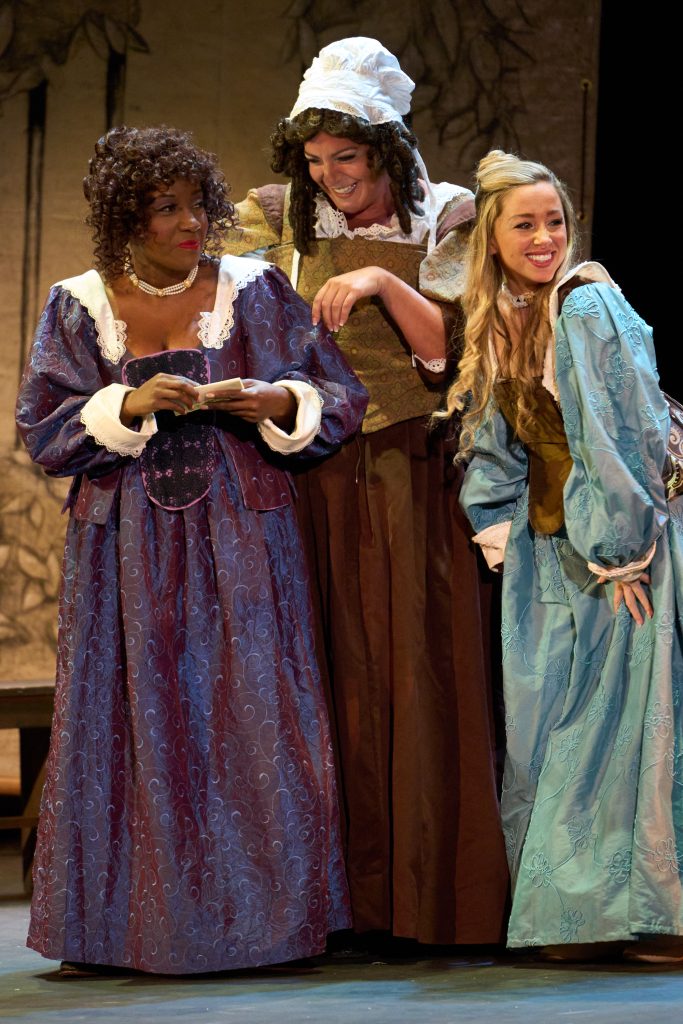
Jen Blum-Tatara’s costumes clarify status and psychology while lending the masked ball its necessary ceremony, sharpening the sense of ritual that governs the final act.
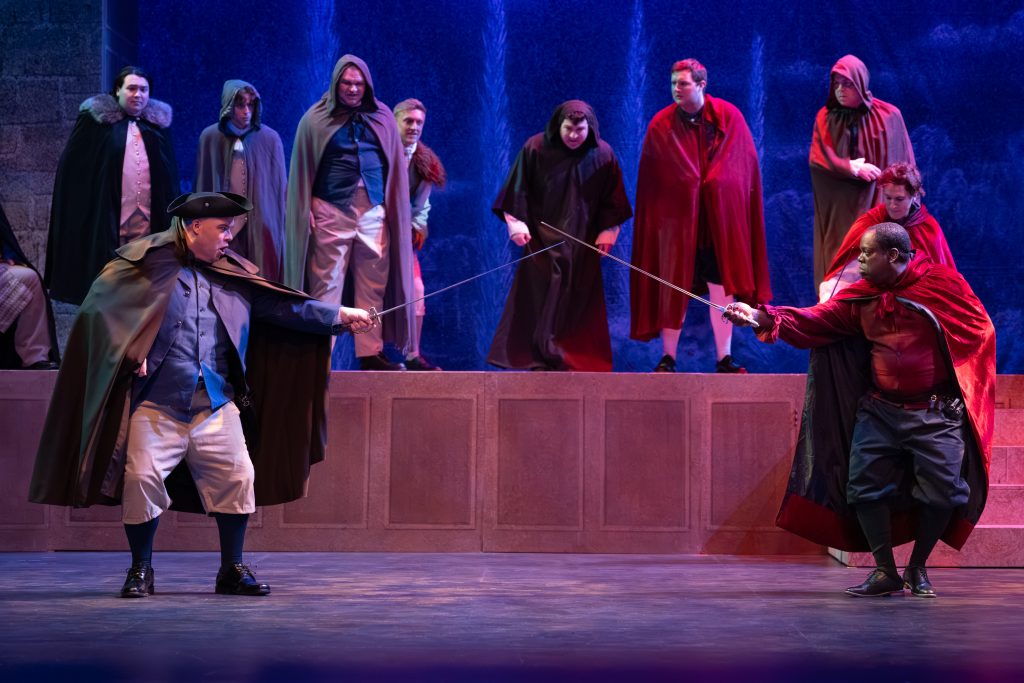
Photo by Dan Donovan.

Dennis Milam Bensie’s wigs, exuberant and faintly surreal, introduce flashes of visual fantasy — a hint of Oz in their theatrical whimsy, a touch of “Barry Lyndon” in their powdered hauteur, and the occasional echo of Lynch’s “Dune” in their ceremonial strangeness — reminding us that disguise here belongs as much to dream and ritual as to history.

This “Ballo” makes its case through proportion rather than display. Higbee’s design vindicates Verdi’s mature craftsmanship, allowing voices, confession, and consequence to assemble a tragedy that unfolds with discipline and grace. The memory it leaves is not of a single high note, but of a long arc patiently carried, voice by voice, into ruin.

Winter Opera St. Louis presented “Un Ballo in Maschera” at the Kirkwood Performing Arts Center. The production originally ran Jan. 23–26, 2026.
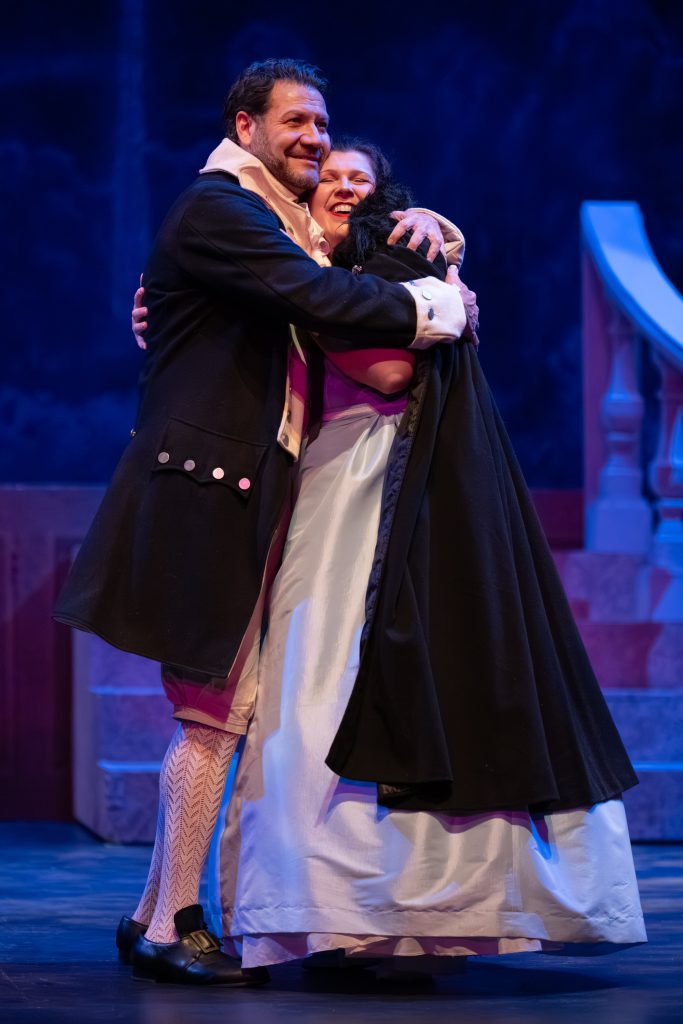
Photo by Dan Donovan.

By CB Adams

There’s a moment in the “classic” 1989 movie “Fletch Lives” when Chevy Chase as Fletch says it takes a big man to admit when he is wrong. To which he adds, “I am NOT a big man.” It takes the comedic instincts and delivery of Chase to get laughs from that line, and it takes baritone Robert Mellon as the title character in Union Avenue Opera’s production of Giuseppe Verdi’s “Falstaff” to elicit that reaction for 2 ½ hours of witty, plus-sized, boozy merriment.

Mellon has big shoes to fill as Falstaff, a beloved barfly who appears in four plays by William Shakespeare (if you count the one in which he is eulogized). Plumped up in a hunchbacked fat suit, Mellon fills his Falstaff as a big man (literally) who gets big laughs while working his wiles with the merry wives of Windsor and their various and sundry significant others. As one of the “holy trinity” of comic operas, “Falstaff” may reside with the likes of “The Marriage of Figaro” and “The Master-Singers of Nuremberg,” but it’s Mellon and the rest of the cast who make this production flat-out fun.

Union Avenue Opera’s production of Falstaff on July 27, 2022.

This may be Falstaff’s show, but he, like Mellon, needs comedic foils who provide equal helpings of wit and charm, and this production has them. “Falstaff” is a concentrated opera without long arias, but with melodies that practically fly by. That’s well-suited to the talents of Marc Schapman and Mark Freiman as Falstaff’s scheming henchmen, Bardolfo and Pistola, respectively, who bounce off each other amusingly. As does Anthony Heinemann as Dr. Caius and Jacob Lassetter as Ford.

Also up to Falstaff’s formidable foibles is the trifecta of Karen Kanakis, who sings Mrs. Alice Ford, Melody Wilson as Mrs. Meg Page and Janara Kellerman as Dame Mistress Quickly. This triumvirate were delightful – individually and collectively – as they work to counter Falstaff’s schemes with a refreshing equality of the sexes. A subplot involves the young lovers, Nannetta and Fenton, and their best scene concludes Act I. As sung by soprano Brooklyn Snow and tenor Jesse Darden, it’s one of the opera’s best moments.   

Under the baton of conductor Stephen Hargreaves, the music of Verdi’s final opera and only second comedy is frothy, splendid and connects deeply with the performers. Teresa Doggett’s costumes were not only tailored for the overall period of the opera, they also elevated the visual presence of each character.

The stage at Union Avenue Christian Church poses certain creative challenges, but its modest size is well-suited to this opera. Scenic designer Lex Van Blommestein makes maximum use of the stage by going “old school” and using cloth panels to set the scenes, including Falstaff’s favorite haunt, the Garter Inn. Under the direction of stage manager Megan-Marie Cahill, the crew openly raise and lower the panels, replete with squeaky pulleys. As the crew elevated the panels for the final act (during the July 30th  performance), set in a forest, they created the impressive spread of a massive oak tree. It’s not often that a scene change elicits ooo’s, ahh’s and applause.  

Union Avenue Opera’s production of Falstaff on July 27, 2022.

So, loosen your belt – or sash or waistline – and prepare to be served an effervescent treat ala Verdi, Shakespeare and Union Avenue Opera.

Union Avenue Opera Union presents “Falstaff” July 29 and 30 and August 5, 6 at 8 p.m. at Union Avenue Christian Church. For more information, visit www.unionavenueopera.org

Union Avenue Opera’s production of Falstaff on July 27, 2022.

By Lynn Venhaus
Managing Editor
For the St. Louis premiere of Guiseppe Verdi’s Biblical epic “Nabucco,” Union Avenue Opera dreamed big.
Not since tackling Wagner’s Ring Cycle have they taken on such a massive show. The staging this four-act 1841 Italian opera is a towering achievement, both vocally and in mechanics.
They succeed in showcasing not only the top-shelf talent they attracted for this production, but also one of the best choruses featured on their cozy stage.
Conductor Stephen Hargreaves and Assistant Chorus Master Jon Garrett deep-dive into this glorious, grand signature Verdi sound – confidently creating big, bold orchestral and chorus statements. The 21-piece string-heavy orchestra is outstanding.

While the romantic and political complexities of this Old Testament story do not exactly comprise the finest libretto, the vocal prowess is stunning. This show’s cast has the vibrant voices to match the character requirements.
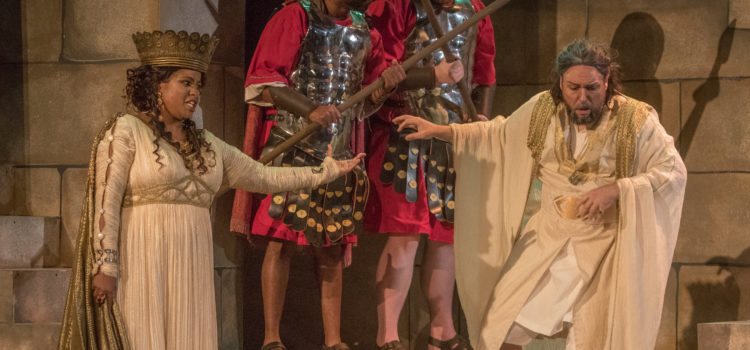
Librettist Temistocle Solero used the Books of Jeremiah and Daniel for the turbulent story, set in 587 B.C. The King of Babylon is Nabucco (Robert Garner), known as Nebuccadnezzer in English. He has seized control of Jerusalem in his war with the Israelites. The other major storyline is that his daughter Fenena (Melody Wilson) and her evil half-sister Abigaille (Marsha Thompson) are both in love with Ismaele (Jesse Donner), the nephew of the King of Jerusalem.
While war rages between Babylon and Jerusalem, Abigaille pledges to save Ismaele’s people if he chooses her. But he denies her, so she turns ruthless and plans to take down the kingdom, claim Nabucco’s throne and kill all the imprisoned Israelites.
First-time director Mark Freiman heightens the soap opera aspect of these treacherous elements, as the principals expressively sing about their emotional anguish and lament over their choices.
The accomplished Robert Garner is an imposing Nabucco, and when he needs to regain his sanity and strength in Act III, excels in his “Dio di Giuda” aria.
 
However, the two women are such dynamic forces and reach exhilarating heights as the warring half-sisters. In an impressive debut, soprano Marsha Thompson commands the stage as Abigaille, breathtaking in the demanding role. Her arias are something special, especially her dramatic coloratura “Anch’io dischiuso un giorno.”
The rising young star Melody Wilson – what an inspiring name! – demonstrates why she is one to watch, as she has one of the richest mezzo-sopranos I’ve heard. She stood out in her St. Louis debut in “Doubt” two summers ago, as part of “Regina” at Opera Theatre of St. Louis this season, and now, in this dramatic role as Fenena. What a range! Her prayer painting a picture of the heavens, “O dischius’è il firmament,” is exceptional.
Also standing out is bass Zachary James as Hebrew high priest Zaccaria, both in physical presence and in vocal prowess. He is particularly impressive performing “D’Egitto là su i lidi” that revives his people’s hopes in Act 1, and the prayer “Tu sul labbro” in Act 2.
Jesse Donner is solid as Ismaele, as is Clark Sturdevant as Abdallo, Jacob Lassetter as High Priest of Baal and Karen Kanakis as Anna.
Bravo, fervent ensemble! They do indeed stir the soul in the famous “Va, pensiero, sull’ali dorate” chorus. One of the most famous opera pieces of all-time is robustly delivered by Douglas Allebach, Madeline Black, Aleksandar Dragojevic, David Fournie, Jon Garrett, Rebecca Hetlelid, Michael Hawkins, Emily Heyl, Jeffrey Heyl, Lori Hoffman, Hannah Kauffmann, Amy Mazzeo, Jayde Mitchell, Joel Rogier, Tina Sayers and Caetlyn Van Bure in their masterful Italian vocal unison.
The cheers in Act 3 were lengthy and well-deserved, for it was quite a thrilling moment.
The technical aspects of this show are more demanding than usual at the Union Avenue Christian Church. With an idol that must fall and lightning that has to strike, the lighting design by Patrick Huber, who also did the set design, helps make those special effects happen. Theatre Marine Productions was the technical director.
Special mention must go to set designer Huber for creating the vertically tall set so that terrains, palace hallways, and Hanging Gardens of Babylon could be imagined. That was quite a feat, and that the ensemble didn’t seem as crowded on stage.
With the lyrical virtuosity and passionate spirit achieved here, Union Avenue Opera reaches new heights.
Verdi’s “Nabucco” is sung in Italian and presented by Union Avenue Opera on July 27-28 and Aug. 3-4 at 8 p.m. at the Union Avenue Christian Church, 733 Union Boulevard. For more information, visit www.unionavenueopera.org or call 314-361-2881.

Photos by John Lamb