
By CB Adams

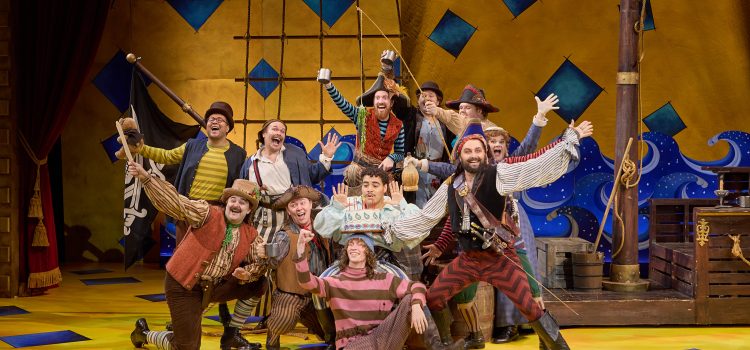
The performing arts do love a new label, especially for an old idea. Take “poperetta,” a recent coinage for musical theater that mixes high and low, sophistication and popular appeal. Gilbert and Sullivan might reasonably ask what took us so long. Nearly 150 years after “The Pirates of Penzance” first set sail, Opera Theatre of Saint Louis’ exuberant revival finds this Victorian confection still afloat, still tuneful and still very funny. Apparently, nobody told it that it was old.

Director and choreographer Seán Curran knows precisely what keeps this gloriously improbable work moving. His production, first staged at OTSL in 2013, has since been mounted by opera companies across the country. Back where it began, the production remains fresh and remarkably sure of itself. The stage is rarely still. Gesture, rhythm and split-second timing accumulate into comedy, grounded by characters who treat every ridiculous circumstance with complete seriousness.

James Schuette’s sets and costumes announce the game before Sullivan’s score gets underway. A grand gilt Victorian proscenium, crowned by a skull and crossed swords, frames the thrust stage. Red curtains, vivid painted backdrops and a pirate ship cheerfully wheeled into place suggest a pop-up book sprung to life. The machinery shows. That’s part of the point.

Daniel Luis Espinal gives Frederic a bright, ardent tenor and a winning innocence. Jana McIntyre’s Mabel brings character and wit to the role’s coloratura demands. Their romantic sincerity gives the surrounding lunacy something firm to bounce against.
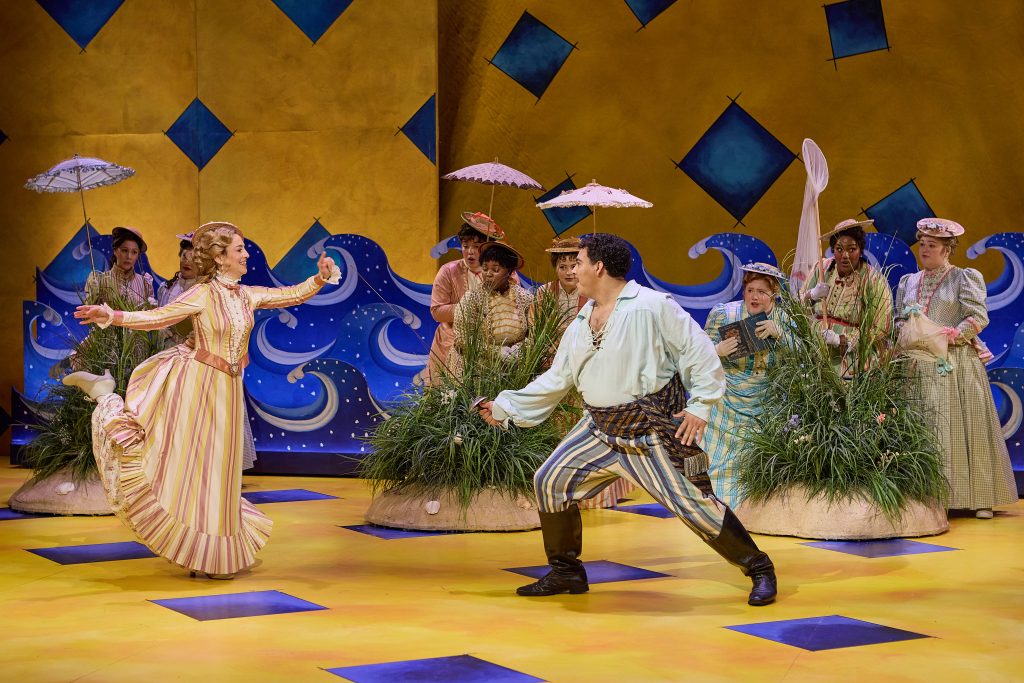
Jana McIntyre and Daniel Luis Espinal, Photo by Eric Woolsey.

The production has comic talent to spare. William Socolof’s Pirate King swaggers and blusters with comic authority, while Meredith Arwady brings a formidable contralto and deft comic timing to Ruth. Robert Mellon makes Major-General Stanley a beaming monument to cheerful foolishness, dispatching the famous patter song with impressive clarity. Shyheim Selvan Hinnant makes the Sergeant of Police one of the evening’s comic highlights, leading his hapless constables through some of Curran’s funniest physical comedy.

George Manahan conducts members of the St. Louis Symphony Orchestra with equal attention to Sullivan’s melodic beauty and the propulsion that keeps Curran’s production moving. The chorus, prepared by Andrew Whitfield, contributes power, verbal clarity and distinct comic character.

After nearly 150 years, “The Pirates of Penzance” has nothing to prove. Curran and company trust the music, sharpen the comedy and keep the whole improbable contraption moving. The old thing sails beautifully.

Opera Theatre of Saint Louis’ production of “The Pirates of Penzance” was performed May 23 through June 27 as part of the company’s 2026 Festival Season.
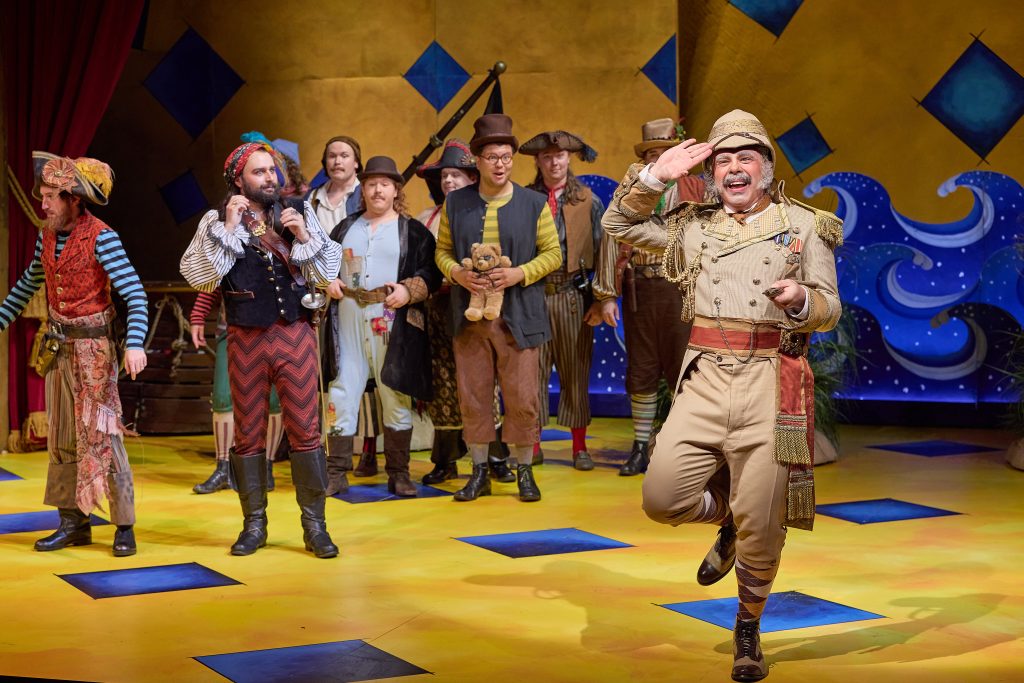

Robert Mellon as the Major General. Photo by Eric Woolsey.

By CB AdamsContributing WriterTo mix musical genres – and to begin with the finale of Fire Shut Up in My Bones – this new “opera in jazz” answers the same rhetorical question raised in “Alive and Kicking” by Simple Minds: “What’s it gonna take to make a dream survive? / Who’s got the touch to calm the storm inside?” The rhetorical answer in general is each of us and in particular, it is the opera’s hero-protagonist, Charles.

Opera Theatre of St. Louis premiered Fire Shut Up in My Bones, an opera that bends – if not downright breaks – the style, presentation and story arc of what we think of as traditional opera. If your idea of opera is a stage full of European white people voicing the story and words of some dead white dude, then Fire will surprise you in multiple ways – not the least of which is the all-African-American cast.

First is the source material. Fire is adapted
from the memoir of the same name by New York Times columnist Charles
Blow, rather than fables, fairy tales or fiction. Fire was created by
librettist Kasi Lemmons (director/writer/actress) and composer Terence
Blanchard (film score composer/noted jazz trumpeter). This is Blanchard’s
second commission from OTSL; the first was Champion presented in 2013.

The narrative is presented in a book-ended fashion, with the opening and concluding scenes set in Charles’ home. Correspondingly, the reason the Charles has returned to his hometown (physically and metaphorically) is explained at the beginning and reaches its resolution at the end. Within those bookends, Fire follows a linear timeline that satisfyingly links the beginning with the ending.

Jeremy Denis, Davone Tines and Karen SlackOf course, Fire is an opera and peddles the usual Big Themes (Love, Infidelity, Violence, Murder), but like the good gumbo that it is, it adds sexual molestation, sexual identity, abject poverty and fraternity hazing – not to mention the challenges and monotony of working in a chicken processing plant! Instead of Nordic mountains or an Italian villa, Fire is set in the rural idyll of Gibsland, Louisiana, with a set design that practically exudes the heat and humidity of the American South.

The music of Fire leans away from traditional Western European orchestration and into a unique patois of American jazz, folk, blues and big band performed by an orchestra/jazz combo hybrid, conducted by William Long.

 Fire efficiently packs Blow’s entire memoir into a couple of captivating hours’ worth of opera. It cinematically – and efficiently – quick-cuts from scene to scene (home shack, porch, farm fields, chicken factory, farmland, molestation bed, college fraternity party) leading to the denouement and resolution of Charles’ conflicts. The success of OTSL’s Fire is attributable in no small part to the production – weighty and evocative without being heavy – helmed by director James Robinson, making his OTSL debut.

At the premiere, the talents of Allen Moyer (set
design), Christopher Akerlind (lighting design) and Greg Emetaz (video
projection engineer), cohered as the stage morphs from scene to scene using
movable set pieces in tempo with the music, singing and action (kudos, too, to
choreographer Seán
Curran and Tom Watson, wig and makeup design). The attention to telling details
extended to the palpable bloodiness of the chicken processors (more kudos to
James Schuette for costume design here and throughout). Even the table cloths
in a nightclub scene looked like old-fashioned bottle caps, evoking the
pleasure to be found there.

Equally impressive were the principal performers of Fire. Blanchard and Lemmons solved the
challenge of presenting the lead character from age six to adult (in sung
roles) by using both a child, the delightful Jeremy Denis as Char’es-Baby, and the
adult Charles, the bass-baritone Davóne Tines. They were often in scene together, with
Charles providing context and counsel like a sort of Jiminy Cricket to his own
younger self. Along with several other young actors, it was engaging to watch
children on stage do something more meaningful than add background.

One of the opera’s pivotal scenes is the molestation of
the Char’es-Baby by a cousin, and it was one of the highlights of this
production – harrowing and nauseating without being prurient, pervey or porny.

Some of the opera’s ensemble played multiple roles, the
most obvious of which was soprano Julia Bullock who played the Chorus-like Destiny
and Loneliness as well as Greta Charles’ love-interest for a time. Bullock
transitioned among these characters easily, without calling attention to her
ability to fully inhabit and portray them. No good Southern story is complete
without a sassy and strong mama, and soprano Karen Slack as Billie, Charles’s
mother, is no exception. Her performance commanded the audience to fully
experience her character rather than sit back passively and watch and listen.

Davone Tines, Karen Slack in “Fire Shut Up in My Bones.”In a way, it is Billie who has the last word in Fire as Charles seems to accept her recurring advice that “sometimes you gotta leave it in the road.” To mix musical genres again, there’s a similar sentiment in “The Wiz.” It’s the notion that “Don’t you carry nothing / That might be a load.” Fire leaves on the hopeful if unsung note that moving on in life Charles will indeed “Ease On Down the Road.”

Opera Theatre of St. Louis presented the world premiere of “Fire Shut Up in My Bones” June 15-29 at the Loretto-Hilton Center. Fore more information visit www.experienceopera.com

“Fire
Shut Up My Bones”
Opera Theatre of St. Louis
June 15 – June 29
Loretto-Hilton Centerwww.experienceopera.com
314-961-0644