
By Lynn Venhaus
Ah, one magical summer when you’re in college and trying to figure out your place in the world. “Tony” takes that relatable premise, and presents the birth of Anthony Bourdain, future renowned chef and food/travel writer/celebrity.
Loosely based on the late Bourdain’s 2000 memoir, “Kitchen Confidential: Adventures in the Culinary Underbelly,” 19-year-old Tony is an arrogant jerk who is directionless and lies compulsively to impress.
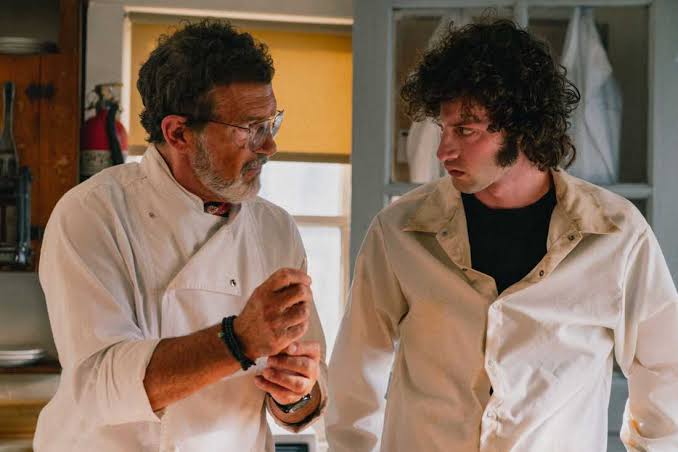
As with all conventional biopics these days, he will face major turning points and a new direction, finding his voice and a passion for food under the tutelage of an older, wiser chef.
Set in 1975, Bourdain is attending Vassar College, and returns home to New Jersey for the summer, convinced he will be awarded a writing fellowship. When that doesn’t happen, he impulsively follows his crush to Provincetown, Mass., where she is staying with friends.
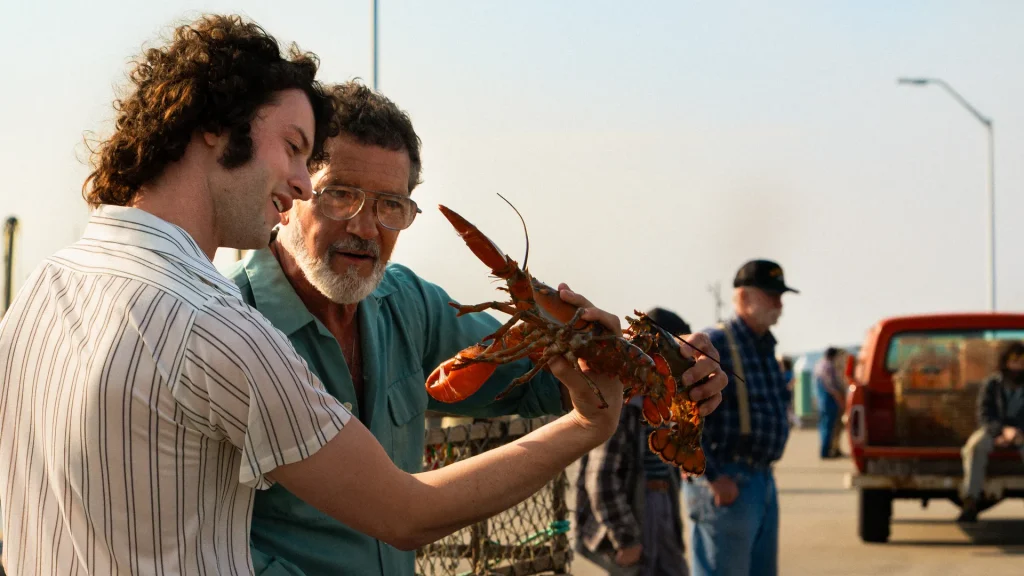
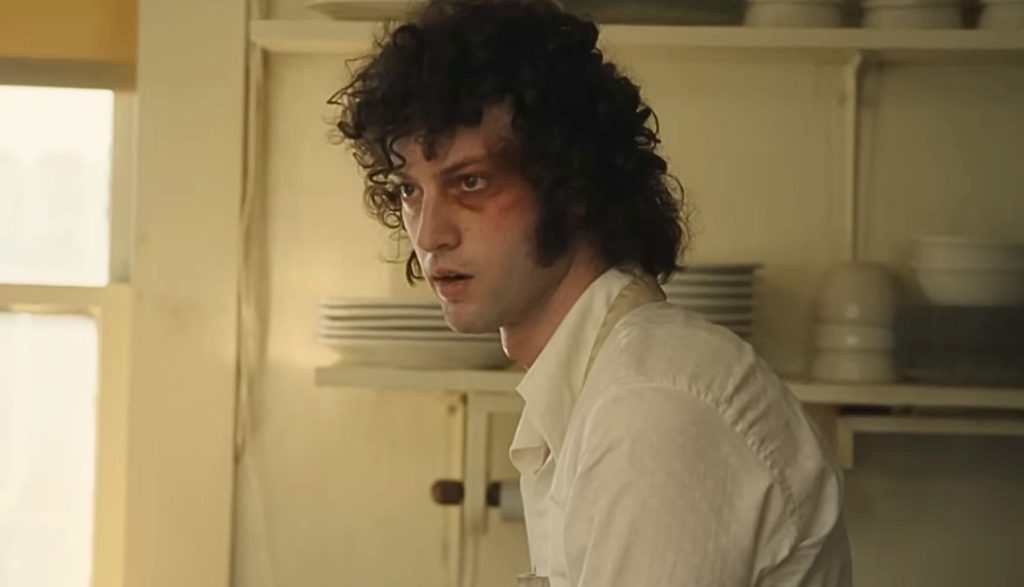
Dominic Sessa, who earned an Oscar nomination for his remarkable breakthrough performance in “The Holdovers,” captures Bourdain’s cockiness and confusion at personal crossroads. It’s a striking leading man turn, hopefully a harbinger for more good work to follow.
In the book, Bourdain described himself at that age as “a spoiled, miserable, narcissistic, self-destructive and thoughtless young lout, and badly in need of a good ass-kicking.”
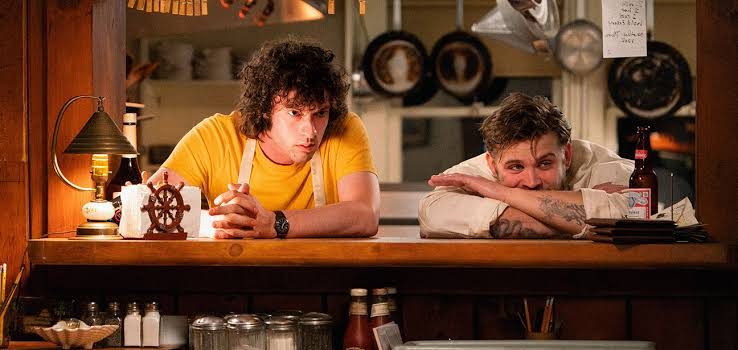
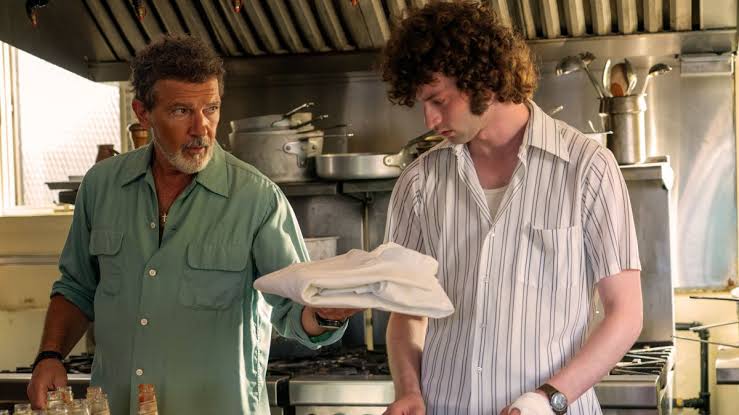
Penniless, he works as a dishwasher so he can stay in P-town. A ramshackle casual seafood restaurant, the Flagship, becomes the film’s beating heart. Antonio Banderas is steadfast as a kind but strict chef-owner from Brazil who mentors the sweaty staff. While a composite character, Chef becomes the film’s moral center.
Writer-director Matt Johnson, whose 2023 film “BlackBerry” was impressive in taking a true story and making it compelling drama, thrives in a chaotic kitchen environment, heightening the personal conflicts. That’s when the film is at its best.
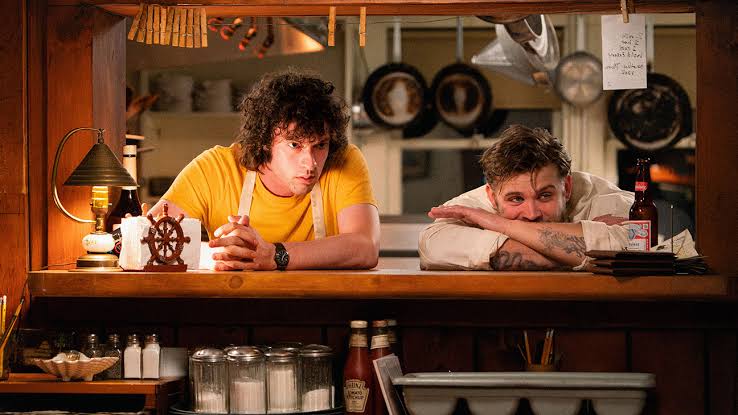
The kitchen crew includes Leo Woodall, who’s having a moment, as the swaggering, hot-headed ladies’ man Sal. A reckless drug user, he introduces Tony to the partying lifestyle side of some food workers.
The kitchen brotherhood includes Stavros Halkias as salty line cook Stavros and Michael Jibrin as veteran cook Tyrone. Through trial and error, Tony learns discipline and the courage to try new things, but also the camaraderie of family meals, finding purpose and a creative outlet.
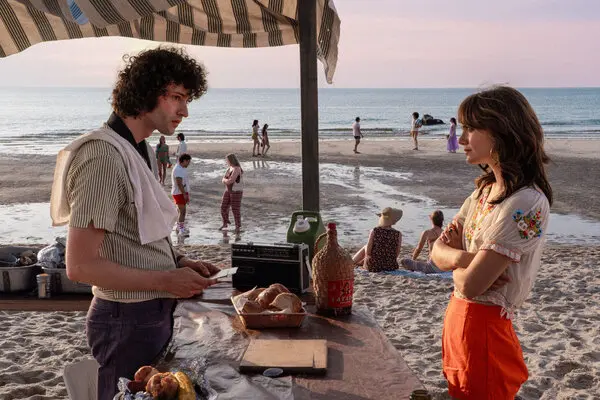
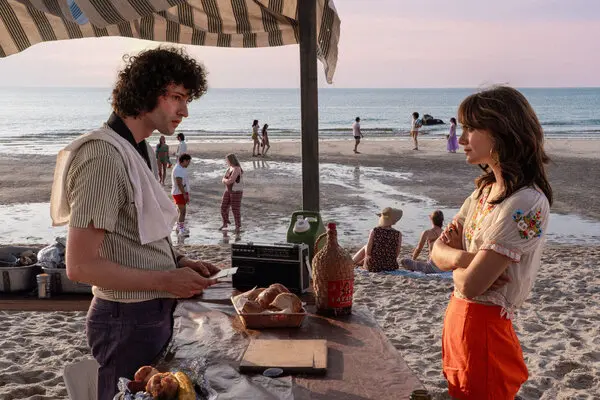
The romance angle doesn’t work as well, with Johnson dwelling too much on facial close-ups of Emilia Jones as Nancy. Granted, she’s a fine actress, as “CODA” proved, but it seems to lessen the film’s tumultuous gritty vibe. (Fun fact: Nancy Putkoski was Bourdain’s high school sweetheart, and she did work the counter at Spiritus Pizza. They eventually married in 1985 and divorced in 2005.)
As an origin story where the before is awkward, Sessa slyly shapes Tony’s future self, developing his culinary pursuits and figuring out priorities. Second chances and redemption win out in the script Johnson co-wrote with Todd Bartels, Lou Howe and Matthew Miller. He understands how harsh lessons teach us the most.
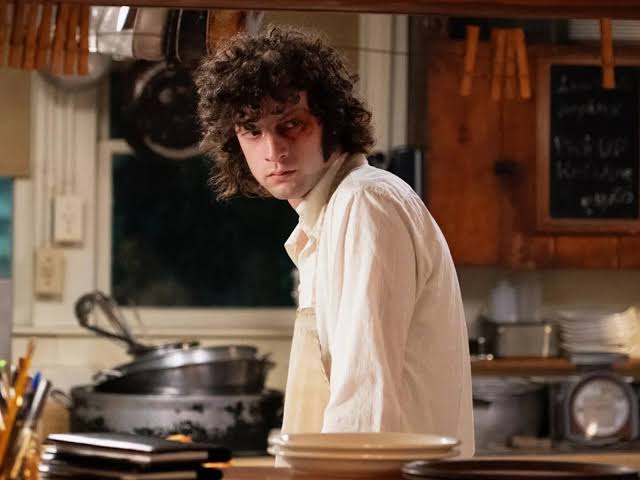
As he begins to flourish, you can see Bourdain’s promise. As we know, he will eventually head for parts unknown — prestigious culinary training, becoming an acclaimed chef, opening restaurants, excelling as a charismatic and candid television host, and traveling the world.
As documented in interviews and in the 2021 documentary “Roadrunner” by Morgan Neville, Bourdain struggled openly with addiction and mental health issues during his life. His journey was both a glorious and difficult ride before he took his own life in 2018. He was 61.
But the movie doesn’t depict that evolution or life summary, just the beginning of his ambitious pursuits. His life-changing summer, while fictionalized, remains a rich subject to illustrate.
Cinematographer Michael Bauman, Oscar-nominated for “One Battle After Another,” beautifully captures Cape Cod in its sun-drenched glory while production designer Ryan Warren Smith has nailed the 1970s summer beach party vibe as well as a messy, cramped restaurant kitchen.
Composer Jay McCarrol’s minimalist music choices compliment the narrative well, with sea-inspired sounds, moody guitars and a worn wood piano reflecting Tony’s journey. Some of the ‘70s party needle drops include “Hollywood Swinging” by Kool & The Gang and “A Fifth of Beethoven” by Walter Murphy while the rebellious punk spirit is showcased in “Down on the Streets” by The Stooges.
Despite some pacing issues, and an unlikable protagonist for two-thirds of the story, “Tony” is an enjoyable coming-of-age story, immersed in a time and a place. At least we know he gets his act together to become one of the most influential culinary figures in the world – that helps.
“Tony” is a 2026 coming-of-age docudrama directed by Matt Johnson and starring Dominic Sessa, Antonio Banderas, Emilia Jones, Leo Woodall, Stavros Halkias, Michael Jibrin, Dagmara Dominczyk and Rich Sommer. Rated: R for pervasive language, drug use, and sexual content/nudity and run time is 1 hour, 46 minutes. It opened in theatres on Aug. 21. Lynn’s grade: B.

Lynn (Zipfel) Venhaus has had a continuous byline in St. Louis metro region publications since 1978. She writes features and news for Belleville News-Democrat and contributes to St. Louis magazine and other publications.
She is a Rotten Tomatoes-approved film critic, currently reviews films for Webster-Kirkwood Times and KTRS Radio, covers entertainment for PopLifeSTL.com and co-hosts podcast PopLifeSTL.com…Presents.
She is a member of Critics Choice Association, where she serves on the women’s and marketing committees; Alliance of Women Film Journalists; and on the board of the St. Louis Film Critics Association. She is a founding and board member of the St. Louis Theater Circle.
She is retired from teaching journalism/media as an adjunct college instructor.