By CB Adams
Opera succeeds when theater, singing, and orchestra move together. Winter Opera St. Louis brought those forces into satisfying alignment with Charles Gounod’s “Roméo et Juliette,” closing its season with a production that carried Shakespeare’s familiar tragedy with immediacy and emotional force.
Gounod’s 1867 opera, with a libretto by Jules Barbier and Michel Carré, keeps its focus firmly on the young lovers rather than the feud that surrounds them. That emphasis places unusual weight on the title roles, and Winter Opera delivered with a compelling pair.
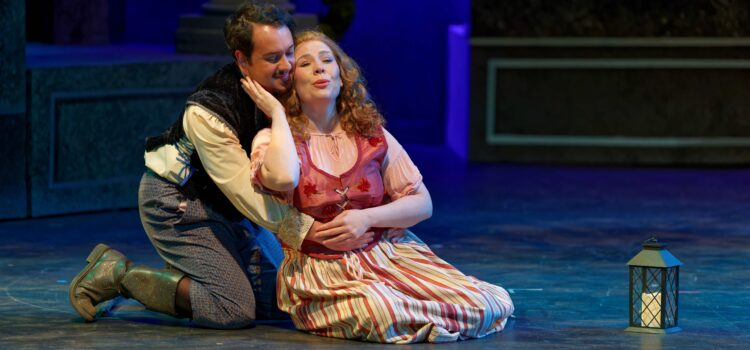
Tenor Taylor Comstock sang Roméo with youthful ardor and a clear, lyrical tenor that expanded in power as the music climbed into the upper register. Opposite him, soprano Megan Barrera offered a Juliette of brightness, agility, and growing emotional depth.
Her “Je veux vivre” waltz sparkled with buoyant phrasing and easy coloratura, and she navigated the role’s demanding succession of arias and duets with clarity of tone and precise French diction.

Together they projected the impulsive youth at the heart of the story, allowing Gounod’s long love duets to unfold with warmth and urgency.
Director John Stephens guided the drama with clarity and focus. The turning point arrived in the duel between Mercutio and Tybalt, staged with sharp dramatic energy as Roméo’s intervention sealed the opera’s tragic course.
The final scene, shaped with intimate restraint, carried the emotional weight of the evening.
The supporting cast added vivid character and vocal strength. Baritone Kenneth Stavert filled Mercutio with swagger, wit, and striking physical vitality, relishing the playful brilliance of the Queen Mab scene.
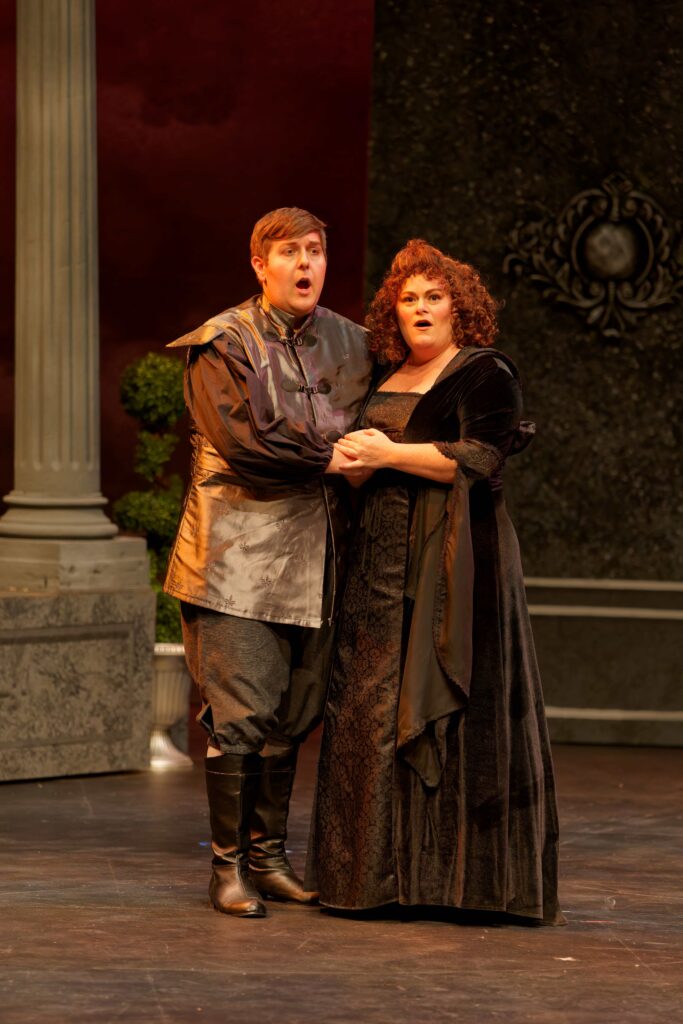
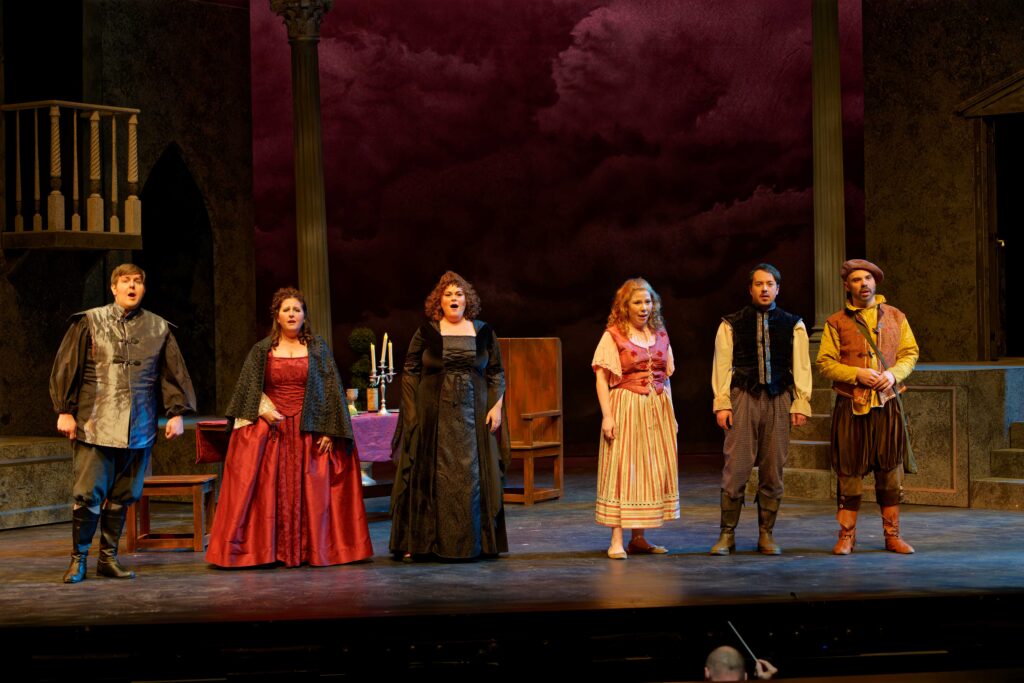
Marc Schapman’s Tybalt burned with fierce intensity, while Jacob Lassetter brought warmth and authority to Capulet. Raphaella Medina charmed as Stéphano, and Emily Moore animated the role of Gertrude with lively presence. The ensemble throughout sang and acted with admirable cohesion.
In the pit, conductor Edward Benyas shaped the score with sensitivity to its lyrical sweep, balancing orchestra and voices so that Gounod’s melodic lines could bloom freely.
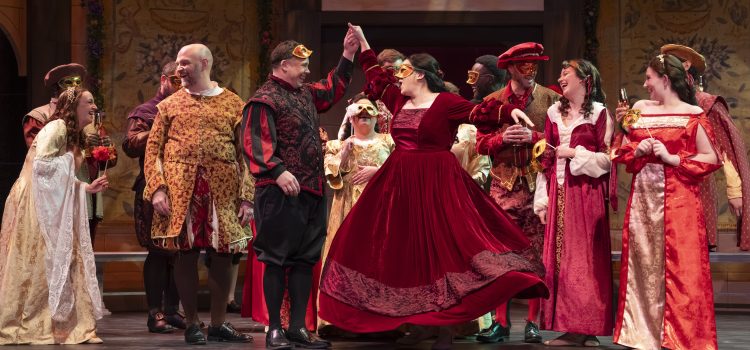
The chorus, prepared by Scott Schoonover, sang with clarity and strength, particularly in the somber lament that follows the duel.

Scott Loebl’s flexible scenic design and Jen Blum-Tatara’s richly colored costumes reinforced the divided world of the rival houses while allowing the drama to move fluidly from celebration to tragedy.
The result proved deeply affecting and a fitting close to Winter Opera’s season. Performances at this level make a persuasive case for opera at an intimate scale, where music, voices, and story meet the audience directly.
Winter Opera’s “Roméo et Juliette” was performed on Feb. 27 and March 1 at the Kirkwood Performing Arts Center.


CB Adams is an award-winning fiction writer and photographer based in the Greater St. Louis area. A former music/arts editor and feature writer for the St. Louis Globe-Democrat, his non-fiction has been published in local, regional and national publications. His literary short stories have been published in more than a dozen literary journals and his fine art photography has been exhibited in more than 40 galley shows nationwide. Adams is the recipient of the Missouri Arts Council’s highest writing awards: the Writers’ Biennial and Missouri Writing!. The Riverfront Times named him, “St. Louis’ Most Under-Appreciated Writer” in 1996.