By CB Adams
There is a particular intelligence in how the St. Louis Symphony Orchestra has shaped its “Playlist: Symphony Happy Hour” series, and it has less to do with programming than with invitation. These one-hour concerts feel calibrated for the way people actually live now, attentive to time, to curiosity, and to the social dimension of music that often gets sidelined in more formal settings.
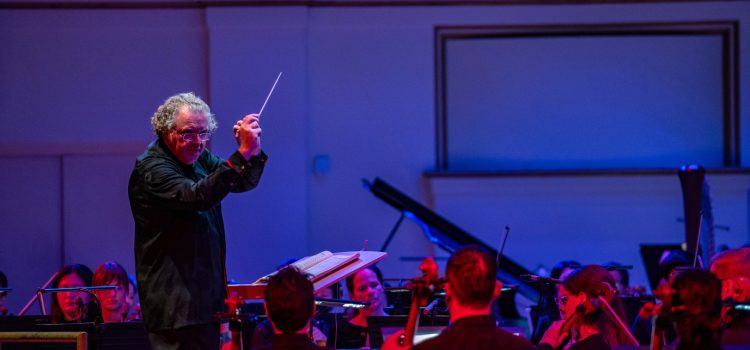
This “Playlist: Symphony Happy Hour — John Williams” evening, led by Stéphane Denève, offered the expected pleasures, iconic themes, gleaming orchestration, a shared recognition that rippled easily through the hall. Yet one of the most engaging elements arrived before the downbeat.
Denève’s brief, lucid introductions opened a window into Williams’ compositional thinking, drawing connections across scores and highlighting how closely related some of these themes are in their construction.
They carried the same quiet pleasure as a poet stepping forward to frame a work before reading it, offering just enough origin and intention to deepen what follows without overdetermining it. His explanation of the “Lydian” quality in Williams’ writing, that lifted, slightly otherworldly brightness created by a raised fourth, gave listeners a way into the sound itself.
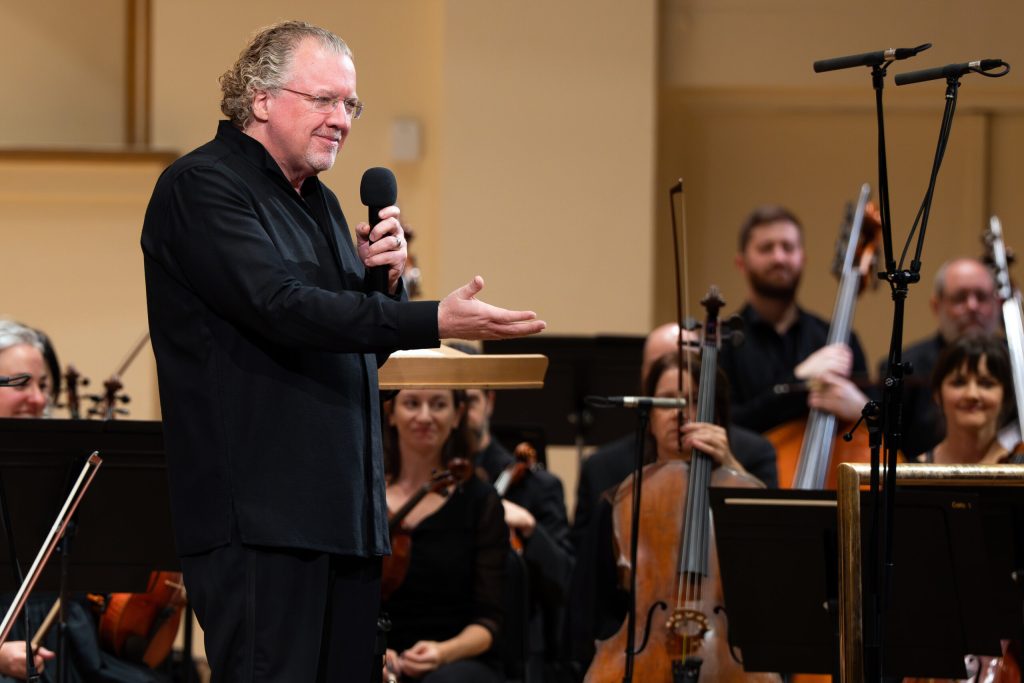
Paired with his observation about the kinship between the musical DNA of “Star Wars” and “E.T.,” the effect was cumulative, sharpening the ear and turning what might be passive recognition into active listening. It is a small intervention with an outsized effect.
The more lasting impression, though, came from the frame around the music. The option to enjoy a drink, a concise set of insights, and the easy permeability between audience and musicians before and after the performance created something closer to a salon than a concert. It is a format that lowers the threshold without lowering the standard.
The series understands that access is not dilution. It is design. By compressing the program into a single, purposeful hour, Playlist concerts sharpen attention and invite newcomers without asking them to decode tradition first.
For seasoned listeners, there is a different reward, the chance to hear familiar repertoire reframed, and to experience the orchestra as a living, social organism.
If there is a drawback, it is a telling one. This Playlist made a compelling case for itself, and in doing so, it sparked a quiet regret at not being able to take in the orchestra’s full weekend program. A smart entry point that leaves you wanting the deeper dive.
The SLSO’s “Playlist: Symphony Happy Hour — John Williams” was presented March 19 at Powell Hall.
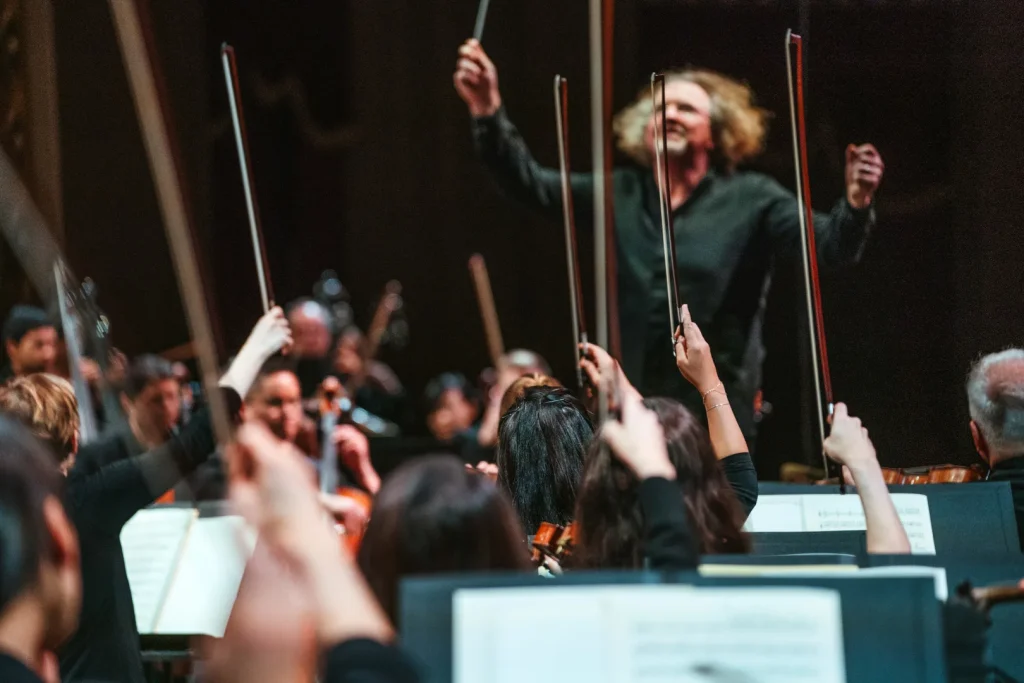
Deneve conducts the SLSO during a rehearsal for a Playlist.
Photos provided by the St. Louis Symphony Orchestra.
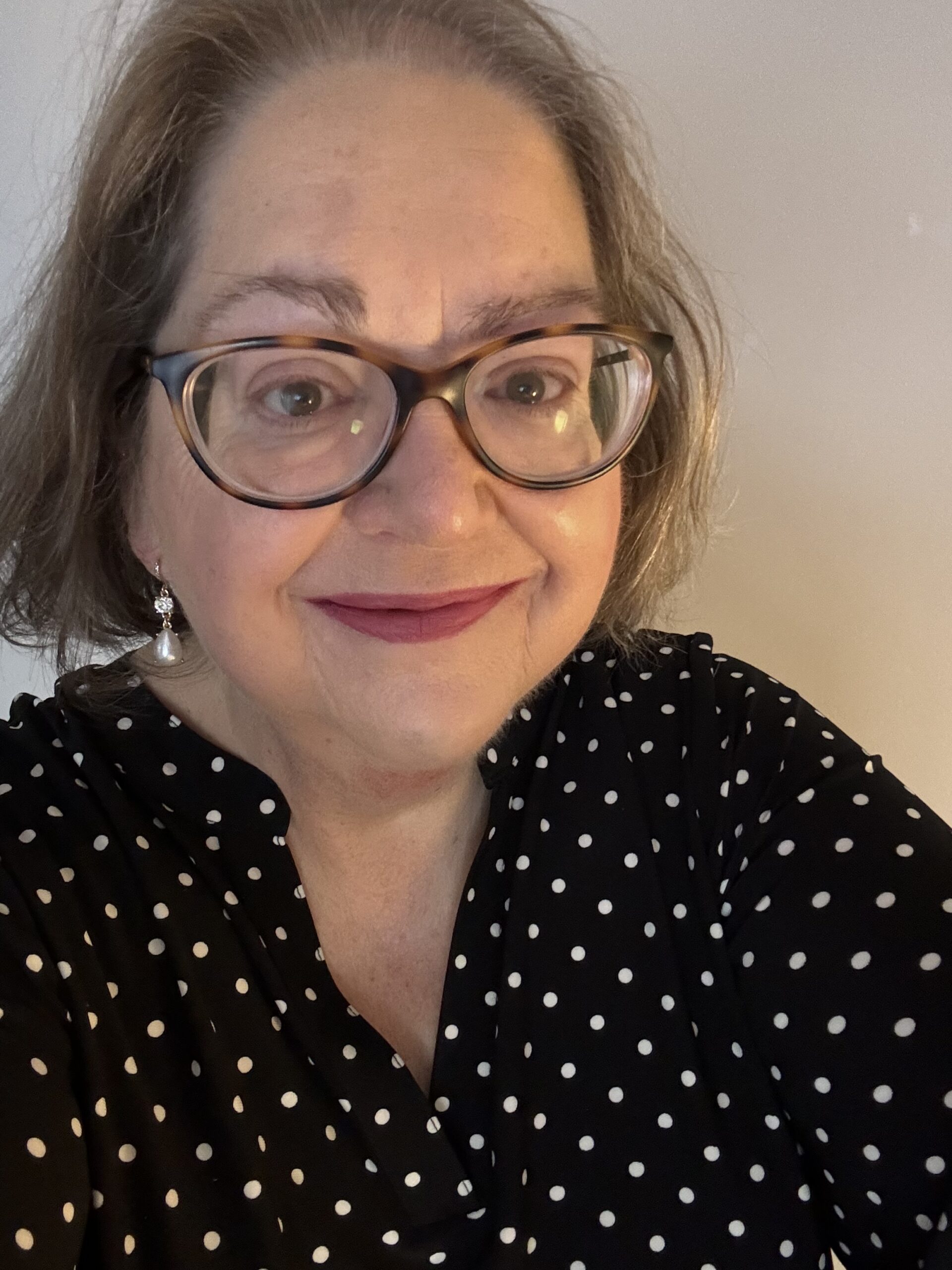
Lynn (Zipfel) Venhaus has had a continuous byline in St. Louis metro region publications since 1978. She writes features and news for Belleville News-Democrat and contributes to St. Louis magazine and other publications.
She is a Rotten Tomatoes-approved film critic, currently reviews films for Webster-Kirkwood Times and KTRS Radio, covers entertainment for PopLifeSTL.com and co-hosts podcast PopLifeSTL.com…Presents.
She is a member of Critics Choice Association, where she serves on the women’s and marketing committees; Alliance of Women Film Journalists; and on the board of the St. Louis Film Critics Association. She is a founding and board member of the St. Louis Theater Circle.
She is retired from teaching journalism/media as an adjunct college instructor.